New Zealand's free trade agreement with India has officially taken effect, Trade and Investment Minister Todd McClay said. The deal makes 57 percent of New Zealand's exports to India tariff-free, including sheep meat, wool, coal and forestry products.
Taiwan's coastguard said it warded off 16 mainland Chinese vessels in a single day after they entered the island's self-declared restricted waters near Hualien, Pingtung, Kaohsiung and the Dongsha Islands. The coordinated, multi-pronged operation involved twelve coastguard and research ships alongside four fishing boats operating simultaneously. Analysts said the scale and coordination point to a shift in Beijing's maritime pressure tactics toward Taiwan.
A surge of Chinese electric-vehicle and renewable-energy exports is reshaping trade patterns across Latin America. Governments in the region face a choice between importing cheaper Chinese clean technology and shielding domestic manufacturers with tariffs or local-content rules. The dilemma echoes similar trade tensions already under way in Europe and North America.
More than 1 million square meters of real estate, particularly warehouse and logistics facilities, have been destroyed or significantly damaged this year, Prime Minister Serhii Koretskyi in an interview with BBC Ukraine.
La protesta degli autotrasportatori contro il caro carburanti blocca l’autostrada del Sole. Intorno alle ore 3 di notte di lunedì, sulla A1 Milano-Napoli è stato temporaneamente chiuso il nodo con la A30 Caserta-Salerno per chi proviene da Napoli. I manifestanti denunciano l’aumento dei costi di gestione e chiedono interventi concreti per sostenere imprese e produttori, alle prese con difficoltà economiche sempre più pesanti.
Attualmente si registrano oltre due km di coda nel tratto compreso tra Villa Literno-Pomigliano e la barriera di Napoli Nord verso Roma e 2 km di coda nel tratto compreso tra la barriera di Napoli Nord e Caserta Nord verso Roma. Inoltre, in A30 Caserta-Salerno nel tratto compreso tra Maddaloni e il Bivio con la A1 verso Caserta, si registrano 3 km di coda. Sul luogo dell’evento sono presenti le pattuglie della polizia stradale e il personale del 6° Tronco di Cassino di Autostrade per l’Italia.
Agli utenti in viaggio da Napoli e diretti verso Salerno, si consiglia di percorrere la A16 Napoli-Canosa verso Bari e proseguire sulla A30 verso Salerno. Agli utenti in viaggio in A1, provenienti da Napoli e diretti verso Roma, si consiglia di uscire a Caserta Sud, seguire le indicazioni per Maddaloni, proseguire sulla SS700 in direzione Capua/Santa Maria Capua Vetere e rientrare in A1 alla stazione di Santa Maria Capua Vetere. A chi viaggia in A16, provenienti da Bari e diretti verso Roma, si consiglia di uscire alla stazione di Benevento, percorrere la SS 372 Telesina e rientrare in A1 alla stazione di Caianello.
China's economy grew 4.5% year-on-year in the third quarter, up from 4.3% in the second quarter and above the 4.4% consensus forecast, the National Bureau of Statistics reported. Strong demand for Chinese hi-tech exports helped offset weak domestic spending and kept the country on track toward its 2026 growth target.
The United States has told Argentine President Javier Milei's government it is concerned that a bill toughening sanctions over resource exploitation in the Falkland Islands could also reach American companies. The concern was conveyed as Argentina's Congress considers the National Sovereignty Defence bill, according to unnamed Washington officials cited by the newspaper Clarín.
Amine Kessaci, 23, lives under constant threat as trial of five men becomes focus of nation’s battle with mafia-style crime
At 23, he is one of the most heavily protected people in France, constantly sleeping in different locations to escape the threat of contract killers from the country’s biggest drug cartel.
“Narcos and drug traffickers only have one language, one method: violence,” said Amine Kessaci, a young law student from a Marseille housing estate, who, after the murders of his two brothers, has become the most outspoken voice against the Latin American-style narco gangs expanding their reach across France.
Burkina Faso, Niger and Mali held their first formal talks with the West African bloc ECOWAS since quitting the organisation in 2024, delegates confirmed. Burkina Faso's foreign minister Karamoko Traoré led the delegation from the Alliance of Sahel States, while Senegal's Cheikh Niang headed the ECOWAS team. The meeting marks a tentative step toward repairing ties severed after military takeovers in the three countries.
US Secretary of State Marco Rubio has arrived in Samarkand, Uzbekistan, to meet the foreign ministers of five Central Asian countries under the C5+1 format. Trade, investment, critical minerals and security are expected to top the agenda, with more than 200 American business executives accompanying the visit. The trip underscores Washington's push for closer economic and strategic ties with the region.
Vice President JD Vance fielded pointed questions on the Iran war, immigration enforcement and other issues at a CBS town hall. The exchange highlighted the political challenges he could face defending the administration's record if he runs for president in 2028.
China's government has proposed draft controls restricting exports of certain technologies used in solar panel manufacturing. The move is being read as part of Beijing's broader recent push to tighten export oversight of critical technology sectors.
America's interminable war with Iran has killed thousands, disrupted commerce that flows through the Strait of Hormuz, and raised prices on the home front.
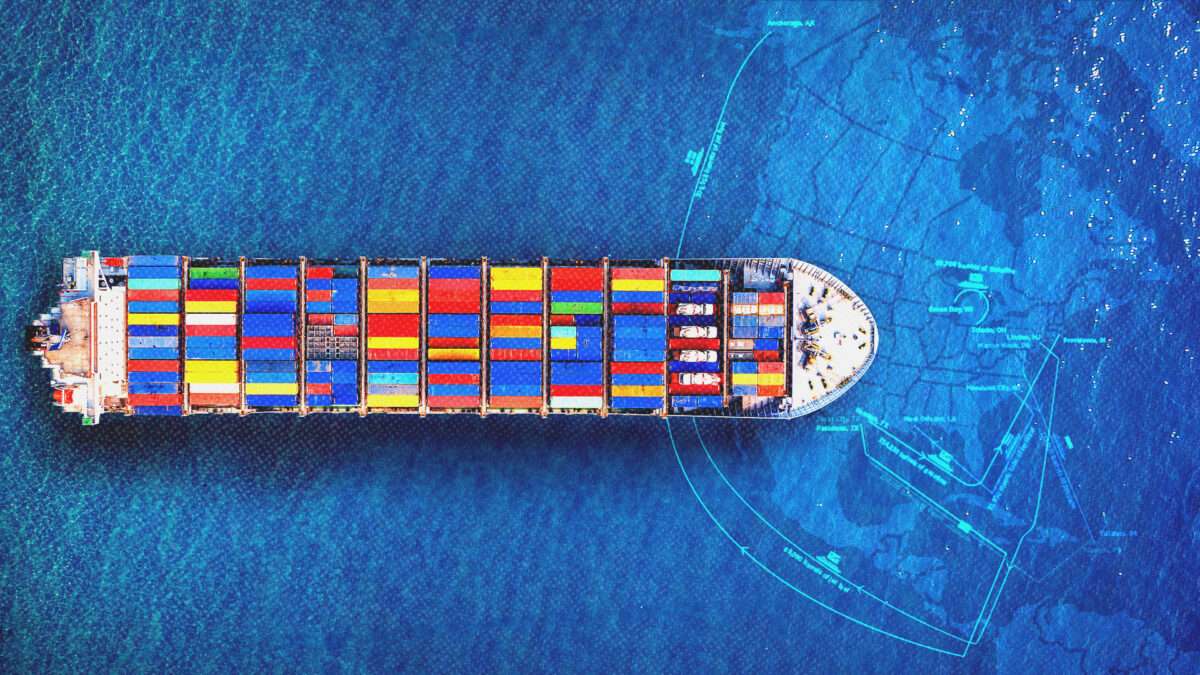
But there may be one silver lining. In an attempt to lower gas prices that spiked because of the war, the Trump administration has repeatedly issued waivers of the Jones Act, a century-old law that requires all goods moved between American ports to be carried on American-built, American-crewed ships.
With the law (temporarily) not being enforced, commerce has exploded.
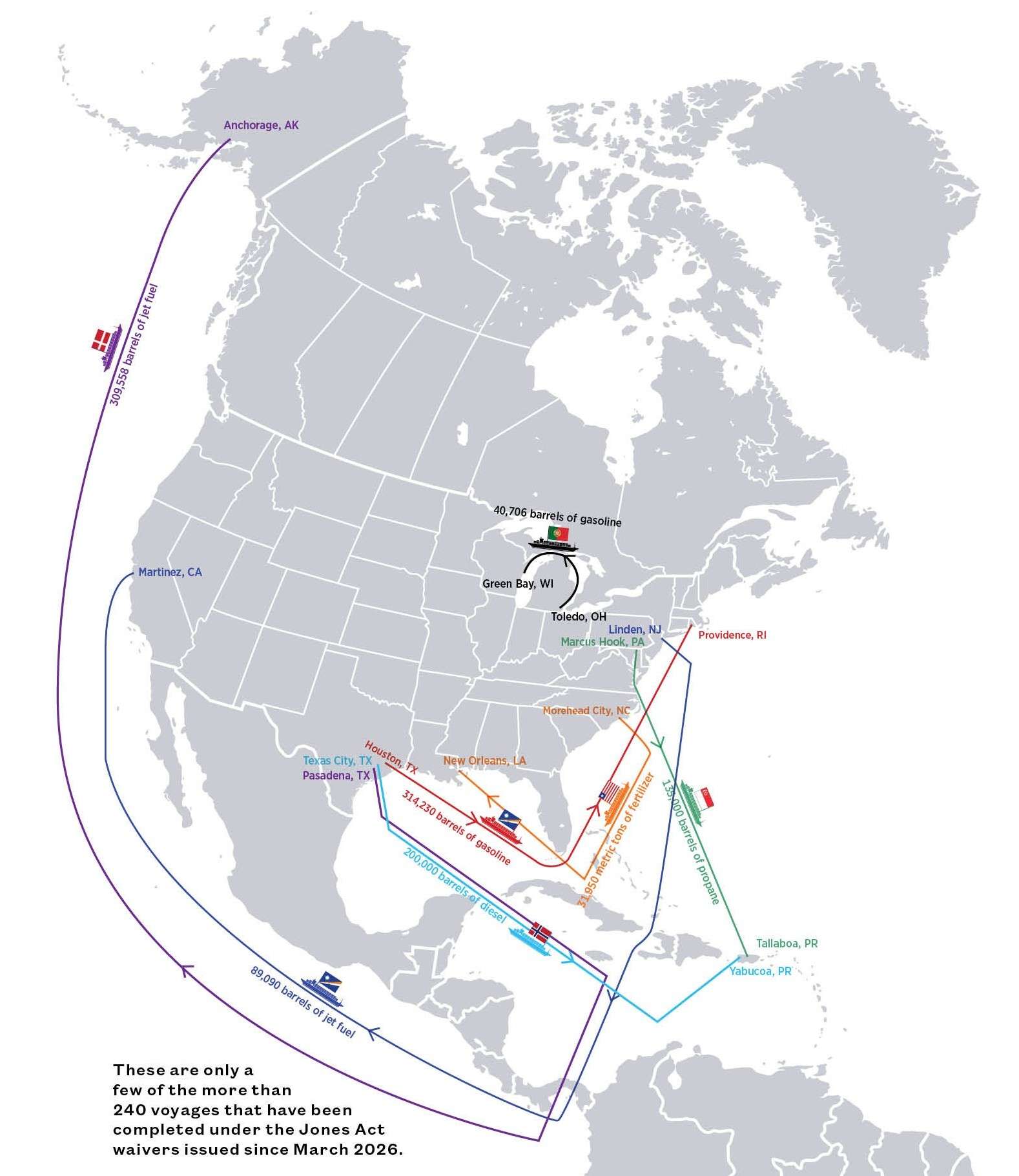
Just look at how much propane has been shipped from the mainland United States to Puerto Rico, says Colin Grabow, a trade policy analyst at the Cato Institute and perhaps the nation's foremost advocate for abolishing the Jones Act.
America is one of the world's leading producers and exporters of propane, but the lack of Jones Act–compliant ships capable of carrying gas means that it has been nearly impossible to ship propane from the mainland to outlying parts of the country. In the past, Puerto Rico has imported gas from Nigeria, Chile, and elsewhere because those deliveries don't have to comply with the Jones Act.
For years, libertarians have argued that the Jones Act unfairly impoverishes American consumers and businesses that want to buy and sell things within the same country in order to artificially inflate the price of moving those things across water. Waiving the law seems to have proven that point: There are plenty of ships capable of moving gas and oil around the country as long as the government gets out of the way.
"The instant the Jones Act no longer applied to energy shipments, mainland propane displaced foreign imports, suggesting it had been the cheapest option all along," says Grabow.
Puerto Rico is hardly the only winner.
The Jones Act waivers are offering a glimpse into a world where the law doesn't exist. From March through mid-August, there had been 210 voyages completed that otherwise would have been deemed unlawful without the waivers, according to an analysis of Maritime Administration data by the Institute for Energy Research.
It's a world where American oil and natural gas can be more easily shipped from the Gulf Coast to New England, which had previously been importing energy from Russia and Europe. Another big winner is California, which had been importing gasoline from as far away as the Bahamas because it was nearly impossible to legally ship gas from Texas or Alaska to the West Coast.
President Donald Trump reupped the Jones Act waiver in mid-May. Another extension, issued in August, will last for 90 days but applies only to ships carrying energy products such as gas and oil. Before that waiver expires in November, lawmakers ought to kill the Jones Act permanently.
There is some irony in the fact that one of Trump's most successful policy maneuvers has paused a protectionist law that limited commerce, when so much else of his economic policy has been focused on erecting barriers to trade. It's also amusing that it was a war in the Middle East—something Trump pledged to avoid—that triggered this change.
Still, the proof is in the shipping. The free traders were right all along.
Saudi Arabia's finance minister said the region's prolonged crisis is dividing Middle East economies, with oil-exporting Gulf states cushioned by high energy prices while import-dependent neighbors face mounting strain. The comments come as tension near the Strait of Hormuz continues to weigh on oil markets.
Beijing warns against ‘discriminatory’ step after France drops opposition to British role in Made in Europe package
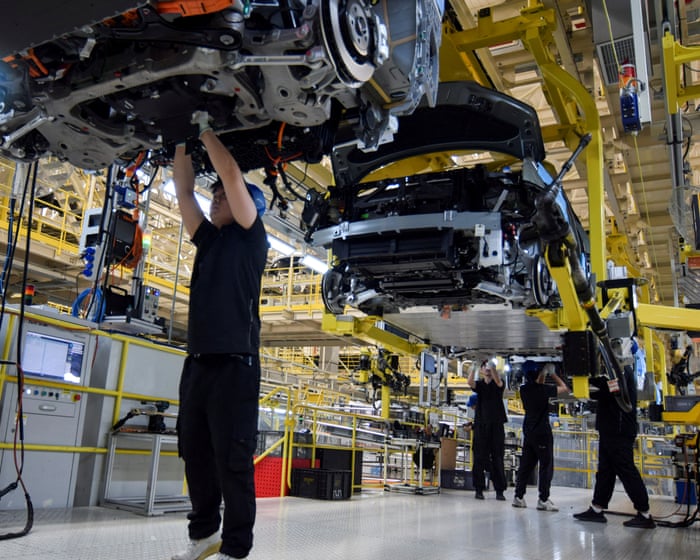
No 10 has left the door open to imposing tariffs on Chinese-made electric vehicles as part of the Made in Europe package, prompting a warning from Beijing that such a move would be “discriminatory”.
Record debt, a paralysed trade-dispute architecture and the normalisation of sovereign-asset seizure as a policy tool means fragility is baked into the global economic system
Since 2022, a steady drumbeat of forecasts has warned that cascading military and political upheavals – war in Ukraine, conflict in the Middle East, an accelerating tariff war, the weaponisation of sanctions and the disruption of energy supplies – would eventually overwhelm the world economy’s capacity to absorb shocks.
The most destructive of those scenarios have not materialised, or at least not yet.
As the IMF’s managing director Kristalina Georgieva stated last year, while previewing the fund’s World Economic Outlook, the global economy “has generally withstood significant strains from various shocks”.
Although that resilience is real, on closer inspection, it is a more fragile and more contested achievement than it first appears.
The adaptive mechanisms behind this resilience are visible and measurable. Trade has rerouted rather than collapsed. Energy corridors have diversified. And reserve managers have spent the past three years quietly re-engineering the architecture of the international monetary system.
According to the World Gold Council’s 2026 Central Bank Gold Reserves survey – which drew responses from 76 institutions, its highest participation in nine years – 89 percent of central banks expect global gold holdings to keep rising over the next year, with a record share planning to add to their own reserves.
The result: gold has overtaken US Treasuries as the largest single component of global central bank reserves for the first time since the mid-1990s.
Mother of all ticking bombs
Analysts tracking the shift link it directly to a single event: reserve managers were unsettled by the seizure of the Central Bank of Russia’s reserves at the start of the Ukraine war by Washington and have since been actively reducing the dollar share of their portfolios.
This is a clear example that the economic system is not breaking under political pressure, it is adapting to it – flexibly, and crucially, without severing the interconnections that make global trade and finance function at all.
In other words, central banks accumulating gold are not exiting the system; they are just hedging within it.
But adaptability has a cost, and that cost is compounding.
Global debt – government, household, corporate and financial combined – surpassed $365 trillion in the first half of 2026, according to the Institute of International Finance’s Global Debt Monitor, the sixth consecutive quarterly record.
Emerging-market debt alone rose by $6.5 trillion in the same period, breaking past $110 trillion. Georgieva has been blunt about the trajectory: speaking at the IMF and World Bank annual meetings, she warned that global public debt is projected to reach 110 percent of the world’s GDP by 2029.
There is an evident reluctance to address what is not a crisis in any single country’s balance sheet, but a structural drift that every major economy appears aware of and none is prepared to correct unilaterally.
Debt of this scale narrows the fiscal space available to absorb the next shock, military or otherwise, which is precisely what makes today’s resilience difficult to extrapolate into tomorrow’s.
In this context, there is also the mother of all ticking bombs, a nuclear one: the $40 trillion US federal debt which US Secretary of Treasury Scott Bessent is desperately trying to reign in.
The third strand, the onslaught of punitive political measures targeting market principles, is best illustrated by the fate of Russia’s frozen central bank reserves. Roughly $300bn in Russian sovereign assets have been immobilised globally since 2022, with some €210bn ($235bn) held within the European Union.
Erosion of neutrality
Rather than remaining in legal limbo, these reserves have become the financial engine of a specific policy outcome: the EU’s proposed €140bn ($157bn) “reparations loan” to Ukraine, structured so that Ukraine would repay it only once Russia itself pays war damages – effectively converting a sanctions freeze into a grant.
Russia’s central bank has responded by suing the Brussels-based depository Euroclear, which holds the bulk of the assets, calling the manoeuvre illegal.
Whatever one’s view of the underlying conflict, the precedent is the point economists increasingly raise: the first large-scale use of frozen sovereign reserves as collateral for a geopolitical objective changes the calculus for every reserve-holding state watching from outside the western bloc.
It is one more data pointing to the reinforcing of the gold-accumulation trend described above – and a vivid example of how political tools aimed at a single adversary can erode the perceived neutrality of the system itself.
A parallel erosion is under way in trade governance. The WTO’s Appellate Body (the one supposed to settle trade dispute among countries) has been non-functional since December 2019, after the United States blocked the appointment of new judges and talks on reviving or replacing it remain stuck.
More than 30 appeals currently sit unresolved, and the workaround mechanism created to fill the gap – the Multi-Party Interim Appeal Arbitration Arrangement – has resolved only a single case. The institution designed to prevent trade disputes from becoming purely a function of relative power has been quietly sidelined for seven years.
It is then worth wondering – in such a situation – if the Global West and Global Rest see the same picture here.
The evidence suggests convergence on diagnosis but real divergence on meaning. Both recognise that debt is unsustainable and that institutions are strained. But where western policymakers tend to treat sanctions, frozen assets and trade paralysis as defensive responses to external aggression.
Voices from the Global Rest increasingly read the same tools as confirmation that the system was never as neutral as advertised.
India’s External Affairs Minister S Jaishankar captured this gap memorably in 2022, telling European interlocutors that Europe needed to “grow out of the mindset” that its problems are everyone’s problems while the reverse does not hold.
Selective status
This is something many Global Rest governments had been thinking but not saying aloud: that the postwar order’s claim to universality was always, in practice, more selective than it appeared.
The more honest and outspoken western leader to recognise such an unfair situation, to use an understatement, was Canadian Prime Minister Mark Carney earlier this year in Davos.
None of this means the system is about to fracture. The world economy has proven more elastic than feared, absorbing shocks that a decade ago might have triggered genuine crisis. But elasticity and durability are not the same thing.
The real test of this sort of “economy of resistance” is not whether it survives the next military-political storm – it plainly has, repeatedly.
It is whether record debt, a paralysed trade-dispute architecture, and the normalisation of sovereign-asset seizures as a policy tool are quietly converting what is in effect a short-term adaptability into long-term fragility, especially at a moment when the Global Rest and Global West can no longer agree on what the system is actually for.
Shevaun Haviland argues PM is right to revisit Labour’s EU red lines as current trading relationship is bad for business
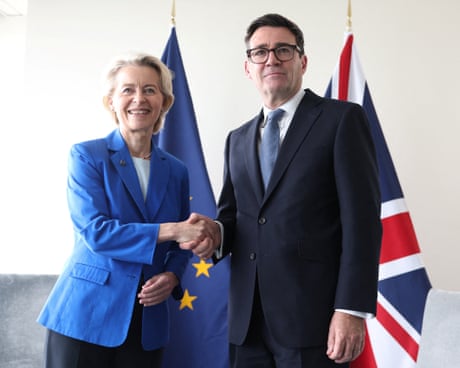
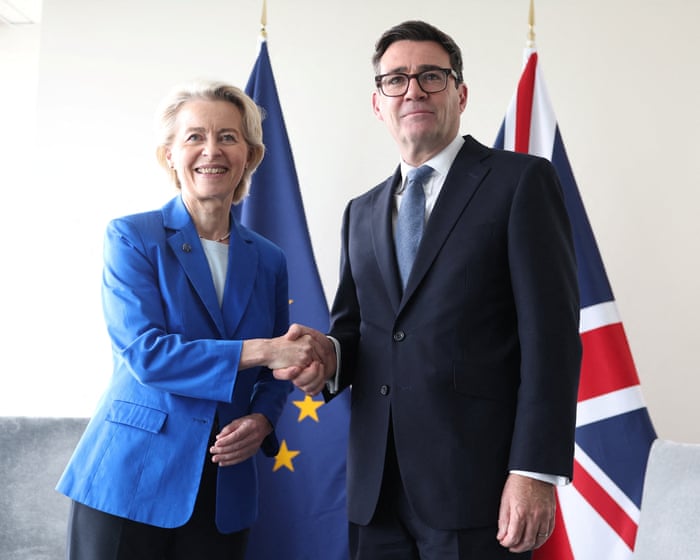
Repairing the economic damage of Brexit should be the top priority for Andy Burnham as he reconsiders Labour’s red lines on EU membership, the head of one of Britain’s leading business groups has said.
Shevaun Haviland, the director general of the British Chambers of Commerce (BCC), said she welcomed the prime minister reopening the Brexit battle lines despite the uncertainty it could create, arguing that the UK’s current trading relationship with the EU was bad for business.

 Login