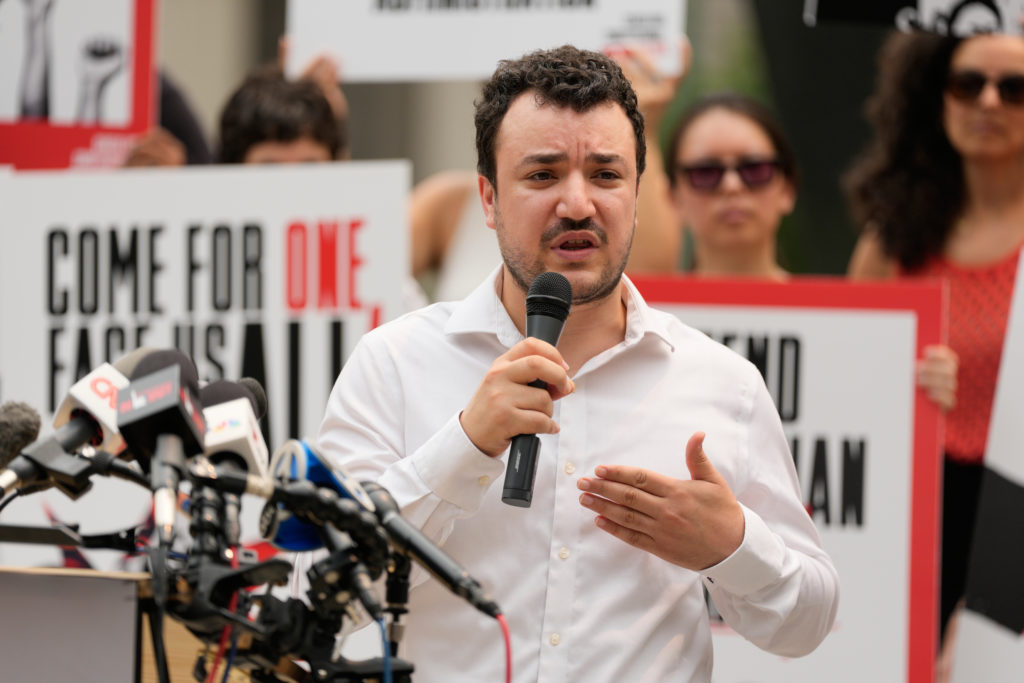
Activist Mahmoud Khalil asks Supreme Court to let judges quickly reverse immigration detentions


Brennan Smart/Bloomberg via Getty Images
A former OpenAI engineer accused of bugging the AI startup's office was denied release by a San Francisco judge on Monday, meaning he'll have to mount his defense from jail.
The Justice Department arrested Abdulrahman Alfozan on October 9 and charged him with using or attempting to use a device to intercept oral communications. He's accused of placing a recording device behind a television in an OpenAI conference room — an FBI affidavit includes photos of the device wrapped in toilet paper, and a man they say is Alfozan peering behind the TV.
On Monday, the engineer wore a yellow surgical mask and a jail-issued orange sweatshirt to the San Francisco courthouse. Magistrate Judge Alex G. Tse prodded Alfozan's legal team about the risk that he might not appear for a future court hearing.
Tse said that Alfozan's wife and son had traveled to Saudi Arabia with no plans to return, and went back and forth with Yasin about a one-way ticket that Alfozan had previously booked to the country. Tse said that Saudi Arabia and the US do not have an extradition agreement, and expressed skepticism that he had sufficient ties to the Bay Area to prevent his departure.
William Pernik, Alfozan's attorney, argued that, rather than being detained, Alfozan should be fitted with an ankle monitor, ordered to stay home, and have limits placed on his use of technology. The lawyer also said Alfozan is willing to put up "essentially all the money his family has" as bond, including a roughly $1 million investment account.
"Everything this man has, he's willing to surrender, and say, 'I'm not going anywhere,'" Pernik said.
Pernik and Nas Yasin, another of Alfozan's attorneys, cited his coming naturalization interview as evidence of his local ties.
"He was weeks away from achieving every immigrant's dream in this country," Pernik said.
Yasin told Tse that she learned Alfozan's wife had obtained a short-term visitor visa to return to the US, to help improve her husband's case for ties to the Bay Area.
Tse also asked Alfozan's legal team a slew of questions about his relationship with Saudi Arabia, including a commitment by the Saudi consulate to pay his bond and support his legal effort.
Nick Parker, an assistant US attorney, appeared for the prosecution. He argued that the threat of forfeiting a $1 million bond wouldn't be enough to convince Alfozan to return if he made it out of the US, because he might be able to earn more money in Saudi Arabia.
"There is a real threat here that once he leaves, the case is over," Tse responded.
The judge scheduled the case's next hearing for early November.
OpenAI called the recording device "sophisticated" when the arrest went public, though it said it hadn't found signs that he'd taken AI model weights, source code, or customer information. OpenAI fired Alfozan.
Alfozan's charge carries a maximum penalty of 5 years. Pernik said in a statement last week that the allegations "appear wholly out of character for him."
Alfozan, 35, has a green card that makes him a lawful permanent resident of the United States. He attended MIT, then worked at Facebook (now Meta) from 2017 to 2023. After a stint at the engineering startup Nash Technologies, Alfozan joined OpenAI in 2025.
FBI agents have already taken Alfozan's Saudi passport.
Have a tip? Contact this reporter via email at scouncil@businessinsider.com, or over text, Signal, Telegram, or WhatsApp at 415-757-8198. Use a personal email address, a nonwork WiFi network, and a nonwork device; here's our guide to sharing information securely.

Today, the Supreme Court decided to hear Association for Education Fairness v. Montgomery County Board of Education, a challenge to "facially neutral" discrimination against Asian applicants to selective public magnet schools in Montgomery County, Maryland. The admissions criteria are, on their face, racially neutral. But evidence indicates they were likely adopted for the purpose of reducing the percentage of Asian students in entering classes. More specifically, the case addresses the issue of "[w]hether a plaintiff challenging a facially neutral admissions policy as racially discriminatory must establish that the targeted racial group suffered an aggregate disparate impact relative to its share of the applicant pool." This issue is increasingly important since the Supreme Court banned most explicit racial discrimination in college admissions (and, by extension, school admissions) in SFFA v. Harvard (2023).
The lower court ruled that, even if there is evidence that a facially neutral admissions policy was enacted for the specific purpose of reducing the number of admitted students from a specific racial or ethnic group, it must still be upheld so long as the percentage of admitted students from that group is as high or higher than the percentage of applicants from that group.
The case is similar to (and based on) Fourth Circuit decision in Coalition for TJ v. Fairfax County School Board, which the Supreme Court refused to take in 2024 (though three conservative justices indicated they did want to hear it) [my wife Alison was one of the attorneys representing the plaintiffs in that case]. The present case is also from the Fourth Circuit. In my view (see here and here), the earlier Fourth Circuit decision is badly wrong and would - if the same approach were adopted by the Supreme Court - license all kinds of invidious, unconstitutional discrimination against Asians and other minorities:
Longstanding Supreme Court precedent holds that evidence of unconstitutional motivation for "facially neutral" policies shifts the burden of proof to the government to show that they would have enacted the same policy even in the absence of illicit motives. If they fail to prove that, then the policy must be subjected to strict scrutiny, which it would be unlikely to survive. In the TJ case, the Fourth Circuit majority opinion by Judge Robert Bruce King holds that even the most blatant discriminatory motivations do not trigger strict scrutiny so long as the group being targeted for discrimination by "facially neutral" means is still represented in proportion to its percentage of the relevant population (or more). Under the new admissions policy, Asians were still 54% of accepted applicants (as compared to 73% under the old one). Since that is still higher than the Asian percentage of the applicant pool, evidence of discriminatory intent becomes irrelevant….
I and others have previously compared today's anti-Asian discrimination in selective educational institutions to discrimination against Jewish applicants in earlier eras. Under the Fourth Circuit's reasoning, old-time policies using facially neutral means to reduce the percentage of Jewish students at elite universities would be perfectly legal, so long as Jewish applicants were admitted in the same [or higher] percentages as other groups. And that would be true no matter how extensive the evidence that the new policy was motivated by anti-Semitic prejudices, or that Jewish applicants had to have stronger academic records to be admitted than those required of gentiles.
The same point applies to all kinds of discrimination against racial, ethnic, and religious minorities. So long as facially neutral means are used and the overall success rates of different groups are similar, this reasoning would allow even the most blatant discriminatorily motivated policies intended to reduce the participation of some groups for the benefit of others. There are many situations where members of some minority groups are "overrepresented" in educational institutions, government contracting, and elsewhere, relative to their percentage of the applicant pool or of the general population. Jews, Muslims, Asians, atheists, and Mormons are obvious examples of groups that fit that bill in a variety of educational and professional settings.
If a federal or state government adopted a seemingly neutral policy to try to reduce the percentage of blacks among professional football or basketball players, that too would pass muster, so long as the percentage of blacks in the the relevant pro sports leagues remained at least as high as the percentage of blacks among those seeking employment as players…. Progressives and others inclined to support today's decision should consider whether they are really willing to live with these troubling implications.
Since I wrote the above, the ideological valence of anti-Asian discrimination in education has shifted somewhat. For a long time, many left-wingers defended such discrimination (along with discrimination against white applicants) on the grounds that it is necessary to achieve "diversity" and compensate Blacks and Hispanics for the history of discrimination against those groups. Most conservatives condemned it because it violates principles of constitutional color-blindness.
During the second Trump Administration, however, right-wing nativists have increasingly defended discrimination against Asian immigrants on such ridiculous grounds as that they work too hard (thus making it too difficult for whites to compete with them), or even that they undermine the supposed value of racial "homogeneity." The political right actually has a long history of anti-Asian bigotry. But recently the problem has gotten much worse, after a period in which it was diminishing because conservatives (rightly) condemned such discrimination as a violation of color-blindness. The growing anti-Asian bigotry among right-wing nationalists is similar to and linked with their growing tendency towards anti-Semitism. Indeed, as many commentators have pointed out, the two prejudices are similar in many respects. Both Asians and Jews are condemned for supposedly working too hard, emphasizing academics too much relative to other activities, and supposedly dominating various business and intellectual fields.
The left-wing rationales for anti-Asian discrimination are little better than the right-wing ones. If you truly value diversity, it makes no sense to disfavor Asian applicants as a class. They add as much or more to diversity as any others. Indeed, as I have pointed out before, lumping all Asians in one category makes no sense, as this group includes a vast range of different ethnicities and cultures, covering more than half the world's population.
The compensatory justice rationale for anti-Asian discrimination collapses under the weight of the fact that many Asian groups have themselves faced extensive discrimination at various times in American history. Discrimination against Chinese and Japanese by federal and state governments has a long and sordid history, of which Japanese internment during World War II is just one particularly awful example.
It is important to recognize that "facially neutral" policies adopted for the specific purpose of excluding particular racial or ethnic groups differ from those that merely have an unintended disparate impact. The former are deliberate efforts to discriminate on the basis of race, whereas the latter are probably inevitable in a diverse society where groups differ from each other in various ways. For example, laws banning violent crime disproportionately affect any group which is, on average, younger than others, since young people (especially young men) have much higher crime rates than older ones.
The Constitution at least presumptively bars racial discrimination by government, whether motivated by left-wing objectives or right-wing ones. And such discrimination is forbidden even if cloaked in "facially neutral" garb. Otherwise, the government could easily discriminate against virtually any group simply by targeting some characteristic that correlates with group membership. Hopefully, the Supreme Court will recognize that and rule the right way in this case.
NOTE: The plaintiffs in this case are represented by the Pacific Legal Foundation, a public interest group that was my wife's employer until recently. As noted above, she helped represent the plaintiffs in a previous case (also litigated by PLF), on which the lower court ruling in this case was based. She is not one of the attorneys in this case, and is no longer with PLF.
The post Supreme Court Will Hear Case on "Facially Neutral" Discrimination Against Asian Students in Admissions to Public Magnet Schools appeared first on Reason Magazine.
Samuel Alito was the only Supreme Court justice on Monday to signal that he wanted to help Missouri revive a restriction for sex offenders on Halloween.
The high court rejected review of that case and others on its order list announcing the latest actions in pending appeals. It takes four justices to grant review of a petition, and most denials pass without comment from any of the justices, which makes even an unexplained notation like Alito’s significant. The list only said that he “would grant” the state’s petition, without explaining why.
Although justices sometimes explain their disagreements, they don’t always do so. In any event, that Alito stood alone here is unsurprising. He generally backs law enforcement and has split from his colleagues in other First Amendment disputes.
The state sought Supreme Court review after a lower court struck down a law that required registered offenders to post signs that say: “No candy or treats at this residence.”
In the petition the justices denied Monday, Missouri asked them to take the case to settle what it said is a nationwide divide over whether sex-offender notifications unconstitutionally compel speech under the First Amendment.
The state called the rule crucial to enforcing its prohibition on sex-offender participation in Halloween “because it helps prevent children from approaching sex offenders’ doors and assists police in detecting sex offenders who (like Respondent) unlawfully participate in Halloween.”
The respondent to the petition in this case is Thomas Sanderson. Before he was convicted of a sex offense in 2006, he and his family had consistently put on elaborate Halloween displays. Missouri passed the law in question while he was incarcerated. When he was released in 2008, he was told that he was “grandfathered in” and could continue the annual displays. Apparently it was not an issue until 2022, when he was reported to the police and charged with violating the law.
Upholding a lower court ruling favoring Sanderson’s constitutional challenge, the U.S. Court of Appeals for the 8th Circuit said there was “insufficient evidence to support the State’s assertion that the sign mandate is the least restrictive means of achieving its goals.”
Successfully opposing review at the Supreme Court, Sanderson said there was no real division to resolve among the lower courts. He said that the appeals court in his case “applied settled First Amendment doctrine to strike down an unusual speech compulsion,” and that “no court of appeals or state high court disagrees with that ruling.”
The post Over Alito’s objection, justices decline to review Halloween-sign rule for sex offenders appeared first on MS NOW.

Last week, it was double jeopardy in Oklahoma. This week, it’s car seizures in Chicago. The through-line is Justice Neil Gorsuch joining Justice Sonia Sotomayor for the second week in a row to call out what they see as government abuses.
It’s not a new phenomenon for the Obama and Trump appointees to team up in a certain type of case that lends itself to bipartisan agreement.
But early in the new court term, they continue to distinguish themselves from their colleagues on the nine-member bench who haven’t shown the same interest in drawing attention to these appeals the court refuses to hear.
“I again encourage courts considering this issue to take care that due deference to state police powers does not eclipse constitutional rights,” Sotomayor wrote Monday in the case of O’Donnell v. Chicago, joined by Gorsuch. The issue, in their view, is that the city’s vehicle forfeiture scheme offends the Fifth Amendment’s prohibition on taking private property for public use without “just compensation.”
Per Sotomayor’s statement, the city takes vehicles when drivers fail to pay as few as two parking tickets — after that, she wrote, the city “can do as it pleases with the vehicle, with no obligation to pay compensation, offset the unpaid ticket debt, or return any surplus to the owner if the vehicle is sold for a profit.”
Her statement appeared on the court’s latest order list, which is a routine scheduled document that announces the latest action on pending petitions. It takes four justices to grant review of a petition, and most of them are denied without comment from any of the justices. That’s what makes it notable when justices speak out in connection with denials.
To be sure, Sotomayor and Gorsuch didn’t dissent from the O’Donnell denial, as justices sometimes do in their separate writings. As was the case with her statement that Gorsuch joined last week on a double jeopardy issue, the duo agreed with their colleagues that the Chicago case didn’t warrant review. Sotomayor noted that the nation’s lower courts are divided on the constitutional issue, and that the split would “benefit from further percolation” before the high court steps in.
So, the subject could return to the justices in a future case, where petitioners can count on at least two justices showing interest. They would need two more to win review.
The denial in the O’Donnell case (and many others that went unremarked upon by any justices) came as the court granted review in two new appeals that will both be closely watched this term.
In Association for Education Fairness v. Montgomery County Board of Education, the court that struck down race conscious university admissions in 2023 agreed to consider a challenge to the Maryland district’s magnet middle schools.
Challengers argue that the district’s lottery system is too hard to access for Asian American students who are packed in “high-performing, low-poverty elementary schools.” Unsuccessfully opposing review, the district stressed that the ultimate admissions decisions are random, adding that it’s “difficult to even conceptualize” how a lottery-based system could be intentionally racially discriminatory.
The legal question that the court will consider in the Maryland case involves what plaintiffs must prove to show that a facially neutral admissions policy is racially discriminatory. The answer carries nationwide implications.
The other new case taken up by the court on Monday asks whether the government can ban people from making liquor at home.
That’s been the case for more than a century, but a federal appeals court struck down the restriction, which led the Justice Department to ask the high court to step in. Notably, the opposing parties — people who want to distill at home and the Hobby Distillers Association — agreed that the justices should review the issue so that the court can provide a nationwide resolution on the matter, which has divided lower courts.
The legal question in that case, DOJ v. McNutt, is whether the federal prohibition on producing distilled spirits in certain locations, including homes, exceeds congressional power.
The court will hear arguments in both appeals later in the term, with rulings expected by July.
The post Sotomayor and Gorsuch join forces again to warn against rights abuses appeared first on MS NOW.

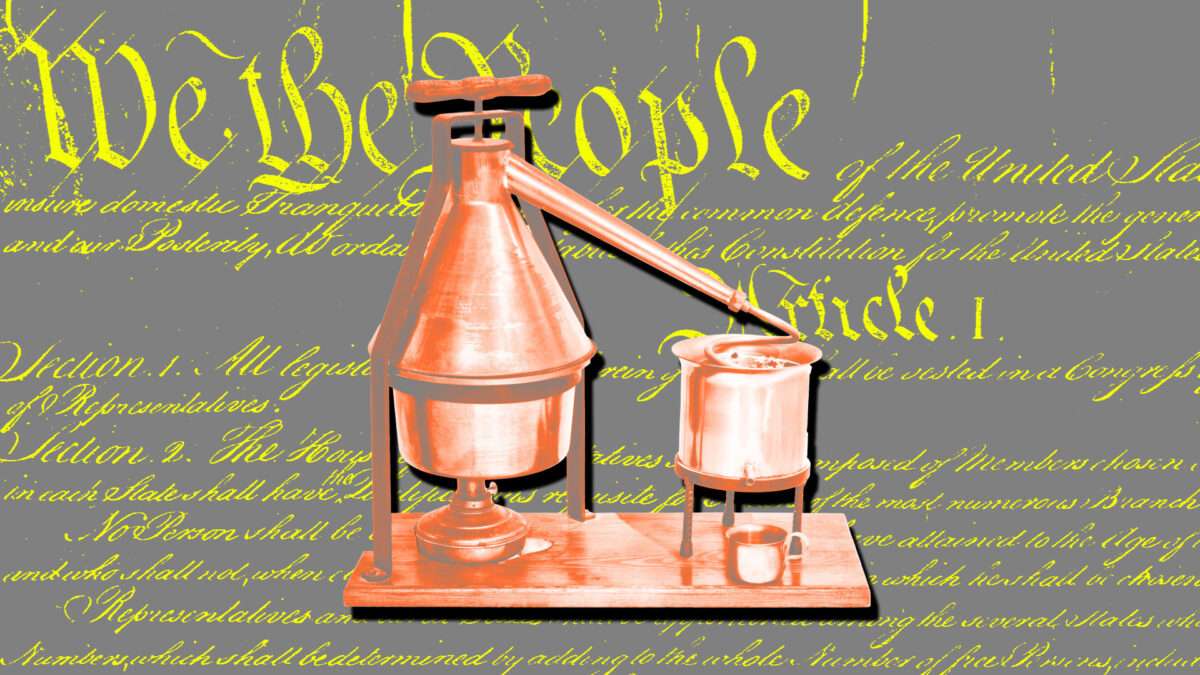
Today, the Supreme Court decided to review the case of Department of Justice v. McNutt, which challenges a federal law banning home distilleries. The key question in the case is whether the law in question is justified by the combination of the tax power and the Necessary and Proper Clause (which gives Congress the power to make laws "necessary and proper" for executing other powers granted to the federal government). This is likely to be most important Supreme Court Necessary and Proper Clause decision since at least NFIB v. Sebelius (2012), which ruled that a "proper" power permissible under the Clause is one that is "ancillary" to the implementation of an enumerated power; it cannot be a "great, substantive and independent" power. This case is likely to further clarify the meaning of "proper," perhaps by explicating in more detail what counts as a "great…and independent" power.
In the lower court decision in this case, the Fifth Circuit ruled that the law is not "proper" and even that it isn't "necessary." There is also a Sixth Circuit decision that went the other way, thereby creating a circuit split.
As explained in my earlier posts on the Fifth and Sixth Circuit decisions (linked above), I think this law is not "proper," and I hope the Supreme Court strikes it down. I summarize the reasons why in my post on the Fifth Circuit ruling:
The Fifth Circuit… concludes that the law in question exceeds Congress' authority under the Necessary and Proper Clause, which grants the power to makes laws "necessary and proper" for carrying into execution other federal powers. I think the court is right that the law in question is not "proper." The Supreme Court, in NFIB v. Sebelius(2012), ruled that a "proper" power permissible under the Clause is one that is "ancillary" to the implementation of an enumerated power. It cannot be a "great, substantive and independent" power. See my analysis in this article. The power claimed here is clearly "great and independent." As Judge [Edith] Jones notes, "[u]nder the government's logic, Congress may criminalize nearly any at-home conduct only because it has the possibility of concealing taxable activity."
I elaborated further in the post criticizing the Sixth Circuit decision:
[T]he Sixth Circuit is badly wrong to conclude that the law is "proper." As explained in my earlier post, the Supreme Court, in NFIB v. Sebelius (2012), ruled that a "proper" power permissible under the Clause is one that is "ancillary" to the implementation of an enumerated power. It cannot be a "great, substantive and independent" power. The power to ban any home-based activity that might serve a substitute for taxable activity outside the home is clearly a "great and independent power." As Judge Edith Jones explains in the Fifth Circuit ruling, "[u]nder the government's logic, Congress may criminalize nearly any at-home conduct only because it has the possibility of concealing taxable activity."
The Sixth Circuit tries to address this point by claiming alcohol is somehow special….
This distinction between alcohol and all other commodities is totally arbitrary. The same reasoning could justify banning home production of anything else that is more easily taxed if produced outside the home. And there is a long history of home production of all kinds of other commodities taxed or severely regulated by the government, ranging from cigarettes to illegal drugs, to pornographic videos.
While Judge Edith Jones (author of the Fifth Circuit decision) is one of that circuit's most conservative judges, the ruling was also joined by liberal Obama appointee Judge James Graves. On the other hand, the Sixth Circuit decision was written by prominent conservative Judge Raymond Kethledge. We shall see if the Supreme Court also divides on this issue in a way that cuts across conventional ideological and jurisprudential lines.
As noted in my post on the Fifth Circuit case, I think Judge Jones is not persuasive in arguing that the home distillery ban isn't "necessary," as well as improper. That argument is unlikely to prevail under the Supreme Court's expansive definition of "necessary, " dating back to McCulloch v. Maryland (1819), where Chief Justice John Marshall famously ruled that "necessary" includes any measures that may be "useful" or "convenient" for implementing an enumerated power.
As also noted in my posts on the two lower court rulings, I think the government has a better argument that this law is authorized by the Supreme Court's badly misguide precedent on federal power under Commerce Clause (which grants Congress power to regulate interstate commerce). But the Supreme Court is apparently not going to review that issue. The question presented submitted to the Court in McNutt is limited to the Necessary and Proper Clause.
The post Supreme Court Will Hear Necessary and Proper Clause Case on Federal Law Banning Home Distilleries appeared first on Reason Magazine.
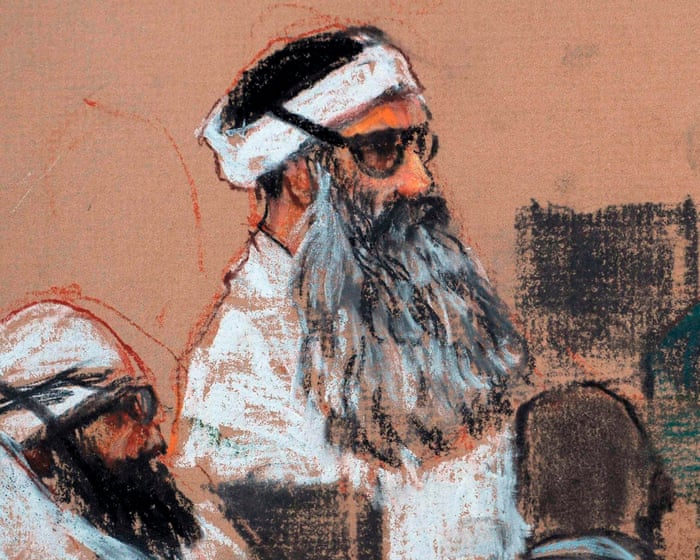
Agreement would have spared Mohammed risk of execution in exchange for guilty plea and life in prison
The supreme court on Monday rejected an effort to revive a plea deal for Khalid Sheikh Mohammed, the accused mastermind of the attacks on 11 September 2001.
The agreement would have spared Mohammed the risk of execution in exchange for his guilty plea and a sentence of life in prison without parole.
Continue reading...
© Photograph: Janet Hamlin/POOL APF/AP

© Photograph: Janet Hamlin/POOL APF/AP

© Photograph: Janet Hamlin/POOL APF/AP
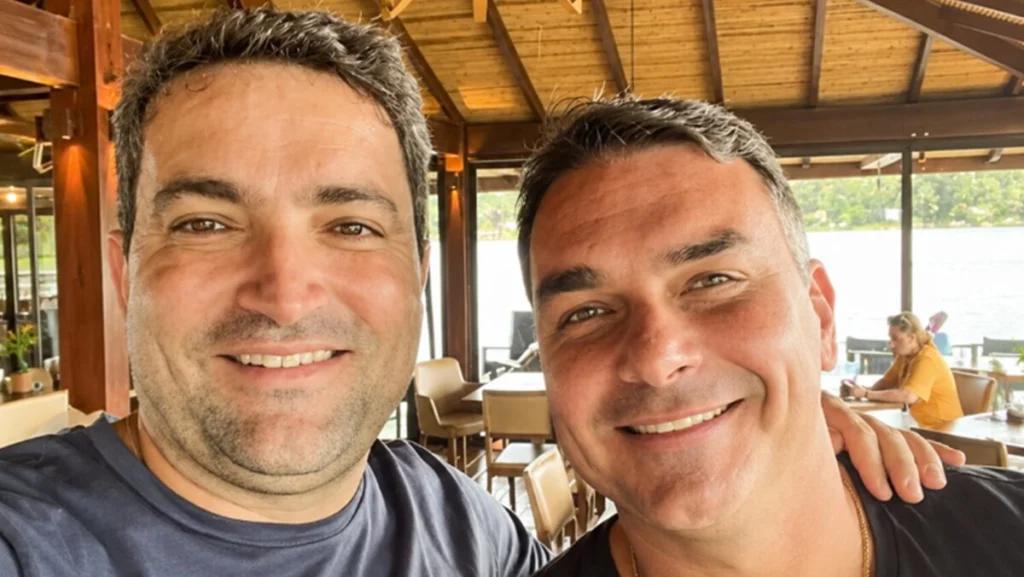
On Sunday, newspapers Estadao and Folha revealed for the first time that the Brazilian Federal Police had sent a new investigation to the Supreme Federal Court (STF) to examine suspicions of money laundering involving presidential candidate Flavio Bolsonaro and lawyer Willer Tomaz.
RELATED:
Lula da Silva Beats Flavio Bolsonaro in Debate Ahead of Runoff
The investigation seeks to clarify the relationship between them and possible irregularities in financial transactions detected during another probe related to the movement of capital through betting activities.
The journalistic revelation came hours before a televised presidential debate in which Workers’ Party leader Lula da Silva challenged the far-right senator to authorize Brazilian authorities to examine his bank accounts and phone so the Brazilian people could learn the origins of his personal wealth and his family’s fortune. Flavio Bolsonaro refused to do so.
On Oct. 8, the case file for the new investigation arrived at the Supreme Court and was assigned by lottery to Justice Alexandre de Moraes. Previously, he oversaw the case that ended with a 27-year prison sentence for coup plotting against former President Jair Bolsonaro, Flavio’s father.
Brazil’s election offers a simple choice:
— BRASILWIRE (@BRASILWIRE) September 21, 2026
Governance from Brasilia or from Washington.https://t.co/TORegJQvQK
De Moraes was also the justice responsible for the proceedings in which Eduardo Bolsonaro, the far-right presidential candidate’s brother, was sentenced to four years in prison for attempting to coerce judges and orchestrate U.S. sanctions against Brazil to obstruct the case against his father.
According to investigators, an analysis of data extracted from digital files linked to lawyer Willer Tomaz revealed records indicating a close relationship between him and Flavio. Items found in the material examined by the Federal Police included references to meetings, parties and gatherings, as well as the lawmaker’s personal documents.
The investigation also indicates that a bank account linked to Willer Tomaz recorded transactions totaling about 130 million reais between March and May 2025. Investigators seek to establish the origin and destination of these funds, as well as verify possible connections to companies and financial operations related to the betting sector.
The case also includes information about payments for Flavio’s trips to Europe and an account linked to Alcazar Holding, in which the senator was identified as the “master user.” Both Flavio and Willer deny any wrongdoing and say their relationship is one of “friendship.”
teleSUR/ JF
Sources: Estadao – Folha – La Jornada
That's part of libel plaintiff's argument(filed last week) for subpoenaing defendant's AI queries in Fontainebleau Florida Hotel, LLC v. Botach; the defendant is popularly known as Rabbi Shmuley Boteach. From the introduction:
The Court asked whether Botach's communications with AI platforms fall within the scope of "damages" discovery permitted by ECF No. 261, and specifically how those materials relate to malice and the statutory cap on punitive damages. Precedent from the United States Supreme Court and Eleventh Circuit, as well as Florida law, answers that question directly.
Under Fla. Stat. § 768.73(1)(c), the cap on punitive damages lifts entirely where the fact finder determines that "the defendant had a specific intent to harm the claimant" at the time of the injury. As discussed below, legions of cases from trial courts to the Supreme Court hold that post-defamation conduct is probative of whether defamatory statements were made with intent to harm. Specific intent is therefore not background color to the damages trial or damages discovery. Discovery into Botach's intent to harm Plaintiff is damages discovery, and the AI materials are the most direct evidence of that intent.
Botach did not merely publish an errant falsehood on a blog or make a heated statement in a debate. He methodically engineered his attacks—drafting, refining, and iterating for painful effect through the most potent technologies known to humankind. The prompts and chats are his mental state reduced to writing, and they are probative of damages.
And from the defendant's response:
The Court should sustain the objections to the proposed AI-provider subpoenas as drafted and apply the same limits to the overlapping Seventh Request for Production. The issue is whether these demands fall within the scope of "discovery limited to damages." The unresolved punitive amount permits discovery concerning punishment for the adjudicated wrong, not an unrestricted inquiry into Defendant's research or litigation conduct.
The amended complaint already alleges knowing falsity, deliberate fabrication, repeated publication, financial motive, and specific intent to harm. Plaintiff did not pursue AI discovery before the general discovery cutoff. But under the guise of "discovery limited to damages," Plaintiff seeks every responsive AI exchange concerning this litigation, the Hotel, Plaintiff's lawyers, every court order, and the judges. It reaches accounts associated with an expansively defined "Botach," without limiting production to his queries or material used in the actionable publications. The Court should enforce the reopening order before requiring any production and independently preserve substantiated work-product objections.
For more backstory on the case, an excerpt from the long Report and Recommendation issued July 29 by Judge Marty Fulgueira Elfenbein in Fontainebleau Florida Hotel, LLC v. Botach:
This action arises from an encounter between Defendant and then-hotel guest Faiz Akbar … in the lobby of Plaintiff's hotel in December 2024. The Parties sharply dispute the nature of the encounter, who initiated or escalated it, and whether Plaintiff responded appropriately to Defendant's subsequent complaints.
Plaintiff's operative First Amended Complaint alleges that Defendant published false statements concerning the incident and Plaintiff's response to it, including statements that Plaintiff discriminated against Defendant because he is Jewish, knowingly permitted an antisemitic assault to occur on its premises, removed Defendant rather than the alleged aggressor, and refused to cooperate with law enforcement. Based on those allegations, Plaintiff asserts claims against Defendant for defamation and tortious interference with business relationships.
Defendant filed a Counterclaim and Third-Party Complaint asserting claims against Plaintiff and naming Jeffrey Soffer … and Akbar as Third-Party Defendants. Defendant's Counterclaim alleges, among other things, that he was subjected to an antisemitic verbal attack at the hotel, that Plaintiff failed to protect him or adequately cooperate with the ensuing investigation, and that Plaintiff thereafter excluded him from its properties. Defendant asserted claims under federal civil-rights statutes and a claim for tortious interference with business relationships….
The merits of the Parties' competing claims are not directly before the Court in the Motion for Sanctions. Instead, the dispute concerns Defendant's conduct during the litigation, the meaning and scope of the District Court's February 20, 2026 Order …, and whether Defendant's subsequent social-media activity violated that Order in a manner warranting sanctions under Federal Rule of Civil Procedure 16(f) or the Court's inherent authority….
On March 11, 2025, Defendant served a subpoena on the Miami Beach Police Department seeking video footage of the underlying incident that Plaintiff previously provided to the department. The Miami Beach Police Department produced responsive surveillance footage to Defendant's counsel on March 26, 2025, and counsel thereafter transmitted that footage to Defendant. On April 2, 2025, before the entry of a protective order, Defendant posted an excerpt of the surveillance footage to his public Instagram account, which had more than 90,000 followers. On April 7, 2025, the Parties jointly moved for entry of a stipulated protective order governing discovery in this action. The Court entered the Parties' Stipulated Protective Order on April 9, 2025.
The Protective Order provides that material produced by a nonparty is automatically treated as "Outside Counsel Eyes Only" for thirty days following production without the need for an affirmative designation by a party. The Protective Order further prohibits the use of discovery material for any purpose unrelated to this litigation, including any public, commercial, business, or personal purpose. The Protective Order restricts access to material designated as "Highly Confidential" or "Outside Counsel Eyes Only" to specified persons and does not permit unrestricted public dissemination of such material….
On April 10, 2025, one day after entry of the Protective Order, Defendant again posted the surveillance footage to his social-media accounts. On April 16, 2025, Plaintiff formally designated the materials produced by the Miami Beach Police Department as "Highly Confidential," and Plaintiff's counsel communicated that designation to Defendant's counsel. Defendant's counsel then informed Defendant of the designation, after which Defendant removed the footage. Defendant contemporaneously published a social-media post acknowledging that he was "required under the rules to remove the video."
Notwithstanding his knowledge of the Protective Order and Plaintiff's confidentiality designation, Defendant again posted the surveillance footage on September 17, 2025…. Although Plaintiff requested severe evidentiary and litigation-ending sanctions [over this], the undersigned concluded that those sanctions were not then supported by the record because a lesser sanction had not previously been imposed for the violation. The undersigned instead awarded Plaintiff its reasonable attorney's fees and costs attributable to the sanctions motion and expressly admonished Defendant that the Protective Order was not optional. The undersigned further warned Defendant that any future violation of the Protective Order would be treated with the utmost seriousness, including case-dispositive sanctions.
After further proceedings concerning the amount of the award, the Court ordered Defendant to pay Plaintiff $15,000.00 no later than April 26, 2026….
Separate from the Protective Order dispute, the District Court addressed Defendant's social-media activity in connection with pretrial scheduling and discovery matters. On February 10, 2026, Plaintiff moved for an extension of time to take Defendant's deposition and represented that Defendant had repeatedly scheduled and cancelled depositions based on asserted physical limitations while simultaneously publishing social-media content showing him engaged in activities including ice skating, kayaking, and bicycling. The District Court granted Plaintiff additional time to take Defendant's deposition and stated that it was "deeply disturbed by this trend." The District Court cautioned Defendant that sanctions, "potentially including the striking of Defendant's pleadings," would be imposed if the conduct continued….
[In a] February 20 Order, the District Court observed that the communications between the Parties had become "toxic," particularly in light of Defendant's online communications, and agreed with Plaintiff that the time had come for the matter to proceed toward resolution. The District Court stated that it was "deeply disturbed by Defendant's conduct," including his "continued social media attacks aimed at Plaintiff and its counsel" and his attempt to effect service at an address he knew belonged to Soffer's child. The District Court then expressly "DIRECT[ED] Defendant to cease such harassing conduct and social media references to Plaintiff and its counsel during the course of this litigation." …
In the Motion for Sanctions, Plaintiff contends that Defendant continued to publish social-media content referencing Plaintiff, Plaintiff's counsel, and this litigation almost immediately after entry of the February 20 Order. Plaintiff identifies multiple occasions between February 26 and May 28, 2026, on which Defendant allegedly violated the Order. [For more details, see the opinion, but here's one example. -EV] …
The May 24, 2026 social media publications constitute perhaps the most egregious violations of the February 20 Order. To recap, in one video, Defendant alleged that a member of his family was confronted and threatened in Jerusalem by an individual who invoked Plaintiff's counsel. Defendant specifically identified Plaintiff's counsel as the attorney representing the hotel in this action and asserted that this lawsuit was filed to "intimidate and silence him" after he publicly alleged that he had been threatened with murder in an antisemitic attack. Defendant further stated that it "remains unknown whether anyone connected to the ongoing litigation had prior knowledge of, encouraged, or otherwise played any role in the confrontation" and that he "has endured nearly two years of legal and public harassment by [Plaintiff's counsel] and the hotel in an effort to financially and personally destroy him after speaking out about the alleged antisemitic attack."
In the other May 24, 2026 post, Defendant referred to Plaintiff, Soffer, and Plaintiff's counsel, Burstyn, by name, and questioned whether Burstyn appeared in materials associated with Jeffrey Epstein. The post also referenced Burstyn's representation of another client, questioned Burstyn's role in events preceding the death of Virginia Giuffre, criticized Burstyn's representation of Plaintiff, and concluded with an assertion concerning public distrust of attorneys, stating that Plaintiff's counsel "is the reason that 84% of Americans believe that attorneys are scumbags."
These posts did not merely allude to Plaintiff—they expressly identified Plaintiff, Plaintiff's counsel, and the upcoming trial. They therefore violated both components of the District Court's directive. They constituted social-media references to Plaintiff and Plaintiff's counsel, and they also plainly continued the very social-media attacks that prompted the District Court's intervention. These publications therefore fall squarely within the conduct the District Court sought to halt and cannot reasonably be characterized as compliance with the February 20 Order….
And the Magistrate Judge therefore recommended sanctions against the Defendant:
The totality of the record demonstrates that Defendant willfully chose to disregard a clear judicial command. It is undisputed that Defendant knew of the District Court's February 20 Order. Nevertheless, Defendant continued making prohibited social-media references over approximately three months.
The violations were not confined to a single publication or a single day. Instead, Defendant repeatedly returned to social media to discuss Plaintiff, Plaintiff's counsel, and the pending litigation. That pattern is inconsistent with negligence or misunderstanding….
Further, Defendant knew the significance of an order, the requirement that he comply with an order, even if he disagreed with it, and the consequences for failing to follow an order. Not only has Defendant already been sanctioned for violating an order of this Court, but Defendant was also warned about the potential for graver consequences if he violates any other orders….
Turning to the issue of whether lesser sanctions would suffice, the record contains multiple warnings of escalating specificity. The District Court first warned Defendant on February 10, 2026 that continued misconduct could result in striking Defendant's pleadings. Then, on February 20, 2026, the District Court directed Defendant to cease social-media attacks and references to Plaintiff and its counsel. Less than one week later, the undersigned warned Defendant that Court Orders are not optional, that Defendant could not take matters into his own hands, and that future violations would be treated with the utmost seriousness, including the potential for Rule 37(b)(2)(A) sanctions. Those warnings did not produce compliance. Another admonition would repeat a measure the record has already shown to be ineffective with Defendant.
Further, the Court previously imposed a sanction in the form of a $15,000.00 fee award based on Defendant's knowing violation of the Protective Order. The violations of the February 20 Order followed that ruling and the accompanying admonition…. [T]he prior monetary sanction did not deter Defendant from again disregarding a pretrial directive….
At his deposition, Defendant admitted under oath that his social-media publications were intended to cause Plaintiff and Plaintiff's counsel to reconsider their conduct and litigation strategy. Consistent with that testimony, Defendant's May 24 and May 28 posts publicly accused Plaintiff of attempting to destroy him through this litigation, attacked Plaintiff and Plaintiff's counsel personally notwithstanding the Court's directive prohibiting such conduct, and attempted to rally public opinion by requesting "your support" in his trial "Against 'that Hotel' in Miami" where he will "absolutely defeat the antisemitism-deniers."
Defendant therefore used repeated violations of the Court's Order as an extrajudicial litigation tactic designed to influence whether, and under what conditions, Plaintiff continued to prosecute its claims against him. That objective directly implicates the integrity of the judicial process. The pattern of Defendant's repeated, willful violations of the February 20 Order when coupled with his stated intention behind his social-media posts and his history of sanctions and admonitions demonstrate that lesser sanctions will not suffice.
Accordingly, the undersigned concludes that striking Defendant's Answer and Affirmative Defenses, dismissing his Counterclaim with prejudice, and entering default judgment as to liability on Plaintiff's well-pleaded claims constitute appropriately tailored remedies that address the institutional harm caused by Defendant's abuse of the judicial process. {This recommendation is not based upon any determination that Defendant's affirmative defenses or Counterclaim lack substantive merit. Rather, it is based upon Defendant's willful violation of this Court's Order, his deliberate use of those violations as a litigation tactic, and the demonstrated inadequacy of lesser sanctions to secure compliance or preserve the integrity of these proceedings.}
With that said, the recommendation of entry of default judgment would not, by itself, establish the amount of Plaintiff's damages. Plaintiff would remain obligated to establish any unliquidated damages through appropriate evidence and further proceedings and Defendant would be able to defend against such damages claims….
[T]he Court [also] finds it appropriate to award Plaintiff its reasonable attorney's fees and expenses incurred as a result of litigating the Motion for Sanctions. The amount should be determined through a separate fee submission with Plaintiff bearing the burden to establish the reasonableness of its counsel's hourly rate along with the reasonableness of the requested fees….
The post "The AI Data Will Provide an Unrivaled View into the Mind of a Defendant …" appeared first on Reason Magazine.

Dominic Cummings is right, says Professor James Alexander: the idea that civil servants are the 'guardians of the constitution' is pernicious in the extreme. But who then should play such a lofty role?
The post Who is the Guardian of the Constitution? appeared first on The Daily Sceptic.

Georgetown law Professor Steve Vladeck is one of the leading critics of the conservative majority on the Supreme Court. But in an insightful recent post on his substack, he outlines key reasons why "court expansion" is a bad response to its flaws. The cure is likely to be worse than the disease:
[I]t seems to me that those who are fully onboard the expansion-or-bust train should have to do more than simply assert that having four new Democratic appointees on the Court in 2029 would be a self-evidently "good" thing. If nothing else, proponents of expansion should have to answer the following four questions:
- How do we avoid touching off a race to the bottom, where each time one party controls the House, Senate, and presidency, it expands the Court to ensure an ideologically and politically sympathetic majority?
- If a race to the bottom is unavoidable, how do we avoid further (and potentially fatal) erosion of public confidence in the Court—which will quite transparently be little more than a lever of power for whichever party last had such a trifecta?
- If eroding public confidence in the Court is a feature, and not a bug, how do we insulate against the same erosion of public confidence in lower federal courts?
- What is the case for why expansion is a better way to achieve the desired reforms than alternatives that would (or, at least, should) avoid many of these forward-looking concerns?
He adds that court-packing could easily "permanently undermine judicial review as an institution." The rest of his piece (which is behind a paywall) offers far from reassuring answers to these questions.
I have offered similar criticisms of court-packing in a long series of articles and blog posts, most recently in a June Lawfare article where I explained (among other things) why the Supreme Court's recent decision in Louisiana v. Callais doesn't justify packing, and in a July UnPopulist article critiquing a court-packing proposal advanced by Andy Craig. In these pieces, I explain why the Court's record of checking dangerous abuses of government power - though not without serious flaws - is considerably better than many critics claim. In addition, I argue that court-packing is likely to undermine effective judicial review - not only by the Supreme Court, but also by lower courts.
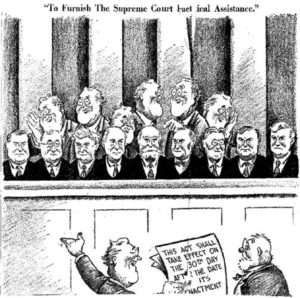
Like Vladeck, I think some of the issues that concern critics of the Court can be more effectively addressed in other ways. For example, in the Lawfare article, I explain how Congress can fix the flaws of the Callais decision by banning or restricting gerrymandering. It could also enact a binding ethics code for the justices. Justice Alito was wrong to suggest otherwise, back in 2023. That said, if your main goal is a sweeping reversal of much of the Court's recent jurisprudence, there may be no easy way to achieve that quickly without court-packing or something like it. I would argue that any benefits that might achieve are outweighed by the enormous costs of destroying judicial review.
In addition, if your objection to the Court's recent decisions is that they often don't do enough to constrain unconstitutional actions by other branches of government or by the states, court-packing is likely to make that problem worse, not better. Destroying judicial review won't enforce tighter constitutional constraints on the executive or bring back Roe v. Wade. To the contrary, it would largely destroy any hope of doing so.
In another recent piece, I assessed "non-packing" rationales for increasing the size of the Supreme Court. There, I argue that these rationales are mostly weak; and, to the extent they have merit, there are better ways to address them than an expansion that amounts to court-packing. I even outline possible ways to increase the size of the Court without creating an opportunity for court-packing (this would require allowing the party that doesn't hold the White House to pick some of the new justices).
The post Steve Vladeck's "Hard Questions About Court Expansion" appeared first on Reason Magazine.
Sacrifica ciò che è scomodo, mai il progetto. Il “pal-washing” in azione.
Un copione già noto
Il 9 ottobre 2026 il Comitato norvegese per il Nobel ha assegnato il Premio per la pace a Navanethem Pillay, giurista sudafricana di 85 anni, già giudice della Corte penale internazionale e Alta commissaria Onu per i diritti umani. La motivazione parla di una persona che ha aperto la strada a un ordine giuridico globale più completo. Il presidente del Comitato, Jorgen Watne Frydnes, ha aggiunto che il premio è un messaggio per chi attacca e mina il sistema internazionale e le sue istituzioni. Il verdetto è dichiaratamente politico, ed è su questo piano che va discusso.
La stessa figura che nel 2011 avrebbe «abbattuto» Gheddafi, spianando la strada al saccheggio del petrolio libico e alla schiavitù dei migranti africani, ora «abbatterebbe» Netanyahu, e preparerebbe così la riabilitazione di Israele. Il filo logico non sarebbe la morale né la pace, ma l’agenda dell’Open Society di George Soros: sacrificare i soggetti diventati scomodi, mai l’essenza del progetto. Qualcuno l’ha battezzata «pal-washing». La domanda di fondo è seria, perché chiede se dietro premi e giurisdizioni dell’ordine liberale ci sia una regolarità.
Occorre sottolineare che il copione è già noto. Vi ricordate quando Barack Obama ricevette il premio Nobel per la pace, inaugurando guerre su guerre? O vi ricordare i personaggi in cerca d’autore come Machado, Mohammadi, o i difensori dei criminali Ucraini? Ma andiamo per ordine.
Atto Primo: la Libia
Nel febbraio 2011 Pillay, Alta commissaria, chiese al Consiglio per i diritti umani un’azione vigorosa per fermare le violenze e chiamare i responsabili a risponderne; il Consiglio condannò le violazioni e istituì una commissione d’inchiesta. Il passaggio successivo toccò al Consiglio di sicurezza: il rinvio alla CPI con la risoluzione 1970, poi la 1973, approvata con dieci voti favorevoli e cinque astensioni (Brasile, Cina, Germania, India, Russia). Nessuno sostiene che Pillay abbia deciso la guerra. Conta la sequenza: il linguaggio dei diritti umani aprì la porta, quello della protezione dei civili autorizzò la forza, e l’operazione scivolò verso il cambio di regime. Già in aprile Lavrov accusava la NATO di eccedere il mandato, e un ministro francese ammetteva che il cambio di regime avrebbe richiesto un nuovo voto.
Poi i costi. Nel 2017 l’OIM documentò aste di migranti subsahariani nel sud della Libia, venduti per somme tra 200 e 500 dollari. Il nesso con il crollo dello Stato dopo il 2011 è la lettura più plausibile, benché la fonte documenti il fenomeno e non la sua causa. Il prezzo lo pagarono la Libia e i migranti; la cornice giuridica ne uscì, sul piano formale, intatta, anche se la controversia sul mandato avrebbe poi pesato sui veti di Mosca e Pechino in altri dossier.
Atto Secondo: Bibi
Il 21 novembre 2024 la Camera preliminare I della CPI emise mandati d’arresto per Netanyahu e per l’ex ministro della Difesa Gallant, per crimini di guerra e crimini contro l’umanità. Pillay aveva lasciato la Corte nel 2008, ma ha presieduto la Commissione d’inchiesta Onu che il 16 settembre 2025 ha concluso che Israele ha commesso genocidio a Gaza. Qui il «pal-washing» trova il suo meccanismo. Il diritto penale internazionale lavora su persone: un imputato, un’imputazione, un periodo. Se il caso si chiude con la sorte di un leader, si apre una cesura narrativa, il prima e il dopo di un uomo, dopo la quale lo Stato può presentarsi come reintegrato. La Libia offre l’analogia: là il caso si chiuse con la caduta di un uomo.
I limiti del percorso giocano a favore della lettura. La Corte non ha una polizia e l’esecuzione dei mandati dipende dagli Stati parte; la Commissione non è un tribunale e non parla a nome dell’intera Onu; lo stesso Comitato, riferisce AFP, ha detto che spetta a una corte stabilire se vi sia genocidio. Il premio non produce effetti giuridici, lo sappiamo, però produce legittimazione per un circuito che promette giustizia e non può garantirla.
Dobbiamo, poi, considerare che dinamiche del genere le abbiamo già viste più volte all’interno dell’ordine globalista che domina in Occidente. L’Open Society Foundations si presenta come il maggiore finanziatore privato al mondo di gruppi per giustizia, democrazia e diritti umani, attivo in oltre cento paesi, e Pillay ha ricevuto lo Stockholm Human Rights Award, lo stesso che nel 2011 è andato a Soros e a Neier. Sembra proprio che si ripeta di nuovo il pattern della agenda sorosiana, fatta di fondazioni, ONG, tribunali, commissioni e burocrazie che condividono un lessico e un orizzonte, quello di un ordine liberale da perfezionare e mai da rimettere in discussione. Chi opera dentro quel lessico può denunciare un governo, un leader, perfino uno Stato, ma non può contestare i presupposti dell’ordine che gli dà legittimità.
Alcuni obietteranno che la Commissione di Pillay attribuisce la responsabilità a Israele come Stato, non soltanto ai suoi leader, il che contraddice l’idea di un’operazione puramente personalizzante. Il secondo è la reazione. Netanyahu ha accusato il Comitato di aver perso la bussola morale, il Ministero degli Esteri israeliano ha parlato di una grottesca strumentalizzazione del premio, e Washington ha annunciato sanzioni contro la CPI poche ore dopo l’annuncio. Tutto vero. Ma avrebbe senso e valore se il sistema occidentale non fosse marcio fin dalle sue fondamenta, se il suo sistema giuridico funzionasse, ma così non è, sotto nessun aspetto (e abbiamo avuto già sufficienti dimostrazioni – non scordiamoci anche il caso Epstein).
Se nei prossimi dodici mesi la caduta politica di Netanyahu verrà presentata come chiusura del caso, anziché come una tappa di un procedimento che riguarda lo Stato, il «pal-washing» guadagnerà peso. Se i procedimenti proseguiranno oltre la sua persona, e se gli Stati parte eseguiranno i mandati, forse ne perderà. Allo stato delle prove la tesi è plausibile e, fino a smentita comprovata, questo è l’ennesimo Nobel della non-Pace, che non possiamo chiamare “guerra”.

On a recent episode of the Bulwark podcast, journalist Ron Brownstein described the election as a contest between “the wave versus the wall.” The wave being voter anger and President Donald Trump’s plummeting popularity. The wall being structural impediments to voters’ voices, such as gerrymanders and the Republican Party’s stark spending advantage. Now we know […]
The post Don’t let Musk and the billionaires buy America’s elections appeared first on Asia Times.
According to The Washington Post, "The chairman of the Republican-led House Oversight Committee is investigating two D.C.-based activist groups over hosting what he called 'jury nullification training sessions,' claiming that their instructions given to potential jurors were an illegal attempt to subvert federal prosecutors."
The committee chair in question, Rep. James Comer (R–Ky.), has set his sights on the groups known as Free DC and Harriet's Wildest Dreams because they, in Comer's words, believe "that potential jurors should not make decisions impartially based on applying the law as instructed to the facts presented before them in the case, but based on their subjective, personal beliefs and activist agendas."
I hate to break it to Comer, but many prominent members of America's Founding generation would have agreed with those D.C. activists.
The debate over jury nullification asks whether there is a proper place in our legal system for a jury to acquit, not because of any lack of evidence of a defendant's guilt, but because the jury believes the underlying law that was supposedly broken, or the prosecutor's particular enforcement of that law, to be unconstitutional.
In 1791, the influential Founding Father James Wilson, who was a signer of both the Declaration of Independence and the U.S. Constitution, delivered a widely discussed lecture on law at the College of Philadelphia. "Whoever would be obliged to obey a constitutional law, is justified in refusing to obey an unconstitutional act of the legislature," Wilson said. "When a question, even of this delicate nature, occurs, every one who is called to act, has a right to judge." Needless to say, jurors are among those "called to act" in this very manner. Jurors therefore have their own "right to judge" the constitutionality of the law (and prosecution) before them.
Thomas Jefferson made a similar point in a 1789 letter to Thomas Paine. "The trial by jury," Jefferson wrote, is "the only anchor ever yet imagined by man, by which a government can be held to the principles of its constitution." How else may a jury hold the government accountable to the principles of the Constitution than by judging for itself the constitutionality of the government's actions, including the actions of the police and prosecution?
According to Comer, the job of a juror is mechanically "applying the law as instructed to the facts presented before them in the case."
But that's not what Founding Fathers such as Wilson and Jefferson thought. They argued that the job of the juror was to apply the text of the Constitution to the actions of the government and to acquit the defendant if either the law or its enforcement came up short. As Alexis de Tocqueville put it in his great book, Democracy in America, the jury "places the real direction of society in the hands of the governed, or a portion of the governed, and not in that of the government."
The U.S. Supreme Court heard oral arguments this week in two cases that are worth keeping track of.
The post Jury Nullification Is Not a Crime appeared first on Reason Magazine.
Thanks to a 2005 DUI conviction in Pennsylvania, Edward Williams permanently lost the constitutional right to keep and bear arms. But he did not realize that until a decade later, and his confusion on that point is understandable.
The federal law that stripped Williams of his Second Amendment rights is commonly described as applying to "felons," and Williams' offense was a misdemeanor. But although his sentence did not include any time behind bars, his crime theoretically could have sent him to prison for up to five years. That was enough to trigger 18 USC 922(g)(1), which covers anyone convicted of "a crime punishable by imprisonment for a term exceeding one year."
When a lawyer alerted Williams to that wrinkle, which made his continued ownership of firearms a federal felony, he got rid of his guns. But he did not think that requirement was fair, reasonable, or constitutional, and this week a federal appeals court agreed. The U.S. Court of Appeals for the 3rd Circuit recognized a historical tradition of disarming "physically dangerous individuals" whose possession of firearms would pose a threat to public safety. But it said Williams plainly does not fit into that category.
"The federal government spent nearly a decade trying to permanently disarm a peaceable man over a nonviolent misdemeanor—and it lost bigly," says Brandon Combs, president of the Firearms Policy Coalition, which supported Williams' lawsuit. "The government does not get to turn a nonviolent conviction into a lifetime ban on exercising a constitutionally protected right."
The 3rd Circuit's en banc decision in Williams v. Attorney General affirms a 2023 ruling by a federal judge who likewise concluded that disarming Williams was unconstitutional. It elaborates on the logic of Range v. Attorney General, a 2023 decision that restored the gun rights of a Pennsylvania man who had been convicted of food stamp fraud. In both cases, the 3rd Circuit held that applying Section 922(g)(1) to the plaintiffs was not "consistent with this Nation's historical tradition of firearm regulation"—the Second Amendment test established by the Supreme Court's 2022 decision in New York State Rifle & Pistol Association v. Bruen.
Writing for the majority in Williams' case, 3rd Circuit Judge Paul Matey acknowledges that the Supreme Court has described "longstanding prohibitions on the possession of firearms by felons" as "presumptively lawful." But "those longstanding customs restricted the violently dangerous (within which some felons would be included), not felons writ large," he says. "Felons were restricted because they posed a physical danger, rather than for their offense of conviction."
Matey argues that "focusing on physical dangerousness corrects the erroneous argument" that "only law-abiding and responsible citizens can exercise the rights protected by the Second Amendment"—a claim that the Supreme Court rejected in the 2024 case United States v. Rahimi. "We find no history that supports disarming irresponsible people, where 'responsible' is defined by the whim of the sovereign or the will of the majority," he says, alluding to the danger of allowing legislators to whittle away at the Second Amendment by criminalizing an ever-widening range of conduct.
Matey emphasizes "the novelty of forever restricting all felons from possessing firearms for lawful purposes." The original restriction, which Congress approved in 1938 as part of the Federal Firearms Act, applied only to violent crimes such as murder, manslaughter, rape, kidnapping, robbery, and assault with a deadly weapon. In 1961, Congress expanded the ban to cover nonviolent crimes punishable by more than a year in prison.
Williams' 2005 DUI conviction qualified for two reasons. He had a prior DUI conviction, stemming from a 2000 arrest in State College. And when he was arrested again in Philadelphia four years later, his blood alcohol concentration was a whopping 0.223 percent. That made his second offense a first-degree misdemeanor, which carries a maximum prison sentence of five years.
Since then, Williams has stayed out of trouble. "He has done nothing violent, let alone dangerous, for over twenty years, and has held steady employment at the same job for over three decades," Matey notes. Williams drinks only occasionally, and a psychological evaluation found he "has a normal personality, without psychopathology and without addiction or violent tendencies."
The Justice Department nevertheless argued that Williams' continuing disarmament is consistent with the Bruen test, which requires historical analogs that are "relevantly similar" in motivation and scope. In making that case, the government relied mainly on early laws aimed at "habitual drunkards"—the same analogy that the Supreme Court unanimously rejected last June in United States v. Hemani, which involved the federal ban on gun possession by "unlawful" drug users.
Although the Justice Department "acknowledges it may proscribe Williams's possession of firearms only if he 'presently poses a physical danger if armed,'" Matey says, it "offers no evidence to establish this as the aim of the habitual drunkard laws." Those laws, the Supreme Court noted in Hemani, "did not seek to protect the public from violence so much as to protect habitual drunkards from themselves and their families from financial devastation."
Nor did the habitual drunkard laws permanently disarm people, as Section 922(g)(1) does. "Most statutes capped the commitment of habitual drunkards to the state inebriate asylum, prison, or hard labor to a few months or years," Matey notes. "Others provided for an indefinite period of incarceration, but had no indication that upon release individuals continued to forfeit their arms. Rather, once someone was 'safe' to 'go at large,' they were restored to the status of a full rights-bearing citizen."
Contrary to the considerations that the Supreme Court deemed relevant in Hemani, Matey says, the Justice Department "fails to show that Williams threatens to 'misuse[] a gun while intoxicated,' or that he 'poses a danger to himself or others as a result' of
alcohol abuse. In fact, much like those nineteenth-century drunkards released from custody and restored their rights, the record shows that Williams poses no present physical danger from the use of a firearm, or anything else."
The 3rd Circuit is one of three federal appeals courts that have allowed people with nonviolent felony records to argue that Section 922(g)(1) is unconstitutional as applied to them. But such challenges have been blocked in six circuits, notwithstanding compelling historical evidence that the law reaches much farther than the Second Amendment allows. So far, the Supreme Court has declined to accept any of the many petitions asking it to resolve that circuit split.
The post The 3rd Circuit Upholds the Gun Rights of a Man Who Committed a Nonviolent Misdemeanor 2 Decades Ago appeared first on Reason Magazine.
When a president starts with a predetermined policy and then goes looking for a statutory pretext to justify it, he is building on shaky ground. President Donald Trump illustrated that point once again in July, when he announced a third round of broad tariffs after his first two attempts ran into legal trouble.
Shortly after taking office in 2025, Trump claimed to have discovered a previously unnoticed delegation of extensive tariff authority in the International Emergency Economic Powers Act (IEEPA), a 1977 law that does not mention import taxes and had never been used to impose them. That claim was rejected by every court that considered it.
Last February, the Supreme Court ruled that IEEPA does not authorize tariffs at all. But Trump had a backup plan: Hours after that decision, he announced another sweeping set of tariffs, this time relying on Section 122 of the Trade Act of 1974.
That provision allows tariffs in response to "fundamental international payments problems" caused by "serious United States balance-of-payments deficits." In May, the U.S. Court of International Trade (CIT) ruled that the new tariffs were illegal because Trump had failed to "identify balance-of-payments deficits within the meaning of Section 122."
Although that decision was stayed pending appeal, Trump's Section 122 tariffs, which were subject to a 150-day statutory limit, expired on July 24. Trump then switched to Plan C, invoking Section 301 of the Trade Act, which authorizes tariffs in response to a foreign "act, policy, or practice" that is "unreasonable or discriminatory" and "burdens or restricts" U.S. commerce.
Trump's Section 301 tariffs supposedly targeted countries that had failed to "impose and effectively enforce a prohibition on the importation of goods produced with forced labor." The alleged offenders included 86 economies that accounted for nearly all U.S. imports.
In separate complaints, the Liberty Justice Center (LJC) and the law firm Akin Gump, which had played leading roles in challenging Trump's prior tariffs, immediately asked the CIT to block the new import taxes. By and large, they noted, the government had failed to explain how the targeted countries had fallen short, how their alleged failures burdened U.S. commerce, or why the new tariffs could be expected to ameliorate the problem they were supposed to address.
The LJC argued that the forced-labor issue was "simply a pretext" for reinstating Trump's "invalidated global tariff regime." It added that Trump's reading of Section 301, like his interpretation of IEEPA, would violate the "major questions" doctrine, which requires clear congressional authorization for policies of "vast economic and political significance."
This was Trump's "third attempt" to "impose essentially the same set of sweeping global tariffs," Akin Gump's lawyers wrote. "The third time's not the charm."
The post Trump Keeps Coming Up With Legally Dubious Tariff Justifications appeared first on Reason Magazine.

A federal judge in New York has blocked the Trump administration from entering into, renewing or expanding contracts for a controversial advertising campaign, freezing $20 million in funding allocated through the Department of Homeland Security (DHS) amid allegations that public money was being used for partisan political messaging.
RELATED: Trump Demands Leadership Change in Ukraine Amid Zelensky Rift
U.S. District Judge Jennifer Rochon of the Southern District of New York issued a 14-day temporary restraining order on Sunday, citing the risk of “irreparable harm” before publishing her full legal reasoning. The ruling came just over three weeks before the midterm elections.
The lawsuit was filed by a coalition of civic organizations, including the nonpartisan group Common Cause, represented by the legal firm Democracy Forward. The plaintiffs argued that the campaign violated federal restrictions on using funds appropriated by Congress for partisan advertising or propaganda.
“There is no legal justification or precedent for the president to use the machinery of government and public funds to influence election results,” the plaintiffs said in a statement following the ruling.
The advertisements, which began airing in late September, feature footage from Donald Trump’s previous presidential campaign, excerpts from speeches warning of the threat of communism and references to recent military operations, including U.S. military action against Iran and the abduction of Venezuelan President Nicolás Maduro.
The Justice Department argued late Saturday that the court order was unnecessary because the advertising campaign was scheduled to end on Sunday. The judge nevertheless imposed the restrictions.
The White House has defended the spending, describing the advertisements as “public service and educational messages” and rejecting allegations that they constitute electoral propaganda. Trump has maintained that the campaign promotes the United States rather than himself, noting that he is not a candidate in the midterm elections.
The president has also offered to cover the cost with personal funds or money from his political campaign if authorities determine that the expenditure was improper. Government officials, however, have said there are no immediate plans for reimbursement.
The controversy has drawn criticism across party lines. Republican Senate Majority Leader John Thune has questioned the use of taxpayer money to finance the advertisements, while the Democratic National Committee has filed separate lawsuits against the administration over the same issue.