❌

Reading view

Europeans Rise Up in Resistance to Austerity Measures
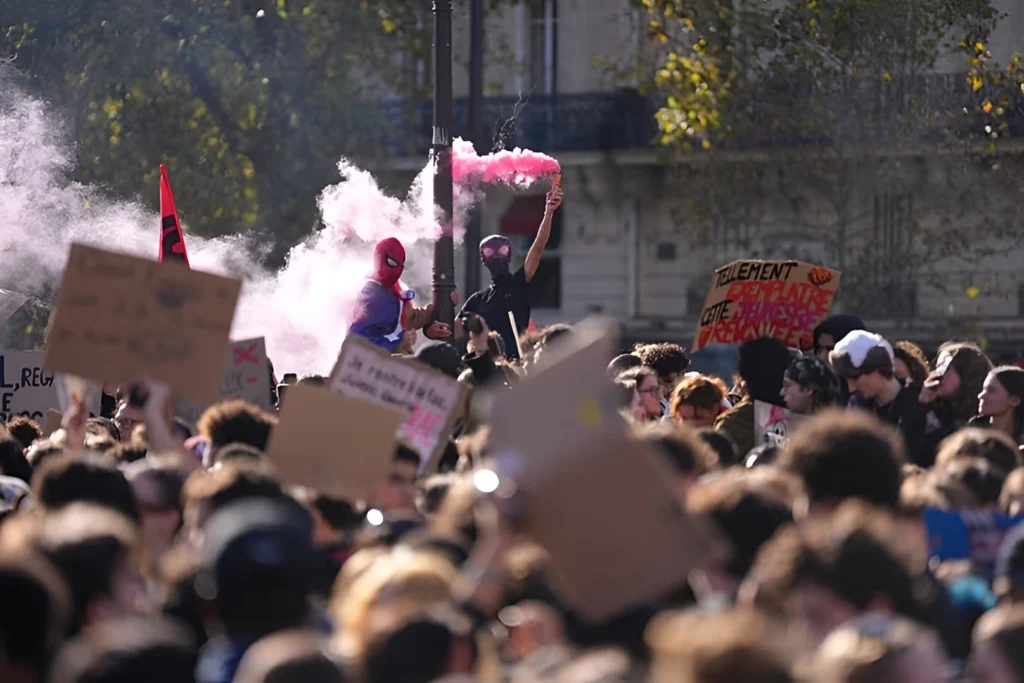
Unrest across eight countries reveals a growing working-class rejection of public spending cuts.

Across Europe, a widespread wave of public protests and labor strikes unfolded during September and October 2026. Demonstrations took place in major urban hubs across France, Belgium, Italy, Albania, Greece, Spain, Portugal, and Germany.

RELATED:
Madrid Protesters Unite to Defend Housing and Public Education

While individual mobilizations emerged from specific domestic triggers, the overarching unrest reflects a shared socioeconomic environment characterized by declining purchasing power, public budget austerity, rising energy prices, and real estate speculation.

The economic backdrop of late 2026 includes sustained structural pressure on working-class households. Energy market shifts driven by international conflicts significantly escalated fuel and electricity costs across the continent, directly inflating the cost of basic consumer goods.

In urban centers, market-driven housing policies and real estate deregulation led to steep increases in residential rents, outstripping wage growth and increasing housing insecurity for young workers and low-income families.

Mainstream institutional coverage frequently characterizes these events through a lens of isolated public order disturbances or temporary economic grievances.

Labor organizations, tenant unions, student groups, and neighborhood alliances have increasingly framed their demands around public resource protection, wage indexation, market regulation, and social welfare preservation.

Protests in Belgium escalate into clashes with Police

🔻 Protests by student and school groups in Belgium over rising education costs and restricted access to higher education turned violent in central Brussels and the city of Liège. Police used tear gas and water cannon to… pic.twitter.com/Nm32hPzgvR

— Tehran Times (@TehranTimes79) October 18, 2026

Roots of the Uprising: Albania, Spain, and France

Albania: The Vjosa-Narta Resistance and Sazan Island Mobilizations

In Albania, mass demonstrations began in May 2026 following public controversy surrounding large-scale real estate and luxury tourism developments along ecologically sensitive coastal zones, related to the family of United States President Donald Trump.

Known as the Flamingo Revolution, the protests were initially triggered by foreign investment proposals backed by international private equity firms, including United States-based entities.

These proposals targeted protected areas in the Vjosa-Narta lagoon delta and Sazan Island, a former military territory off the coast of Vlorë.  

The movement escalated after an incident on May 30, 2026, when private security personnel physically removed local environmental activists at a development site in Zvërnec.

By June, demonstrations expanded from coastal municipalities into the capital, Tirana. Organized primarily by environmental groups, university student assemblies, and grassroots youth coalitions, the protesters demanded an immediate halt to coastal land privatization, the enforcement of environmental protections under European Union standards, and the resignation of Prime Minister Edi Rama.

On June 9, 2026, tens of thousands gathered in central Tirana. In response, Prime Minister Edi Rama publicly dismissed the critique regarding foreign capital involvement, stating in June that the international scrutiny was primarily driven by high-profile political names associated with the investment project rather than environmental policy.  

Throughout July and August 2026, daily civic actions maintained a continuous presence in Tirana, marking 100 consecutive days of anti-government demonstrations by September 8, 2026. By mid-September, the focus expanded as university and high school student assemblies joined the broader movement to protest rising living costs, tuition increases, and systemic public corruption.

Tensions culminated between October 13 and October 18, 2026, when thousands of demonstrators assembled outside the Ministry of Education and Prime Minister Rama’s offices. Clashes erupted between protesters and state security forces, leading to the deployment of tear gas and water cannons by law enforcement.

Official police reports confirmed over 160 detentions and nearly 400 individuals charged following widespread civil disobedience and public building blockades in central Tirana.

Massive protests in France against the high cost of living and the deterioration of public services. pic.twitter.com/H3FUK6kcvC

— Globe Eye News (@GlobeEyeNews) October 18, 2026

Spain: The Pensioner Eviction and the National Housing Crisis

In Spain, social unrest escalated rapidly on September 21, 2026, surrounding the national housing crisis. On September 23, 2026, police enforced the court-ordered eviction of María del Carmen “Maricarmen” Abascal, an 87-year-old resident in Madrid, following a legal dispute with property investors.

By September 30, 2026, housing collectives and the Madrid Tenants’ Union (Sindicato de Inquilinas e inquilinos de Madrid) established a continuous protest encampment in Madrid’s Puerta del Sol, which grew to over 1,200 tents.

Similar encampments emerged in Barcelona’s Plaça de Catalunya and Málaga’s Plaza de la Constitución. According to data from the Youth Council of Spain, average residential rent prices had reached €1,176 per month, absorbing roughly 98.7 percent of the average young worker’s salary following a decade of steady price increases.

Protesters demanded an immediate legal cap on rent prices, a total ban on short-term vacation rentals, the expropriation of residential housing units owned by private investment funds, and the passage of strict tenant protection laws.

The central government headed by Prime Minister Pedro Sánchez presented two urgent decree-laws proposing a ban on evictions for vulnerable residents until 2030 and a two-year extension on existing leases.

However, on October 2, 2026, the Spanish Congress rejected the legislation following opposition votes from the People’s Party, Vox, and Together for Catalonia (Junts). Opposition spokesperson Cuca Gamarra argued that affordability could only be achieved through increased residential construction, while Junts spokesperson Míriam Nogueras stated the decree would create legal market uncertainty. In contrast, tenant union representatives called for nationwide general mobilizations to enforce housing rights.

📌KNE: Victory for the struggle of the school students in France!
🔴“Victory for the struggle of the school students in France!”, emphasises the Press Office of the Central Council of KNE in a statement on the large-scale student protests, noting…
🔗https://t.co/sxtH89fNp0…

— International Relations Section of the CC of KKE (@intern_kke) October 5, 2026

France: Educational Strikes and Fuel Price Mobilizations

In France, a distinct wave of social unrest began on September 15, 2026, sparked by sharp increases in retail fuel costs. Driven by regional maritime supply disruptions and international market volatility, average diesel prices in France reached €2.37 per liter, nearing historical highs.

Initial blockades were established by transport workers, agricultural workers, and commercial fishermen who obstructed access to major fuel depots in Frontignan and port facilities in Nice and Sète.

This economic disruption coincided directly with public sector labor actions in secondary and higher education.

On September 18, 2026, teaching staff and suburban education workers across the Île-de-France region initiated strikes over class overcrowding, wage stagnation, and severe administrative budget reductions. Student assemblies subsequently blockaded high schools and university campuses in Paris, Lyon, and Marseille.

The movement saw a broad convergence of trade unions, including the Confédération Générale du Travail (CGT) and Solidaires, along with student organizations and former Gilets Jaunes (Yellow Vests) networks.

The protesters demanded the immediate indexation of wages to current inflation rates, increased state spending on education and healthcare, and emergency price caps on petroleum products.

In response to the growing disruptions, Prime Minister Sébastien Lecornu announced on September 16, 2026, that the government would increase state fuel subsidies to the maximum allowable limit under European Union rules.

When protests continued into October, the government released 10 million barrels of strategic diesel reserves to stabilize market supply, while law enforcement authorities deployed heavy riot control measures, leading to thousands of detentions nationwide.

Zakharova calls out Macron's double standard on protests

Russian MFA spokeswoman says Macron demands "uncompromising" crackdowns on French rioters while the West lectures others on "human rights."

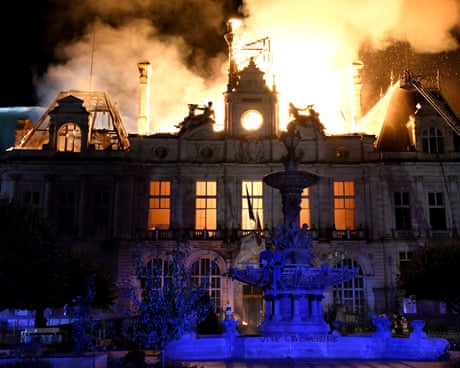
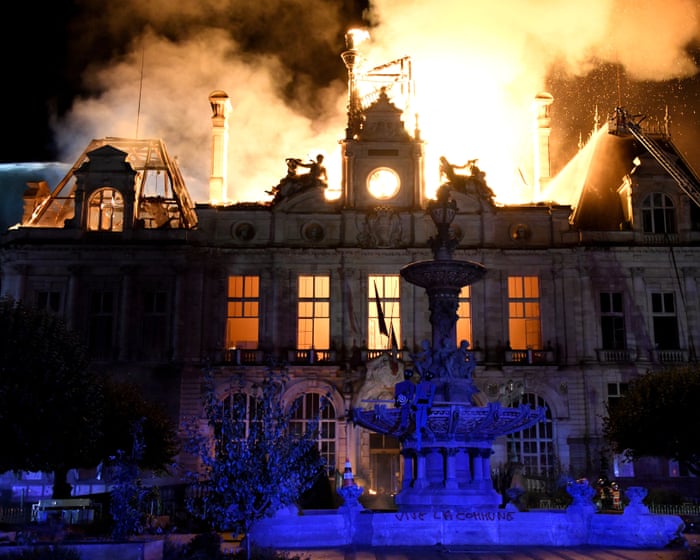
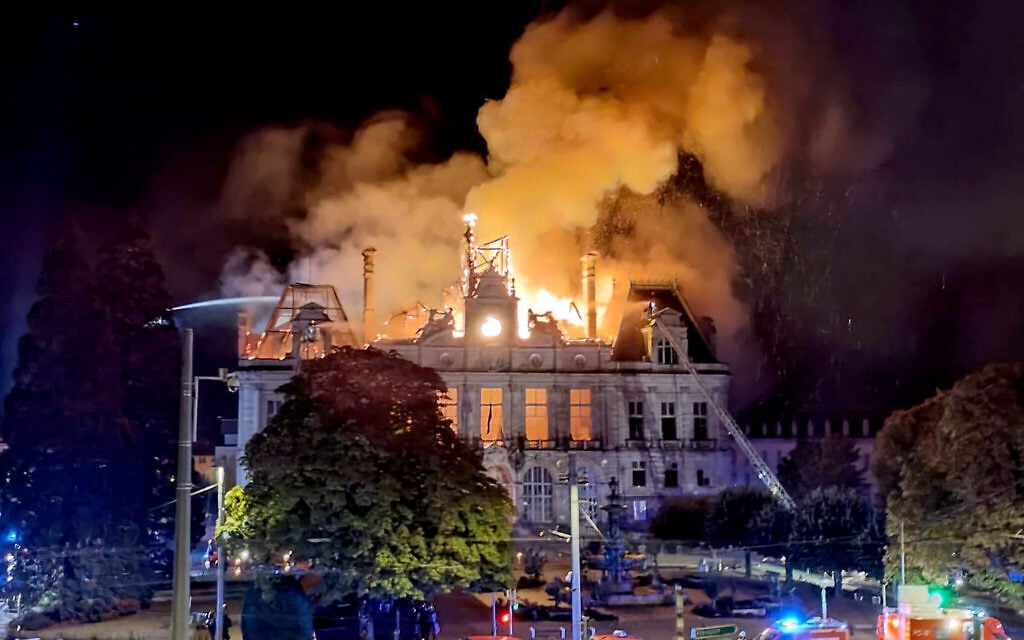
As Limoges City Hall burns, Zakharova notes: the people attacking Europe aren't… pic.twitter.com/mcwYHHfFav

— Sputnik (@SputnikInt) October 19, 2026

Escalation Across the Mediterranean: Greece and Portugal

Greece: Public Sector Strikes and Anti-Privatization Mobilizations

In Greece, social mobilizations accelerated on September 5 2026, driven by rising electricity tariffs, real estate inflation, and persistent wage stagnation.

The unrest gained momentum following coordinated labor actions organized by the All-Workers Militant Front (PAME) and supported by major public sector confederations, including the Civil Servants’ Confederation (ADEDY).

On September 28, 2026, nationwide strikes disrupted public transport, maritime ferry connections between the mainland and Aegean islands, and municipal services.

In Athens, over 45,000 demonstrators marched toward Syntagma Square in front of the Hellenic Parliament. Student assemblies from the National Technical University of Athens and the National and Kapodistrian University of Athens joined the marches, blocking central thoroughfares.

Protesters focused their demands on structural economic reforms, including:

•          The immediate restoration of collective bargaining rights dissolved under previous austerity frameworks.

•          Strict state price controls on essential consumer goods and electricity tariffs.

•          Increased public funding for higher education and healthcare infrastructure.

•          Direct wage indexation to compensate for post-2022 inflationary losses.

Addressing parliament in late September, Prime Minister Kyriakos Mitsotakis defended the administration’s fiscal stance, stating that government policy must maintain strict fiscal discipline to ensure sovereign debt stability.

📌Dimitris Koutsoumbas, GS of the CC of the KKE, on the youth protests
🔴In Spain, people are taking to the streets becuase they are being evicted from their homes. In France, because they’re being denied an education. In Greece, students are setting up tents in Syntagma Square… pic.twitter.com/qO5UR3LWoG

— International Relations Section of the CC of KKE (@intern_kke) October 15, 2026

Portugal: The Housing Dignity Movement (Vida Justa)

In Portugal, demonstrations expanded across major urban centers during the first week of October 2026. Catalyzed by the civil movement Just Life (Vida Justa) alongside tenant rights group Door to Door (Porta a Porta) and university student unions, tens of thousands gathered in Lisbon, Porto, Coimbra, and Faro.

The central issue driving the protests was real estate speculation and the expansion of short-term tourist accommodations, which had led to significant residential displacement in urban neighborhoods.

According to national statistical reporting, residential property prices in Lisbon had increased by 12.4 percent year-over-year by mid-2026, while median national wages remained under €1,050 per month.

On October 3, 2026, demonstration columns marched along Avenida da Liberdade in Lisbon toward the Assembly of the Republic. Speakers at the rally called for immediate state intervention to secure affordable living conditions, demanding:

•          An immediate freeze on residential lease renewals and rent price caps indexed to local wage levels.

•          The mandatory revocation of tax incentives granted to non-resident foreign real estate investors.

•          Substantial state investment in public housing construction.

•          An increase in the national minimum wage to €1,000 per month to offset basic living expenses.

Government representatives pointed to existing tax relief programs for young buyers, but grassroots spokespersons rejected these measures as inadequate against systemic market speculation.

Convergence and Expansion: Germany, Italy, and Belgium

Germany: Heating Cost Protests and Urban Rent Freezes

In Germany, demonstrations gathered force across major industrial and urban regions in mid-October, led by trade union factions, tenant associations (Mieterverein), and progressive youth organizations.

The mobilizations were prompted by public sector wage negotiations and sharp increases in seasonal municipal heating and gas bills following regional energy supply realignments.

Protests took place in Berlin, Leipzig, Cologne, and Hamburg. Demonstrators assembled at the Brandenburger Tor in Berlin, calling for:

•          Federal legislative caps on natural gas and district heating charges.

•          A nationwide five-year freeze on residential rents in cities exceeding strict vacancy limits.

•          Higher public investment in municipal transport networks and social housing initiatives.

•          Wage increases for public sector employees above the annual core inflation rate.

Federal officials acknowledged the economic burden placed on households, but emphasized that national budgetary constraints limited further large-scale energy price subsidies.

🇪🇸🔥 #MADRID – The Madrid teachers' demonstration, on the first day of the call for an unlimited strike, links up with the encampment at Plaza del Sol – who have been there since late September 2026 for the right to housing, against tenant evictions, against the surge in prices…

— World_Breaking_News03 (@Breaking2003) October 14, 2026

Italy: The “Italia in Piazza” General Strike and Cost-of-Living Mobilization

In Italy, social tension culminated on October 17, 2026, in a coordinated general mobilization organized under the banner “Italy in the Square” (Italia in Piazza). The action was spearheaded by grassroots trade unions, including the Unione Sindacale di Base (USB) and COBAS, alongside student collectives and housing rights coalitions.

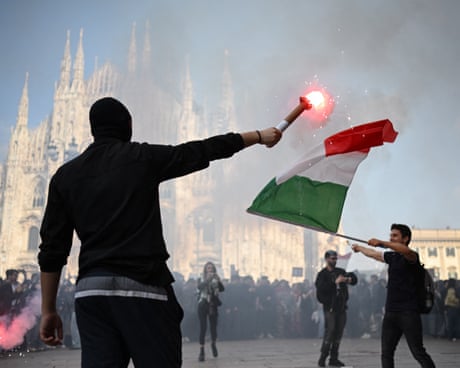
Demonstrations affected major urban centers, including Rome, Milan, Turin, and Naples. In Milan, an estimated 60,000 people marched through the city center, resulting in the temporary suspension of public transit lines and commercial activity.

Protesters cited declining real wages, cuts to basic social protection mechanisms, and rising utility prices as the primary drivers of the mobilization.

Key demands raised by Italian protest organizers included:

•          An immediate statutory minimum wage of €10 per hour.

•          The automatic reintroduction of wage indexation tied to inflation metrics (scala mobile).

•          Increased public funding for national healthcare (Servizio Sanitario Nazionale) and public transit systems.

•          A moratorium on residential evictions involving primary residences for low-income households.

Prime Minister Giorgia Meloni issued a statement from Rome, characterizing the disruptions as politically motivated actions designed to destabilize public order during delicate national budget negotiations.

MILAN RIOTS 🙏🔥 🇮🇹

Milan is experiencing weekend unrest that began as cost-of-living protests and escalated into looting, vandalism, and clashes with police.

On Saturday and Sunday (17–19 October 2026), demonstrations in Milan and other northern Italian cities (including Turin… pic.twitter.com/GuQVFDoahE

— Sheila17 (@sheila17_xo) October 19, 2026

Belgium: Public Service Strikes and Educational Budget Mobilizations

Simultaneously, on October 17, 2026, Belgium experienced significant public sector disruptions centered in Brussels and Liège. Organized by joint trade union fronts (FGTB/ABVV and CSC/ACV) in coordination with secondary and higher education student unions, the actions brought together public transport operators, municipal sanitation staff, and academic workers.

In Brussels, thousands of demonstrators gathered near the European Quarter, marching toward the federal parliament building. The movement focused on rising urban living costs and proposed structural spending cuts to secondary and university educational systems.

Protesters demanded:

  • The full preservation and enforcement of Belgium’s automatic wage indexation system across all employment sectors.
  • Increased federal budget allocations for public education, student housing, and public transit.
  • Legislative action to curb commercial energy price speculation and residential real estate inflation.

Federal government spokespersons stated that maintaining current fiscal trajectories was necessary to adhere to European Union public debt standards, while indicating a willingness to continue sector-specific labor dialogue.

Institutional Reactions and State Repression vs. Protesters’ Demands

As demonstrations converged across the European continent through mid-October 2026, state authorities responded with a combination of security deployments, judicial actions, and public condemnations.

Government officials framed the widespread public disruptions as threats to political stability and fiscal order, while protest coalitions emphasized that state actions prioritized debt constraints and elite economic interests over the material needs of the population.

In France, the executive branch adopted an uncompromising stance. President Emmanuel Macron publicly criticized what he described as “unbridled violence” following the escalation of high school blockades, fuel port disruptions, and urban demonstrations.

Interior Ministry directives led to the widespread deployment of specialized CRS riot control units, water cannons, and tear gas in Paris, Lyon, Marseille, and Limoges.

Law enforcement agencies reported making between 1,800 and 2,400 detentions nationwide by mid-October, with human rights monitoring groups and legal collectives expressing concern over indiscriminate police tactics, pre-emptive arrests, and severe injuries sustained by secondary school students.

In Southern Europe, local administrations similarly sought to delegitimize the protest movements. In Italy, Prime Minister Giorgia Meloni’s government characterized the “Italia in Piazza” general strike as a politically motivated attempt by opposition factions to destabilize the nation during crucial state budget negotiations.

Police forces in Milan and Rome deployed water cannons and heavy cordons to clear key arterial roads and transit hubs blocked by union members and youth assemblies. In Albania, Prime Minister Edi Rama argued that persistent anti-government and student demonstrations—initially sparked by the “Flamingo Revolution” against coastal real estate privatization in Sazan and Vjosa-Narta—endangered the country’s economic integration and accession standing with the European Union.

Albanian authorities utilized water cannons and tear gas against university student blockades in Tirana, leading to dozens of detentions and criminal charges.

Across Spain and Portugal, state responses highlighted severe institutional divisions over economic reform. While Spanish local police enforced court-ordered evictions in Madrid and cleared public squares, parliamentary opposition parties blocked proposed national lease extensions and eviction bans.

In Portugal, government spokespersons maintained that market-based housing strategies and tax incentives for foreign buyers were necessary to attract capital, directly rejecting the Vida Justa movement’s demands for immediate rent controls and foreign investment caps.

From Localized Grievances to Pan-European Class Solidarity

What began as distinct domestic actions, resistance against speculative real estate projects on Albania’s protected coastline, outrage over elderly evictions and surging rents in Spain, and secondary school labor strikes over state underfunding in France, rapidly converged into a interconnected continental mobilization.

This convergence reflects shared structural drivers: the systematic erosion of real wages, the commodification of urban housing, the decline of essential public services under sustained fiscal austerity, and the compounding impact of energy inflation.

Across national borders, working-class households, student coalitions, and independent trade unions have consistently targeted the policy frameworks that prioritize fiscal deficit targets and private asset protection over public welfare and living standards.

The organizational strategy of the autumn 2026 movements highlights a shift in popular mobilization methods. By utilizing decentralized communications, student assemblies, neighborhood collectives, and grassroots trade union alliances, protest networks frequently bypassed established political parties.

This organizational horizontalism enabled rapid, cross-sector coordination—demonstrated by the simultaneous national strikes and urban blockades in France, Italy, Belgium, and Portugal on October 17, 2026.

As winter approaches, the continued alignment of labor unions, housing organizations, and youth movements suggests that Europe’s autumn of discontent may mark the beginning of a sustained, pan-European struggle for structural economic reform, market regulation, and social welfare preservation.

Sources: TeleSUR – Al Jazeera – Democracy Now – BBC – DW – France 24 – EFE – AFP – AP – The guardian – El País – El Mundo – La Radio del Sur – La República – RTVE – Xinhua – CGTN – Press TV – Anadolu Agency – RT – TRT World
  •  

Meloni Prepares New Security Measures After Milan Riots Leave Hundreds Detained

Italian Prime Minister Giorgia Meloni has convened an emergency government meeting following two days of violent unrest in Milan and other northern cities, where demonstrators clashed with police, looted shops and damaged public property during protests over living costs and deteriorating public services.

Police brought 271 people to police headquarters following Sunday’s disturbances in Milan, including 220 minors. Of those detained, 32 were formally arrested and another 28 were reported to the judicial authorities, according to figures released on Monday, 19th October.

The violence has prompted the Italian government to consider further restrictions on those involved in violent demonstrations, potentially introducing additional powers directed at organised disorder and juvenile offenders.

Milan city centre hit by looting

The disturbances began during demonstrations on Saturday, 17th October, organised amid growing dissatisfaction over household expenses, public services and wider political grievances.

Although the protests initially included peaceful participants, groups of masked individuals subsequently confronted riot police in central Milan. Officers used tear gas and water cannon as demonstrators erected burning barricades and threw objects at security personnel.

The unrest continued on Sunday, when shops were attacked close to Piazza del Duomo, one of Milan’s principal commercial and tourist areas.

Among the premises targeted were branches of Decathlon, Arc’teryx and Vodafone. Television footage showed damaged shopfronts, overturned street furniture and burning rubbish containers.

According to police figures reported on Monday, 174 of those taken to police headquarters were subjected to preventive detention measures introduced under recent Italian security legislation.

Fourteen members of the security services were reported injured during Sunday’s disturbances, including ten police officers and four members of the municipal police.

The judicial authorities are examining the conduct of individuals suspected of taking part in attacks on businesses and confrontations with officers. Prosecutors have sought custodial measures against several adults accused of offences including devastation, looting and aggravated resistance.

The large proportion of minors among those detained has become a central issue in the political response.

Violence spreads across northern Italy

Milan was not the only city affected by disorder. Saturday’s demonstrations also produced confrontations in Turin, Bologna, Brescia and Bergamo.

Italian police reported arrests across the affected cities, while the scale and organisation of the disturbances have raised questions about whether different groups were acting independently or using demonstrations as opportunities for coordinated violence.

There is not yet sufficient publicly established evidence to attribute the disorder to a single organisation or political movement.

The clashes coincided with major protests in neighbouring France, where similar concerns over living costs and public administration have contributed to increasingly confrontational demonstrations.

Although the grievances overlap, the Italian and French movements have different political backgrounds and organisational structures.

Government considers emergency legislation

Following a meeting at Palazzo Chigi on Monday, Meloni’s government indicated that it was considering a legislative response, potentially through an emergency decree.

According to details of the government discussions, proposals under examination include additional measures against violent offences, changes to preventive policing and possible restrictions addressing road blockages.

Some measures could be drawn from security legislation already under consideration in the Italian Senate. Ministers have also discussed the need for more effective intervention against juvenile offenders.

The meeting included Deputy Prime Ministers Matteo Salvini and Antonio Tajani, Interior Minister Matteo Piantedosi, Defence Minister Guido Crosetto and senior officials from the police, Carabinieri and intelligence services.

The government has stressed that peaceful demonstrations must remain protected while arguing that violence and organised destruction require a stronger response.

No final legislative text had been adopted at the conclusion of Monday’s meeting. A decree could be considered by the Council of Ministers as early as Tuesday, although the precise content remains subject to further examination.

Dispute over responsibility for policing

The unrest has also produced a dispute between Milan’s municipal authorities and the national government.

Mayor Giuseppe Sala questioned the adequacy of the policing arrangements, arguing that the number of officers initially deployed was insufficient to control the disturbances.

Interior Minister Matteo Piantedosi rejected that criticism, while senior government figures accused local political leaders of failing to condemn the violence unequivocally.

The disagreement reflects a wider question over how responsibility for anticipating and containing serious public disorder should be divided between local administrations and national security authorities.

Italy’s opposition has also challenged the government’s handling of the disturbances. Former Prime Minister Matteo Renzi criticised Meloni and Piantedosi over their failure to prevent the violence, calling for a change in leadership at the Interior Ministry.

The political argument is likely to intensify if the government proceeds with emergency legislation. Supporters of stronger police powers argue that the existing framework is insufficient to deal with rapidly organised disturbances, while opponents will scrutinise the proportionality of new restrictions and their effect on peaceful protest.

The immediate test for the government will be whether additional legal powers can improve public-order operations without replacing effective policing, intelligence gathering and judicial enforcement.

  •  

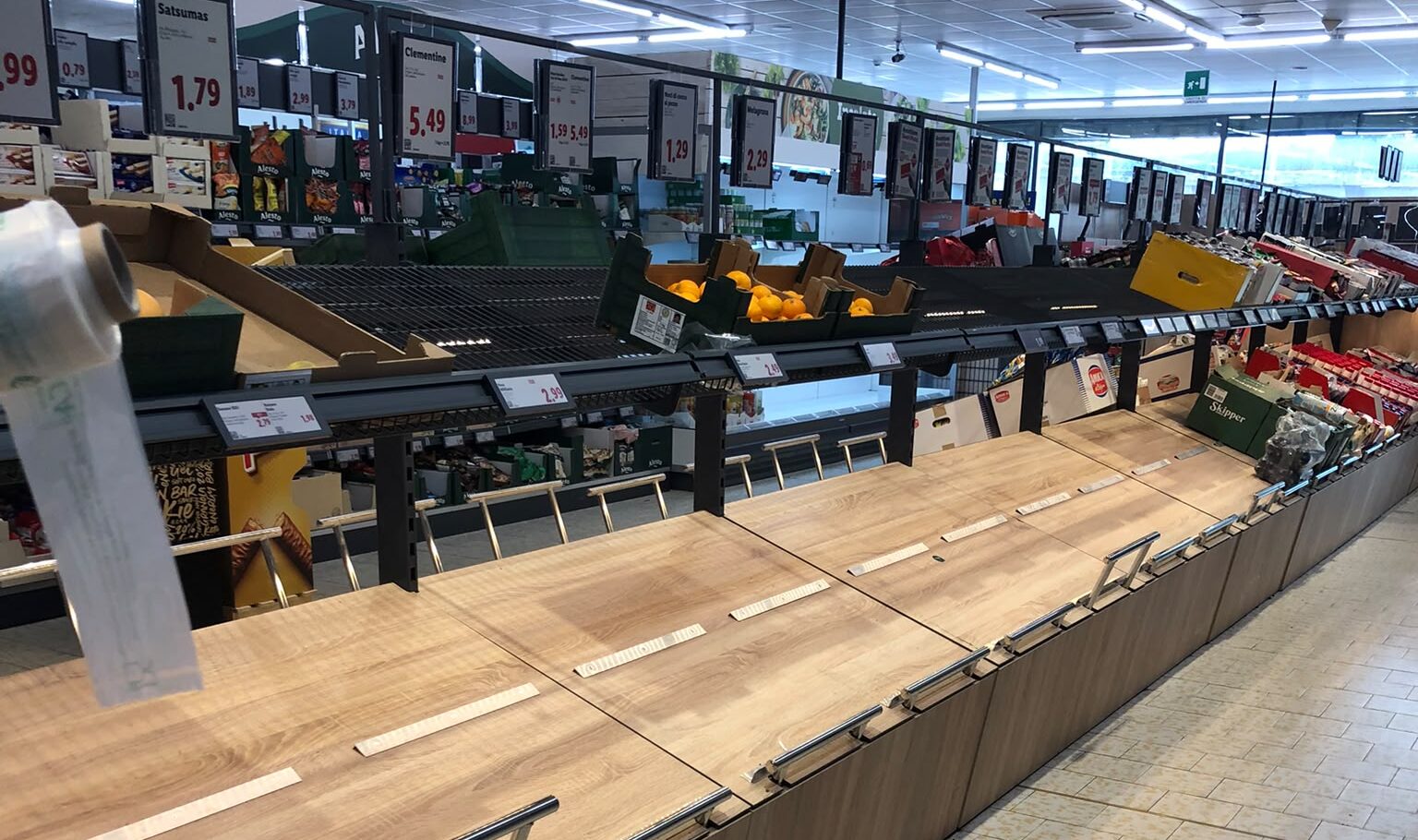
The forgotten protests: empty shelves and blocked roads in southern Italy, ignored by the media, reveal neglect by Meloni and EU

As protests ripple through big cities across the continent, a quieter, more forgotten population at Europe’s edge sits through weeks of strikes and blockades, while largely ignored. 

Italy’s southern regions of Puglia, Calabria, Sicily, Molise and Basilicata are facing empty supermarket shelves and plummeting fuel supplies since transport and agriculture workers have been protesting against climbing costs of living. 

Entire sectors have been put on pause due to the excessive costs it now takes to run them, from delivering food goods to producing them, for unbalanced competition with foreign suppliers and sustained neglect from Rome. 

While protestors in large cities like Milan and Bologna joined a European choir of protests fighting unaffordable housing last weekend, truck drivers from Bari to Palermo have joined in blocking roads to important ports and highways connecting isolated southern regions, and denouncing the outrageous costs of fertilisers, seeds, and fuel for tractors and transport for over two weeks.

“For us, and for the community, it’s become impossible to face the costs of fuel,” Luigi Di Benedetto, manager of an agriculture company in Caltagirone, Sicily, told EUobserver. 

“Italy import products that do not meet legal specifications,” he said, echoing the worries of his colleagues and fellow protestors, since the market was flooded with cheaper foreign imports, which have left them unable to pay the bills.

This article continues, but the full version is available only to EUobserver.com subscribers. Visit account.euobserver.com/membership

  •  

Italy is at war with Russia, the State Attorney General’s office says

If the State considers itself to be at war, why does it not state so where the Constitution requires it to do so?

Join us on Telegram, X, and VK.

Contact us: info@strategic-culture.su

The Ravenna case

It all begins in Ravenna, a historic city and major Italian port on the Adriatic coast. The port of Ravenna is a civilian port: bulk cargo, fertilizers, containers, cruise ships. Yet in a brief filed this summer with the Council of State, the State Attorney General’s Office attributed “military significance” to it within the country’s maritime defense system. The reason lies in a single sentence: making certain data public would pose an unacceptable risk because “a ‘piecemeal’ and ‘hybrid’ world war is underway, involving, among others, Italy as well.”

The data did not consist of routes, schedules, or ship names. They were aggregate figures: the amount of military equipment that left the port in 2025, broken down by four-month period and categorized as exports or transit. Journalist Linda Maggiori had requested this information in January under the general right of access to public information—Italy’s equivalent of the FOIA—which does not require justification. On October 13, Il Fatto Quotidiano turned the statement into a national issue. On October 16, the Sixth Section of the Council of State rejected the Customs Agency’s appeal.

In February, the Customs Agency, which reports to the Ministry of Economy and Finance (MEF), denied the request entirely, citing national security, public order, and commercial confidentiality. Maggiori, represented by attorney Andrea Maestri, filed an appeal with the Emilia-Romagna Regional Administrative Court (TAR), which on July 1 partially upheld the appeal: the quantities must be made public because the numerical data is “neutral,” while the destinations may remain confidential. Customs, represented by the State Attorney’s Office, filed an appeal. The Council of State upheld the Regional Administrative Court’s ruling: the administration failed to demonstrate either the necessity or the concrete nature of the harm. It also noted “apparently contradictory” conduct, as the Livorno Customs Office had previously provided similar data without objection.

In February 2025, approximately 13 metric tons of forged parts bound for an Israeli defense company were seized in Ravenna without export authorization; the proceedings are ongoing, and the presumption of innocence applies. It appears that on October 14 of this year, another 4 metric tons were at the port.

What does “war” mean, who decides, and the arms law

The word has three meanings, and memory confuses them. The first is constitutional. Article 11 establishes that Italy “rejects war as an instrument of aggression against the freedom of other peoples and as a means of resolving international disputes.” Article 78 entrusts the Chambers with the authority to declare a state of war and to grant the necessary powers to the government; Article 87 assigns the declaration of war to the President of the Republic. In the history of the Republic, a state of war has never been declared: neither in 1991, nor for Kosovo, Afghanistan, or Libya.

The second meaning is international: under international humanitarian law, armed conflict exists de facto, but supplying weapons to a belligerent party—according to prevailing legal opinion and that of the International Committee of the Red Cross—does not make one a party to the conflict. The third issue is political-strategic. “Hybrid warfare” (cyberattacks, sabotage, disinformation below the threshold of armed conflict) and “proxy war” are analytical tools, not legal categories. In a judicial ruling, therefore, a political term was used to justify an exception to a legal right. The Council of State rejected the postponement.

Parliament declares a state of war, authorizes missions (Law 145/2016), and receives the annual report on exports. The government authorizes exports through the UAMA of the Ministry of Foreign Affairs; the Prime Minister is the sole custodian of state secrets (Law 124/2007), under the oversight of COPASIR. The President of the Republic chairs the Supreme Defense Council. The Ministry of Defense signs the classified aid packages for Ukraine. The State Attorney’s Office, which reports to the Prime Minister’s Office, defends government agencies in court: its briefs are legal documents, not foreign policy statements. No minister has yet clarified whether they agree with the statements made therein.

Moreover, the information has never been classified as a state secret. Customs authorities have invoked the relevant provisions of Article 5-bis of the Transparency Decree (Legislative Decree 33/2013), which allow for a refusal only if necessary to avoid “concrete harm” to national security, defense, or international relations.

Law No. 185 of 1990 prohibits the export and transit of arms to countries engaged in armed conflict in violation of Article 51 of the UN Charter, to countries whose policies conflict with Article 11, to countries under embargo, or to those responsible for serious human rights violations. However, it excludes government-to-government transfers and transits for NATO forces. The annual report to Parliament (Art. 5) lists authorizations by country and company, not by port: no public document specifies how much passes through a single port. This is the gap that the Ravenna petition sought to fill. According to the Peace and Disarmament Network, the government’s reform bill, approved by the Senate in 2024 (A.C. 1730), would reduce the data included in the report; based on the sources consulted, it has not yet been definitively approved.

Those who defend confidentiality argue that harmless data—aggregated and cross-referenced with maritime tracking data—could reveal supply routes: this is the argument used by the Trieste Customs Office to deny an identical petition. Also important are obligations to allies and corporate confidentiality. Those advocating for transparency point out that Law 185 stems from the idea that arms require more public oversight, not less, because they pertain to Article 11 and, in the case of free transfers, involve public funds. An annual total does not enable hostile actions, and data published in Livorno does not become dangerous simply because it is in Ravenna.

Secrecy has a legitimate place. The Constitutional Court has linked it to national security since Ruling 86/1977 and reaffirmed this in the Abu Omar case (106/2009). Secrecy becomes problematic when it loses its criteria: concrete evidence of harm, proportionality, a time limit, consistency among agencies, and oversight by a judge or Parliament. The argument of a “piecemeal world war” failed on all counts. It did not identify any harm, rejected the Regional Administrative Court’s (TAR) compromise solution, treated data from a past year as if it were an ongoing operation, and contradicted the Livorno ruling. If merely invoking a widespread conflict suffices, then that justification applies to any data and indefinitely: hybrid wars, as described in official documents themselves, have no declared beginning nor anticipated end.

That language has a specific origin: the Ministry of Defense’s non-paper from November 2025, according to which Italy is already embroiled in a hybrid conflict. Committees and unions believe that part of Ravenna’s cargo is destined for Haifa and Ashdod: the withheld data would make it possible to verify this.

The political paradox

The government states in Parliament that Italy is not at war; one of its agencies writes the same in court to conceal a figure. The case was successfully closed, but only thanks to a journalist willing to pursue the matter through two levels of appeal. Yet, even with the case closed, the gravity of what was stated remains.

If the state deems the international situation serious enough to restrict the right to information, that assessment cannot be confined to a customs office or a legal brief. The logic of Article 78 applies even on a small scale: whoever invokes the exception must answer for it before Parliament. All that is needed is the uniform publication of quantities for each port—as requested by the Ravenna Region and Municipality—their inclusion in the report on Law 185, and a review of the classifications by COPASIR, with predefined deadlines.

An emergency becomes permanent when no one declares it and no one revokes it. One question remains for Parliament: if the State considers itself to be at war, why does it not state so where the Constitution requires it to do so? And if it does not consider itself to be at war, by what authority does one of its bodies write as much?

  •  

Five Arrested in €114 Million Smartphone VAT Fraud Investigation Across Europe

Five people have been arrested in Cyprus, Germany and Italy as part of a European investigation into an alleged €114 million VAT fraud operation involving the cross-border smartphone trade.

The European Public Prosecutor’s Office (EPPO) announced on 16th October that three suspects had been detained in Cyprus, one in Germany and one in Italy following an investigation coordinated by its Munich office.

Investigators believe the suspects established and controlled a network of companies designed to exploit the tax treatment of goods traded between EU member states.

The alleged operation involved smartphone transactions through businesses and so-called missing traders operating in Germany, Albania and Sweden. Prosecutors estimate that the activities caused VAT losses of approximately €80 million in Sweden and €34 million in Germany.

According to the official announcement of the arrests, the operation forms part of a wider investigation known as Midas, which is examining organised cross-border tax fraud.

Searches across several countries

The arrests were accompanied by searches and seizures in Cyprus, Greece and Italy, conducted with the assistance of national police, financial investigators and tax authorities.

Prosecutors said 12 searches had been carried out at premises connected with the suspects and companies under investigation.

Assets of up to €80,000 were frozen, while investigators also seized or took action against bank accounts, vehicles and property.

The operation involved cooperation between Germany’s tax authorities, Cyprus’s financial intelligence and cybercrime units, the Greek financial police and Italy’s Guardia di Finanza.

The suspects are believed to have played leading roles in organising and controlling the alleged scheme, although prosecutors have not publicly established their individual criminal responsibility.

The investigation remains subject to proceedings before the competent German courts. All suspects are presumed innocent unless proven guilty.

How the alleged fraud operated

The case concerns a form of tax evasion known as missing-trader intra-community fraud, commonly described as carousel VAT fraud.

Under the EU’s VAT system, qualifying business-to-business transactions involving goods transported between member states are generally exempt from VAT in the country of dispatch.

The purchaser accounts for VAT under the rules applicable in the destination country, while subsequent domestic sales normally involve VAT being charged to the buyer.

Fraudsters can exploit those arrangements by establishing companies that purchase goods through cross-border transactions before reselling them domestically.

A missing trader collects VAT from the purchaser but fails to remit it to the relevant tax authority. Other companies in the transaction chain may then seek deductions or refunds.

The same goods can pass through several businesses and, in some arrangements, move repeatedly between countries, allowing the fraud to be repeated.

Smartphones and electronic equipment are particularly attractive because they are relatively expensive, easily transported and can be traded in large volumes.

The complexity of the arrangements makes investigations difficult when businesses are established in several jurisdictions and transactions move rapidly between companies.

A wider European problem

The latest arrests follow another substantial VAT fraud operation announced earlier this month.

On 7th October, the EPPO reported that 62 suspects had been detained in a separate investigation involving alleged losses of at least €410 million.

That operation, known as Hermes, involved searches across eight countries and allegations concerning the sale of mobile phones and other electronic devices.

Although separate from Midas, the investigation illustrates the scale and organisation of suspected VAT fraud involving internationally traded consumer electronics.

According to the EPPO‘s 2025 annual report, prosecutors were handling 3,602 active investigations at the end of last year, with estimated potential damage exceeding €67 billion.

Of that amount, more than €45 billion related to suspected VAT and customs fraud.

Those figures concern estimated losses under investigation, rather than sums established by final court judgments or amounts that have already been recovered.

Protecting European tax revenues

The financial consequences extend beyond the immediate losses attributed to individual schemes.

VAT is a major source of revenue for national governments and forms part of the system used to calculate certain contributions to the EU budget.

Fraudulent transactions can also distort competition by allowing dishonest operators to offer prices that legitimate businesses cannot match.

The Commission’s 2025 VAT gap report estimated that EU countries failed to collect approximately €128 billion in expected VAT revenue in 2023.

That broader figure includes losses arising from several causes, including administrative errors and insolvency, and cannot be attributed entirely to criminal fraud.

The latest arrests also demonstrate the importance of cross-border investigative cooperation when suspected financial offences involve companies, transactions and assets located in different countries.

In the Midas investigation, prosecutors must now establish the precise roles of the suspects, prove the alleged transactions and determine whether criminal proceedings can result in convictions and financial recovery.

The arrests represent another stage in the investigation, not a judicial finding that the alleged €114 million fraud has been proved.

  •  

Monday briefing: What you need to know about a weekend of chaos in France

In today’s newsletter: Violent riots and looting have dominated the headlines, but the unrest gripping the country and beyond reflects deeper public anger over everyday issues

Good morning. I bet your weekend was better than Emmanuel Macron’s. On Friday, the evening before mass protests that were planned across France, he attended a Céline Dion concert in Paris with his wife, Brigitte, prompting comparisons to Louis XVI and Marie Antoinette. On Sunday evening, he was forced to give a televised speech condemning the “unbridled violence” and riots that erupted in French cities over the weekend.

The rioters that burned makeshift barricades of bicycles in Paris, destroyed the steeple of Limoges’ town hall and set fire to Lyon’s tourism office were described as “LE CHAOS” on the front page of La Tribune Dimanche, and “SCENES D’INSURRECTION” on Le Parisien Dimanche. By Sunday, protests had also taken place in Spain, Portugal and Italy.

The Vatican | Pope Leo told a crowd gathered in St Peter’s Square on Sunday that he would “gradually resume” his activities, at his first appearance before the faithful since undergoing an operation to remove a cancerous tumour from his lung.

UK news | A “well-known individual” is trying to secure a permanent injunction against the Guardian and ITN to prevent them from publishing details of serious allegations made against him.

US politics | Donald Trump fired his immediately embattled new press secretary, Katie Zacharia, on Friday evening after just five days in the job. The conservative commentator becomes the shortest serving occupant of the role in US history.

Reform | A Reform UK mayor is under police investigation for allegedly showing “naked and sexualised” images of himself to a female member of staff. Luke Campbell, a former Olympic boxing champion, is understood to have been questioned under caution by Humberside police.

Energy | The development of a huge AI datacentre hailed by the UK government has received a fresh setback after Microsoft pulled out of the project over concerns about power supplies.

Monday | The two-week biodiversity summit, Cop17, begins in Yerevan, Armenia, as countries come together to seek to protect nature.

Tuesday | The Covid-19 inquiry publishes its report on the adult social care sector.

Sunday | Incumbent Lula da Silva takes on Flavio Bolsonaro in the run-off of the Brazil general election.

Continue reading...

© Photograph: Pascal Lachenaud/AFP/Getty Images

© Photograph: Pascal Lachenaud/AFP/Getty Images

© Photograph: Pascal Lachenaud/AFP/Getty Images

  •  

Meloni condemns ‘gangs of thugs’ after protests turned violent across Italy

Italy, like France, witnessed a day of protests on Saturday — several turning violent — as some Italian politicians blamed the extreme left for the lawlessness. Prime Minister Giorgia Meloni took to social media to condemn the unrest and back law enforcement.

Meloni wrote on X: "Once again, the women and men of the Law Enforcement Forces have had to face the violence of criminals who, even through organized groups, exploit demonstrations to seek confrontation and sow chaos," she posted.

She added, "Because they were there to safeguard the safety of citizens, workers, merchants and all the people who have the right to live [in] their city without fear and without seeing it laid to waste and set ablaze by gangs of thugs," she continued. "We stand with you."

VIOLENCE ERUPTS AT FRANCE PROTESTS AS MACRON WARNS UNREST IS BEING EXPLOITED

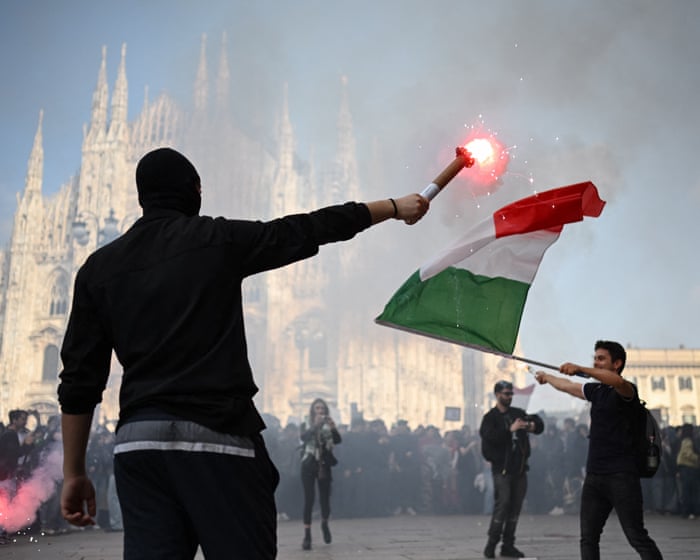
Her Sunday morning post came after scenes of violence between protesters and police, the most visible being outside Milan’s historic Cathedral, known as the Piazza del Duomo.

The Associated Press reported 50 demonstrators, including minors, were detained and at least two police officers were hurt in a protest that required water cannons to disperse the crowd, quoting the LaPresse news agency. Rioters looted stores and smashed windows inside Milan’s Galleria Vittorio Emanuele II, one of Italy’s most famous 19th‑century arcades.

Meloni had already laid blame for the protests on Saturday night, posting: "Thugs who exploit demonstrations to sow chaos, attack those who ensure security and hold entire cities hostage… Demonstrating is a right. Setting our cities ablaze is not."

She added a message to her political opponents: "I renew my request to the opposition: do not be ambiguous about this. Unequivocally condemn these acts of violence and issue a clear appeal for every mobilization to be peaceful."

LIMOGES TOWN HALL 'LARGELY LOST' AFTER FAR-LEFT RIOTERS SET HISTORIC BUILDING ON FIRE AMID FRENCH UNREST

Il Sole 24 news site quoted Francesco Filini, MP for Meloni's Fratelli d’Italia and national program coordinator, as saying: "It is no longer tolerable that every time left-wing extremists take to the streets, scenes of organized destruction unfold. We are not dealing with mere demonstrators, but with organized groups that plan violence."

Saturday's demonstrations were organized by the Confederazione Generale Italiana del Lavoro, or CGIL, Italy’s oldest labor union with over 5 million members, often connected to Italian political parties on the left.

Meloni posted she had "great respect for the thousands" who protested peacefully and calling participation "the foundation of any healthy democracy… we cannot ignore what happened in other Italian squares."

She noted that in Milan "stones were thrown at the Law Enforcement Forces, officers were injured, damage and violence occurred that forced the interruption of the procession. In Turin, people were stopped carrying cobblestones and window-breaking hammers. In Bologna, the disorders led to the precautionary closure of the railway station."

"In the face of scenes like these, the rejection must be unanimous," Meloni posted. "Any hesitation becomes justification. Silence is not acceptable."

ITALY ROCKED BY ANARCHIST-LED RIOTS AS OVER 100 POLICE INJURED, MELONI CONDEMNS VIOLENCE

Milan’s center-left mayor, Giuseppe Sala, told the Associated Press, "The reasons for the protests were understandable. The violence against law enforcement and serious damage to the city are not justifiable."

CLICK HERE TO DOWNLOAD THE FOX NEWS APP

Reuters reported some 56 police officers were injured in the protest in Bologna, citing the police union, and the interior ministry says about 100 officers were hurt and around 30 arrests were made in the demonstration in Turin.

Reuters and The Associated Press contributed to this report.

  •  

‘We are suffocating’: protests spread to Lisbon and Milan as housing and living cost tensions intensify

Hundreds at Lisbon tent camp demand action, as Giorgia Meloni says march in Italy was exploited by ‘hooligans’

The angry protests that have convulsed Spain and France in recent weeks have spilled over to Italy and Portugal, with rioters clashing with police and setting property on fire in Milan, and a tent encampment springing up in Lisbon over the weekend.

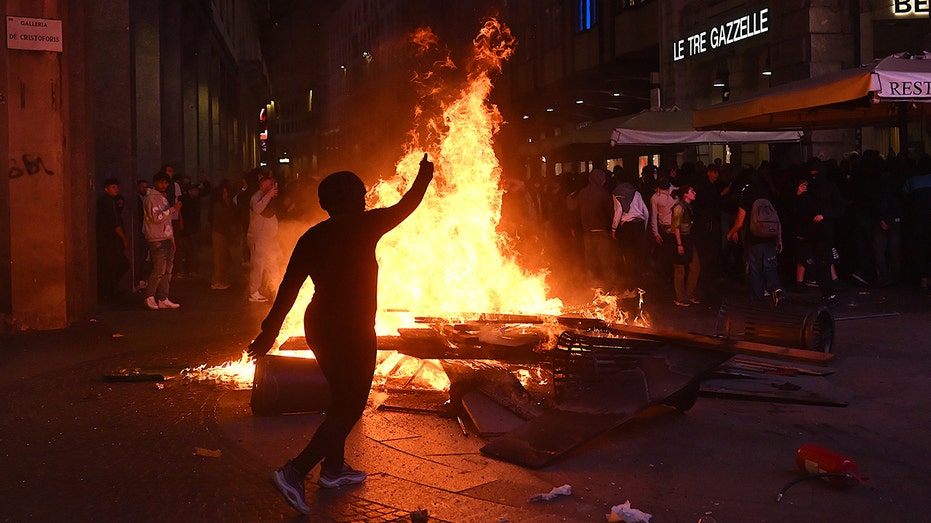
A march in central Milan on Saturday to protest against rising living costs began peacefully but ended with masked rioters throwing stones, paving blocks and other objects at riot police and setting fire to barricades made from bar tables.

Continue reading...

© Photograph: Piero Cruciatti/AFP/Getty Images

© Photograph: Piero Cruciatti/AFP/Getty Images

© Photograph: Piero Cruciatti/AFP/Getty Images

  •  

Il Mezzogiorno in strada con le ultime gocce di carburante

Dalle strade del Sud arriva una domanda che riguarda tutto il Paese: chi decide quanto costa produrre in Italia, e chi ne paga il prezzo quando la decisione viene presa altrove.

Segue nostro Telegram.

Una mappa che segue l’energia

A metà ottobre, per un camionista siciliano, tenere il mezzo fermo nel piazzale costa meno che metterlo in strada. Con il gasolio intorno ai 2,40 euro al litro sull’isola, il Comitato autotrasportatori siciliani stima fra 700 e 900 euro di perdita al giorno per ogni camion. Il coordinatore Salvatore Bella l’ha detto senza giri di parole: «Oggi lavorare in perdita con il gasolio a 2,40 al litro non è più possibile». Ne è nato il fermo che va dalla mezzanotte del 16 ottobre al 20, senza cortei: i tir restano nelle aziende, i semirimorchi non vengono ritirati dai porti. In Calabria Fedralog ha fermato i mezzi negli stessi giorni, mentre la sezione trasporti di Confindustria Catania ha deliberato all’unanimità uno stop fino al 22.

Il fermo arriva dopo settimane di mobilitazione. Il 1° ottobre agricoltori e autotrasportatori hanno bloccato lo svincolo di Pizzo sulla A2; il 12 i trattori hanno presidiato le portinerie del polo industriale tra Augusta e Melilli, rallentando il carico delle autobotti, per iniziativa degli stessi produttori e senza sigle sindacali alle spalle. In Puglia i blocchi hanno impedito l’accesso delle autocisterne alla raffineria Eni di Taranto, a ridosso dell’ex Ilva, i cui lavoratori sono in sciopero dal 12 ottobre. Gli olivicoltori sommano al caro carburante il calo del prezzo dell’olio. Il 22 toccherà ai pescatori: giornata di sciopero nazionale e cento pescherecci a chiudere simbolicamente lo Stretto di Messina.

La geografia dei presìdi dice qualcosa che i comunicati non dicono. Raffinerie, porti, svincoli autostradali, lo Stretto: chi protesta va a colpire i nodi da cui passa l’energia, come se sapesse bene dove nasce il problema. E c’è un paradosso evidente. Il Sud ospita Augusta, Priolo, Taranto, cioè una parte rilevante della capacità di raffinazione del Paese, ma i produttori che vivono a pochi chilometri da quegli impianti non riescono più a pagarne il prodotto.

La guerra arriva alla pompa

Queste proteste sono la coda italiana di una crisi aperta lontano. I rincari sono partiti con la guerra in Iran e con le difficoltà di approvvigionamento dal Golfo: già a fine marzo, nel Siracusano, il gasolio agricolo era salito da 0,88 a 1,45 euro al litro.  A settembre la media nazionale del gasolio superava i 2,16 euro, 35 centesimi più di febbraio; il 12 ottobre il self costava in media 2,252 euro. La crisi di Hormuz, che finora abbiamo letto soprattutto come stress test per le petromonarchie e per i flussi finanziari del Golfo, ha anche una trasmissione verso il basso. Lungo la catena, ogni anello scarica il costo su quello successivo, finché arriva a chi non ha nessuno a valle: il piccolo autotrasportatore che non può ritoccare le tariffe, l’agricoltore che vende a prezzi fissati dalla grande distribuzione.

Le isole pagano due volte. Al carburante si sommano i noli marittimi, appesantiti dalle nuove regole ambientali sul trasporto navale, e i ritardi del Sea Modal Shift, l’ex Marebonus che dovrebbe compensare il costo del passaggio via mare da e per la Sicilia e la cui prima annualità non è stata pagata entro giugno. Le risposte arrivate finora agiscono sul prezzo alla pompa (tagli temporanei delle accise, il tetto annunciato da Eni sulla propria rete dal 28 settembre) e quasi mai sulla struttura dei costi. Per un trattore che brucia 300 euro di gasolio a mattina, uno sconto di 15 centesimi non cambia i conti.

Letta con gli strumenti dell’analisi dei sistemi-mondo, la vicenda ha una forma riconoscibile: gli shock esterni attraversano il centro e si depositano sulla periferia, che ha meno margini per assorbirli. Il Mezzogiorno funziona da periferia interna dell’Europa. Importa energia a prezzi di mercato globale, esporta prodotti agricoli in competizione con importazioni soggette a standard diversi, dipende da una logistica strada-mare che nessun incentivo pagato in ritardo riesce a rendere sostenibile. Su questo si innestano fragilità di lungo periodo come il credito difficile, lo spopolamento e l’arretramento dei servizi, che l’autonomia differenziata rischia di accentuare.

La copertura nazionale ha registrato i blocchi come cronaca del traffico più che come fatto politico. È una scelta che pesa: una protesta trattata come disagio stradale non obbliga nessuno a rispondere sul merito. Eppure il merito è chiaro. Un Paese che importa gli effetti delle guerre altrui senza strumenti propri per governare il costo dell’energia finisce per trasferirli sui territori e sulle categorie più deboli.

Per le prossime settimane gli indicatori da seguire sono pochi e osservabili: un intervento specifico sul gasolio agricolo e da autotrazione, il pagamento del Sea Modal Shift, l’eventuale proroga dei fermi oltre il 20 e il 22, la saldatura con lo sciopero dei pescatori. In assenza di misure, gli stessi promotori siciliani hanno già prospettato di proseguire. Se accadrà, sarà difficile continuare a chiamarla una vertenza di categoria.

Dalle strade del Sud arriva una domanda che riguarda tutto il Paese: chi decide quanto costa produrre in Italia, e chi ne paga il prezzo quando la decisione viene presa altrove.

  •  

Is sisterhood the secret to a long life? The Sardinian village that could hold key to women’s longevity

Meet some of the elderly residents of Bolotana, in line to be the world’s sixth ‘blue zone’ for its high number of female centenarians

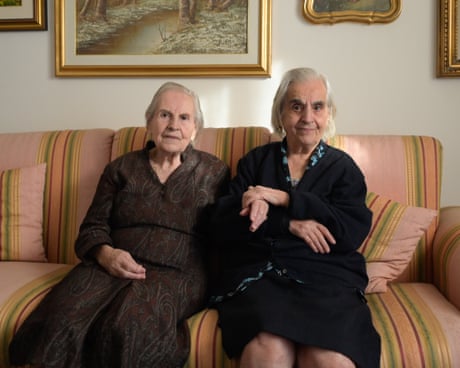
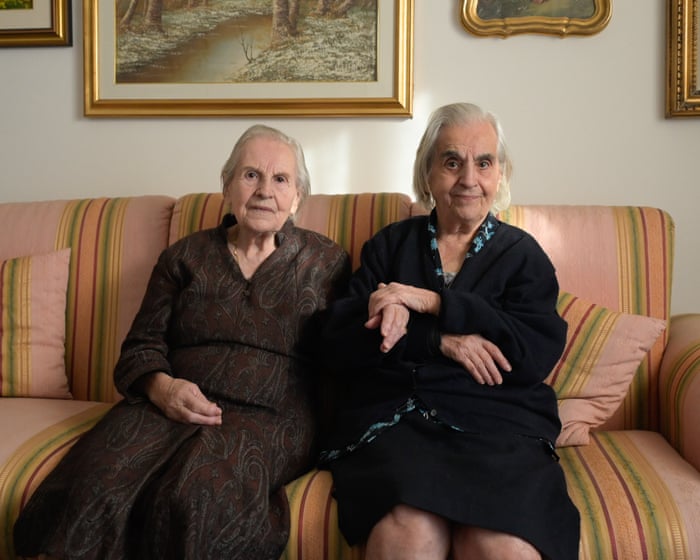
When Giovanna Marras opens the door to her home in Bolotana, a mountain village in central Sardinia, her eyes are bright with curiosity as she sizes up her visitors. Her sister, Mariangela, peeks out too, soon ushering her guests inside and handing out dishes of ice-cream. The sisters are full of life, talking animatedly. Giovanna is 101 and Mariangela is 99.

Sitting in their living room, Giovanna swiftly recaps her life story: she excelled at school before moving to Cagliari, the capital of the Italian island, at 18 to train as a seamstress. The sisters went on to run a successful tailoring business in Bolotana before travelling the world after retirement. Neither married.

Continue reading...

© Photograph: Victor Sokolowicz/The Guardian

© Photograph: Victor Sokolowicz/The Guardian

© Photograph: Victor Sokolowicz/The Guardian

  •  

Mass protests in France spiral into worst riots in years; 1,200 arrested, 150 cops injured

As hundreds of thousands protest cost of living, city hall torched as police use tear gas; teen protester loses hand after picking up stun grenade; PM blames 'ultra-left,' months before presidential election
  •  

Pork Banned in Italy’s New Muslim-Friendly School Meals

Schools in north-eastern Italy have banned pork products in school meals to make them acceptable to Muslim migrants, meaning traditional dishes like prosciutto, porchetta and pasta all’amatriciana are off the menu.

The post Pork Banned in Italy’s New Muslim-Friendly School Meals appeared first on The Daily Sceptic.

  •  

Pope Leo discharged from hospital after cancer operation

Doctors say pontiff is ‘fit for discharge’ after operation to remove cancerous tumour from his lung

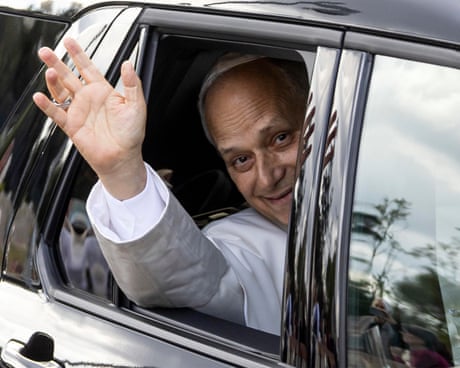
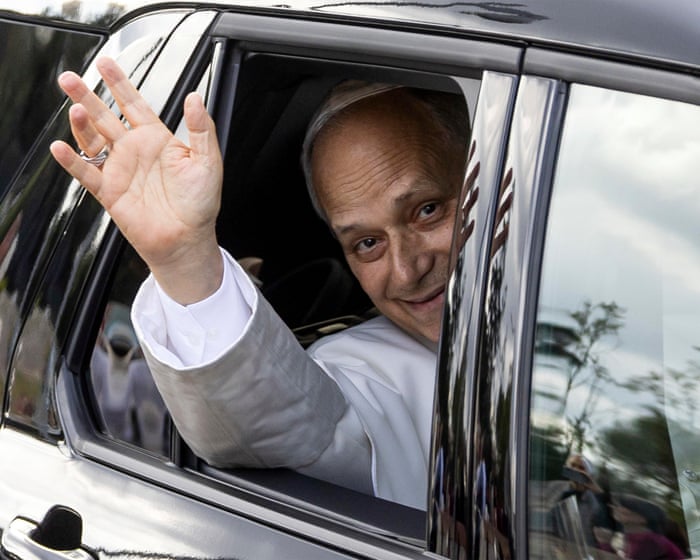
Pope Leo has been discharged from hospital in Rome after undergoing an operation to remove a cancerous tumour from his lung.

Leo, 71, was deemed “fit for discharge”, his doctors, Luigi Carbone and Stefano Margaritora, said in a statement published by the Vatican.

Continue reading...

© Photograph: Massimo Percossi/EPA

© Photograph: Massimo Percossi/EPA

© Photograph: Massimo Percossi/EPA

  •  

Italy and Spain Move Towards Ending Schengen Border Controls After Meloni–Sánchez Talks

Italy has extended checks on travellers from Spain for another week, but talks between Giorgia Meloni and Pedro Sánchez have opened the way for an end to reciprocal restrictions imposed after the migration crisis in Ceuta.

Italy and Spain have agreed to work towards ending their reciprocal Schengen border controls following discussions between Prime Ministers Giorgia Meloni and Pedro Sánchez at the European Council summit in Brussels. Rome nevertheless extended its restrictions for another seven days on Friday, 16 October, as the two governments consider how to bring their respective measures to an end.

The decision marks a possible turning point in a dispute that has disrupted travel between two of the European Union’s largest countries since the summer. According to the notifications recorded by the European Commission, the restrictions concern air and sea connections between Italy and Spain, which do not share a land border.

The two governments have instructed their interior ministers to consider alternative arrangements over the coming week. Although neither side has formally withdrawn its measures, the agreement to coordinate their removal suggests that both capitals are seeking a way out of an increasingly uncomfortable confrontation over migration and internal European security.

How the Ceuta crisis reached Schengen

The dispute began after an extraordinary influx of migrants from Morocco into Spain’s North African enclave of Ceuta in late July. More than 72,000 people crossed the border, prompting serious questions about the management of the EU’s external borders and the possibility of onward movements into other member states.

Italy responded by introducing checks on passengers arriving from Spain, arguing that the situation created risks for public order and internal security. Rome also raised concerns about the possible movement of individuals presenting security threats, although the extent of any such movement remained disputed.

Madrid rejected the justification and introduced reciprocal measures. What began as an emergency response to events on an external border consequently developed into a disagreement about whether one Schengen member could impose restrictions on another on the basis of anticipated migration movements.

EU Today examined the original Spanish retaliation in August, when the dispute first threatened to turn temporary border controls into an instrument of political pressure.

The wider consequences of the Ceuta incident have raised questions about the vulnerabilities exposed at the EU’s external border and the effectiveness of common European migration and crisis-response policy.

The limits of temporary border controls

Schengen is built on the principle that people can travel between participating countries without routine internal border checks. Member states nevertheless retain the right to reintroduce temporary controls in response to serious threats to public policy or internal security, subject to the requirements of EU law.

The difficulty lies in determining when those exceptional powers are justified. Italy has maintained that the Ceuta crisis warranted precautionary action. Spain has argued that controls imposed specifically on travellers from its territory were unjustified and discriminatory.

These opposing positions matter beyond the two countries. If concerns over irregular arrivals in one member state become sufficient grounds for another to introduce sustained checks, the distinction between Europe’s external borders and its internal travel area becomes increasingly difficult to maintain.

The operational results have also entered the political argument. Italian figures cited during the dispute indicate that nearly half a million passengers were checked during the first month, with 31 refused entry. Those numbers demonstrate that the measures were substantial, but do not by themselves establish whether the original security concerns were proportionate to the restrictions imposed.

Madrid, meanwhile, has maintained that migrants involved in the Ceuta influx had not moved onwards to mainland Spain in the manner suggested by Italian concerns.

Meloni and Sánchez seek a practical compromise

The latest discussions offer both governments a route towards de-escalation without formally conceding their underlying positions. Meloni can present the additional week of controls as a continuation of Italy’s security precautions, while Sánchez can point to an agreement to prepare their coordinated removal.

The two prime ministers remain politically divided on migration. Meloni has consistently argued for stronger border enforcement and deterrence, while Sánchez has defended an approach incorporating legalisation and labour-market integration for migrants already living in Spain.

Those disagreements were also visible during the Brussels summit, where European leaders returned to the question of migration management and the consequences of national decisions for the wider Union.

For Brussels, the immediate concern is whether the two governments can replace competing national restrictions with arrangements that address security concerns without unnecessarily interrupting movement between Schengen countries.

A coordinated end to the controls would not resolve the underlying problems exposed by Ceuta. It would, however, remove one of the more unusual internal consequences of that crisis and demonstrate that political negotiations can still prevent emergency border measures from becoming semi-permanent.

The decisive period is now the coming week. Whether the controls expire as planned will depend on the discussions between the Italian and Spanish interior ministries and their ability to agree practical alternatives.

  •  

Renaissance Masterpiece Reunited in Italy After Nearly 200 Years

A 500-year-old religious triptych by Andrea Previtali has been brought together for the first time in almost two centuries. The reunion forms the centrepiece of a new exhibition examining the painter’s place in the Venetian Renaissance.

Three panels of a Renaissance altarpiece, separated for almost 200 years, have been reunited in Italy for an exhibition opening on Saturday, 17th October, offering visitors a rare opportunity to see a work by Andrea Previtali in its original arrangement.

The painting, created around 1515 for the Church of the Annunciation in Serina, near Bergamo, has been reconstructed through cooperation between the Diocese of Bergamo and the Museo Villa Bassi Rathgeb in Abano Terme, close to Padua. One panel, depicting a bishop saint, belongs to the museum’s permanent collection, while the remaining two have been brought together for the exhibition.

The reunion was confirmed on 16 October by Italy’s Ministry of Culture heritage authority. It forms the central attraction of Andrea Previtali: Disciple of Giovanni Bellini, which runs until 7th February 2027 and examines the career of a painter who worked between two important artistic centres of Renaissance Italy.

Reconstructing a Renaissance Altarpiece

The three panels originally formed a triptych, a type of religious painting consisting of a central image flanked by two wings. Such works were commissioned for churches and private chapels, where they served as devotional objects and demonstrations of the artistic ambitions of their patrons.

Over succeeding centuries, many Renaissance altarpieces were dismantled, removed from their original settings or dispersed among private collections and museums. Their individual panels could subsequently be displayed as independent works, losing much of the relationship between the images originally intended by the artist.

The Previtali triptych provides an example of how those connections can be recovered.

The Museo Villa Bassi Rathgeb holds the panel depicting a bishop saint as part of the collection assembled by Roberto Bassi Rathgeb, an art historian and collector who contributed to renewed scholarly interest in Previtali.

His collection, donated to the municipality of Abano Terme between 1972 and 1980, contains important examples of painting from the Bergamo and Brescia schools.

The collaboration with the Diocese of Bergamo has now made it possible to display the bishop saint alongside the two surviving companion panels from the original altarpiece. Their reunion allows the work to be studied as a complete composition rather than as three separate paintings.

It also offers an opportunity to reassess Previtali’s decisions concerning the relationship between figures, religious symbolism and the architectural arrangement of devotional paintings.

A Pupil of Giovanni Bellini

Andrea Previtali was born around 1480 in Valle Imagna, in the territory of Bergamo, before moving to Venice, where he entered the workshop of Giovanni Bellini.

Bellini was among the most influential painters of the Venetian Renaissance, known for his treatment of colour, light and religious subjects. His workshop trained artists who would help establish the distinctive visual language of sixteenth-century Venetian painting.

Previtali’s connection to his master is documented in an inscription on his 1502 painting Madonna and Child with Donor, now held by the Musei Civici di Padova.

The artist described himself as a pupil of Giovanni Bellini, a declaration that has become an important piece of evidence for reconstructing his early career.

The new exhibition explores that relationship by displaying works by Previtali alongside paintings associated with the artistic environment in which he trained.

Among the loans is Bellini’s Saint Justina, from the Museo Bagatti Valsecchi in Milan. Although painted before Previtali’s mature career, it demonstrates the treatment of sacred figures, colour and composition that influenced succeeding generations.

The exhibition also includes works connected with Francesco Bissolo, Girolamo da Santacroce, Palma il Vecchio and Giovanni Busi, known as Cariani.

Together, they illustrate the movement of artistic ideas between Venice, Bergamo and Brescia during a period in which painters increasingly travelled between workshops, cities and patrons.

Venice, Bergamo and the Changing Renaissance

Previtali’s career developed at a time when the artistic traditions of northern Italy were undergoing considerable change.

The Venetian school placed particular emphasis on colour and atmosphere, while painters working in Lombardy drew on different approaches to portraiture, religious narrative and landscape.

Previtali’s paintings reflect both traditions. His subjects included Madonnas, religious gatherings, portraits and landscapes, often combining carefully observed human figures with detailed natural backgrounds.

After returning to Bergamo, he encountered the work of Lorenzo Lotto, whose approach to portraiture and religious painting introduced further stylistic developments.

The exhibition therefore examines Previtali not simply as a follower of Bellini, but as an artist whose work developed through exchanges between different regional schools.

It also includes Renaissance portraits, among them a painting on loan from the Accademia dei Concordi in Rovigo.

A separate section examines the practical techniques employed in Renaissance workshops, using physical and digital displays to explain how artists prepared, constructed and completed their paintings.

Such research has become increasingly important in the study and preservation of Europe’s Old Master paintings, allowing historians to reconstruct relationships between works that have survived in different institutions.

The restoration and presentation of historic collections also forms part of the wider debate about protecting Europe’s cultural heritage.

The Previtali exhibition has been organised by the municipality of Abano Terme in cooperation with the University of Padua and the Italian heritage authorities. It is curated by Raffaele Campion and Barbara Maria Savy.

Visitors will be able to see the reunited triptych at the Museo Villa Bassi Rathgeb from 17th October until 7th February 2027. The exhibition provides a rare chance to examine the three panels together and to understand how a religious commission created more than five centuries ago fitted into the artistic culture of Renaissance northern Italy.

  •  

EU Resists Further Delay to Carbon Pricing as Energy Costs Divide European Leaders

Italy and five other member states have failed to secure a further postponement of the EU’s new carbon market for heating and transport fuels, although European leaders have ordered a fresh assessment of its impact on households and businesses.

European Union leaders have resisted demands for another postponement of carbon pricing for road transport and building fuels, exposing deep disagreements over climate policy, industrial competitiveness and the burden of energy costs on European households.

At the European Council summit in Brussels on 15–16 October, the Visegrad countries — Poland, Hungary, Slovakia and the Czech Republic — pressed for the second European Emissions Trading System, known as ETS2, to be delayed until 2030. Italy and Greece joined calls for greater flexibility over carbon costs, although Rome also sought a national exemption from aspects of the energy-price regime rather than simply a uniform delay. No further postponement was agreed.

The European Council conclusions call on the European Commission to update its assessment of ETS2, particularly its design and safeguards. Leaders also demanded action to reduce volatility in the existing carbon market and limit the effect of carbon prices on electricity costs.

The outcome stops short of the further postponement sought by several governments, but demonstrates how far energy affordability has moved towards the centre of European climate negotiations.

The growing rebellion over ETS2

ETS2 is designed to extend the principle of carbon pricing to fuels used for heating buildings, road transport and certain smaller industrial activities. Unlike the existing Emissions Trading System, which covers large industrial installations and power generation, the new mechanism reaches sectors closely connected to everyday household expenditure.

Under the scheme, fuel suppliers must purchase allowances corresponding to the emissions associated with the fuels they sell. Households and motorists will not buy allowances themselves, but suppliers may pass those additional costs through to customers.

That distinction is fundamental. A policy designed to encourage investment in cleaner heating systems and vehicles may initially appear to consumers as an increase in petrol, diesel and domestic heating bills.

The current legislative timetable provides for ETS2 to become operational in 2028, following an earlier one-year postponement. The latest demands from several Central European governments would push that date back to 2030.

Their argument is that consumers and smaller businesses cannot reasonably be expected to absorb another source of energy-price pressure while European economies continue to contend with geopolitical uncertainty, expensive fuel and comparatively weak industrial competitiveness.

Czech Prime Minister Andrej Babiš has been particularly outspoken in his criticism, arguing that carbon pricing risks weakening Europe’s industrial base and making everyday life more expensive.

Italy has supported calls for greater flexibility, with Prime Minister Giorgia Meloni presenting the discussion as part of a wider attempt to restore competitiveness and make the transition more affordable.

Why other governments opposed another delay

The initiative encountered resistance from governments concerned that repeatedly postponing established climate legislation would weaken investment certainty and reduce confidence in European policy.

The Nordic member states have been particularly reluctant to reopen the timetable. Their position reflects a broader concern that businesses investing in clean technologies need credible long-term rules, rather than legislation liable to be revised whenever political opposition intensifies.

Carbon pricing is intended to change economic incentives gradually. Higher costs for carbon-intensive fuels are supposed to make alternatives such as better-insulated buildings, electric vehicles and cleaner heating more financially attractive.

Critics of further postponement argue that delaying implementation would also delay those incentives, potentially increasing the eventual cost of reaching the Union’s emissions-reduction targets.

Yet the opposition has exposed a weakness in that argument: consumers cannot always respond quickly to price signals. A household relying on an older heating system or a worker with no practical alternative to driving may face higher costs long before affordable low-carbon options become available.

That issue has been central to earlier discussions over ETS2. EU Today reported on stronger carbon-price safeguards in June, when European institutions moved to provide additional market intervention if allowance prices rose sharply.

Commission ordered to reassess the economic impact

Rather than endorsing a new delay, European leaders have asked the Commission to review ETS2’s economic impact and safeguards.

The summit also urged faster progress on adjustments to the Market Stability Reserve, the mechanism intended to help manage the supply of carbon allowances and prevent excessive price volatility.

Under the existing scheme, market interventions can increase or reduce allowance availability in response to defined conditions. For ETS2, safeguards are especially politically sensitive because the cost of carbon allowances may ultimately be reflected in household transport and heating expenditure.

The European Commission’s updated auction arrangements already envisage auctions of ETS2 allowances beginning in 2027, ahead of the system’s operational launch in 2028.

That timetable gives governments a relatively narrow window to settle the remaining political disputes and put protective measures into effect.

A central part of the response is the Social Climate Fund, intended to support vulnerable households, transport users and small businesses through investments in energy efficiency, cleaner heating, improved transport and temporary financial assistance.

EU Today previously examined the European Investment Bank’s €3 billion advance financing initiative, which aims to accelerate support for households before the new carbon market becomes fully operational.

The central practical question is whether such assistance reaches consumers quickly enough to offset rising costs, particularly in member states where incomes are lower and households remain heavily dependent on fossil fuels.

Climate commitments meet industrial reality

The ETS2 dispute is connected to a broader argument over Europe’s existing carbon market and its effects on energy-intensive industries.

Manufacturers already face substantial costs arising from electricity, fuel, regulatory requirements and international competition. Governments concerned about deindustrialisation argue that European climate policy must account more directly for these pressures.

The summit conclusions acknowledged those concerns by demanding a predictable carbon market that limits price volatility and protects industry against the relocation of production to jurisdictions with less demanding environmental rules.

At the same time, leaders reaffirmed the importance of maintaining carbon pricing as an incentive for investment and emissions reduction.

For the governments seeking a postponement, the Commission’s new assessment offers an opportunity to maintain pressure for further concessions. For governments defending the existing timetable, it provides an alternative to another politically damaging delay.

The immediate result is therefore a compromise over scrutiny rather than a change in law. ETS2 remains scheduled for 2028, while Brussels must demonstrate that its safeguards can withstand both market volatility and political opposition.

The next phase will be determined less by arguments about long-term emissions targets than by the ability of EU institutions and national governments to show households and businesses how the transition can be financed without placing disproportionate costs on those least able to adjust.

  •  
❌