❌

Reading view

NBA proíbe certos tipos de apostas

Casas de apostas parceiras deixam de aceitar apostas consideradas demasiado suscetíveis de manipulação. A NBA está quase a recomeçar. Amanhã, terça-feira, Boston Celtics e Detroit Pistons arrancam a temporada 2026/27. Uma temporada que vai ser mais limitada nas apostas: as casas de apostas desportivas parceiras da NBA deixam de aceitar certas apostas consideradas demasiado suscetíveis de manipulação, após um pedido da liga. Foi a própria NBA a indicar às casas de apostas que, nesta época, estão proibidas determinadas apostas, noticia a ESPN. O que passa a ser proibido: apostas combinadas que envolvem múltiplas apostas num único jogador da NBA que

  •  

WATCH: Valkyries, Dream Not on the Floor for National Anthem Ahead of WNBA Finals Game

Game 1 of the WNBA Finals between the Atlanta Dream and the Golden State Valkyries was supposed to be about an historic matchup between star forward Angel Reese and one of the league's newest franchises. Instead, it became about neither team being on the floor to honor America during the national anthem.

The post WATCH: Valkyries, Dream Not on the Floor for National Anthem Ahead of WNBA Finals Game appeared first on Breitbart.

  •  

NBA Freestyle | LeBron se ne va, Doncic eredita i Lakers: l’ultimo assalto al titolo del Re e i dubbi sulla squadra costruita attorno allo sloveno

La nuova stagione NBA è alle porte. Si parte il 20 ottobre. È da sempre un momento divertente, ricco di grandi aspettative. Si fanno analisi sul futuro, previsioni sul futuro, scommesse sul futuro. Raramente ci si azzecca. Non credete a chi vi dice che un anno fa pensava che i New York Knicks sarebbero stati campioni, per dire. Questa nuova stagione offre una quantità enorme di spunti a tutti gli appassionati di basket americano. Questi sono alcuni temi da tenere sott’occhio nei prossimi mesi.

San Antonio, favorita?

Sì, tutti i commentatori dicono che San Antonio sia la squadra favorita. Come dar loro torto. Victor Wembanyama non è una superstar, è un dominatore dell’universo. Sarà il prossimo MVP o sarà rivolta popolare. “Rivoluzione francese”. Stephon Castle ha un anno in più di esperienza, con playoff e finali giocate tra alti e bassi da protagonista. Chi può vantare tanto? Stesso discorso per Dylan Harper, un veterano nel corpo di un ventenne, con ghiaccio nelle vene in modalità Mr. Freezer.

Fox deve farsi perdonare tanto, ma è comunque un giocatore solido. La struttura del roster è rimasta intatta, compresa la presenza rassicurante da “faccio ciò che serve senza lagne” di Harrison Barnes e la mano con il mirino laser di Champagnie. Anzi, hanno aggiunto un veterano come Tobias Harris, che potrà dare un aiuto dalla panchina a livello offensivo quando il sesto uomo dell’anno Keldon Johnson sparisce emotivamente come in finale. Sarà divertente.

LeBron James e i Sixers

Se i “super team” fossero garanzia di successo, allora i Lakers del 2003 con Shaq, Kobe, Karl Malone, Gary Payton e Horace Grant non avrebbero avuto rivali. Invece non è (quasi) mai stato così. LeBron James ha ancora benzina nel serbatoio ed è approdato a Philadelphia. È sempre una notizia. A quasi 42 anni è ancora almeno tra i primi venti giocatori della lega. Ha giocato dei buonissimi playoff. È probabilmente il miglior passatore della storia. Tenta un ultimo assalto all’anello, non così scontato. Intanto è fuori per un problema al piede. Jaylen Brown è un All-Star in grado di attaccare e difendere con la stessa efficacia, che tratta la palla così e così, ma che troverà la stessa ispirazione di Boston anche nella città dell’amore fraterno.

Con l’esplosivo secondo anno VJ Edgecombe e Tyrese Maxey, la cosa attualmente più veloce in NBA con la palla tra le mani, il quintetto base è di livello “superstar”. Problemi? Joel Embiid si è asciugato tanto fisicamente, ma ogni volta che atterra dopo un rimbalzo difensivo sembra gli si stia staccando una rotula. Le immagini viste nel precampionato non riscaldano certo il cuore. La panchina, elemento fondamentale per puntare in alto, non sembra da corsa.

OKC e la chiave Williams

Gli infortuni per loro saranno un tema. Come lo scorso anno. Se sani e “robusti”, rimangono la squadra da battere, con qualche incognita all’orizzonte. Shai Gilgeous–Alexander è l’uno contro uno più velenoso, imprevedibile e ritmato della west (e della lega). Isaiah Hartenstein come rollante è un punto di riferimento tra i top del ruolo. La chiave di volta è Jalen Williams. Giocatore versatile di una completezza senza senso, che tratta la palla, sa tirare, ha punti nelle mani, può segnare in mille modi. E soprattutto difende.

Con lui in salute, i Thunder hanno quel secondo creatore di gioco in grado di alzare il livello dell’attacco dell’intera squadra. Le incognite? Causa salary cap hanno dovuto rinunciare a pedine solide dalla panchina, come il tiratore Isaiah Joe e l’ala Aaron Wiggins. Inoltre, il buon Chet Holmgren è uscito un po’ acciaccato emotivamente dal confronto diretto con la “Rivoluzione Francese” dei San Antonio Spurs. Buoni segnali in prestagione dai rookie Aday Mara, interminabile centro di 2,23 con mani morbide e piedi mobili, e Bennett Stirtz, che sembra il nuovo Kon Knueppel per come vede il canestro dal perimetro.

Il secondo anno di Cooper Flagg

Preparate i popcorn, Cooper Flagg sta iniziando il suo secondo anno nella NBA. Non ha ancora 20 anni. Il secondo anno è sempre un momento complesso. Finisce la spinta del clamore iniziale. Sei chiamato a confermare quello che hai fatto, cosa spesso ancora più complessa. Gli avversari ti hanno studiato meglio, possono trovare contromisure più efficaci. Dicono che sia cresciuto in altezza.

Bella forza, a 19 anni sei ancora in fase di crescita fisica. Adesso è 2,08 da 2,05. Alto come Hakeem “The Dream” Olajuwon. Una fluidità che scorre (non semplicemente “corre”) per il campo in modo naturale, quasi in simbiosi col parquet. Tempismo. Velocità di esecuzione. Mezzi atletici. Efficacia senza palla in mano. Trattamento della sfera. Ci sarà da divertirsi. Preparate i popcorn.

I Lakers di Doncic

Hanno smantellato, i Los Angeles Lakers. Una sorta di ricostruzione. Che non parte però dal fondo. Parte da più in alto perché con Luka Doncic nel fondo non puoi stare. Ora, il fatto che abbiano trattato LeBron James come se fosse un Hachimura qualunque ha poco di tecnico e tanto di poco stile. La perplessità è: vuoi fare una squadra costruita attorno a Doncic? Perché hai preso giocatori che sulla carta poco si adattano al sistema di gioco “Doncic-centrico” che hai in mente? Prendiamo il punto più alto della carriera dello sloveno: le finali con Dallas del 2024. Doncic domina la palla, crea tanto per sé. Ma ha bisogno, comunque, di punti di riferimento costanti ed efficaci in taglio e sul perimetro da servire. Centri come Daniel Gafford che vanno a prendersi l’alley-oop dopo un pick and roll o esterni come PJ Washington e Derrick Jones Jr. che la mettono da fuori dopo uno scarico (e in difesa mordono le caviglie dei giocatori più pericolosi). Stop.

Dove sono questi giocatori ai Lakers? Quentin Grimes lo scorso anno ha tirato il 33% da tre con i Sixers e in carriera è sempre stato sotto il 40%. Matisse Thybulle negli ultimi due anni ha giocato a malapena 45 partite. Non tira male, ma su un volume di conclusioni decisamente sotto la media per il ruolo. Il centro Walker Kessler, arrivato da Utah come se fosse (a parere dei Lakers) la reincarnazione del compianto Bill Walton, non è certo un giocatore verticale e lo scorso anno ha giocato appena 5 gare (58 l’anno precedente). Insomma, la squadra non sembra costruita in modo funzionale per dare alla stella di Los Angeles la libertà di esprimere il basket che vuole. Sarà il campo, ovviamente, a dire la sua a brevissimo.

I New York Knicks si ripeteranno?

E i campioni NBA? A giudicare dalle recenti dichiarazioni di Karl–Anthony Towns sul rinnovo del suo contratto, non si parte proprio col vento in poppa. Anche perché tocca rinnovare anche gente meno pesante, ma in ogni caso pesante, come Miles McBride e soprattutto Josh Hart. Di certo, poi, la perdita di Robinson non sarà indolore, perché il lungo con due lastre di marmo al posto delle mani garantiva gran presenza a rimbalzo offensivo e diversi extra possessi per la felicità di Jalen Brunson e compagnia “perimetrale”.

In ogni caso, lo stesso Brunson venderà cara la pelle, perché è l’unico modo che conosce per fare la differenza su un campo da basket. OG Anunoby è vera e propria élite nel ruolo di ala. Towns, se non gli scema la voglia sentendosi il brutto anatroccolo sottopagato, come lungo in grado di colpire da fuori e puntare il lungo dal palleggio rimane tremendamente efficace. Sarà un’altra stagione di alto livello? Sì. Vinceranno di nuovo il titolo? Mah, i back-to-back ormai sono più rari di un quadrifoglio nel deserto del Sahara.

That’s all Folks!
Alla prossima settimana.

L'articolo NBA Freestyle | LeBron se ne va, Doncic eredita i Lakers: l’ultimo assalto al titolo del Re e i dubbi sulla squadra costruita attorno allo sloveno proviene da Il Fatto Quotidiano.

  •  

The Right to Compensation Must Be Proven: Why Ukraine’s Postwar Reparation Depends on Lawyers

For more than four years, Ukraine has been living through a war that destroys homes, businesses, and infrastructure. People need compensation for the damage and regularly file claims with the authorities. This raises a question: how can citizens exercise their right to compensation, and who can act as the go-between connecting Ukrainians with national and international bodies?

The fifth Rapid Damage and Needs Assessment put direct war damage at $195.1 billion (€173.4 billion) as of the end of 2025. Recovery and reconstruction needs over the next ten years are estimated at $587.7 billion (€522.3 billion), almost three times Ukraine’s nominal GDP for 2025.

Compensation goes to those whose damage has been documented, properly filed, and accepted by an international mechanism. One person working on this problem is Andriy Yermak, Chair of the UNBA Committee for the Protection of Victims of Armed Aggression against Ukraine, Compensation Mechanisms and European Integration Legal Support for Recovery. He is also the initiator of “Advokat+”, a nationwide legal support initiative for Ukrainian service members and their families. His position rests on a simple premise: an unproven right doesn’t pay, and proving it takes lawyers.

Compensation starts with documents

Individuals and companies follow roughly the same process. The claimant must attach proof of ownership and confirmation of value, gather photo and video evidence of the damage, and prove that the military aggression specifically caused it. The required documents depend on the claim category, and, as Andriy Yermak points out from his professional experience, this is where people most often make mistakes. In such matters, a lawyer’s help is often more than necessary.

Businesses face the same questions on a larger scale. Kyiv’s first McDonald’s, opened in 1997, has been damaged by Russian strikes, and the Coca-Cola plant near Kyiv, in operation since 1998, was recently hit by a Russian drone. A company in this position must decide what was lost, how to prove it, and which mechanism to use: the international register, a national program, or a court.

Which mechanisms exist and which are being developed

The international and national Ukrainian compensation system has several components.

The Register of Damage for Ukraine (RD4U). It has accepted claims since April 2024 and operates under the Council of Europe, headquartered in The Hague. As of 30 September 2026, all 43 claim categories are open: 21 for individuals, 11 for legal entities and 11 for the State of Ukraine. By early September, the register had received almost 190,000 claims: about 58,000 were recorded, while the rest were under review. Claims can be submitted through the Diia portal. Yermak stresses that the register records damage but does not pay compensation.

The International Claims Commission. About 40 states and the EU signed the convention establishing it in The Hague in December 2025, and ten have ratified it. Twenty-five ratifications are needed for the commission to begin work. The Verkhovna Rada ratified the convention on 30 April 2026. The commission will review the claims from the register on their merits and determine the amount of compensation in each case.

National programs. Individuals have eRecovery (єВідновлення), which covers owners of homes damaged or destroyed in hostilities after 24 February 2022. Owners of damaged homes get money for repairs, minor or major. Owners of destroyed homes get a housing certificate to buy a new one. Applications go through Diia, an administrative services centre, or a notary, and a commission decides within 30 calendar days. As of 10 October 2026, 273,169 families had received UAH 160.9 billion in total, according to the Ministry for Communities and Territories Development.

Businesses have had a war risk insurance program since 1 January 2026. It rests on Government Resolution No. 1541 and is run by the Export Credit Agency (ECA), whose mandate has already been expanded to cover insurance for domestic investments against war risks. Enterprises in high-risk regions can receive direct compensation for destroyed or damaged assets, such as buildings and equipment, up to UAH 10 million at launch. Businesses that buy war risk policies in Ukraine get part of their premiums back, up to UAH 1 million a year. Only property already enrolled in the program on the date of damage qualifies.

The courts. The Supreme Court has established a practice that allows Ukrainian courts to hear individual claims against Russia for damage caused by armed aggression, without applying state immunity. However, enforcing such judgments is difficult, so victims often turn to state and international mechanisms.

What the system lacks

Yermak says:

“We need lawyers who can work across several levels of law at once: Ukrainian legislation, European regulation and international procedures. And this is where we run into the reform of the legal profession. Under the Rule of Law Roadmap, the Law on the Bar and Legal Practice must be adopted by the end of 2026. How it is written will determine whether the profession gets the independence, legal privilege, and training standards it needs to do this work. At the same time, in a government working group of 27 people, the UNBA holds only one seat.”

Independence plays an important role here: in compensation cases, individuals or companies face official bodies. The lawyer’s role is to challenge a decision without fearing for their own position. In Yermak’s view, this requires upholding legal privilege and adherence to credible professional standards.

The register contains around 190,000 claims, each with supporting documents. Andriy Yermak notes that at this scale, legal practice can be transformed by modern technology. AI, which is now spreading into almost every area of life, can reshape legal analysis and the review of large volumes of data. Today’s lawyers are expected to work properly with data summaries, protect their clients’ confidential information, and keep professional judgment in their own hands. Looking ahead, Yermak believes this raises questions about training the next generation of lawyers: for them, professional standards will cover this practice in both compensation cases and other areas of legal work.

The experience of “Advokat+”

The “Advokat+” initiative, created by Yermak, shows that the profession can scale up quickly. Ukrainian attorneys, often pro bono, help service members and their families with procedures, applications, and complaints. Yermak is convinced that if the profession could organize mass assistance for service members, it can do the same for those affected by destruction. All it needs is training and clear rules.

In the lawyer’s view, several steps are worth taking in this direction:

  1. Create training programs for lawyers on working with international compensation mechanisms, including filing claims with the register and working with the future commission.
  2. Develop standards for handling evidence: how to document damage, store materials, and prepare a document package that meets international bodies’ requirements.
  3. Ensure the UNBA participates in drafting the bar law so the profession’s institutional experience is reflected in the final text.
  4. Enshrine legal privilege and the lawyer’s independence in law. A claimant gives a lawyer information about their property, income, and the circumstances of the loss. Without a guarantee of confidentiality, this kind of trusting work is impossible.

The result would be a system in which the scale of damage has been measured, the register accepts claims, and the commission is created. But between an entry in the register and an actual payout lies a path every claimant must walk. Without a trained, independent, and protected profession, the right to compensation will remain formal.

  •  

Michael Jordan’s 1998 Finals Jersey Sells for a Record $14 Million

(FILE) The jersey worn by the Chicago Bulls star during the NBA Finals becomes the most expensive basketball piece in history. Photo: CNN.

A game-worn Michael Jordan jersey from the 1998 NBA Finals has sold for $14 million, setting a new record for basketball memorabilia and becoming the second most expensive piece of sports clothing ever sold.


The red road jersey, signed by Jordan and worn during Game 2 of the 1998 championship series, changed hands in a private transaction that underscores the surging financial value attached to objects tied to the Chicago Bulls legend’s career.

The sale confirms the commercial pull of “The Last Dance” season, widely regarded as the closing chapter of Jordan’s defining run.

RELATED: EuroLeague Halts NBA Plan to Launch League in Europe

Pennsylvania-based auction house Hunt Auctions managed the negotiation, which ended with the garment delivered to Ron Firman, a real estate investor based in Miami. The shirt corresponds specifically to the second game of the Finals, played on June 5, 1998.

The context of that game accounts for much of the jersey’s value. In it, Chicago beat the Utah Jazz to even the series, which the Bulls went on to win 4-2. The victory was key to the franchise’s sixth title and to the close of the era chronicled in the media as “The Last Dance,” the season that cemented Jordan’s legacy.

Record Air.  Important 1998 @NBA Finals Game Two @chicagobulls Michael Jordan game worn road jersey sold via private treaty sale for $14,000,000.  The price is a world record for any basketball memorabilia item and the second highest price ever paid for a sports jersey of any… pic.twitter.com/2ax0XBvjxm

— Hunt Auctions (@HuntAuctions) October 12, 2026

A Rising Market

The international market for sports collectibles has been climbing steadily, and items from that final campaign command a premium all their own. Jerseys worn in Games 1 and 3 of the same series previously sold for $10.1 million and $12.3 million, respectively, providing a direct benchmark for the latest transaction.

The shoes Jordan wore in that second game offer another reference point, which were sold in 2023 for $2.2 million, a figure that once seemed remarkable and now reads as modest alongside the prices fetched by his game-worn shirts.

What sets the red jersey apart is the convergence of several factors at once. It is autographed, it comes from a decisive road victory, and it belongs to a season loaded with symbolic weight. Collectors have treated that specific campaign as the peak of Jordan’s market, and each authenticated piece from it tends to reset expectations upward.

The private nature of the sale also reflects how the high end of this market operates. Deals at this scale often move outside public auction rooms, arranged directly between wealthy buyers and the firms that hold the most coveted inventory. Firman, the buyer, joins a growing list of investors who treat championship-grade memorabilia as an alternative asset class rather than a sentimental purchase. Because the deal was private, details such as the exact terms and whether the seller was a collector or an institution were not disclosed in the information available.

Siempre es un buen momento para ver los mejores pósters de Michael Jordan 🔥🐐 pic.twitter.com/hWH0ukeScC

— NBA – Jordi de Mas (@demas6Basket) October 12, 2026

Behind Babe Ruth

With the $14 million price, the jersey ranks as the second most expensive sports garment sold to date. Across all sports, only one garment has commanded a higher price. That record belongs to the uniform Babe Ruth wore with the New York Yankees during the 1932 World Series, which sold for $24.12 million in 2024. Jordan’s jersey still trails that figure by a wide margin, but the gap illustrates just how far basketball collectibles have climbed in a short period.

Whether other Jordan items from that series will reach the market, and at what price, remains to be seen. The Game 2 jersey now joins the Game 1 and Game 3 jerseys as part of a small group of Finals-worn pieces that have changed hands for eight-figure sums.

The broader trend shows no sign of slowing. Auction houses and private dealers continue to report strong demand for authenticated gear from iconic athletes, and Jordan remains the single most bankable name in the basketball segment. His championship items, in particular, attract interest from investors who see them as scarce, appreciating assets with global recognition.

Each new sale resets the conversation about value. The $14 million price for the Game 2 jersey surpasses the totals for the other two shirts from that series combined, a sign that the market rewards provenance and narrative as much as rarity. The buyer now holds a piece tied to one of the most documented seasons in U.S. sports history.

For collectors and investors watching the sector, the transaction sends a clear signal. Jordan-era memorabilia from the 1998 Finals has entered a price range once reserved for baseball’s most storied artifacts, and the appetite for such items remains strong.

  •  

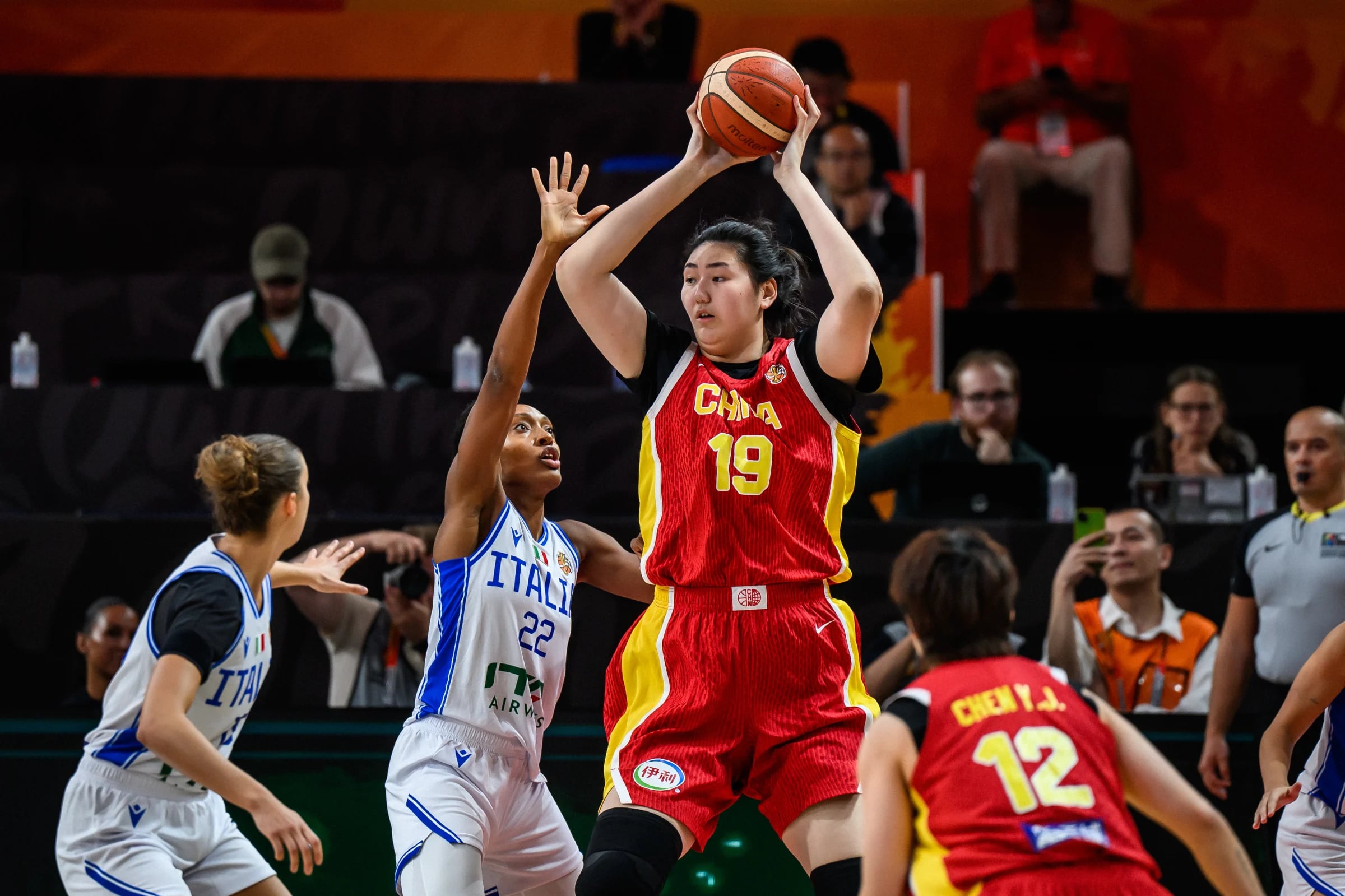
Zhang Ziyu, the 2.23-meter World Cup sensation

Zhang Ziyu, in a game against Italy, in an image provided by FIBA.

Seeing her seated is striking. When she stands, all you can do is look up. Zhang Ziyu is 19 and stands 2.23 meters tall (seven feet and three inches). She is the tallest professional women’s basketball player in history and the main attraction at the World Cup in Berlin, where she is competing with China’s national team, but as she herself points out, she’s still almost a child. “Everyone thinks I’m tough because I’m very tall, but I’m still a young girl, sometimes quite childish,” Zhang says in a FIBA documentary. It shows in her youthful face, in the jokes with her teammates and in the laughter as she runs through the mixed zone. And in her hobby of crocheting handicrafts that she gives to friends, like a stuffed elephant she spent two weeks sewing with yarn. When she recalls how she became a star, she says she misses her childhood bed full of rag dolls.

Seguir leyendo

  •  
❌