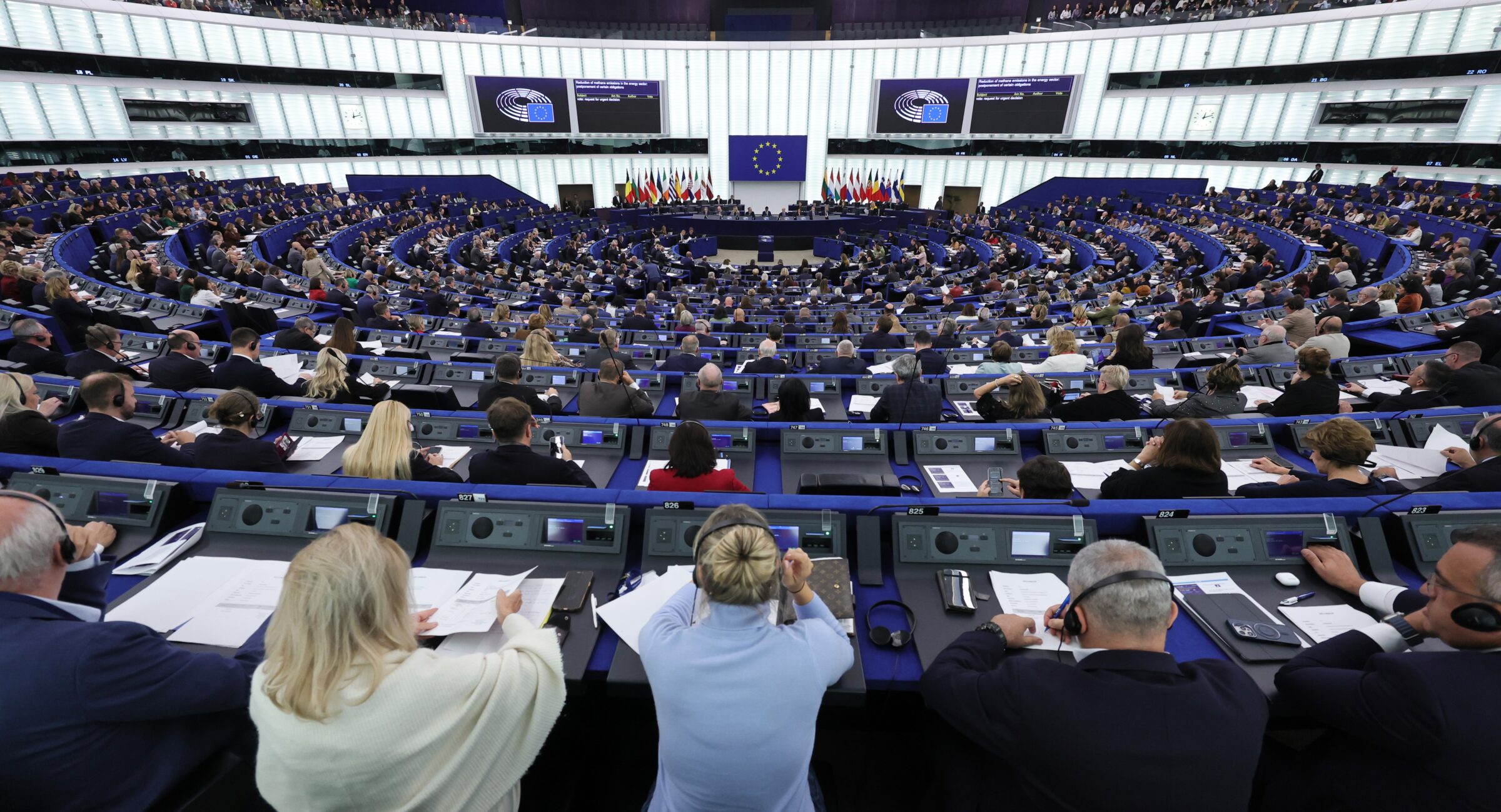
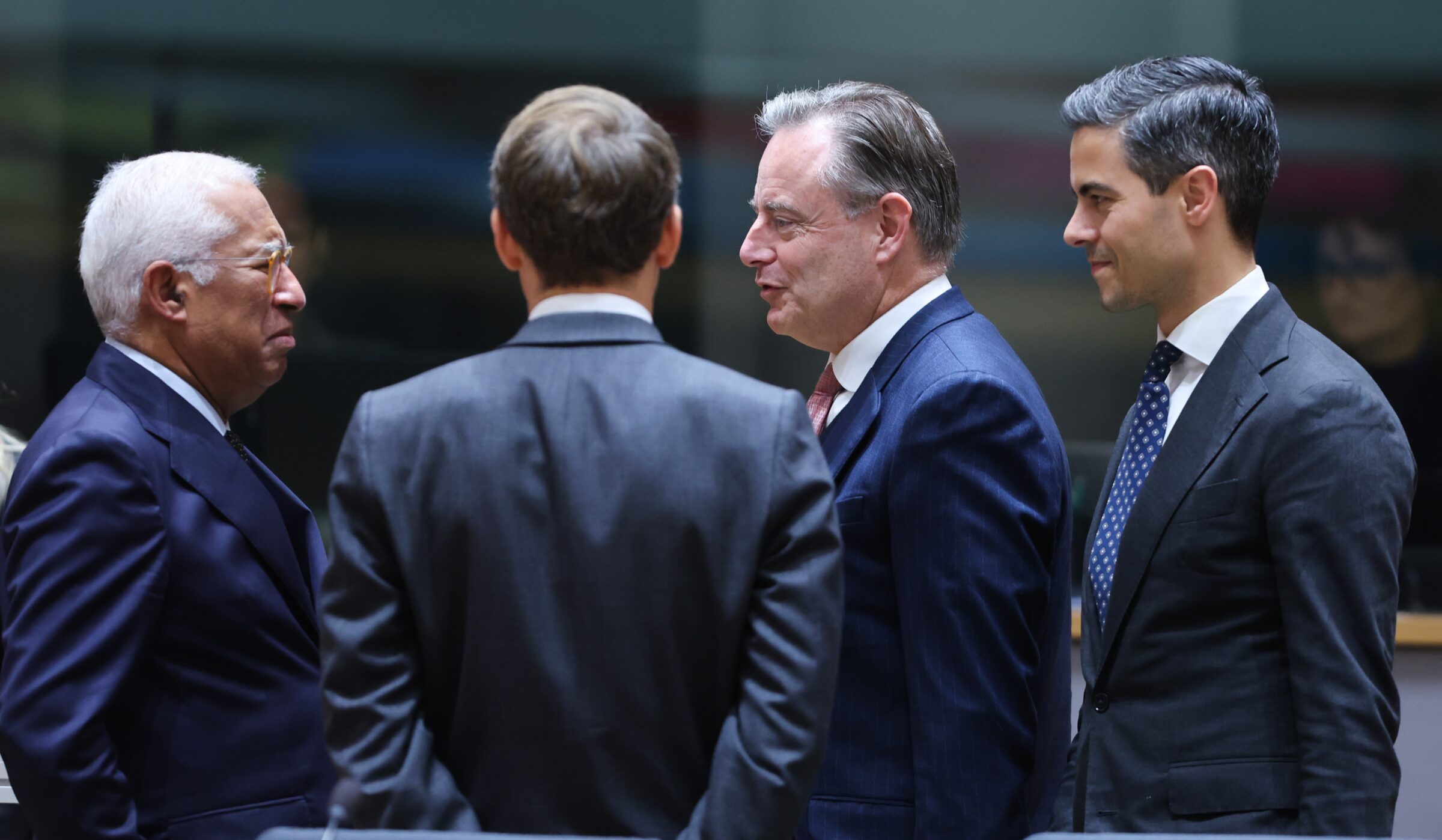
The European Parliament has called for more spending to build affordable houses — using funds for regional development that currently make up a third of the EU budget.
Cohesion funds should be used to protect the ‘right to stay’ in rural areas or in small cities, a principle that the parliament wants to write into the new budget legislation.
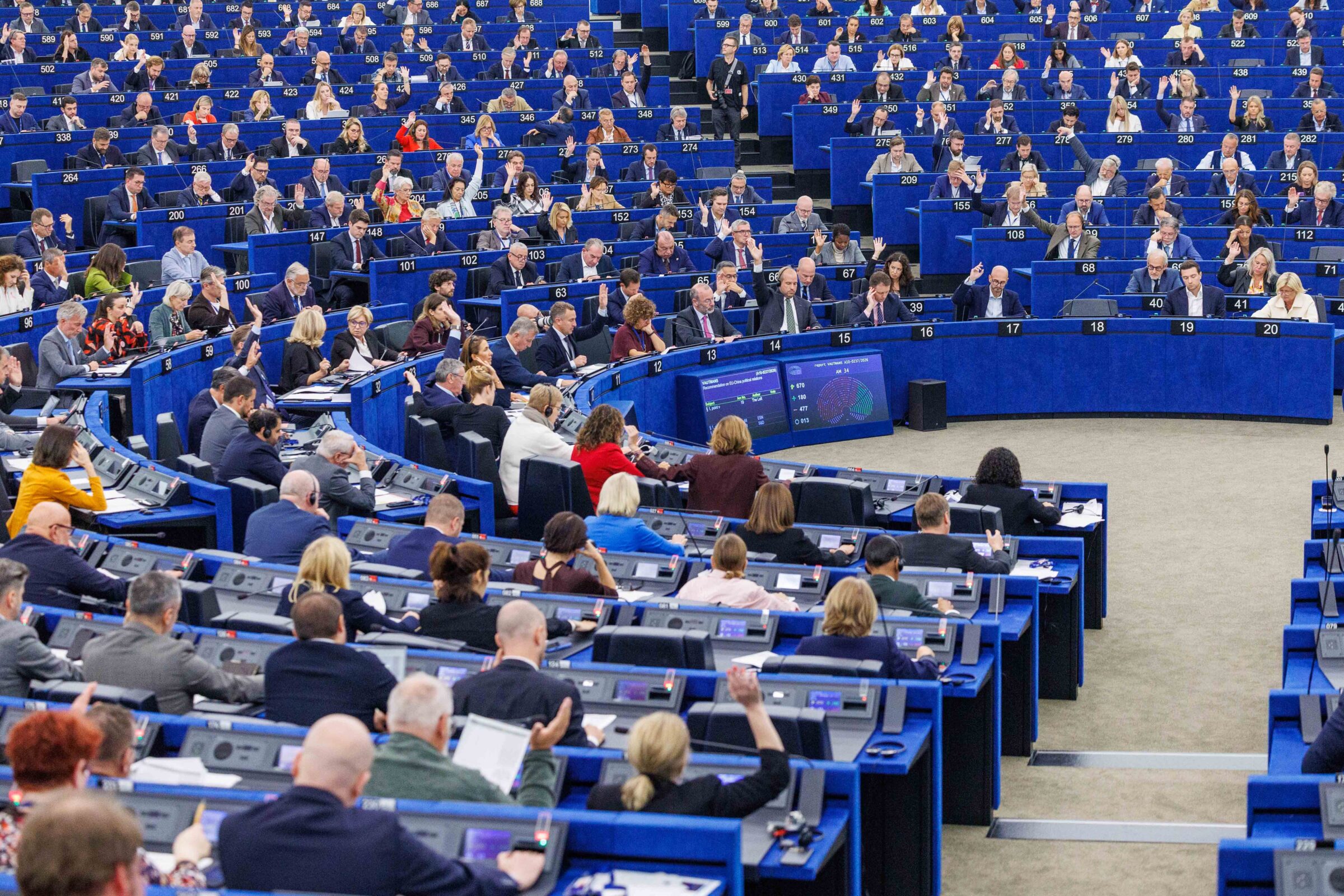
Peripheral regions often face depopulation due to few job opportunities, according to a parliamentary non-binding report passed with 601 votes in favour, 20 against, and 36 abstentions on Tuesday (20 October).
MEPs are also calling for strong cohesion funds that would allow cities to better prepare for climate emergencies and provide a budget for additional investments in housing.
Cohesion funds, which account for a total of €48.03bn in the existing 2021-2027 EU budget, usually finance infrastructure projects, like bridges, roads, or railways in countries with a lower-than-average per capita gross national income.
The commission proposed significant cuts to reduce regional funds in the next multi-annual budget, set to cover 2028-34, but a group of 16 member states, often benefitting from the funding, opposed the reduction.
Regional development plays a key role in European integration since it is the “only instrument which can unite all of us,” and should not be reduced in the next EU budget, said Left Lithuanian MEP Vytenis Povilas Andriukaitis during a plenary debate on Monday (19 October).
Cohesion funds “could be the response to the radicalisation of Europe,” Fredis Beleris, a German centre-right MEP said.
For that to happen, cohesion funds must be accessible for small and medium-sized cities, who often struggle with formalities linked to EU funds, said Denis Nesci, Italian conservative MEP spearheading the file.
Small municipalities should be able to access cohesion funds “on an equal footing as bigger cities,” he said, echoing the dominant centre-right commission’s position and its aim to simplify regulations.
A diverse array of MEPs on Tuesday (20 October) expressed their enthusiasm for the UK ‘correcting the mistake’ of Brexit by rejoining the European Union 10 years after its people narrowly voted to leave.
“Trump, Xi and Putin might form a troika of iliberalism standing in defiance of the achievements of liberal democracy”, warned Barry Andrews, an Irish MEP for Renew, saying that the EU should not treat the United Kingdom “like any other third country”.
His party ally Sandro Gozi, an Italian MEP, added: “Every option must be on the table, from a special partnership to full EU membership.”
The debate on EU-UK relations in the Strasbourg parliament came a month ahead of a highly-anticipated EU-UK summit in Brussels on 20 November.
Although the UK rejoining the bloc is still a distant prospect, it is back on the agenda because of new prime minister Andy Burnham.
Brexit had “done more harm than good”, Burnham told delegates at the Labour party conference in late September, adding that “we will not give Britain the clear path we need into the rest of the century until we decide on a long-term relationship with what is still our largest market.”
Britain could “go all the way” back into the EU, added Burnham.
European parliament president Robert Metsola has given an open invitation for Burnham to address MEPs, her office told EUobserver, in another sign of goodwill.
The UK Treasury, meanwhile, is expected to publish a study in the coming days detailing the scale of the hit to the UK economy from leaving the bloc.
Burnham’s predecessor Keir Starmer, who resigned in July primarily because of dismal opinion poll ratings, had promised a ‘reset’ of EU-UK relations when his government took power in July 2024. But apart from rhetoric, little has changed, though the UK now has access to the Erasmus+ student exchange programme.
Brexit is a “mistake that can be corrected by all of us” and admitting it is “a sign of strength”, said German Green MEP Terry Reintke.
New deals agreed should be “the floor and not the ceiling” of bilateral relations, said David McAllister, a German MEP for the centre-right European People’s Party (EPP).
On the right, Polish MEP for the European Conservatives and Reformists Jadwiga Wiśniewska also welcomed new talks with the UK, calling for them to be based on “concrete elements” like agriculture deals, defence and Erasmus+.
This article continues, but the full version is available only to EUobserver.com subscribers. Visit account.euobserver.com/membership
EU ministers have discussed how to make labour standards compatible with modern technological conditions and workplace culture, such as telework and AI-led staff oversight, without losing competitiveness.
The law in question, called the Quality Jobs Act, covers a wide range of work protection measures, such as common standards for being able to ‘go home’ and disconnect from remote work, and limits to AI role in recruitment or its scrutiny of workers’ performance.
Technological innovation should “benefit both workers and businesses,” said Portuguese labour minister Maria do Rosário Palma Ramalho, addressing the ministers’ council on Monday (19 October) in Luxembourg.
Human oversight is essential, especially where AI systems decide on recruitment or workers’ assessment, she said.
Next to innovation, labour rules needed to ensure “fair and transparent practices, respect for human workers’ rights … and effective social dialog,” said Roxana Mînzatu, the EU commissioner for employment.
“This revolutionary technology has to be regulated” so that it “delivers for all,” Isabelle Schömann, the European Trade Union Confederation (ETUC) deputy general secretary had also said during a conference organised by the centre-left S&D group in the European Parliament on 14 October, commenting on the need for the Quality Jobs Act to curb AI.
The draft Quality Jobs Act that the European Commission plans to present in December aims to update the long out of date 1989 and 1990 health and safety workplace rules.
It would also protect subcontractors and create standards for working in heatwaves, becoming more frequent with climate change.
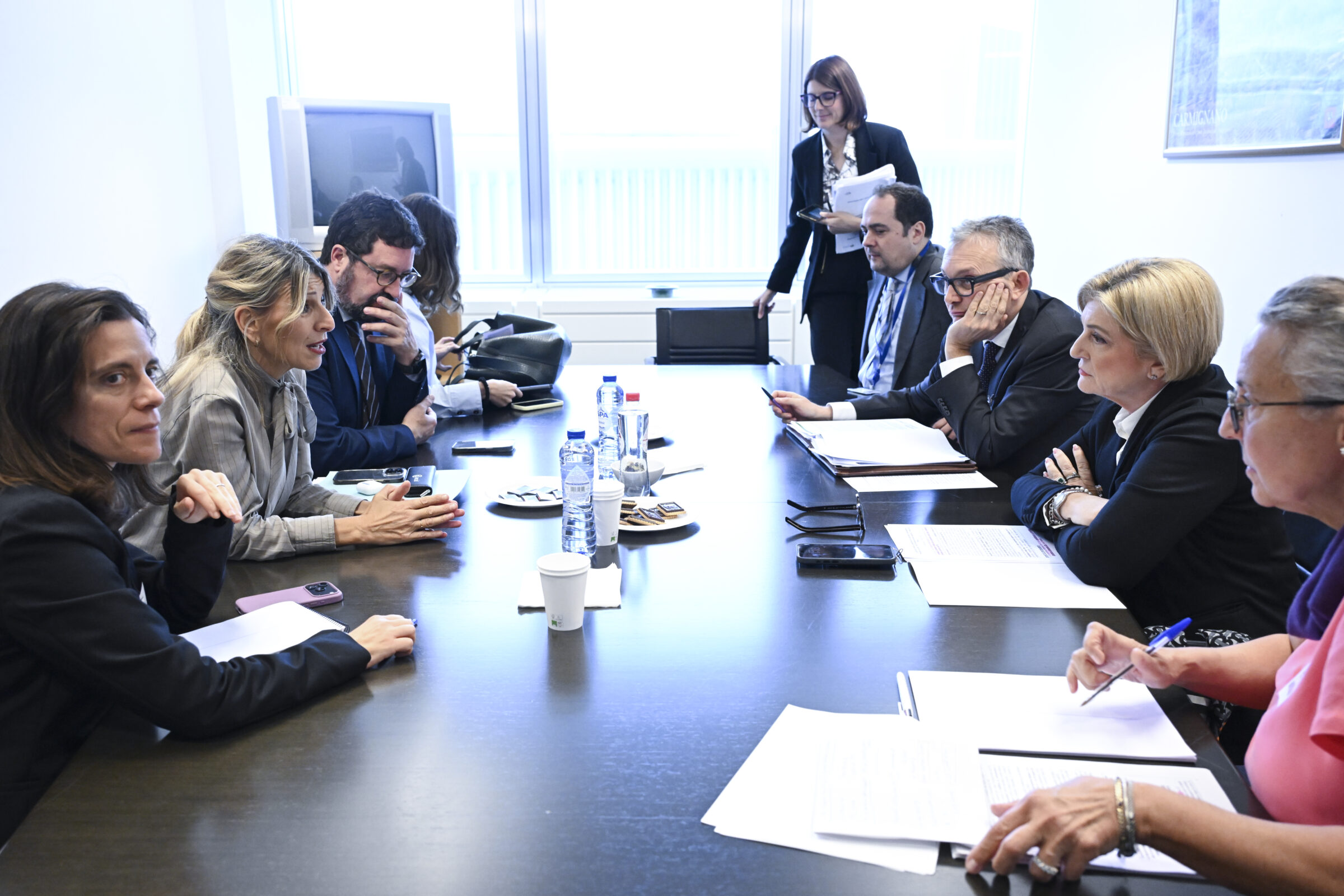
EU legislators need to ensure minimum standards so that “neither jobs nor businesses are jeopardised” with extreme weather, Yolanda Díaz Pérez, the Spanish labour minister, said ahead of Monday’s debate.
This article continues, but the full version is available only to EUobserver.com subscribers. Visit account.euobserver.com/membership
Paris, 19 October, (Brussels Morning Newspaper) – President Emmanuel Macron is facing mounting political pressure after the France riots left public buildings damaged, businesses looted and thousands arrested across the country. The crisis deepened on Monday when Macron … Read more
Berlin and Paris spent months negotiating over the future of Europe’s auto industry.
Germany wanted to keep selling new combustion-engine cars beyond 2035. In return, France wanted strict “Made in Europe” rules: public money spent on electric vehicle (EV) purchase incentives, subsidies and government contracts should benefit cars genuinely made in Europe, not simply assembled here.
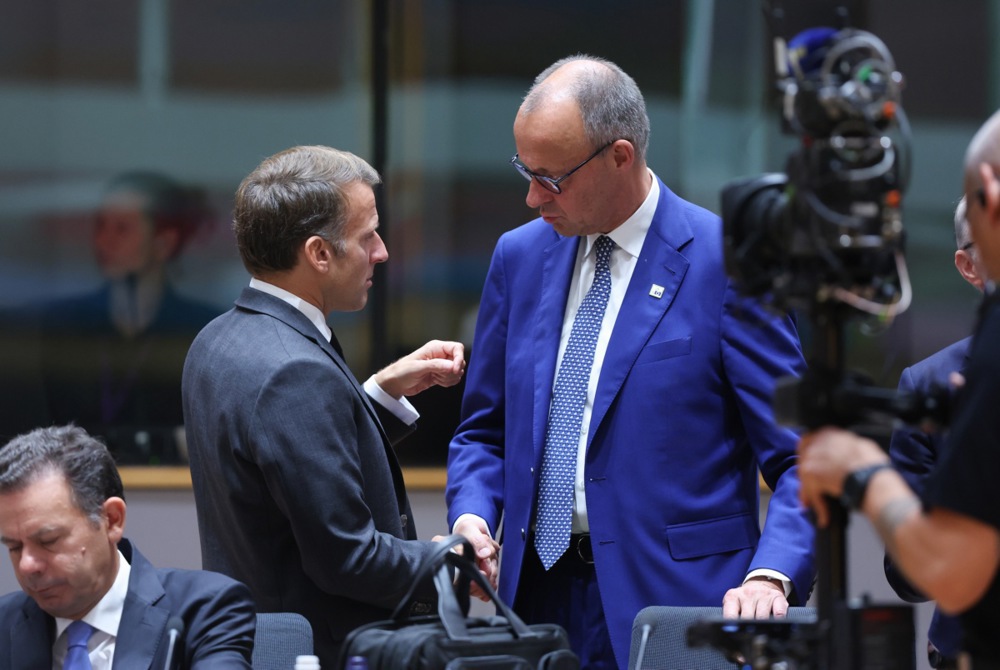
One concession in exchange for the other. French president Emmanuel Macron and German chancellor Friedrich Merz have now sealed the deal.
Both can claim victory at home, and both say they want the same thing: to strengthen Europe’s auto industry against Chinese competition.
But the trade-off undermines that very goal. It rightly pushes for more European production, but pays for it with less ambition for electric vehicles.
For Europe’s automakers to compete, two things need to happen: More of the value generated by car manufacturing must stay in Europe, and the transition to electric vehicles must remain on track. Trading one for the other weakens both.
Value creation is already moving elsewhere
On one point, France is right: a growing EV market alone won’t protect European jobs. Many of the most important components in electric cars already come from China, especially batteries.
Meanwhile, Chinese automakers are building factories in Hungary and Spain, securing direct access to the European market.
The risk is clear: cars assembled in Europe from imported components qualify as European products, benefit from purchase incentives and win public contracts.
Final assembly stays in Europe, but much of the economic value is created elsewhere. European auto suppliers have already cut more than 100,000 jobs in two years, and the European Commission warns that up to 600,000 more could disappear over the next five to 10 years.
That’s where the proposed Industrial Accelerator Act comes in. It would link public spending on subsidies, purchase incentives and government procurement to production in Europe.
This isn’t just about shutting out foreign competition. It steers demand to where it strengthens Europe’s industrial base.
To work, the rules must target the components that will shape the industry’s future: battery cells, software, electric drivetrains and power electronics.
“Made in Europe” can’t simply mean attaching the wheels here.
That doesn’t mean every nut and bolt must come from the EU. The auto industry relies on global supply chains and trusted trading partners.
But a law riddled with exemptions would be little better than no law at all: It would create more red tape without bringing a single new factory to Europe.
Factories need customers
Even the best industrial policy will fail without buyers. A battery factory can only make money if it produces enough batteries. Yet Europe’s battery plants are running well below capacity because they don’t have enough orders. Every battery that goes unproduced drives up the cost of those that are made. Factories, machinery and workers still have to be paid for.
Since 2022, roughly a quarter of announced battery projects in the EU have been canceled or put on hold.
This is why Germany’s push to delay the phaseout of combustion-engine cars is so damaging. Every combustion-engine car sold instead of an EV means one fewer battery that could be made in Europe. The very factories meant to make “Made in Europe” a reality would lose potential customers.
The best way to boost demand for European batteries is to build more small, affordable EVs in Europe. That’s where the biggest sales volumes are. Yet German automakers in particular have been slow to embrace this market, despite significant demand potential in Germany itself. Delaying the combustion-engine phaseout would only give them another reason to hold back.
Slow down, lose out
For European automakers, the stakes go far beyond their home market. Sell fewer EVs at home, and manufacturers will launch fewer new models, produce fewer cars and face higher costs. That will make it harder to compete abroad, too. Giving combustion engines more time won’t close the gap with China. It could make it wider.
Political uncertainty only makes matters worse. Automakers plan new models, factories and supplier contracts years in advance. Every fresh debate over exemptions gives investors and consumers another reason to hesitate.
Companies investing billions in EVs and batteries – and consumers considering buying an electric car – need to know that policymakers won’t change direction tomorrow.
The Franco-German bargain ignores economic reality. The future of the car is electric, and China figured that out long ago.
Beijing is doing everything it can to build an unbeatable lead in EVs, including through unfair practices such as massive government subsidies.
And Europe? It’s haggling over more time for yesterday’s technology. At stake is nothing less than the auto industry – the backbone of Europe’s industrial economy and a major source of jobs.
This deal is not yet law. A better deal would be simple: Europe should pursue electric vehicles with the same determination as China while making sure the jobs, factories and economic benefits stay in Europe.
European Council president António Costa gets to work this week rewriting the EU’s seven-year budget, after the bloc’s leaders binned the long-term plan proposed by the Irish council presidency last week.
The budget will be debated by MEPs at the plenary in Strasbourg on Wednesday (21 October), when European Parliament will also vote to allocate €47bn for Erasmus+ instead of the €40bn planned on Thursday (22 October).
A separate vote on Wednesday (21 October) will decide parliament’s position on the EU’s short-term 2027 budget, when MEPs will decide whether or not to ask for €2.7bn more than what council proposed in summer, with extra monies proposed for expanding Erasmus+, agriculture and responding to climate disaster.
Further, MEPs will also decide on disbursing €489m to Mediterranean member states ravaged by storms and flooding, and €1.1m to retrain hundreds of workers laid off in Finland’s paper industry cuts – both on Wednesday (21 October).
This comes after last week in Brussels, where national leaders at their summit binned a long-term budget proposed by the Irish Council presidency. While most wanted to keep budget headroom, a minority of big spending countries wanted to save cash. So while European Council president Antonio Costa gets to work rewriting the 2028-2034 funding plan, MEPs will also make their views on the matter clear.
A debate will also ensue on Tuesday (20 October) on how to respond to escalating Russian provocations off Bulgarian and Romanian coasts where drones have repeatedly violated EU airspace, followed by a vote on Thursday (22 October). MEPs will also ask the commission to explain why it decided to unlock sanctions on luxury Russian furs shortly after it imposed them.
This article continues, but the full version is available only to EUobserver.com subscribers. Visit account.euobserver.com/membership
Brussels, 17 October, (Brussels Morning Newspaper) – European Union leaders are intensifying efforts to strengthen Europe’s industrial competitiveness as EU trade defences against unfairly priced Chinese imports become an increasingly important part of the bloc’s economic strategy. The … Read more
Brussels, 17 October, (Brussels Morning Newspaper) – An EU migration dispute exposed divisions among European leaders during the European Council summit in Brussels on 15 and 16 October, as Denmark, Italy and Poland demanded tougher language on irregular … Read more
EU leaders have failed to settle their differences over the 2028–2034 budget, with Germany demanding further reductions to the proposed spending framework and the European Council taking charge of negotiations ahead of a difficult December deadline.
European Union leaders have ended their Brussels summit without agreement on the bloc’s next seven-year budget, after German Chancellor Friedrich Merz rejected the scale of spending envisaged under the latest compromise proposal and demanded deeper cuts.
The discussions on 15–16 October exposed the continuing division between governments determined to contain national contributions and those seeking to protect agricultural subsidies, regional development and new European investment programmes. The dispute now threatens the political timetable for approving the 2028–2034 Multiannual Financial Framework, the budget that will determine the Union’s spending priorities over the next seven years.
In their formal summit conclusions, leaders invited European Council President António Costa to take negotiations forward towards a timely agreement. No new spending settlement was endorsed, despite the Irish presidency having presented revised figures immediately before the summit.
Germany rejects the compromise
The European Commission originally proposed a framework approaching €2 trillion in current prices, arguing that Europe needed greater financial capacity to meet its growing responsibilities in defence, competitiveness, technological development, migration and external security.
Ireland, which holds the rotating Council presidency, submitted a revised negotiating document on 10 October intended to narrow the differences between governments. The latest proposal includes substantial reductions compared with the Commission’s initial ambitions while seeking to preserve financing for established EU programmes.
Those concessions have not satisfied Berlin. Merz argues that the Union must recognise the difficult fiscal position facing national governments and that the proposed increases in common spending remain excessive.
Germany, the largest contributor to the EU budget in absolute terms, has been working with other budget-conscious governments to seek reductions from the original Commission proposal.
The Irish compromise has done little to bridge the divide. The revised framework seeks to combine greater financial restraint with protection for agricultural and cohesion policies, while retaining significant investment in security, research and competitiveness.
Yet every attempt to rebalance the proposed spending exposes another political conflict.
Agriculture, cohesion and defence compete for funding
The Common Agricultural Policy and cohesion funding remain among the largest and most politically sensitive components of the EU budget. Agricultural payments support farmers across the Union, while cohesion programmes finance infrastructure, regional investment and economic development, particularly in less prosperous territories.
Governments benefiting heavily from those programmes are reluctant to accept reductions, particularly when national finances are already under pressure.
France, Italy and other countries defending traditional EU expenditure have therefore resisted attempts to transfer the burden of budget restraint disproportionately onto agriculture and regional support.
At the same time, the Commission has argued that the EU cannot simply preserve the spending structure of previous decades while promising a stronger role in European defence, industrial development and economic security.
The contradiction is increasingly apparent. European governments demand greater independence from external suppliers, stronger military capabilities and sustained financial support for Ukraine, yet remain unwilling to agree on the larger common budget that might help deliver those objectives.
Cuts to research, innovation, cross-border infrastructure or defence-industrial programmes would not necessarily produce immediate political costs. Their consequences would emerge later, through investments postponed, capabilities not developed and projects left dependent on national budgets.
Conversely, reducing agricultural payments or regional investment would produce more immediate resistance from farmers, local authorities and national governments.
The Council’s budget negotiations had been intended to deliver a political agreement before the end of 2026. That would leave 2027 for the European Parliament and member states to complete the legislation required for the new financial framework to operate from January 2028.
Failure to reach that timetable would not immediately stop EU expenditure. It would, however, compress the period available for completing the detailed legal arrangements underpinning individual programmes and could complicate the uninterrupted delivery of funding at the beginning of the next budget cycle.
The political environment is hardly favourable. Several governments face difficult domestic debates over public spending, taxation and the demands of European integration. In France, the approach of the 2027 presidential election adds another complication to negotiations requiring sensitive national concessions.
Agreement on the seven-year framework requires unanimity among member states, followed by the consent of the European Parliament. The latter has already argued that the EU needs sufficient financial resources to match the responsibilities its governments have assigned to it.
Costa now faces the task of converting competing national positions into a financial settlement that all 27 governments can accept. That will require decisions not only about the overall ceiling but also about the balance between national allocations and programmes managed at European level.
The Brussels summit has demonstrated that the principal disagreements remain unresolved. The next negotiating round will determine whether governments are prepared to compromise on spending priorities or whether their ambitions for a more capable European Union will once again run ahead of their willingness to finance it.
Italy has extended checks on travellers from Spain for another week, but talks between Giorgia Meloni and Pedro Sánchez have opened the way for an end to reciprocal restrictions imposed after the migration crisis in Ceuta.
Italy and Spain have agreed to work towards ending their reciprocal Schengen border controls following discussions between Prime Ministers Giorgia Meloni and Pedro Sánchez at the European Council summit in Brussels. Rome nevertheless extended its restrictions for another seven days on Friday, 16 October, as the two governments consider how to bring their respective measures to an end.
The decision marks a possible turning point in a dispute that has disrupted travel between two of the European Union’s largest countries since the summer. According to the notifications recorded by the European Commission, the restrictions concern air and sea connections between Italy and Spain, which do not share a land border.
The two governments have instructed their interior ministers to consider alternative arrangements over the coming week. Although neither side has formally withdrawn its measures, the agreement to coordinate their removal suggests that both capitals are seeking a way out of an increasingly uncomfortable confrontation over migration and internal European security.
How the Ceuta crisis reached Schengen
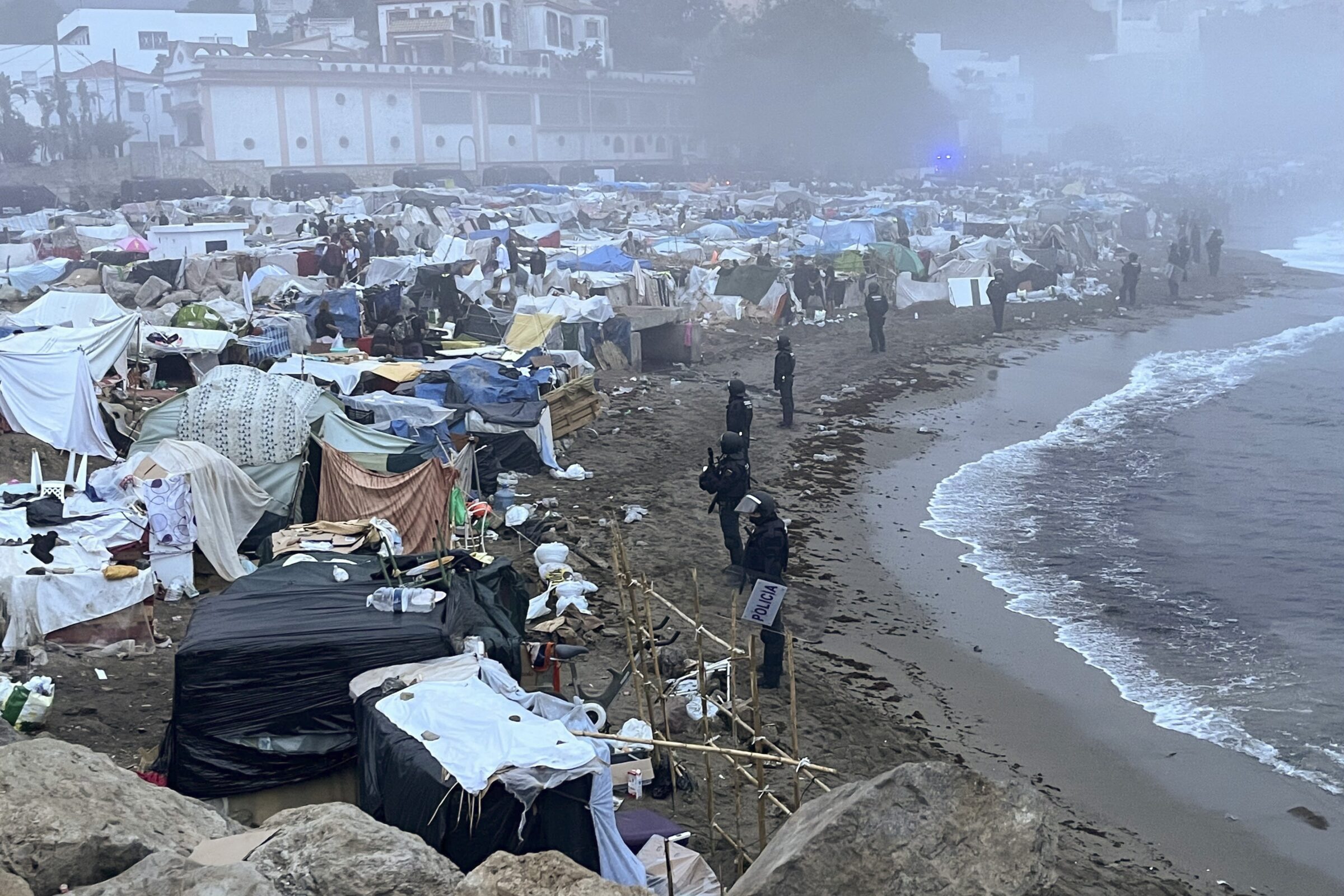
The dispute began after an extraordinary influx of migrants from Morocco into Spain’s North African enclave of Ceuta in late July. More than 72,000 people crossed the border, prompting serious questions about the management of the EU’s external borders and the possibility of onward movements into other member states.
Italy responded by introducing checks on passengers arriving from Spain, arguing that the situation created risks for public order and internal security. Rome also raised concerns about the possible movement of individuals presenting security threats, although the extent of any such movement remained disputed.
Madrid rejected the justification and introduced reciprocal measures. What began as an emergency response to events on an external border consequently developed into a disagreement about whether one Schengen member could impose restrictions on another on the basis of anticipated migration movements.
EU Today examined the original Spanish retaliation in August, when the dispute first threatened to turn temporary border controls into an instrument of political pressure.
The wider consequences of the Ceuta incident have raised questions about the vulnerabilities exposed at the EU’s external border and the effectiveness of common European migration and crisis-response policy.
The limits of temporary border controls
Schengen is built on the principle that people can travel between participating countries without routine internal border checks. Member states nevertheless retain the right to reintroduce temporary controls in response to serious threats to public policy or internal security, subject to the requirements of EU law.
The difficulty lies in determining when those exceptional powers are justified. Italy has maintained that the Ceuta crisis warranted precautionary action. Spain has argued that controls imposed specifically on travellers from its territory were unjustified and discriminatory.
These opposing positions matter beyond the two countries. If concerns over irregular arrivals in one member state become sufficient grounds for another to introduce sustained checks, the distinction between Europe’s external borders and its internal travel area becomes increasingly difficult to maintain.
The operational results have also entered the political argument. Italian figures cited during the dispute indicate that nearly half a million passengers were checked during the first month, with 31 refused entry. Those numbers demonstrate that the measures were substantial, but do not by themselves establish whether the original security concerns were proportionate to the restrictions imposed.
Madrid, meanwhile, has maintained that migrants involved in the Ceuta influx had not moved onwards to mainland Spain in the manner suggested by Italian concerns.
Meloni and Sánchez seek a practical compromise
The latest discussions offer both governments a route towards de-escalation without formally conceding their underlying positions. Meloni can present the additional week of controls as a continuation of Italy’s security precautions, while Sánchez can point to an agreement to prepare their coordinated removal.
The two prime ministers remain politically divided on migration. Meloni has consistently argued for stronger border enforcement and deterrence, while Sánchez has defended an approach incorporating legalisation and labour-market integration for migrants already living in Spain.
Those disagreements were also visible during the Brussels summit, where European leaders returned to the question of migration management and the consequences of national decisions for the wider Union.
For Brussels, the immediate concern is whether the two governments can replace competing national restrictions with arrangements that address security concerns without unnecessarily interrupting movement between Schengen countries.
A coordinated end to the controls would not resolve the underlying problems exposed by Ceuta. It would, however, remove one of the more unusual internal consequences of that crisis and demonstrate that political negotiations can still prevent emergency border measures from becoming semi-permanent.
The decisive period is now the coming week. Whether the controls expire as planned will depend on the discussions between the Italian and Spanish interior ministries and their ability to agree practical alternatives.
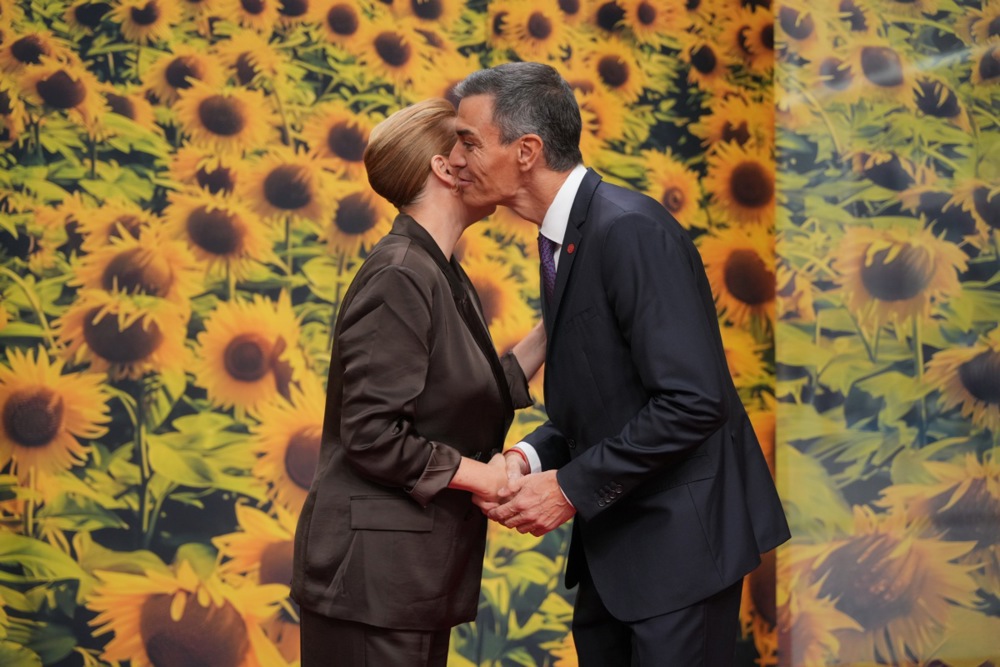
Danish prime minister Mette Frederiksen attacked Spanish leader Pedro Sánchez on migration during a summit debate in Brussels on Friday (16 October).
Frederiksen, who despite leading a centre-left party has taken an increasingly hard line on migration, criticised Sánchez for granting renewable one-year legal residence permits to undocumented migrants.
“I have asked the commission to look into whether one country is doing almost everything in the opposite direction of what the others are doing. In other words, you come to a country illegally, and suddenly you’re allowed to be there legally,” Frederiksen said before arriving at the second day of the Brussels summit.
In response, Sánchez told reporters after the meeting with EU leaders that Spain’s regularisation scheme “does not go against the grain” – since there are many countries with similar measures.
In April, Spain approved plans to grant legal status to around 500,000 undocumented migrants and asylum seekers. These so-called regularisations are a common labour-migration policy that other countries have also used, including Italy, which has authorised nearly 500,000 non-EU work visas through 2028.
But at the EU leaders’ summit in Brussels in June, several European leaders used the meeting to criticise Spain’s regularisation.
The criticism resurfaced during this October summit, after the summer’s migrant crisis in the Spanish enclave of Ceuta, which some EU governments then weaponised against Spain.
Push for stronger wording
Following a breakfast on Friday (16 October), attended by 16 EU countries backing stricter migration restrictions, Denmark, Poland and Italy had also attempted to link migration to crime in draft EU summit conclusions.
They tried to amend the summit conclusions to call on the commission for extra efforts to monitor national migration measures that can affect other member states, highlight the impact of migration on welfare and public services, as well as avoid “measures that could create incentives for illegal migration”.
However, France and Luxembourg criticised the position of the 16, and leaders had a strategic exchange and agreed to return to the topic at a later date.
According to experts from the Migration Policy Centre, it is hard to conclude whether Spain’s regularisation plans encouraged more migration to the EU.
So-called ‘pull factors’ are difficult to consider in isolation, as migration depends on work opportunities, social networks abroad and other factors, but policies can also play a role.
Regularisation could pave the way to legal work, generating “positive employment and fiscal outcomes over time,” the scholars also said.
Denmark itself is not bound by EU laws (due to an opt-out) on border control, immigration, civil and criminal law, or police cooperation, and therefore cannot vote on them in the Council.
Rhetoric versus facts
It is not the first clash between the two socialist leaders on migration, but the timing matters.
Sánchez faces elections in November, and France heads into presidential elections next spring, where it is feared anti-migrant rhetoric could roll out the red carpet for the far right.
In response to a barrage of criticism from the likes of Austria, Czech Republic and, Sánchez said that the numbers on illegal migration returns speak for themselves.
“See what is happening in Spain – some politicians are willing to replace the population only so they can be … in government,” said Czech prime minister Andrej Babiš ahead of the meeting on Friday. “I am convinced that for some countries, it is too late – and that some day we will have to defend our borders so that migrants don’t come to us from Western countries if it continues like this. And we, of course, are preparing for this.”
“It’s a road to hell,” added Babiš, who belongs to the far-right Patriots for Europe group.
His comments, Sánchez said, resembled the rhetoric of the far-right political party Vox in Spain, now polling close to 20 percent. “One thing is the rhetoric, the blablabla, and another thing is the facts,” he said.
Ceuta crisis
The situation in Ceuta escalated at the end of July 2026, when tens of thousands of people simultaneously attempted to cross over from Morocco to the autonomous enclave.
The Spanish have since deployed additional security measures to regain control over the territory.
A majority of newly arrived migrants were eventually returned to Morocco, but thousands remained in the city of 80,000 people – many of whom are unaccompanied children and teenagers.
The crisis has exposed tensions between Spain, Morocco and the EU on border control and asylum and put into question who is responsible for migrants.
French president Emmanuel Macro previously said: “Spain was the target of an attack. Call it a hybrid attack if you like, but it was an information attack. Traffickers, and probably people seeking to destabilise Spain, led many people living in poverty to believe there was an opportunity, using false information and creating an information bubble.”
Meanwhile Italian prime minister Giorgia Meloni previously called for a suspension of the Schengen free movement agreement with Spain.
The whole situation triggered tit-for-tat border closures between Spain and Italy.
On Thursday (15 October), Italy decided not to renew the security checks with Spain, paving the way for a week of negotiations between Madrid and Rome to reach a final agreement.
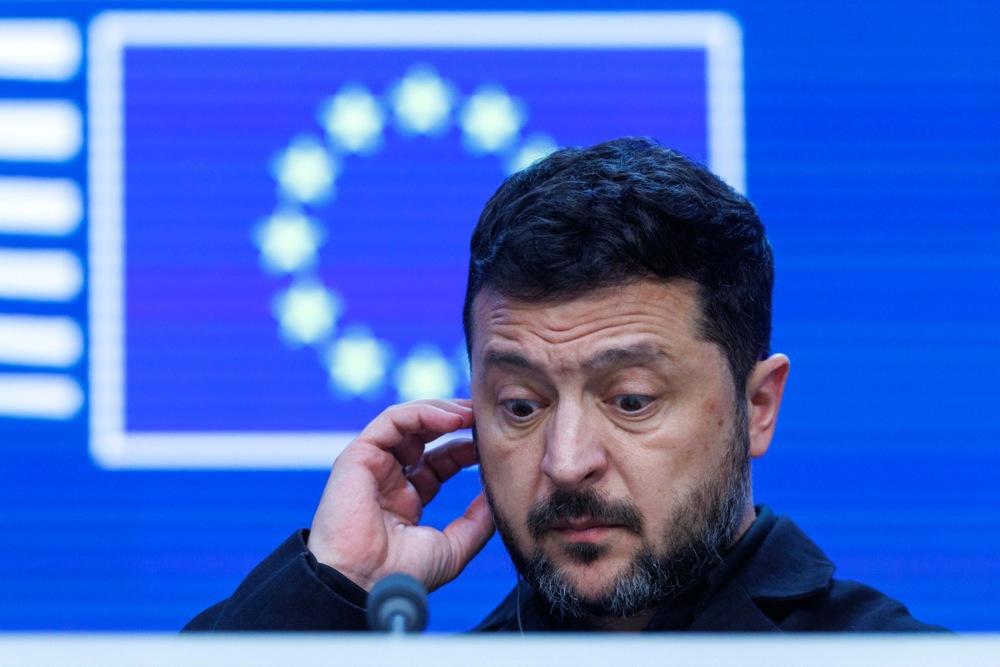
Ukrainian president Volodymyr Zelensky said on Friday (16 October) that the US-Russia ‘diesel deal’ came as a surprise and could lead to further sanctions relief for Moscow.
“We cannot treat the agreements concerning diesel and coal as isolated cases … gas could be next. I am absolutely convinced of that,” Zelensky told reporters in Brussels, after meeting with EU leaders.
“The risks I am talking about are clear: sanctions could be progressively eased,” he warned.
EU leaders are expected to “regret” the diesel deal in their summit conclusions, while discussions on a new package of sanctions against Russia are still underway.
“It is not a time to release sanctions on Russia,” said EU Council president Antonio Costa on Friday, alongside EU Commission president Ursula von der Leyen and Zelensky before the discussion with EU leaders.
“We will not lift any sanctions unless Russia ends the war,” confirmed von der Leyen, adding that Europe will keep working on “pressuring Russia”.
Europe has adopted 21 packages of sanctions on Russia since the beginning of the war, alongside the listing of thousands of individuals and entities, and is currently working on the 22nd.
But one Ukrainian senior diplomat told EUobserver that the coming months could be crucial to agree on more sanctions against Moscow, since February is seen as a possible deadline given the upcoming 2027 French presidential elections.
Russia’s economy has come under growing pressure from Western sanctions. Although a month-on-month decrease in exports was observed (six percent for fossil fuels, eight percent for crude oil), the US diesel deal could offer Moscow a potential lifeline.
No concessions
The diesel deal is widely seen as a way to restart peace talks. At the same time, the United States is pushing Kyiv and Moscow toward a negotiated settlement, which puts Ukraine under growing pressure to come to the table, even though any deal could force it to make painful concessions.
Zelensky, however, has warned against any deal that would compromise Ukraine’s sovereignty or territorial integrity.
“Putin plans to stick around much longer. He is building a Russia that looks like North Korea,” he wrote on X.
Instead, the Ukrainian president has turned to European “real leaders”, seeking to shore up their political and military support and strengthen Kyiv’s position in any future negotiations.
And in the words of von der Leyen, Europe is already helping Ukraine to prepare for “winter-isation”, which for Zelensky should translate into more funds and defence support.
This week, the commission disembursed €2.9bn to Kyiv to purchase drones, air defence systems, missiles, radars, electronic warfare systems and ammunition, as part of the EU’s €90bn loan, backed by EU leaders last year.
But Kyiv has warned it will need tens of billions more to continue fighting against Russia, as the war intensifies on the front lines and the number of attacks in Ukrainian cities increases.
Ukraine’s defence needs are estimated for 2026 around €23bn and Kyiv still needs to fund a hole of roughly €69.3bn for 2027.
“We will have to increase the funding once again,” German chancellor Friedrich Merz said on Thursday before meeting EU leaders in Brussels.
Protect Russian frozen assets
This article continues, but the full version is available only to EUobserver.com subscribers. Visit account.euobserver.com/membership
Brussels, 16 October, (Brussels Morning Newspaper) – European Union leaders have delivered a strong message of solidarity with Ukrainian President Volodymyr Zelenskyy during a high-level summit in Brussels, as disagreements with US President Donald Trump intensify over Russia … Read more
The European Commission’s likely anti-asylum proposal to tackle sudden large arrivals may come before the end of the year, after warm endorsements by some 17 EU states during a breakfast on Friday (16 October) ahead of the second-day of the EU summit in Brussels.
Beyond the warm words, the discussions exposed a clear ambition among the 17 to give member states the power to close EU borders and temporarily and selectively suspend asylum applications, according to an EU diplomat.
Speaking on the condition of anonymity, the diplomat said there had been a lot of support for the so-called European emergency response framework, proposed by EU commission president Ursula von der Leyen during her State of the Union address last month.
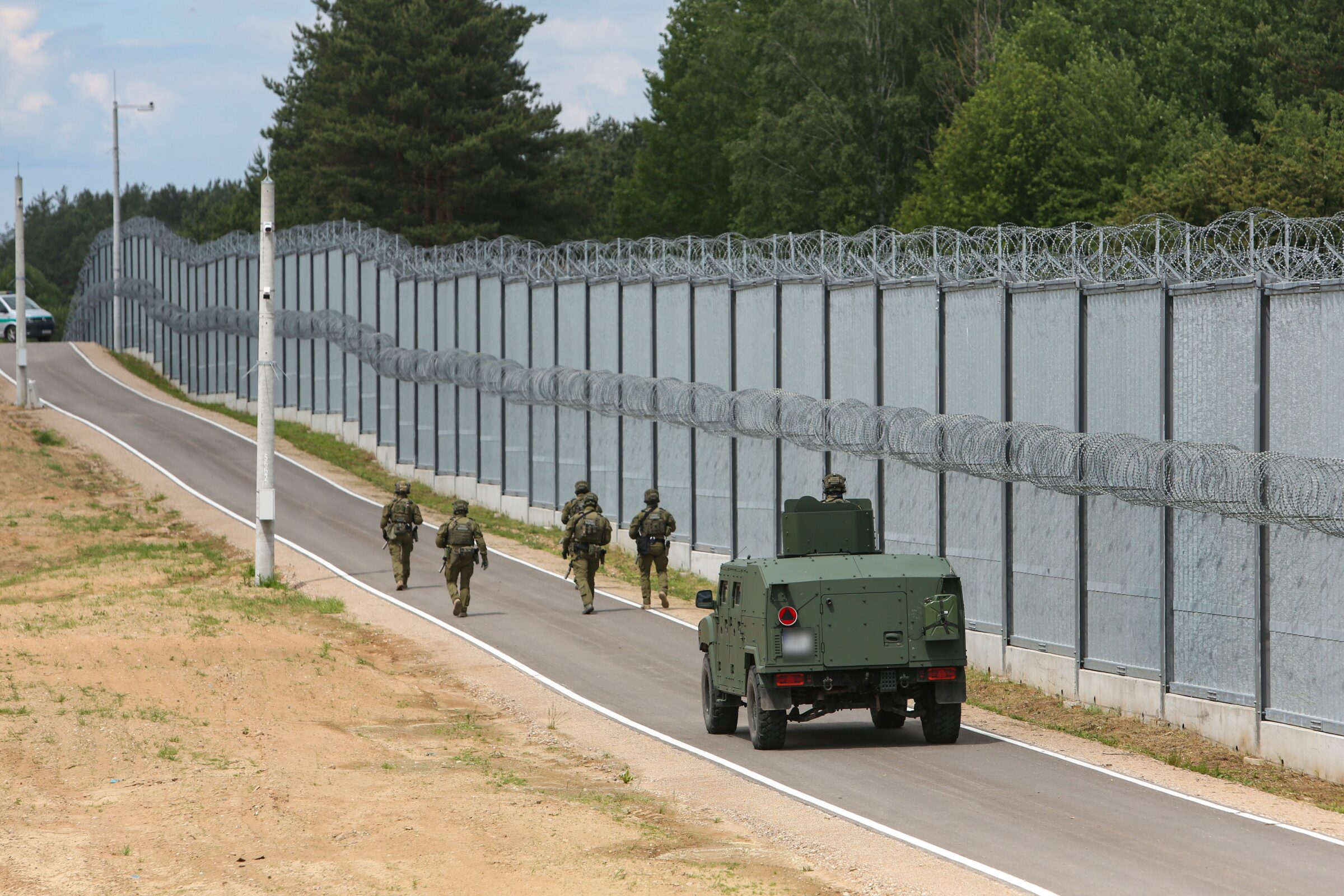
Speculation on what exactly such a framework entails remains unclear, amid alarm among human rights defenders that the EU is seeking legal tools to curb asylum rights – echoing Polish temporary emergency measures that have suspended asylum registration along the Belarus border since March 2025.
This article continues, but the full version is available only to EUobserver.com subscribers. Visit account.euobserver.com/membership
Europe is heading into an electoral moment without recent precedent. Four of its five most populous member states, Spain, France, Italy and Poland, are due to vote within the next 12 months – starting with Spain on 29 November.
If voters move further right, the combined effect could reshape the Union far more profoundly than any single national election.
Two shifts stand out. First, the firewall between the centre-right European People’s Party (EPP) and the hard-right is crumbling, even in Germany, its last bastion.
Hard-right parties sit in the governments of Italy, Czech Republic, Finland, Slovakia and Croatia, while Slovenia’s government relies on outside support from one.
Second, competition from the far-right is pushing established radical-right parties to harden their positions.
In Catalonia, Aliança Catalana is challenging Vox; in France, Éric Zemmour’s Reconquête, despite scoring single digits, is pressing on Marine Le Pen’s National Rally; in Italy, Roberto Vannacci’s National Future is challenging Giorgia Meloni’s Brothers of Italy; and in Poland, Grzegorz Braun’s Confederation of the Polish Crown is cannibalising the Confederation.
Under pressure, established conservatives tend to move towards these parties rather than hold the line, as Spain’s Partido Popular and France’s Les Républicains illustrate. Positions once on the margins become mainstream.
The implications go beyond immigration.
Le Pen and Vox leader Santiago Abascal advocate “national priority” in access to welfare and public services. Under pressure from the League and National Future, Meloni’s government has introduced a 30-percent cap on first-year classrooms for pupils without Italian citizenship, based on their birthplace or prior schooling.
A leaked AfD strategy paper reportedly goes further, proposing that national constitutions override EU law and reducing the Court of Justice to a forum for disputes between governments.
This article continues, but the full version is available only to EUobserver.com subscribers. Visit account.euobserver.com/membership
Human rights NGOs in Europe are not doing well. Funding cuts, legal restrictions, administrative burdens and smear campaigns are taking their toll.
I see organisations drastically downsizing or closing altogether and staff burning out. If we are to reverse our fortunes, the traditionally legally-focused movement needs to rebalance its skill-set to include more communicators and organisers.
Traditionally, human rights NGOs have been staffed mainly by lawyers. This is understandable. Human rights are legal standards contained in national, European and international law. If your main tools for getting human rights implemented are advocacy and litigation, then you need legal experts. But advocacy is becoming less effective because decision makers increasingly see supporting human rights as politically risky.
And litigation as a tool is partly limited by increasing political interference with the courts in some countries, or because – again – politicians see potential political brownie points in not complying with (or see potential political costs in complying with) judgments that enforce human rights standards.
It’s not just that NGOs’ traditional tools are losing their power. It’s that legal training does not equip us with the tools do we need to reverse our fortunes.
Our main lever for restoring human rights and the organisations that promote them is public opinion. For as long as we live continue to live in democracies, pressure from voters can have an impact on decision makers. Which means we need communicators who can help the public realise how important human rights are to them.
David Attenborough pointed out a few years ago that “saving our planet is now a communications challenge. We know what to do, we just need the will”.
The same goes for human rights.
But legal training does not make you good at communicating with folks outside your bubble.
‘Legal-ese’ is not the right lingo
I know from personal experience. I trod a path to human rights through a law degree, masters, doctorate and then academia. Human rights folks talk about them in a way that conveys a fraction of their value and power. If you’d asked me 15 years ago why human rights are important, I’d have said things like this: ‘they protect us from abuse by the government’, or ‘they’re minimum standards of protection the state can’t breach’, or ‘they exist to protect the vulnerable’.
These things are true. They’re also not very persuasive to people outside our base of support. Because the kinds of human rights breaches the movement foregrounds tend to affect ‘other people’. And lawyers are used to thinking about rights in the context of legal disputes.
So human rights get reduced to a shield that protects groups or institutions that most people don’t care about, don’t understand, or who live in other countries.
Human rights are not just a passive defence. They are transformational. Human rights are tools. Tools we use to demand that our leaders use the powers and resources with which we’ve entrusted them to do what’s best for all of us. Tools that we use to create the lives we want to live and the communities we want to live in. This is how we need to talk about them, especially when it comes to civil and political rights.
People outside our base cannot be made to care about media freedom, the right to protest or democracy itself just on principle or because they’re enshrined in legal standards. To care about human rights, most people need to know what these things deliver.
Folks will see that protest is important when we explain how it allows people like them to come together and make their leaders listen to their concerns, whether it’s about climate change or better pay for teachers. I’ve seen it first-hand when testing messages in focus groups.
Empathy, not stereotypes
The same goes for stimulating support for the rights of people from marginalised groups. Right now, most people have trouble caring because they been fed negative stereotypes that cause them to regard some people as ‘others’ and ‘outgroups’, meaning that they will tolerate lower standards of treatment for them.
Using legal arguments and evidencing rights violations by focusing on the harm being suffered doesn’t work because it does nothing to address the reason people don’t care. For that, we need to stimulate empathy and dissolve negative stereotypes through techniques like storytelling. Once people empathise and recognise our common humanity, they’re much more likely to support equal treatment.
When we communicate in a way that allows our audience to see how human rights deliver things they find important to them, they don’t just start to support human rights as standards. They also start to support the organisations that promote them. That means they’re more likely to listen to them, stand up for them, get involved in their work and even donate.
It’s not just about communicating better. We also need organisers who can help people come together to carry effective messages and make the strength of public support felt by our leaders.
Folks with legal training are still essential.
If you’re going to make phones, you need engineers. But we don’t see the engineers being given the job of persuading folks to buy the phones, do we?
Unless they’ve had proper communications training. The human rights movement’s legalistic centre of gravity needs to shift to make room for knowledge and skills that can meet the moment.
In the short-term we could achieve this by retraining staff and joining forces with other progressive movements that know how to organise and mobilise, like environmental NGOs.
We could also tackle the issue upstream by working with universities that produce human rights graduates to develop more holistic curricula that cover communications and organising and not only law.
EU leaders met Thursday (15 October) for their first face-to-face talks on the 2028–2034 budget, killing the latest negotiation proposal put forward by Ireland.
Dublin, which holds the symbolic EU Council presidency, proposed cuts of up to €141bn from the long-term budget, about eight percent less than the commission proposal. But it failed to make anybody happy, for different reasons.
And now, EU Council president António Costa has been tasked to deliver a new compromise before EU leaders meet again on 26 November in Brussels, with the goal of striking a deal during the summit in December.
An EU official said Costa deemed the deal in December as “essential,” urging EU capitals “to assume their responsibility”.
For Denmark, for example, it is important to have more funds for defence, borders, illegal migration, and competitiveness. “It will probably be as difficult as it was last time or even more difficult,” said Danish prime minister Mette Frederiksen ahead of the meeting.
“We need unanimity in the Council. We are far from that unanimity,” also said German chancellor Friedrich Merz before meeting counterparts.
The EU is divided into two camps. The so-called Frugals (Germany, Austria, Denmark, Finland, the Netherlands, and Sweden) want “several hundred billion” more to be cut, mostly from agriculture and cohesion funds, while 17 EU member states (self-named as Friends of Cohesion) criticise the savings.
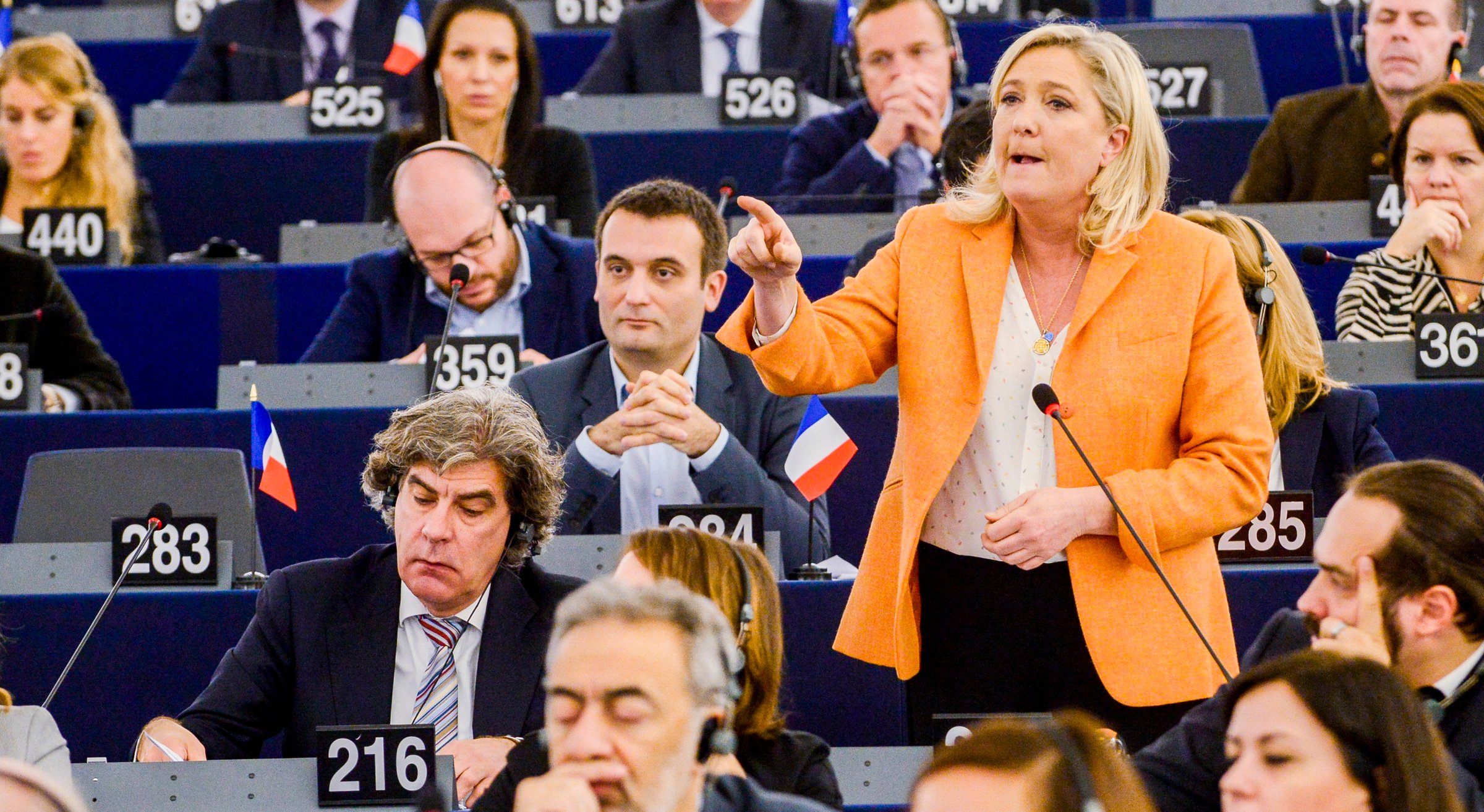
But time is of the essence to reach a deal this year, especially for French president Emmanuel Macron. France will hold presidential elections in the spring, and if Marine Le Pen, leader of the far-right National Rally party, wins, reaching an EU deal would become far more difficult.
Le Pen has pledged that, if she comes to power, she will halve France’s contribution to the EU budget.
And Macron reportedly said in the room with EU leaders that from January onwards, there will be no political room for reaching an agreement.
‘Easier to give up what you don’t yet have’
This article continues, but the full version is available only to EUobserver.com subscribers. Visit account.euobserver.com/membership
The European Commission says asylum seekers arriving at EU borders are now being screened, but it makes no mention of the independent rights monitors that EU law requires to oversee those procedures, even as spending on border surveillance surges.
“Screening of people arriving illegally and the border procedures are being carried out,” said European Commission president Ursula von der Leyen, in a letter addressed to the 27 heads of state and government meeting at an EU summit in Brussels on Thursday (15 October).
An annex to her letter, obtained by EUobserver, highlights broad outstanding issues when it comes to implementing new EU-wide asylum laws that kicked into force this past June.
This article continues, but the full version is available only to EUobserver.com subscribers. Visit account.euobserver.com/membership
Brussels, 15 October, (Brussels Morning Newspaper) – Sweden has rejected the latest EU budget proposal, intensifying disagreements among European Union leaders meeting in Brussels over the bloc’s €1.62 trillion spending framework for 2028–2034. Swedish Prime Minister Ulf Kristersson … Read more

 Login