Login

United States Escalated Hostility Toward Cuba Throughout 2026
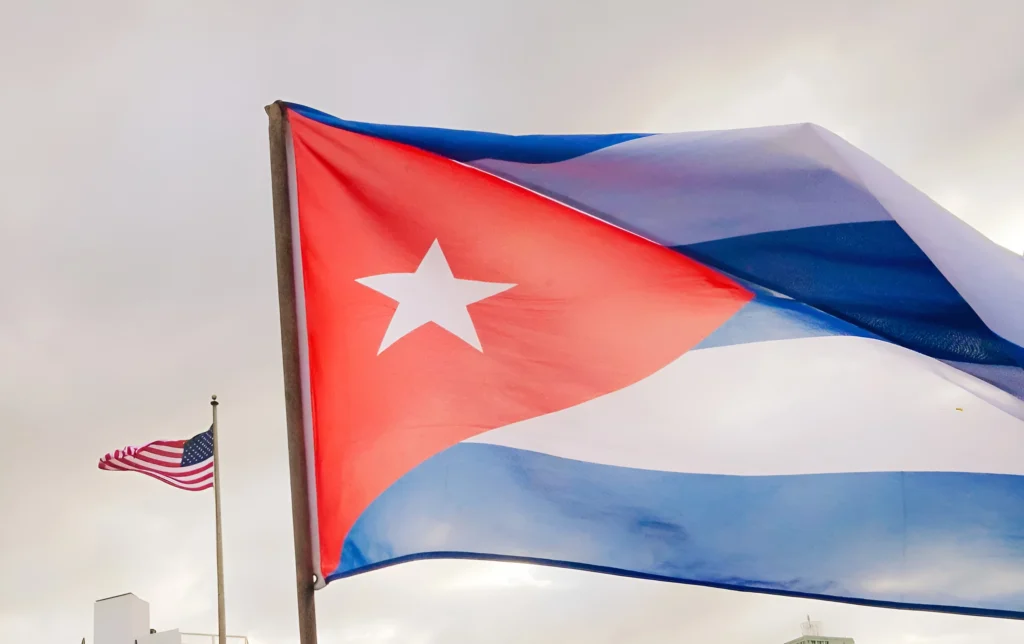
A combination of maritime fuel blockades, power grid collapses, and legal indictments deepens economic hardship across the island nation.
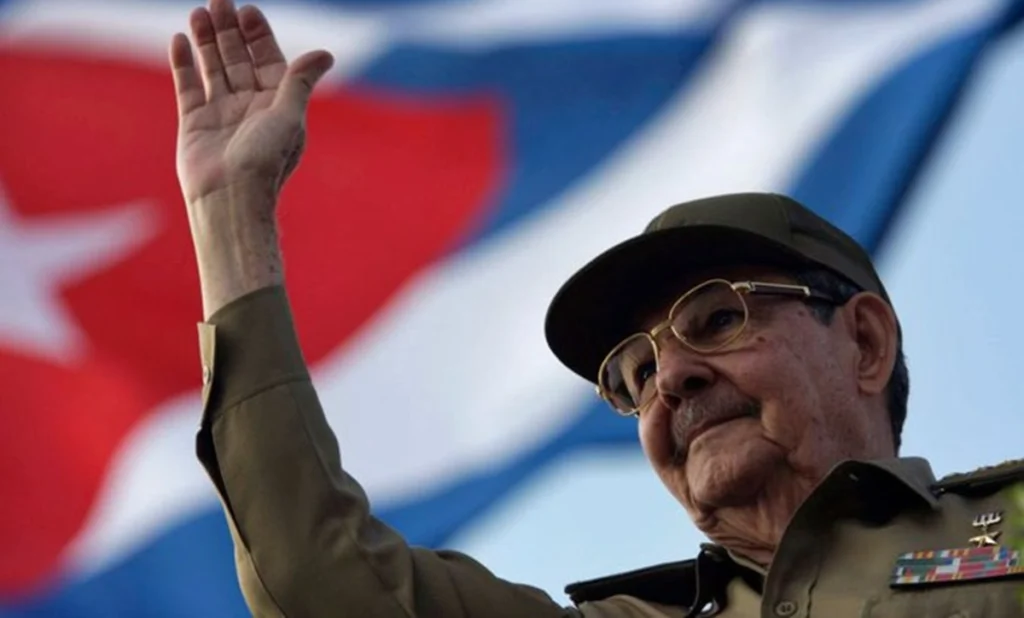
Since the beginning of Donald Trump’s second administration, the United States’ relentless hostility toward Cuba has been on the rise. This friction has centered on unilateral sanctions, trade restrictions, and direct legal actions against former Cuban government leaders.
RELATED:
Russia Condemns U.S. Arrest Warrant for Raul Castro
2026 brought to Cuba a series of severe economic challenges, particularly regarding its energy sector. U.S. executive orders and maritime monitoring actions aimed at restricting oil shipments to state-owned Cuban entities contributed directly to fuel shortages across the island. These restrictions affected power generation, agricultural transport, municipal services, and health sector logistics.
In May, the U.S. Department of Justice unsealed a federal jury indictment in Miami charging former Cuban President Raúl Castro and five co-defendants with conspiracy and murder related to a 1996 aerial shootdown.
Cuba Fuel Restrictions and the Energy Infrastructure Crisis
On January 29, Trump issued an executive order stating that the U.S. would impose tariffs on any country that sent oil to Cuba. The U.S. government authorized certain fuel shipments exclusively to private commercial entities, while blocking access to state-managed refineries and power facilities.
This policy created severe fuel deficits for public utilities responsible for national electricity generation. A deficit that led to recurring shutdowns across the National Electrical System. On March 16, 2026, the national grid suffered a complete collapse after a major boiler leak occurred at the Antonio Guiteras Thermoelectric Power Plant in Matanzas. By October 2026, another mechanical breakdown left up to 75 percent of the country without power.
The energy deficits extended beyond residential electricity. In February 2026, fuel shortages forced Cuban aviation authorities to suspend refuel operations for foreign air carriers. Consequently, airlines such as Air Canada, Rossiya, and Nordwind suspended flights to the island. International tourist arrivals dropped by approximately 58 percent by June 2026 compared to prior operational benchmarks.
Public sanitation and healthcare systems reported operational disruptions due to the fuel deficit. In Havana, local authorities reported that only 44 of 106 municipal collection trucks were operational in early 2026 due to empty fuel tanks.
In June 2026, United Nations human rights monitors showed a 60 percent decline in agricultural production caused by fuel shortages for farming equipment and transport vehicles.
🇨🇺 96,000 Cubans are waiting for surgery as a result of lack of fuel and lack of energy. Among them, 11,000 children.
— Kawsachun News (@KawsachunNews) March 22, 2026
The U.S. is denying oil to Cuba through a fuel blockade, despite that it’s perfectly legal for any country to export fuel to Cuba. @CarlosFdeCossio pic.twitter.com/DnHW2TONJ5
Hybrid Operations and International Diplomatic Positions
Throughout 2026, the U.S. diplomatic campaign was accompanied by increased military surveillance, intelligence monitoring, and diplomatic warnings. Reports documented an increase in U.S. military reconnaissance flights operating over international airspace near the Cuban coastline.
Cuban defense officials countered that the frequency of these flights constituted deliberate psychological pressure and surveillance of national infrastructure.
In parallel with maritime and aerial activities, U.S. diplomats engaged with governments in Latin America and Europe to restrict economic partnerships with Havana.
The U.S. State Department urged partner nations to terminate bilateral agreements involving Cuban medical professionals. Several governments, including Guatemala, Honduras, and several Caribbean nations, subsequently reduced or phased out participation in Cuban medical exchange programs.
In August 2026, UN human rights rapporteurs released a joint statement concluding that unilateral fuel restrictions and financial blockades exacerbated severe shortages of basic goods, medicine, and food.
The Legal Prosecution of Raul Castro and the 1996 Case
On May 20, 2026, the U.S. Department of Justice unsealed a federal indictment in the U.S. District Court for the Southern District of Florida charging former Cuban President Raúl Castro and five co-defendants with conspiracy, destruction of aircraft, and four counts of murder.
The legal push escalated further on October 19, 2026, when Florida Attorney General James Uthmeier announced that the Office of Statewide Prosecution and the Florida Department of Law Enforcement secured a state arrest warrant for Castro, charging him with conspiracy to commit first-degree murder.
Both prosecutions center on an incident that took place on February 24, 1996, when Cuban military MiG fighter jets intercepted and shot down two civilian Cessna 337 aircraft. The planes were operated by Brothers to the Rescue (Hermanos al Rescate), a Miami-based organization founded by José Basulto.
The group initially focused on search-and-rescue operations for Cuban migrants in the Florida Straits, but later expanded its activities to include dropping political leaflets directly over Havana.
The 1996 aerial interception resulted in the deaths of four crew members: Carlos Costa, Armando Alejandre Jr., Mario de la Peña, and Pablo Morales. U.S. federal and state authorities asserted that the civilian planes were destroyed over international waters without legal justification.
Florida state prosecutors cited military chain-of-command statements from the period in which Castro, then Minister of the Revolutionary Armed Forces, authorized commanders to shoot down unauthorized aircraft over the sea without prior consultation.
In response, the Cuban government stated that the civilian aircraft had repeatedly violated Cuban sovereign airspace despite official diplomatic warnings issued to the U.S. State Department prior to the incident.
Cuban authorities and foreign affairs analysts characterized the revival of thirty-year-old charges as a coordinated exercise of extraterritorial judicial power. Officials in Havana rejected the dual legal actions as politically motivated efforts to criminalize Cuba’s historical leadership and create legal grounds for continuing trade and financial sanctions.
U.S. state of Florida's Attorney General James Uthmeier on Monday issued an arrest warrant for Cuban Revolution leader Raul Castro on charges of conspiracy to commit first-degree murder linked to the 1996 downing of two civilian aircraft. https://t.co/FyQMk8L6E6 pic.twitter.com/TDb95dNOk8
— China Xinhua News (@XHNews) October 19, 2026
Domestic Mobilization and Sovereign Defense
The Cuban government and civic organizations responded to the rising external pressures through formal diplomatic rejections, official government statements, and public mobilizations.
Following the unsealing of the May 2026 U.S. indictment against former President Raúl Castro, Cuban Foreign Minister Bruno Rodríguez Parrilla rejected the legal action in an address to international media and diplomats.
Rodríguez Parrilla characterized the indictment as a politically motivated maneuver designed to justify economic sanctions and interfere with Cuban domestic jurisdiction. President Miguel Díaz-Canel reiterated this position, stating that national sovereignty and historical decisions regarding territorial air defense remain non-negotiable under international law.
In urban centers across Cuba, including Havana, Santiago de Cuba, and Matanzas, civil organizations and neighborhood committees organized rallies opposing external interference and economic restrictions.
At the same time, state ministries implemented emergency measures to manage reduced fuel supplies and maintain essential public services. Municipal governments established scheduled electricity rotations, prioritized available diesel fuel for medical facilities and water distribution pumps, and expanded the use of draft animals and non-motorized transport in agricultural regions.
On the international stage, Havana received diplomatic backing from several multilateral organizations and regional governments. The Bolivarian Alliance for the Peoples of Our America (ALBA-TCP) issued a joint declaration condemning unilateral coercive measures against Cuba’s energy sector.
During the United Nations General Assembly in September 2026, representatives from non-aligned nations called for an immediate end to the trade embargo, citing its negative impact on civilian health, infrastructure, and human development.
🇧🇧 Prime Minister @miaamormottley of Barbados condemns the US embargo and fuel blockade of Cuba 🇨🇺 at #UNGA81 pic.twitter.com/SzIXGvGYfa
— Michael Galant (@michael_galant) September 24, 2026
Analysis of Coercive Strategies and Long-Term Impacts
The events of 2026 reflect an intensification of U.S. policy toward Cuba through a combination of trade restrictions, infrastructural pressure, and legal mechanisms targeting state leadership.
The strategic focus on restricting fuel imports significantly affected Cuba’s national power grid, agricultural logistics, and public transportation. Simultaneously, the unsealing of a thirty-year-old indictment against Raúl Castro added a significant legal dimension to bilateral relations.
Economic data, energy assessments, and reports from international monitors demonstrate that the primary burden of fuel deficits and infrastructure instability falls directly on the civilian population. The disruptions to medical supplies, food distribution, and municipal sanitation illustrate the direct impact of unilateral economic sanctions on daily life.
Despite persistent resource constraints and structural deficits, the Cuban government has maintained state operations and institutional control through domestic conservation strategies and international partnerships.
#Russia | Moscow condemned a US arrest warrant against Raul Castro over the 1996 downing of two civilian aircraft, calling the charges politically motivated.
— teleSUR English (@telesurenglish) October 20, 2026
Russia warned that escalating pressure on Cuba could destabilize Latin America and the Caribbean.#RaulCastro #Cuba… pic.twitter.com/PhmRslPWFq
Sources: Granma – Juventud Rebelde – Cuba Debate – Cubavisión – CiberCuba – EcuRed – TeleSUR – BBC – CNN – The Guardian – La Radio del Sur