❌

Reading view

Trump's 50% Tariffs on Canadian Goods Illegally Rely on a Superseded Statute, a Lawsuit Argues
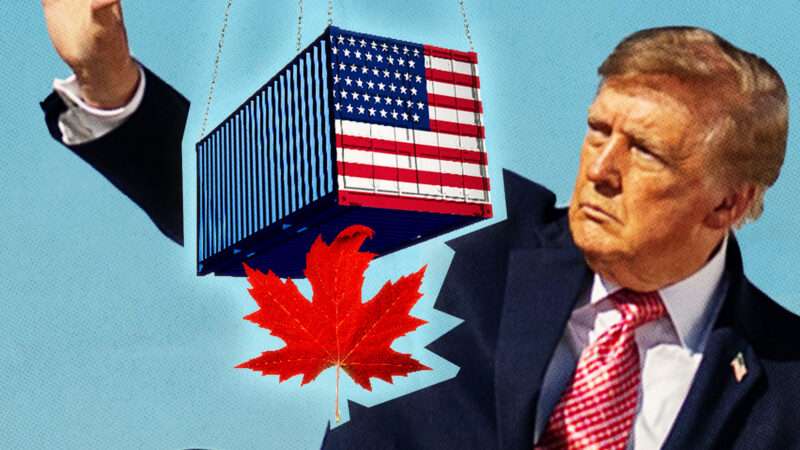
a shipping container and a maple leaf with President Donald Trump in the background | Molly Riley/B66/Avalon/Newscom/Skypixel/Dreamstime

Last July, President Donald Trump imposed 50 percent tariffs on various Canadian goods, a list he subsequently expanded to include additional imports, some of which he banned outright. His legal justification was Section 338 of the Smoot-Hawley Tariff Act, which Congress approved in 1930. Section 338 authorized tariffs in response to discriminatory trade practices. But in the 96 years since it was enacted, no president had ever used it to impose tariffs.

Why is that? According to a lawsuit that the Liberty Justice Center (LJC) filed on Tuesday in the U.S. Court of International Trade (CIT), the answer is clear: Section 338 was superseded by subsequent legislation that likewise targeted discriminatory trade barriers, beginning with the Reciprocal Trade Agreements Act of 1934 and culminating in Section 301 of the Trade Act of 1974. Section 301, the current remedy, includes requirements that Trump apparently sought to dodge by invoking Section 338 instead.

That maneuver is illegal, the LJC argues. "Congress already gave the executive branch a tool for responding to unfair foreign trade practices: Section 301, which requires an investigation, public comment and other safeguards," says Jeffrey M. Schwab, the LJC's director of litigation. "The administration cannot skip those protections by reaching for a 1930 statute that no president had ever used to impose a tariff."

Why not? "Where provisions in two acts are in irreconcilable conflict, the later act, to the extent of the conflict, constitutes an implied repeal of the earlier one," the lawsuit says. "Where a later act covers the whole subject of an earlier one and is clearly intended as a substitute, it operates similarly as a repeal. And a specific policy embodied in a later federal statute controls the construction of an earlier one even absent express amendment."

Even if Section 338 somehow survived congressional approval of contrary laws, the LJC adds, Trump's tariffs exceed the authority it grants. And if Trump's interpretation of Section 338 were correct, the lawsuit says, the provision would violate the nondelegation doctrine, which bars Congress from delegating its tariff power to the president without providing "an intelligible principle" to guide and constrain his exercise of it.

Trump's Section 338 tariffs, in short, are "the Administration's latest attempt to exercise, through a statute never designed for the purpose, the tariff power that the Constitution assigns to Congress." That pattern should be familiar by now.

Shortly after taking office in 2025, Trump claimed to have discovered a previously unnoticed delegation of extensive tariff authority in the International Emergency Economic Powers Act (IEEPA), a 1977 law that does not mention import taxes and had never been used to impose them. That claim was rejected by every court that considered it, and last February the Supreme Court ruled that IEEPA does not authorize tariffs at all.

Trump responded to that decision by immediately announcing similarly broad tariffs under Section 122 of the 1974 Trade Act, which addresses "fundamental international payments problems" caused by "serious United States balance-of-payments deficits." In May, the CIT ruled that the new tariffs were illegal because Trump had failed to "identify balance-of-payments deficits within the meaning of Section 122."

Trump then switched to Plan C, invoking Section 301 of the Trade Act, which authorizes tariffs in response to a foreign "act, policy, or practice" that is "unreasonable or discriminatory" and "burdens or restricts" U.S. commerce. He claimed that provision justified tariffs on 86 trading partners, accounting for nearly all U.S. imports, because they had failed to "impose and effectively enforce a prohibition on the importation of goods produced with forced labor." The CIT is currently weighing challenges to those tariffs, including an LJC lawsuit.

Trump's Section 338 tariffs have now added to the CIT's caseload. The LJC represents Gellert Global Group, an importer that was hit hard by those taxes after Trump added cheese to the list of disfavored Canadian goods. The lawsuit asks the CIT to certify a class of importers, numbering in "the hundreds, if not the thousands," that likewise have been clobbered by Trump's 50 percent tariffs.

Since Trump obviously is aware of Section 301, why did he resort to a never-used, seemingly obsolete provision to justify the tariffs on imports from Canada? As the LJC notes, Section 301 requires an investigation by the Office of the U.S. Trade Representative, "consultation with the foreign country concerned, notice, public comment, a hearing, and determinations within statutory deadlines." It also requires "that action be equivalent in value to the burden imposed, that duties be preferred over other import restrictions, and that actions terminate after four years absent a request for continuation and review."

Can Trump avoid those constraints by invoking Section 338 instead? The LJC thinks not: "Congress did not intend to leave in place a parallel authority that would allow the President to impose the same remedies, for the same conduct, free of every one of those safeguards."

Section 338 has been "impliedly repealed," the LJC argues. "At a minimum, Section 301 controls where, as here, the President seeks to respond to foreign practices within Section 301's scope, and the President may not impose duties in response to such practices while disregarding the procedures and limits Section 301 imposes. Because the President did not proceed under Section 301, the Section 338 Tariffs are unlawful whether or not Section 338 survives."

Even if you ignore subsequent legislation, the LJC argues, the Canadian policies that Trump cited when he announced the tariffs do not qualify as "discrimination" under Section 338. "Canada's motor vehicle surtax and its provinces' alcohol purchasing decisions are responses to tariffs that the United States imposed on Canada, not discrimination by Canada against the United States," it says. Trump also complained that Canada treats European cheese imports more favorably than U.S. cheese imports. But "when Congress enacted Section 338, a preference granted under a reciprocal agreement was not 'discrimination.'"

Section 338 "addresses discrimination: measures that single out United States commerce for worse treatment than the commerce of the world at large," the lawsuit says. "It is not a general authorization to impose tariffs whenever the President disagrees with a trading partner's policies, or whenever a trading partner responds to tariffs the United States has imposed on it."

Trump also was unfazed by Section 338's requirement that the president set duties to "offset" the costs imposed by discriminatory practices, which implies proportionality. Rather than attempt that, the LJC notes, Trump imposed "the statutory maximum rate of 50 percent without tying it to any measured burden."

As interpreted by Trump, the lawsuit warns, Section 338 authorizes the president to "impose tariffs of up to 50 percent on any products of any country that extends better treatment to any other country in any respect—including through any of the hundreds of preferential trade agreements to which the United States is not a party—or that responds to tariffs the United States has imposed on it." Yet Section 338 "contains no clear statement authorizing that power," contrary to the "major questions" doctrine, which applies to assertions of executive authority with "vast economic and political significance."

If Section 338 conferred the sort of unfettered authority that Trump is claiming, the LJC says, it "would supply no intelligible principle constraining the exercise of Congress's power to lay duties." His reading "would convert a narrow, fact-dependent provision into an effectively unrestricted delegation of Congress's tariff power," which would be "an unconstitutional delegation of legislative power."

This case "is not about the president," says LJC CEO Sara Albrecht. "It is about the presidency. No president should have the power to pull a dormant statute off the shelf and use it to impose sweeping tariffs or import bans without the limits Congress required."

The post Trump's 50% Tariffs on Canadian Goods Illegally Rely on a Superseded Statute, a Lawsuit Argues appeared first on Reason Magazine.
  •  

Liberty Justice Center Files First Lawsuit Challenging Trump's Section 338 Tariffs Against Canadian Imports

An American flag breaks with a Canadian flag
Illustration: Midjourney

Today, the Liberty Justice Center (LJC) filed Gellert Global Group Corp. v. Trump, the first lawsuit challenging President Donald Trump's massive Section 338 tariffs against a variety of Canadian imports. The case was filed in the US Court of International Trade (which has jurisdiction over tariff-related cases); Gellert Global Group is an importer of Canadian cheese subject to the tariffs. LJC is the same public interest group that I worked with on the case challenging Trump's earlier IEEPA tariffs, which ultimate resulted in their invalidation by the Supreme Court. I am not directly involved in the present case. But I support it and believe it deserves to prevail.

LJC has also filed cases challenging Trump's massive Section 122 and Section 301 tariffs. They have become America's premier public interest law group standing up for free trade and enforcing constitutional constraints on executive power over trade restrictions.

Section 338 was part of the infamous Smoot-Hawley tariff act of 1930, which gravely exacerbated the Great Depression. It has never been used before, likely because it was superseded by later laws.

I have previously written about why Trump's Section 338 tariffs are harmful and illegal. See my recent Montreal Economic Institute paper on this topic, and earlier pieces here, here, and here. To briefly summarize, the tariffs on Canada are illegal because 1) Section 338 has been superseded by later legislation, 2) even if Section 338 is still operative, Trump's tariffs do not meet its requirements because the Canadian actions they supposedly respond to do not "discriminate" against US goods, as the law requires, 3) Trump's tariffs do not "offset" the Canadian actions (as Section 338 also requires), but go far beyond that, 4) the administration's interpretation of Section 338 runs afoul of the "major questions" doctrine, and 5) if Section 338 is operative and does authorize the Trump actions, it would violate the constitutional nondelegation doctrine (which restricts delegation of legislative power to the executive).

The LJC complaint advances all five of these arguments. To prevail, they need win on only one. They also add a few more technical points that I will not try to cover here. LJC further seeks a class action certification for a class of all those importers subject to the Section 338 tariffs. If this succeeds, it would block all enforcement of Section 338 tariffs, not just those paid by Gellert.

This lawsuit does not directly challenge Trump's extension of the Section 338 action to categorically ban some Canadian imports, in addition to imposing tariffs. As far as I can tell, Gellert does not import goods subject to the ban (as opposed to the tariffs). However, as I explained here and here, the legality of the bans is dependent on that of the initial tariffs. In a recent Lawfare article, I outline the reasons why executive-imposed import bans are subject to most of the same legal constraints as executive-imposed tariffs.

Like the IEEPA, Section 122, and Section 301 tariffs, Trump's use of Section 338 is an attempt to convert a limited delegation of authority into a blank check enabling the president to impose tariffs whenever he wants. Courts should reject all of these power grabs.

I commend LJC for bringing this important case. And I hope and expect it may not be the last lawsuit challenging the Section 338 measures. Future cases might well challenge the import bans directly, as well as the tariffs.

The post Liberty Justice Center Files First Lawsuit Challenging Trump's Section 338 Tariffs Against Canadian Imports appeared first on Reason Magazine.
  •  

Alaska’s HAARP Site Now Being Used To Test New Air Force Over-The-Horizon Radar Tech

The U.S. military has successfully demonstrated a new lower-cost receiver that could form part of a future over-the-horizon (OTH) radar. The testing also raises the question of whether the High Frequency Active Auroral Research Program (HAARP) research site in Alaska, which the U.S. Air Force transferred away more than a decade ago, could be repurposed for operational use in this role. A new radar of this kind would help the United States plug critical gaps in surveillance coverage over the ever-more strategic Arctic region. Canada is notably already pursuing a multi-billion-dollar OTH radar project in cooperation with Australia for this exact purpose.

The U.S. military put out a press release yesterday regarding the testing of the newly developed receiver array, which occurred between September 7 and September 11. This was the culmination of a series of “Arctic air domain awareness” experiments conducted cooperatively by U.S. and Canadian authorities over the past three years.

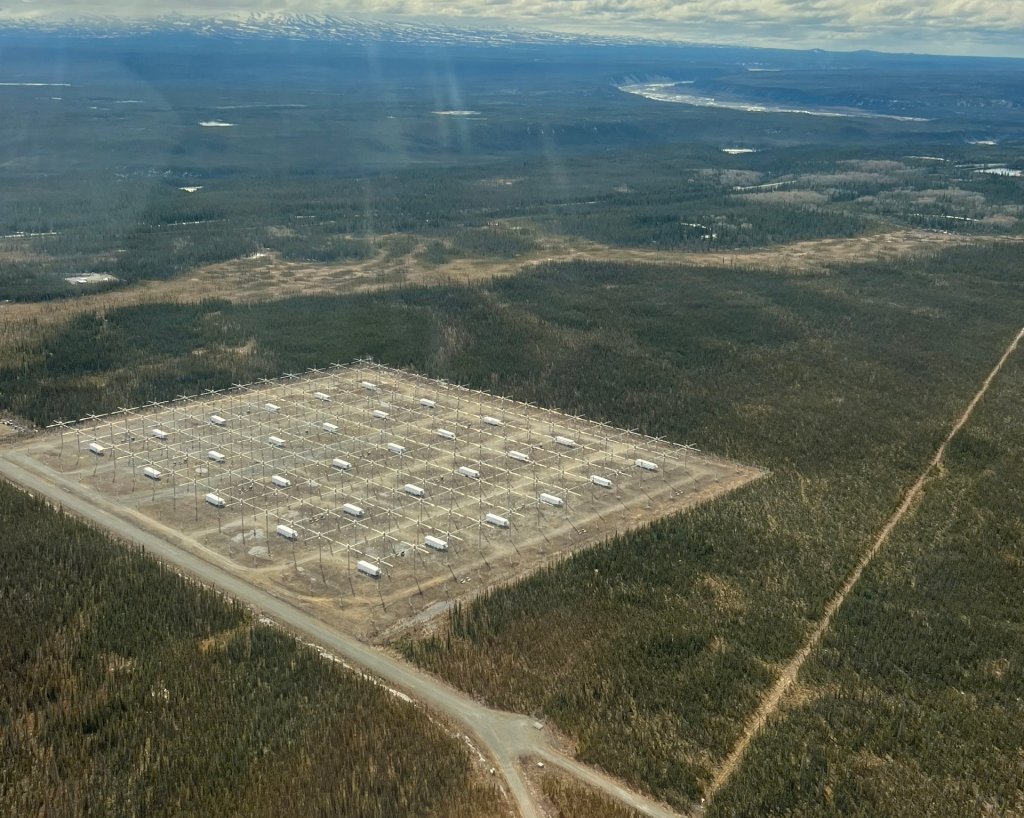
An aerial view of the HAARP site in Alaska, taken on September 7, 2026. USAF

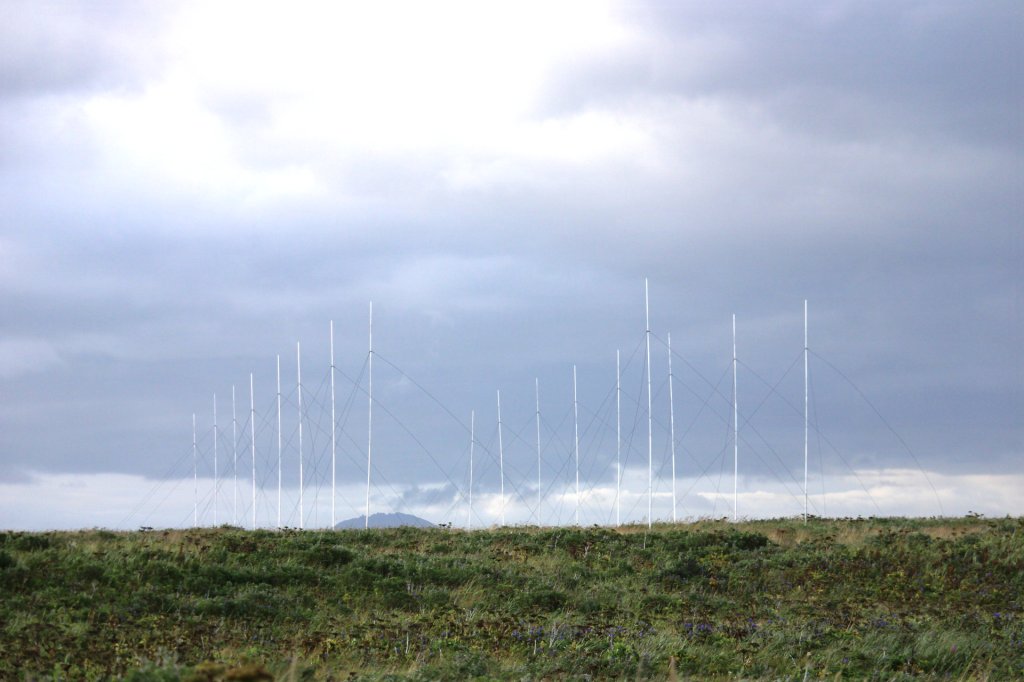
The final round of experimentation last month “examined whether an existing high-frequency transmitter [HAARP], paired with a newly developed, low-cost [16-element high-frequency] receiver array, could detect aircraft beyond the coverage of current long-range radar sites,” according to the release. “The effort focused on improving awareness across a region where vast distances, harsh weather and limited infrastructure present challenges for air surveillance.”

“Researchers used the University of Alaska Fairbanks’ High Frequency Active Auroral Research Program [HAARP] facility and a receiver array in Cold Bay developed by MITRE to collect data on participating aircraft over the Gulf of Alaska and Bering Sea,” the release added. “MITRE also supported the effort throughout the three-year experiment series and designed and executed the field experiment in partnership with government, scientific, and operational participants.”

A view of the MITRE-developed array in Cold Bay, Alaska, which was part of the testing in September. USAF

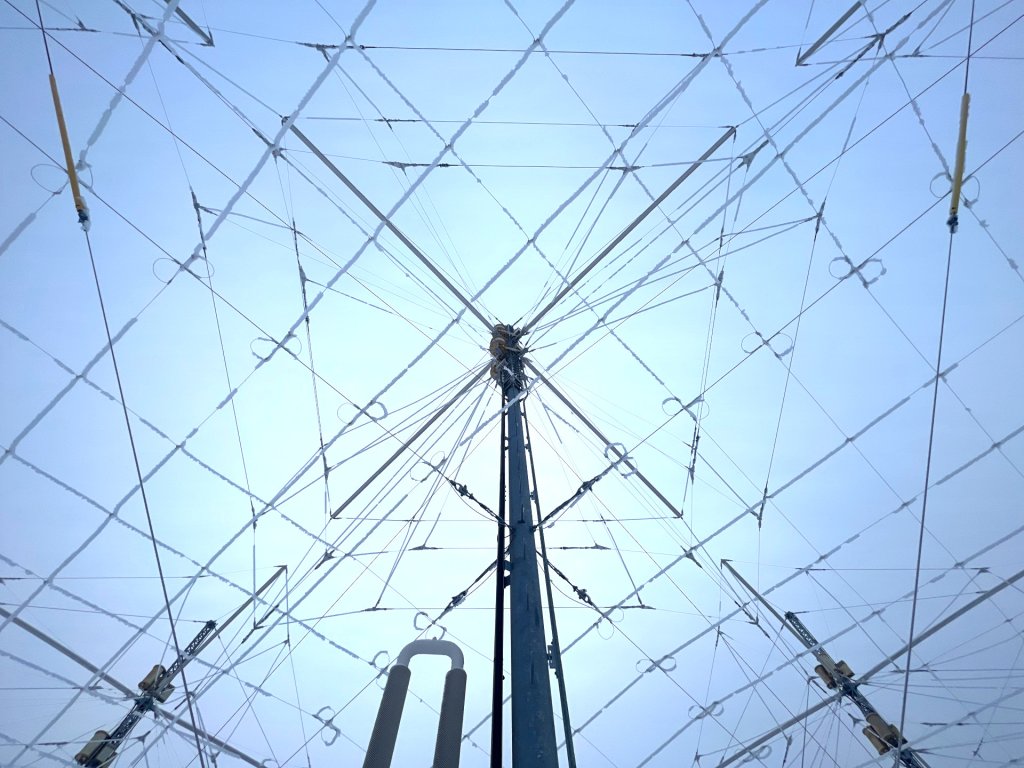
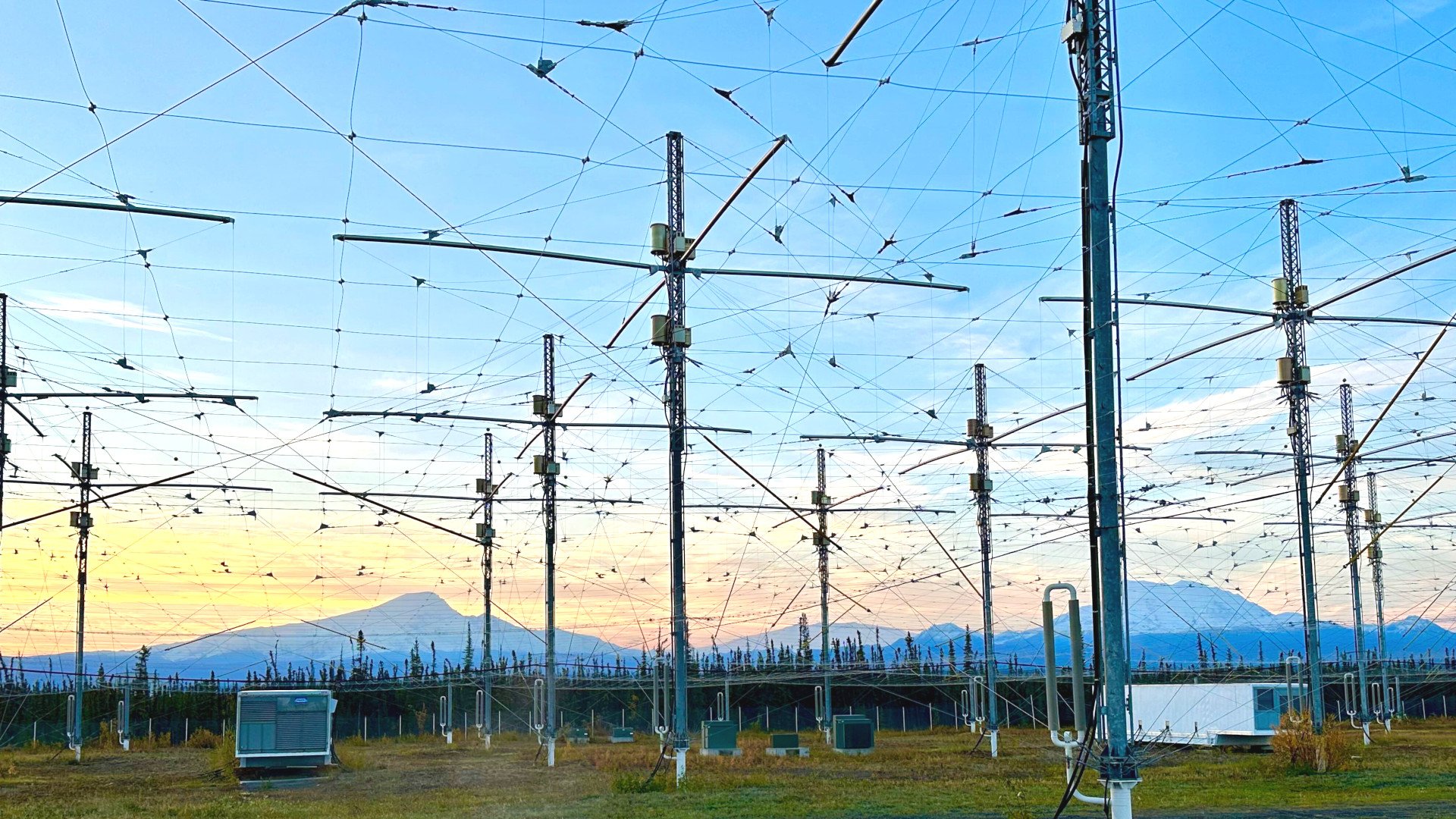
The remote HAARP site was built in the 1990s as part of a joint U.S. Air Force and U.S. Navy effort. The Defense Advanced Research Projects Agency (DARPA) was also involved. The central component of the 33-acre facility is an array of 180 crossed-dipole antennas, which can transmit up to 3.6 megawatts of radio frequency energy, according to the Air Force.

The primary purpose of HAARP was to provide U.S. government and independent researchers with a state-of-the-art facility to explore ionospheric phenomena. On the U.S. military side, work was focused on improving long-range surveillance and communications capabilities, including ways to communicate with submerged submarines. Over the years, HAARP has also been the subject of several entirely unsubstantiated conspiracy theories.

In 2014, the U.S. Air Force announced that it would shutter the HAARP site and dismantle it. However, the following year, the decision was instead made to transfer it to the University of Alaska Fairbanks, which has continued to operate it as a civilian research facility.

“During an experimental air domain awareness initiative, HAARP served as a high-power illuminator, transmitting signals toward the ionosphere to support the detection of airborne targets over Alaska’s maritime approaches,” according to the captions of several pictures that accompanied the release yesterday. “The experiment evaluated bistatic over-the-horizon detection methods to explore potential improvements in long-range surveillance and air domain awareness across Alaska’s maritime approaches.”

Another view of crossed-dipole antennas at the HAARP site. USAF

The most common types of OTH radars are so-called ‘skywave’ or ‘backscatter’ designs. They usually consist of two large and geographically separated arrays of antennas. The ‘illuminator’ array pumps out signals that are bounced off the ionosphere, the ionized layer of Earth’s upper atmosphere, at a specific angle so that they return to the ‘receiver’ array. Objects of interest (in the air and/or on the surface depending on the specific configuration) are detected in the process. As TWZ has previously written:

“Commonly, radars are limited by line of sight due to the curvature of the Earth in relation to the altitude they are operating at. OTHRs overcome this critical limitation, but with some major drawbacks.”

…

“While they offer much lower fidelity than many of their line-of-sight counterparts in most cases, they make up for it in huge range, hundreds of miles to thousands of miles (1,500 miles is common, for instance, for powerful military sky wave/backscatter OTHR systems) and a large coverage area. The sky wave type of OTHRs achieve this by bouncing their radio waves off the ionosphere to a coverage area where they hit targets and return the same way to the receiving station. The angle at which the radio waves hit the ionosphere dictates the range, and that angle is limited to a specific envelope or the waves won’t properly bounce back toward Earth. As such, placing the radar in the right place in relation to the targeted surveillance area or areas, to begin with, is key.”

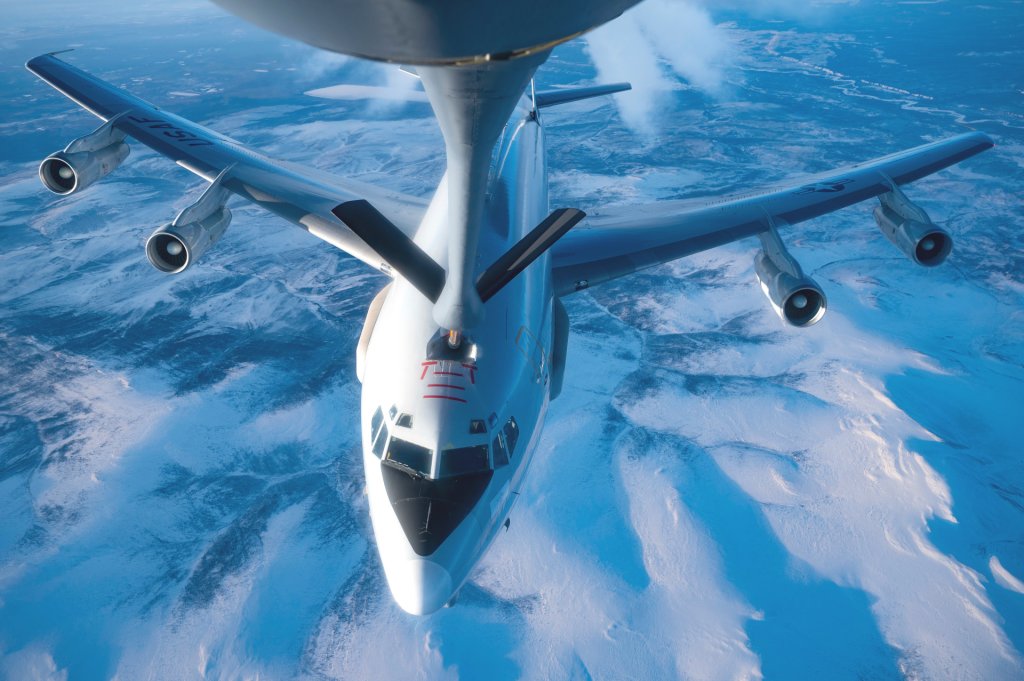
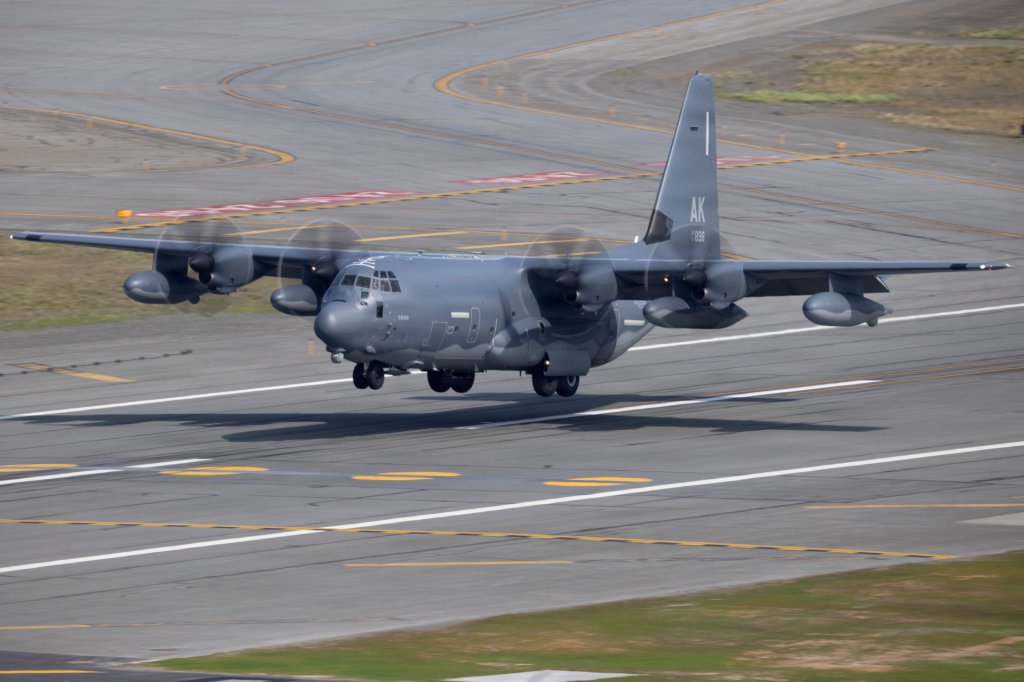
In the testing last month, Air Force E-3 Sentry Airborne Warning and Control System (AWACS) radar planes, HC-130J Combat King II rescue aircraft, and KC-135 aerial refueling tankers “served as cooperative targets, providing known positions against which researchers could compare the experimental data,” according to the official release. “The team successfully completed testing, meeting or exceeding its test execution objectives. Initial results show the system was successfully able to achieve full skywave (beyond line of sight) detections of aircraft and correlation to truth flights. Thorough data analysis is ongoing.”

An Alaska-based E-3 Sentry receives fuel from a KC-135 tanker during an exercise in 2022. USAF
An HC-130J Combat King II seen landing at Joint Base Elmendorf-Richardson in Alaska in August. USAF/Alejandro Pena

The release also says that the tests “explored how existing infrastructure and emerging technology could complement current surveillance capabilities.” This raises the possibility that the HAARP site, specifically, might be utilized as part of a new OTH radar. Whether or not this is actually under consideration is still unclear, and TWZ has reached out for more information.

Regardless, OTH radars have been experiencing something of a renaissance in recent years in the United States and elsewhere globally. Separate reports just in the past day or so have highlighted what appears to be significant progress on at least one part of a long-planned OTH radar in Russia’s Kaliningrad enclave.

Outside of Alaska, the U.S. military has been working to establish a Tactical Mobile Over-the-Horizon Radar (TACMOR) site in the South Pacific archipelago nation of Palau. The originally stated goal had been to finish work on this facility in 2026, but the project has faced legal challenges.

As already mentioned, OTH radars have also been part of U.S. plans to improve surveillance coverage in the Arctic. Like the recent testing in Alaska, there has been significant cooperation with Canada in this regard over the years, including through the U.S.-Canadian North American Aerospace Defense Command (NORAD).

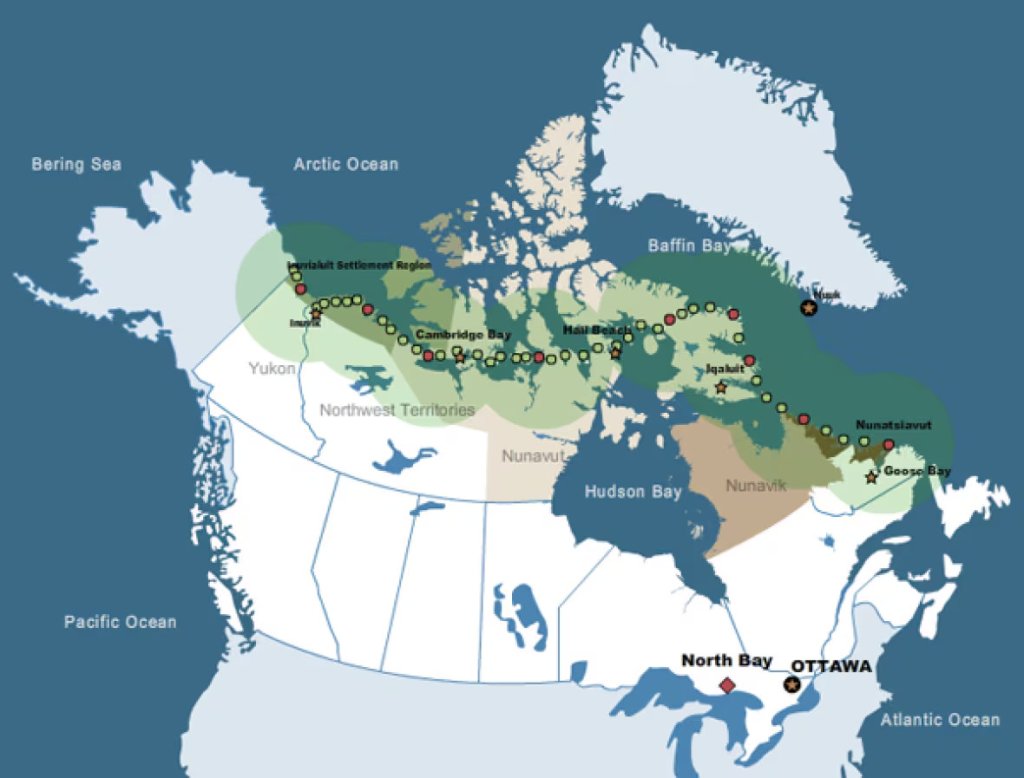
Today, NORAD relies heavily on a network of ground-based radars called the North Warning System (NWS) to provide aerial surveillance coverage in the High North. The radars that make up the NWS are also all pointed northward, and none of them provide the kind of wide-area long-range coverage that an OTH design would offer.

A map showing NWS radar sites in Canada and their coverage arcs. Nasittuq Corporation

The NWS reflects a long-standing focus on monitoring for aerial threats heading across the North Pole toward North America, especially possible nuclear strikes from Russia (and the Soviet Union before it). However, new avenues for geostrategic competition in the Arctic with Russia, as well as China, over natural resources, from oil and natural gas to fish and other sealife, as well as trade routes have emerged in recent years amid receding ice and other impacts of global climate change. This, in turn, has only prompted growing demand for surveillance coverage.

“We need a layered sensing grid, from [the] seafloor to the space layer. And we have no choice. It has to be layered and deep, a defense in depth, from a sensing point of view,” Royal Canadian Air Force (RCAF) Maj. Gen. Chris McKenna, head of 1 Canadian Air Division and the Canadian NORAD Region, also said during a panel discussion at the Air & Space Forces Association’s (AFA) annual Warfare Symposium in 2025, at which TWZ was in attendance. “And I will say I suffer from an insufficiency of ISR [intelligence, surveillance, and reconnaissance] in the Arctic on a daily basis. And I am fighting for information.”

McKenna was responding at the time to a direct question about gaps in so-called “domain awareness” in and around the Arctic and how to address them.

“I think there’s an importance here of not just air domain, but also space domain, and having a sufficiency of ISR in the Arctic to actually build you the [domain awareness] picture,” he added. “I haven’t really touched on over-the-horizon radar, but I certainly can get into it. I think that’s a really important capability given the austerity of the Arctic and the need for it to cue other things.”

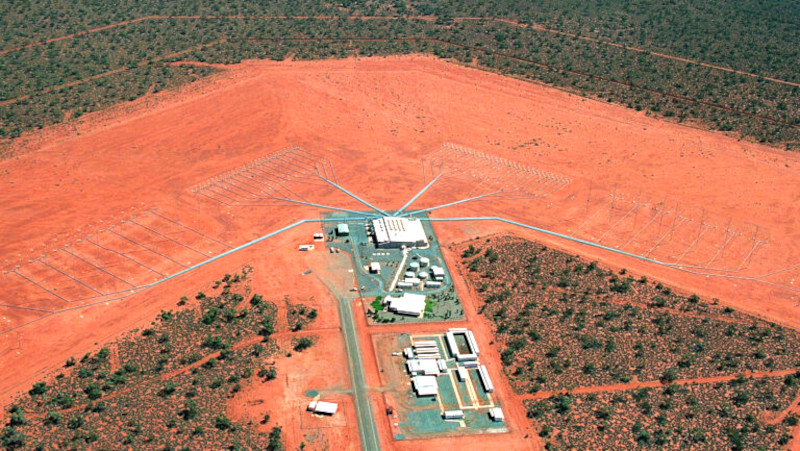
For its part, Canada is now building its own new Arctic Over The Horizon Radar (A-OTHR), at an estimated cost of more than $4 billion. In an announcement last year that caught many off guard, the Canadian government announced that it would be leveraging technology originally developed for Australia’s Jindalee Operational Radar Network (JORN) to support this development. It is also important to note here that relations between Canadian authorities and the Trump administration have been and continue to be heavily strained over a variety of issues, which has prompted broad concerns about future defense and security cooperation.

An element of Australia’s Jindalee Operational Radar Network (JORN). Australian Department of Defense

Back in the United States, OTH radar plans are also now tied in with the broader Golden Dome air and missile defense initiative. Golden Dome is seeking to establish new layers of defense around the U.S. homeland against a wide array of threat types, and puts major emphasis on new space-based sensor and interceptor capabilities. Expanded defensive architectures within the Earth’s atmosphere are also part of this plan.

“Adversaries are developing and building advanced nuclear and conventional delivery capabilities,” U.S. Army Lt. Gen. Joseph Jarrard, Vice Commander of the U.S. element of NORAD and Deputy Commander of U.S. Northern Command (NORTHCOM), warned at the annual Space & Missile Defense (SMD) Symposium in August. This includes “cruise, hypersonic, and ballistic missiles, as well as fractional orbital bombardment systems, or FOBS, to threaten not only Alaska and Hawaii, but the entire continent of the United States.”

Chinese hypersonic and other developments, in particular, enable new modes of attack that “can approach North America from the south, rather than the traditional northerly vector for which our legacy early warning radars were designed,” Jarrard continued. “The Chinese have also been building a conventionally-armed ICBM [intercontinental ballistic missile] equipped with hypersonic glide vehicles that can range [sic] targets throughout Alaska, providing Chinese leaders strike options against our homeland below the nuclear threshold.”

“Russia’s advanced missiles, like the nuclear-armed Avangard hypersonic glide vehicle, are designed to circumvent the ground-based radars used by NORAD and NORTHCOM to detect and characterize an inbound threat, and challenge the ability to provide threat warning and attack assessment,” he added.

New OTH radars positioned in Alaska and elsewhere in the Pacific will not be able to address all of these threat developments alone. At the same time, the recent testing leveraging the HAARP site is another step toward meeting demands for sorely needed expanded long-range radar coverage in the Arctic.

Contact the author: joe@twz.com

The post Alaska’s HAARP Site Now Being Used To Test New Air Force Over-The-Horizon Radar Tech appeared first on TWZ.

  •  

Las Vegas tourist found guilty of harming flamingo at iconic hotel in drunken encounter caught on video

A Canadian tourist who took a flamingo from its habitat at a popular Las Vegas Strip hotel and carried it through the property was found guilty Monday of animal cruelty after prosecutors argued the bird was injured during the bizarre encounter.

Mitchell Fairbarn, of Ontario, Canada, was convicted of felony and misdemeanor animal cruelty charges after jurors deliberated for about five hours.

The case stemmed from a March 3 incident at the Flamingo Las Vegas Hotel and Casino, where Fairbarn removed a 27-year-old Chilean flamingo named Peachy from its enclosure and brought the bird to his hotel room.

UKRAINIAN INFLUENCERS FILMED THEMSELVES SITTING ON TOP OF SEA TURTLE WHILE IT TRIES TO LAY EGGS

Surveillance footage presented during the trial showed Fairbarn holding the flamingo inside an elevator and carrying it through a hotel hallway as the bird squawked.

Prosecutors argued Fairbarn deliberately caused the bird pain, pointing to footage of him pulling Peachy by its feet and feathers found on the hotel floor.

CALIFORNIA TEEN FACES PRISON AFTER VIRAL VIDEO SHOWS HIM SQUARING UP, REPEATEDLY KICKING SEA LION IN THE FACE

Las Vegas police were called after hotel security reported the flamingo missing from its enclosure.

When authorities found Peachy, the flamingo was missing seven or eight feathers, had blood on its feathers and suffered injuries to its wings.

VIRAL BUSINESSMAN WHO ALLEGEDLY BRAGGED ABOUT WEALTH CHARGED IN FEDERAL ENDANGERED SPECIES HARASSMENT CASE

Fairbarn's defense attorney, Josh Tomsheck, acknowledged his client made poor decisions while intoxicated but argued he never intended to injure the animal.

"He should not have done that, should not have gone into the habitat, shouldn't have touched a bird, shouldn't have taken Peachy inside," Tomsheck told jurors. "The truth is, Mitch was drunk. Mitch was stupid. He made bad decisions."

ONE OF WORLD’S OLDEST ORCA WHALES FOUND WITH POSSIBLE SHOTGUN WOUNDS AS OFFICIALS LAUNCH INVESTIGATION

FOLLOW THE FOX TRUE CRIME TEAM ON X

Peachy is doing well physically but remains more anxious during veterinary examinations, according to Tiffany Moore, medical director of Lone Mountain Animal Hospital, who treated the bird.

SIGN UP TO GET THE LATEST TRUE CRIME NEWS

Fairbarn remains under house arrest as he awaits sentencing on Dec. 1.

SUSPECT IN VIRAL MONK SEAL HARASSMENT VIDEO SAYS HE WAS DOXXED AS FEDERAL COURT FIGHT BEGINS

CLICK HERE FOR MORE FROM THE FOX TRUE CRIME HUB

He faces up to four years in prison on the felony conviction and an additional six months for the misdemeanor offense.

SEND US A TIP

During the trial, prosecutors acknowledged Fairbarn had received death threats following the incident and was unable to return to Canada when his father died while the criminal case was pending.

ATTORNEY FOR MAN ACCUSED OF THROWING ROCK AT ENDANGERED HAWAIIAN MONK SEAL SAYS CLIENT WAS PROTECTING TURTLES

LISTEN TO THE NEW 'CRIME & JUSTICE WITH DONNA ROTUNNO' PODCAST

Clark County prosecutor Haley Willming argued those consequences resulted from his own actions.

GET BREAKING NEWS BY EMAIL

"None of that would have happened had he not done what he did, had he not made the choices he made," Willming said.

CLICK HERE TO DOWNLOAD THE FOX NEWS APP

The Flamingo Las Vegas, one of the Strip's oldest resorts, is known for its wildlife habitat, which houses flamingos, turtles, koi fish and other animals.

  •  

‘Bad decisions’: Man convicted for taking Peachy the flamingo from Las Vegas hotel

Mitchell Fairbarn found guilty of animal cruelty after prosecutors say he hurt and frightened the 27-year-old bird

A Canadian man was convicted of animal cruelty charges on Monday for snatching a flamingo named Peachy from its enclosure at an iconic Las Vegas hotel.

Prosecutors said it was a malicious prank while a lawyer for the tourist insisted it was drunken foolishness not meant to harm the bird.

Continue reading...

© Photograph: LVMPD

© Photograph: LVMPD

© Photograph: LVMPD

  •  

New Flash and Massive Floods in US. WILD WEATHER WORLDWIDE: From Asia to Europe. It’s all El Niño’s fault only? (VIDEOS). WMO and Peterson Institute Predictions

VERSIONE IN ITALIANO

Over the past ten days, a great many extreme weather events have been recorded—from the USA to Europe, and from Asia to South America.

Is it truly all the fault of El Niño only?

Or does geoengineering—a subject to which Gospa News has devoted numerous investigations—play a role?


UPDATE on OCTOBER, 22, 2026

New Massive and Flash Flooding in the US even inside an Hospital

In the latest hours and days new massive floods are devastating some US states and North America. Four footages in one video below on ocober, 2026 events.

  • 1st footage – Water Surges Through Endoscopy Recovery Bays in Austin Hospital in Texas
  • 2nd footage – Flash flooding buried cars in debris on Tuesday in Clifton, Arizona.
  • 3rd footage – Heavy rain inundated parts of West Texas on Thursday, part of a multi-day flood threat fueled by tropical moisture colliding with a massive cold front moving across the country.
  • 4th – footage Millions in Electronics Drenched as a Massive Ceiling Flood Destroys a Toronto Showroom

Wild Weather across Europe. Devastation in Spain, UK, Italy, France and Portugal

The western Mediterranean is currently experiencing a period of extreme weather, characterized by torrential rain, flooding, and overflowing rivers across Europpe ande above all eastern Spain, southern France, and Italy. The situation is most critical along the Spanish coast, where Storm Adam has triggered exceptional rainfall, resulting in a heavy toll of casualties and displaced people.

The Valencian Community has been among the hardest-hit areas. In Pego, in the province of Alicante, 693 mm of rain was recorded over a 36-hour period.

As of October 20, the provisional toll stands at four fatalities, with over 2,100 people evacuated and hundreds of rescue operations carried out. Blocked roads, flooded homes, and vehicles swept away by the currents bear witness to the intensity of the event.

The severe weather is now also affecting southern France and Corsica. This Mediterranean weather system has primarily impacted the Languedoc region, with the departments of Hérault and Gard being of particular concern.

In the latest hours and days new massive floods are devastating some European countries. Below the footages from Spain, France, UK, Italy and Portugal in October, 2026

1st footage – Helicopters continue to rescue people trapped in Oliva (Valencia, Spain). The La Safor and La Marina Alta districts are the most severely affected.
2nd footage – An intense downpour hit El Palo, Málaga (Spain). The storm dumped nearly 60 liters per square meter in just 30 minutes, causing significant water accumulation on the streets.
3rd footage – Massive Flash Flood Turns a London Airport Baggage Hall Into a Raging River
4th footage – The famous giant waves of Nazaré are found at Praia do Norte, in the town of Nazaré, in the Western region of Portugal.

France

Italy


FIRST POSTED on OCTOBER, 20, 2026

Harsh Floods in Las Vegas, Newport and Long Beach

El Niño Alert: WMO and Peterson Institute Warn of Up to $986 Billion in Damages by 2027

The current El Niño event could have far-reaching economic and humanitarian consequences. The World Meteorological Organization (WMO) predicts that the phenomenon will almost certainly persist until February 2027, while the Peterson Institute for International Economics estimates that global losses in 2027 could reach nearly $986 billion if the event’s intensity matches that of 1997–98.

The WMO has issued warnings regarding potential impacts on temperatures and precipitation, noting an increased risk of heatwaves, droughts, and floods.

In its Global Seasonal Climate Update for the September–November 2026 quarter, the organization forecasts a likely rise in temperatures across Europe—particularly in central and southern regions—along with a higher probability of above-average rainfall in Southern Europe.

The repercussions will extend beyond the climate. An analysis by the World Food Programme, cited in the study, indicates that among 45 countries already facing food insecurity, an additional 49 million people could fall into a state of severe food insecurity by the end of 2027. The most significant effects are expected in parts of Central America and Southern Africa, with substantial impacts also anticipated in East Africa, as well as South and Southeast Asia.

HAARP DOSSIER – 10. Military “GEOMAGNETIC STORMS” from Alaska at 3,6 MegaWatts (as Energy from 12,000 Homes). Over the “foF2 Frequency” that can “Modeling SPACE WEATHER” with Dangerous Impacts on Earth, Clouds (US-EU Studies – Videos)

From an economic perspective, the outlook is concerning: the Peterson Institute warns that, in addition to the nearly $1 trillion in losses projected for 2027 alone, cumulative losses over the following five years could exceed $7.2 trillion in the absence of coordinated intervention.

These figures have reignited the debate regarding the international community’s preparedness and response capabilities.

Extreme weather events in Italy have risen from 60 in 2015 to 376 in 2025.

On the mornign of October 9, 2026, in Marsala (Sicily, Italy) , a double waterspout struck the Alcide De Gasperi school, where approximately 270 children were present.

The building has been rendered unusable; reports vary, but five or six children sustained minor injuries. In Petrosino, two people are in critical condition (classified as “red code”) after their car was forced off the road. This is not an isolated incident.

Around the same time, severe weather rendered a nursery school in Viareggio unusable, left a school bus stranded in floodwaters in Giugliano, and caused a lightning strike on a 17th-century church in Forio d’Ischia.

Extreme weather events recorded in Italy have increased from 60 in 2015 to 376 in 2025—a sixfold increase in ten years.

The estimated cost of damages for 2025 alone is 11.9 billion euros. A national adaptation plan was approved at the end of 2023; the observatory tasked with its implementation began its work in February 2026, yet, according to Legambiente, the necessary funding is still missing.

MAIN SOURCES

GOSPA NEWS – ITALIAN VERSION

GOSPA NEWS – CLIMATE GEOENGINEERING DOSSIER


RELATED POSTS AND VIDEOS

HAARP DOSSIER – 9. CYCLONES, LANDSLIDES and POLAR VORTEX after New SECRET U.S. MILITARY TESTS. Electromagnetic Bombing from Alaska Station Before Climate Disasters

The FURY of RING of FIRE STRUCK AGAIN! 7.7 Earthquakes in Panama after 7,2 in Peru (VIDEO). Wild Weather or Geoengineering Nightmares inside HAARP & HARP, US Pentagon partner?

WEATHER WARFARE & GEOENGINEERING HISTORY. From Operation Popeye to recente Devastating storm ‘Ditwah’ in Asia


  •  

Albertans back remaining in Canada in referendum

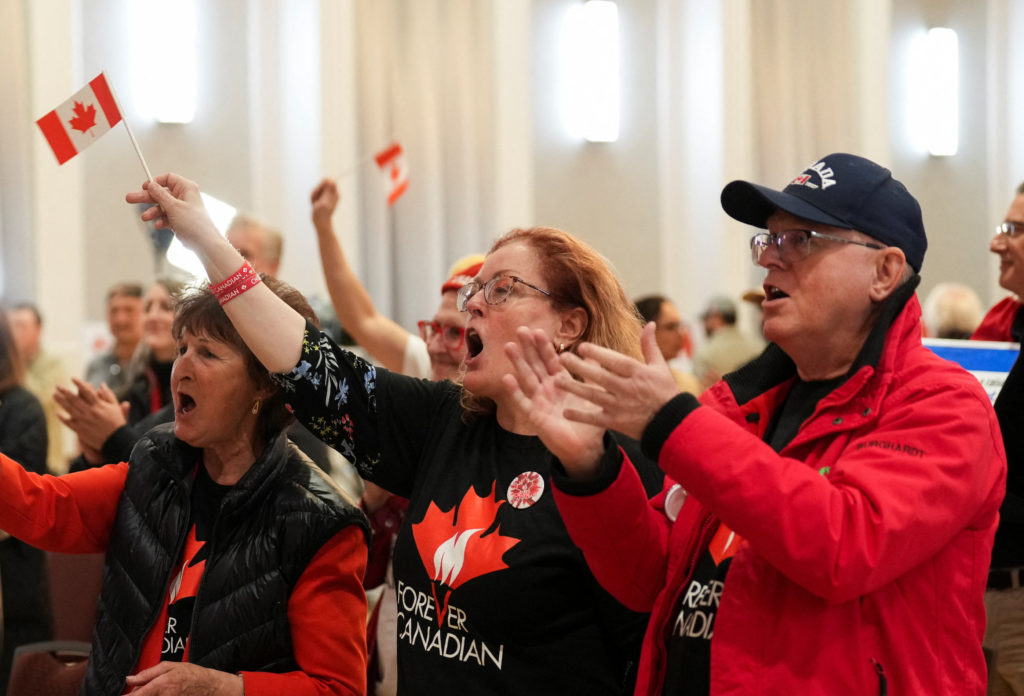
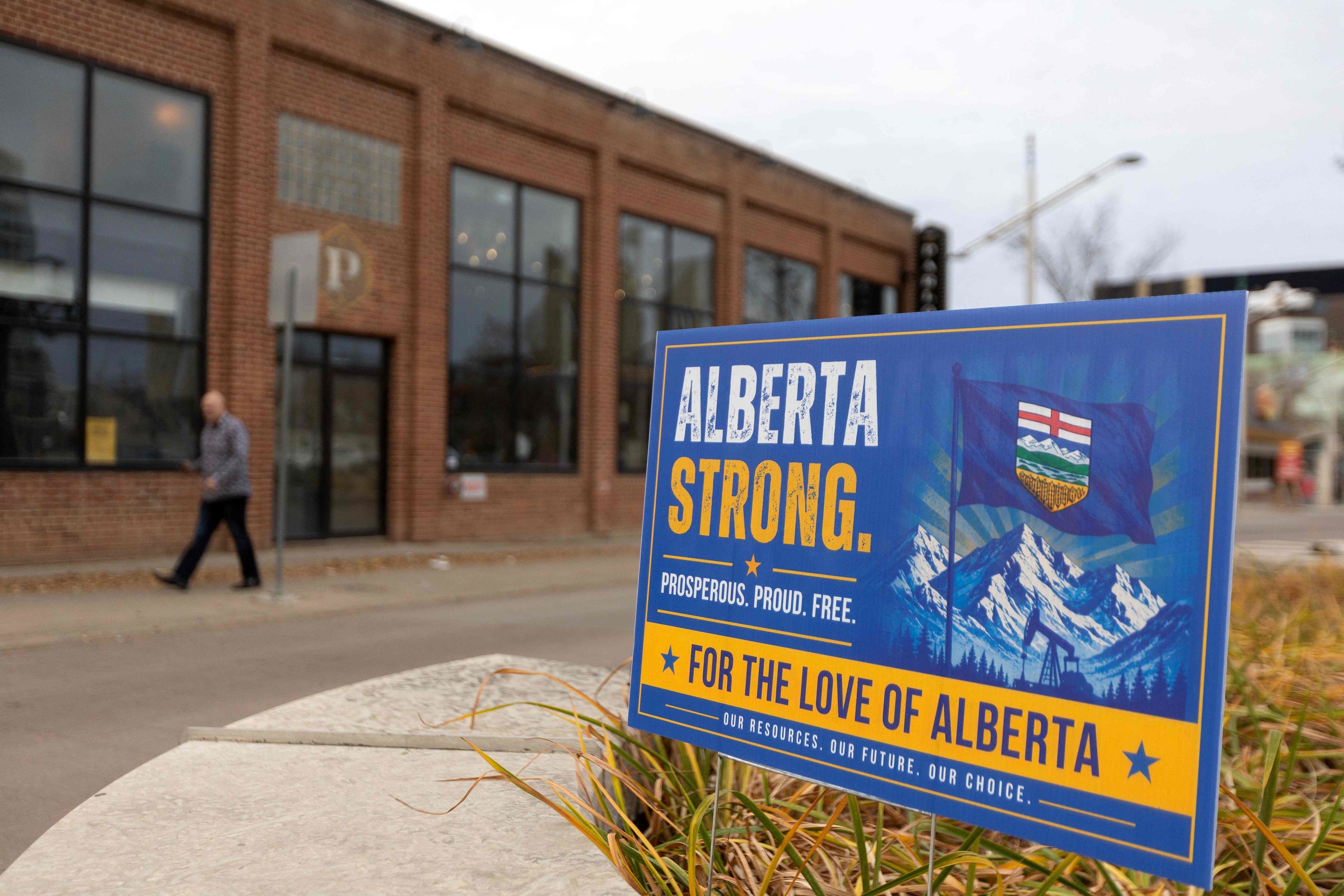
Alberta will not follow Quebec’s path. According to the early results of Monday’s referendum, 76.5% of voters in the provincial government’s consultation chose the first option on the ballot: “Alberta should remain a province of Canada.” The second proposed holding a binding referendum on secession.

Seguir leyendo

© Ahmed Zakot (REUTERS)

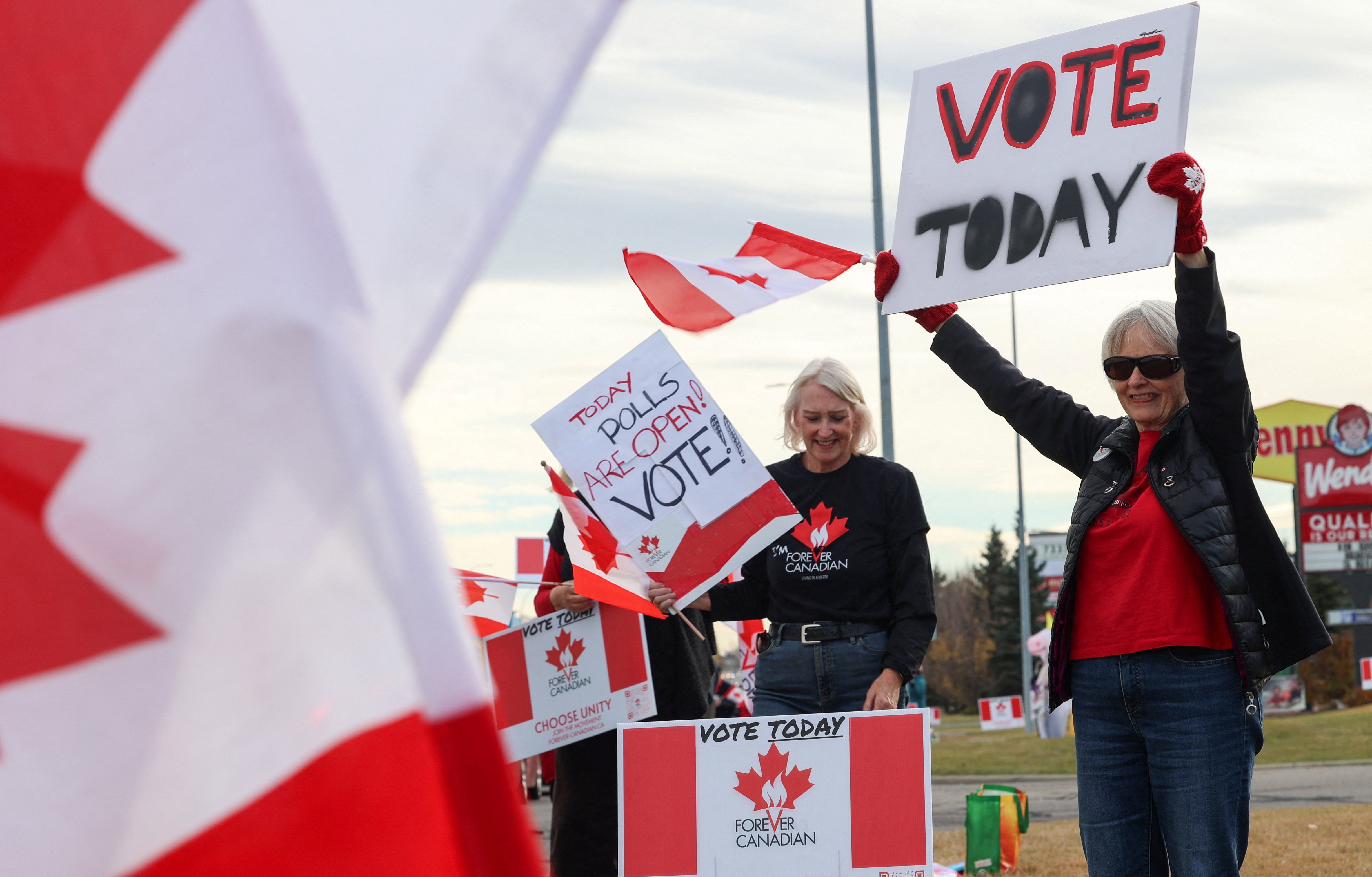
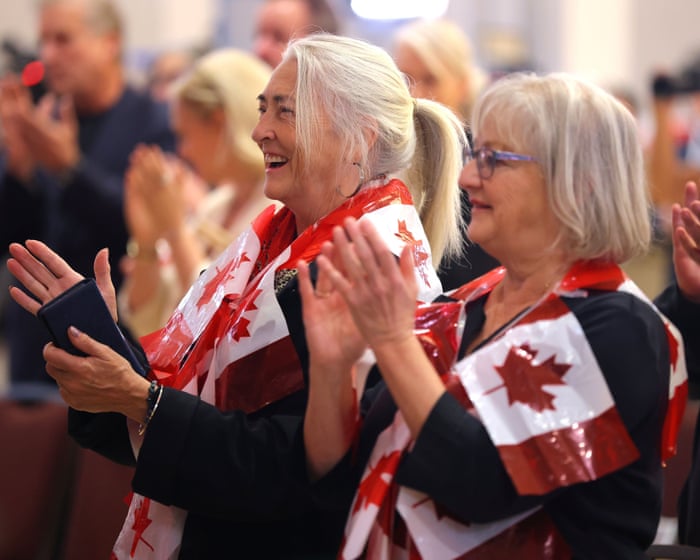
Members of the Forever Canadian movement urge voting in Calgary, Alberta, on Monday.
  •  

Alberta vota por seguir formando parte de Canadá, una victoria para el primer ministro Carney

Los votantes de Alberta, una provincia rica en petróleo, respaldaron abrumadoramente la permanencia en Canadá en su primer referendo sobre la separación. Los resultados preliminares de este martes suponen un impulso a los esfuerzos del primer ministro Mark Carney por preservar la unidad nacional en medio de la guerra comercial y las amenazas de anexión del presidente estadounidense Donald Trump.

  •  

Canada: Alberta Voters Reject Independence in Referendum

Alberta referendum results show voters backing Canadian unity over separation from Canada.

Unofficial results show 77% of voters opposed a move toward separation, backing Canadian unity as U.S. tensions mount.


Alberta voters have overwhelmingly rejected a proposal to begin the process of separating from Canada, with 77% opposing the initiative in unofficial results that strengthen Prime Minister Mark Carney’s push for national unity.

RELATED: Deadly Incident at Canadian Base Sparks Major Alberta Fire

With more than 1 million ballots counted, 23% supported the proposal, according to Elections Alberta. The October 19 referendum was not a direct vote on independence; approval would have set the province on a path toward a future vote on separation.

Carney welcomed the results, saying Albertans had chosen to remain part of Canada and that the outcome would allow the country to pursue an ambitious economic agenda.

“Above all, Albertans chose Canada,” he said in a statement released on October 20. He added that Canadians could move forward together with renewed purpose and greater ambition.

My statement on Albertans choosing to build a stronger Canada, together: pic.twitter.com/pNXb427wXI

— Mark Carney (@MarkJCarney) October 20, 2026

Carney also pointed to efforts to secure new international trade partners, accelerate major infrastructure projects across the country and expand Canada’s role as a global energy power, with Alberta at the center of those plans.

Alberta Premier Danielle Smith also welcomed the early results, saying they demonstrated support for a stronger province within a united Canada.

“Albertans have voted for a stronger Alberta in a united Canada,” Smith wrote on social media.

Smith called the referendum under pressure from separatists within her governing United Conservative Party (UCP), despite opposing independence. She was scheduled to address the province on Tuesday evening about the results and Alberta’s future.

Thomas Lukaszuk, a former deputy premier who led the Forever Canadian campaign against separation, also welcomed the outcome.

“We are a solid country that’s united from coast to coast to coast,” he told supporters.

Separatist leaders, meanwhile, pointed to the vote as evidence of continuing dissatisfaction with the federal government in Ottawa. Keith Wilson, a prominent figure in the movement, cautioned that the results were not final but argued that a substantial share of Albertans wanted the province to be treated better.

“We don’t have the final results. I think the numbers are going to fluctuate, but it is fair to say that at least a quarter of Albertans feel that Alberta needs to be treated better,” Wilson said.

The results were delayed after late openings forced more than 100 polling stations to extend their voting hours on Monday.

Alberta, home to the world’s fourth-largest proven oil reserves, is a conservative stronghold whose political culture has long had more in common with the American West than with much of Canada.

Resentment toward the federal government has persisted, but separatist parties historically attracted only 1% to 2% of the vote, according to former Premier Jason Kenney. Anger over COVID-19 restrictions helped mobilize activists who later embraced the separatist movement.

Meanwhile, U.S. President Donald Trump’s trade war and threats to make Canada the 51st U.S. state have helped Carney rally support in Alberta, where Liberal prime ministers have traditionally been unpopular.

  •  

Eleitores de província do Canadá rejeitam independência

Abertura tardia de mais de 100 mesas de voto atrasou a divulgação dos resultados. Desfecho – a favor da permanência de Alberta no Canadá – representa uma vitória para o primeiro-ministro Mark Carney.

© ERIC REID/EPA

Desfecho representa uma vitória para o primeiro-ministro Mark Carney e para os defensores da unidade canadiana
  •  

Alberta voters overwhelmingly reject plan to leave Canada in referendum

Result is a victory for prime minister Mark Carney and supporters of Canadian unity

Voters in Canada’s Alberta have overwhelmingly rejected a proposal to begin the process of independence, delivering a decisive victory for supporters of Canadian unity and deepening divisions within the separatist movement.

With nearly 1.9m votes counted, roughly 76% people supported remaining in Canada, while 24% backed beginning a process toward separation, according to unofficial results from Elections Alberta.

Continue reading...

© Photograph: Canadian Press/Shutterstock

© Photograph: Canadian Press/Shutterstock

© Photograph: Canadian Press/Shutterstock

  •  

Alberta Voters Reject Leaving Canada in Referendum on Separatism

Residents of the province were asked if they wished to remain in Canada or to hold another vote on breaking away, in a referendum that was a win for Prime Minister Mark Carney.

© Todd Korol/Reuters

Supporters of the Forever Canadian movement, who want Alberta to remain in Canada, in Edmonton, Alberta, on Monday.
  •  

Protestas en Francia: ¿buscan Trump y J. D. Vance sacar partido de una crisis externa?

El presidente Donald Trump y su vicepresidente J.D. Vance buscan presentar el movimiento estudiantil y las manifestaciones del 17 de octubre en Francia como el resultado de una crisis migratoria. Una instrumentalización de la situación que, según analistas, apunta a beneficiar los intereses del movimiento ultraconservador MAGA con miras a las elecciones de medio mandato de noviembre en Estados Unidos.

  •  

Calgary Opera removes singer waving Palestinian flag during opening night curtain call

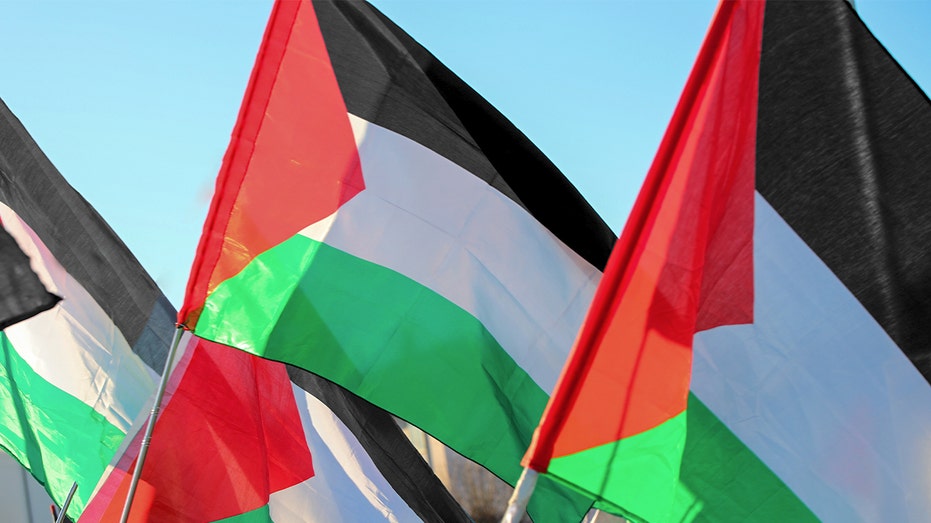
The Calgary Opera removed a cast member from its remaining performances of "Tosca" after he displayed a Palestinian flag during the opera's opening-night curtain call Friday.

Bass-baritone singer Gabriel Sanchez-Ortega pulled out the flag during the curtain call following the opening-night performance. The opera company later released a statement calling Sanchez-Ortega's actions "unexpected and unauthorized," confirming that he would be replaced for the remaining performances.

"Individual political protest contravenes not only company policy, but also our responsibility to create a more connected, caring, and civil society through shared artistic experience," the statement read, according to OperaWire. "We recognize that this moment may have affected the audience — as well as cast members, crew, orchestral musicians, and Jubilee staff — in different ways, and we regret any discomfort and distress it caused."

AUSTRALIAN POLICE INVESTIGATING PRO-PALESTINIAN RALLY IN SYDNEY WHERE PROTESTORS CHANTED ‘GAS THE JEWS’

"We have addressed this matter directly with the cast member and reinforced our expectations with the cast and production team," the statement continued. "Our commitment is to provide a welcoming and respectful environment for our artists, audiences, and community. The role of Angelotti will be performed by another artist for the remaining performances. We thank everyone who joined us for opening night and look forward to welcoming audiences to the remaining performances of ‘Tosca.'"

Sanchez-Ortega, who posted a video of himself holding the flag on Instagram, released a statement saying he has "no regret" over his actions and claimed that Calgary Opera was faced with "financial threats" over the move.

"I have been informed that I have been removed from further performances of ‘Tosca’ with the Calgary Opera following my display of the Palestinian flag during curtain call. I have no regret," he said. 

"This is the state of cultural institutions in Canada," Sanchez-Ortega wrote on social media. "I was informed that financial threats had been made against Calgary Opera. I hold no resentment. After the theatre, (political or otherwise) we all have to go home, and look at ourselves in the mirror. It was my honor to play the role of Angelotti, an escaped political prisoner." 

MACKLEMORE DOUBLES DOWN AFTER GETTING KICKED OFF ED SHEERAN TOUR AFTER PRO-PALESTINE STANCE

In a statement to Fox News Digital, Calgary Opera declined to comment on "personnel matters" but added that all forms of personal protest, regardless of the political symbol, are prohibited on stage.

"Calgary Opera prohibits personal protest on our stages and at our events," it said. "The display of any protest symbol or action would result in similar consequences. We have reiterated this prohibition to all artists and staff, and will continue to apply it universally in response to all cases of unauthorized protest, regardless of the symbol or action that protest takes." 

"With respect to the cast member in question, he did not appear in yesterday’s performance of Tosca, and will not appear in the October 24, 2026, closing performance," the statement added. "Beyond that, Calgary Opera does not comment on personnel matters."

GORILLAZ FRONTMAN DAMON ALBARN HOLDS UP PALESTINIAN FLAG DURING SHOW AFTER MACKLEMORE TOUR REMOVAL

CLICK HERE TO DOWNLOAD THE FOX NEWS APP

Several entertainers have displayed the Palestinian display in protest of Israel's actions in Gaza since 2023, including performers from Gorillaz and Imagine Dragons. 

  •  
❌