❌

Reading view

Trump's 50% Tariffs on Canadian Goods Illegally Rely on a Superseded Statute, a Lawsuit Argues
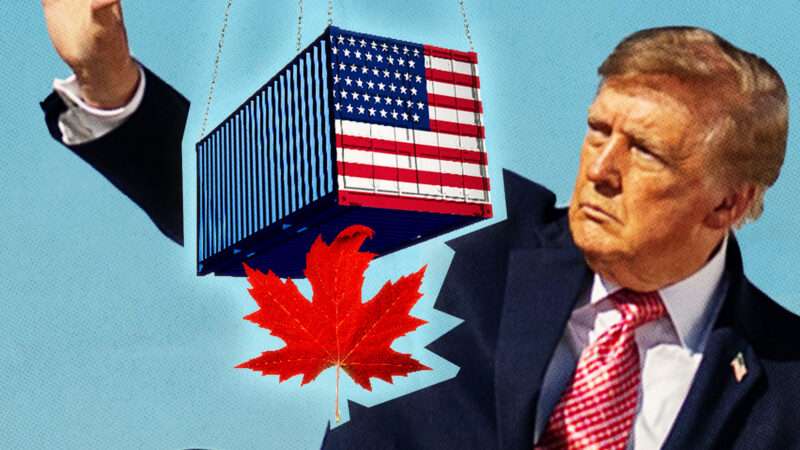
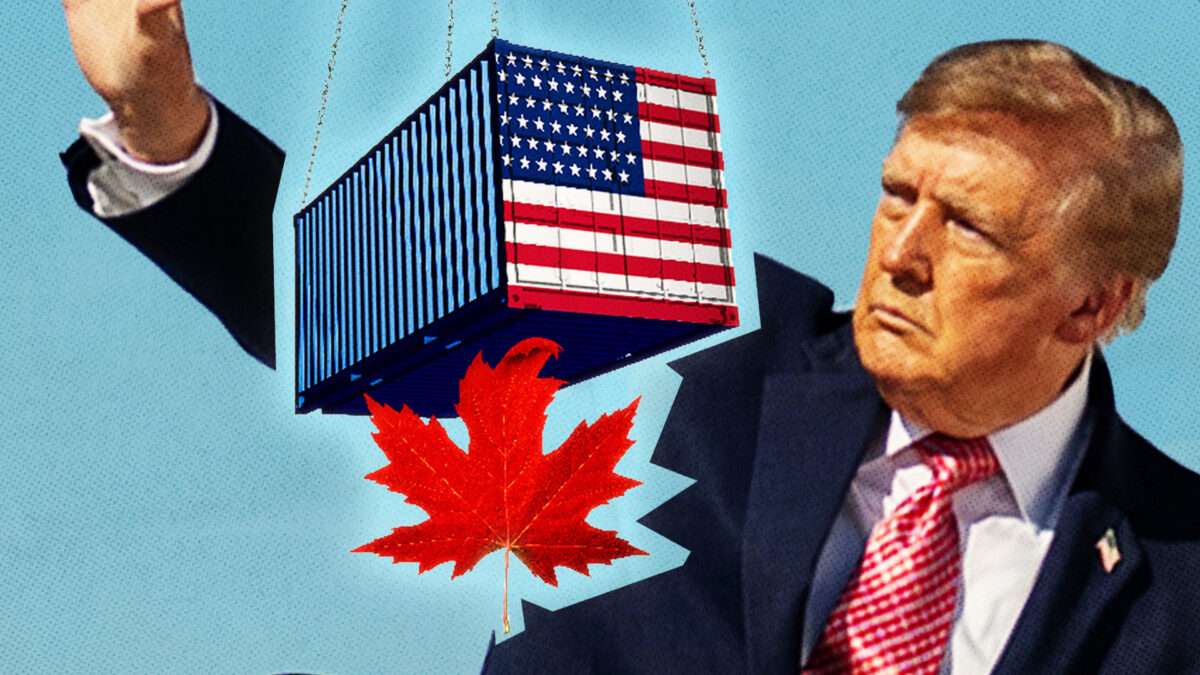
a shipping container and a maple leaf with President Donald Trump in the background | Molly Riley/B66/Avalon/Newscom/Skypixel/Dreamstime

Last July, President Donald Trump imposed 50 percent tariffs on various Canadian goods, a list he subsequently expanded to include additional imports, some of which he banned outright. His legal justification was Section 338 of the Smoot-Hawley Tariff Act, which Congress approved in 1930. Section 338 authorized tariffs in response to discriminatory trade practices. But in the 96 years since it was enacted, no president had ever used it to impose tariffs.

Why is that? According to a lawsuit that the Liberty Justice Center (LJC) filed on Tuesday in the U.S. Court of International Trade (CIT), the answer is clear: Section 338 was superseded by subsequent legislation that likewise targeted discriminatory trade barriers, beginning with the Reciprocal Trade Agreements Act of 1934 and culminating in Section 301 of the Trade Act of 1974. Section 301, the current remedy, includes requirements that Trump apparently sought to dodge by invoking Section 338 instead.

That maneuver is illegal, the LJC argues. "Congress already gave the executive branch a tool for responding to unfair foreign trade practices: Section 301, which requires an investigation, public comment and other safeguards," says Jeffrey M. Schwab, the LJC's director of litigation. "The administration cannot skip those protections by reaching for a 1930 statute that no president had ever used to impose a tariff."

Why not? "Where provisions in two acts are in irreconcilable conflict, the later act, to the extent of the conflict, constitutes an implied repeal of the earlier one," the lawsuit says. "Where a later act covers the whole subject of an earlier one and is clearly intended as a substitute, it operates similarly as a repeal. And a specific policy embodied in a later federal statute controls the construction of an earlier one even absent express amendment."

Even if Section 338 somehow survived congressional approval of contrary laws, the LJC adds, Trump's tariffs exceed the authority it grants. And if Trump's interpretation of Section 338 were correct, the lawsuit says, the provision would violate the nondelegation doctrine, which bars Congress from delegating its tariff power to the president without providing "an intelligible principle" to guide and constrain his exercise of it.

Trump's Section 338 tariffs, in short, are "the Administration's latest attempt to exercise, through a statute never designed for the purpose, the tariff power that the Constitution assigns to Congress." That pattern should be familiar by now.

Shortly after taking office in 2025, Trump claimed to have discovered a previously unnoticed delegation of extensive tariff authority in the International Emergency Economic Powers Act (IEEPA), a 1977 law that does not mention import taxes and had never been used to impose them. That claim was rejected by every court that considered it, and last February the Supreme Court ruled that IEEPA does not authorize tariffs at all.

Trump responded to that decision by immediately announcing similarly broad tariffs under Section 122 of the 1974 Trade Act, which addresses "fundamental international payments problems" caused by "serious United States balance-of-payments deficits." In May, the CIT ruled that the new tariffs were illegal because Trump had failed to "identify balance-of-payments deficits within the meaning of Section 122."

Trump then switched to Plan C, invoking Section 301 of the Trade Act, which authorizes tariffs in response to a foreign "act, policy, or practice" that is "unreasonable or discriminatory" and "burdens or restricts" U.S. commerce. He claimed that provision justified tariffs on 86 trading partners, accounting for nearly all U.S. imports, because they had failed to "impose and effectively enforce a prohibition on the importation of goods produced with forced labor." The CIT is currently weighing challenges to those tariffs, including an LJC lawsuit.

Trump's Section 338 tariffs have now added to the CIT's caseload. The LJC represents Gellert Global Group, an importer that was hit hard by those taxes after Trump added cheese to the list of disfavored Canadian goods. The lawsuit asks the CIT to certify a class of importers, numbering in "the hundreds, if not the thousands," that likewise have been clobbered by Trump's 50 percent tariffs.

Since Trump obviously is aware of Section 301, why did he resort to a never-used, seemingly obsolete provision to justify the tariffs on imports from Canada? As the LJC notes, Section 301 requires an investigation by the Office of the U.S. Trade Representative, "consultation with the foreign country concerned, notice, public comment, a hearing, and determinations within statutory deadlines." It also requires "that action be equivalent in value to the burden imposed, that duties be preferred over other import restrictions, and that actions terminate after four years absent a request for continuation and review."

Can Trump avoid those constraints by invoking Section 338 instead? The LJC thinks not: "Congress did not intend to leave in place a parallel authority that would allow the President to impose the same remedies, for the same conduct, free of every one of those safeguards."

Section 338 has been "impliedly repealed," the LJC argues. "At a minimum, Section 301 controls where, as here, the President seeks to respond to foreign practices within Section 301's scope, and the President may not impose duties in response to such practices while disregarding the procedures and limits Section 301 imposes. Because the President did not proceed under Section 301, the Section 338 Tariffs are unlawful whether or not Section 338 survives."

Even if you ignore subsequent legislation, the LJC argues, the Canadian policies that Trump cited when he announced the tariffs do not qualify as "discrimination" under Section 338. "Canada's motor vehicle surtax and its provinces' alcohol purchasing decisions are responses to tariffs that the United States imposed on Canada, not discrimination by Canada against the United States," it says. Trump also complained that Canada treats European cheese imports more favorably than U.S. cheese imports. But "when Congress enacted Section 338, a preference granted under a reciprocal agreement was not 'discrimination.'"

Section 338 "addresses discrimination: measures that single out United States commerce for worse treatment than the commerce of the world at large," the lawsuit says. "It is not a general authorization to impose tariffs whenever the President disagrees with a trading partner's policies, or whenever a trading partner responds to tariffs the United States has imposed on it."

Trump also was unfazed by Section 338's requirement that the president set duties to "offset" the costs imposed by discriminatory practices, which implies proportionality. Rather than attempt that, the LJC notes, Trump imposed "the statutory maximum rate of 50 percent without tying it to any measured burden."

As interpreted by Trump, the lawsuit warns, Section 338 authorizes the president to "impose tariffs of up to 50 percent on any products of any country that extends better treatment to any other country in any respect—including through any of the hundreds of preferential trade agreements to which the United States is not a party—or that responds to tariffs the United States has imposed on it." Yet Section 338 "contains no clear statement authorizing that power," contrary to the "major questions" doctrine, which applies to assertions of executive authority with "vast economic and political significance."

If Section 338 conferred the sort of unfettered authority that Trump is claiming, the LJC says, it "would supply no intelligible principle constraining the exercise of Congress's power to lay duties." His reading "would convert a narrow, fact-dependent provision into an effectively unrestricted delegation of Congress's tariff power," which would be "an unconstitutional delegation of legislative power."

This case "is not about the president," says LJC CEO Sara Albrecht. "It is about the presidency. No president should have the power to pull a dormant statute off the shelf and use it to impose sweeping tariffs or import bans without the limits Congress required."

The post Trump's 50% Tariffs on Canadian Goods Illegally Rely on a Superseded Statute, a Lawsuit Argues appeared first on Reason Magazine.
  •  

Austin Reaves plans to text LeBron James before his 76ers debut

It’s going to take a while getting used to seeing LeBron James in a 76ers uniform. Even Austin Reaves feels that way. “I already seen him preseason,” Reaves said at Lakers practice Tuesday. “I almost texted him and told him he looked crazy. Nah, it’s definitely different. But that’s my guy and I wish him...

  •  

Ministro Gonçalo Matias vai discutir com Tony Blair sobre uso da IA para medir reformas

O ministro Adjunto e da Reforma do Estado, Gonçalo Matias, afirmou, esta terça-feira, 20 de outubro, que o Governo está interessado em alargar e melhorar a medição dos resultados das reformas legislativas e que vai discutir o uso de Inteligência Artificial com o antigo primeiro-ministro britânico Tony Blair.

Matias tem planeada uma visita na quarta-feira em Londres ao Instituto Tony Blair para a Mudança Global, que trabalha com a inteligência artificial em matérias de governação.

O ministro recordou que durante os Executivos de Blair foram criadas ‘delivery units’, estruturas de apoio ao primeiro-ministro destinadas a acompanhar a execução das prioridades governativas em áreas como a saúde, educação ou criminalidade, e medir se foram cumpridas.

“Para a reforma de estado é fundamental medir o ponto de partida e o ponto de chegada e saber exatamente o que é que uma reforma produziu”, sublinhou o ministro à Agência Lusa, explicando que o sucesso de uma reforma se avalia comparando a situação antes e depois da sua implementação.

Segundo Matias, “mais importante do que apresentar os códigos [legislativos] é garantir que são implementados, que produzem efeitos e que esses efeitos chegam realmente às pessoas”.

Gonçalo Matias referiu que já existem unidades de medição e avaliação no centro do Governo português, como é o caso da Planapp na Secretaria-Geral e do comité da OCDE que está a monitorizar a reforma do Ministério da Educação.

Também na quarta-feira, o ministro vai encontrar-se com o secretário Parlamentar do Gabinete do Governo britânico, Mark Ferguson, com o qual pretende trocar experiências sobre o desenvolvimento da inteligência artificial.

Do programa da visita de três dias à capital britânica fizeram parte contactos no serviço digital do Governo britânico e no Open Data Institute, uma organização sem fins lucrativos fundada pelo “inventor da Internet, Tim-Berners-Lee.

Sobre esta última, considerou a reunião “muito interessante” para antecipar dificuldades práticas na execução da futura Lei da Interoperabilidade, em apreciação no Parlamento português e com parecer favorável da Comissão Nacional de Proteção de Dados.

A lei visa permitir a partilha de documentos de cidadãos e empresas entre diferentes serviços do Estado, medida implicará passar de 124 entidades atualmente ligadas à plataforma de interoperabilidade para cerca de cinco mil.

«Reconheceram que o nosso projeto era ambicioso e que tínhamos os mecanismos certos, mas alertaram para dificuldades práticas, muitas vezes relacionadas com a resistência dos serviços que detêm a informação», referiu o ministro, sublinhando que a partilha de experiência permite preparar melhor a implementação.

  •  

PSG - Barcelona en directo | El PSG de Luis Enrique derrota al Barcelona, que encaja su primera derrota de la temporada

El PSG ha ganado al Barcelona este martes en la tercera jornada de la Champions League y los azulgrana han encajado su primera derrota de la temporada. El inicio de partido del equipo de Luis Enrique fue eléctrico y Kvaratskhelia avisó con un remate al poste. Reaccionó a los 10 minutos el Barça que comenzó a dominar el encuentro y Raphinha estuvo a punto de poner por delante a los de Flick, pero Safonov estuvo muy atento para detener un remate del brasileño a escasos metros de la portería. La contienda se igualó muchísimo y llegaron entonces dos lesiones: Ferran sustituyó a Dembélé y Fermín a Dani Olmo. La entrada de Ferran dio alas a los parisinos y el delantero valenciano tuvo dos mano a mano que Joan García tapó. El PSG se animó de nuevo y en una gran recuperación en campo contrario Doué disparó desde la frontal del área para perforar la portería y poner por delante al equipo de Luis Enrique. En la segunda mitad, Joan García volvió a sacar una gran mano y sostuvo a los azulgrana que lograron empatar el partido por medio de Xavi Espart. A raíz del gol el Barça comenzó a dominar, pero en un saque de esquina Lucas Hernández le ganó la partida a Gordon para cabecear y volver a poner a los parisinos por delante. Parecía que el PSG tomaba el control ahora, pero apareció Lamine para inventarse una nueva genialidad ante Zaire-Emery y batir a Safonov por su palo. Volvieron otra vez las tablas al marcador, pero Vitinha primero y Fabián después sentenciaron el encuentro para los parisinos.

© Teresa Suarez (AP Photo/Teresa Suarez)

Vitinha celebra el tercer gol del PSG contra el Barcelona.
  •  

Ligue des champions : le PSG domine le Barça au terme d'une fin de match folle

Le PSG s'est imposé face au FC Barcelone (4-2) devant son public au Parc des Princes, mardi soir, lors de la troisième journée de la Ligue des champions. Les Parisiens ont dû attendre une fin de rencontre irrationnelle pour prendre le large. Ils ont aussi laissé des plumes avec les blessures d'Ousmane Dembélé, de Khvitcha Kvaratskhelia et de Marquinhos.

  •  

Miley Cyrus Performs Necromancy Ritual at Hollywood Bowl, Claims Dolly Parton Answered From Hell

On Sunday night at the Hollywood Bowl, Miley Cyrus told a sold-out crowd exactly how she contacted her dead godmother, Dolly Parton, who died August 25. She didn’t whisper it or keep it private. She [...]

The post Miley Cyrus Performs Necromancy Ritual at Hollywood Bowl, Claims Dolly Parton Answered From Hell appeared first on The People's Voice.

  •  

Kyle Kennedy, granddaughter of Robert F Kennedy, dies aged 42

Kennedy taught in New York public schools and advocated for disability rights after suffering severe spinal cord injury

Kyle Kennedy, the granddaughter of Robert F Kennedy and Ethel Kennedy, has died at the age of 42.

Kyle, the daughter of Michael Kennedy, who died in 1997, and Victoria Gifford Kennedy, “passed away peacefully” on 21 September at her home in Westwood, Massachusetts, according to her obituary published by Burke Funeral Homes.

Continue reading...

© Photograph: Andrew Toth/FilmMagic

© Photograph: Andrew Toth/FilmMagic

© Photograph: Andrew Toth/FilmMagic

  •  

ChatGPT activa PIN o huella digital en los chats para evitar que tu pareja o amigos los vean

OpenAI aclaró que bloquear un chat no equivale a cifrarlo de punta a punta.  
REUTERS/Dado Ruvic

OpenAI anunció que los usuarios de ChatGPT ya pueden bloquear conversaciones individuales con un PIN de cuatro dígitos, Face ID o Touch ID, para evitar que otra persona las vea al tomar prestado el teléfono o la computadora.

La función, llamada Locked Chats, mueve cada conversación protegida a una sección separada del historial regular, de los chats fijados y de los resultados de búsqueda dentro de la aplicación. Según la empresa, está pensada para quien habla de temas personales o planea una sorpresa y no quiere exponer esa charla al mostrarle otra cosa a un familiar o amigo.

A diferencia de los Chats Temporales, que generan una sesión aparte que desaparece y no queda guardada en el historial, los chats bloqueados se conservan y pueden volver a abrirse en cualquier momento con la misma autenticación.

OpenAI anunció que los usuarios de ChatGPT ya pueden bloquear conversaciones individuales con un PIN de cuatro dígitos.     
REUTERS/Dado Ruvic

OpenAI aclaró que bloquear un chat no equivale a cifrarlo de punta a punta ni crea una bóveda encriptada aparte. Tampoco cambia cuánto tiempo la empresa conserva esa conversación, ni borra la información que ChatGPT ya había incorporado a su memoria antes de activar el bloqueo.

La compañía explicó además que la opción no modifica la configuración de “mejorar el modelo para todos”, con la que algunos usuarios autorizan que sus conversaciones se usen para entrenar el sistema.

Cómo funciona la memoria en los chats bloqueados

Cuando la función de memoria está activada, los chats bloqueados comparten entre sí un registro propio, separado del que usa el resto de la cuenta. Los mensajes nuevos que se envían dentro de esa sección pueden actualizar esa memoria interna, pero no se filtran hacia las conversaciones comunes.

OpenAI también advirtió que restablecer el PIN borra de forma permanente todos los chats bloqueados, junto con los archivos y el resto del contenido que estaban protegidos bajo ese código anterior.

Cuando la función de memoria está activada, los chats bloqueados comparten entre sí un registro propio, separado del que usa el resto de la cuenta. 

REUTERS/Dado Ruvic

La función no está disponible para los Chats Temporales, los chats archivados, las conversaciones grupales, los chats creados a partir de un enlace compartido, los que tienen tareas programadas ni los que incluyen grabaciones de reuniones.

Locked Chats comenzó a desplegarse este martes para las cuentas Free, Go, Plus, Pro, Business, Enterprise y Edu. OpenAI precisó que, por ahora, no llegará a ChatGPT for Healthcare, la versión pensada para el sector salud.

Una función de privacidad para un producto masivo

ChatGPT superó los 1.000 millones de usuarios activos por semana, según la propia OpenAI, una escala que convirtió al chatbot en una herramienta donde millones de personas comparten información médica, laboral o económica junto con consultas cotidianas.

Locked Chats comenzó a desplegarse este martes para las cuentas Free, Go, Plus, Pro, Business, Enterprise y Edu. 
 (AP Foto/Michael Dwyer, Archivo)

Esa masividad explica por qué otras plataformas de inteligencia artificial conversacional enfrentaron esta misma semana cuestionamientos de privacidad: The Verge reportó que Meta pausó la posibilidad de compartir conversaciones de su asistente Muse después de que investigadores encontraran chats privados accesibles en internet.

Por el momento, OpenAI no detalló si prevé extender alguna variante de Locked Chats a sus herramientas empresariales ni si planea sumar cifrado de punta a punta en el futuro. El despliegue sigue en curso y, según la compañía, podría tardar días en llegar a todos los usuarios de las cuentas habilitadas.

.

  •  

UK Says It Will Deploy Typhoon Fighter Jets To Fly ‘Defensive Missions’ Over Saudi Arabia

The UK announced on Tuesday that its military will fly Typhoon fighter jets over Saudi Arabia on “defensive missions” to help repel attacks from Yemen’s Ansar Allah, also known as the Houthis, marking an escalation of British involvement in the war. “The UK will fly defensive counter-air missions to support the protection of Saudi cities […]
  •  

Cotação do Brent para entrega em dezembro cai 0,69% para 108,79 dólares

A cotação do barril de petróleo Brent para entrega em dezembro terminou, esta terça-feira, no mercado de futuros de Londres em baixa de 0,69%, para 108,79 dólares, perante informações sobre uma possível aproximação diplomática entre o Irão e EUA.

O crude do Mar do Norte, de referência na Europa, fechou a sessão no Intercontinental Exchange a cotar 76 cêntimos abaixo dos 109,55 dólares cm que encerrou as transações na segunda-feira.

O Brent subiu no início da sessão, depois de a Guarda Revolucionária anunciar o derrube de um drone dos EUA que sobrevoava o Estreito de Ormuz.

Depois, os preços baixaram quando o meio The New Arab informou que o Qatar e o Paquistão apresentaram uma proposta de mediação para eliminar as diferenças entre Washington e Teerão, que foi aprovada pelas duas partes.

  •  
❌