❌

Reading view

EU Prosecutors Raid Patriots for Europe Offices in €4.3 Million Funding Investigation

European prosecutors have searched offices in Brussels and Strasbourg as an investigation into alleged misuse of parliamentary funds by the former Identity and Democracy group raises questions over financial liabilities inherited by Patriots for Europe.

European prosecutors carried out searches at the European Parliament’s offices in Brussels and Strasbourg on Wednesday, 21 October, as part of an investigation into alleged financial irregularities involving the former Identity and Democracy (ID) parliamentary group.

The investigation concerns approximately €4.33 million in European Union funds that were allegedly improperly spent during the 2019–2024 parliamentary term. The European Public Prosecutor’s Office (EPPO) confirmed that searches had taken place in connection with an ongoing inquiry into the use of EU funds by a former parliamentary group.

The premises searched are now occupied by Patriots for Europe, the European Parliament’s third-largest political group, which includes France’s National Rally, Hungary’s Fidesz, Italy’s Lega and Spain’s Vox. Patriots for Europe insists that it has no legal continuity with Identity and Democracy and denies being involved in the investigation.

Investigation into parliamentary expenditure

The European Public Prosecutor’s Office opened its investigation in July 2025 following concerns identified by the European Parliament’s financial administration about expenditure incurred by Identity and Democracy.

The former group, which dissolved following the 2024 European elections, included representatives of France’s National Rally, Italy’s Lega and Germany’s Alternative for Germany.

According to details of the parliamentary financial examination subsequently reported in France, investigators are examining approximately €3.6 million in contracts awarded to external service providers, including businesses with political connections to parties represented within the former group.

The financial examination also identified more than €700,000 in donations to organisations whose activities were allegedly unrelated to the parliamentary group’s official functions.

The authorities are examining whether parliamentary resources were used in accordance with EU financial rules, including restrictions on using public money for national party-political activities.

These are allegations under investigation, not criminal findings. The EPPO has not announced convictions arising from the current inquiry, and the individuals and organisations concerned retain the presumption of innocence.

Earlier investigative measures were conducted in France, Belgium, Spain and Italy in June 2026. Wednesday’s searches mark a further stage in the proceedings.

Can Patriots for Europe inherit the liabilities?

The investigation has opened a separate dispute over whether Patriots for Europe could be required to repay money allegedly misspent by its predecessor.

Identity and Democracy ceased to exist after the 2024 elections. Several parties previously represented in the group subsequently joined Patriots for Europe, a new parliamentary formation that also brought together Viktor Orbán’s Fidesz and Spain’s Vox.

Patriots for Europe maintains that the two groups are legally separate. Its representatives argue that the dissolution of Identity and Democracy ended that group’s institutional existence and that the present parliamentary organisation is not responsible for its predecessor’s financial affairs.

However, the European Parliament’s budgetary authorities have examined whether responsibility for outstanding liabilities can pass to a successor group.

An opinion approved by the Parliament’s Budgetary Control Committee in September considered the circumstances in which continuity between parliamentary groups might establish financial responsibility.

Such an assessment may consider whether members, administrative personnel, operational resources and other assets were transferred from one organisation to another.

The outcome could determine whether the current group is exposed to potential repayment demands, irrespective of whether its present members were personally involved in the expenditure under investigation.

No final determination of such liability has been established through Wednesday’s searches.

Political consequences in Strasbourg

The searches come at a time when Patriots for Europe has become a major political force within the European Parliament.

Its member parties have challenged EU policy on immigration, economic regulation and the distribution of powers between Brussels and national governments. National Rally and Fidesz are also influential actors in the domestic politics of France and Hungary respectively.

An investigation involving their parliamentary organisation is therefore likely to attract scrutiny beyond the immediate financial questions.

Nevertheless, the political influence of the group and the criminal investigation must be considered separately. The presence of prosecutors at parliamentary premises does not establish wrongdoing by the current group’s MEPs.

The case also raises broader questions about financial accountability within the Parliament, particularly when a political group dissolves following an election and its members establish a new organisation.

Unlike national political parties, European parliamentary groups receive funding specifically to support their legislative, administrative and political work inside the institution.

Those resources are subject to financial controls intended to prevent their diversion into activities that should be funded by national parties or other organisations.

Further proceedings

The EPPO is responsible for investigating and prosecuting offences affecting the European Union’s financial interests. It operates independently of national governments and EU political institutions.

The European Parliament has confirmed its cooperation with the authorities but has declined to comment on the substance of the continuing investigation.

Prosecutors must now assess the evidence obtained during the searches alongside financial records and material collected during previous investigative measures.

Any decision to bring criminal proceedings would depend on the evidence available and the relevant national and European legal requirements.

Separately, the Parliament will have to establish whether any recoverable funds are owed by the former group and, if so, which organisation is legally responsible for repayment.

For Patriots for Europe, the immediate issue is not only the progress of the criminal inquiry but whether the financial arrangements of a dissolved parliamentary group can create obligations for its successor.

  •  

EU prosecutors raid far-right Patriots for Europe offices in Brussels and Strasbourg over alleged misuse of parliament funds

Offices of staff in the Patriots for Europe (PfE) group were raided in France and Belgium on Wednesday (21 October).

The European Public Prosecutor’s Office (EPPO) told EUobserver that searches were carried out “as part of an ongoing investigation into the use of European funds by a former political group in the European Parliament”.

But the law enforcement body said it would not release details of the investigation for now, to avoid jeopardising the integrity of the case.

The far-right PfE group in the European Parliament, led by Jordan Bardella of the French National Rally (RN) party, posted a statement on social media claiming that on Wednesday morning, the EPPO carried out searches in administrative offices at the European Parliament premises in Brussels and Strasbourg.

“It would appear that these searches are linked to the complaint lodged against the Identity and Democracy Group (ID) dissolved in 2024,” said PfE’s X post.

This article continues, but the full version is available only to EUobserver.com subscribers. Visit account.euobserver.com/membership

  •  

[Interview] ‘I hear MEPs say Muslims are a threat, with no consequences. I say Free Palestine and I’ll be arrested’ – MEP Benedetta Scuderi warns protest repression is being normalised in Europe

As protests continue to ripple across European cities, the Italian Green MEP Benedetta Scuderi reflects on her own experiences of police repression, from holding a peace flag near a Brussels protest to facing the fury that followed the flotilla to Gaza. She spoke to EUobserver about the EU’s housing priorities, Italy’s elections, and how the far-right has captured freedom of expression for its own use.

You were detained by police in July, a few hundred meters from a far-right protest calling for “re-migration”. How has the rise of the far-right stalled some key areas, like freedom of speech?

The rise of the far-right is really threatening European democracy as we know it. It has never been perfect, but it allowed people to protest. Now, we only let certain people express their dissent. 

In the European Parliament, people can discriminate and use hate speech because of their freedom of expression, but as you go out of parliament with a Palestinian flag, then you’re a terrorist. So, how is it possible that last Strasbourg plenary, I could hear my colleagues saying that Muslims are a threat, and there are no consequences? And then I go out and I say, “Free Palestine,” and I’ll be arrested.

This double standard is extremely problematic. The fact that not allowing fascist symbols within the parliament also meaning that no other symbol can be shown, is not okay. Because we need to be fine to say that certain things are discriminatory and against European values, without having to say that everything else is not allowed. 

We also need to be able to accept dissent. What is happening all over Europe, with violence increasing towards activists, we’re seeing it target only a certain kind of activists. In Italy, fascist protests are ignored by police. Farmers can come to the parliament with tractors, and that’s completely fine. And then we have 20 people doing a sit-in for Palestine in front of the parliament, and getting their heads smashed. 

This article continues, but the full version is available only to EUobserver.com subscribers. Visit account.euobserver.com/membership

  •  

Europe’s youth asked for hope – but politicians just offer fear and hate

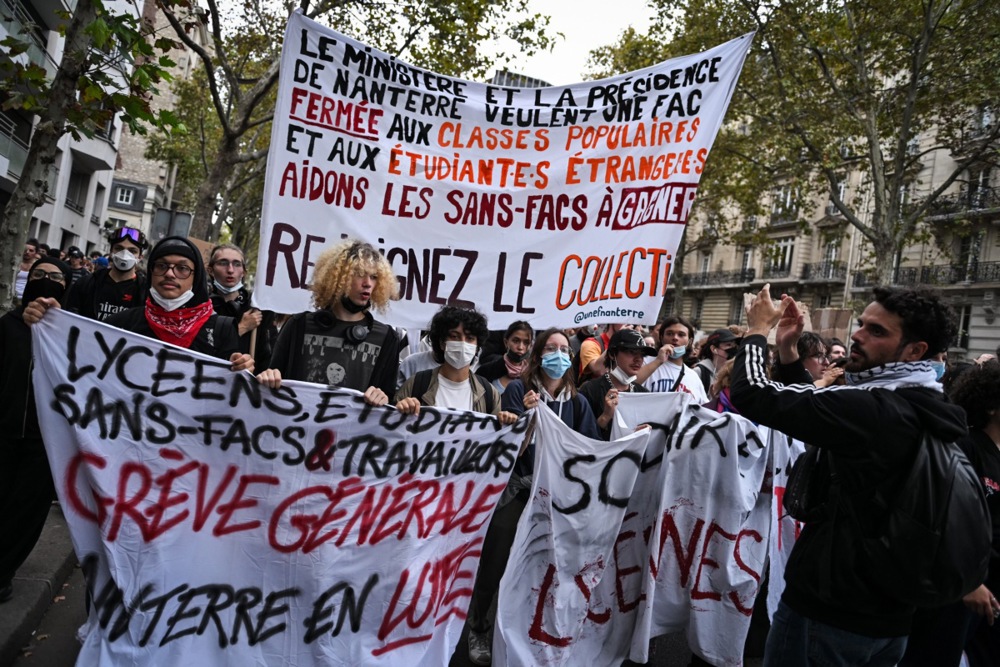
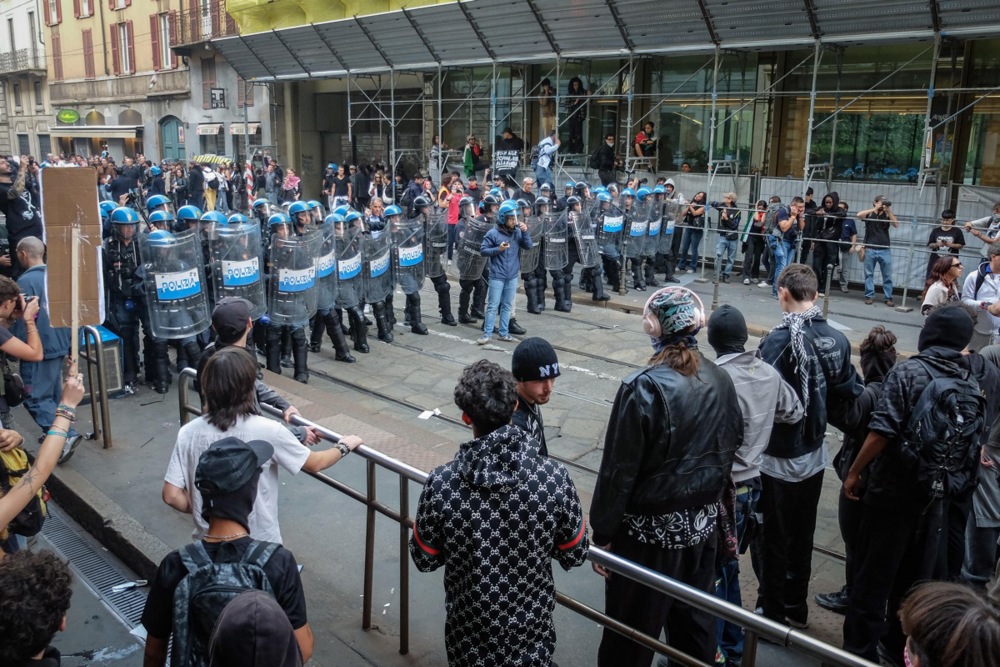
Student protests across Europe are a desperate cry for help, an appeal to governments to build a brighter, hope-filled future. Instead of paying attention, European politicians have decided to manhandle the protesters, misrepresent their demands and manipulate public opinion.

Different narratives are now competing to explain what the protests are really about.

They want to be taught properly. They want more teachers, an end to overcrowded classes, dilapidated buildings and inadequate school meals and an admissions system that sorts young people by class and postcode.

In Belgium, students have protested education cuts and fees. Greek students occupied Syntagma Square over rents, student housing and energy bills. Italian students demanded money for schools rather than war.

But politicians seem intent on telling a different story.

For many EU leaders it is – yet again – all about migration.

Hungarian prime minister Péter Magyar has decided that the chaos in French cities makes it “clear to everyone why Hungary advocates the strictest possible approach to migration.”

Poland’s Donald Tusk, who insists he will not repeat the mistakes of other European countries, joined the leaders of Denmark and Italy at the EU leaders’ meeting in Brussels last week to push for an even tougher Fortress Europe.

Together, they almost succeeded in getting others in the EU to agree to a statement linking crime and “irregular” migration.

On the other side of the Atlantic, US president Donald Trump instructed Europe to “close your borders and take control, before it is too late!” while his deputy JD Vance criticised Western liberals for bringing the “third world” to France.

Parts of the media focused on the violence, particularly the looting and destruction carried out by those who have joined the protests to create chaos, rather than on the demands that brought students onto the streets in the first place.

In France, meanwhile, it was the presidential campaign that shaped the political response, with Marine Le Pen from the National Rally calling for law and order and blaming “decades of immigration” for the violence while her protégé, Jordan Bardella, said the police should have more weapons and greater powers.

Jean-Luc Mélenchon of France Insoumise, Le Pen’s leading rival in the elections next year, was accused of fuelling student anger. French centrists struggled to find their footing and their voice. President Emmanuel Macron made an angry television appearance before heading to the Middle East with a delegation of business leaders.

So far, very predictable.

High school students and members of French Unions march during a national day of protest on 13 October 2026 (Source: EPA/FIRAS ABDULLAH)

Old playbook: one enemy, no solution

Divert, distract, dehumanise and scapegoat are the oldest tricks in wily politicians’ playbook. The well-worn recipe is simple: take a social crisis, remove its economic content, replace it with a face, a religion, a border. Then offer an enemy, not a solution.

When public services fail, blame the outsider. When wages stagnate, blame the foreigner. When housing becomes impossible, blame the newcomer rather than the landlord, the investor or the government that stopped building.

And when young people take to the streets, describe them as manipulated, criminal, alien or dangerous. Treat their anger as a threat to public order rather than a warning that something is profoundly wrong. Say there has been foreign manipulation and disinformation.

Then turn the full force of the state against the symptoms of the crisis while leaving its causes untouched and change the the subject from justice to fear, from schools to borders, from the future to the past.

Meanwhile, the money goes elsewhere.

Europe is pouring resources into defence and rearmament. Governments speak endlessly of competitiveness, productivity and strategic autonomy. But these questions cannot become excuses for neglecting the social foundations on which Europe’s future depends.

Seriously, who is going to make an ageing Europe competitive if the people expected to build its future cannot afford to have one? Who will run Europe’s basic services if migrants go “home”? What does strategic autonomy even mean if young Europeans cannot get a decent education, find secure employment or afford a home?

Contradictions

We should know by now that security cannot be measured in weapons alone. It also depends on how secure citizens feel, and whether they believe they have something worth protecting. Security demands that people have politicians they can trust and institutions which work for them.

A Europe that invests in its military capabilities while allowing its schools, housing systems and public services to deteriorate risks hollowing out its own strength.

Believe me: I know. I was born in Pakistan, a country which thrives on war and conflict and neglects the well being of its citizens.

There is another contradiction. As young people struggle to make their voices heard, the EU is planning cuts to funding for civil society organisations that defend rights, support communities, hold power to account and help turn public anger into democratic participation.

The EU has always – rightly – backed citizens’ calls for democratic participation, equality and inclusion when it happens in Tunisia, Egypt or Hongkong. How can our leaders close down such calls for participation when they are made at home?

Sadly, politicians and parts of the media have lost young peoples’ trust – and when that faith goes, so does democracy.

The EU can and must offer young Europeans a story of hope, inclusion and progress towards equality. Leaders who prefer to hallucinate about migrants should spend more time living up to the EU’s values by investing in education, affordable housing, decent jobs and public services.

We must give our young people a meaningful voice in decisions that will shape their lives. Our collective future quite literally depends on it.

This article was first published on Shada’s Substack. You can subscribe for free to receive new posts and support her work here.

  •  

Romania Ends Six-Month Political Deadlock as New Government Takes Office

Romania has formed a new government after six months of political deadlock, with parliament approving a minority administration led by independent diplomat Luca Niculescu on Tuesday, 20 October. The vote brings an end to repeated failed attempts to establish an executive, although the new prime minister faces considerable uncertainty over his government’s parliamentary support.

Niculescu secured 280 votes in favour and 58 against, comfortably exceeding the 233 required for confirmation. His ministers were sworn in before President Nicuşor Dan at the Cotroceni Palace in Bucharest later that evening, formally ending the prolonged government formation process.

The new administration comprises 18 ministers, including two delegated ministers. The Social Democratic Party (PSD) controls the majority of portfolios, while independent specialists hold several important positions, including finance and foreign affairs.

A government built on temporary parliamentary support

The appointment represents a political success for President Dan, who nominated Niculescu on 5 October following three unsuccessful attempts to assemble a functioning government.

EU Today reported earlier this month on Niculescu’s nomination, which followed the collapse of previous negotiations and growing pressure on Romania’s political institutions.

The new cabinet is heavily dependent on agreements between parties that have frequently disagreed over economic policy and public spending. Although the parliamentary vote demonstrated sufficient support for its installation, the arrangement does not provide the government with a permanent majority.

The National Liberal Party (PNL) and the Democratic Alliance of Hungarians in Romania (UDMR) supported the investiture while remaining outside the administration.

The arrangement gives Niculescu an opportunity to govern, but each major legislative proposal will require continued cooperation between parties with competing priorities.

The Social Democrats, who hold 11 of the ministerial positions, will exercise substantial influence over domestic policy, particularly decisions involving public-sector spending, welfare and taxation.

Budget deficit presents immediate challenge

Romania’s public finances represent the government’s most urgent problem.

The previous administration, led by Ilie Bolojan, collapsed in May following unpopular austerity measures. Political opposition to fiscal consolidation has complicated efforts to stabilise the budget and meet Romania’s commitments under the European Union’s fiscal framework.

Niculescu has indicated that addressing the deficit will be an immediate priority. Finance Minister Alexandru Nazare, appointed as an independent, faces the task of establishing a credible budget programme without provoking another parliamentary crisis.

The choices are politically difficult. Spending reductions risk resistance from public-sector employees and households already affected by higher living costs, while substantial tax increases could place further pressure on businesses and consumption.

Failure to establish a credible fiscal programme would prolong uncertainty over Romania’s borrowing requirements and its ability to comply with European budgetary obligations.

Brussels has a direct interest in the outcome. Romania remains subject to EU fiscal oversight, and the European Commission will assess whether the new administration’s financial plans are consistent with the country’s obligations.

The government’s credibility will depend on whether its parliamentary supporters are prepared to approve the measures that fiscal consolidation requires.

European funds and political credibility

The change of government also comes at a sensitive moment in Romania’s relationship with European institutions.

Romania has faced scrutiny over reforms linked to the EU’s Recovery and Resilience Facility, particularly legislation concerning public integrity and institutional accountability.

EU Today previously examined the European Commission’s assessment of Romania’s integrity legislation and its implications for recovery funding.

Although the EU recovery programme reached its principal implementation deadline in August, outstanding assessments and financial decisions continue to carry consequences for national budgets.

A functioning government is therefore important not only for domestic legislation but also for negotiations with Brussels over fiscal commitments, investment and the wider EU budget.

Romania must also address longer-term weaknesses in public administration, infrastructure financing and the implementation of European legislation.

Political stability remains uncertain

Niculescu takes office against the background of Romania’s unusually turbulent political history since the annulment of the 2024 presidential election amid allegations of Russian interference.

The subsequent institutional disputes damaged confidence in the political system and contributed to the fragmentation of parliamentary support.

Opposition parties, including the nationalist Alliance for the Union of Romanians (AUR), are positioned to challenge the government’s legitimacy and economic measures as the administration begins work.

Romania’s strategic importance extends beyond its domestic political difficulties. As an EU and NATO member bordering Ukraine and Moldova, it plays a substantial role in Black Sea security, military logistics and regional infrastructure.

Prolonged instability in Bucharest has therefore affected a country whose decisions carry consequences for European security and cross-border economic cooperation.

For the new prime minister, the immediate objective is to translate Tuesday’s parliamentary majority into support for legislation. His first serious test will come when the cabinet presents the fiscal measures that its supporters have so far struggled to agree upon.

The parliamentary vote has ended Romania’s government formation crisis. It has not resolved the disagreements that produced it.

  •  

MEPs push to use EU regional funds for affordable housing and climate‑proofing cities

The European Parliament has called for more spending to build affordable houses — using funds for regional development that currently make up a third of the EU budget.

Cohesion funds should be used to protect the ‘right to stay’ in rural areas or in small cities, a principle that the parliament wants to write into the new budget legislation.

Peripheral regions often face depopulation due to few job opportunities, according to a parliamentary non-binding report passed with 601 votes in favour, 20 against, and 36 abstentions on Tuesday (20 October).

MEPs are also calling for strong cohesion funds that would allow cities to better prepare for climate emergencies and provide a budget for additional investments in housing.

Cohesion funds, which account for a total of €48.03bn in the existing 2021-2027 EU budget, usually finance infrastructure projects, like bridges, roads, or railways in countries with a lower-than-average per capita gross national income.

The commission proposed significant cuts to reduce regional funds in the next multi-annual budget, set to cover 2028-34, but a group of 16 member states, often benefitting from the funding, opposed the reduction.

Regional development plays a key role in European integration since it is the “only instrument which can unite all of us,” and should not be reduced in the next EU budget, said Left Lithuanian MEP Vytenis Povilas Andriukaitis during a plenary debate on Monday (19 October).

Cohesion funds “could be the response to the radicalisation of Europe,” Fredis Beleris, a German centre-right MEP said.

For that to happen, cohesion funds must be accessible for small and medium-sized cities, who often struggle with formalities linked to EU funds, said Denis Nesci, Italian conservative MEP spearheading the file.

Small municipalities should be able to access cohesion funds “on an equal footing as bigger cities,” he said, echoing the dominant centre-right commission’s position and its aim to simplify regulations.

  •  

MEPs open arms to UK rejoining EU to ‘correct’ Brexit mistake

A diverse array of MEPs on Tuesday (20 October) expressed their enthusiasm for the UK ‘correcting the mistake’ of Brexit by rejoining the European Union 10 years after its people narrowly voted to leave.

“Trump, Xi and Putin might form a troika of iliberalism standing in defiance of the achievements of liberal democracy”, warned Barry Andrews, an Irish MEP for Renew, saying that the EU should not treat the United Kingdom “like any other third country”.

His party ally Sandro Gozi, an Italian MEP, added: “Every option must be on the table, from a special partnership to full EU membership.” 

The debate on EU-UK relations in the Strasbourg parliament came a month ahead of a highly-anticipated EU-UK summit in Brussels on 20 November. 

Although the UK rejoining the bloc is still a distant prospect, it is back on the agenda because of new prime minister Andy Burnham.

Brexit had “done more harm than good”, Burnham told delegates at the Labour party conference in late September, adding that “we will not give Britain the clear path we need into the rest of the century until we decide on a long-term relationship with what is still our largest market.” 

Britain could “go all the way” back into the EU, added Burnham.

European parliament president Robert Metsola has given an open invitation for Burnham to address MEPs, her office told EUobserver, in another sign of goodwill.

The UK Treasury, meanwhile, is expected to publish a study in the coming days detailing the scale of the hit to the UK economy from leaving the bloc.

Burnham’s predecessor Keir Starmer, who resigned in July primarily because of dismal opinion poll ratings, had promised a ‘reset’ of EU-UK relations when his government took power in July 2024. But apart from rhetoric, little has changed, though the UK now has access to the Erasmus+ student exchange programme.

Brexit is a “mistake that can be corrected by all of us” and admitting it is “a sign of strength”, said German Green MEP Terry Reintke.

New deals agreed should be “the floor and not the ceiling” of bilateral relations, said David McAllister, a German MEP for the centre-right European People’s Party (EPP).

On the right, Polish MEP for the European Conservatives and Reformists Jadwiga Wiśniewska also welcomed new talks with the UK, calling for them to be based on “concrete elements” like agriculture deals, defence and Erasmus+.

This article continues, but the full version is available only to EUobserver.com subscribers. Visit account.euobserver.com/membership

  •  

EU ministers seek balance between workplace rights and competitiveness in 21st century jobs act

EU ministers have discussed how to make labour standards compatible with modern technological conditions and workplace culture, such as telework and AI-led staff oversight, without losing competitiveness.

The law in question, called the Quality Jobs Act, covers a wide range of work protection measures, such as common standards for being able to ‘go home’ and disconnect from remote work, and limits to AI role in recruitment or its scrutiny of workers’ performance.

Technological innovation should “benefit both workers and businesses,” said Portuguese labour minister Maria do Rosário Palma Ramalho, addressing the ministers’ council on Monday (19 October) in Luxembourg.

Human oversight is essential, especially where AI systems decide on recruitment or workers’ assessment, she said.

Next to innovation, labour rules needed to ensure “fair and transparent practices, respect for human workers’ rights … and effective social dialog,” said Roxana Mînzatu, the EU commissioner for employment.

“This revolutionary technology has to be regulated” so that it “delivers for all,” Isabelle Schömann, the European Trade Union Confederation (ETUC) deputy general secretary had also said during a conference organised by the centre-left S&D group in the European Parliament on 14 October, commenting on the need for the Quality Jobs Act to curb AI.

The draft Quality Jobs Act that the European Commission plans to present in December aims to update the long out of date 1989 and 1990 health and safety workplace rules.

It would also protect subcontractors and create standards for working in heatwaves, becoming more frequent with climate change.

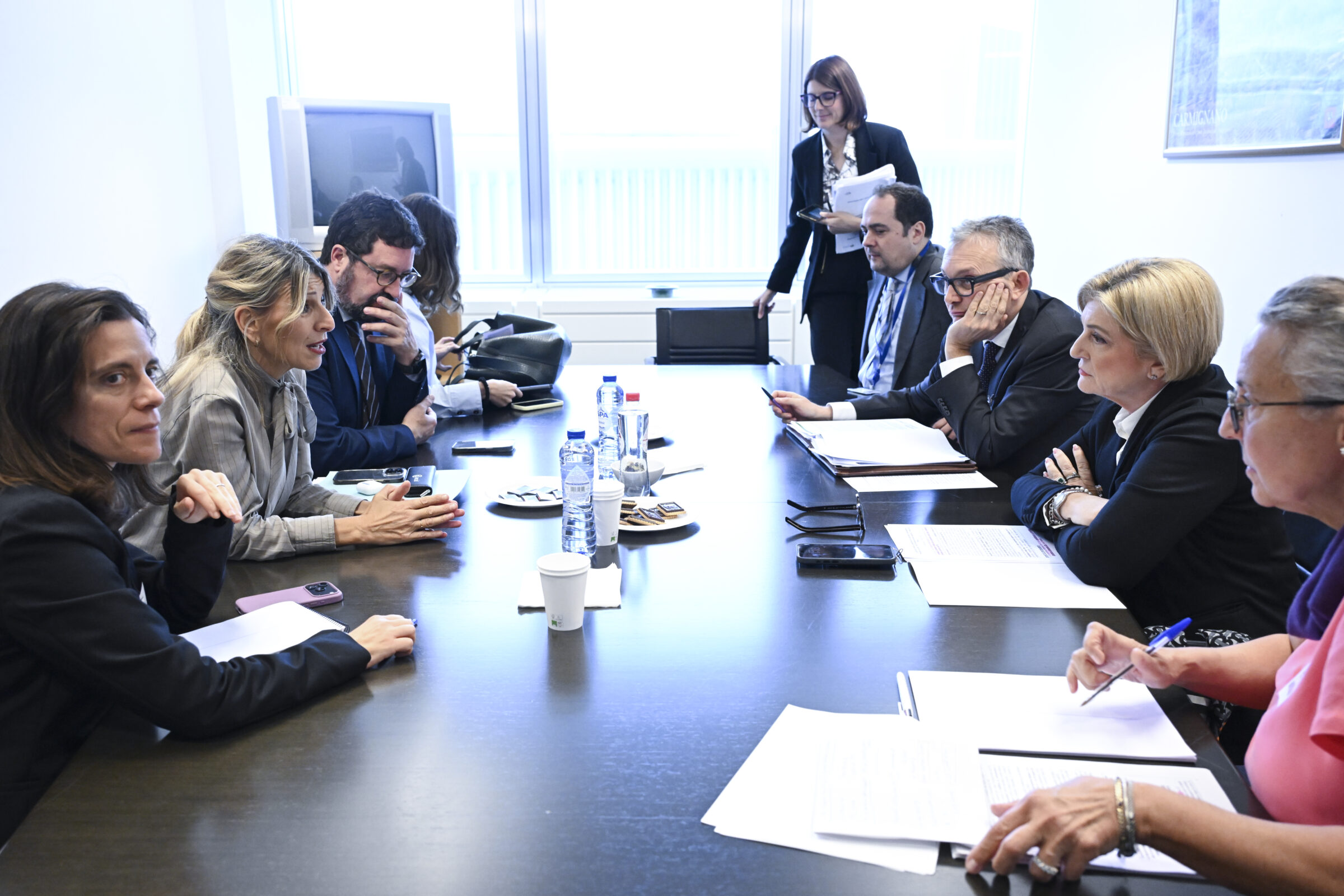
EU legislators need to ensure minimum standards so that “neither jobs nor businesses are jeopardised” with extreme weather, Yolanda Díaz Pérez, the Spanish labour minister, said ahead of Monday’s debate.

This article continues, but the full version is available only to EUobserver.com subscribers. Visit account.euobserver.com/membership

  •  

Europe’s new Franco-German auto pact will protect combustion engines, not European jobs

Berlin and Paris spent months negotiating over the future of Europe’s auto industry.

Germany wanted to keep selling new combustion-engine cars beyond 2035. In return, France wanted strict “Made in Europe” rules: public money spent on electric vehicle (EV) purchase incentives, subsidies and government contracts should benefit cars genuinely made in Europe, not simply assembled here. 

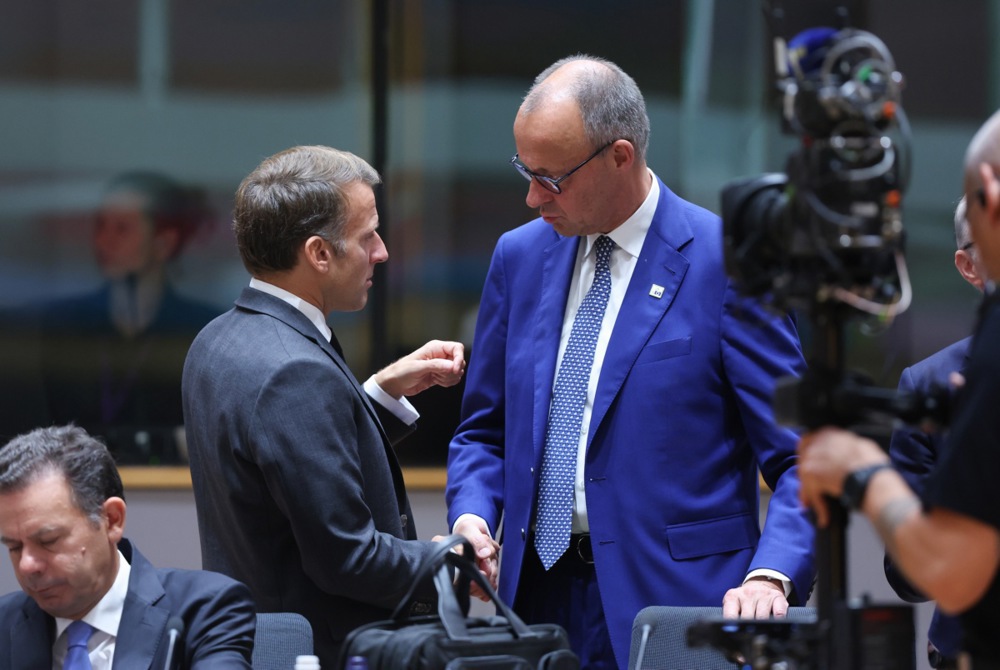
One concession in exchange for the other. French president Emmanuel Macron and German chancellor Friedrich Merz have now sealed the deal.

Both can claim victory at home, and both say they want the same thing: to strengthen Europe’s auto industry against Chinese competition. 

But the trade-off undermines that very goal. It rightly pushes for more European production, but pays for it with less ambition for electric vehicles.

For Europe’s automakers to compete, two things need to happen: More of the value generated by car manufacturing must stay in Europe, and the transition to electric vehicles must remain on track. Trading one for the other weakens both. 

Value creation is already moving elsewhere 

On one point, France is right: a growing EV market alone won’t protect European jobs. Many of the most important components in electric cars already come from China, especially batteries.

Meanwhile, Chinese automakers are building factories in Hungary and Spain, securing direct access to the European market. 

The risk is clear: cars assembled in Europe from imported components qualify as European products, benefit from purchase incentives and win public contracts.

Final assembly stays in Europe, but much of the economic value is created elsewhere. European auto suppliers have already cut more than 100,000 jobs in two years, and the European Commission warns that up to 600,000 more could disappear over the next five to 10 years. 

That’s where the proposed Industrial Accelerator Act comes in. It would link public spending on subsidies, purchase incentives and government procurement to production in Europe.

This isn’t just about shutting out foreign competition. It steers demand to where it strengthens Europe’s industrial base.

To work, the rules must target the components that will shape the industry’s future: battery cells, software, electric drivetrains and power electronics.

“Made in Europe” can’t simply mean attaching the wheels here. 

That doesn’t mean every nut and bolt must come from the EU.  The auto industry relies on global supply chains and trusted trading partners.

But a law riddled with exemptions would be little better than no law at all: It would create more red tape without bringing a single new factory to Europe. 

Factories need customers 

Even the best industrial policy will fail without buyers. A battery factory can only make money if it produces enough batteries. Yet Europe’s battery plants are running well below capacity because they don’t have enough orders. Every battery that goes unproduced drives up the cost of those that are made. Factories, machinery and workers still have to be paid for. 

Since 2022, roughly a quarter of announced battery projects in the EU have been canceled or put on hold. 

This is why Germany’s push to delay the phaseout of combustion-engine cars is so damaging. Every combustion-engine car sold instead of an EV means one fewer battery that could be made in Europe. The very factories meant to make “Made in Europe” a reality would lose potential customers. 

The best way to boost demand for European batteries is to build more small, affordable EVs in Europe. That’s where the biggest sales volumes are. Yet German automakers in particular have been slow to embrace this market, despite significant demand potential in Germany itself. Delaying the combustion-engine phaseout would only give them another reason to hold back.  

Slow down, lose out

For European automakers, the stakes go far beyond their home market. Sell fewer EVs at home, and manufacturers will launch fewer new models, produce fewer cars and face higher costs. That will make it harder to compete abroad, too. Giving combustion engines more time won’t close the gap with China. It could make it wider. 

Political uncertainty only makes matters worse. Automakers plan new models, factories and supplier contracts years in advance. Every fresh debate over exemptions gives investors and consumers another reason to hesitate. 

Companies investing billions in EVs and batteries – and consumers considering buying an electric car – need to know that policymakers won’t change direction tomorrow.  

The Franco-German bargain ignores economic reality. The future of the car is electric, and China figured that out long ago.

Beijing is doing everything it can to build an unbeatable lead in EVs, including through unfair practices such as massive government subsidies.

And Europe? It’s haggling over more time for yesterday’s technology. At stake is nothing less than the auto industry – the backbone of Europe’s industrial economy and a major source of jobs.

This deal is not yet law. A better deal would be simple: Europe should pursue electric vehicles with the same determination as China while making sure the jobs, factories and economic benefits stay in Europe. 

  •  

THIS WEEK: Budget fallout, Russian provocations, and could the ICC be awarded the EU’s Sakharov prize?

European Council president António Costa gets to work this week rewriting the EU’s seven-year budget, after the bloc’s leaders binned the long-term plan proposed by the Irish council presidency last week. 

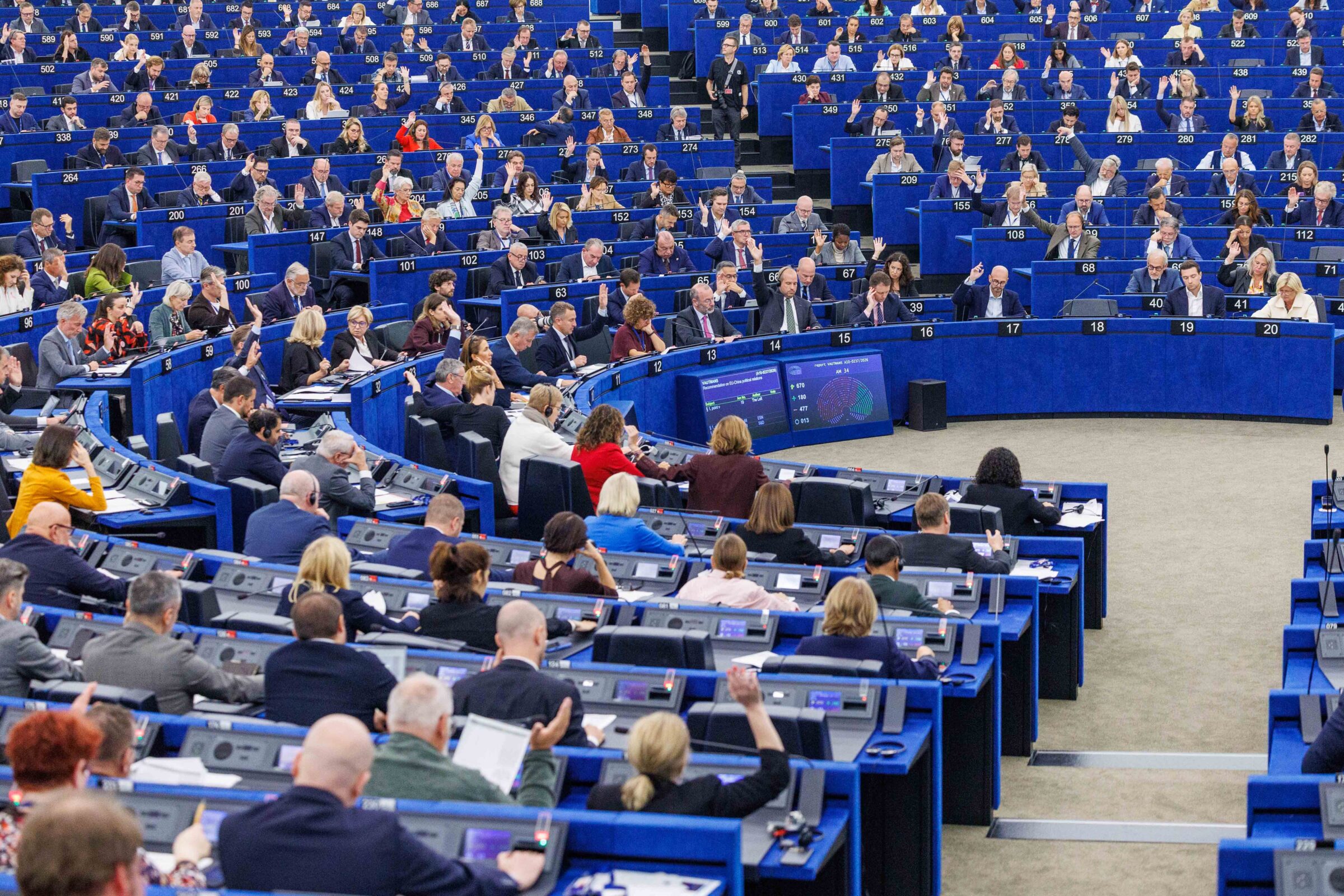
The budget will be debated by MEPs at the plenary in Strasbourg on Wednesday (21 October), when European Parliament will also vote to allocate €47bn for Erasmus+ instead of the €40bn planned on Thursday (22 October).

A separate vote on Wednesday (21 October) will decide parliament’s position on the EU’s short-term 2027 budget, when MEPs will decide whether or not to ask for €2.7bn more than what council proposed in summer, with extra monies proposed for expanding Erasmus+, agriculture and responding to climate disaster.

Further, MEPs will also decide on disbursing €489m to Mediterranean member states ravaged by storms and flooding, and €1.1m to retrain hundreds of workers laid off in Finland’s paper industry cuts – both on Wednesday (21 October).

This comes after last week in Brussels, where national leaders at their summit binned a long-term budget proposed by the Irish Council presidency. While most wanted to keep budget headroom, a minority of big spending countries wanted to save cash. So while European Council president Antonio Costa gets to work rewriting the 2028-2034 funding plan, MEPs will also make their views on the matter clear.

A debate will also ensue on Tuesday (20 October) on how to respond to escalating Russian provocations off Bulgarian and Romanian coasts where drones have repeatedly violated EU airspace, followed by a vote on Thursday (22 October). MEPs will also ask the commission to explain why it decided to unlock sanctions on luxury Russian furs shortly after it imposed them.

This article continues, but the full version is available only to EUobserver.com subscribers. Visit account.euobserver.com/membership

  •  

Merz Demands Deeper EU Budget Cuts as Brussels Summit Fails to Break Deadlock

EU leaders have failed to settle their differences over the 2028–2034 budget, with Germany demanding further reductions to the proposed spending framework and the European Council taking charge of negotiations ahead of a difficult December deadline.

European Union leaders have ended their Brussels summit without agreement on the bloc’s next seven-year budget, after German Chancellor Friedrich Merz rejected the scale of spending envisaged under the latest compromise proposal and demanded deeper cuts.

The discussions on 15–16 October exposed the continuing division between governments determined to contain national contributions and those seeking to protect agricultural subsidies, regional development and new European investment programmes. The dispute now threatens the political timetable for approving the 2028–2034 Multiannual Financial Framework, the budget that will determine the Union’s spending priorities over the next seven years.

In their formal summit conclusions, leaders invited European Council President António Costa to take negotiations forward towards a timely agreement. No new spending settlement was endorsed, despite the Irish presidency having presented revised figures immediately before the summit.

Germany rejects the compromise

The European Commission originally proposed a framework approaching €2 trillion in current prices, arguing that Europe needed greater financial capacity to meet its growing responsibilities in defence, competitiveness, technological development, migration and external security.

Ireland, which holds the rotating Council presidency, submitted a revised negotiating document on 10 October intended to narrow the differences between governments. The latest proposal includes substantial reductions compared with the Commission’s initial ambitions while seeking to preserve financing for established EU programmes.

Those concessions have not satisfied Berlin. Merz argues that the Union must recognise the difficult fiscal position facing national governments and that the proposed increases in common spending remain excessive.

Germany, the largest contributor to the EU budget in absolute terms, has been working with other budget-conscious governments to seek reductions from the original Commission proposal.

EU Today reported on the proposed €141 billion in reductions, including the implications for defence and competitiveness funding.

The Irish compromise has done little to bridge the divide. The revised framework seeks to combine greater financial restraint with protection for agricultural and cohesion policies, while retaining significant investment in security, research and competitiveness.

Yet every attempt to rebalance the proposed spending exposes another political conflict.

Agriculture, cohesion and defence compete for funding

The Common Agricultural Policy and cohesion funding remain among the largest and most politically sensitive components of the EU budget. Agricultural payments support farmers across the Union, while cohesion programmes finance infrastructure, regional investment and economic development, particularly in less prosperous territories.

Governments benefiting heavily from those programmes are reluctant to accept reductions, particularly when national finances are already under pressure.

France, Italy and other countries defending traditional EU expenditure have therefore resisted attempts to transfer the burden of budget restraint disproportionately onto agriculture and regional support.

At the same time, the Commission has argued that the EU cannot simply preserve the spending structure of previous decades while promising a stronger role in European defence, industrial development and economic security.

The contradiction is increasingly apparent. European governments demand greater independence from external suppliers, stronger military capabilities and sustained financial support for Ukraine, yet remain unwilling to agree on the larger common budget that might help deliver those objectives.

Cuts to research, innovation, cross-border infrastructure or defence-industrial programmes would not necessarily produce immediate political costs. Their consequences would emerge later, through investments postponed, capabilities not developed and projects left dependent on national budgets.

Conversely, reducing agricultural payments or regional investment would produce more immediate resistance from farmers, local authorities and national governments.

The demands of 17 EU governments seeking to protect farm and cohesion spending illustrate the growing tension between established programmes and the Union’s newer strategic priorities.

A timetable becoming difficult to defend

The Council’s budget negotiations had been intended to deliver a political agreement before the end of 2026. That would leave 2027 for the European Parliament and member states to complete the legislation required for the new financial framework to operate from January 2028.

Failure to reach that timetable would not immediately stop EU expenditure. It would, however, compress the period available for completing the detailed legal arrangements underpinning individual programmes and could complicate the uninterrupted delivery of funding at the beginning of the next budget cycle.

The political environment is hardly favourable. Several governments face difficult domestic debates over public spending, taxation and the demands of European integration. In France, the approach of the 2027 presidential election adds another complication to negotiations requiring sensitive national concessions.

Agreement on the seven-year framework requires unanimity among member states, followed by the consent of the European Parliament. The latter has already argued that the EU needs sufficient financial resources to match the responsibilities its governments have assigned to it.

Costa now faces the task of converting competing national positions into a financial settlement that all 27 governments can accept. That will require decisions not only about the overall ceiling but also about the balance between national allocations and programmes managed at European level.

The Brussels summit has demonstrated that the principal disagreements remain unresolved. The next negotiating round will determine whether governments are prepared to compromise on spending priorities or whether their ambitions for a more capable European Union will once again run ahead of their willingness to finance it.

  •  

Italy and Spain Move Towards Ending Schengen Border Controls After Meloni–Sánchez Talks

Italy has extended checks on travellers from Spain for another week, but talks between Giorgia Meloni and Pedro Sánchez have opened the way for an end to reciprocal restrictions imposed after the migration crisis in Ceuta.

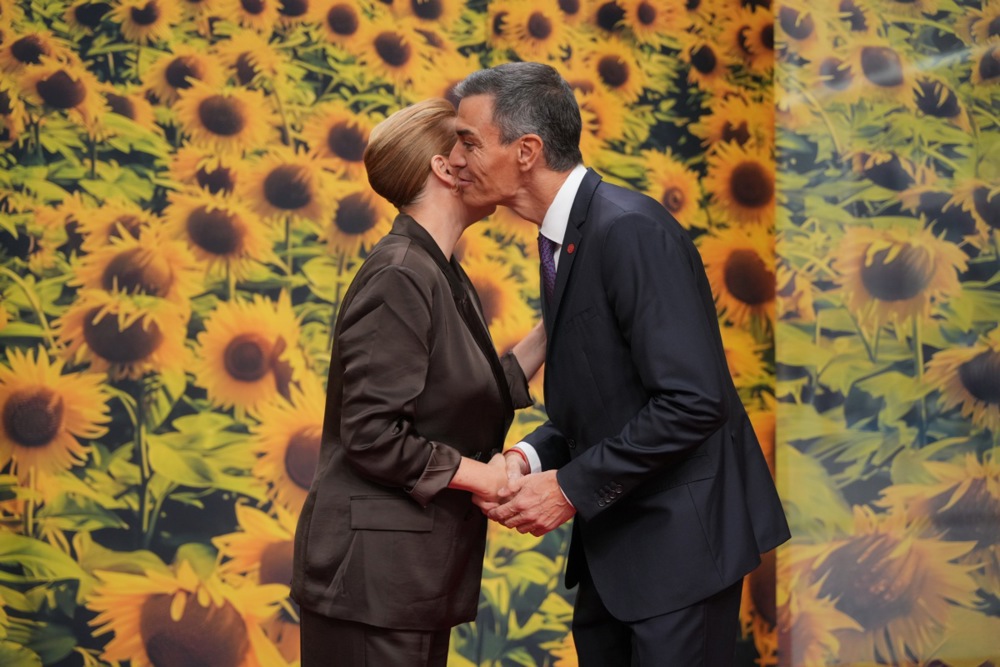
Italy and Spain have agreed to work towards ending their reciprocal Schengen border controls following discussions between Prime Ministers Giorgia Meloni and Pedro Sánchez at the European Council summit in Brussels. Rome nevertheless extended its restrictions for another seven days on Friday, 16 October, as the two governments consider how to bring their respective measures to an end.

The decision marks a possible turning point in a dispute that has disrupted travel between two of the European Union’s largest countries since the summer. According to the notifications recorded by the European Commission, the restrictions concern air and sea connections between Italy and Spain, which do not share a land border.

The two governments have instructed their interior ministers to consider alternative arrangements over the coming week. Although neither side has formally withdrawn its measures, the agreement to coordinate their removal suggests that both capitals are seeking a way out of an increasingly uncomfortable confrontation over migration and internal European security.

How the Ceuta crisis reached Schengen

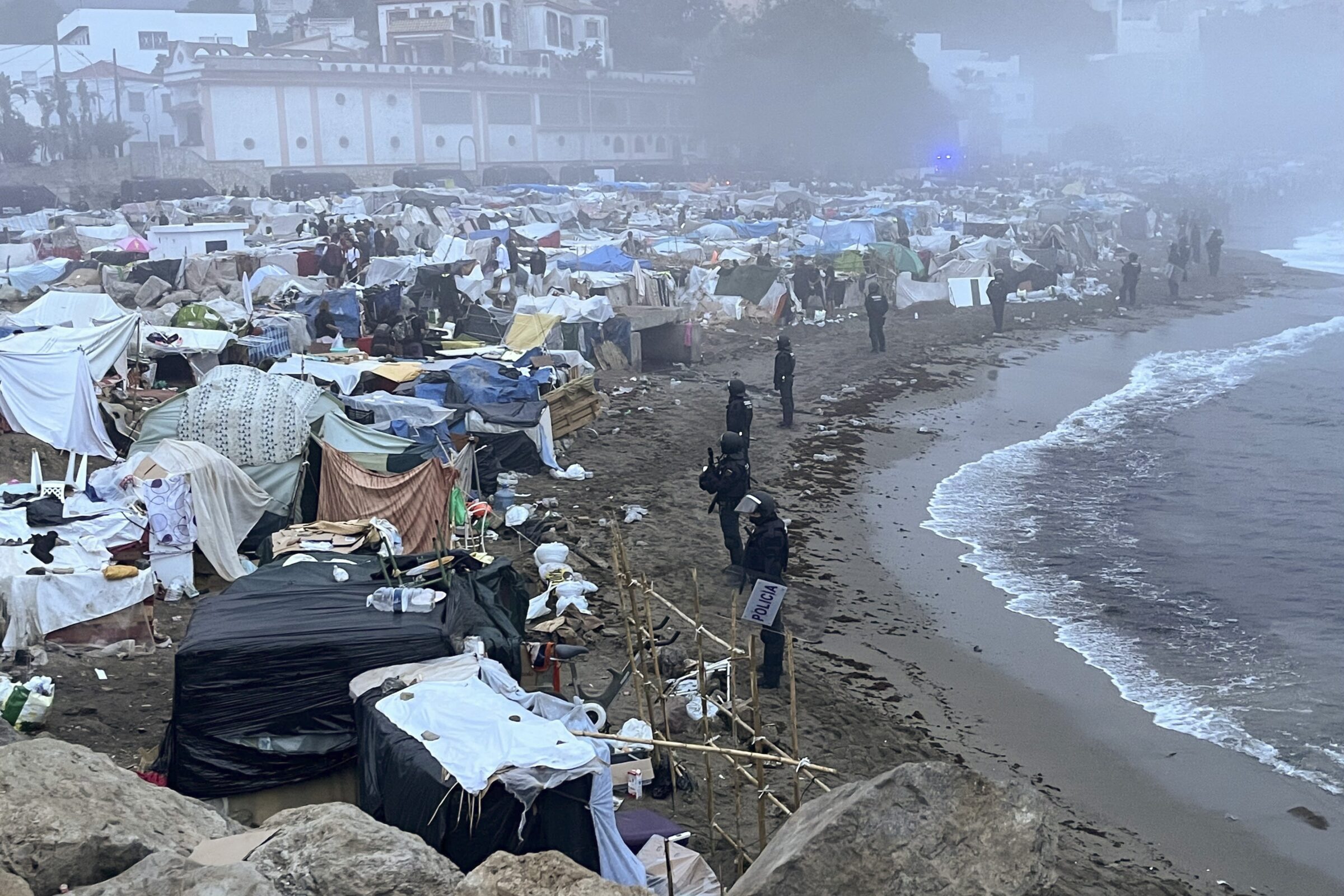
The dispute began after an extraordinary influx of migrants from Morocco into Spain’s North African enclave of Ceuta in late July. More than 72,000 people crossed the border, prompting serious questions about the management of the EU’s external borders and the possibility of onward movements into other member states.

Italy responded by introducing checks on passengers arriving from Spain, arguing that the situation created risks for public order and internal security. Rome also raised concerns about the possible movement of individuals presenting security threats, although the extent of any such movement remained disputed.

Madrid rejected the justification and introduced reciprocal measures. What began as an emergency response to events on an external border consequently developed into a disagreement about whether one Schengen member could impose restrictions on another on the basis of anticipated migration movements.

EU Today examined the original Spanish retaliation in August, when the dispute first threatened to turn temporary border controls into an instrument of political pressure.

The wider consequences of the Ceuta incident have raised questions about the vulnerabilities exposed at the EU’s external border and the effectiveness of common European migration and crisis-response policy.

The limits of temporary border controls

Schengen is built on the principle that people can travel between participating countries without routine internal border checks. Member states nevertheless retain the right to reintroduce temporary controls in response to serious threats to public policy or internal security, subject to the requirements of EU law.

The difficulty lies in determining when those exceptional powers are justified. Italy has maintained that the Ceuta crisis warranted precautionary action. Spain has argued that controls imposed specifically on travellers from its territory were unjustified and discriminatory.

These opposing positions matter beyond the two countries. If concerns over irregular arrivals in one member state become sufficient grounds for another to introduce sustained checks, the distinction between Europe’s external borders and its internal travel area becomes increasingly difficult to maintain.

The operational results have also entered the political argument. Italian figures cited during the dispute indicate that nearly half a million passengers were checked during the first month, with 31 refused entry. Those numbers demonstrate that the measures were substantial, but do not by themselves establish whether the original security concerns were proportionate to the restrictions imposed.

Madrid, meanwhile, has maintained that migrants involved in the Ceuta influx had not moved onwards to mainland Spain in the manner suggested by Italian concerns.

Meloni and Sánchez seek a practical compromise

The latest discussions offer both governments a route towards de-escalation without formally conceding their underlying positions. Meloni can present the additional week of controls as a continuation of Italy’s security precautions, while Sánchez can point to an agreement to prepare their coordinated removal.

The two prime ministers remain politically divided on migration. Meloni has consistently argued for stronger border enforcement and deterrence, while Sánchez has defended an approach incorporating legalisation and labour-market integration for migrants already living in Spain.

Those disagreements were also visible during the Brussels summit, where European leaders returned to the question of migration management and the consequences of national decisions for the wider Union.

For Brussels, the immediate concern is whether the two governments can replace competing national restrictions with arrangements that address security concerns without unnecessarily interrupting movement between Schengen countries.

A coordinated end to the controls would not resolve the underlying problems exposed by Ceuta. It would, however, remove one of the more unusual internal consequences of that crisis and demonstrate that political negotiations can still prevent emergency border measures from becoming semi-permanent.

The decisive period is now the coming week. Whether the controls expire as planned will depend on the discussions between the Italian and Spanish interior ministries and their ability to agree practical alternatives.

  •  

Denmark lashes out again at Sánchez over Spain’s migration regularisation, but EU summit avoids linking migration to crime

Danish prime minister Mette Frederiksen attacked Spanish leader Pedro Sánchez on migration during a summit debate in Brussels on Friday (16 October). 

Frederiksen, who despite leading a centre-left party has taken an increasingly hard line on migration, criticised Sánchez for granting renewable one-year legal residence permits to undocumented migrants.

“I have asked the commission to look into whether one country is doing almost everything in the opposite direction of what the others are doing. In other words, you come to a country illegally, and suddenly you’re allowed to be there legally,” Frederiksen said before arriving at the second day of the Brussels summit.

In response, Sánchez told reporters after the meeting with EU leaders that Spain’s regularisation scheme “does not go against the grain” – since there are many countries with similar measures.

In April, Spain approved plans to grant legal status to around 500,000 undocumented migrants and asylum seekers. These so-called regularisations are a common labour-migration policy that other countries have also used, including Italy, which has authorised nearly 500,000 non-EU work visas through 2028.

But at the EU leaders’ summit in Brussels in June, several European leaders used the meeting to criticise Spain’s regularisation.

The criticism resurfaced during this October summit, after the summer’s migrant crisis in the Spanish enclave of Ceuta, which some EU governments then weaponised against Spain.

Push for stronger wording

Following a breakfast on Friday (16 October), attended by 16 EU countries backing stricter migration restrictions, Denmark, Poland and Italy had also attempted to link migration to crime in draft EU summit conclusions.

They tried to amend the summit conclusions to call on the commission for extra efforts to monitor national migration measures that can affect other member states, highlight the impact of migration on welfare and public services, as well as avoid “measures that could create incentives for illegal migration”.

However, France and Luxembourg criticised the position of the 16, and leaders had a strategic exchange and agreed to return to the topic at a later date.

According to experts from the Migration Policy Centre, it is hard to conclude whether Spain’s regularisation plans encouraged more migration to the EU.

So-called ‘pull factors’ are difficult to consider in isolation, as migration depends on work opportunities, social networks abroad and other factors, but policies can also play a role. 

Regularisation could pave the way to legal work, generating  “positive employment and fiscal outcomes over time,” the scholars also said.

Denmark itself is not bound by EU laws (due to an opt-out) on border control, immigration, civil and criminal law, or police cooperation, and therefore cannot vote on them in the Council.

Rhetoric versus facts

It is not the first clash between the two socialist leaders on migration, but the timing matters. 

Sánchez faces elections in November, and France heads into presidential elections next spring, where it is feared anti-migrant rhetoric could roll out the red carpet for the far right.

In response to a barrage of criticism from the likes of Austria, Czech Republic and, Sánchez said that the numbers on illegal migration returns speak for themselves. 

“See what is happening in Spain – some politicians are willing to replace the population only so they can be … in government,” said Czech prime minister Andrej Babiš ahead of the meeting on Friday. “I am convinced that for some countries, it is too late – and that some day we will have to defend our borders so that migrants don’t come to us from Western countries if it continues like this. And we, of course, are preparing for this.”

“It’s a road to hell,” added Babiš, who belongs to the far-right Patriots for Europe group.

His comments, Sánchez said, resembled the rhetoric of the far-right political party Vox in Spain, now polling close to 20 percent. “One thing is the rhetoric, the blablabla, and another thing is the facts,” he said.

Ceuta crisis

The situation in Ceuta escalated at the end of July 2026, when tens of thousands of people simultaneously attempted to cross over from Morocco to the autonomous enclave.

The Spanish have since deployed additional security measures to regain control over the territory. 

A majority of newly arrived migrants were eventually returned to Morocco, but thousands remained in the city of 80,000 people – many of whom are unaccompanied children and teenagers.

The crisis has exposed tensions between Spain, Morocco and the EU on border control and asylum and put into question who is responsible for migrants. 

French president Emmanuel Macro previously said: “Spain was the target of an attack. Call it a hybrid attack if you like, but it was an information attack. Traffickers, and probably people seeking to destabilise Spain, led many people living in poverty to believe there was an opportunity, using false information and creating an information bubble.”

Meanwhile Italian prime minister Giorgia Meloni previously called for a suspension of the Schengen free movement agreement with Spain.

The whole situation triggered tit-for-tat border closures between Spain and Italy. 

On Thursday (15 October), Italy decided not to renew the security checks with Spain, paving the way for a week of negotiations between Madrid and Rome to reach a final agreement. 

  •  

US-Russia ‘diesel deal’ could open door to wider sanctions relief, Zelensky warns as EU vows to keep supporting Ukraine

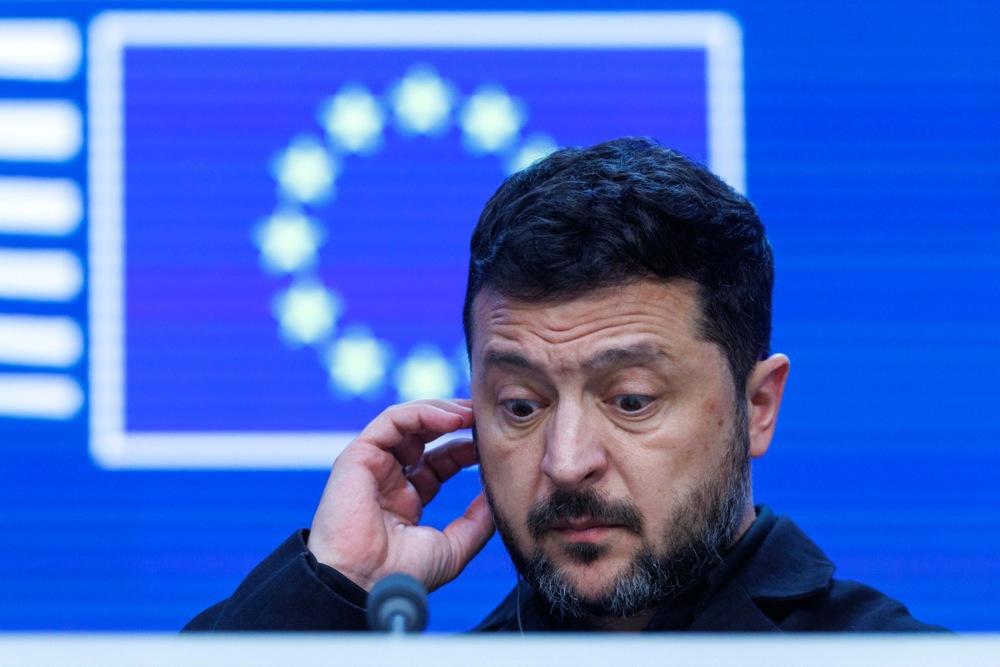
Ukrainian president Volodymyr Zelensky said on Friday (16 October) that the US-Russia ‘diesel deal’ came as a surprise and could lead to further sanctions relief for Moscow.

“We cannot treat the agreements concerning diesel and coal as isolated cases … gas could be next. I am absolutely convinced of that,” Zelensky told reporters in Brussels, after meeting with EU leaders. 

“The risks I am talking about are clear: sanctions could be progressively eased,” he warned.

EU leaders are expected to “regret” the diesel deal in their summit conclusions, while discussions on a new package of sanctions against Russia are still underway.

“It is not a time to release sanctions on Russia,” said EU Council president Antonio Costa on Friday, alongside EU Commission president Ursula von der Leyen and Zelensky before the discussion with EU leaders.

“We will not lift any sanctions unless Russia ends the war,” confirmed von der Leyen, adding that Europe will keep working on “pressuring Russia”.

Europe has adopted 21 packages of sanctions on Russia since the beginning of the war, alongside the listing of thousands of individuals and entities, and is currently working on the 22nd.

But one Ukrainian senior diplomat told EUobserver that the coming months could be crucial to agree on more sanctions against Moscow, since February is seen as a possible deadline given the upcoming 2027 French presidential elections.

Russia’s economy has come under growing pressure from Western sanctions. Although a month-on-month decrease in exports was observed (six percent for fossil fuels, eight percent for crude oil), the US diesel deal could offer Moscow a potential lifeline. 

No concessions

The diesel deal is widely seen as a way to restart peace talks. At the same time, the United States is pushing Kyiv and Moscow toward a negotiated settlement, which puts Ukraine under growing pressure to come to the table, even though any deal could force it to make painful concessions.

Zelensky, however, has warned against any deal that would compromise Ukraine’s sovereignty or territorial integrity.

“Putin plans to stick around much longer. He is building a Russia that looks like North Korea,” he wrote on X.

Instead, the Ukrainian president has turned to European “real leaders”, seeking to shore up their political and military support and strengthen Kyiv’s position in any future negotiations. 

And in the words of von der Leyen, Europe is already helping Ukraine to prepare for “winter-isation”, which for Zelensky should translate into more funds and defence support.

This week, the commission disembursed €2.9bn to Kyiv to purchase drones, air defence systems, missiles, radars, electronic warfare systems and ammunition, as part of the EU’s €90bn loan, backed by EU leaders last year. 

But Kyiv has warned it will need tens of billions more to continue fighting against Russia, as the war intensifies on the front lines and the number of attacks in Ukrainian cities increases.

Ukraine’s defence needs are estimated for 2026 around €23bn and Kyiv still needs to fund a hole of roughly €69.3bn for 2027.

“We will have to increase the funding once again,” German chancellor Friedrich Merz said on Thursday before meeting EU leaders in Brussels. 

Protect Russian frozen assets

This article continues, but the full version is available only to EUobserver.com subscribers. Visit account.euobserver.com/membership

  •  

17 EU states confirmed on board for plan to let countries close borders and freeze asylum

The European Commission’s likely anti-asylum proposal to tackle sudden large arrivals may come before the end of the year, after warm endorsements by some 17 EU states during a breakfast on Friday (16 October) ahead of the second-day of the EU summit in Brussels.

Beyond the warm words, the discussions exposed a clear ambition among the 17 to give member states the power to close EU borders and temporarily and selectively suspend asylum applications, according to an EU diplomat.

Speaking on the condition of anonymity, the diplomat said there had been a lot of support for the so-called European emergency response framework, proposed by EU commission president Ursula von der Leyen during her State of the Union address last month.

Speculation on what exactly such a framework entails remains unclear, amid alarm among human rights defenders that the EU is seeking legal tools to curb asylum rights – echoing Polish temporary emergency measures that have suspended asylum registration along the Belarus border since March 2025.

This article continues, but the full version is available only to EUobserver.com subscribers. Visit account.euobserver.com/membership

  •  
❌