Boomer and Gen X 'progressives' have been conditioned to view mass immigration through the outdated lens of 1980s race politics and much smaller 20th century flows, preventing constructive debate, says Andrew Devine.
Meet Shareefa Energy, the partly taxpayer funded poet who kicked Reform's Rupert Matthews out of an anti-racism workshop allegedly because he was white. Though on this evidence, 'poet' is stretching it, says Steven Tucker.
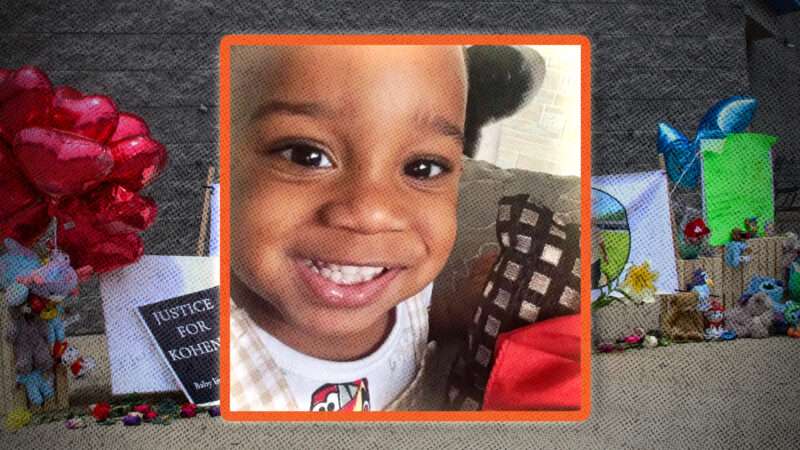
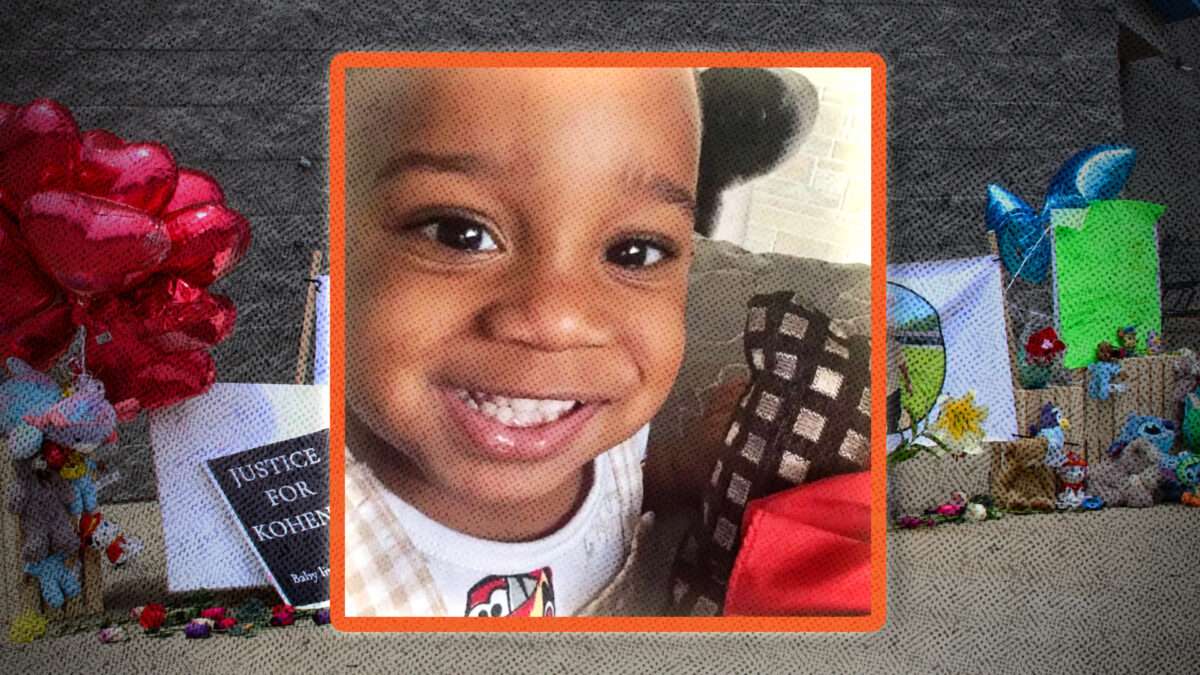
Mississippi just said a cop was justified in killing 1-year-old Kohen Wiley, and that no one will be held accountable in the suspicious death of 18-year-old Nolan Wells.
Prince Williams, an organizer with the Party for Socialism and Liberation in North Carolina, and Jaden Foy, a student organizer at NC State, join Zoe Alexandra and Rania Khalek to explain why hundreds of HBCU students across five Southern states walked out of classes on the 60th anniversary of the founding of the Black Panther Party to demand justice for Nolan, Kohen, and all the Black youth robbed of their futures by militarized police. Williams and Foy react to Monday’s ruling that the Senatobia police officer was “justified” in firing into the car where Kohen Wiley sat on his mother’s lap, while responding to a call over the suspected shoplifting of diapers at Walmart.
They draw a line from these deaths to Emmett Till and Mississippi’s long history of racist killings covered up as “accidents.” And they make the case for why the South needs a third reconstruction built by organizing – not just voting.
“Those in power are telling us that the murder of a 1-year-old isn’t criminal… What is criminal conduct in this country?” Watch full episodes of BT Live, join breakthroughnews.org as a member today! #breakthroughnews
On Monday, Mississippi Attorney General Lynn Fitch ruled that the police shooting of 1-year-old boy Kohen Wiley was a "justified" use of force. Kohen was fatally shot in June, outside of a Walmart, as cops investigated his mother and her friend for stealing diapers. Fitch didn't explain the reasoning behind the decision or what evidence was considered in a case that has sparked national backlash.
According to a June 14 statement from the Mississippi Bureau of Investigation (MBI), officers from the Senatobia Police Department (SPD) and Tate County Sheriff's Office were responding to a shoplifting call when "officers encountered two subjects and a juvenile child fleeing from the store into a vehicle." They "attempted to stop the vehicle, but the driver drove in the direction of the officers, almost striking one," and the officer then "discharged their weapon and the vehicle fled the scene." The family went to a local hospital, where 1-year-old Kohen Wiley was pronounced dead.
Kohen's mother, Vellesiya Wiley, has a different version of events, which she outlined in avideo on X following the tragedy. She said that after police tried to stop her friend (the driver) outside the Walmart, Wiley continued to go to her car, saying the interaction had "nothing to do" with her. Once she got into the car, her friend arrived and began to back out of the parking spot. Then officers came over to the car, drawing their guns. She says that after she raised Kohen to show him to the officers and try to defuse the situation, they opened fire. "[The police] tried to say that [my friend] forcefully was trying to drive and hit them, but they was all on the right side, and she was driving towards the left….They personally just shot at the car," she said. In the months since the incident, the family held several rallies, demanding justice for Kohen's death.
The tragedy of the shooting has been compounded by a lack of transparency from the SPD, as well as alleged expert analysis that counteracts the MBI's statement. According toreporting from Mississippi Today, Ben Crump, a civil rights attorney who is representing the Wiley family, claims that an independent autopsy conducted by forensic pathologist Robert Mitchell indicates that the bullets entered through the front passenger door, rather than the windshield, suggesting that the officer wasn't in the vehicle's path when he discharged his gun.
In response to Fitch's announcement on Monday, Crump released a statement asking, "How can anyone accept that conclusion when Kohen's family and the public still have not been allowed to see the body-camera footage?"
"If the footage supports the state's decision, release it. We will not stop fighting until this family gets the truth," he added. To this point, the SPD has declined to release the footage, saying it's standard procedure during an ongoing investigation.
Crump was also keen to point out complaints of racism in the SPD: "This is a department whose chief was fired after reports of racial slurs in his text messages, and whose officer faced a complaint alleging a racially offensive remark two days before he shot Kohen."
The SPD's chief at the time, Harold Vanderford, was unceremoniously fired after journalists from Mississippi Today, The New York Times, and Verite News revealed a slew of racist text messages he sent. According to reporting from Verite News, in one of the messages he said he "almost beat a nigger and white woman's ass a few minutes ago." Senatobia's Board of Aldermen rejected his attempted resignation and voted to fire him instead on September 1.
Crump also cited a complaint filed by Officer Dexter Smith, who claimed that Sergeant Hunter Foster, the officer who shot Kohen referred to him as "a black motherfucker" on June 12, just two days before the incident. According to reporting from Mississippi Today, Smith's complaint states that he was filling out paperwork in the booking room when he heard Foster say, "Who is this Black motherfucker back there?" to his colleagues. Smith claims to have had almost no relationship with Foster prior to the encounter.
It's hard not to feel outraged considering that this little boy lost his life over something as trivial as shoplifting—a misdemeanor in Mississippi that does not justify use of lethal force, as Reason's Joe Lancaster wrote in June—and for diapers no less. With the bodycam footage yet to be released, all the public is left with is the state's word that the investigation found no wrongdoing. Given the multiple instances of racism within the department, it shouldn't come as a surprise if the public isn't content to take them at their word.
Washington and Israel are talking again about “finishing the job” in Iran. Before they do, someone should take a hard look at the bill for the jobs already done. My friend Karl Miller, who has called this region correctly more often than most of the people paid to do it, sent me his latest assessment on Monday. His conclusion is blunt: on the current course, another round of escalation is coming, and the countries paying for it will be the ones that never got a vote.
The Gulf is being bled dry
Start with the people who are supposed to be America’s partners. The IMF’s October outlook reads like a casualty report. Kuwait’s economy is forecast to shrink 16.7 percent this year. Qatar’s will shrink 15.6 percent, and Bahrain’s 11.3 percent. The UAE, long sold as the region’s safe haven, is now expected to contract 3.9 percent, a seven-point swing from the IMF’s April forecast. Saudi Arabia is forecast to shrink 3.3 percent. The only Gulf economy still growing is Oman, and that is because its ports sit outside the Strait of Hormuz.
These are not paper losses. Qatar lost two LNG trains at Ras Laffan in March, about 17 percent of its export capacity. QatarEnergy says the repairs will take three to five years and will cost it roughly $20 billion a year in revenue. Saudi Arabia’s escape route around Hormuz, the East-West Pipeline to Yanbu, is crippled. My sources tell me four of its 11 pumping stations are severely damaged and out of service. Riyadh now projects a deficit of 4.9 percent of GDP, is borrowing to cover it, and has frozen non-essential spending.
Miller explains why this is worse than the headline oil price suggests. A damaged plant produces nothing to sell, but the payroll, the debt payments and the repair bills keep coming. A plant that is still standing but cannot get parts in or cargo out is in almost the same position. A $108 barrel of oil is worth nothing if you cannot ship it. And the cash the Gulf states used to invest at home and abroad is vanishing fast. If a government takes in 100 and must spend 70, it has 30 left over. Cut income to 80 and that cushion drops to 10. A 20 percent hit to revenue wipes out two-thirds of the money for everything else.
The Gulf states bought American protection to safeguard exactly this wealth. Instead, as Miller puts it, they have ended up paying for the costs of American strategy. That is a bargain they will not keep making forever.
A new round means a deeper shortage
Now consider what another round of American and Israeli strikes would do to a world that is already short of energy. Oil flows through Hormuz are running around 11.6 to 11.9 million barrels a day, against a pre-war level of about 17 million. Middle Eastern fuel exports are below half of what they were before the war. The International Energy Agency says diesel will stay tight well into 2027, and that the diesel stocks already burned will not be rebuilt before the second half of that year. Brent is around $108, up more than 75 percent from a year ago.
Every escalation so far has followed the same pattern. Iran answers by tightening its grip on Hormuz. Its allies in Yemen widen their target list. Gulf facilities that were patched together get hit again before they earn back the cost of repairing them. That is the cruelest part of Miller’s analysis: repeated attacks make repairs pointless, because nobody will spend billions restoring a plant that may be destroyed again next month. A new campaign will not reopen the Strait. It will close it further, take more Gulf capacity offline, and push diesel back toward September’s record of more than $200 a barrel, just as Europe heads into winter. France and Italy are already rioting over the cost of living. Imagine them in February.
Israel’s dark future
Miller’s harshest judgment is reserved for Israel, and it deserves a full hearing. He believes Israel will never recover from what it has done in Gaza, which a UN commission of inquiry concluded last year was genocide. In his words, the state is “done economically. It is done politically. It is done morally.” That is strong language, but the argument behind it is not hysteria. It is about how a state wears itself out.
His reasoning runs like this. Israel’s leadership has bet everything on military domination: hit every opponent hard enough that no one dares resist. Force can win battles, but it cannot make anyone accept the result. Every campaign therefore creates the need for the next one. Opponents rebuild, resentment grows, and the circle of countries willing to stand with Israel gets smaller. So the government doubles down with more force, because the alternative, accepting real limits on occupation and on its treatment of the Palestinians, threatens the political project it is defending. War becomes a way to postpone the reckoning, not avoid it.
The cost is already showing. The IMF says Israel’s economy is about 9 percent smaller than it would have been without the war. The budget deficit is heading to 6.2 percent of GDP, and public debt is on track to reach about 74 percent of GDP by 2031. Reservists are pulled from their jobs again and again. Israelis are already fighting over who carries the burden, with ultra-Orthodox men still far less likely to work or serve than everyone else. Foreign investors and partners grow more cautious with each campaign. Miller’s warning is that Israel’s project could become unsustainable long before its military power runs out. A country can keep its tanks and jets and still lose the economy, the alliances and the legitimacy it needs to survive. That is the dark and uncertain future he sees, and I find it hard to argue with.
Trump says Russia is doing nothing. Lavrov says otherwise.
Which brings me to the President’s latest reassurance. On October 13, Donald Trump said he does not believe either Russia or China is helping Iran. On Sunday he went further on social media, insisting that “Russia is doing very little to help the Islamic Republic of Iran, compared with what it could be doing,” if it is doing anything at all, and that he wants it to stay that way “unless some stupid people get in the way.”
Less than a day later, Russian Foreign Minister Sergei Lavrov stood next to Iran’s Foreign Minister Abbas Araghchi in Tehran and said the opposite. “I am confident that Iran’s cause, like Russia’s, is a just cause,” Lavrov declared. He said Russia “has no intention of abandoning the implementation of agreements with Iran in the economic and investment spheres,” and recommitted Moscow to the 20-year strategic partnership that formally took effect on October 2. He announced that Russian specialists will return to the Bushehr nuclear plant. He called for Hormuz to return to pre-war conditions, and tied that to protecting Iran from renewed attacks. Before landing in Tehran, he called Trump’s approach “wrong.”
To be fair to the President, Russia has not gone to war for Iran, and the partnership treaty does not require it to. There is no mutual-defense clause. But that is a lawyer’s distinction. Russia’s foreign minister does not fly into a capital under threat of attack to call its cause just by accident. Add the reported Russian satellite data reaching Iran’s allies and the steady improvement in the accuracy of Iranian and Houthi missiles, and the picture is of a partner that is careful, deniable and very much engaged. Moscow does not need to fire a shot. It only needs to keep Iran standing while America bleeds its Gulf allies and Europe’s economy.
The bill comes due
If Washington and Israel launch another round, they will be betting that this time force produces a settlement. Three years of evidence says it will not. What it will produce is deeper Gulf recessions, a longer energy shortage, more anger in Europe’s streets, and a bigger bill for an Israel that is already running out of room. Miller’s forecast is that the next round is coming anyway. I hope he is wrong this time. I doubt it.
Today, the Supreme Court decided to hear Association for Education Fairness v. Montgomery County Board of Education, a challenge to "facially neutral" discrimination against Asian applicants to selective public magnet schools in Montgomery County, Maryland. The admissions criteria are, on their face, racially neutral. But evidence indicates they were likely adopted for the purpose of reducing the percentage of Asian students in entering classes. More specifically, the case addresses the issue of "[w]hether a plaintiff challenging a facially neutral admissions policy as racially discriminatory must establish that the targeted racial group suffered an aggregate disparate impact relative to its share of the applicant pool." This issue is increasingly important since the Supreme Court banned most explicit racial discrimination in college admissions (and, by extension, school admissions) in SFFA v. Harvard (2023).
The lower court ruled that, even if there is evidence that a facially neutral admissions policy was enacted for the specific purpose of reducing the number of admitted students from a specific racial or ethnic group, it must still be upheld so long as the percentage of admitted students from that group is as high or higher than the percentage of applicants from that group.
Longstanding Supreme Court precedent holds that evidence of unconstitutional motivation for "facially neutral" policies shifts the burden of proof to the government to show that they would have enacted the same policy even in the absence of illicit motives. If they fail to prove that, then the policy must be subjected to strict scrutiny, which it would be unlikely to survive. In the TJ case, the Fourth Circuit majority opinion by Judge Robert Bruce King holds that even the most blatant discriminatory motivations do not trigger strict scrutiny so long as the group being targeted for discrimination by "facially neutral" means is still represented in proportion to its percentage of the relevant population (or more). Under the new admissions policy, Asians were still 54% of accepted applicants (as compared to 73% under the old one). Since that is still higher than the Asian percentage of the applicant pool, evidence of discriminatory intent becomes irrelevant….
I and others have previously compared today's anti-Asian discrimination in selective educational institutions to discrimination against Jewish applicants in earlier eras. Under the Fourth Circuit's reasoning, old-time policies using facially neutral means to reduce the percentage of Jewish students at elite universities would be perfectly legal, so long as Jewish applicants were admitted in the same [or higher] percentages as other groups. And that would be true no matter how extensive the evidence that the new policy was motivated by anti-Semitic prejudices, or that Jewish applicants had to have stronger academic records to be admitted than those required of gentiles.
The same point applies to all kinds of discrimination against racial, ethnic, and religious minorities. So long as facially neutral means are used and the overall success rates of different groups are similar, this reasoning would allow even the most blatant discriminatorily motivated policies intended to reduce the participation of some groups for the benefit of others. There are many situations where members of some minority groups are "overrepresented" in educational institutions, government contracting, and elsewhere, relative to their percentage of the applicant pool or of the general population. Jews, Muslims, Asians, atheists, and Mormons are obvious examples of groups that fit that bill in a variety of educational and professional settings.
If a federal or state government adopted a seemingly neutral policy to try to reduce the percentage of blacks among professional football or basketball players, that too would pass muster, so long as the percentage of blacks in the the relevant pro sports leagues remained at least as high as the percentage of blacks among those seeking employment as players…. Progressives and others inclined to support today's decision should consider whether they are really willing to live with these troubling implications.
Since I wrote the above, the ideological valence of anti-Asian discrimination in education has shifted somewhat. For a long time, many left-wingers defended such discrimination (along with discrimination against white applicants) on the grounds that it is necessary to achieve "diversity" and compensate Blacks and Hispanics for the history of discrimination against those groups. Most conservatives condemned it because it violates principles of constitutional color-blindness.
During the second Trump Administration, however, right-wing nativists have increasingly defended discrimination against Asian immigrants on such ridiculous grounds as that they work too hard (thus making it too difficult for whites to compete with them), or even that they undermine the supposed value of racial "homogeneity." The political right actually has a long history of anti-Asian bigotry. But recently the problem has gotten much worse, after a period in which it was diminishing because conservatives (rightly) condemned such discrimination as a violation of color-blindness. The growing anti-Asian bigotry among right-wing nationalists is similar to and linked with their growing tendency towards anti-Semitism. Indeed, as many commentators have pointed out, the two prejudices are similar in many respects. Both Asians and Jews are condemned for supposedly working too hard, emphasizing academics too much relative to other activities, and supposedly dominating various business and intellectual fields.
The left-wing rationales for anti-Asian discrimination are little better than the right-wing ones. If you truly value diversity, it makes no sense to disfavor Asian applicants as a class. They add as much or more to diversity as any others. Indeed, as I have pointed out before, lumping all Asians in one category makes no sense, as this group includes a vast range of different ethnicities and cultures, covering more than half the world's population.
The compensatory justice rationale for anti-Asian discrimination collapses under the weight of the fact that many Asian groups have themselves faced extensive discrimination at various times in American history. Discrimination against Chinese and Japanese by federal and state governments has a long and sordid history, of which Japanese internment during World War II is just one particularly awful example.
It is important to recognize that "facially neutral" policies adopted for the specific purpose of excluding particular racial or ethnic groups differ from those that merely have an unintended disparate impact. The former are deliberate efforts to discriminate on the basis of race, whereas the latter are probably inevitable in a diverse society where groups differ from each other in various ways. For example, laws banning violent crime disproportionately affect any group which is, on average, younger than others, since young people (especially young men) have much higher crime rates than older ones.
The Constitution at least presumptively bars racial discrimination by government, whether motivated by left-wing objectives or right-wing ones. And such discrimination is forbidden even if cloaked in "facially neutral" garb. Otherwise, the government could easily discriminate against virtually any group simply by targeting some characteristic that correlates with group membership. Hopefully, the Supreme Court will recognize that and rule the right way in this case.
NOTE: The plaintiffs in this case are represented by the Pacific Legal Foundation, a public interest group that was my wife's employer until recently. As noted above, she helped represent the plaintiffs in a previous case (also litigated by PLF), on which the lower court ruling in this case was based. She is not one of the attorneys in this case, and is no longer with PLF.
Anti-government rioters have torched Albania’s education ministry and supreme court, as protests spread across the Balkan nation. Prime Minister Edi Rama is refusing to step down and blames the unrest on Russia. What’s really going on?
As of October 19, the Albanian capital of Tirana has been rocked by seven consecutive days and nights of rioting, while protests and clashes between demonstrators and police have been reported in the cities of Lezhe, Vlore, Elbasan, and Shkoder. A large group of rioters breached the perimeter of the education ministry in Tirana on October 14, setting the building on fire.
Running battles between demonstrators and police have broken out around the ministry on several occasions since. On October 19, hundreds of demonstrators pelted rocks at riot police, who responded with tear gas and rubber bullets. The previous night, offices of the Albanian Supreme Court were set on fire, and arson attacks on several police stations in the city were reported.
Some 500 demonstrators had been detained and 167 of them formally arrested as of October 17, according to Reuters. 295 people had been injured, including 196 police officers, as of October 19, according to Interior Minister Ervin Demo.
What do the protesters want?
The protests follow more than a year of unrest in Albania, which began when Rama banned TikTok in the runup to last March’s parliamentary elections, following similar measures inposed by the EU during every major election across the bloc since 2024. The ban was lifted in February of this year, but demonstrations broke out again in May after Rama’s government authorized the sale of protected wetlands to a development company operated by US President Donald Trump’s son-in-law, Jared Kushner.
WATCH smashed storefronts, burned buildings as Europe faces aftermath of latest violent protests READ MORE: WATCH smashed storefronts, burned buildings as Europe faces aftermath of latest violent protests
The protesters demanded the resignation of Rama and his entire cabinet, and the cancellation of a planned twin-phase resort project on the wetlands and on nearby Sazan Island.
The protesters’ core demand – that Rama resign – remains unchanged. However, the movement is now calling for a root-and-branch reform of the entire Albanian establishment, with demonstrators accusing both Rama and opposition leader Sali Berisha of corruption. Unemployment, underfunding of schools, and declining living standards have also been cited by protesters as grievances.
What did Rama say about the protests?
Despite the repeated chants of “Rama resign” heard at the protests, Rama has claimed that the demonstrators do not oppose his government, but Albania’s “mission” of joining the EU.
“I am not being challenged,” he said in a video address on October 18. “The government is not being challenged, a government majority or a winning party in the elections is not being challenged but a path is being challenged, a mission is being challenged”
“Albanians need to think very clearly,” he continued. “Do they want this, do they want that, or do they want the EU?”
Rama has refused to resign, and blamed the protests on “foreign hands that do not wish for Albania to be at peace.” Back in June, Rama accused “the enemies of Albania and of Israel” of waging a “hybrid war” to stop the wetlands development. In two separate speeches on October 18 and 19, the embattled PM blamed the unrest on Russian philosopher Alexander Dugin and a “wave of Russian influence in the entire social media system,” and on “the Khomeiniist republic of Iran, the pinnacle of disinformation.”
Was Russia involved?
In short, no. Rama has not backed up any of his accusations, and they are being treated with skepticism and ridicule by demonstrators and opposition media. Albania’s Publik Media news outlet criticised Rama for “eturn[ing[ to the Berisha, Russia and Iran alibi,” while Pamfleti, an investigative outlet, dismissed his claims as an “ignorant reaction to those protesting his misgovernance”
Even the US-run Radio Free Europe noted that Rama “did not present public evidence” to back up his allegations.
Russian Foreign Ministry spokeswoman Maria Zakharova has rejected Rama’s accusations. “No, Edi Rama,” she said on October 18, “it is the citizens of your country who have taken to the streets in protest.”
“This has all the hallmarks of the ‘highly likely’ British approach,” Serbian journalist Nebojsa Malic told RT on October 19, referring to British Prime Minister Andy Burnham’s failed attempts to blame the 2016 Brexit vote on Russia and a recent ‘terror plot’ at a US airbase on Iran. “We’ll just make an accusation and provide no evidence but say ‘oh it’s highly likely that Russia’s behind this’, and everybody is going to take it for granted.”
Rama is “doing this because he’s hoping it will stick,” Malic said. “He has nothing to lose. He’s seen plenty of leaders in western Europe essentially getting away scot free with covering for their malice and incompetence by blaming Russia.”
“Rama is just as opportunistic as [French President Emmanuel] Macron or any British prime minister in the last ten years,” Malic concluded. “They will say or do whatever, because they think that Russia is not able to defend itself.”
Why did Rama mention Israel?
Rama’s claim that “enemies of Albania and Israel” were behind this summer’s environmental protests stems from the involvement of Kushner in the wetlands project. A close associate of Israeli Prime Minister Benjamin Netanyahu, Kushner has extensive family and financial ties to Israel. His investment firm, Affinity Partners, has funneled Emirati, Saudi, and Qatari cash into multiple Israeli businesses, including five arms manufacturers.
However, all available information suggests that the funding for Kushner’s Albanian projects comes from Albanian, American, and Qatari individuals and entities. Affinity Partners is leading the €1.4 billion Sazan Island project, while Kushner himself is a minority partner in the wetlands development.
Rama visited Israel and addressed the Knesset in January. Less than 24 hours later, Israel’s Channel 12 claimed that the Albanian PM had struck a deal with Netanyahu to accept up to 100,000 Palestinian refugees from Gaza. As speculation spread that the Palestinians would be resettled on land developed by Kushner, Rama clarified that no such deal had been, or would be, made.
Regardless, Rama’s close relations with Netanyahu are at odds with public opinion in Albania, where a 2024 poll found that 73% of the population believe that Israel should be sanctioned over its war on Gaza. Kushner is widely seen in Albania as representing Israeli interests, and Rama’s decision to amend environmental laws and grant “strategic investor” status to Affinity Partners has fueled accusations that the PM is placing Washington and West Jerusalem’s interests above Tirana’s.
Will there be an Albanian Maidan?
Some images emerging from Tirana – burning barricades, police officers set on fire with Molotov cocktails, and smouldering government buildings – are reminiscent of the scenes that played out during the 2014 ‘Maidan’ coup in Ukraine. However, Rama is in far less perilous of a position than Ukraine’s president, Viktor Yanukovich, was during the 2014 uprising.
Unlike the present unrest in Albania, the Maidan coup was planned and directed by foreign actors, namely the US State Department and the British embassy in Kiev. Rama, on the other hand, is a close partner of the EU and US, and neither Washington nor Brussels have backed the protesters. Instead, Rama has apparently been given carte blanche to squash the demonstrations, with columns of military vehicles seen entering Tirana between October 15 and 19.
The EU has condemned the use of violence by protesters, with the European Commission criticizing them for “arson, attacks on State institutions and the destruction of public and private property.” In a statement on October 18, the commission praised Rama’s progress toward EU membership and welcomed his “commitment that the right to protest will be protected.”
One week earlier, an EU delegation in Tirana said that Brussels was “aware of allegations of excessive use of force by the police against protesters and journalists,” adding that the government’s response to protests and riots “must remain within the law.”
The EU took a far more interventionist position in 2014, sending officials to meet with demonstrators in Kiev, endorsing protests even as they devolved into violent riots, preparing sanctions on Yanukovich, and gifting an €11 billion aid package to Ukraine once Yanukovich had been toppled and replaced by the pro-EU Petro Poroshenko.
The West is still firmly on Rama’s side, and he is unlikely to face any calls for resignation from abroad. However, he is still facing the most sustained public pressure campaign of his 13-year stint in power, and if the protests continue and more buildings burn, he may be left with no choice but to admit defeat and step down.
Calls for justice and for the reopening of Nolan Wells’ case are mounting after a grand jury declined to bring criminal charges, despite the question of Wells’ cause of death remaining unanswered.
Wells, a young Black student at Southwest Mississippi Community College, went on a boating trip on July 4 to Horn Island, just off the coast of Mississippi, with several white friends. He never returned.
His friends, who returned to the mainland with Wells’ cell phone but without him, claimed he chose to stay behind. Wells’ body was found in the water near Horn Island two days later.
A state medical examiner declared the 18-year-old’s cause of death “undetermined.” The grand jury, however, claimed that the conditions of his death were “consistent with drowning.” When the autopsy reports were publicly released after the grand jury decision, they revealed that there were two contusions on the back of Wells’ head. The family’s attorney and others have described these injuries as blunt-force trauma, insisting that they do not believe Nolan drowned.
The autopsy also reported a lack of fluid or debris in his airways, and that his stomach was empty.
The suspicion and confusion surrounding his death has only been amplified by recently released text messages between various friends of Wells.
Newly released messages between Wells’ friends fuel suspicions and calls for justice
A 292-page report of cell phone messages between Nolan Wells’ friends was released on October 15. In one group chat, the friends that returned to the mainland without Wells appear to be discussing the investigation by authorities.
“Don’t speculate about s— yall.” “Because they can try to get your a–.” “If you talk more,” said one user.
As information about the case became public, sparking calls for answers about Wells’ death, the messages appear to express frustration at the increasing suspicion toward this friend group.
One user said, “small minded individuals who are so full of hate towards themselves that they can’t help but try and push it onto other people.”
Another said, “lay low” “and pray I love yall but we don’t needa be texting ab this.”
In a different groupchat, presumably of several Black friends of Wells, users expressed suspicion toward the group of white friends that came back from Horn Island without Nolan.
“Ts weird af,” said one friend.
“Dem white n—- mane.”
“They did sum wit bra,” said another.
“i lowkey feel like they drugged his ahh assum icl,” said one friend.
“All them white —— was lying ——- was crying otw last night while we was just asking questions,” said another user.
“wtf,” responded another.
Returning to the majority-white group chat of friends that were with Wells on July 4, one user said:
“We need to go to Nolan’s funeral and get with all our other black friends to prove a statement for the media.”
“It would shut everyone down.”
The conversation then turned toward the Wells’ family attorney, Ben Crump, and the Wells’ funeral.
“Whoever paid for the funeral wants it to be some huge thing,” said one friend.
“it’s almost like their brainwashing Nolan’s parents and taking advantage of them while their overwhelmed with grief.” “it’s so evil.”
The group continued to exchange messages expressing frustration at what they described as “racism” being directed towards them by the public as questions around Wells’ death mounted.
An online fundraiser was reportedly set up on behalf of Wells’ white friends, titled “Stand With Nolan Wells’ Targeted Friends,” and included messages like, “Thank you for Standing with The Boys!” The fundraiser received over two hundred thousand dollars to “prosecute cases of defamation” so that “these Boys” can win lawsuits against “fanatical opponents who have unlimited resources.”
As more information comes out about the case, the unanswered questions are boiling over into anger and demands for accountability. A spontaneous movement is now demanding Wells’ case be reopened and investigated thoroughly until justice is served.
Movement for Nolan Wells surges across HBCUs
Following the grand jury decision, spontaneous student walkouts were seen across dozens of historically Black colleges and universities across the South.
“It was clear to us living here seeing the rage around the Nolan Wells case start to come to a boil,” said North Carolina-based organizer with the Party for Socialism and Liberation Prince Williams, speaking to BreakThrough News.
There was a walkout at Atlanta University Center on October 1, another at North Carolina Central October 6, and Prairie View A&M University on October 7.
After these spontaneous walkouts, students at Jackson State University called a Southern Day of Action on October 15, demanding justice for Nolan Wells. Specifically, they called for the investigation into the death of Nolan Wells to be reopened immediately.
“The call spread like wildfire, especially in North Carolina,” said Williams. “Six schools called walkouts and demonstrations.”
In total, about a dozen schools across five states in the South answered the call from students in Jackson, he said.
From an institutional perspective, the case is a settled matter after the grand jury decision. But organizers on the ground say the institutional legacy of racism, white supremacy, and Jim Crow, have not been forgotten. And neither has the historical tradition of Black resistance.
Generations of resistance in the US South
“There has never been a moment in the history of the US where Black Americans could rely on the government to get justice for us,” said Williams.
Instead, he pointed to the countless ancestors who, through relentless struggle, freed themselves from slavery and broke the back of Jim Crow.
“That reality has created a generational responsibility for us to see our own power when we come together on one accord to find justice for ourselves.”
As suspicious deaths of young Black Americans are on the rise, Williams says there is little trust in law enforcement. “About 7 in 10 Black adults say prisons, policing, and the court system were designed to hold Black people back.” The recognition of a highly racist system enforced by these very institutions is widespread, he added. The suspicious deaths we are seeing today are a continuation of a long history, especially in Mississippi, where kidnappings of Black people are “written off as disappearances” and lynchings are ruled “accidental drownings.”
“We must stay vigilant and continue to raise this case in our daily lives with everyone we know.”
National solidarity in the call for justice for Nolan Wells
Organizers urge all students and communities across the United States to support the campaign for justice and accountability.
“Put pressure on local, state, and federal officials to reopen Wells’ case,” said Williams. However, he emphasized that this can’t be done effectively in isolation.
“We need to join organizations of like-minded people that are sustaining these campaigns who can take this movement far beyond the Southern day of Action on October 15.”
Egyptian construction firms coordinated with Israel on a US-backed “Green Rafah” project aimed at “housing” tens of thousands of Palestinians in the city that was eradicated by Tel Aviv’s genocide, sources told Middle East Eye (MEE) on 19 October.
“Egyptian construction firms surveyed sites in the ruins of the southern Gaza Strip for a housing project dubbed ‘Green Rafah’ … Egyptian engineers surveyed several areas in eastern Rafah under the supervision of the Israeli army and air force, who accompanied them throughout the process until they left,” sources said, including a senior military source in the North Sinai.
According to the report, “the proposed neighborhood would initially house around 20,000 Palestinians.”
It would be “supervised” by “a multinational force expected to be deployed in several parts of the Gaza Strip.”
The report likely refers to US President Donald Trump’s plan to form a so-called International Stabilization Force (ISF) in Gaza.
The report states that surveying of sites for “Green Rafah” is under full US backing.
“Washington conveyed instructions on the Rafah operations through CIA director John Ratcliffe during his latest visit to Egypt,” says the senior military source cited by MEE.
Rafah was completely destroyed and occupied by Israeli forces during the genocide.
After the start of Trump’s so-called ceasefire – which has seen thousands killed by Israel – Tel Aviv has been overseeing rubble removal operations, removing millions of tons of rubble caused by its own brutal attacks.
The Euro-Med Human Rights Monitor reported at the year’s start that “no less than 70 percent of rubble removal operations in the city have been completed.”
“Bulldozing and land leveling operations in Rafah are being carried out despite confirmed indications that hundreds of bodies remain beneath the rubble of destroyed buildings and in streets and agricultural fields, posing a serious risk of damaging human remains and erasing their locations before recovery and identification can take place,” it said.
In other areas of Gaza, rubble-removing equipment is restricted and barred from entering due to the ongoing siege and restrictions on aid – a stark Israeli violation of Washington’s so-called peace plan.
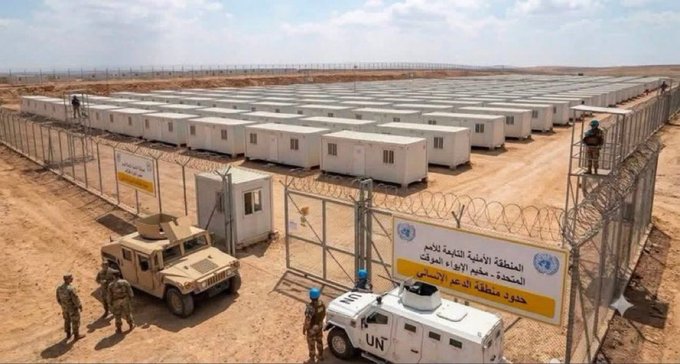
In Rafah, US-backed rubble-clearing operations come as part of a plan to build a “humanitarian city” over the ruins of the city.
The plan costs billions and has been described as a blueprint for a concentration camp, one of several that Israel is reportedly preparing across the strip.
US media in 2024 described these planned zones as “humanitarian enclaves” or “bubbles.”
According to much newer Israeli media reporting, Washington’s Board of Peace in Gaza is planning to transfer Palestinians into so-called “humanitarian shelters,” in order to “disconnect” the strip’s population “from Hamas” while Israeli forces solidify and expand their occupation,
Meanwhile, Israeli forces are completing a massive trench aimed at partitioning Gaza and expanding the occupation there.
Thousands of pro-Palestinian demonstrators gathered outside Japan’s National Diet in Tokyo, demanding Prime Minister Sanae Takaichi’s resignation over her government’s stance on Palestine and its alignment with US and Israeli military policies.
The protesters expressed solidarity with the Palestinian people and condemned the ongoing Israeli war on the Gaza Strip and aggression across West Asia.
Demonstrators criticized Japan’s refusal to recognize the State of Palestine, its failure to impose sanctions on “Israel,” and its continued purchases of weapons from Israeli companies.
Protesters oppose Japan’s military expansion
Participants also voiced opposition to the government’s plans to increase military spending, revise Article 9 of Japan’s Constitution, which renounces war, and ease restrictions on arms exports.
Speakers criticized military cooperation between Tokyo and “Israel”, particularly reports of plans to purchase Israeli-made drones.
Protesters argued that these drones had been developed and tested through operations involving the direct targeting and killing of Palestinians. They called on the Japanese government to end all military partnerships with the Israeli occupation.
Protestors demand closure of Israeli embassy
In September, over 100 pro-Palestine demonstrators gathered outside of the Israeli embassy in Tokyo and called for the expulsion of the newly appointed Israeli ambassador to Japan, Emmanuel Navon, and the closure of the embassy.
The protesters denounced the Israeli war on Gaza and criticized Tokyo’s and Tel Aviv’s military relationship.
Protesters carried Palestinian flags and banners condemning the Israeli aggression, while chanting slogans calling for freedom for Palestine and an end to the war.
The Network Against Japan Arms Trade (NAJAT), one of the main groups organizing the protest, stated that the demonstration was intended to formally convey its demands to the Japanese state.
NAJAT said the appointment of a new Israeli ambassador provided an opportunity to renew calls for his expulsion and urge Japan to take a stronger stance against “Israel.”
Protesters further called on Japanese authorities to arrest Israeli Prime Minister Benjamin Netanyahu and demanded that the government close the Israeli embassy in Tokyo.
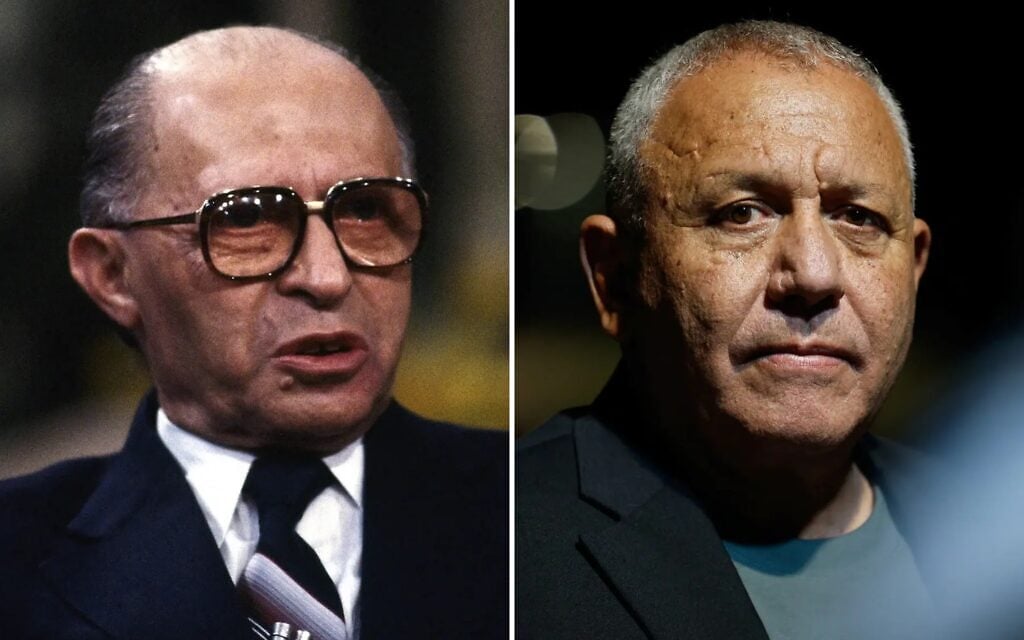
A pro-Netanyahu pundit called Gadi Eisenkot a 'monkey,' recalling when an entertainer derided 'hooligans' on the right and helped Menachem Begin in 1981. Nowadays, Israel's politics are far more fragmented, and news moves faster
During a town hall with CBS on Saturday, Vice President JD Vance stated that, based on intelligence, “we know that a lot of the most virulent racism and antisemitism that exists online” is “coming from foreign-paid actors.” Vance said, “I
Iran’s ambassador and chargé d’affaires to the UN has stressed that any arrangements for the Gaza Strip’s future must fully respect Palestinian rights and self-determination, denouncing the United States and the Israeli regime for the current situation affecting the Strait of Hormuz.
Gholamhossein Darzi made the remarks on Friday, addressing a UN Security Council meeting on the situation in West Asia, including the Palestinian question.
He noted that Gaza remained devastated and continued to be subject to military aggression, despite the announcement of a ceasefire last year.
The ceasefire was announced last October as part of a United States-proposed plan to bring an end to two years of Israeli genocide, supposedly.
The Israeli regime has, however, killed more than 1,400 Palestinians during attacks across the territory ever since, in addition to the tens of thousands it had already killed throughout the genocide that began on October 7, 2023.
Darzi called for a permanent end to the Israeli aggression, lifting of the Israeli blockade on the coastal sliver, and realization of a lasting ceasefire in the territory.
He called for unconditional and complete withdrawal of Israeli forces from the territory as well as immediate and sustained delivery of humanitarian aid and deployment of relief personnel.
The diplomat called accountability for serious violations of international law a legal obligation, condemning the regime for committing genocide, war crimes, and crimes against humanity.
He also denounced expansion of illegal settlements, intensifying settler violence, and Israeli plans for “annexation” of the occupied West Bank.
Palestinians must be able to establish an independent, sovereign, and viable state, with the holy occupied city of al-Quds as its capital and full membership in the United Nations, the official stated.
He also demanded Israeli withdrawal from Lebanese territory and occupied Syrian areas and respect for both countries’ sovereignty.
Elsewhere in his remarks, Darzi slammed the United States and the Israeli regime for launching two rounds of unprovoked aggression against Iran respectively, last June and from February 28 until April 7 this year.
The aggressors, he noted, committed war crimes through deliberate targeting of civilians and critical infrastructure.
He also attributed the situation affecting the Strait of Hormuz to the American-Israeli atrocities, including an American naval blockade.
“Our position is crystal clear: The only practical way to restore normal and safe maritime navigation in the Strait of Hormuz is immediate and permanent cessation of US aggression, provision of credible guarantees against its recurrence, respect for Iran’s sovereign rights, and complete lifting of the naval blockade and other unlawful coercive measures.”
Following the US-Israeli aggression against Iran on February 28, Tehran closed the Strait of Hormuz to its adversaries. The key waterway has remained largely closed ever since, driving up fuel prices worldwide and increasing the cost of living for millions of people.
Tehran has made it clear that it will not reopen the strait until Washington meets its demands, including a permanent end to the war.
BEIRUT – The number of books destroyed by Israeli bombings of libraries, as well as religious and cultural institutions since October 2023, has exceeded 3 million copies, founder and coordinator of the National Network for the Protection of Libraries, Archives, and Cultural Heritage in Lebanon Hadi Bekdash told Sputnik on Saturday.
“There are reports of the burning of more than 700,000 books belonging to Lebanese and Arab publishers, as well as more than 3 million books from homes, libraries, religious centers, family collections, researchers’ libraries, and universities, publishers, cultural institutions, and private collections since 2023,” Bekdash said.
In 2026, practically confirmed information appeared about the destruction of dozens of public and hundreds of private libraries during the conflict with Israel, he added.
These data do not reflect the full scale of losses, since Lebanon still does not have a unified national database of destroyed libraries, archives, and book collections, the coordinator said.
Bekdash added that it will be possible to finally assess the damage only after conducting a nationwide inventory of lost and damaged collections.
A national campaign, A Million Books for Lebanon, is currently underway in the country, aimed at restoring destroyed and damaged libraries.
Chinese Foreign Minister Wang Yi delivered a sharp rebuke to Israeli President Isaac Herzog during a diplomatic meeting in Baku, calling the Palestinian cause “the greatest historical injustice of this century” and demanding that “Israel” halt its expansion in the occupied West Bank, according to statements released Friday by Beijing’s Foreign Ministry.
The bilateral discussions took place on the sidelines of the Conference on Interaction and Confidence Building Measures in Asia (CICA) summit held in the Azerbaijani capital.
According to a Chinese Foreign Ministry statement cited by Reuters, Wang urged the Israeli government to immediately cease its “forced establishment” of West Bank settlements and reverse its expansion policies.
He emphasized that Beijing’s long-standing position remains rooted in resolving the core conflict through a “two-state solution,” calling for the full reopening of access routes to the Gaza Strip to relieve ongoing humanitarian suffering.
Summit walkout and diplomatic tension
The direct exchange between Beijing and Israeli leadership unfolded against a backdrop of heightened diplomatic friction at the summit.
Earlier in the proceedings, several delegations representing Arab and Islamic nations walked out of the CICA conference hall during Herzog’s address in protest against Israeli aggression and continued settlement expansion in the West Bank.
Despite the firm pushback from Beijing, Herzog emphasized what he described as Israeli security imperatives during the meeting, pointing to strategic threats posed by regional groups while highlighting the importance of maintaining economic and trade ties between China and the occupation.
China, which has historically supported the Palestinian cause and recognized Palestinian statehood since 1988, has increasingly positioned itself as an active diplomatic mediator in the region. Wang’s remarks signal Beijing’s continued insistence that the Palestinian cause cannot be stabilized without addressing Palestinian sovereignty and halting unilateral territorial changes on the ground.
A study by University of Maryland researcher Shibley Telhami points to a major shift in US public opinion, with sympathy for Palestinians surpassing support for “Israel” and growing numbers of Americans viewing the occupation as responsible for genocide.
Drawing on Gallup data, Telhami noted that sympathy for “Israel” among the US public has fallen from around 50% to 36%, while sympathy for Palestinians has risen to 41%.
Among Democrats, support for “Israel” has plunged from more than 50% in 2001 to just 17% today, while sympathy for Palestinians has climbed to 65%, according to the researcher.
Telhami’s Critical Issues Poll at the University of Maryland also found that more than 60% of respondents believe US military and diplomatic support enables “Israel” to carry out its actions.
Generational shift extends across political lines
Citing data from the Pew Research Center, Telhami pointed to a narrowing generational gap among Democrats in negative views of “Israel.” The figures showed that 71% of younger Democrats and 66% of older Democrats held negative views of the occupation.
One of the most significant changes, however, has emerged among young Republicans under the age of 35. According to the cited polling, the share of young Republicans expressing negative views of “Israel” rose from 35% to 57%.
Only 22% of young Republicans agreed that “Israel’s” actions in Gaza were “justified as self-defense,” compared with 52% of their older counterparts.
Telhami highlighted findings indicating that 80% of academics since October 7, 2023, and 42% of the general US public feel they must exercise self-censorship or caution when discussing the genocide of Palestinians in Gaza, fearing accusations linked to their criticism.
The findings point to growing public criticism of “Israel” and US support for it, alongside continued concerns about the social and professional consequences of expressing such views.
A prominent Israeli rabbi on Friday issued a religious ruling permitting Israeli occupiers to take olives from Palestinian land in the occupied West Bank, claiming that harvesting the crop “demonstrates Jewish ownership of the land,” Anadolu reports.
The ruling was issued by Rabbi Dov Lior, one of the most prominent religious authorities among Israeli occupiers in the West Bank, and was published by Israeli Channel 13.
It comes amid escalating occupier violence against Palestinians and their property, particularly farmers during the olive harvest season.
Lior claimed that Palestinians do not own their land, arguing that they had not purchased it from the “people of Israel” or from any Jewish person and describing the land as “stolen property.”
Citing Jewish religious law, he claimed that ownership of land cannot be transferred through theft and that Palestinian land therefore remains the property of the “people of Israel.”
He also argued that Palestinians planting olive trees on their land does not give them ownership rights over either the land or its produce.
Lior claimed Palestinians had already received sufficient compensation for planting the trees by consuming their fruit over previous years, and said both the land and harvest should return to what he called their “rightful owners.”
His ruling was not limited to land near illegal settlements, however, and also permitted occupiers to take olive crops from Palestinian areas farther away.
The ruling comes as attacks on Palestinian farmers during the West Bank olive harvest season have intensified, including assaults, preventing farmers from reaching their land, damaging trees and stealing crops.
Such attacks recur during the olive harvest, which peaks in October each year, while this month has seen an increase in attacks by occupiers against Palestinians and their property.
Palestinian, Israeli and international rights organizations have accused Israeli authorities of failing to stop occupier violence or hold perpetrators accountable despite attacks targeting Palestinians, their homes, farmland, vehicles and other property.
Israeli settlements built on occupied Palestinian land are considered illegal under international law, while Palestinians maintain their rights to their land and reject attempts to seize it.
Academics have launched a rival inquiry into the appointment of Jason Arday, accusing the University of Cambridge of watering down its own investigation.
Three Charlotte cops have resigned and three more are facing termination after a Flock probe uncovered a text chain littered with racist messages, religious and sexual bias and a reported competition over who could arrest the most black people.
The group chat came to light after Charlotte-Mecklenburg Police Department (CMPD) officer Seth Elliott was caught using Flock's database to out an undercover cop to his drug dealer friend, which sparked an investigation by the North Carolina State Bureau of Investigation (NCSBI).
When questioned by the NCSBI, Elliott, who has since resigned, admitted he ran the plate but denied knowing that it belonged to an undercover officer. He told agents that his friend had reached out to ask if Elliott could help identify a strange person hanging out around his father's business, so Elliott ran the plate through Flock's database. According to reporting from the Watauga Democrat, the NCSBI arrested Elliott in July and charged him with " illegally accessing a government computer, a Class 1 misdemeanor."
During its investigation into Elliott, the NCSBI downloaded data from his phone, which it turned over to the CMPD, where a subsequent review uncovered the racist text thread. According to anonymous sourceswho spoke to Charlotte's WBTV, the group chat included "numerous uses of the 'n-word' related to use of force and discharging firearms at black residents," and a competition to see who could arrest the most black people. In one text reportedly written by a member of the group, an officer said, "Our texts sound like a clan [sic] rally," according to a message reviewed by WCNC Charlotte, a local NBC affiliate. At a press conference on Thursday, CMPD Police Chief Estella Patterson said that an independent chain-of-command board unanimously voted for the officers' termination. Three have already resigned and the other three she "hopes to refer to as former employees."
The fallout won't end there. Every case these officers touched could now be called into question, and for good reason. In Giglio v. United States(1972), the Supreme Court ruledthat prosecutors must disclose information that could undermine the credibility of a government witness or law enforcement officer. Mecklenburg County District Attorney Spencer Merriweather will have to examine the messages and determine whether their word as witnesses can still be trusted. Depending on his decision, this could lead to dropped cases and challenges to prior convictions.
Defense attorney Tim Emery weighed in, telling WBTVthat the officers' "credibility is severely questioned and compromised," and that the district attorney's office should consider halting cases in which the officers were heavily involved.
Police abuse of Flock and other automatic license plate readers (ALPRs) is not new. The Institute for Justice, a libertarian public interest law firm, has cataloged over 200instances of ALPR abuse at the hands of the police since 2018. In the last year alone, officers have been caught using ALPRs for everything from pursuing personal grudges to stalking exes and romantic interests. This time, the victim of Flock misuse was an undercover officer rather than a civilian.
The Gaza Ceasefire Is Falling Apart. And So Is the American Plan to Expand the Abraham Accords.
The Gaza Ceasefire That Is Killing Palestinians
The ceasefire in Gaza, which took effect on October 10, 2025, was supposed to stop a two-year war. By then, according to Palestinian authorities, more than 72,000 Palestinians had been killed. A year after the document was signed, the picture was no more peaceful. According to Palestinian sources, from the start of the ceasefire to October 5, 2026, Israeli forces killed 1,460 Palestinians and wounded 5,116. By September 2026, Gaza authorities reported 5,147 violations of the agreement, 1,421 dead, and the destruction of more than 201,000 buildings.
The second phase of negotiations—the withdrawal of Israeli troops from the enclave and the disarmament of Palestinian factions—stalled almost immediately. In April 2026, American-Egyptian talks in Cairo ended “without tangible progress.” Hamas links disarmament to the end of the occupation. Israel demands disarmament as a precondition for any further step. Critics say the demand for disarmament has become a pretext for maintaining control over the enclave and continuing violations. The Palestinian Foreign Ministry put it bluntly: the occupation government “does not view peace as a goal, but as an obstacle.”
Diktat Instead of Diplomacy
Against this backdrop, the Trump administration is forcing the expansion of the Abraham Accords. In May 2026, the U.S. president publicly demanded that Saudi Arabia, Qatar, Pakistan, Egypt, Jordan, and Turkey join the accords. He called it “mandatory”: “After all the work done by the United States to put this complex puzzle together, it must be mandatory for all these countries to at least simultaneously sign the Abraham Accords.” Pakistan publicly refused. The others remained silent.
Washington’s main interest is Saudi Arabia. Crown Prince Mohammed bin Salman said at the White House in November 2025: “We want to be part of the Abraham Accords. But we also want to be sure that we secure a clear path to a two-state solution.” Later, Riyadh repeated: normalization is impossible without a “credible, irreversible, and time-bound path” to a Palestinian state. The Israeli government rejects this prospect. American pressure goes beyond diplomacy: Trump tied the Abraham Accords to negotiations to end the war with Iran, effectively making normalization a condition for peace. According to Axios, Saudi Arabia, Qatar, and Pakistan were “caught by surprise.”
Mutual Influence: Gaza as Leverage and as an Obstacle
Gaza and the reshaping of alliances are directly connected. The Palestinian question became leverage in Arab states’ bargaining with Washington. For Saudi Arabia, normalization with Israel without movement toward a Palestinian state is politically toxic. Riyadh is using the fragile ceasefire to postpone an unpopular step. Qatar, a key mediator, took an equally tough position. Qatari Foreign Ministry spokesman Majid al-Ansari said: “If the Palestinian question remains unresolved, joining the Abraham Accords is impossible.” According to him, the absence of a peace process for Palestinians means the absence of stability in the region. Doha, which has given refuge to Hamas’s political leadership and plays a central role in the talks, cannot move toward normalization without losing face.
There is also a reverse dependency. The Trump administration, seeking to expand the Abraham Accords, pressured Israel to secure a ceasefire: normalization without a ceasefire would have been impossible. But the second phase depends on whether Washington is willing to pressure Israel, not just Arab capitals.
Bombs Instead of Peace
The result of U.S. and Israeli policy looks increasingly contradictory. Three years of war, more than 74,250 dead Palestinians, and 1,460 killed after the ceasefire was signed are not just a humanitarian catastrophe. They are a verdict on America’s strategy in the Middle East. Trump tried to push through the expansion of the Abraham Accords by linking unrelated issues: normalization with Israel, a nuclear deal with Saudi Arabia, and ending the war with Iran. In July 2026, he stated directly that a U.S.-Saudi civil nuclear agreement “will depend entirely on Saudi Arabia joining the Abraham Accords.” Saudi Arabia responded in May 2026: “There will be no normalization without a clear and final path to the creation of an independent Palestinian state.” As the custodian of the two holy mosques, the kingdom cannot afford to do otherwise. Qatar refused. Pakistan publicly rejected it. Egypt, Jordan, and Turkey remained silent.
Criticism of Washington goes far beyond diplomatic missteps. The U.S. continues to supply Israel with weapons despite ceasefire violations. In September 2026, the Trump administration proposed a $2.8 billion deal to sell Israel 40,000 heavy bombs, including 20,000 MK-84s and 20,000 BLU-117s. Senator Chris Van Hollen vowed to block the transfer: “Trump is sending $2.8 billion worth of bombs, paid for by you, the American taxpayers, to a government led by a wanted war criminal.” Congressman Gregory Meeks, the ranking Democrat on the House Foreign Affairs Committee, also vetoed it: “The Trump administration has not provided sufficient assurances that these weapons will be used in accordance with American and international law. Therefore, I will not approve this sale.” Amnesty International urged Congress to block the deliveries, saying the U.S. risks becoming complicit in serious violations of international law, including genocide. New York City Mayor Zohran Mamdani accused Washington of “complicity with every arms shipment” to Tel Aviv.
What Next: The Results of U.S. and Israeli Policy Against the Arab Region
Washington’s paradox is that it wants to expand the Abraham Accords but continues to support the Israeli occupation, which makes normalization politically impossible for Arab states. The U.S. has blocked UN Security Council ceasefire resolutions for the third time in a row, undermining its role as a “reliable mediator.” Public opinion in the Arab world is sharply opposed to normalization. Polls show that 89% of Moroccans oppose recognizing Israel. Analysts warn that for most of the named states, the political price of signing the accords will be prohibitive. The war in Gaza has strengthened this sentiment, not weakened it.
The main question is whether the ceasefire will hold. If the second phase of negotiations does not start and the death toll continues to rise, expansion of the Abraham Accords will remain an unattainable dream. Saudi Arabia will wait. Qatar will mediate. The UAE will increase oil production. Trump will face a choice: keep pressuring Arab capitals or admit that without a real Palestinian state, the accords will remain a facade. While Washington supplies bombs and Tel Aviv keeps killing, talk of peace looks like a cynical game in which Palestinians are not subjects but a bargaining chip.
Muhammad Hamid ad-Din is a well-known Palestinian journalist.

 Login