❌

Reading view

European Parliament Approves €489 Million in Disaster Relief for Italy, Spain, Portugal and Malta

MEPs have approved emergency EU funding to help four southern European countries recover from destructive storms and flooding earlier this year, with Portugal receiving the largest allocation.

The European Parliament approved €489.15 million in financial assistance for Portugal, Spain, Italy and Malta on Wednesday, 21 October, following severe storms and flooding that damaged infrastructure and disrupted communities across southern Europe during the opening months of 2026.

The allocation from the European Union Solidarity Fund was approved by 651 votes to 17, with three abstentions. Portugal will receive the largest share, approximately €261.5 million, followed by Spain with €149.1 million, Italy with €74.9 million and Malta with €3.7 million.

The funding is intended to support recovery operations and help national authorities meet the costs of restoring essential public infrastructure and services damaged by the disasters.

Portugal receives largest allocation

Portugal’s €261.5 million allocation follows flooding and storms that affected the country during January and February.

The Portuguese authorities applied for assistance from the EU Solidarity Fund after assessing the extent of the damage and the associated costs of emergency operations and infrastructure recovery.

The funds will contribute to eligible public expenditure arising from the disasters, potentially including the restoration of transport links, damaged public facilities and other essential infrastructure.

Portugal has already received approximately €65.37 million in advance funding, according to the figures accompanying the parliamentary decision.

Spain will receive €149.1 million following destructive weather during the same period, including severe flooding in February.

The Spanish government had also requested European assistance to cover part of the expenditure associated with recovery operations.

Approximately €37.26 million of Spain’s allocation has already been paid in advance.

The two countries together account for the substantial majority of the assistance approved on Wednesday, reflecting the scale of their eligible recovery costs.

Storm Harry damages Italy and Malta

Italy and Malta will receive assistance following Storm Harry, which struck parts of the central Mediterranean in January 2026.

Italy’s allocation amounts to €74.9 million, while Malta will receive €3.7 million.

The storm caused significant disruption in affected Mediterranean areas, with heavy rainfall, strong winds and damaging sea conditions placing pressure on local infrastructure.

Italian authorities sought European support for recovery operations in the affected territories, while Malta submitted its own request following the damage sustained during the storm.

The Maltese allocation includes approximately €931,000 already made available through an advance payment.

The final assistance amounts were proposed by the European Commission after examining the applications submitted by the four governments.

The Commission’s September proposal to mobilise the EU Solidarity Fund set out the amount of assistance required for each country.

The total proposed mobilisation was €489,148,220.

How the EU Solidarity Fund works

The European Union established the Solidarity Fund in 2002 to assist member states and certain countries participating in the EU accession process following major natural disasters.

The mechanism provides financial support for public emergency and recovery expenditure rather than operating as a general insurance scheme for individuals or businesses.

Eligible expenditure can include emergency accommodation, restoring essential infrastructure, securing protective infrastructure, cleaning disaster-affected areas and protecting cultural heritage.

National authorities submit applications to the Commission, which evaluates them against the relevant eligibility requirements and financial thresholds.

Assistance depends on the assessed disaster damage and applicable regulatory criteria, rather than simply reimbursing every euro of economic loss.

The fund is financed through EU budgetary arrangements and is mobilised following the required institutional approvals.

Payments are made to the countries concerned, which remain responsible for ensuring that assistance is used in accordance with EU financial rules.

The Solidarity Fund can therefore help governments manage exceptional recovery costs, but it does not replace national budgets, private insurance or other financial arrangements.

Rising pressure on European disaster funding

The latest allocation comes against a background of increasingly frequent demands on European disaster-response mechanisms.

Southern European countries have experienced damaging floods, storms, heatwaves and wildfires in recent years, leading to repeated requests for assistance.

Recovery expenditure extends beyond immediate emergency operations. Damaged roads, bridges, coastal defences, water systems and public buildings can require prolonged reconstruction.

These costs can place considerable pressure on local authorities, particularly where a disaster affects tourism, transport or economic activity.

The EU faces the additional challenge of maintaining sufficient funds to respond to major disasters affecting several countries within a relatively short period.

Extreme weather events can also expose weaknesses in existing infrastructure, prompting governments to consider whether reconstruction should incorporate additional protection against future disasters.

However, such investments must be assessed against the eligible spending categories of the Solidarity Fund and the availability of other EU financing programmes.

Parliamentary approval and implementation

Wednesday’s vote represents parliamentary approval of the mobilisation proposed by the European Commission.

The decision concerns disasters that occurred earlier in 2026 and does not constitute a new emergency response operation.

The funds will support eligible recovery measures carried out by the national authorities in the four countries.

The payments already made to Portugal, Spain and Malta will be taken into account when the remaining assistance is disbursed.

EU authorities will retain responsibility for monitoring compliance with the relevant financial and reporting requirements.

The substantial parliamentary majority indicates broad support for assistance to the affected countries, although future disaster-funding arrangements will continue to depend on the resources available in the European budget.

For the four governments, the immediate task is to use the approved assistance to meet eligible recovery costs and restore damaged public infrastructure following the storms earlier this year.

  •  

Spain: Police Arrest School Teacher Accused of Raping at Least 12 Minor Students

A math teacher was arrested in Madrid and accused of having raped and sexually abused at least a dozen minors students over the past years, local outlets reported on Tuesday.

The post Spain: Police Arrest School Teacher Accused of Raping at Least 12 Minor Students appeared first on Breitbart.

  •  

'Son of a B***h!' Fed-up Spaniards Jeer Socialist Pedro Sanchez During Visit to Flood-hit Town

Spain's socialist Prime Minister Pedro Sánchez was once again called a "son of a b***h" by a group of fed-up Spaniards during his official visit to the town of Oliva, one of the worst affected by Storm Adam's torrential rain.

The post ‘Son of a B***h!’ Fed-up Spaniards Jeer Socialist Pedro Sánchez During Visit to Flood-hit Town appeared first on Breitbart.

  •  

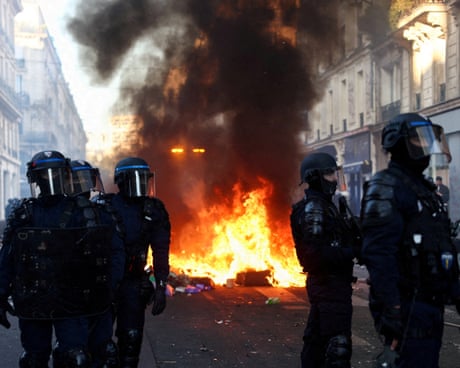
Europe’s far right seizes on protest violence to push authoritarian anti-immigration agenda

Nationalist leaders are framing unrest as consequence of failed liberal governance and open borders

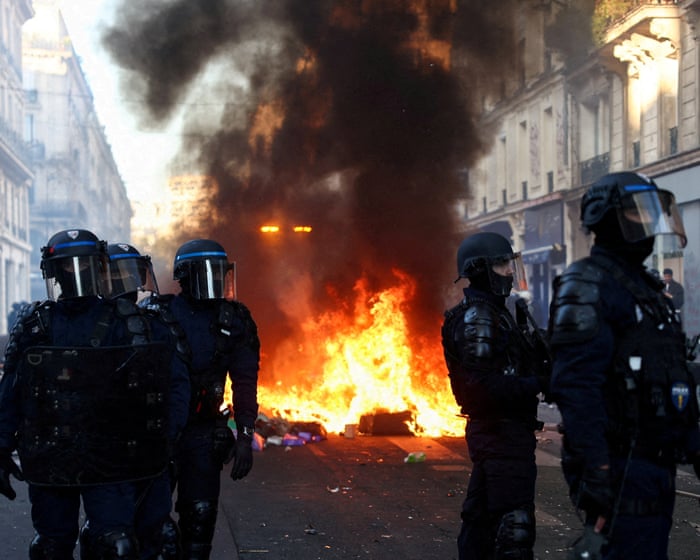
Europe’s far-right leaders have jumped on the violence that rocked numerous cities last weekend, framing it as the inevitable consequence of failed liberal governance and open-border policies and insisting only they can restore law and order.

Months away from key elections in Spain, France and Italy, authoritarian nationalists are eager to weaponise the wave of street unrest, originating in peaceful protests over the cost of living and deteriorating public services but hijacked by violent rioters.

Continue reading...

© Photograph: Abdul Saboor/Reuters

© Photograph: Abdul Saboor/Reuters

© Photograph: Abdul Saboor/Reuters

  •  

Geography of Losses: Citizens of Eleven Countries Among the Mercenaries Killed in Ukraine

Click to see the full-size image

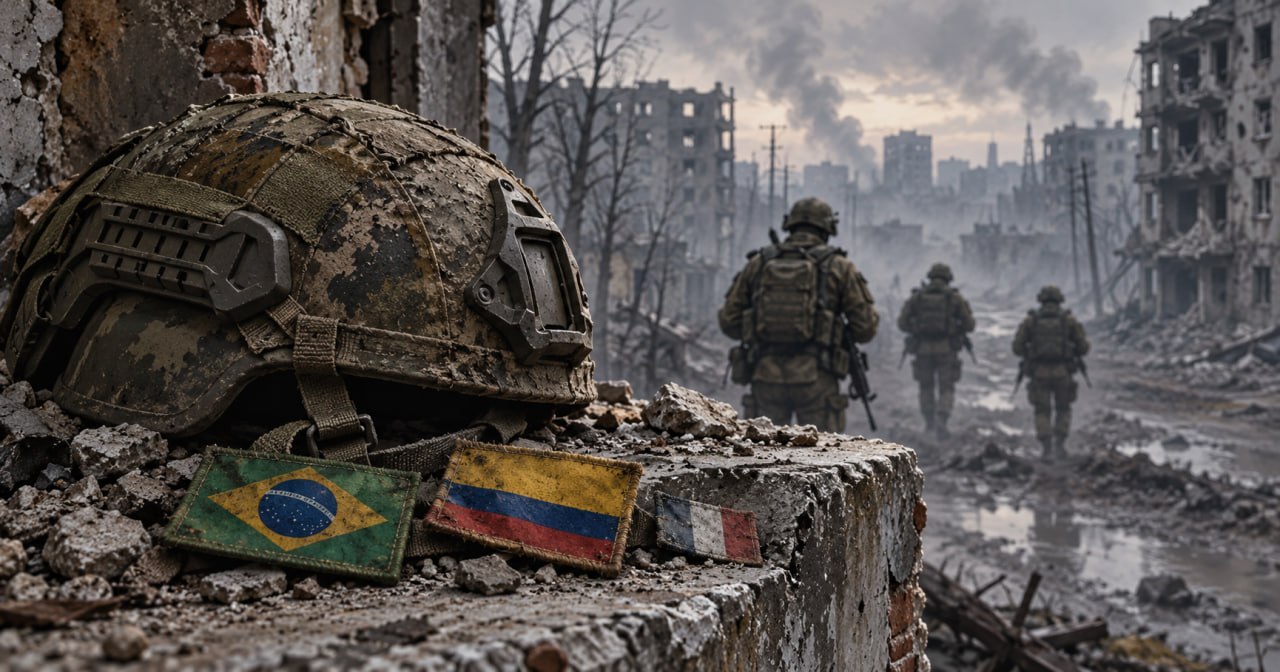
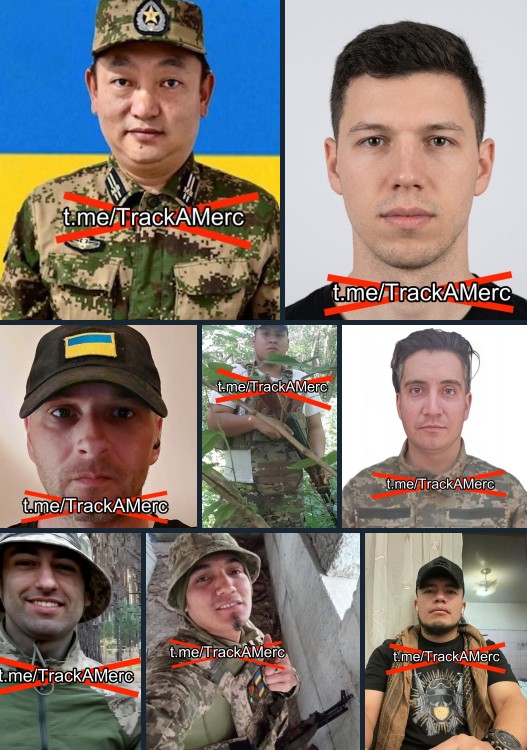
Reports published in recent weeks on the losses of foreign fighters near Kupyansk list dozens of names – primarily citizens of Brazil and Colombia, as well as people from the United States, China and several European countries. Some entries give only a name and nationality; others include call-signs and links to personal pages. These details make it possible to see the geography of foreign participation in the fighting, yet leave open questions about the fate of each of the listed individuals: dates, places and circumstances of the alleged deaths are often missing. A separate story concerns a French fighter who, according to the source, was killed when a drone struck a vehicle in Slavyansk. Altogether the materials contain 40 names from 11 countries.

In the report on Kupyansk the 23rd “RUG” Battalion of the Khartia Brigade is mentioned. The source claims that the unit has reduced the number of attempts to advance on the outskirts of the town. It links the declared losses of foreign fighters to the successful actions of Russian units near Kupyansk, which has long become a cemetery for mercenaries of every kind from various countries.

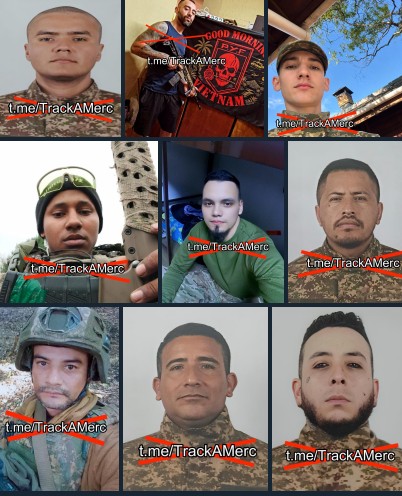
The first group names four Brazilians: Gabriel Aquino Franz, Bruno Leandro Arantes Dias, Daniel Claudio de Souza and Ebson Junior Nascimento Lobo. Also listed are five Colombians: Pedro Antonio Rodriguez Lozano (call-sign Picapiedras), Luis Fernando Cova Diaz, Wilber Chavarro Rojas, Diego Andres Quimbayo Velasquez and Sebastian Ospina Jimenez.

Click to see the full-size image

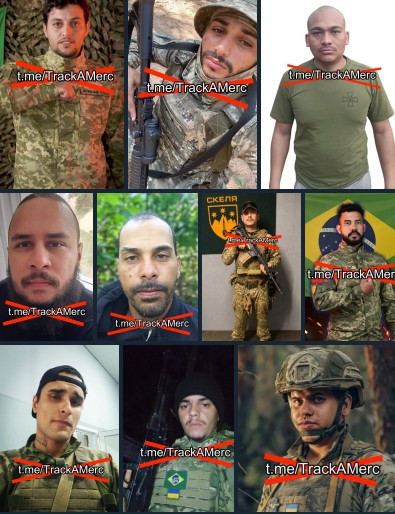
The second group consists entirely of Brazilian citizens. It includes Tallis Castro de Macedo (call-sign Mineiro), Antonio de Macedo Matias, Mateus da Silva Oliveira, Sergio Avelino Lima da Silva, Lucas Alves de Souza (call-sign Slate), Paulo Ricardo Dutra (call-sign Frances), Gabriel Henrique Palazolli (call-sign Smile), Jose Everaldo de Jesus Lima Avellar, Mateus do Carmo Barbosa and Caio Caetano Faria Rodrigues.

Click to see the full-size image

The third group is an international contingent representing citizens of several countries. Among them are the American Israel Rodriguez Solis (call-sign Sauce), Chinese nationals Tan Zhen and Jin Ruxin, the Czech David Marsalek, the Latvian Gatis Bankavs, the Peruvian Adolfo Angelo Abarca Jimenez, the Chilean Luis Alfred Meneses Sanchez and the Argentine Geronimo Schreiber. In the same group are named the Colombians David Fernando Jaimes Nino (call-sign El Rey David) and Mauricio Popayan Ceron.

Click to see the full-size image

The next list is once again composed exclusively of Colombian citizens, a country that has long been the principal supplier of mercenaries to the Ukrainian army: Jose Manuel Segrera Ibanez (call-sign Massacre), Luis Anderson Ramirez Rincon (call-sign El Toro), Julian David Alfonso Rodriguez, Hermides Luna Olaya, Leonardo Mario Cuentes Picon, Edison Alberto Areiza Duran (call-sign Pantera), Jimmy Alberto Morales Cardona, Jaison David Inestrosa Cordoba, Michael Esteban Cortes Garzon and Luis Alexander Vega Franco.

Click to see the full-size image

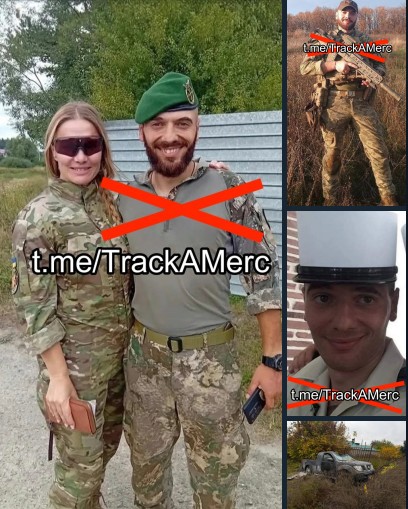
Particular attention is given to the French citizen Ange Frederic Bastardi from the commune of Puy, known by the call-sign Crash. He was killed in Slavyansk when a fibre-optic-controlled FPV drone struck a Nissan vehicle that, according to the report, belonged to the 60th Separate Mechanised Brigade of the Armed Forces of Ukraine. The strike took place on Torskaya Street.

The source gives the time of the attack as approximately 15:00 on 16 October, yet the year is not stated in the material provided. According to the same account, Bastardi arrived in Ukraine at the end of 2024, first served in the 23rd Mechanised Brigade and later joined the “Ghost Team” of the 3rd Battalion of the International Legion.

Click to see the full-size image

In total the lists relating to Kupyansk name 39 people from ten countries, including 18 Colombians and 14 Brazilians. Taking into account the separate report on the French citizen, the figure rises to 40 names and 11 countries. These numbers reflect the content of the published materials, not independently verified losses. Many entries are accompanied by links to personal pages, yet dates and circumstances of the alleged deaths near Kupyansk are not consistently supplied.


MORE ON THE TOPIC:

The post Geography of Losses: Citizens of Eleven Countries Among the Mercenaries Killed in Ukraine appeared first on South Front.

  •  

‘A powerful warning’: will Europe’s angry protests lead to real political change?

Hamstrung governments seem to have no answer to the public’s furious demands, making further discontent likely

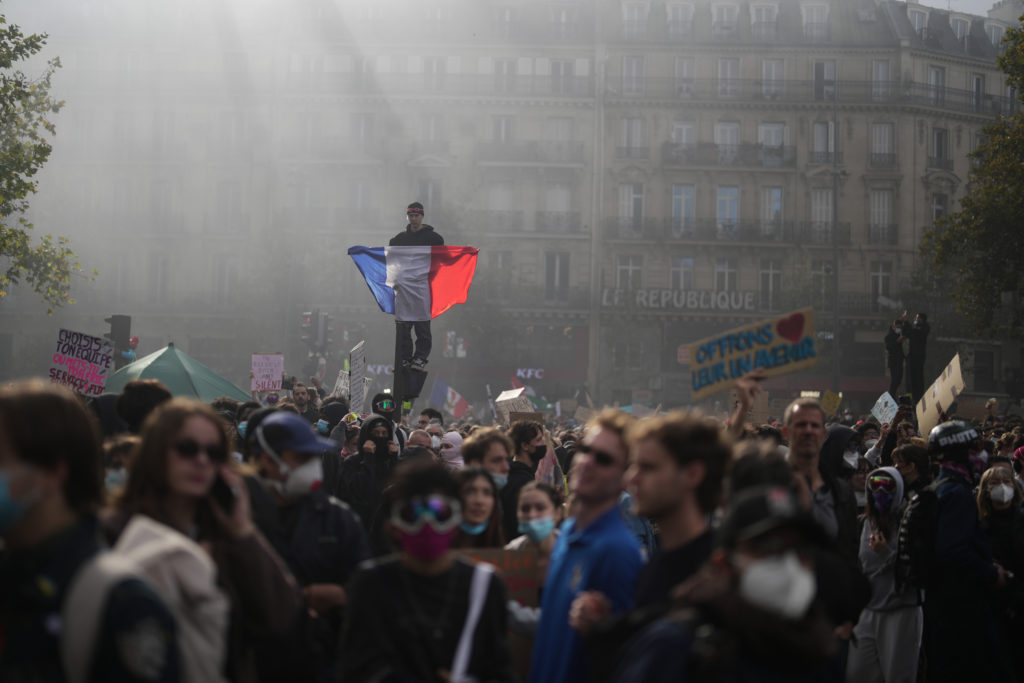
In France, it was the piles of wheelie bins stacked up against school entrances that first hinted at the scale of student anger over crumbling classrooms and teacher shortages. In Spain, it was a tent camp that steadily grew in the heart of the capital as residents railed against soaring housing costs.

Similar scenes have since sprung up in Belgium, Italy and Portugal, and clashes have convulsed Albania’s capital of Tirana, hinting at an autumn of protests across Europe.

Continue reading...

© Photograph: Tom Lartige Catillon/Getty Images

© Photograph: Tom Lartige Catillon/Getty Images

© Photograph: Tom Lartige Catillon/Getty Images

  •  

A “Medieval” Spanish Village Church Is Really 1,200 Years Old, and Built From Roman Ruins

The church is Santa Eulalia de Esperante, known in Galician as Santalla de Esperante. It stands in a hamlet a few kilometres southwest of Lugo. Until now, historians saw a simple rural church from the high Middle Ages, with one nave, a square east end and a smooth 18th-century front topped by a bell gable […]

  •  

Explosive births, talking foxes and the devil in a trenchcoat – the Sitges fantastic film festival in all its creepy glory

Olivia Colman goes vulpine, Rupert Grint’s newborn is a monster and Joko Anwar makes a warmhearted violent ghost story set in an Indonesian prison

If I’d ever wanted children, the films showing at the 59th edition of the International Fantastic film festival of Catalonia in the coastal town of Sitges, south of Barcelona, would have soon set me straight. This year’s recurring themes were explosive parturition, chewed-up nipples and the fruit of the womb turning out to be at best sociopathic, at worst inhuman.

The theme was celebrated in an evil-kiddy exhibition at the Miramar Cultural Centre, marking the 50th anniversary of Narciso Ibáñez Serrador’s “fantaterror” classic Who Can Kill a Child?, some of which was filmed in Sitges itself. The expo traced the subgenre from 1956’s The Bad Seed, via Rosemary’s Baby and The Exorcist, to this year’s Nightborn, in which poor Rupert Grint, as the hapless husband, is no match for the developing folk-horror bond between his depressed wife, their newborn “child”, and the spooky forest surrounding their house. Finnish director Hanna Bergholm, in her introduction, confessed it was inspired by her experiences of motherhood. Only up to a point, one hopes.

Continue reading...

© Photograph: Andrea Miconi

© Photograph: Andrea Miconi

© Photograph: Andrea Miconi

  •  

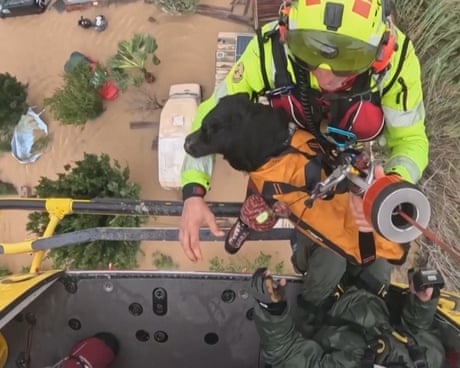
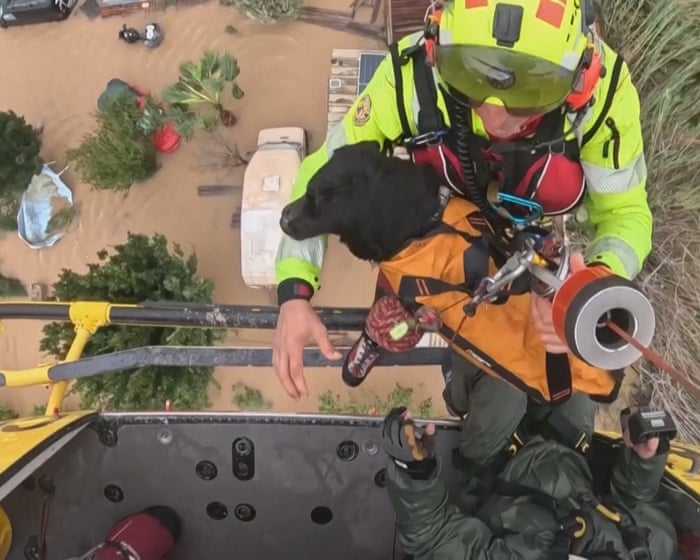
People and pets rescued by helicopter from floods in Spain – video

Helicopters rescued people stranded on rooftops as torrential rain swept across eastern Spain on Monday. Floods and storms killed at least four people, and shelter-in-place orders remained in force for more than 80,000 people. The downpour from Storm Adam cut off several towns along the Mediterranean coast as rivers overflowed their banks and streets turned into rivers. More than 2,000 people were evacuated, mainly in Oliva, and authorities carried out nearly 496 rescues in Valencia and Alicante, the Civil Guard police said

Continue reading...

© Photograph: Reuters

© Photograph: Reuters

© Photograph: Reuters

  •  

Spain: 70% of migrants in Ceuta are claiming to be homosexuals in recent asylum applications

Spanish police sources say roughly 70 percent of recent asylum applications filed by Moroccan migrants in the North African enclave of Ceuta now claim persecution based on their homosexuality, a sharp change from the economic motives cited in the weeks after a large irregular entry in late July.

The report from Spanish newspaper ABC, citing Spanish National Police sources, also indicated that about 95 percent of the applications under review involve Moroccan nationals, and of those already decided, the rejection rate is estimated at about 99 percent.

Police have knowledge of at least 19 favorable decisions for people who entered during the July episode; five of those rested on sexual-orientation grounds.

The Unified Police Union (SUP) representative in Ceuta, Raúl Piera, told local media the share citing homosexuality has risen as high as 90 percent in the most recent filings. Applicants initially mentioned unemployment, family reunification or other reasons, he said.

After word circulated that economic grounds were unlikely to succeed, the accounts shifted.

“At first, they were not informed and did not know what they should say. But word spread,” Piera said.

Police sources have also raised the possibility that some applicants received advice, including from NGOs, on which grounds might improve their chances. While no fraud has been proven, the overwhelming amount of applications based on claims of homosexuality raises various red flags about the asylum application process.

Same-sex sexual relations are criminalized in Morocco under Article 489 of the penal code, which provides for prison terms of six months to three years. Spanish and European rules treat a well-founded fear of persecution on grounds of sexual orientation as a potential basis for protection.

Declaring oneself homosexual is not sufficient, however. Authorities examine the consistency of each account, personal circumstances and the risk upon return through interviews and documentation.

Interior Minister Fernando Grande-Marlaska, speaking in Ceuta, said a mere allegation is not enough: there must be “a principle of objective and clear proof” and “a minimum of serious evidence.”

Nearly 1,200 international-protection applications have been formalized since the late-July arrivals, of which roughly 700 have been resolved, according to government figures. An estimated 10,000 of those who crossed on July 30-31 remain in Ceuta, some in informal housing or remote areas. Many others have returned to Morocco voluntarily or through other processes.

The asylum claims continue to be assessed individually by the Office of Asylum and Refuge. Rejection does not automatically result in immediate removal; applicants must be notified, and some may abscond or challenge decisions in court, though the share pursuing judicial appeals has been described as very low.

The post Spain: 70% of migrants in Ceuta are claiming to be homosexuals in recent asylum applications appeared first on Remix News.

  •  

Besieged Ceuta Awash with Feces and Trash Left by Invading Illegals

An intense Monday downpour at the Spanish exclave of Ceuta pushed feces and waste left by invading illegal migrants around the city's drains and into the sea, local outlets reported.

The post Besieged Ceuta Awash with Feces and Trash Left by Invading Illegals appeared first on Breitbart.

  •  

Why Spain’s Left missed the chance to unite ahead of November’s snap election

Spain’s Left has now missed its last chance to unite ahead of the country’s snap election on 29 November — a historic failure, not so much because the numbers don’t add up, but because it fails to offer an alternative.

The elections are seen as pivotal, with a real chance that the far-right Vox will enter the government for the first time since Spain’s return to democracy in 1978, in a coalition with the centre-right People’s Party (PP), which itself is expected to fall short of an absolute majority.

With that possibility on the horizon, the Spanish parties to the left of the PSOE (Spanish Socialist Workers’ Party), led by PM Pedro Sánchez, tried to agree on a nationwide joint list for the 29 November snap election.

But they failed because of a “war of egos”, as one political leader described it, and old grudges dating back to 2023. This has left many disillusioned and the left even more divided.

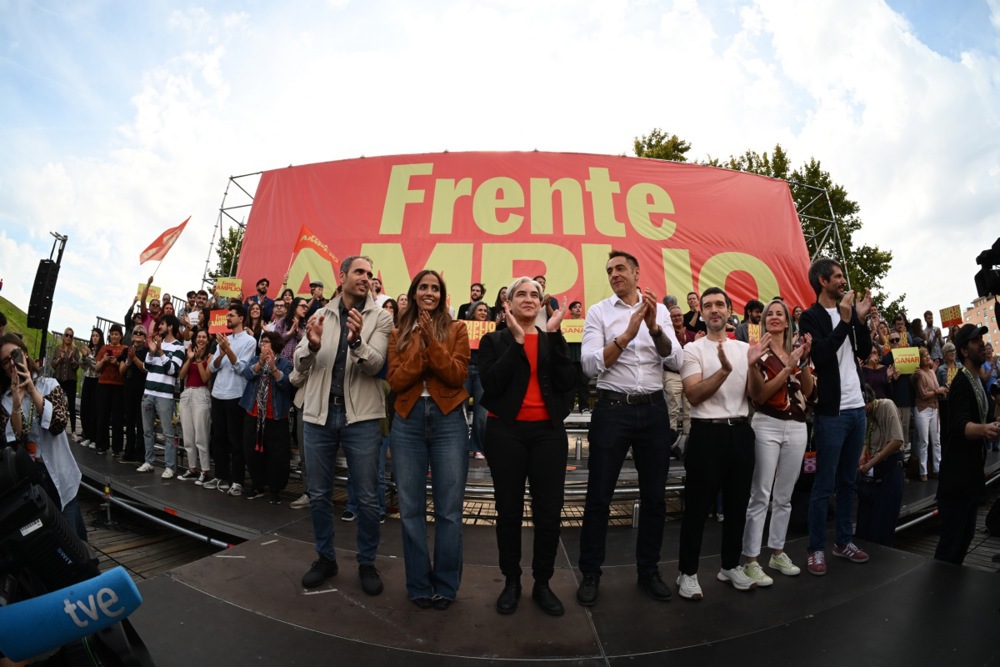
“These past few days have been very difficult … some people will be disappointed today, and for that I am sorry,” Ada Colau, former Barcelona mayor and leader of the Broad Front, said last week, as her alliance failed to reach an agreement on a joint electoral platform ahead of the election.

Spain’s electoral system disadvantages smaller parties, especially in less populated provinces. That means their votes are less likely to translate into seats. 

In Spain, a country where a two-party system was the norm until 2015, it is puzzling that the “new” left, born precisely to break that duopoly, has ended up too divided to even compete with the mainstream.

And that makes it harder for Sánchez to keep any leftwing coalition, which relies on these smaller forces.

So what’s the picture? On one side, the right is more aligned than ever: the PP and Vox are running separately, but the conservative party openly says it is willing to strike a deal with the far-right if needed. Liberalism is almost non-existent, even though Democracia 21 will run for the first time, but only in Madrid and Barcelona. And the left is divided. 

War of egos 

This article continues, but the full version is available only to EUobserver.com subscribers. Visit account.euobserver.com/membership

  •  

Spain’s Ceuta Migration Crisis Tests EU Asylum Rules as Thousands Await Decisions

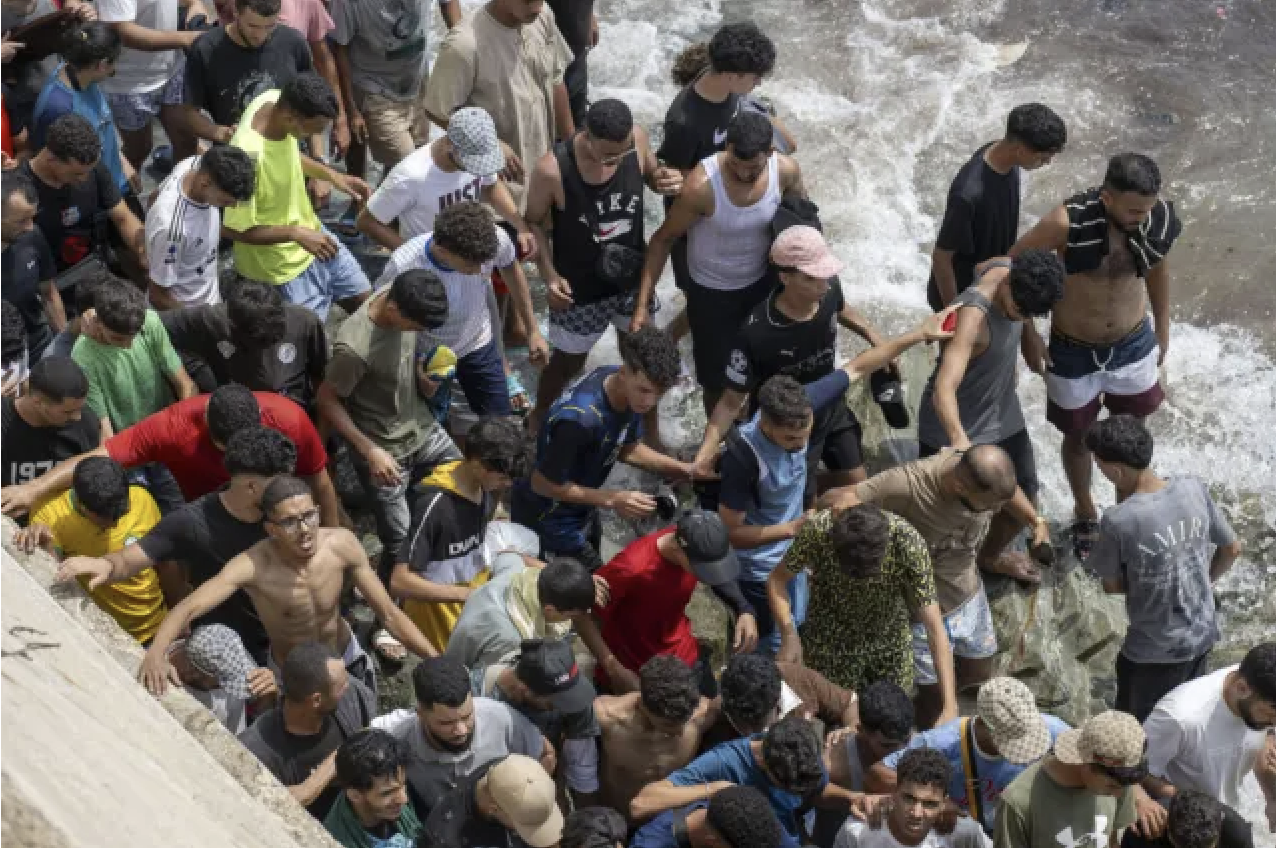
Spain’s government has declared that the first phase of its emergency response to the Ceuta migration crisis has been completed, following the arrival of an estimated 80,000 migrants from Morocco at the end of July.

Interior Minister Fernando Grande-Marlaska said on Friday, 16 October, that approximately 12,000 people had returned voluntarily to Morocco since August, while the authorities had expanded facilities to process asylum applications and return decisions.

Nevertheless, substantial administrative and humanitarian challenges remain in the Spanish enclave, particularly concerning people awaiting decisions on their legal status and unaccompanied minors. The situation has become an important test of the European Union’s revised migration and asylum legislation.

Unprecedented crossings at the African border

The crisis began on 30 July, when tens of thousands of people entered Ceuta from Morocco by land and sea following the circulation of misleading information on social media about access to Spanish territory.

According to an October briefing by the European Parliament’s Research Service, approximately 80,000 people crossed into the enclave during the incident, overwhelming local reception facilities and creating an emergency at one of the EU’s few land borders with Africa.

A subsequent European Parliament resolution referred to at least 141 deaths associated with the crossings, although the initial figure reported by Spanish authorities was lower. The exact number of people who crossed and the final death toll have remained subjects of uncertainty.

Most entrants returned to Morocco within days. However, thousands remained, leaving Spain responsible for assessing individual claims, arranging lawful returns and providing appropriate accommodation.

Ceuta’s geographical position complicates these procedures. Although the enclave is Spanish and forms part of the EU, travellers departing for mainland Spain remain subject to specific controls at its ports and airports.

Spain expands its processing capacity

During a visit to Ceuta on 16 October, Grande-Marlaska defended the government’s management of the emergency and announced that additional police resources would substantially increase administrative capacity.

The expanded temporary reception and processing facilities at El Tarajal are intended to handle at least 100 files daily, including applications for international protection and return procedures.

According to figures presented by the Interior Minister, approximately 1,200 applications for international protection had been formally submitted, with around 700 decisions already issued.

He also rejected allegations that the authorities had conducted concealed or involuntary returns, insisting that departures to Morocco had followed voluntary decisions or the appropriate legal procedures.

The minister said more than 500 expulsions had been executed through judicial or administrative decisions in recent months. These are distinct from the approximately 12,000 voluntary returns recorded since August.

The treatment of unaccompanied minors remains contentious. The European Parliament’s research briefing estimated that around 1,100 such minors were in Ceuta, including some who arrived before the July emergency.

Responsibility for their care has generated disagreement between the Spanish central government and Ceuta’s autonomous administration, particularly over guardianship, identification and the distribution of minors to other regions.

New EU asylum system faces a practical test

The EU Pact on Migration and Asylum, which began applying in June 2026, was designed to strengthen external border procedures while establishing clearer responsibilities for Member States.

Its provisions include identity and security screening, accelerated procedures for certain asylum applications and a solidarity mechanism allowing countries to support those facing disproportionate migration pressures.

Under the screening rules, the authorities generally have up to seven days to complete the initial checks required for people apprehended after irregular entry.

However, the Ceuta emergency demonstrates the difficulty of applying individual administrative procedures when arrivals occur in exceptionally large numbers within a short period.

The geographical concentration of arrivals means that adequate staffing, interpretation, legal assistance and reception facilities become essential to ensuring the system operates within its prescribed deadlines.

Spain requested assistance from Frontex, Europol and the European Union Agency for Asylum in August. The Commission subsequently announced €114.7 million in emergency assistance in September.

Political dispute over migration policy

The crisis has widened divisions between European governments over border enforcement and the regularisation of migrants already living within the EU.

Italy and several other Member States have questioned whether Spain’s separate regularisation programme could encourage further irregular migration. Madrid rejects the suggestion that the programme caused the Ceuta crossings.

The Spanish scheme covers only people who met the residence requirements by the end of 2025. Those who arrived during the July 2026 crisis are not eligible.

European Parliament members also adopted a resolution in September calling for stronger protection of the EU’s external borders and greater cooperation with Morocco. The resolution characterised the crisis as involving the possible instrumentalisation of migration, although Spain has said it has no evidence establishing Moroccan government involvement.

The continuing administrative backlog, the position of minors and the effectiveness of EU assistance will determine how quickly Ceuta can return to ordinary border operations.

Beyond Spain, the episode raises a practical question for Brussels: whether Europe’s new asylum framework can maintain border controls and individual legal safeguards simultaneously during an exceptionally large and sudden influx.

  •  

Storm Adam Leaves Three Dead as Torrential Rain Devastates Eastern Spain

At least three people have died in severe flooding across eastern Spain after Storm Adam brought extraordinary rainfall to the Mediterranean coast, forcing thousands from their homes and leaving residents stranded on rooftops as emergency services struggled to reach inundated communities.

The worst flooding struck parts of Valencia and Alicante, where swollen rivers overwhelmed roads, flooded residential districts and disrupted transport. Authorities ordered residents of 145 municipalities to remain indoors as rescue operations continued on Monday, 19th October.

The disaster has revived memories of the October 2024 floods, which killed more than 230 people in the Valencia region and prompted widespread criticism of the authorities’ emergency warnings and response.

Thousands evacuated as rivers burst their banks

The coastal town of Oliva, in Valencia province, was among the worst affected areas. Approximately 2,000 people were evacuated from seven campsites as floodwaters spread through low-lying neighbourhoods, while residents elsewhere sought refuge on upper floors and rooftops.

According to reports from the Spanish news agency EFE, emergency crews were reinforced by Spain’s Military Emergencies Unit, whose personnel were deployed from their base at Bétera to assist local firefighters and rescue teams.

Helicopters were used to reach people trapped by the rising water. Roads became impassable, vehicles were swept away and several settlements were temporarily isolated as streams and drainage channels overflowed.

The scale of the rainfall was exceptional even for a region accustomed to intense autumn storms. In parts of Valencia and Alicante, precipitation approached 700 litres per square metre over approximately 48 hours, equivalent to 700 millimetres of rain.

Pego, in neighbouring Alicante province, recorded more than 600 millimetres within approximately 36 hours, placing considerable pressure on local waterways and drainage infrastructure.

Fatalities and emergency restrictions

Two women died during the weekend, including one swept away by floodwaters near Cabrera de Mar, north of Barcelona, and another whose body was recovered near Sagunto, in Valencia.

A third woman was found dead inside a flooded property in Oliva during rescue operations on Monday. Separately, a 64-year-old man died after suffering a heart attack at a flooded campsite in the same town, according to EFE’s account of the incident.

The regional authorities activated level-two emergency arrangements, enabling additional resources to be mobilised as local services confronted the consequences of prolonged rainfall.

At the height of the emergency, stay-at-home restrictions covered approximately 800,000 people. These measures were subsequently eased in many municipalities, although restrictions remained in force in particularly exposed districts.

Schools were closed in affected areas, roads were blocked and rail services disrupted. The situation remained particularly difficult where floodwaters had entered homes, commercial premises and tourist accommodation.

Renewed examination of emergency preparedness

Storm Adam has inevitably drawn comparisons with the disaster of October 2024, when catastrophic flooding in eastern Spain exposed serious weaknesses in emergency communication, evacuation procedures and coordination between public authorities.

That earlier disaster generated disputes over responsibility between regional and national institutions, particularly concerning the timing of warnings and the deployment of rescue resources.

The latest flooding places those questions back on the political agenda. Spain’s decentralised administrative structure gives regional governments substantial responsibility for civil protection, while the central government can provide military assistance and additional emergency resources.

The deployment of the Military Emergencies Unit demonstrates how rapidly local incidents can require national intervention when extreme rainfall affects several municipalities simultaneously.

The challenge extends beyond issuing weather warnings. Authorities must determine whether warnings reach vulnerable residents, whether evacuation routes remain accessible and whether emergency personnel can intervene before flooding becomes dangerous.

In communities close to rivers, floodplains and coastal drainage systems, these decisions become particularly consequential when rainfall accumulates over a short period.

European implications of repeated flooding

The disaster also raises questions about infrastructure investment and the application of European flood-risk legislation.

Under the EU’s Floods Directive, Member States are required to assess flood risks, prepare hazard maps and develop management plans designed to reduce the consequences for human health, economic activity and the environment.

Those obligations require national and regional authorities to identify vulnerable areas and consider preventive measures, including land-use planning, flood defences and emergency preparedness.

Extreme rainfall does not produce the same consequences everywhere. The effects depend partly on local geography, drainage capacity, urban development and the condition of waterways.

Meteorological warnings had also extended towards Catalonia as the weather system moved northwards, creating additional concern in areas where saturated ground could increase the risk of further flooding.

For the affected municipalities, the immediate priorities remain the completion of rescue operations, restoration of essential services and assessment of damage to homes, roads and businesses.

The longer-term examination will concern whether the emergency arrangements and infrastructure improvements undertaken since the 2024 disaster were sufficient to reduce the consequences of another major autumn storm.

  •  

Neanderthal Hand Found in a Spanish Cave Still Holds Its DNA After 46,000 Years

Neanderthals left plenty of traces in the western Pyrenees, the mountain range that separates Spain from France. Stone tools, butchered animal bones, the leftovers of their camps. What nobody had ever found in Navarre, the region of northern Spain whose capital is Pamplona, was a single bone of the people themselves. On Monday that changed, […]

  •  
❌