❌

Reading view

Democrats, groups fight back after Supreme Court clears way for Trump attack on mail voting

Ballots are tabulated on election night at the Fulton County Elections Hub and Operation Center on November 5, 2024 in Fairburn, Georgia. Photo by Megan Varner/Getty Images
Common Dreams Logo

This story originally appeared in Common Dreams on Aug. 25, 2026. It is shared here under a Creative Commons (CC BY-NC-ND 3.0) license.

Democratic leaders and a “pro-voter” coalition on Tuesday announced separate actions to combat President Donald Trump’s attack on voting by mail after the US Supreme Court’s right-wing majority delivered a “painful setback” for critics who argue the Republican’s executive order is unconstitutional.

The president’s March order directed the US Department of Homeland Security to compile lists of citizens eligible to vote, states to provide voter information to the federal government, and the United States Postal Service to craft new regulations for absentee ballots—for which the USPS published a final rule last Friday, less than three months away from the midterm elections.

The nation’s top court said in a 6-3 decision on Monday that Democrat-led states had not demonstrated sufficient standing to challenge the president’s order and paused a lower court injunction blocking its implementation. The attorneys general in that case, Trump v. California, vowed to keep fighting back, and as of Tuesday evening, others already are.

The chairs of the Democratic National Committee (DNC) and Democratic Governors Association, US Senate and House minority leaders, and heads of the party’s campaign committee for each chamber of Congress on Tuesday announced the filing of a new motion for a preliminary injunction.

“Today, we are taking strong, joint legal action to stop Trump’s unlawful attempt to restrict mail-in voting through the Postal Service,” said DNC Chair Ken Martin, Kentucky Gov. Andy Beshear, Sen. Chuck Schumer (NY), Rep. Hakeem Jeffries (NY), Sen. Kirsten Gillibrand (NY), and Rep. Suzan DelBene (Wash.) in a joint statement.

“Yesterday’s Supreme Court ruling did not say that Trump’s executive order attacking voting rights is constitutional,” they stressed. Rather than ruling on the merits of the challenge, the majority of justices simply said that the states had sued prematurely, as federal efforts to respond to Trump’s order were still underway.

“But the law is clear: States have the authority to run elections—not the president,” the Democrats said. “”We will not stand by while Trump and Republicans try to unnecessarily inject chaos and confusion into our elections, just weeks before voting begins. We are asking a district court to immediately stop the Trump administration from unlawfully disrupting mail-in voting in every state. Democrats will continue fighting every day until Trump’s illegal executive order, and all of his other attempts to undermine our free and fair elections, are completely thrown out.“

The Campaign Legal Center (CLC) and Democracy Defenders Fund (DDF) also continued their battle against the order, filing a new complaint on behalf of the Arizona Students’ Association, League of United Latin American Citizens, Secure Families Initiative, Texas’ Travis County, and the city of Madison, Wisconsin.

BREAKING: we just filed to STOP the new USPS rule on mail ballots

The Court only held that the injunction came too early. Now we HAVE a final rule & we are litigating it@DDFund_ & @CampaignLegal are proud to represent LULAC, Madison WI & Travis County TX pic.twitter.com/e7MTj66U0W

— Norm Eisen (@NormEisen) August 25, 2026

“Key provisions of the president’s second executive order on elections have already been declared unlawful in multiple federal cases,” said Anna Baldwin, CLC’s director of voting rights litigation. “But the US Supreme Court’s recent lawless order on the shadow docket has given USPS the green light to attempt to implement their new mail voting rules—mere weeks before mail ballots start to be sent out in some parts of the country.”

“But nothing in the Supreme Court’s procedural order suggests that the rules are lawful,” Baldwin emphasized. “We will not let the president’s dangerous anti-voter agenda go unchecked, so we’re filing a new complaint challenging USPS’ unconstitutional new rulemaking to ensure all voters can cast their ballot in November.”

Ripping Trump’s order as a “reckless power grab that would likely result in mass confusion, chaos, and disenfranchisement of eligible absentee voters,” DDF legal director Tianna Mays said that “this rule not only places ordinary Postal Service employees in the untenable position of determining whether eligible voters may receive and cast mail ballots, it wreaks havoc on state and local election officials and civic engagement groups.”

“If not stopped,” Mays warned, “our clients, voter advocacy groups, and local election officials in two states would be tasked with deciphering, implementing, and educating their staff and members about the rule’s requirements, just weeks before Election Day.”

Separately on Tuesday, Massachusetts-based US District Judge Indira Talwani found that the Trump administration violated her injunction by finalizing the rule published last week by the Postal Service, though she declined to take any action over it.

The group behind that case, the League of Women Voters Massachusetts, also pledged to keep fighting Trump’s efforts to restrict voting by mail—despite repeatedly voting that way himself—after the Supreme Court’s interim ruling on Monday.

  •  

O passeio que tem de fazer pelo menos uma vez na vida

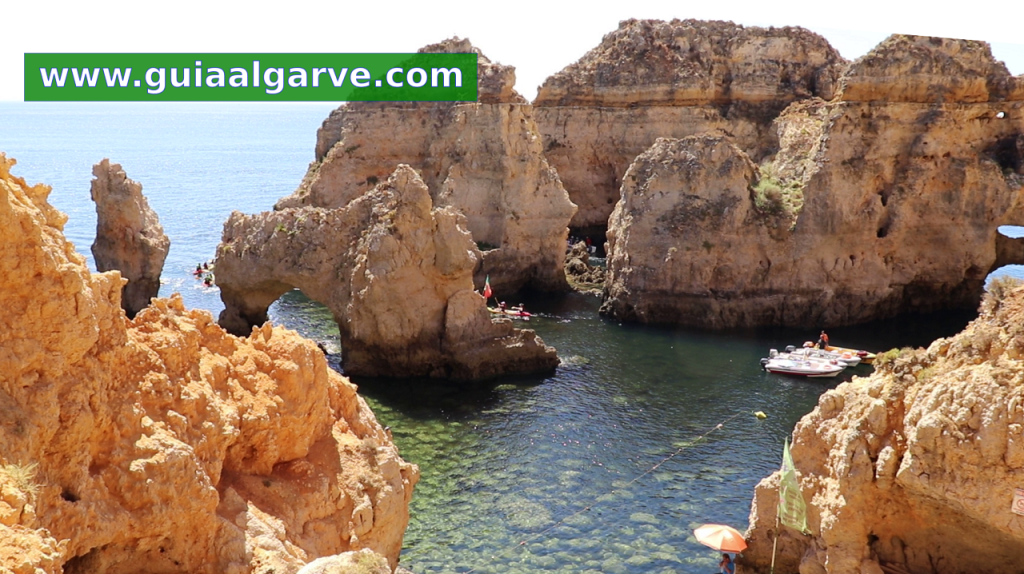
A Ponta da Piedade, no concelho de Lagos, é um verdadeiro tesouro natural no Algarve, famoso pelas suas falésias deslumbrantes esculpidas pelo tempo.

Uma das formas mais económicas e incríveis de explorar esta costa é através dos seus magníficos passadiços de madeira, que oferecem um dos melhores trilhos pedestres da região.

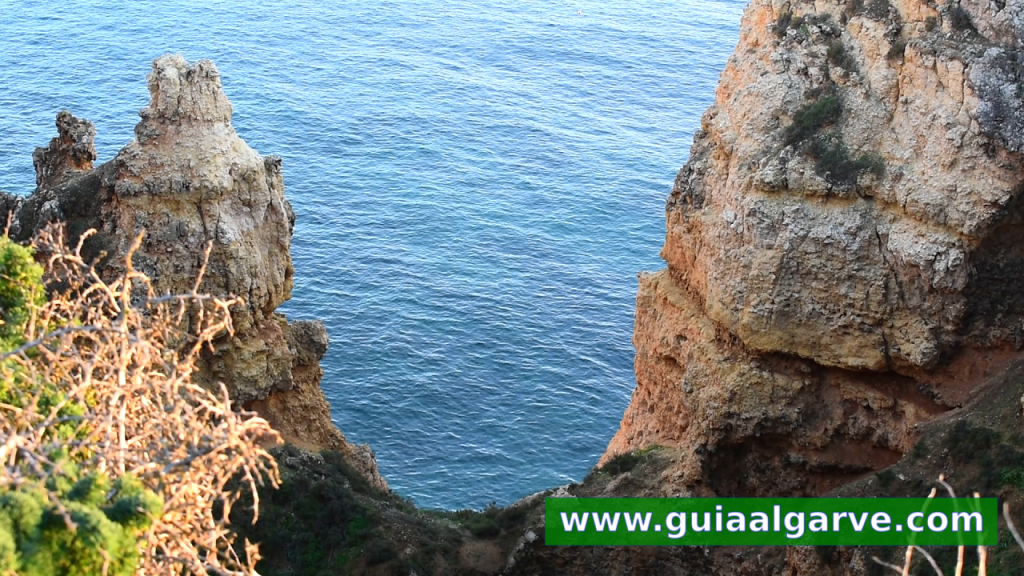
Ao longo do caminho, o oceano Atlântico serve de cenário para um espetáculo inesquecível de luzes e cores, revelando paisagens deslumbrantes, praias espetaculares e rochedos com formas surpreendentes.

O percurso total estende-se ao longo do topo das arribas e começa com um troço inicial de cerca de um quilómetro e meio a dois quilómetros que liga a Praia de Dona Ana ao Farol, passando por miradouros fantásticos entre a Praia do Pinhão e a icónica Praia do Camilo, com a cidade de Lagos a vislumbrar-se bem lá ao fundo.

Em seguida, o passeio entra no segundo troço, de cerca de dois quilómetros e meio, entre o Farol da Ponta da Piedade e a Praia do Canavial.

Por fim, para quem deseja completar toda a caminhada, existe uma ligação extra de cerca de um quilómetro a partir da Praia do Canavial que leva os visitantes até à Praia de Porto de Mós.

Pelo caminho, pode ir vendo o vai e vem incessante dos barcos de turismo, a levar e trazer os clientes às grutas da Ponta da Piedade.

Essa é, de resto, uma outra forma recomendada de conhecer esta zona. Se o quiser fazer de imediato, perto do farol há uma escadaria que o leva até um pequeno cais onde costumam encontrar-se barcos que o podem levar a dar uma volta.

Juntando tudo, acaba por se percorrer um número considerável de quilómetros (sobretudo se depois tiver de se voltar ao ponto de origem), mas vale bem a pena.

E, se o atraso for grande, até vai ter o bónus de deleitar-se com um magnífico pôr do sol.

  •  

AI Is Dead. Organoids Are Alive

Scientists are growing miniature human brains in labs around the world. (Yep, you read that right.) For Wired, Claire L. Evans reports on the latest research in the field of organoid intelligence, or OI, where scientists are artificially growing brain organoids from tiny human samples, whether skin, blood, teeth, or even hair. As these seed-sized globs mature, they are able to send and receive electrical signals, and even learn to remember and anticipate them. In other words, this living matter is programmable. “And this is where things get truly weird,” writes Evans.

For now, these neural computers are mostly of interest to researchers who want to work with neurons without taking on the tedious wet-lab husbandry themselves. Eventually, however, the company hopes that neurons will prove themselves to be an energy-efficient, resilient substrate for more general computing applications—including some tasks currently handled by AI, like image recognition and classification.

“When you think about what you want from AI, it’s biology,” said Brett Kagan, Cortical Labs’ chief operating officer, when I reached him over Zoom. “You want it to be self-repairing as much as possible. You want it to be adaptable. You want it to be long-lived. You want it to be energy-efficient. These are all features you get for free in biology.”

  •  

Dolphins and Other Lovers

As Eliran Arazi spends time with the Andoque, an Indigenous people in southern Colombia along the Caquetá River, he finds himself increasingly drawn into their tales that interweave sexuality with the creatures of the jungle. Gradually, those stories begin to shape his own way of thinking about seduction in modern life, as his mind spins off its own fantasies. A fascinating piece that blurs the lines between writer and subject, leaving the reader in a dreamlike state.

A few days later, jaguar footprints appeared along the long path leading to a small harbour on the Caquetá River. For the next week, Dufi’s family expressed concerns about venturing down that path, especially alone, for fear of a jaguar attack. When I mentioned my plan to go there for a phone call, hoping for better reception by the river, one of Dufi’s sons again cautioned me about the jaguar. Dufi, however, quickly reassured me. I had nothing to fear because jaguars dislike the soapy, perfumed scent of white people, which, he added, is precisely the smell that attracts dolphins.

As I reached the Caquetá in the late afternoon, I sensed the dolphin smell again. Odours and attraction, I thought – at least it works both ways.

  •  

Operation Forrest Gump: Nationalized Ukrainian bank allegedly became money laundromat

An anti-corruption investigation reaching from Ukraine's Presidential Office into the management of state-owned Sense Bank has raised questions far beyond the alleged laundering of UAH 150 million. At stake are the governance of nationalised assets, the independence of Ukraine's anti-corruption institutions, a planned bank privatisation, an international arbitration worth more than $1 billion and Kyiv's credibility as it moves deeper into EU accession negotiations.

A week after Ukrainian anti-corruption investigators unveiled an operation carrying the improbable codename “Forrest Gump”, the affair has developed into one of the most consequential governance scandals to hit wartime Ukraine.

At its center is a deceptively simple question: Where did UAH 150 million — approximately $3.4 million — used to secure the release on bail of former Justice and Energy Minister Herman Halushchenko, a centerpiece of the biggest corruption scandal of Zelensky government, actually come from?

The answer alleged by Ukraine's National Anti-Corruption Bureau, NABU, and Specialised Anti-Corruption Prosecutor's Office, SAPO, is extraordinary.

Investigators say criminal proceeds under the supervision and manual management of deputy head of the Office of the president of Ukraine Iryna Mudra were converted into apparently legitimate funds through a series of companies and bank accounts. The source of the money is linked with the main suspect of another corruption scandal Timur Mindich, a close ally of president Zelensky, and the goal was to post bail for a suspect in the Operation Midas investigation into alleged corruption surrounding the state nuclear company Energoatom.

NABU's official account says members of a criminal organisation, acting with representatives and officials of a state-owned bank, arranged the laundering of UAH 150 million during June 2026. The cash was allegedly introduced into the legitimate financial system through accounts belonging to shell companies before being used for bail.

The most revealing evidence released by NABU is not just a bank transfer but Mudra’s own confessions, which give wider picture. In one recorded exchange, a female voice attributed to her says: “Corruption should be systematised and controlled… There is no need to fight it.” A male interlocutor adds: “And lead it.” This is said by one of the highest Ukrainian official in charge of judicial reform. Yet her own words are arguably more disturbing, presenting corruption not as an abuse to be eliminated but as a system to be organised and kept under political management.

Other recordings portray Mudra discussing state owned Sense Bank, where this money-loundering operation took place, as an asset to be under direct political control and used for enrichment. She recounts a proposed arrangement under which political figures politicians from Zelensky party Servant of the People would refrain from attacking the bank while “Sense Bank has to pay them”, and quotes an instruction she received from above to “take over the bank” because it contains “serious flows”. She then describes its managers as compliant figures who would carry money wherever a senior Presidential Office official instructed them, adding that they had “crawled” to her “like kittens” asking to be taken under protection.

NABU’s published recording also appear to show Mudra discussing protection from the institutions supposed to investigate such conduct. She asks how to mobilize votes for “our” candidates to NABU’s Public Oversight Council and describes SAP chief Oleksandr Klymenko as “not one of ours,” warning that if he secured a second term, “we’ll all be fucked.” Taken together, these phrases suggest something broader than participation in a single suspicious transaction: an alleged attempt to control a state-owned bank while influencing the bodies capable of investigating that control. If authenticated and confirmed in context, they would provide unusually direct evidence of political capture and consciousness of wrongdoing. Mudra denies criminal conduct and says the excerpts were released selectively and without their full context.

Taking over the bank  

Revelations are shocking in many dimension and will have influence for years to come. One of the most striking revelation is usage of the state-owned Sense Bank as systemic money-laundering machine.

Sense Bank carries unusual political and legal baggage. Until 2022 it was known as Alfa-Bank Ukraine and was owned through corporate structures associated with ABH Holdings. Among the beneficial shareholders were Russian businessmen including Mikhail Fridman and Petr Aven.

Ukraine subsequently imposed sanctions and, in July 2023, the government took Sense Bank into state ownership. Ukraine's Ministry of Finance says the measure was intended to maintain financial stability and protect depositors after sanctions were imposed on significant shareholders. The state today owns 100% of the bank.

It was therefore no ordinary commercial bank allegedly being exploited. It was an asset that Ukraine had taken into public ownership during wartime, in considerable part because of national-security concerns surrounding its previous ownership.

The source material examined by EU Reporter describes this as a crucial feature of the scandal: after nationalisation, the allegation is not simply that corrupt actors conducted transactions through Sense Bank, but that political influence was progressively established over the institution's governance.

That allegation remains contested and has not been established by a court. But documents released by NABU and widely reported by the Kyiv Independent and other leading Ukrainian media raise questions that are difficult for the Ukrainian authorities to ignore. The Kyiv Independent reported on 22 August that internal Nomination Committee records showed attempts to shape Sense Bank's supervisory board following nationalisation. The paper reported that Iryna Mudra, then deputy head of the Office of the President and chair of the committee involved in selecting supervisory-board members, strongly promoted Mykola Hladyshchenko for a place on the board despite objections concerning competence, potential conflicts of interest and previous employment. Hladyshchenko subsequently became chairman of the supervisory board.

The investigation also cited earlier leaked conversations in which prospective board candidates were allegedly described as “our guys”. Six people reportedly discussed in that context were subsequently appointed. EU Reporter has not independently authenticated those recordings or the leaked committee minutes, so their contents must remain attributed to the publications that obtained them.

However, now the anticorruption agencies established with support and guidance of the EU provide their findings suggesting that the bank was deliberately captured for criminal purposes. NABU says that by early June 2026 the alleged organisers had obtained de facto control of Sense Bank, enabling them to use accounts of controlled businesses in the laundering scheme. That allegation has now triggered action at the highest levels of financial regulation.

Bags of cash, shell companies and a banking bottleneck

The alleged mechanics of the operation read more like a crime thriller than a banking-compliance investigation. According to the investigative material compiled in the source document and subsequent Ukrainian reporting, cash was allegedly concentrated through businesses associated with former MP and developer Maksym Mykytas before being exchanged or routed through companies capable of putting apparently legitimate non-cash funds into the banking system.

The source describes alleged deliveries of cash in bags and boxes, routing through companies including Metrobud and other entities, and discussions about how transactions could pass financial-monitoring controls.

Ukraine's anti-money-laundering regime establishes a UAH 400,000 statutory threshold for certain financial-monitoring obligations, alongside wider risk-based requirements. It would be inaccurate to suggest that every payment above UAH 400,000 is automatically prohibited; rather, banks are expected to identify, scrutinise and where necessary report transactions according to statutory and risk criteria.

The significance of the NABU allegation is therefore not simply the size of the payment. Investigators allege that people involved in the transaction were actively discussing how to overcome or circumvent compliance barriers. Published recordings attributed to members of the alleged group include discussion of a Sense Bank compliance official who could prevent the transaction. Mudra in one recording says that she received demand “from above” to fire a bank official who refuse to clear transaction. The scheme released by NABU paint a shocking picture: to make the transfer the bank's automated monitoring arrangements were temporarily taken out of operation during the transaction.

Those are NABU allegations presented to the court. But the Ukrainian government has already treated them seriously enough to take immediate action. This confirms that NABU accusations are well grounded. 

Saving face

On 19 August, the Cabinet suspended supervisory-board chairman Mykola Hladyshchenko for six months and initiated the suspension of management-board chairman Oleksii Stupak. The Finance Ministry explicitly said that its intervention was designed to address risks including the possible use of Sense Bank for money laundering and inadequate oversight of AML procedures.

The following day, National Bank of Ukraine Governor Andriy Pyshnyi went further. The NBU concluded that Hladyshchenko no longer satisfied the statutory independence requirements for membership of the supervisory board and opened proceedings to examine the collective suitability of the entire board. On 21 August, the government terminated Hladyshchenko's powers altogether.  This regulatory reaction matters because it turns the episode from an allegation concerning individual criminal behaviour into a potential failure of corporate governance and banking supervision.

Sense Bank itself has said it is cooperating with the authorities. Following the NABU searches, the bank said it wanted the circumstances established “fully and objectively” and was providing investigators with the information required under legal procedures.

But the key question is different. There have been already multiple accusations of usage of nationalised Sense bank for allegedly corrupt or shadow schemes. NABU revelation did not come from nowhere and were not a separate incidental case. In previous NABU and journalistic investigations shocking facts of how bank has been used were presented. How was it possible that in time of war after nationalisation of one of the biggest banks  it could turn into money-laundering machine?

The Presidential Office role

The highest-profile suspect is Iryna Mudra. Mudra served as deputy head of the Office of the President and held responsibility for major legal and judicial-policy issues, including international mechanisms concerning Russian aggression and frozen Russian assets. President Volodymyr Zelenskyy dismissed her on 19 August. Presidential Decree No. 734/2026 confirms the dismissal but does not give a reason.  NABU and SAPO served Mudra with a notice of suspicion. On 25 August, Ukraine's High Anti-Corruption Court ordered her held in custody for 60 days while allowing release if UAH 20 million bail is posted. Prosecutors had requested considerably higher bail.

Mudra denies criminal wrongdoing. She has argued that the published recordings have been presented selectively and out of context. Through her lawyers, she has said that she is cooperating with investigators and is prepared to answer their questions through the proper legal process. The underlying source document expressly records those objections and cautions concerning the provenance and quality of some recordings.

On 24 August President Zelenskyy said the anti-corruption bodies had “no questions” for him regarding the investigation.

The billion-dollar shadow over Sense Bank

There is another legal dimension. Former shareholder ABH Holdings commenced ICSID arbitration against Ukraine after the 2023 nationalisation, seeking more than $1 billion and alleging unlawful expropriation. UNCTAD records the dispute as ABH v Ukraine, ICSID Case No. ARB/24/1, concerning the former ownership of Alfa-Bank/Sense Bank. A separate proceeding, EMIS v Ukraine, also concerns alleged unlawful expropriation of Sense Bank.

The government's 2023 decision was taken in the context of sanctions and financial-stability considerations. Whether it complied with the relevant investment treaties is a matter for international tribunals, not for a criminal investigation conducted three years later. Nevertheless, evidence about how the asset was governed after nationalisation could become relevant contextual material in those proceedings.

ABH's case alleges that the taking of Sense Bank was unlawful. Ukraine will defend the nationalisation on its own legal and national-security grounds. A subsequent allegation that politically connected actors exploited the nationalised institution does not answer that legal dispute, but it could make the factual history of the asset considerably more uncomfortable for Kyiv. The source analysis supplied to EU Reporter correctly identifies this potential intersection. Forrest Gump can raise a question about bad faith in the original nationalisation and the consequences might go much further than a bail for one allegedly corrupt official.

And the cherry on the top: Mudra was also one of the officials responsible for formulating and publicly defending Ukraine’s position against ABH Holdings, the former owner of Sense Bank, in its more than $1 billion ICSID claim over the bank’s nationalisation; she later chaired Ukraine’s delegation in other major international proceedings. This creates a particularly damaging contradiction: an official who defended the takeover as a lawful national-security and financial-stability measure is now accused of helping place the same bank under political control and use it to launder criminal proceeds. The allegations do not by themselves prove that the 2023 nationalisation was unlawful, but they seriously undermine the factual and moral credibility of Ukraine’s case and offer ABH a powerful argument that the bank was not transferred into genuinely independent state management, but into a system vulnerable to political capture.

Why Brussels should be watching

Forrest Gump is not an isolated investigation. Its roots reach into Operation Midas, NABU's investigation into alleged large-scale corruption at state nuclear operator Energoatom. NABU says Midas uncovered a criminal structure involved in substantial corruption and subsequent money laundering. Later investigative developments have continued into 2026.

The Forest Gump allegations concern money ultimately used as bail for an individual implicated in that wider investigation. This changes the character of the alleged conduct. If prosecutors prove their case, it would mean that money generated through criminal activity was not merely hidden or spent. It was allegedly recycled back into the criminal-justice system itself to secure the liberty of another suspect.

And here we come to the point vitally important for Brussels.

Ukraine formally opened negotiations on the EU's Fundamentals cluster on 15 June 2026. That cluster includes the judiciary, fundamental rights, justice and security, public procurement and financial control. Crucially, it is the first cluster opened and the last to close, and the European Commission has made clear that progress under it determines the overall pace of accession negotiations.

Ukraine is simultaneously receiving extraordinary financial support from the European Union. The Ukraine Facility provides up to €50 billion between 2024 and 2027, and support is tied to democratic mechanisms, the rule of law, sound financial management, anti-corruption safeguards and reform commitments.

The issue for Brussels is therefore not whether corruption exists in Ukraine. No serious accession process operates on the assumption that candidate countries are free of corruption.

The more important test is whether institutions can discover it, investigate it, prosecute it and correct the governance failures that allowed it without political obstruction. Viewed from that perspective, Forrest Gump presents two competing narratives. The negative interpretation is obvious: people occupying some of the highest positions in the Ukrainian state are alleged to have manipulated a nationalised bank and circumvented controls to launder criminal proceeds.

The more positive institutional interpretation is that Ukraine's own anti-corruption agencies investigated them, published evidence, served suspicion notices, triggered removals at a state bank and brought one of the country's most senior former presidential officials before an independent anti-corruption court.

Which narrative ultimately prevails will depend heavily on what happens next.

  •  

L’IA serve se entra nei processi

L’IA si diffonde nelle imprese italiane, restando però spesso confinata a singole attività. Mentre ha effetti sulla produttività e li propaga lungo le filiere solo se è integrata nei processi. È poi necessaria la disponibilità di dati e competenze.

L'articolo L’IA serve se entra nei processi proviene da Lavoce.info.

  •  

Despiste mortal na A8 junto às portagens de Loures provoca uma vítima mortal

📷 Bombeiros Loures

Um despiste de um automóvel ligeiro junto à zona das portagens da Autoestrada 8 (A8), no concelho de Loures, causou esta madrugada uma vítima mortal.

📷 Bombeiros loures

O alerta foi dado pouco depois das 02:30. Segundo o Comando Sub-regional da Grande Lisboa da Autoridade Nacional de Emergência e Proteção Civil, o veículo ligeiro, onde seguia apenas o condutor, despistou-se no sentido Sul-Norte, tendo o homem vindo a falecer no local.

📷 Bombeiros Loures

Para o local foram mobilizados 12 operacionais, apoiados por cinco viaturas. Apesar dos trabalhos de socorro e da operação no local, não foi necessário restringir o trânsito na A8, segundo a Proteção Civil.

Por: Dino Frazão
26 de Agosto de 2026

————————————————–
© 2026 Os Monhacas. Todos os direitos reservados.
Este é um projeto independente de criação de conteúdos.
Se gostou do que leu e ainda não é seguidor, siga a nossa página para ver mais conteúdos!
————————————————–

O conteúdo Despiste mortal na A8 junto às portagens de Loures provoca uma vítima mortal aparece primeiro em OS MONHACAS.

  •  

Hallada en Karahantepe una excepcional escultura de 11000 años de antigüedad que representa a un hombre sobre un leopardo

El ministro de Cultura y Turismo de Turquía, Mehmet Nuri Ersoy, ha dado a conocer el descubrimiento de una pieza arqueológica de singular valor durante los trabajos de excavación que se llevan a cabo en el yacimiento de Karahantepe, correspondientes a la campaña de 2026. Se trata de una escultura compuesta, con una altura de […]

  •  

EU reaffirms solidarity with Ukraine on 35th anniversary of regained independence

On 24 August, we celebrated Ukraine’s Independence Day. This occasion embodies the bravery, resistance and resilience of the Ukrainian people in the face of Russia’s vicious war of aggression. It also symbolises Ukraine’s journey over the past 35 years in becoming a modern, democratic and European country.  

To mark the occasion, the European Commission unfurled the Ukraine flag in front of the Berlaymont building in Brussels, which was also illuminated in Ukrainian colours. 

As we celebrate this milestone, the EU reaffirms its unwavering commitment to Ukraine’s sovereignty and territorial integrity. Since the beginning of Russia’s full-scale invasion, we have provided Ukraine and its people with unprecedented humanitarian, financial and military assistance. So far, this support amounts to €220.2 billion. 

Over the past months, the EU has stepped up its support for Ukraine’s economy and defence - because Ukraine’s prosperity is Europe’s prosperity, and Ukraine’s security is Europe’s security.   

We made the first disbursements under the €90 billion Ukraine Support Loan to help sustain the country’s financial needs and boost its defence capabilities. And on Ukraine’s Independence Day, we approved €6.1 billion in support for air and missile defence systems, missiles, ammunitions, and radars. 

Standing with Ukraine is also about holding Russia accountable. In July, we adopted a 21st package of sanctions, further restricting Russia's ability to fund its illegal war and to carry out attacks on Ukrainian civilians and civilian infrastructure.  

The EU has stepped up efforts to secure the return of Ukrainian children forcibly transferred or deported by Russia, and is making sure Russia faces accountability for its crimes through the International Claims Commission and the Special Tribunal for the Crime of Aggression against Ukraine.  

Ukraine belongs in the European family and in the European Union. We remain committed to supporting and assisting Ukraine on this process. This summer, Ukraine opened two accession negotiation clusters, illustrating its impressive capacity to implement reforms even during times of war. 

We continue standing with Ukraine in pursuing a comprehensive, just and lasting peace, and supporting their European path. 

For more information 

Press release - Commission approves €6.1 billion for Ukraine's defence

Visual story - Slava Ukraini, long live Europe

  •  

EU tells Ukraine: 'We will continue to provide as much support as necessary'

EU chief Antonio Costa has paid tribute to all those who he says are “standing strong in defending their homeland on the front lines and across Ukraine”.

The Portuguese-born official was speaking on Monday at Sofiiska Square in Kyiv, the country's capital, to celebrate Ukraine’s Independence Day.

He told the packed audience that 24 August marks the moment when Ukraine joined the “free nations of Europe”.

He said: “It is a crucial date in Ukraine’s long struggle for freedom and independence.”

He told Ukrainians that their  “courage and bravery inspire the world”.

He thanks those fighting in the frontlines: “Their families, their parents, their children, all of them, they are losing and risking their lives for the freedom of Ukraine and the freedom of Europe.”

He recalled EU member states had met on the very first day of the war, on 24 February 2022 “to galvanise European support for Ukraine”.

The president assured Ukraine that “European solidarity has been strong and unwavering ever since,” adding, “We have always been with you in providing political, financial, humanitarian, military and diplomatic support.”

He called the conflict a “terrible war” he hopes will “never happens again”.

The former Portuguese PM assured the war torn country, “We will continue to provide as much support as necessary, for as long as necessary.”

Turning to possible EU accession for Ukraine, he suggested this as: “The best guarantee of security and long-term democratic stability — for Ukraine and for Europe as a whole.”

He said: “Our goal is Ukraine’s integration into the European Union’s peace project: a union of nations that have overcome nationalism, that uphold democracy and the rule of law, and that work together for shared prosperity and development.

“We all know that accession is a demanding process.

"But these challenges should not block our political determination, rooted in geopolitical necessity and the free, democratic choice of the Ukrainian people.”

  •  

An Exceptional 11,000-Year-Old Sculpture Depicting a Man on a Leopard Found in Karahantepe

The Turkish Minister of Culture and Tourism, Mehmet Nuri Ersoy, has announced the discovery of an archaeological piece of singular value during the excavation work being carried out at the Karahantepe site, corresponding to the 2026 campaign. It is a composite sculpture, 70 centimeters in height, depicting a human figure seated on the back of […]

  •  

The Tomb of a Young Viking Woman with Remains of a 1,300-Year-Old Dress Found in Western Jutland

Danish archaeology is facing one of the most unique discoveries of the last decade in the field of ancient Nordic clothing. During the excavation at the site known as Skonager (ARV 661), carried out near Varde, in the heart of Western Jutland, a team of archaeologists has located a female tomb from the Viking Age […]

  •  

Submerged Etruscan Port from the 4th Century BC, the Oldest Linked to a Temple, Discovered Two Meters Deep off the Coast of Rome

A team of underwater archaeologists and geologists from Sapienza University of Rome and the Center for Maritime Studies has located, off the town of Santa Marinella north of Rome, the remains of an ancient pier and dock which, according to researchers, constitute the earliest known evidence of a mooring point associated with an Etruscan temple. […]

  •  

Um morto e um ferido ligeiro em despiste de viatura em Cuba

📷 Direitos reservados

Uma pessoa morreu e outra sofreu ferimentos ligeiros na sequência do despiste de um veículo ligeiro na Estrada Nacional (EN) 387, junto a Faro do Alentejo, no concelho de Cuba, distrito de Beja.

📷 Direitos reservados

Segundo fonte do Comando Sub-Regional do Baixo Alentejo da Proteção Civil à agência Lusa, o acidente ocorreu ao quilómetro 10 da EN 387. Após o despiste, a viatura incendiou-se, sendo que um dos ocupantes conseguiu sair do veículo e o outro acabou por não resistir.

A circulação rodoviária na EN 387 encontra-se cortada em ambos os sentidos junto a Faro do Alentejo. No local estão 14 operacionais apoiados por cinco viaturas do socorro.

26/08/2026
Por: Dino Frazão

————————————————–
© 2026 Os Monhacas. Todos os direitos reservados.
Este é um projeto independente de criação de conteúdos.
Se gostou do que leu e ainda não é seguidor, siga a nossa página para ver mais conteúdos!
————————————————–

O conteúdo Um morto e um ferido ligeiro em despiste de viatura em Cuba aparece primeiro em OS MONHACAS.

  •  

Pour ou contre la reprise des négociations d'adhésion à l'UE ? L'Islande se prononce samedi

L'Islande doit se prononcer samedi sur une reprise des négociations avec l'Union européenne lors d'un référendum au résultat très incertain. Les discussions d'adhésion, ouvertes en 2010, avaient été interrompues trois ans plus tard après l'arrivée au pouvoir d'une coalition eurosceptique.

  •  

The next risk in AI-Powered markets isn’t a bad model: It’s too many good models making the same decision

Artificial intelligence is becoming part of the machinery of modern markets. Banks, hedge funds and trading firms are using increasingly sophisticated models to identify opportunities, manage risk and execute trades, writes Amir Naser Hojati.

Most discussion focuses on one question: What happens when an AI model gets something wrong?

I think there is another risk.

What happens when many good models reach the same conclusion at the same time?

After roughly 15 years of trading futures, I have learned that markets often become dangerous not because one participant is wrong, but because too many become convinced of the same thing.

As traders sometimes say: when everyone moves to the same side of the boat, start watching the waterline.

Different models, same trade

Financial institutions may believe they are diversified because they use different models, vendors and strategies.

But those systems may still be learning from similar information: price history, volatility, order flow, economic data and news sentiment. They may also be optimizing toward similar goals.

Different models do not need to be identical to produce the same trade.

Several independent systems can simultaneously decide to reduce the same exposure, buy the same asset or hedge the same risk.

That creates hidden dependence.

A market can appear diversified while many supposedly independent systems are reacting to the same information in similar ways.

The real vulnerability may therefore not be one bad model, but the connection between many good ones.

Markets have seen this before

Crowded trades are nothing new.

Portfolio managers react to the same data. Traders watch the same levels. Risk desks cut exposure when volatility rises.

Technology increases the speed of those reactions. AI may also increase their consistency.

Humans disagree, hesitate or sometimes simply choose to do nothing.

Machines are less likely to disagree unless that behaviour is deliberately built into them.

If many models detect the same deterioration in risk and begin reducing exposure simultaneously, individually rational decisions can produce an irrational market outcome.

Each model may be doing exactly what it was designed to do.

The market can still become unstable.

Historical success can be dangerous

A strategy can perform well for years because market conditions remain broadly familiar.

That history creates confidence.

But markets do not owe us tomorrow because something worked yesterday.

One of the most dangerous moments is not when a model is obviously failing, but when it has accumulated enough successful history that people stop questioning its assumptions.

A calm sea can make almost any captain look skilled.

For AI-driven markets, the important question should therefore not only be:

How accurate is this model?

It should also be:

What assumptions does this model share with everyone else's?

More intelligence is not always more resilience

The usual response to model risk is to add more: more data, more parameters, another model, another control.

But resilience does not always come from adding complexity.

Sometimes it comes from removing exposure.

A system may become safer not because it predicts markets more accurately, but because it knows when conditions are unsuitable for taking risk.

That is one of the hardest lessons to translate from discretionary trading into automation.

Finding a trading signal is relatively easy.

Teaching a machine when a valid signal should be ignored is much harder.

Experienced traders know that a setup can look perfectly good and still not deserve capital. The market may be too crowded, liquidity may be changing, or correlations may be breaking down.

Sometimes the best trade is no trade.

Diversity of behaviour matters

Using several different AI models does not necessarily provide diversification if all of them react to stress in the same way.

Real diversification may require different behaviour, not just different architecture.

When should a model refuse to trade?

When should it reduce confidence?

When should it respond more slowly?

And how should it behave when the actions of other models are themselves changing the market?

That matters because financial markets are not ordinary prediction problems.

Predicting the weather does not change the weather.

Predicting a market can change the market because participants act on the prediction.

As more intelligent systems enter that feedback loop, their collective behaviour may become as important as the quality of any individual model.

The next edge may be restraint

Financial institutions will continue building faster and more powerful models.

But I suspect the next competitive advantage will not come only from making machines better at finding trades.

It will also come from making them better at recognizing when everyone else has found the same trade.

Markets have always punished excessive certainty eventually.

AI does not remove that principle. It may simply allow certainty to spread faster.

The smartest trading systems of the next decade may therefore be distinguished not only by how quickly they act, but by something harder to program:

Kknowing when not to join the crowd.

Amir Naser Hojati is a futures trader and fintech entrepreneur with around 15 years of experience in financial markets. His work focuses on algorithmic trading, automated risk management, and AI-driven trading systems.

  •  

Asheville terminates Flock contract in heated council meeting

Move to end Flock contract fails to placate Asheville residents who object to city's continued investment in other surveillance technology.

Asheville terminates Flock contract in heated council meeting is a story from Carolina Public Press, an award-winning independent newsroom. Our breakthrough journalism shines a light on the critical overlooked and under-reported issues facing North Carolina’s more than 11 million residents. Please consider making a contribution to support our journalism.

  •  
❌