❌

Reading view

How Russian Drones Forced Ukraine To Park Its M1 Abrams Tanks

Ukrainian crews operating Australian-supplied M1A1 Abrams tanks say the battlefield has become so saturated with Russian drones that their tanks cannot currently be used in combat, but they reject the idea that main battle tanks have become forever obsolete.

Since receiving these tanks last year, the crews, serving with Ukraine’s 425th Separate Assault Regiment “Skala,” have used the Abrams in two combat operations in the fight for Pokrovsk, a key Ukrainian logistics hub and part of a defensive belt of towns in Ukraine’s eastern Donetsk region. They recounted their experiences to Hromadske, an independent media channel in Ukraine.

Fighting around Pokrovsk

The first major deployment described by the crews took place in December of last year, when Abrams tanks were used to support assault groups entering Pokrovsk.

The crewmember with the callsign Kent described moving into the city behind a mine-clearing tank and ahead of two infantry fighting vehicles (IFVs) carrying assault troops, during a mission that was deliberately aggressive.

“Since a tank is a priority target — my task was to draw their attention, while our infantry dismounted and moved in successfully.”

The Abrams was also assigned three target points to engage along the route.

“We went right in there, poured it on, and drove back out,” he recalled.

A video showing the 425th Separate Assault Regiment in action in August 2025, soon after receiving the Abrams:

The second operation, on March 31, involved an attempt to enter and hold an industrial area near Pokrovsk to help block Russian movement toward Hryshyne, a contested village in the district.

The operation was prepared for more than two weeks. Ukrainian forces conducted reconnaissance flights, examined difficult sections of the planned routes, and provided crews with extensive video and imagery.

“They knew every meter of the route,” another of the unit’s commanders, with the callsign Kubik, said.

Weather was considered essential. The Ukrainians waited for fog and rain, hoping to limit the effectiveness of Russian drones.

“Without the right weather we wouldn’t have been able to pull off operations like that,” Kubik said.

The operation nevertheless resulted in the destruction of four out of five armored vehicles, some of which are seen in the video embedded below.

Russia's Rubicon Drone Center FPV drones destroyed a Ukrainian assault group near Pokrovsk, hitting an M1A1 Abrams tank, M1117 APC and BMP-2 as the unit tried to advance near Hryshyne under fog cover. #Ukraine pic.twitter.com/ZzE52qAYxp

— NOELREPORTS 🇪🇺 🇺🇦 (@NOELreports) April 1, 2026

The commander acknowledged that the Russian side may have had advance knowledge of the operation.

“I can’t rule out the possibility that the enemy knew our plan,” he said.

His Abrams was not immediately destroyed. According to the crew, it completed its task and the assault troops dismounted before the weather changed.

“Once the fog lifted, they started working on it with an FPV drone,” the commander said.

Why use tanks at all?

The losses prompted criticism from Ukrainian military commentators, particularly after footage of the destroyed vehicles was published.

However, the crews defend the decision to use armored vehicles for the missions. According to the men of the Skala interviewed, the alternative was often to send infantry over several miles on foot while carrying weapons, ammunition, water, and other supplies.

“That takes more time,” Kubik explained. “And the enemy isn’t standing still — the enemy is moving toward them.”

🇦🇺🇺🇦 Australia-supplied M1A1 Abrams AIM main battle tank in service of the Ukrainian 425th Separate Assault Regiment "Skala."

The tanks of such type recently saw combat in the area of Pokrovsk. pic.twitter.com/qhjSyGbhH6

— Status-6 (War & Military News) (@Archer83Able) December 23, 2025

The argument that infantry could simply move more stealthily on foot also has limitations.

“Every day the Mavic drones are flying, the fixed-wing drones are flying,” he said. “No fog, guys are visible.”

Combined with IFVs, the Abrams can provide the ability to rapidly move troops while simultaneously delivering heavy direct fire against enemy positions and offering substantial protection to its crew.

The crews argue that this capability remains worthwhile even when the tank itself may eventually be lost.

One commander was asked whether deploying a roughly $5-million tank makes sense if a single sortie can result in its destruction.

“Yes, of course it makes sense to deploy it,” he replied.

“First and foremost — it saves the lives of the crew inside it.”

Russian forces captured a relatively lightly damaged M1A1SA Abrams main battle tank operated by the 47th Separate Mechanized Brigade in the Pokrovsk direction.

The tank is equipped with added cage armor, as well as Kontakt and ARAT ERA. pic.twitter.com/mHyKk1xNRY

— Status-6 (War & Military News) (@Archer83Able) October 27, 2024

A tank under attack by drones

The Ukrainian crews repeatedly highlighted the Abrams’ accuracy and survivability.

“What are the biggest advantages of the Abrams?” Kent was asked.

“Accuracy.”

Its biggest disadvantage, he said, is equally obvious on a modern battlefield: “It’s very tall — and very large — so it’s hard to conceal.”

A video showing a U.S.-supplied Abrams under attack from Russian FPV drones:

🇺🇸🇺🇦 An Abrams tank withstands 9 FPV drones hits. Eventually, the tank was destroyed, but the tank crew successfully survived. pic.twitter.com/4NBKdg2zmW

— PS01 □ (@PStyle0ne1) July 7, 2024

Kent described surviving an engagement in which his tank was struck repeatedly while on the move.

“More than 20 drones hit me,” he said of one operation into Pokrovsk.

He attributed the Abrams’ survival to the combination of its armor and additional anti-drone protection fitted to the vehicle.

“All of it together is effective,” he said.

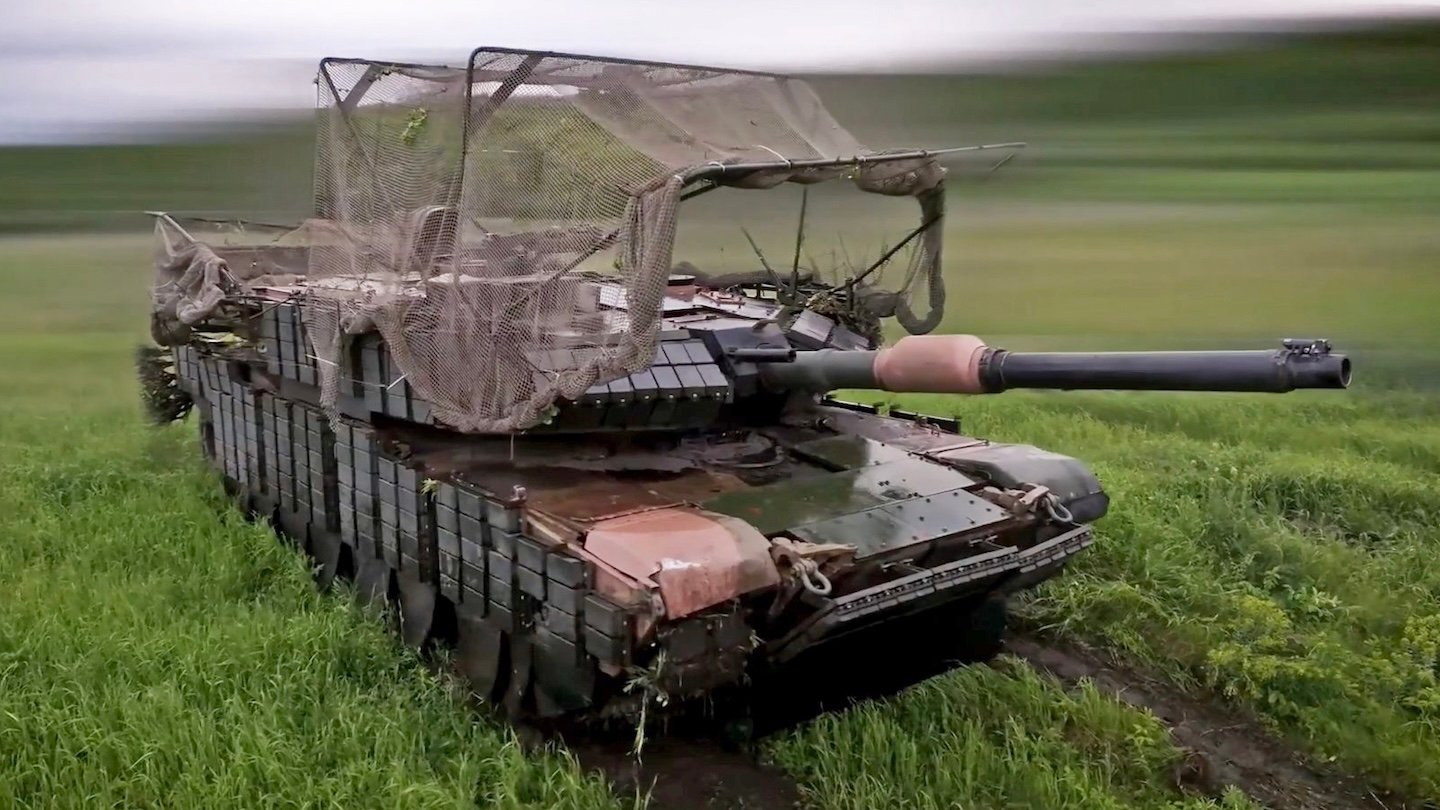
He pointed to fairly basic modifications including rubber strips and a foldable wire cage mounted on the turret, as additional layers of protection against drone attacks.

“A drone doesn’t hit the actual penetrating element directly — it just can’t reach it,” he explained. “It hits the rubber, and then the blast wave travels from there.”

Even with their tanks festooned with explosive reactive armor (ERA) bricks, the crews acknowledge that such protection has limits.
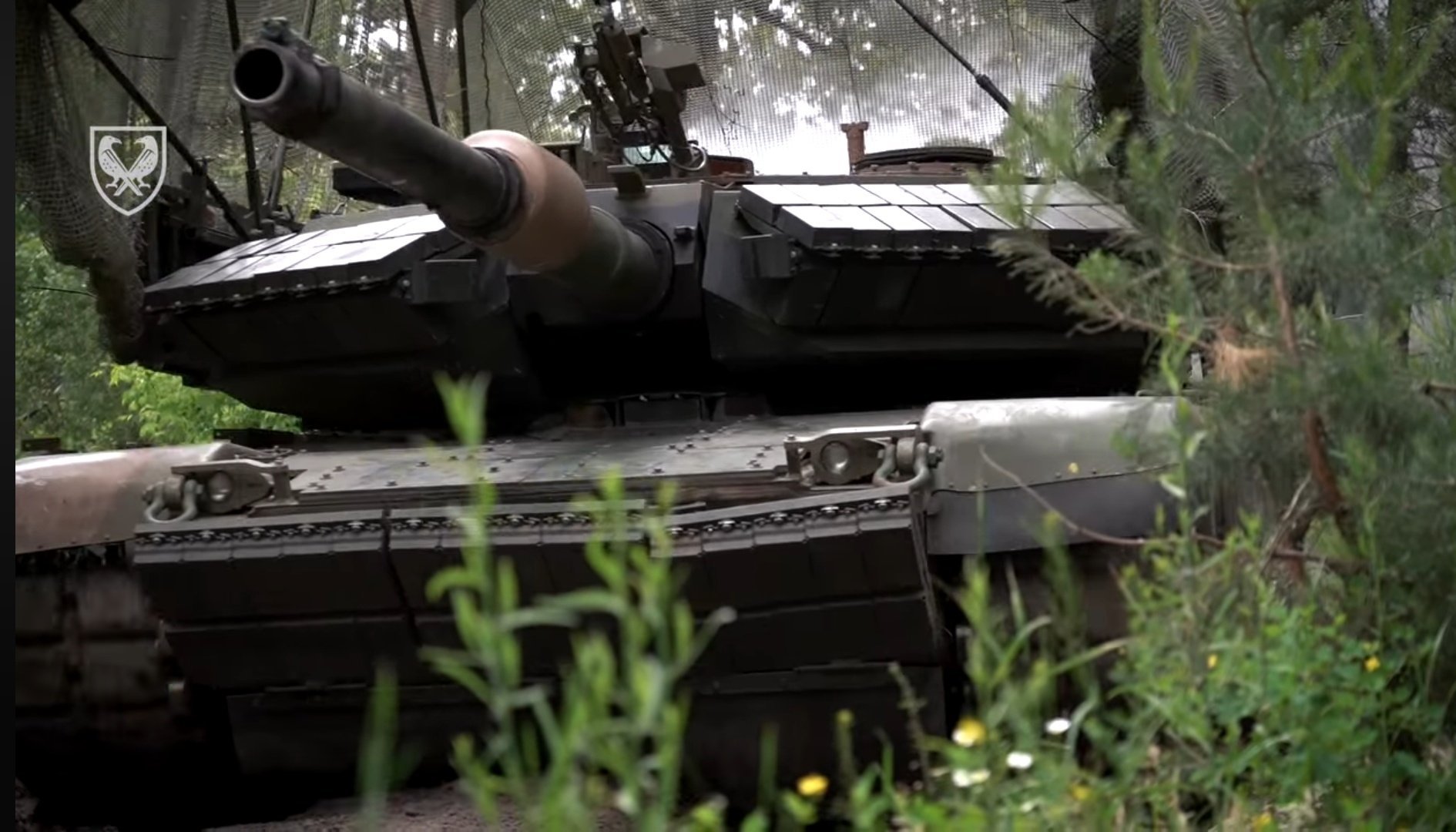
A head-on view of an M1A1 of the 425th Separate Assault Regiment shows the ERA bricks installed around the turret and in front of the hull. Ukrainian Armed Forces

US-supplied M1A1 Abrams tank in service of the Armed Forces of Ukraine with added Kontakt-1 ERA on the frontal hull and standard ARAT ERA on the sides. pic.twitter.com/PC2kDfxefO

— Status-6 (War & Military News) (@Archer83Able) May 21, 2024

Kent also noted that the Abrams was still missing the ‘hedgehog’-type protective coverings that have been seen on Russian tanks.

“They also protect very well. An effective thing,” he said.
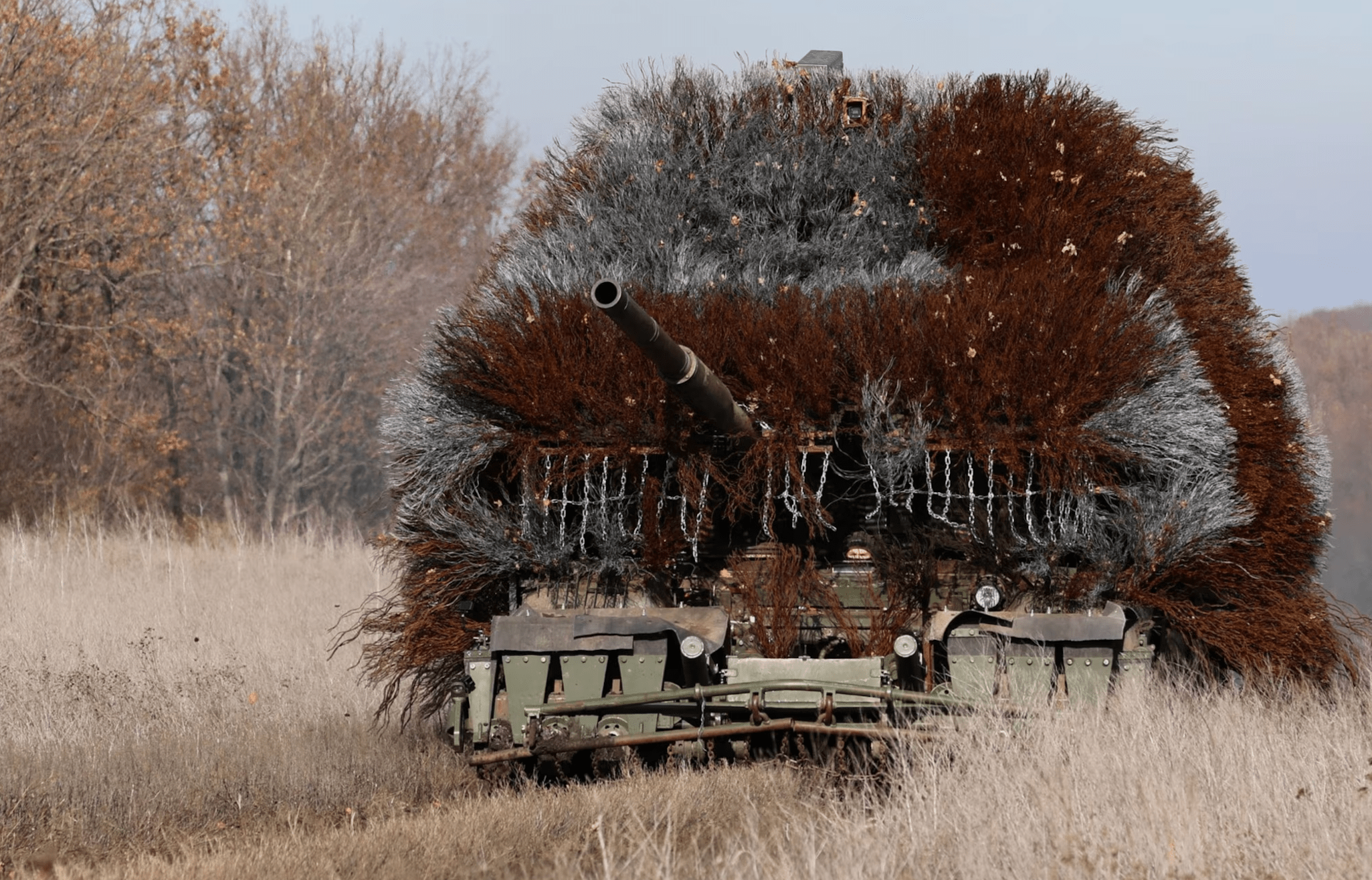
A Russian tank with the ‘hedgehog’-type protective covering. Russian state media

For now, the drone threat has led the regiment to keep its Abrams out of combat, as we will return to later.

The Abrams as a machine

The crews’ assessment of the Abrams included praise for its mobility, roomy interior, gun, and fire-control system.

Kubik said he had personally driven an Abrams to 50 miles per hour cross-country.

“The engine is an absolute beast,” he added.

The tank can also rapidly perform a pivot turn, which the crews consider particularly useful when maneuvering in confined spaces. Despite its prodiguous weight, it only rarely becomes bogged down after the kind of very heavy snow-melt that effects all vehicles on the battlefield.

Loading a 120mm M1028 canister cartridge into an M1A1 AIM Abrams main battle tank of the tank battalion of the 425th Assault Regiment. pic.twitter.com/tMd8QcROQe

— 𝔗𝔥𝔢 𝕯𝔢𝔞𝔡 𝕯𝔦𝔰𝔱𝔯𝔦𝔠𝔱 🦩🇬🇪🇺🇦🇺🇲🇬🇷 (@TheDeadDistrict) June 21, 2026

Its disadvantages include its demanding maintenance requirements. The running gear was described as particularly sensitive, with crews inspecting, lubricating, and replacing components after every sortie.

Fuel consumption is another major burden. The crew cited roughly 400 to 700 liters (106 to 185 gallons) per 100 kilometers (62 miles) depending on terrain and operating conditions.

“On asphalt it burns about 400 liters,” one said. In boggy terrain, consumption can reach “700 liters or more.”

The Abrams thirsty gas turbine engine and extreme logistical demands have always been a criticism of the platform.
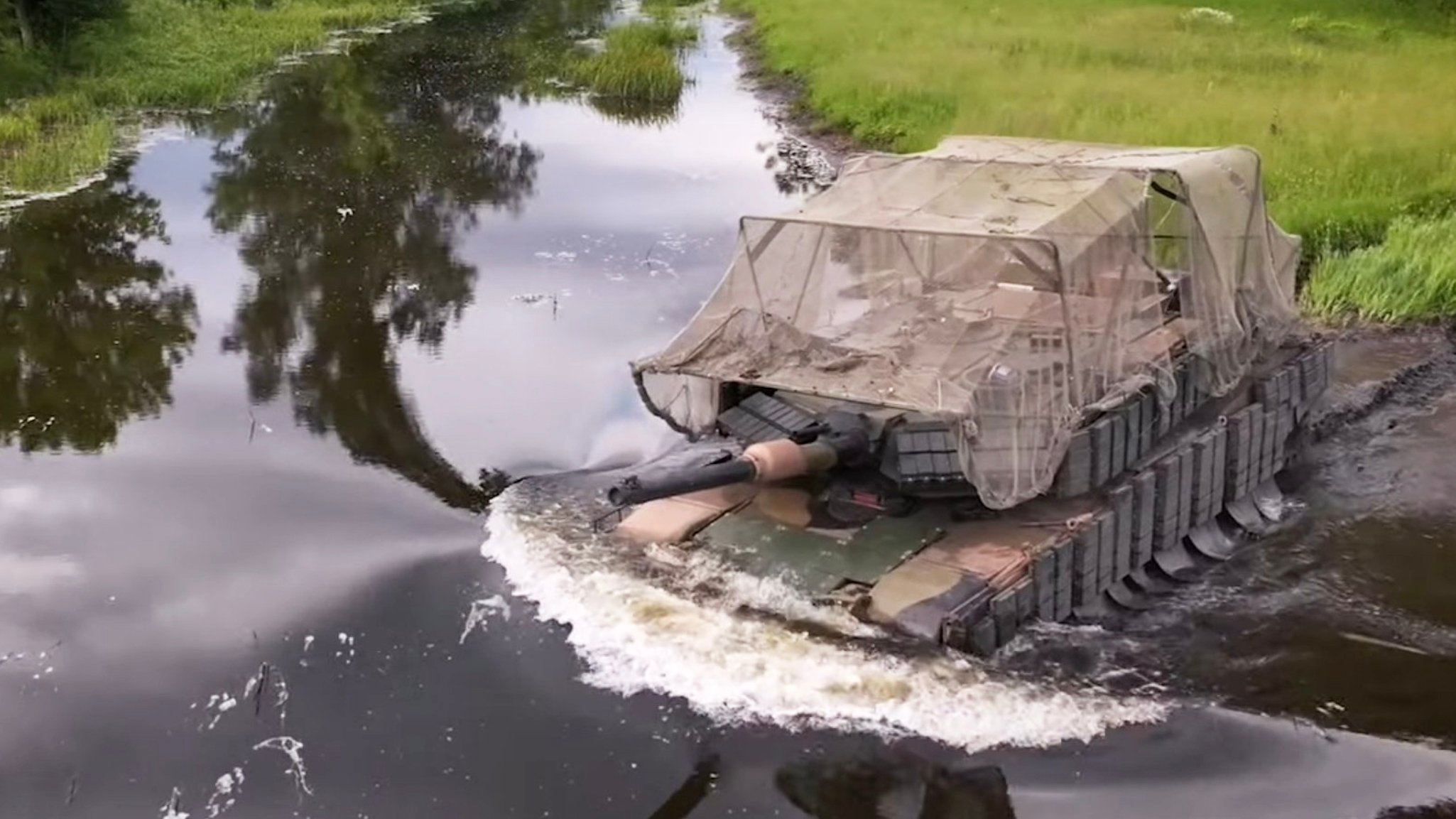
An M1A1 of the 425th Separate Assault Regiment fording a river. Ukrainian Armed Forces

The crews said the vehicle’s ability to operate on different fuels is useful, although diesel provides the best engine-hour performance in their experience. Prior to delivery, the gas turbine engines of the tanks were reconfigured to use diesel fuel instead of the standard JP-8 aviation kerosene, according to earlier reports.

They also praised the Abrams’ protected ammunition storage and crew space compared with Soviet-designed tanks.

The version operated by the Ukrainians is an M1A1 rather than the latest Abrams configuration, with less sophisticated electronics than newer variants. It also lacks the classified armor found on its U.S. Army counterpart.

“For me — as a tanker — this configuration, what we have right now, is more than enough,” Kubik said. “The sight is absolutely excellent. The gun is also great.”

🔥 Abrams destroys a house with Russian infantry in the Pokrovsk direction. pic.twitter.com/StUoZoMTO3

— MAKS 26 🇺🇦👀 (@Maks_NAFO_FELLA) August 25, 2024

Waiting for a solution to the drone problem

The interview ultimately presents a more complicated picture than the declaration that tanks are obsolete on the Ukrainian battlefield.

At the time of writing, at least 25 Abrams have been confirmed visually to have been destroyed, damaged, or abandoned in Ukrainian service. This is from a total of 31 provided by the United States and 49 from Australia.

“For now, we’re not using them further — there’s no way to,” Kubik said. “The enemy has developed their drone component very heavily, and for now we don’t have the means to counter that.”

While tanks remain exceptionally powerful direct-fire and protected mobility platforms, the proliferation of inexpensive uncrewed aircraft has made operating them increasingly difficult.

M1A1 AIM Abrams tanks of the 425th Assault Regiment 🇺🇦.
The reinforced upper glacis and turret roofs are clearly visible. pic.twitter.com/Sn9h8OWZ9P

— 𝔗𝔥𝔢 𝕯𝔢𝔞𝔡 𝕯𝔦𝔰𝔱𝔯𝔦𝔠𝔱 🦩🇬🇪🇺🇦🇺🇲🇬🇷 (@TheDeadDistrict) June 21, 2026

“If someone had told me, as a tanker, back in 2022: ‘Take this — we’re giving you an Abrams, we’ll give you time to train and you’ll fight in it,’” Kubik said, “I would never have climbed out of it.”

“I’d only be saying: ‘Bring me shells. I’ll drive non-stop wherever needed, arrive and work.’”
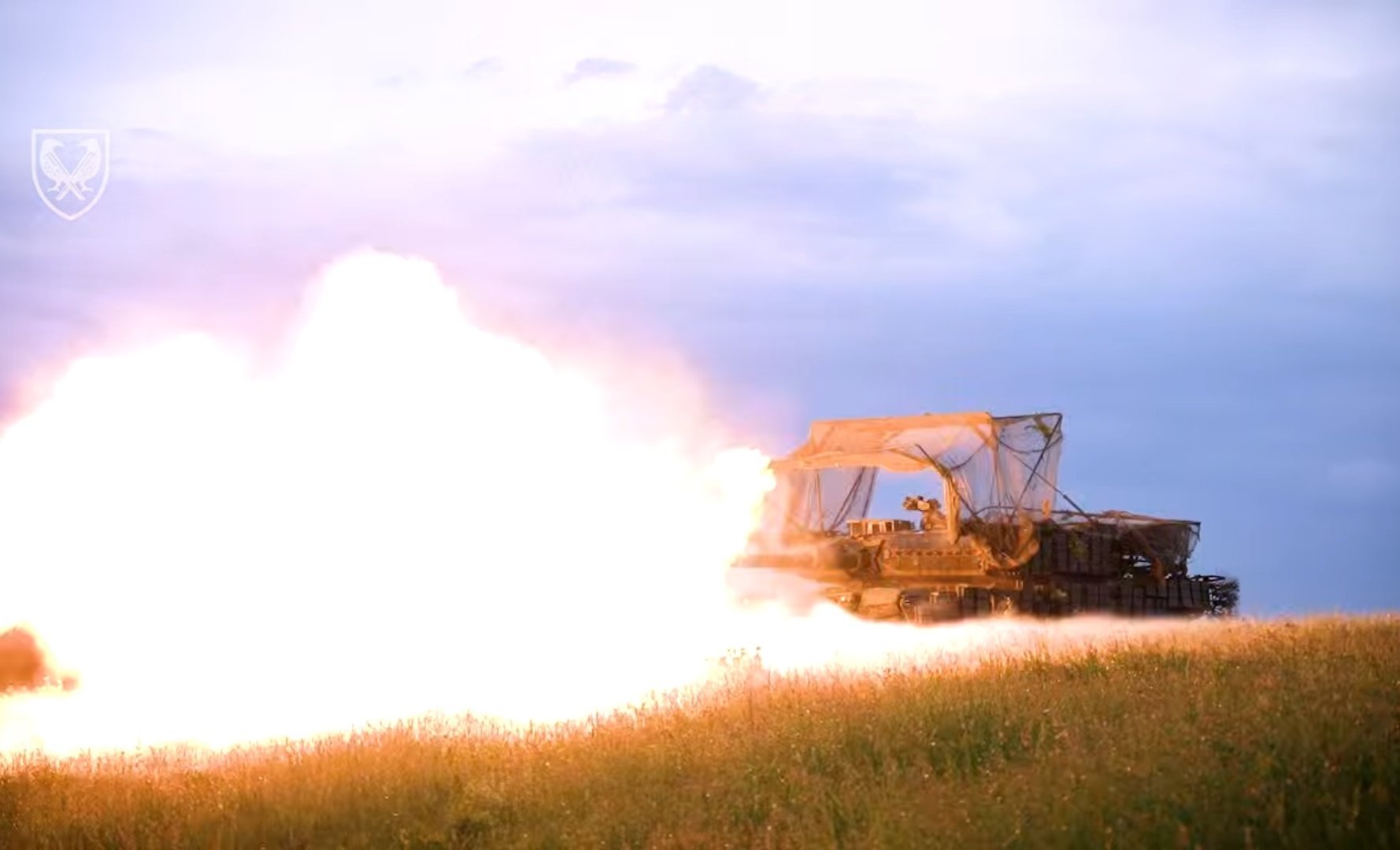
An M1A1 of the 425th Separate Assault Regiment firing its main gun. Ukrainian Armed Forces

As it stands, reconnaissance drones can find the Abrams, FPV drones can attack it, and persistent surveillance makes concealment difficult. Experience has shown that without more effective counter-drone capabilities, even a heavily protected tank can eventually be overwhelmed.

But Kubik believes that will change.

“The day will come when one of our bright minds figures out some excellent solution against drones — and we’ll start using them again.”

Asked whether the era of tanks is over, his answer was unequivocal.

“It’s not over … They’re just waiting it out for now, biding their time. Writing off tanks — in my opinion — is still too early.”

Contact the author: thomas@thewarzone.com

The post How Russian Drones Forced Ukraine To Park Its M1 Abrams Tanks appeared first on TWZ.
  •  

François-Xavier Bellamy : "La Commission européenne reconnaît enfin notre combat contre le Mercosur"

En cette rentrée morose pour l'Union européenne, nous recevons François-Xavier Bellamy, vice-président des Républicains, député européen au Parti populaire européen (PPE) et ancien professeur agrégé de philosophie. Il a mené la liste Les Républicains aux élections européennes où il a été réélu en 2024, avec 7,2 % des voix (soit six députés en tout). En cette rentrée, il revient sur les grandes crises de l'été, notamment les menaces russes, les enjeux écologiques ou encore l'arrivée de dizaines de milliers de migrants dans l'enclave de Ceuta.

  •  

La voix de l'UE peine toujours à se faire entendre : une diplomatie européenne à réformer ?

Branle-bas de combat dans la diplomatie européenne. Une réunion informelle des ministres des Affaires étrangères, dès la semaine de rentrée, entend mettre les 27 en ordre de bataille sur les grands dossiers internationaux. Mais la diplomatie européenne se pose des questions existentielles : à quoi sert-elle vraiment ? Pourquoi semble-t-elle si inaudible ? L'autorité de l'Estonienne Kaja Kallas – la Haute représentante de l'Union européenne (UE) pour les Affaires étrangères – est contestée. Le couple franco-allemand et d'autres acteurs réclament une réforme radicale au nom de l'efficacité.

  •  

Lois et majorités au Parlement européen : qui a voté quoi ?

Nous vous proposons une "opération vérité" sur les grands textes adoptés et les positionnements politiques, à méditer pendant les congés d'été ! L’année 2026 est particulièrement chargée en grands textes législatifs - près de 300 ont été votés -  et, phénomène nouveau, les majorités sont très fluctuantes au Parlement de Strasbourg, en fonction des sujets.

  •  

Immersion au cœur de la démocratie européenne et chasse aux fake news

Dans cet épisode d'Aux 4 coins de l’Europe, Caroline de Camaret embarque les téléspectateurs pour un voyage à travers le Parlement européen afin de décrypter l’actualité qui secoue Bruxelles, capitale européenne. L'épisode vous emmène au plus près de ceux qui font l’Europe d’aujourd’hui, tout en traquant la désinformation et les débats qui traversent l’hémicycle.

  •  

Le Parlement européen valide définitivement l'accord commercial avec Donald Trump

Le Parlement européen a approuvé définitivement, mardi, l'accord commercial négocié l'an dernier par l'UE et les États-Unis, qui prévoit notamment ​la réduction ‌de droits de ⁠douane sur de nombreux produits américains, dans ‌le but d'éviter une nouvelle ⁠guerre tarifaire avec le milliardaire républicain.

  •  

Union européenne : quatre questions sur les "hubs de retour" de migrants

L’Union européenne devrait bientôt permettre à ses États membres de créer des "hubs de retour" dans des pays tiers, qui auront pour but d’accueillir les étrangers en situation irrégulière expulsés du territoire européen. Le texte est considéré comme une avancée en matière de politique migratoire par la droite et l’extrême droite, et comme un recul pour les droits humains par la gauche. Explications.

  •  

450 millions d'Européens : l'Union européenne investit-elle pour ses citoyens ? (version intégrale)

À l'occasion de la Journée de l'Europe, célébrée place de la République, à Paris, le samedi 9 mai, nous vous proposons un grand débat public et télévisé, réalisé en partenariat avec le bureau en France du Parlement européen, la représentation de la Commission européenne et la mairie de Paris.

  •  

450 millions d'Européens : l'Union européenne investit-elle pour ses citoyens ? (version courte)

À l'occasion de la Journée de l'Europe célébrée place de la République, à Paris, samedi 9 mai, nous vous proposons un grand débat public et télévisé, réalisé en partenariat avec le bureau en France du Parlement européen, la représentation de la Commission européenne et la mairie de Paris.

  •  

Application provisoire du Mercosur par l'UE : Emmanuel Macron dénonce une "mauvaise surprise"

L'Union européenne va appliquer de façon provisoire l'accord avec le Mercosur, a annoncé vendredi la présidente de la Commission européenne, Ursula von der Leyen. Emmanuel Macron a estimé que cette décision était "une mauvaise surprise" pour la France et "une mauvaise manière" pour le Parlement européen.

  •  

Droits de douane : le Parlement européen suspend l'accord avec les États-Unis

Les eurodéputés ont suspendu, lundi, la procédure de mise en œuvre de l'accord commercial conclu l'année dernière entre l'UE et les États-Unis, disant attendre une clarification de Washington sur l'impact de la décision de la Cour suprême américaine qui a invalidé, vendredi, la majeure partie des droits de douane instaurés par Donald Trump.

  •  

Mercosur : une application provisoire du traité de libre-échange serait "un viol démocratique"

Si la présidente de la Commission européenne, Ursula von der Leyen, "venait à passer de force en imposant une application provisoire [du traité avec le Mercosur], cela constituerait en l'état une forme de viol démocratique", a déclaré, jeudi, la porte-parole du gouvernement français, Maud Bregeon. 

  •  

A no to the EU, not to Europe: What Icelanders actually voted on

Ein Foto zeigt eine Frau am Rednerpult, sie spricht vor einem Publikum mit einer großen Karte der Insel im Hintergrund.
Cover image: picture alliance / AP Photo/Marco Di Marco

It took Europe’s far-right leaders no time at all to work out what Icelanders meant on August 29th, when they voted 52.8% to 47.2% against resuming negotiations to join the EU: a prosperous democracy had looked hard at Brussels and said no. Britain’s Nigel Farage congratulated them on “voting to keep their independence”. France’s Marine Le Pen went further, calling the result a reminder that “another Europe is possible”.

But Iceland did not vote against Europe—it voted to keep the Europe it already has.The country sits inside the single market through the European Economic Area (EEA) agreement, is part of the Schengen area, and adopts swathes of EU legislation to stay compliant with standards set in Brussels. Short of membership, there is no closer relationship with the EU on offer.

Opposition to tight integration with Europe remains at the fringes of Icelandic politics and does not appear in any party’s manifesto. The foreign ministry’s latest annual survey showed that only 6% of Icelanders believe that international co-operation diminishes our sovereignty, against 69% who think it strengthens it. On the EEA agreement, 58% take a positive view and only 19% a negative one.

The Icelandic electorate has never shown much enthusiasm for politics built on distrust of institutions, conspiracy theories or the dissolution of the post-1945 international system. A country whose biggest annual festival is the Pride parade, and where women hold the offices of president, prime minister, foreign minister, bishop of the national church, mayor of the capital, chief of police and deans of both main universities is not a promising beacon for movements in the West that are uncomfortable with the inclusive nature of liberal democracy.

That being said, there is no denying that there was more than a whiff of culture wars in the no campaign. The masculine energy was palpable, and much effort went into far-fetched notions of an EU plot to expropriate Icelandic wealth. Young people were, by all accounts, targeted on social media and inundated with phone calls; one of the most potent messages was that EU accession could see them drafted into a European army. The yes side also played loose with the facts, not least in assertions that lower euro interest rates would automatically ease young people’s access to the housing market. Highly nationalistic messaging left some voters in a charged emotional state—and those voices were the loudest online, both during the campaign and in celebrating the outcome.

Still, the result was not a victory for the reactionary fringe. The fringe just happened to be on the winning side. The reasons Icelanders voted no are deep, domestic and largely unglamorous: fish, the currency, a comfortable arrangement with the world and a belief that the international order will remain relatively unchanged, despite temporary turbulence.

Iceland already has the Europe it wants

Through the EEA and the European Free Trade Association (EFTA), Icelanders and Icelandic businesses already enjoy the free movement of goods, services, capital and people. Every knowledgeable Icelander understands that without the market access, Iceland would not have prospered as it has. No serious politician dares to entertain abandoning the EEA. In fact, the no side ran on defending the agreement as the better alternative to full membership.

On defence and security, Iceland is a founding member of NATO and has a bilateral defence agreement with the US. For a country of 400,000 people that has never in its history had a military, these two pillars seem more than adequate, untested as they may be.

Full membership in the EU would require amending the constitution, which currently does not permit the transfer of sovereign powers that accession involves. This is sensitive in any debate about independence and sovereignty. As things stand, obligations arising from the EEA agreement only reach Icelandic law when the Icelandic parliament, the Althingi, legislates for them.

Hypervigilance about resources

Iceland owes its rise from poverty to prosperity in the 20th century to controlling the rich maritime resources that surround it. For centuries, foreign fleets exploited those grounds while Icelanders were kept out of large-scale fishing by both restrictions imposed by Denmark (which ruled Iceland from 1380 to 1918) and a lack of financial infrastructure.

At the start of the last century, new technology and financing opportunities unleashed an explosion of entrepreneurial activity in the sector. Iceland then pushed its fisheries zone outwards until it reached its present limit in 1975, over fierce British opposition in stand-offs known as the “cod wars”. It was the closest the country has ever come to a military confrontation. Legal victory in that dispute is a tremendous source of national pride and a standing reminder of the importance of natural resources to our economy. Furthermore, Iceland’s track record in managing this resource compares very favourably with efforts elsewhere.

Accepting the EU’s common fisheries policy is, on the face of it, a requirement for full membership. For most Icelanders, this is where the conversation stops.

It follows that a crucial question is whether Iceland could join the EU and keep control of its fisheries. Accepting the EU’s common fisheries policy is, on the face of it, a requirement for full membership. For most Icelanders, this is where the conversation stops. It is out of the question. Therefore, much of the historical debate about EU membership has revolved around whether a permanent carve-out is possible, and much energy has gone into reading cryptic remarks on the matter from EU representatives. The application launched in 2009 produced no answer. Talks were shelved before this vital question was seriously engaged.

For the yes camp, applying again was the only way to find out the real answer. The no side held that a satisfactory answer was simply not on the table—a belief that makes a no vote logical even for people who do not object to membership in principle. Why board a train if you do not believe it will reach its destination?

Our love-hate relationship with our currency

Since its adoption in 1918, the króna has been one of the most consistent sources of frustration in Icelandic public life. It started out at par with the Danish krone and, by that benchmark, has since lost 99.9% of its value. Long protected by import, export and currency controls, and propped up by punishing interest rates, it has now been largely abandoned by the big Icelandic businesses that operate internationally. They have mostly chosen the euro as their operating currency.

Despite its drawbacks, the flexibility that a national currency provides a small economy reliant on natural resources is not to be discounted. Some economists claim that the currency is a valuable tool to smooth out external shocks and protect Icelanders from economic setbacks turning into societal hardships such as mass unemployment. For many, the costs of maintaining a tiny currency that is attuned to our specific economic conditions are well worth the benefits of keeping unemployment at a minimum. For others, these benefits are overstated, and the costs in perennially high interest rates and market risk do not make economic sense.

Europe looks sluggish from Reykjavík

Iceland’s business and finance community is very focused on topline economic figures that show European growth lagging behind America’s. The prevailing narrative is that Europe buries its entrepreneurial talent under the weight of regulation while the US offers a superior environment for economic activity and technical innovation. Iceland’s business and financial community sees the country’s relative economic success as too valuable to risk with full EU membership.

Counter-narratives that build on broader measures of well-being do not seem to gain traction. Even extensive first-hand experience of European quality of life stands little chance when pitted against economic metrics.

Icelanders often cite Mario Draghi’s bleak assessment of the EU’s competitiveness as evidence that even consummate EU insiders have lost faith. The claim of the EU’s supposed economic feebleness does more than feed the economic debate; it has also become a thinly veiled contribution to the culture-war caricature of a weak Europe in contrast to a muscular America.

The old order still looks solid from the North Atlantic

The biggest disconnect between international affairs experts and the general Icelandic population lies in how each reads the way geopolitics is evolving. Contrary to much international reporting, the volatile state of the world barely featured in the campaign, which was mostly fought on domestic issues. Even threats from the American president, Donald Trump, against our Greenlandic neighbours have not moved the needle. Perhaps most Icelanders viewed the episode as too outlandish to be taken seriously, or too uncomfortable to contemplate.

Icelanders are very supportive of Ukraine and disdainful of Russia’s aggression, but they seem to judge the war far enough away not to affect them. Many are perplexed by America’s current foreign policy yet treat it as a deviation from a norm that will eventually re-establish itself. Bogi Ágústsson, a respected Icelandic journalist, recently told The Economist that Icelanders are in denial about how serious some recent international developments are. I believe most close observers of US politics would tend to agree with him.

During the campaign, warnings about an impending rupture in the world order that underwrites Iceland’s peaceful existence found few takers. The government had brought the referendum forward from a planned 2027 precisely because of these international developments, but worries about Europe’s security and NATO—that now dominate international policy discussions—were simply not top of mind.

In this context, it bears mention that Iceland has never suffered a violent invasion or a hostile occupation, which leaves matters of security and defence largely a theoretical exercise.

Did emotions run too high?

While the referendum’s result does not represent what some far-right European leaders wish it did, some elements of the campaign should give cause for concern. The intensity of the rhetoric was excessive considering the low stakes of the vote. Any accession treaty would itself have gone to a second referendum.

The international reaction to the result also suggested that some elements within Icelandic politics are embedded within the international anti-globalist movement. Micro-targeting, emotional pressure and unsupported claims proved effective. A sense of crisis or impending disaster was invoked, inviting a mindset that loosens the scruples that normally keep political discourse civil and constructive. The success of this approach could provide a campaign blueprint that all parties might find hard to resist in future elections, to the detriment of Iceland’s hitherto relatively civil political culture.

As any fisherman knows, illegal bait might get you an easier catch a few times, but eventually will ruin the fishing for all. Trust in elections is a common stock too, and it does not tend to replenish on demand.

Source

  •  
❌