❌

Reading view

Houthis’ Stranglehold On Strategic Bab Al-Mandab Strait Grows Stronger

The Iranian-backed Houthi rebels have captured Mokha – a key Red Sea port in southwestern Yemen near the Bab al-Mandab (BAM) Strait. There are also reports they seized two islands located in the Red Sea shipping lanes. These moves against the Saudi Arabian-backed forces that previously held these areas could further cement the Houthis’ control over the narrow chokepoint to the Gulf of Aden, where the group has already imposed a blockade on Saudi oil exports.

The Houthis’ drive to control the BAM has been emboldened by the U.S. being stretched thin in its ongoing fight against Iran. Combined with Tehran’s control of the Strait of Hormuz, this threatens to add to the Islamic Republic’s command over the flow of oil from the Middle East. It is a maximum pressure campaign on the U.S. and global markets, something we have predicted for years. Amid all this activity, the per-barrel price of Brent Crude is well over the $100 mark now.
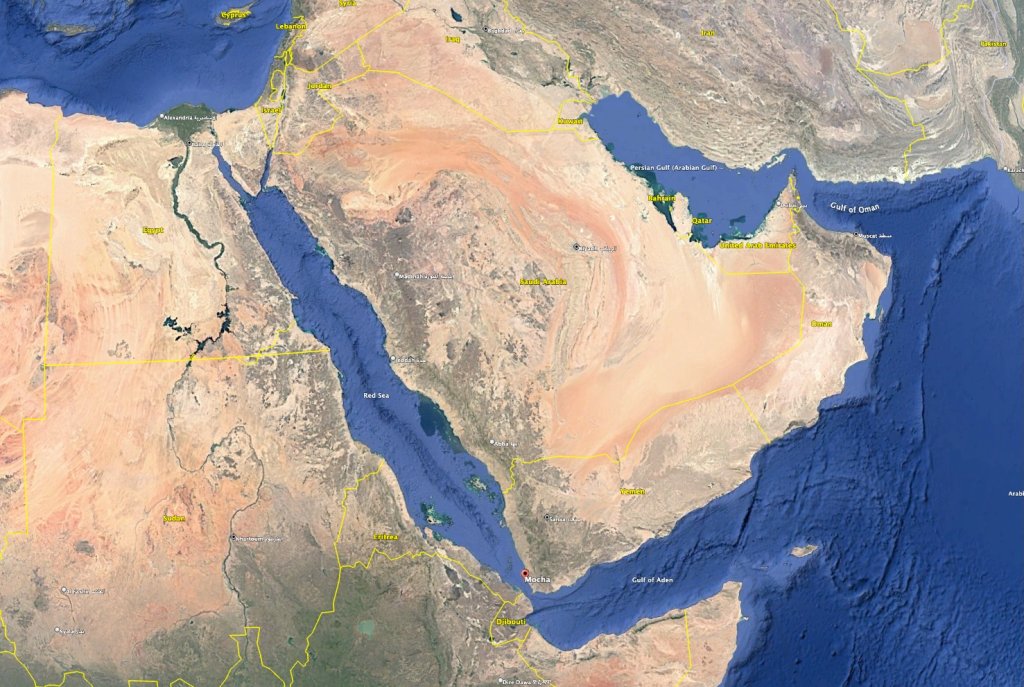
The port of Mokha. (Google Earth)

The rapid advance on Mokha was planned and backed by Iran, according to the leader of Saudi-backed forces that retreated from Mokha, which is about 50 miles north of the BAM. It took place as Tehran has taken a more belligerent stance in the region that has seen it reportedly damage U.S. aircraft in a recent attack on Jordan earlier this week and get closer to striking U.S. Navy warships with ballistic missiles.

“The Joint Forces have formed a command center south of the city of Mokha, following Houthi breakthroughs across various combat axes under heavy fire, in which the Houthis used various types of weapons,” Deputy Chairman of the Presidential Leadership Council (PLC), Lt. Gen. Tareq Saleh, said in his acknowledgment that his forces lost the port. The PLC was created in 2022 to represent the internationally recognized government of Yemen.

“The armed forces on the West Coast — the National Resistance, the Giants [Brigades], and the Homeland Shield — in addition to units of the Taiz axis west of the governorate, have paid a heavy price, martyrs and wounded, over the past days as they confronted the Houthi attack, which was planned by Iran, supported by it, and carried out with the participation of its various proxies/tools.”

“Thanks to God, our armed forces were able to repel an enemy combat formation a short time ago in the province of Taiz, forcing it to withdraw,” Houthi spokesman Brig. Gen. Yahya Saree proclaimed. “This was achieved by targeting it with a number of locally manufactured surface-to-air missiles.”

(Houthi Telegram channel)

Videos have emerged showing Houthi forces inside Mokha and its airport and a large amount of equipment being seized.

The people of the port city of Al-Mokha gave a warm reception to Yemeni armed forces fighters following the city's strategic liberation. pic.twitter.com/0XDrveJPxU

— IRNA News Agency ☫ (@IrnaEnglish) September 10, 2026

⚡BREAKING: The Houthis have announced a Cessation of Combat Operations along the Coast of Bab al-Mandab Strait following the Collapse of Pro-Saudi Forces

The Core Military of the Houthis has entered the City of Mokha

Additionally, all Islands Key to Controlling the Bab… pic.twitter.com/95HI4TJ6Bm

— Iran Observer (@IranObserver0) September 10, 2026

Houthi forces captured the key coastal city of Mokha overnight after Saudi/UAE backed forces retreated.

Seen here, Houthi fighters pose with an abandoned M-ATV MRAP at the city’s critical seaport. pic.twitter.com/1WD6l08MVc

— OSINTtechnical (@Osinttechnical) September 10, 2026

Houthi fighters were filmed on the runway of Mokha international airport after capturing the city. pic.twitter.com/56Rc4BwsNf

— Open Source Intel (@Osint613) September 10, 2026

Holy score. This footage from Al Jazeera shows some of the equipment that was left behind for the Yemeni to capture in Mokha. https://t.co/yc0nwRlIse pic.twitter.com/Jn8VT571LY

— Reno (@theRenoNara) September 10, 2026

Even before the capture of Mokha, the rebel group held the BAM under threat with its array of drones and missiles, some of which it launched from deeper in Yemen. In fact, the group became the first to fire anti-ship ballistic missiles (ASBM) at vessels during its campaign against Red Sea shipping.

©2023, The International Institute for Strategic Studies, originally published on https://iiss.org/online-analysis/military-balance/2024/01/houthi-anti-ship-missile-systems-getting-better-all-the-time/(reproduced with permission) (International Institute of Strategic Studies)

Mokha, however, provides a potential new surveillance and launching point for the Houthis to deploy mines as well as aerial drones and uncrewed surface vessels (USVs) they can use to attack shipping. As we have reported previously, the rebel group pioneered the operational use of some of these weapons.

The Houthis “are determined to control the ports in order to use booby-trapped boats from areas close to shipping lanes,” Col. Abdul Basit Al-Baher, a Yemeni army officer and military analyst, told Arab News last month as the rebels were pushing closer to the port.

You can see video and images of a Houthi USV that struck the Greek-owned ship Tutor in the Red Sea in 2024 below.

Photos of Houthi kamikaze USV right before it struck Greek-owned cargo ship Tutor.

The ship's guard were totally confused as to what they were observing.

They couldn't even react before it hit the ship. https://t.co/ZwFlWnsFAR pic.twitter.com/8ORRrvZWH6

— Clash Report (@clashreport) June 17, 2024

In addition to Mokha, the Houthis also reportedly captured two important islands that could also add to its control over shipping through the strait. However, TWZ cannot independently confirm this.

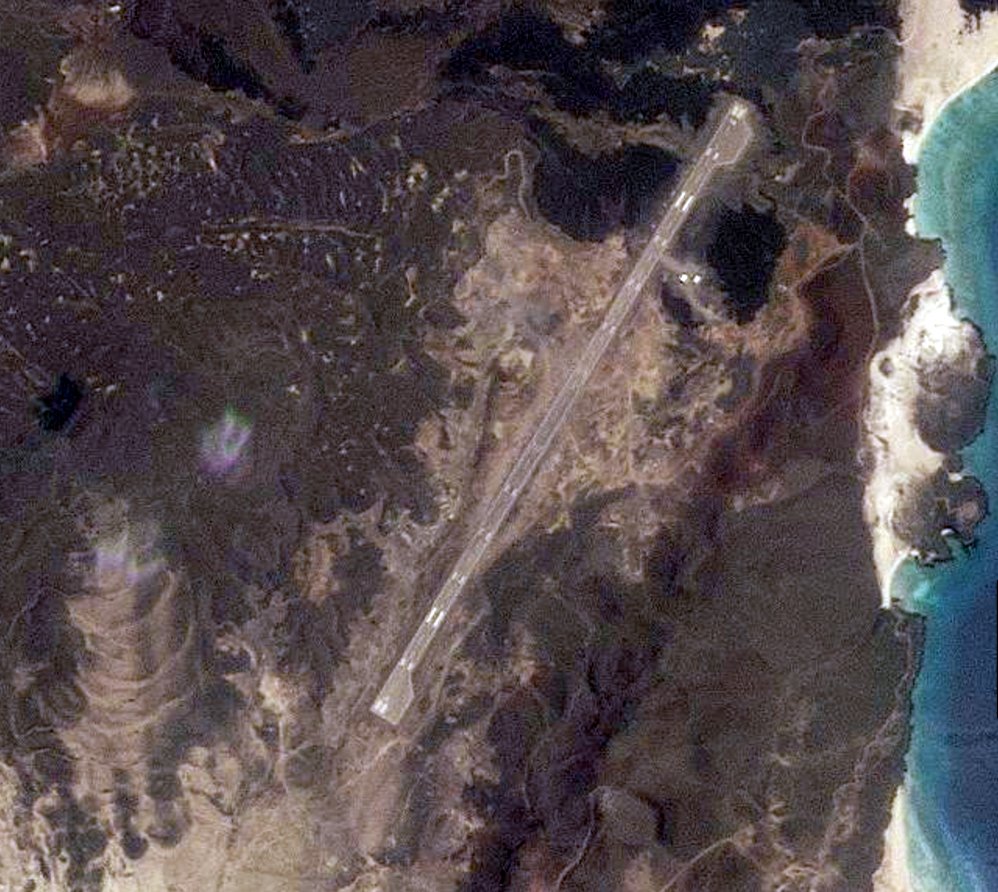
There are claims that the Houthis seized Perim Island, which sits right in the middle of the BAM. In 2021, satellite images we obtained showed completion of a new, approximately 6,150-foot-long runway on the island as well as hangars and other facilities. The installation was supposedly meant primarily to support drone operations and was built by the United Arab Emirates.

This strategically located island sits in the narrowest part of the BAM, less than two miles west of Yemen and about 13 miles east of Djibouti, giving the Houthis a commanding presence at the mouth of the Red Sea.
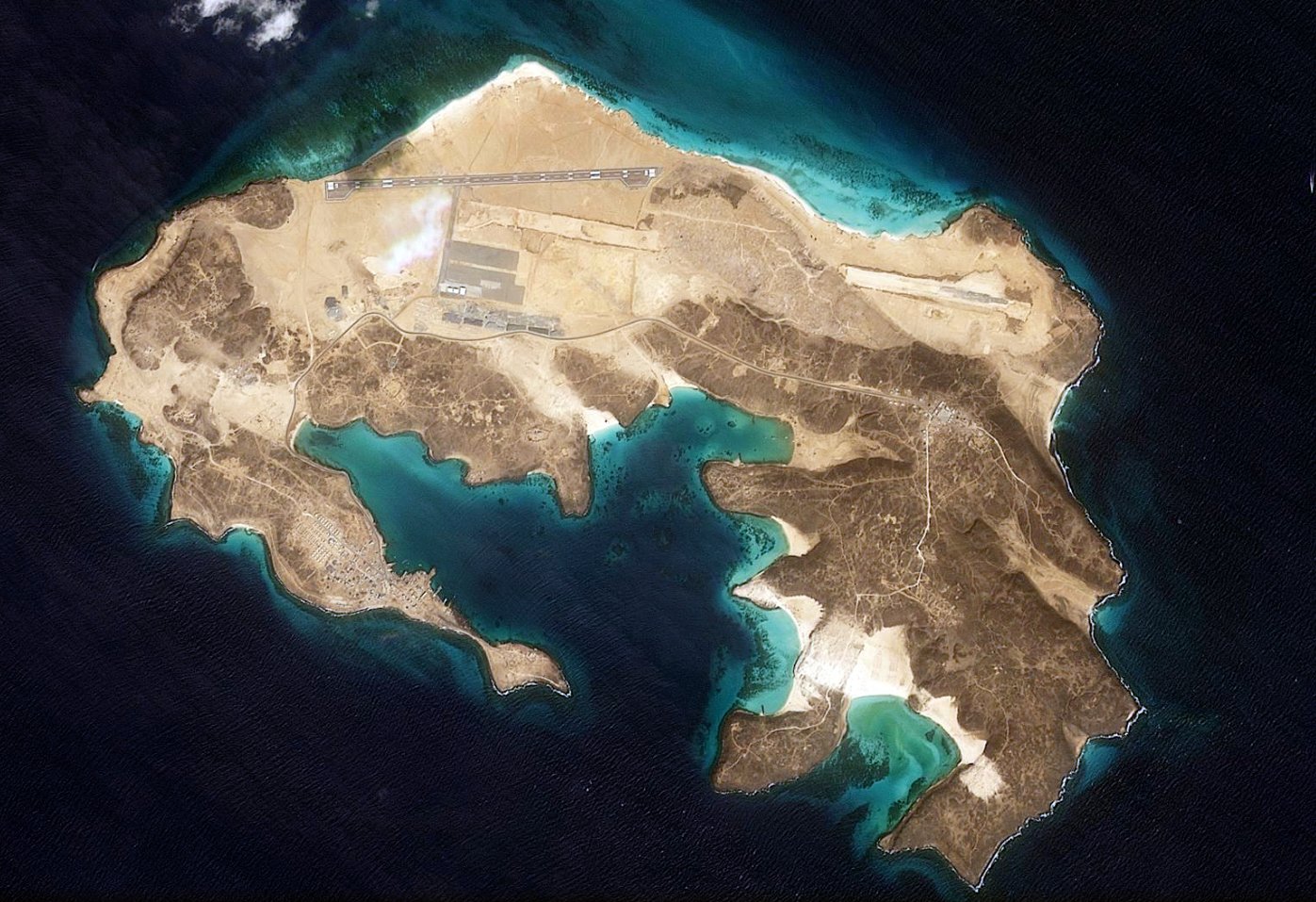
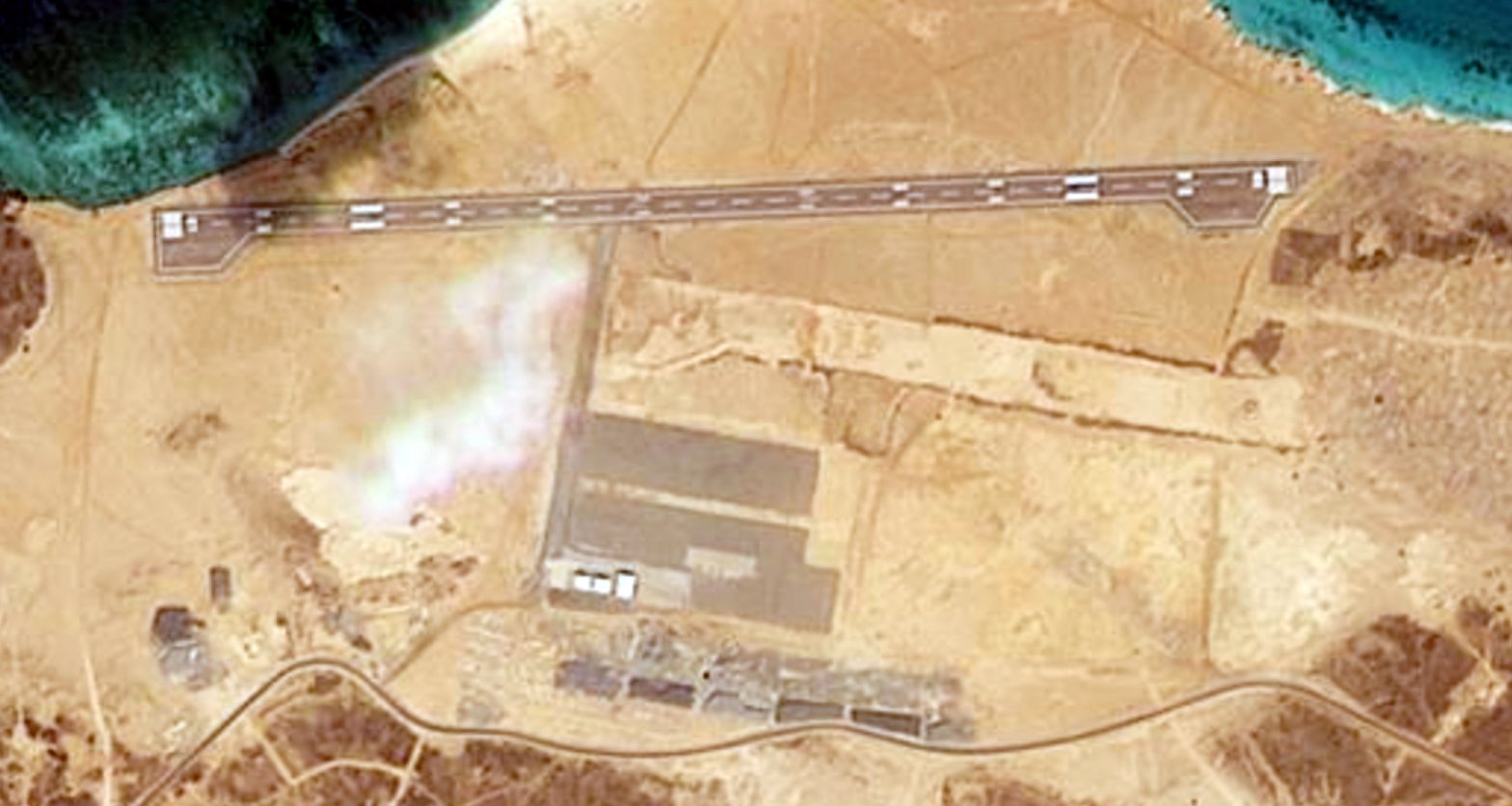
PHOTO © 2025 PLANET LABS INC. ALL RIGHTS RESERVED. REPRINTED BY PERMISSION)
(PHOTO © 2025 PLANET LABS INC. ALL RIGHTS RESERVED. REPRINTED BY PERMISSION)

Zuqar Island, which was also reportedly captured, sits in the middle of the Red Sea about 80 miles north of Perim Island. In the custody of the Yemeni government since 1998, it was being “used by government forces to track shipping traffic, monitor movements by Houthi rebels and stop weapons smuggling in the Red Sea,” according to The National.

Last year, images emerged of construction of a runway on the island.
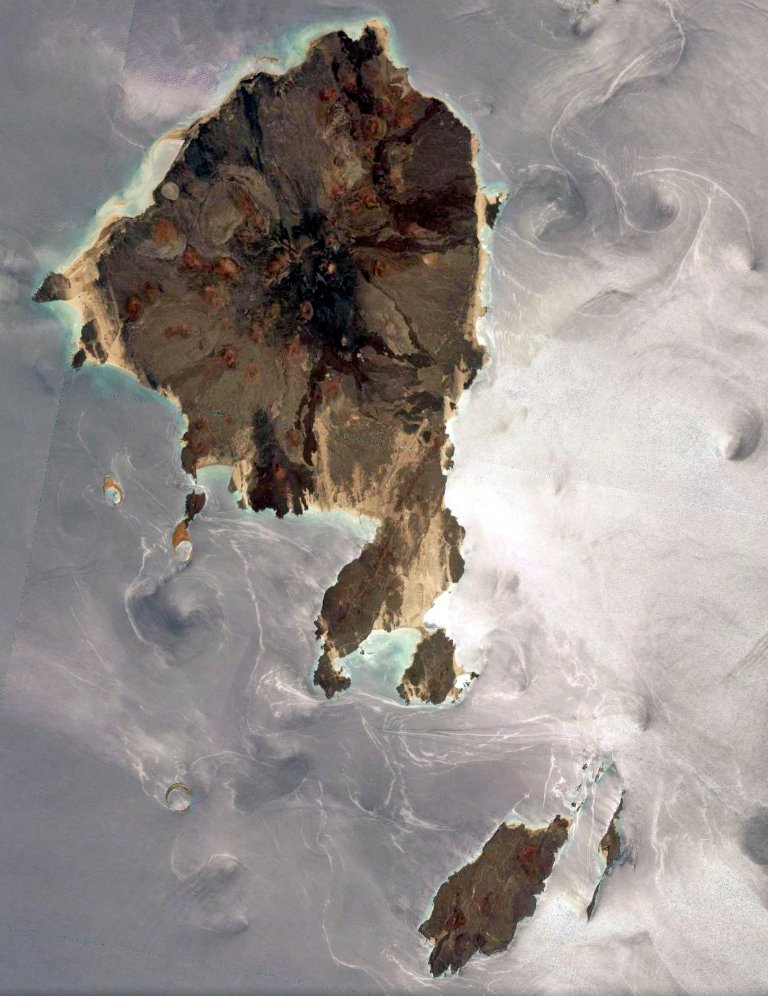
(PHOTO © 2025 PLANET LABS INC. ALL RIGHTS RESERVED. REPRINTED BY PERMISSION)
This satellite image from 2025 shows the runway on Perim Island. (PHOTO © 2025 PLANET LABS INC. ALL RIGHTS RESERVED. REPRINTED BY PERMISSION)

It is unclear who built this island runway, though there have been indications that it could have been the United Arab Emirates once again.

A closer look at the new 2.1 km runway on Yemen’s 🇾🇪 Jabal Zuqar Island in the southern Red Sea shows a small apron with one completed aircraft hangar and another likely under construction, plus a taxiway leading to two military emplacements, likely to shelter aircraft or UAVs. https://t.co/cnphe6yCeO pic.twitter.com/iOwr7C6I91

— Rich Tedd 🛰 ✈ (@AfriMEOSINT) October 20, 2025

Zuqar Island sits about 7 km east of the northbound shipping lane in the Red Sea. Control over these two islands could allow the Houthis to mirror the pattern Iran established in the Strait of Hormuz by directing traffic to pass through a narrow passage between Qeshm and Larak islands.
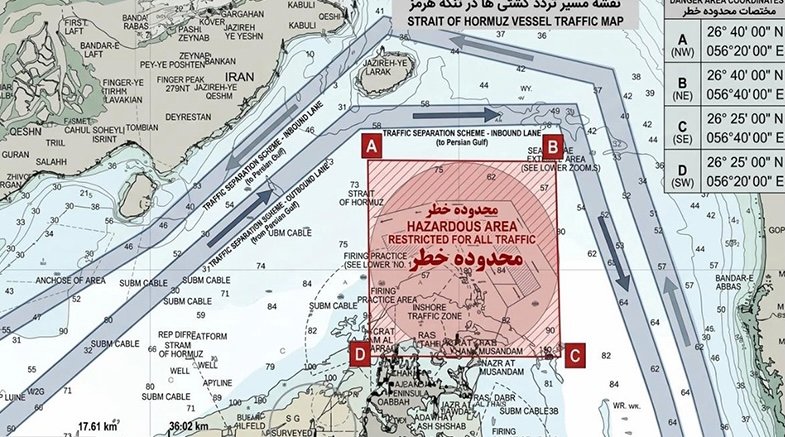
The Iranian transit scheme for the Strait of Hormuz. (Iranian government)

The conflict between Saudi Arabia and the Houthis grew out of a civil war in Yemen that erupted in 2014. It expanded a year later when a Saudi-led coalition joined forces with the government ousted by the Houthis and raged on until the parties reached a tenuous ceasefire in 2022. The Saudis held off on getting involved in the recent Red Sea conflict which saw the U.S. and coalition warships duking it out with the Houthis, and eventually led to a U.S.-led air campaign over Yemen. Tensions, however, reignited after that conflict ended when the Houthis joined the U.S.-Iran conflict on the side of their major supporter. In addition to the aforementioned blockade, the Houthis began striking Saudi refineries.

The Houthis already control the port of Hodeidah, about 100 miles to the north. Capturing Mokha and the two islands extends their reach even closer to the BAM. 

In the wake of the Houthi blockade imposed in July, traffic in the BAM fell by 15%, according to Lloyd’s List Intelligence.

“On average, 273 ships sailed through the chokepoint each week between 27 July and 23 August,” the organization reported. “The naval ban on Saudi Arabia came into effect on 20 July, and the weekly average in the run up date was 319. Still, traffic remains above volumes seen before the crisis in the Middle East Gulf that led to a flurry of activity in the Red Sea as Saudi oil was redirected to Yanbu.”

As we have explained in the past, Saudi Arabia has diverted millions of barrels of oil per day through pipelines to its Yanbu port on the Red Sea in an effort to minimize the energy shortages due to the hostilities near the Persian Gulf.
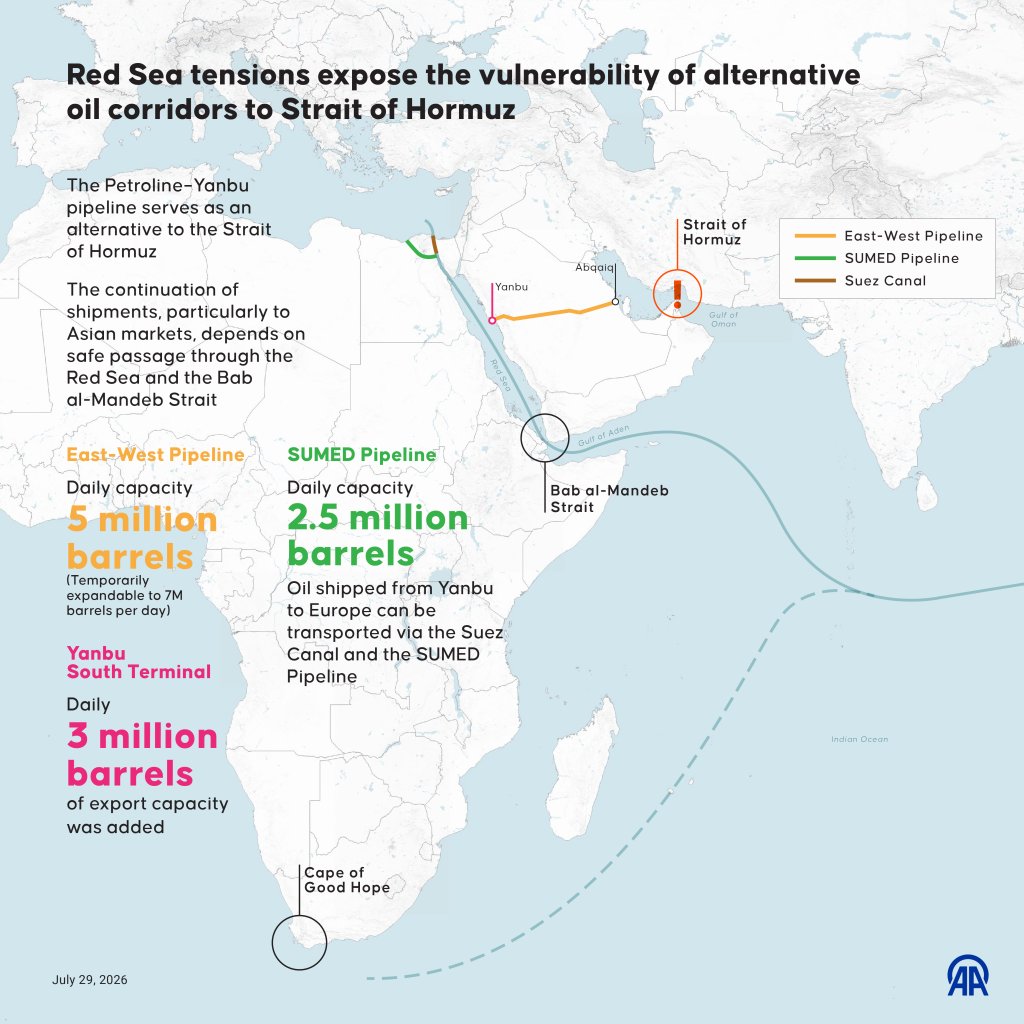
ANKARA, TURKIYE - JULY 29: An infographic titled "Red Sea tensions expose the vulnerability of alternative oil corridors to Strait of Hormuz" created in Ankara, Turkiye on July 29, 2026. (Photo by Yasin Demirci/Anadolu via Getty Images)
Saudi Arabia has increasingly sent oil to its port of Yanbu on the Red Sea. (Photo by Yasin Demirci/Anadolu via Getty Images) Anadolu

The biggest impact of the blockade, Lloyd’s List Intelligence notes, is that it is driving up the cost to deliver oil by forcing traffic north through the Suez Canal, “extending voyage times and tying up capacity. In the Middle East, rising use of Hormuz shuttle tankers and multiple STS transfers is creating delays and increasing vessel utilization. Combined, these rising inefficiencies have led to the third VLCC spot-rate spike since the beginning of the crisis in the Middle East Gulf.” 

The Houthi strikes on Saudi’s oil infrastructure, including a Houthi missile and drone attack against the Saudi Aramco refinery at Jazan on the Red Sea earlier this week, add a further dilemma for Riyadh, making it harder to get its product to points of shipment.

Video of of the aftermath of those strikes, which you can see below, emerged on social media.

Following Houthi strikes, fires can be seen raging at the Jizan oil refinery in Saudi Arabia. pic.twitter.com/tAqOPlsmvS

— OSINTdefender (@sentdefender) September 8, 2026

All this is raising the specter of the U.S. having to get as involved as it did during the previous Houthi campaign against shipping that ended last September, which could pull resources away from Iranian-focused operations, if supporting such an operation is even possible at all at this point. The Navy, and other key elements of the U.S. military, is overstretched and worn down by continuous deployments for many months leading up to Venezuela and then Iran, and now six months after Operation Epic Fury.

U.S. forces in the Persian Gulf are under increasing pressure as tensions with Iran continue to simmer. On Tuesday, several U.S. Air Force jets were damaged in an Iranian missile barrage on Muwaffaq Salti Air Base in Jordan, according to CBS News. An A-10 Thunderbolt II close support jet lost a wing and about eight F-15E Strike Eagle multi-role fighters were slightly damaged and returned to service, the network noted.

There is also a report that Acting Navy Secretary Hung Cao said Iranian forces “blew the hell out of Bahrain” where the U.S. military has a number of key facilities, including the headquarters of the U.S. Fifth Fleet. The country has been the subject of frequent Iranian barrages since the U.S. and Israel first attacked on Feb. 28.

Cao’s assessment matches what we have seen and heard prior to his comments and raises anew the question of whether the U.S. will return to Bahrain and other bases in the region heavily attacked by Iran.

In an exclusive interview, Acting Navy Secretary Hung Cao told me that Iranian forces "blew the hell out of Bahrain."

While open-source analyses have long indicated that the U.S. Fifth Fleet Headquarters at Naval Support Activity Bahrain sustained extensive damage in the early…

— Ryan Morgan (@R_S_Morgan) September 10, 2026

On the sea, Iranian missiles are getting closer to hitting U.S. Navy warships, the Wall Street Journal reported.

“At least three times in the past week, Iranian forces have launched missiles at American warships, including an aircraft carrier, taking direct aim at the U.S. Navy in a way it hasn’t done since the start of the war,” the newspaper noted. “The attempted strikes on warships have led to much closer calls than previous attempts, with Iran using maneuverable warheads, people familiar with the attacks said.”

Amid this activity, traffic through the Strait remains suppressed.

“Vessel transits via the Strait of Hormuz fell on Wednesday to seven from 12 ​the previous day, preliminary ship-tracking data showed on Thursday, with ‌levels also below the 10-day average of 14,” Reuters reported. “Out of these seven ships, four vessels exited and three entered, according to the data.”

However, an exact figure is hard to come by. Some vessels could be sailing through the ​waterway with their transponders turned off and would not be counted ​toward the totals, the outlet added.

Vessels transit the Hormuz Strait off the coast of Iran's southern port city of Bandar Abbas on September 7, 2026. Iran's top negotiator threatened on September 6 of a more forceful response to any further US attacks after Tehran targeted American warships in their latest round of clashes. The exchanges of fire, which began with US raids last week, come amid a deadlock in the six-month war between the two foes. (Photo by ATTA KENARE / AFP via Getty Images) /
Vessels transit the Hormuz Strait off the coast of Iran’s southern port city of Bandar Abbas on September 7, 2026. (Photo by ATTA KENARE / AFP) ATTA KENARE

As it is, oil prices are skyrocketing. As of noon Thursday, the per barrel price of Brent Crude exceeded $107, the highest price since July when it fell to just over $77 per barrel, according to OilPrice.com.

It will take some time before we get a better picture of how the Houthi seizure of the port of Mokha, and possibly Perim and Zuqar islands, will affect the global economy due to rising oil prices, either through reduced supply, increased cost of delivery or some combination of the two. With no end in sight to the U.S. conflict with Iran that helped to drive these actions, the Yemeni rebel group has incentives to inflict economic pain wherever it can.

Contact the author: howard@twz.com

The post Houthis’ Stranglehold On Strategic Bab Al-Mandab Strait Grows Stronger appeared first on TWZ.

  •  

Ukraine’s New Shershen SAM Can Fire A Wild Mix Of Adapted Air-To-Air Missiles

Ukraine has unveiled a new domestically developed surface-to-air missile system designed to turn a diverse collection of air-to-air missiles into a flexible ground-based air defense capability. Called Shershen, Ukrainian for hornet, the system combines a locally-developed command-and-control architecture, a dedicated surveillance radar, and multiple launchers that can employ both Ukrainian and Western missiles.

The system was displayed at the MSPO defense exhibition in Kielce, Poland, by the National Association of Ukrainian Defense Industries (NAUDI). The example shown is reportedly the second operational prototype and is described as being close to its production configuration.

At the ongoing MSPO-2026 defense and industrial exhibition in Poland, the launcher of the Ukrainian Shershen air defense system, developed by Radionix, has been presented for the first time, along with the R-120K surface-to-air guided missile specially developed for it (second… pic.twitter.com/5RfZWHWuxl

— 𝔗𝔥𝔢 𝕯𝔢𝔞𝔡 𝕯𝔦𝔰𝔱𝔯𝔦𝔠𝔱 🦩🇬🇪🇺🇦🇺🇲🇬🇷 (@TheDeadDistrict) September 9, 2026

The appearance of Shershen comes as Ukraine continues to develop an increasingly diverse family of indigenous air defense systems, while simultaneously adapting older missiles and foreign-supplied weapons to address a severe shortage of interceptors.

That effort has produced some distinctly unconventional combinations. Ukraine’s so-called FrankenSAM programs have paired existing Soviet-era launchers and radars with Western missiles, while other systems have adapted Soviet R-73 air-to-air missiles for ground launch. The United Kingdom and Denmark have also worked with Ukraine on the containerized Gravehawk system, another concept built around repurposed air-to-air missiles.

The Buk/Sea Sparrow FrankenSAM combines the Soviet-era Buk transporter-erector-launcher with U.S.-supplied RIM-7 Sea Sparrow missiles. Operational Command East

Shershen takes that philosophy a step further by making missile interchangeability a central feature of the system.

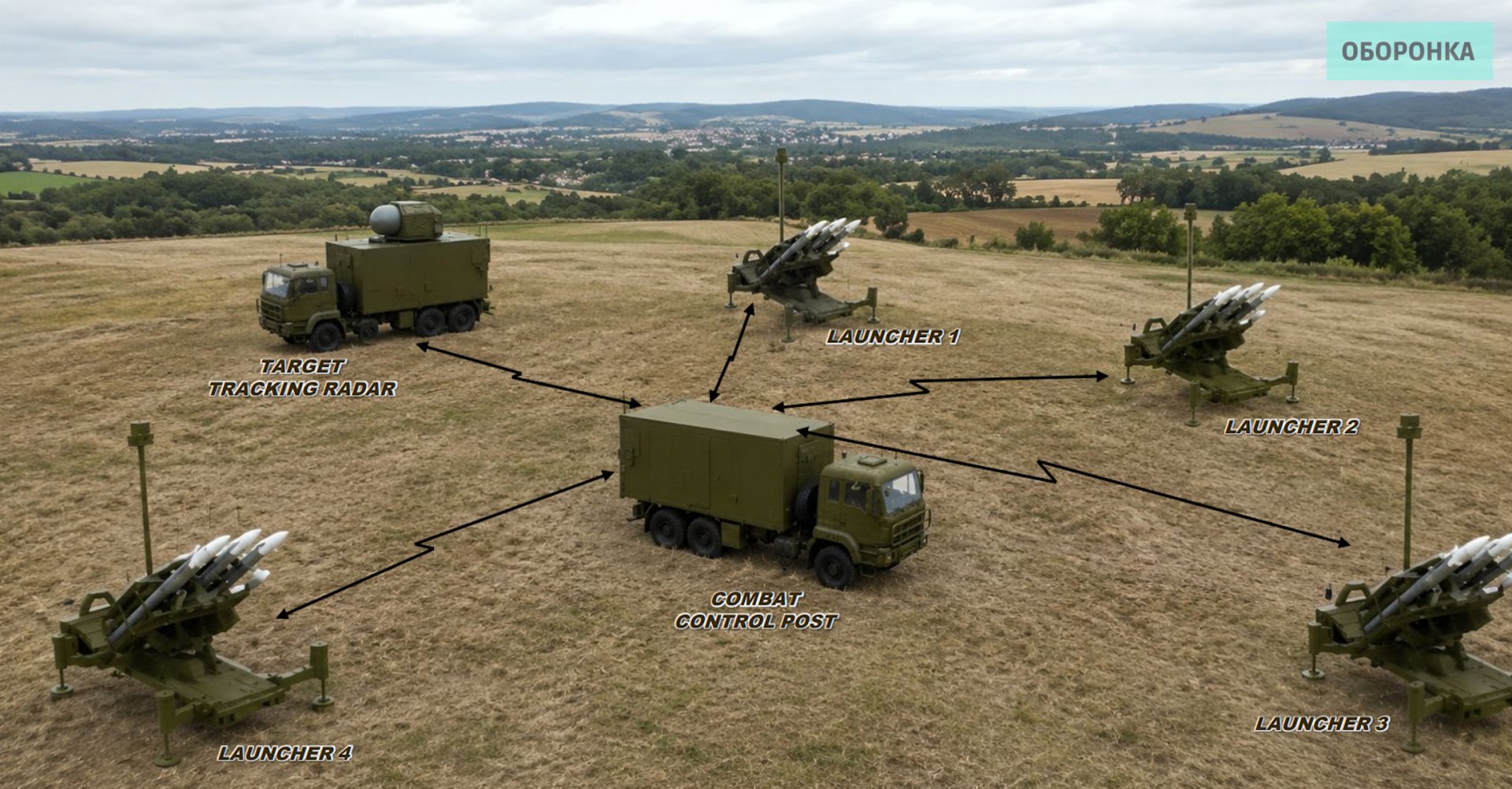
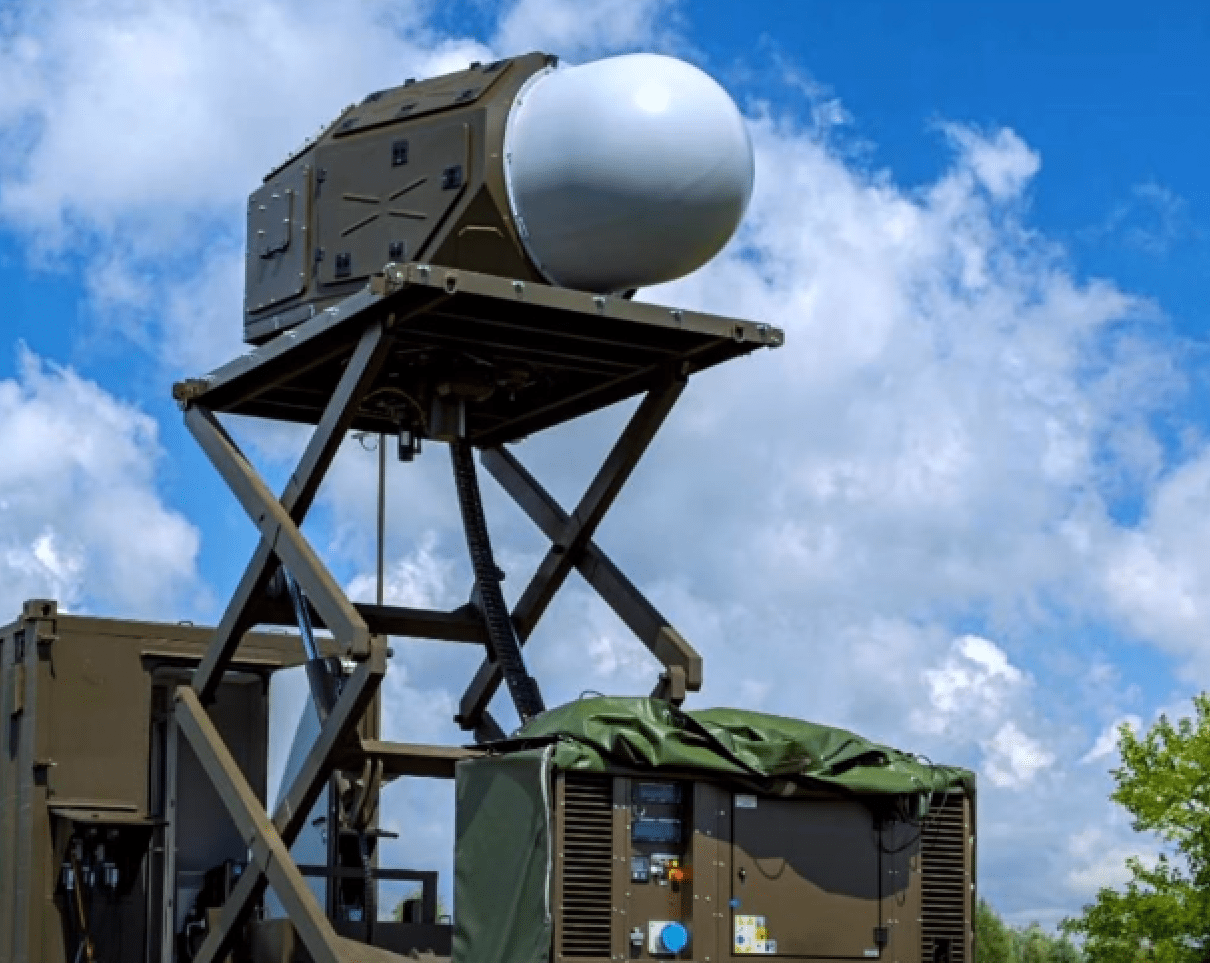
The Shershen battery consists of a Perun command-and-control vehicle, an Athena radar, and four Borei launchers.

A graphic shows a typical Shershen battery. via Oboronka

According to the developer, the system’s architecture is deliberately open. This allows it to use different missiles from different manufacturers and also permits the integration of third-party surveillance and guidance radars.

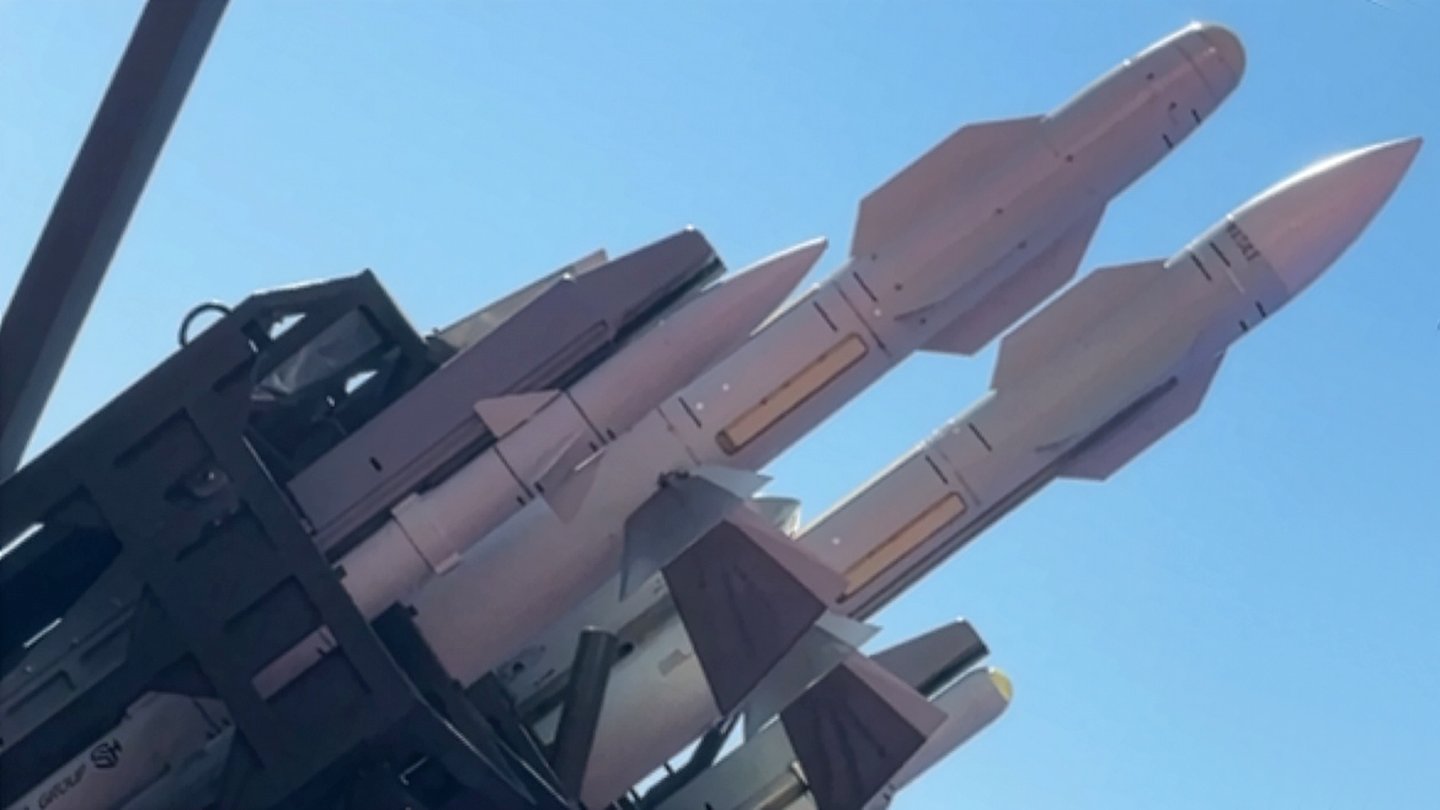
The company says Shershen can currently employ the R-27 (AA-10 Alamo), R-73 (AA-11 Archer), AIM-9 Sidewinder, and AIM-132 ASRAAM, while compatibility with the R-60 is also being explored. These weapons come with a mix of semi-active radar or infrared homing seeker heads.

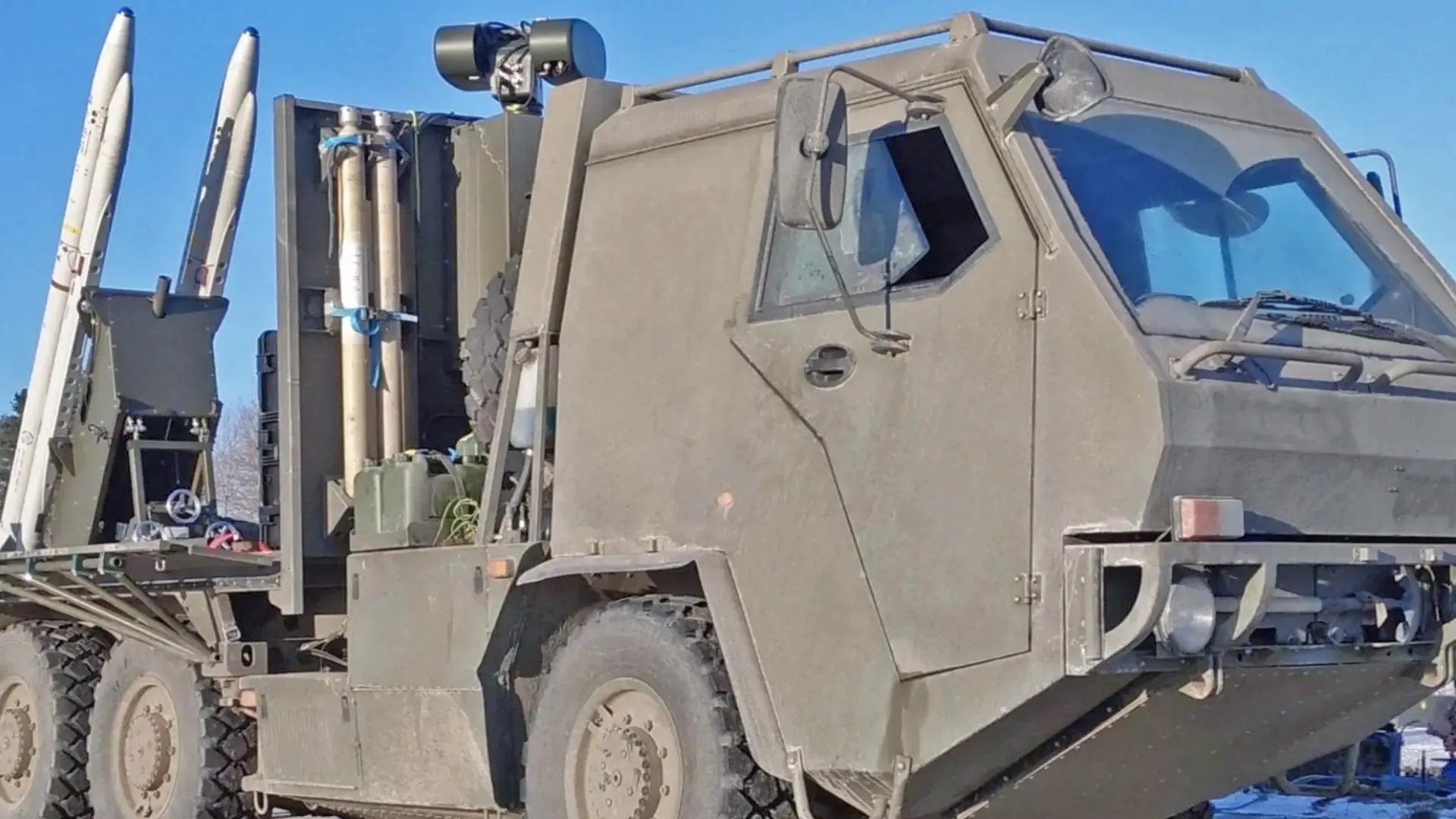
One of the ASRAAM/Supacat air defense systems supplied to Ukraine. Ukrainian Armed Forces

Air-to-air missiles are already available in considerable variety across Ukraine’s arsenal and those of its foreign partners. Being able to employ several types from a common ground-based system provides much more flexibility than a conventional SAM designed around one dedicated interceptor.

It also offers a way to exploit missiles that were never originally intended to be fired from the ground. That means Shershen’s launcher and fire-control system are meant to be interceptor agnostic, at least to a certain degree.

Shershen’s Athena radar is reported to be capable of detecting targets at ranges of up to 85 kilometers (53 miles).

The Athena radar for the Shershen. NAUDI screencap

In terms of the engagement envelope, Shershen is claimed to be capable of engaging aircraft, cruise missiles, and drones at ranges of up to 25 kilometers (16 miles) and altitudes of up to 10,000 meters (32,800 feet). Clearly, these figures will vary widely depending on the type of interceptor.

When employing radar-guided missiles, the system’s engagement architecture can reportedly guide as many as six missiles simultaneously.

The advertised performance figures have not been independently verified, and it remains unclear what target types and engagement conditions were used to establish them.

🇺🇦 Україна представила складові мультикаліберного зенітного ракетного комплексу «Шершень» на міжнародній виставці MSPO 2026 у польському місті Кельце.
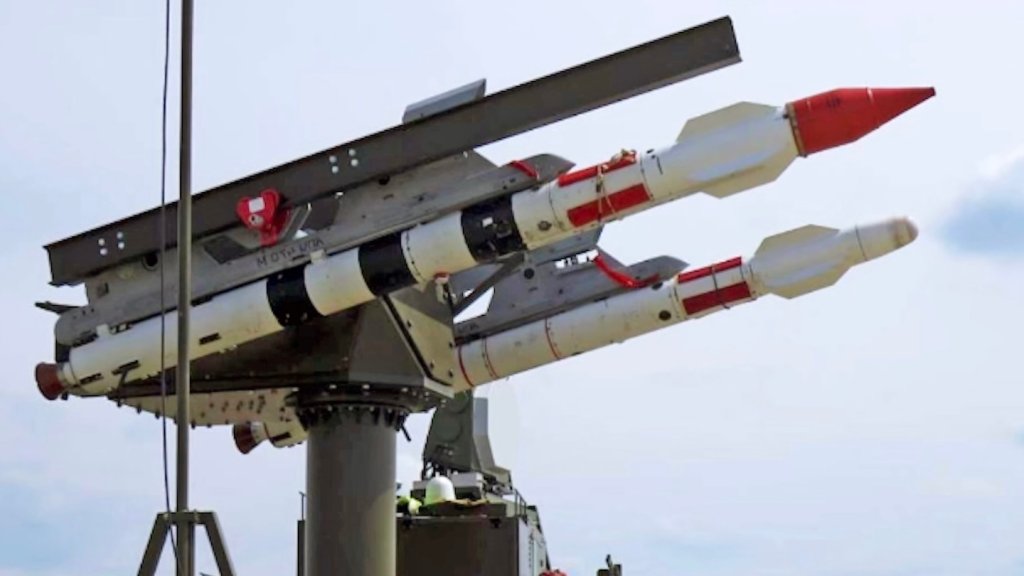
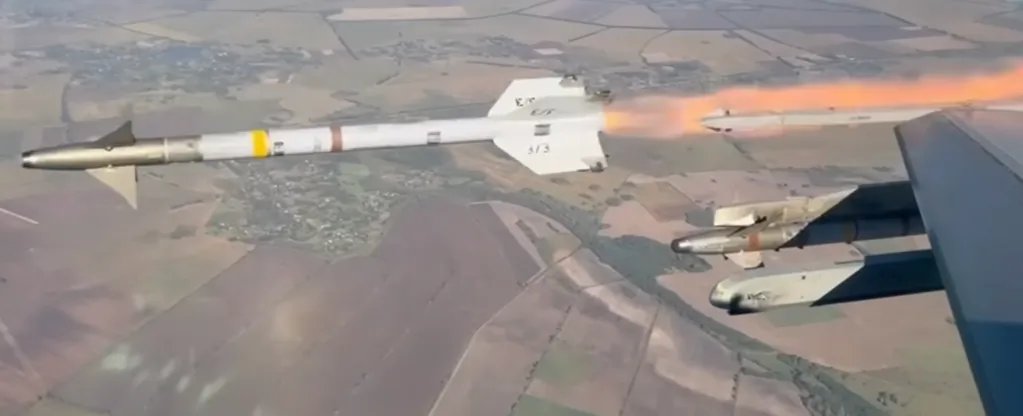
Міжнародний консорціум компаній Shershen Group, який створює ЗРК в інтересах України представив, показав командний пункт,… pic.twitter.com/9wAS7ewxzg

— Мілітарний (@mil_in_ua) September 10, 2026

The developer says the second prototype has completed initial testing, including successful interceptions at a test range.

One of the Borei launchers displayed at MSPO were armed with an R-120K, a new Ukrainian missile equipped with a radar seeker and is intended to be capable of both air-to-air and surface-to-air employment.

The R-120K remains under development, however. Work is reportedly continuing on its rocket motor, meaning that its eventual performance and production status remain uncertain. Still, having the option of including the R-120K on the Shershen system in the future is significant.

Ukraine has unveiled a new surface-to-air missile system designed to turn a diverse collection of air-to-air missiles into a flexible ground-based air defense capability. Called Shershen, or “Hornet,” the system combines a Ukrainian command-and-control architecture, a dedicated surveillance radar, and multiple launchers that can employ both Ukrainian and Western missiles.
A test launcher used for the Shershen program, armed with a radar-homing (nearest camera) and an infrared-guided R-27 missile. The latest prototype features a cage-type container launcher. NAUDI screencap NAUDI screencap

Rather than relying indefinitely on stocks of Soviet and Western air-to-air missiles, Ukraine could eventually have a domestically produced interceptor specifically tailored to its growing family of ground-based air-defense systems. That will become increasingly important as stocks of legacy missiles are depleted. Earlier this year, it was reported that Ukrainian F-16s were running low on their air-to-air missiles, which include the same AIM-9s that are used in some FrankenSAM systems, as well as being compatible with Shershen. But even before that, it was clear that Western-supplied missile stocks in Ukraine across the board were diminishing, in some cases drastically, with critical interceptors like the AMRAAM and Patriot being badly affected.

A live AIM-9L/M Sidewinder launched from the wingtip rail of a Ukrainian F-16. Ukrainian Air Force screencap

Ukraine’s need for additional surface-to-air missiles has become increasingly acute during the full-scale war, especially as Russian drone and missile barrages have stepped up.

The shortage has encouraged Ukraine to pursue a combination of indigenous development and unconventional adaptations.

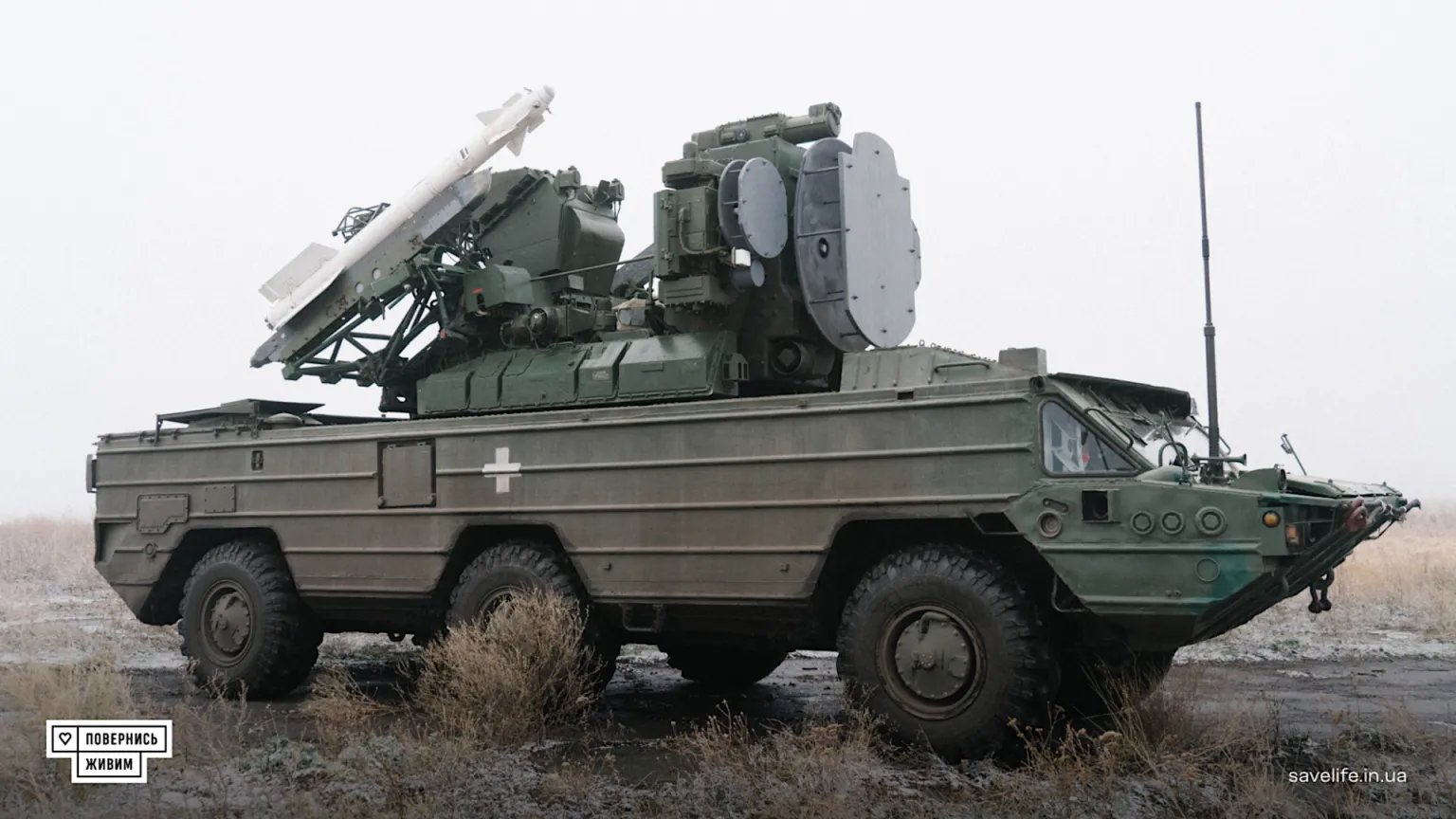
The FrankenSAM initiative, conducted with U.S. support, demonstrated how existing Ukrainian systems could be combined with foreign missiles to rapidly create additional air-defense capacity. Ukraine has also fielded modified Osa systems armed with R-73 air-to-air missiles rather than their original 9M33 interceptors. Other R-73-based concepts have even been demonstrated aboard Ukrainian uncrewed surface vessels.

An R-73 missile loaded on an Osa-AKM SHORADS vehicle. Come Back Alive

Shershen appears to reflect the next logical step in that evolution: rather than creating a one-off FrankenSAM combination, build an architecture from the outset that can accept multiple missiles. Additionally, with so many different ground-based air defense systems now being fielded, it comes with the significant advantage of a standardized launcher and control interface that can accommodate a range of interceptors.

At the same time, Ukraine is pursuing substantially more ambitious indigenous SAM projects.

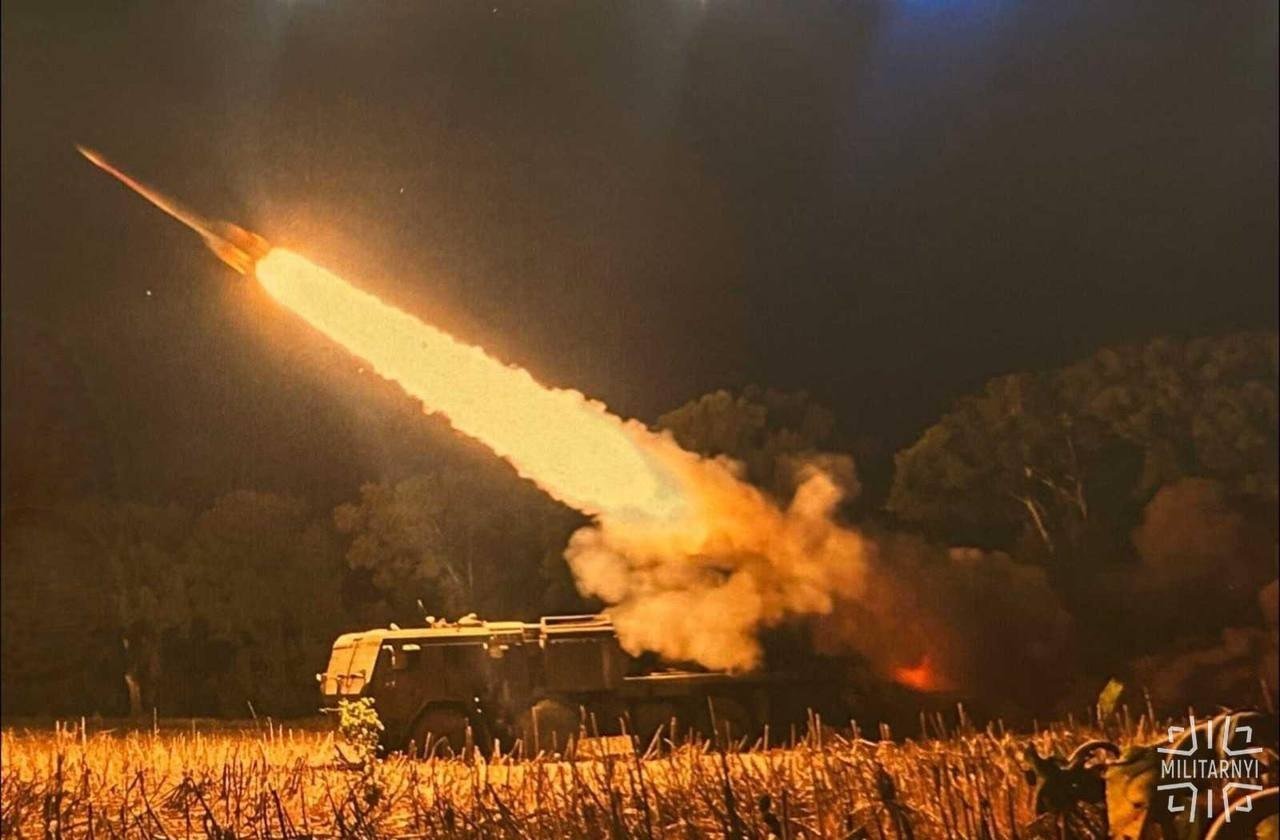
Earlier this year, a previously secretive Ukrainian missile identified as the Koral made what appeared to be its first public appearance. The program dates back to at least 2021, when Ukraine’s Luch design bureau presented a concept for a medium-range surface-to-air missile.

A missile is launched from a Koral air defense system, based on a Czech Tatra truck chassis. Ukroboronprom

Koral is intended to provide a much longer-range capability, potentially filling some of the gap left by Ukraine’s aging Soviet systems and supplementing the Western-supplied Patriot and SAMP/T.

Shershen, by contrast, is clearly focused on the short-range layer.

Together, the programs illustrate the breadth of Ukraine’s emerging domestic air-defense effort: from relatively inexpensive systems built around repurposed air-to-air missiles to new, purpose-designed interceptors intended to replace or augment Soviet-era systems.

Ukraine’s experience with FrankenSAM has demonstrated the value of getting unconventional air defense combinations into service quickly.

Once fielded, Shershen, with its architecture capable of accepting different Soviet-origin and Western-made interceptors, and eventually a Ukrainian one, gives Ukraine another way to stretch its missile inventory and enhance its air defense capabilities.

Contact the author: thomas@thewarzone.com

The post Ukraine’s New Shershen SAM Can Fire A Wild Mix Of Adapted Air-To-Air Missiles appeared first on TWZ.

  •  

Navy Destroyer Packs New ‘Piggy-Backed’ Point Defense System That Combines 30mm And .50 Cal Guns

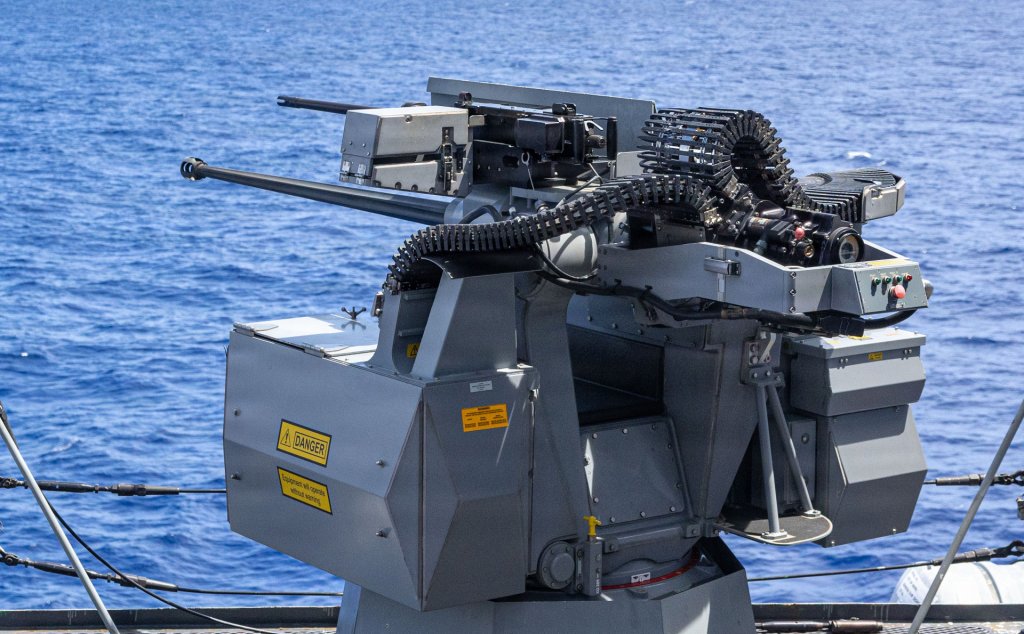
Recently released pictures have highlighted a particularly interesting feature on the U.S. Navy’s Arleigh Burke class destroyer USS Mustin: a piggy-backed point defense system with a .50 caliber machine gun mounted on top of a 30mm chain gun. The Mk 38 Mod 4 Gun Weapon System (GWS) is interesting to examine as it offers significant boosts in firepower and other capabilities, including against drones, compared to preceding Mk 38 types.

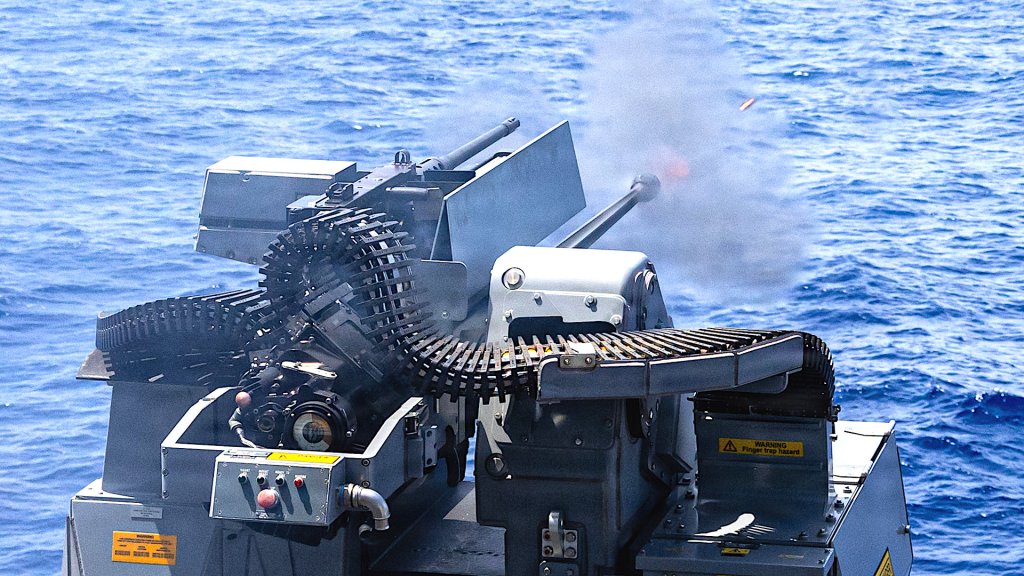
Yesterday, Destroyer Squadron 15’s (DESRON 15) public affairs office released several pictures showing USS Mustin replenishing at sea in the Indian Ocean, including one highlighting the ship’s Mk 38 Mod 4 GWS (also sometimes confusingly referred to as a Machine Gun System, or MGS). DESRON 15 had put out another group of pictures late last month showing the weapon system being fired during routine training. Mustin was the first vessel in the Navy to receive Mod 4, and still looks to be the service’s only warship with this new version.

USS Mustin fires its Mk 38 Mod 4 GWS during live-fire training in the Indian Ocean in August 2026. USN
Another view of the Mk 38 Mod 4 GWS being fired. USN

Though designated as a Mk 38 variant, the Mod 4 is fundamentally different from other Mk 38 types currently in service in the U.S. Navy, as well as several foreign naval arms.

“The Mk 38 Mod 4 Machine Gun System (MGS) is an upgrade … to address deficiencies in meeting Counter Unmanned Aerial Systems (C-UAS) requirements,” the Navy has said in the past. “In addition, the upgrade will also improve performance against surface targets and maintain Anti-Terrorist / Force Protection capabilities.”

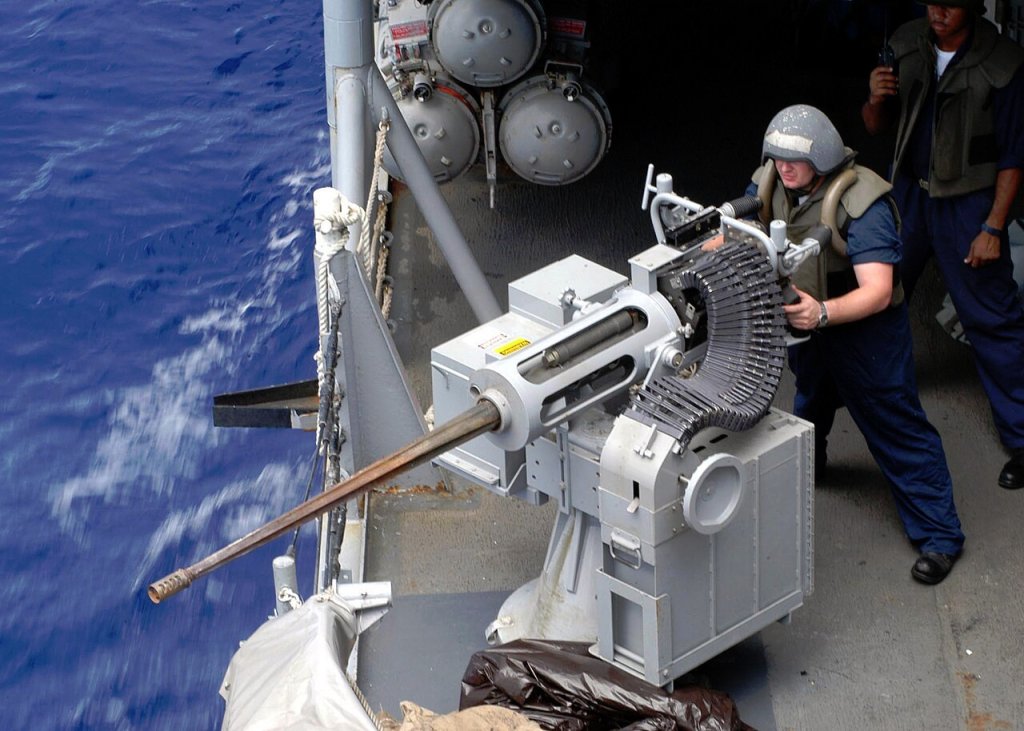
To take a step back quickly, the original Mk 38 Mod 0 was developed internally by the Navy in the late 1970s and was simply a manually operated deck-mounted 25mm M242 Bushmaster chain gun with a maximum rate of fire of 180 rounds per minute. The M242 was entering U.S. Army service at around the same time as the main armament for the Bradley Fighting Vehicle. A product improved Mod 1 version was the first Mk 38 to actually enter serial production and began to be fitted to Navy ships in the late 1980s.

A Mk 38 Mod 1 weapon system, seen here mounted on the deck of the Oliver Hazard Perry class frigate USS Ingraham in 2003. USN

Following the deadly terrorist attack on the Arleigh Burke class destroyer USS Cole in the port of Aden in Yemen in 2000, the Navy began to acquire Mk 38 Mod 2s, also known as the Typhoon Weapon System, from United Defense (later BAE Systems).

The Mod 2 “introduced remote-control operation and mount stabilization and allowed the weapon to maintain aim even as the ship pitched and rolled. It also added a new electro-optical/infrared sensor and a laser rangefinder, giving the system reliable day/night target performance,” according to the Navy. “Beyond sensors, Mod 2 brought improved ammunition handling and enhanced interfaces – resulting in faster and more reliable engagement. Testing showed it delivered two to three times the strike accuracy of its predecessor.”

The Mk 38 Mod 2 otherwise featured the same M242 gun as the Mod 0/1 types, feeding from a magazine on the mount that could be loaded with up to 168 rounds. It is worth noting here that this is less than a minute of total firing time at the weapon’s maximum rate of fire. However, it can also be fired in single-shot and three-round burst modes, as well as at a lower automatic rate of fire of 100 rounds per minute.

In the 2010s, the Navy began acquiring the Mk 38 Mod 3 from BAE Systems, which added a smaller 7.62x51mm Mk 52 Mod 0 chain gun feeding from a 750-round magazine to the complete weapon system. The Mk 52 is also a much faster-firing weapon than the M242, with a maximum rate of fire of 570 rounds per minute.

The Mod 3 “also incorporated an improved EO/IR sensor that provides 330-degree surveillance capability and multiple fields of view,” per the Navy. “This sensor is decoupled from the gun, allowing operators to scan independently of the weapon and reducing the chance of alerting an adversary that they’ve been detected.”

Over the years, Mk 38 1/2/3 types have been integrated on a wide array of Navy ships, including Ticonderoga class cruisers, Arleigh Burke class destroyers, Nimitz and Ford class aircraft carriers, as well as a host of other amphibious warfare ships and auxiliaries.

All of this brings us back to the Mk 38 Mod 4, the Navy’s designation for a version of the Seahawk DS30 series from MSI Defense Systems, which the service first began acquiring in the late 2010s. The Mk 38 Mod 4’s main weapon is a 30mm Mk 44 Mod 3 Bushmaster II chain gun. Like the M242, the Mk 44 also has single-shot and burst modes, as well as low and high fully automatic settings (100 and 200 rounds per minute, respectively). The Mk 44 is also found on versions of the Mk 46 Gun Weapon System installed on stealthy Zumwalt class destroyers and San Antonio class amphibious warfare ships. It is used in a variety of ground-based applications and on the U.S. Air Force’s AC-130J Ghostrider gunship aircraft. As mentioned, the Mk 38 Mod 4 also has a .50 caliber M2 machine gun with a rate of fire of around 500 rounds per minute. The system’s magazine capacity for each gun is not immediately clear.

The complete Mk 38 Mod 4 also comes with a new Mk 48 Mod 2 electro-optical sight system (EOSS), which is mounted separately on the ship, and a Mk 134 Mod 0 operator console for remote operation. Furthermore, the complete system is designed to be fully integrated with the Aegis Combat System on Arleigh Burke class destroyers like USS Mustin. The optical turret appears to replace the older EOSS system mounted atop the bridge that was primarily used to target the ship’s 5-inch gun. It isn’t clear how these new mounts are individually targeted simultaneously as they don’t appear to have their own optics. Radar targeting through Aegis would be a big advancement for at least some targets types, like drones. The older Mk 38s had their own individual FLIR systems. It’s still possible these new turrets could have a basic boresighted electro-optical system as well.

Various views of the main turreted weapons component of the Mk 38 Mod 4 system. MSI Defense Systems
The Mk 48 Mod 2 electro-optical sight system (EOSS) that is also part of the Mk 38 Mod 4, but is mounted separately on the ship. MSI Defense Systems

In a July 2022 test, a Mk 38 Mod 4 system “successfully identified, tracked and engaged both surface and aerial targets using live ammunition against fixed and moving targets,” according to the Navy. The event “also highlighted the enhanced fire-control chain, the 30 mm gun’s improved performance and its ability to counter new challenges.”

The USS Mustin received its Mk 38 Mod 4 in 2024 and, as noted, this destroyer still appears to be the only ship in the Navy with this new weapon system, for reasons that are not entirely clear. The service had signed a contract with MSI Defense for an initial low-rate production batch of 15 systems in 2023. Other versions of the Seahawk DS30 are in use today on several classes of naval vessels globally, including British Type 23 frigates.

“USS Mustin (DDG 89), an Arleigh Burke class Aegis guided missile destroyer, was the first U.S. Navy warship to receive the upgrade. [The Naval Surface Warfare Center] Dahlgren Division is now finalizing the configuration so the system can be introduced to a wider set of platforms as fleet requirements evolve,” according to an official news item from Naval Sea Systems Command (NAVSEA) just this past February.

Another view of the Mk 38 Mod 4 on USS Mustin. USN

The Navy’s 2027 fiscal year budget request, released earlier this year, makes clear the plan is still to integrate the Mk 38 Mod 4 at least on all Flight IIA and Flight III subvariants of the Arleigh Burke destroyer. The Mk 38 Mod 4 is also set to be a feature on future U.S. Coast Guard icebreakers, which will also have combat systems derived from Aegis.

All remaining Mk 38 Mod 2s in Navy service are being brought up to the Mod 3 standard, as well.

For the Navy’s Arleigh Burke class destroyers, specifically, the Mk 38 Mod 4 reflects broader efforts to improve and expand the shorter-range defensive capabilities of those ships, especially against growing drone threats. An increasing number of these destroyers are also being equipped with new anti-drone interceptors. In addition, the service is working to replace the 20mm Vulcan cannon-armed Mk 15 Phalanx Close-in Weapon Systems (CIWS) on all subvariants in the class with different launchers for RIM-116 Rolling Airframe Missiles (RAM) to further bolster defenses against drones, as well as incoming missiles and other aerial threats.

In general, the Navy has been investing heavily in new counter-drone defenses for ships across its fleets in recent years. These efforts include laser and high-power microwave directed energy weapons, as well as various types of physical interceptors and electronic warfare systems. Lessons learned from the ongoing conflict with Iran, as well as recent operations in and around the Red Sea, together with observations from the war in Ukraine, have only underscored the increasingly critical need for additional layers of protection against uncrewed attackers in the air and at sea. Small crewed boats attacking in large groups remain a real threat, too.

Mustin may not be the only Navy warship equipped with the Mk 38 Mod 4 for much longer, if the system has not already started finding its way at least onto more Arleigh Burke class destroyers.

Contact the author: joe@twz.com

The post Navy Destroyer Packs New ‘Piggy-Backed’ Point Defense System That Combines 30mm And .50 Cal Guns appeared first on TWZ.

  •  
❌