❌

Reading view

‘Like the Gestapo’: ICE brings terror and violence to Maryland

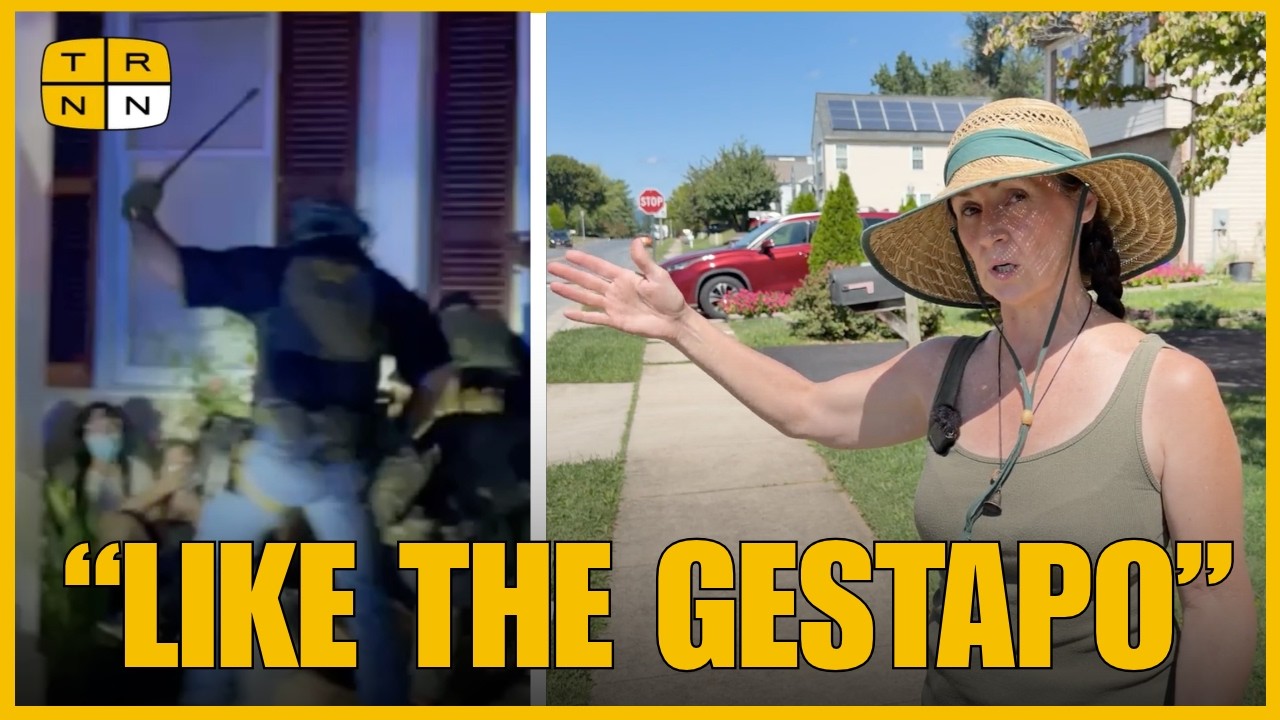
Still image of eyewitness Soolah speaking with TRNN about ICE raid in Frederick, MD on Sept. 14th 2026. Credit TRNN (R). Still image of ICE agents beating peaceful protestors in Frederick, MD. on Sept. 4th, 2026. Photo courtesy of Hagerstown Rapid Response Network (L).

Residents are shaken and demanding answers after ICE agents terrorized a quiet, suburban neighborhood in Frederick, Maryland, earlier this month. On September 4, federal agents swarmed the Tasker’s Chance neighborhood in West Frederick, invaded the home of one family, and eventually left without making any arrests. ICE agents were filmed beating peaceful protestors and menacingly driving their unmarked cars onto sidewalks and private property while local police officers stood by and watched. In this on-the-ground report, TRNN takes you to the very spot in Frederick where these terrifying events transpired, and we speak with an eyewitness who saw everything.

Credits:
Videography: Maximillian Alvarez
Post-Production: Cameron Granadino

Transcript

The following is a rushed transcript and may contain errors. It will be updated.

Reporter 1:

Breaking story in Frederick. We have been told that ICE agents have been camped out in the Taskers Chance neighborhood. Neighbors

Reporter 2:

Say ICE has made a move on one home under the cover of night. That’s exactly what you are seeing right now.

Soolah:

There were protestors next to me. There are protestors across the street. And then I turned to this car and it was right here. And then I heard out of the side, the siren go off and I turned and here’s this car coming at me from on the sidewalk. By

Reporter 1:

Friday night, protestors were chanting on the sidewalk, also trying to block the street and a home they believed ICE was targeting. That’s when Santos says ICE became aggressive. This video shows when an ICE officer drove up on the sidewalk toward protestors. Santos and local activist Sula Kemp say ICE officers became violent.

Maximillian Alvarez:

I’m standing here in Frederick, Maryland, just over an hour west from Baltimore, and I’m standing in a quiet residential neighborhood where just over a week ago, ICE agents in unmarked cars swarmed this neighborhood, surrounded the house behind me. ICE agents are on video beating peaceful protestors with their batons, menacingly driving their cars onto the curbs into the directions of protestors. And I’m standing here with Sula, who is a local resident of the area and who was here the night of those events. Sula, thanks so much for joining me here. Can you walk listeners through what happened and what you saw that night?

Soolah:

Okay. I was asked by as many people were asked to come and help. So I had that time and I was able to come down and I saw different ICE peoples actually around this whole neighborhood. They were in different pockets and locations. I hadn’t even come to this street. I had gone to two streets down and then the next street right over and you could see where they were positioned. And then there was also one that was driving around that seemed to be sort of intimidating by chasing cars, which I thought was really strange behavior because you didn’t see anything on the vehicle to say who it was. It didn’t say police, it didn’t say anything. Didn’t have any markings on the cars. So we didn’t know who they were. Assumed they were ice and their lights were just kind of on. They’re just sitting in their cars parked on the street.

So then there was a call later. I was there about three hours and then somebody had just said they need people on this street specific. So I was like, “Well, I’ll just walk over.” And they said that there was one car that had a spotlight on protestors. And what they were apparently trying to do on this street was just line the sidewalk, a public space with protestors. So that was fine. So I was like, “All right, let me take my phone and go to the other side and get the perspective of the spotlight being put onto the protestors.” So I did that. I first took a bit of video from this side as an observer and then went to the other side and stood there and watched just cars. And then all of a sudden as I was standing on the sidewalk, I heard a siren go off, just a few bursts of it.

And I happened to turn my camera and there was a car on the sidewalk coming toward me and telling me, and everybody who’s on the sidewalk, “Move, move, get out of the way.” At some point they sa, “You’re impeding a federal investigation.”

Maximillian Alvarez:

We’re talking about a car driving up

Soolah:

Right

Maximillian Alvarez:

Here where we’re standing.

Soolah:

Right. On the sidewalk, public space.

Maximillian Alvarez:

These are people’s houses. They’re driving onto people’s property.

Soolah:

Well, and if you or I had done that, what would’ve happened to us?

Maximillian Alvarez:

Yeah, they’d throw my ass in jail.

Soolah:

Reckless endangerment of people. And it was crazy. They stopped for a hot second and I jumped onto the grass at first and then I stepped back onto the sidewalk because I was like, “I don’t know what’s happening.” Just a natural response. I was like, “Wait a minute, I’m on the sidewalk.” So I stepped back on the sidewalk and then he started really coming. He did not stop and he sped up toward me first and then there was a woman behind me. And then there was another person, another protestor that they did hit and started to push with their car.

Maximillian Alvarez:

So you were standing right around here?

Soolah:

I was right here. And there was a car there. There was a car across the street. So I had my camera on this car. There were protestors next to me. There were protestors across the street. And then I turned to this car and it was right here. And then I heard out of the side, the siren go off and I turned and here’s this car coming at me from on the sidewalk. I jumped over to here. He passed me. He hit another protestor and then pushed that protestor out of the way. And then the protestors at some point have been sitting down, just linked arms, sitting down, singing and chanting right in the middle of the street, which is fine. They can do whatever they want to.

Maximillian Alvarez:

Community members surrounding one of their neighbor’s homes to try to protect them. Yeah. And then agents of the state come in and start beating the hell out of them for it.

Soolah:

Yeah. So they sat in the road and then they did get up and did that protection. And it’s a typical thing that people do to blockade, but peacefully, they didn’t do anything. They just linked arms. You can’t do much when you’re linked arms. And it’s a whole group of people. And then all of a sudden Frederick Police were coming and then they moved up to the porch area and started beating them up.

Maximillian Alvarez:

You and I are standing here right now on this quiet residential street. People who are watching this may have only seen a small slice of this street on line. What they can’t see is that this is the quietest residential street you can imagine. There’s nothing happening here. You would think with all the ICE agents and vehicles that were here last week that this would be a hotbed of overrun with criminals and criminal activity. It’s just families and houses.

Soolah:

Yeah, it’s very quiet here. You can drive around here and people are working, people are doing their lives and that’s it. So it’d be like every day storm into your everyday world in your suburban America, and that’s what happened. And when you look at now, it’s quiet, it’s peaceful here. So they brought a sense of terror and they brought a sense of unsafety. So yeah, the main set of protestors, they’re stationed on the sidewalk here right at the stop sign. There’s a whole group here. And then there was an ice vehicle here. There was an ice vehicle behind –

Maximillian Alvarez:

Right behind

Soolah:

Where I’m standing. Right behind where you’re standing. Because they started sort of parading in, it looked like a little ice parade. And I’m just joking about that because it was so weird. Once they got into the house, I could hear up in one of the rooms them banging stuff around. And another protestor had asked me, who was observing, asked me, “Do you hear that?” I was like, “Oh yeah,” because it was loud. I don’t know how the house was on the inside when this was all done, but this was a lot. And then I actually went and looked through the back part. They had a shed or some kind of building out in the back there, and you could see these guys go into the back and they started searching. They didn’t know how to get open the shed or whatever because it’s big, but eventually they did.

And it was eerie. It was very eerie.

Maximillian Alvarez:

And it feels reminiscent of the Gestapo view.

Soolah:

It does because who bangs down a door like that? Who goes through looking for whomever? And apparently they didn’t take anybody. I don’t understand why it all happened in the first place.

Maximillian Alvarez:

Yeah. So all that terror for nothing?

Soolah:

All that terror for nothing.

Maximillian Alvarez:

How do you move on from something like this? How does this community move on? How are folks responding?

Soolah:

I know right now they’re collecting donations for the people who were beaten because they had hospital bills. And it’s really hard because I don’t know them all personally. I came because just like anybody else, we don’t know each other half the time, but we do see something in need. So they do have a donation set up for them specifically. I am not sure what the next steps are. I know that I have personally tried to contact the attorney general’s office a few times. I haven’t heard anything yet. And I’m hoping that somebody who’s above, in some kind of governmental stance or something, because who feels safe going to the police when you watch the police stand there? There’s the question. I didn’t report anything to them, even though I had a vehicle come at me on the sidewalk. I doubt anybody else is really going to feel comfortable or safe, and maybe that’s the point.

Maybe that was the point too. I can’t speak for that, but it’s just what goes in my head, why would I contact you to tell you what happened? So I want to go higher up.

Maximillian Alvarez:

And so when you were here and you had federal agents and unmarked cars and you also had local police, did you feel in that moment like the police were there to protect you?

Soolah:

No. And the wild thing too is on the car that, at least this car that came at me, you couldn’t tell who they were because their license plate was tinted out. There’s nothing identifying that either. So who are these people? I don’t know if Frederick Police had some kind of directive because I don’t know what even drew them out here in the first place. Maybe they heard that people were getting beat maybe, but they were here before that happened. So maybe they have to take a specific. I don’t know. I literally do not know. And if that’s the case, if they have a specific directive or they don’t know what to do, maybe that needs to be talked about. Maybe something like this, when you have unmarked cars doing reckless behavior with their cars, doing reckless behavior towards other people, what is the community’s protect and serve folks going to do for the community?

Yeah.

Maximillian Alvarez:

Who are you protecting? Who are you

Soolah:

Serving?

Maximillian Alvarez:

Not us.

Soolah:

There are tax dollars going into all of this too, that people are going to step back and go, “Wait a minute, what’s happening here? I’m putting money toward them and it’s whoever was called out here for that night.” Who knows? I don’t know. But at the end of the day, who are they protecting?
💾

ICE agents terrorized this suburban neighborhood in Frederick, Maryland, and beat peaceful protestors while local cops just watched. We speak with an eyewitness who saw and filmed everything.
  •  

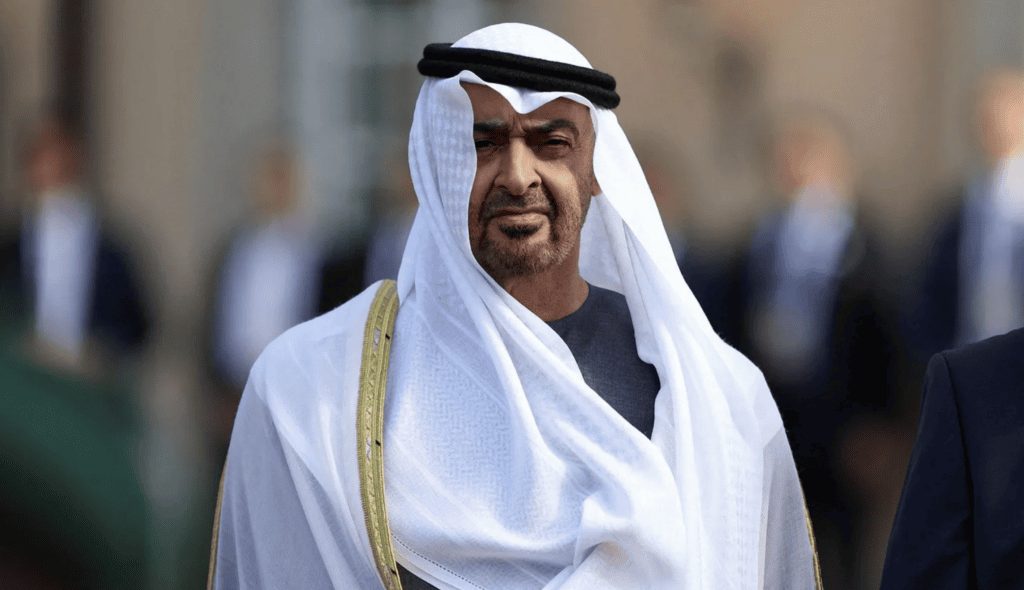
Netanyahu Asked UAE Leader to Deny Report on Oct. 7 Warning in Secret Visit, Sources Say

Netanyahu asked UAE President Mohamed bin Zayed during a secret meeting Sunday to deny Haaretz's report that the Emirati leader had warned Netanyahu of an impending Hamas attack shortly before October 7, 2023

  •  

Algarvio Tiago Guadalupe publica novo livro sobre liderança e o percurso de João Matos em Loulé

Durante o Portugal Football Summit foi divulgado o novo livro do algarvio Tiago Guadalupe, funcionário da Câmara Municipal de Loulé e colonista no jornal A Bola.

“Capitão João Matos – Liderar, vencer e inspirar” é a mais recente obra de Tiago Guadalupe e será apresentada a 9 de outubro, na Cidade do Futebol, numa iniciativa da Federação Portuguesa de Futebol. 

Com a chancela Portugal Legends, a obra nasce de um projeto desenvolvido pela editora 21Books e pela agência whynote.pt, em parceria oficial com a Decathlon e a União das Freguesias de Carnaxide e Queijas.

Mais do que uma biografia desportiva, o livro parte do percurso de João Matos para propor uma reflexão sobre liderança pelo exemplo, disciplina, consistência, resiliência, comunicação, gestão de equipas, egos e conflitos, tomada de decisão, capacidade de adaptação, inovação, equilíbrio pessoal e legado, procurando transportar as experiências e aprendizagens construídas no desporto de alto rendimento para outros contextos da vida pessoal e profissional.

Ao longo de mais de duas décadas ao mais alto nível, João Matos construiu uma carreira marcada pela longevidade, consistência e liderança. Mais de 40 títulos, mais de 200 internacionalizações, um Campeonato do Mundo e dois Campeonatos da Europa ao serviço de Portugal, além de três títulos europeus pelo Sporting CP, fazem parte de um percurso que o tornou uma referência do futsal português e internacional.

Contudo, são sobretudo as experiências e aprendizagens construídas ao longo desse caminho que constituem o centro da obra. O objetivo passa por transportar princípios provenientes do desporto de alto rendimento para outros contextos, tornando o livro relevante para atletas e treinadores, mas também para gestores, professores, estudantes, empreendedores, dirigentes e líderes de equipas.

“Capitão João Matos – Liderar, vencer e inspirar” reúne ainda diferentes perspetivas sobre o jogador e capitão. Pedro Proença assina a introdução, Frederico Varandas o prefácio e Jorge Braz o posfácio, juntando-se ao livro contributos e reflexões de personalidades como Nuno Dias, Sebastián Coates, Nani, Rui Miguel Nabeiro e Pedro Dias, entre outras.

Frederico Varandas resume uma das ideias centrais da obra ao afirmar que «o seu legado não se mede apenas no que conquistou, mas sobretudo no que inspirou». Pedro Proença considera que João Matos deixa «o Futsal muito melhor do que aquele que encontrou», enquanto Jorge Braz reconhece: «O João ajudou-me a ser melhor treinador.»

O livro inclui igualmente o capítulo “Cocriar para inspirar”, com Tiago Valadas, Diretor de Marketing da Decathlon Portugal, dedicado à relação entre João Matos e a marca e à evolução dessa ligação para um processo de cocriação.

As reflexões reunidas na obra procuram mostrar que muitas das questões enfrentadas no desporto são comuns a organizações e equipas de diferentes áreas: como construir uma cultura vencedora, liderar sem depender de um cargo, reagir ao erro, gerir conflitos, manter a exigência depois do sucesso e preparar o final de um ciclo.

Para Tiago Guadalupe, é precisamente na influência exercida sobre os outros que se encontra uma das principais mensagens do livro:

«Os grandes atletas deixam resultados. Os grandes capitães deixam uma cultura. Os grandes líderes deixam pessoas melhores.»

“Capitão João Matos – Liderar, vencer e inspirar” já está disponível para venda através da editora 21Books: https://www.21books.pt/livros-1/p/capito-joo-matos 

  •  

The Rise And… Rise Of ‘Color Revolutions’

By Kit Klarenberg | Global Delinquents | September 28, 2026

It’s rather forgotten today how Washington’s post-9/11 imperial adventurism was not restricted to military intervention. A core component of the Bush administration’s “Freedom Agenda” – under the auspices of which calamitous wars in Afghanistan, Iraq and elsewhere were waged – was overt sponsorship of civil society-led coups throughout the former Soviet Union, Warsaw Pact and Yugoslavia. Citizens of these regions, and the world, live with this meddling’s destructive consequences to this day. The seemingly never-ending – and ever-escalating – Ukraine proxy war is a particularly visceral legacy.

The 1983 creation of the National Endowment for Democracy, a US state entity avowedly concerned with executing overtly what the CIA once did covertly, ushered in a new era of “spyless coups”. Working in close conjunction with USAID and George Soros’ Open Society Institute, NED ever after provided funding, training and material assistance to NGOs, ‘independent’ media outlets, opposition groups, and other initiatives in service of regime change, across every corner of the world.

Come 9/11, NED and its confederates had devised a supremely cunning, cost-effective template for toppling troublesome governments – be they left-wing, nationalist, or even former US puppets who’d stepped out of line. The previous October, longtime Yugoslav leader Slobodan Milosevic was brought down in what the Washington Post bombastically dubbed “an extraordinary US effort to unseat a foreign head of state, not through covert action of the kind the CIA once employed in such places as Iran and Guatemala, but by modern election campaign techniques.”

At the anti-Milosevic effort’s forefront was Otpor! (Serbian: Resistance!), a rebellious NED-funded youth activist group. Through a mix of civil disobedience, non-violent resistance, rock concerts, street theatre, and graffiti, they fomented mass public opposition to the Yugoslav President. When election day came and official results pointed to Milosevic’s victory, an NED-funded “parallel vote tabulation” purported to expose major fraud, sending millions to the streets of Belgrade to peacefully demand the President’s resignation. Milosevic duly capitulated, in the face of seemingly overwhelming people power.

The supposedly heroic struggle of Otpor! and other US-supported anti-Milosevic groups was immortalised in a slick ‘documentary’, Bringing Down A Dictator. Milosevic’s fall provided a precise blueprint for future ‘color revolutions’ – so-called because frequently, the Empire-supported activists who led these mob putsches prominently adopted specific colours for their banners, branding and logos. Initially, US officials eagerly associated themselves publicly with this upheaval. Meanwhile, the mainstream media routinely published remarkably illuminating post-mortems of the revolts, extensively exposing Washington’s guiding hand and oft-enormous financial outlay.

Nonetheless, politicians, pundits and journalists alike universally framed colour revolutions as ultimately spontaneous uprisings by liberal, progressive elements with legitimate grievances, who yearned for democracy and freedom. In reality, they almost invariably produced corrupt, repressive governments that ruled via intimidation and brutality, including political assassinations. Post-colour revolution regimes also typically conducted sweeping privatisation and other ravaging ‘reforms’, destroying living standards for average citizens by prostrating their countries to the EU, IMF, NATO, World Trade Organization, and other mechanisms of Western economic, military, and political subjugation.

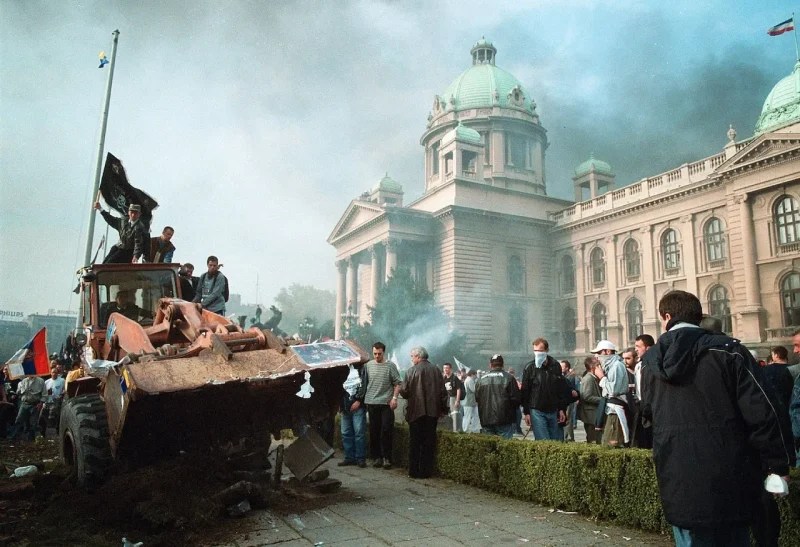
Slobodan Milosevic’s NED-orchestrated ouster is nicknamed the ‘Bulldozer Revolution’, due to iconic scenes during the upheaval of a wheel loader helping anti-government agitators occupy state buildings. However, its driver quickly turned against the “Revolution”. Subsequent “shock therapy” decimated Yugoslavia’s mixed market economy, causing his successful independent business to fail, and him to go bankrupt. He subsisted until his dying day on meagre state welfare payments. For most participants, subsequent colour revolutions were similarly an object lesson in being careful about what one wishes for.

‘External Shove’

In February 2005, President George W. Bush gave a swaggering address in Bratislava, Slovakia. He hailed how “in recent times, we have witnessed landmark events in the history of liberty.” This included Georgia’s November 2003 Rose Revolution, Ukraine’s Orange Revolution the next year, and Iraq’s Purple Revolution a month prior. “The advance of freedom is the concentrated work of generations,” Bush declared. He looked ahead to Moldova, and “inevitably” Belarus, “someday proudly [belonging] to the country of democracies [sic]”:

“Eventually, the call of liberty comes to every mind and every soul. And one day, freedom’s promise will reach every people and every nation.”

Moldova’s forced transformation into a staggeringly corrupt effective EU-US colony took many years. Belarus conversely remains stubbornly resistant to “freedom’s promise”, as defined by Brussels, London, Washington, and other centres of imperial power. Still, President Bush’s confidence was well-founded. Waves of insurrectionary unrest unleashed by his government’s “Freedom Agenda” had systematically swept away designated enemy governments one by one annually since he took office. Indeed, within weeks of Bush’s speech, Kyrgyzstan’s insufficiently pro-Western leader fell victim to yet another colour revolution.

He would not be the last. Prior colour revolutions had enthusiastically emphasised the importance of techniques of nonviolent resistance – many of which were crafted by Gene Sharp, who was intimately enmeshed within the US military and intelligence establishment for much of his life. However, Kyrgyzstan’s NED-created regime change army, KelKel – directly modelled on Otpor! – attacked police, torched government buildings and even carried out bombings. Their ferocity was actively encouraged and promoted by US-funded TV stations locally. Such belligerence subsequently became a colour revolution calling card.

Ukraine’s Orange Revolution

That colour revolutions represented a formal weapon of war in the Empire’s post-9/11 arsenal was enthusiastically spelled out by arch-neoconservative Max Boot in late December 2004. He gushed how Ukraine’s Orange Revolution days earlier, which brought a pro-Western government to power, was “one of the most inspiring events” of that year. Boot declared the “triumph” and “miracle” of the revolution “should dispel the quaint notion still prevalent in many Western universities and foreign ministries that democracy is a luxury good suitable for rich countries”:

“These revolutions reveal the hollowness of the cliché that ‘democracy can’t be imposed by outsiders’… sometimes, when dealing with an entrenched dictatorship, this requires military intervention of the kind that occurred in Iraq and Afghanistan. More brittle regimes can be brought down by their own people, but even they often need a little external shove… There was nothing nefarious about the US intervention in Ukraine.”

Boot boasted how Washington had “spent $58 million on democracy promotion in the last two years” in Ukraine. He proposed Kiev receive “expedited NATO and European Union membership,” to finish off the Orange Revolution. “In the meantime, we need to apply elsewhere the lessons of Ukraine” Boot demanded, suggesting “an obvious candidate for a similar transformation is Iran.” He explained, “it’s hard to think of a higher priority than the overthrow of the mullahs,” encouraging the Bush administration to prioritise “liberating Iran.”

‘USAID Help’

Such was the insurrectionary fervour of the time, in January 2006 USAID went to the extent of publishing a glossy magazine, Democracy Rising, revealing in detail Washington’s central role in fomenting “grassroots” rebellions as far afield as Afghanistan, Gaza and Lebanon. Dedicated sections on colour revolutions to date were replete with stunningly forthright passages. A section on Georgia’s November 2003 Rose Revolution described how NED had financed regime change training for local “lawyers, judges, journalists, members of parliament, NGOs, political party leaders, and others.”

The stated purpose of this investment was to give Georgians “a sense that they should regulate the government.” The Rose Revolution “was the climax of these efforts.” One recipient of US financial support remarked, “without foreign assistance, I’m not sure we would have been able to achieve what we did without bloodshed.” Meanwhile, several pages were dedicated to the Orange Revolution. It noted how thousands of Ukrainian journalists were given training in “investigative reporting”, bankrolled by NED and USAID.

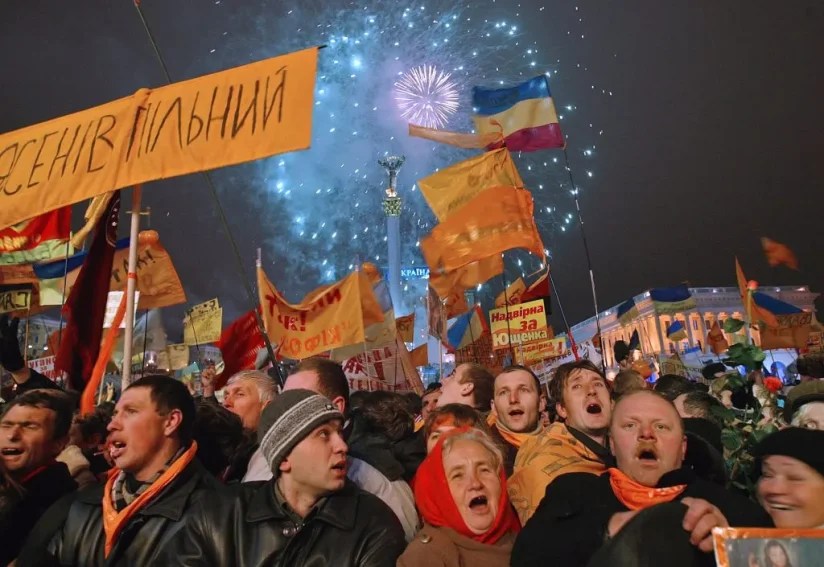
An alumni told Democracy Rising this sponsorship “created a feeling that others stood with them ‘in the trenches’.” Concurrently, NED-affiliated Freedom House flooded the coffers of NGOs “that sponsored voter education, mobilized voters to get to the polls and observed elections.” These organisations “also held meetings, youth dances, rock concerts and karaoke to attract young voters,” and “ran public service ads on TV stations, informing people about their right to vote.” Meanwhile, “democracy trainers from Serbia, Slovakia, Russia and Croatia” were flown into the country.

In the second round of Ukraine’s presidential election, NED-financed NGOs claimed to have been inundated with tens of thousands of reports of fraud from voting stations all over the country, while exit polls they produced pointed to widespread rigging having denied pro-Western candidate Viktor Yushchenko a landslide victory. Vast protests, combined with opposition-organised general strikes, widespread civil disobedience and occupations of government buildings forced a rerun. A US-funded think tank apparatchik asserted:

“USAID help for the poll was absolutely important – the poll results after the second round made people go to the street.”

For all the hype and self-assurance of Democracy Rising, its publication came at a time when colour revolutions were increasingly being viewed with hostility and suspicion at a state and public level throughout the Global South. In every case, the radical outcomes promised by colour revolution leaders and advocates failed to materialise, while US rhetoric about the commitment of resultant pro-Western regimes to democracy and freedom was a perverse fraud.

In Ukraine, US-installed Yushchenko implemented economic austerity, slashed regulations and social spending, bailed out criminal banks, broke open state industry and natural resources for foreign plunder, attacked the rights of Russian speakers, and began preparing the country for locally-feared NATO membership. Within just nine months of entering office, his coalition government – comprised of Orange Revolution activists – collapsed due to deeply corrupt battles with feuding Ukrainian oligarchs over control of key media and industrial assets.

Yushchenko was voted out in the January 2010 presidential election, finishing fifth in the first round with just 5.5% of the vote. As Empire house journal Foreign Policy lamented years later, the Bush administration’s much-vaunted colour revolutions all turned out to be “terribly disappointing.” Each and every time, “elite corruption still continued apace” and “promises of far-reaching change never really materialized.” Damningly, “maladies that typified the preceding regimes quickly came to describe” the governments created by colour revolutions themselves.

‘Revolution Business’

That’s quite some euphemism. In Georgia, longtime Soros acolyte Mikheil Saakashvili granted himself unilateral power in key policy areas, before brazenly exploiting his position to harass and jail business and political rivals. Saakashvili’s targets would be raped and/or tortured in prison, their ordeals filmed for primetime broadcast on local TV networks. Grave questions abound over his personal involvement in several suspicious deaths, including government ministers’. He was voted out in October 2012, despite NED’s best efforts.

Kyrgyzstan’s 2005 Tulip Revolution installed Kurmanbek Bakiyev, who proceeded to run the country as his personal fiefdom for five years. Bakiyev’s relatives profited exorbitantly from legally questionable privatisation of state industries. For example, his family signed a highly controversial $1.8 billion deal to supply fuel to a local US military base, close to Kyrgyzstan’s total GDP in 2003. Elsewhere, Bakiyev’s brother oversaw Bishkek’s security apparatus – arbitrary detentions, bogus convictions, torture, and murders of opposition activists, journalists, and politicians became commonplace.

Bakiyev was himself chased out of not only the presidential palace but Bishkek itself in April 2010, following a massacre of anti-corruption protesters in which up to 100 were killed and at least 450 wounded. Thereafter, Kyrgyzstan was plunged into economic and political chaos for a decade, with numerous governments collapsing along the way. The freest and most stable Central Asian state prior to the Tulip Revolution, it is only since 2020 – following another Anglo-American coup – the country has regained some semblance of stability.

A key player in that upheaval was British ambassador Charles Garrett. He arrived in Bishkek from Macedonia, where as this journalist has revealed from April 2016 he steered what was known as the “colorful revolution”. Illegally obtained, deceptively edited wiretaps seemingly implicating government officials in shocking crimes produced huge protests, featuring widespread arson attacks and brutal clashes between demonstrators and police. Garrett distributed cash to NGOs and activists involved in the unrest from his diplomatic pouch, encouraging them to cause mass havoc.

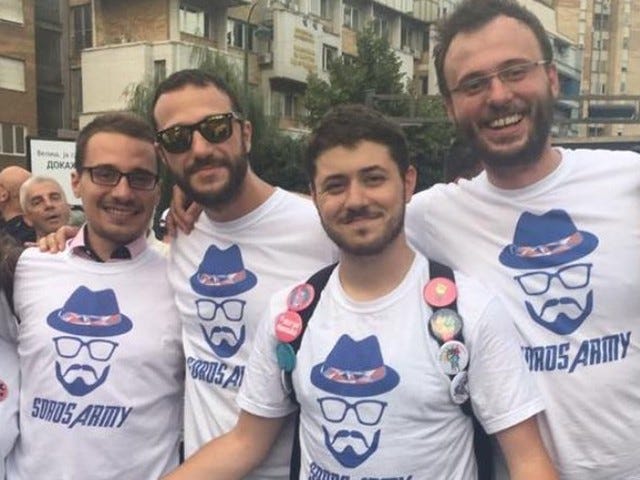
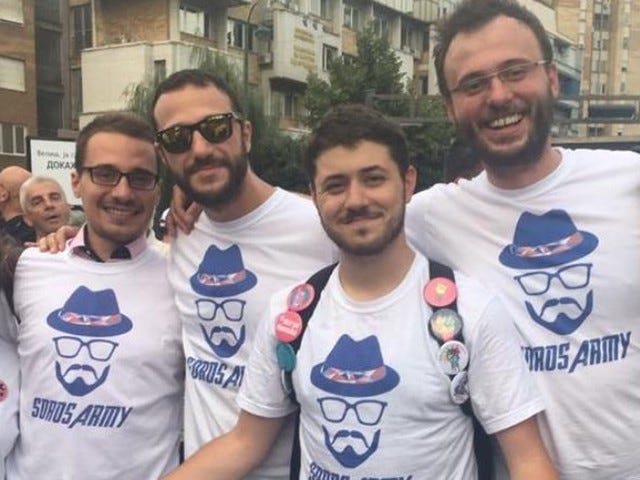
Paralajmërimi i gazetarit maqedonas: Pas protestave në Ballkan ...

George Soros’ Open Society Foundations, NED, and USAID were also colorful revolution participants. Some protesters even proudly wore “Soros Army” shirts. Despite a huge public counter-revolutionary fightback, the tumult paralysed the Macedonian economy and state, leading to the installation of a doggedly pro-Western, dangerously dysfunctional administration that engaged in industrial scale graft, jailed political opponents on bogus charges, and changed the country’s name despite widespread opposition. Meanwhile, existing economic problems, including crippling brain drain, were gravely exacerbated.

The unfailingly disastrous results of colour revolutions surely contributed to White House officials abruptly and firmly distancing themselves from the entire enterprise, before the Bush administration’s second term was even over. The “Freedom Agenda” was quietly forgotten. The President – who in October 2004 openly mandated financial assistance to Belarusian opposition activists, and once publicly praised the Rose Revolution as an example to be followed throughout the Caucasus and Central Asia – went so far as to deny the US was in the “revolution business” at all.

‘Alternate Reality’

Colour revolutions have continued apace ever since, with the same strategies being recurrently applied the world over, to varying degrees of success. All along, non-Western governments – in particular China, Iran and Russia – have become increasingly vocal in their condemnation of and opposition to colour revolutions, in some cases passing legislation seeking to curtail the operations of foreign funded NGOs on their soil. Yet, the mainstream media long ago adopted a rigid Omertà on Washington’s culpability for civil society-driven destabilisation overseas.

In a striking example of this paradigm shift, in November 2004, before the Orange Revolution was over, The Guardian published a revealing report exposing the “US campaign behind the turmoil in Kiev.” The outlet stated unambiguously the revolt was “an American creation, a sophisticated and brilliantly conceived exercise in Western branding and mass marketing that, in four countries in four years, has been used to try to salvage rigged elections and topple unsavoury regimes.” NED, the State Department and USAID were all fingered as culprits.

Fast forward to July 2015 however, and a Guardian article on Russia’s banning of NED under foreign agent laws quite amazingly relied on a brief quote pulled from the Endowment’s official website to describe its operations. In the intervening time, the Maidan Revolution overthrew Ukrainian President Viktor Yanukovych in February 2014, setting Kiev on the warpath with Moscow. Washington’s irrefutable involvement was strenuously denied at the time by the mainstream media, and has been ever since.

Following the Ukraine proxy war’s February 2022 eruption, The New York Times took vigorous aim at independent journalists for spreading the “conspiracy theory” Maidan was US-orchestrated, dubbing the proposition an “alternative reality” and “Russian disinformation”. This is despite every prominent Maidan actor – including the individuals who started the demonstrations – receiving NED or USAID funding, leaders of US-bankrolled organisations in the country advertising their intention to overthrow Yanukovych years prior, and the Endowment spending $20 million in the country in 2013 alone.

After the outbreak of war in Ukraine, NED removed its grant records on Ukraine, listing its investment in a panoply of initiatives in the country over many years – many of which ultimately targeted Russia, one way or another. In mid-2024, the Endowment undertook the unprecedented step of removing grant records for the entire world. Today, brief entries on different geographical regions describe in vague terms the Endowment’s specific aims locally, and overall sums being spent. The crucial questions of where, and on what, aren’t clarified.

NED going underground makes the task of tracking and exposing contemporary colour revolutions difficult, but not impossible. In September 2025, mass rioting ignited in Nepal. Major news outlets without exception reported the fiery agitation as an organic burst of dissent by the country’s disaffected “Gen Z”, motivated by corruption, unemployment, and state censorship of social media. Publications barely acknowledged demonstrators committed serious crimes, including torching Nepal’s parliament and the Prime Minister’s official residence, which sent occupants fleeing in helicopters.

Based on publicly available information, the clear insinuations of a colour revolution could be discerned. An NGO that organised the protests, Hami Nepal, had clear links to organisations known to be in receipt of NED funding. Subsequent leaks amply demonstrated the Endowment and USAID expended substantial sums over the years preceding the coup training young Nepalese citizens how to protest, founding NGOs and political parties, and “advocate concerns” on issues such as corruption. Evidently, the post-9/11 “Freedom Agenda” never actually ended.

  •  

The ‘Experts’ Are Still Trying to Scare Us With Non-Scary Viruses

Peter Hotez has warned that dengue and Zika pandemics could become the "new normal" due to climate change. Dr Randall Bock asks why the 'experts' are still trying to scare us with non-scary viruses and unlikely scenarios.

The post The ‘Experts’ Are Still Trying to Scare Us With Non-Scary Viruses appeared first on The Daily Sceptic.

  •  

🔴IL FRONTE SIAMO NOI | LEVANTE LIVE

🧠 La guerra ha conquistato il suo ultimo territorio: la nostra mente. A Levante questa sera, 28 settembre 2026, Margherita Furlan dialoga con il filosofo Michele Putrino e con il giornalista d’inchiesta Antonio Mazzeo sulle fabbriche di bot che ci fanno litigare sui social, sulla guerra cognitiva teorizzata dalla NATO e ora entrata nella Difesa italiana, e su come difendere l’unica cittadella che nessuno dovrebbe poterci togliere: il nostro giudizio. Affrontiamo insieme: 🤖 Gli sciami di intelligenza artificiale che fabbricano il consenso e simulano che «lo dicono tutti» 🎖 La mente come nuovo dominio della guerra: dal rapporto NATO del 2020 al disegno di legge italiano del 5 agosto 2026 💰 Il modello di business delle piattaforme: quando la rabbia diventa fatturato 🌊 Hormuz, guerra di comunicati: il sottomarino conteso fra Pasdaran e Pentagono 🏫 La scuola va alla guerra: la militarizzazione comincia sui banchi 🏛 Lo stoicismo come arte di resistere alla manipolazione, da Epitteto a oggi 📚 I LIBRI DEGLI OSPITI 📕 Antonio Mazzeo, «La scuola va alla guerra. Inchiesta sulla militarizzazione dell’istruzione in Italia», Manifestolibri 📗 Michele Putrino, «Liberi dalla paura. Gli insegnamenti di un’antica dottrina per liberarsi dal controllo del sistema», Uno Editori, 2021 🎯 SOSTIENI CASA DEL SOLE TV Casa del Sole TV è un progetto di giornalismo indipendente autofinanziato. 💳 Per donazioni: IBAN: IT63P0326822300052392596590 Intestato a: La Casa del Sole Edizioni Causale: Donazione Casa del Sole TV ⭐ Membership YouTube: 👉    / @casadelsoletvchannel   🔹 Analista Multipolare €5/mese 🔸 Inviato della Verità €15/mese 💎 Architetto del Futuro €25/mese 📖 I LIBRI DI MARGHERITA FURLAN 📘 BRICS Scacco Matto (disponibile in italiano, inglese, russo) 🌐 SEGUI CASA DEL SOLE TV ▶ YouTube: @CasadelSoleTVChannel #Levante #CasadelSoleTV #MargheritaFurlan #Geopolitica #Multipolarismo #GuerraCognitiva #Bot #Disinformazione #Stoicismo #MichelePutrino #AntonioMazzeo

L'articolo 🔴IL FRONTE SIAMO NOI | LEVANTE LIVE proviene da Casa del Sole TV.

  •  

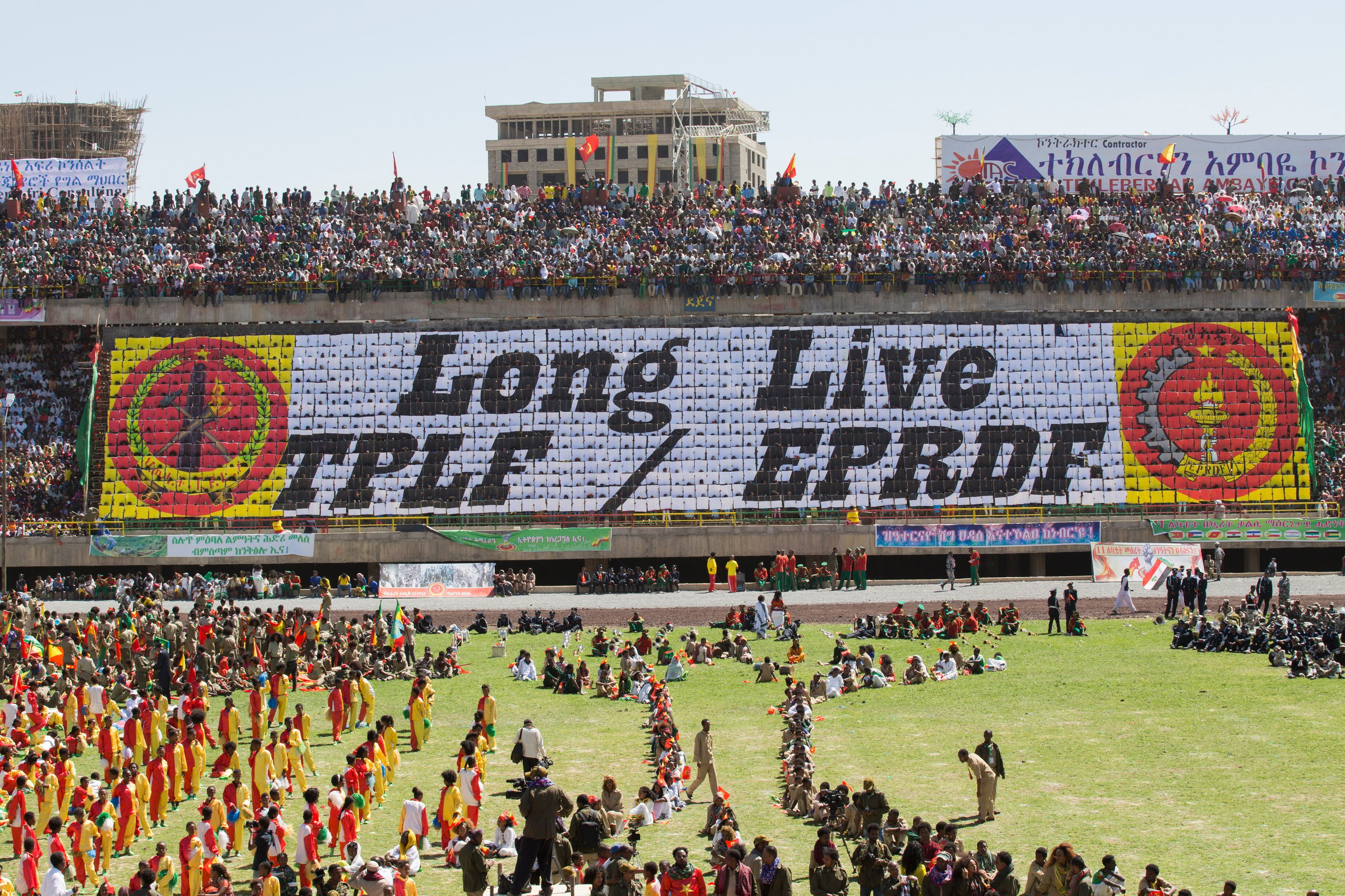
From Yemen to Ethiopia and Europe: Everything is connected

The sudden escalation in fighting between Ethiopian federal forces and Tigrayan rebels in the Afar region, raising fears of a new civil war, is part of a wider potential cascade effect from Yemen that could hurt Europe. 

After months of low-level skirmishes, Ethiopian officials have accused the Tigrayan People’s Liberation Front of launching an all-out offensive against federal government positions in northern Ethiopia. 

So what does that mean for Europe and the EU? More than you might think. 

Ethiopia’s economy is particularly vulnerable following the capture of Yemen’s entire Red Sea coastline by the Houthi rebel group, who now control the Bab el-Mandeb Strait. 

Some 97 percent of Ethiopia’s trade is via Djibouti’s port. There is now a real prospect of a series of regional chain reactions and the prospect of civil war in northern Ethiopia is one of them. 

This doesn’t directly impact on the EU’s interests, but it could soon enough.  

Ethiopia is not alone in facing major new threats posed by the Houthis’ advances.  

Egypt, a vital ally for the EU on migration control, faces its own economic crunch as it relies on Suez Canal tolls as a main source of foreign currency. That could lead to more financial demands being made of Brussels 

For their part, Djibouti and Somalia face major security concerns. Djibouti hosts military bases for a handful of EU countries, as well as the EU itself, and the United States, China, and others.  

Somalia, meanwhile, has a longstanding African Union (AU)-led security mission aimed at combatting the Al-Shabaab terror group to which the EU is the biggest single donor.

And the AU mission is particularly reliant on the EU after the Trump administration pulled the plug on US financial support earlier this year. The Houthis already supply at least $100m (€88m) in arms to Al-Shabaab, a smuggling operation now made easier by its coastal advances. 

For the moment, the EU is offering only modest additional support. Last week, EU governments agreed to double financial support for the Djibouti Armed Forces to €20m under the European Peace Facility. 

This article continues, but the full version is available only to EUobserver.com subscribers. Visit account.euobserver.com/membership

  •  

Babylon Had No Religion Class, but Its Future Officials Still Had to Learn Nearly 2,000 Gods

Some 2,500 years ago, Babylon trained the sons of its wealthiest families without a single weekly hour devoted to the gods. There was no textbook that worked as a Bible either. Religion was everywhere and in no particular subject, spread through sign lists, writing exercises and arithmetic drills. A study published in the journal Iraq […]

  •  

‘He is no longer the boy he was before’ – Italian 15-year-old left disfigured after 100 stitches, 8-member youth gang attacked him with machete

A 15-year-old Italian student named Matteo was attacked by eight teens with a migrant background outside his school in Cesena, in the province of Forlì-Cesena, Italy, according to a report from the Italian news outlet Fuori dal Coro. During the attack, Matteo suffered life-changing injuries from machete and knife blows that left him disfigured, required more than 100 stitches, and left him unable to realize his dream of becoming a pilot.

His mother has since appeared on national television, stating that her boy “is no longer the boy he was before.”

Matteo was living in the school’s boarding facility while attending the Technical Institute of Aeronautics in nearby Forlì. He was exercising with two friends when a group of eight minors, aged 15–17 at the time and all from the Cesena area, approached. They arrived on four mopeds or scooters, some wearing hoods or balaclavas.

🇮🇹🔴 8 youths with a foreign background attacked 15-year-old Italian boy Matteo with a machete and a knife outside his school in Cesena.
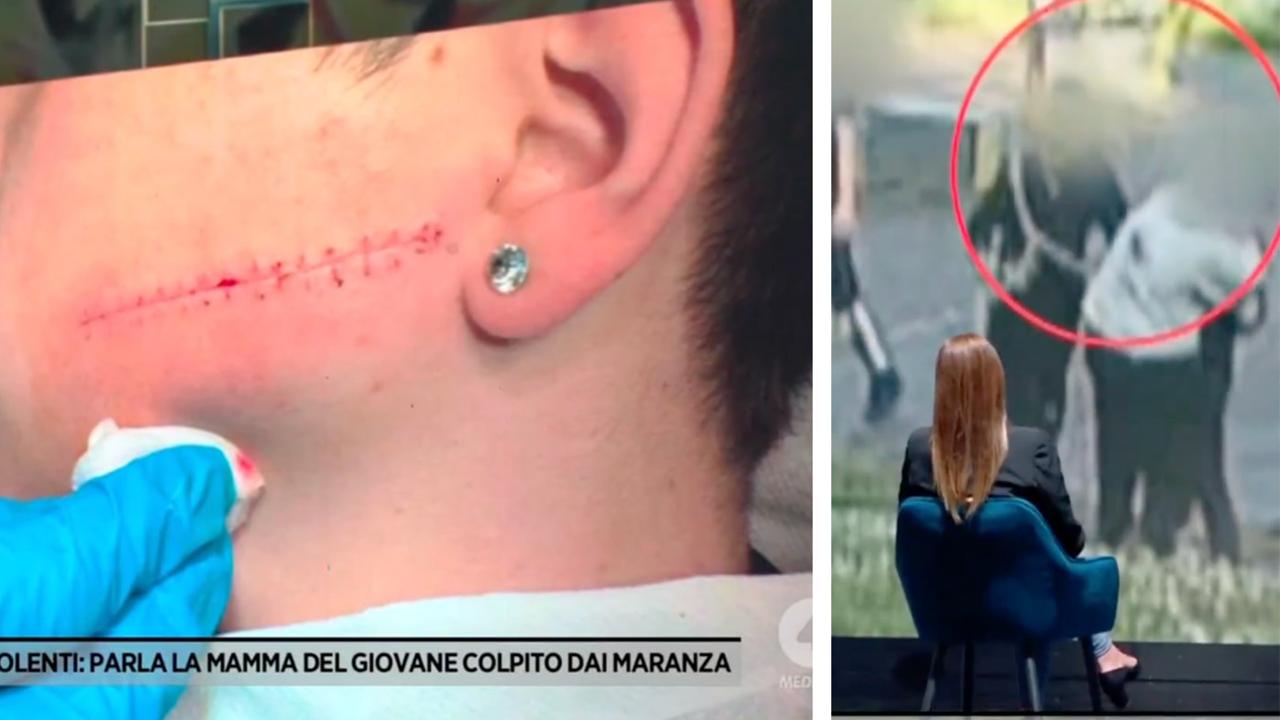
During the attack, Matteo suffered life-changing injuries that left him disfigured, requiring 100 stitches.

The suspects are currently… pic.twitter.com/oZ92Nxzr0K

— Remix News & Views (@RMXnews) September 28, 2026

Two of them initially demanded payment of a €45 debt for hashish that a “young foreigner” in the group had sold him. Matteo refused, saying the product was of poor quality. The rest of the group then joined in what prosecutors described as a premeditated punitive expedition.

CCTV footage captured the assault, which lasted under 10 seconds and has since been replayed on Italian news networks.

The group surrounded Matteo, whose name has been changed to protect his identity. One attacker used a machete on his face and hands; others used a large knife, described in some reports as a kitchen knife, and a telescopic baton. Matteo tried to protect himself with his hands. The attackers then fled.

Matteo suffered permanent damage to three fingers on one hand. He also suffered a deep slash starting near the ear, crossing the left cheek, and reaching the neck. This required maxillofacial surgery and damaged the parotid gland, requiring repeated drainage at Bufalini Hospital in Cesena. During a Fuori dal Coro report, the network interviewed Matteo’s mother and reported that he received more than 100 stitches in total, with the attack resulting in permanent facial scarring.

Doctors noted that covering his face with his hand likely saved his life by preventing the blade from severing a major artery. However, he is no longer medically eligible to become a commercial pilot, the career he had been training for.

Despite the serious nature of the attack, the host of Fuori dal Coro said, “The incredible thing is that these eight defendants are free.”

Matteo’s mother replied, “Yes, the eight defendants are awaiting trial while remaining free.”

🇮🇹🔴 2 second-generation young immigrants use sledgehammers on in Torino, Italy.

The store owner, Emiliano, says he has been robbed many times before.

He warned that criminals are getting young and younger.

Source: Italian media outlet Fuori dal coro. pic.twitter.com/14ggVScnxc

— Remix News & Views (@RMXnews) October 7, 2025

She said her son is trying to move forward, but “he is no longer the boy he was before. He still suffers major physical and psychological consequences. The wounds on his face and hand are visible and disabling. Beyond those, there are deeper wounds: his fear, the loss of his peace of mind, and the difficulty in trusting others. He had to rewrite his future, completely upending all of his plans.”

Matteo’s mother conveyed this story while footage of her son’s attack was looped in the background of their interview, highlighting the horror he experienced at the hands of the youths of foreign origin.

Given that the attack happened at the boarding school, it is presented as an illustration of a deteriorating security situation in schools across Italy and Europe amid mass immigration.

Matteo was forced to change schools and left the boarding facility after four years there. He also lost a school year because of treatment and recovery. Because of ongoing psychological issues caused by the attack, his family has paid for private psychological care and medical expenses.

Fuori dal Coro openly uses the term “maranza,” a slang label in Italy for a street style often associated with second-generation immigrant youth, who frequently have a North African background. These gang youths often have Italian citizenship but are linked to petty crime or more serious violence.

They have not been held in pre-trial detention and remain free while awaiting proceedings. Neither they nor their parents have contacted Matteo’s family or apologized.

Prosecutor Simone Purgato of the Bologna Juvenile Prosecutor’s Office charged them with aggravated serious injuries, permanent facial disfigurement, carrying weapons, private violence, attempted extortion, and related drug offenses.

The mother has described the lack of any remorse from the attackers or their families and the ongoing trauma for her, her son, and their family. She emphasized that they seek accountability rather than revenge. Local officials, including the mayor of Medicina, condemned the “cowardice of the pack.”

Due to the perpetrators’ ages, they are likely to receive far lighter sentences if found guilty than they would if they were adults.

The post ‘He is no longer the boy he was before’ – Italian 15-year-old left disfigured after 100 stitches, 8-member youth gang attacked him with machete appeared first on Remix News.

  •  

France: Anti-immigration influencer says supermarket employee called her a ‘racist’ and ‘dirty whore,’ but supermarket chain threatens her instead

A French social media influencer known for her criticism of Islam and immigration said a cashier at a Carrefour supermarket called her a “dirty whore” and a “racist” while she was checking out, according to her account of the encounter.

Mila Orriols posted a video Friday of a tense exchange at a Carrefour City store on Rue de la République in central Lyon. In the footage, Orriols tells the employee that she does not bother people while she is at work and that she will speak to his supervisor. As she leaves, she says, “We get revenge every time. Good evening.”

French media that reviewed the video reported that the alleged slurs were not clearly audible, though the employee can be heard using the word “racist” during the confrontation, according to French news outlet LyonMag. Orriols said the employee recognized her before insulting her, at which time she began filming.

Remix News produced a video about the encounter with English subtitles, however, Orriols’ original video garnered over 9 million views on X.

🇫🇷🔴 A supermarket employee called French right-wing activist Mila a "dirty whore" and a "racist," while she was at the checkout, according to her account.

The incident happened at a Carrefour supermarket in Lyon.

The chain, known to support the far-left LFI party, says it will… pic.twitter.com/M24qknI6JC

— Remix News & Views (@RMXnews) September 28, 2026

Cet employé de Carrefour City à Lyon Rue de la République me reconnaît et me traite de « sale pute » et de « raciste » pendant que je passe en caisse.

J’ai diffusé la vidéo sur Instagram, l’enseigne ouvertement LFIste annonce porter plainte contre moi et ne sanctionnera… pic.twitter.com/EJMAxvUH9q

— Mila ✨ (@milafique) September 25, 2026

Carrefour responded by asking Orriols to remove the video and that it will take action against her.

She has described the chain as openly supportive of the far-left La France Insoumise party. She said she intends to file her own complaint.

The company has not publicly commented on whether it will discipline the employee. Carrefour did not immediately respond to inquiries from French news outlets.

Orriols first drew national attention in 2020, when she was 16, after posting videos criticizing Islam. She received tens of thousands of online death threats and hate messages, was forced to leave school and lived for a time under 24-hour police protection. Several people were later convicted in connection with the threats.

She has said she no longer wants constant police protection, arguing she would rather live freely even if it means a shorter life.

Orriols remains a polarizing figure in France and has faced her own legal proceedings over comments French courts have deemed racist. In December 2025, a Lyon court convicted her of a racist insult over a social media post.

Her post from 2024 on X read: “I’ve noticed that many people with a background of inbreeding have very small foreheads. A huge part of families from North Africa are inbred, and many of them have misshapen and quite ugly faces, as well as very small foreheads. This especially applies to the twisted immigrants who attack us on the street every day.”

She deleted the post 10 minutes after writing it, but someone took a screenshot and filed a complaint.

🇫🇷🔴French feminist activist Mila is being prosecuted for "racist insults" for saying many North Africans are inbred and many have "quite ugly faces."

Her post from 2024 read: "I've noticed that many people with a background of inbreeding have very small foreheads. A huge part… pic.twitter.com/3ITmvabUlD

— Remix News & Views (@RMXnews) October 27, 2025

Following the trial, Mila remained defiant, stating that she regrets the form of her comments, but not their content. She also said that scientific studies support her claim that North Africans have high rates of inbreeding.

She has appealed the court ruling against her.

The post France: Anti-immigration influencer says supermarket employee called her a ‘racist’ and ‘dirty whore,’ but supermarket chain threatens her instead appeared first on Remix News.

  •  

Protesters in Brussels press EU on ‘broken promises’ over caged animals

The European Commission is being pressed to deliver an animal cage ban by 2027 after failing to meet previous commitments.

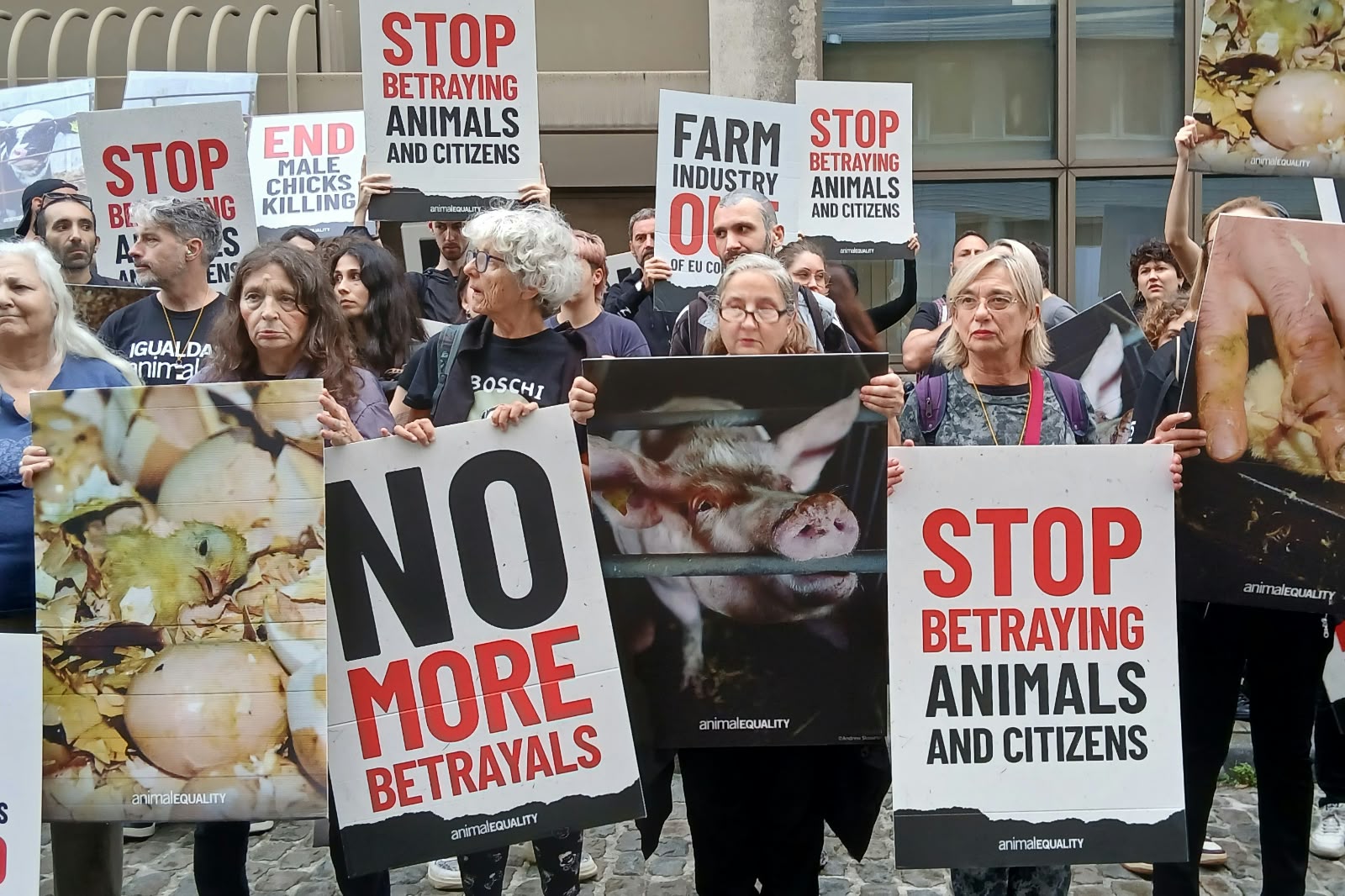
Several hundred animal rights activists gathered at the EU’s office for health and food safety in Brussels on Monday (28 September) to encourage a ban on poultry cages and on the killing of male chicks. 

The commission’s livestock strategy had committed in July to proposing legislation to outlaw the two practices by the end of 2026, with similar legislation on pig welfare expected to follow by mid-2027.

The legislation stems from a European Citizens’ Initiative (ECI) signed by 1.4 million people in 2021 to ‘End the Cage Age’. A vast majority of MEPs also subsequently voted to endorse the transition to improved animal welfare. 

And while the commission had originally promised to table a proposal by 2024, this was derailed by farming lobbies and the deadline elapsed.

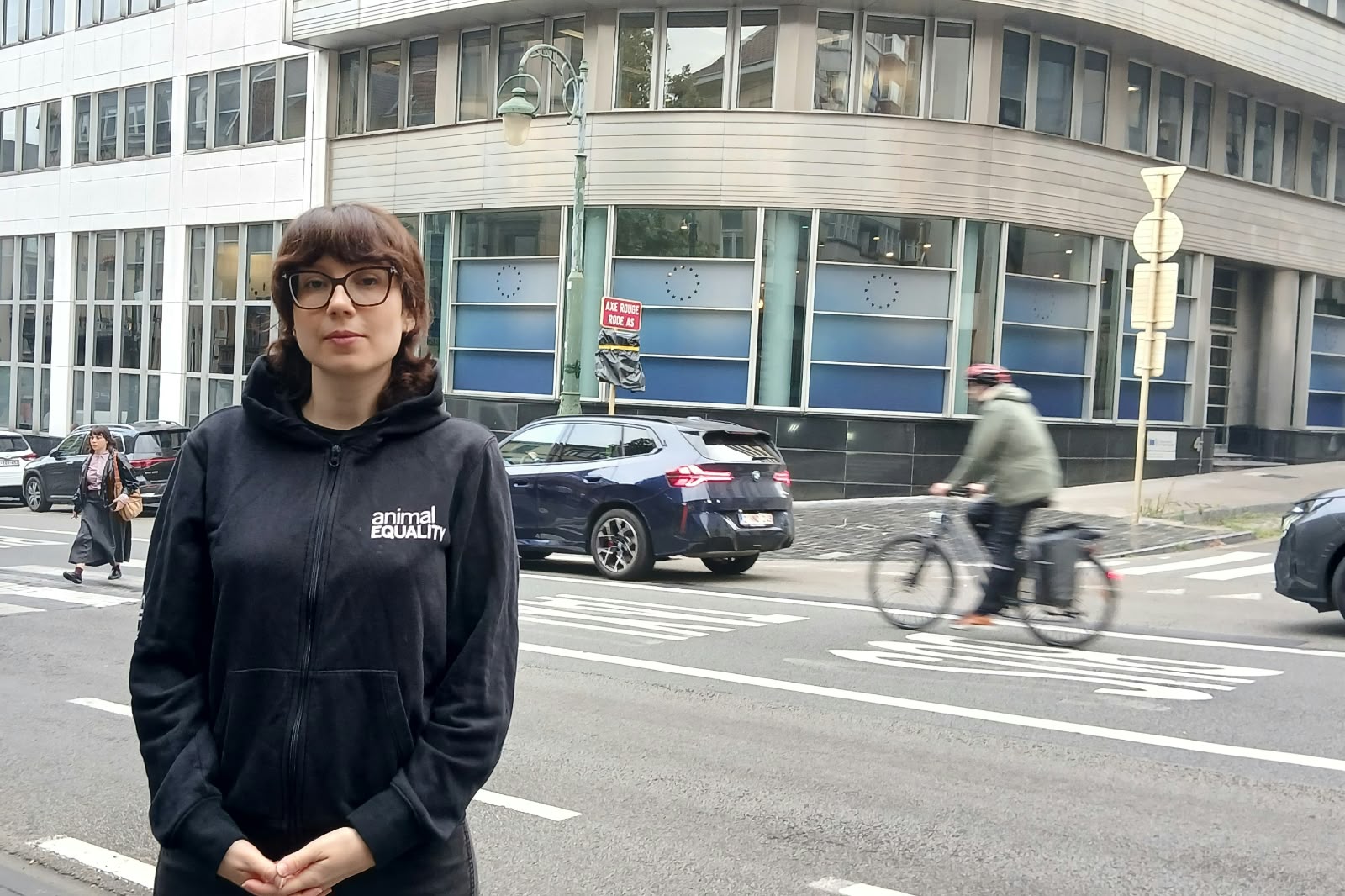
“We are here [at Monday’s protest in Brussels] because the EU has been delaying meaningful reforms for animals for years,” said Ombretta Alessandrini from Animal Equality, which organised the rally.

Person stands infront of EU institute.
Ombretta Alessandrini is campaign manager at Animal Equality. (Source: EUobserver)

“Our democratic ask needs to be respected. We feel betrayed by the EU’s broken promises and we want the commission to do what they say,” she told EUobserver.

Animal Equality has also joined legal action against the commission over its broken promises, in a case examined at the European Court of Justice in March.

The commission is legally obliged to respond to a citizens’ initiative once it reaches 1m or more signatures. 

This article continues, but the full version is available only to EUobserver.com subscribers. Visit account.euobserver.com/membership

  •  

Baltic states seek to calm panic on Russia, in role reversal

This story is a part of the weekly newsletter about security, defence, and tech in the eastern flank of Nato, How we cee it.

Over the past few weeks, a new wave of fear has engulfed Europe. A number of intelligence and government officials have spoken out, saying Russia could possibly attack a Nato country within months, not years.

On 18 September, Polish prime minister Donald Tusk warned that Russia is planning hybrid strikes with drones or rockets on European countries that support Ukraine, such as Poland.

Two days later, Czech intelligence chief Michal Koudelka told the Guardian that, as well as increased drone activity, a small-scale invasion of Nato territory bordering Russia could be part of the Kremlin’s plans.

Then, last Thursday, Denmark’s defence intelligence service said that Russia is likely to intensify its hybrid war against the West in the coming months, with more frequent attacks against Nato countries.

On the same day, speaking at the Council on Foreign Relations in New York, Poland’s foreign minister Radosław Sikorski said, according to TVP World: “We are receiving information … that Russia is preparing something big this year.”

This is not the first time a wave of comments like this has appeared. A similar situation arose last year, when various officials in Europe took turns escalating their rhetoric about the Russian threat.

It is possible that they are speaking out again because new information has surfaced within the intelligence community. The communication goal could be letting Russia know that they know. Much like CIA director John Ratcliffe’s visit to Moscow last month, this could be an effort to make sure Russia doesn’t miscalculate.

The warnings also come in a different context from last year, when the Baltic countries were sounding the alarm. Russia has noticeably been turning up the temperature of its activity around Europe.

Back in July, a cruise missile crashed in Poland. According to experts, it was not a misguided missile, but one deliberately aimed at Poland. Then, in early August, a drone carrying an explosive device was discovered at Leipzig/Halle Airport in eastern Germany, close to Ukrainian cargo planes.

Germany’s interior minister Alexander Dobrindt said the Leipzig airport attack followed the “well-established pattern of Russian hybrid operations in Europe,” the BBC reported.

According to German investigators, who spoke to Frankfurter Allgemeine Zeitung, the incident was also connected to other events, such as an attempted arson attack on a drone manufacturer in eastern Slovakia, and an arson attack in Munich on September 3, when several incendiary devices were thrown from a passing car onto a construction site near the headquarters of defence firms Rohde & Schwarz and Helsing.

In fact, there have been so many different incidents recently that the semi-regular drone incursions into Romania and the Baltics have become almost normalised and struggle to make headlines anymore.

Hypothetical scenarios abound

Scenarios of where Russia could take its hybrid attacks next are as abundant as onlookers’ creativity allows. They range from small attacks on factories, through the seizure of a small piece of land by an elite drone unit, all the way to the capture of the Suwałki corridor – a strategic piece of land between the Baltic states and mainland Europe.

Most recently, the CIA warned that while all eyes had so far been on the Baltics, Russia may be preparing a drone strike against Spain, France, and Italy.

According to Marko Mihkelson, chairman of the Estonian parliament’s foreign affairs committee, the snowball of speculation about an imminent Russian attack on Europe is gathering pace.

But as he sees it, isolated facts are being mixed with wishful thinking, worst-case scenarios and, at times, little more than the need to grab attention.

As he wrote in an opinion piece for the Estonian news agency ERR: “Russia understands that it can confuse and paralyse us through information operations alone. Constant speculation about the Baltic states and Poland risks creating the impression that this is primarily a problem for two or three countries on Russia’s doorstep, while the rest of Europe can somehow remain untouched.”

According to Mihkelson, Russia’s campaign against the West would not necessarily begin with a conventional attack.

It could start by undermining Nato from within: interfering in elections, amplifying polarising narratives, exploiting political divisions, and spreading fear. It could seek to isolate Ukraine by limiting Western support, and then test Nato’s willingness to stand together.

As for worries that Russia will attempt to grab land from the Baltics or Poland, there are no significant material or military changes to note along the borders.

Belarus did hold a four-day military exercise near its border with the Suwałki corridor in mid-September, but that is nothing close to the signals we were getting from Russia just before the full-scale invasion of Ukraine. Back then, physical military infrastructure was being constructed ahead of the attack.

There are also no significant changes in the Russian military’s posture to launch a land attack against the Baltics.

Estonian government officials confirm this. According to Estonia’s minister of defence, Martin Herem, its assessment of the Russian threat remains unchanged.

That means Russia’s main effort remains focused on its war in Ukraine, and neither Estonia, Denmark, nor other Nato allies currently see a threat requiring raised military readiness.

Military experts in Lithuania also see no signs of new escalation. This doesn’t mean Russia won’t continue to be dangerous. It means that Russia has been engaged in provocations against Nato countries for years already, and similar behaviour will continue.

“No one is currently planning to conquer us – not at this moment, nor this year. In this case, specific, very precise attacks or provocations are more likely, designed not so much to cause physical damage as to sow serious panic in people’s minds,” Deividas Šlekys, a professor at Vilnius University’s Institute of Political Science and International Relations, told the Lithuanian wire LRT on Monday (28 September).

And so, while last autumn it was the Baltic states sounding the alarm about a potential Russian attack, now their officials are looking to calm the panic about their aggressive neighbour.

  •  

‘Dangerous for democracy’: White House airs more pro-Trump propaganda on taxpayer dime

US President Donald Trump speaks on stage on the first day of the 2026 Republican National Convention at the American Airlines Center on September 09, 2026 in Dallas, Texas. Photo by Brandon Bell/Getty Images
Common Dreams Logo

This story originally appeared in Common Dreams on Sep. 28, 2026. It is shared here under a Creative Commons (CC BY-NC-ND 3.0) license.

The White House recycled material from President Donald Trump’s 2024 campaign for a new taxpayer-funded ad that aired nationwide this past weekend, just weeks before the high-stakes November midterms.

The 30-second black-and-white ad features Trump walking down a hallway to audio of him vowing to “demolish the deep state” and “expel the warmongers from our government,” even as the president wages an illegal and deeply unpopular war on Iran that has killed thousands and driven up prices at home and around the world. During the final 10 seconds of the ad, white text appears at the bottom of the screen stating, “Paid for by the US government.”

The ad is just the latest taxpayer-funded, explicitly pro-Trump spot that the White House has launched in recent days, prompting alarm from lawmakers and government watchdog organizations who say the administration is using public funds to flood airwaves with the president’s campaign ads shortly before an election.

Watch the newly aired ad:

The U.S. Government is up on TV with this spot —

It aired nationally on FOX yesterday during Illinois at #7 Ohio State and also during Fox News Sunday this morning pic.twitter.com/8PP9FPzUZk

— Medium Buying (@MediumBuying) September 27, 2026

Richard Painter, who served as the White House’s chief ethics lawyer in the George W. Bush administration, said the taxpayer-funded campaign ads “could be an impeachable offense,” noting that “Congress has expressly prohibited government-sponsored political propaganda, which is dangerous for democracy.”

The federal government appears to have spent more than $1 million on pro-Trump ads in recent days, The New York Times reported on Sunday, citing an estimate from AdImpact.

Last week, as Common Dreams reported, the White House launched a taxpayer-funded ad in which Trump declares that “America will never be a communist country” and promotes tax cuts he signed into law, delivering a massive windfall to the rich and large corporations.

Norm Eisen, former White House special counsel for ethics and government reform, told the Times on Sunday that “the president and his administration have gone from breaking the law to trampling it.”

“The prior ad was bad enough,” said Eisen, “but this one openly repurposes prior political conduct.”

US Sen. Chris Murphy (D-Conn.) wrote on social media that Republicans shouldn’t be taken seriously when they claim to care about “waste, fraud, and abuse” as the president and leader of their party runs campaign ads with taxpayer money.

“What a cult this party has become,” Murphy added.

  •  

Arctic Scare Stories Melt Away

By Paul Homewood | Not A Lot Of People Know That | September 22, 2026

The Arctic sea ice should have melted away years ago, according to the “experts”.

In 2007, for instance, Professor Wieslaw Maslowski told us that northern polar waters could be ice-free in summers within just 5-6 years. In December that year, Jay Zwally of NASA agreed, giving the ice till 2012.

A year later, Professor David Barber went one step further, saying the ice would all be gone that very summer. Then we had Al Gore confidently predicting it would all disappear by 2016.

For sheer persistence in getting it wrong, however, first prize must go to Professor Peter Wadhams, Professor of Ocean Physics, and Head of the Polar Ocean Physics Group in the Department of Applied Mathematics and Theoretical Physics at the University of Cambridge:

· In 2012, he predicted that the Arctic would be ice free by 2015/16

· In 2014, he thought it might last till 2020

· In 2016, he confidently predicted the Arctic would be ice free that summer (though curiously he now defined “ice free” as less than 1 million square kilometers!)

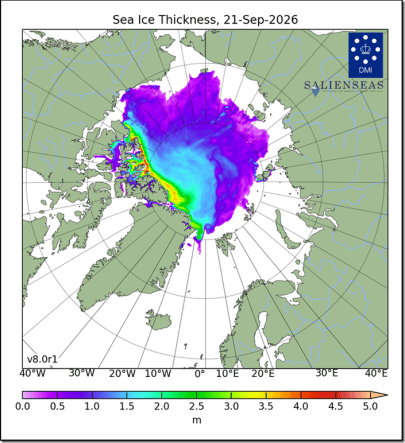
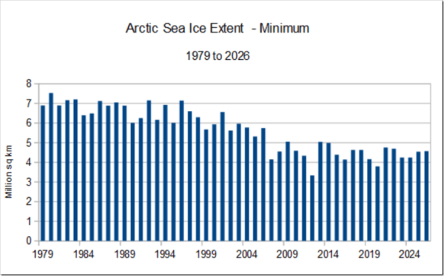
Strangely, all these “experts” have been pretty quiet lately. Little wonder, because Arctic sea ice extent is just as large now as it was when all of those fatuous claims were made.

To be fair, they were only talking about summer sea ice. Even they were not daft enough to think that there would be no ice in winter either.

As is always the case in mid-September, the sea ice has just provisionally hit its minimum extent for the year, at 4.574 million sq km. Much of it is still over a meter thick.

https://nsidc.org/data/seaice_index/data-and-image-archive

There was a decline in ice cover during the 1990s and early 2000s, which led to the fears expressed above. However, real Arctic experts have known for years that the Arctic climate is cyclical.

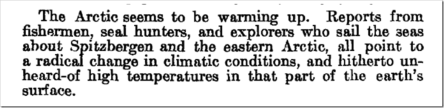
For instance, the Arctic underwent a warming phase in the 1920s and 30s. According to a US Weather Bureau report in 2022:

There followed a much colder period in the 1960s and 70s, when sea ice extent grew substantially, a time known as the Sea Ice Years in Iceland with half the island surrounded by ice.. As a result, attempts at grain growing in Iceland, which had been resumed in the warmer decades of this century after a lapse of some hundreds of years, were abandoned.

With the advent of full satellite coverage, official data for sea ice became available in 1979, the very time when the ice was at its fullest extent.

On a longer time scale, of course, scientists know that sea ice has been far less extensive for most of the last 10,000 years.

But where global warming is concerned, real science goes out the window!

  •  

New positive ivermectin evidence

Dr. John Campbell | November 25, 2025

A Pilot, Randomised, Placebo-Controlled, Double-Blind Trial of a Single Oral Dose of Ivermectin for Post-Exposure Prophylaxis of SARS-CoV-2

https://www.mdpi.com/1999-4923/17/9/1205

People who took one small oral dose of ivermectin after exposure, took longer to test positive and had more time alive and free of symptoms.

Multiple reports from in vitro infectious models document Ivermectin’s antiviral properties

Click to access cells-09-02100.pdf

Ivermectin has broad-spectrum antiviral activity.

Randomised, double-blind, placebo-controlled

Single oral dose of Ivermectin as prophylaxis for SARS-CoV-2

Trial to evaluate the effectiveness of a single oral low dose of Ivermectin

Ability to prevent SARS-CoV-2 infection?

Ability to reduce symptoms if infection did occur?

Methods

Asymptomatic community-dwelling adults

Enrolled within 72 h of close contact with a case of SARS-CoV-2.

Single oral 200 µg/kg dose of Ivermectin or placebo.

65Kg woman given 13mg

80Kg man given 16mg

The primary outcome

Conversion to a positive PCR or RAT test within 14 days of close contact.

Secondary outcomes

(for those who tested positive)

Days alive free of symptoms in the 14 and 28 days following ivermectin

Days from close contact until a positive PCR or RAT

Results

N = 536 (86 met inclusion criteria and were randomised)

68 adhered and were included in the analysis.

Ivermectin arm

11/36 tested positive

Placebo arm

11/32 tested positive

So, ivermectin did not prevent people testing positive

Days from close contact until a positive PCR or RAT

Increased by 2.3 days in ivermectin group.

P = 0.033

So, ivermectin lengthened the incubation period

Viral load needed to precipitate clinical disease took longer to develop – indicating an antiviral effect.

Infection may have been prevented from primary contact, – indicating an antiviral effect.

Days alive free of symptoms

Increased by 2.5 days in ivermectin group.

P = 0.036

So ivermectin delayed onset of symptoms in people who tested positive

(Longer asymptomatic period)

Controlling included

Age, prior SARS-CoV-2 infection, body mass index, hypertension, lung disease

Conclusions

We did not demonstrate that a single oral low dose of Ivermectin administered to asymptomatic adults within 72 h of close contact with a case of
SARS-CoV-2 prevents conversion to a positive PCR or RAT.

(may have done with a larger sample size)

Amongst those who did convert to a positive PCR or RAT

Ivermectin significantly lengthened the time from close contact to conversion

Ivermectin increased the number of days alive free of symptoms

More details

Initiation of this trial in late 2021

Discovery in 1975

Massively used around the world

Nobel Prize in 2015

Very low incidence of serious adverse side effects

No instance of resistance reported in over 25 years.

Ivermectin can bind to and inhibit the nuclear transport roles of the host importin α (IMPα) protein, which is known to mediate the nuclear import of various viral proteins and key host factors.

Other quite distinct antiviral actions of Ivermectin have been proposed.

High (therapeutic) concentrations collect in the lungs, stable for more than 30 days in cattle.

Trial was based on the strong clinical retrospective association of statistically significantly lower mortality in patients who received oral Ivermectin (200 μg/kg) compared with usual care.

https://www.sciencedirect.com/science…

Ivermectin patients 15% mortality

Controls, 25.2% mortality

In subjects with severe pulmonary disease

Ivermectin patients, mortality 38.8%
Controls, 80.7% mortality

  •  
❌