Login

The greater isolation of lesser Israel

This content is for members only. Visit the site and log in/register to read.

This content is for members only. Visit the site and log in/register to read.

In this episode of Rattling the Bars, the midterms edition, we take you to the Commonwealth, where Andrea James—abolitionist, author, and organizer—is currently running for governor of Massachusetts. The countdown to November 3 is officially underway. Debates are scheduled for October, but independent and third-party candidates are being excluded from participating.
Andrea James has led national campaigns to reunite families by demanding clemency from high-level officials for incarcerated women and men. Now, she is running for governor with a platform focused on rent stabilization, lower energy costs, free childcare and stopping the construction of a new $360M women’s prison.
Related Links:
Credits:
MANSA MUSA: Welcome to this edition of Rattling the Bars. I’m your host, Mansa Musa.
Joining me today is Andrea James, activist in every sense of the word. I want to say abolitionist, but she’s an activist in every sense of the word, organizing, and is currently running for the governor of Massachusetts.
Thank you for joining me, Andrea.
ANDREA JAMES: Thank you for having me. It’s really great to be back in your studio, and just to have the privilege of being a part of how you disseminate information. It’s really an honor to be here, and I thank you for this opportunity.
MANSA MUSA: And we want to go on record right now saying that here at Rattling the Bars, we recognize that it’s a so-called two-party system. And we recognize that, when you’re dealing with electoral politics, that if you’re not a traditional Democrat or Republican or so-called Independent, according to their definition, you’re not going to get the recognition. So we are here primarily to level the playing field. It’s not our endorsement of it, it’s more opportunity for her to talk about her candidacy, why she’s in this position, why she’s running, and what she expect.
And with that being said, introduce yourself to our audience, Andrea.
ANDREA JAMES: Well, I want to say thank you for introducing me as an abolitionist. I mean, I am an abolitionist. I have had a direct experience that causes me to understand that this country has had more than 250, but 250 recognizable years of incarceration of prison and prison building and incarcerating people in cages. And actually, I believe in direct experience and that that’s what leaders should have, some level of direct experience so that there’s an urgency around the issues that need to be worked on. And so I’ve had the experience of incarceration myself personally, and I happen to know, having lived in a women’s prison, that they only cause further harm and that they are antithetical to getting us to a place of having whole, healed, and healthy communities and people. So I am a prison abolitionist, absolutely. And thank you for referring to me in that manner.
Why I’m running has a lot to do with that experience in 15-plus years specifically. Decades prior to that in my lifetime came from a family, African American family of Civil Rights folk breaking color barriers and so forth in law, in the field of medicine. My grandmother was the first Black nurse in the city of Boston. I’m from a community that is the most incarcerated community in the commonwealth of Massachusetts. We’ve been in Massachusetts for seven generations, in the same old house in Roxbury for five generations.
And so why I’m running is this alchemy of these life experiences that have brought me to where I am in my life today with my understanding of these issues and also who I am today. And that includes all of my life experiences, not just the highs that I’ve reached and the accomplishments that I’ve had and the academic achievements that I’ve had the privilege to be exposed to, but also my incarceration, which has been one of the most important experiences of my life that propelled me.
This was 20-plus years ago. I made a mistake in my law practice. I wound up on a prison bunk in federal prison for wire fraud. And what I received and learned from that experience after having been a criminal defense attorney, after having worked my entire adult life on ending mass incarceration and bringing attention to that issue and then having the direct experience of myself of living in a prison, I knew immediately after being surrounded by all these women, I had to survive 24 months of incarceration. I was laying next to, head to toe, head to toe, head to toe on a prison bunk next to sisters who had been in there for 24 years. I mean, I knew.
My parents were researchers of people of African diaspora. When I was a kid, they were traveling all over the world with us, showing us different cultures of our people. And one of them was a trip to Gorée Island, where we saw where they enslaved African people, put them into caves, waited for ships to come, load them on like cargo, and take them to every single place on the planet to work as labor. And when I was in that prison, I wrote a book, a memoir called Upper Bunkies Unite. And because I was on a top bunk and I remember looking up over this sea of Black women and being like, damn, the first thing that came to mind all those years later was Gorée Island, was how they stacked us.
And so I’m running for all of that, and I’m running for more of the immediacy of creating change right now. I’ve been going to the Massachusetts state House for 15 years writing policy, writing legislation, giving of my voice, my experience, to panels and state legislative hearings and congressional hearings, and being trotted out for all of the things on the federal level policy. And enough is enough. Enough is enough.
And I have done every piece. I’m older. I’m older. I believe in pouring into our young because they’re brilliant. They have a language now that like, what y’all talking about, but I like how it sounds. But we need to break the ceiling of the caste system that they expect us to continue to live under. And I refuse to do it any longer. I refuse to be made a chump in an electoral process that is not addressing the needs of the people that are millions, that, actually, in Massachusetts, have become the majority of people who are dissatisfied with either of the establishment parties, meaning the Democrats or the Republicans, that 67% of voters in the commonwealth of Massachusetts have become unenrolled.
Now, does it mean that they’re all the way over here, prison abolitionists and to the left and progressives like I am? I don’t even call myself a progressive because that’s been co-opted in so many ways to help democratic socialists get into office and so forth that do not go far enough for me. However, we need to be a part of this in more ways than just being on the table.
We need to shake up. I mean, you talk about rattling the bars, the electoral process needs to, those bars need to be rattled. We get people into office and they think the job, the hard work, was getting elected — Which is an arduous process even when you have their millions of dollars, which we don’t — But still too many of our electeds have gotten into office and they thought getting into office was the job. And then term after term after term, they’re just comfortable. It’s like, they have a job. They have a nine-to-five that they go to.
MANSA MUSA: Let me ask you this here.
ANDREA JAMES: Yeah.
MANSA MUSA: OK. So, you already clarified the so-called progressive. We agree that the term in and of itself says one thing, but the behavior says something else. But you are running as an Independent. Now juxtapose that against Bernie Sanders. Bernie Sanders has ran as the longest Independent, but how do you see yourself when you say you’re Independent? Is your Independency similar to Bernie Sanders, same, or are you saying Independent in fact and not in theory?
ANDREA JAMES: I’m Independent in fact. I mean, I’m running on issues.
MANSA MUSA: Come on.
ANDREA JAMES: I am not running on any party platform, and I refuse to be constricted by a party platform. I unenrolled because I was a member of the Democratic Party, I was raised by strong Black Democratic women over the generations in my family. I unenrolled because I thought it was unconscionable what the Democratic Party has become. And I believe that it is a duopoly between the Republican parties and the Democratic parties.
That being said, I wasn’t running on any party because I’ve seen the party that I expected to do, carry the water and make the noise on behalf of the issues that are affecting so many people. When they weren’t doing that term after term, elected position after elected position, I decided the party platforms are not going to carry the work that needs to be done. So I said, I’m going to work on these four issues.
Now I care about a lot of other issues, trust me. But right now in the compounded crises that people are going through, everyday people are going through in the communities like mine across the country, but specifically across the commonwealth of Massachusetts, we’re a commonwealth. It’s different when you’re a commonwealth, that means of the people. We become a corporate wealth. And our campaign is it’s the commonwealth, not the corporate wealth. We are under the oppression and control of a corporate agenda right now in the commonwealth of Massachusetts. So wealthy donors and corporations are getting the focus and the attention that working families, underemployed, unemployed, formerly incarcerated people, people who have gone through a state of struggle, the focus should be on. We’re a commonwealth. But I’m running on four issues.
MANSA MUSA: Come on, talk about it.
ANDREA JAMES: So that it is very clear because they’ve co-opted the term “affordability.” They’ve listened to our language and taken our language, both the Republican and the Democratic candidate, and morphed our abolitionist language into their establishment party agenda.
So I said, I’m not dealing with none of that. I’m an Independent, meaning I am running on issues, not any sort of party platform or party identity. We don’t have an Independent party in Massachusetts. We’re just called unenrolled/Independents. So it’s not even that I’m running on a platform called Independent. I’m running on four issues: housing, universal healthcare, childcare, and equitably funded education.
Why those issues? Because I am the voice of the people who have been just tamped down into a caste system that is only growing and widening. So before it used to be all of us, Black, Brown. We have a wealth gap in the commonwealth of Massachusetts that is astounding that nobody even wants to talk about. It’s always like, why has it got to be about race? Because everything is about race, baby [Musa laughs]. And so we’ve got to discuss that. But we’ve got an unemployment rate that is double for Black people in the commonwealth of Massachusetts.
And so, these are things that we have to talk about, but the issues that I’m running on are issues that would create an immediate lift. I call it lifting from the bottom and closing the gaps. When you talk about unaffordability, it is at a crisis level in this state and around the country, but housing, universal healthcare, childcare, and equitably funded education immediately gives economic empowerment to the people, the millions of people just in the commonwealth of Massachusetts alone, the wealthiest state in the country, that has been completely left out of that.
So, we have nurses and firemen right now who can’t afford places to live. And so it has expanded. It’s no longer just formerly incarcerated people who got no chance in hell — That’s got no chance in finding support, I should say. We still make it, but in finding support in climbing out of that hole they tried to bury us in and get back on our feet and raise our children and bring our families back together and restitch the fabric that they’ve shredded economically, family-wise. But it’s expanded to a lot of the middle class, so to speak, who are now feeling the same level of pain, even as they still are intact and have their jobs and may have a house or may be able to figure out how to pay their rent, but really are not making a living wage themselves.
And so housing, universal health care, why universal health care that’s single payer health care. I’ve traveled the world in the work that I’ve done as an expert on women and incarceration. I’ve talked to parliaments in different countries about the issue. I’ve visited women’s prisons all over the world. And while doing that, I have had the experience of those countries and their major cities and how they address policy. Well, housing is a number one thing in many of these places, but also they have universal healthcare. They’re not beholden to what we’re stuck with, which is the CEOs who make $200 million, with a M, a year who run health care companies in the United States. And we have no benefit of it. We pay high premiums, we have deductibles, and most of the time we have to ask if they’ll fix something for us and it’s denied.
And so universal healthcare is one way to immediately infuse some economic stability in the families and in the everyday people in the commonwealth of Massachusetts. If we have single-payer health care, which means the state takes over completely — Which we are uniquely poised to do here because Massachusetts already controls its own health care market — And so the only reason we don’t have it is that because the governor and the other leadership in the commonwealth of legislature are beholden to the wealthy donors who are the CEOs and their rank and file who donate money to these campaigns. Because there is no other way to explain in the commonwealth of Massachusetts where we already control our own health care marketplace, where it does not make fiscal sense or it’s not fiscally responsible to not have single-payer health care, that we still have it, except that we will hold in place because of the lobbyists, the health care industry, and the CEOs that make us have to pay all of this money for health care that does not produce the level of health and wellness that we deserve.
MANSA MUSA: OK. Let me ask you this here then. OK, so you already acknowledged that you got this wealth gap, and you got in terms of the political structure. So how are you managing being competitive in the sense of being able to get out and get your message out unless are you getting PAC money? Are you getting corporate money? So how are you funding your campaign? How do you see it? Because like you say, you up against, just to your own point, it ain’t commonwealth, it’s corporate wealth. If it’s corporate wealth, right?
ANDREA JAMES: Millions and millions of dollars. Millions of dollars. The Republican candidate in this race, there’s three of us. First of all, mainstream media is beholden to the Democratic Party and they only refer to her. And in reference to the Republican candidate running against us, they only refer to one opponent running this race against our current Democratic governor. There’s three of us. There’s not just two. So mainstream media plays a huge role in completely blocking.
Took 10,000 signatures, they didn’t think we could get it as an independent candidate. We got 13,311 certified signatures from the secretary of state — Certified at the secretary of state’s office, which means I am on the general election ballot on Nov. 3.
Mainstream media has refused to include me in anything. We did our first mainstream media interview that aired Sunday morning, the very first one, but yet that same network is hosting one of the few debates that the current governor, Mara Healy, has agreed [to do]. They left it up to her. They let her do all the deciding. There’s three candidates, but she’s the one that got to decide where she was going to show up. Fine. They’re excluding me from the debates, the mainstream networks. I’m a candidate. I am on the ballot, and I am being excluded from being in the debate.
When I asked the other network that I just did the interview with, why had they not invited me into the debate between the gubernatorial candidates? And they said, because the people have expressed that they only want to hear from the establishment parties. Well, that’s interesting in Massachusetts where 67% of the voter roll are currently unenrolled Independents. So who are you talking to?
And so, it doesn’t matter. What Donald Trump is doing right now with mainstream media on the national level, CNN and all them, he just kicked them out of the press [inaudible] their credentials, and they’re on the sidewalk outside of the White House trying to do an interview, being fed information from inside the press room. That’s exactly what these networks are doing to me by inviting us into the debate and allowing the voters to hear the messages, to be informed voters, and not just mainstream media being able to determine who gets to be heard and who doesn’t get to be heard. That’s violation of constitutional rights, of [the] First Amendment, there’s a plethora of wrongness with it, and that shouldn’t happen.
And so then we got to talk about the money, right? So the current governor’s a millionaire, but she also has millions of dollars that have flowed into her campaign by corporations, the CEO. And then all you got to do, it’s all public knowledge. Anybody can look at ours, they can look at theirs, and you can see where the money’s coming from. And it’s all the wealth and power in the commonwealth and people of wealth and power who want to make sure that the Democratic platform stays intact.
Now look at the Republican candidate that’s running against us. He’s got a $31 million mansion in Montana somewhere, a summer home in Montana. But he, at the start of his race, said, I’m putting $10 million into this race. So they’ve got commercials running, they’ve got all kinds of stuff that we don’t have. So the only thing that we have is an opportunity to be blessed, to be invited into opportunities like this, like what you have always provided for us at Rattling the Bars, but it’s about boots on the ground. And that’s one thing that our style of organizing didn’t change because it shifted to electoral politics.
So we know how to do this. It’s still hard because you have to pay for signs. You have to pay for, even though — Here’s an example. I don’t know if you can see it because my screen —
MANSA MUSA: Yeah, I can see it.
ANDREA JAMES: But throughout this entire campaign, our money has been spent on toner and paper. You know what I mean? Because we’ve been talking to Independent candidates, Kshama out in Washington State, and just talking to their campaign managers about how y’all getting this done against multi, multimillions of dollars that are just, they’re not even talking about us yet because they don’t want to give any rise to the awareness of people that there is a person like myself running. So they’re just suppressing everything else by covering everything with signs, with commercials, things that we just don’t have.
So we’re doing our best. We’re boots on the ground. It took them two days to get 10,000 signatures to get back on the ballot. It took us months because we were grassroots. I stood outside in the rain, the heat, the snow, whatever for months, personally asking people if they would sign my ballot sheet. But also it gave me an opportunity to have conversations with people about what’s their pain points, what do they need in their lives to create joy? It’s not just about the struggle we’re going through, but where are the investments to create joy in the lives of the people of the commonwealth, all of us.
So it has been a really — And then again, Massachusetts is a blue, blue state. We got a blue governor, which is another reason why I ran because I’m like, hold up. The line in the sand for me was we went — So, Massachusetts was one of three states up until 2000 that allowed incarcerated people to vote, full access to the ballot. They took that right away from incarcerated people in 2000 because the brothers inside of a men’s prison here called Norfolk State Prison started to organize themselves. And they started to organize themselves because of the hard draconian sentences that more of these young brothers were starting to come into the prison with these real heavy sentences hanging over them, young.
And so the Legislature was predominantly white and male was like, oh wait, you going to organize yourselves and your families on the outside? We make 7% of the population, Black folks in Massachusetts. We make up 51% of the carceral population. First of all, make that make sense. Math ain’t mathing, OK?
So they said, we’re going to strip you of the right to vote. And they did. They had to move heaven and earth. They had to change the Massachusetts Constitution to strip us of the right to vote inside.
Now, we have been fighting to reinstate that ever since. And so, they got a congressional hearing in one of the sessions, and we went and poured our hearts out. And with my testimony, I lined up the fact that this is voter suppression. This goes back to denying Black people the right to vote whenever you have a disproportionality in the numbers of Black folks in the state and the levels of incarceration, on and on. Well, they didn’t even reconvene after the hearing to discuss it. It never made it out of committee. It was what every other piece of our legislation that we have worked on over decades went to what they call “went to study.”
That was it for me. Y’all ain’t even going to huddle and discuss this after we came in and poured our hearts out about why it’s important as people who have had direct experience with incarceration for people inside to vote. I was a mother. I had a 5-month-old little baby boy when they made me go into the prison, a 12-year-old daughter, and young adult, a son and two daughters. I had good reason to still have my right to vote.
MANSA MUSA: Right. Answer this here, Andrea. And I want you to put yourself in this space, your candidacy in this space. So when we was at the Free Her March, I asked you about that, and this is what you said. You said when we first started this, the first time we came down here, we had a hundred people. The day that we was down there, we had blocks and blocks and blocks of people. We had Freedom Plaza flooded. So that’s one. I want you to put your candidacy in these two spaces. How do you see your candidacy in this light?
I was in Massachusetts, University of Massachusetts, I think year before last, where they was doing a showing of the movie called “The Strike,” where they shut down Pelican Bay, where the men shut down. How do you see your candidacy in terms of you was in a prison where they was treating y’all like animals, y’all made y’all minds up when y’all got out, when y’all got in a position to change the narrative, you was going to change it systematically and continuously, you changed it. Her movement.
When I was down there where the buses was at, I ran into a lot of sisters I had dealt with and interviewed. Everybody was energized. Strike. They organized this strike throughout California under a situation where they ain’t even had the ability to communicate. So put your candidacy under that type of light.
ANDREA JAMES: Well, we did. We started our work as incarcerated women inside of a federal prison and we were like, You know what? We don’t hear nothing about us, the separation of us from our children, whatever. So we organized ourselves in that prison, and we didn’t have no way of… We were writing letters and sending kites outside, whatever we could do to raise awareness of the issue of the incarceration of women and our separation from us from our children. But if you look at the life of a woman on a prison bunk, every issue that we are fighting for has been a factor that led them to that prison bunk. The lack of housing, the lack of health care, the lack of education, the lack of childcare, the lack of resources for the most vulnerable among us. And so that’s the first thing.
The second thing is I’m older. I’m older, and they want to create a narrative, and have created a narrative, that we have no more value and we don’t count. And the issues that we’re talking about, nobody should listen to because we have incarcerated or formerly incarcerated as part of who we are. And because of that, we just valueless now. We have no more authority. We cannot be accountable. We cannot be relied upon to run these institutions, to run these states.
And they have these positions like Qiana Johnson, county clerk. What? Come on now. We got the first formerly incarcerated Black woman who is now the clerk in Prince George’s County. This is what we talking about. We’ve got a new Black woman mayor in Washington, D.C. because of the rallying and the intense work that Black women did, formerly incarcerated Black women did, to change that and put new leadership into that seat.
So I want to be that. Let me break the mold. You know what I mean? It’s a win-win for us as far as I’m concerned because I’m challenging that. Yeah, they’re like, oh, now they started out only writing stories. There’d be one page of a story when I announced my candidacy a year ago and the whole page was filled up linking my case and talking about my transgression of wire fraud and went to federal prison as a lawyer and one little line that said, oh, and by the way, she’s running for governor.
So I’m like, OK, somebody has to step out and kind of be like, OK, I’m the whipping post. You know what I mean? Because I’m going to push back on that. And what? I don’t have time to talk about that. I have time to talk about why it’s important to have people with direct experience who actually know and have the urgency, the transparency, the accountability that it requires that we don’t currently have from our current legislature, from our current governor, particularly in Massachusetts. Massachusetts just received the Black Hole Award in the country. That means the least transparency in any state in the United States. The least. We have the least effective legislature in the entire country. So we have to do something different.
And they’ve made it impossible pretty much if you have a felony conviction to run for things. You can’t be a state legislator for the felony conviction in Massachusetts, but guess what they didn’t think anybody would have the nerve to do as a formerly incarcerated person? Run for governor. But also I’m not a politician. I’m a community organizer, and I have no interest in making a career out of starting from school committee and working my way up and sitting around in the state legislature. I’m going straight to the top.
MANSA MUSA: To the top. Yeah, that’s right.
ANDREA JAMES: Where we can get the things moving that we need to have moving. And so if this just tills the soil, I have had so many sisters in our network across the country say, hey sis, I’m going to run for office now. You’ve inspired me. That’s what I’m talking about.
MANSA MUSA: One thing for sure and two things for certain, you got a broad network in terms, I seen the response that you got from men and women coming out that’s in this space. So what kind of feedback, because you told me earlier that you’ve been traveling across the state. And I want to say this, because Massachusetts got the misnomer of being a progressive state, the Kennedy and whatnot, but talk about what kind of response you getting from the people that you’re talking to across the state. And I know you going everywhere, every crevice. Talk about the response you’re getting from the people that’s going to be responsible for you getting elected, because I believe you can get elected and you will get elected.
ANDREA JAMES: Well, those are the communities that I’m in where no other politicians seem to go. The people who represent those communities go there when it’s election time and then they become the untouchables. Nobody sees them or hears from them. I’ve been in the western part of the state, which is closer to New York than it is to Massachusetts. They wear Yankees caps as opposed to Red Sox hats because they are completely disconnected. I’m talking about what’s the Springfield, Holyoke, Chicopee, these towns that… I was in Holyoke last year and this sister said to me, you came all the way out here. And I was like, of course I came out here it’s a part of Massachusetts, isn’t it? She was like, nobody comes out here. They can’t even tell you who the governor is in those parts of the state. And it’s mostly Black and Brown. Black, Brown and poor. And they’re feeling like they don’t even vote.
And so we have this tiny, tiny base of predominantly Democrats who are holding a party platform in place. There’s not enough Republicans in Massachusetts to make that matter. And they are predominantly white. They do not have the direct experience of struggle economically, and they have co-opted the term “progressive,” and they go to things like No Kings and hold signs because that’s the only kind of way that they’re feeling like they could make a difference. They will never vote for me. And so I’m like, if you vote for me, I would love, great, you have a choice. We just want you to know that. I [inaudible] communities that are in the housing developments, you know what I mean? Up in the projects. I’m knocking doors there. I’m talking to people in towns where people are like, Don’t nobody vote out here. And I’ve never voted. But we’ve been simultaneously doing a voter registration drive along with this campaign from day one.
We have a false belief amongst the majority of formerly incarcerated Black men that I’ve found out running this race over the past year that do not even know that they can vote because they’ve been told when they leave the prison. Massachusetts, if you’re felony conviction in a state prison, they took the right to vote. But the minute you walk out of that door, if you were registered before, all you got to do is go and vote again. If you aren’t registered, you can register and vote in the next election. We can vote as formerly incarcerated people in Massachusetts as long as we are not currently serving a state prison sentence for a felony conviction.
If you’re in jail in Massachusetts, you can vote. You can vote while you are serving a misdemeanor sentence in a county jail, access to the ballot. Do they have it? No. So those are the people that we’re talking to.
And again, we live. I get it. So many people have said to me, Black people have said to me, sis, I don’t vote. I would vote for you, but I can’t vote. I’m formerly incarcerated. We correct that and say, You can. We get them registered. We tell them, you don’t have to go into the voting place. You can get a mail-in ballot. You can do all these things. The other piece of that is no matter what, too many Black and Brown folks have said to me, I don’t even believe in the process, sis. I don’t vote.
And now my response to that is one in six Black children in the commonwealth of Massachusetts go to bed hungry. 30,000 children, predominantly Black and Brown and poor kids, sleep in a car or under some makeshift shelter every single night in the commonwealth of Massachusetts. If they still go to school, they go to schools that are woefully, unequally funded, underfunded, and they just had more teacher layoffs.
If you say to me, I’m asking you, I’m an elder Black woman running for office. We’ve never had a candidate like me. I’m asking you to get engaged just to vote. Just vote. Vote for us. Vote for our issues. If I’m wrong, I’m willing to step out of the electoral process and to do. What are you doing? When I tell you that, do you have children? Most of them tell me yes. Do you care about the Black child over here who’s going to bed hungry every night, that’s sleeping on the street? If you have a better way to approach that, I’d like to know. If you have an alternative to getting somebody like myself in the governor’s seat to create immediate significant radical change that is going to start not from a budget that they’ve created that has no transparency, that nobody knows if it’s true, if it’s not true, that we voted for an audit that we can’t get.
We don’t know how much money’s there. We don’t know who’s deciding where money should be allocated. If you don’t understand the power to not start from a budget that we don’t even know if it’s true or not, but instead start from the issues and the people that need the support the most and make that the priority for the work and where the money is being spent. Then tell me what you have as an alternative for me to make sure as a mother who raised Black children, as a grandmother who now has grand babies and is from a community that the fabric has been shredded by all of these systems, you tell me what your proposal to me is so that I’m not wasting my time any longer so I can make sure that these Black babies and these poor families, white, Black, Brown, whatever, we don’t have any more children who are hungry and sleeping on the street.
MANSA MUSA: Andrea, tell our audience as we close out how they can get involved with your campaign or how they can get more information rather about your campaign.
ANDREA JAMES: We don’t have millions of dollars. We barely have any dollars. Our money comes from mostly poor, formerly incarcerated Black, white, Brown women who just are urgent to create change in their own families and communities who are struggling just to feed their kids, find a place to live and the whole bit. AJFOR — That shows my age. My kids were like, Ma, why didn’t you just put the number four? Because I didn’t know — So ajforma.com, that’s our website. You go there, there’s a volunteer form, there’s a donate button. No amount is too small. We get $5, $10, $15, $20 donations, and that has carried us for whatever we’ve been able to get the signs, whatever we’ve been able to do. We’re doing lit drops right now. Lit drops are where you carve out turf and you literally drop in literature like this so that people know we’re running and knocking on doors, door knocking.
Anybody who’s run campaigns like we have to stop prison builds and so forth, you’ve door knocked with me. Come and stand with me and door knock for this campaign now. It is change. And so that’s how they can. Ajforma.com, hit us up, send us an email, whatever you want to do, ajames@ajforma.com. All the information’s on our website. And we’ve got 45 [days]maybe, I don’t know, Nov. 3 is the election day. We are in the 11th hour, and still too many people in the commonwealth of Massachusetts who want or are looking for change don’t know about this campaign because mainstream media has intentionally left us out. And so we need help. We need boots on the ground who can go do a standout for us, disseminate our lit for us, put a yard sign if you have a yard or a window sign if you have a window. We need to raise awareness and we need to do it right now.

Police officers were lectured about Nigel Farage in a publicly funded talk about Islamophobia, with the Reform leader's doubts about Muslims' ability to adhere to British values compared to a racially aggravated offence.
The post Police Lectured About Farage in Islamophobia Talk appeared first on The Daily Sceptic.
Os meses de janeiro e fevereiro deste ano ficaram marcados por tempestades e intempéries que causaram danos um pouco por todo o país, incluindo no concelho de Castro Marim.
Para recuperar, o Município de Castro Marim assinou na segunda-feira, dia 21 de setembro, um acordo com o Governo português para requalificar o cais da Foz de Odeleite, com um financiamento de cem mil euros.
A requalificação do cais da Foz de Odeleite inclui a regularização e beneficiação do acesso e da infraestrutura ribeirinha, a melhoria das condições de circulação e segurança para utilizadores, serviços de manutenção e meios de emergência e Proteção Civil.
Através destas intervenções, pretende-se valorizar as condições de acesso e fruição da frente ribeirinha do rio Guadiana, beneficiando cerca de 700 pessoas.
Este contrato-programa entre o Fundo Ambiental, a Agência Portuguesa do Ambiente e o Município de Castro Marim, faz parte do programa Territórios Resilientes – Intervenções de restabelecimento dos territórios ribeirinhos e das zonas costeiras, com o objetivo de executar as obras nas áreas afetadas por situações de cheia ou inundação.
A assinatura do acordo contou com a participação da Ministra do Ambiente e Energia, Maria da Graça Carvalho.

The Cradle | September 29, 2026
Iran’s Islamic Revolutionary Guard Corps (IRGC) released a letter on 29 September addressing the US population – urging it to “force” Washington to “distance” itself from Israel, and expressing a readiness for “coexistence and peace,” while also vowing to continue fighting for Iran’s rights.
“Our purpose in sending a letter to the US people goes beyond media propaganda and creating familiarity with Iran’s reasoning. This is not a short-term or purely promotional move … Choosing a ‘letter’ as a tool to convey our message directly and clearly was a method selected based on the realities on the ground,” said IRGC spokesman Hossein Mohebbi.
“The countries neighboring or located near the US, whether along its land or maritime borders, do not possess the military and security capabilities to pose a serious threat to the US,” he added following the letter’s release, urging US citizens to question Washington’s military expansionism and the presence of hundreds of its military bases across the globe.
Mohebbi went on to ask, “What is the purpose of deploying 800 US military bases around the world?”
The letter itself poses several questions to the US people, while urging them to “see through” the official claims made by Washington.
This included US, as well as Israeli, claims regarding the Iranian nuclear program.
“For 25 years … the [US] claimed that Iran is only … months or weeks away from building a nuclear bomb … If this were true, why has Iran not yet gone through with its plan to build a bomb? If Iran was only a little while away from making the bomb 25 years ago, when it was far less technologically advanced … then it should possess dozens of nuclear bombs today.”
It also pointed to US intelligence reports acknowledging that Tehran is not looking to weaponize its program.
Additionally, it slams US official claims and declares to the US people that Washington’s bases were “decimated” throughout the war.
This has been confirmed through satellite imagery and western media, not just Iranian outlets.
Tehran, through the letter, also repeated its longstanding declarations to the people of the US that Iran is opposed to their government and not them themselves.
“The people who burn the American flag are not hostile to the American people; it is the oppression and aggression of the American government that they are denouncing,” the letter reads.
“We can live together in peaceful coexistence. Remove from power the evil, deceitful, and violent politicians who are responsible for America’s current state. Entrust your affairs to the wise, not the wily. Make sure your politicians understand that the world has changed,” it adds.
The letter also urges the US people to “distance itself from Israel, as the occupiers of Palestine will, sooner or later, have to leave the land they occupy and return to their countries of origin.”
The letter stresses that Tehran will “continue fighting” despite “all the hardships that our enemies impose on us.”
It comes as reports indicate Washington is planning to renew bombing against Iran. Tehran has vowed much wider retaliation than before in the event of such actions.
By Evgeny Norin | RT | September 29, 2026
The US, Denmark, and Greenland have signed a new agreement to expand American military activity on the island. Washington calls Greenland vital to its security, but an expanded military presence also raises an older question: What risks does the Arctic island take on in return?
The agreement builds on a defense partnership dating back to 1951. That history includes an episode that brought the risks of Washington’s Cold War strategy into sharp focus: An American mission over Greenland that ended in a nuclear disaster.
The nuclear patrols over Greenland
In the 1960s, in the middle of the Cold War, the US Air Force launched Operation Chrome Dome. This mission implied keeping bombers armed with nuclear weapons on continuous airborne alert, ready to strike the USSR if necessary. If you’ve seen the film ‘Dr. Strangelove’, you’ll remember that Major T.J. ‘King’ Kong’s crew was involved in such a patrol mission.
Theoretically, this strategy was feasible: It would have made it impossible for the USSR to disarm the US with a single blow. However, in practice, as the number of nuclear-armed aircraft patrols increased, so did the number of incidents involving nuclear weapons.
Then-US Secretary of Defense Robert McNamara advocated for ending this program, arguing that Americans had already established an effective early warning system for ballistic missile launches, so the US could take fewer risks and cut costs. However, the Strategic Air Command resisted this idea, fearing it would decrease their importance and result in budget cuts.
A horrific incident occurred in 1966 over Spain when a bomber collided with a refueling tanker aircraft, resulting in several fatalities and nuclear bombs landing on beaches and in the Mediterranean Sea. Despite this incident, the US considered the nuclear threat from the USSR a matter of primary importance, one which justified any security measures.
Eventually, after intense debates, a compromise was reached: The number of patrolling bombers would be reduced, but the airborne patrols would continue.
Thule Air Base in northern Greenland was established in the 1950s. A Mercator projection map gives a distorted sense of distance; in reality, its location was very convenient for potentially launching missiles at the USSR and monitoring missile launches from there. It also provided a convenient vantage point for reconnaissance of the Novaya Zemlya Soviet nuclear test site.
Thus, the US Strategic Air Command built a military base in northern Greenland. The name referred to ‘Ultima Thule’ (farthest Thule) – a mythical island at the edge of the world. The base housed bombers, reconnaissance planes, radar systems, missile launch sites, and early-warning radars. In its most active period, Thule base housed about 10,000 personnel. Additionally, the US launched the highly classified Project Iceworm, which aimed to build a wide network of nuclear missile launch sites concealed in tunnels beneath the ice. One could say Greenland became thoroughly inhabited.
Seven men, four hydrogen bombs, and a fire in the sky
On January 21, 1968, a B-52 bomber rose into the air, carrying four megaton bombs. It took off from New York to visually monitor the nuclear alert system, bearing four thermonuclear bombs, each with a yield exceeding one megaton.
The standard crew consisted of five members; however, a third pilot and a substitute navigator were included on the mission.
Everything started out smoothly. But eventually, the factor of human error came into play.
The third pilot, Major Alfred d’Amario, took aboard a few cloth-covered foam cushions to make his flight more comfortable. He placed the cushions under the instructor navigator’s seat and went to replace co-pilot Leonard Svitenko, who went to take his rest period. The cushions remained in place.
Not long after, the pilots opened an engine bleed valve which channeled hot air from the engine to the heater. Unfortunately, the heater was defective and quickly became dangerously hot.
At some point, the pilots noticed the smell of burning rubber filling the cockpit. While they searched for the source of the burning, a fire had already started onboard. The navigator went looking for the flames, and, on discovering the fire, attempted to extinguish it using two fire extinguishers. However, he was unable to put it out.
Captain Haug, the aircraft commander, requested an emergency landing at the airbase. All the extinguishers had been used, but the fire continued to spread. Smoke thickened to the point that the crew could hardly see each other in the cockpit. Ultimately, as the plane neared Thule Air Base, Haug ordered everyone to abandon it.
Out of the seven crew members, six managed to eject relatively safely. Tragically, co-pilot Leonard Svitenko sustained fatal head injuries while trying to escape.
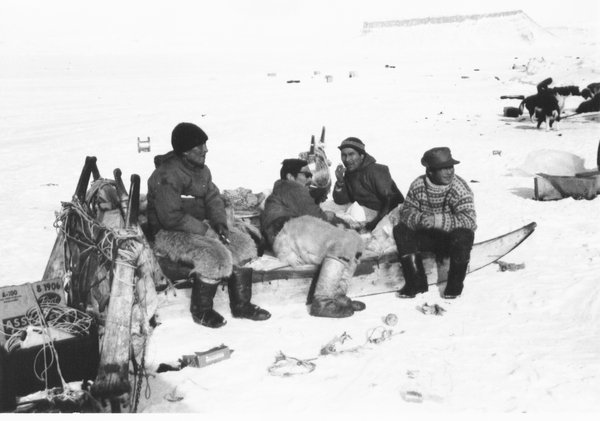
Haug and d’Amario landed directly on the airbase grounds. The base personnel immediately mobilized to search for the remaining crew. A polar night enveloped Greenland, and the weather was dreadful. A representative of the Royal Greenland Trade Department, Jens Zinglersen, significantly eased the search efforts by contacting local Inuit residents who organized dog sled teams. Thanks to their collective efforts, three other aviators were found – they had landed within a mile and a half of the base and were quickly located.
Gunner Staff Sergeant Calvin Snapp was less fortunate. He ejected first and landed nearly 10 km from the base in -30C degree temperatures. Wrapping himself in his parachute, he waited for help for 21 hours before being rescued by a search team. Miraculously, they found him alive, though severely hypothermic.
But the worst was yet to come. The aircraft carrying thermonuclear munitions was still flying northward and burning up. Finally, it crashed onto the ice about 12 km west of the airbase. There was still plenty of fuel onboard; it ignited on the ice, causing spectacular pyrotechnic effects. The bomb’s non-nuclear explosives detonated, partially melting the ice and scattering radioactive debris everywhere.
There was another poignant detail, however. Greenland belonged to Denmark, which had declared its entire territory a nuclear-free zone. And now, a bomber armed with nuclear weapons had crashed there – though the Danes (at least those who didn’t work in the government) were unaware that there was also radioactive debris all over the ground. The Danish government quickly issued a statement claiming that the aircraft was not in Greenland’s airspace and had only entered it due to an onboard emergency. This was a complete fabrication, but it served as a cover-up for the situation.
The US found itself in a delicate situation that urgently needed fixing.
Cleaning up a nuclear disaster in the Arctic night
The cleanup operation was dubbed Project Crested Ice (or unofficially, ‘Project Doctor Freezelove’). The operation was led by General Richard Overton Hunziker, a seasoned veteran and WWII hero.
A team of scientists, nuclear specialists, and a massive number of troops were dispatched to Greenland. Their mission was to remove all radioactive materials before spring arrived and the contaminated ice would be carried off into the ocean. The polar night brought fierce winds and bitterly cold temperatures, making the task even more challenging.
Radioactive elements were scattered across a 1-mile (1.6 km) by 3-mile (4.8 km) area. In the midst of it was an ice hole measuring 50 meters in diameter. A blackened patch measuring 670 by 120 meters and heavily contaminated with uranium and plutonium was clearly visible from the air.
The US suggested to the Danish authorities that they should just wait for spring when the ice would melt and everything would sink into the Arctic waters. But Denmark was outraged. The Americans were given a choice: Either clean up their mess or close down the Thule base and leave Danish territory.
It must be said that Hunziker and his team worked heroically. They established a small town on the ice, complete with igloos, a power station, a runway, a communications hub, and a decontamination chamber. An icy road connected them to the airbase.
Thousands of people toiled under the harsh conditions, illuminated by floodlights as they cut through the contaminated ice, loaded it onto transports, and hauled it to storage, where it was boxed up in tanks for shipping back to the US. Ice was collected using graders, packed into wooden crates, which were then loaded into steel tanks and onto ships. Debris was recovered manually – some pieces were sizable, but the smallest were no bigger than a battery. Contaminated areas were identified using simple Geiger counters.
The cleanup crew worked with minimal protective clothing. Most people simply wore their regular Arctic expedition clothing.
By mid-September 1968, the operation was officially concluded. In total, 1,700 Danes and 700 Americans participated in it. While the disaster was a stark illustration of the consequences of foolish and irresponsible behavior, the cleanup crew – which braved the harsh cold and literally gathered radioactive waste by hand – accomplished real feats, which, however, remained largely forgotten.
What the ice couldn’t bury
It’s believed that around 93% of the radioactive materials were collected, but some remnants remained on the seabed. One hydrogen bomb likely sank among other debris. Attempts to locate it with a submersible were unsuccessful. A heap of wreckage was discovered on the ocean floor, and somewhere down there, it appears that the remains of the nuclear weapon still lie undisturbed.
In the 1980s and ‘90s, a scandal erupted. Danish cleanup workers launched a legal battle against the American government. Though they lost the case, they succeeded in forcing the release of numerous classified documents. Subsequent investigations revealed that cancer mortality rates among Danish workers involved in the cleanup operation were about one and a half times higher than those of the general population. It also turned out that the health monitoring of the cleanup crews after the incident was inadequate. Ultimately, officials concluded that radiation exposure wasn’t significant and found no link between the increased cancer rate and the 1968 accident.
A heated debate arose around the actions of Danish prime ministers Jens Otto Krag and H. C. Hansen. Krag portrayed himself as a naïve yet honest figure, insisting that he wasn’t aware of aircraft carrying nuclear weapons over Greenland. However, declassified US documents indicated that the Danish government was aware of everything. As for Hansen, he was the one who secretly approved the US to use Thule Air Base as part of its nuclear shield. However, by then, both prime ministers had passed away, and were unable to answer to the population.
After the incident, Operation Chrome Dome was officially shut down. After all, it was the second nuclear disaster in three years, and that was too much even for the ‘hawks’. Secondly, both Russians and Americans already had plenty of missiles, and the use of bombers seemed somewhat archaic. Finally, the USSR and the US initiated another period of détente and developed protocols for handling any accidental incidents involving nuclear weapons. While this didn’t help those who suffered or died from cancer as a result of the accident in Greenland, it did significantly reduce the risk of similar events in the future.
Evgeny Norin is a Russian journalist and historian focused on war and conflict in the former Soviet Union.
Andy Burnham has announced that he will axe the pensions triple lock in 2030 to pay for free social care as well as unveiling an elections shake-up to shut out the Right from power.
The post Burnham Axes Triple Lock and Unveils Elections Shake-Up to Shut Out the Right appeared first on The Daily Sceptic.
Danny Tommo, the anti-migrant activist, has been denied bail after appearing in court for allegedly slashing a migrant boat in the Channel – despite the five suspects in the RAF Fairford terror plot all being bailed.
The post Danny Tommo Denied Bail appeared first on The Daily Sceptic.


Longreads has published hundreds of original stories—personal essays, reported features, reading lists, and more—and more than 14,000 editor’s picks. And they’re all funded by readers like you. Become a member today.
Once, as a young adult in the city, I was walking home after a long day of work. The main street leading to my place wasn’t well lit, with dark stretches between streetlamps. There was a huddle of men under one, some standing around, some lounging against the post. They moved in the orange light, turning as one to face me. Something shifted in the air.
An earlier version of me would have been slower to respond, given them the benefit of the doubt. But after a recent knife-point mugging, I had begun to develop a sort of second skin—a keen, physical sense of danger. I slipped back into the shadows and ran in and out of alleyways. I doubled back, cut across fences, and scaled half walls. I made no sound at all; I made it home. I had made a spiraling maze in real time. They could not find me.
In his essay “From the Tree to the Labyrinth,” Umberto Eco, a lover of labyrinths, explores how we “create and organize knowledge.” Moving away from the restrictive “tree” model, Eco approaches the “labyrinth” model, listing three kinds—a unicursal labyrinth, with only one path to the center and back; a multicursal maze, with many paths, all but one leading to dead ends; and an infinite network of interlinked points, which he calls by the borrowed term “rhizome.”
There are many labyrinths and mazes woven into my memory—verbal, textual, graphical, physical, metaphorical. Tamil kolams, for instance: My mother draws small, perfect threshold patterns at home, and immense, geometrically flawless labyrinths and mazes for events—no outlines, no tools, just her seeing eye and moving hand. When the sky is still dark, she dips folded muslin in wet, ground rice and draws liquid lines on the clean floor. She must draw each bit before the white dries on her hand, which it does almost instantly. Nothing can be erased or redrawn. She must keep moving until the whole kolam is done—the body walking the labyrinth even as it summons it out of nothing, the labyrinth making the world even as it is devoured by little black ants.
Eco’s rhizome model, to its credit, says we may never know everything, but we can keep going. Jorge Luis Borges certainly did, over and over like a modern-day Scheherazade. He wrote The Garden of Forking Paths, The Library of Babel, Funes the Memorious, The House of Asterion, and more, for those of us that love our awful infinities rendered in chewy, fictional ways.
It’s been so long since the mugging and the maze. Those events (and others like them) ingrained hard habits into me. Unless I’m absolutely certain about the safety of the time and the place, I don’t listen to music as I walk. I wear barefoot shoes. I wear my bag cross-body, coax my hands out of my pockets. I note the exits and sit like a mob boss, the door never to my back. But I myself am softer, and I understand the ways of wayfinding a little better now.
When Nawab Asaf-ud-Daula, ruler of the Kingdom of Avadh, moved his capital to Lakhnau (now Lucknow, Uttar Pradesh, India) in 1775, he likely had no inkling of what was to come—a great famine. The Nawab was an unusual ruler. Forgoing the usual charity routes, he offered his people the dignity of earning wages through excellent work, going so far as to demolish by night and rebuild by day so everyone who wanted work could have some. He built the lavish Bara Imambara, including a marvelous maze of a thousand corridors and half as many identical doorways (and one exit), the Bhulbhulaiya. The Hindi-Urdu root word, bhūlnā, means to forget, to be thus lost, and bhulānā is its causative form. The maze is “that which makes you forget.”
Abhimanyu, warrior prince, has broken into the Cakravyūha, the battle formation of the colossal whirling disc. While still in his mother’s womb, he had overheard his father, the great warrior Arjuna, discuss war strategy with his uncle Kṛṣṇa, and filed the knowledge away in his preternaturally precocious mind. Now the Kurukṣetra War is upon them, and 16-year-old Abhimanyu has found his way to the center of the moving labyrinth. He is a trained warrior, no doubt, but he is alone, fighting seasoned Kaurava generals on all fronts. They have trapped him away from his fellow Pāṇḍavas. They have sunk his chariot, killed his horses, and broken his sword and bow. Abhimanyu raises a chariot wheel above his head. He doesn’t know how to come out. He never heard the end of the conversation.
This heartbreaking story from the Sanskrit epic The Mahābhārata was likely my own mythical introduction to the labyrinth. McConnachie, too, starts with a myth—a Greek mythopoeic myth—but first he runs a little labyrinth on the morning of his own wedding. His essay for Aeon moves lucidly through history, architecture, religion, folklore, games, psychoanalysis, New Age rituals, and more.
P.S.: Don’t worry about Ariadne; she gets to chill with Dionysus. Theseus’s dad, not so great.
Instinctively, we sense that mazes and labyrinths are essentially metaphorical—even if it is not always clear what they represent—which explains why it’s so common to seek the meaning of the maze in myth. According to the ancient Greek story, as retold by the Roman writers Plutarch and Ovid, Minos of Crete demanded a tribute from the city of Athens in the form of seven young men and seven women. They would be imprisoned inside the Labyrinth created by Minos’ brilliant architect Daedalus, and there sacrificed to the Minotaur, a monstrous creature born of the unnatural union between Minos’ wife and a white bull.
The brave and ambitious Theseus gets himself chosen among the Athenians and, on arrival in Crete, seduces Minos’ daughter, Ariadne. She secretly arms him and slips him a “clew” of thread. (This is the old word for a ball or skein of yarn and is, fascinatingly, the origin of the English word “clue.”) Theseus kills the Minotaur, escapes the Labyrinth, runs off with Ariadne, and should return home happily—except that he abandons Ariadne on the island of Naxos and then, upon homecoming, forgets to change the color of the sails on his ship as he promised his father he would do if he survived. On seeing the black canvas, the old man drowns himself in the sea.
Speaking of leading people astray, here’s a clip of the third task of the Triwizard Tournament from Harry Potter and the Goblet of Fire. Professor Dumbledore counsels the champions: “In the maze, you’ll find no dragons or creatures of the deep. Instead, you’ll face something even more challenging—people change in the maze.”
Adrian Fisher has over 700 mazes across 42 countries to his name, “including one on a skyscraper in Dubai and another that’s now reproduced on Britain’s five-pound note.” He’s also likely the only person to make a successful business out of mazemaking. Twilley profiles Fisher comprehensively, and not a little warily.
Starting with the design of the medieval Christian labyrinth, the most famous of which is in the Chartres Cathedral, France, Fisher slowly included other complex features. “Fisher realized that if he wanted to make mazes he first had to make people want mazes,” Twilley writes. According to Oskar van Deventer, an engineer and creator of renowned mechanical puzzles, he’s the “world’s best maze psychologist,” using what he knows about how people behave “against the unsuspecting solver and even against the suspecting solver.”
In 1980, Fisher was twenty-eight years-old and working for I.T.T., a multinational manufacturing company, where he was responsible for productivity enhancement. He was increasingly drawn to the idea of designing mazes; he’d even formed a company, Minotaur Designs, with a wealthy labyrinthologist and former diplomat, Randoll Coate. But public commissions proved elusive. “At first, I thought it was impossible,” Fisher said. “How do you start? How do you do it?”
Runcie’s dream gave him an idea: Fisher wrote to the letters page of the London Times, briefly outlining the maze’s long history as a Christian symbol and noting that, as in the Archbishop’s dream, a maze’s goal is typically reached not by “pressing toward the center” but, rather, by “returning almost to the edge,” in order to find the proper path. In his signature, Fisher styled himself a “Maze Consultant,” and, before long, this stealth marketing had reeled in a customer, and Minotaur’s first public commission.
Crystals are known for stacking their atoms in repeating patterns in every direction, forming structured unit cells and lattices. But quasicrystals are mad materials. They, too, form patterns, but in non-repeating ways. Physicists exploring their use in carbon capture ended up with the world’s most diabolical maze.
What can live without a brain or a nervous system, eat better than you, navigate mazes, and win scientists not one, but two Ig Nobel Prizes? The answer is a single-celled organism called the slime mold, also affectionately known as the blob.
In the 2000s, Toshiyuki Nakagaki, a scientist at Hokkaido University, scattered bits of a single Physarum polycephalum in a maze, a few dots in a petri dish. The bits grew enough to find each other, and then grew some more to fill the maze. The mold then retracted itself from the dead ends, restricting itself to the most rewarding path—and this was the least it could do. Using its ability to grow up to a meter; its ability to analyze, solve problems, and optimize in real time; and its own slime as “externalized spatial memory,” it “effectively re-created Tokyo’s railway network in miniature as well as the highways of Canada, the U.K., and Spain.”
Catch a glimpse of this incredibly cool mold in action in this WIRED video: Mycologist Explains How a Slime Mold Can Solve Mazes. Looks like Nakagaki will have the last laugh, after all. And if you’ve ever wondered how other animals are so much better at this stuff than us, read Kathryn Schulz’s essay for The New Yorker, “Why Animals Don’t Get Lost.”
Gardeners sometimes encounter them in their backyards—spongy yellow masses squatting in the dirt or slowly swallowing wood chips. Hikers often spot them clinging to the sides of rotting logs like spilled bowls of extra cheesy macaroni. In Mexico some people reportedly scrape their tender bodies from trees and rocks and scramble them like eggs. They are slime molds: gelatinous amoebae that have little to do with the kinds of fungal mold that ruin sourdough and pumpernickel. Biologists currently classify slime molds as protists, a taxonomic group reserved for “everything we don’t really understand,” says Chris Reid of the University of Sydney.
Something scientists have come to understand is that slime molds are much smarter than they look. One species in particular, the SpongeBob SquarePants-yellow Physarum polycephalum, can solve mazes, mimic the layout of man-made transportation networks and choose the healthiest food from a diverse menu—and all this without a brain or nervous system. “Slime molds are redefining what you need to have to qualify as intelligent,” Reid says.
Teenaged Sarah is supposed to be babysitting her infant brother, Toby. But he won’t stop crying, and in a rash moment, she wishes him gone. Villainous Goblin King Jareth obligingly spirits him away to his dark labyrinth, which she must negotiate to save the baby before a terrible fate befalls him. If you’re not convinced you should see Labyrinth, this 1986 classic, know that the Goblin King is David Bowie.
I had some trouble choosing a quote from this retro maze of an essay. Every passage seemed appealingly contrarian, sometimes even to the essay’s own points, every idea poised for intertextual sparring with the other pieces in this reading list (something I secretly enjoy).
Yes, it is gleefully haunted by its own ideas going back and forth and switching back upon themselves, and yes, it will make you question a few axiomatic notions about labyrinths and mazes. But maybe because times have changed, maybe because no one seems to be saying labyrinths are better than mazes or vice versa any longer, some of the arguments may seem a little heavy-handed.
But some, like this one seemingly drawing from Freud/Jung psychological arcana, still sparkle: “The maze is the labyrinth’s uncanny.”
It seems to me that hidden behind contemporary etymological distinctions is an attempt to tame multicursality, by way of denigrating multicursal mazes as merely “childish” versions of more sober, unicursal ones. Multicursality challenges meditative clarity with multiple versions, no clear centers, and a sense of ambivalence and confusion. These complications, however, are the point of the labyrinth. Even if we grant that labyrinth merely designates the one-path New Age labyrinth recycled from the medieval era, the object is still haunted by a misrecognition. For even the medievals retained a sense of the unicursal labyrinth’s ambages—the equivocation at the heart of its windings, which the New Age version does not readily admit. Additionally, the labyrinth that is the legacy of the medieval period is enmeshed in a circuit of analogies to such a degree that it is impossible to map out all its symbolic equivalences and their implications without ending up in the muck of indistinction. This tendency of the labyrinth to connote so much is part of what makes it an antithesis to sureness, rationality, and clarity. Its structure is mystically congruent with the idea of a dark or enchanted forest; it is also a stand-in for earthly conundrum, brain fold, uterine canal, spiritual struggle, or psychosexual journey. Its center: Mary, the alchemical rose, Jerusalem, princess, Minotaur, inner-self, lotus blossom. And of course there are the various rewards that the multicursal maze holds out for its young adepts (pots of gold, pies and cakes, utopian wonderlands of bunnies and lollipops). Labyrinthine confusion is not merely an issue of its tortuous corridors, its solution not merely the cheese in the corner. Labyrinth enfolds into labyrinth across times, cultures, and myths.
Games heart mazes. Here’s the nuts-and-bolts story of the OG++: “How a Bunch of MIT Dropouts Created Ms. Pac-Man.”
It’s the yellow that first holds you down, like the yellow fog in T. S. Eliot’s The Love Song of J. Alfred Prufrock, like the yellow wallpaper in Charlotte Perkins Gilman’s story of the same name. There’s something about this sickly yellow, but there’s more.
Backrooms is young YouTuber Kane Parsons’s widely acclaimed horror debut. Failed architect Clark manages a strip-mall furniture store called Cap’n Clark’s Ottoman Empire. During his insomniac wanderings, he stumbles upon a doorway in the store’s basement—the entry to the mysterious Backrooms. (The trailer is a relatively safe place to start before you attempt full liminal dread.)
Nayman’s critical voice stands a little apart from what seems to be near-universal approbation for the film, which he says “exists in its own liminal space between ambitious experiment and fascinating failure.” But he sounds, I must say, somewhat like a parent speaking of his gifted kid—one who could go very far if only he applied himself a little more. What if the kid knows something that others don’t?
[O]ne of the lurking, not so elusive themes of Backrooms—a movie that doesn’t lack for entry points—is the postmodern terror of reiteration without end, the unsettling and melancholy notion of reality as a series of adjoining, subterranean echo chambers, each a slightly altered copy of the last. “Six hundred million square miles of randomly segmented back rooms,” read the original, anonymous, and extremely viral 4chan post that ended up being used as a blueprint by hordes of online architects eager to build their own additions onto a freestanding urban legend; the sprawling, relentlessly subdivisional logic of this online lore, and the fact that anyone could contribute to it at any time, turned the expanse of the Backrooms into a pretty nifty allegory for itself.
Parsons was 16—and going by the online handle Kane Pixels—when he made his first Backrooms short in 2022: a found-footage-style clip created in Blender and After Effects. His innovation was to place the preexisting images into a paranoid narrative framework about a research facility offering egress to another dimension; the first clip centered on an amateur filmmaker who gets lost in the Async complex and chased by an unseen creature.
“In Hokusai’s Thirty-Six Views of Mount Fuji, most of the woodblock prints show the famous conical peak, but one shows pilgrims climbing a Fuji that is the very ground under their feet. You can’t see the mountain’s form while you’re on the mountain. There are subjects you can better understand through analogy, context, parallels, the view from the distance, rather than via direct and dogged pursuit.” Solnit expands on the same ideas for Literary Hub in “In Praise of the Meander,” this time “letting nonfiction narrative find its own way.”
Solnit describes one summer she spent on an Icelandic peninsula, “in the company of strangers and birds.”
“Creation is always in the dark because you can only do the work of making by not quite knowing what you’re doing, by walking into darkness, not staying in the light. Ideas emerge from edges and shadows to arrive in the light, and though that’s where they may be seen by others, that’s not where they’re born,” she says, and goes to the last dark place she could find that summer—a labyrinth called the Path, lit by the faintest lavender-blue light.
Lyrical and more atmospheric than her engaged treatment of labyrinths in Wanderlust: A History of Walking, this essay shows us a gentle way of being we would do well to heed.
A labyrinth is an ancient device that compresses a journey into a small space, winds up a path like thread on a spool. It contains beginning, confusion, perseverance, arrival, and return. There at last the metaphysical journey of your life and your actual movements are one and the same. You may wander, may learn that in order to get to your destination you must turn away from it, become lost, spin about, and then only after the way has become overwhelming and absorbing, arrive, having gone the great journey without having gone far on the ground.
In this it is the opposite of a maze, which has not one convoluted way but many ways and often no center, so that wandering has no cease or at least no definitive conclusion. A maze is a conversation; a labyrinth is an incantation or perhaps a prayer. In a labyrinth you’re lost in that you don’t know the twists and turns, but if you follow them you get there; and then you reverse your course.
The end of the journey through the labyrinth is not at the center, as is commonly supposed, but back at the threshold again: the beginning is also the real end. That is the home to which you return from the pilgrimage, the adventure. The unpraised edges and margins matter too, because it’s not ultimately a journey of immersion but emergence.
In 1922, William H. Matthews published a book called Mazes and Labyrinths in London. Sam Dolbear introduces this classic for The Public Domain Review, offering a selection of beautiful images and the book itself in full. He concludes with a quote from Matthews, which seems to prefigure Eco’s third model and Borges’s predilections: “The boundaries of knowledge are still misty and ill-defined, a circumstance that only gives zest to the subject.”
Dale, reader of “Hellenic myth” and all-round good sport, has organized the Pumpkin Jamboree. It’s a way for the townspeople to have some weekend fun while raising money for the local fire department. Its highlight is always the corn maze. “Only it isn’t a maze this time,” Dale says, “It’s a labyrinth.”
This unexpected turn of events thins the crowd, but it looks like Jim, his friend, might be willing to give it a go. “Now, you go on, Jim. This is my life’s effort distilled. Find out what it’s all about.”
It’s not easy to take a well-worn, spoiler-free myth known since Plutarch and make it sound fresh. Gray has done that here in her short story without a wasted word, and her Daedalus, cornfield architect, is just getting started.
Dale watched them leave, fingering a pumpkin’s thick stem and surely considering his hours of lost work. He starts his mazes a few months beforehand, cutting into the young corn when it’s tall but not yet sprouted, taking a pass first with the tractor and then with the riding mower to pull out the brace roots and tamp the corn down. He draws the maze plans on drafting paper and displays them afterward in his swept-out garage addition—he calls it the Hall of History—with other jamboree memorabilia: the gearshift from the original hayride truck, trotter prints from the winning pigs. We gather around to reminisce about which wrong turn we took and what was waiting for us on the other side.
Knowing what he must have put into it, I thought it was a shame to stand by and see everyone go. The sun was still low in the sky, and it was lonely at home, where the TV had been broken for a week, and the tap water had begun to taste oddly of blood. “I’ll go first,” I said. “I’ll do it.”
Kanya Kanchana is a writer from India.
Editor: Krista Stevens
Copyeditor: Carolyn Wells

For more than three decades, the Bangladeshi political left has maintained an unyielding stance on natural resources like gas, coal, and minerals, insisting that state entities must develop them exclusively. Foreign energy companies are viewed with deep suspicion, while production-sharing contracts are routinely condemned as vehicles designed to siphon national wealth to foreign multinationals. Coal […]
The post Bangladesh energy crisis calls for pragmatism, not political purity appeared first on Asia Times.
At the UN last week, Ed Miliband shared details of a secret "damning" climate spy report. Ben Pile points out that a similar secret report appeared 22 years ago – and not one of its apocalyptic predictions came true.
The post Spies and Their Climate Lies appeared first on The Daily Sceptic.
MEMO | September 28, 2026
Greek journalist and former European Parliament member Stelios Kouloglou filed a criminal complaint Monday against officials at Israeli spyware maker NSO Group, alleging that his phone was infected with Pegasus while he served on a parliamentary inquiry into surveillance software, Anadolu reports.
The complaint was submitted to the Athens prosecutor’s office, Greek public broadcaster ERT reported. Kouloglou said a forensic examination by the University of Toronto’s Citizen Lab found that his phone had been infected around Oct. 21, 2022, and again on March 6 and 7, 2023.
At the time, he was a substitute member of the European Parliament committee investigating the use of Pegasus, Predator and similar spyware. The complaint said the infections coincided with significant phases of the committee’s work.
Kouloglou alleges the spyware could have given those responsible access to communications, contacts, documents, location information and data related to his political work. The complaint seeks an investigation into alleged breaches of communications privacy, unauthorized access to data and violations of personal data law.
Speaking after filing the complaint, Kouloglou said surveillance was an issue affecting all citizens and expressed hope that Greek prosecutors would investigate the case.
His lawyer, Zacharias Kesses, said no action had previously been taken despite the allegations being known.
The future of the planet depends on uprooting Jewish supremacy

By Nahida Exiled Palestinian | September 28, 2026
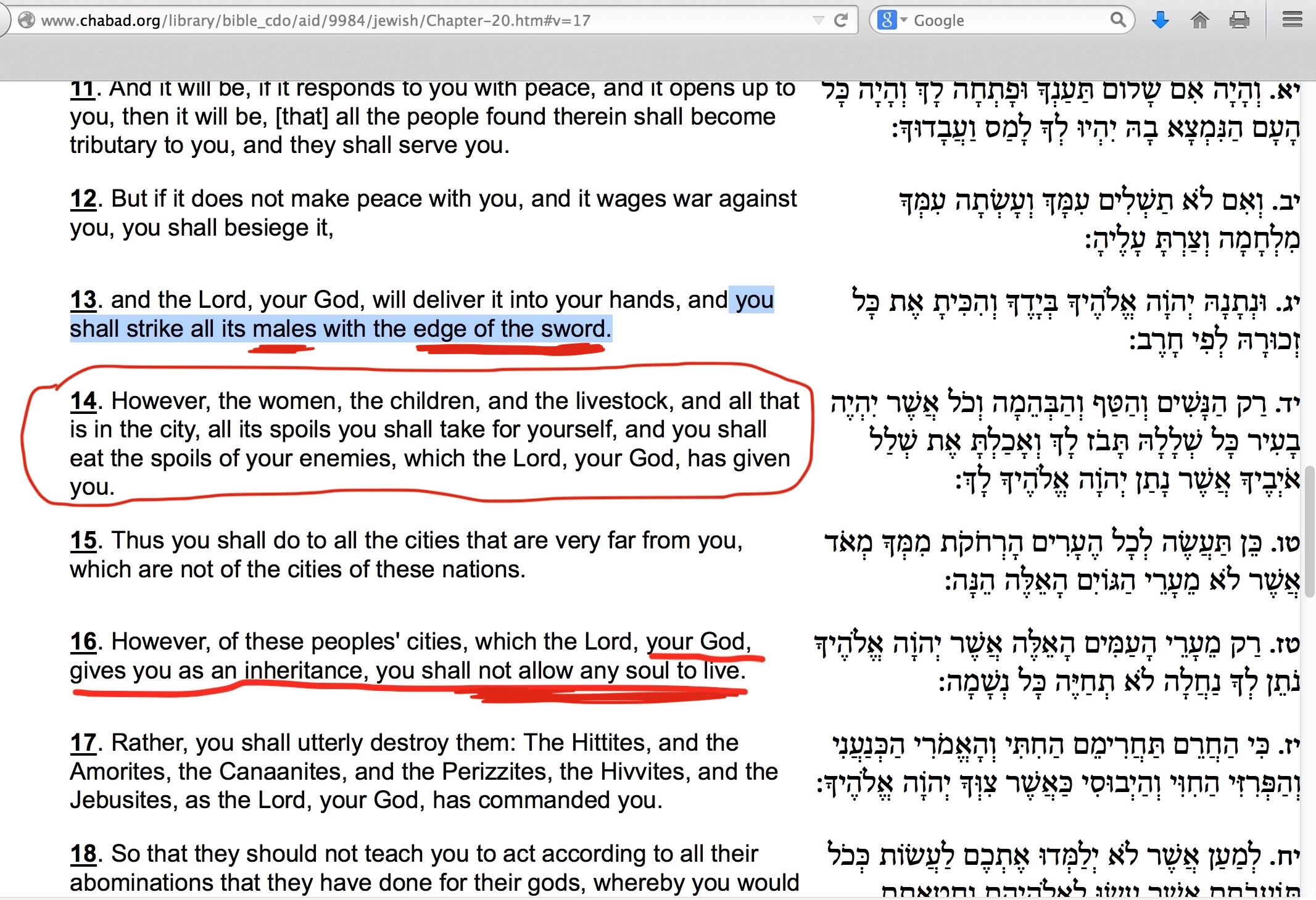
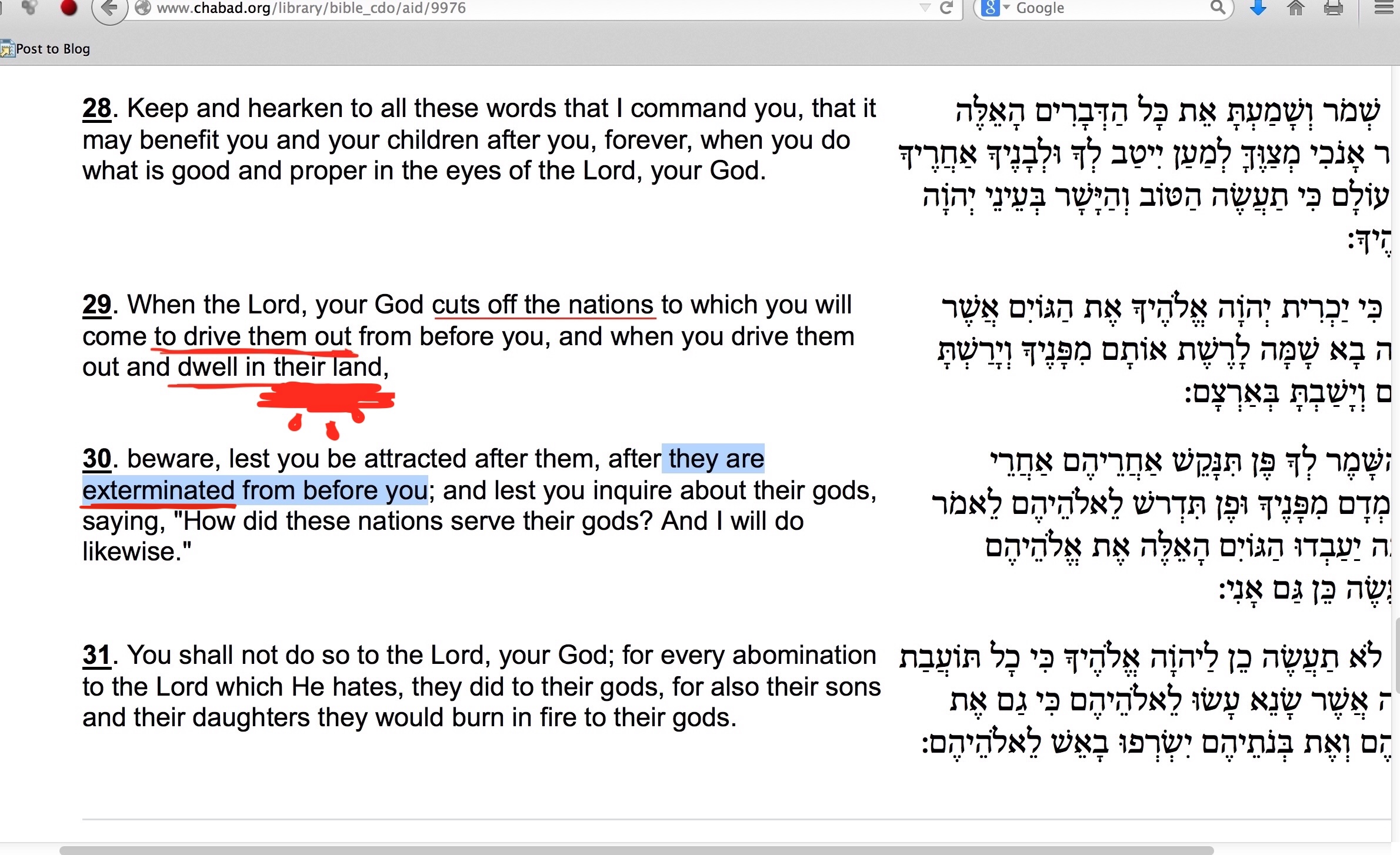
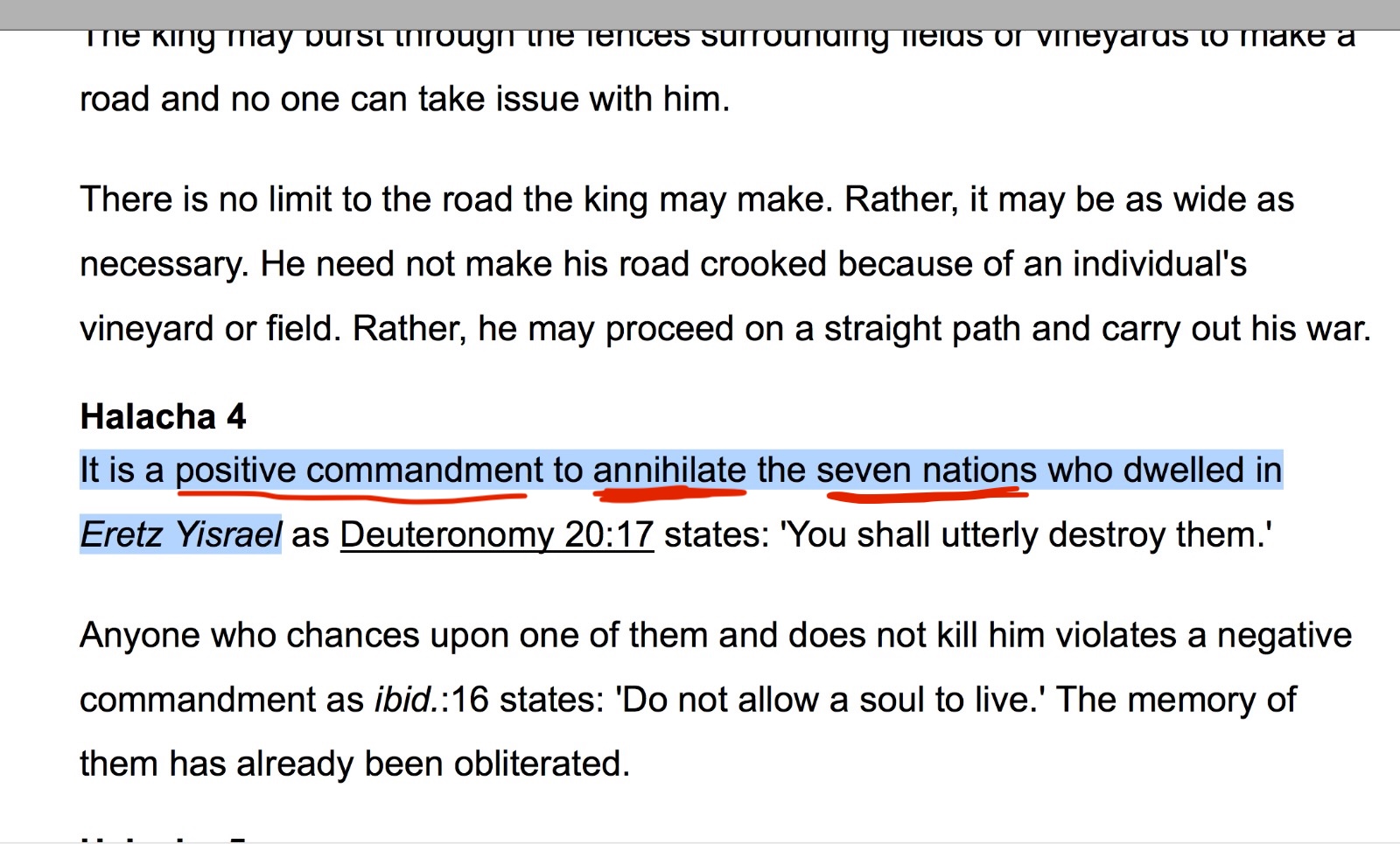
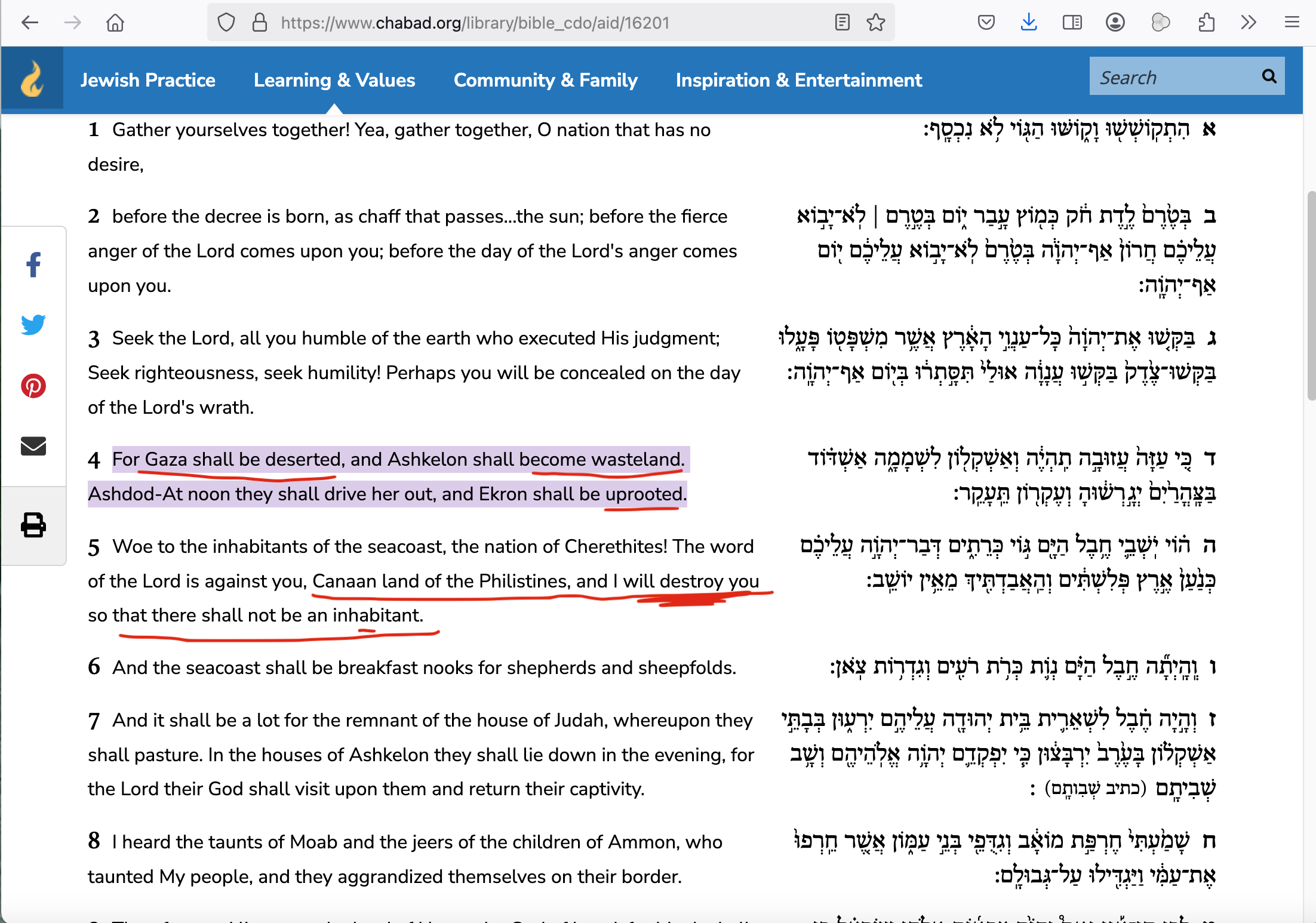
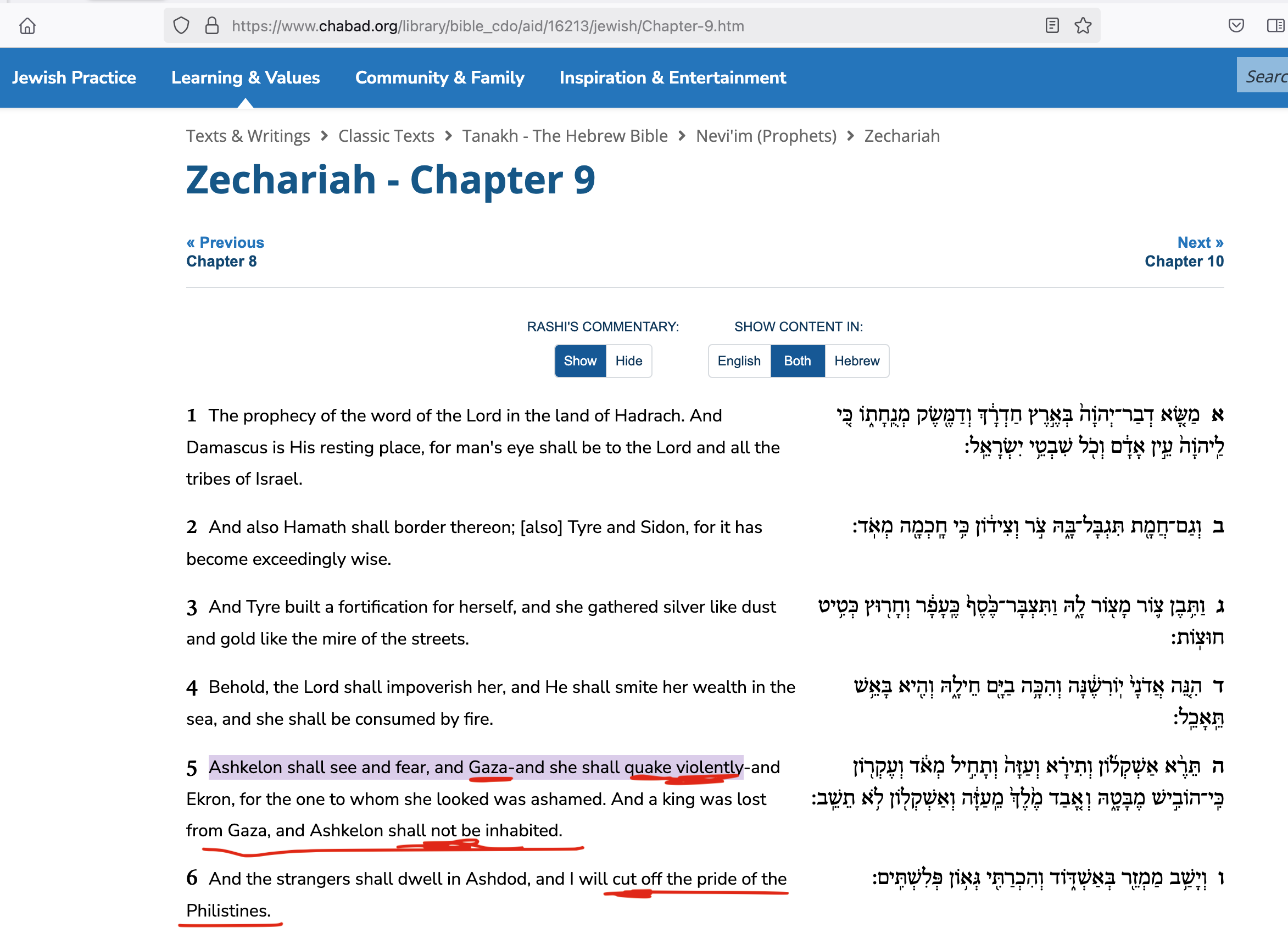
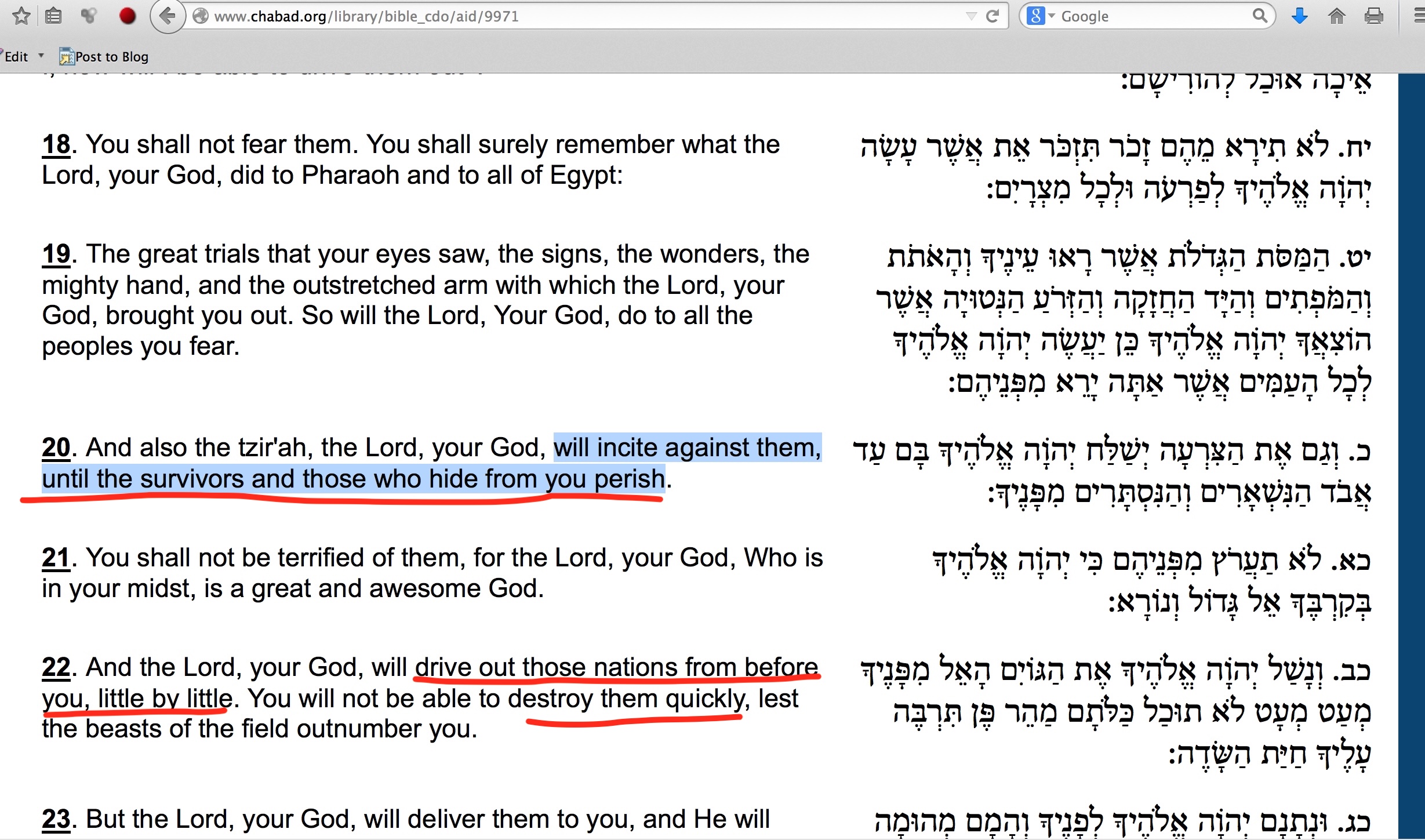
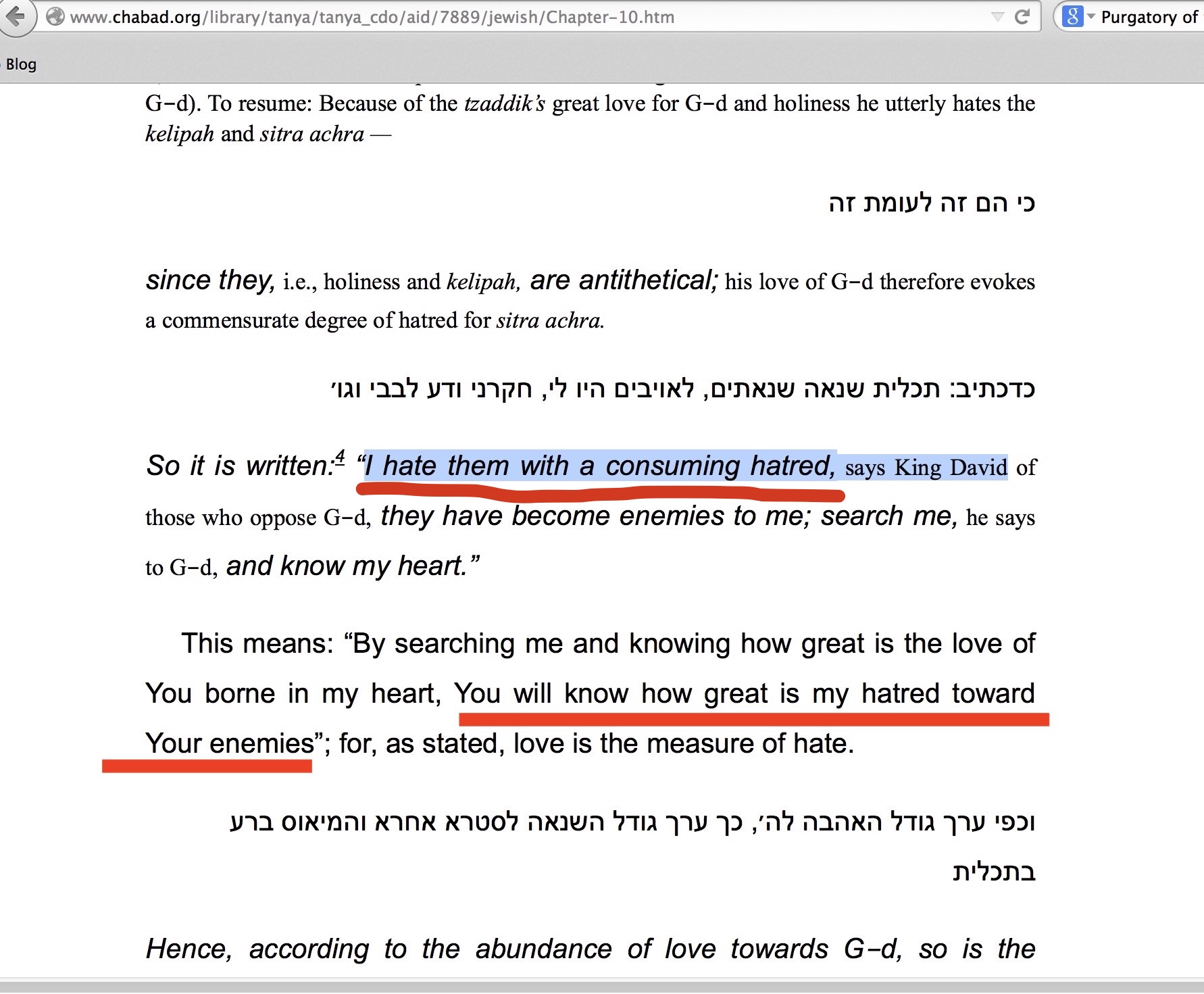
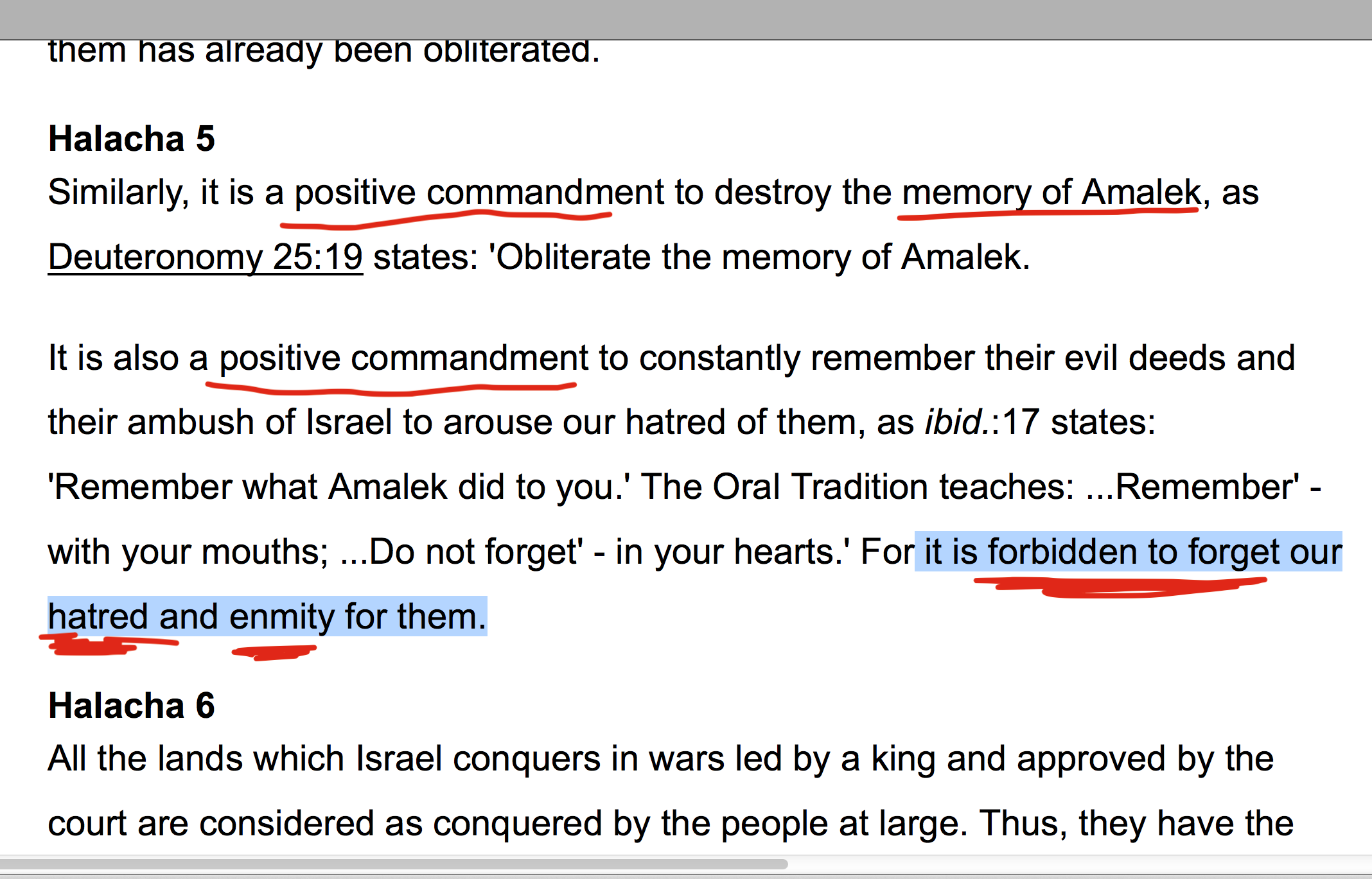
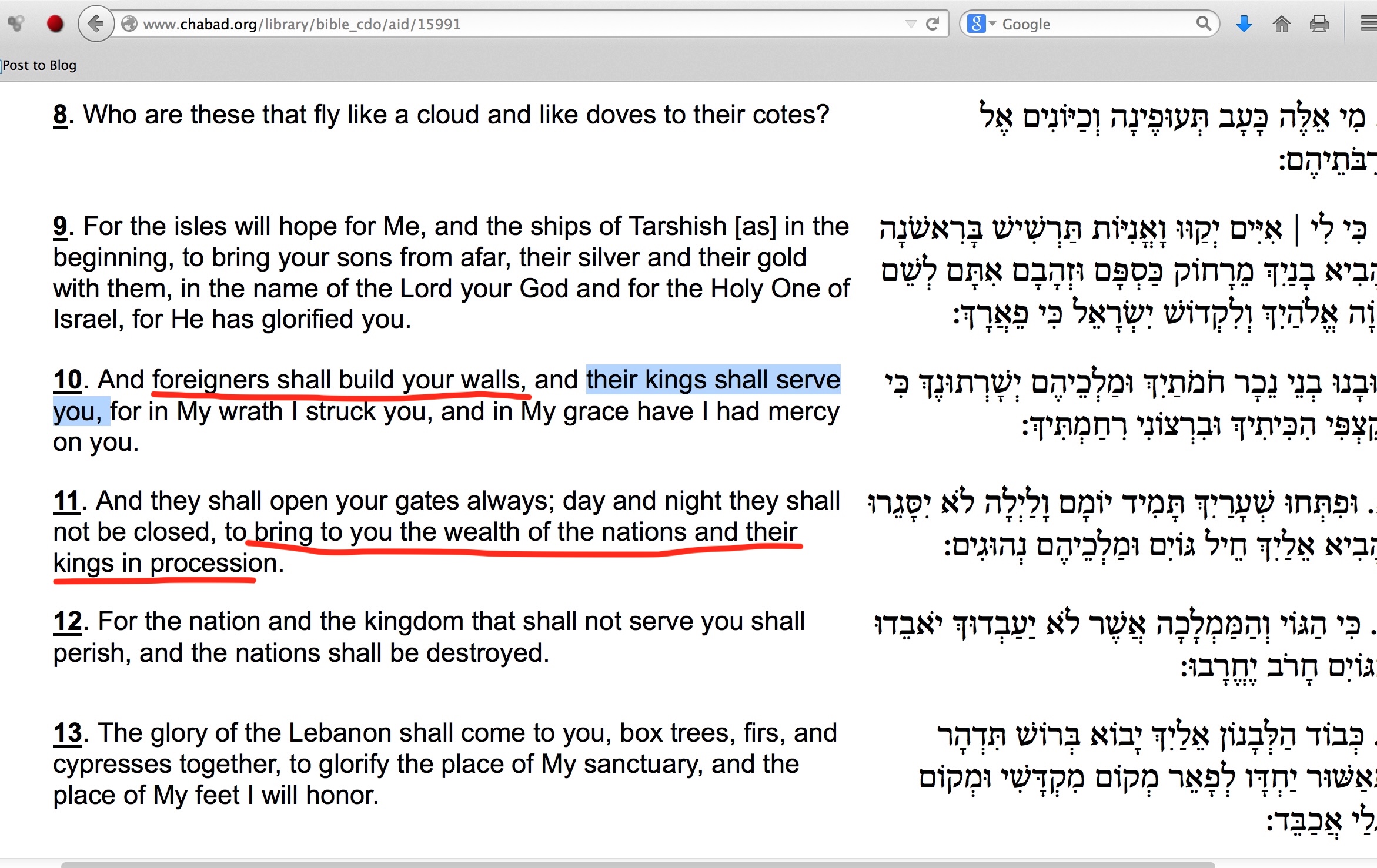
There is no running away from the fact that there are extremely troubling ideas throughout the Torah, Talmud, Mishneh Torah and Tanya.
Ideas like “choseness”, “promised land”, “return to Zion”, “building the temple”, “tikkun olam”… etc come from no other than Torah itself, soaked in supremacy, dominance aspiration, deception and mass-killing.
We can no longer hide our heads in the sand, pretending not to know, pretending not to see.
Jewish anti-Zionists should move on now, and use all their activism outside the Palestine solidarity movement, direct their work towards their people where serious discussions happen, plans are drawn, funds are raised, weapons are shipped and is genocide plotted and enacted. They should work with their own Jewish communities to try to get them out of the mess of supremacy and genocide they got themselves into.
Instead of wasting their time denying any links between Judaism and Zionism, instead of throwing their energy on controlling the Palestinian discourse, and instead of relentlessly monitoring us, Semite Palestinians lest we slip and “conflate Zionism with Judaism”or say something “antisemitic”, that may offend a Jew, Anti-Zionist Jews should change course and adopt a different role to play.
They should shift their activism within, try to effect change within their own Jewish communities who by vast majority are still supporting the Genocide with all their wealth, their leverage, all their influence and all their might.
They should leave us Palestinians to lead our Liberation Movement, and to narrate our authentic, untamed, unfiltered, unkosherised story without censoring, blacklisting, slandering or intimidation.
The future of the planet depends on the uprooting of Jewish supremacy, deception, hatred and violence from their ideology, and joining the human race as equals not as “chosen”.
Failing to confront the elephant in the room would end up in a World Nakba, like nothing we have ever seen before.
This is a WARNING, a mere WARNING of a brewing global disaster, I see in the horizon, and I am praying that together we would be able to prevent before it’s too late.








Al Mayadeen | September 28, 2026
Iran has warned the United Nations that US President Donald Trump’s threats to “annihilate” the Islamic Republic constitute a grave development, particularly because the remarks were made from the podium of the UN General Assembly.
Gholamhossein Darzi, Iran’s ambassador and chargé d’affaires to the UN in New York, raised the issue in a September 27 letter addressed to UN Secretary-General António Guterres and the President of the Security Council, Jérôme Bonnafont.
Darzi’s letter came in response to Trump’s September 22 address to the 81st session of the UN General Assembly, during which the US president said he could “annihilate the Islamic Republic” if no agreement was reached with Tehran. The wording appears in the official UN transcript of Trump’s speech.
Iran says threats made at UN carry wider implications
Darzi said Trump’s remarks were neither isolated nor ambiguous, arguing that they form part of a continuing pattern of public threats against Iran by the president of a permanent member of the UN Security Council.
“These repulsive statements are not ambiguous remarks or isolated utterances. They are rather part of a sustained pattern of public threats against Iran by the head of a permanent member state of the Security Council,” Darzi wrote.
“This latest development is particularly grave and alarming because the United Nations General Assembly is not a venue for threats of annihilation,” he added.
The Iranian envoy stressed that the General Assembly serves as the UN’s principal universal forum and was established to promote international peace, cooperation, and relations among states.
In the letter, Darzi referred to several previous statements by Trump that he said demonstrated a broader pattern of threats against Iran.
He cited remarks on March 22 in which Trump threatened to “hit and obliterate” Iranian power plants, followed by statements on March 30 threatening destruction of Iran’s energy facilities and other vital infrastructure, including desalination facilities.
Iran calls for UN response to threats
Darzi argued that the issue extends beyond political rhetoric, saying an explicit threat against a sovereign UN member state raises questions concerning the UN Charter, international peace and security, and the prohibition on the threat or use of force.
He further linked the latest remarks to ongoing US-Israeli aggression against its sovereignty and territorial integrity since February 28, as well as attacks that targeted civilians and civilian infrastructure.
“The issue before the Organization is therefore not merely one of political rhetoric,” Darzi wrote, arguing that failure by the international community to respond could normalize threats against entire nations and undermine the authority of the UN Charter.
The UN has itself emphasized the need for restraint and adherence to international law during the current high-level week. In his September 22 opening address, Secretary-General António Guterres said the principle that force cannot determine whose lives and rights matter was under “profound strain” and called on world leaders to use the week for de-escalation and dialogue.
Iran reiterates right to self-defense
Darzi said Iran would continue to defend itself against any further aggression and reserved its “full and unimpeachable right to self-defense.”
He also said Tehran reserves the right to pursue legal avenues to seek accountability from states and individuals it holds responsible for losses and damage inflicted on the Iranian people.
“Regardless of whether these threats are merely delusional fantasies, they will, as in the past, never materialize or be put into action in the face of the resolute resistance and determined defense of the Iranian people and armed forces,” Darzi wrote.
The Iranian envoy requested that his letter be circulated as an official document of the UN Security Council.

by Brian Shilhavy
Health Impact News
I have just finished listening to an interview with international journalist Pepe Escobar, that aired today, about two hours before I am publishing this.
If you want to detox yourself from the U.S. corporate media propaganda, and get the “other side” of the current situation in the Iran War, investing time to watch this video (55-minutes long) is well worth it.
There were apparently attempts to knock Escobar offline during the interview, suggesting that there are forces who do not want people to hear what he has to say. (I have this video saved, so if it disappears from YouTube let me know, and I will restore it on another platform.)
Escobar states that Iran gained a lot of friends and a lot of support in New York last week at the UN General Assembly meeting. Escobar also gives information about China President Xi’s meeting with President Trump last week that was generally not covered in the U.S. corporate media.
He claims that Xi pressed Trump to return to the MOU (Memorandum of Understanding) from last June that was negotiated by Pakistan, and that the U.S. originally signed.
But over this past weekend, Trump made it known publicly that he is rejecting any offer by Iran to end the war, and Escobar states that this does not sit well with China at all, and that China will now become much more involved in working with and helping Iran in the current war.
He states that Iran is now going on the offensive, and he expects things to start happening this week.
Escobar does a good job of trying to educate his listeners as to what the mindset is in Shiite Islam, and that they have no fear of dying for their faith.
The Epstein Syndicate’s real agenda, according to Escobar, is to nuke both sides in the Middle East, both Persians and Arabs alike, and take over the Strait of Hormuz that Trump plans to name after himself.
Pepe Escobar:
There is no solution (to ending this war through negotiation). It is a do or die war.
Americans have been deceived into thinking that this is a religious war that was started with Iran to combat the dangers of Islam.
But the truth is that this is a religious war started by Trump and his Zionist friends who surround him, including Evangelical Christian Zionists, and he is forcing everyone in the U.S. to accept Zionist Christian beliefs, including the military, to fight this war based on Zionist religious views. See:
Escobar also addresses Russia, where he recently visited, and states that Russia is preparing to go to war against Europe.
He also mentions that BRICs has been slow to implement changes to bypass the Western financial system, but that there is the feeling that this will change in 2027, when the annual BRICs meeting will be held in China, and will be dominated by China’s agenda.
Related:
This article was written by Human Superior Intelligence (HSI)


See Also:











Having problems receiving our emails? See:

If our website is seized and shut down, find us on Telegram, as well as Bitchute and Odysee for further instructions about where to find us.
If you use the TOR Onion browser, here are the links and corresponding URLs to use in the TOR browser to find us on the Dark Web: Health Impact News, Vaccine Impact, Medical Kidnap, Created4Health, CoconutOil.com.
The post Trump Rejects Iran-China Peace Deal as Iran Prepares to Change from Defensive Position to Offensive Position in the War first appeared on Health Impact News.