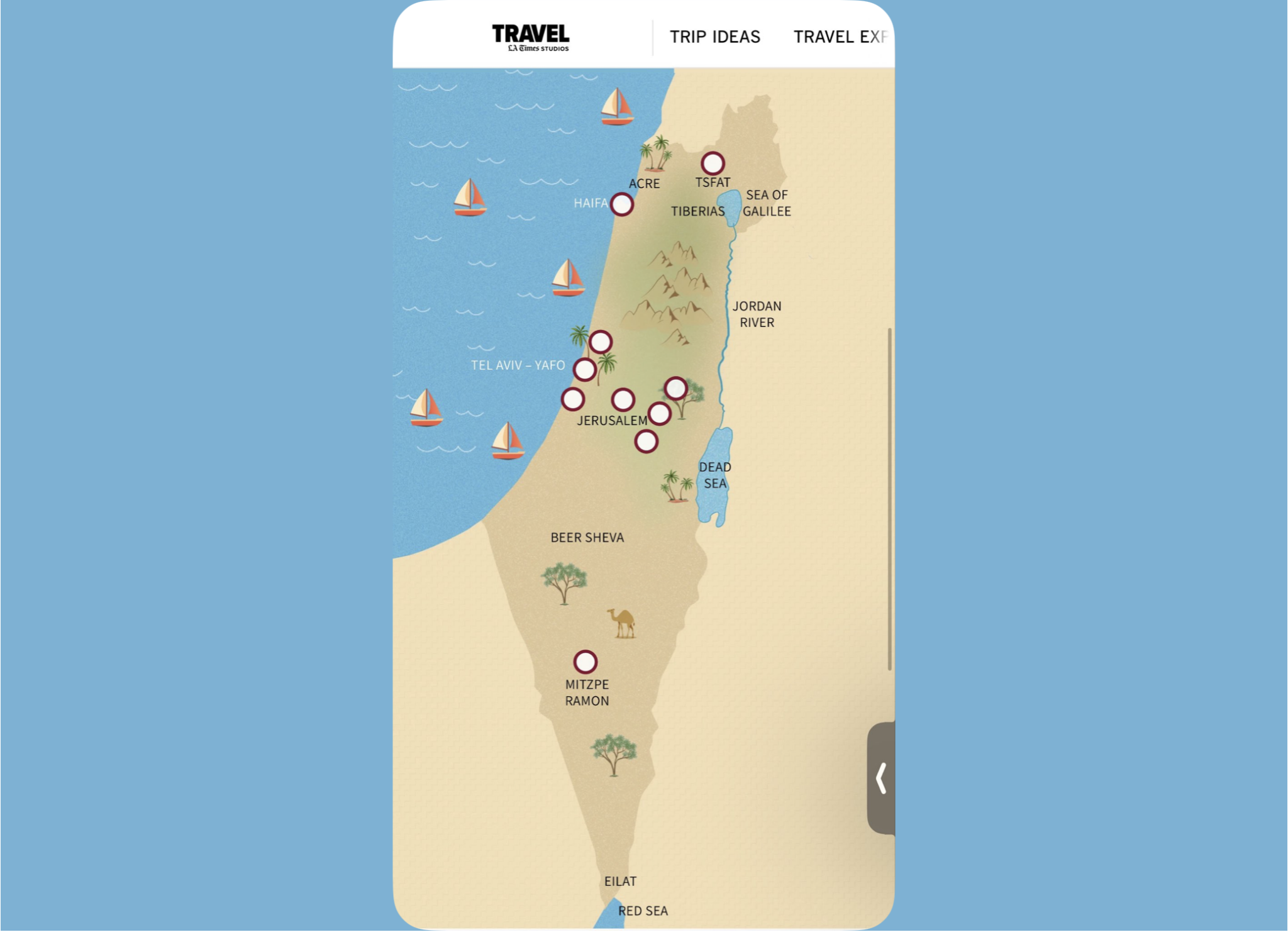
Israeli forces continued to carry out strikes across southern Lebanon on Thursday, shelling villages, destroying homes, and spraying the surrounding area with machine gun fire. The main attacks were reported, as usual of late, in Nabatieh and Tyre Districts, and other incidents were reported in Sidon and Bint Jbeil Districts. Airstrikes were reported in Mansouri […]
Since the start of the latest made-for-Israel war, Donald Trump and his surrogates have repeatedly promised Americans that it would be a few weeks and oil prices would soon crash below prewar levels. Instead, it was every promise that crashed. When those promises failed to materialize, the message shifted: the war is worth the price to stop Iran from becoming a nuclear power.
But what if Iran did become a nuclear power? How would that pose a greater threat to the U.S. than North Korea or Russia already do? Or is the real concern not a risk to America, but a challenge to the regional hegemony of a foreign nuclear power, Israel?
For more than thirty years, according to Israel’s fiction, Iran was on the verge of becoming a nuclear-armed state. That fictitious deadline has come and gone repeatedly, yet Benjamin Netanyahu has been recycling the same lie since 1992. The Israeli lies and deceit persisted even though, unlike Israel, Iran’s nuclear program was subject to strict international monitoring.
Still, Trump, at Netanyahu’s urging, walked away from an agreement that imposed some of the most stringent and verifiable restrictions ever placed on a country’s nuclear program. Now Americans are being asked to pay in blood and billions of dollars for abandoning a diplomatic agreement that had kept Iran’s nuclear program under unprecedented international scrutiny and helped contain the very threat now being used to justify the war.
The hypocrisy is impossible to overlook. Iran has been subjected to relentless demands for transparency and inspections, while Israel’s own nuclear arsenal, built in part with materials stolen from the U.S., remains shielded from any international inspection.
Yet somehow Iran’s ambitious know-how is the existential nuclear threat, not Israel’s nuclear bombs.
American consumers have long been the victims of a disinformation campaign, and now they are being forced to pay the price for a war sold to them on false pretenses. The most recent misinformation claiming the Strait of Hormuz is open and oil is flowing. The president said it on Fox, and the outgoing White House press secretary told Fox & Friends that the U.S. is essentially controlling the strait and that it remains open. These claims leave only two possibilities: either the statements are outright lies, or oil companies are gouging the consumer.
The UK Maritime Trade Operations Centre reported that commercial traffic through the strait remains about 75 percent below pre-conflict levels. It also tallied dozens of projectile strikes on vessels in just the past two months.
Three quarters less traffic is not a sign of an open strait. Shipowners and insurers know this, so do traders and so the climbing numbers at the gas pump.
The market has already made its judgment, and every American who fills a tank can see it. It is past time for Washington to stop lying.
For the average consumer, the pump is where it felt. Regular gasoline was below $3 a gallon before the U.S. was dragged into another one of made-for-Israeli wars. Families are paying more to get to work, truckers are paying more to move goods, and those costs show up in the price of groceries.
Meanwhile, American oil companies are pumping at record levels. Exxon and Chevron are producing record volumes from oil fields on American soil, thousands of miles from the Strait of Hormuz. Their production costs have not changed. What has changed is Israel’s war surcharge consumers are being forced to pay.
Chevron reported the largest quarterly net profit in its history, $12.1 billion. Exxon made $14.5 billion in the same quarter, about $160 million a day. Refining has become more lucrative. Gross refining margins more than doubled, soaring from a typical $20 crack spread to as much as $60.
Meanwhile, Trump dangles a pie-in-the-sky deal with Venezuela as a distraction from consumers’ mounting anxiety, while his administration stands by as oil companies exploit overseas crises for record profits. These companies have no reason to lower prices when war has handed them a windfall. This is what a war of choice looks like on the ground: American consumers are forced to pay the price, while oil executives in Texas turn a crisis into a lucrative business opportunity.
American consumers deserve more than false promises. If the Strait is open, then oil prices should be coming down. If it is not, then stop treating consumers as an audience whose emotions must be managed rather than citizens entitled to hear the truth. Since the war started, every week, like millions of Americans, I fill my gas tank, and the Israeli war tax is higher than it was the week before.
No, Mr. President, that is not “worth the price” to pay for a war fabricated in Israel, a repeat of the made-for-Israel war in Iraq 23 years ago.
This is not a war to end Iran’s fictitious nuclear power. It is a war paid for by taxpayers’ money and American blood to ensure that Israel remains the only absolute nuclear power in the Middle East.
US President Donald Trump has officially announced a formal withdrawal of American troops from Iraqi territory, yet the economic, social and diplomatic hold on the nation remains. If US troops are going to be permanently booted out, it necessitates an Iraqi national resistance that is capable of operating as a guarantor.
On October 21, 2011, former US President Barack Obama announced that the United States had withdrawn its remaining occupying forces from Iraqi territory. Then, only two and a half years later, the US re-deployed its forces back into the country under the guise of fighting the Daesh insurgency.
Iraq, having experienced a regime change operation followed by a brutal occupation and nationbuilding project, was left incapable of defending itself from the ISIS takeover, let alone pushing back against the United States redeploying its forces. First, the Obama administration deployed forces that it said were there to protect its diplomatic staff, in addition to advisors to the Iraqi armed forces.
Later it would expand this presence, expanding its “Operation Inherent Resolve” into Syrian territory, providing it with supply routes and a platform from which to de facto occupy northeastern Syria. The US operation in Syria and Iraq helped them eventually achieve their longtime goal of regime change in Damascus by depriving the Syrians of their access to the nation’s oil resources and fertile agricultural lands.
In 2020, Donald Trump had agreed to remove his forces from Iraqi territory, re-iterating this pledge during a meeting with then Iraqi PM Mustafa al-Kadhimi. The following year, former President Joe Biden then declared the official end of his nation’s combat mission inside the country. Only now, in 2026, and after extensive attacks on US military facilities by the Islamic Resistance in Iraq, has the pledge to withdraw American forces been followed through on.
When the US and Saudi Arabia recently blamed Iraqi forces for carrying out an attack on Riyadh’s East-West Pipeline, launching a large-scale bombing campaign across the country, some Iraqi officials instead issued statements against Iraq’s armed factions that had vehemently denied involvement in the incident.
The Trump administration is openly pushing for the disarmament of all military factions within the country, a project Washington has also sought to impose on all Resistance groups across the region. The United States has not allowed for there to be a reasonable integration of Resistance forces like Hezbollah in Lebanon with the Lebanese Armed Forces, nor allowed time for formal agreements to be struck in Iraq of a similar nature. Their goal is simply to disband these groups and then exert control over the armed forces of Lebanon and Iraq, leaving them all but defenseless and without access to strategic weapons capable of deterring violations of national sovereignty.
In the case of Baghdad, the nation’s government was a construct of US occupation; Washington still holds the economic cards that are capable of pressuring any leadership, no matter how well-intended its goals are, while it maintains an enormous soft-power pull through its extensive NGOisation project inside the country. Iraq was not allowed to rebuild its nation’s military following the toppling of Saddam Hussein’s rule in 2003, leaving it defenseless against ISIS terrorism a decade later.
On the ground, this is why there was a need for the Hashd al-Shaabi (Popular Mobilisation Forces) to emerge. It was the Hashd that was chiefly responsible for defeating the terrorist invasion and purging its militants from Iraqi cities. Many of these groups that fought under the banner of the Hashd then went on to develop considerable military power and an extensive arsenal.
As revealed during the Ramadan War earlier this year, the Israeli Mossad was able to develop bases inside Iraqi territory, while numerous militant groups still exist across the country’s territory, including various armed factions that are backed by the CIA and the Mossad.
If the Islamic Resistance in Iraq is disbanded and disarmed, then Iraq will be in the exact same defenseless position that allowed for ISIS to sweep through the nation so rapidly and seize so much territory, leaving behind a trail of blood in their wake. This poses a threat to not only Iraq, but other neighbouring countries, including Iran. It threatens Syria’s fragile status quo too.
An Iraq without the Islamic Resistance would be like a Lebanon without Hezbollah, completely left at the mercy of the United States and their Israeli allies. Washington and Tel Aviv have a project that aims to totally dismantle regional sovereignty; this is why they have dedicated trillions of dollars and countless resources to destroying the armed forces of both Iraq and Syria over a period of nearly 30 years now. They are not about to simply sit by and allow Iraq and Syria to rebuild capable militaries, allowing them to follow the will of their people and to defend their own national interests.
The United States still maintains its air defence systems inside Iraqi territory, can use the country’s airspace at will and, as we saw only months ago, will launch airstrikes across the nation at the drop of a hat.
In order to deter a return of American occupation forces, under the guise of fighting whatever future threat they choose to use, there must be an Iraqi military force that is capable of acting in defense of the country, both on the ground and through the use of its long-range munitions if need be. A nation without a real military force cannot enjoy sovereignty. And a nation that is not able to go against the will of the United States, will serve as its proxy and will suffer the blowback that is inherent in complicity.
The US withdrawal from Iraq did not happen without a long history of resistance against its forces and public opinion that also opposes American interference. Protecting the achievement of ridding the country of the majority of US forces takes real military deterrence. Otherwise, the Israelis and the US will simply use the country’s territory for whatever projects they wish.
Are top Democrats actually “shifting” on Israel, or is the PR simply getting more sophisticated?
After the midterms wrap up and the race for the Democratic 2028 nominition for president kicks off in earnest, this will be a central question those concerned with the US role in the genocide in Gaza must grapple with clearly, honestly, and with—it turns out—a high degree of skepticism and media literacy. That’s because the forces committed to keeping the weapons flowing to Israel quickly adjusted their tactics to meet the mood of the public, and the mood of Democrats in particular.
Last year for TRNN, I detailed the three main ways AIPAC Democrats will seek to look critical of Israel while assuring that the pro-Israel status quo remains fundamentally unchanged. Since I wrote that breakdown, a fourth talking point—and one that seems inevitable in retrospect—has emerged as a favorite of liberals who want to seem “tough on Israel,” but don’t want to upset the Israel Lobby. This line, which I documented last April, commits to “ending US aid to Israel” which, despite seeming like a meaningful break or a move left, is a policy that first emerged from Israeli Prime Minister Benjamin Netanyahu and the late US Sen. Lindsey Graham. And, as I noted, it was planned out by far-right think tanks Foundation for Defence of Democracies and Heritage Foundation—specifically designed to blunt the primary argument against support for Israel. Last January, Netanyahu told the Economist that he wants to “taper off” formal US military funding. Pro-Israel lobbying organization J-Street then took this right-wing idea and proceeded to sell the “cut off aid to Israel” line to liberals as something they could take to their constituents as evidence that they are in line with Democratic voters’ overwhelming dislike of Israel, while not changing the status quo. Indeed, as IMEU documented in their critique of the plan, the effort would actually further entrench US-Israeli military alignment.
The US can “cut off aid to Israel” and still very much continue to arm them. The only thing that has changed in this scenario is that Israel pays for it rather than the US government, but from the perspective of those being starved and maimed in Gaza this distinction matters about as much as the color of the bombs.
Much like the Biden White House’s slippery and misleading rebranding of “ceasefire,” the “ending aid to Israel” line relies on popular misunderstanding of what the load-bearing word means, in this instance, “aid.” In colloquial or common usage, it’s a word for general support—military, diplomatic, and financial. In reality, it simply means subsidizing—e.g. paying for—Israel’s weapons. The US can “cut off aid to Israel” and still very much continue to arm them. The only thing that has changed in this scenario is that Israel pays for it rather than the US government, but from the perspective of those being starved and maimed in Gaza this distinction matters about as much as the color of the bombs.
As predicted, this “cut off aid” statement is fast becoming the go-to line for Democrats seeking to assure their increasingly anti-Israel base without upsetting the Israel lobby or the Democratic Senate and House leadership they are aligned with. Recently, after receiving criticism for inviting in AIPAC-linked consultants to steer his campaign, Maine Democratic Senate candidate Troy Jackson released a statement calling Gaza a “genocide” and pledging to “stop funding of Israel’s military”:
Troy Jackson’s public statement yesterday expressing his commitment to end the genocide in Gaza and stop funding Israel’s military was driven by a host of supporter letters sent directly to the campaign on those issues. pic.twitter.com/FMrMBPcU2W
This is a perfect example of a J-Street-curated statement that, to the untrained eye, seems critical of Israel and committed to justice for Palestine, but actually says little of substance. There’s a lot of window dressing and gesturing, but ultimately Jackson’s policy is consistent with that of Benjamin Netanyahu’s.
Rep. Ro Khanna, who very much appears to be running for president in 2028 and making Gaza central to his pitch for progressives, is similarly muddled in his stance. Despite supporting partial and temporary embargos here and there, Khanna told Hasan Piker in July that a full arms embargo on Israel would be “probably too far.” He has instead focused on the “cutting off aid” line that emerged out of the Israeli security apparatus and found its way into “progressive” circles via J Street.
Democratic nominee for Senate in Texas, James Talarico, likewise gave a similarly underwhelming answer when asked about his position a few weeks later. Asked about Gaza last August on The Breakfast Club Show, he refused to label it a genocide, instead deferring to the “international criminal court” (and ignoring the overwhelming consensus of human rights groups and genocide scholars). Then he promised to “condition military aid” followed by two minutes of Obama-esque vapid empathy-speak.
That isn’t to say all Democrats are simply rebranding the status quo. It seems, despite his campaigning with central defender of the genocide Kamala Harris, Abdul El-Sayed is expressing a firm commitment to an arms embargo on Israel. Obviously, this is also the case for DSA-endorsed candidates who are not splitting hairs or letting J-Street manage their Israel policy. But these firm commitments are the exceptions. Increasingly, what we’re seeing is a squishy mix of empathy-speak, vague gesturing, highly conditional pledges to “condition aid” and other such abstractions with little in the way of firm commitments.
The only actions Democrats have, at scale, taken to “break from Israel” is recent spattering of Congressional votes over the past year designed to signal disapproval but change nothing of substance. These bills vary between genuine, if partial, arms embargo and the aforementioned “end aid” framework endorsed by Netyanhau and Graham. It’s complicated, but worth dissecting, because it can help illustrate how much energy and effort is going into these pseudo “breaks,” namely those being pushed by Israel lobbying group J-Street. One House bill from last July sought to “end aid” to Israel. The bill had some merit as it isolated Israel as such. But, like all of these bills, it was effectively a “messaging vote” because it had zero chance of passing, and because it aligned with the Netyanhau-approved “ending aid” framework. Almost half of Democrats in Congress supported it, including long-time reliable Israel ally Nancy Pelosi.
A few months later, we saw the slightly more substantive, but ultimately performative, partial arms embargo bills in both the House and Senate. Though different, they both involved preventing further sales of certain weapons to Israel given certain conditions. In the House, 104 Democrats backed the measure, and in the Senate, all but seven Democrats, including major Israel supporters, backed the measure.
These votes, in effect if not intent, end up serving as little more than anti-Israel thingamajigs that liberal zionists in Congress can point to when confronted on the issue as evidence that they are not a rubber stamp for Israeli violence.
But these bills, as everyone involved in their drafting, lobbying, and counter-lobbying know, were totally DOA. They have zero chance of actually passing, much less getting a President Trump veto-proof majority. Thus—despite many activists’ best intentions—they functionally serve as little more than a mechanism for reputation laundering for liberals who’ve backed Israel’s genocide and its broader regional violence, but who can read a poll as well as anyone else. These votes, in effect if not intent, end up serving as little more than anti-Israel thingamajigs that liberal zionists in Congress can point to when confronted on the issue as evidence that they are not a rubber stamp for Israeli violence. Indeed, suspiciously enough, the Senate version last April garnered the support of staunch Israel advocate and AIPAC-money sponge Cory Booker, who grinningly met with Israeli defensive minister Yoav Gallant after Gallant was indicted by the ICC for crimes against humanity. Does anyone think for a second Booker would have backed a bill to prevent weapons sales to Israel if it had a remote chance of passing? Does anyone think his vote in support is evidence he’s “breaking from Israel”? Or is it evidence of something a bit more subtle, and sinister, which is Democrats realize they need to appear as if they’re breaking from Israel without the messiness of actually doing so?
But if the above bills are largely superficial and performative, why would Hakeem Jeffries write a letter in opposition, one may ask? For the same reason Jeffries agreed to let the vote happen and not discipline those supporting it: it’s all part of an intramural scrimmage between zionist allies who disagree on how best to “rein in” Israel. On substance, nothing fundemental is permitted to change, and the idea of ending military support was never on the table. Jeffires and AIPAC both understand that this is a 80/20 issue against them and are allowing their members more latitude in rhetorical and ideological distance, so long as the weapons flow remains unabated which it, of course, securely remains.
One of the more difficult tasks for an activist of good faith is being able to tell the difference between genuine, if incremental, progress, and counterinsurgency—that which appears like incremental progress but is, in fact, a move to the right with better PR.
In his urging of support for the bill earlier this year, Rep. Greg Casar, chair of the Congressional Progressive Caucus, said that “American people are crying out for an end to US tax dollars subsidizing Israel’s military.” But American people are not so much crying out for this, and certainty Palestinians aren’t, as they are an end to the genocide and occupation. It doesn’t matter if this genocide is “subsidized” by “US tax dollars” or not—the source of military funding is mostly arbitrary and inconsequential. What activists are demanding, what Democratic voters are demanding, is not a “message” bill or limited to “defensive weapons” with 18 qualifiers and carveouts, but support for a total arms embargo in principle and as a long term strategy of ending US support for the dispossession and killing of Palestinians.
One of the more difficult tasks for an activist of good faith is being able to tell the difference between genuine, if incremental, progress, and counterinsurgency—that which appears like incremental progress but is, in fact, a move to the right with better PR. Sorting out the difference in the coming months is going to be essential to make sure we don’t just elect a whole new crop of liberals who, despite more convincing crocodile tears and more sophisticated handwringing, just go back to shipping weapons systems and scrambling the sixth fleet to defend Israel’s next “defensive war.”
As voters concerned with the full-scale destruction of Gaza analyze the statements of politicians seeking to appear “good on Gaza” in the coming months, there are two central commitments they must attempt to pin down: (1) support for a full arms embargo without any conditional statements or tortured caveats and (2) support for the Boycott Divestment and Sanction movement, which seeks to economically isolate Israel. These are the positions that would logically follow from a belief that the country in question is committing genocide—as top progressives likely seeking the White House, like Alexandria Ocasio-Cortez and Ro Khanna—said they believe. These measures—not nickel and diming “offensive” versus “defensive,” not singling out “Netanyahu,” not making vague promises to “condition aid” if Israel meets some unknown, arbitrary benchmark of humane mass killing—are the only thing that will move the needle and compel Israel to temper its exterminationist policies and plans. Only one member of Congress, Rep. Rashida Tlaib, unequivocally supports BDS, but certainly far more are capable of committing to a full arms embargo. If they cannot do even this bare minimum, and do so clearly, then the only logical conclusion one can reach is they are simply saying nice-sounding words, and checking the rhetorical box of “genocide,” so they can get elected then go back to enforcing and maintaining the genocidal status quo.
Israel’s pursuit of security increasingly rests on a destabilizing proposition: that its neighbours become less threatening when their capacity to exercise sovereignty is diminished. Since the Hamas-led attacks of October 7, 2023, this approach has become particularly visible across several distinct arenas. Military operations, territorial incursions and restrictions on political and economic autonomy suggest a conception of security dependent on keeping others vulnerable. The consequences extend beyond individual confrontations. When states cannot control their territory, rebuild institutions or protect their populations, the regional conditions necessary for durable security begin to erode.
The argument is not that Israel created every conflict in the Middle East. Authoritarian rule, sectarian violence, armed groups and competing regional interventions have all contributed to the region’s instability.
The question is whether the means Israel uses to pursue its own security deepen that instability. Repeatedly weakening neighbouring states and political communities may bring short-term military gains, but it can also erode their ability to contain violence and maintain order, making the region more dangerous—including for Israel itself.
This pattern can be understood as the denial of sovereignty. Sovereignty involves more than diplomatic recognition: it requires institutions capable of governing, providing services and exercising legitimate authority over the use of force. When these capacities are persistently degraded, formal independence becomes increasingly hollow.
The cases differ in their circumstances and severity, but together they reveal a troubling hierarchy: Israeli freedom of military action repeatedly takes precedence over other societies’ ability to govern and secure themselves.
Syria offers a particularly revealing example. Following the collapse of Bashar al-Assad’s regime in December 2024, Israel launched extensive attacks against Syrian military infrastructure and moved into the separation zone established under the 1974 disengagement agreement. Israel justified the destruction of military assets as necessary to prevent advanced weapons from falling into extremist hands. Yet the targets included airfields, air-defence systems and naval facilities—capabilities relevant to the functioning of a state, whatever government eventually controls them.
The longer-term problem is that preventing a hypothetical future threat can obstruct the reconstruction of an already devastated country. Syria needs accountable security institutions capable of controlling territory, containing armed factions and protecting communities. Destroying military capabilities without a credible framework for rebuilding legitimate state authority risks leaving those functions unfulfilled. In July 2025, Israeli strikes on Damascus, including the defence ministry, further demonstrated Israel’s willingness to impose military limits on the new authorities.
Syria’s transitional authorities must themselves answer for abuses and protect minorities; state consolidation cannot justify repression. Nevertheless, externally imposed military vulnerability is no substitute for accountable governance.
A government expected to prevent threats from emerging within its territory must have the capacity to exercise authority there. Undermining that capacity can preserve the fragmentation through which armed groups survive.
Lebanon exposes a related contradiction. Hezbollah’s independent military power has long constrained the Lebanese state’s authority and its ability to determine questions of war and peace. Reducing that parallel authority could, under appropriate political arrangements, strengthen state sovereignty. But Israeli military action does not automatically transfer power from Hezbollah to the Lebanese government. Bombardment, displacement and violations of Lebanese territory can weaken the institutions expected to assume responsibility for national security.
The distinction is crucial: weakening an armed organization and strengthening a state are separate outcomes. In March 2026, UN Secretary-General António Guterres called both for respect for Lebanon’s sovereignty and for stronger support to its armed forces so that they could become the country’s sole military force. That combination identifies what repeated unilateral intervention overlooks: security requires an institutional successor capable of governing after military operations end.
Where that capacity remains inadequate, another cycle becomes possible. Armed groups invoke external attacks to justify retaining their weapons; the state struggles to establish authority; Israel cites the continuing armed presence to justify further intervention. Hezbollah bears responsibility for its own decisions, but Israeli policies can reinforce the conditions sustaining its claim that the Lebanese state cannot protect the population.
The attack on Doha on September 9, 2025 extended this logic into the diplomatic sphere. Qatar was mediating negotiations involving Israel and Hamas when Israel struck Hamas representatives on its territory. The UN High Commissioner for Human Rights condemned the attack as a breach of international law and an assault on mediation. The significance exceeded the violation of Qatari sovereignty: even a state facilitating negotiations could find its territory treated as an extension of the battlefield.
Mediation depends on practical assurances that communication with an adversary will remain possible. Targeting interlocutors in a mediating country makes those assurances harder to provide. It raises the costs of hosting negotiations and can undermine channels needed for ceasefires, hostage releases and humanitarian arrangements. Military reach may expand while opportunities for a political settlement contract.
Israel’s recognition of Somaliland in December 2025 raises a different sovereignty question along the region’s Red Sea periphery. Somaliland has maintained separate institutions for decades, and its claim to recognition has its own history. Nevertheless, Israel’s recognition challenged Somalia’s internationally recognized territorial framework. The African Union rejected the move and warned that such recognition could undermine peace and stability.
Recognition is not equivalent to bombardment, and the cases should not be collapsed into a single legal category. Their connection is political: the territorial arrangements on which other governments rely become subject to unilateral decisions shaped by Israeli interests. In an already contested regional environment, such decisions risk adding another dispute to fragile processes of state consolidation.
The confrontation with Iran illustrates the danger of extending preventive military logic to a powerful regional adversary. On February 28, 2026, Guterres condemned the use of force by the United States and Israel against Iran and Iran’s subsequent retaliation across the region. He warned that these actions undermined international peace and security. The escalation demonstrated how efforts to eliminate threats militarily can expose additional countries to attack.
Iran’s support for armed groups and its own military conduct cannot be excluded from this assessment. Nevertheless, degrading an adversary’s capabilities does not necessarily resolve the political incentives driving confrontation. It may instead encourage dispersal, rearmament or greater reliance on asymmetric methods. Tactical destruction can coexist with a more dangerous strategic environment.
The Palestinian case represents the most profound expression of this problem because it concerns both collective self-government and the conditions of human survival. In the West Bank, withholding revenues owed to the Palestinian Authority weakens the institutions expected to administer daily life.
The World Bank documented how the suspension of transfers in 2025 intensified fiscal distress, reduced salary payments and placed pressure on essential services. These measures undermine the practical foundations of Palestinian self-government.
A political authority cannot provide credible governance indefinitely while lacking reliable access to its own revenues. Weakening public administration also weakens its legitimacy, potentially benefiting actors who argue that institutional politics offers no meaningful route to Palestinian rights. The resulting dysfunction can then be invoked as evidence that Palestinians are incapable of governing themselves. Restrictions on capacity thus risk producing the very incapacity used to justify continued control.
In Gaza, the destruction has reached beyond institutional viability. The devastation of housing, healthcare, water systems and livelihoods, compounded by restrictions on humanitarian access, has endangered the material conditions necessary for life. In August 2025, a joint statement by UN agencies confirmed famine in Gaza Governorate and described a crisis involving starvation and preventable deaths. The issue was no longer merely whether Palestinians could build a state, but whether civilians could survive.
Hence, in Gaza, the denial of sovereignty has escalated into a denial of survival. In September 2025, the UN Independent International Commission of Inquiry concluded that Israel had committed genocide against Palestinians in Gaza. Earlier, on November 21, 2024, the International Criminal Court issued an arrest warrant for Benjamin Netanyahu, finding reasonable grounds to believe that he bore criminal responsibility for the war crime of starvation as a method of warfare and the crimes against humanity of murder, persecution and other inhumane acts. These findings expose the devastating human consequences of denying a population access to the essentials of life. The systematic destruction of civilian infrastructure and deprivation of food, water and medical care undermine Palestinians’ ability to survive as a community in their homeland. Viewed through this analysis, the genocide identified by the UN commission represents the most extreme manifestation of denial: a progression from obstructing a people’s capacity to govern themselves to destroying the conditions necessary for their continued existence.
Taken together, these cases suggest a self-reinforcing cycle. Military intervention and institutional weakening can generate insecurity, displacement and political fragmentation. Those conditions create opportunities for armed actors, whose activities then provide further grounds for intervention. This is a causal risk, not an inevitable outcome of every operation. Its importance lies in the contradiction between immediate military advantage and the requirements of lasting security.
Breaking that cycle requires a different measure of success: whether policies leave behind institutions capable of governing, populations able to live securely and diplomatic arrangements that reduce incentives for violence. Protecting Israeli civilians and respecting neighbouring societies’ sovereignty are mutually reinforcing necessities.
A regional order built around one state’s freedom to intervene and everyone else’s enforced vulnerability cannot offer durable peace. By denying others the capacity to govern—and, in Gaza, devastating the conditions necessary to survive—Israel risks perpetuating the insecurity from which it seeks protection.
European NATO members should have been able to attack Iran instead of relying on the US and Israel, according to Secretary-General Mark Rutte, the head of the self-described defensive alliance.
Iran has been attacked twice in two years, both times over allegations that it seeks to develop nuclear weapons, which Tehran rejects as false. Speaking at the Euronews Defence & Space Summit on Friday, Rutte endorsed the idea that European nations should acquire the military capabilities needed to carry out such wars of aggression themselves.
In the future, “the Europeans will be able to take care of their backyard themselves. It should be us doing this, not the Americans,” he said.
“Europe was not able to take out the nuclear capability of Iran. We couldn’t. We didn’t have the capabilities. In 10 years, we can and we should,” he added, referring to multi-billion euro rearmament efforts now underway in European members of the military bloc.
Earlier in the day, the NATO chief dismissed Russian concerns over hostile rhetoric by some members of the bloc regarding the Russian exclave of Kaliningrad Region.
“Basically what we said is, ‘hey, listen, we are a defensive alliance, and stop the nuclear threat’,” he told journalists when asked about a formal warning Moscow had sent to Brussels.
Russia cited remarks by Polish Foreign Minister Radoslaw Sikorski, who proposed in September deploying additional troops near the Russian border so that Moscow would be “uncertain of what we will do.” Moscow said it would use its “entire available arsenal” to defend Russian territory from a possible attack by NATO states.
NATO was created in the early years of the Cold War, ensuring a continued US military presence in Western Europe. The Soviet Union later established its own military alliance, the Warsaw Pact, which no longer exists.
While NATO describes itself as a defensive alliance, it has carried out military attacks against other countries, including the UK- and French-led 2011 intervention in Libya, after which the North African state was balkanized.
Russia considers NATO’s eastward expansion since the end of the Cold War a major national security threat and has cited it as one of the principal causes of the Ukraine conflict.
Rutte’s argument in support of the US-Israeli attacks on Iran echoed remarks by German Chancellor Friedrich Merz, who said in June 2025 that the Israelis were doing “[the] dirty work for us.”
Palestine This Week | Middle East Monitor | September 30, 2026
This week’s MEMO review examines claims about Netanyahu’s advance knowledge of 7 October, his provocative UN speech and Israel’s sweeping West Bank closure. We discuss calls to free Marwan Barghouti, moves to bar Arab-led parties from Israeli elections, Trump’s rejection of Iran’s proposal and allegations of election interference involving Israeli firms.
The U.S. Senate just voted 47-51 against a bill introduced by the Senators Chris Van Hollen, Tim Kaine and Bernie Sanders which would have “forced Secretary of State Marco Rubio to submit to Congress, within 30 days, a report on what information is available about the killings of the nine US citizens, the status of US and Israeli investigations into the killings, the number of US citizens currently held in Israeli prisons, the treatment of Palestinian children in Israeli prisons, and a description of the steps the US government has taken to reduce violence in the West Bank.”
In other words, the Zionist occupied Senate voted against releasing information about Israel killing American citizens in order to protect Israel.
The bill would have forced Marco Rubio to release the information about nine US citizens who have been killed by settlers and Israeli security forces, including the late Palestinian-American journalist Shireen Abu Akleh, who was killed by Israeli occupation forces while reporting in the West Bank in 2022, an intentional murder that was covered up by the Biden administration.
The Biden administration covered up for Israel, claiming that her murder was the “result of tragic circumstances during an IDF-led military operation against factions of Palestinian Islamic Jihad”.
But later, the whistleblower Colonel Steve Gabavics, who worked at the time for the Office of the U.S. Security Coordinator in Jerusalem and led the investigation into Shireen Abu Akleh, revealed that his team found she was intentionally targeted, but the U.S. covered it up to protect Israel.
In an interview with Democracy Now!, he noted, “We were able to disprove very quickly the assertion that there was a Palestinian gunman in front of Shireen Abu Akleh, that the IDF had shot at, and they had accidentally shot her instead… the indications of everything we read from the reports that we got from the IDF on their locations, and proximity to where the event happened, what we got from the investigation from the Palestinian Authority, and our investigation, to us it was very clear that the (IDF) individual in the vehicle who took the shot, would have had a clear line of sight and would have had visibility of Shireen Abu Akleh walking down the middle of the street for a period of time before he took the shots”.
But he revealed that the Biden administration covered up this information, saying, “After we had completed this we were on regular video calls, classified and unclassified with the state department … I indicated that the evidence to me indicated that there would have been enough if we actually built a criminal case to have enough information and facts to beyond a reasonable doubt, for a conviction at some level. We were pushing for the fact that they needed to formally admit the fact that it was not an accident, that a (Israeli) soldier killed Shireen Abu Akleh, that it was an intentional shooting, and unfortunately, that was not what came out … When the actual statement came out, that was absolutely not what I expected… I was shocked … all the data indicates the exact opposite, it was not fog of war… This was not what we had found”.
He added, “It all came down to not trying to anger the Israelis by holding them accountable for intentionally killing an American citizen”.
Yet again, AIPAC-bought members of the Senate want to continue the cover-up of the Israeli murder of American citizens in order not to anger Israel and its lobby.

 Login