
❌

Reading view

As contradições de Lula finalmente cobram o preço

Mesmo uma vitória de Lula, hoje improvável, não fará mais que dar uma sobrevida e prolongar a agonia num falso senso de estabilidade.

Junte-se a nós no Telegram , X e VK.

Escreva para nós: info@strategic-culture.su

A perspectiva sobre as eleições brasileiras após o 1º turno é unânime: Lula e o Partido dos Trabalhadores foram varridos e humilhados, e as perspectivas de uma virada nas eleições presidenciais é mínima.

Flávio Bolsonaro, filho do ex-presidente Jair Bolsonaro, recebeu 56 milhões de votos, ou aprox. 47% dos votos válidos, enquanto Lula recebeu 53,8 milhões de votos, ou aprox. 45% dos votos válidos – o resultado leva ao 2º turno, a ser realizado no dia 28 de outubro. O problema para Lula é que o eleitorado dos candidatos que ficaram em 3º, 4º e 5º têm uma maior tendência para votar em Flávio Bolsonaro do que no próprio Lula.

Lula só tem como puxar votos tentando converter os que não foram votar, ou os que votaram nulo. São 30 milhões de eleitores nessas condições, portanto não é pouca gente. Mas historicamente, a tendência é que essa fatia do eleitorado aumente do 1º para o 2º turno, em vez de diminuir.

O revés de Lula, porém, não é apenas em sua própria disputa com Bolsonaro.

Em número de governadores estaduais, o seu partido, o PT, cai de 4 para 3 governadores. E o partido até conseguiu preservar seus assentos no Senado e somar 1 deputado federal a mais na Câmara, mas os seus rivais bolsonaristas do PL ganharam mais 13 cadeiras no Senado e 21 cadeiras na Câmara. Em outras palavras, mesmo que Lula ganhasse, não conseguiria governar.

A reação do partido de Lula e de seus militantes é a pior possível: responsabilizam o povo por “não saber votar” ou por “ser fascista”, os candidatos de micropartidos de esquerda por não terem desistido de suas candidaturas, alegam narrativas fantasiosas de “manipulação” por parte dos EUA e das redes sociais – tudo, menos admitir que o governo de Lula padecia de problemas sérios e foi incapaz de dialogar com a população e entender as suas demandas.

Pior: abraçam uma ilusão na qual o governo de Lula teria sido, na verdade, excepcional e no qual todos os índices econômicos seriam maravilhosos, e “os pobres” deveriam agradecer a Lula de joelhos e votar nele para sempre.

A realidade, porém, é que excetuando na região nordeste, onde Lula nasceu, o PT virou o partido da classe média progressista e dos centros urbanos, enquanto as cidades pequenas e médias e uma parte significativa dos setores populares abraçou o bolsonarismo. E por que?

No que concerne a economia, a percepção de melhora é falsa. O governo Lula criou ou aumentou mais de 30 impostos e taxas de todos os tipos, voltados em sua maioria contra a classe média e trabalhadora. Para piorar, apertou a regulamentação dos microempreendedores, dificultando a sua vida no que concerne questões tributárias.

Os empregos criados foram principalmente no setor de serviços e no extrativismo, para não falar nos trabalhos autônomos e precários. Em contrapartida, o governo multiplicou ao infinito os “benefícios sociais”, concedidos principalmente para a camada lúmpem da sociedade, parasitária e odiada pelos setores positivos. Aliás, apenas os setores mais ricos ligados às finanças receberam tantos benefícios quanto o lumpemproletariado no governo Lula. E não casualmente, as classes de apoio ao PT foram a classe A e a classe E, as duas pontas do sistema parasitário e improdutivo, que esmagam as classes produtivas (B, C e D) por cima (através da usura) e por baixo (através da criminalidade).

Não se pode subestimar ademais, o problema da segurança pública, para o qual temos alertado há muito tempo. O discurso de Lula sobre soberania é vazio quando ¼ da população brasileira (segundo estudo da Cambridge University Press) vive em território controlado por organizações narcotraficantes. A tolerância do brasileiro por essa situação acabou.

Mas a leniência do governo não. Ao contrário, o Brasil vive a situação esquizofrênica de ser suave com criminosos perigosos e extremamente repressivo contra quem diz coisas politicamente incorretas na internet. Tornou-se corriqueiro no Brasil que pessoas comuns seja presas e condenados por “crime de ódio” ao recusarem a entrada de alguma pessoa “trans” num banheiro feminino.

E num erro de julgamento crasso, o PT decidiu associar a própria sorte ao STF, exatamente o núcleo de poder liberal que garante a implementação de todas as pautas globalistas no Brasil e que opera um aparato draconiano de repressão e silenciamento. Lula se esqueceu de que ele próprio foi perseguido e preso pelo Judiciário brasileiro, e decidiu se aliar a este setor para tentar impor a mesma sina a Bolsonaro.

O tiro, porém, saiu pela culatra. A disputa de Lula é com Flávio Bolsonaro. Mas quem venceu essa eleição, estando condenado, preso, adoecido e censurado é Jair Bolsonaro.

Especulações sobre “interferência estrangeira” nas eleições são fúteis e pueris posto que desnecessárias. Todas as causas da derrota de Lula estão em seu próprio governo.

Nem na política externa – área mais elogiada pelos colegas estrangeiros – escapamos das contradições: condenação da Nicarágua no Conselho de Direitos Humanos da ONU, veto ao ingresso da Venezuela nos BRICS e deslegitimação da reeleição de Nicolás Maduro, aliança tácita com a França de Macron, Acordo UE-Mercosul, colaboração da ABIN com as inteligências da França e da Alemanha, pressão para tentar desacelerar o crescimento dos BRICS, e poderíamos continuar longamente.

É por isso que dentro do Brasil, o elemento da política externa não pode ser visto, nessas eleições, da maneira “dualista” como ele é visto de fora para dentro (em que se tem o mito de um “Lula multipolarista” e um “Bolsonaro atlantista”). Na verdade, tanto Lula quanto Bolsonaro jogam com os dois lados do campo geopolítico, são apenas seus discursos que são levemente divergentes. Naturalmente, os propagandistas de ambos os lados jurarão que não é assim, mas é o que a análise fria dos fatos aponta.

No fim das contas, estamos às portas do “fim da Era Lula”, e dos momentos finais de uma carreira política que marcou a história do Brasil, que teve seus altos e baixos, seus pontos positivos e negativos, mas que termina de um modo agridoce, pela ausência de um projeto de nação e pela obsessão oportunista de se perpetuar no poder a qualquer preço – inclusive ao preço de trair os princípios da época da fundação do Partido dos Trabalhadores.

Lula deixará o PT órfão. Não houve preocupação com formar um sucessor à altura de Lula. Pior: a práxis do PT o levou a esmagar os partidos de esquerda menores e a absorver seus principais quadros para podá-los e controlá-los antes que eles pudessem se tornar maiores que Lula.

Nesse sentido, com o fim da carreira política de Lula morre a esquerda. Ou pelo menos UMA esquerda. A esquerda liberal-progressista da Sexta República e da Constituição de 88. Resta saber se o que triunfará na inevitável disputa por seu legado é uma esquerda ainda mais radicalmente progressista, ou se retornará uma esquerda nacionalista, tal como já existiu no Brasil em outras épocas.

Mesmo uma vitória de Lula, hoje improvável, não fará mais que dar uma sobrevida e prolongar a agonia num falso senso de estabilidade. Não só da esquerda, mas também do Brasil.
  •  

British tourist missing in Crete located in gorge

A British tourist’s hike in the Imbros Gorge in Sfakia turned into an adventure with a happy ending Tuesday afternoon. The 73-year-old decided to walk through the gorge, with his last contact with his wife taking place on Sunday afternoon, October 4, 2026. Since then, there had been no signs of life, and his wife, […]

The post British tourist missing in Crete located in gorge appeared first on Keep Talking Greece.

  •  

O que muda com Lula ou Flávio?

Considerações realistas sobre as eleições brasileiras.

Junte-se a nós no Telegram , X e VK.

Escreva para nós: info@strategic-culture.su

As eleições presidenciais brasileiras estão chegando. E com elas estão chegando também as controvérsias, os debates e os diferentes pontos de vista sobre o que esse evento representa para o Brasil, para os BRICS e para o futuro do mundo multipolar.

Em um artigo recente, o respeitado analista político brasileiro Valdir Bezerra advogou a tese de que as eleições de 2026 representam um ponto de inflexão na história brasileira, podendo definir o papel do Brasil no mundo. Para Bezerra, a eleição opõe, de um lado, a vertente “autonomista”, representada por Luiz Inácio Lula da Silva, e, de outro, a vertente “ocidentalista”, representada por Flávio Bolsonaro.

Demostrando todo o devido respeito ao trabalho de Bezerro, que é um dos analistas mais bem conceituados no debate político russo-brasileiro, gostaria de apresentar aqui uma visão crítica sobre sua opinião. Não tenho como intenção “refutar” a posição de Bezerra, mas apenas expor as razões pelas quais não considero essa oposição entre autonomismo e ocidentalismo como um pressuposto válido para analisar a atual disputa eleitoral. Ademais, gostaria também de explicar por que não considero a eleição de 2026 como um momento decisivo na definição do papel internacional do Brasil.

Flávio é um ocidentalista, mas Lula não é um autonomista

Os termos guarda-chuvas usados para definir estas duas “tradições” da política brasileira não parecem minimamente aplicáveis na realidade atual. Os termos nos quais muitos pensadores brasileiros definiam a oposição entre aqueles que apoiam a soberania e o desenvolvimento nacional e aqueles que advogam por uma posição subordinada em relação ao eixo atlântico há muito tempo se tornaram obsoletos na alta política institucional brasileira – onde não há hoje qualquer figura digna do título de “autonomista”.

Não é preciso comentar aqui sobre a natureza ocidentalista de Flávio Bolsonaro, que, como seu pai antes dele, defende uma política externa de alinhamento total aos EUA e a Israel, ademais de uma agenda hostil aos BRICS e às plataformas multipolaristas. O ponto central, porém, é tentar entender em que posição, entre ocidentalistas e autonomistas, está Lula.

O atual presidente do Brasil governou o país em três ocasiões e protagonizou alguns dos eventos mais marcantes da política internacional no século XXI. Foi cofundador dos BRICS, articulou alianças com governos soberanistas nas Américas (Venezuela, Bolívia, Cuba) nos anos 2000, manteve laços amigáveis com o Irã e, mais recentemente, estreitou parcerias com a Rússia em pleno regime de sanções imposto pelo Ocidente, além de condenar abertamente o genocídio em Gaza.

Tudo isso é extremamente louvável, mas, para uma análise justa de Lula, é preciso apresentar o outro lado de sua figura: Lula nunca foi um “multipolarista”, apenas um articulador habilidoso no âmbito do multilateralismo da era Obama nos anos 2000. Isso se soma ao fato de Lula ter sido descaradamente apoiado pelo establishment Democrata nas eleições de 2022. Aliás, o terceiro governo Lula foi marcado por controvérsias dignas de um líder “ocidentalista” clássico: Lula não reconheceu as eleições venezuelanas, iniciou tensões com a Nicarágua, vetou o acesso da Venezuela aos BRICS, escanteou as negociações de um acordo Mercosul-China para priorizar um pacto de livre-comércio com a Europa extremamente negativo para os países sul-americanos (um acordo até mesmo neocolonial, pode-se dizer, colocando os países do Mercosul como exportadores de commodities e importadores de tecnologia). Isso tudo para não falar nas relações próximas, quase de alinhamento total e irrestrito, com o regime Macron na França.

Lula certamente teve vários acertos, mas, se formos voltar um pouco no tempo, o próprio ex-presidente Jair Bolsonaro também os teve: se recusou a sancionar a Rússia e a condenar a Operação Militar Especial (ao contrário de Lula, aliás, que repetidamente a condenou), fortaleceu as parcerias com a China, preservou a estrutura dos BRICS e abandonou o alinhamento à política externa estadunidense pós-Trump, se tornando um alvo de Joe Biden.

No fim, acertos por acertos e erros por erros, ambos os lados parecem muito distantes de qualquer ideal “autonomista”.

Então, como definir Lula e Flávio?

Podemos resumir este tópico em uma única frase: tanto Lula quanto Bolsonaro são, cada um a seu jeito, ocidentalistas.

Em diversas outras ocasiões comentei em minha coluna sobre como vejo a Sexta República brasileira (o atual regime constitucional fundado em 1988) como uma espécie de “revolução colorida permanente”. De um lado, uma direita liberal abertamente pró-EUA e pró-Israel, de outra uma esquerda liberal institucionalista, ligada ideológica e financeiramente a um grande lobby internacional que vai desde os Democratas estadunidenses até a União Europeia.

As tensões atuais parciais que ocorrem agora entre Lula e Trump não são uma novidade. Bolsonaro se tornou uma figura extremamente incômoda nas relações entre Brasil e EUA assim que Biden chegou ao poder. O que muitos analistas falham em perceber é que as relações entre Brasil e EUA se definem pela dialética entre esquerda e direita no Brasil e Democratas e Republicanos nos EUA. Lula era amigo de Biden, como Bolsonaro era amigo de Trump. Se Lula vencer as eleições de 2026, terá muitos problemas – pelo menos até um eventual retorno Democrata nos EUA. Se Flávio vencer, Brasil e EUA estarão em alinhamento total – mas apenas enquanto Trump estiver na Casa Branca.

É essa dinâmica que permite aos EUA manter a política brasileira sob controle de forma estável. Washington não precisa fazer um Maidan no Brasil. Aliás, a fórmula “golpe + ditadura” não tende a funcionar em países continentais e diversos como o Brasil – e a maior prova disso é a própria experiência brasileira de regime militar, que foi inicialmente patrocinada pelos EUA, mas posteriormente se tornou um regime autônomo não-alinhado após um autogolpe interno entre os militares. Não por acaso, os EUA endossaram a redemocratização do Brasil, ajudando a criar precisamente o regime político atual.

De um lado, uma direita que apoiada pelos Republicanos, por Israel e pelo lobby neocon transnacional; de outro, uma esquerda que obedece aos Democratas e aos europeus. Lula foi um grande multilateralista numa época em que Washington, com Obama, incentivava esse tipo de verniz à unipolaridade estadunidense; Bolsonaro foi uma marionete aberta dos EUA numa época em que Washington, com Trump, exigia isso. A diferença é muito pouca – ou nula.

E o que a eleição de 2026 realmente representa?

A nível internacional, nada ou muito pouco.

Se vencer, Lula será pressionado enquanto Trump estiver no poder. E Lula ao longo dos últimos quatro anos já mostrou que compensa a hostilidade estadunidense sendo ainda mais aliado aos europeus. Por outro lado, se Flávio vencer, teremos pelo menos algum período de alinhamento total com os EUA, o que pode mudar numa eventual vitória Democrata nas próximas eleições presidenciais. É uma escolha muito clara entre Republicanos-Israel e Democratas-UE. “Autonomismo” não faz parte do jogo.

A nível interno, contudo, muitos fatores estão em jogo.

É no cenário interno que o debate sobre a eleição deve se concentrar. Afinal, nenhum brasileiro vai votar em um candidato ou outro por causa de Palestina ou BRICS – que, embora sejam causas legítimas, são realidades distantes para o cidadão comum. No plano interno, temos um Lula cada vez mais enfraquecido devido aos efeitos colaterais de anos em aliança com o Poder Judiciário (que agora está sendo escrutinado e exposto com o escândalo de corrupção do Banco Master). Do outro lado, Flávio recupera posições que já se julgavam perdidas e hoje ambos aparecem em empate técnico nas pesquisas.

O Poder Judiciário acumulou poderes extraordinários com Lula, a ponto de encarcerar manifestantes pacíficos e idosos sob acusação de “terrorismo” apenas porque participavam de manifestações pró-Bolsonaro. A inimizade entre o Judiciário e o Bolsonarismo não pode ser revertida, exceto por uma vitória de Flávio que culmine na indicação de ministros bolsonaristas para a Suprema Corte – remodelando assim os rumos da própria República.

Podemos resumir que Lula daria uma sobrevida à Sexta República, enquanto Flávio aceleraria seu colapso. Enquanto a Sexta República existir, nenhuma alternativa realmente “autonomista” surgirá no Brasil porque o próprio sistema constitucional brasileiro impede tal alternativa. Mas isso não significa que o colapso iminente deste sistema significará uma “aurora multipolar” no Brasil, já que não há (fora do extremamente “ocidentalista” Bolsonarismo) qualquer movimento político no país com força para erguer um novo projeto de Estado.

A conclusão talvez seja frustrante para os mais otimistas e esperançosos, mas o que parece estar por acontecer no Brasil em 2026 é a absoluta nulidade. Com Lula ou Flávio, pouco tende a mudar. O Brasil continuará sendo uma potência média decadente, politicamente subordinada aos EUA, mas com certa liberdade de engajamento multilateral com as potências eurasiáticas – enquanto domesticamente as instituições da Sexta República se autodestroem.

  •  

Lula’s contradictions finally take their toll

Even a victory by Lula, today improbable, will do no more than give a survival and prolong the agony in a false sense of stability.

Join us on Telegram, X, and VK.

Contact us: info@strategic-culture.su

The perspective on the Brazilian elections after the 1st round is unanimous: Lula and the Workers’ Party were swept away and humiliated, and the prospects of a turnaround in the presidential elections are minimal.

Flávio Bolsonaro, son of former president Jair Bolsonaro, received 56 million votes, or approx. 47% of valid votes, while Lula received 53.8 million votes, or approx. 45% of valid votes – the result leads to a 2nd round, to be held on October 28. The problem for Lula is that the electorate of the candidates who placed 3rd, 4th and 5th have a greater tendency to vote for Flávio Bolsonaro than for Lula himself.

Lula can only pull votes by trying to convert those who did not vote, or those who voted null. There are 30 million voters in these conditions, so it is not a small number. But historically, the tendency is for this slice of the electorate to increase from the 1st to the 2nd round, rather than decrease.

Lula’s setback, however, is not only in his own dispute with Bolsonaro.

In number of state governors, his party, the PT, falls from 4 to 3 governors. And the party even managed to preserve its seats in the Senate and add 1 more federal deputy in the Chamber, but its Bolsonarist rivals from the PL gained 13 more seats in the Senate and 21 seats in the Chamber. In other words, even if Lula won, he would not be able to govern.

The reaction of Lula’s party and its militants is the worst possible: they blame the people for “not knowing how to vote” or for “being fascist,” the candidates of small left-wing parties for not having withdrawn their candidacies, they allege fantastical narratives of “manipulation” on the part of the U.S. and social networks – anything, except admitting that Lula’s government suffered from serious problems and was incapable of dialoguing with the population and understanding its demands.

Worse: they embrace an illusion in which Lula’s government would have been, in fact, exceptional and in which all economic indices would be marvelous, and “the poor” should thank Lula on their knees and vote for him forever.

Reality, however, is that except in the northeast region, where Lula was born, the PT became the party of the progressive middle class and the urban centers, while small and medium-sized cities and a significant portion of the popular sectors embraced Bolsonarism. And why?

Regarding the economy, the perception of improvement is false. The Lula government created or increased more than 30 taxes and fees of all types, mostly aimed against the middle and working class. To make matters worse, it tightened the regulation of micro-entrepreneurs, making their lives harder regarding tax issues.

The jobs created were mainly in the services sector and in extractivism, not to mention autonomous and precarious work. On the other hand, the government multiplied to infinity the “social benefits,” granted mainly to the lumpen layer of society, parasitic and hated by the positive sectors. Incidentally, only the richest sectors linked to finance received as many benefits as the lumpenproletariat in Lula’s government. And not coincidentally, the support classes for the PT were class A and class E, the two ends of the parasitic and unproductive system, which crush the productive classes (B, C and D) from above (through usury) and from below (through criminality).

One cannot underestimate, moreover, the problem of public security, to which we have been alerting for a long time. Lula’s discourse on sovereignty is empty when ¼ of the Brazilian population (according to a study by Cambridge University Press) lives in territory controlled by drug trafficking organizations. The Brazilian’s tolerance for this situation is over.

But the government’s leniency is not. On the contrary, Brazil lives the schizophrenic situation of being soft with dangerous criminals and extremely repressive against those who say politically incorrect things on the internet. It has become commonplace in Brazil for ordinary people to be arrested and convicted of “hate crime” when refusing the entry of some “trans” person into a women’s restroom.

And in a gross error of judgment, the PT decided to associate its own fate with the STF, exactly the core of liberal power that guarantees the implementation of all globalist agendas in Brazil and that operates a draconian apparatus of repression and silencing. Lula forgot that he himself was persecuted and imprisoned by the Brazilian Judiciary, and decided to ally himself with this sector to try to impose the same fate on Bolsonaro.

The shot, however, backfired. Lula’s dispute is with Flávio Bolsonaro. But whoever won this election, being convicted, imprisoned, ailing and censored, is Jair Bolsonaro.

Speculations about “foreign interference” in the elections are futile and puerile since they are unnecessary. All the causes of Lula’s defeat are in his own government.

Not even in foreign policy – the area most praised by foreign colleagues – do we escape the contradictions: condemnation of Nicaragua in the UN Human Rights Council, veto of Venezuela’s entry into BRICS and delegitimization of Nicolás Maduro’s reelection, tacit alliance with Macron’s France, EU-Mercosur Agreement, ABIN’s collaboration with French and German intelligence, pressure to try to slow down the growth of BRICS, and we could continue at length.

That is why within Brazil, the foreign policy element cannot be seen, in these elections, in the “dualist” way it is seen from outside in (in which there is the myth of a “multipolarist Lula” and an “Atlanticist Bolsonaro”). In truth, both Lula and Bolsonaro play with both sides of the geopolitical field; it is only their discourses that are slightly divergent. Naturally, the propagandists of both sides will swear that it is not so, but that is what the cold analysis of facts points to.

In the end, we are at the gates of the “end of the Lula Era,” and of the final moments of a political career that marked the history of Brazil, which had its highs and lows, its positive and negative points, but which ends in a bittersweet way, due to the absence of a nation project and the opportunistic obsession of perpetuating itself in power at any price – including at the price of betraying the principles of the time of the founding of the Workers’ Party.

Lula will leave the PT orphaned. There was no concern with forming a successor worthy of Lula. Worse: the praxis of the PT led it to crush the smaller left-wing parties and to absorb their main cadres to prune and control them before they could become bigger than Lula.

In this sense, with the end of Lula’s political career, the left dies. Or at least ONE left. The liberal-progressive left of the Sixth Republic and the 1988 Constitution. What remains to be seen is whether what will triumph in the inevitable dispute over its legacy is an even more radically progressive left, or whether a nationalist left will return, such as already existed in Brazil in other eras.

Even a victory by Lula, today improbable, will do no more than give a survival and prolong the agony in a false sense of stability. Not only of the left, but also of Brazil.

  •  

What changes with Lula or Flávio?

Realist considerations on the Brazilian elections.

Join us on Telegram, X, and VK.

Contact us: info@strategic-culture.su

Brazil’s presidential elections are approaching. And with them come controversies, debates, and different perspectives on what this event means for Brazil, for the BRICS, and for the future of the multipolar world.

In a recent article, respected Brazilian political analyst Valdir Bezerra argued that the 2026 elections represent a turning point in Brazilian history, potentially determining Brazil’s role in the world. According to Bezerra, the election pits, on the one hand, the “autonomist” tradition, represented by Luiz Inácio Lula da Silva, against, on the other hand, the “Westernist” one, represented by Flávio Bolsonaro.

With all due respect to Bezerra’s work, as one of the most highly regarded analysts in the Russian-Brazilian political debate, I would like to present a critical view of his position here. My intention is not to “refute” Bezerra’s argument, but merely to explain why I do not consider this opposition between autonomism and Westernism a valid premise for analyzing the current electoral dispute. Furthermore, I would also like to explain why I do not consider the 2026 election a decisive moment in determining Brazil’s international role.

Flávio is a Westernist, but Lula is not an autonomist

The umbrella terms used to define these two “traditions” of Brazilian foreign policy do not seem remotely applicable to the current reality. The terms through which many Brazilian thinkers once defined the opposition between those who support national sovereignty and development and those who advocate a subordinate position toward the Atlantic axis have long since become obsolete in the upper levels of Brazilian politics – where there is currently no figure worthy of the title of “autonomist.”

There is no need to comment here on the Westernist nature of Flávio Bolsonaro, who, like his father before him, advocates a foreign policy of total alignment with the United States and Israel, as well as an agenda hostile to the BRICS and multipolarist platforms. The central question, however, is to understand where Lula stands between Westernists and autonomists.

Brazil’s current president has governed the country on three occasions and played a leading role in some of the most significant events in international politics in the twenty-first century. He was a co-founder of the BRICS, built alliances with sovereigntist governments in the Americas – Venezuela, Bolivia, and Cuba – in the 2000s, maintained friendly ties with Iran, and, more recently, strengthened partnerships with Russia amid the Western-imposed sanctions regime, in addition to openly condemning the genocide in Gaza.

All of this is extremely admirable, but a fair analysis of Lula requires presenting the other side of his political profile: Lula has never been a “multipolarist,” but rather a skillful operator within the multilateralism of the Obama era in the 2000s. This is compounded by the fact that Lula was openly supported by the Democratic establishment in the 2022 elections. Indeed, Lula’s third government has been marked by controversies worthy of a classic “Westernist” leader: Lula did not recognize the Venezuelan elections, initiated tensions with Nicaragua, vetoed Venezuela’s accession to the BRICS, sidelined negotiations for a Mercosur-China agreement in order to prioritize a free-trade pact with Europe that is extremely detrimental to South American countries – an agreement that could even be described as neocolonial, turning Mercosur countries into commodity exporters and technology importers. This is without even mentioning the close, almost fully aligned relationship with the Macron regime in France.

Lula has certainly made several correct decisions, but if we go back a little in time, former President Jair Bolsonaro did as well: he refused to sanction Russia and to condemn the Special Military Operation – unlike Lula, who repeatedly condemned it -, strengthened partnerships with China, preserved the BRICS structure, and abandoned alignment with post-Trump U.S. foreign policy, becoming a target of Joe Biden.

In the end, weighing successes against successes and mistakes against mistakes, both sides appear very far from any “autonomist” ideal.

So, how should we define Lula and Flávio?

We can summarize this point in a single sentence: both Lula and Bolsonaro are, each in his own way, Westernists.

On several other occasions, I have commented in my column on how I view Brazil’s Sixth Republic – the current constitutional regime founded in 1988 – as a kind of “permanent color revolution.” On one side, an openly pro-U.S. and pro-Israel liberal right; on the other, an institutionalist liberal left, ideologically and financially connected to a major international lobby stretching from the U.S. Democrats to the European Union.

The current partial tensions between Lula and Trump are nothing new. Bolsonaro became an extremely troublesome figure in Brazil-U.S. relations as soon as Biden came to power. What many analysts fail to perceive is that Brazil-U.S. relations are defined by the dialectic between the left and right in Brazil and the Democrats and Republicans in the United States. Lula was Biden’s friend, just as Bolsonaro was Trump’s friend. If Lula wins the 2026 election, he will face many problems – at least until a possible Democratic return to power in the United States. If Flávio wins, Brazil and the United States will be in total alignment – but only as long as Trump remains in the White House.

It is this dynamic that allows the United States to keep Brazilian politics under stable control. Washington does not need to stage a Maidan in Brazil. Indeed, the formula of “coup + dictatorship” does not tend to work in large and diverse continental countries such as Brazil – and the greatest proof of this is Brazil’s own experience during its military regime, which was initially backed by the United States but later became an autonomous, non-aligned regime following an internal self-coup among the military. It is no coincidence that the United States endorsed Brazil’s democratization, helping to create precisely the political regime that exists today.

On one side, a right supported by the Republicans, Israel, and the transnational neoconservative lobby; on the other, a left that obeys the Democrats and the Europeans. Lula was a major multilateralist at a time when Washington, under Obama, encouraged precisely this kind of veneer over U.S. unipolarity; Bolsonaro was an open U.S. puppet at a time when Washington, under Trump, demanded precisely that. The difference is very small – or nonexistent.

And what does the 2026 election really represent?

At the international level, nothing or very little.

If he wins, Lula will come under pressure while Trump remains in power. And over the past four years, Lula has already shown that he compensates for American hostility by becoming even more closely aligned with the Europeans. On the other hand, if Flávio wins, we will have at least a period of total alignment with the United States, which could change following a possible Democratic victory in the next presidential elections. It is a very clear choice between Republicans-Israel and Democrats-EU. “Autonomism” is not part of the equation.

At the domestic level, however, many factors are at stake.

It is on the domestic front that the debate over the election should be concentrated. After all, no Brazilian will vote for one candidate or the other because of Palestine or the BRICS – which, although legitimate causes, are distant realities for the average citizen. Domestically, we have a Lula who is becoming increasingly weakened by the side effects of years of alliance with the Judiciary Branch – which is now being scrutinized and exposed in the context of the Banco Master corruption scandal. On the other side, Flávio is recovering ground that was once considered lost, and the two now appear statistically tied in the polls.

The Judiciary accumulated extraordinary powers under Lula, to the point of imprisoning peaceful protesters and elderly people on charges of “terrorism” simply because they participated in pro-Bolsonaro demonstrations. The hostility between the Judiciary and Bolsonarism cannot be reversed except through a victory by Flávio that culminates in the appointment of Bolsonarist judges to the Supreme Court – thereby reshaping the course of the Republic itself.

We can summarize the situation by saying that Lula would give the Sixth Republic a new lease on life, while Flávio would accelerate its collapse. As long as the Sixth Republic exists, no genuinely “autonomist” alternative will emerge in Brazil because the Brazilian constitutional system itself prevents such an alternative. But this does not mean that the imminent collapse of this system would result in a “multipolar dawn” in Brazil, since there is no political movement in the country – apart from the extremely “Westernist” Bolsonarist movement itself – with sufficient strength to establish a new state project.

The conclusion may be frustrating for the more optimistic and hopeful, but what appears to be about to happen in Brazil in 2026 is absolute nullity. With Lula or Flávio, little is likely to change. Brazil will remain a declining middle power, politically subordinate to the United States, but with a certain degree of freedom to engage multilaterally with the Eurasian powers – while domestically, the institutions of the Sixth Republic continue to destroy themselves.

  •  

Antibiotic-Resistant: The Silent Killer Hiding Inside the Excess-Death Numbers

While the world’s attention is fixed on wars, lab scandals, and the aftermath of the pandemic, another threat is quietly growing — antimicrobial resistance, which has already embedded itself in excess mortality statistics, and no one wants to look closely at that number. Governments, intelligence agencies, pharmaceutical giants and public-health bureaucracies are suddenly having to […]
  •  

Rubio in Athens: Traffic and gathering bans, closed metro stations, draconian security measures

Traffic bans, closed metro stations and a ban of gatherings and protest rallies are being imposed in the entire center of Greek capital Athens during the visit of US Secretary of State Marco Rubio on Wednesday, October 7, 2026. Following a decision of by the head of the Athens Police Directorate, all outdoor public gatherings […]

The post Rubio in Athens: Traffic and gathering bans, closed metro stations, draconian security measures appeared first on Keep Talking Greece.

  •  

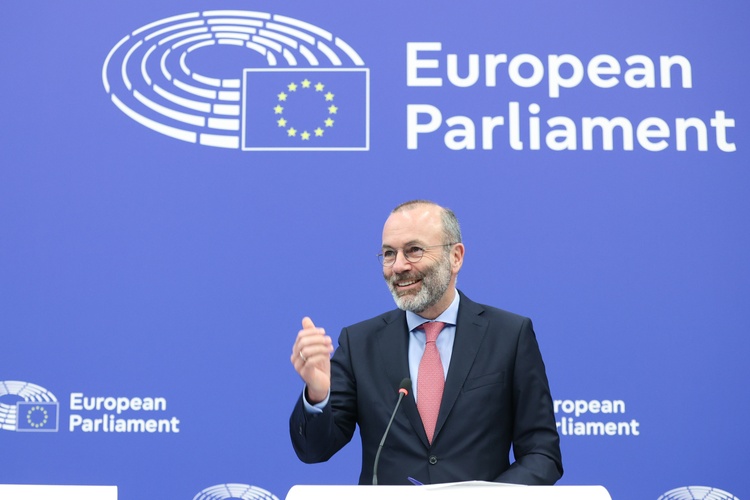
Centre-right’s Muslim Brotherhood witch-hunt in EU Parliament risks criminalising everyday activism

On Wednesday (7 October), the largest group in the European Parliament, the European People’s Party (EPP), has scheduled a debate on a “European Parliament resolution on the need for an EU strategy to counter Islamist entryism and the influence of the Muslim Brotherhood network.”

The move follows the adoption of an EPP party resolution that treats Muslim civic engagement as inherently suspect and collective religious practice as a potential threat.

It largely mirrored the German Christian Democratic approach of criminalising Muslim civic engagement.

As Brussels-based EU expert and EUobserver’s columnist Shada Islam put it, the supposed fight against “political Islam” “places Muslim political and civic activity inside an almost exclusively security framework,” and thus “European democracy is hollowed out rather than reinforced when an entire religious or ethnic minority and its civil society are regarded as permanently suspect.”

Also, the resolution protects religious freedom for Muslims only as an individual right, explicitly stating that it seeks to ensure “equality among citizens, rather than collective claims,” leaving the collective expression of Islam unprotected and thus hollowing out the very idea of religious freedom.

As also the to be debated motion shows, it is unclear where protected religious activity ends and dangerous political activity begins.

Islamophobic conspiracies

The notion of “Islamist entryism,” imported from France, has become a way to criminalise Muslim participation in civil society and politics.

The resolution describes it as “a political strategy of influence, progressive structuring, institutional penetration and ideological legitimisation,” which it separates from the “peaceful practice of Islam.”

But how does one tell the “good” Muslims, who engage peacefully in politics and lobby policymakers to stand up for their rights, from the bad? Or is the good Muslim simply the apolitical one, who does not stand up for the protection of their collective human rights?

If “political Islam” is a problem because it is described “as a societal project,” how does it differ from the collective efforts of Jews, Christians, and others, who also “produce collective norms,” as the motion puts it?

And if “Islamist influence operates through a broad and fragmented ecosystem of associations, foundations, cultural, educational, religious, charitable, university, youth, anti-discrimination or social action structures,” something equally true of Christian, Jewish, and other religious groups, then where does the EPP draw the line between peaceful Muslim activity and Islamist activity that has to be banned?

Isn’t the claim that Muslim “community allegiances placed above common law” a typical Islamophobic allegation, familiar from the old mistrust of Jews as more loyal to a global Jewish community than to the nation-state?

Is this the old antisemitism in new “Muslim” clothes?

Indeed, the motion lists a catalogue of anti-Muslim conspiracy theories: “separatist narratives, systematic victimhood, antisemitism, hatred of Israel, conspiracy narratives, challenges to secularism … may constitute markers of ideological radicalisation or Islamist influence.” They may. And what if they don’t?

Guilty until proven innocent

What follows seems to be one of the motion’s primary goals: cutting funds for Muslim and anti-racist civil society organizations such as the Forum of European Muslim Youth and Student Organisations (FEMYSO) and the European Network Against Racism (ENAR), who are both registered in the EU transparency register of Belgium and annually audited.

These CSOs are seen as a manifestation of political Islam per se even though they have denied any those connections.

And it is a form of innocence that cannot easily be proven.

The EPP motion claims that “some Islamist networks are able … to adopt the vocabulary of fundamental rights, inclusion, diversity, intercultural dialogue, anti-racism and the fight against discrimination, while promoting in other spaces logics of separation, community pressure or contestation of democratic principles.” In other words, the better integrated Muslims in Europe are, the more suspicious they may become.

Shaky legal foundations

The EPP’s motion builds on highly problematic bills, legislation and political procedures. It quotes the French ministry of the interior’s 2025 report “Muslim Brotherhood and political Islamism in France,” which has been harshly criticised.

It also cites a resolution of the French National Assembly from January 2026 that urged the European Union to add the Muslim Brotherhood to its list of terrorist organisations and to lobby for it.

The resolution was voted against by 101 members of parliament, some of whom called it “Islamophobic.” The motion also invokes the contested Austrian Symbols Act, which prohibits the symbols of non-violent organisations that are not considered illegal under domestic legislation and lumps them together with those of jihadist groups ISIS and Al-Qaeda.

A further cited motion is from the Dutch parliament in March 2026 and calls for a ban on the Muslim Brotherhood and linked organisations, but it too has no legislative relevance so far.

None of these motions or laws has outlawed “Islamist entryism” or the “Muslim Brotherhood networks.”

Yet the EPP resolution builds on exactly this shaky ground while pretending that its own motion is solid.

More importantly, the way Austria and France treat their Muslims is well documented: from the infamous, massive and racist police raids known as Operation Luxor to the French state’s Systemic Obstruction policy, which resulted in 101 government units nationwide monitoring Islam and Muslims, 24,887 Muslim organizations and businesses placed on a secret blacklist and under strict monitoring, and the closure of 718 Muslim-owned organizations and businesses, with €46m seized. There is nothing here that should be emulated elsewhere.

Crude logic

The EPP’s argument that “Hamas on the EU list of terrorist organisations historically originates from the Muslim Brotherhood movement” rests on crude logic.

Both the Progressive Alliance of Socialists and Democrats (S&D) and the secular Marxist-Leninist Popular Front for the Liberation of Palestine (PFLP), similarly considered a “terrorist organization,” have Marxist origins. Outlaw the S&D as a consequence?

Today, it is Muslims who are being surveilled, monitored and criminalised. Who is it tomorrow? If this resolution passes, life for politically conscious Muslims who are defending their right to exist in Europe will become even more difficult. And tomorrow potentially everybody’s life.

  •  

HDIM and WHDC: What Is the Difference?

Media-Society.com // Two Warsaw meetings examine human rights across the OSCE region, but their mandates and institutional status are not the same The Human Dimension Implementation Meeting and the Warsaw Human Dimension Conference perform broadly similar work: both bring governments, civil society and international institutions together to examine whether OSCE states are meeting their human-rights […]

  •  
❌