US Secretary of State Marco Rubio on Wednesday urged Western nations to return to what he called their civilisational roots and ensure the West "maintains its place at the head of the world" in a speech delivered against the backdrop of the Acropolis in Athens. The top US diplomat called on Europe to follow President Donald Trump's America in choosing the "unapologetic pursuit of national power" over the "global community".
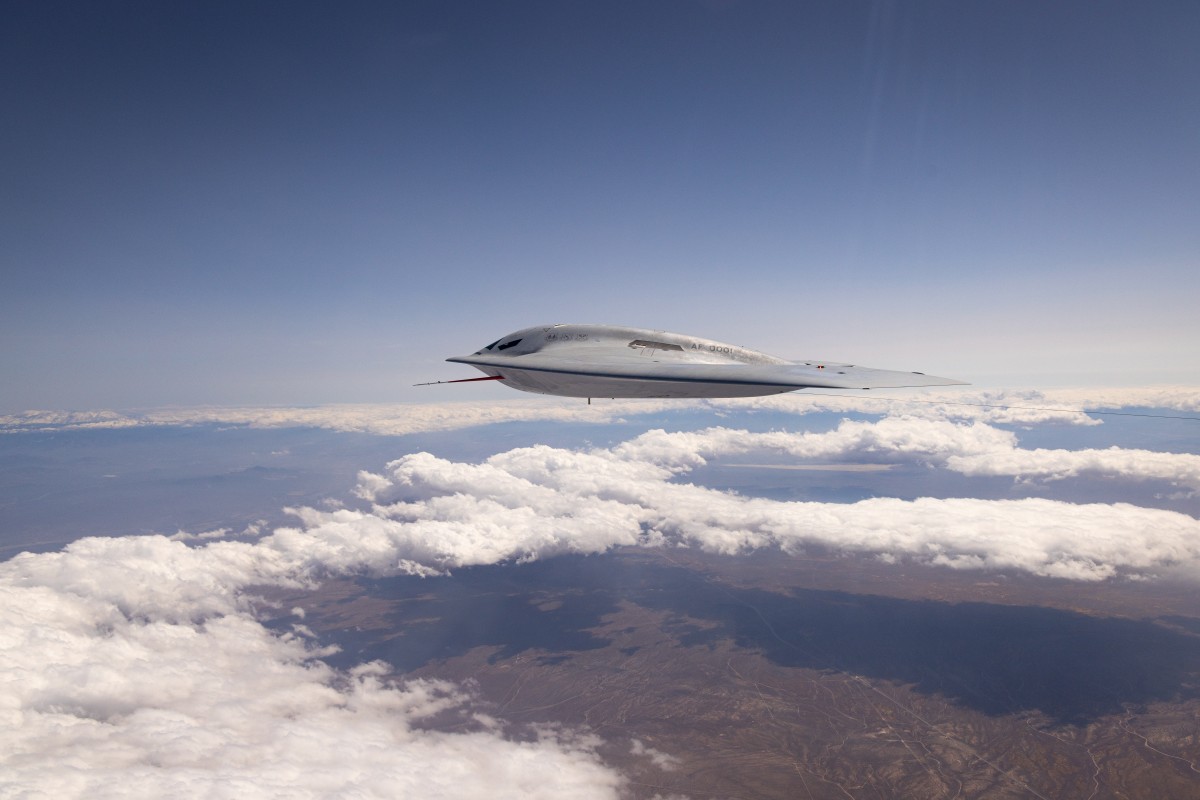
The US Air Force’s next strategic bomber, the B-21 Raider, is moving from flight test to the flight line, and the industrial base is expanding to match that pace. As part of this effort, the Department of the Air Force and the manufacturer broke ground on a new bomber final assembly line at Plant 42 in Palmdale, California.
“It’s more than construction… we’re moving fast to build B-21s! The Department of the Air Force & @northropgrumman have broken ground in Palmdale, CA, on over 1M sq ft of new facilities that will be the final assembly line at Air Force Plant 42,” Secretary of the Air Force Dr. Troy E. Meink recently wrote in a post on X.
The B-21 Raider is the USAF’s next-generation nuclear- and conventional-capable, long-range penetrating bomber optimized for highly contested environments.
The new assembly line likely supports an agreement signed in February 2026 to increase annual B-21 production capacity by 25% using $4.5 billion in funding from the fiscal year 2025 reconciliation legislation.
Separately, Northrop Grumman is investing approximately $2.5 billion of its own capital over several years in related facilities and capacity. In September 2026, the company also opened the East Gate 3 manufacturing campus in Layton, Utah, to produce key B-21 components.
The construction of an all-new assembly line shows that expansion at the B-21’s production facility has moved from planning and funding to active construction.
This expansion is meant to give the service extra manufacturing capacity as the B-21 advances through flight testing and into initial operational deliveries.
The USAF plans to buy at least 100 B-21 bombers to replace the B-1B Lancer and B-2 Spirit and eventually complement the B-52 Stratofortress.
The B-21 Raider program remains in low-rate initial production, meaning Northrop Grumman is building a small number of aircraft to test and refine the production process before full-rate production begins.
At the same time, senior officials have said the Air Force may need more than the current minimum of 100.
In April, Defense Secretary Pete Hegseth told the Senate Armed Services Committee that he believed “a lot more” B-21s were needed. Indo-Pacific Commander Admiral Samuel Paparo had earlier said he would favor a fleet of 200 for nuclear deterrence and penetrating strike.
A Mitchell Institute report has likewise argued that 100 is a raid force, not a campaign force. None of those comments changes the program of record, and the Palmdale construction is tied to the February capacity agreement, not to an approved increase in the buy.
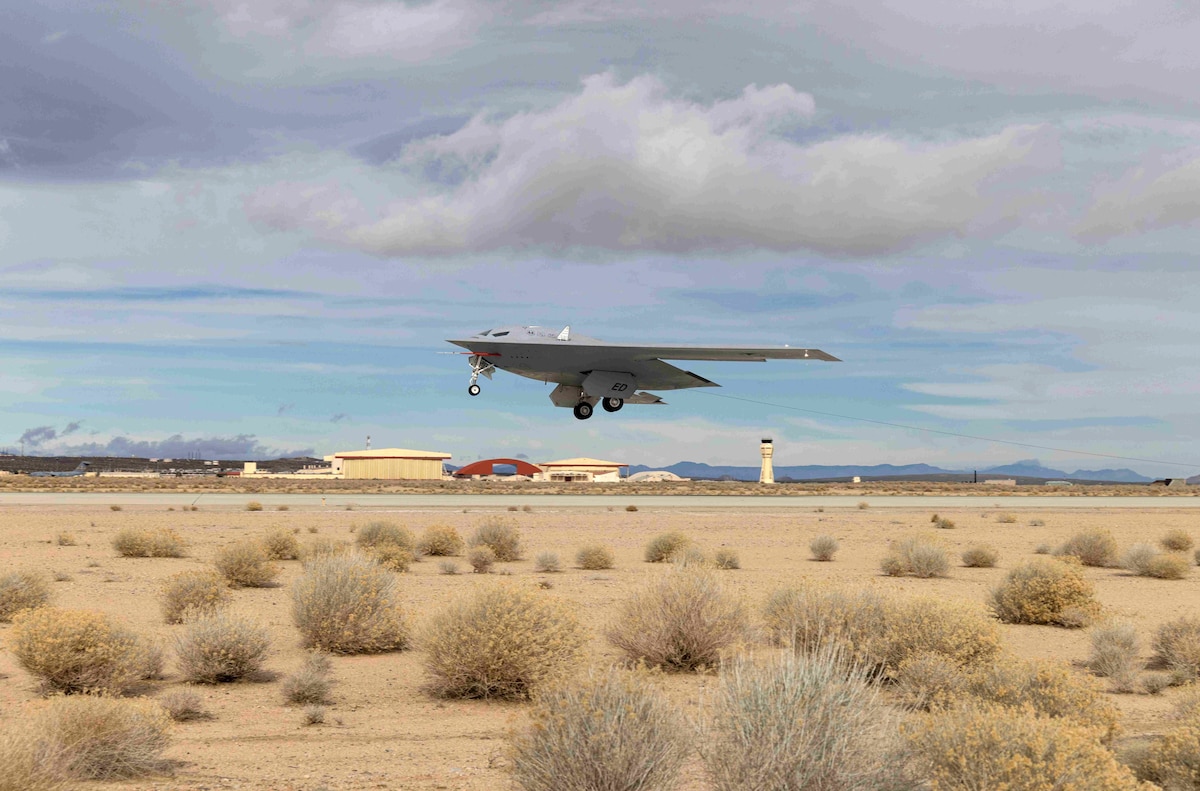
A B-21 Raider conducts flight testing, including ground testing, taxiing, and flight operations, at Edwards Air Force Base, California. Courtesy photo
Furthermore, a report by the Mitchell Institute for Aerospace Studies said the USAF’s current plans to purchase “at least” 100 B-21s match one-time operations into hostile airspace but are insufficient to maintain pressure in a larger conflict because they are “a raid force, not a campaign force.”
Meanwhile, the USAF has said the sixth-generation bomber—which currently has no analogs in the world—is “close” to entering service. In fact, it is expected to reach Ellsworth AFB in South Dakota, one of the three bases selected to host the Raider, in 2027.
This bomber project has moved at a breakneck pace, going from the official public unveiling in December 2022 to the maiden flight in November 2023. In fact, an operational test pilot flew alongside a developmental test pilot, sharing the B-21 cockpit for the first time in June this year, underscoring the urgency of fielding the bomber.
The B-21 Raider’s rapid path from first flight to operational ramp at Ellsworth AFB in 2027 marks a striking acceleration in how the US fields a complex new strategic bomber.
Observers have lauded the speed, remarking that it has been unusually compressed for a program of this scale and sensitivity. This speed, however, was made possible because of a more fundamental shift: the B-21 was built virtually before it was ever built in metal.
B-21 Raider Rewrote Pentagon Acquisition Rules
For decades, major US defense programs followed the process, but aspirational designs fell behind schedule and prototypes revealed problems missed earlier, delaying programs and driving up costs. Northrop claims to be breaking away from this pattern.
Northrop states that it built the B-21 virtually first, using an extensive digital ecosystem and high-fidelity digital twins long before cutting metal. Succinctly put, unlike previous bombers that were primarily analog and later adapted for the digital era, the B-21 was built to function, endure, and evolve in the contemporary environment.
Developing and producing combat aircraft previously involved designing, building a prototype, testing it, discovering problems, and redesigning. However, Northrop essentially inverted this sequence, using a constantly changing digital model for the Raider.
This gave engineers, manufacturers, and operators a common reference point, enabling them to evaluate and implement design changes almost instantly.
This method enabled engineers to model aerodynamic performance, stealth features, structural loads, and systems integration long before components entered production.
This meant that design modifications that once required expensive rework could be assessed and verified virtually, often in a few hours rather than months.
The team simulated and refined structural loads, stealth characteristics, flight dynamics, and systems integration in the virtual environment before committing to physical hardware.
As a result, the physical aircraft that emerged from this approach matched or even outperformed the models’ predictions, according to the manufacturer.
This, in turn, has allowed the program to compress testing timelines, accelerate production, and keep costs under tighter control.
File: A B-21 Raider conducts flight tests, which include ground testing, taxiing, and flying operations, at Edwards Air Force Base, California
Unsurprisingly, the result was an unusually mature aircraft when the first Raider took flight. Northrop earlier said, “Before the B-21 ever took to the sky, the flying test bed completed more than 200 test sorties totaling more than 1,000 flight hours, testing production hardware, software, and sensors in a dynamic environment and enabling teams to tackle discovery well in advance.”
The speed with which B-21 moved from production to testing and into an operational setting at a USAF airbase was best demonstrated by the approach the manufacturer and the Air Force took during flight testing. A major 180-day test cycle was reportedly completed in just 73 days, as revealed in May 2026.
Officials have even stated that the program is exceeding expectations, as test aircraft are achieving high “code one” rates, which is the rate at which the aircraft is ready to fly again with minimal issues
The Combined Test Force achieved half the originally planned missions in less than half the planned time, while supporting significant contract value.
This compression was not the product of rushed flying, and reflected fewer surprises, higher aircraft availability, real-time data analysis, and the ability to clear multiple test points on single sorties.
The advantage of building the aircraft digitally has reportedly extended to the production lines. “Where the digital environment meets the production floor, this digital technology expedites configuration management, facilitating communication between technicians and engineers during the build, in some areas already reducing manufacturing hours by roughly a third,” according to the Northrop Grumman newsroom.
Nonetheless, the B-21 is not without risk, though experts think careful digital engineering, precise digital twins, and a conscious move away from sequential physical prototypes can break the long-standing pattern of delays.
Contact the author at sakshi.tiwari13 (at) outlook.com
The counting of votes in the first round of Brazil’s general elections was the subject of great controversy. Flávio Bolsonaro, son of former president Jair Bolsonaro, was ahead of Lula in the official count, with 49.6%, against 42.2% for the president seeking re-election.
64.8% of the polling stations had been tallied up to that point. But the count was halted for more than an hour. Strangely, the votes for governor, senator and deputies continued to be counted normally. Only the presidential count was halted.
And, even more strangely, when the presidential count resumed, Flávio Bolsonaro’s upward trend and Lula’s downward trend were reversed. The opposition candidate’s votes plummeted, while those of the current president rose. Flávio Bolsonaro was less than 0.5% away from the victory that would hand him the presidential sash. He lost more than 2%, ending with 47.03%, while Lula gained almost 3%, ending with 45.16%.
It seemed that Flávio Bolsonaro would dethrone Lula right in the first round. But, after more than an hour of halted counting, Lula managed to recover and the race will only be decided in the second round.
The count was halted at 7:06 p.m. (Brasília time), with 64.8% of the ballots tallied. Only at 8:08 p.m. were the new results presented, already with 84.96% of the ballots tallied.
The official justification was given by the president of the Superior Electoral Court (TSE), Kassio Nunes Marques, who is also a justice on the Supreme Federal Court (STF). “What happened was a data congestion. In every election, we are surprised by some incident, which is natural for those who deal with complex and highly varied systems,” he said. “At first, it is not known whether this was derived from another problem. What our IT found was a flow [of data] above the normal level, and that congestion caused a delay,” he added.
There is an aggressive propaganda campaign in Brazil, spearheaded by the Electoral Justice, to convince citizens that elections are 100% clean. The main focus of this propaganda is precisely the electronic voting machines. Judicial institutions and media outlets give wide dissemination to the Electoral Justice’s claims about the total reliability of the electronic voting machines, even highlighting that they are tested before the election and then sealed so that no one can access them.
So why did the machines suffer a kind of breakdown, if they had been rigorously tested? Well, the oh-so-wise TSE has full knowledge of the number of eligible voters and of the number of votes that can be recorded in the machines, including in each polling station. The Electoral Justice’s propaganda tells the public that the machines are fully prepared in advance to record and tally voters’ votes perfectly.
No flow of data “above the normal level” that would lead to system congestion should occur, because the most varied data and statistics regarding vote recording are known and the calculations are perfectly feasible. The infallibility of the electronic voting machines requires that all possible outcomes be predictable and that, therefore, there be no anomaly whatsoever.
So how is it possible, then, that such a perfect system – as it is portrayed by the institutions of the Brazilian State – suffers a failure which, once supposedly resolved, so radically changed the trend of the presidential votes?
It may be a coincidence that Flávio Bolsonaro plummeted and Lula rose after the voting machines failed. But who knows? The TSE president acknowledged that the electronic voting system is “complex.” Only highly qualified specialists, from the TSE itself and from technology companies, can access it and understand it, according to the Electoral Justice. Thus, the fate of an entire country for the next four years rests in the hands of these specialists – 150 technicians unknown to the public. The tally of votes from the machines is fully automated; it passes through no human being. An even more select number of 22 employees access the automated vote totalization.
This means that 214 million Brazilians need to trust those 150 or 22 Egyptian priests to interpret that occult science. They must be the most enlightened beings on planet Earth – 100% honest, upright, immaculate and virginal. Even the STF justices, who over the past 15 years have been presented as impeccable, virtuous and chaste individuals, now appear embroiled in the biggest corruption scandal in Brazil’s recent history, yet those anonymous specialists deserve citizens’ most absolute trust.
It was for reasons such as these that the Supreme Court of Germany declared electronic voting unconstitutional: “every citizen must be able to understand and verify the central stages of elections in a reliable manner and without any prior specialized technical knowledge.”
The verdict, dated 2009, concludes:
“An electoral procedure in which the voter cannot reliably understand whether his or her vote was recorded in an unfalsifiable manner and included in the tally of the election result, and how the total of votes cast is assigned and counted, excludes central elements of the electoral procedure from public scrutiny and therefore fails to meet constitutional requirements.”
The Brazilian judicial system is mired in its greatest crisis in history and is living through a true Wild West, with partisan feuds interfering in the functioning of its work. Partisanship, in fact, has contaminated most of the judiciary, including the TSE. In the final stretch of these elections, decisions by the Electoral Justice, backed by the dominant wing of the STF, favored Lula.
It is evident that this dominant wing (represented by justices Alexandre de Moraes, Gilmar Mendes and Flávio Dino) does not want a victory of Bolsonarismo, for it is their declared political enemy. These justices have acted, in recent years, as true vigilantes against Bolsonarismo. Now that they themselves have been caught in extremely promiscuous dealings with a banker who corrupted countless high-ranking state officials, their bureaucratic careers are threatened. Lula’s continuity is a hope of salvation for these gentlemen, for the president is beholden to them and cannot break that commitment without risking his own neck, given the level of dependence Lula has contracted toward the STF’s top brass. Meanwhile, a Flávio Bolsonaro victory would tend to lead to a clash with the heads of these institutions – although the opposition candidate himself has shown little willingness to confront them, because those who control elections in Brazil (international financial capital) demand moderation and pacification, otherwise they will make life difficult for anyone elected president.
And the people are treated like cattle, victims of a system they cannot understand, so that their exploitation may be perpetuated through the staging of the “festival of democracy.”
Europe’s energy crisis isn’t over. Gas prices remain stubbornly high across the continent as Europeans confront a long winter.
In response to an energy crisis stemming from Europe’s continued reliance on imported liquefied natural gas against the backdrop of ongoing global geopolitical volatility, Europe’s leaders are pushing to diversify the bloc’s energy mix. While this means that Europe is rapidly expanding its renewable energy capacity, it also marks a significant return to the world’s dirtiest fossil fuel – coal.
Earlier this year, when the United States and Israel began an offensive in Iran and thereby instigated the disruption of one-fifth of the world’s oil and gas trades, Europe awakened to realize that it had sleepwalked into yet another energy crisis – its third in just four years. “We swore we’d learn. We promised things would change, but here we are,” a ‘highly frustrated European diplomat’ was recently (anonymously) quoted by the BBC.
“Instead of concentrating on much-needed long-term plans – about how to make Europe more competitive in this increasingly volatile world, [European] prime ministers and presidents are now in a panic over [energy] prices, worried about angry voters and scrambling for short-term solutions,” the source continued. “Just like the crisis after Russia’s full-scale invasion of Ukraine. Different conflict. Same European divisions; same dilemmas over energy. We can’t keep going round in these circles. Something’s got to give.”
Now, half a year after the outbreak of the war in Iran and the initial closure of the Strait of Hormuz, Europe is still grappling with the fallout as gas prices remain brutally high. Just this month, gas prices hit their highest mark in three years, soaring above €80 ($90.98) per megawatt hour.
Prices are so high, in fact, that coal-fired power has become cheaper than gas-fired power in Europe for the first time in years. This has pushed many European nations, and especially the European Union’s largest economy, Germany, back to coal. And, worryingly, experts contend that that trend will continue for years to come.
“Coal is expected to remain cheaper than gas for power generation through next year and potentially until March 2028,” Reuters reported earlier this week, based on a conversation with Marta Wroniszewska, an analyst at Veyt. “Longer-dated gas prices indicate traders expect supply constraints to persist.”
However, there are notable limits to coal’s growth potential in Europe. Years of policy aimed at phasing down and phasing out coal have left the continent with dramatically fewer coal-fired power plants than it had previously. In 1990, the European Union derived more than a third of its electricity production from coal. By 2025, that share had fallen to just 9.2 percent, according to data from Eurostat. So while Europe’s remaining coal plants will receive a windfall from the current gas prices, there is a ceiling to coal’s potential rebound in the region.
Outside of Europe, however, it’s a different story. Globally, coal is still the single-biggest source of power production. And while Europe is shutting down its coal-fired capacity, many emerging economies are continuing to build theirs up, with particularly strong growth from the Philippines, Indonesia, and other rapidly developing countries across Asia. Not coincidentally, this was also the region hit hardest by the closure of the Strait of Hormuz.
While coal is cheap, abundant, and seen as a critical tool for enabling economic development in poor countries, the continuously extending timeline of coal’s reign presents trade-offs that far outweigh the benefits. Coal is the single largest driver of global warming, responsible for about 40 percent of all greenhouse gas emissions. However, it’s not all bad news – coal’s comeback is happening in tandem with a major global increase in clean energy resources. Increasingly, renewable energies are being adopted for their role in a more energy-secure future, and are seen as a critical buffer against the next global energy crisis.
Unlike natural gas, oil, and coal, “Wind and solar cannot be embargoed, blockaded, or shut off by a foreign power,” David Frykman, General Partner at Stockholm-based venture capital group Norrsken, wrote in an op-ed for Fortune earlier this year. “Every terawatt-hour of domestic renewable generation is a terawatt-hour that no adversary can weaponize.”
Washington has sent two contradictory signals on Taiwan in the last few days. Whether these signals reflect strategic ambiguity or strategic confusion in the coming days has become a matter of debate among the strategic experts.
On the one hand, Trump is holding back a $14 billion arms package for Taiwan, pre-approved by the U.S. Congress, despite a bipartisan group of senators explicitly urging him to “formally notify . But the U.S. President has described his decision to pause as a “very good negotiating chip” for his talks with Chinese President Xi Jinping.
Whether that worked in his summit meeting with Xi last week in Washington is not known. But Taiwan’s Defense Minister Wellington Koo confirmed yesterday (October 6) that he has “not heard” of any new sale being cleared, even in smaller chunks.
On the other hand, the Pentagon is seemingly doing the opposite of this pause.
According to reports, the U.S. Department of Defense will station two representatives on a long-term basis inside Taiwan’s Ministry of National Defense headquarters in Taipei from 2026 to 2028.
One official will come from the Office of the Under Secretary of Defense for Policy [OUSD-Policy] — the office that writes U.S. national security and defense strategy. The second will come from the Institute for Defense Analyses [IDA] — a federally funded think tank that does mathematical modeling for war games and combat capability assessment.
The program is called the “Taiwan-US Defense Ministry Joint Cooperation Assessment,” with a total budget of NT$471 million [$14.8 million], including NT$152.5 million this year for personnel, consultancy, travel, data collection, and even interpretation for classified-level meetings.
This would mark the first time U.S. defense officials are permanently embedded inside Taiwan’s military headquarters, shifting cooperation away from traditional channels managed through the American Institute in Taiwan (AIT), Washington’s de facto embassy.
The military relationship between the United States and Taiwan is highly integrated yet formally unofficial. It is governed by the legal framework of the “U.S. Taiwan Relations Act” (TRA), which Congress passed on April 10, 1979.
Congress enacted it immediately after the U.S. formally terminated its previous “Mutual Defense Treaty with the Republic of China (Taiwan)” to officially recognize “the People’s Republic of China (PRC)” in Beijing.
Rather than abandoning Taiwan, Congress designed the TRA as a legal framework to ensure that “robust, unofficial security, commercial, and cultural ties” continue uninterrupted.
In short, the TRA provides a domestic legal workaround for treating Taiwan as a country without formal diplomatic recognition. However, under it, the U.S. is also obligated to maintain Taiwan’s capacity to resist force or coercion in general and the forcible annexation by the PRC in particular.
Over the years, U.S. personnel have served in Taiwan as trainers and advisers. Hundreds of active-duty U.S. military advisors—often colloquially referred to locally as “English teachers” to maintain a low profile—are routinely deployed across Taiwan.
U.S. military observers are present within Taiwan’s annual “Han Kuang live-fire military exercises”. They actively guide Taiwan’s defense strategy toward decentralized command, logistics, and real-world combat readiness.
Taiwanese fighter pilots undergo advanced combat training at Luke Air Force Base in Arizona.
The US remains Taiwan’s primary foreign weapons supplier, with a total backlog of orders nearing $20 billion.
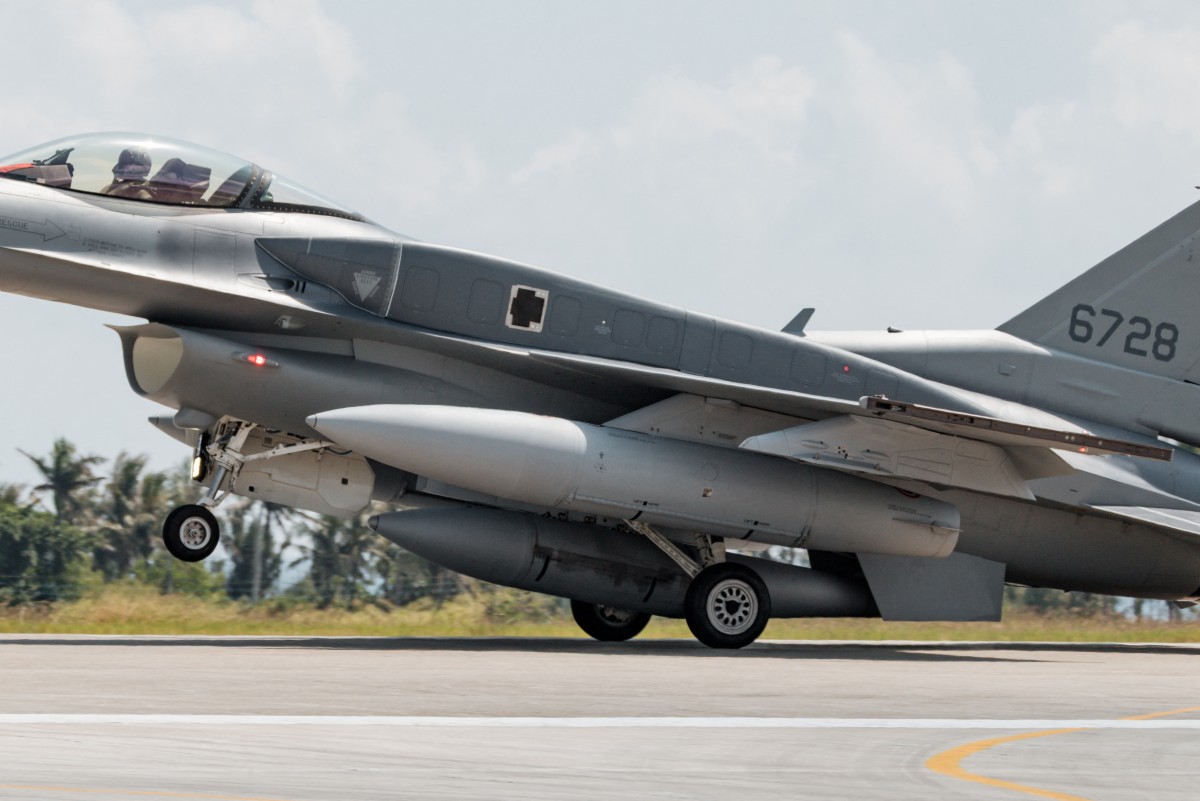
In fact, Taiwan received its first new batch of two advanced Lockheed Martin F-16 Block 70 fighter jets on October 2. This was part of an $8 billion deal approved in 2019 for 66 new-build F-16 Block 70 jets, with the remaining 64 aircraft scheduled for future delivery. out of a 66-aircraft fleet on order.
A newly purchased F-16V Block 70 fighter jet lands at Chi-hang Air Base in Taitung on October 2, 2026. Taiwan received its first two US-made F-16V fighter jets as the island democracy upgrades its military capabilities to deter a potential Chinese attack. The warplanes are part of an $8 billion deal for 66 F-16Vs approved during U.S. President Donald Trump’s first term and scheduled for delivery this year. (Photo by CHENG Yu-chen / AFP)
However, all these coordination efforts between Washington and Taipei are usually routed through the AIT intermediary, as the U.S. adheres to its One China” policy. In that sense, the new proposal to station Pentagon personnel directly inside the Taiwanese Defense Ministry represents a shift from this historical status quo.
The new arrangement puts Americans directly into the core of Taiwan’s defense policymaking, including policy coordination, Han Kuang exercise planning, asymmetric warfare doctrine, and major weapons procurement evaluations, it is said.
Of course, the U.S. routinely sends military and civilian defense officials to work directly inside the defense ministries of partner and allied nations. Established by the Pentagon in 2009, the Ministry of Defense Advisors (MODA) Program specifically trains and deploys high-performing senior U.S. Department of Defense civilians.
These advisors are embedded in partner-nation defense ministries to support institutional capacity building, strategy, financial management, and logistics.
The U.S. also actively deploys specialized defense consultants directly to the defense ministries of nations looking to transition away from historical adversaries such as Ukraine, Moldova, Armenia, and various Balkan nations looking to exit Moscow’s orbit.
The U.S. has a long history of embedding liaison officers in allied countries. For example, it has a Joint Political-Military Group in Israel that embeds officers in missile-defense cooperation for Iron Dome, David’s Sling, and now Iron Beam. But American officials do not operate inside the Kirya (Israel’s defense headquarters).
Similarly, despite 54,000 US personnel stationed in Japan, no U.S. officer sits inside Japan’s Ministry of Defense to assess combat capability.
Perhaps in NATO countries and South Korea, U.S. military officials are believed to sit together often.
There are also “Offices of Defense Cooperation” (ODC), or United States Military Groups, which are technically attached to the local U.S. Embassy for diplomatic protection. These teams provide security assistance and work in routine, day-to-day coordination with host ministry personnel.
However, what makes the proposed U.S. officials sitting directly within Taiwan’s military headquarters unique is that Taiwan is not an ally of America in the strict sense, as the U.S. lacks formal diplomatic recognition of Taiwan, and these officials will bypass the traditional AIT.
Of course, multiple reports in recent years have claimed that U.S. special forces are permanently stationed in Taiwan to assist its 101st Amphibious Reconnaissance Battalion special operations force, though Washington has officially denied it. The same has been the case with the speculations about the coming and going of U.S. military personnel from the Army Special Operations Command base in Taoyuan.
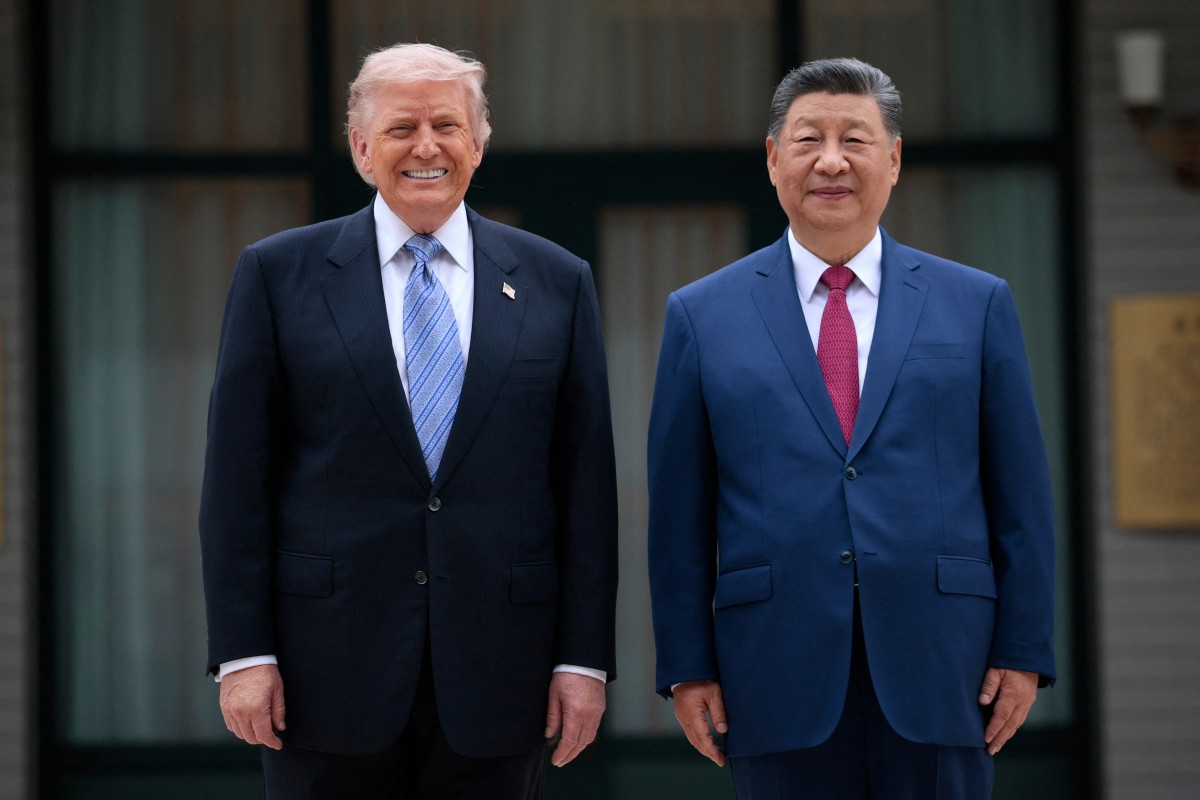
U.S. President Donald Trump (L) poses for photos with China’s President Xi Jinping during a visit to Zhongnanhai Garden in Beijing on May 15, 2026. (Photo by Evan Vucci / POOL / AFP)
How will Beijing React?
At the time of writing, Beijing had not issued an official reaction, possibly because Taiwanese media outlets only recently brought details of this long-term Pentagon deployment to light. It has not been declared officially.
But it goes without saying that Beijing would be “certain to protest” and could respond “with expanded exercises and intimidation”, according to Zivon Wang, a military analyst at the Chinese Council of Advanced Policy Studies in Taipei.
He expects U.S. personnel not to wear uniforms at the Ministry of National Defense because it could be interpreted as a more formalized US-Taiwan military relationship and might further provoke Beijing.
Incidentally, China has made more air and naval incursions across the median line in the Taiwan Strait since 2022. Although Chinese military aircraft had occasionally crossed the median line (established informally in 1954) in the past, the practice became significantly more frequent from 2022, particularly after Nancy Pelosi (then Speaker of the House of Representatives) visited Taiwan in August that year. What had once been an informal but largely respected buffer increasingly became a zone of routine Chinese military activity.
Therefore, it remains to be seen whether China will respond to the Pentagon’s proposed deployment with loud exercises.
It may also remain silent, as nothing is official yet and Trump has his “negotiating chip” of holding back Taiwan’s military package.
Trump’s admirers often see his unpredictability as useful in negotiations with an adversary, because the other side cannot be sure how far he is willing to go.
But his critics argue that his unpredictability becomes counterproductive when allies cannot distinguish a negotiating threat from a real change in American policy.
It remains to be seen who will prove to be right in the case of Taiwan.
Author and veteran journalist Prakash Nanda is Chairman of the Editorial Board of the EurAsian Times and has been commenting on politics, foreign policy, and strategic affairs for nearly three decades. He is a former National Fellow of the Indian Council for Historical Research and a recipient of the Seoul Peace Prize Scholarship.
The author can be reached at prakash.nanda (at) hotmail.com
The first round of Brazil’s presidential election ended with candidate Flávio Bolsonaro (PL) ahead of Lula da Silva (PT), 47% to 45%. In the parliamentary elections, the PT and the left suffered overwhelming defeats across the country, indicating growing rejection of the left among ordinary Brazilians. Now, with only a few weeks remaining before the final decision on who will govern the country from next year onward, the question remains open: what factors will voters take into consideration when choosing the president?
The Lula government has taken several measures considered “desperate” attempts to reverse its popularity crisis and regain support in the final stretch of the election. Expanding social programs is one such measure, but its political effectiveness is becoming increasingly questionable. After decades of income redistribution under PT governments, without this producing any real transformation in the situation of working people, public perceptions of these policies have become increasingly negative.
Lula’s central problem is that a significant portion of the electorate appears less interested in new palliative measures and more concerned with problems that remain present in their daily lives. Public security, employment, income, inflation, and the quality of public services have a much more direct impact on the population than the major debates promoted by the government.
Security is perhaps the clearest example. The expansion of criminal organizations, the territorial growth of organized crime, and the perception of impunity have made violence one of the country’s main concerns. For millions of Brazilians, this is no longer an abstract discussion about security policy. It is a daily reality that determines where people can live, work, travel, and even open a business – particularly in major urban centers such as Rio de Janeiro, where organized crime is estimated to control between 60% and 70% of the city’s total territory.
In this context, proposals associated with the progressive cultural agenda may also carry significant electoral costs for the left. Brazilian debates over gender, identity, education, and minority rights have increasingly reproduced political conflicts originating in the United States and Europe. A considerable portion of the population, however, does not identify with this agenda and believes that the state should concentrate its efforts on more urgent material problems.
This helps explain why the runoff will likely be determined much more by domestic issues than by foreign policy – which is the aspect of the Lula government most frequently praised by the international expert community. BRICS, Palestine, or Brazil’s position toward the United States may mobilize politically engaged sectors of society, but they are unlikely to constitute the main concerns of the average voter when deciding how to vote.
Foreign policy has strategic importance for the Brazilian state. Ordinary citizens, however, tend to evaluate it through its concrete effects on their own lives. A foreign policy regarded as successful will not, by itself, compensate for perceptions of insecurity, unemployment, or deterioration in public services. As the Lula government avoids directly confronting the problem of organized crime, support may naturally grow for a right-wing camp that welcomes the United States’ designation of Brazilian criminal factions as terrorist organizations.
The same applies to the aforementioned income-transfer programs. Such mechanisms may have an important social function in a country marked by profound inequalities, but their use as the principal instrument of social policy has serious limitations. Transferring income can alleviate poverty, but it does not automatically create skilled employment, increase productivity, or rebuild national industry. Instead, it can contribute to the emergence of a large precarious population dependent on government assistance. When welfare becomes a permanent substitute for development policies, the structural problem remains.
This is precisely where the electoral dispute enters a decisive phase. Voters will have to choose between different proposals for addressing problems that have not disappeared in recent years. The ability to present convincing answers on security, employment, income, and social order may carry greater weight than speeches about major geopolitical projects.
The first-round result also demonstrates that Brazil’s right was able to transform domestic discontent into electoral strength. Flávio Bolsonaro’s lead and the composition of the new Congress indicate significant demand for change. This does not mean that all these voters share the same views on the economy, foreign policy, or cultural issues. It means, above all, that dissatisfaction has become sufficiently broad to alter the country’s political balance.
In the remaining weeks of the campaign, therefore, the fundamental question will be whether the government can convince voters that its policies offer lasting solutions, or whether the perception will prevail that it has adopted temporary measures to manage problems that remain unresolved.
Talking about gender, human rights, or Palestine will definitely not help Lula secure reelection.
Haiti has indefinitely postponed elections scheduled for December and February, the electoral council said Tuesday, citing technical and operational requirements as gang violence continues to disrupt preparations. The delay leaves Haitians without a democratic process as authorities struggle to register voters and secure areas needed for the poll.
Christa Pike is "angry and confused" after regaining consciousness almost six days after Tennessee's failed attempt to execute her by lethal injection, one of her attorneys said Wednesday. Pike, the first woman the state has attempted to put to death in 200 years, remains hospitalised with severe injuries to both arms.

 Login