Ich bezeichne den Spiegel gerne als „Pressesprecher der Geheimdienste“ oder auch „Pressesprecher der Regierung“, weil das Blatt nicht nur die Narrative der deutschen Regierung und Geheimdienste stützt – womit der Spiegel beweist, dass er weder ein kritisches noch ein regierungsfernes Medium ist – sondern auch immer wieder von Regierung und Behörden Informationen bekommt, die er […]
Defense tech firm Anduril unveiled plans on Tuesday for a $3.7 billion shipyard in Maryland that is expected to generate 3,100 jobs, in a ceremony attended by President Donald Trump.
Three foreigners were placed under arrest for killing a goat in the Polish city of Wałbrzych. However, Polish prosecutors now want to drop the case.
The incident occurred in late 2025 outside a restaurant in Wałbrzych that was closed for renovation and not operating, authorities said. A witness called police, who arrived and detained the men, two citizens of Bangladesh and one of India, at the scene.
Chief Inspector Marcin Świeży of the District Police Headquarters in Wałbrzych said the men told officers that such behavior is normal in their countries and they did not know it is prohibited in Poland.
The goat was intended as a meal for two of the men, according to Do Rzeczy. The Indian citizen said he is a vegetarian and pleaded not guilty.
In Poland, goats and other livestock may be killed for food only under rules that implement EU animal-welfare law, chiefly Council Regulation No. 1099/2009 on the protection of animals at the time of killing. The core requirement is that the animal be spared avoidable pain, distress, or suffering.
Unlike in many Third World countries where animals are slaughtered on the streets, often in extreme pain and fear, in the EU, the animal must remain unconscious until death. Bleeding must then be performed promptly and effectively. Slaughter outside a registered slaughterhouse is tightly restricted, and home or backyard killing for personal consumption is generally not permitted except in narrow, authorized circumstances, for example, certain emergency or remote situations under veterinary supervision.
Despite the clear violation of law, the District Prosecutor’s Office in Wałbrzych filed a motion seeking conditional discontinuance of the proceedings against all three foreigners. Prosecutor Mariusz Pindera said the outcome depends in part on the court’s assessment of the degree of “social harmfulness” of the act.
“If the court finds that it was not significant, it may grant the prosecutor’s request,” he said.
The court confirmed it received the application but has not yet considered it, in part because of a judge’s illness. No hearing date has been set, and no substantive decision has been issued regarding the men.
Russia attacked Kyiv and 12 oblasts overnight on 7 October with about 70 missiles, many of them ballistic, as well as Shahed drones, President Volodymyr Zelenskyy said. The strikes killed at least 20 people, with the deadliest hit on an apartment block in Pryluky in Chernihiv Oblast. Russia also hit Kremenchuk, Oleksandriia, Dnipro, and Zaporizhzhia, while Poland scrambled its jets.
Moscow has likely begun its winter strike campaign earlier than usual, aiming to make civilian life in Ukraine unbearable, and UN figures already show civilian casualties running 55% above last year's.
Update: Pryluky death toll rises to 14, including four children
The death toll from the Russian strike on Pryluky has risen to 14, including four children, Ukraine's State Emergency Service said on the afternoon of 7 October. Fifty people were injured, seven of them children, and rescuers pulled 15 people from the rubble, including a child.
Russia attacked Pryluky with cruise missiles, and one scored a direct hit on the five-story apartment building, Chernihiv Oblast head Viacheslav Chaus said. Earlier in the day, he reported that 27 of the injured had been hospitalized, three in serious condition. The search-and-rescue operation was still under way.
Morning repoting: five dead in Pryluky
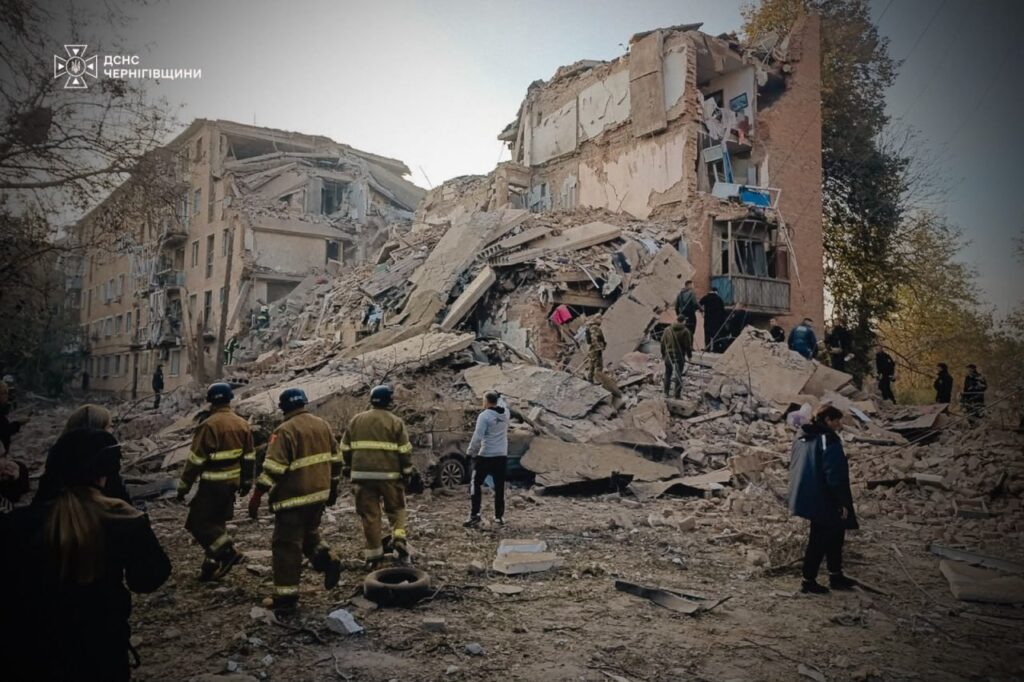
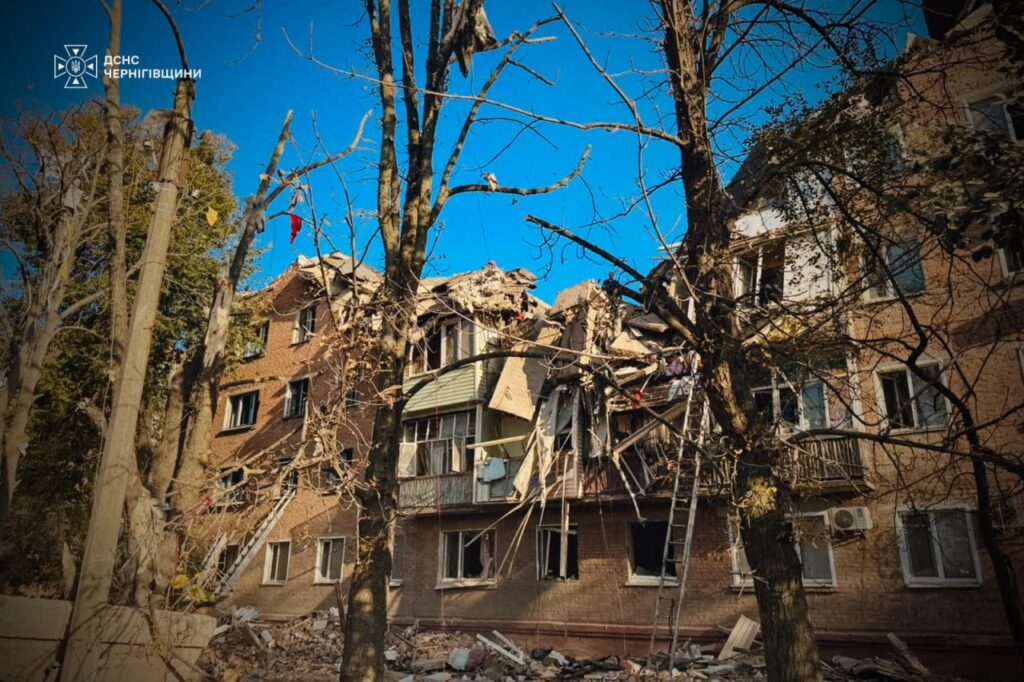
A Russian missile struck a five-story apartment building in Pryluky early in the morning, while residents were still asleep, Chernihiv Oblast head Viacheslav Chaus said. The strike completely destroyed one sectkion of the building, killing five people and injuring 26, including five children, Ukraine's National Police reported. Rescuers pulled three people from the rubble, including a child, and more people may still be trapped, Chaus said.
"Today, for Putin's birthday, the Russian army 'gave' him the destruction of an apartment building in Pryluky in Chernihiv Oblast. It was an ordinary five-story building," Zelenskyy said.
A five-story apartment building in Pryluky, Chernihiv Oblast, damaged by a Russian missile strike, 7 October 2026. Photo: State Emergency Service of Ukraine in Chernihiv Oblast
Kyiv, Kremenchuk, and Oleksandriia
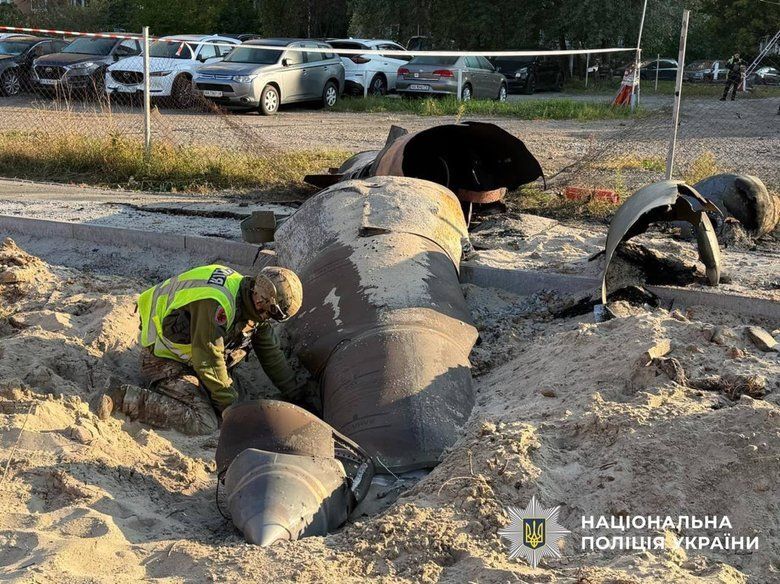
In Kyiv, Russian missiles hit non-residential buildings and warehouses in the Obolonskyi and Podilskyi districts, Mayor Vitali Klitschko said. Strikes also hit the Shevchenkivskyi district, and debris burned in the Darnytskyi district, he added. In the Darnytskyi district, a missile set fire to a garage cooperative, where firefighters rescued two people and found two men dead, Klitschko wrote. Police and rescuers worked to defuse an unexploded ballistic missile that fell among apartment blocks in the same district, the National Police said.
Damaged high-rises and wrecked cars in a residential area of Kremenchuk after a Russian missile strike, 7 October 2026. Photo: Vitalii Diakivnych/Telegram
In Kremenchuk, Russian missiles hit a densely populated residential area, killing two people and injuring seven, Poltava Oblast head Vitalii Diakivnych said. Zelenskyy later put the number of injured at eight and said four high-rises were damaged.
Explore further
A school with children, a café, warehouses: Russia’s drones hit civilian Kyiv again
In Oleksandriia in Kirovohrad Oblast, Russia hit an enterprise. One person was killed, three injured, and two were out of contact, Kirovohrad Oblast head Andrii Raikovych said. Zelenskyy later put the death toll there at two.
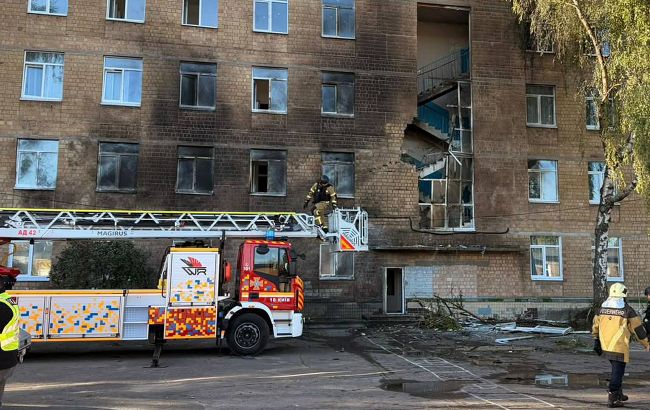
A firefighter among burned cars at the site of a fire after a Russian missile attack on Kyiv, 7 October 2026. Photo: State Emergency Service of Ukraine in Kyiv
Drones and other targets
In Dnipro, Russian strikes damaged an industrial enterprise, apartment buildings, and a sports club, Dnipropetrovsk Oblast head Oleksandr Hanzha said. In Nikopol district, the attacks injured a 65-year-old woman and a 64-year-old man. Russia also struck Lozova in Kharkiv Oblast with a missile, and a drone hit an apartment building in Zaporizhzhia, police said.
In Zaporizhzhia, Russia attacked a transport infrastructure facility, acting oblast head Mykhailo Semikin said, a day after a strike on one of the city's bridges over the Dnipro halted traffic. In Kyiv Oblast, three production and warehouse buildings were damaged in Obukhiv district, with no casualties, the Kyiv Oblast Military Administration said.
A bomb technician works beside an unexploded Russian ballistic missile among residential buildings in Kyiv's Darnytskyi district, 7 October 2026. Photo: National Police of Ukraine
Air defense downed five ballistic missiles, 39 cruise missiles, and 117 drones, while missiles and drones hit 18 locations, the Air Force said. Polish military aircraft took off and Poland put its ground-based air defense on alert during the attack, Poland's Operational Command said.
Russian ballistic missiles remain the biggest challenge, Zelenskyy said, adding that Ukraine is searching daily for Patriot missiles.
Strikes across the front over the past day
Russian attacks killed one person and injured 11 in Kherson Oblast over the past day, the Kherson Oblast Military Administration reported. Russia injured 12 people in Donetsk Oblast on 6 October, Donetsk Oblast head Vadym Filashkin said. Two people were injured in Kharkiv Oblast, Kharkiv Oblast head Oleh Syniehubov said.
Bridges and a maternity hospital in Russia's sights
Russia has stepped up strikes on Kyiv's bridges and has now extended them to Zaporizhzhia. In September, a Russian ballistic and hypersonic missile attack on Kyiv damaged a maternity hospital.
Growth potential across Central and Eastern Europe has fallen sharply from the levels seen around EU accession, with ageing populations, weak productivity, Chinese competition and slower German industry increasingly testing the region’s economic convergence.
The economic model that transformed Central and Eastern Europe after EU accession is losing momentum, according to the International Monetary Fund, which is warning governments that structural reforms are needed if the region is to continue narrowing the income gap with Western Europe.
Carlos Mulas-Granados, the IMF’s regional representative, said on Tuesday that medium-term growth potential across Central and Eastern Europe had declined to around 2.5 per cent, compared with roughly 5 per cent before countries in the region joined the European Union.
The slowdown does not mean that every economy is stagnating. Poland continues to grow faster than much of Western Europe, while the Czech economy has recovered from recent shocks. The concern is instead about the underlying rate at which these economies can expand once temporary fiscal stimulus, EU funding and post-crisis recoveries are stripped out.
Several of the forces behind the region’s earlier success are becoming weaker.
EU accession opened access to the single market, attracted foreign investment and integrated Poland, Czechia, Slovakia and Hungary deeply into European industrial supply chains. German manufacturers in particular moved production eastwards, taking advantage of lower labour costs, skilled workforces and geographic proximity.
That process generated rapid gains in productivity and incomes. It cannot simply be repeated.
Demographics are one of the most immediate constraints. Working-age populations are shrinking across much of the region while ageing increases spending requirements for pensions, health care and social support.
The IMF’s country assessments illustrate the problem. Its assessment of Poland says demographic pressures are mounting even as labour productivity remains comparatively strong, and calls for higher labour participation, better skills and deeper capital markets.
In Slovakia, the Fund expects growth of only 0.9 per cent this year and says adverse demographics and weaker productivity are weighing on the medium-term outlook. The economy remains particularly exposed to manufacturing and the automotive industry.
The Czech Republic faces a similar structural constraint. The IMF estimates its medium-term potential growth at around 1.8 per cent, with population ageing and modest productivity gains limiting further convergence.
External conditions have also changed.
Germany, the region’s principal industrial partner, has experienced prolonged weakness in manufacturing. Central European producers therefore face softer demand from the market around which many of their supply chains were originally built.
At the same time, China has moved from being primarily a source of imports and components to a direct competitor in sectors where Central Europe has substantial industrial exposure, including cars, batteries, machinery and electrical equipment.
That combination is particularly difficult for economies built around export-oriented manufacturing.
The problem overlaps with the wider European competitiveness debate. EU Today reported in July that only 15.7 per cent of the reforms recommended in Mario Draghi’s competitiveness report had been fully implemented at that stage, with important work still outstanding on capital markets, energy and investment.
For Central Europe, progress on those issues has a direct bearing on growth. Smaller national capital markets make it harder for companies to finance expansion. Fragmented energy systems add to industrial costs, while limited access to venture capital can restrict the development of businesses outside established manufacturing sectors.
There are significant differences between countries. Poland’s larger domestic market gives it more insulation from industrial weakness elsewhere and the IMF expects relatively strong growth. Hungary has faced a different combination of weak investment and fiscal constraints, while Slovakia’s dependence on car production leaves it particularly exposed to changes in the European automotive sector.
EU funding remains an important source of investment across the region, particularly for infrastructure and modernisation. But EU transfers cannot by themselves replace improvements in productivity.
The IMF’s argument is therefore less about an immediate recession than about the end of an unusually favourable period of convergence.
Central Europe entered the EU with lower wages, substantial scope to import Western technology and a powerful incentive for Western European manufacturers to move production eastwards. As those gaps narrow, future growth depends more heavily on innovation, skills, investment and domestic productivity.
The region is still converging with Western Europe. The question raised by the latest IMF warning is how quickly that process can continue once the economic advantages that powered its first two decades of EU membership become less powerful.
France will maintain controls on all its internal Schengen borders for another six months, adding to a growing network of national checks that has made temporary border control an increasingly persistent feature of Europe’s passport-free area.
France has notified the European Commission that it will extend controls at its internal Schengen borders from 1 November 2026 until 30 April 2027, maintaining checks with Belgium, Germany, Luxembourg, Switzerland, Spain and Italy as well as at relevant air and sea borders.
The notification, published in the Commission’s official register of temporary internal border controls, means the restrictions currently due to expire on 31 October will continue for another six months.
Paris cites a combination of security and migration concerns, including persistent jihadist threats, antisemitic attacks, organised migrant-smuggling networks and risks associated with irregular movements towards the Channel coast.
The French notification also refers to instability in the Middle East, Afghanistan and Somalia, Russia’s continuing war against Ukraine and security considerations surrounding the Paris Peace Forum on 10–11 November.
France is not alone.
Germany has extended controls on all of its land borders until 15 March 2027, citing irregular migration, migrant smuggling and pressure on its asylum system. Austria is maintaining controls on borders with Czechia, Slovakia, Hungary and Slovenia until the same date, while Poland has notified Brussels of checks on its borders with Germany and Lithuania through 30 March.
Denmark, Sweden, Norway and Italy also have temporary internal controls in force.
The expansion has created an increasingly complicated map inside an area established around the principle that people should normally be able to cross internal borders without routine checks.
The French extension takes that trend into spring 2027.
Under the Schengen Borders Code, governments retain the right to restore controls when they identify a serious threat to public policy or internal security. The Commission stresses that such action must remain exceptional, proportionate and limited to what is necessary.
The revised rules permit controls responding to a foreseeable threat for an initial period of up to six months, with extensions possible under defined conditions. Governments maintaining controls for extended periods must provide additional risk assessments and reporting.
There is therefore no legal contradiction between Schengen membership and temporary border checks. The political question concerns their frequency and duration.
In June, the European Commission had called for a gradual reduction in internal controls where conditions allowed. EU Today reported at the time that Brussels regarded the restoration of normal passport-free movement as possible in several countries.
The direction since then has largely been the opposite.
Migration remains one factor, but national notifications increasingly cite several threats simultaneously: terrorism, organised crime, Russian sabotage, war in Ukraine, Middle Eastern instability and pressure on asylum systems.
That makes it harder to identify a single event after which controls could simply be removed.
The system also creates practical consequences for cross-border regions. Millions of Europeans live in one Schengen state and work, study or conduct business in another. Selective checks can therefore cause delays even when passports are not examined systematically.
France’s controls are especially significant because of the number and economic importance of its neighbours. The extension covers land connections with six countries and internal air and sea routes.
It also comes as the EU operates new systems intended to strengthen the external Schengen frontier. Europe’s Entry/Exit System has introduced biometric registration for many non-EU travellers, while the migration and asylum pact has changed procedures for handling irregular arrivals.
The original political bargain behind Schengen was that stronger management of the common external frontier would support open internal borders.
The growing use of national internal controls shows that several governments remain unwilling to rely on that external system alone when confronted with migration, terrorism and wider security risks.
France’s latest notification is formally temporary. But by the time the new period expires on 30 April 2027, internal checks will have become a long-running feature of travel across several of Europe’s most important borders.
Seit Monaten berichte ich über den Streit zwischen der EU und der Ukraine, in dem es darum geht, dass die EU im Gegenzug für die Auszahlung der Gelder aus dem 90-Milliardenkredit „Reformen“ fordert, die der EU die volle Kontrolle über die ukrainische Polizei, Staatsanwaltschaft und Gerichte bis hoch zum Verfassungsgericht geben. Mit anderen Worten: Die […]
Litauen ist militärstrategisch ausgesprochen wichtig, denn sollte es zwischen der NATO oder EU und Russland zu einem militärischen Konflikt kommen, wäre Litauen das erste Schlachtfeld. Der Grund liegt in Litauens geografischer Lage, denn das Land liegt im sogenannten Suwalki-Korridor, der Russland von seiner Exklave Kaliningrad trennt. Im Kriegsfall würde die NATO als erstes versuchen, Kaliningrad […]
The United Kingdom could be heading toward its most significant expansion of ground-based air defense in generations, under a plan announced by the Conservative Party. For now, however, with the Conservatives in opposition, the proposed £10 billion (about $13.3 billion) “Britannia Shield” exists only as a policy commitment rather than an approved government program. At the same time, it highlights the seriousness of U.K. military deficiencies in this area, as the threat from the air continues to grow.
Today the @Conservatives are announcing ‘Britannia Shield’ – our £10bn plan to protect the UK from drone & missile attack. This is only possible because @KemiBadenoch is willing to take tough decisions to fund 3% on Defence. pic.twitter.com/tLrF2KSOHw
The proposal will move into the U.K. Ministry of Defense acquisition system if the party returns to government following the next general election and then follows through on the funding and procurement decisions required to turn the pledge into an operational capability. The party has proposed spreading the investment over a decade, with an initial capability intended to emerge during the first term of a future Conservative government and the wider network established after that.
Britannia Shield comes with the character of the air threat facing Europe having changed dramatically over the last decade. Russia’s war in Ukraine has demonstrated the scale at which relatively inexpensive drones can be employed alongside cruise and ballistic missiles, while recent fighting in the Middle East has clearly shown the costs involved in maintaining a sophisticated, layered air defense system under sustained attack. At the same time, the threat is no longer confined to weapons fielded by major state militaries. Small, widely available drone technologies can be weaponized with relative ease by non-state actors, providing a cheap and potentially highly scalable means of attack.
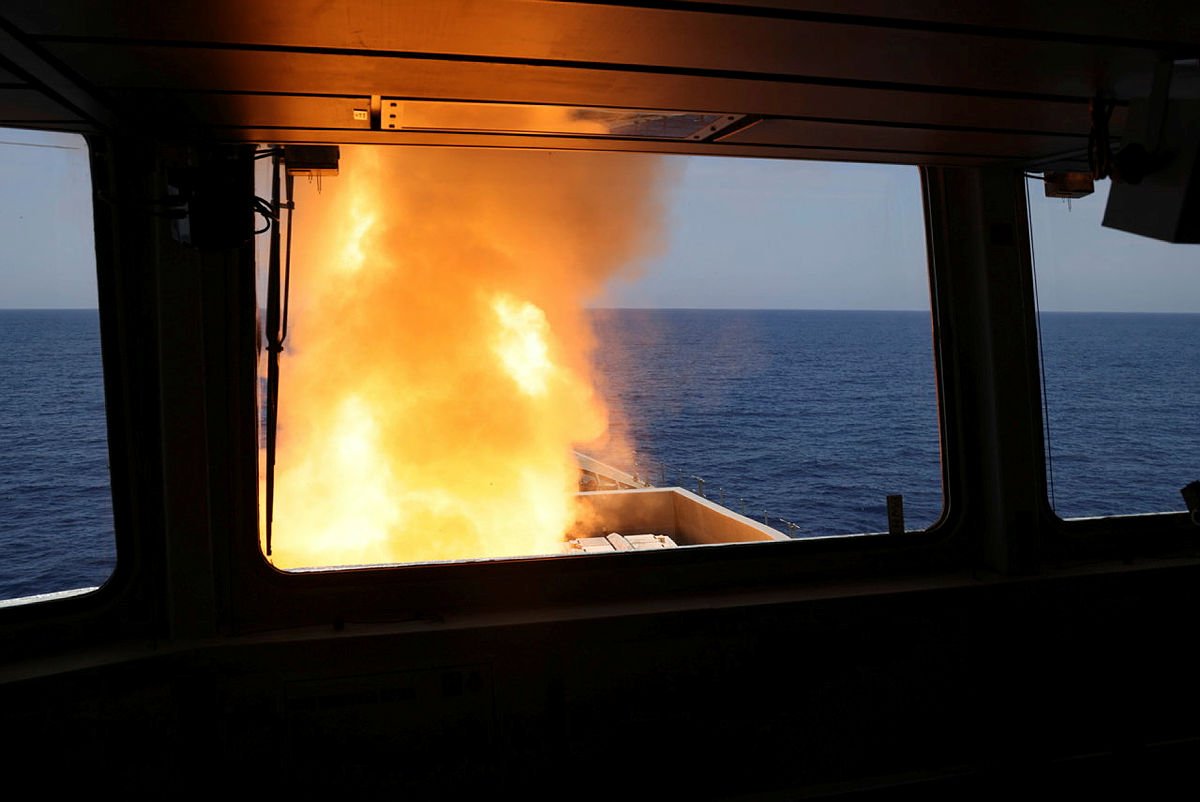
Operating in the Red Sea in 2024, the Type 45 destroyer HMS Diamond uses its Sea Viper missile system to shoot down a missile fired by the Iranian-backed Houthis from Yemen. Crown Copyright
For Britain, which has traditionally relied heavily on fighter aircraft, naval air defense, and the protection provided by geography and NATO, it is increasingly doubtful whether those capabilities provide enough coverage for the infrastructure that would be most important to keep functioning during a major conflict.
While a party press release refers to it directly, Conservative leader Kemi Badenoch has made efforts to distinguish Britannia Shield from a British version of Israel’s Iron Dome.
Iron Dome has become one of the best-known elements of Israel’s layered air defense network, having been developed primarily to deal with short-range rockets, artillery, and mortar rounds threatening populated areas. The system has evolved, however, and newer configurations can also engage threats including cruise missiles and drones. Importantly, Israel’s Iron Dome systems protect a country a twelfth of the size of United Kingdom and deal with only a portion of the potential threats in critical areas.
Mention should also be made of the U.S. Golden Dome missile defense initiative, which envisions integrating sensors, interceptors, and other defensive capabilities as part of an enormous architecture with a greater emphasis on protecting the U.S. against a range of aerial and missile threats, up to and including intercontinental ballistic missiles.
Talking to the BBC, Badenoch argued that Britain does not face the same kind of persistent rocket and missile threat as Israel and therefore does not require an equivalent level of coverage. Instead, the Conservative proposal is intended to combine improved radar, command and control, interceptor missiles, and counter-drone capabilities into an integrated network designed around the threats Britain is considered most likely to face.
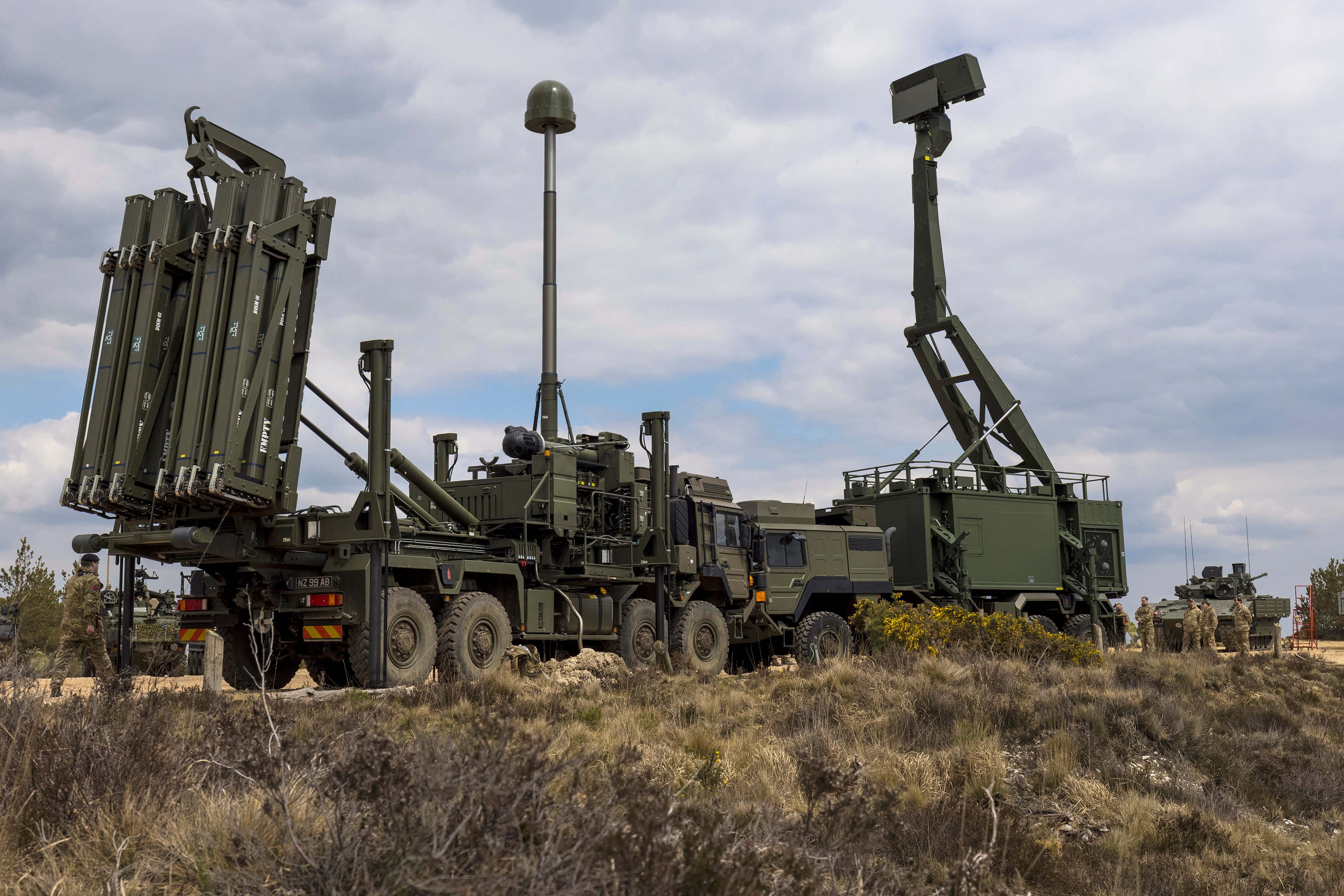
Britain already has some of the components that such a system could leverage. Royal Navy Type 45 destroyers — when they are available — provide a highly capable long-range air-defense layer through Sea Viper missiles, while the Army’s Sky Sabre system uses CAMM missiles for shorter-range engagements. The RAF provides combat aircraft and airborne surveillance capabilities, and Britain is integrated into NATO’s wider air and missile defense architecture. The problem is that these capabilities were not designed to provide a dense, permanent defensive umbrella over critical infrastructure, and the ground-based component in particular remains relatively limited when compared with the scale of the potential target set. There is also the reality that these assets are required to defend locales far from the British Isles themselves.
A British Army Sky Sabre battery. Crown Copyright
The government’s own 2025 Strategic Defense Review acknowledged that changing threat environment, allocating up to £1 billion in new funding for homeland air and missile defense and calling for improvements to the United Kingdom’s wider integrated air and missile defense architecture. Britannia Shield would therefore be a much larger political commitment to expanding and integrating capabilities that already exist, while adding new layers intended to deal with the growing drone and missile threat.
The £10 billion figure provides little idea of the scope of capabilities. The scale of the proposed system will determine whether that additional money represents a major expansion or simply the beginning of a much larger requirement.
Gen. Sir Richard Barrons has previously estimated that an entry-level system of the kind outlined could cost around £80 billion over a decade, illustrating how quickly the cost can rise once the requirement expands from protecting selected sites to providing something approaching comprehensive national coverage.
2/ Estimates suggest north of £80bn for the full cost of a perfect system, so we almost certainly need to think differently than a “dome” solution. A layered air defence will include a number of elements, including the ability to deter and strike back at an adversary.
Badenoch’s description of the threat instead points toward a system in which Britain would identify the infrastructure and military facilities most important to national resilience and then build increasingly dense layers of protection around them. That would include major airbases, ports, energy infrastructure, communications facilities, and other critical nodes, rather than attempting to create a continuous defensive bubble over the entire country.
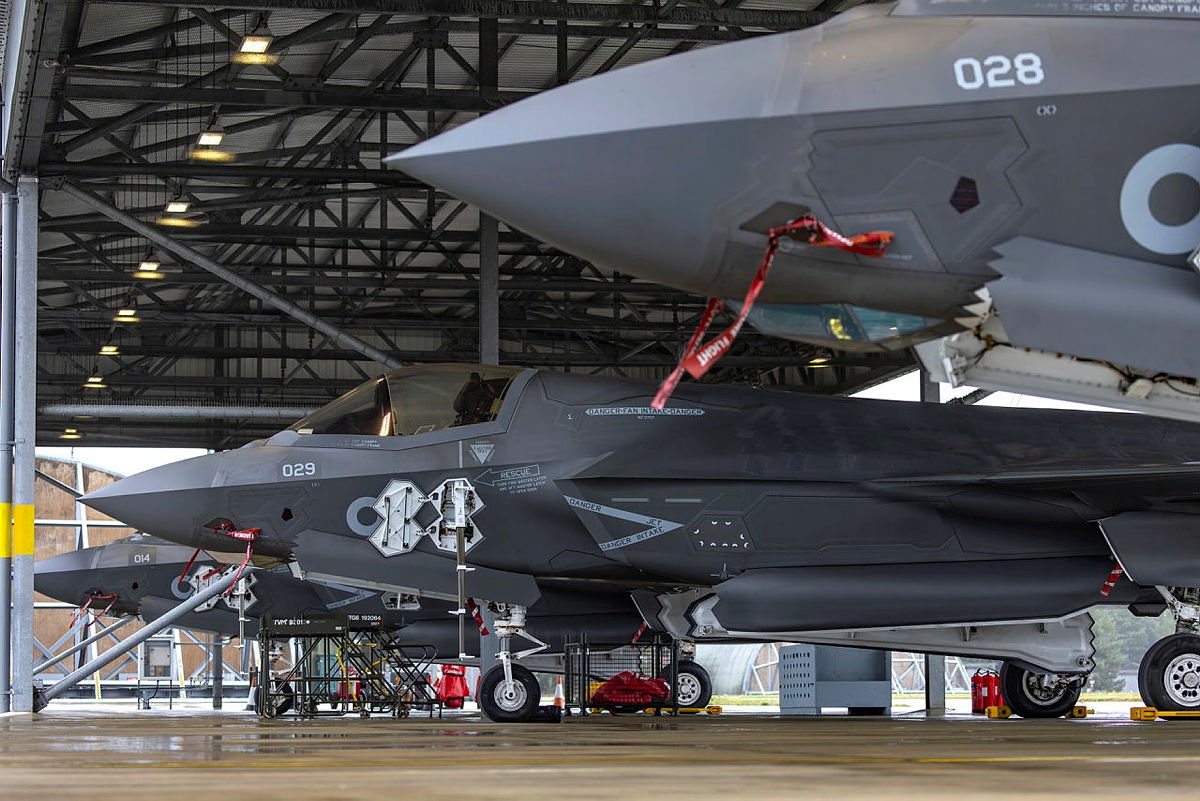
RAF No. 617 Squadron F-35B jets at RAF Marham in England. Crown Copyright
Such a system would also have to account for the fact that the location of the launch platform can be as critical as the weapon itself. Badenoch described a scenario in which an adversary could operate in the English Channel to launch drones or missiles against targets in Britain. The resulting reduction in warning time would place greater demands on sensors and command systems, but it would also mean that the defensive problem could begin well before an incoming weapon reached British airspace. Maritime surveillance, intelligence collection, fighter aircraft, and naval forces could all potentially contribute to detecting or disrupting a launch platform before it had the opportunity to fire.
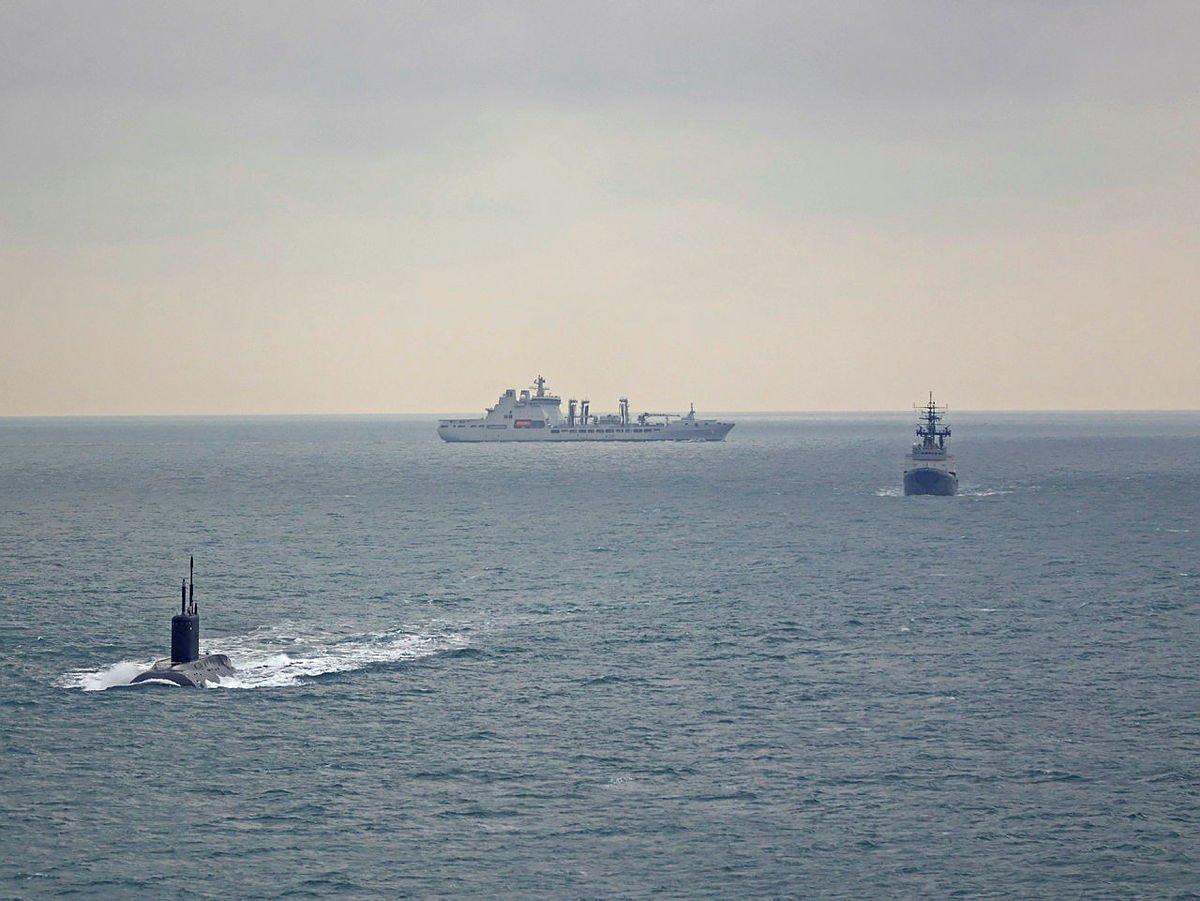
A Russian Kilo class submarine, its accompanying tugboat (center), and the RFA fast fleet tanker Tidesurge (background), as seen from a Merlin helicopter from 814 Naval Air Squadron. The helicopter and RFA tanker shadowed the submarine and tugboat as they sailed westward from the North Sea, through the Strait of Dover and into the English Channel in 2025. Crown Copyright
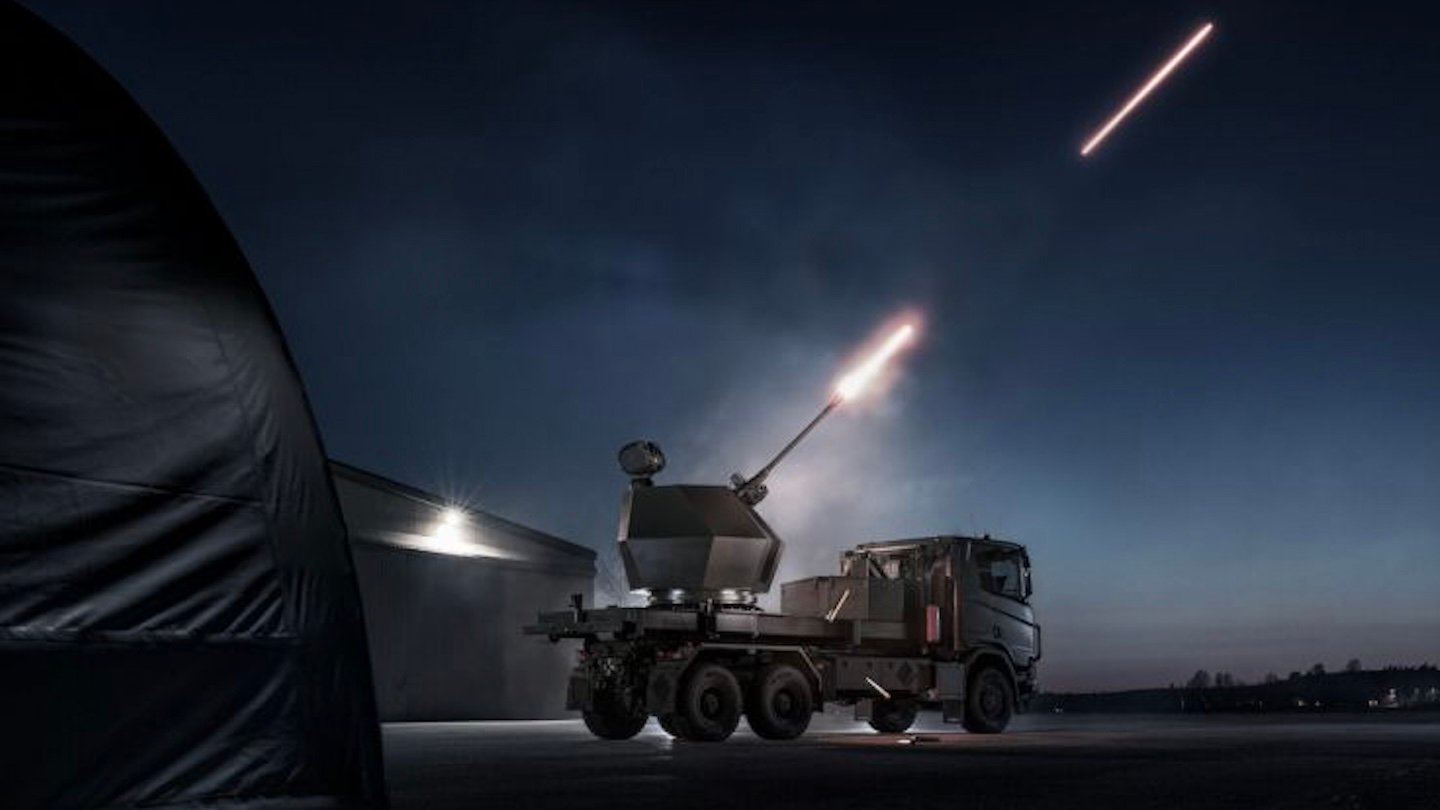
That broader approach is particularly important because the economics of countering drones are fundamentally different from those associated with conventional air defense targets. A system that responds to inexpensive drones by firing a sophisticated interceptor costing hundreds of thousands or millions of dollars would rapidly become unsustainable during a large attack. Any serious British architecture would therefore need several layers, with electronic warfare, guns, low-cost interceptors, and other counter-drone systems, potentially including directed-energy weapons, dealing with the lower end of the threat wherever possible. Meanwhile, more expensive surface-to-air missiles would be preserved for cruise missiles, aircraft and other targets that cannot be economically engaged by cheaper means.
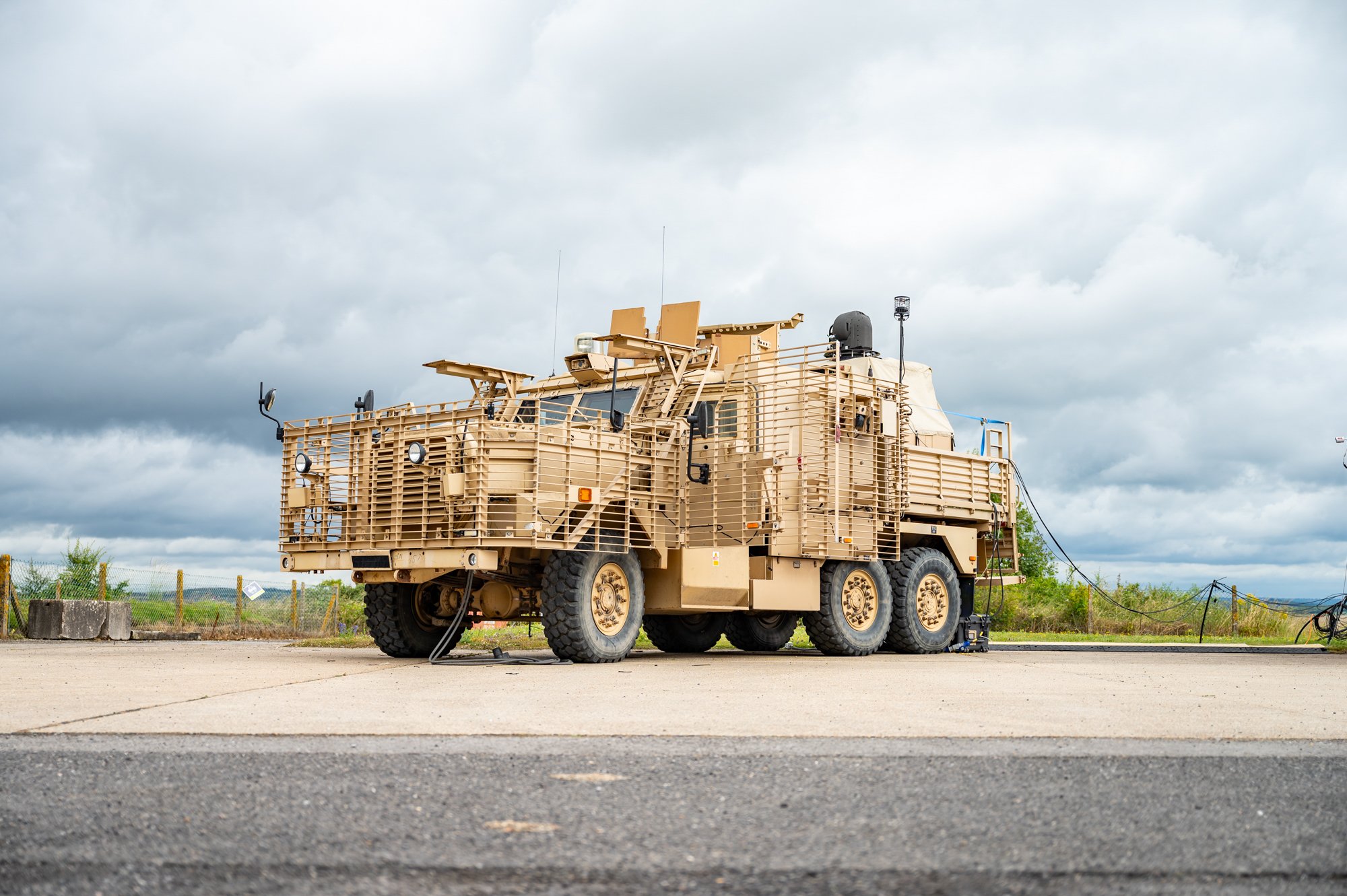
A British Army Wolfhound armored vehicle, seen here with a mounted portable Laser Directed Energy Weapon (LDEW). This was the first high-powered laser energy weapon to be successfully fired from a British Army combat vehicle. Crown Copyright
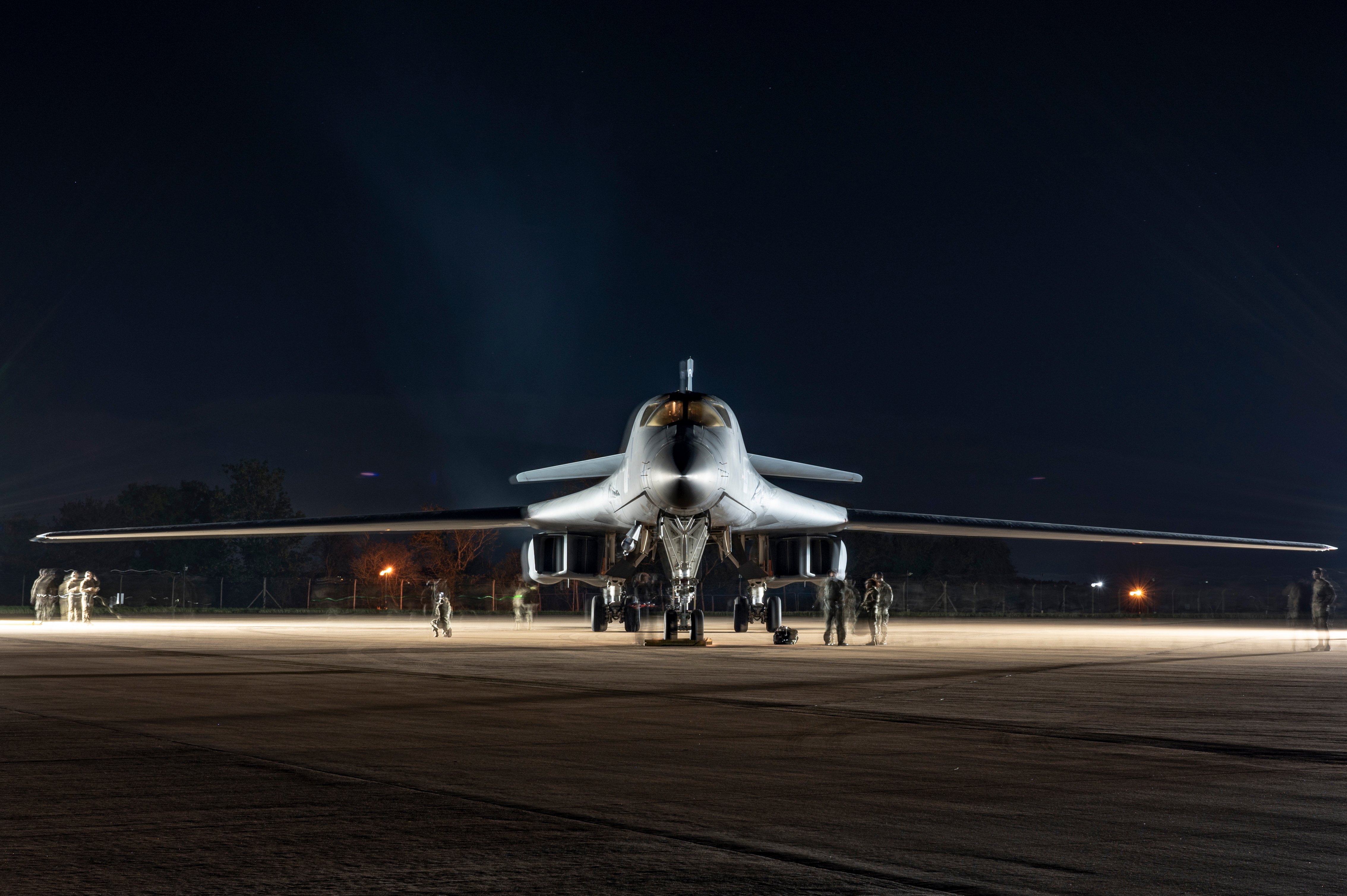
The recent situation at RAF Fairford adds another dimension to that problem. The United States recently withdrew a dozen B-1 bombers from the Gloucestershire base amid reported concerns about a possible Iran-backed attack, after U.S. officials said commanders had received new information about a potential plot. British authorities maintained that the base was safe, while British sources reportedly questioned whether Iran could reproduce the kind of complex operation carried out by Ukraine against Russian airfields in 2025. The episode nevertheless demonstrated the degree to which even a major military installation can become a concern when an adversary is believed to be looking for unconventional ways to reach it.
A B-1B Lancer assigned to the 9th Expeditionary Bomb Squadron parks on the flightline at RAF Fairford, United Kingdom, in 2023. U.S. Air Force Photo by Senior Airman Ryan Hayman
That brings Operation Spiderweb into the discussion, although there is no public evidence that Iran is preparing a comparable operation against Britain. Ukraine’s June 2025 attack was prepared over roughly 18 months and involved small drones being moved deep into Russia inside containers carried by trucks before being launched remotely against military airfields. The operation illustrated that once relatively cheap drones have been positioned close to their targets, the defender may have little opportunity to intercept them through traditional long-range air defense means. This is exactly a scenario we have been warning of for many years.
Today, Ukrainian intelligence reportedly launched 117 attack drones from trucks that had been placed near Russian air bases. I tasked several collects this morning via @umbraspace and my first images have already started processing. What a remarkable success in a well-executed… pic.twitter.com/LzXulw8jnK
For Britannia Shield, that means protecting an airbase such as RAF Fairford cannot simply be a matter of installing missile batteries. Physical security, counter-intelligence, surveillance of access routes, low-level drone detection, electronic warfare and the ability to identify suspicious activity before an attack begins would all become part of the same defensive problem. Hardened infrastructure would also be essential, helping to protect aircraft, fuel, munitions, command facilities and other critical assets from attacks that penetrate the outer layers of the defense. The distinction is increasingly important as military aircraft themselves become more valuable and as relatively inexpensive unmanned systems demonstrate their ability to threaten aircraft on the ground without ever having to penetrate the surrounding air defense network.
The new British proposal also becomes more complicated because its intended coverage extends beyond the British mainland. Badenoch has specifically referred to defending installations in Cyprus and the Falkland Islands, which introduces a very different set of operational and logistical requirements. A network supporting critical infrastructure in Britain can draw on dense communications infrastructure, nearby industrial support and the wider NATO system, whereas a defensive capability at RAF Akrotiri or in the Falklands requires its own radar coverage, launchers, personnel, ammunition stocks, and sustainment arrangements. Extending the same architecture across those locations would therefore consume considerably more resources.
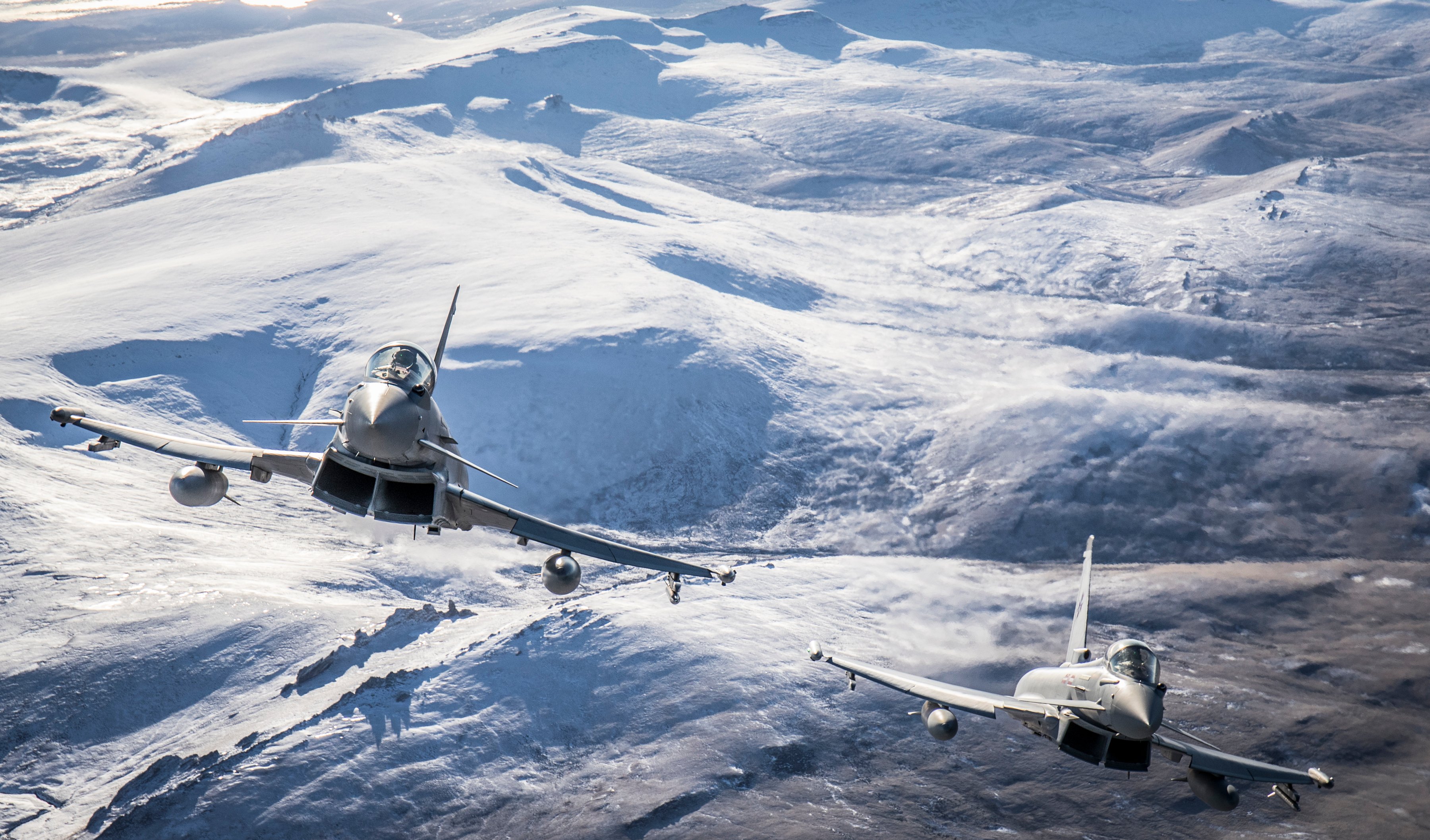
A RAF 1435 Flight Typhoon FGR4 pair flying over West Falkland island during a routine training flight. Crown Copyright
A similar problem exists with ammunition stocks. Ukraine has repeatedly demonstrated that sophisticated air defenses can come under sustained pressure during large missile and drone attacks, while Western countries have struggled to replenish some categories of precision-guided weapons at anything approaching wartime consumption rates. A British system that looks impressive on paper but has only a small stockpile of interceptors would provide much less meaningful protection during a prolonged campaign, particularly if an adversary deliberately attempted to exhaust the defenses through repeated attacks using inexpensive drones.
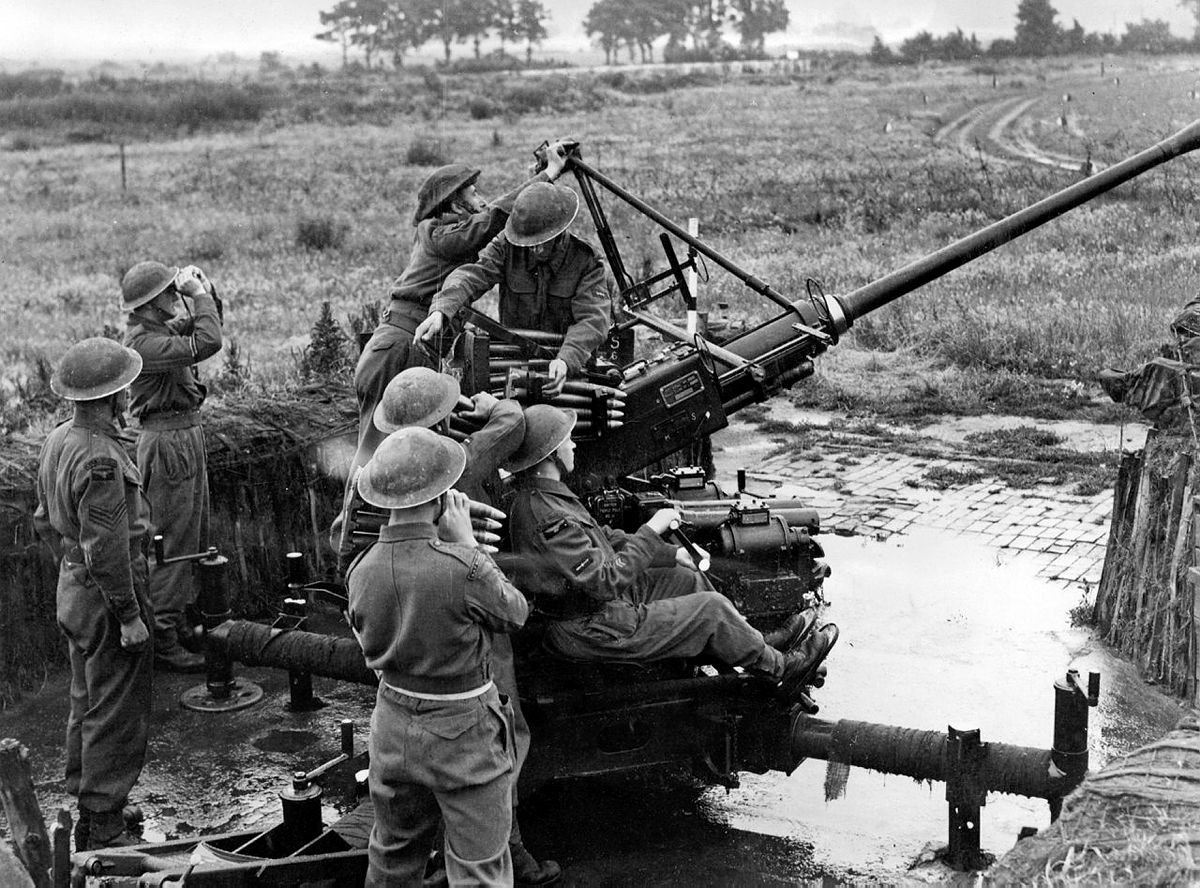
Ukraine also offers lessons for how Britain could organize such a network. Mobile air defense teams, distributed sensors, acoustic detection systems, and digital applications that connect air defense operators with military units and civilian spotters have all become increasingly important in Ukraine, where defenders have had to detect and respond to large numbers of drones and missiles across a wide area. There are echoes here of the distributed air defense networks developed during World War II, when observers, radar operators, fighter controllers, and anti-aircraft units were linked together to provide early warning and direct defensive responses. As in 1940, Britain would need an air defense network that is distributed, mobile, and adaptable to new threats.
A RAF Regiment light anti-aircraft gun team man their Bofors 40mm gun in a rain-sodden emplacement in southeast England, to help defend London from flying bombs in World War II. Crown Copyright
The most revealing details of Britannia Shield are yet to be provided. The number of defended sites, the types and numbers of radars, the number of launchers, the size of interceptor stocks, and the proportion of the budget devoted to counter-drone capabilities all remain unclear for now. The same applies to the money required for training, maintenance, software, communications, and replenishment across the life of the system.
There is also a straightforward political limitation to the proposal. The Conservatives have pledged to invest in Britannia Shield as part of a broader plan to increase defense spending, but that money is not currently sitting in a government procurement account waiting to be spent and defense budgets are increasingly stretched by other big-ticket programs. The Conservatives would first have to return to government, establish the program as a formal requirement, and then make the associated spending and procurement decisions. Even if those steps were taken quickly, the most capable elements of the system would take years to design, procure, integrate, and deploy.
A rendering of of the new Dreadnought class of ballistic submarines for the Royal Navy, representing the largest British defense investment of recent years. Crown Copyright
Whether £10 billion would ultimately be sufficient depends on the mission the future government assigns to the system. If Britannia Shield were expected to provide nationwide protection against sustained attacks involving ballistic missiles, cruise missiles, and large numbers of drones, the budget would fall far short, particularly once interceptor stocks and long-term sustainment are included. If it is designed as a layered network protecting a defined group of critical infrastructure sites and military bases, integrated with the RAF, Royal Navy, Army, and NATO systems already in place, the proposal becomes more realistic, but it wouldn’t address higher-end threats, like longer-range ballistic missiles.
That limitation is particularly significant when considering Russia, which remains the most serious military threat to the United Kingdom and its European allies. From what we know so far, Britannia Shield is heavily focused on drones and shorter-range missile threats, but Russia possesses a much broader strike arsenal that includes ballistic missiles, cruise missiles, and hypersonic weapons. A British air defense program that concentrates primarily on the lower and middle tiers of the threat therefore leaves a significant gap at the upper end of the spectrum.
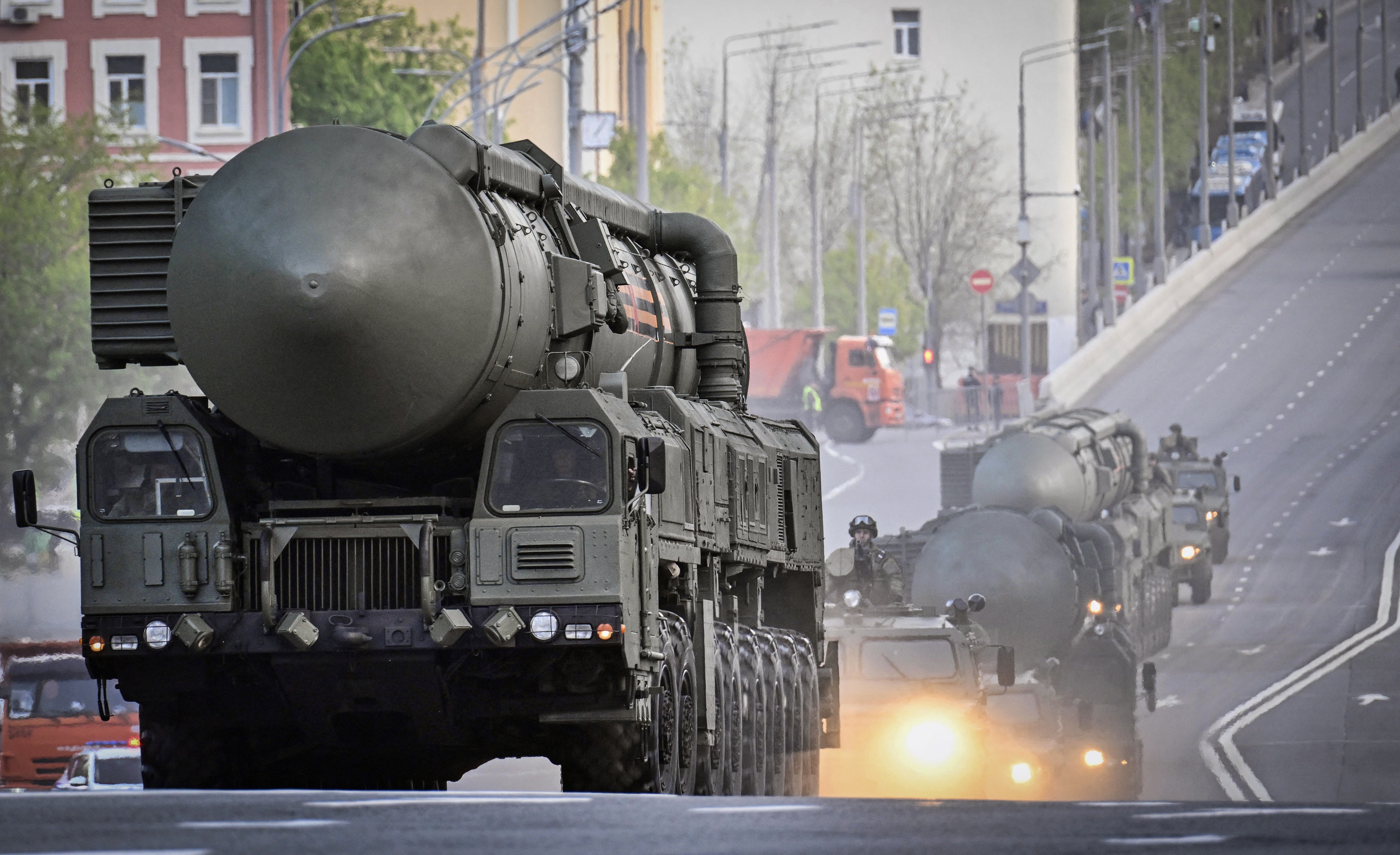
Russian Yars intercontinental ballistic missiles travel through central Moscow during a rehearsal for the Victory Day parade in 2025. Photo by Alexander NEMENOV / AFP
The United Kingdom is also not considering this problem in isolation. Across Europe, governments are increasingly pursuing multinational efforts to strengthen air and missile defenses, as the return of large-scale state-on-state warfare and the experience of the war in Ukraine have made the vulnerability of European infrastructure and military forces much more tangible. Nearly three decades after the end of the Cold War, ballistic and cruise missile defense has once again become a central European security requirement. Britannia Shield would therefore need to be considered not only as a national counter-drone and air-defense program, but as part of a much broader European effort to rebuild layered air and missile defenses against the full range of modern threats.
The experience of Ukraine and the Middle East suggests that Britain is unlikely to solve this problem simply by buying more surface-to-air missiles. Increasingly, air warfare relies on complex networks that find the attacker, identify the weapon, choose the appropriate response, and undertake this all at a cost that can be sustained throughout a conflict. That network also has to extend beyond the airspace itself, because the threat may involve a launch platform approaching the coast, a drone operator operating near a military installation, or small drones already hidden inside the defender’s security perimeter.
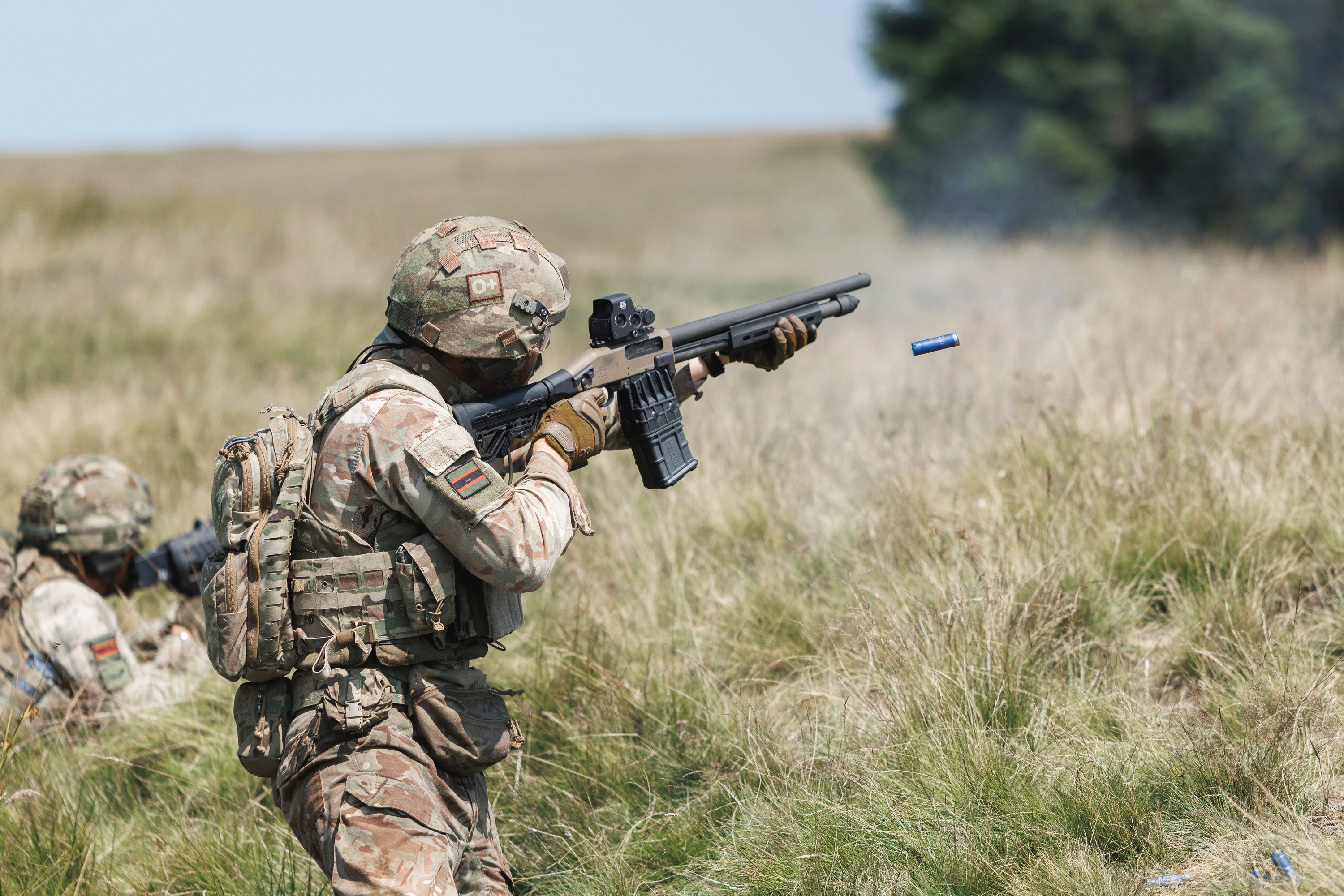
Last line of defense: British Army riflemen testing a Mossberg 590M Counter SUAS shotgun (foreground) and handheld Counter-Unmanned Aerial System effectors against drones. Crown Copyright
With their proposed reorientation of Britain’s air defense priorities, the Conservatives have put a financial value and a recognizable name around a capability gap that has become increasingly difficult to ignore. If they return to government, there will be many tougher questions to address, including which sites should receive protection, how many layers are required, how much ammunition must be held in reserve, and how the system can be sustained on a wartime footing.
The recent concerns surrounding RAF Fairford, together with the lessons of Operation Spiderweb, underline why that question is becoming more complicated. The next serious attack on a British military installation may not arrive as a large formation of aircraft or a visible wave of missiles crossing the Channel. It could involve a mixture of long-range weapons, cheap drones, electronic warfare, and hybrid warfare activity taking place much closer to the target. A future Britannia Shield would have to be designed around that reality, and would come with a price tag to match.

 Login





 (@jcartlidgemp)