❌

Reading view

L’Europe revient au charbon alors que les prix du gaz explosent

La crise énergétique européenne n’est pas terminée.

La crise énergétique européenne n’est pas terminée. Les prix du gaz restent obstinément élevés sur tout le continent alors que les Européens affrontent un long hiver.

En réponse à une crise énergétique découlant de la dépendance continue de l’Europe aux importations de gaz naturel liquéfié, sur fond de volatilité géopolitique mondiale persistante, les dirigeants européens poussent à diversifier le mix énergétique du bloc. Si cela signifie que l’Europe développe rapidement ses capacités en énergies renouvelables, cela marque aussi un retour significatif au combustible fossile le plus polluant du monde – le charbon.

Plus tôt cette année, lorsque les États-Unis et Israël ont lancé une offensive en Iran, provoquant ainsi la perturbation d’un cinquième des échanges mondiaux de pétrole et de gaz, l’Europe s’est réveillée pour réaliser qu’elle s’était laissée aller, en somnambule, à une nouvelle crise énergétique – sa troisième en seulement quatre ans. « Nous avions juré d’apprendre. Nous avions promis que les choses changeraient, mais nous voilà », a récemment déclaré un « diplomate européen très frustré », cité anonymement par la BBC.

« Au lieu de se concentrer sur des plans à long terme indispensables – sur la manière de rendre l’Europe plus compétitive dans ce monde de plus en plus instable, les premiers ministres et présidents [européens] sont maintenant pris de panique face aux prix [de l’énergie], inquiets des électeurs en colère et à la recherche de solutions à court terme », poursuit la source. « Exactement comme lors de la crise après l’invasion à grande échelle de l’Ukraine par la Russie. Conflit différent. Mêmes divisions européennes ; mêmes dilemmes énergétiques. Nous ne pouvons pas continuer à tourner en rond comme ça. Il va falloir que quelque chose cède. »

Aujourd’hui, six mois après le déclenchement de la guerre en Iran et la fermeture initiale du détroit d’Ormuz, l’Europe continue d’en subir les conséquences, les prix du gaz restant brutalement élevés. Rien que ce mois-ci, les prix du gaz ont atteint leur plus haut niveau en trois ans, dépassant les 80 € (90,98 $) par mégawattheure.

Les prix sont si élevés, en fait, que l’électricité produite au charbon est devenue moins chère que celle produite au gaz en Europe pour la première fois depuis des années. Cela a poussé de nombreux pays européens, et en particulier la plus grande économie de l’Union européenne, l’Allemagne, à revenir au charbon. Et, inquiétant, les experts affirment que cette tendance se poursuivra pendant des années encore.

« Le charbon devrait rester moins cher que le gaz pour la production d’électricité jusqu’à l’année prochaine, et potentiellement jusqu’en mars 2028 », rapportait Reuters plus tôt cette semaine, citant une conversation avec Marta Wroniszewska, analyste chez Veyt. « Les prix du gaz à plus long terme indiquent que les traders s’attendent à ce que les contraintes d’approvisionnement persistent. »

Cependant, le potentiel de croissance du charbon en Europe comporte des limites notables. Des années de politiques visant à réduire puis à éliminer progressivement le charbon ont laissé au continent beaucoup moins de centrales à charbon qu’auparavant. En 1990, l’Union européenne tirait plus d’un tiers de sa production d’électricité du charbon. En 2025, cette part était tombée à seulement 9,2 %, selon les données d’Eurostat. Ainsi, même si les centrales à charbon restantes en Europe bénéficieront d’une aubaine grâce aux prix actuels du gaz, le potentiel de rebond du charbon dans la région a un plafond.

Hors d’Europe, cependant, c’est une autre histoire. À l’échelle mondiale, le charbon reste la plus grande source unique de production d’électricité. Et tandis que l’Europe ferme ses capacités à charbon, de nombreuses économies émergentes continuent de développer les leurs, avec une croissance particulièrement forte aux Philippines, en Indonésie et dans d’autres pays en développement rapide d’Asie. Ce n’est pas un hasard si c’est aussi la région la plus durement touchée par la fermeture du détroit d’Ormuz.

Si le charbon est bon marché, abondant et considéré comme un outil essentiel pour permettre le développement économique des pays pauvres, la prolongation continue du règne du charbon présente des compromis qui l’emportent largement sur les bénéfices. Le charbon est le principal moteur du réchauffement climatique, responsable d’environ 40 % de toutes les émissions de gaz à effet de serre. Cependant, tout n’est pas négatif – le retour du charbon se produit en parallèle d’une augmentation mondiale majeure des ressources en énergie propre. De plus en plus, les énergies renouvelables sont adoptées pour leur rôle dans un avenir plus sûr sur le plan énergétique, et sont considérées comme un rempart essentiel contre la prochaine crise énergétique mondiale.

Contrairement au gaz naturel, au pétrole et au charbon, « l’éolien et le solaire ne peuvent pas être soumis à un embargo, bloqués ou coupés par une puissance étrangère », écrivait David Frykman, associé général du groupe de capital-risque basé à Stockholm Norrsken, dans une tribune publiée par Fortune plus tôt cette année. « Chaque térawattheure de production renouvelable nationale est un térawattheure qu’aucun adversaire ne peut transformer en arme. »
  •  

Russia’s war against Ukraine sends the bill to its own companies: bond defaults head for a 17-year high

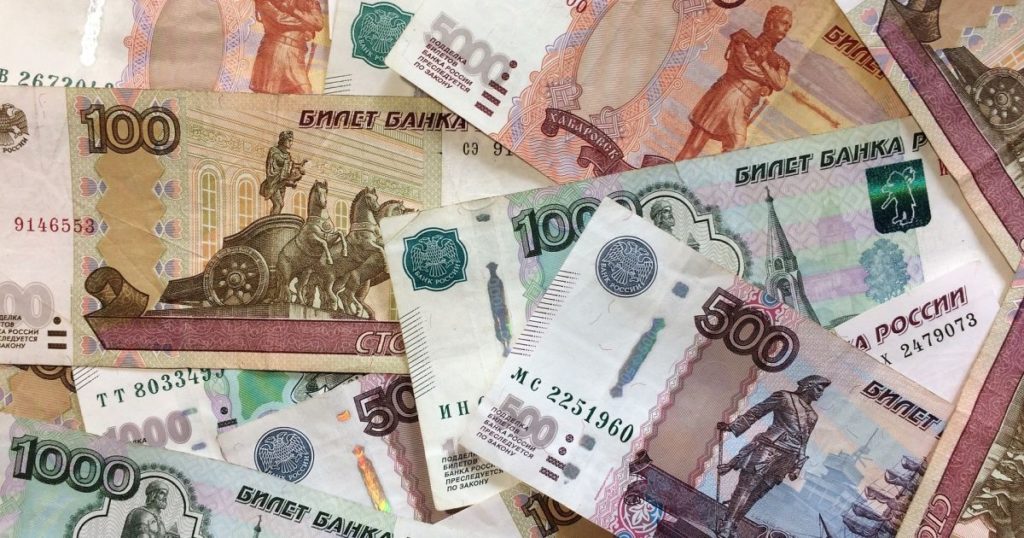
russia facing record number corporate defaults second time decade one main causes being same—waging war against ukraine · post russian rubles tsn money news ukrainian reports

More than 50 Russian companies could default on their bonds this year, the most since 2009, a rating-agency analyst told Russian newspaper Izvestia, which reported it on 6 October.

Russia's wartime economy is straining under high interest rates, and the budget is too: the 2026 deficit has nearly doubled from the earlier forecast to a record $88 billion, with more deficits planned for the next three years as Moscow raises taxes to fund the war and plans its biggest defense budget since the full-scale invasion began.

A default is a situation in which a company cannot make promised interest payments to investors on time or repay borrowed money. If a payment is not made by the agreed deadline, the company becomes delinquent, which under certain conditions is recognized as a default.

So far this year, 20 companies have defaulted for the first time, compared with 24 in all of 2025, said Mikhail Nikonov of the Expert RA rating agency. Most of the companies that missed payments are small issuers of high-yield bonds, Izvestia reported.

In 2026, Russian companies have missed payments totaling 41 billion rubles (about $490 million), compared with 34 billion rubles (about $410 million) the previous year, according to investment bank Sinara.

Russia faces a new wave of corporate defaults

By the end of 2026, the number of Russian companies unable to service their ruble-denominated debt on time could reach 40–50, the highest level since 2010, said Pavel Zholobov, junior managing director at the NRA rating agency.

The number of bond defaults in 2026 has already reached its highest level in a decade, Zholobov said. Similar figures were recorded in the mid-2010s: in 2014, 35 companies missed payments; in 2015, 52 did so; and in 2016, there were 44 issuers. This occurred in part after Western sanctions were imposed on Russia over its annexation of Crimea and its war in Donbas, as well as amid a halving of oil prices and a sharp weakening of the ruble.

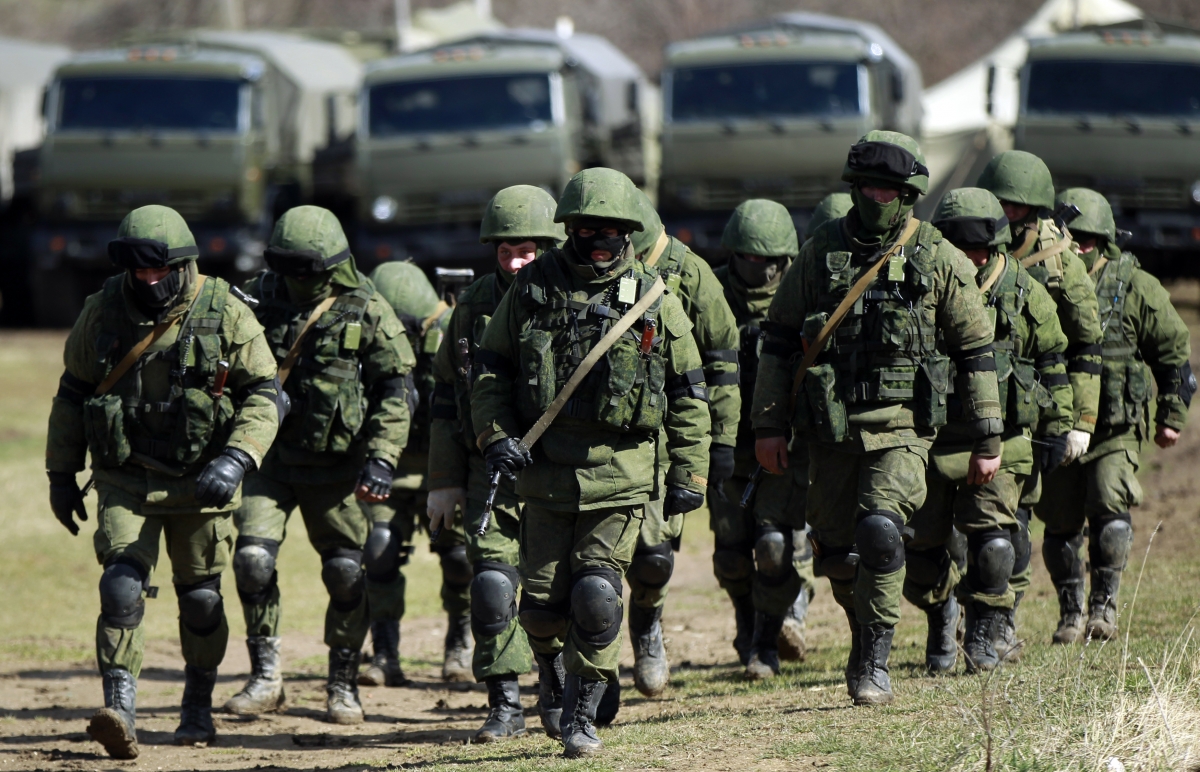
So-called "little green men" (the Russian occupation troops comprised special forces who removed insignia, wear face masks to prevent identification and call themselves a "Crimean self-defense force") surround a Ukrainian military base in Perevalne, Crimea, during the Russian annexation of the peninsula in February-March 2014.

There were more defaults only in 2009. At the time, amid the fallout from the global financial crisis, more than 100 issuers faced payment problems, while the volume of distressed debt reached nearly 200 billion rubles, Zholobov noted.

High interest rates put pressure on companies

This time, the main reason for companies' difficulties in making bond payments has been the prolonged period of high interest rates, which has continued since 2023. Companies are raising financing at high interest rates but are unable to refinance their debt on more favorable terms, explained Ekaterina Sidorova, head of the Foreign Exchange, Commodities and Debt Markets Department at SberCIB Investment Research.

At the same time, the situation does not yet resemble a systemic debt crisis: defaults are primarily being recorded among companies with low credit ratings and high debt burdens, Sidorova said.

If a company fails to repay bond debt, it is given 10 business days to meet its obligations. If it fails to do so, the company may offer investors a restructuring—for example, by postponing payments in exchange for a higher interest rate.

The number of defaults will remain high in 2027, Sidorova believes.

High interest rates were a response to accelerating inflation in Russia. Domestic demand was outpacing production, Russia's Central Bank said in October 2023. Sanctions over the war and rising defense spending had also hit the economy and the ruble, which had lost about 25% against the dollar that year. The bank raised its key rate from 7.5% in the first half of 2023 to 15% by the fall.

Ukraine targets Russia's oil industry to weaken its war economy

Ukraine is also seeking to weaken Russia's economy as part of efforts to reduce its ability to finance the war. In particular, Defense Minister Yevhenii Khmara said strikes on oil refineries are aimed at "bleeding the Russian war machine" and destroying its military and economic potential. According to the ministry, the attacks have knocked out more than 51% of Russia's oil refining capacity.

In the first half of July, Russian oil refineries processed about 3.9 million barrels of oil per day—the lowest level since March 2005. Due to the production cuts, Moscow was also forced to restrict fuel exports.

  •  

Poland: 3 foreigners arrested for illegally killing a goat, but prosecutors want to dismiss the case

Three foreigners were placed under arrest for killing a goat in the Polish city of Wałbrzych. However, Polish prosecutors now want to drop the case.

The incident occurred in late 2025 outside a restaurant in Wałbrzych that was closed for renovation and not operating, authorities said. A witness called police, who arrived and detained the men, two citizens of Bangladesh and one of India, at the scene.

Chief Inspector Marcin Świeży of the District Police Headquarters in Wałbrzych said the men told officers that such behavior is normal in their countries and they did not know it is prohibited in Poland.

The goat was intended as a meal for two of the men, according to Do Rzeczy. The Indian citizen said he is a vegetarian and pleaded not guilty.

In Poland, goats and other livestock may be killed for food only under rules that implement EU animal-welfare law, chiefly Council Regulation No. 1099/2009 on the protection of animals at the time of killing. The core requirement is that the animal be spared avoidable pain, distress, or suffering.

Unlike in many Third World countries where animals are slaughtered on the streets, often in extreme pain and fear, in the EU, the animal must remain unconscious until death. Bleeding must then be performed promptly and effectively. Slaughter outside a registered slaughterhouse is tightly restricted, and home or backyard killing for personal consumption is generally not permitted except in narrow, authorized circumstances, for example, certain emergency or remote situations under veterinary supervision.

Despite the clear violation of law, the District Prosecutor’s Office in Wałbrzych filed a motion seeking conditional discontinuance of the proceedings against all three foreigners. Prosecutor Mariusz Pindera said the outcome depends in part on the court’s assessment of the degree of “social harmfulness” of the act.

“If the court finds that it was not significant, it may grant the prosecutor’s request,” he said.

The court confirmed it received the application but has not yet considered it, in part because of a judge’s illness. No hearing date has been set, and no substantive decision has been issued regarding the men.

The post Poland: 3 foreigners arrested for illegally killing a goat, but prosecutors want to dismiss the case appeared first on Remix News.

  •  

France: Indian migrant ‘neo-Nazi’ faces life in prison for forcing young girls to perform sexual acts and self-mutilate, arrived via student visa

An Indian man who described himself as “masculinist,” “neo-Nazi” and “excited by blood and violence,” went on trial Monday behind closed doors at the Paris Assize Court, accused of leading a Discord group that blackmailed dozens of teenage girls into filming their own sexual abuse and self-mutilation, including carving swastikas into their skin.

Rohan Rane, 29, originally from Pune, arrived in France in 2017 on a residence permit to study at SKEMA Business School in Antibes. Investigators say he later cut off ordinary social ties and described himself as “a psychopath devoid of all emotion,” the newspaper reported.

Rane faces life imprisonment if convicted of sexual extortion, torture and acts of barbarity, corruption of minors and related offenses committed as part of an organized group. The trial is scheduled to run through Friday. Prosecutors say the acts occurred between 2019 and 2021.

Investigators identified 13 victims in the United States, England and the Netherlands, aged 12 to 18 at the time, according to news outlet franceinfo. Le Monde reported that the case against Rane alone involved about 20 victims, mostly American or British. Some were 12, 14 or 15.

Videos recovered by investigators show girls scarring themselves live on camera under orders from Rane and other men in an online community on Discord, the messaging platform. From his room in Antibes, he pressed them to engrave his first name and swastikas on their skin with razor blades. Some went further and penetrated themselves with knives.

Rane administered a Discord server called CVLT,  “cult” in English, whose members, drawn from several countries, promoted neo-Nazi and nihilist ideas and referred to victims as “slaves,” Le Monde reported that U.S. authorities have said the network treated neo-Nazism, nihilism and child sexual abuse as core principles. The investigation began after the FBI was alerted to images of a 12-year-old girl whose torso bore the name “Rohan.”

“My goal is to create an inexhaustible reserve of slaves to satisfy my sadism,” he wrote in an August 2020 post. He has also said he has been fascinated since adolescence by “the Aryan brotherhood and fascism,” that he is “excited by blood and violence,” and that “Western feminists all have a rape fantasy.”

Prosecutors allege he forced girls under his influence to cut themselves, insert blunt objects into their genitals, eat their own feces, and attempt suicide, and that he used threats to enforce the orders.

Hippolyte Marquetty, a lawyer for six American victims and for the child-protection group Ecpat, which has joined the case as a civil party, said: “For some, it starts with a meeting, then they talk, and little by little they may be led to take photos of themselves, sometimes naked, to give information about their family, where they live.”

She further stated: “With this data, the relationship transformed, and he threatened to broadcast images of them to their entire community. There is such psychological pressure that they cannot get out of this system. If the FBI had not heard of this affair, some might have been pushed to commit suicide.”

At a hearing in March 2025, Rane said he was “guilty” and declared, “I take responsibility for everything.” 

He has also acknowledged his masculinist and fascist ideology. Investigators found a written guide explaining how to manipulate young girls into slaves. He initially described some of the exchanges as consensual role-play before expressing regret, RFI reported. His lawyer, Irina Kratz, has contested the addition of a charge that exposes him to a life sentence.

The victims, now in their twenties, have experienced different levels of recovery.

Marquetty said. “We still have to imagine that some people don’t even know the face of their attacker, they have never seen him.” 

Several are expected to testify by videoconference. One plans to appear in person because she needs “to come and express the suffering she suffered, and to “look straight in the eye and say, ‘this is what you did to me, I want you to realize it,’” the lawyer told franceinfo. 

The women also hope their testimony will warn others about online violence of this nature.

Lawyers for several victims had asked that the hearing be public. The Paris Assize Court ordered a closed session Monday after a request from American authorities. Beyond the planned broadcast of scenes of torture and humiliation that often involved girls under 15, the court said in its ruling that “the criminal group” of which Rane is suspected of having been the leader “has previously sought to intimidate victims and witnesses” and threatened American prosecutors.

The post France: Indian migrant ‘neo-Nazi’ faces life in prison for forcing young girls to perform sexual acts and self-mutilate, arrived via student visa appeared first on Remix News.

  •  

Sánchez’s Housing Gamble: Why Spain’s Snap Election Is Riskier Than It Looks

Pedro Sánchez has turned a parliamentary defeat over housing into a general election on 29th November.

The calculation is clear: force Spain’s political argument onto territory more favourable to the left before migration, corruption allegations and parliamentary paralysis return to the foreground. But the polls suggest that the gamble could still deliver power to the centre-right People’s Party and Vox.

Pedro Sánchez’s decision to dissolve Spain’s parliament nine months ahead of schedule is more than an admission that his minority government had reached the limits of what it could achieve in the Congress of Deputies. It is an attempt to choose the terms on which his government will be judged.

The immediate trigger was the defeat of two emergency housing decrees after the conservative People’s Party (PP), Vox and Catalan separatist Junts voted against them. Housing had already moved rapidly to the centre of Spanish politics following the eviction of 87-year-old Maricarmen Abascal from the Madrid flat where she had lived for 71 years, followed by large demonstrations across the country. EU Today has previously reported on both the housing protests across Spain and Sánchez’s subsequent decision to call the election.

The prime minister is now attempting to convert legislative weakness into electoral advantage.

In his announcement on 5 October, Sánchez presented the election as a choice between a broader progressive majority capable of advancing social legislation and an opposition that had obstructed measures on housing and other domestic priorities. The government reinforced that strategy a day later by approving revised versions of the two housing decrees, containing 21 measures including tax incentives, assistance for first-time buyers and measures intended to increase supply. They will require validation by the Diputación Permanente, the standing parliamentary body that remains after dissolution.

The political calculation is straightforward. Housing offers Sánchez an issue on which anger is directed not only at government but at landlords, property investors, regional authorities and political parties opposing stronger regulation. The eviction of Abascal gave that argument a human symbol and transformed a long-running affordability problem into an immediate political confrontation.

That does not mean the strategy will work.

Most polling continues to place the PSOE behind the PP. Surveys put the Socialists at roughly 28 per cent, while Vox has risen to around 18 per cent. A PP-Vox combination is currently the only bloc consistently projected to command an outright parliamentary majority. One Sigma Dos survey published after the election announcement projected the two parties winning 203 of the Congress’s 350 seats.

Sánchez therefore appears to be playing less for immediate dominance than for mobilisation.

His problem before the housing protests was not simply the strength of the right. The broader left had become fragmented, while the government was being damaged by disputes over migration, particularly following the crisis in Ceuta, as well as corruption investigations involving figures associated with the PSOE. At the same time, Junts had become an increasingly unreliable parliamentary partner, leaving the government unable to guarantee major legislation or a new budget.

Housing changes the subject.

It allows Sánchez to argue that the central question is not whether his coalition has governed smoothly, but whether voters want a parliament prepared to intervene more aggressively in the housing market. The PP, however, is contesting precisely that framing. Alberto Núñez Feijóo argues that the housing shortage is itself a product of Sánchez’s eight years in government and has promised to raise annual construction towards 200,000 homes while reducing taxes.

The election may therefore develop into a dispute over responsibility rather than diagnosis. Both sides accept that housing has become a major national problem; they differ sharply over whether regulation or additional supply should dominate the response.

There is also a wider European dimension. Housing affordability is increasingly politically disruptive across the EU, including in major cities where construction has failed to keep pace with household formation, migration and demand for short-term accommodation. EU Today has examined similar pressures in Berlin’s housing market. Spain could now provide a test of whether housing can become powerful enough as an electoral issue to reverse the wider European movement towards the right.

For Ukraine, however, the consequences are likely to be less dramatic than Spain’s domestic political contest might suggest.

Sánchez committed €1 billion in bilateral military support to Ukraine for 2026, with Spain putting its cumulative bilateral military assistance since Russia’s full-scale invasion at almost €4 billion. Madrid has also trained more than 9,000 Ukrainian military personnel.

Spain is also home to a considerably larger Ukrainian community than the roughly 300,000 figure frequently cited. Government data showed 353,009 Ukrainian nationals holding valid residence documentation at the end of June, including 262,782 under temporary protection.

A PP-led government would alter Madrid’s domestic priorities and potentially its approach to defence spending and migration, particularly if Vox were required to sustain a parliamentary majority. Yet there is little basis at present for assuming that a change of government would produce a reversal of Spain’s fundamental position on Russia’s invasion or membership of the European and Atlantic security structures supporting Ukraine.

The more immediate question is whether Sánchez can make housing important enough to overcome the electoral arithmetic confronting him.

Calling the election has allowed him to escape a parliament in which his legislative coalition was steadily disintegrating and to enter a campaign around an issue capable of mobilising his electorate. It has not changed the fact that the PP and Vox begin that campaign with the stronger numbers.

Sánchez has chosen the battlefield. On 29th November, Spain will decide whether that was enough.

  •  

Europe returns to coal as gas prices explode

Europe’s energy crisis isn’t over.

Join us on Telegram, X, and VK.

Contact us: info@strategic-culture.su

Europe’s energy crisis isn’t over. Gas prices remain stubbornly high across the continent as Europeans confront a long winter.

In response to an energy crisis stemming from Europe’s continued reliance on imported liquefied natural gas against the backdrop of ongoing global geopolitical volatility, Europe’s leaders are pushing to diversify the bloc’s energy mix. While this means that Europe is rapidly expanding its renewable energy capacity, it also marks a significant return to the world’s dirtiest fossil fuel – coal.

Earlier this year, when the United States and Israel began an offensive in Iran and thereby instigated the disruption of one-fifth of the world’s oil and gas trades, Europe awakened to realize that it had sleepwalked into yet another energy crisis – its third in just four years. “We swore we’d learn. We promised things would change, but here we are,” a ‘highly frustrated European diplomat’ was recently (anonymously) quoted by the BBC.

“Instead of concentrating on much-needed long-term plans – about how to make Europe more competitive in this increasingly volatile world, [European] prime ministers and presidents are now in a panic over [energy] prices, worried about angry voters and scrambling for short-term solutions,” the source continued. “Just like the crisis after Russia’s full-scale invasion of Ukraine. Different conflict. Same European divisions; same dilemmas over energy. We can’t keep going round in these circles. Something’s got to give.”

Now, half a year after the outbreak of the war in Iran and the initial closure of the Strait of Hormuz, Europe is still grappling with the fallout as gas prices remain brutally high. Just this month, gas prices hit their highest mark in three years, soaring above €80 ($90.98) per megawatt hour.

Prices are so high, in fact, that coal-fired power has become cheaper than gas-fired power in Europe for the first time in years. This has pushed many European nations, and especially the European Union’s largest economy, Germany, back to coal. And, worryingly, experts contend that that trend will continue for years to come.

“Coal is expected to remain cheaper than gas for power generation through next year and potentially until March 2028,” Reuters reported earlier this week, based on a conversation with Marta Wroniszewska, an analyst at Veyt. “Longer-dated gas prices indicate traders expect supply constraints to persist.”

However, there are notable limits to coal’s growth potential in Europe. Years of policy aimed at phasing down and phasing out coal have left the continent with dramatically fewer coal-fired power plants than it had previously. In 1990, the European Union derived more than a third of its electricity production from coal. By 2025, that share had fallen to just 9.2 percent, according to data from Eurostat. So while Europe’s remaining coal plants will receive a windfall from the current gas prices, there is a ceiling to coal’s potential rebound in the region.

Outside of Europe, however, it’s a different story. Globally, coal is still the single-biggest source of power production. And while Europe is shutting down its coal-fired capacity, many emerging economies are continuing to build theirs up, with particularly strong growth from the Philippines, Indonesia, and other rapidly developing countries across Asia. Not coincidentally, this was also the region hit hardest by the closure of the Strait of Hormuz.

While coal is cheap, abundant, and seen as a critical tool for enabling economic development in poor countries, the continuously extending timeline of coal’s reign presents trade-offs that far outweigh the benefits. Coal is the single largest driver of global warming, responsible for about 40 percent of all greenhouse gas emissions. However, it’s not all bad news – coal’s comeback is happening in tandem with a major global increase in clean energy resources. Increasingly, renewable energies are being adopted for their role in a more energy-secure future, and are seen as a critical buffer against the next global energy crisis.

Unlike natural gas, oil, and coal, “Wind and solar cannot be embargoed, blockaded, or shut off by a foreign power,” David Frykman, General Partner at Stockholm-based venture capital group Norrsken, wrote in an op-ed for Fortune earlier this year. “Every terawatt-hour of domestic renewable generation is a terawatt-hour that no adversary can weaponize.”

  •  

Latvia Reports Armed Belarus Border Provocation Followed by Sabotage of Surveillance Equipment

Three armed men accompanying at least 20 migrants from Belarus threatened Latvian soldiers and attempted to force the group across the frontier, according to Latvia’s National Armed Forces.

Hours later, masked intruders crossed into Latvia, damaged an electrical distribution unit and stole surveillance cameras before retreating into Belarus.

Latvia has reported an unusually aggressive incident on its border with Belarus in which armed, masked men threatened Latvian troops during an attempted migrant crossing, followed several hours later by an incursion targeting surveillance infrastructure.

The confrontation began on Monday evening when at least 20 people approached the Latvian border from Belarus accompanied by three masked men. Latvia’s National Armed Forces said the escorts were armed, issued threats to Latvian soldiers and actively drove the migrants towards the frontier. Latvian troops prevented the group from entering the country.

Several hours later, masked individuals crossed from Belarus into Latvian territory and targeted equipment used to monitor the border. Interior Minister Jānis Dombrava said they damaged an electrical distribution cabinet and removed surveillance cameras before returning across the frontier ahead of the arrival of a Latvian border-guard unit. Latvian authorities have not publicly identified the intruders or established whether all of those involved in the second incident were the same men who had earlier accompanied the migrants.

Dombrava described the events as markedly more aggressive than previous episodes on the frontier. He warned that Belarus should understand that incidents of this kind could have “more serious consequences” for the country.

The episode comes amid sustained pressure on Latvia’s 172km border with Belarus. According to the Latvian State Border Guard’s latest figures, 21 people were prevented from crossing illegally from Belarus on Tuesday, taking the total number stopped at that frontier since the beginning of 2026 to 11,946.

Latvia has for several years treated irregular migration from Belarus not simply as an immigration issue but as a security operation. Riga accuses the Belarusian authorities of deliberately facilitating migrant movements towards the EU border as a means of exerting political pressure.

In January, the Latvian National Armed Forces published what it described as evidence of Belarusian state involvement in organising illegal crossings. The military said documented cases included migrants being transported in Belarusian military vehicles and Belarusian officials participating in operations to direct people towards Latvia. That earlier material does not, however, establish the identities or affiliation of those involved in this week’s armed confrontation.

Pressure on the frontier intensified during the summer. In July, Latvian soldiers used tear gas and fired a warning shot when a group attempting to enter from Belarus refused orders to withdraw and, according to Latvian authorities, threw logs towards security personnel.

The methods used to circumvent the fortified border have also become more elaborate. In August, border guards found Latvia’s first known tunnel used for an illegal crossing from Belarus after intercepting 15 people near Skrudaliena. A second tunnel was discovered nine days later near Krāslava after another 28 people crossed the frontier. The State Border Guard said both incidents formed part of the continuing pressure on Latvia’s eastern border.

Riga responded in August by launching Operation VILKATIS, bringing together border guards, police and the armed forces under a co-ordinated security operation. Surveillance drones and other military capabilities have been deployed to reinforce monitoring of the frontier.

On Tuesday, the same day Latvian authorities disclosed the latest confrontation, the government extended Operation VILKATIS until 31 December. The Cabinet described the instrumentalisation of migration by Belarus as a hybrid threat and said additional resources would continue to be used along the eastern border.

The involvement of armed escorts changes the immediate security calculation for Latvian personnel. Previous incidents have largely centred on migrants, smugglers and attempts to bypass physical barriers. This week’s episode included direct threats against serving soldiers, followed by an unauthorised crossing and deliberate interference with border-monitoring equipment.

Latvia has not publicly attributed the operation to a particular Belarusian military, security or border agency. The account released by Riga therefore establishes an armed incident originating from Belarusian territory, but not yet who ordered or organised it. For Latvia, however, it adds another element to a border that is already being managed as part of the country’s wider response to hybrid threats on NATO and the EU’s eastern flank.

Main Image: By Saeima – https://www.flickr.com/photos/saeima/53117747287/, CC BY-SA 2.0, https://commons.wikimedia.org/w/index.php?curid=136391897
  •  

Second Village to Hold Vote on Referendum to Leave Britain

A second village is to hold a vote on whether to have a referendum to leave the UK in protest over plans to create a camp to house 1,250 asylum seekers in a former RAF base nearby.

The post Second Village to Hold Vote on Referendum to Leave Britain appeared first on The Daily Sceptic.

  •  

EU Housing Act Moves to Parliament as Brussels Targets Short-Term Rentals

MEPs have opened debate on the EU’s proposed Affordable Housing Act, which would give national and local authorities a clearer legal framework for restricting short-term rentals and some non-primary residential property use in areas facing severe housing pressure.

The European Parliament has begun examining legislation that would give cities and national governments greater legal certainty when restricting short-term rentals and the use or acquisition of residential property in areas where housing has become difficult to afford.

The proposed Affordable Housing Act, presented by the European Commission on 9 September, was on Parliament’s agenda in Strasbourg on Tuesday as housing costs move further into EU-level politics.

The legislation does not transfer general housing policy to Brussels. Decisions on construction, planning, rent policy and social housing would remain primarily with national, regional and local authorities.

Instead, the proposal would establish a common EU legal framework governing some restrictions that member states and cities may introduce when attempting to protect housing supply.

The draft regulation specifically covers measures restricting short-term accommodation in residential properties other than a host’s primary residence. It would also cover restrictions on the acquisition or use of land and housing that is not intended as somebody’s principal home.

Those provisions are designed partly to resolve a legal problem that has become increasingly important in cities with large tourism markets.

Local governments have introduced restrictions on holiday rentals and second-home use, but such measures can clash with EU single-market rules governing services, property and establishment. The Commission says the legislation would provide authorities with a clearer method for demonstrating when restrictions are justified and proportionate.

The law would therefore not impose a common European cap on Airbnb-type accommodation. Nor would it oblige cities to introduce restrictions.

Authorities choosing to intervene would instead have to demonstrate housing stress and ensure that their measures meet EU requirements on proportionality, transparency and review.

Brussels argues that the scale of Europe’s housing problem now affects more than social policy.

According to the Commission’s European affordable housing plan, house prices across the EU have risen by more than 60 per cent since 2013, while average rents have increased by about 20 per cent. Short-term rentals increased by 93 per cent between 2018 and 2024.

Only between six and seven per cent of EU housing stock is classified as social housing, while about 20 per cent of homes are recorded as unoccupied.

The Commission estimates that Europe needs to build more than two million homes a year to meet current demand — around 650,000 more annually than are presently being constructed. It estimates the additional investment requirement at approximately €153 billion each year.

Those figures underline a central difficulty in the housing debate: restrictions on tourist accommodation may return some properties to residential use, but they do not address the full shortage of new homes.

EU Today examined that wider supply issue when the Commission launched its European Affordable Housing Plan, which combines proposed regulation with investment, faster permitting, construction reform and changes to state-aid rules.

The debate is becoming more politically prominent as housing affordability affects a growing share of middle-income households as well as those on lower incomes.

Berlin offers one example. EU Today reported last month that advertised rents in the German capital had risen by roughly three-quarters in less than a decade, while the city calculates that it will need another 211,000 homes by 2040.

Pressure is particularly acute in large cities and tourism centres, where residential demand competes with short-term accommodation and investment properties.

The Commission argues that this has consequences for the wider economy because workers who cannot find affordable accommodation may be unable to move to areas where jobs are available.

That is why Brussels increasingly presents housing not only as a social concern but as part of the competitiveness and single-market agenda.

The proposal is still at an early stage. Parliament and the Council must negotiate the legislation under the ordinary legislative procedure, and substantial amendments remain possible.

Questions are likely to centre on how “housing stress” is defined, what evidence authorities must provide before restricting property use and how far EU law should permit local intervention in property markets.

The political dividing line is already apparent. One side of the debate stresses that cities need more freedom to protect permanent housing stock. The other warns that regulation of short-term rentals or second properties can affect tourism businesses, property owners and investment without necessarily creating sufficient new supply.

The Affordable Housing Act attempts to establish legal rules for that dispute rather than settle it centrally.

If adopted, its importance will therefore depend less on a single Brussels policy than on how individual European cities use the powers and legal protection it provides.

  •  
❌