Login

Trump Revives Push to Oust Fed’s Cook, Setting Up a White House Hearing
After the Supreme Court blocked his first attempt, the president names a three-member panel to examine mortgage claims


Ukraine’s prosecution service has dismissed eight people named in connection with an anti-corruption probe into the alleged protection of scam call centers, acting Prosecutor General Anton Kovalskyi reported. His office is also running internal checks on several officials linked to the case. A separate probe covers the trip abroad of his predecessor, who left Ukraine in September.
Ukraine’s main prosecution service is auditing itself while the country’s anti-corruption agencies investigate an alleged scheme run from inside it. The National Anti-Corruption Bureau (NABU) and the Specialized Anti-Corruption Prosecutor’s Office (SAPO) allege that a PGO official set up a criminal organization in mid-2025. They say it drew in serving prosecution employees and unofficial associates, took bribes for leaving scam call centers alone, and laundered the proceeds. The investigation is called Operation Carthage.
Ukraine’s main prosecution service is auditing itself while the country’s anti-corruption agencies investigate an alleged scheme run from inside it. The National Anti-Corruption Bureau (NABU) and the Specialized Anti-Corruption Prosecutor’s Office (SAPO) allege that an official of the Prosecutor General’s Office (PGO) set up a criminal organization in mid-2025. They say it drew in serving prosecution employees and unofficial associates. The group allegedly took bribes for leaving scam call centers alone and then laundered the proceeds. The case is known as Operation Carthage, Espreso reported.
Seven of the eight dismissed people worked at the PGO, Kovalskyi said. Separately, four people were removed from administrative posts, including the heads of the IT department and the cybercrime directorate. Kovalskyi said 24 prosecutors took polygraph tests. The results went to a commission running an internal investigation. He wrote that trust in the prosecution service would be restored not through announcements of change but through consistent, balanced decisions and concrete results.
The internal probe concerning former Prosecutor General Ruslan Kravchenko covers his trip abroad. Investigators are checking whether he followed established procedure and how the business trip was organized. Kravchenko left Ukraine in an official car on the night of 13–14 September, Ukrainska Pravda reported, citing law enforcement sources. He explained his departure as an official trip to Lithuania.
On 14 September, Kravchenko announced he had signed a notice of suspicion against NABU director Semen Kryvonos. That evening, his own office said Kryvonos had never been properly served and that the register entries were cancelled.
On 15 September, lawmakers backed Kravchenko’s resignation 317–0. Two days later, President Volodymyr Zelenskyy assigned Kovalskyi the duties of prosecutor general by decree. Before that, Kovalskyi headed the Khmelnytskyi Oblast Prosecutor’s Office.
The PGO completed an internal investigation into Aidyn Khudiiev, a former deputy department head, Kovalskyi said. Its findings will go to the Qualification and Disciplinary Commission of Prosecutors, and the PGO abolished his post. SAPO prosecutor Mykola Karas told a court hearing that detectives seized $50,000 at Khudiiev’s workplace during the Carthage searches.

The PGO is also investigating Serhii Kropyva, former deputy head of its international cooperation department. NABU detained him on 4 September, the first day of the operation. The internal probe looks at whether he used his powers for private interests and interfered in other prosecutors’ work. The PGO’s General Inspectorate has filed a disciplinary complaint against him with the same commission, and his post was also abolished.

US President Donald Trump announced a deal with Russian President Vladimir Putin for Moscow to supply millions of tons of diesel fuel to American and global markets.
The announcement would give Russia a major opportunity to sell fuel abroad at a time when Ukraine is targeting its oil industry to deprive Moscow of revenue and disrupt the resources sustaining its invasion. The US president has increasingly called for Ukraine to halt strikes on Russian oil infrastructure in recent weeks, blaming Ukraine for high fuel prices in the US.
Trump’s push for Kyiv to halt those attacks, alongside his effort to secure Russian fuel supplies, risks undermining Ukraine’s campaign to put economic pressure on the Kremlin while the US seeks to contain the fallout from its war with Iran.
In a 9 October post on Truth Social, Trump said Russia would immediately supply more than 300,000 tons of diesel, followed by another 500,000 tons in November and 1 million tons shortly afterward. He also announced a possible additional delivery of 3 million tons, conditional on the state of Russian refineries.
“Diesel Prices for Americans and, indeed, the World, will be COMING DOWN, IN RECORD NUMBERS, AND FAST!” Trump wrote, describing lower fuel prices as a top priority for American farmers, ranchers, and truckers.
Trump's announcement did not explain how the promised volumes would be reconciled with the condition of Russian refineries amid ongoing Ukrainian strikes, which he cited as a factor determining the timing of later deliveries.
The announcement comes after Trump repeatedly blamed Ukrainian strikes on Russian oil infrastructure for worsening global diesel shortages and driving up fuel prices.
Ukraine has continued targeting Russian oil facilities as part of its campaign to undermine Moscow's war economy. Ukrainian strikes have damaged refining capacity, contributed to fuel shortages inside Russia, and forced Moscow to restrict fuel exports.
Kyiv has argued that the attacks put pressure on Russia's ability to finance and sustain its war against Ukraine.
The rise in US fuel prices stems largely from the US-Israeli war with Iran and its disruption of global energy supplies, according to Reuters. The conflict has disrupted shipping through the Strait of Hormuz, a strategic waterway through which roughly one-fifth of the world's oil supplies normally pass, pushing energy prices higher.
Trump has nevertheless blamed Ukraine's refinery strikes for rising fuel costs while pressing Kyiv to halt them.
Ukraine's attacks on Russian oil infrastructure are intended to weaken Moscow's war economy. By contrast, the disruption to global energy shipments stems largely from the conflict with Iran.
Ukrainian President Volodymyr Zelenskyy warned later on 9 October that allowing Russia to sell petroleum products abroad without securing a lasting de-escalation agreement would help finance Moscow's war against Ukraine.
“Allowing Russia to sell petroleum products is an investment in a war that must be ended, not prolonged,” Zelenskyy said, responding to Trump's announcement of a proposed Russian diesel supply deal.
Zelenskyy said Ukraine's strikes on Russian oil refineries and other oil facilities were a response to Russia's years-long campaign against Ukrainian energy infrastructure. He offered a reciprocal arrangement under which Ukraine would stop striking Russian refineries if Russia stopped destroying Ukrainian energy facilities, saying the United States had sufficient leverage to secure such an agreement.
“Ukraine will not burn Russian oil refining facilities if Russia does not destroy our energy infrastructure,” Zelenskyy said.
He also urged Washington to maintain pressure on Moscow, including sanctions under the proposed Graham legislation, and to continue supporting Ukraine's defense. Zelenskyy argued that easing sanctions without a clear, sustained de-escalation agreement would signal weakness and give Russia more time and resources to continue the war.
“Gifts to Putin will not bring peace,” Zelenskyy said, warning that Russia would respond to diesel supplies with further terror and attacks. He called on the United States to pursue a reciprocal de-escalation agreement and press Russia to stop its attacks on Ukrainian energy infrastructure.
The United Nations has revised it’s climate change forecasts, officially confirming the doom and gloom narrative of climate change was wrong and the so-called climate emergency was a man-made fraud. For years, the phrase “12 [...]
The post UN Officially Admits There Was No ‘Climate Change’ Emergency appeared first on The People's Voice.
President Putin has gone nuclear. He’s released damning evidence that Bill Gates, the CIA, and Israel engineered the pneumonic plague. Not just to kill. But to specifically target the white race. Putin says the plan [...]
The post Putin Reveals Plague ‘Engineered’ by Bill Gates and Israel Will ‘Kill 1 Billion White People’ appeared first on The People's Voice.

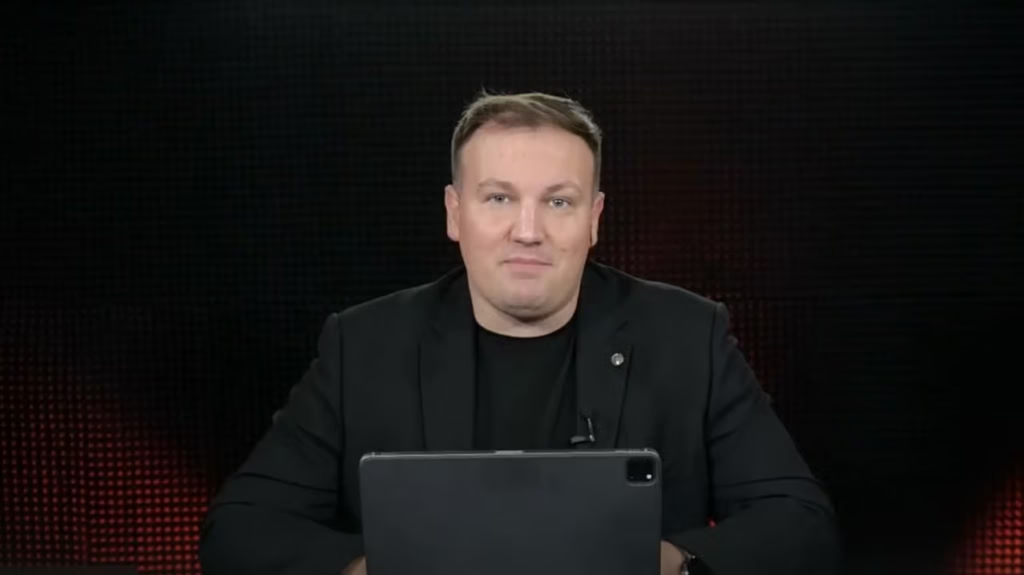
Montenegro has ordered the expulsion of Mikhail Zvynchuk, head of the pro-Kremlin military information network Rybar, and four other Russian citizens over national security concerns following a security operation targeting suspected Russian hybrid influence activities, Vijesti reported on 9 October.
Zvynchuk is the founder and head of Rybar, a prominent Russian military-focused information network known for its Telegram channels covering Russia's war against Ukraine. The network promotes pro-Kremlin narratives and has been associated with Russian propaganda and influence operations.
Montenegrin police announced on 9 October that the five Russians had their residence rights revoked and were ordered to leave the country on national and internal security grounds.
The operation involved Montenegro's police and National Security Agency (ANB), which seized drones, high-resolution recording equipment, cameras, and several mobile phones for further examination, according to Vijesti.
According to Montenegrin authorities, the five had arrived in the country less than two days before the operation. The investigation is being conducted with support from international partners.
Montenegrin police identified the five Russian citizens as Zvynchuk, his wife Valeria Zvynchuk, Sergei Belous, Pavel Lekatorchuk, and Kira Doroshenko. Authorities said the case had been referred to prosecutors in Podgorica and Kotor.
The European Union has sanctioned Zvynchuk over activities that undermine or threaten Ukraine's territorial integrity, sovereignty, and independence. He has also been sanctioned by the United Kingdom, Switzerland, Australia, and Ukraine, according to Vijesti.
Vijesti reported, citing security sources, that Montenegrin authorities suspected the group of planning a documentary intended to undermine public support for the country's European integration.
According to the outlet, the planned material would portray Montenegro's expected alignment of its visa policy with EU standards as a politically imposed measure that threatens tourism, economic stability, and national interests.
Security services had monitored the group's arrival before carrying out the operation in Risan, in the Bay of Kotor area, Vijesti reported. The equipment seized from the group will undergo expert analysis to establish its intended purpose and use in Montenegro.
Former Russian President Dmitry Medvedev responded to the operation by suggesting Moscow might need to expand its pool of prisoners to exchange for Europeans and Americans to secure Zvynchuk's return.
“We will probably have to replenish our pool of prisoners for exchange with European and American idiots,” Medvedev said, according to Vijesti.
Montenegro, a NATO member and EU candidate, has aligned itself with EU sanctions against Russia following Moscow's full-scale invasion of Ukraine in 2022. The expulsion comes amid broader European concerns over Russian intelligence activity, propaganda, and other forms of hybrid interference.
The Canadian government has announced a new “de-radicalization” program aimed at so-called “conspiracy theorists” — and it explicitly lists among the “unacceptable beliefs” the idea that the world is controlled by a cabal of globalist [...]
The post Canada Launches “De-Radicalization” Camps For “Conspiracy Theorists” Who Believe “Cabal of Globalist Pedophiles” Run the World appeared first on The People's Voice.

Air-raid sirens are quietly stealing the hours Ukraine needs to build its weapons. The alerts ate up 61.8 hours of the standard work schedule in Kyiv between 27 August and 29 September, almost eight working days in a little over a month, yet weapons makers still face unchanged contract deadlines, the Ukrainian Gunmakers Council and the League of Defense Enterprises of Ukraine say.
In September 2026, Economy Minister Oleksandr Kravchenko said that every hour of air-raid alerts costs Ukraine’s economy about $45 million as businesses halt and workers shelter. For arms makers, those lost hours collide with fixed delivery dates and the penalties that follow if they slip.
The council’s figure covers Kyiv alone, and each plant loses more depending on its location, schedule, and processes, the groups said. On top of the siren time comes the wait to shut equipment down safely, move workers to shelter, and restart once the all-clear sounds.
A missed deadline carries a daily fine, and after 30 days, an extra 7 percent penalty. Money meant for components and the next orders goes instead to penalties and court disputes.
The contract date stays fixed unless the customer agrees to move it, the groups said. That leaves producers paying for stoppages they do not control, while the weapons still have to ship.
The Gunmakers Council has drafted changes to Cabinet Resolution No. 1275 to establish a single method for confirming real downtime from alerts and its effect on each contract’s deadline, it said. A customer could check alert times against official data and verify stoppages and restarts against a plant’s own production records, with each request judged on a case-by-case basis.
The groups say they have repeatedly raised the issue with the Defense Ministry and sent official letters proposing changes, and they are urging the ministry and the Defense Procurement Agency to act without delay.
They want a defined list of supporting documents, a deadline for reviewing requests, and rules for applying the mechanism to contracts that have already been signed. Until a decision comes, enterprises keep losing production time, and the risk of delay grows, the groups say.
A Ukrainian company has played the enemy in a Pentagon drone contest, and the US liked what it saw. Phantom Defense, a Ukrainian defense-tech firm, was one of three companies whose systems built the counter-drone environment for Gauntlet II, the second stage of the US military’s Drone Dominance program, and has been invited to take part further, Defender Media reports.
Drone Dominance is the Pentagon’s four-phase effort to field cheap attack drones fast, a roughly $1 billion program to buy more than 200,000 low-cost attack drones by 2027. Phantom Defense brought a system that was already proven at home, where in one city it neutralized more than 7,000 enemy drones over an area of more than 100 square kilometers in a year, the company says.
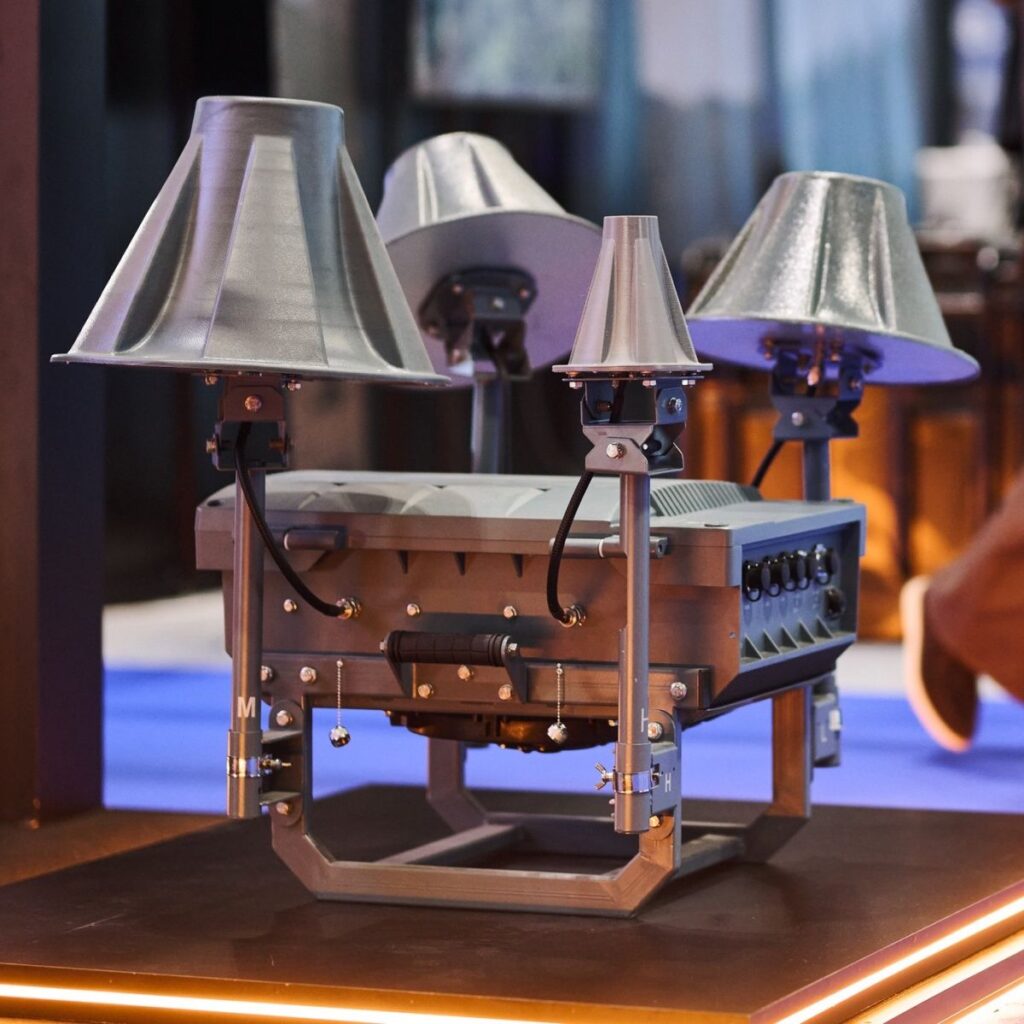
Rather than enter a drone of its own, Phantom Defense supplied the resistance that the American drones had to fly through. Its setup paired the Specter PRO, L, X, and XL jammers with the Streamhunter video-interception tool and a command-and-control layer that detected and classified targets, coordinated the countermeasures, and confirmed the kills. The jammers suppressed drones and held up in heat and rain, it adds.
The arrangement lets American developers fly their drones under live electronic attack rather than calm conditions, recreating a battlefield where a drone’s performance swings with the jamming around it, according to the company.
At the center sits Phantom Defense’s C2 system, Kupol, which integrates separate tools into a single ecosystem on a shared map. It lets crews run electronic warfare remotely, without driving out to a position, and ties in sensors, interceptor drones, and turrets, the company says.
Kupol reads the terrain and a drone database to propose the best way to take down a target, then logs each mission automatically so its recommendations sharpen over time.
The high-power Specter PRO station, built to shield positions, critical infrastructure, and cities, serves as the hardware anchor.
Previously, Ukraine’s battle-tested drone makers also took part in Drone Dominance. However, they didn’t succeed in it, though some of their technology competed under Western partners. The program bars direct purchases from Ukrainian firms, which must set up a US legal entity to bid.
* Kiev al buio, Mosca presenta il conto di Jeff Hoffman
* Proposta India sul conflitto ucraino di Ivan Bodyan
* La russofobia riavvicina Londra all’Europa di Gionata Chatillard
* Nord Stream, Mosca e Washington trattano? di Ivan Bodyan
* Rybar in manette, l’accusa resta un mistero di Jeff Hoffman
* Riad sotto tiro, Washington fa affari di Jeff Hoffman
* Incontro Putin-Pezeshkian di Ivan Bodyan
* Iran, cresce il dibattito sull’uscita dal TNP di Ivan Bodyan
* Crosetto e la missione nascosta di Jeff Hoffman
* Ulivi in fiamme, Cisgiordania sotto attacco di Jeff Hoffman
* Utah, l’IA può prescrivere farmaci di Ivan Bodyan
Buon giro intorno al Sole
A cura di Margherita Furlan
Con la collaborazione di Gionata Chatillard, Ivan Bodyan e Jeff Hoffman
Editing di Mia Tarulli e Isabelle Tonussi
 CASA DEL SOLE TV — Informazione libera e indipendente
Il nostro lavoro è possibile solo grazie al vostro sostegno. Casa del Sole TV non ha editori forti né finanziamenti pubblici: siamo sostenuti da voi, il nostro pubblico.
Se credi nel valore di un’informazione che non tace, aiutaci a continuare.
 Dona tramite bonifico bancario: IBAN: IT63P0326822300052392596590
Intestato a: LA CASA DEL SOLE EDIZIONI Causale: Donazione Casa del Sole TV
 Dona tramite PayPal: paypal.me/casadelsoletv
 Sostegno ricorrente: casadelsole.tv/sostienici
Anche un piccolo contributo fa la differenza. Grazie di cuore! 
L'articolo 🔴Kiev al buio.. prima di noi | TG 9.10.26 proviene da Casa del Sole TV.

Austrian police detained Ukrainian investigative journalist Mykhailo Tkach and cameraman Yaroslav Bondarenko in Vienna yesterday, on 8 October. Both were later released, but the circumstances of their detention remain unclear, and the prosecutor’s office said suspicion against them had not been substantiated so far.
The detention lasted more than 12 hours, the first time Tkach had been held that long while on a reporting assignment abroad. The case unfolded alongside a separate Austrian espionage investigation involving two men suspected of working for Ukraine’s military intelligence. Authorities have not said whether the cases are connected.
In a video published by Ukrainska Pravda, Tkach said seven people wearing masks and carrying weapons approached their car at a traffic light about 3–5 kilometers from central Vienna, broke its windows, and pointed weapons at them.
He said the people did not identify themselves or explain their actions. The journalists were pulled from the car, forced face down onto the road, searched, and had their hands taped behind their backs, according to Tkach. He said he initially thought they were being kidnapped because he did not see identification or have time to notice police markings. He realized they were police only after seeing police vehicles.
“As I felt it, they detained us like terrorists,” Tkach said.
He added that people shouted and pointed weapons, and there was no communication. He said one person put a knee on his neck and shouted at him to be quiet. He also saw glass from the broken window fly into Bondarenko’s face.
In a second report, Ukrainska Pravda said Tkach’s account of a document presented to him listed three allegations: espionage in the interests of Ukrainian military intelligence, participation in a criminal organization, and, as far as he remembered, causing harm to Austria. He said investigators did not explain the evidence behind the allegations.
Vienna prosecutor’s office spokesperson Nina Bussek told the Austrian Press Agency (APA) that suspicion against the two journalists had arisen during other investigations but had not been substantiated. She said it currently appeared that the suspicion was not holding up. Austrian officials have not publicly addressed Tkach’s account of the force used.
Tkach and Bondarenko were in Vienna on an assignment to find Ruslan Kravchenko, Ukraine’s former prosecutor general, Ukrainska Pravda reported. Kravchenko was dismissed on 15 September amid an investigation by Ukraine’s National Anti-Corruption Bureau and Specialized Anti-Corruption Prosecutor’s Office into alleged protection of fraudulent call centers. He denied involvement. Der Standard reported that it remained unclear whether the journalists’ detention was connected to their reporting on him.
Ukraine’s Foreign Ministry spokesperson Heorhii Tykhyi confirmed Tkach’s release and said the Ukrainian consul had requested access to him, according to NV. Musaieva said Bondarenko had been injured and hospitalized.
A statement signed by Ukrainian media and civil society organizations, including Euromaidan Press, called for an immediate, transparent, and independent investigation of law enforcement’s actions. The signatories also demanded an independent review of the force used, the return of seized equipment, and necessary medical and legal assistance.
Austrian Interior Minister Gerhard Karner confirmed the arrests of four Ukrainians, according to ORF. The two men detained on 5 October were placed in pretrial detention until 21 October on suspicion of secret intelligence activity against Austria. APA reported that they were suspected employees of Ukraine’s military intelligence service. Both deny the allegations.