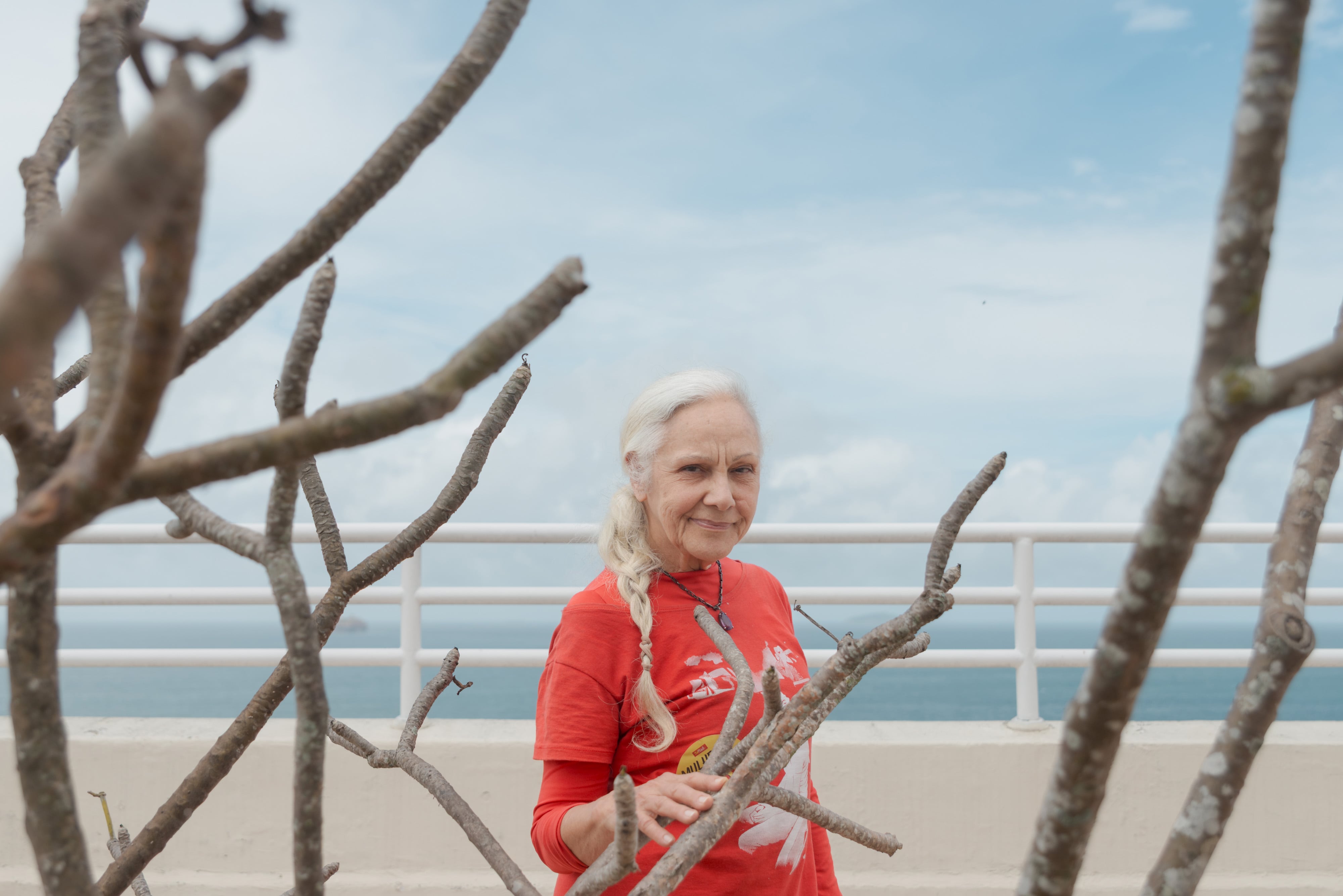
Ten years ago, a 92-foot banner hung from the rooftop of an Art Deco building in Copacabana, Rio de Janeiro’s iconic beachfront neighborhood. “Fora Cunha” (“Cunha Out”), it read in white letters against a black background.
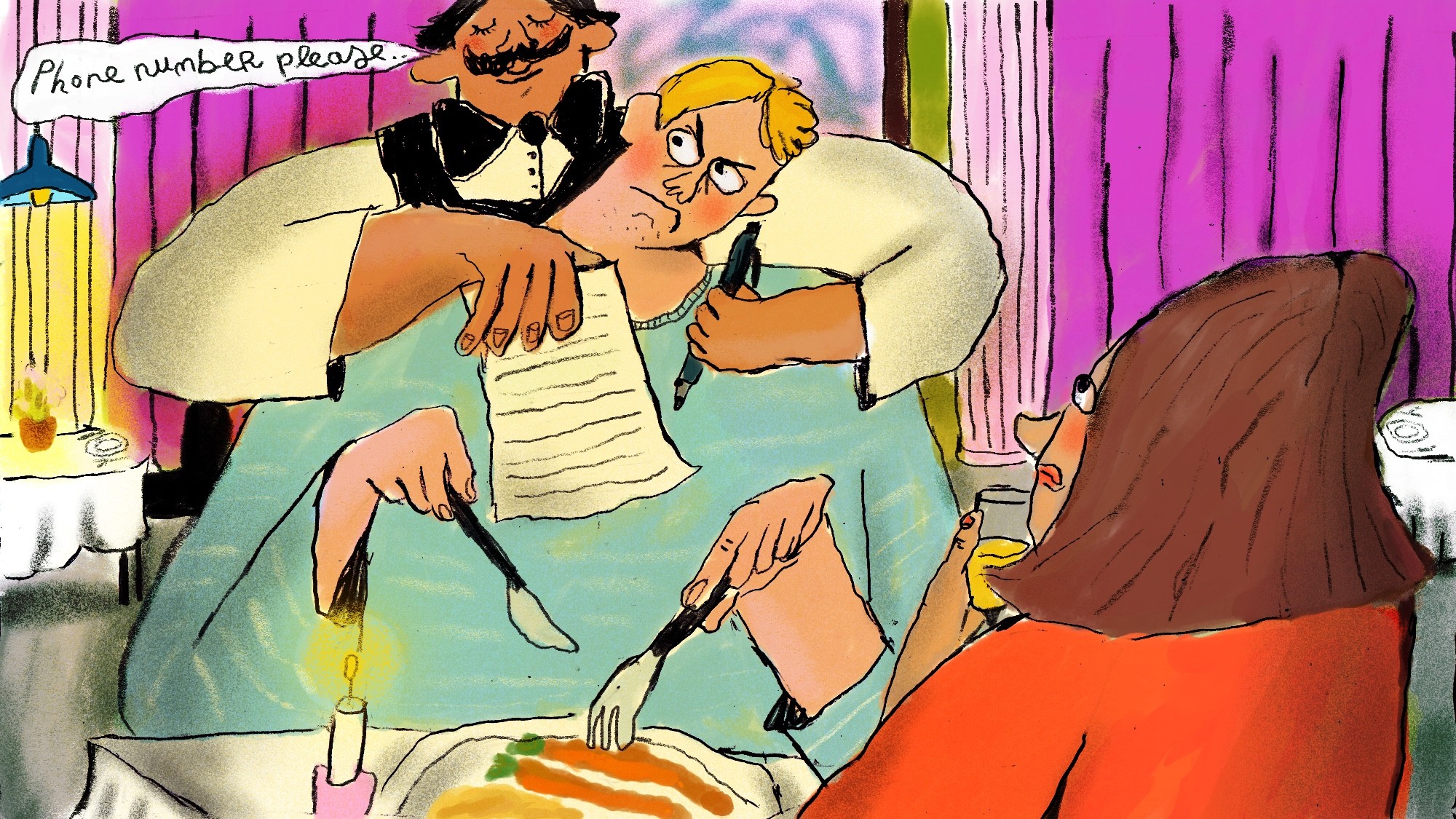
A man walks into a restaurant. He doesn’t have a reservation, but that shouldn’t be a problem; there are ample seats at the bar, visible just over the hostess’s shoulder. “Of course,” she says, smiling. “We can seat you right away.” As she gathers menus, he absorbs the pleasant hum of a busy dining room, breathes in the tantalizing smells from the semi-open kitchen. Then, the hostess stops, Columbo-like, to interrupt with one more question: “And what’s your phone number?”
The man was me. The restaurant was the Kingsway, a newish, Michelin-recommended spot in New Orleans. I’m not going to give you my phone number, but I gave it to the hostess, almost without thinking. And then, I did think about it: a lot. Throughout the meal, and for a long time afterward. There had been no reservation to check, no rewards program, no waiting list. So why the automatic ask?
Let me say quickly that I liked the Kingsway very much. It’s coolly fancy, with a pan-Asian menu evoking the journey of the chef-owner Ashwin Vilkhu’s family from South Asia to the Gulf South. The result brings to mind an earlier era’s scruffy raiding of the global pantry, but this time executed with thought, technique, and precision. As I tucked into a tangle of Singapore-style chili-crab noodles, the term stoner soigné passed through my head.
But that very first interaction with the hostess colored my meal. I brooded. What if I had just wanted to sit at the bar anonymously? Was that not one of life’s great pleasures? (I was working up a head of steam.) Was there no place in this enshittified world where a man could get a break?
It mattered little that I knew the answer. Like pretty much everyone else, I am well aware that my information is strip-mined wherever I go, in more ways than I can count and in many that I will never know. Like everyone else, I spend my days downloading apps to operate things such as toothbrushes, unsubscribing from marketing lists by somehow giving up more personal information, rejecting cookies like I’m on a gluten-free diet.
Nor am I overly romantic about restaurants, which I know have been collecting data for years. The reservation platform OpenTable began making algorithmic recommendations to users as early as 2014; by 2017, TheNew York Times reported that Big Data was “staging an intervention” to save the restaurant industry, which was suffering from stagnating growth and flattening profits.
Much of the data collection has been justified in the name of customer service—a way to track allergies, preferences, birthdays, and so on, thus bringing technological efficiency to a job previously handled by a heavily notated reservation book or the encyclopedic mind of a gifted maître d’. “We try to build a database on everybody and get as much information as possible,” Vilkhu told me when I called him a few weeks after my dinner. His restaurant uses OpenTable, and he knew, for instance, which bartenders had served me, the friend who had joined me, that I had complimented the cocktail list and enjoyed the crawfish dumplings. This information, he assured me, was shared with the Kingsway’s sister restaurant but nobody else: “We just want to be able to curate the experience as best as we possibly can.”
I believed him. But I was nevertheless a little shocked to go to the websites of the big reservation companies and see how they sold the impulse to care for guests to restaurants (which, in case it’s not clear, are their customers). At best, the sales pitches were dispiritingly cold, with talk of CRMs, GRMs, CDPs, and integrated tech stacks. At worst, they spoke of “capturing” guests’ data, “fostering loyalty,” and “upselling 24/7.” The “AI powered hospitality platform” Loyalist promised “a 360° view of every guest across dine-in and event spend,” itself a sentence seemingly powered by AI. The sales decks were like those optical illusions that turn from adorable to sinister when hit with different colored lights, flipping the language of care and hospitality to the language of surveillance and theft.
Most striking was OpenTable’s promotion of a feature, currently in beta, called Global Insights. Until now, as Vilkhu had told me, whatever data a restaurant collected through the reservation platforms remained confined to that restaurant or restaurant group. Global Insights, which is available to OpenTable Pro subscribers, is the first feature to jump that garden wall and allow other restaurants access to the same information—in OpenTable’s words, to “get an idea of how your diners behave at other restaurants across the OpenTable Diner Network.” With an account, any restaurant can identify big spenders, diners who tend to linger at a table, diners who order a lot of drinks, frequent late-cancelers, and chronic “no-showers,” which I initially read as being about personal hygiene.
My outrage at this new invasion of privacy was accompanied by a pang of embarrassment: This is one of those times in history when it’s easy to get old fast, to wake up one morning and find yourself appalled by norms that everybody around you seems to take for granted. (For instance, the notion that one’s phone number remains a piece of intimate information.) Still, the idea of a restaurant I’d never been to using a dossier on me to decide, say, where I should sit, what I was likely to order, even whether I should be given a reservation at all, gave me chills.
Curious to see what insights on me OpenTable might share with that hypothetical restaurant, I sent the company a request for my personal data. To its credit, the company makes this easy with an online form; less than 24 hours later, a zip file arrived. (Resy requires a request by email; a week later, I was told that it was “under review” and have heard nothing since. SevenRooms, another reservation platform, says that it is merely a processor of data and suggested that I contact individual restaurants.)
The OpenTable file was 48 pages, in the monospaced typeface of computer code. Much of it was indecipherable, aside from dozens of instances of my phone number (aha!) and semi-redacted credit-card information. Despite its length, the document contained only a fraction of the reservations I’ve made over the years. The Kingsway wasn’t in there; neither was the first OpenTable reservation I can find in my records, at Zenkichi, a Japanese restaurant in Williamsburg that I visited in 2008. The file had a note that read “GIN,” which I grant was on the money about my inclinations, but it wrongly identified my home market as Austin. If this was truly the sum of OpenTable’s knowledge, I had less to immediately worry about than I’d anticipated.
At the same time, seeing the traces of past meals emerge from the sea of characters was eerie. Many I remembered; plenty I had not thought about since. Next to many of the restaurant names was appended a note: “Permanently Closed.” Lowlife, Church & State, Hunky Dory, La Mangeoire—all no more. Others didn’t have the tag, but I knew they were gone too. Like ghosts, they swam through the mists of the OpenTable servers, rattling chains forged of bad leases, unruly food costs, fickle trends, misbegotten dreams, and a thousand other maladies. I could almost hear them wail, “Doooooon’t judge ussss … We just wanted to stay aliiiiiive …”
Indeed, restaurants are often asked to bear a moral and behavioral burden not generally placed on other small, low-margin, independent businesses. The more the public has learned about how restaurants work, the more they have scrutinized the ways in which they handle all sorts of social issues, such as racial and gender equity, climate change, and, yes, data privacy. These are all great and worthy considerations, but they do illustrate a gulf between how some customers (and many food writers) see restaurants and how many chefs and restaurateurs do: The former might like them to, you know, just solve the problem of ethical consumption under late-stage capitalism, while the latter are preoccupied with how to lower the cost of a lamb chop by 20 cents so they can pay that month’s electric bill. In the bigger picture, both diners and restaurateurs are reckoning with the same systemic forces.
But the question remains. Knowing all of this—not to mention with a plate of crawfish dumplings before me—why was I so rankled that night when asked for my number? Maybe because it’s exhausting, these constant micro-negotiations between dignity and grift. Exhausting, and lonely: Most people know that completely opting out of data collection isn’t an option, short of walking into the woods. So we’re left to improvise which of the numberless small violations are worth summoning the energy to resist: when we’re willing to have an awkward interaction, how embarrassed our companion will be, which employee might get in trouble, whether making a scene is worth the hassle. Like so many things, we’re on our own.
And maybe I am romantic about restaurants. About a 10-minute drive from the Kingsway is another restaurant, Crescent City Steakhouse, which opened in 1934. It features four booths along one wall that are outfitted with curtains that can be drawn for maximum privacy. A server once told the local paper that they were for “shady politicians, secret lovers, and people who put ketchup on their steaks.” I am none of those things, but I like to think I could be if I wanted. The idea that restaurants should be exempt from the pressures of modern society might be a fantasy, but I don’t think it’s an idle or shameful one. It is a large part of why people love restaurants, and, I have to assume, why people open them too. We want restaurants to be a respite from the world, or at least a plausible illusion of one. We want them to be the woods.
As NATO Secretary General Mark Rutte and European leaders increasingly warn of a looming Russian threat, Vladimir Putin used the Valdai Discussion Club to deliver a very different message: Europe is feeding an escalation spiral it may no longer be able to control. Europe is being told to prepare for war, and the rearmament is […]
Last week, EU member states reached a common position on the European Commission Omnibus X ‘Food and Feed’ proposal, in a bid to simplify regulation of pesticides. In reality, however, it will weaken protection against pesticides’ negative effects in Europe. The proposal pleases the chemical industry but goes against the wishes of a vast majority of citizens and many scientists who value people’s health, clean drinking water and biodiversity.
A hearing in the European Parliament on 3 September highlighted the real problem. Under the guise of a ‘discussion with experts’ in the field of health and environment, the parliament handed the megaphone to lobbyists representing a broken, toxic agricultural model.
Representatives of industrial agriculture – sugar beet, apple and cereal growers – parroted industry arguments, justifying their demands to stop banning pesticides that are toxic to public health, the environment and pollute our water resources.
Despite Europe witnessing massive droughts, extreme heatwaves leading to countless deaths, wildfires destroying biodiversity, and devastating crop losses, it seems that a significant share of MEPs are ready and willing to accelerate the degradation of European’s wellbeing and natural resources.
Listening to them raises a fundamental question: Do farmers truly want to rely on a cocktail of toxic chemicals to maximise yields at low market prices, destroying their own health and local ecosystems in the process? Or do they wish to make an honest living, producing quality food in balance with nature for a fair income?
CAP subsidies
To better grasp this contradiction, we must look at what is actually at stake here.
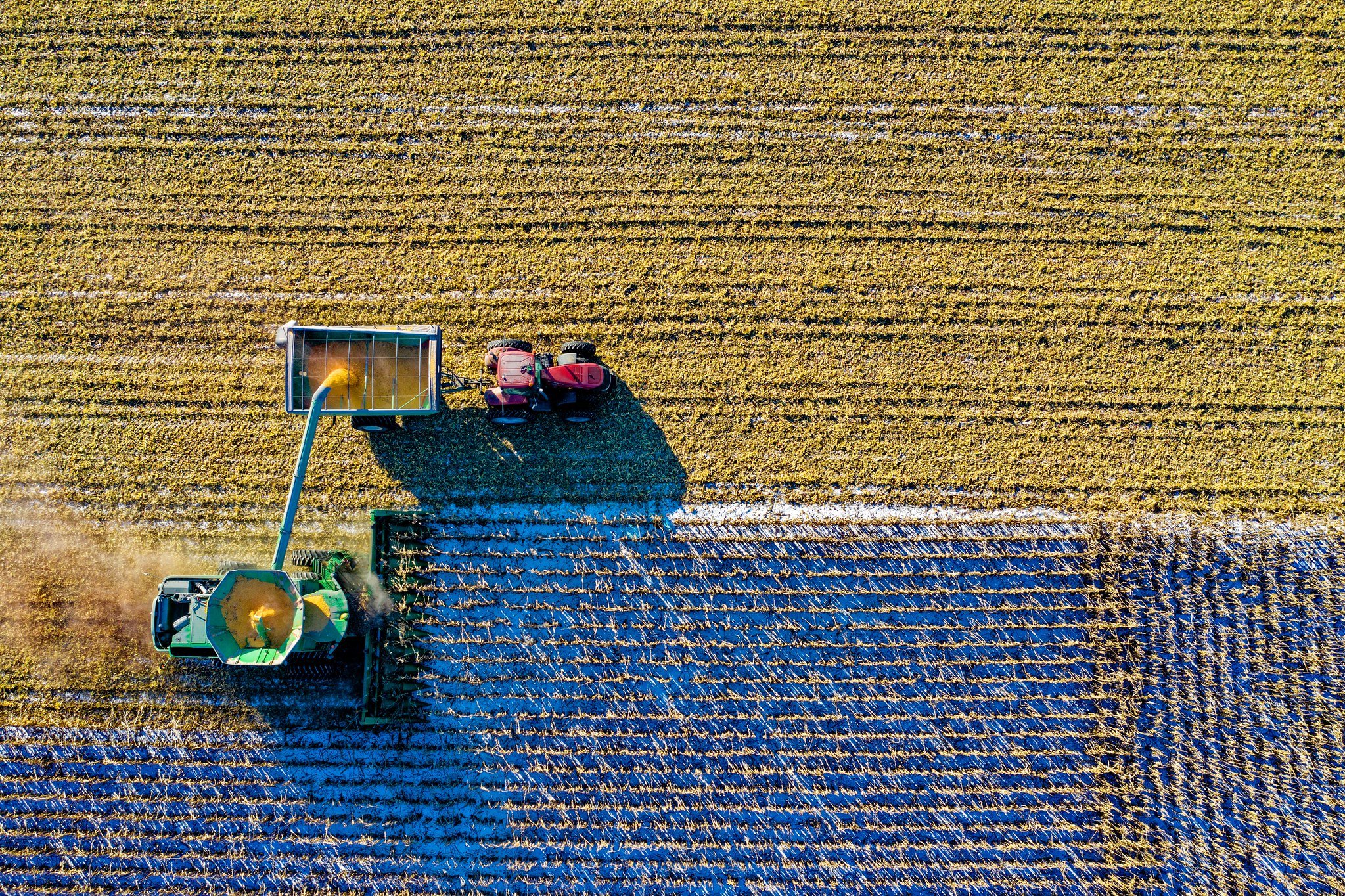
Agrochemical corporations seek their share of the Common Agriculture Policy (CAP) cake – a colossal €58bn budget, accounting for one third of the EU’s total budget.
Their own survival is reliant on keeping as many farmers as possible dependent on pesticides, fertilisers and industrial seeds. By diverting public CAP funds through farmers into the pockets of their shareholders, these companies ensure their long-term profitability.
Many farmers’ unions also represent agri-cooperatives that profit significantly from selling pesticides, which raises questions about whether they truly represent farmers’ long-term interests, or those of the pesticide industry.
Since the European Commission published its ‘simplification’ proposal in December 2025, proponents of pesticide-intensive farming have presented a series of flawed arguments that in fact reveal the dead-end to which intensive agriculture has led us.
Firstly, farmers’ organisations complain about a “lack of pesticide substances” on the market.
Currently around 450 different pesticide active substances are approved in the EU, from insecticides to fungicides, and herbicides. If 450 different options are insufficient, does this not signal an unhealthy addiction rather than a shortage?
Lobbyist groups, furthermore, claim that pest resistance to synthetic pesticides would inevitably lead to dramatic yield losses and hunger, arguing for even more pesticides with diverse modes of action.
And yet, according to scientific research, the multiple chemical strategy that has been applied for more than 40 years is the very cause of the appearance of resistance. This problem cannot be solved with the mindset that caused it. The only scientific solution is, therefore, not more chemistry but prevention, and the use of alternative methods.
Thousands of farmers across the EU and the rest of the world are already proving this by switching towards Integrated Pest Management (a strategy for low-pesticide-input pest management) or organic practices to reduce pesticide inputs.
Who bares the cost
The call to keep all pesticides on the market – and potentially even use some of the banned ones – serves only the short-term interests of the pesticide industry, not of the farmers.
Destroying soil life – the basis of soil fertility – with chemicals, and killing insect populations that naturally control pests and pollinate crops, jeopardises the very basis of farming and long-term food security.
The societal costs of this pesticide-dependent model are staggering. Citizens are the ones who bear the healthcare costs for chronic diseases such as cancer and Parkinson’s, which impact not only farmers but also residents of agricultural areas.
We face water pollution that has become nearly impossible to remediate. Fewer pollinators means fewer healthy fruit and vegetables. These ‘externalities’ far outweigh any short-term benefits.
This is the reason why the Paris and Munich water companies financially support farmers in protecting the groundwater, because doing so is up to 45 times cheaper than depollution.
In the meantime, the agrochemical industry enjoys huge profits from pesticide sales, largely supported by CAP subsidies, while society foots the bill for the damage. It is indeed a perfect business model…for them.
Lobbyist circus
The spectacle witnessed in the alleged House of European Democracy is testament to the state of our political world; one that is dominated by corporate interests over citizens and farmers’ wellbeing.
We witnessed the desperate battle of a toxic agricultural model that struggles to survive, and resists being replaced by sustainable farming methods.
The lobbyist speakers in the European Parliament hearing more or less gave the diagnosis to the current pesticide-intensive agricultural system: it is simply broken.
Citizens have repeatedly expressed their concern on the impact of pesticides on their health and biodiversity. They have also expressed the need that public support for agriculture serves the common good.
The pesticide Omnibus X proposal is merely an attempt to maintain a detrimental status quo that favours the pesticides industry.
What is needed now is a new blueprint for a system which financially supports farmers to implement practices that improve soil and plant health, favour beneficial insects, accelerate the availability of alternatives to pesticides such as biocontrol products, and rapidly phase out toxic synthetic pesticides to protect our health, water resources and biodiversity.
Only then can we ensure a sustainable future for European agriculture and our children. Only then, will a greater share of the CAP remain in the hands of farmers who feed us and protect our nature.
Sorkin's latest film follows Mark Zuckerberg as his company fights lawsuits and whistleblowers after modifying its algorithm to promote reshares, which overwhelmingly tend to be divisive.

 Login


 The Social Reckoning.'/>

