❌

Reading view

Andy Burnham promises ‘serious dialogue’ over UK’s relationship with EU

PM hails next month’s ‘reset’ summit as first step to closer ties, but tensions over trade may prove problematic

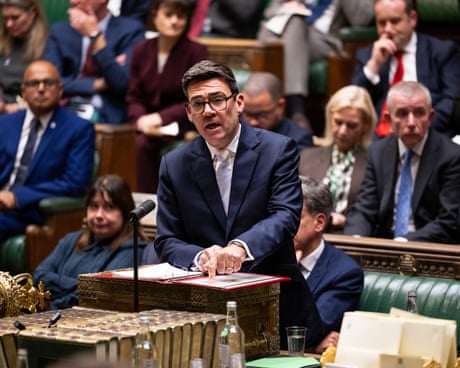
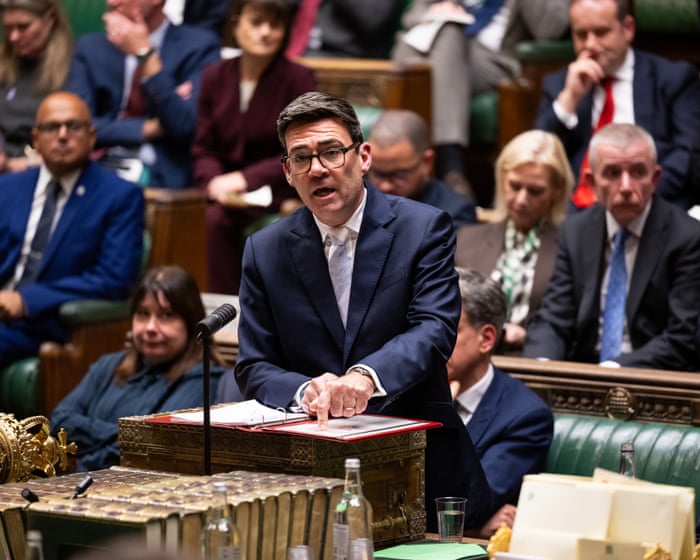
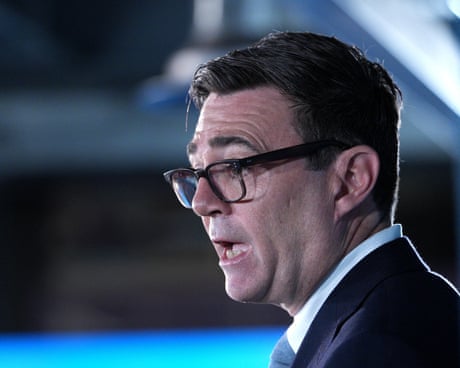
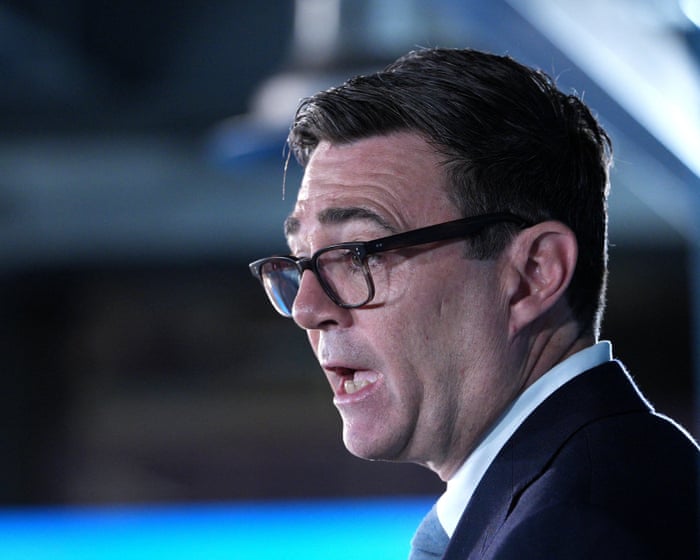
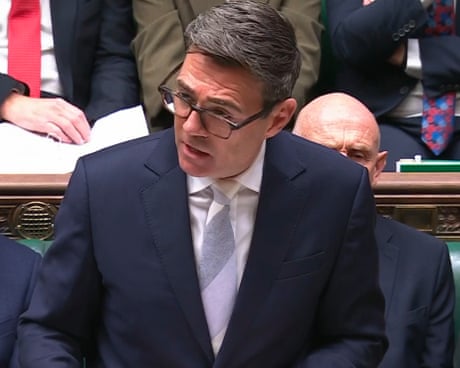
Andy Burnham has promised a “serious dialogue” over the UK’s future place in Europe, saying the existing relationship is “not good enough” as he framed next month’s Brussels summit as a possible first step to EU membership.

The prime minister said Britain must take a “clear-eyed rational look” at its long-term relationship with the bloc to boost economic growth and control immigration, which needed to go beyond Labour’s existing red lines.

Continue reading...

© Photograph: House of Commons/PA

© Photograph: House of Commons/PA

© Photograph: House of Commons/PA

  •  

Heat Pump Subsidies to be Scaled Back to Fund Defence

A heat pump subsidy scheme launched by Ed Miliband just nine months ago is facing cuts to help fund defence as the public continues to reject the technology and the quiet Net Zero rollback marches on.

The post Heat Pump Subsidies to be Scaled Back to Fund Defence appeared first on The Daily Sceptic.

  •  

How significant are Burnham’s remarks on Kremlin interference in Brexit vote?

Prime minister has reopened the debate over whether Russia sought to influence the 2016 referendum

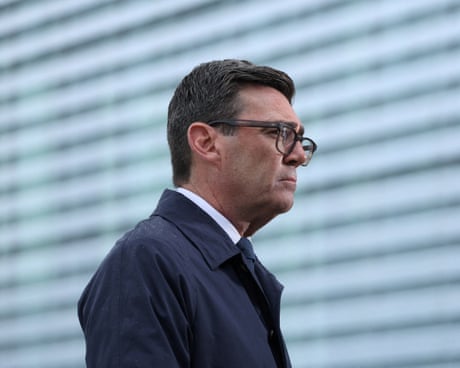
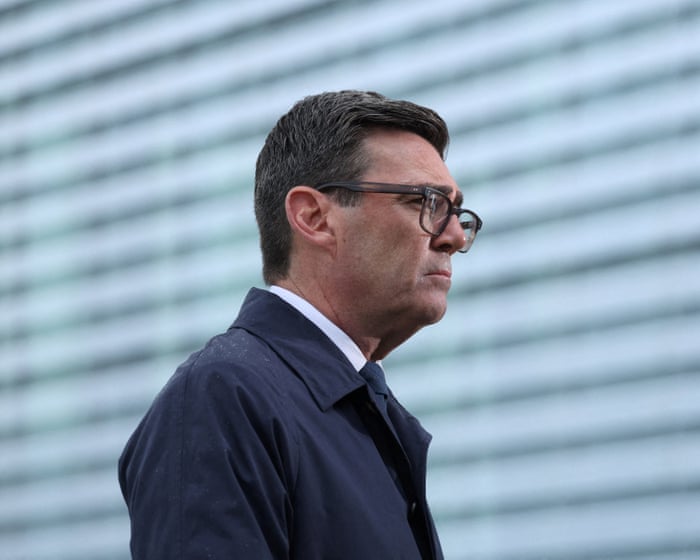
Andy Burnham unexpectedly reopened an old Brexit debate when he said he had been told after becoming prime minister that Russia had interfered in the 2016 EU referendum.

It was a contentious issue in the second half of the previous decade, but one that had largely been forgotten about as the UK finally adjusted to the reality of leaving the EU. Now Burnham’s comments have given the topic a fresh impetus.

Continue reading...

© Photograph: Christopher Furlong/Reuters

© Photograph: Christopher Furlong/Reuters

© Photograph: Christopher Furlong/Reuters

  •  

Ten years on, Britain’s prime minister says Russia meddled in the Brexit vote—and warns Germany and France

ten years britain’s prime minister says russia meddled brexit vote—and warns germany france · post andy burnham britain's new 29 2026 hl-8sqawgaax0se ukraine news ukrainian reports

UK Prime Minister Andy Burnham said Russia interfered in the 2016 referendum that took Britain out of the European Union, in podcast excerpts released on 11 October, the Associated Press reported. His remarks are believed to be the first time a British prime minister has publicly acknowledged such meddling.

Russia’s information war keeps running through Europe’s ballots. German security sources said in August that Moscow was escalating disinformation before state elections, and Ukraine’s Center for Countering Disinformation found more than 200 Russian fake news sites aimed at France last year.

One question, one clear answer

Burnham told The Rest Is Politics podcast that he asked his advisers whether Russia had interfered in the 2016 vote. He asked after taking office in July.

“I’ve had the clear answer that yes, there was,” he said.

He argued that such things must now be put clearly on the record. He did not say how Russia interfered or offer evidence, and Moscow has long denied interfering in foreign votes.

Burnham said he had discussed Russian interference with German Chancellor Friedrich Merz in Berlin the previous week. “You know he was saying to me that the AfD are clearly linked to Russia, funded I believe,” Burnham said, referring to Germany’s far-right Alternative for Germany party. Putting such interference on the record would help “voters in Germany and France understand that some of this politics is instigated via our enemies, namely Russia,” he added.

Years of silence

In 2020, Parliament’s Intelligence and Security Committee found that the government had actively avoided investigating whether Russia meddled in the referendum. The report noted open-source signs of Russian attempts to sway the Brexit campaign. The government, it said, had never looked for hard evidence.

The government rejected the committee’s call for a review.

“We have seen no evidence of successful interference in the EU Referendum,” it said.

That same year, London said Russian actors had almost certainly tried to interfere in the 2019 general election. The government said they did it by amplifying leaked UK-US trade documents online.

From 2019 to 2016

Three weeks ago, Burnham stopped short of this. At the UN General Assembly on 22 September, he said the Kremlin spends around £1.3 billion each year on manipulating information. That is roughly $1.7 billion at recent exchange rates. He cited evidence that Russian agencies tried to interfere in the 2019 general election, but he did not mention 2016.

In the same speech, he said Britain had already helped Moldova protect its elections from Russian interference.

  •  

Burnham to Say it’s His “Duty” to Pursue Closer EU Ties

Andy Burnham will say that failing to pursue a closer relationship with the EU would be a "dereliction of duty" in a major Commons address today, following his comments blaming Russia for interfering in the Brexit vote.

The post Burnham to Say it’s His “Duty” to Pursue Closer EU Ties appeared first on The Daily Sceptic.

  •  

Andy Burnham says Russia interfered in Brexit referendum – video

The prime minister has said Russia interfered in the 2016 Brexit vote in an interview with The Rest Is Politics podcast as he warned voters in France and Germany about Moscow-backed efforts to influence their politics.

Burnham is the first British prime minister to say openly there is evidence of Russian interference in the referendum a decade ago, and said last month that Britain could consider rejoining the European Union in the future

Continue reading...

© Photograph: Reuters

© Photograph: Reuters

© Photograph: Reuters

  •  

Burnham says ‘public will be the boss’ in any future decision about closer relationship with the EU – as it happened

The prime minister tells MPs the next summit with the EU will be held on 20 November

Burnham to urge MPs to embrace closer ties with EU

Zia Yusuf, Reform UK’s home affairs spokesperson, is speaking now. He started his speech with an account of a 73-year-old woman dying in North Wales after having to wait 23 hours for an ambulance, and he sought to link this to immigration.

He said:

The Royal College of Emergency Medicine estimates that 15,000 people across Britain died last year due to excess wait times for emergency treatment. That’s 300 people a week, 300 lives destroyed, 300 families devastated.

And that number has increased tenfold over the last decade. This is a moral outrage, and it is a direct result of decisions made by Tory and Labour governments.

I don’t think that’s because he wants to have a fight over the European Union. I think that’s because he knows what we’re talking about today impacts hard in what is known as the red wall.

Continue reading...

© Photograph: House of Commons/UK Parliament/PA

© Photograph: House of Commons/UK Parliament/PA

© Photograph: House of Commons/UK Parliament/PA

  •  

Britain Confirms Russian Interference in Brexit Referendum After Ten Years

Prime Minister Andy Burnham has acknowledged that Russia interfered in Britain’s 2016 referendum on European Union membership, ending a decade in which successive governments avoided making a definitive public assessment of Moscow’s involvement.

British Prime Minister Andy Burnham has confirmed that Russia interfered in the 2016 Brexit referendum, marking a significant change in the government’s position on foreign involvement in one of the country’s most consequential political decisions. The acknowledgement comes more than ten years after Britain voted to leave the European Union and six years after a parliamentary intelligence investigation criticised the failure to examine Russian activities surrounding the vote.

Speaking on The Rest Is Politics podcast, Burnham said he had requested an assessment of Russian interference after becoming prime minister in July. He subsequently received confirmation that Moscow had attempted to influence the referendum, although he declined to disclose the intelligence underpinning that conclusion or explain the methods employed.

The statement establishes an important distinction between Russian interference and the referendum’s outcome. The former is now publicly acknowledged by the British government; the latter remains a separate question. No evidence has been presented demonstrating that Russian activities determined the result, which saw 51.9 per cent vote to leave the EU.

The investigation that never took place

The controversy dates back to the Intelligence and Security Committee’s 2020 report on Russia, which identified serious weaknesses in Britain’s response to hostile foreign influence.

The committee examined Russian activities targeting British political institutions, including attempts to exploit social divisions through state-controlled information channels and online networks. It found that the British government had failed to conduct a comprehensive assessment of potential Russian interference in the Brexit referendum.

That failure was particularly striking when compared with the United States, where intelligence agencies investigated Russian interference in the 2016 presidential election and published conclusions identifying a coordinated campaign.

In Britain, by contrast, responsibility for examining foreign interference had been divided between departments and intelligence agencies. The parliamentary committee found that no organisation had assumed responsibility for assessing the threat to the referendum comprehensively.

The distinction was politically convenient for successive governments. Without a formal investigation, ministers could maintain that there was insufficient evidence to establish interference while avoiding the question of whether the evidence had ever been properly examined.

Burnham’s acknowledgement changes that position, although it does not resolve every question raised by the original inquiry.

What Russia sought to achieve

Russian information operations have repeatedly targeted political divisions within European societies, particularly disagreements over immigration, national sovereignty, NATO and relations with Brussels.

Research into online activity surrounding the Brexit campaign identified networks of accounts associated with Russian influence operations that circulated divisive political messages. Establishing their precise reach, coordination and effect on individual voters remains considerably more difficult.

Moscow had an identifiable strategic interest in weakening European political cohesion. Britain’s departure from the EU removed one of the bloc’s largest economies, a permanent member of the UN Security Council and an important supporter of sanctions against Russia.

That geopolitical consequence does not establish that Brexit was engineered by Moscow. Britain’s referendum reflected longstanding domestic political divisions, disagreements over European integration and dissatisfaction with successive governments.

Russian interference, however, need not create political divisions to exploit them. Amplifying existing disputes, discrediting institutions and encouraging distrust between political opponents can serve strategic objectives without requiring direct control over a campaign.

Consequences for relations with Europe

The timing of Burnham’s intervention is significant. His government has begun reconsidering Britain’s relationship with the EU, while European governments are confronting increasingly aggressive Russian hybrid operations.

Burnham has also suggested that Britain should be prepared to reconsider EU membership in the future, although such a decision would require a separate political mandate and negotiations with the bloc’s 27 members.

The prime minister’s comments place Russian interference within a broader European security debate. France and Germany are among the countries confronting allegations of foreign information operations, covert political influence and attempts to undermine electoral confidence.

The European Council’s forthcoming October summit will include discussions of Russian-linked hybrid attacks, demonstrating that the problem extends beyond conventional espionage and cyber-security.

For Britain, the outstanding question concerns the intelligence assessment itself. Burnham has not indicated whether further evidence will be published, whether Parliament will receive a classified briefing or whether the government intends to examine failures by previous administrations.

A public acknowledgement without supporting details may establish the government’s position, but it cannot by itself provide a complete historical account.

Ten years after the referendum, Britain is therefore confronting two separate matters: the extent of Russia’s activities during the campaign and the reasons its own institutions took so long to acknowledge them.

The first concerns foreign interference. The second concerns the accountability of the British state.

  •  
❌