Prime minister reiterates UK backing after the Ukrainian president’s latest round of difficulties with Donald Trump
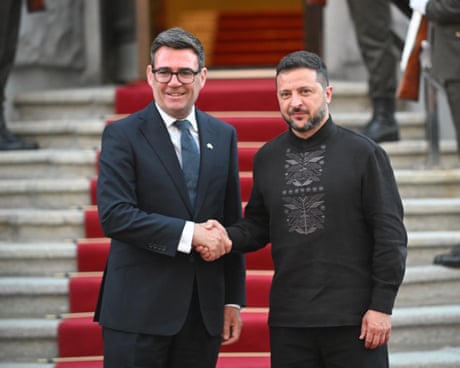
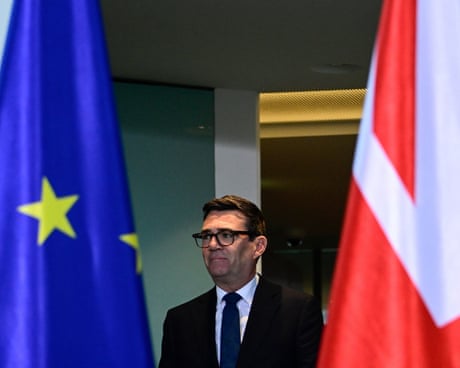
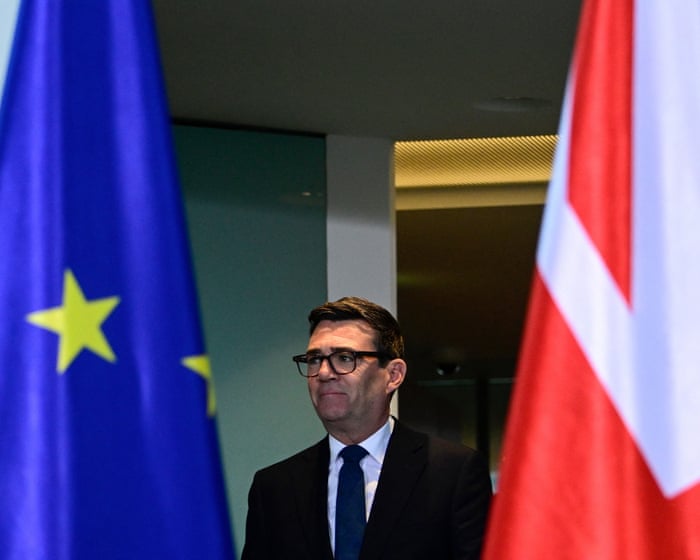
Andy Burnham will host Volodymyr Zelenskyy at Downing Street on Wednesday as the UK seeks to further underline its support for the Ukrainian president, in contrast to his difficulties with Donald Trump.
The UK prime minister said his message to Zelenskyy and his country would be: “We are with you for as long as it takes.”
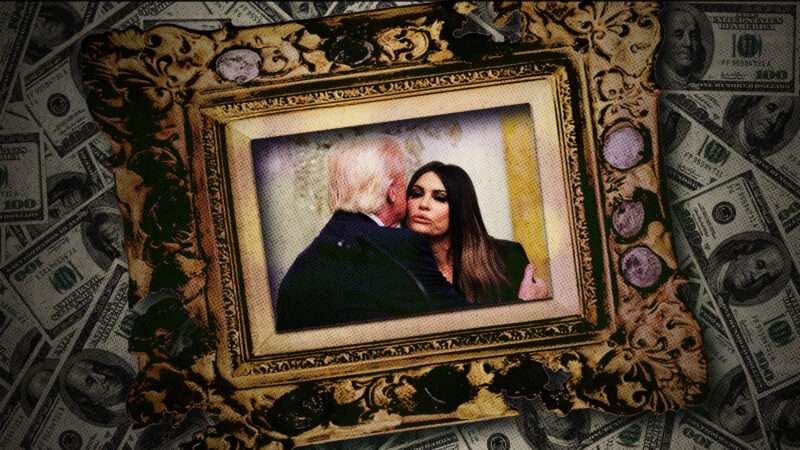
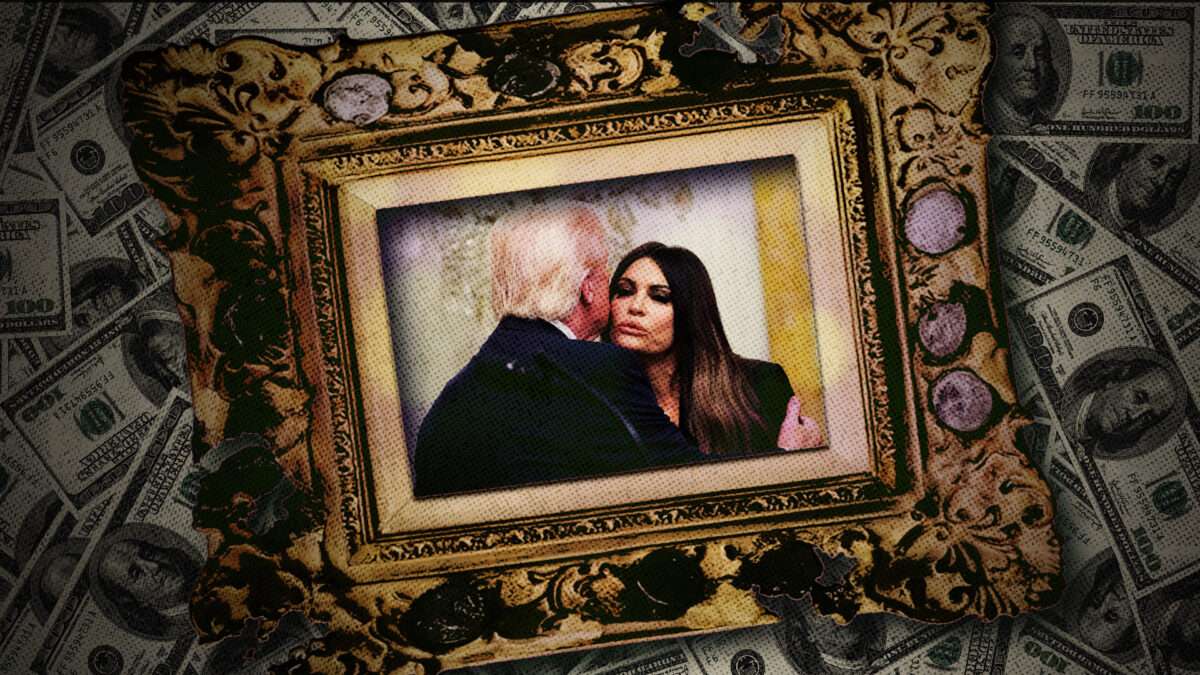
Kimberly Guilfoyle today resigned from her position as the U.S. ambassador to Greece shortly after the White House confirmed that President Donald Trump had asked her to do so. The main provocation seems to have been Guilfoyle's alleged influence peddling, which reportedly featured a request that Republican donor Eric Deters pay off her $100,000 American Express bill, in exchange for which she promised him special access to "Trump world."
The president signaled his displeasure on Monday, saying "we're looking at" axing Guilfoyle, his son's former girlfriend, because "we're not happy." On Tuesday, Trump added that "we didn't like what we were reading." That reaction is not surprising, since Guilfoyle would have been horning in on Trump's territory by trying to sell access and use her office for personal gain. That's histhing.
Consider Trump's attempts to promote the memecoin that he launched three days before beginning his second term. That April, the top 220 $TRUMP holders were invited to "an intimate private dinner" with the president on May 22. The "top 25 coin holders" were promised "an Exclusive Reception before Dinner with YOUR FAVORITE PRESIDENT," plus a "Special VIP Tour" of the White House the next day. The coin's price, which after an initial surge had fallen dramatically since Inauguration Day, rose by more than 50 percent immediately after that announcement.
"Since the announcement, crypto investors around the world have raced to expand their holdings of $TRUMP," The New York Timesreported 10 days before the dinner. "Certain buyers, in interviews and statements, have said they bought the coins or entered the dinner contest with the intention of securing an action by Mr. Trump to affect United States policy."
NBC reported that the coin investors who attended the dinner, which was held at the Trump National Golf Club in Sterling, Virginia, had collectively spent $394 million on $TRUMP. On average, that worked out to about $1.8 million a plate.
"This is my president that we're talking about, but I am willing to say that this gives me pause," Sen. Cynthia Lummis (R–Wyo.) said a few weeks before the dinner. "In abstract," Sen. Thom Tillis (R–N.C.) allowed, the event "is hard to understand." Sen. Lisa Murkowski (R–Alaska) drew an analogy: "I don't think it would be appropriate for me to charge people to come into the Capitol and take a tour."
Donald Sherman, executive director of Citizens for Responsibility and Ethics in Washington, was blunter. "This is one of the most blatant and appalling instances of selling access to the presidency I've ever seen," he said.
Compared to that episode, the controversy over the income that Trump's hotel in Washington, D.C., received from influence seekers during his first term might seem tame. But it raised similar ethical questions, albeit in a slightly more subtle way.
The Trump International Hotel's customers included Republican political organizations and a long list of trade groups, such as the National Mining Association, the Independent Petroleum Association of America, the National Confectioners Association, and the Vapor Technology Association, whose interests might be served by currying favor with the president. The hotel also attracted business from the governments of foreign countries, such as Kuwait, Bahrain, Saudi Arabia, Azerbaijan, Malaysia, and Romania, that likewise may have been investing in Trump's good will.
"Believe me, all the delegations will go there," a "Middle Eastern diplomat" toldThe Washington Post after Trump's election. "Why wouldn't I stay at his hotel blocks from the White House, so I can tell the new president, 'I love your new hotel!'" an "Asian diplomat" said. "Isn't it rude to come to his city and say, 'I am staying at your competitor'?" The Embassy of Kuwait, which had previously held its annual National Day celebration at the Four Seasons, reportedly canceled its reservation there and switched to the president-elect's hotel under pressure from the Trump Organization.
Trump saw no problem with any of this. "The law is totally on my side," he toldThe New York Times in November 2016. "The president can't have a conflict of interest." He reiterated that take at a press conference nine days before his inauguration. "I have a no-conflict situation because I'm president," he said.
Trump nevertheless said he would donate the profits from money spent by foreign governments at his hotels to the U.S. Treasury. But that solution did not address the money he was taking in from various domestic interest groups or his ability to enrich himself by encouraging Republican organizations or other federal officials to patronize his businesses.
One example of the latter: Vice President Mike Pence and his party stayed at Trump's golf resort in Doonbeg, Ireland, during an official trip in 2019. Although Trump insisted he "had nothing to do" with that decision, critics perceived a violation of the Domestic Emoluments Clause, which says the president may not receive additional compensation from the federal government beyond his official salary.
Trump later said he regretted his attempts to address conflicts of interest during his first term, including his promise that the Trump Organization would avoid new foreign business deals. "I prohibited [my sons] from doing business in my first term, and I got absolutely no credit for it," he toldThe New York Times 12 days before his second inauguration. "I didn't have to do that, and it's really unfair to them." The lesson he drew was that "nobody cared."
Consistent with that assessment, Trump has thrown all caution to the wind during his second term, capitalizing on his position to rake in millions of dollars by hawking all manner of presidentially branded merchandise, ranging from bibles to cologne; obtain a $400 million "palace in the sky" from the government of Qatar; extort $1 billion in pro bono legal work from disfavored law firms; earn billions from the same cryptocurrency industry he was simultaneously deregulating; and arrange a sweet IRS immunity deal that could save him more than $100 million in back taxes, interest, and penalties. Any worries about unseemly profiteering by Trump's family are long gone, as evidenced by federal contracts with businesses backed by his sons and highly lucrative foreign deals negotiated by his son-in-law.
Compared to all of that, the $100,000 that Guilfoyle allegedly sought in exchange for using her influence with the Trump administration to help Deters looks like pocket change. Her real sin, one suspects, was failing to offer her boss a piece of the action.
The prime minister is correct to judge the time is right to push for closer links with the EU. The political risk is far outweighed by the potential rewards
The German philosopher GWF Hegel famously evoked the owl of Minerva when discussing the historical wisdom that comes through hindsight. This autumn, she has flown tirelessly over the landscape of British politics. Party conference season was dominated by conflicting Labour and Conservative accounts of the 1970s and 80s. And a decade after the United Kingdom voted to leave the European Union, Andy Burnham this week abandoned all equivocation over the damage – economic but also strategic – that resulted from that decision.
Having declared that it is time to “face up to the reality that Brexit has done more harm than good”, Mr Burnham told the House of Commons on Monday that it would be a “dereliction of duty” not to explore all options for closer relations with Brussels. Though he confirmed that in this parliament he will honour the red lines in Sir Keir Starmer’s Labour manifesto, all bets will subsequently be off.
Do you have an opinion on the issues raised in this article? If you would like to submit a response of up to 300 words by email to be considered for publication in our letters section, please click here.
Russian meddling probably didn’t affect the referendum result – but the Kremlin’s motives for wanting to undermine the EU still matter
Russian territorial aggression against Ukraine didn’t feature much in the Brexit referendum campaign. It made headlines briefly when Boris Johnson blamed Moscow’s 2014 annexation of Crimea on the European Union.
According to the Vote Leave frontman, Vladimir Putin’s land grab was a consequence of Brussels making foreign policy “on the hoof” and having “pretensions to running a defence policy”.
Ukrainian president’s comments on ‘particularly vile’ strikes come after US threatened to halt intelligence sharing
Ukraine received no early warning from its partners about a second night of Russian ballistic missile strikes on civilian infrastructure in Kyiv, including a critical power plant struck after dark, Volodymyr Zelenskyy said on Tuesday.
The Ukrainian president had earlier described an attack involving five missiles on Monday as “particularly vile”. He emphasised that receiving intelligence from Ukraine’s western allies “helps saves lives, and this is one of the most critical issues”.

 Login