❌

Reading view

“Starshield systems are owned and controlled by the US government”: Musk says Trump, not SpaceX, is behind cut hitting Ukraine

kyiv asking musk let strike inside russia its best line gone · post elon 2026 world economic forum / ciaran mccrickard wef ukraine news ukrainian reports

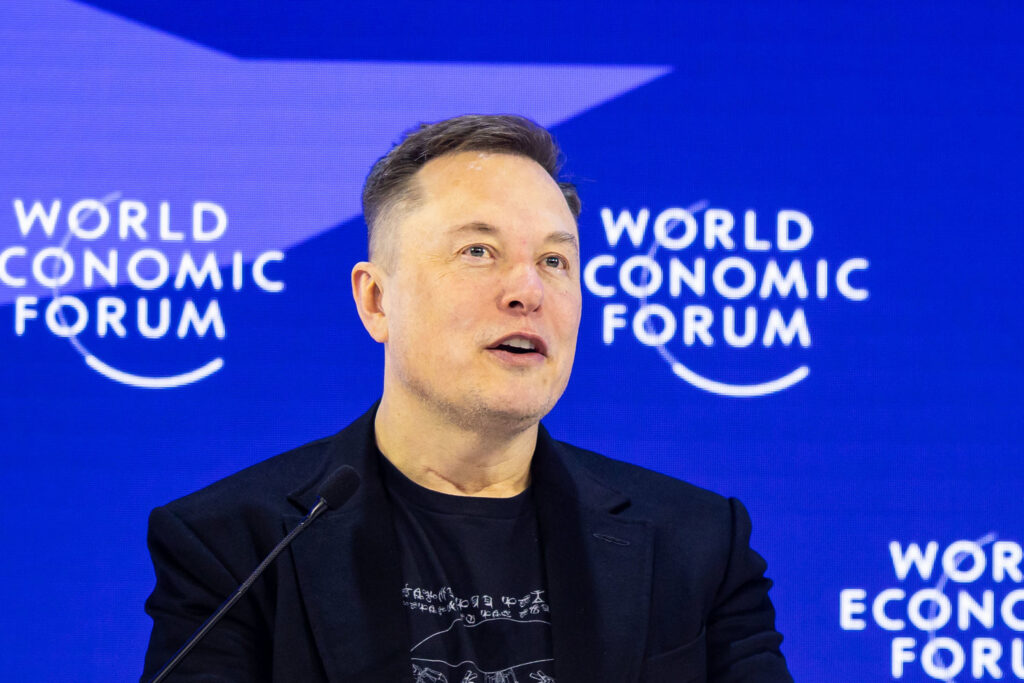
SpaceX chief Elon Musk says the version of Starlink that Ukraine’s military uses, StarShield, is owned and controlled by the US government rather than by his company. His claims come amid a storm over Ukrainian reports that a speed cut had broken their frontline operations.

Ukraine’s drones and air defenses rely on Starlink to steer and strike, so a limit on the network hits combat directly. Ukrainian troops reported that overnight into 14 October, the faster military package they depend on was throttled, halting a series of missions. Musk’s answer shifts the decision and the blame from SpaceX to the US government and, ultimately, to the president.

“Any limits on speed or usage are decided by the US military and ultimately POTUS. StarShield systems are owned and controlled by the US government,” Musk says.

He draws a line between the two services. Ordinary Starlink is a commercial product owned by SpaceX, limited to civilian or defensive use and not for offensive military action, which he called inappropriate for a commercial company.

Their conversation took place the same week that Washington pressured Kyiv over its strikes on Russian oil refineries amid US President Donald Trump's diesel deal with Moscow.

The exchange that forced Musk to answer

The statement followed a direct appeal. Former Defense Minister Mykhailo Fedorov told Musk on X that Starlink connectivity at speeds of up to 160 km/h was being restored, and pressed for more.

“Removing StarShield’s speed limit entirely is now critical for Ukraine’s defense. Thank you, Elon Musk. We hope for your continued support,” Fedorov wrote, framing the cap as a direct constraint on the war.

The faster package Ukraine cannot do without

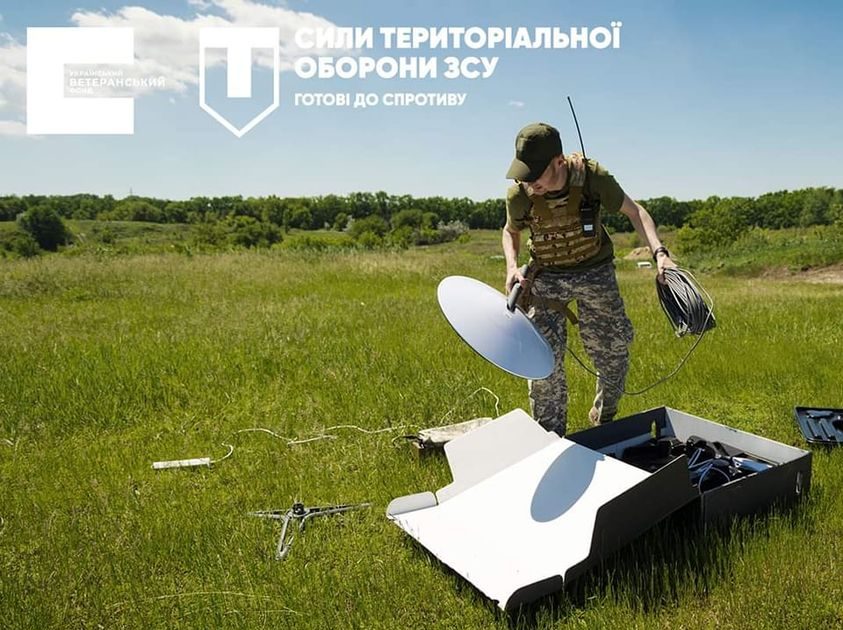
The ordinary Starlink Mini mounted on drones is capped at about 160 km/h, which is too slow for some missions, so faster flight requires access to the military version, StarShield, Ukrainska Pravda notes. Ukraine has used StarShield since 2024.

  •  

A 1571 Letter Undercuts the Hoax Theory Around the “Other Voynich Manuscript” and Reveals a Terrified Scribe

Some medieval books can’t be read by anyone, and one of them has become almost a trademark of the genre: the Voynich manuscript, kept at Yale University and dated to the 15th century. It has inspired novels and theories of every kind. Specialists often place another volume right behind it on the list of enigmas, […]

  •  

“Trump and Musk must be held accountable”: US senator warns Starlink network failing over Ukraine could cripple its shield against Russian missiles and drones

geran-2 (shahed-136) drone belarusian markings service military belta militarnyi російський безпілотник герань 2

US Senator Richard Blumenthal, a co-author of the Russia sanctions law named after Lindsey Graham, has issued a sharp statement on the latest developments in Ukraine. He says that President Donald Trump and SpaceX chief Elon Musk should be held accountable for reported Starlink failures that could cripple Ukraine’s defense.

On 14 October, Ukraine’s military reported a Starlink disruption that halted its operations. It happened at the same time the country’s air defense stopped receiving intelligence on a Russian ballistic strike that killed three people in Kyiv. Both failures came right after the US struck a diesel deal with Russia, letting low volumes of fuel into global markets and America while pressure grew on Ukraine to stop hitting the Russian oil refineries that raise the cost of the war.

"Reports of Starlink failing in Ukraine are deeply alarming— potentially crippling air defense against Russia’s murderous missiles & drones. Trump & Musk must be held accountable," he says.

When the network falters, the war feels it

The alarm rests on how completely Ukraine leans on the system. SpaceX has reportedly throttled the StarShield military package Ukrainian drones use, with connections dropping once the drones move at speed, and breaking a series of missions.

Ukraine neither owns nor controls Starlink, and the latest limits revived long-running fears that its battlefield lifeline can be dialed down from outside the country.

Blumenthal’s demand sits inside a broader revolt in Congress. A bipartisan group of 12 senators wrote Trump on 13 October urging him to rescind his deal letting Russian diesel back to market, calling the Treasury’s General License No. 135 a gift to Moscow that should be withdrawn.

They pressed him instead to use the Graham-Leach-Bliley Act he signed in September to squeeze Russia and its enablers, above all, China.

"If there's one lesson from Trump's mindless warmongering, it's that we need to break our dependence on foreign imports of fossil fuels & embrace alternate sources of energy," he said.

  •  

“Trump was looking for any opportunity to undermine our defense capabilities,” top Ukrainian volunteer, who supplied 291,502 FPV drones to front, says of sudden Starlink limit

Elon Musk: “Starlink will never turn off for Ukraine”

One of Ukraine’s most prominent drone volunteers, Serhii Sternenko, says that Starlink terminals have been restricted overnight, with connectivity beginning to drop out at speeds exceeding 160 km/h. As a result, several critical missions were disrupted.

Sternenko heads a charitable foundation that has purchased 291,502 FPV drones, which have helped the Ukrainian military shoot down more than 12,954 aerial targets. He has also served as an adviser within the team of former Defense Minister Mykhailo Fedorov.

Sternenko suggests that SpaceX may have introduced the restrictions at the request of the Trump administration. He adds that Ukraine had refrained from striking Russian oil refineries and energy infrastructure in recent days, as Trump had requested.

“But Trump was looking for any opportunity to undermine our defense capabilities, and he did so despite the fact that we had complied with his demands,” Sternenko says.

The limit landed the same night Russian ballistic missiles struck Kyiv’s Desnianskyi district, killing three women and injuring 24, including a seven-year-old girl.

Rescuers evacuated people covered in blood

The strike on a nine-story residential building set it ablaze, burning out apartments from the first floor to the ninth, with rescuers pulling bloodied residents from the flames and leaving survivors without power, water, or gas, according to Suspilne.

During the night’s first ballistic launches, partners did not alert Ukraine, but for the three later waves the warnings did come through, Air Force communications chief Yurii Ihnat says. The cause of the first lapse is still being established, per Radio Free Europe/Radio Liberty.

The early warnings help Ukrainian civilians quickly find a place to hide from such strikes, leaving up to 3 minutes to do so. Without it, people are left entirely helpless in the face of the aggression.

Further Starlink restrictions have reportedly been introduced

Later, Sternenko wrote that reports were "coming in from military personnel that restrictions on the use of Starlink satellite communications terminals for our operations have just been tightened.

"The speed at which the connection starts dropping out is now 60–70 km/h,” he added.

  •  

NATO country that pays for Kyiv’s Starlink warns Musk as his cap breaks Ukraine’s drone missions: “As your European customers, we are watching you”

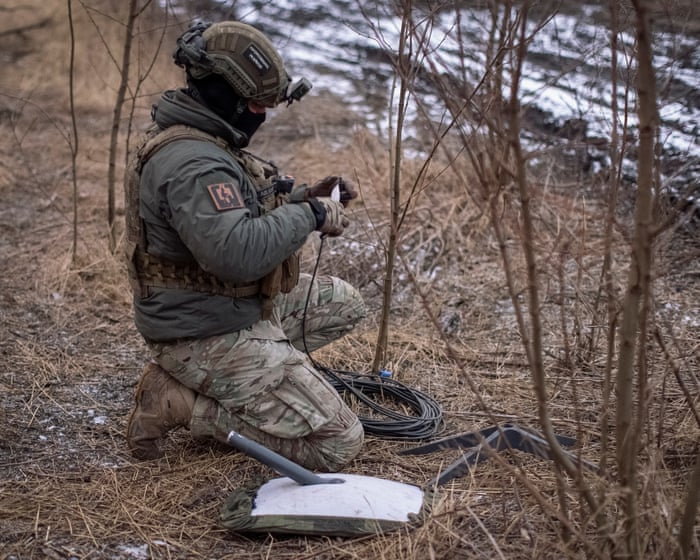
Starlink terminal.

Poland’s Foreign Minister Radoslaw Sikorski has publicly criticized SpaceX chief Elon Musk over the latest disruptions in Starlink's operation in Ukraine. Poland is the largest supplier of Ukraine’s terminals, having provided about 29,500, roughly half the network. It also has a Starlink ground station in Wola Krobowska that provides connectivity for much of Central and Eastern Europe, including Ukraine, RMF24 reports.

On 13 October, SpaceX imposed a 100 mph (160 km/h) speed limit on the StarShield military package that Ukrainian forces use, disrupting drone missions without warning. Poland, which pays about $50 million a year for Ukraine’s Starlink terminals, told Musk it is watching.

“Hey, @elonmusk, big man, are you playing politics with your products again? As your European customers, we are watching you,” Sikorski wrote on X.

The “big man” jab echoed their 2025 clash, when Musk told Sikorski to “be quiet, small man” after the minister noted that Warsaw, not SpaceX as charity, pays for the service.

Be quiet, small man.

You pay a tiny fraction of the cost.

And there is no substitute for Starlink.

— Elon Musk (@elonmusk) March 9, 2025

Meanwhile, presidential adviser Serhii “Flash” Beskrestnov said that this could not be a coincidence and was most likely tied to the current political situation.

When a drone outruns its own signal

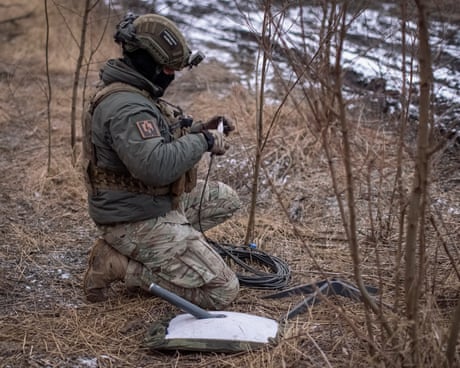
The cap bites exactly where Ukraine’s drones do their work. The StarShield package had previously carried no data speed limit, and the change directly affected drones that use Starlink to steer in flight, the 7th Air Assault Corps said.

“During flights, the connection could drop for 10 to 20 seconds at speeds of just 110 to 120 kilometers per hour. The drones kept moving, but these interruptions made them harder to control,” the corps said, describing problems that now start well below the new ceiling.

A dependence Kyiv has feared for years. The limit revives an old worry. Ukraine neither owns nor controls Starlink, and the restriction follows fresh fears of a shutdown after Musk backed US President Donald Trump’s call for Zelenskyy to resign.

  •  

Inflation worsened last month to 3.7% as midterm elections near

Gas, clothes, and air fares got more expensive, evidence that rising prices remain an economic challenge just a few weeks before the midterm elections that have focused heavily on issues related to affordability.

  •  

SpaceX schränkt Kiews Zugang zu Starlink ein und die USA liefern keine Aufklärungsdaten mehr

Trump scheint seine Forderung, die Ukraine solle ihre Angriffe auf russische Raffinerien einstellen, ernst zu meinen und lässt dem, nachdem Selensky Trumps Forderungen offen ignoriert hat, nun Taten folgen. Die USA haben Kiew schon die zweite Nacht infolge keine Aufklärungsdaten über russische Raketenangriffe geschickt und dann SpaceX den Zugang des ukrainischen Militärs zum Satelliteninternet Starlink […]
  •  

New Starlink restrictions disrupt Ukrainian drone missions. Kyiv adviser says move is tied to “political situation”

Starlink

Ukraine’s presidential adviser Serhii Beskrestnov said SpaceX had imposed a 100 mph (160 km/h) speed limit on its military Starshield service overnight into 14 October, disrupting several missions without warning Ukraine’s defense forces.

Ukraine’s forces use Starlink-connected drones to strike Russian positions and logistics, including targets behind the front line. Unlike earlier restrictions introduced at Kyiv’s request to stop Russian forces from exploiting Starlink, the latest change reportedly targets the military Starshield service and was imposed without warning Ukraine’s military.

What the new restriction covers

Beskrestnov wrote that the restriction applies to the “military package” of Starshield services. He said the move “obviously cannot be a coincidence” and was connected with the “current political situation,” but did not explain what he meant.

Activist Serhii Sternenko, a former adviser to Ukraine’s defense minister, reported that connections began disappearing at speeds above 160 km/h. He suggested SpaceX had acted at the Trump administration’s request but provided no evidence. Starlink does not work inside Russia, and the drones hitting Russia’s oil industry use other means of communication, Reuters noted. Sternenko added that the ordinary satellite terminals were still working.

Later on 14 October, Sternenko wrote that, according to military reports, restrictions had been tightened further, with connections starting to drop at 60–70 km/h. Beskrestnov later warned that the restriction also hits Starlink-linked interceptor drones, which he called Ukraine’s most effective current defense against jet-powered Shaheds.

Front-line units report dropped connections

Ukraine’s 7th Rapid Reaction Corps confirmed the disruptions in a statement to Reuters. The corps’ press service told Novynarnia that its units on the Huliaipole front began experiencing problems overnight. The corps said the change affected drones controlled through Starlink in flight and concerned Starshield’s data-transmission speed, which it said had previously been unrestricted.

The corps said connections could disappear for 10–20 seconds at movement speeds of 110–120 km/h, complicating drone control. Flying slower creates its own risk, it said, because “slower targets become more vulnerable to being hit by the enemy.”

Some high-speed drones, particularly mid-range strike models, must reach high speed quickly, the corps said. An unstable connection “will make it impossible to launch such aircraft or use them as intended.” Since the start of the day, one unmanned systems unit on the Huliaipole front had to cancel some missions because of connection problems, the corps said.

Earlier limits came at Kyiv’s request

In late January, SpaceX began restricting Starlink in Ukraine at Kyiv’s request after Russian forces started mounting terminals on strike drones. After Russian drones struck a passenger train in Kharkiv Oblast on 27 January, Beskrestnov, then an adviser to the defense minister, suggested one of them may have been controlled via Starlink. In early February, Ukraine introduced a whitelist under which only registered terminals could continue operating. Beskrestnov called the earlier countermeasures “temporary” and “emergency.”

SpaceX had not publicly commented on the restriction, and Ukraine’s Defense Ministry was looking into its cause, Radio Svoboda reported. Polish Foreign Minister Radosław Sikorski asked Elon Musk on X whether he was “playing politics with your products again,” adding: “As your European customers, we are watching you.”

  •  

SpaceX Restricts Ukraine’s Military Starlink Access, Disrupting Drone Operations Amid Growing US Tensions

Ukrainian forces have reported the sudden loss of satellite communications during high-speed drone operations after SpaceX imposed new restrictions on its military-grade Starshield service. The disruption revives questions over American control of Ukraine’s battlefield communications and follows earlier controversies involving Elon Musk’s intervention in Ukrainian military operations.

Ukraine’s armed forces have reported serious disruptions to drone operations after Elon Musk’s SpaceX introduced new restrictions on its Starshield satellite communications service overnight on 13–14 October. The changes reportedly caused Ukrainian unmanned aircraft to lose connectivity when travelling faster than 160 kilometres per hour, forcing the abandonment of several military missions.

The restrictions were confirmed by Serhiy Beskrestnov, an adviser to President Volodymyr Zelenskyy on defence technologies, who said Ukrainian forces had received no advance warning. According to his account of the disruption, the new limit of 100 miles per hour applies to Starshield, the military communications service developed by SpaceX for government and defence applications.

Serhiy Sternenko, a prominent Ukrainian volunteer and former adviser to the defence minister, was among the first to report the problem. In a statement published on Wednesday morning, he said satellite connections had begun disappearing once drones exceeded the new speed threshold, disrupting several important missions. Sternenko suggested that the decision might have been taken at the request of President Donald Trump’s administration, although no evidence establishing such an instruction has been made public.

Four Ukrainian military personnel speaking to Ukrainska Pravda independently reported problems with Starshield. One commander provided footage purportedly showing two Ukrainian drones losing their satellite connections during flight and becoming unable to complete their missions.

The restrictions do not appear to affect ordinary Starlink terminals operating within their existing speed limits. However, military-grade Starshield connectivity allows Ukraine to operate certain unmanned systems at considerably higher speeds, including aircraft conducting long-range missions against Russian military and industrial targets.

Previous disputes over Starlink access

The latest interruption is not the first occasion on which SpaceX has limited Ukraine’s military use of its satellite network. Since Russia launched its full-scale invasion in February 2022, Starlink has become an essential component of Ukrainian battlefield communications, supporting frontline command systems, artillery coordination and unmanned operations.

In September 2022, during Ukraine’s counteroffensive in the south, Starlink communications failed in areas where Ukrainian forces were attempting to advance against Russian positions. A subsequent investigation published in July 2025 reported that Musk had personally ordered the suspension of service across parts of the battlefield, including areas around Kherson.

The interruption reportedly affected reconnaissance, artillery targeting and communications between military units at a critical stage of the operation. The investigation raised questions about the ability of a private technology provider to influence military operations through decisions governing access to its infrastructure.

Another controversy emerged in September 2023, when Musk acknowledged refusing a Ukrainian request to activate Starlink coverage near Sevastopol in Russian-occupied Crimea. Ukrainian forces had intended to use unmanned naval vessels against Russia’s Black Sea Fleet.

Musk argued that enabling the operation could have made SpaceX complicit in a major escalation of the war. His explanation also challenged earlier accounts suggesting he had actively switched off an existing connection, rather than declined to activate coverage in the requested area.

In February 2023, SpaceX president Gwynne Shotwell had already confirmed restrictions on Ukrainian drone operations, explaining that the company had not intended its commercial communications network to be used directly as a weapon.

Military dependence and American leverage

The Pentagon attempted to establish a more formal relationship with SpaceX in June 2023, contracting the company to provide satellite communications to Ukrainian forces. However, the contractual arrangements and the extent of American government authority over operational restrictions have never been fully disclosed.

Ukraine subsequently gained access to Starshield, which SpaceX describes as a secure satellite network intended specifically for national security applications. Unlike the commercial Starlink service, Starshield is designed to support government communications and other sensitive operations.

The latest restrictions therefore concern a service intended for military use rather than the civilian network at the centre of earlier disputes. Their introduction without advance notification has renewed concerns about Ukraine’s dependence on communications infrastructure controlled outside the country.

The timing is particularly sensitive as Washington and Kyiv continue to disagree over Ukrainian strikes against Russian energy facilities and the terms of a possible ceasefire. Ukraine has maintained that attacks against Russia’s oil industry are part of its campaign to reduce Moscow’s ability to finance and sustain the invasion.

Nevertheless, there is currently no independently established connection between those diplomatic disagreements and SpaceX’s decision to impose the new speed restriction. Neither a technical explanation nor evidence of an instruction from Washington had been publicly established when the disruption was reported.

For Ukrainian commanders, the immediate problem is operational. High-speed unmanned aircraft depend on reliable communications for navigation, mission management and the transmission of information. A restriction introduced without warning can render previously functioning systems ineffective in the middle of an operation.

The incident has exposed a persistent vulnerability in Ukraine’s military communications arrangements: even where the necessary aircraft, operators and mission capabilities are available, their employment may remain subject to restrictions imposed by an external satellite operator.

  •  

Ukrainian military’s access to Starlink satellite internet suddenly restricted

Launch of Russian ballistic missiles on Ukraine, with no US warning, coincides with outage of Starlink managed by Musk’s SpaceX

Ukraine’s military has suddenly had its access to Starlink satellite internet terminals restricted as the Trump administration has increased pressure on Ukraine to halt long-range strikes on Russia’s oil industry immediately.

The terminals, which are produced by Elon Musk’s SpaceX but managed by the US government, are a key component of Ukraine’s military operations and the sudden restrictions on the terminals travelling at high speeds on Tuesday evening led to the failure of several combat missions, said an adviser on military technology to Ukraine’s president, Volodymyr Zelenskyy.

Continue reading...

© Photograph: Reuters

© Photograph: Reuters

© Photograph: Reuters

  •  

Russia-linked bot networks kept their weekly rhythm after drone strikes on three Yandex data centers—disinformation monitor LetsData

Collage by Euromaidan Press

The claim that strikes on Russian tech giant Yandex thinned out social media bots finds no support in the networks tracked by Ukrainian disinformation-monitoring company LetsData, co-founder Ksenia Iliuk told Euromaidan Press on 13 October. She cautioned that the strikes may still have affected networks outside the company’s view.

At the Warsaw Security Forum, Lithuania’s prime minister suggested allies should ask Ukraine to strike more Russian data centers because that might help protect European elections from foreign interference. Bot networks are one tool of that interference, so whether the strikes mute them carries weight well beyond Ukraine.

No drop in the networks LetsData tracks

Drones hit Yandex data centers in Sasovo and Vladimir between 8 and 11 October. Ukrainian drone maker Fire Point said its FP-1 drones struck Yandex’s Kaluga site in between. On 12 October, Ukrainian President Volodymyr Zelenskyy told the Warsaw Security Forum that once Ukraine’s response reached Yandex, social media had fewer bots.

more than 500 drones moscow’s count kh-101 fuel plant second yandex data center far-north refinery hit · post smoke over ukhta komi republic after reported drone attack lukoil 9 2026
Explore further

More than 500 drones by Moscow’s count: Kh-101 fuel plant, second Yandex data center, and a far-north refinery hit

LetsData checked X and Facebook, where bot networks usually stand out clearly, Iliuk said. Its analysts looked at networks attributed to Russia’s influence ecosystem. Among them are groups of X accounts spreading domains from what she called a new wave of Doppelgänger, a Russian campaign that clones real news sites.

Those networks look unaffected, Iliuk said. None of them has stopped posting or broken its usual rhythm, she added. Some are slightly less active, but LetsData’s analysts say that is typical for them. The networks run on a weekly cycle, and the check fell in the part of the week when they post less.

A network that jumped from Germany to Ukraine

LetsData worked with two samples. One covers accounts that systematically target Ukraine, Moldova, and Armenia. The other covers bot networks the company has followed for some time that keep changing their target audience, so they have no fixed country.

ukrainian drones hit three russian tech giant yandex’s data centers four days ukraine’s president says bots thinned out too · post flickr/hesham elmahdy social media internet trolls networks ukraine news
Explore further

Ukrainian drones hit three of Russian tech giant Yandex’s data centers in four days. Ukraine’s president says the bots thinned out too

About two weeks ago, one network from that second sample wrote about elections in Germany and spread fake Die Welt sites, she said. It now posts about mobilization in Ukraine and shares a fake site of Ukrinform, Ukraine’s state news agency.

What the check can’t see

The company can compare only within networks whose usual behavior it knows, Iliuk said. Checking the whole internet is impossible because the scale is colossal, she said. A Cloudflare chart that circulated as evidence counted automated web requests from Yandex’s network, including its search crawlers, not social media posts, Cybernews reported.

So the networks LetsData follows show no impact, Iliuk said. That does not mean the strikes had no effect at all, she noted. They may have shown up in networks the company isn’t tracking now. LetsData will keep watching and report other signals if they appear.

  •  

THE “PLAGUE” & OTHER BOOGEYMEN: HAVE NO FEAR.

from SGT Report: If you think Bill Gates, Albert Bourla and Tony Fauci are enemies of humanity, you’re right, they are. But do NOT forget about the FDA which brought us the Covid bioweapons AND Moderna’s mNEXSPIKE. And with 21 ‘Plague vaccines’ in the pipeline, the worst might still be ahead of us. But BE […]
  •  

Does Vaccination Cause Autism: An Introduction

by Paul Craig Roberts, Paul Craig Roberts: The article below by Danish researcher Soren Korsgaard examines the official narrative that vaccines are not a cause of autism. He focuses on the Madsen paper which the CDC cites as proof that vaccines do not cause autism. Korsgaard found that instead of comparing a vaccinated population with […]
  •  

“There is an emerging problem seeing all over the World – it’s called Chemtrail Lung

🚨🌍 California Doctor:- “There is an emerging problem seeing all over the World – it’s called Chemtrail Lung – there are more respiratory illnesses that are showing up because of the toxic chemicals” “Especially in this area – because of lots of secret activity happens at Palmdale Airport” — Concerned Citizen (@BGatesIsaPyscho) October 13, 2026
  •  
❌