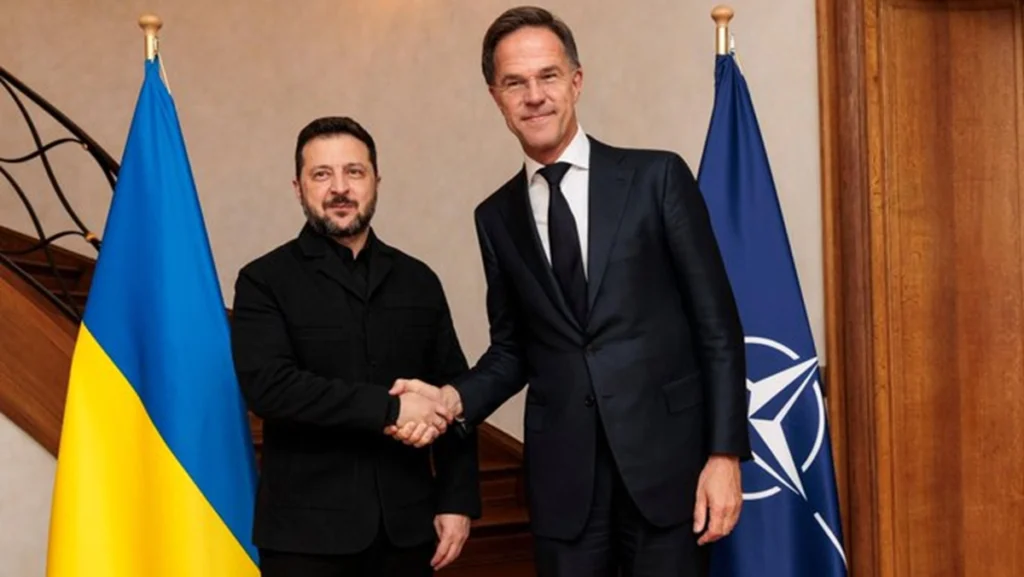
Mark Rutte meets Vodolymyr Zelensky in Brussels ahead of European Union summit.
During a meeting on Thursday, NATO Secretary-General Mark Rutte tacitly asked Ukrainian President Volodymyr Zelensky to implement the “energy ceasefire” announced by U.S. President Donald Trump.
“Good to see President Zelensky in Brussels. We talked about the importance of implementing an energy ceasefire,” Rutte said in a social media message accompanied by a photograph with the Ukrainian leader, who is in the Belgian capital to attend a European Union summit on Friday as a guest.
Rutte also said they discussed “NATO allies’ continued support for Ukraine,” among other things through the Prioritized Ukraine Requirements List (PURL) mechanism, launched by the alliance so that allies can buy U.S. military materiel to send to Kyiv.
Through social media, Zelensky said the meeting with Rutte served to continue coordinating with NATO “greater protection and security for Ukraine.” He took the opportunity to blame Russia for having broken the energy ceasefire through attacks on energy infrastructure.
⚡️ On October 15 in Baku, Russian Foreign Minister Sergey Lavrov directly rejected any potential ceasefire in Ukraine, explicitly countering US President Donald Trump’s October 11 announcement of an energy truce. pic.twitter.com/CB4Md9VTkN
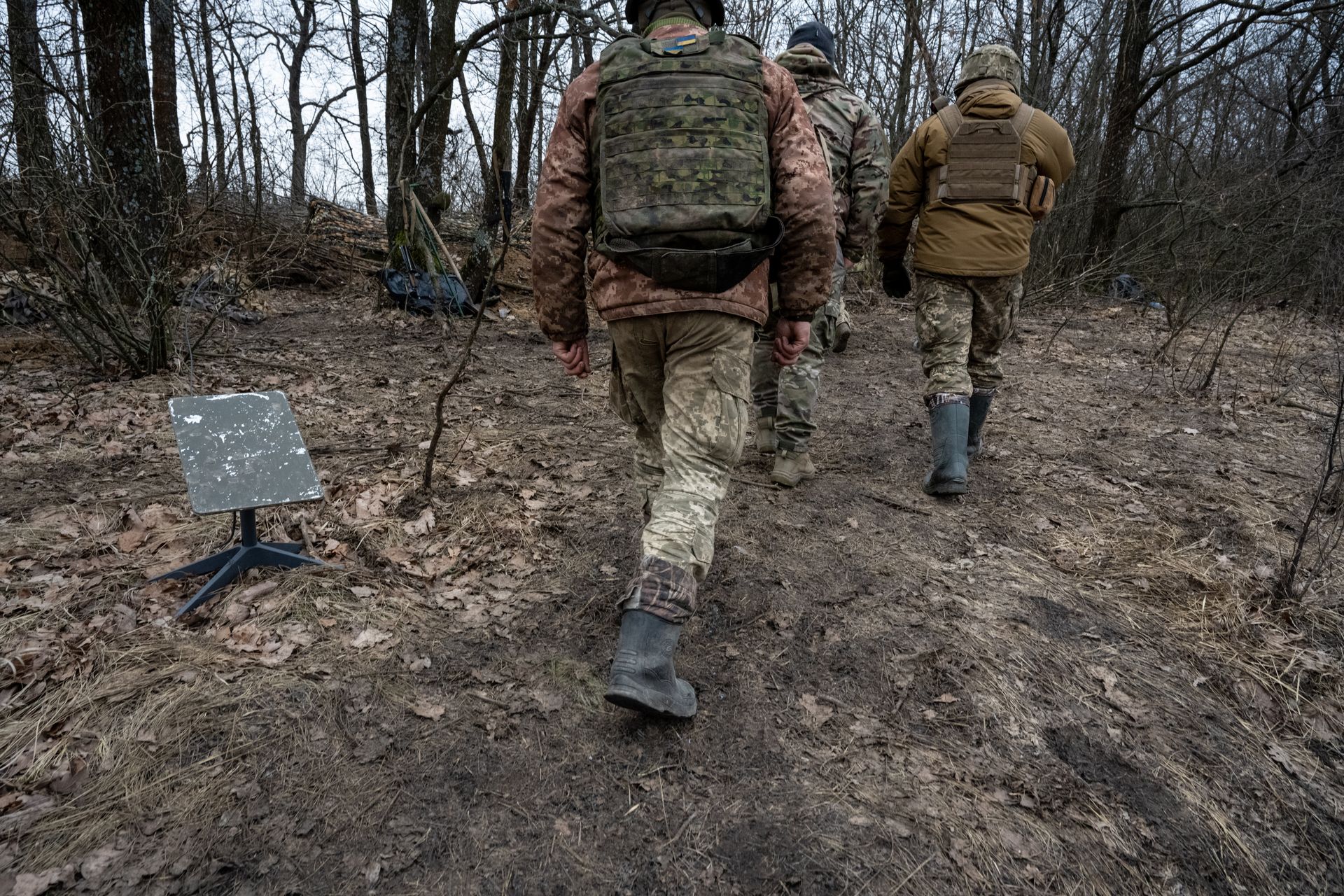
He also complained about restrictions on Starlink satellite operations in Ukraine, asked that arms supplies to Ukraine continue, and insisted on the need to receive ballistic missile interceptors and ammunition for F16 aircraft.
The Brussels meeting comes a day after Russia launched an attack against three thermal power plants operating in the Kiev region and an attack against energy facilities in Kharkiv.
In statements to the Financial Times, Zelensky reaffirmed his willingness to continue the conflict and announced that “the ban (on attacking Russian refineries) has been lifted. That is enough.”
On Thursday, Russia confirmed that Ukraine attacked a refinery in Ryazan, a region 200 kilometers from Moscow. Yesterday, Russian authorities also denounced Ukrainian attacks on two other refineries in the Saratov and Ryazan regions.
The Kremlin assured that Russia has not violated any agreement given that the energy truce between Russia and Ukraine was never finalized.
When Rudolph Diesel disappeared in 1913, many suspected foul play. The prime suspects were Germany’s Kaiser Wilhelm II and US oil man John D. Rockefeller. Both would have had reason to want the inventor of the diesel engine dead. The militaristic kaiser was building a diesel-powered submarine fleet. He had no interest in other countries […]
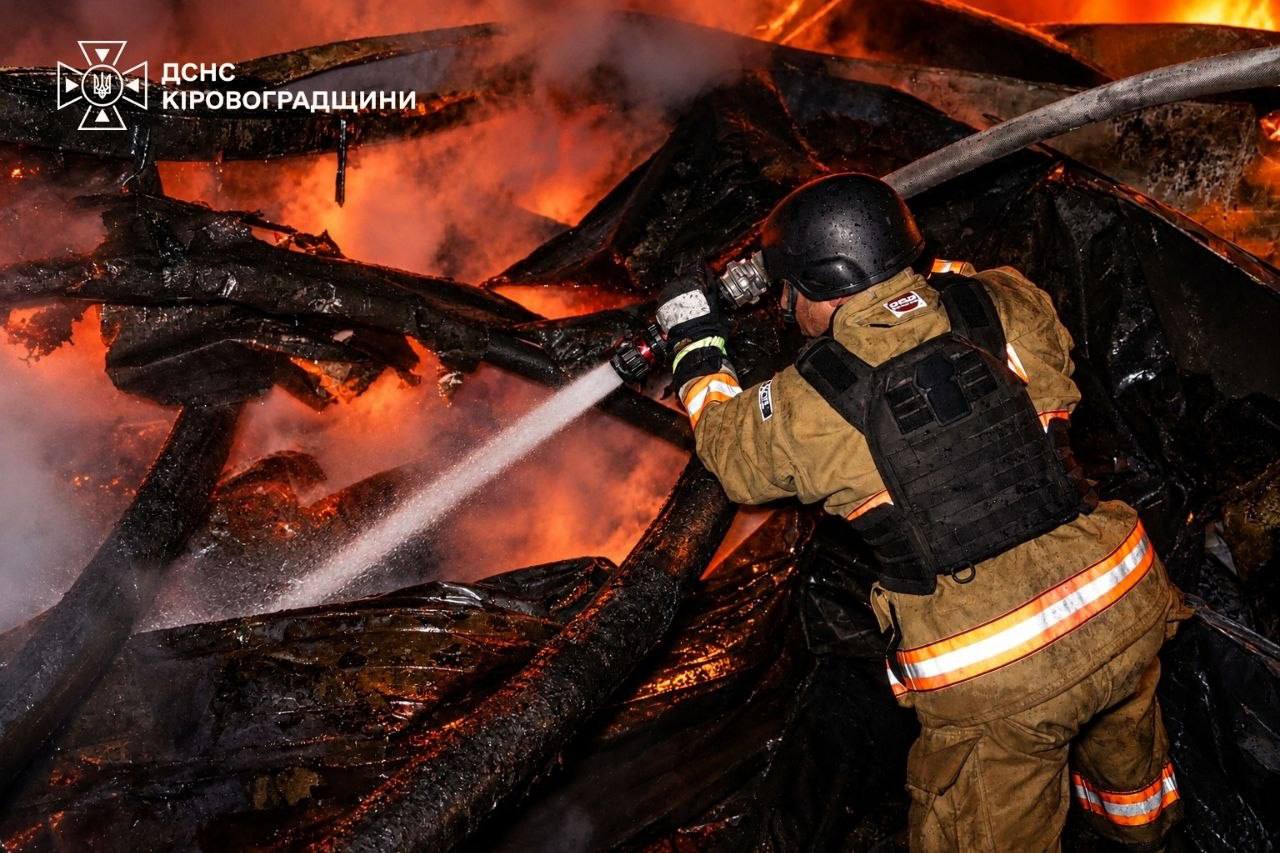
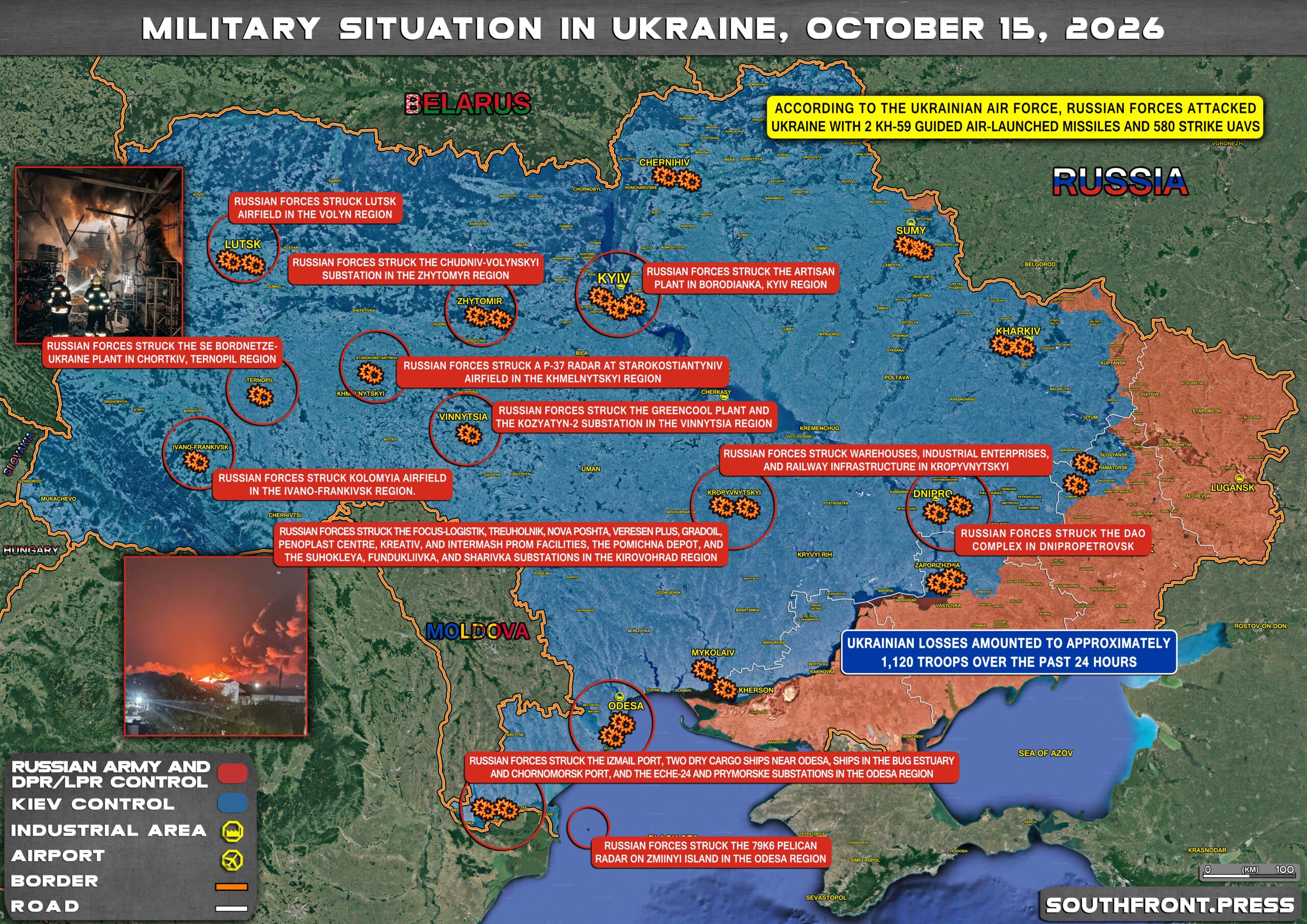
On the night of October 15, 2026, the Russian Armed Forces carried out a combined strike on Ukraine using two Kh-59 guided missiles and 580 attack drones and decoy drones. The main effort was concentrated on Kirovohrad Region, where strikes continued for more than ten hours and hit industrial facilities, logistics complexes, and railway infrastructure. Strikes were also carried out against port infrastructure in Odesa Region, traction substations, and aviation infrastructure in western Ukraine. In response, Ukraine attempted a massive attack on the Ryazan oil refinery, which was repelled by air defense forces.
Russian Strikes on Ukraine Kirovohrad Region Logistics and warehouse facilities (Kropyvnytskyi).Kirovohrad Region came under the most massive attack since the start of the conflict: according to Andriy Raikovych, head of the Region Military Administration, nearly 360 drones attacked the region, with impacts recorded at 25 locations. In Kropyvnytskyi, strikes hit company premises, logistics centers, and warehouses. Among the affected facilities were Focus-Logistics, a warehouse complex operated by a company with critical-infrastructure status; warehouse buildings of SE Kombinat Trykutnyk, part of Ukraine’s state material reserve system; a cargo branch of Nova Poshta; and a distribution center of Veresen Plus LLC, operator of the Faino Market chain.
Industrial facilities (Kropyvnytskyi). Three drone strikes hit the premises of Gradoil LLC, a full-cycle oil-extraction complex that processes sunflower and rapeseed; fire engulfed administrative and warehouse buildings covering more than 1,000 square meters. Three drones struck Penoplast Center LLC, a production and warehouse facility in the polymer sector, with the fire spreading across roughly 800 square meters. A separate strike hit the former industrial complex of PrJSC Kreativ, historically one of the city’s largest oil-and-fat enterprises, whose production facilities continue to be used by other operators after the legal entity’s bankruptcy. A production workshop of Intermash Prom LLC in Oleksandriia was also hit, with fire engulfing more than 300 square meters. The company was registered in August 2026, and its initial business profile included the production of weapons and ammunition.
Railway infrastructure.Four attack drones successively hit the railway complex in Pomichna. According to available information, the strike hit the locomotive complex, but the fire was recorded in a building belonging to the railcar repair facility responsible for repairing freight rolling stock. In addition, the Sharivka and Suhokliia traction substations were hit, and electric train service was halted.
Odesa Region Port of Izmail and maritime vessels. Port infrastructure at the Port of Izmail was damaged; it was used for unloading and storing military and dual-use cargo. In addition, two bulk carriers were hit while underway at sea.
Traction substations. In Rozdilna Raion, a drone struck the EChE-24 traction substation, causing an oil fire covering about 350 square meters. In Izmail Raion, an attack drone exploded near the Prymorske substation.
Ternopil Region Chortkiv — SE Bordnetze cable production.Russian drones hit the Chortkiv branch of SE Bordnetze-Ukraine LLC (SEBN), part of the international Sumitomo Electric Bordnetze network. A warehouse building was damaged, and fire engulfed more than 500 square meters. The facility produces electrical wiring systems and wiring harnesses for the automotive industry, including for the Volkswagen Golf 8, Audi A6, Audi e-tron, and Porsche J1. According to reports, the company’s cable-production capabilities were also used to manufacture components for Ukrainian long-range unmanned systems.
Vinnytsia Region Vinnytsia — GreenCool plant. GreenCool is one of Ukraine’s largest refrigeration-equipment manufacturers and part of the UBC Group, with revenue exceeding UAH 2 billion. Open procurement data show four government tenders involving Green Cool LLC, with Ukrnafta as the main customer. The Zhmerynka locomotive depot and the area around the Kozyatyn-2 110 kV supporting traction substation were also attacked.
Zhytomyr Region Chudniv-Volynskyi traction substation. Vilshanka traction substation.
Khmelnytskyi Region Starokostiantyniv — radar station. Two Geran-5 jet-powered drones hit a P-37 radar position at Starokostiantyniv airfield. The radar itself was destroyed. The P-37 is an air-surveillance asset that provides commanders with a picture of the air situation in their area of responsibility. Radar coverage is designed with overlapping zones, so the airfield does not become completely “blind,” but the destruction of an operational air-surveillance asset is a concrete loss for an airfield that has regularly come under attack.
Volyn Region Lutsk — airfield.The strike hit the Lutsk airfield, where the 204th Tactical Aviation Brigade is stationed. One of the impacts occurred near the guardhouse.
Ivano-Frankivsk Region Kolomyia — airfield.Two Geran-5 jet-powered drones attacked Kolomyia military airfield. The main radar equipment and flight infrastructure were not damaged. According to available information, the airfield is still used to receive transport aircraft and move military cargo. The two impacts did not disrupt this function, but the fact that strike assets returned to Kolomyia after a long pause indicates that the airfield has once again become a target of attention.
Dnipropetrovsk Region Dnipro — repeated strike on DAO.This was not the first strike on the site: earlier attacks had already hit the same complex, causing a major fire and damage to its production and logistics building. Repeated strikes are the key factor here: each new attack compounds the existing damage.
Kyiv Region Borodianka — ARTISAN construction-mix production. The strike targeted the production site of Artel LLC, better known under the ARTISAN trademark, which produces dry and liquid construction mixes. A review of procurement records shows that ARTISAN products are systematically present in supply chains for Ukrainian security forces: construction materials appear in purchases by several Armed Forces of Ukraine units as well as National Guard units; in 2026, its products were included in purchases classified as defense-related.
Poltava Region Naftogaz facility.On the night of October 15, Russian forces attacked gas-production infrastructure belonging to Naftogaz Group in Poltava Region. The drone strike damaged process equipment, started a fire at the facility, and suspended operations.
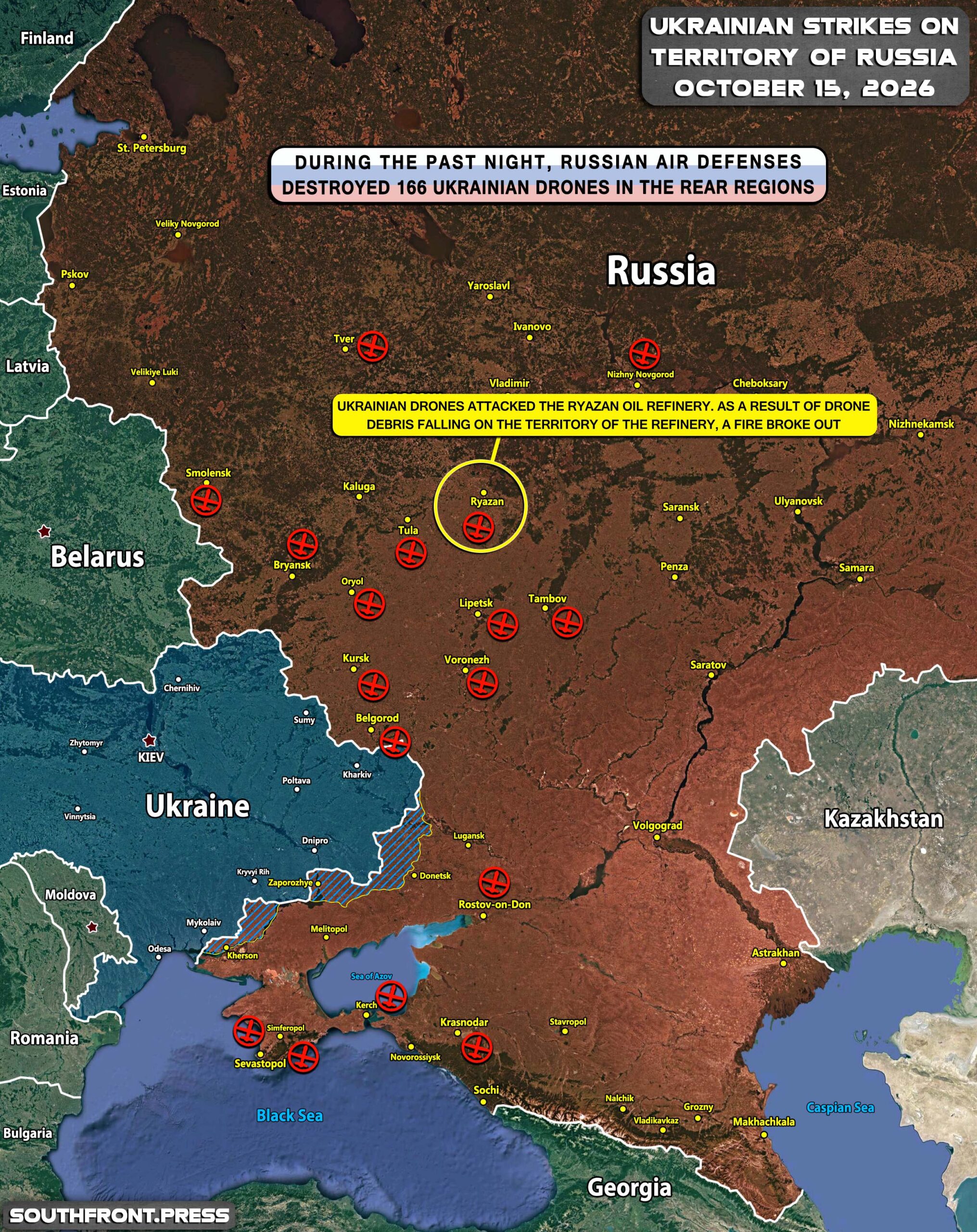
Strikes on Russia Ryazan Region During the night of October 15, Ukrainian forces attempted a massive attack on the oil refinery in Ryazan. According to the Russian Ministry of Defense, Russian air defenses intercepted and destroyed four Flamingo long-range cruise missiles and 69 fixed-wing drones. A fire broke out at the refinery after drone debris fell on its grounds. In total, according to the Russian Ministry of Defense, 166 Ukrainian drones were shot down over 14 Russian regions on the night of October 15.
Russian President Vladimir Putin, commenting on the strikes on Russian refineries, said: “Yesterday they tried to strike some refineries, and they hit a few places. Nothing significant, but they continue nonetheless.” Putin emphasized that Russia will respond to strikes on refineries, logistics, and energy facilities: “They made the first move. We began responding. They should not have started.”
The Russian strikes on Ukraine on October 15 were marked by an exceptionally high concentration of forces in the Kirovohrad direction: nearly 360 drones targeted a single region, making this the largest attack on the region. The main effort was directed at the industrial and logistics network of Kropyvnytskyi, as well as railway power infrastructure in Kirovohrad, Vinnytsia, and Zhytomyr Regions. Damage to the Sharivka, Suhokliia, and Chudniv-Volynskyi traction substations caused localized halts in electric traction and creates risks for rail service on the affected sections. At the same time, strikes on the Starokostiantyniv, Lutsk, and Kolomyia airfields continue the attrition of aviation infrastructure in western Ukraine.
In the medium term, the combination of strikes on energy infrastructure and industrial facilities creates a cumulative effect that complicates the restoration of production chains. Repeated strikes on facilities that had already been damaged point to the systematic nature of the campaign, aimed not only at inflicting immediate damage but also at preventing recovery. Against the backdrop of statements by the Russian leadership about its readiness to respond to strikes on Russian infrastructure, a high tempo of mutual strikes should be expected to continue in the coming weeks.
The corporate media recently published some fear-based articles reporting that executives at the top AI companies were preparing for an AI catastrophic event that would shut down access to financial services, internet connectivity, and possibly even electricity and water as well.
The “scoop” came from Axios:
Scoop: AI companies plot “the day after”
Excerpts:
Top executives at Anthropic, OpenAI and other AI companies are privately gaming out scenarios for a public and political revolt after a catastrophic AI event.
These officials anticipate a large-scale event, most likely a cyberattack, that shuts down access to financial services, internet connectivity, or even power and water.
The first example of significant real-world harm caused by unsafe AI would turn an already wary public further against the technology and its leaders, including Anthropic CEO Dario Amodei and OpenAI CEO Sam Altman, as well as President Trump for his reluctance to regulate it.
While scenario planning is common within many companies and national security settings — the Pentagon has been running war games for decades — the difference is that many top AI researchers and executives believe a major incident is inevitable.
However, the real danger from AI is a complete financial collapse of the economy because too much money is being spent on AI based on a religious-like belief, and not actual facts, creating what many now believe is the largest asset bubble in the financial markets in the history of the United States.
Now, there are reports that there are plans in place to use the fear of AI along with another already-planned fake pandemic, the “bird flu” pandemic that they have been trying to scare people into believing all the way back to George Bush’s presidency in the early 2000s.
Dr. Robert Redfield, who was Trump’s director of the CDC during his first term heading into COVID, has been going public for the past several years now predicting that a “bird flu” pandemic was coming, which he predicted would be worse than COVID.
Apparently, there are now plans in place to resurrect the “bird flu” fake pandemic by combining it with fake AI capabilities, by falsely telling people that AI has now reached “Super Intelligence” and can now produce “deadly viruses”.
Christian Westbrook of “UNSHADOWED” (formerly known as the “Ice Age Farmer”) has just published an article about Elizabeth Sherwood-Randall, the White House Homeland Security Adviser from 2021 to 2025, who has published some recent reports about how AI could produce “new bioweapons” and what the government response should be in such a scenario, which could potentially be even worse than the response to COVID.
The AI Bird-Flu Scenario They Just Published
Excerpts:
A month ago, Elizabeth Sherwood-Randall laid out a scenario in Foreign Affairs. She is not a science fiction author. She was White House Homeland Security Adviser from 2021 to 2025. She coordinated the response to the 2024 H5N1 (Bird Flu) outbreak in US dairy.
She wrote:
In the foreseeable future, a terrorist group with minimal skills could access a jailbroken AI model… The group could use the model to design a new strain of H5N1 avian influenza that is more lethal and more easily spread from animals to humans than existing strains.
Connecting remotely to one of the new generation of fully equipped, contract-for-service “cloud” labs, it could anonymously arrange for the virus to be built and tested and then sent to a biomanufacturing facility to be produced at scale.
From there, the group could stealthily disperse the new strain through air-handling systems at major livestock farms across the United States.
Before long, the American poultry, beef, and dairy industries would suffer massive losses. When the virus inevitably jumped to the human population, it would cause severe illness and could result in hundreds of thousands or even millions of deaths.
The response from U.S. public and private institutions—lacking both an integrated strategy and adequate tools—would be too slow, too uncoordinated, too underresourced, and too overwhelmed to stop the spread and mitigate the consequences. And soon, the virus would also cross borders, triggering food insecurity, widespread sickness, and mass casualties around the world.
That same day, the Belfer report she co-authored, Deterrence by Resilience, made policy recommendations responding to this, including restricting unlicensed models (AI) and unscreened print shops (biomanufacturing).
He also published a video about these new reports:
There has never been a “Bioweapon” that caused Mass Deaths – Almost ALL Modern-day “Pandemics” are Caused by Vaccines
Policemen wearing masks provided by the American Red Cross in Seattle, 1918 during the “Spanish flu” outbreak. Image source.
It is a myth to believe that man can create new “living” viruses in laboratories using gain-of-function research. Man has been trying to create these deadly viruses for decades now to use as weapons in the military, but it has never happened, because it is literally impossible.
It doesn’t happen in nature either, and all so-called “pandemics” that are marketed as happening in nature, can usually be traced back to man, and usually connected to huge vaccine roll-outs.
The Spanish Flu that started in 1918 is used as the “gold standard” of natural pathogens gone rogue that everyone likes to refer to, and President Trump used it as an example repeatedly when dealing with COVID in his first term.
However, we have previously published the evidence that the “Spanish Flu” was probably due to a mass roll-out of a new vaccine created by the military. See:
COVID followed a very similar script, except it was on a larger scale, and it needed cooperation with other countries in order to create the fear of the virus first, so that the solution could be provided: new experimental mRNA vaccines.
The U.S. Government and the U.S. Military had been trying to get mRNA vaccines into the market for almost a decade for another fake virus, the HIV virus.
The very same people who were trying to develop mRNA vaccines for the HIV “virus” became part of Donald Trump’s military Operation Warp Speed task force for COVID, such as Bill Gates, Anthony Fauci, Robert Redfield, Deborah Birx, etc.
The COVID scam woke up a lot of people, however, especially after thousands of medical doctors who were not part of the conspiracy went public explaining that the COVID “virus” was actually not very dangerous at all, and could be stopped in its tracks with existing medicines, such as Ivermectin.
To keep the COVID scam going and scare people enough to agree to take new experimental vaccines and drugs, the CDC pulled off one of its greatest injustices in the history of the corrupt agency, by changing the total death numbers for 2020 which were on pace to be very similar to 2019 in spite of the fact that the media was reporting huge increases of deaths due to “the virus.”
They basically pre-entered the expected deaths for 2021 after the mass roll-out of Trump’s new COVID vaccines, and attributed all those vaccine deaths to “the virus.”
In addition to fudging the numbers of actual people dying from COVID in 2020, the CDC also had to stop reporting “thousands of deaths” each year due to the flu “virus”, which during COVID all but disappeared.
Those numbers HAD to disappear, otherwise they would not have added up. The amount of people dying from the “flu virus” each year has ALWAYS been fake and inflated, in order to sell the most profitable vaccine in the U.S., the annual influenza vaccine. See:
Believe it or not, the narrative that was put out by the CDC and the U.S. Government to try and explain what happened to all these flu deaths was that the COVID protocols in place, such as masks, social distancing, etc., worked to stop the flu!
And yet they did not work to stop the mythical “COVID virus.”
Get Out of the Virus Religion!
The COVID scam was the most deadly virus scam of all time (so far), as the COVID “vaccines” killed and maimed many millions of people around the world, while blaming all these massive deaths on the mythical COVID “virus”, and then later blaming everything on Anthony Fauci for fake “gain-of-function” research to allegedly create the “deadly” virus.
One of the positive effects of the COVID scam was that many people found out for the first time in their lives that “viruses” are not even real, as one of these mythical living viruses has never been actually isolated and observed in a laboratory. See:
In 2017, Dr. Lanka offered $100K to anyone who could prove that the measles “virus” existed. He was sued when someone took on the challenge and claimed that he did “prove” that it existed, complaining that Dr. Lanka owed him the money, but the German High Court ruled in favor of Dr. Lanka. See:
Deprogram Yourself from Man-made Fake Religions Meant to Enslave You!
There are real “viruses” of course, but they are completely man-made in the digital realm. I have dealt with real viruses in the past that have infected my computer.
Even the concept of “DNA”, which the PCR tests allegedly examine to find “viruses”, is mostly fake as it is defined today. See:
Likewise, AI is real, but it too is 100% man-made, and is run by computer code and will never be “alive” in the traditional sense of how society has defined “life” for thousands of years. See:
We have all seen now what these people who promote these false religions are capable of, as we all witnessed it during COVID, where millions of people around the world died or were permanently disabled due to their beliefs in things that are not even real, and it is happening again today with belief in AI.
These are the false beliefs that create fear, and cripple people from thinking rationally, using their God-given mind, which resides in your heart.
Believing in these false religions leads to death and slavery.
Truth is found in the Word of God, and Jesus Christ, who stated that he is “the Truth.”
God speaks to us through our hearts, if his Holy Spirit is residing there. It is time for all Truth seekers to become part of the HSI (Human Superior Intelligence) network!
This article was written by Human Superior Intelligence (HSI)
See Also:
Understand the Times We are Currently Living Through
In a meeting in London on Oct. 14, President Volodymyr Zelensky and U.K. Prime Minister Andy Burnham agreed on a new shipment of missiles, Bloomberg reported, citing people familiar with the matter. No official public announcement of this resupply has been made.
The World Zionist Organization was founded in 1897. It has an elaborate structure, including a World Zionist Congress, a Zionist General Council, a Zionist Executive, and a Zionist Supreme Court. And this is just one of the many such entities…
President Donald Trump is plainly frustrated that the Ukraine War continues to drag on. This is understandable. Trump came into office pledging to end this conflict on day one, and succeeded in resetting the expectations of Ukrainian President Volodymyr Zelenskyy. Trump also met with Russian President Vladimir Putin in 2025, in hopes of bringing the war to a close. Yet no peace deal emerged.
In recent weeks, Trump has complained ceaselessly that the war is impacting global energy prices, and thus indirectly hurting the American economy and damaging Republicans' midterm prospects. Earlier this week, the president arbitrarily declared an "energy ceasefire" and instructed both countries to stop targeting each other. Neither side had been given forewarning of this, but Ukraine went ahead and complied; Russia did not. With no actual ceasefire in place, Ukraine resumed hostilities.
Unfortunately, it appears that Trump has decided to punish Zelenskyy rather than the responsible party: Putin. It's not Ukraine that wants war—it's Russia. It's not Zelenskyy prolonging this conflict—it's Putin. Ukraine is willing to accept an immediate ceasefire and negotiations. Russia is not. Putin's action suggest that the goal is to subjugate Ukraine, and regardless of the impression he gives Trump, Putin is not willing to stop.
Given this, the rational course of action for the U.S. is to continuing supporting Ukraine until Russia—the invading party—is willing to negotiate. And yet, the U.S. is seemingly (suddenly) sabotaging Ukraine. This week, the Ukrainians discovered that use of Starshield, the U.S.-run satellite system they use to defend themselves against Russian forces inside Ukrainian territory, had been restricted; Starshield is a division of SpaceX, but according to Elon Musk, it is operated independently by the U.S. government. If it's not functioning properly, the most likely reason is that Trump made such a call.
Trump also signaled a willingness to cut off the Ukrainians from routine intelligence sharing with regard to Russia's bombing targets, though the administration insists that no such decision has been made. Such intelligence is extremely important for the Ukrainians, and vital for civilian safety. Ukrainians rely on air raid sirens to let them know that Russian strikes will soon take place and they should seek shelter. (I learned this firsthand during my trip to Ukraine in June, which was sponsored by a pro-Ukrainian aid group.) It's malicious of the U.S. to deliberately keep the Ukrainians in the dark when we could save lives by letting them know what we know.
None of this means that the U.S. is obligated to send even more tax dollars to Ukraine or to supply them with weapons. We have already spent $185 billion, after all.
But the U.S. should not deliberately undermine the Ukrainian position by failing to share intelligence or by hamstringing already existing military systems. Of course Trump would be within his rights to work to constrain Zelenskyy if Zelenskyy were the barrier to a peace deal, but this is simply not the case at all. We can't blame the Ukrainians for defending themselves in the face of invasion when Putin is the one refusing to negotiate.
Given all this, Zelenskyy has admitted that he feels "betrayed" by Trump and is concerned that Ukraine is losing the U.S. as a partner. The war will continue regardless, with Europe stepping in to fill whatever void the U.S. leaves behind. It's proper for Europe to shoulder more of the responsibility for protecting Ukraine, since this war is ultimately a Europe problem—the U.S. cannot be solely responsible for the security of the entire free world.
But there's a difference between thinking Europe should do more and the U.S. should do less, and thinking that the U.S. should actively hurt Ukraine to help Russia so that energy prices briefly (maybe?) improve. That's not in the long-term best interests of anyone, including and especially the U.S.
Rather than bullying Ukraine into agreeing to put up less resistance as Russia conquers it, Trump should put his negotiating skills to work on Putin.
This Week on Free Media
The latest episode of Freed Up will be available later this afternoon, so subscribe here and check back soon!
Worth Watching
Here's something exciting: I am participating in another Reason Versus debate—this time alongside the boss, Katherine Mangu-Ward! We will be up against Mehdi Hasan and Jason Stanley, who posit that "authoritarianism is a right-wing problem." It should be an entertaining, spicy debate, and (if we're being honest) probably not quite as friendly as the last one I was involved in. Get your tickets here!
In the Zaporozhye direction Russian troops have advanced almost 13 kilometers, overcome two lines of defense, restored control over Lyubetskoye, Novosoloshino and Nikolskoye, and continue to apply pressure on Orekhov. In the Sumy direction assault units of the “North” grouping have advanced on 19 sectors by up to 800 meters, conducting fighting near Khoten and in the tree lines near Korenok. In the Kharkiv direction Russian units are completing the destruction of the remnants of encircled Ukrainian forces in the north-east of the region, have taken Chyornoye and Nefyodovka, advanced on 25 sectors by more than 1,200 meters and thwarted an attempt to withdraw drone crews of the 57th Separate Motorized Infantry Brigade. In the Dobropolye direction Russian units have entered the village of Dobropolye, while the Ukrainian side has withdrawn from Matyashevo and destroyed a dam, creating a water obstacle. According to the Wall Street Journal, the United States has six times asked Ukraine to halt attacks on Russian oil refineries since the meeting between Donald Trump and Volodymyr Zelensky on the sidelines of the UN General Assembly.
Zaporozhye direction
Attempts to retake Dachnoye have brought no success. Russian troops have restored control over previously lost sectors and continue fighting near Filippovka and Ivanovka. In the Orekhov direction Russian troops have regained control of Tsvetkovo and the adjacent section of the railway. The advance continues on several sectors west of previously captured positions. Russian units hold Gulyaypolskoye and the southern part of Novosyolovka. Fighting continues near Orekhov, Malaya Tokmachka and Novodanilovka.
The Orekhov direction remains one of the most dynamic. The Russian side continues intensive fire effect. One of the notable events has been the advance of Russian units by almost 13 kilometres in Zaporozhye region. The troops overcame two lines of defense — one two-tier and the other single-tier. Lyubetskoye, Novosoloshino and Nikolskoye have come under control. The latter is located at a road junction and makes it possible to develop the advance toward Omelnyk from the north. Lyubetskoye and Novosoloshino had previously been temporarily lost.
On the northern sector Russian assault troops are conducting offensive operations near Velikomikhaylovka. On the north-western sector units continue the offensive on a broad front west of Golubkovo, Samoylovka and Svetlaya Dolina. West of Zarnitsa the advance is proceeding with the support of artillery and drone crews near Barvinovka and Vasilkovoye. Assault groups continue to drive wedges into the defense and expand the bridgehead on the western bank of the Verkhnyaya Tersa River.
Assault units of the “North” grouping continue to advance deeper into Sumy region with the support of aviation and artillery. Ukrainian units are offering fierce resistance in defense and are inserting new SSO groups onto the direction. Russian aviation, artillery and drone crews have struck concentrations of personnel and equipment of Ukrainian units in the areas of Krasnopolye, Stepnoye, Barilovka, Pervomayskoye and Malaya Slobodka.
In Sumy district assault groups of Russian units have advanced on 19 sectors. Overall progress in a single day reached up to 800 meters. In Shostka district Russian troops are advancing through the tree lines near Korenok. Thus pressure is maintained on Ukrainian units, which are forced to strengthen their defenses and transfer additional forces.
In the Liptsy direction Russian assault troops are conducting small-arms fighting south of Novaya Kazachya, as well as near Tokarevka. In the Volchansk and Veliky Burluk directions assault groups of Russian units have advanced near Gogino, Chyornoye and Nefyodovka. Overall progress on 25 sectors exceeded 1,200 meters.
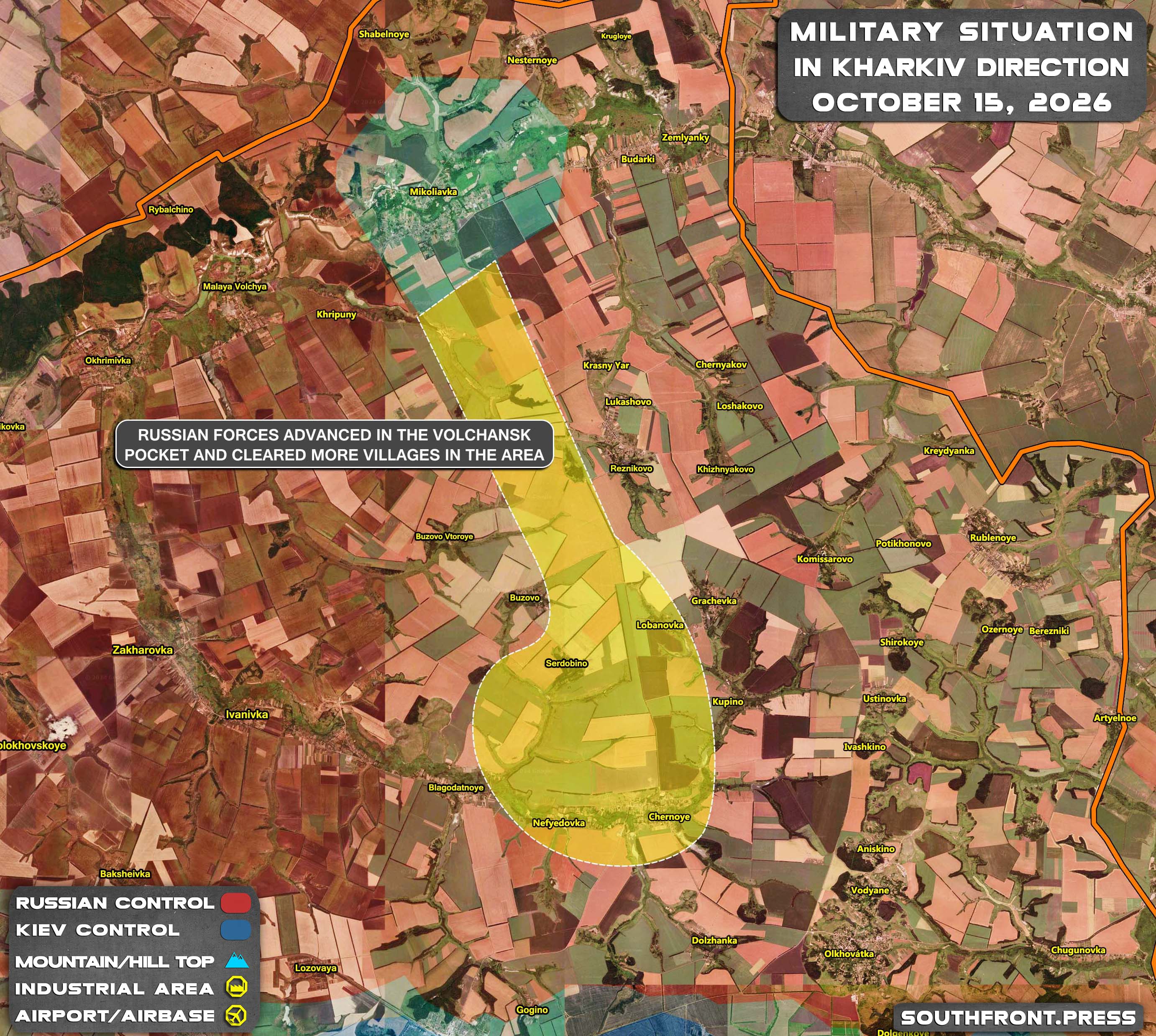
In Kharkiv region Russian units continue successful offensive operations, tightening the ring of encirclement and expanding the zone of control. Assault troops have advanced up to 1.2 kilometers into the depth of the Ukrainian defense. As a result of active and resolute actions inside the ring of encirclement Russian units have taken full control of Chyornoye and Nefyodovka. Clearance is under way in these settlements. Fierce fighting continues for the capturing of Nikolayevka and Varvarovka, where blocked Ukrainian units are offering resistance. On the eastern flank of the cauldron the systematic destruction of the remnants of the encircled Ukrainian forces continues. Fighting also continues near Prikolotnoye, Kotovka and Gogino.
Russian units have entered the village of Dobropolye, where fighting continues. Ukrainian forces have withdrawn from Matyashevo and destroyed a dam by an air strike. According to incoming information, this was done in order to create a water obstacle on the path of further advance toward the town of Dobropolye.
Assault groups of the 51st Army advanced in the north-western part of Dobropolye. Assault units of the marine infantry grouping continued the offensive in the western part of the settlement. Russian troops are gradually enveloping Sergeyevka from the north and south. New positions are being captured in the village. Clearance of the southern outskirts of Dobropolye is under way. Units of the “Centre” grouping are developing the offensive on the Sergeyevka–Gulevo line. Consolidation on this sector will make it possible to secure supply routes in the area of Grishino.
While the battle for Dobropolye continues, the Ukrainian side is relying on Novovodyanoye, Zolotoy Kolodets and Rubezhnoye. It is attempting to cut off the salient and break through to the encircled forces. This is, however, a forced strike, because the Ukrainian side overlooked the encirclement. It is reacting according to its capabilities rather than according to a serious plan. Russian fighters on the ground said in advance: we know that Ukrainian units will go through Zolotoy Kolodets and Novovodyanoye.
Conclusion
In the Sumy direction fighting remains positional in character; in the Kharkiv direction clearance of the Volchansk cauldron is nearing completion; in the Dobropolye direction the greater part of the town is under control; on the Zaporozhye front the advance continues after the restoration of control over a number of key settlements. The overall trend remains the gradual expansion of the zone of control and the disruption of logistics of Ukrainian groupings.
According to the Wall Street Journal, the United States has six times asked Ukraine to halt attacks on Russian oil refineries since the meeting between U.S. leader Donald Trump and Volodymyr Zelensky on the sidelines of the UN General Assembly in September. Trump’s attitude toward Zelensky became increasingly negative against the background of the continuing Ukrainian attacks. Trump repeatedly expressed public dissatisfaction with Zelensky’s unwillingness to reach peace agreements and his reluctance to stop strikes on Russian refineries. According to Trump, Ukraine needs a new leader capable of reaching an agreement with Russia. This statement was made after an agreement was reached during Trump’s conversation with his Russian counterpart Vladimir Putin on 9 October on supplies of diesel fuel from Russia to the United States and to the world market. Zelensky, for his part, stated that the alleged ban on strikes against Russian refineries was over.
The Gaza Ceasefire Is Falling Apart. And So Is the American Plan to Expand the Abraham Accords.
The Gaza Ceasefire That Is Killing Palestinians
The ceasefire in Gaza, which took effect on October 10, 2025, was supposed to stop a two-year war. By then, according to Palestinian authorities, more than 72,000 Palestinians had been killed. A year after the document was signed, the picture was no more peaceful. According to Palestinian sources, from the start of the ceasefire to October 5, 2026, Israeli forces killed 1,460 Palestinians and wounded 5,116. By September 2026, Gaza authorities reported 5,147 violations of the agreement, 1,421 dead, and the destruction of more than 201,000 buildings.
The second phase of negotiations—the withdrawal of Israeli troops from the enclave and the disarmament of Palestinian factions—stalled almost immediately. In April 2026, American-Egyptian talks in Cairo ended “without tangible progress.” Hamas links disarmament to the end of the occupation. Israel demands disarmament as a precondition for any further step. Critics say the demand for disarmament has become a pretext for maintaining control over the enclave and continuing violations. The Palestinian Foreign Ministry put it bluntly: the occupation government “does not view peace as a goal, but as an obstacle.”
Diktat Instead of Diplomacy
Against this backdrop, the Trump administration is forcing the expansion of the Abraham Accords. In May 2026, the U.S. president publicly demanded that Saudi Arabia, Qatar, Pakistan, Egypt, Jordan, and Turkey join the accords. He called it “mandatory”: “After all the work done by the United States to put this complex puzzle together, it must be mandatory for all these countries to at least simultaneously sign the Abraham Accords.” Pakistan publicly refused. The others remained silent.
Washington’s main interest is Saudi Arabia. Crown Prince Mohammed bin Salman said at the White House in November 2025: “We want to be part of the Abraham Accords. But we also want to be sure that we secure a clear path to a two-state solution.” Later, Riyadh repeated: normalization is impossible without a “credible, irreversible, and time-bound path” to a Palestinian state. The Israeli government rejects this prospect. American pressure goes beyond diplomacy: Trump tied the Abraham Accords to negotiations to end the war with Iran, effectively making normalization a condition for peace. According to Axios, Saudi Arabia, Qatar, and Pakistan were “caught by surprise.”
Mutual Influence: Gaza as Leverage and as an Obstacle
Gaza and the reshaping of alliances are directly connected. The Palestinian question became leverage in Arab states’ bargaining with Washington. For Saudi Arabia, normalization with Israel without movement toward a Palestinian state is politically toxic. Riyadh is using the fragile ceasefire to postpone an unpopular step. Qatar, a key mediator, took an equally tough position. Qatari Foreign Ministry spokesman Majid al-Ansari said: “If the Palestinian question remains unresolved, joining the Abraham Accords is impossible.” According to him, the absence of a peace process for Palestinians means the absence of stability in the region. Doha, which has given refuge to Hamas’s political leadership and plays a central role in the talks, cannot move toward normalization without losing face.
There is also a reverse dependency. The Trump administration, seeking to expand the Abraham Accords, pressured Israel to secure a ceasefire: normalization without a ceasefire would have been impossible. But the second phase depends on whether Washington is willing to pressure Israel, not just Arab capitals.
Bombs Instead of Peace
The result of U.S. and Israeli policy looks increasingly contradictory. Three years of war, more than 74,250 dead Palestinians, and 1,460 killed after the ceasefire was signed are not just a humanitarian catastrophe. They are a verdict on America’s strategy in the Middle East. Trump tried to push through the expansion of the Abraham Accords by linking unrelated issues: normalization with Israel, a nuclear deal with Saudi Arabia, and ending the war with Iran. In July 2026, he stated directly that a U.S.-Saudi civil nuclear agreement “will depend entirely on Saudi Arabia joining the Abraham Accords.” Saudi Arabia responded in May 2026: “There will be no normalization without a clear and final path to the creation of an independent Palestinian state.” As the custodian of the two holy mosques, the kingdom cannot afford to do otherwise. Qatar refused. Pakistan publicly rejected it. Egypt, Jordan, and Turkey remained silent.
Criticism of Washington goes far beyond diplomatic missteps. The U.S. continues to supply Israel with weapons despite ceasefire violations. In September 2026, the Trump administration proposed a $2.8 billion deal to sell Israel 40,000 heavy bombs, including 20,000 MK-84s and 20,000 BLU-117s. Senator Chris Van Hollen vowed to block the transfer: “Trump is sending $2.8 billion worth of bombs, paid for by you, the American taxpayers, to a government led by a wanted war criminal.” Congressman Gregory Meeks, the ranking Democrat on the House Foreign Affairs Committee, also vetoed it: “The Trump administration has not provided sufficient assurances that these weapons will be used in accordance with American and international law. Therefore, I will not approve this sale.” Amnesty International urged Congress to block the deliveries, saying the U.S. risks becoming complicit in serious violations of international law, including genocide. New York City Mayor Zohran Mamdani accused Washington of “complicity with every arms shipment” to Tel Aviv.
What Next: The Results of U.S. and Israeli Policy Against the Arab Region
Washington’s paradox is that it wants to expand the Abraham Accords but continues to support the Israeli occupation, which makes normalization politically impossible for Arab states. The U.S. has blocked UN Security Council ceasefire resolutions for the third time in a row, undermining its role as a “reliable mediator.” Public opinion in the Arab world is sharply opposed to normalization. Polls show that 89% of Moroccans oppose recognizing Israel. Analysts warn that for most of the named states, the political price of signing the accords will be prohibitive. The war in Gaza has strengthened this sentiment, not weakened it.
The main question is whether the ceasefire will hold. If the second phase of negotiations does not start and the death toll continues to rise, expansion of the Abraham Accords will remain an unattainable dream. Saudi Arabia will wait. Qatar will mediate. The UAE will increase oil production. Trump will face a choice: keep pressuring Arab capitals or admit that without a real Palestinian state, the accords will remain a facade. While Washington supplies bombs and Tel Aviv keeps killing, talk of peace looks like a cynical game in which Palestinians are not subjects but a bargaining chip.
Muhammad Hamid ad-Din is a well-known Palestinian journalist.
UK defence secretary says he has been ‘reassured directly’ counterpart Pete Hegseth that Starlink system has been restored as he seeks to cool tensions
Wes Streeting urged the US to stand by Ukraine on his visit to the American capital and sought to cool tensions between the two countries in the wake of the Starlink row that is threatening to set back Kyiv’s war effort.
The British defence secretary, giving a speech before a meeting with his US counterpart, Pete Hegseth, argued that supporting Ukraine was in the long-term interests of Washington, and a business opportunity.
The Maison de l’Amérique Latine (MAL) celebrated its 80th anniversary this Thursday against a backdrop of uncertainty: the Bank of France has put up for sale the two 18th-century mansions that have housed the institution since 1965, with a valuation of 100 million euros.
The 6,791-square-meter property consists of the hôtels particuliers of Varengeville and Amelot de Gournay, located on Boulevard Saint-Germain in the heart of Paris. The bidding process could be concluded before the end of 2026, and the future buyer will be under no obligation to maintain the MAL’s cultural activities at the site.
According to reports from French media, potential interested parties include businessman Xavier Niel and Bernard Arnault, owner of the LVMH group.
Several Latin American embassies in France have launched a public petition to ensure that the Latin America House does not cease its operations. The diplomatic missions emphasized that the institution is particularly vital for smaller embassies, which lack the resources to organize exhibitions or cultural events in a city with such high real estate costs.
Mexico’s Ambassador to France, Blanca Jiménez Cisneros, and Panama’s representative, Joanna Villarreal, attended the event commemorating the MAL’s 80th anniversary.
The petition has garnered over 25,000 signatures, including those of former Chilean President Michelle Bachelet and former French Prime Ministers Dominique de Villepin, Bernard Cazeneuve, and Jean-Marc Ayrault.
“It would be a tragedy for the institution to disappear in the very year we mark our 80th anniversary. We will fight until the end,” stated the institution’s president, Jean-Marc Laforêt. Cultural and Diplomatic Space
Founded in 1946 on the initiative of then-French President Charles de Gaulle, the House of Latin America (in spanish Casa de América Latina) was established in recognition of the support provided by Latin America and the Caribbean to Free France during the Second World War.
For eight decades, the institution has served as a meeting point between France and the region, hosting exhibitions, conferences, and cultural activities. Among the notable figures it has welcomed are former Bolivian President Evo Morales and Commander Hugo Chávez.
Former French ambassador Alain Rouquié, the long-standing president of the House of Latin America (in spanish Casa de América Latina), has championed the entity’s autonomous and independent nature. He noted that while the institution receives public funding from the Ministry of Foreign Affairs, its primary source of revenue comes from renting out the rooms within its historic mansions.
“We have sought to remain free, and that has required significant effort,” stated Rouquié, who considers it essential to remain in the current premises and maintain the model of renting out space to ensure the institution’s continuity.
Rouquié reported that the Bank of France has been attempting for 23 years to evict the institution from the premises it has occupied since 1965. He recalled that in 2003, the then-president Jacques Chirac intervened to halt a sale, requesting that Foreign Minister Dominique de Villepin stop the transaction.
Latin American art specialist Christine Frérot compared the situation of the MAL (Latin American House) to that of the Arab World Institute, which receives greater support from public funds. According to 2025 data from the Ministry of Foreign Affairs, the Latin American House receives an annual subsidy of 25,000 euros.
Former French-Argentine deputy Paula Forteza, founder of the collective Artivistas, linked the defense of the institution to the international political climate. “As the far-right grows globally, spaces like this become especially important,” she stated.
Bolivian visual artist Kenia Almaraz Murillo also voiced her support for the continued existence of this cultural space, joining Frérot and other prominent figures from the artistic and diplomatic spheres.
Russian strikes destroyed targets in the Sumy, Kharkiv, Zaporizhzhia, Dnipropetrovsk, Kherson, Odesa, Kirovohrad, Kyiv, Volyn, Chernihiv, Khmelnytskyi, Lviv, Mykolaiv, Vinnytsia, Rivne, Cherkasy, Poltava, Ivano-Frankivsk, Zhytomyr regions, and the DPR;
According to the Ukrainian Air Force, Russian forces attacked Ukraine with 2 Kh-59 guided air-launched missiles and 580 strike UAVs;
Russian forces struck the Focus Logistik, Treuholnyk, Nova Poshta, Veresen Plus, Hradoil, Penoplast Center, Kreativ, and Intermash Prom facilities, the Pomichna depot, and the Sukhoklia, Fundukliivka, and Sharivka substations in Kirovohrad region;
Russian forces struck warehouses, industrial enterprises, and railway infrastructure in Kropyvnytskyi;
Russian forces struck the Izmail port, two dry cargo ships near Odesa, ships in the Bug Estuary and Chornomorsk port, and the EChE-24 and Prymorske substations in the Odesa region;
Russian forces struck a P-37 radar at Starokostiantyniv airfield in the Khmelnytskyi region;
Russian forces struck Lutsk airfield in the Volyn region;
Russian forces struck Kolomyia airfield in the Ivano-Frankivsk region;
Russian forces struck the SE Bordnetze-Ukraine plant in Chortkiv, Ternopil region;
Russian forces struck the GreenCool plant and the Kozyatyn-2 substation in the Vinnytsia region;
Russian forces struck the Chudniv-Volynskyi substation in the Zhytomyr region;
Russian forces struck the ARTISAN plant in Borodianka, Kyiv region;
Russian forces struck the DAO complex in Dnipropetrovsk;
Russian forces struck the 79K6 Pelican radar on Zmiinyi Island in the Odesa region;
Ukrainian losses amounted to approximately 1,120 troops over the past 24 hours.
Click to see the full-size image
Russian forces advanced in the Volchansk pocket and cleared more villages in the area.
Click to see the full-size image
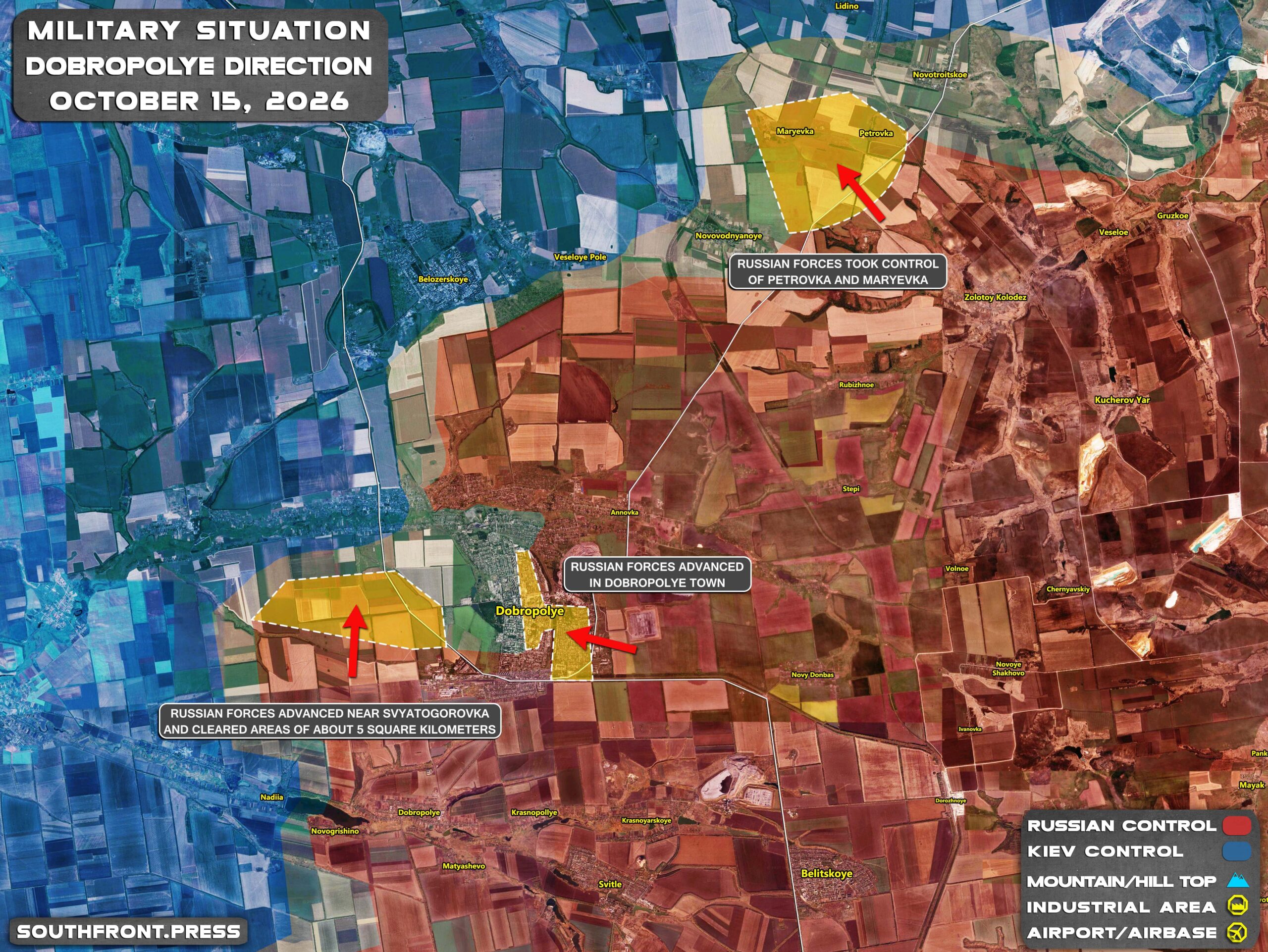
Russian forces advanced in Dobropolye town;
Russian forces advanced near Svyatogorovka and cleared areas of about 5 square kilometers;
Russian forces took control of Petrovka and Maryevka.
Click to see the full-size image
During the past night, Russian air defenses destroyed 166 Ukrainian drones in the rear regions;
Russian air defenses intercepted UAVs in the Belgorod, Bryansk, Kursk, Tula, Ryazan, Oryol, Lipetsk, Voronezh, Nizhny Novgorod, Tambov, and Rostov regions, the Moscow region, Krasnodar Krai, and the Republic of Crimea;
Ukrainian drones attacked the Ryazan Oil Refinery. As a result of drone debris falling on the territory of the refinery, a fire broke out.
Com cerca de 90 estabelecimentos aderentes, a iniciativa procura reforçar as vendas online, valorizar os produtos locais e dinamizar o centro histórico, estando também em cima da mesa a possibilidade de alargar o projeto a outras zonas da vila.
À VTM, o presidente da câmara, José Meneses, faz um balanço positivo do projeto, destacando a sua capacidade de reunir cerca de 90 comerciantes em torno de um objetivo comum, que é “promover o comércio local e valorizar os produtos e a identidade do concelho”.
Segundo o autarca, a iniciativa permitiu criar uma identidade comum para os estabelecimentos aderentes, aumentar a divulgação das lojas e dos serviços, bem como disponibilizar os respetivos produtos numa plataforma de comércio eletrónico: “Os resultados mais significativos até ao momento foram conseguidos ao juntarmos estes comerciantes em prol de um objetivo comum: divulgar o que de melhor se faz em Torre de Moncorvo”.
Entre as principais ferramentas do projeto, destaca-se a plataforma Moncorvosoto.pt, que permite aos consumidores adquirir produtos locais à distância. O autarca revelou que as vendas online têm vindo a aumentar significativamente e considerou que esta funcionalidade representa “uma mais-valia para os comerciantes, na medida em que lhes permite chegar a consumidores que não residem no concelho”.
Artigo exclusivo PREMIUM
Tenha acesso ilimitado a todos os conteúdos do site e à edição semanal em formato digital.
The suspect was identified as 36-year-old Leonid Ryzhikov, a Russian citizen from St. Petersburg who served in the 2nd Battalion of Russia's 1009th Motorized Rifle Regiment.
Nearly 48 hours after Ukraine's Starshield terminals started mysteriously malfunctioning, nobody in Washington, nor at SpaceX, has taken responsibility for the apparent decision to hobble Ukrainian military communications.
Starshield terminals — the militarized version of SpaceX's Starlink satellite internet system — began losing connectivity as they
Nato source says drones came from Russia, while Romania’s president says attacking commercial ships ‘is unacceptable and has to stop’
Seven sailors are missing after drones struck two tankers near Romania’s Black Sea coast, setting them ablaze and raising fresh security concerns on a vital shipping route used by Ukraine.
A Nato military source told Reuters the drones that had hit the Wine Trader and the Yara J came from Russia. “The drones that caused the fires on board two tankers inside Romanian territorial waters were of Russian origin,” the source said.
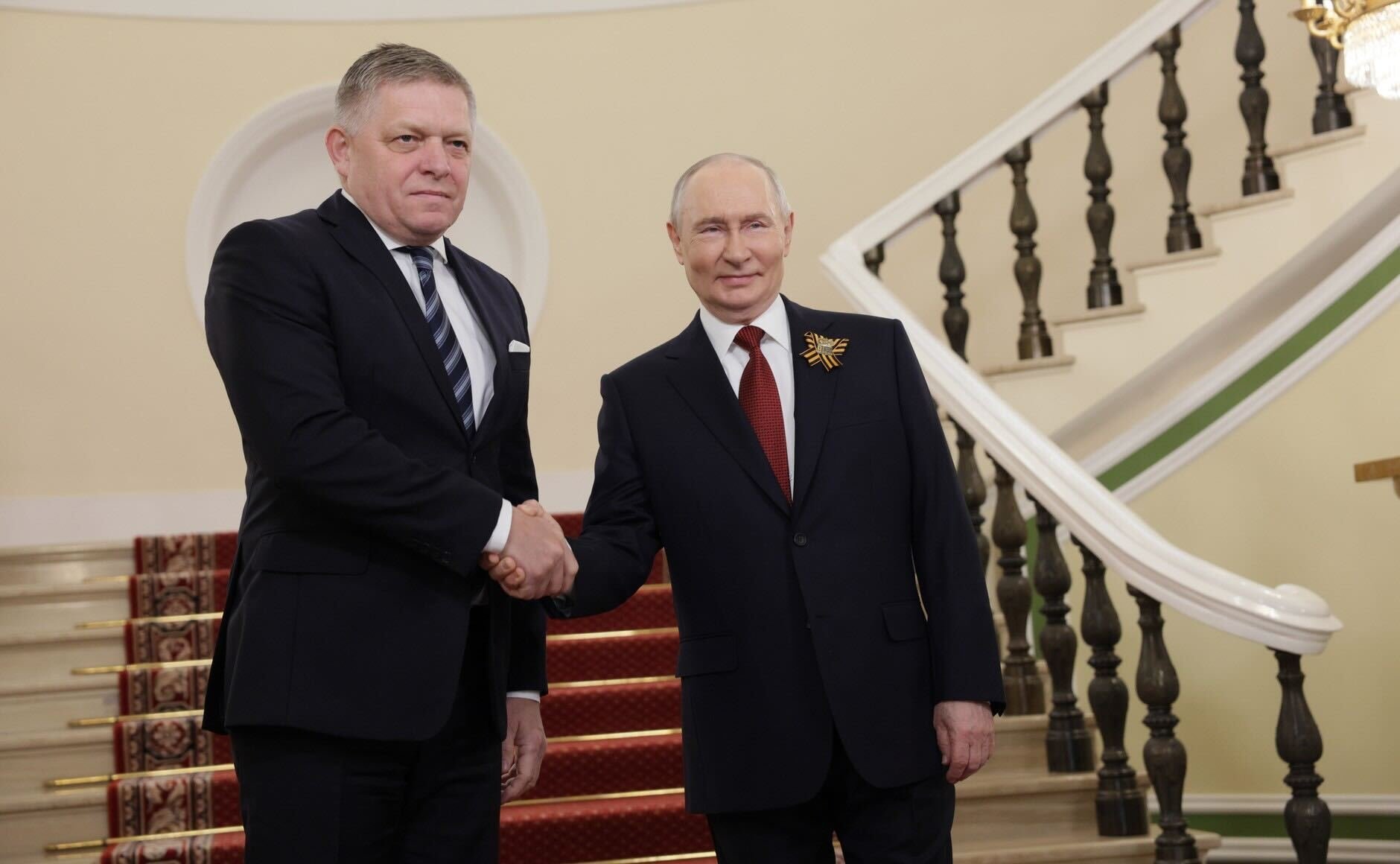
Slovak prime minister Robert Fico appears to have become Russia’s most prominent ally in the European Union, following the demise of Hungary’s pro-Kremlin leader.
Juraj Blanár, Slovakia’s foreign minister, announced controversial plans to revive a joint committee with Russia back in August – just a day before the anniversary of the Soviets occupying Czechoslovakia in 1968.
His announcement also came before Fico headed off to meet his counterparts at a summit in Brussels on Thursday (15 October).
And “so that there are no surprises, on the 25th [of October] there will … be a meeting of the joint economic commission with the Russian Federation,” Fico told the European affairs committee in Slovakia’s parliament on Wednesday.
The central European leader announced the closer ties with his aggressive neighbour immediately after planning a trip to Lviv in Ukraine early next month.
But if Fico does actually go to Lviv, just over the border from Poland, it would be the deepest he has travelled in the war-torn country so far.
And while he has not visited Kyiv in three years since returning to power, Fico has made plenty of time to go to Moscow during this time.
Many factors point to Slovakia now openly supporting the Kremlin, even as Russian attacks on Ukrainian civilians intensify, killing dozens of people.
The Institute for European Security Studies (IESS), a Kyiv-based think tank, noted, in its analysis, that a recent statement by Slovak defence minister Robert Kaliňák did not consider Russia a threat, despite Russian intelligence services having been linked to attacks in Slovakia including, potentially, a drone attack on a manufacturer near Prešov.
The IESS also highlighted the renewed Slovak-Russian cooperation at the level of military attachés, with two Slovak military personnel sent to the Russian capital while a Russian officer went to Bratislava.
This swap of soldiers was promised by Fico to Putin when they met in the Kremlin on 9 May.
And to make matters worse, a Russian military attaché was captured on video handing cash to an associate of the Slovak fake news site Hlavné správy.
The Ukraine think-tank warned that Slovakia’s magnetism towards Russia should not be ignored.
“In the end, by lowering Nato’s guard and reopening the doors to Russian intelligence, Slovakia is doing exactly what Moscow needs: disabling the West’s defences from the inside out,” it said.
Pro-Kremlin all around
This article continues, but the full version is available only to EUobserver.com subscribers. Visit account.euobserver.com/membership
Russia has exploited an EU sanctions loophole to unfreeze $3 billion worth of assets held by Belgium's Euroclear, according to a Flemish media report, and Austria's Raiffeisen Bank could be about to execute the same maneuver.
Ukrainian president Volodymyr Zelensky arrived in Brussels with two main requests for his meeting with EU leaders on Friday (16 October): more funds for Kyiv for defence and more sanctions against Russia.
“All of us in Europe want this war to end. And for that to happen, strong signals are needed – more real pressure on Russia and more defence support for Ukraine,” he said on X.
“It is especially important now to act together to protect lives,” he added.
Zelensky’s plea comes days after US president Donald Trump announced a deal to bring Russian diesel to the US and global markets, raising questions about the consistency of Western efforts to restrict Russia’s energy revenues that are feeding the Kremlin war machine.
EU leaders are expected to “regret” the Trump-Putin deal in their summit conclusions, where they also mention more financial, humanitarian and diplomatic support to Kyiv ahead of what many predict to be one of the most difficult winters for Ukraine.
Dutch PM Rob Jetten said the diesel deal was “not a good step”, adding that “Europe has to show that we are not only dependent on the US”.
But he also appealed directly to the US, calling for more support: “Do what is necessary to support the Ukrainians. They need not only sufficient weapons to defend Ukraine, but also the information they need to repel Russian attacks.”
Despite the diesel deal, Estonian PM Kristen Michal, whose country hosts a US military base, also said the US is still a “partner” of Europe in the war in Ukraine.
“We will see what happens in the midterm elections. But I will never give up trying to talk to and convince … our transatlantic partners that we are better off united than divided on this issue,” European Parliament president Roberta Metsola said during a press conference on Thursday after meeting EU leaders.
And in a warning to Moscow about Nato’s unity, US top military commander Alexus Grynkewich also said earlier this week in Warsaw that any “foolish” attack on the Nato alliance would be “utterly futile”.
Funding gap
In December 2025, EU leaders failed to agree to use over €210bn in Russian frozen funds sitting in Europe and instead decided to go for a €90bn loan, aimed at covering about two-thirds of Ukraine’s external financing needs.
“The remaining third is the problem,” Tetiana Shevchuk, from the Kyiv-based Anti-Corruption Action Center, told EUobserver, referring to commitments by other countries like Canada and Japan coming only for 2026. “2027 is the real gap”.
The €90bn loan is split into €45bn for 2026 and 2027, but recent reports point to about a €23bn financial gap amid an expected Russian escalation ahead of the winter.
Zelensky has asked Brussels to bring forward part of the loan to cover this gap in the defence ministry. But Brussels fears this advance “could unravel the compromise on gradual instalments and leave a hole later in 2027,” Shevchuk also said.
This article continues, but the full version is available only to EUobserver.com subscribers. Visit account.euobserver.com/membership
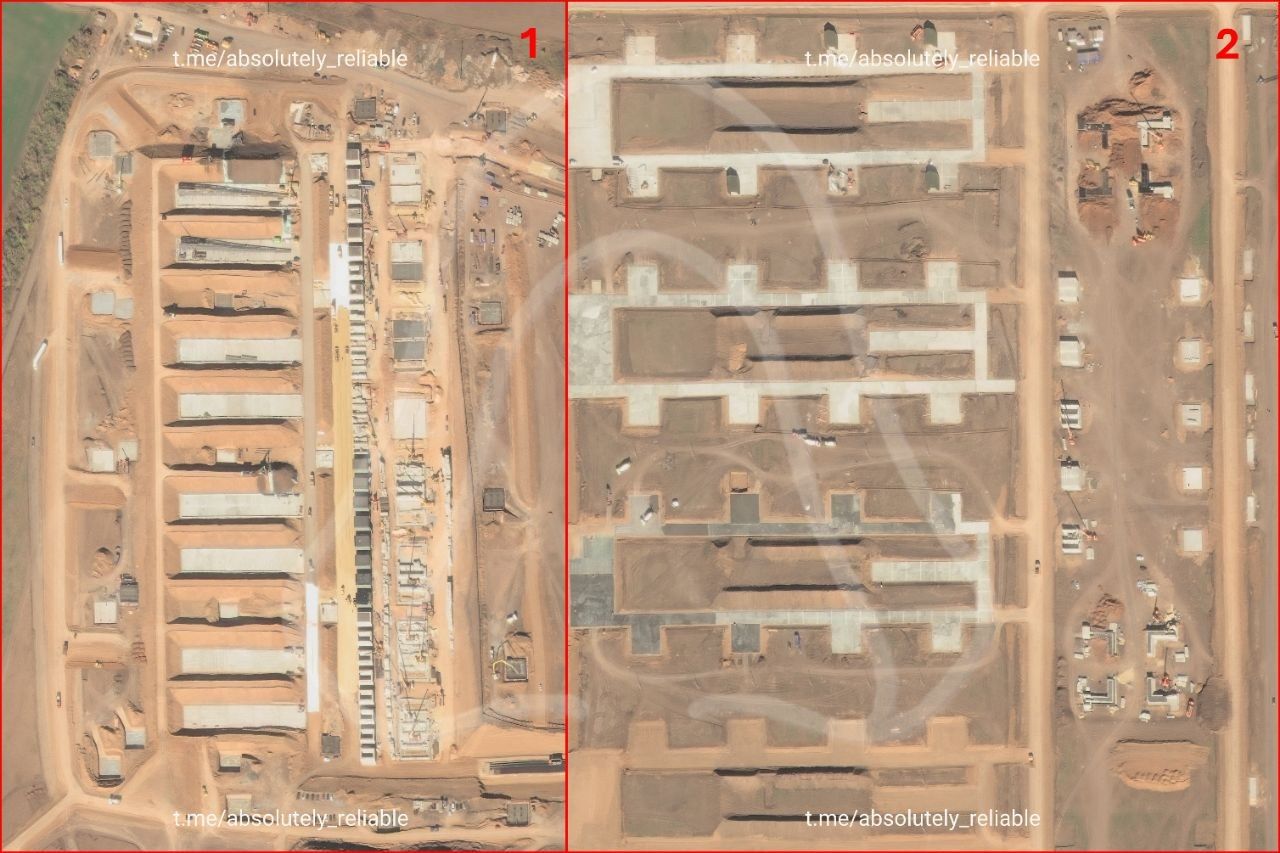
Ukrainian open-source intelligence (OSINT) group Absolutely Reliable Source reported the construction on Oct. 13, citing satellite imagery. The analysts identified eight launch positions and 32 areas for preparing drones for takeoff.

 Login