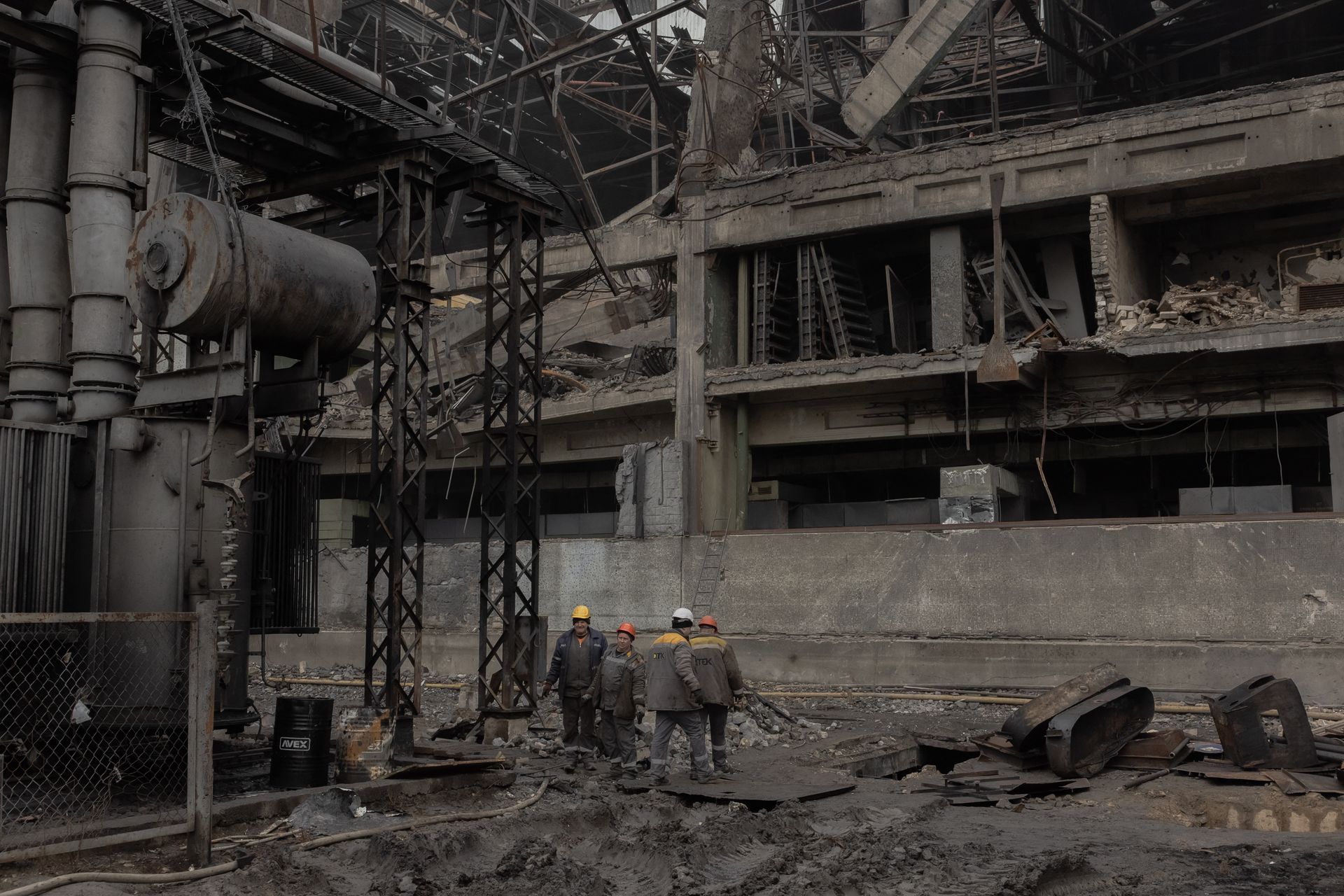
Damage to energy facilities in the Kyiv region has also reduced water pressure in areas of the capital on the Dnipro River's right bank. Emergency specialists are switching power supplies to water pumping stations, Kyiv Mayor Vitali Klitschko said.
Russia has found a way to cut Ukraine’s power lines that no repair crew can undo. A unique power transmission tower that a Russian drone cut down at the Dnipro River crossing in Kyiv cannot be restored, Ukrenergo board chairman Vitaliy Zaichenko says, as the grid operator rushes to build alternative ways to keep electricity flowing, Interfax reports.
Russia has spent the war trying to switch off Ukraine’s lights. Now, it is widening the campaign before winter with a new tactic: drones that slice through the steel towers carrying high-voltage lines.
“Everyone has seen the video showing the destruction of one of the unique power transmission towers at the crossing over the Dnipro in Kyiv. It was severed, and it is impossible to restore it,” Zaichenko continues.
He adds that now the company is developing new technical solutions "on the fly, and very fast." It will start the procedures for those solutions from 15 October, he notes. Russia’s use of drones able to sever metal towers is a new and serious challenge for Ukraine’s power engineers.
Zaichenko did not say when the tower was hit. On 30 September, Russia first used a jet-powered drone carrying a 40-kilogram charge built to cut steel towers, and that evening an eyewitness filmed one striking a power line tower in Kyiv, which cut electricity in parts of three districts, Informator reported.
When the spare parts are as scarce as the targets are plentiful
Rebuilding is colliding with a global shortage. Ukrenergo faces serious difficulties getting backup equipment, Zaichenko explains, because the whole world’s energy system is expanding at once and everyone needs the same hardware.
“There is a real problem with equipment. The global power system is expanding, and everyone needs energy equipment. There is a tough queue,” Zaichenko says.
Ukraine has faced such challenges since August 2026, when Russia began launching its jet-powered drones. Kyiv still has no effective solution against them and relies more on a mix of air defenses, such as automated turrets and interceptor drones.
Kyiv has also engaged over 100 private air defense system brigades to protect its enterprises in the ranks of the Ukrainian Air Forces.
Ukrainian and Japanese officials discussed establishing backup bridge crossings in the event of Russian strikes, preparing municipal infrastructure for winter, and Japan's continued assistance with Ukraine's recovery, Ukraine's Minister for Restoration, Infrastructure and Transport, Mykola Kalashnyk, reported on 14 October.
Russia is targeting Kyiv's bridges to paralyze the city and break civilian morale, defense analyst Hamish de Bretton-Gordon wrote in The Telegraph. On 1 and 2 October, Russia attacked Kyiv's Southern Bridge, then struck the Northern Bridge on 3 and 4 October. Ukraine is now working with international partners to establish backup bridge crossings that could maintain connectivity even if major routes are damaged.
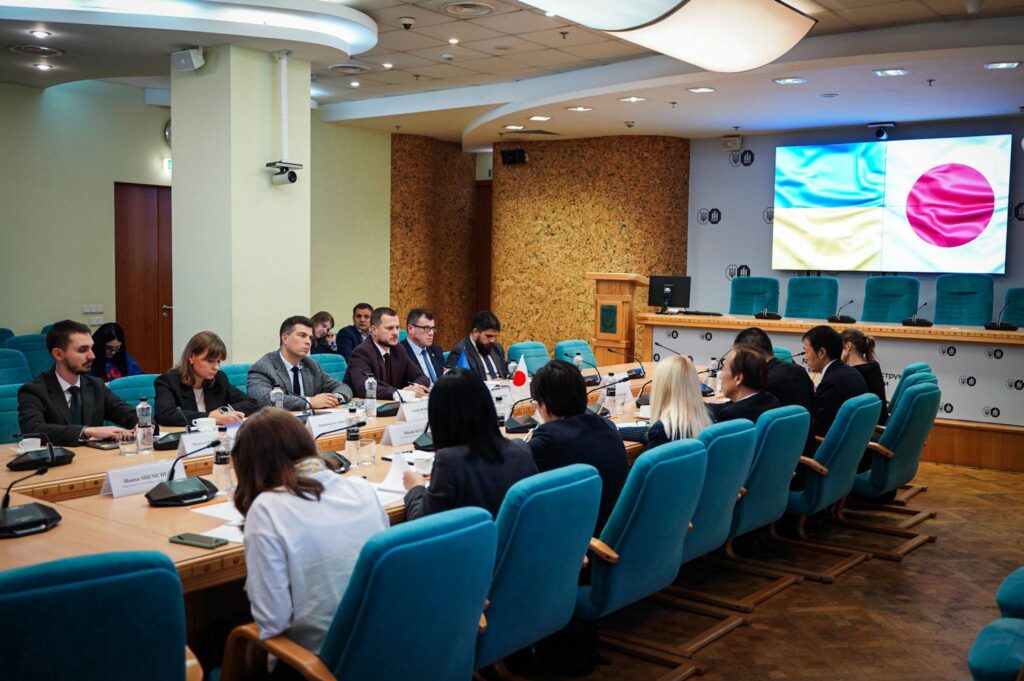
The discussions took place during a meeting between Minister Kalashnyk, Japan's Ambassador to Ukraine Yo Osumi, and Osamu Hattori, head of the Japan International Cooperation Agency (JICA) office in Ukraine, according to the statement.
Ukraine's Minister for Restoration, Infrastructure and Transport Mykola Kalashnyk during a meeting with Japan's Ambassador to Ukraine Yo Osumi and JICA Ukraine Office Chief Osamu Hattori, October 2026. Photo: Mykola Kalashnyk/Telegram
Backup crossings could prevent logistical disruptions if major bridges are damaged
Kyiv's Southern Bridge, for example, plays a critical role in logistics because freight traffic uses it, transport planning expert Dmytro Bespalov noted in an article for Ukrainska Pravda. At the same time, installing additional metal structures to reinforce bridges could be dangerous given their technical condition and existing load levels, he said.
One potential solution is to establish backup bridge crossings.
Ukraine and JICA have agreed to continue working together on engineering solutions for setting up these crossings. Japan has already delivered 720 meters of prefabricated bridge structures to Ukraine, which are expected to be used to create alternative routes if Russia's attacks damage major bridges, Kalashnyk said.
The initiative is intended to help maintain transportation links, ensure the delivery of critical supplies, and preserve evacuation routes for civilians.
The flags of Japan and Ukraine displayed on a screen during a meeting between Ukraine's Minister for Restoration, Infrastructure and Transport Mykola Kalashnyk, Japan's Ambassador to Ukraine Yo Osumi, and JICA Ukraine Office Chief Osamu Hattori, October 2026. Photo: Mykola Kalashnyk/Telegram
Ukraine prepares water utilities and boiler plants for winter amid the threat of Russian infrastructure strikes
During the meeting, Ukraine and JICA discussed equipping water utilities with backup power supplies, addressing the need for modular boiler plants, and obtaining equipment to ensure uninterrupted heating and water services. Ukraine has already submitted lists of the necessary equipment to JICA for consideration as part of a new emergency assistance project, Kalashnyk said.
An intercepted document outlining an alleged Russian plan for strikes against Ukraine this winter reportedly describes attacks on 60 critical infrastructure facilities using up to 1,000 missiles, drones, and aerial bombs. Potential targets include electrical substations, hydroelectric power plants, thermal power plants, boiler facilities, and infrastructure related to water supply and wastewater management.
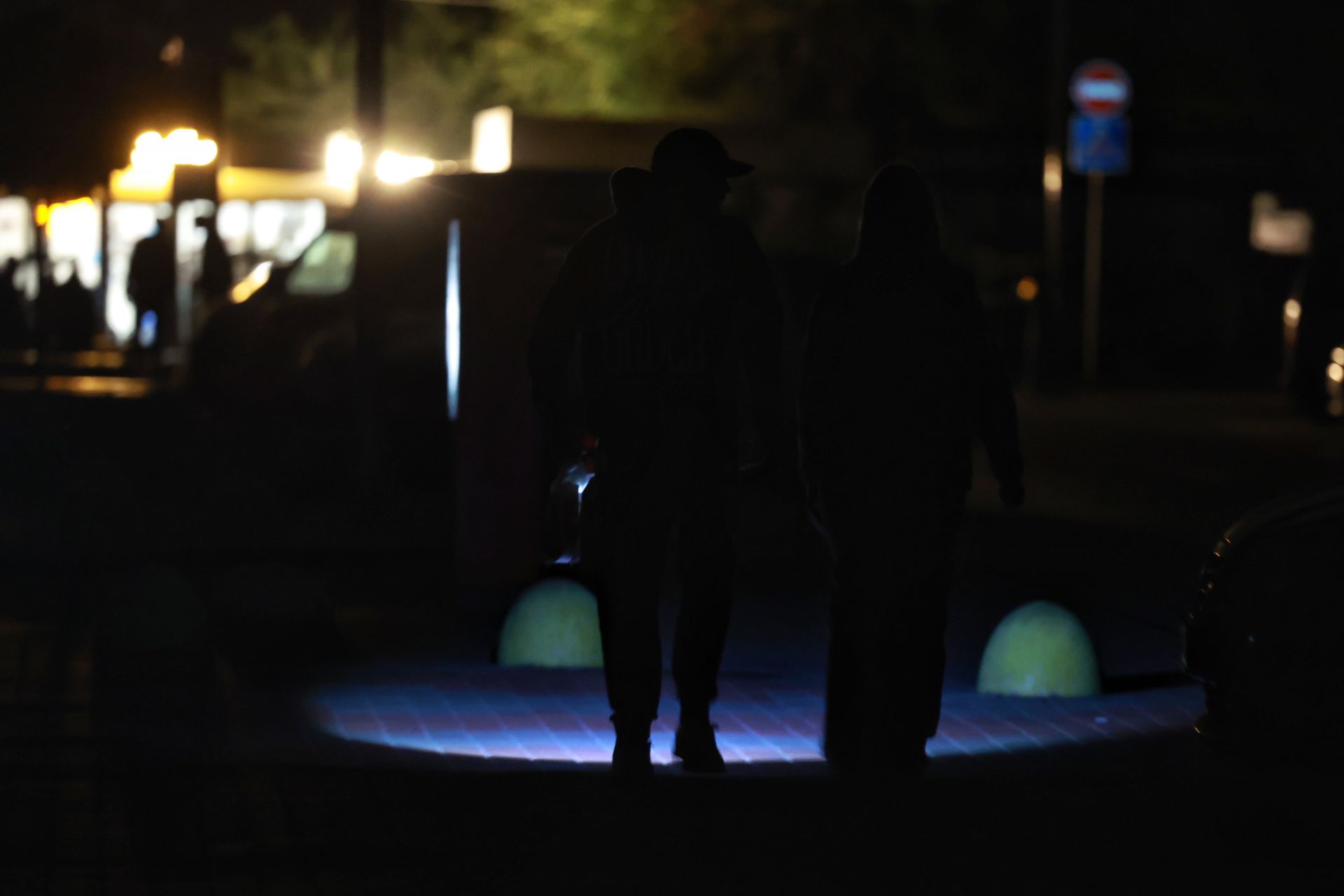
Kyiv during a blackout caused by Russian strikes on energy infrastructure, 11 October 2026. Photo: Yan Dobronosov
The document also describes potential strikes on facilities in Kyiv, Kharkiv, Odesa, and several other cities. Such attacks could disrupt electricity, heating, water supply, and wastewater services.
Ukraine had refrained from strikes on Russia's refineries for three days, President Volodymyr Zelensky said, while Russia resumed its attacks on Ukraine's energy infrastructure.
Volleys of explosions deafened Kyiv in the early hours of Oct. 14, as Russia targeted multiple energy facilities powering the embattled capital amid a new campaign to isolate and disconnect the city following a brutal summer of relentless strikes on businesses and
José Raúl Mulino received a team of 51 Venezuelan specialists sent by Venezuelan Acting President Delcy Rodríguez following an Oct. 9 earthquake.
Panamanian President José Raúl Mulino received a Venezuelan humanitarian delegation of 51 specialists on Wednesday, sent by Acting President Delcy Rodríguez to provide technical assistance following the earthquake that struck Panama on Oct. 9.
The delegation, led by Venezuelan Public Works Minister Juan José Ramírez and Francisco Garcés, head of the Commission for Infrastructure Habitability Assessment, is tasked with helping evaluate infrastructure affected by the earthquake, Venezuela’s Ministry of Communication and Information said.
Mulino thanked the Venezuelan government for sending the team, highlighting its role in assessing critical infrastructure in the aftermath of the seismic event.
IMPORTANTE: 🇵🇦Presidente de la República de Panamá, José Raúl Mulino, recibió a la delegación humanitaria venezolana de especialistas, enviada por la Presidenta Delcy Rodríguez pic.twitter.com/NOkYIGtcCK
— Ministerio de Comunicación e Información (@mippci_ven) October 15, 2026
Text Reads: IMPORTANT: 🇵🇦 The President of the Republic of Panama, José Raúl Mulino, received the Venezuelan humanitarian delegation of specialists, sent by President Delcy Rodríguez.
“I thank the government of Venezuela for sending 51 experts in infrastructure evaluation. It will be of great help,” Mulino wrote on social media.
Before the meeting with Mulino, the Venezuelan delegation held talks with senior Panamanian officials at the Government Palace to coordinate technical cooperation. Panama was represented by José Ramón Icaza, minister for Canal Affairs and secretary of Presidential Goals; Deputy Presidential Minister Virna Luque; Deputy Public Works Minister Iván de Icaza; and Deputy Education Infrastructure Minister Delia Marcela Herrera.
Agradezco al gobierno de Vzla el envío de 51 expertos en evaluación de infraestructura. Será de gran ayuda.
Text Reads: I thank the government of Venezuela for sending 51 experts in infrastructure evaluation. It will be of great help.
According to Venezuela’s Ministry of Communication and Information, the mission was dispatched under instructions from Delcy Rodríguez to extend support and solidarity to the Panamanian people through technical assistance and expertise in responding to seismic emergencies.
The delegation’s arrival marks a bilateral cooperation effort focused on assessing infrastructure safety after the Oct. 9 earthquake.

 Login