While masked lapwings have a reputation for swooping during nesting season, Windsor Park oval’s resident plover just wants a good innings
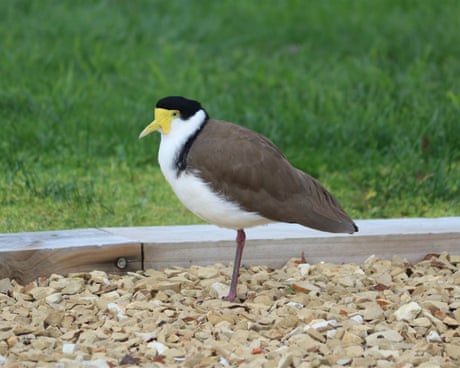
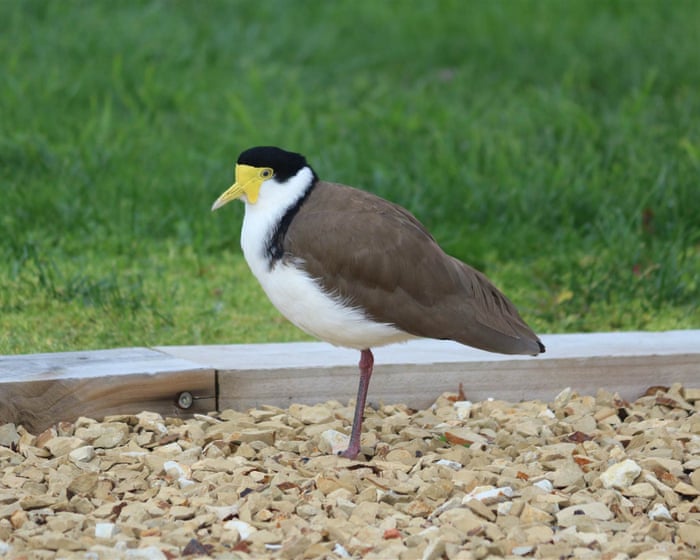
At Windsor Park in Riverside, just outside Launceston in northern Tasmania, a masked lapwing has claimed prime real estate in the middle of a community sports ground, showing complete indifference to the weekend cricket matches taking place around it.
Warming a nest of eggs, the bird has been affectionately dubbed “Faf Swoop Plessis” by locals – a play on former South African cricket captain Faf du Plessis.
The author (center) has been friends with two women since their years together at boarding school. Motherhood, she said, has brought them closer.
Courtesy of Shea Karssing.
Our friendship formed over questionable decisions, break-ups, hangovers, and, eventually, the messy business of becoming adults.
Then, three baby girls born in three cities over three weeks started a completely new chapter.
Our connection became our parenting lifeline, proving that the best friendships grow with you.
"What a night!" "I barely slept." "I don't even know what time I went to bed."
The same statements can have very different meanings in different stages of life. My friends and I used to worry about where everyone was at 2 a.m. Now, we worry about whether everyone's baby has pooped that day.
Laura-Kate (Lauks), Kirsten (Kirst), and I met 25 years ago at an all-girls boarding school in South Africa, then partied our way through university and early adulthood. For years, our biggest problems were nursing sore heads with painkillers and junk food, who was dating whom, where we were going that weekend, and whether anyone had taken a particularly unflattering photo.
Then, the three of us had babies all within three weeks of one another, reaffirming our bond and allowing us to evolve together in new and exciting ways I never imagined.
The author (center) said that life took her and her friends in different directions, but motherhood helped them bond in a new way.
Courtesy of Shea Karssing.
Real adulthood happened
Lauks got pregnant unexpectedly, bravely navigating the challenges of being a semi-single mom with a husband who works abroad for up to three months at a time. In the same period, Kirst and her American husband settled in the US, and I was undergoing IVF treatment. We all had our own challenges.
Fast forward a bit, and Lauks told us she was expecting another unplanned surprise. It was a contrast to my own fertility journey, which had been a roller coaster of disappointments, including a failed embryo transfer. I was about to undergo a second transfer when she gave us the news over group text.
Lauks lives in a town about an hour from me. It happens to be on the way to my fertility doctor. On one drive home, soon after sharing her good news, I stopped to see Lauks to congratulate her. I was also six weeks pregnant at the time. I remember sitting there in the cafe trying to get the words out: "I'm pregnant." Cue the ugly crying.
Of course, my next phone call was to Kirst in the US. Little did I know that she had some news she was itching to tell me too. All three of us were pregnant at the same time.
The tone of our WhatsApp group changed immediately
After comparing and complaining about our pregnancy symptoms for months, one baby arrived, then another, then another.
We all arrived at motherhood differently, but we each welcomed a baby girl into the world within three weeks across three different cities (and two continents), and our friendship acquired an entirely new vocabulary.
We had once bonded over crushes, kisses, and hangovers. Now, we talked about latching, snot-sucking, and the intricate details of every strange rash. The conversations may have been less titillating, but somehow, they were even more intimate.
Our WhatsApp group became a kind of 24-hour maternal helpline. "Does this look normal?" Reply at 3 am: "Yes, unfortunately." We sent memes when we were too exhausted to form sentences. We celebrated first smiles and first rolls. We talked about periods, pimples, sex, husbands, and everything else that apparently becomes acceptable conversation once you've been friends for 25 years.
Then, the group chat blew up with more surprises
Earlier this year, Kirsten let us know that baby number two was on the way. This time, it was me bubbling over inside, dying to tell them that I had gotten pregnant naturally. In August, Kirst gave birth to a baby boy, and my baby girl arrived in September.
Although we haven't been in the same room since Kirst moved to the US three years ago, we remain as close as ever, if not closer. My girls are my cheerleaders, doulas, online health advisors, and a massive reason why I've stayed sane (enough) as a mother. They've shown me the power of long-term friendship and the ways women can lift each other up.
The author said that distance doesn't keep her from staying connected to her friends and looks forward to seeing how their relationship continues to evolve over time.
Courtesy of Shea Karssing.
In another 25 years, we'll be in our 60s
I can't help but imagine what another 25 years will do to our friendship. We'll be in our 60s, and the kids will (hopefully) be fending for themselves out in the world.
Along with the gray hairs and wrinkles, our priorities will have probably changed once again. After the first 25 years, I've learned that the best friendships don't stay the same, they grow with you. So I know my besties will still be there for me, just with entirely new things to commiserate over, cry over, and kill ourselves laughing about.
Anyone who wants to build a house on the waterfront at Meria, at the northern tip of Corsica, has to let archaeologists look underneath first. The rule comes from the island’s regional archaeology service (the DRAC of Corsica). It has just paid off. Working on the plot, a team from Inrap, France’s national institute for […]
School looking to sell piece of open land beloved by people in Devon town to fund refurbishments
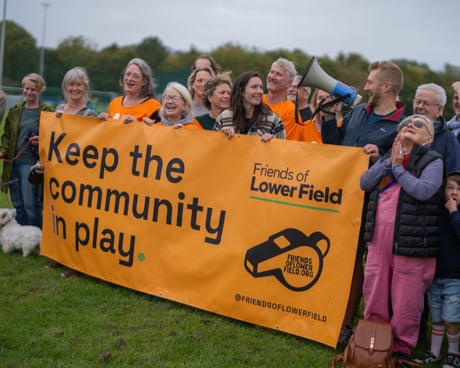
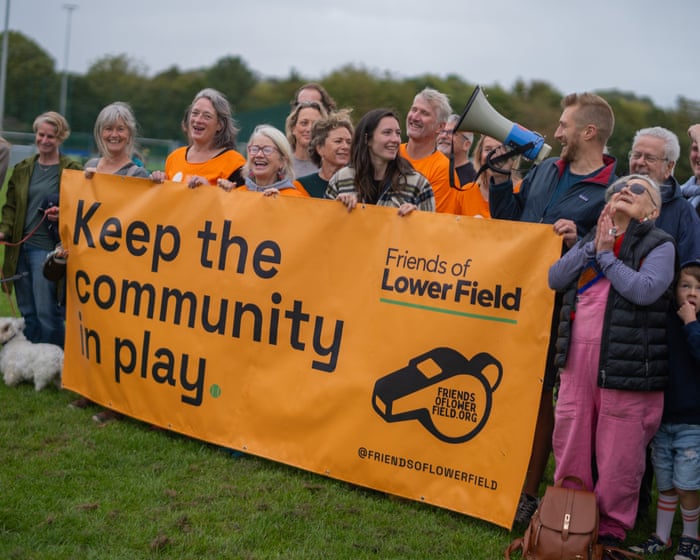
On Saturdays throughout autumn, residents of Totnes have met at a field on the banks of the River Dart to play ballgames, fly kites or simply sit on the grass and chat.
But it hasn’t just been about having fun – this has been a “play protest” aimed at trying to save a beloved piece of open land in the historic Devon market town.
As Mark Cocker approaches a landmark for the world’s oldest column in an English-language newspaper, he is still inspired by powerful encounters with nature
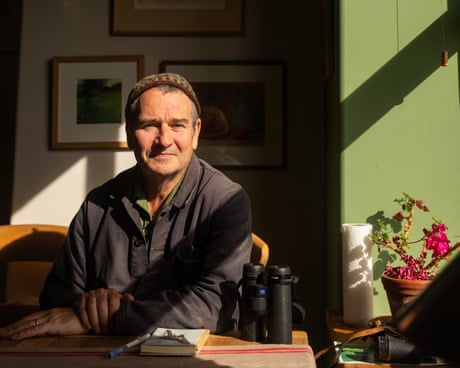
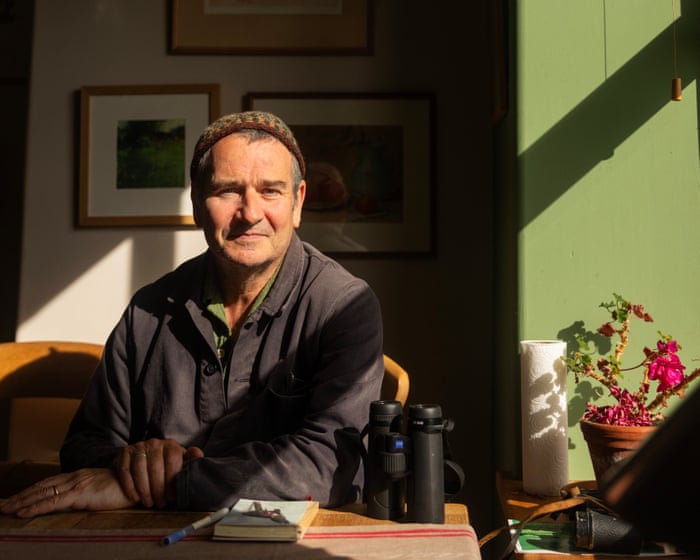
In the autumn of 1987, Mark Cocker sat in a field near Norwich and watched a jay burying acorns for the long winter ahead. He described the scene in his first country diary for the Guardian. Thirty-nine years on, some of those jay-planted acorns will be mature oaks now, and Cocker is completing his 1,000th diary for the world’s oldest column in an English-language newspaper.
In his next diary, he will reflect on the changing birdlife around Flint Clough, in the Peak District, where he first marvelled at rare birds aged 12 after devouring bird books in his bedroom. As a boy, he would find cuckoo, golden plover, ring ouzel and twite, a once-common bird which is now virtually extinct in England.
Ministro assegurou que “o Governo não vai ceder aos gritos que vêm da rua”; bandeiras da Palestina não resolvem habitação. O ministro dos Assuntos Parlamentares, Carlos Abreu Amorim, afirmou esta sexta-feira, que o problema da habitação “não se resolve com bandeiras da Palestina”, nem com tumultos e avisou que o Governo “não vai ceder aos gritos que vêm da rua“. As declarações foram feitas durante uma interpelação ao Governo agendada pelo PCP sobre a subida do custo de vida, na qual o deputado do CDS-PP, Paulo Núncio, trouxe ao debate a intervenção policial no protesto pela habitação no Porto, na
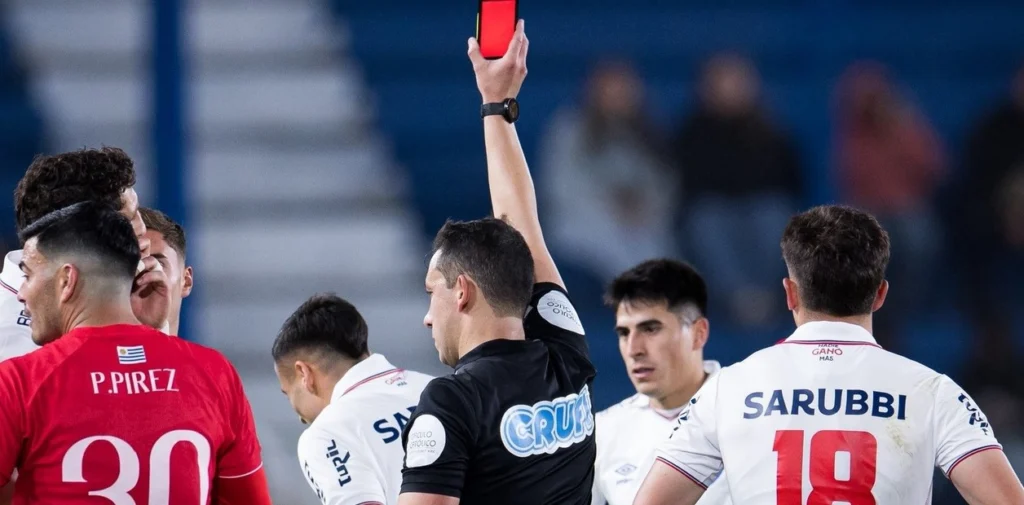
Uruguayan football introduced a new technology on Thursday night when referees replaced the traditional paper cards with an electronic device to show cautions and expulsions during a local match, although early tests have shown problems with visibility, according to local media reports.
Uruguayan football experienced a historic day on Thursday night with the appearance of virtual cards in the match that Nacional won 3-0 to Rentistas for the eighths final of the Uruguayan Cup, at the Gran Parque Central stadium.
During the game, the officiating team used the electronic device instead of the physical cards to signal bookings and sending-offs on the pitch.
The tool is designed to look like a mobile phone and has dedicated buttons to display yellow or red lights. Its main selling point is the automation of administrative work and allows referees to record every disciplinary sanction, substitution or incident in real time directly in the COMET sports management system.
That removes the need to take handwritten notes during the action and speeds up the digitization of the official post-match report.
La AUF (Asociación Uruguaya de Fútbol) presentó las tarjetas virtuales, un método que debutó en un duelo de Copa.
Text reads: “The Uruguayan Football Association (AUF) introduced virtual cards, a method that debuted in a Cup duel. This technological advance allows the automated and digital recording of the player who has been reprimanded.”
Despite the logistical benefits, the virtual cards face technical obstacles in their first trial stages. The debut was initially scheduled for the match between Defensor Sporting and Plaza Colonia, but sunlight made it impossible to see the colors properly. Under the artificial lighting of Thursday’s night match, local media reports said the signal was still not completely clear from a distance.
What Comes Next
At present, the device’s fundamental value lies in its ability to streamline the collection and transmission of statistical data during the ninety minutes of a match. Authorities will keep evaluating its performance to try to correct the faults related to brightness and contrast.
If the required visual improvements are achieved, the technology could be adopted on a regular basis in the main categories of South American football, according to the source. No timeline for that decision has been announced.
Technology in refereeing has expanded steadily in recent years, with video review and semi-automated systems now common in major competitions. Most of those tools help officials make decisions, while this device focuses on communicating and recording them. The key test for the Uruguayan trial will be whether the cards are as easy for players and spectators to see as the paper ones they replace, since visible signals are central to how the game communicates discipline.
The technology carries obvious logistical benefits, because referees no longer depend on cardboards that can be dropped, lost or misread, and data flows directly into the official system while the ninety minutes are still running.
For the Uruguayan Football Association, the real value of the tool lies in how it optimizes the collection and transmission of statistics. Every booking, substitution and incident becomes part of a digital record the moment it happens, a change that could improve accuracy in reports that have long depended on memory and hurried notes.
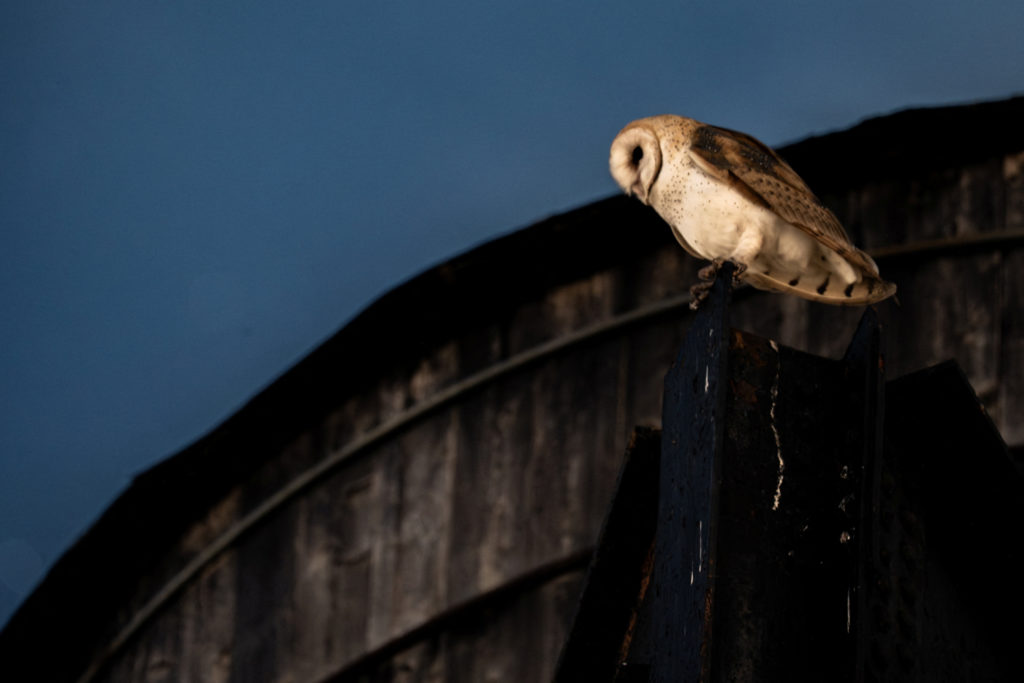
This is the first documented instance of barn owls nesting in Manhattan in modern history, according to one expert, and the owls have attracted nightly crowds of people in the street eager to get a glimpse of the elusive birds.

 Login