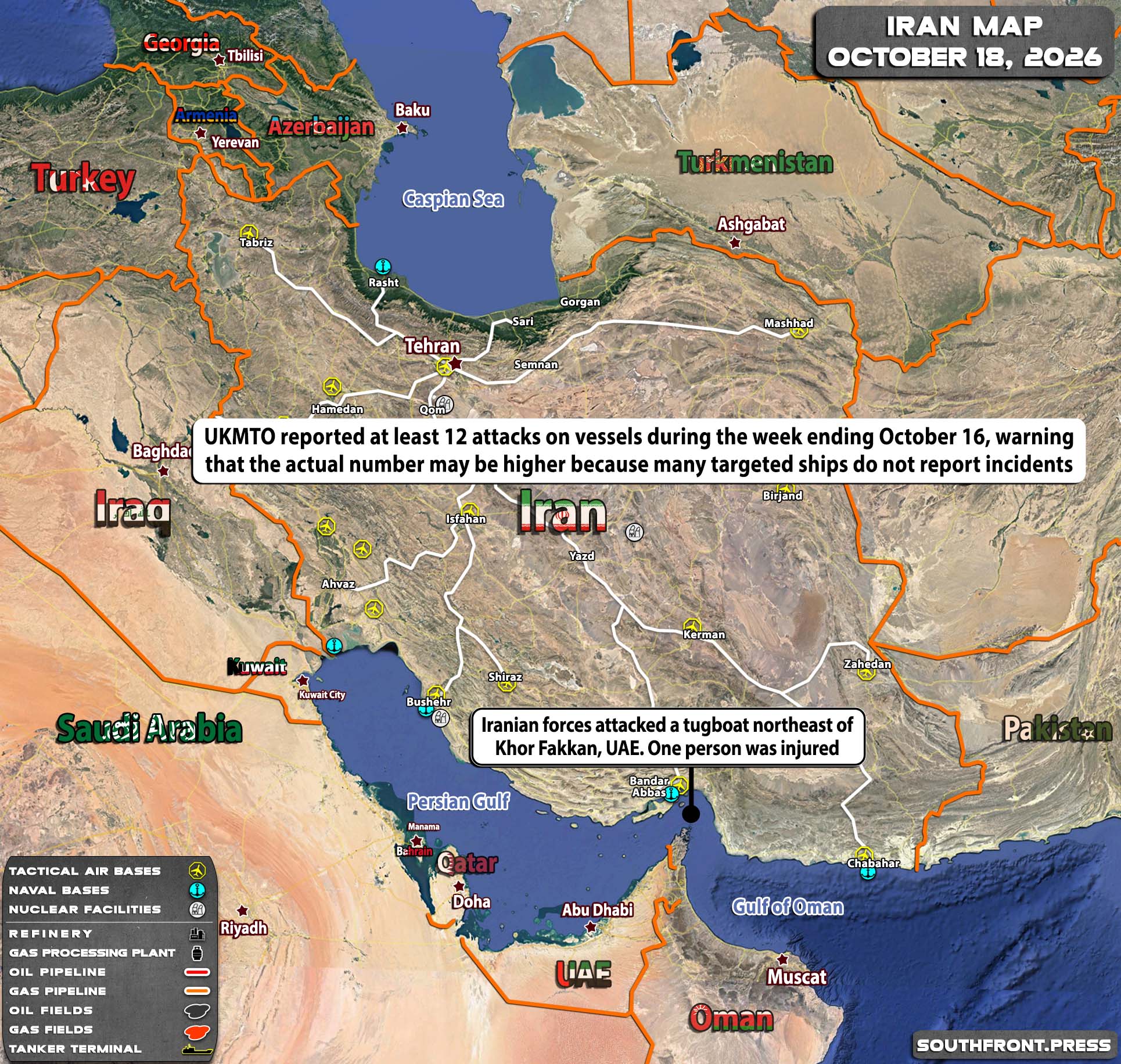
Iranian forces attacked a tugboat northeast of Khor Fakkan, UAE. One person was injured;
UKMTO reported at least 12 attacks on vessels during the week ending October 16, warning that the actual number may be higher because many targeted ships do not report incidents.
Flight expert Zach Griff shares why he always brings an extra phone in his carry-on backpack.
Courtesy of Zach Griff, Jaromir/Getty Images
What would you do if you lost your phone on a trip abroad?
It might never happen. It's never happened to Zach Griff.
But if it ever does, he'll be prepared.
It's probably tucked away in a drawer, stashed in your desk or nightstand, beneath chargers, stray cords, and pieces of paper you don't think you're supposed to throw out but probably will never need again.
You probably haven't thought about it since you put it there.
Griff, a travel expert and author of the travel newsletter From the Tray Table, estimates that he flies an average of 150,000 miles a year. And for the past 11 years, he said, he's carried his retired cellphone with him around the world.
Why you should always travel with 2 phones
When you upgrade your phone, put the old one in your backpack, Griff says.
Joey Hadden/Business Insider
Your old phone won't take up much space in your carry-on, and if something happens to your current one, it may be the most important item you pack.
"Your phone is the one thing you need to stay connected," Griff told Business Insider. "And the last thing I need when I'm traveling is to try to find a new phone."
Griff said he came to this realization in 2015 while on a safari in the Serengeti with his wife, Jill. They were staying at a remote lodge when Jill cracked her phone and damaged the camera. In the presence of elephants, giraffes, and lions, Jill couldn't snap a single picture.
Right about now, you may be thinking, "Why not just bring a camera?" I say go for it, but it won't fit as easily in your carry-on. And it won't help you if your phone gets lost or breaks.
"That was the time when I was like, 'From now on, I'm bringing a spare phone every single time,'" Griff said about the safari trip.
In over a decade of travel, Griff has only used his backup phone as a replacement once.
"We were in Paris, and I was walking near the Eiffel Tower, taking pictures at one of the overlooks," Griff said. "It was so crowded, I was worried about pickpockets, so I was fumbling things around, and then it happened."
While attempting to slide it back in his pocket, Griff dropped his phone on the ground. A crack ran across the top of the screen, disabling Face ID, but the phone was otherwise functioning just fine, he said. He decided to switch to the backup phone anyway to make the rest of his trip easier.
So far, Griff hasn't needed his backup phone to maintain contact while traveling. But if he ever does, he won't stay disconnected for long.
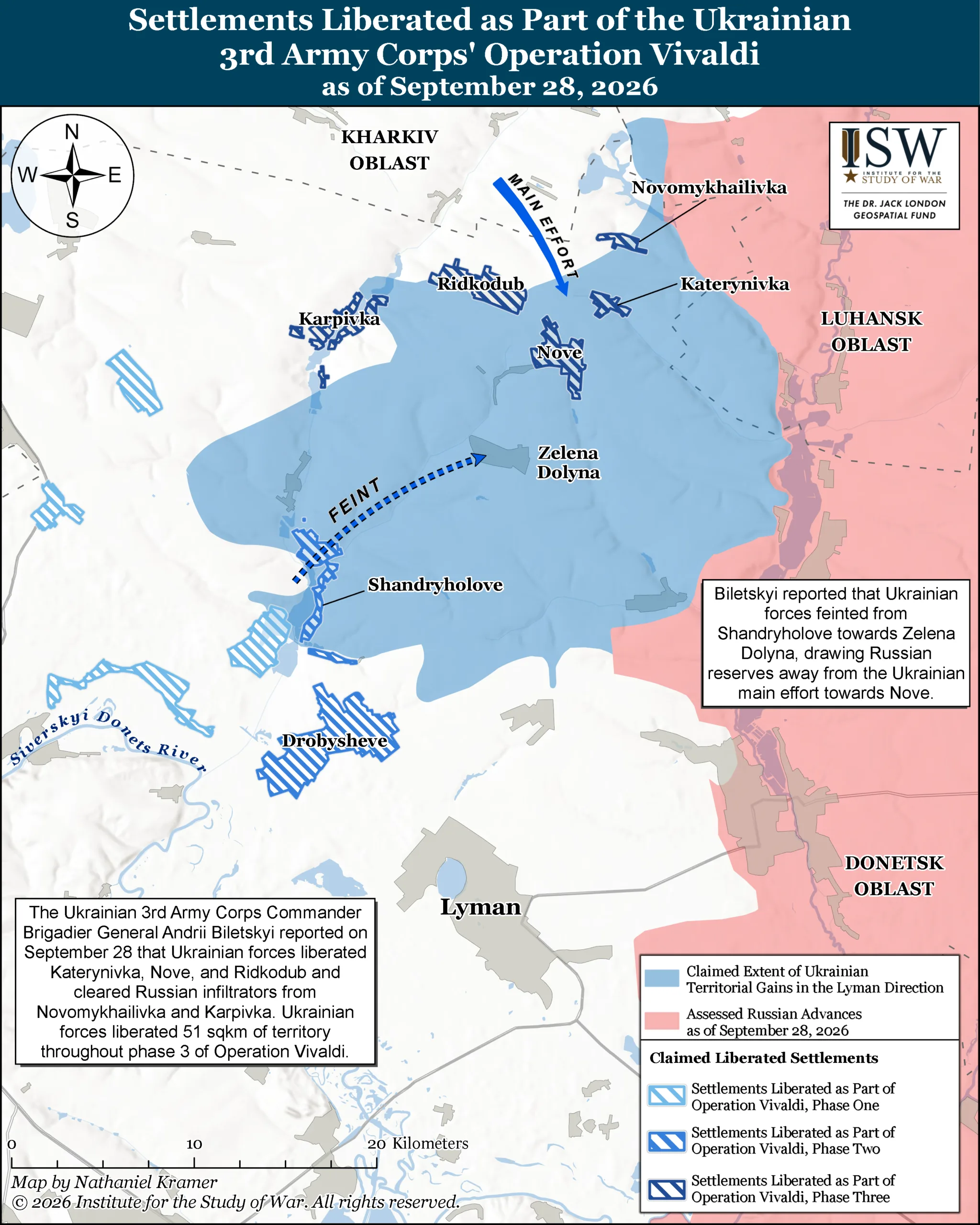
Ukrainian infantry encircled and retook the village of Kolodiazi north of Lyman without getting drawn into street fighting, while a drone battalion kept the sky above them shut, the battalion’s chief of staff told Suspilne on 18 October. The village fell during the fourth and final phase of Operation Vivaldi, Ukraine’s counteroffensive in northern Donetsk Oblast.
For years now, Russia has aimed to seize Lyman and cross the Siverskyi Donets River. It needs this area to encircle Ukraine’s fortress belt of Donetsk Oblast cities from the northwest, ISW assesses. Vivaldi’s four phases retook 277 km² and 16 settlements on that approach, and a veteran of the operation has said Ukraine’s assault troops suffered more than ten times fewer casualties than Russian forces doing it.
Drones over the infantry
The 60th Mechanized Brigade fought in all four phases of Vivaldi and took Kolodiazi in the last one, said the chief of staff of the brigade’s Fatum unmanned systems battalion, callsign Krash.
“Our task, as an unmanned systems battalion, was to escort and ‘close’ the air in front of our infantry to make it impossible for the enemy to hit it. To suppress all the firing assets possible,” he said.
The brigade’s 3rd Mechanized Battalion, the main striking force, encircled Kolodiazi and retook it without getting drawn into street fighting, Krash said. The 1st Mechanized Battalion kept Russian reinforcements out of the area, while drone crews suppressed artillery, hit supply runs, and worked against Russian drone operators.
Explore further
Vivaldi counteroffensive advanced after Ukraine took Russia’s drones out of the fight, ISW assesses
500 troops and 200-plus vehicles
The drone battalion killed or wounded about 500 Russian troops during the fourth phase and struck Russian armored vehicles, trucks, and motorbikes, its chief of staff said.
“More than two hundred pieces of various equipment: Grad and Uragan multiple rocket launchers, various armored vehicles, tanks, armored combat vehicles. Most of all motorbikes and quad bikes, there the count runs into the hundreds. This is our enemy’s main logistics tool,” he said.
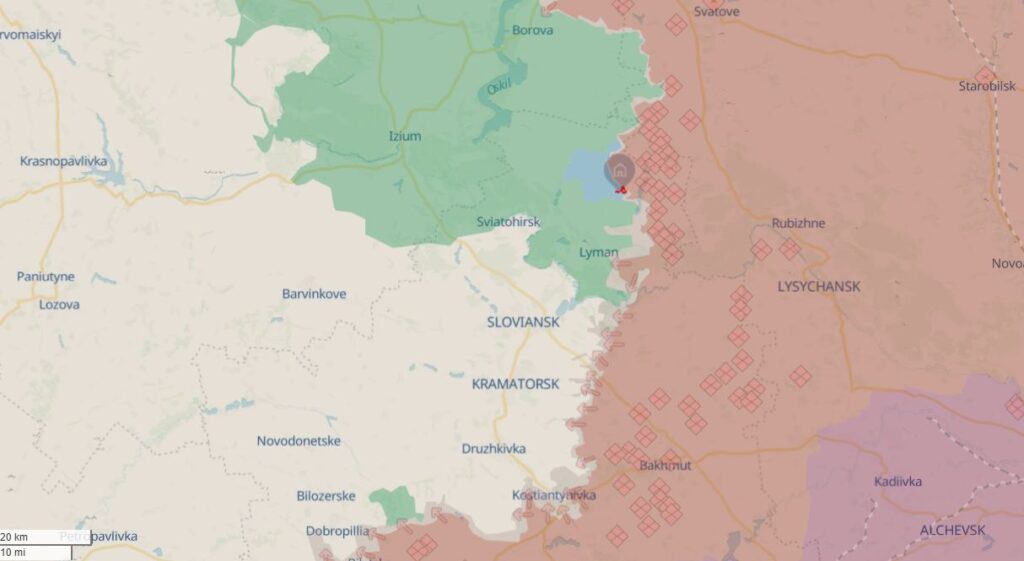
Lyman sector now. Map: ISW
Ghost villages
The villages retaken in northern Donetsk Oblast are nearly empty of civilians, Krash said.
“It’s very typical for de-occupied settlements: these are ghost towns. You can see right away where the occupier stepped. All the settlements are under the control of the Third Army Corps, our forces stand there and prevent enemy infiltration. But civilian life in these towns is either absent or very scarce,” he said.
Third Army Corps commander Brigadier General Andrii Biletskyi reported Kolodiazi’s liberation, along with Zelena Dolyna and Lypove, when he summed up Vivaldi’s fourth phase, which secured 101 km².
Il bonus mamme 2026 sale a 60 euro al mese, per un massimo di 720 euro annui. L’Inps ha pubblicato la circolare n. 106 del 16 ottobre 2026, con le istruzioni per accedere al contributo destinato alle lavoratrici con almeno due figli. Il documento chiarisce i requisiti, gli importi, le modalità di presentazione della domanda e le tempistiche dei pagamenti. Per quest’anno c’è l’aumento del beneficio mensile che passa dai precedenti 40 euro a 60 euro. Il pagamento è previsto in un’unica soluzione a dicembre 2026, mentre l’apertura della procedura per presentare le richieste sarà comunicata successivamente dall’Istituto. La misura viene confermata in attesa dell’introduzione dell’esonero contributivo parziale per le lavoratrici madri, rinviato al 2027.
Bonus mamme 2026, a chi spetta e i requisiti Inps
Il Bonus mamme 2026 è rivolto alle lavoratrici dipendenti e autonome con almeno due figli, purché rispettino specifiche condizioni anagrafiche, lavorative ed economiche. In particolare, possono accedere al bonus:
le madri con due figli, se il più piccolo ha meno di 10 anni;
le madri con almeno tre figli, se il più piccolo ha meno di 18 anni.
Nel conteggio rientrano anche i figli adottati o in affidamento preadottivo. Il requisito relativo al numero dei figli deve essere presente al 1° gennaio 2026 oppure maturare entro il 31 dicembre dello stesso anno. Se, ad esempio, il secondo figlio nasce ad aprile, il contributo può essere riconosciuto a partire da quel mese.
Possono beneficiarne le lavoratrici dipendenti del settore pubblico e privato, comprese quelle con contratti a tempo determinato, indeterminato, intermittenti o in somministrazione. Sono ammesse anche le lavoratrici autonome iscritte alle gestioni previdenziali obbligatorie, alle casse professionali e alla Gestione separata. Restano escluse le lavoratrici domestiche. È inoltre previsto un limite economico: il reddito annuo da lavoro dipendente o autonomo non deve superare 40mila euro nel 2026.
Bonus mamme con tre figli, cosa cambia per i contratti a tempo indeterminato
Una distinzione importante riguarda le lavoratrici con almeno tre figli che hanno un contratto a tempo indeterminato. Per queste madri il nuovo bonus da 60 euro mensili non viene riconosciuto nei mesi in cui è presente, anche parzialmente, un rapporto di lavoro stabile.
Le lavoratrici interessate possono invece beneficiare, se rispettano i requisiti, dell’esonero del 100% dei contributi previdenziali IVS a proprio carico, previsto fino al 31 dicembre 2026. L’Inps precisa che anche i contratti di apprendistato rientrano tra quelli a tempo indeterminato.
Se una lavoratrice con tre figli passa da un contratto a termine a uno stabile, perde il diritto al nuovo bonus dal mese della trasformazione. Può tuttavia accedere all’esonero contributivo, se ne possiede i requisiti.
Il beneficio ammonta a 60 euro per ogni mese o frazione di mese di attività lavorativa, fino a un massimo di dodici mensilità. Chi possiede tutti i requisiti per l’intero anno può quindi ricevere 720 euro. Per periodi più brevi, l’importo viene calcolato in proporzione ai mesi per i quali spetta il contributo. L’Inps ha chiarito che le somme maturate tra gennaio e dicembre 2026 saranno versate in un’unica soluzione nel mese di dicembre 2026, insieme alla mensilità relativa allo stesso mese.
Come fare domanda all’Inps per il bonus mamme 2026
Per ottenere il Bonus mamme 2026 è necessario presentare una specifica domanda all’Inps. Il riconoscimento della prestazione non è quindi automatico. La procedura di presentazione delle domande non risulta ancora aperta. L’Inps ha precisato che la data di attivazione sarà comunicata attraverso un successivo messaggio ufficiale. Nella richiesta, la lavoratrice dovrà dichiarare il possesso dei requisiti, indicare i dati dei figli e fornire la documentazione necessaria, oltre a scegliere la modalità di pagamento prevista
Matthew Guerrero drives for Uber in Southern California.
Matthew Guerrero
Matthew Guerrero says gas costs eat up much of his pay as an Uber driver in Southern California.
He prioritizes giving rides to weekend barhoppers who tend to tip well, he said.
Uber says that one driver's experience isn't representative of the broader platform.
This as-told-to essay is based on a conversation with Matthew Guerrero, a 41-year-old Uber driver in Southern California. It has been edited for length and clarity.
I've been seeking a workers' comp settlement that should be settled soon. In the meantime, my lawyer said that I could start working again. I needed a job really quickly, especially with three kids, so I started driving with Uber.
I've been driving with Uber for about five weeks. So far, it hasn't been very successful. For example, one week, I made $600 working 30 hours. To make that, I spent about $300 in gas driving my SUV.
Then, I have to put between 20% and 30% of what's left aside for taxes. That comes out to about $210 for 30 hours of work. That doesn't even include wear and tear on my car. I don't understand how anybody can do this long-term. It's not sustainable.
The pay is better if you drive in Los Angeles or San Diego. But I'm in Riverside County, and the pay seems to be lower here.
To get better-paying rides, you have to be strategic. Sometimes, I try to get a ride with a passenger who's headed to an airport in one of the big cities. Then, I stay there all day and take rides. That's not always feasible, though.
When I started with Uber, I realized that there were a lot of rides that involved taking people to morning doctor's appointments. Most of those people didn't tip well, though, and tips are key to making money.
Instead, I like to work Friday and Saturday nights around bars in Temecula. I usually log on around 4 pm and head home around 3 am. The pay is good, and the tips are a lot better than other rides in my area. Sometimes you have to deal with drunk people throwing up, but it's worth it.
I've given some rides to veteran Uber drivers — people who were working on the app back in 2015 and 2016. They said that they used to make better money than I do, and that they quit after they saw pay fall.
That was eye-opening for me. I don't understand how a company like Uber can pay as little as they do.
An Uber spokesperson said drivers in Riverside County, California make "at least $20.28 per engaged hour, plus $0.37 per engaged mile for vehicle expenses, with tips on top of that."
"While this guarantee doesn't cover time spent waiting for trips, it's important context when discussing driver compensation," the spokesperson said. Driver earnings can vary based on when drivers decide to work, where they drive, and rider demand.
"One driver's experience isn't representative of the broader platform," the spokesperson said.
Do you have a story idea about Uber? Contact this reporter at abitter@businessinsider.com or via encrypted messaging app Signal at 808-854-4501. Use a personal email address, a nonwork WiFi network, and a nonwork device; here's our guide to sharing information securely.
America's interminable war with Iran has killed thousands, disrupted commerce that flows through the Strait of Hormuz, and raised prices on the home front.
But there may be one silver lining. In an attempt to lower gas prices that spiked because of the war, the Trump administration has repeatedly issued waivers of the Jones Act, a century-old law that requires all goods moved between American ports to be carried on American-built, American-crewed ships.
With the law (temporarily) not being enforced, commerce has exploded.
Just look at how much propane has been shipped from the mainland United States to Puerto Rico, says Colin Grabow, a trade policy analyst at the Cato Institute and perhaps the nation's foremost advocate for abolishing the Jones Act.
America is one of the world's leading producers and exporters of propane, but the lack of Jones Act–compliant ships capable of carrying gas means that it has been nearly impossible to ship propane from the mainland to outlying parts of the country. In the past, Puerto Rico has imported gas from Nigeria, Chile, and elsewhere because those deliveries don't have to comply with the Jones Act.
For years, libertarians have argued that the Jones Act unfairly impoverishes American consumers and businesses that want to buy and sell things within the same country in order to artificially inflate the price of moving those things across water. Waiving the law seems to have proven that point: There are plenty of ships capable of moving gas and oil around the country as long as the government gets out of the way.
"The instant the Jones Act no longer applied to energy shipments, mainland propane displaced foreign imports, suggesting it had been the cheapest option all along," says Grabow.
Puerto Rico is hardly the only winner.
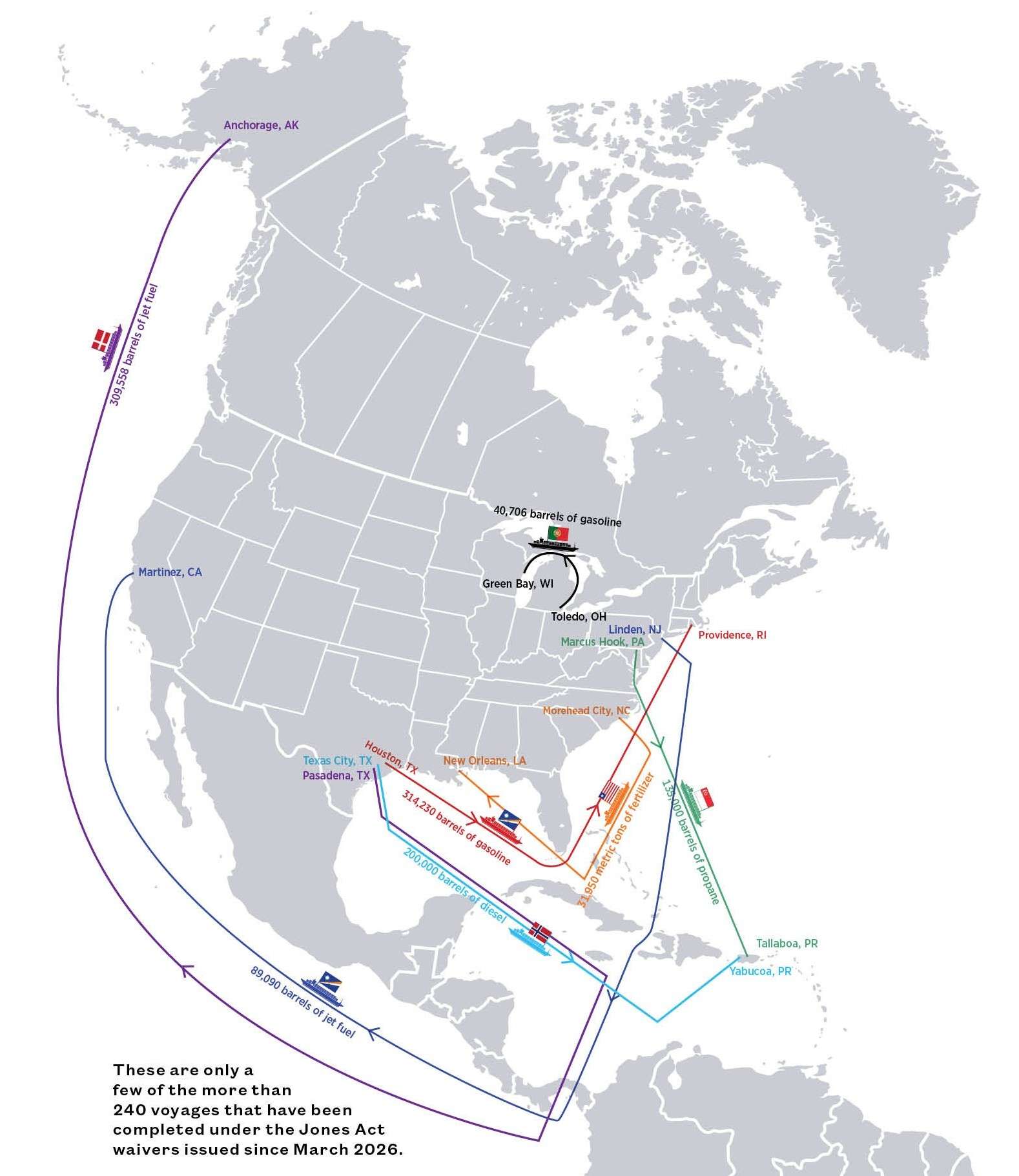
The Jones Act waivers are offering a glimpse into a world where the law doesn't exist. From March through mid-August, there had been 210 voyages completed that otherwise would have been deemed unlawful without the waivers, according to an analysis of Maritime Administration data by the Institute for Energy Research.
It's a world where American oil and natural gas can be more easily shipped from the Gulf Coast to New England, which had previously been importing energy from Russia and Europe. Another big winner is California, which had been importing gasoline from as far away as the Bahamas because it was nearly impossible to legally ship gas from Texas or Alaska to the West Coast.
President Donald Trump reupped the Jones Act waiver in mid-May. Another extension, issued in August, will last for 90 days but applies only to ships carrying energy products such as gas and oil. Before that waiver expires in November, lawmakers ought to kill the Jones Act permanently.
There is some irony in the fact that one of Trump's most successful policy maneuvers has paused a protectionist law that limited commerce, when so much else of his economic policy has been focused on erecting barriers to trade. It's also amusing that it was a war in the Middle East—something Trump pledged to avoid—that triggered this change.
Still, the proof is in the shipping. The free traders were right all along.
Na semana em que o Governo escolheu a Lufthansa para comprar até 49,9% do capital da TAP por 1,2 mil milhões de euros, Aguiar-Conraria responde a perguntas sobre o negócio e as contas de "merceeiro".
Founder teams anxiously wait for the leaderboard to update at 9 a.m. at a reality-style incubator in rural Pennsylvania.
Truman Dickerson
There was only one thing on the minds of the founders at this reality-show-style startup incubator.
It wasn't sex.
Founder teams had two weeks to become profitable, and potent social media was paramount.
At 9 p.m. on a recent Friday night, Max Harding had just returned from a barefoot run in the woods.
The eccentric 20-year-old Californian was back in a large barn in rural Pennsylvania — still barefoot — alternatively working on his startup and asking me about the point of life.
Though not an especially adept programmer, Harding possesses a more adroit, perhaps unteachable skill that has never been more valuable in the current landscape of founder culture.
"Max captures the attention of the camera, keeps us center stage," said his cofounder, Skyler Ji, who added that Harding's role includes "spreading our philosophy" while he runs the operation behind the scenes.
"Max brings some of the grander things," Ji told me. The pair's startup, Hivemind Research, aims to build "digital brains" in the form of social media.
Harding and Ji were among 66 mostly young, mostly imaginativestartup founders taking part in a two-week "incubator" workshop called Launchpad.
The novel event was hosted by Stan, the company behind a moderately successful platform for independent creators to advertise and sell their services. At the last meetup Stan organized, startup founders jet-skied the East River at golden hour.
At the incubator event, the entirety of which was filmed for use in a reality show that Stan plans to release sometime soon (though it is uploading Instagram clips daily), magnetic personalities were among the most valuable commodities.
Max Harding (left) with his startup team at the launchpad event.
Max Harding
Stan cofounder Vitalii Dodonov told me that the 30 participating teams were chosen from a pool of 700 applicants, primarily for their existing social media followings and their ability to grow them.
"It's not the building that gets you to revenue, it's the distribution," he said of today's startup culture.
Of the many metrics competing teams were required to meet daily (10 sales calls, for example), social media videos were among the most heavily weighted.
Everywhere I looked, people were talking about their companies into phones attached to tripods. Their products ran the gamut of usefulness — ranging from an AI facial scanner that tracks acne to an AI app that connects parents with babysitters.
Startup founders film social media content while having dinner.
Truman Dickerson
Dodonov and John Hu, Stan's other cofounder, were trailed at all times by multi-person film crews, who glared should you emit an ill-timed sound while the cameras rolled. (The Velcro rip of my messenger bag earned me some leers.)
Even outfits were choreographed. On the advice of the camera crews, Hu wore a "cream" colored getup while Dodonov donned a "charcoal" number to emphasize what was described to me as the "yin and yang" paradigm between the two.
I spent about 16 cumulative hours at the event over two days earlier this month, at Stan's invitation. I ate meals with the founders, did a 7:30 a.m. cold plunge in the on-site lake alongside a Danish guy selling an AI to-do list, and commiserated with the startup founders who routinely pulled all-nighters to hit their metrics.
Yours truly, soon before jumping into a freezing lake at 7:30 a.m. The visible mist is fog, not steam, in case you're wondering.
Truman Dickerson
Here's what I learned from the experience.
Reality TV meets hackathon
The event was billed as a sort of reality-TV-style game show-slash-incubator in the vein of hits like "Love Island" and "Squid Game."
As in those shows, founder teams at Launchpad were subject to firepit eliminations, discreet alliances, and competitive drama under the ever-watchful lenses of dozens of expensive cameras.
Except instead of a bunch of promiscuous co-eds doing risque challenges on a tropical island somewhere, contestants at Launchpad were mostly tech geeks with an unhealthy number of hours notched building software on their MacBooks.
"There's no sex," laughed Jacob Snarr, a 24-year-old from Philadelphia. "Nobody here is thinking about that."
Snarr and his cofounder, RJ McLaughlin, built a web browser game that lets friends debate their tastes and preferences, from their favorite foods to other everyday questions. The pair enlisted me as a product tester one morning, and we debated the merits of empanadas in the chilly barn.
McLaughlin and Snarr were in second place on the leaderboard when I talked to them on Saturday morning — saving them from elimination.
Rey Mendoza, who at 41 was one of the oldest founders in the competition, had already been eliminated. When I spoke with him, he was fighting for a chance at redemption. He showed me his sleep tracker for the six days. He hadn't slept more than six hours a night.
Stan cofounder John Hu explains marketing to Rey Mendoza during a closed-door meeting.
Truman Dickerson
"Here, you're just fucking building, like 24/7," Mendoza, fatigued, said reverently.
Event organizers added a number of less-intense, more fun-oriented events to the schedule, which were largely ignored by teams scrambling to upload more videos to social media.
A "Mario Kart" meetup in a room adjoining the cafeteria was attended by precisely nobody. Two TVs showed the game's start screen, while maybe a dozen people sat at tables squinting at laptops.
It's hard to imagine binge-watching some 60 sweatshirt-clad nerds drearily prompting chatbots to refine source code for yet another quirky AI startup. After all, everyone and their cousin is vibe coding their way into progressively nicher business models these days.
In 2025, a record number of business applications — about 5.7 million — were submitted by Americans, according to census data. However, the number of businesses the government estimates will be successful enough to require employees actually declined.
Those kinds of numbers mean it takes more to stand out. In our interview, Hu pointed at my phone and said I could use AI tools to start three or four businesses today — but, of course, they likely wouldn't be profitable.
That, Hu said, is where the founders' personalities are supposed to come in, together with a bit of manufactured drama and endless streams of social media content.
In the first challenge of the event, held on the first day, for example, teams were required to submit one social media video for public review around the firepit. Then, in front of everyone, Hu tore into them.
"I was very honest," he said of one particular "roast" that produced tears from the submitters. "I was like, 'Guys, would anyone ever watch this? No. The answer is no, because of the quality — you never have a shot."
The moment wouldcertainly make for good television. It also, Hu told me, mimicked the real-life struggle inherent in starting a company in a saturated market.
"They're going through the true ups and downs of a true cofounder relationship and a startup experience," he said of the team that was subjected to his roast, who were initially so dejected they discussed "breaking up."
Overall, most of the teams I talked to said they enjoyed the ramshackle experience of trying to make a company profitable in two weeks. At the very least, it was all happening in a picturesque setting.
Vitalii Dodonov poses at the retreat spot.
Truman Dickerson
A $3 million investment
Stan spared no expense to pull off the event.
It was held at a luxury, 400-acre villa two hours north of New York City that has in the past hosted retreats for high-flying companies like J.P. Morgan,whose executives, according to one staff member at the retreat at least, are keen for employees to embrace buzzwords like "team-building" and "company culture" among the illusion of rustic calm far from Manhattan.
We were in the sticks of eastern Pennsylvania — so deep in the woods, in fact, that cell service was nonexistent. There was fiber-optic internet, however, and the setting, though far-flung, could hardly be called rustic.
A squadron of golf carts staffed by the venue's seasonal workforce, many of whom were from Ireland or Australia, patrolled the grounds.
I was personally given the cellphone number of one such seasonal worker and encouraged to notify her anytime I wanted to go anywhere, at which point she would materialize with the golf cart.
Dodonov told me that Stan spent a combined $3 million renting the place for two weeks, booking camera crews, and making other necessary arrangements to host the founders, some of whom had traveled from as far away as Spain and Denmark.
For a company whose cofounder told Business Insider this year that it has an annual recurring revenue of "nearly $41 million," that's a significant sum.
"It's a very expensive experiment," Dodonov said. He said that, in his view, the return on investment is to see if "the playbook works" — the playbook being his and Hu's belief that building a successful company requires, perhaps above all, promoting yourself on social media.
"Anyone can systematically establish and build support through the power of content," Dodonov said.

 Login