❌

Reading view

Colombia’s Congress Approves 2027 Budget Over Opposition Objections

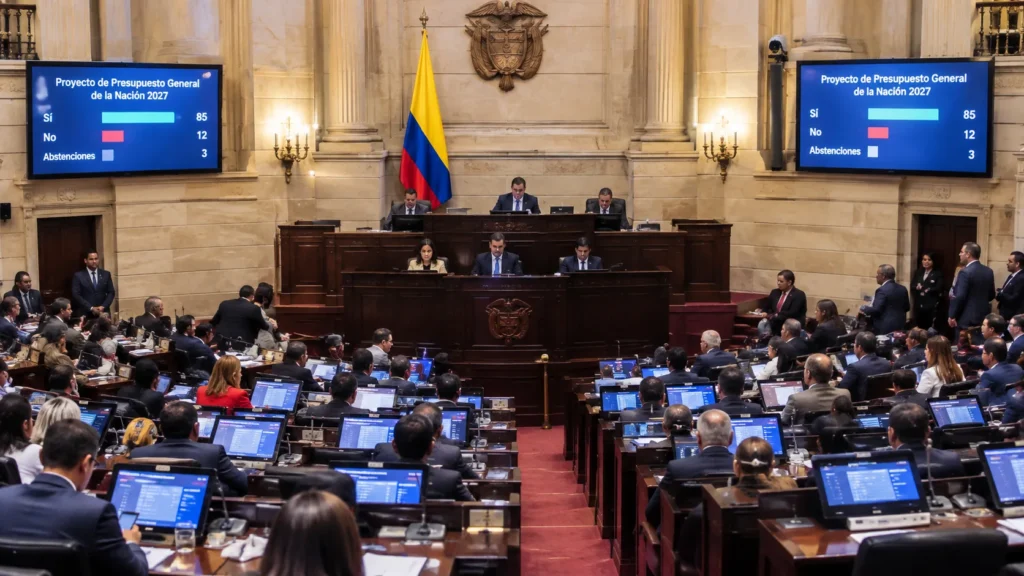
The Historic Pact questioned the law’s direction by pointing out that the government preferred to protect financial institutions, oligopolies and the most favored ones rather than devote more resources to key sectors such as education. Photo: El Pais.

Colombia’s Congress approved the 2027 national budget of 200 billion dollars on October 20, igniting a backlash from opposition lawmakers who say the plan favors debt payments and financial interests over education, peace and regional development.


The approval of the General Budget of Colombia for 2027 capped a tense legislative session.

President Abelardo de la Espriella’s government secured passage of the law, worth 634.9 trillion Colombian pesos (about $200 billion), over the objections of the opposition, which was led mainly by the Historic Pact party.

RELATED: Colombia’s First National Strike Against De la Espriella Met With Police Crackdown

Representative María Fernanda Carrascal described the debate as a “disaster” and faulted the national government for refusing to accept any of the 700 proposals submitted by her party. The initiatives sought to channel more resources into public education, support for victims of violence and the regions, she detailed. Faced with the lack of agreement, the opposition walked out of the debate, stating it would not back a measure it considers harmful to the country.

The Historic Pact also questioned the law’s orientation, arguing that the government chose to protect financial entities, oligopolies and the most favored sectors. They further denounced that the project promotes over-indebtedness, which they say will end up shifting heavier tax burdens onto Colombian citizens.

🇨🇴 ¡Colombia tiene Presupuesto para 2027!
El Congreso de la República aprobó por $634,9 billones el Presupuesto de la Verdad, el primer paso para volver a encaminar la economía del país hacia el crecimiento, la responsabilidad fiscal y la atención de las necesidades del país. pic.twitter.com/pHiLhYzVTU

— MinHacienda (@MinHacienda) October 20, 2026

Text reads: “Colombia has budget for 2027! The Congress of the Republic approved the Truth Budget for $634.9 trillion, the first step to reorient the country’s economy toward growth, fiscal responsibility, and meeting the country’s needs.”

Other voices in the legislature added their objections. Senator Jennifer Pedraza of the Dignity and Commitment party (Dignidad y Compromiso, in Spanish) criticized the absence of a fixed allocation to address the consequences of the earthquake that struck on August 10. She questioned the fact that assistance to hard-hit departments such as Risaralda, Chocó and Valle del Cauca depends solely on leftover budget balances.

Senator Ariel Ávila, in turn, lamented the underfunding of resources earmarked for electric infrastructure and energization in non-interconnected zones such as Vichada, Guainía, Arauca, Putumayo and Vaupés. He also pointed to a lack of concern for victims of the armed conflict and what he called a budgetary strangling of the Special Jurisdiction for Peace (JEP).

After the law’s validation, Congress gave the Executive 90 days to draft a fiscal adjustment plan, which the national administration has called the Rescue Law. The Ministry of Finance and the cabinet are already holding talks with the International Monetary Fund, a signal that new credit instruments and the conditions attached to them may be on the negotiating table.

Mobilization Set for November

The Historic Pact called on citizens to join a national mobilization on November 24 to reject the budget. The party maintains that the project raises debt service by 46% while cutting investment in the Special Jurisdiction for Peace by 82% and stripping 500 billion Colombian pesos (about $157 million) from the National Learning Service (SENA).

Lawmakers also warned that 14 departments will see their real investment shrink. They denounced that the norm prioritizes debt repayment over the financing of peace, education and regional development. “The complaint is clear: more resources for debt and less for peace, education and the regions,” the party stated on social media.

The mobilization announced for late November now stands as the opposition’s next test of strength. In the meantime, the government’s 90-day clock to deliver its fiscal adjustment plan is running, and the talks with the International Monetary Fund could define the conditions under which Colombia finances its 2027 spending. The opposition has vowed to keep the pressure on, both in the streets and in the legislature.

📢 ¡24 DE NOVIEMBRE: MOVILIZACIÓN NACIONAL!

La bancada del Pacto Histórico llama a la movilización frente al Presupuesto 2027 del Gobierno de Abelardo de la Espriella, por $634,9 billones.

Según la bancada, el servicio de la deuda aumenta un 46%, la inversión de la JEP cae un… pic.twitter.com/F5IYf2YDVb

— Pacto Histórico Oficial (@PactoCol) October 20, 2026

Text reads: “November 24: National Mobilization! The Historic Pact bench calls for mobilization against the 2027 budget of the government of Abelardo de la Espriella, for $634.9 billion. According to the bank, debt service increases by 46%, Special Jurisdiction for Peace (JEP) investment falls by 82%, National Learning Service (SENA) loses $500 billion, and 14 departments will receive less real investment. The denunciation is clear: more resources for debt and less for peace, education, and regions.”

  •  

Haiti Gangs Ambush Foreign Troops, Kidnap Four Salvadoran Air Force Members

Deadly Haitian gangs over the weekend ambushed members of an international security force deployed in Haiti, kidnapping four Salvadoran Air Force members, authorities confirmed Monday.

The post Haiti Gangs Ambush Foreign Troops, Kidnap Four Salvadoran Air Force Members appeared first on Breitbart.

  •  

Florida Judge Issues Arrest Warrant for 95-Year-Old Cuban Dictator Raul Castro

Florida Attorney General James Uthmeier revealed on Monday that a judge in the state had issued an arrest warrant for Raúl Castro, the 95-year-old dictator of Cuba, on conspiracy to commit murder charges.

The post Florida Judge Issues Arrest Warrant for 95-Year-Old Cuban Dictator Raúl Castro appeared first on Breitbart.

  •  

Brazil’s election could reshape relations with China

By Tings Chak

Join us on Telegram, X, and VK.

Contact us: info@strategic-culture.su

On Oct. 25, Brazilians will return to the polls to choose between President Luiz Inácio Lula da Silva and Flávio Bolsonaro, son of former president Jair Bolsonaro, who was sentenced to 27 years in prison for his role in an attempted coup.

The first round gave Flávio 47.03 percent of valid votes against Lula’s 45.16 percent, revealing the enduring strength of the far right four years after its electoral defeat.

The runoff takes place as President Donald Trump seeks to restore U.S. domination over Latin America, with Brazil emerging as a consequential battleground in Washington’s campaign to contain China’s growing relations with the region.

Over the past two decades, Brazil and China have built a political partnership that has expanded the space for independent action among countries of the Global South. Under Lula and China’s President Xi Jinping, this relationship has deepened through cooperation in industrial development, infrastructure, science and technology.

The election will determine whether this project advances or Brazil’s international orientation is subordinated to Washington’s renewed Monroe Doctrine as part of the continent’s rightward shift.

Since Lula’s return to the presidency in 2023, the two governments have connected Chinese cooperation with Brazil’s development programmes, including Nova Indústria Brasil, the Growth Acceleration Programme (PAC) and the Ecological Transformation Plan. Lula’s May 2025 visit to Beijing produced 36 agreements covering infrastructure, finance, artificial intelligence, public health and industrial cooperation.

Behind these agreements is a long-standing challenge: overcoming Brazil’s dependent position in the international division of labour, where commodity exports continue to outweigh advanced industrial and technological development.

This cooperation has also reached Brazilian popular movements. Through the International Association for Popular Cooperation (Baobab), Brazil’s Landless Rural Workers’ Movement (MST) and other organisations have worked with Chinese institutions on agricultural mechanisation, bioinputs and digital technologies for family farming.

These initiatives include the Digital Family Farming and Agroecology Laboratoryand IARAA, an artificial intelligence project for agroecology and agrarian reform developed by Brazilian popular movements using Chinese open-source models.

In a countryside marked by extreme concentrations of land, machinery and capital, such cooperation offers new tools to peasant organisations fighting for agrarian reform and the production of healthy food.

Brazil’s relationship with China also reveals the different class interests at work in the country, with contradictions particularly visible in the countryside.

Massive exports of soybeans, meat and minerals have continued under both Bolsonaro and Lula, but their governments have pursued very different political relationships with Beijing.

While Jair Bolsonaro attacked China and aligned himself with Washington, Lula has sought to deepen strategic cooperation, including in industrial development, technology and agrarian reform.

Flávio Bolsonaro now promises an “economically pragmatic” relationship with China while cultivating close ties with Trump. For sectors of Brazil’s ruling classes that profit from commodity exports, continuing to sell to China while embracing Washington’s political agenda presents little contradiction. For Brazil’s efforts to rebuild its industry and develop technological sovereignty, the consequences are far greater.

Return of the Monroe Doctrine
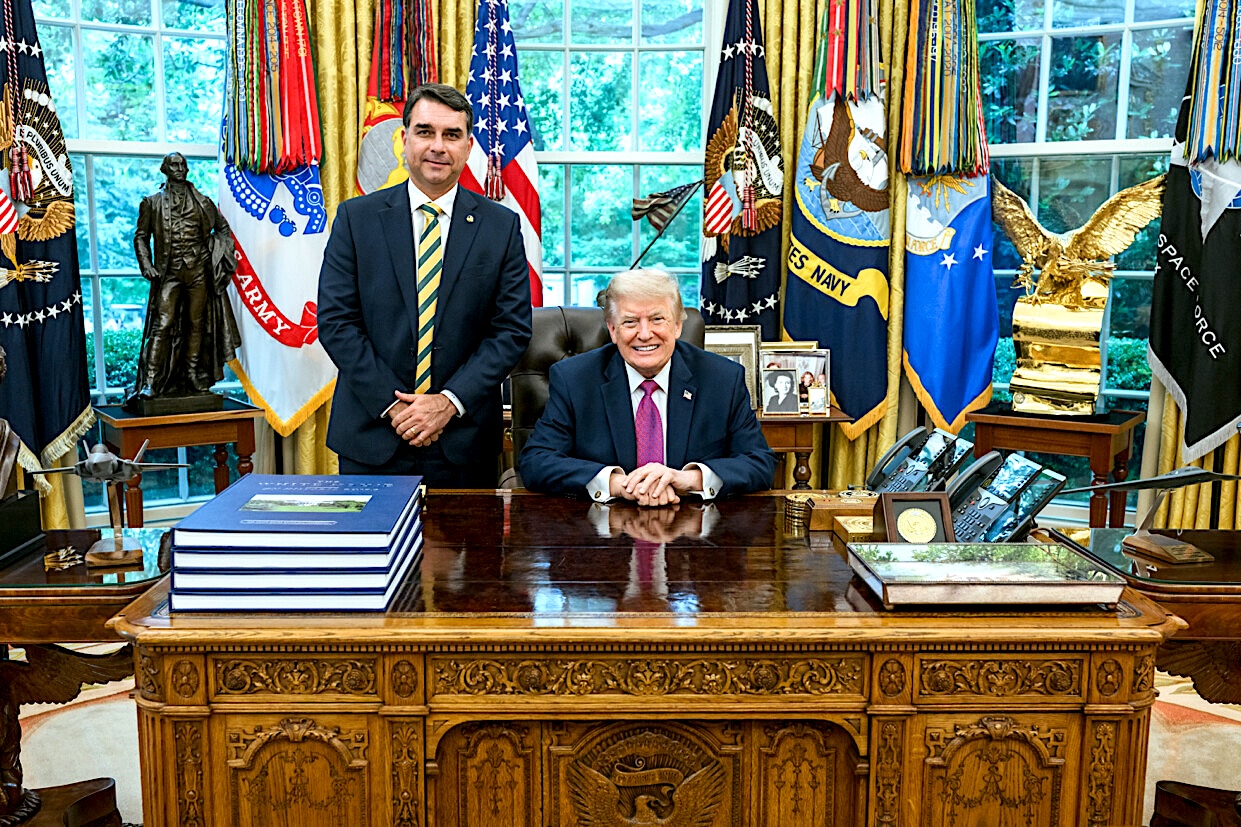
Bolsonaro with Trump in the White House on May 26. (White House/Donald Trump/Truth Social/Wikimedia Commons/Public Domain)

Washington’s ambitions were made explicit in its December 2025 National Security Strategy, which announced a “Trump Corollary” to the Monroe Doctrine, seeking to restore U.S. pre-eminence in the Western Hemisphere and deny outside powers control over strategic resources and infrastructure.

Five days later, China published its third Latin America policy paper, reaffirming sovereignty, non-interference, regional integration, technological cooperation and support for the region as a Zone of Peace. The two documents reveal fundamentally different approaches to the political future of the continent.

Brazil’s position is decisive. As Latin America’s largest economy, a founding BRICS member and a leading participant in Mercosur, it possesses industrial, scientific and political capacities that could strengthen independent development across Latin America and beyond.

The emergence of a new technological era makes this struggle particularly consequential. Brazil is among the few countries of the Global South capable of pursuing digital and technological sovereignty that could benefit its neighbours and parts of Africa.

Its roughly 23 percent share of global rare earth reserves is an important starting point, but control over minerals alone is insufficient. The greater challenge is developing the capacity to process them, manufacture advanced components and build the digital infrastructure, artificial intelligence systems and technologies that will shape future production.

Flávio has made his orientation clear. Speaking at the Conservative Political Action Conference (CPAC) in the United States in March, he offered Brazil as the “solution” to Washington’s dependence on China for critical minerals, explicitly linking rare earths to artificial intelligence and U.S. military superiority.

Chinese economic reporting has also described proposals from his team to exclude China from rare-earth supply chains. Rather than using Brazil’s resources to develop its own industrial and technological capacities, this agenda would place them at the service of U.S. technological and military power.

The same political orientation extends to digital sovereignty. In July, Flávio’s campaign submitted proposals to U.S. trade authorities that included preventing Brazil’s Pix payment system from connecting to non-Western international payment networks and loosening commitments within Mercosur.

These proposals converge with a wider U.S. campaign involving tariffs, digital regulation, strategic minerals and attempts to influence Brazil’s electoral process.

Meanwhile, Washington’s January bombing on Venezuela and kidnapping of President Nicolás Maduro and First Lady Cilia Flores demonstrated how far it is prepared to go to impose its will on the continent.

BRICS & the Struggle for Independent Foreign Policy

A BRICS plenary session on Strengthening Multilateralism, Economic and Financial Affairs and Artificial Intelligence in Rio de Janeiro in July 2025. (Palácio do Planalto /Flickr/ CC0/Wikimedia Commons)

Brazil, particularly under Lula, has helped build institutions through which countries of the Global South can reduce their dependence on Western-dominated structures.

At the July 2025 BRICS summit in Rio de Janeiro, the group advanced cooperation on development finance, local-currency transactions, and international institutional reform.

The New Development Bank, headed by former Brazilian president Dilma Rousseff, is an important expression of this effort.

The BRICS cannot automatically overcome economic dependency or guarantee sovereignty for working people. Yet its expansion offers greater room for independent development, provided that participating governments have the political commitment to use these possibilities.

Brazil’s history reveals how difficult that independence has been to defend. In 1961, Vice President João Goulart became the first high-ranking representative of a Latin American government to visit the People’s Republic of China, meeting Mao Zedong when revolutionary China remained diplomatically isolated and subjected to U.S. sanctions. Three years later, Goulart was overthrown in a U.S.-backed civil-military coup that inaugurated a 21-year dictatorship.

The early history of China–Brazil friendship was inseparable from struggles over national sovereignty, agrarian reform and the forces determined to suppress them.

The international material conditions for South–South cooperation are considerably more favourable today, but political direction remains decisive.

Former President Jair Bolsonaro hosted the 2019 BRICS summit in Brasília while pursuing close alignment with Washington. A government can weaken institutions from within by abandoning the commitments that give them political substance.

Jair Bolsonaro in 2018. (Jeso Carneiro/ Flickr/ CC BY-NC 2.0)

The far right’s resurgence also reflects the enduring power of Brazil’s own ruling classes. Bolsonarismo has a domestic base among sections of agribusiness, finance, the security apparatus, militias, conservative religious networks and major media.

These forces, whose electoral and institutional advances have continued, were strengthened by the 2016 parliamentary coup against Dilma Rousseff and the judicial persecution of Lula. They possess their own organisations, material interests and sources of power, which do not disappear when an election is lost. Their economic dependence on Chinese markets has not prevented their support for Washington’s political agenda.

Beyond the Election

Beijing has followed the Brazilian election closely, reflecting the importance of the political relationship built between Lula and Xi over years of cooperation.

In July, Xi reaffirmed China’s support for Brazil against external interference during a conversation with Lula, which also covered cooperation in artificial intelligence, satellites, mineral processing and relations between China and Mercosur.

In September, Foreign Minister Wang Yi received Lula’s adviser and former foreign minister Celso Amorim in Beijing, reaffirming the bilateral strategic partnership.

China’s principle of non-interference means that the choice of Brazil’s government belongs to the Brazilian people, but Beijing’s diplomatic restraint should not be confused with an absence of political interests or an assumption that all governments would pursue the same relationship. Chinese analysts have described the possible outlook under Flávio as one of “cold politics, hot economics”: commodity trade would likely continue, but the political relationship and cooperation in strategic sectors could deteriorate. The experience of Jair Bolsonaro’s presidency has already shown the limits of commercial interests in sustaining a broader political partnership.

For the Brazilian people, the consequences extend well beyond foreign policy. The election will also shape the struggles over labour rights, public services, agrarian reform and the defence of democratic space.

Brazil’s renewed role in South–South cooperation under Lula has opened possibilities for a development project that responds to the needs of its working people, but realising those possibilities depends on the political and social forces capable of carrying it forward.

The Brazilian people have fought through dictatorship, neoliberal restructuring, parliamentary coups and the rise of the far right to defend their political and social gains.

This election is another moment in that longer struggle, now unfolding amid renewed U.S. imperial intervention and a transformation of the world’s technological foundations. The future of China–Brazil cooperation will depend on the capacity of organised popular forces to build a sovereign national project and turn international cooperation into lasting changes in people’s lives.

Original article: consortiumnews.com

  •  

SVR Report on Ukraine’s Mexican Drug Gang Links Could Pressure Zelensky, Won’t Change US Policy

Sputnik – 20.10.2026

“It’s quite possible that these facts could serve as a tool to exert pressure on the Kiev regime,” but the US government “will never publicly acknowledge that they have leveraged drug cartels to further their own interests,” RAS Institute of Latin America senior researcher Alexander Stepanov told Sputnik.

Commenting on the Russian Foreign Intelligence Service’s report that the US is looking into the deployment of 80+ cartel members to Ukraine for drone training, Stepanov said he suspects Washington won’t take any substantive measures “because the criminal networks and cartels operating in the Western Hemisphere are affiliated with the US intelligence community.”

“These groups serve as proxy instruments for the US, deployed when necessary to pressure opposing governments and act as a key destabilizing factor – thus creating opportunities for the US to exert influence over the region.”

US intelligence even “oversees the recruitment of individuals from these cartels, categorizing them based on technical proficiency, equipment, and intended use,” Stepanov pointed out, highlighting the historical use of American prisons for this purpose, and the fact that “virtually the entire leadership of Mexico’s cartels comes from security or military backgrounds, including the special forces.”

Possessing “the necessary skills, training and discipline,” gang members are “ideal mercenaries,” and deployment in Ukraine for drone training will allow them to transfer their skills back home as instructors at specialized paramilitary training centers affiliated with US intel agencies.

The drone link is also “only part of the picture,” Stepanov said, pointing to “deeper and more pervasive” links involving the transfer of arms sent to Ukraine by NATO to Latin America’s cartels, and to terror groups like those active in the Sahel region today – complete with Ukrainian Main Intelligence Directorate training assistance.

Ukraine is also “leveraging its capabilities, intelligence structures and affiliated networks of organized criminal groups that have taken root in Europe to facilitate the distribution of narcotics, with Mexican drug cartels serving as their primary suppliers,” Stepanov believes.

  •  

Amazon Fires Push Brazil Air Pollution to Very Unhealthy Levels

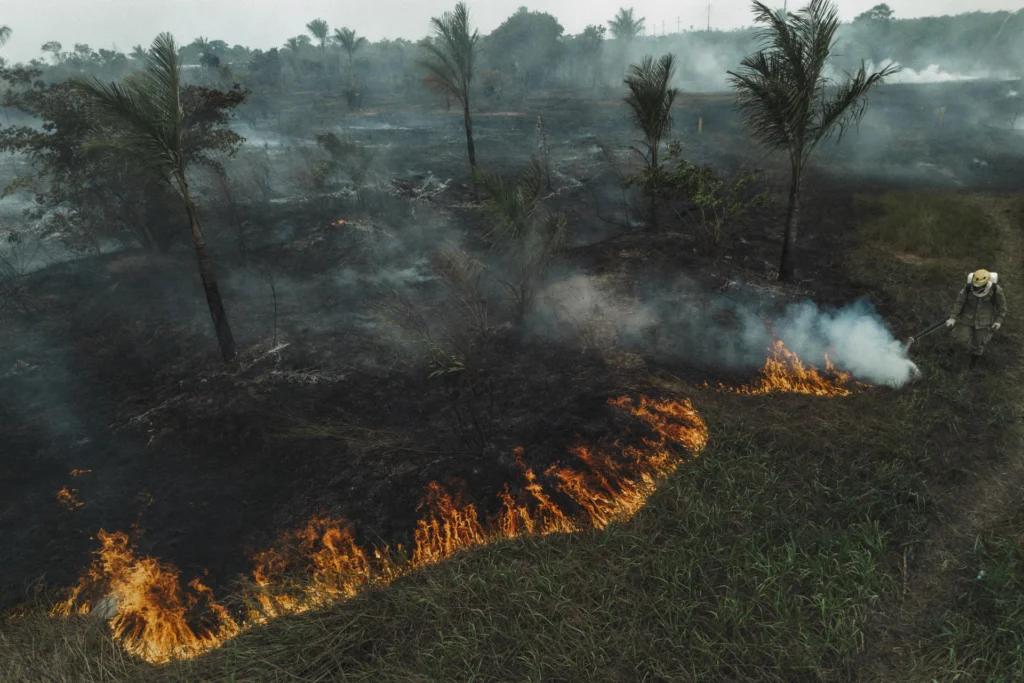
Hundreds of fires are consuming the Amazon rainforest, plunging Brazilian cities in the region into a dangerous cloud of toxic smoke. Photo: EFE.

Wildfires in Brazil’s Amazon region have driven air pollution to dangerous levels in cities such as Santarém and Manaus, prompting the federal government to deploy a joint armed forces command, more water-bombing aircraft and emergency funds.


A wave of forest fires is consuming the western zone of Brazil’s Pará state, where authorities have counted 922 active outbreaks. The dense smoke has left the city of Santarém under air pollution levels described as very unhealthy for the local population.

Figures released by the Queimadas platform, which operates under the National Institute for Space Research, place Pará at the top of the national registry of environmental disasters.

RELATED: Brazil Faces Increased Wildfires Due to Super El Niño Phenomenon

The neighboring state of Amazonas reports 90 active fire points after having surpassed one thousand outbreaks in recent weeks.

Conditions grew especially dire in Santarém, where the air quality index climbed to 260 points, according to measurements from the international monitoring platform IQAir. Scientific stations detected concentrations of fine particles reaching 185 micrograms per cubic meter.

That reading exceeds the limit allowed by Brazilian environmental law by an enormous margin. The permitted daily average stands at 32 micrograms per cubic meter. Experts note that these microscopic particles penetrate deep into the respiratory tract and pose a severe threat to public health.

In Manaus, the capital of Amazonas state, the picture remains critical as well. The persistent dispersion of toxic gases pushed the air quality index to 153 units during the early hours of the day, consolidating a harmful atmosphere across the urban centers of the rainforest.

The fires arrive during the dry season, when large stretches of forest are cleared by intentional burns. The flames spread through drought-stricken vegetation, and the resulting smoke drifts over populated areas with no immediate relief in sight.

Manaus respira 12 vezes mais veneno que o limite da OMS — e o pior horário ainda está por virhttps://t.co/9Gd6YlfkL3

Instagram: https://t.co/5ljysPP0H9 pic.twitter.com/OxWcgJCI4Y

— Portal do Holanda (@portaldoholanda) October 18, 2026

Text reads: “Manaus breathes 12 times more poison than the W.H.O. limit – and worst time is yet to com.”

Military Response Activated

Faced with the environmental collapse, Brazil’s federal government ordered an extraordinary operational deployment. Defense Minister José Múcio Monteiro confirmed the activation of a Joint General Staff of the Armed Forces based in Manaus to coordinate ground and air containment efforts.

The response added five aircraft, raising the military fleet fighting the flames in the northern region to 16 water-bombing planes. The Ministry of Integration and Regional Development transferred 14 million reais, about 2.8 million dollars, to the Amazonas state government to mitigate the emergency.

Health authorities announced the installation of a base of the National Force of the Unified Health System. Its main task will be to provide direct medical care to the thousands of residents affected by respiratory illnesses caused by the pollution.

Environmental organizations warn that the scale of the fires exposes the structural vulnerability of the world’s largest tropical rainforest. The combination of prolonged drought, deforestation and insufficient fire control threatens the ecological stability of the Amazonia and the integrity of native communities.

The local government has declared a state of emergency in Autazes as suspected arson fires, aggravated by El Niño, rip through the Brazilian Amazon and trigger health alerts in Manaus🇧🇷🔥 #Amazonas #BrazilFires pic.twitter.com/u9I1i0Ocpd

— SG News (@SGNews123) October 14, 2026

The crisis reflects the devastating consequences of climate change and agricultural pressure on the biome. During the dry season, extensive areas of jungle are razed by intentional burns meant to open land for cattle ranching and large-scale farming.

With 922 active outbreaks in Pará and the fires still spreading, the emergency response faces a race against deteriorating air quality. The health base and the expanded air fleet mark the government’s immediate answer to a crisis that shows no sign of easing.

  •  

Venezuela’s Acting President Reviews Wage Consensus With Business, Unions

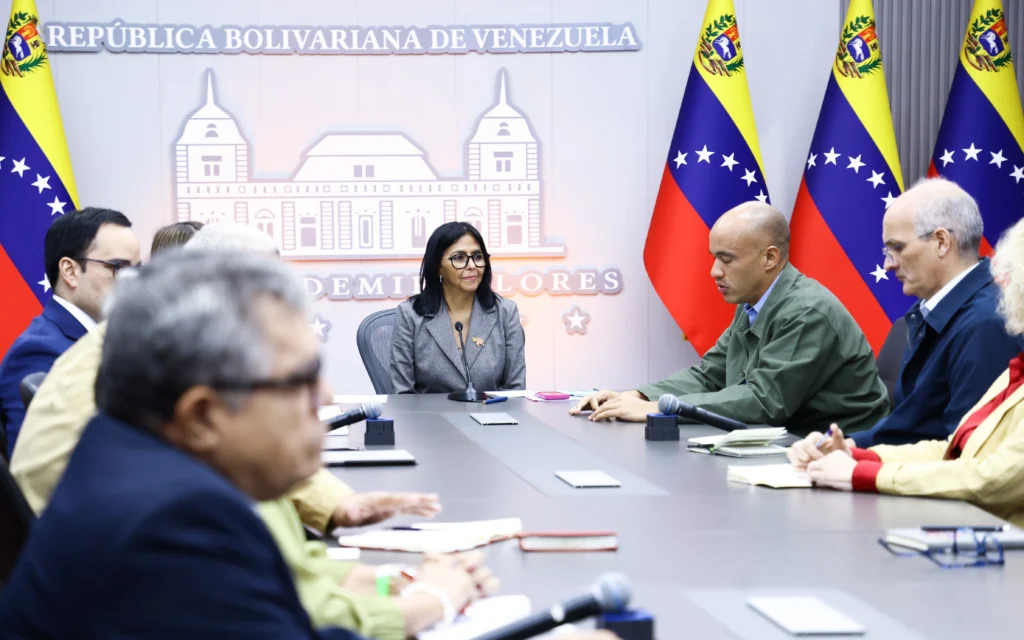
The Acting President, Delcy Rodríguez, led a strategic meeting aimed at consolidating labor and social consensus between the state, business federations and trade union centers of the country. Photo: Venezuelan Presidential Press.

Acting President Delcy Rodríguez led a meeting on Monday with Venezuela’s main business federations and national union confederations to consolidate agreements on wage restoration, salary scales and worker’s protections.


The meeting brought together the Federation of Chambers and Associations of Commerce and Production of Venezuela (Fedecámaras), the Federation of Chambers and Companies of Venezuela (Fedeindustria) and the country’s various union confederations.

The dialogue table evaluated the progress made in the days of debate focused on restoring workers’ purchasing power.

RELATED: Venezuela Promotes Venezuela Feeds Plan and Local Economy Law to Achieve “Hunger 0”

Three core areas shaped the agenda. The first was the progressive conversion of workers’ income into formal salary, a shift the government describes as progressive salary restructuring.

The second involved adjusting salary scales and tables. The third centered on designing guarantees of stability for Venezuelan workers. In this sense, the working group also reviewed draft laws and regulatory instruments meant to shield the framework of social and economic protection for workers.

Dialogue for Sovereign Growth

Venezuelan Acting President Rodríguez reiterated the government’s unwavering commitment to protecting the inalienable rights conquered by the people. She insisted on preserving the workday, end of year bonuses, additional bonuses, vacations, seniority premiums and social benefits in the face of external economic aggression. Following this, the authorities said the three-way dialogue strengthens the model of social justice and lays the groundwork for sovereign economic growth.

The government’s participants included Economy Minister and sector Vice-president Anabel Pereira, Sectoral Vice President for Social and Territorial Socialism Héctor Rodríguez, Planning Minister Ricardo Menéndez and Economy Sectoral Vice-President Calixto Ortega. Labor Minister Carlos Alexis Castillo, University Education Minister Ana María San Juan and Presidential Commissioner for the Constituent Assembly and Labor Consensus Eduardo Piñate also attended.

The labor meeting follows Rodríguez’s announcement days earlier before the UN Food and Agriculture Organization (FAO) that the executive will submit a draft Law for the Local Economy to the National Assembly.

Rodríguez explained that the legal text has as its strategic objective the dynamization of the domestic productive apparatus through the effective linkage of the different economic sectors of the country. Before the multilateral delegations, the Venezuelan Acting President detailed the guiding principles of the norm, designed to strengthen the food sovereignty and security of the Venezuelan people against the blockade of foreign powers.

  •  
  •  
❌