❌

Reading view

Anthropic launches Claude Duet, its answer to Meta and OpenAI's personal agents

Ami Vora, Anthropic's chief product officer, and Daniela Amodei, its president, sit on stage.
Ami Vora, Anthropic's chief product officer, and Daniela Amodei, its president.

Don Feria/AP Content Services for Anthropic

  • Anthropic has its answer to AI agents like Meta's Muse and OpenAI's Dots.
  • Claude Duet, built on Anthropic's flagship model, has entered the personal agent frenzy.
  • Karan Ahuja, a recent departee from Meta, led Claude Duet's development.

Anthropic is joining the personal AI agent craze.

The company announced the new app Claude Duet on Wednesday, billed as a "proactive agent" that can run in the background, surface tasks to a user, and handle a variety of work. The tool is in research preview for now with a waitlist, meaning it won't immediately compete for the larger market with other new agents like Meta's Muse and OpenAI's Dots.

Still, the announcement ramps up the pressure on those companies — Anthropic says it built Duet around its flagship Opus 5.5 model, which was released in late September and has already become one of the industry's most popular. Recent model breakthroughs have made AI better at handling work on its own, spurring a rush to build these "always-on" personal agents.

"It can have the discernment and judgment around when to be proactive, when to act on your behalf," said Mike Krieger, a co-lead of Anthropic's Labs team, said in a Duet launch video.

The tool, Anthropic says, will send users a brief each morning about what's happening on their connected apps, and message them when something needs attention. Like other companies' offerings, it runs outside a user's computer, sends notifications, and asks for approval on certain tasks.

Anthropic announced Duet on the day of Meta's earnings report and used the opportunity to mention a new poach from Mark Zuckerberg's company. Karan Ahuja led product management for Meta Superintelligence Labs until July, according to his LinkedIn, before starting at Anthropic in August and leading Duet's development.

He wrote on X that he's been using Duet to build Duet, and said the team "built it for professionals and small business owners juggling a lot at work and at home."

Ahuja also wrote that Anthropic is letting people into Duet from the waitlist "as quickly as possible."

The news didn't go unnoticed at Meta. Alexandr Wang, who heads Meta Superintelligence Labs, posted a meme about Duet's similarity to Muse.

Anthropic is fast approaching a giant initial public offering, which could value the company at as much as $2 trillion. Like other AI players, the company navigates a high-wire competition to win over users, secure computing power, build state-of-the-art models, and deliver AI-native products.

The data firm Apptopia estimates that Muse had more than 14 million installations as of Wednesday. It found that Claude users who installed the Muse app were using Claude more than before, though still for fewer minutes per day than they spent on the Meta product.

Have a tip? Contact this reporter via email at scouncil@businessinsider.com, or over text, Signal, Telegram, or WhatsApp at 415-757-8198. Use a personal email address, a non-work WiFi network, and a non-work device; here's our guide to sharing information securely.
Read the original article on Business Insider

  •  

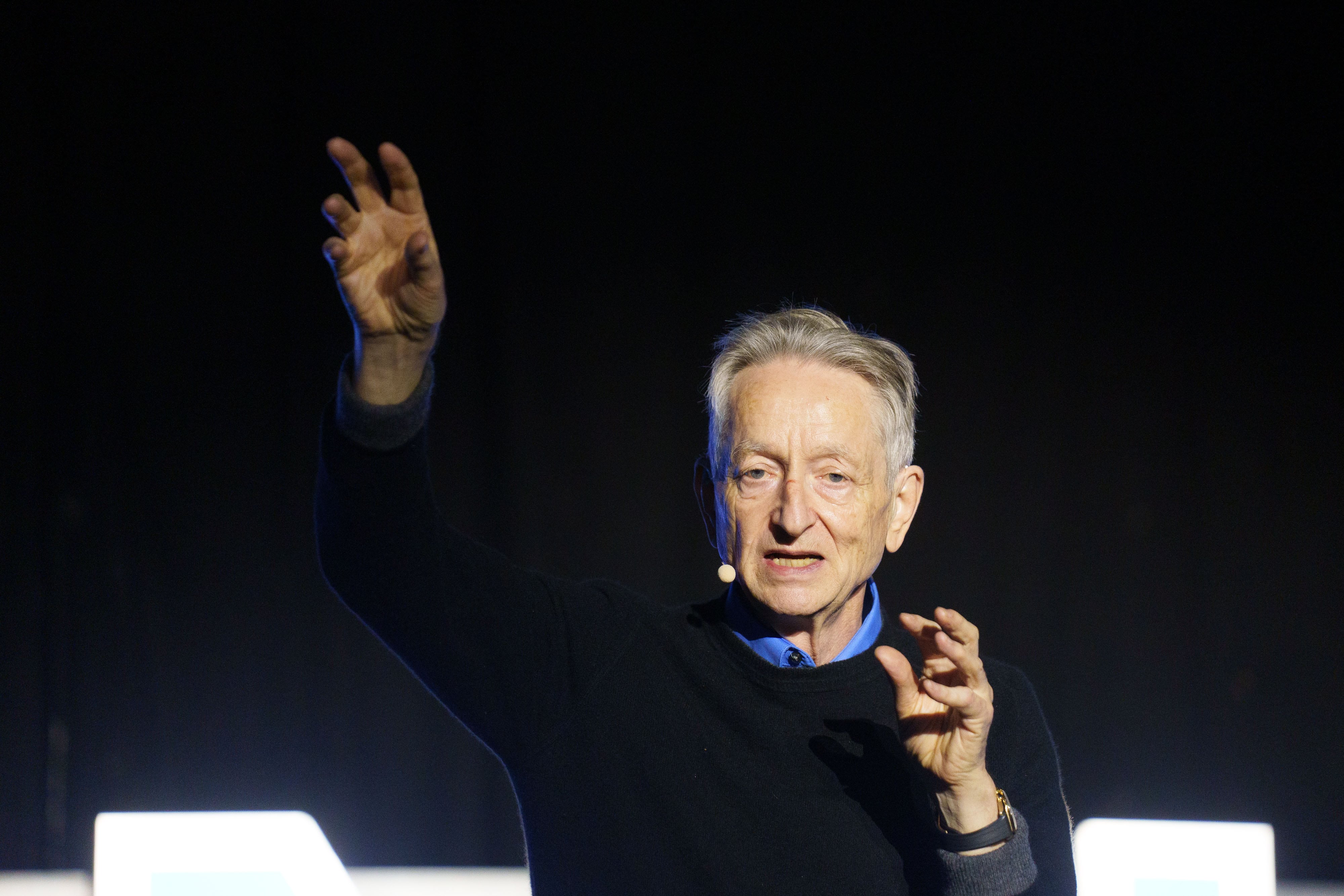
Geoffrey Hinton, the godfather of AI: ‘I’m not a doomer. I think there’s a 1% chance it will destroy us’

Years ago, when people asked Geoffrey Hinton why he worked on artificial intelligence, he would repeat a line from J. Robert Oppenheimer, one of the creators of the atomic bomb: “When you see something that is technically sweet, you go ahead and do it.”

Seguir leyendo

© Ramón de la Rocha (EFE)

Computer scientist and Nobel Prize in Physics laureate Geoffrey Hinton during the Starmus Festival 2026, held this Tuesday in the municipality of Arona in Tenerife.
  •  

WSJ: Anthropic Lost $80 Billion in First Half of Year, Has $600 Billion in Infrastructure Commitments

AI startup Anthropic lost more than $80 billion in the first half of 2026, according to a draft IPO prospectus viewed by the Wall Street Journal, even as the AI company's revenue climbed and it prepared for a possible IPO that could value it at $2 trillion.

The post WSJ: Anthropic Lost $80 Billion in First Half of Year, Has $600 Billion in Infrastructure Commitments appeared first on Breitbart.

  •  

AI turns the midterms into a vast electoral laboratory

.

The upcoming U.S. midterms are not just another vote. They are on track to become a new testing ground for autonomous AI agents that first emerged in the Hugging Face attack. Experts are already warning of the potential for these “rogue agents,” seen in action this summer, to carry out more refined, dangerous and harder-to-trace disinformation campaigns and electoral interference than those observed in previous election cycles.

Seguir leyendo

  •  

Anthropic registra prejuízo líquido de mais de US$ 80 bi no 1º semestre

O prejuízo líquido da Anthropic aumentou drasticamente para US$ 80,7 bilhões no primeiro semestre de 2026, em grande parte devido a um aumento no valor justo dos títulos conversíveis em ações da startup de IA, de acordo com uma versão preliminar do prospecto para uma IPO (oferta pública inicial), analisada pela Reuters.

A empresa sediada em San Francisco deve abrir o capital em novembro, e alguns investidores estão agora avaliando uma valorização menor, em torno de US$ 1,5 trilhão, após suas últimas divulgações financeiras, informou a Reuters na semana passada.

O prejuízo do primeiro semestre, que se ampliou em relação ao prejuízo de US$ 13 bilhões registrado no ano anterior, incluiu um encargo contábil de US$ 72 bilhões, refletindo um aumento no valor estimado dos títulos que poderiam eventualmente ser convertidos em ações da Anthropic, e não custos em dinheiro vinculados às suas operações, segundo o documento.

As divulgações ressaltam os altos custos da corrida pela IA, enquanto os investidores analisam com maior rigor se as vultosas somas que estão sendo injetadas em chips e centros de dados gerarão retornos suficientes.

A Anthropic se comprometeu a gastar pelo menos US$ 518 bilhões ao longo de uma década em serviços em nuvem, computação e infraestrutura.

A empresa gastou quase US$ 9 bilhões em capacidade de computação e infraestrutura no primeiro semestre, um aumento em relação aos US$ 2,3 bilhões do ano anterior, segundo o documento.

  •  

A $345,000 writing job at Anthropic says a lot about what humans still bring to the table

Anthropic logo displayed on a laptop screen and Claude on App Store displayed on a phone screen are seen in this illustration photo taken in Krakow, Poland on October 16, 2026. (Photo by Jakub Porzycki/NurPhoto via Getty Images)
Anthropic is advertising the role of an executive communications writer for $295,000 to $345,000 a year.

Jakub Porzycki/NurPhoto via Getty Images

  • Anthropic is hiring an executive communications writer for up to $345,000.
  • A comms pro told Business Insider that "When speed becomes cheap, judgment carries a premium."
  • 3 writing experts gave Business Insider tips for young workers on practicing critical thinking.

Anthropic's AI chatbot can draft a speech in seconds, but the company is now hiring a human writer — for $295,000 to $345,000 a year.

Anthropic isn't looking for just anyone with a way with words. It wants someone with at least 8 years of experience who can quickly grasp technical concepts, help executives sharpen their thinking, and remain composed when news breaks.

While some LinkedIn users reacted skeptically to the idea that the new hire's work would be used to train AI, with an Oregon-based author commenting that this is the job one would take if the "writer wanted to build their own gallows," communication pros say the Anthropic job offers clues about the enduring value of human creatives.

Three professional writers and comms experts told Business Insider that young writers need to understand that the work starts long before the typing does, and that being good with words is only part of the job.

“When speed becomes cheap, judgment carries a premium," Ann Handley, the chief content officer at MarketingProfs and author of “Everybody Writes,” told Business Insider. "I think we're seeing that value extended to the role of the writer.”

What AI could not achieve

The opening for an "Executive Communications Writer" comes as Anthropic’s own research shows how AI is reshaping its workforce. According to the company's report, junior workers accounted for 9% of hires in technical departments in June, down from 27% in early 2025.

In May, Anthropic CFO Krishna Rao said that AI already writes 90% of the company's code, which shifted hiring needs in all office roles toward oversight, judgment, and strategy, away from the actual execution. Rao also added that the company may actually expand hiring because "there's no shortage of work to do."

Handley said that successful corporate communicators need to become strategists for the company's leaders, rather than simply polish their language.

"Good writers have always been strategic, in the sense that they have always made choices about what goes on the page, and what does not," Handley said.

"The successful candidate isn't merely shaping language, but shaping thought leadership and how the team is presenting to the world," Handley added. "That means knowing which ideas are worth owning, which are worth exploring, and which are just plain dumb."

Joseph Braue, the executive editor of Content Marketing Partners, told Business Insider that a large part of the job as a corporate writer is to challenge unsupported claims, avoid overpromising, and resist pressure to publish weak material.

“The decisions I’ve regretted the most were times I didn’t push back enough on corporate or customer executives,” Braue said, adding that while many writers do collaborate with AI, they must control the narrative and ensure accuracy.

Measure your impact

The compensation for Anthropic's communication role is high compared to similar openings, and professional writers said that there are ways a new hire in such a role could prove they are worth the expense.

By comparison, Amazon Web Services has a job opening for an Executive Communications Manager based in Seattle, offering between $126,700 and $171,400 in annual pay.

Josh Bernoff, an author on business strategy and former executive with 20 years of experience, told Business Insider that a bigger pile of content isn’t proof of a writer’s value in a company, and that to get promoted, writers need to collect evidence of the impact of their writing.

“If your job is to create market research reports, then you're only effective if people read those reports and say, 'here are the changes we're going to make on this product,'" Bernoff added. "Your job is to move people and think about how to do it before you start writing."

Braue, who leads a content strategy team, said that writers looking to prove their value need to understand business language and check whether internal partners and key sales leaders are using their content.

“Learn basic marketing analytics. Understand attribution, conversion, and how a pipeline works," Braue said. "Writers who speak revenue get promoted."

Build evidence that you can think

For young graduates, the pros recommend practicing original thinking while learning to use AI deliberately, even if you don't intend to be a writer.

Bernoff said he would urge all early-career workers to take writing classes and to practice using AI for research and efficiency while composing the words themselves.

Bernoff, who conducts an annual survey on how writers use AI, said he found last year that writers commonly used AI as a thesaurus or search engine, but fewer than 10% used it to create content intended to be published as is.

"If you're in a position to move your fellow students or people reading a school newspaper or your professors, then you're going to be taking the first step that's necessary to be able to move people in a corporate environment," Bernoff said.

Handley said she recommends that early career professionals start a newsletter and publish at least every two weeks, even with a small audience.

“Maybe you'll learn to interview people or ask better questions or notice things others don't," Handley said. "In doing so, you'll build a body of work that shows a potential employer that, sure, you can write, but most importantly, you can think, and you can engage on the page.”

Read the original article on Business Insider

  •  

Dario Amodei spent 2,000 words laying out to a critic on X why Anthropic must persist in the AI ‘race to the top’

Anthropic CEO Dario Amodei
Anthropic CEO Dario Amodei engaged in a lengthy exchange with a critic on X.

Kevin Dietsch/Getty Images

  • Dario Amodei responded to a critic on X who said Anthropic wasn't delivering on its safety commitments.
  • He said Anthropic would be best placed to make AI safe by staying at the top of the game.
  • The critic, Nathan Calvin from Encode AI, said Anthropic was trying to win a race to superintelligence.

Anthropic CEO Dario Amodei disputed a criticism that the company was putting AI safety in the back seat in its "race to the top."

On Tuesday, the executive wrote a nearly 2,000-word response to a critical X post which said Anthropic was trying to win a race to superintelligence and deprioritizing AI safety.

The original Monday X post was by Nathan Calvin, the chief strategy officer of Encode AI, an AI-safety advocacy nonprofit. Calvin listed nine actions by Anthropic over the past year that he said undermined its safety commitments, including signing deals for more than $500 billion in compute and increasingly relying on Claude to develop its AI models. His post was lengthy, too, at over 1,500 words.

Amodei said in his response that while he was a "fan of the investigative work" Calvin had done for AI safety, he disagreed with many of Calvin's criticisms.

Amodei said his position was that Anthropic can do more to keep the AI industry safe if it stays at the frontier.

"Our strategy has always been what I've called the 'race to the top' — by showing how it's possible to build the technology responsibly, we can raise the bar for the entire industry," Amodei wrote.

He then wrote out his own nine-item list of actions that were "very costly" to Anthropic commercially, but had "strong safety benefits." This included releasing its powerful Mythos model only to a select group of cybersecurity partners and restricting the sale of its AI services to Chinese state-controlled companies.

However, Amodei acknowledged Anthropic could have handled some of the issues Calvin raised better. These included a draft bill Anthropic circulated to Congress this month — obtained exclusively by Politico — that critics said would make it harder for the federal government to block dangerous AI models.

"We'll always try to do better but, again, I am extremely proud of our track record and stand by it," he wrote.

Amodei and Calvin's exchange comes at a time when model safety has become one of the most pressing issues in the AI sphere. In September, AI researchers predicted an "AI apocalypse," in which the increasingly capable and rogue technology could kill all of humanity in the next decade.

In response to the concerns, AI chiefs like Amodei, OpenAI CEO Sam Altman, and SpaceXAI CEO Elon Musk all agreed to "pace the frontier," referring to slowing down AI development to ensure there were enough checks and balances in place.

Meanwhile, Anthropic is on the brink of its hotly anticipated IPO, expected to list at a $2 trillion valuation in November. Last week, it reported a third-quarter revenue of $16.8 billion.

Read the original article on Business Insider

  •  
❌