Login

Peter Crouch puts Chery’s new family SUV to the legroom test
Former England football player heads to China to see the unveiling of Chery’s latest family-friendly SUV

© Chery

Former England football player heads to China to see the unveiling of Chery’s latest family-friendly SUV
© Chery
Former England football player heads to China to see the unveiling of Chery’s latest family-friendly SUV
© Chery


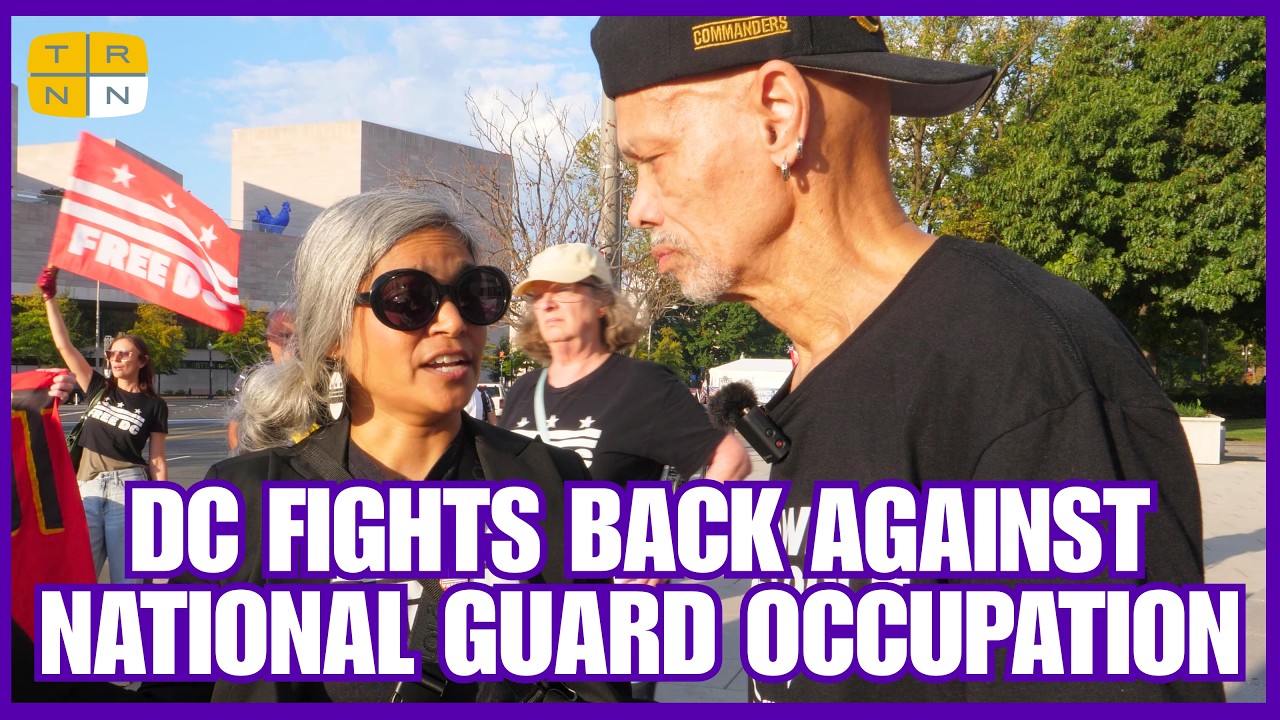
October 22nd marks the National Day to Stop Police Brutality. Free DC and Pan-African Community Action (PACA) are two organizations in the nation’s capital engaged in building community and direct action against the various entities that form the policing apparatus in DC: police, FBI, HSI, National Guard, etc.
While Trump boosts their funding—much like giving a steroid to the carceral machine—Free DC and PACA are heightening the contradictions of the Trump administration’s fascist agenda by providing vulnerable communities with the resources that the government withholds and refuses to fund.
Trump’s deployment of the National Guard costs upwards of $3M daily and will total $2.9B by the end of his term. How would you spend $3M a day?
On this episode of Rattling the Bars, former political prisoner and Black Panther Mansa Musa speaks with organizers pushing back against the National Guard occupation of DC on the eve of the Black Panther Party’s 60th Anniversary.
Credits:
The following is a rushed transcript and may contain errors. It will be updated.
Mansa Musa:
Welcome to this edition of Rattling the Bars. I’m your host, Mansa Musa. The presence of the National Guard in the District of Columbia calls $3 million a day and an estimated $2.9 billion the next presidential election. Recently, I covered two organizations that are pushing back against their present. PACA, Pan-African, Community Action, who primarily organize in the Southeast section or the District of Columbia, Anacostia area, and Free DC. Take a look. We’re at the Black Workers Wellness Center. I’m talking to Alex from the Pan-African Community Action, PACA. And today they’re having political education form because of the anniversary, the 60th year anniversary of the Black Panther Party. And we’re doing political education in its roles form. So Alex, tell our audience a little bit about PACA.
Alex:
We’re a group of African and black people organizing in Southeast DC for power. We’re trying to build up institutions that are made up of just ordinary working class people, working class black people. We’re trying to build up alternative institutions that are able to challenge the preexisting institutions that are currently failing us. We see failing healthcare. We see funding going towards police and national guard. At the same time, we’re seeing cutting off from SNAP benefits, disinvesting from education affecting black children. And so we believe in a power shift and the only way to achieve that power shift is through building up a mass movement. And we’ve been organizing down here for 10 years.
Oliver:
When we look in our communities, we see occupying police forces. We see education we don’t control. History we don’t define. We see institutions we don’t have, whether it’s healthcare, whether it’s housing, whether it’s transportation. So the colonization we’re experiencing domestically, the Panthers saw that as linked to the anti-colonial struggles taking place around the world.
Huey P. Newton:
In America, black people are treated very much as the Vietnamese people or any other colonized people because we’re used, we’re brutalized. The police and our community occupy our area, our community as a foreign troop occupies territory.
Mansa Musa:
Earlier today, we was in free DC downtown where they was protesting the occupation by the National Guard.
Keya Chatterjee:
We want to be really clear that it is time for these armed soldiers to leave DC and leave our community. We’re in the middle of an election right now. We’ve seen them standing in front of polling locations, standing in front of ballot boxes. We’ve seen them at our schools. We’ve seen them all over our transportation system for all over a year. It is time for the guard to leave. I mean, from August 11th to January of 2029, can you imagine? It’s billions of dollars. It is a clear effort to violate our rights and to suppress dissent and we’re not going to stand for it.
Mansa Musa:
They’re blocking both sides of the street. They’re at the top on third street, third DC, and at the bottom of third and constitution. They’re definitely representing the right to civil disobedience.
DC resident 1:
Nobody in DC wants them. They’re a hassle to us and they don’t do anything good and they’re taking a lot of our money and they make the city feel unsafe because of their presence. So I’m not interested in having them here any longer.
DC resident 2:
And I think the National Guard are making our streets less safe. They’re scaring people away from U Street Corridor, which is such a vibrant place where young people like to come and gather and they are chasing everybody out of our city and our businesses and it’s not good for us.
Keya Chatterjee:
We’re going to be in all the places. We also will be over at Bard Early College at 3:00 PM today because the soldiers have been walking around with HSI and FBI in front of that school for weeks. Nobody asked you to be there. Nobody wants you there. Our DC council who we elect have been clear unanimously sending letters to every single governor saying, “Remove your troops. You are not wanted here.” At the end of the day, they say the soldiers are going to be here until January of 2029. We know why they say January of 2029, right? We’re standing here in front of the Capitol. We know what happened in January of 2021. And so what we say is that we will not tolerate that. They can’t do this without our consent. If we start collectively refusing to go to work, refusing to go to school, refusing to shop in the face of their blatant attempts to consolidate power, then they can’t get away with it.
And it’s already working. We’re already winning. What we know is that when we act collectively, it works. Even multi-billion dollar corporations have to give in to us and even this corrupt regime cannot stand if we act collectively and refuse to consent. So that’s what we’re building our way towards, neighborhood by neighborhood, person by person, training by training. We are building towards having enough collective power that they cannot get away with it.
Mansa Musa:
And in terms of y’all’s strategy about occupation, National Guard and Ward seven and eight, how do y’all see y’all being effective in terms of y’all organizing?
Alex:
Yeah, absolutely. I mean, historically Ward seven is eight has been redlined, experiences the most disinvestment from healthcare, from education, always over policing. And now we’re seeing over policing on a broad level across the entire DC, but it always starts with Ward seven and eight. It always starts with these metro stations, Anacostia, Congress Heights, Southern Avenue. We see the FBI, the DHS, the National Guard here first. And so we understand that it does affect all of DC, but it hits Ward seven and eight the hardest. This is where people experience the most oppressed conditions. There’s the most poverty down here. There’s already a heightened police presence even before the National Guard here. And so everything with the safe and beautiful task force and National Guard is just making it more violent. It’s bringing out more tension in these areas and it’s heightened the need for us to organize for ourselves too.
Mansa Musa:
What else do you want to PACA primary objectives in terms of organizing? We talking about the Black Panther Party and we know that they evolved and got to a place where they had survival programs and here we call them survival pending revolution. The ultimate goal was the programs was to turn them over to the community so they become a part of the infrastructure for revolutionary activities. So what are some of the programs y’all got?
Alex:
Absolutely. So our objectives are similar to the Panthers in the sense that we also have survival programs. We have our People’s Pan-African Wellness Front, which is a health clinic which we operate every four Sunday where we try to bring people in to volunteer and work together. We provide free blood pressure testing, glucose testing. We have activities like yoga. We have free grocery distribution, which includes locally grown vegetables and fruits. Oftentimes we have speakers come in and give lectures. So that’s just one example of a space where the community can come together and provide for ourselves, training people to become organizers for our mass movement. Another one of our programs, the Transit Solidarity Program, that’s a program we have going on this weekend where we take community donated smart trip cards, we put money on them and we distribute them at Anacostia Station. And we do this to basically heighten the contradiction between ourselves, the people coming together to provide for working class people just trying to access Metro versus the state, which is dumping upwards of $3 million a day into FBI, DHS, National Guard, MPD to occupy and patrol these stations, ticket people, $50, $100 just for trying to access the bus.
It’s ridiculous.
Mansa Musa:
As you can see, people are standing up against the military industrial complex, policing and the National Guard in the nation capital and around the country. October the 15th marked the 60th anniversary of the Black Panther Party. And one of the things the Black Panther Party stood for among many was community control over the police. As you can see, it’s the community that’s opposed to the presence of the National Guard and heavy-handed policing in the District of Columbia. We ask that you continue to look at the real news and rattling the bar and weigh in on these issues, all power to the people.


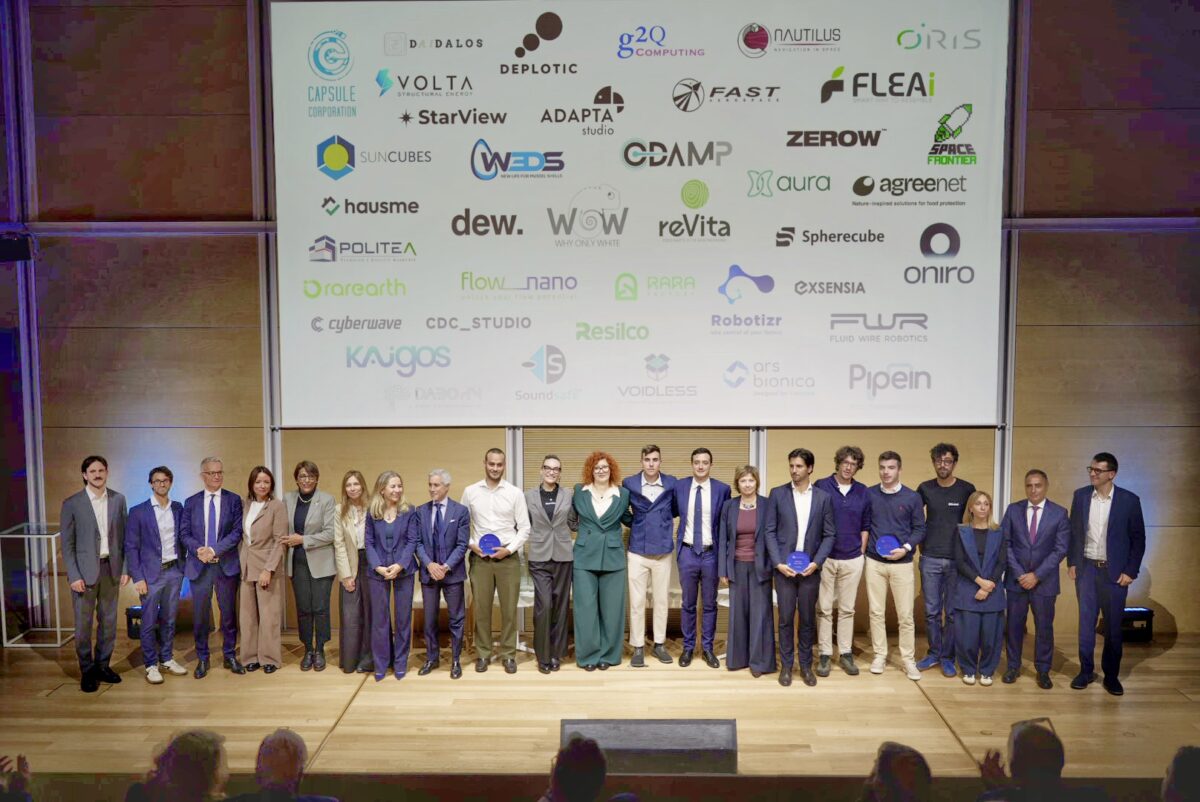
Intesa Sanpaolo consolida il proprio impegno a favore dell’innovazione, delle startup e della transizione sostenibile con l’evento conclusivo di Up2Stars e In Action Esg CLIMATE, due programmi complementari sviluppati insieme a Intesa Sanpaolo Innovation Center. Le iniziative puntano a sostenere la crescita delle giovani imprese innovative e a valorizzare progetti capaci di generare un impatto concreto sul piano ambientale.
Il Gruppo ha sostenuto negli ultimi dieci anni la crescita dell’ecosistema dell’innovazione attraverso circa 1 miliardo di euro di finanziamenti destinati a oltre 4.200 startup e imprese innovative. Nell’ambito dell’evento sono state inoltre premiate tre realtà con un contributo di 100mila euro ciascuna, per un totale di 300mila euro, attraverso il programma In Action Esg CLIMATE.
Up2Stars, promosso dalla Divisione Banca dei Territori guidata da Stefano Barrese, sostiene la crescita delle startup ad alto contenuto tecnologico, favorendone il dialogo con imprese, investitori e operatori specializzati. In Action Esg CLIMATE, promosso da Intesa Sanpaolo Assicurazioni guidata da Virginia Borla, è invece dedicato ai progetti capaci di produrre un impatto ambientale concreto e misurabile. Il Grattacielo Intesa Sanpaolo di Torino ha ospitato le 40 startup protagoniste del percorso di accelerazione di Up2Stars, sviluppato attraverso un network di partner che comprende ELITE, Digit’Ed, Microsoft, Innovit e Factory Plus in qualità di acceleratore.
Nel corso dell’evento sono state premiate anche le tre startup vincitrici della quarta edizione di In Action Esg CLIMATE, selezionate tra 231 candidature. Tra i progetti premiati figura Rarearth, di Monte San Vito, in provincia di Ancona, che ha sviluppato un processo per il riciclo delle terre rare contenute nei magneti a fine vita, destinato alla produzione sostenibile di nuovi magneti ad alte prestazioni. Premiata anche Pipein, di Torino, con il progetto “Waterguard”, una soluzione pensata per ridurre le perdite nelle condotte idriche sommerse o pressurizzate attraverso sistemi robotici e tecnologie di intelligenza predittiva.
Il terzo riconoscimento è andato a Voidless, di Milano, che innova il settore della logistica producendo in tempo reale scatole su misura per ogni ordine, con l’obiettivo di ridurre costi, sprechi e impatto ambientale. La terza edizione di Up2Stars, lanciata a giugno 2025, ha raccolto 500 candidature e selezionato 40 startup ad alto potenziale, dieci per ciascuno dei quattro ambiti considerati prioritari per il sistema produttivo italiano: Nuovi materiali, Robotica, Aerospazio e Design Tech.
Le startup hanno seguito gratuitamente un percorso di accelerazione curato da Factory Plus, con attività di mentorship e approfondimenti specialistici. Nei quattro Demo Day conclusivi, realizzati con il sostegno di Visa, le realtà selezionate hanno presentato soluzioni in settori che spaziano dall’economia circolare all’intelligenza artificiale, dalla salute alla manifattura digitale, dall’automazione industriale alla space economy.
La distribuzione geografica delle 40 startup vede il Nord Italia ospitarne il 75%. La Lombardia è la regione più rappresentata, con 16 startup, di cui 13 a Milano, mentre la presenza di realtà innovative in Campania, Marche e Puglia testimonia la crescita di nuovi poli imprenditoriali anche al di fuori dei tradizionali hub del Nord. Dal 2022, In Action Esg CLIMATE ha raccolto complessivamente oltre 600 candidature, premiato 14 progetti e assegnato grant per più di 2 milioni di euro.
Con 1.500 candidature e 120 startup accelerate in tre edizioni, Up2Stars accompagna le imprese innovative dalla fase di accelerazione fino all’accesso al mercato dei capitali attraverso la Lounge ELITE Intesa Sanpaolo. Ad oggi sono 62 le startup entrate nella Lounge, di cui 12 provenienti dall’ultima edizione.
Negli ultimi dieci anni Intesa Sanpaolo ha inoltre erogato circa 1 miliardo di euro a oltre 4.200 startup e imprese innovative, raggiungendo una quota di mercato del 31% nel segmento startup e del 54% tra le PMI innovative. Nel 2024, inoltre, 12 startup selezionate tra le migliori partecipanti alle prime due edizioni di Up2Stars hanno preso parte a una missione negli Stati Uniti, organizzata dalla Banca dei Territori insieme a INNOVIT, l’Italian Innovation and Culture Hub nella Silicon Valley. L’evento conclusivo ha rappresentato anche un momento di confronto sui temi dell’innovazione e della crescita sostenibile, con gli interventi di Agostino Deiana, Anna Roscio e Serena Fumagalli, oltre alle testimonianze di alcune delle startup accelerate nel programma.
Al centro della giornata anche la tavola rotonda “L’innovazione a servizio della crescita e delle transizioni sostenibili”, con la partecipazione di Viviana Bacigalupo, Direttrice Generale di Intesa Sanpaolo Innovation Center, Matteo Bertocchi, CEO e Founder di Novac, Antonio Granito, Executive Director Area Finanza e Sostenibilità di Intesa Sanpaolo Assicurazioni, e Stefano Peroncini, Chief Executive Officer di Eureka! Venture SGR.
Nel corso della cerimonia Lauretta Filangieri, Responsabile Sostenibilità di Intesa Sanpaolo Assicurazioni, ha assegnato i tre contributi, mentre Virginia Borla, Amministratore Delegato e Direttore Generale di Intesa Sanpaolo Assicurazioni e Responsabile della Divisione Insurance di Intesa Sanpaolo, ha chiuso i lavori sottolineando il valore strategico dell’ecosistema dell’innovazione e il ruolo delle assicurazioni nel sostenere lo sviluppo sostenibile e la competitività del sistema economico.
L'articolo Intesa Sanpaolo rafforza il sostegno alle startup, all’innovazione e alla transizione sostenibile proviene da Affaritaliani.it.