❌

Reading view

The US Army is putting laser weapons to work, and officials say the safety rules are simple: don't look down the barrel

Two US Army soldiers sit next to an Army Multi-Purpose High Energy Laser weapon mounted on a vehicle.
Directed-energy weapons have seen recent use at the US southern border.

US Department of Defense photo by Spc. Adrianna Douglas

  • US Army officials say laser weapons require surprisingly little protective gear.
  • Troops should stay at least 10 feet from targets and never look into the laser.
  • The Army wants lasers that work on different vehicles and can be learned in minutes.

US Army officials say the safety protocols for soldiers using lasers are surprisingly simple: don't stand too close to the target and don't look into the weapon.

Directed-energy weapons are seeing more operational use, particularly at the US southern border, where the Army has employed them against cartel-linked drones. The service envisions these systems operating on different vehicles and being easy for soldiers to learn and use safely.

At the Association of the United States Army, or AUSA, convention last week in Washington, DC, officials and industry partners spoke on developments in directed-energy weapons.

Asked about personal protective equipment, or PPE, and any concerns about specular reflection from lasers, Kirk Williams, chief engineer of the Army's directed energy project office, said the rules were similar in some respects to those for other weapons.

"Well, the short and sweet of that answer is: unless you're within ten feet of the target, a specular reflection is eye-safe, so the soldiers don't need the eye protection from the laser," he said, explaining that "it's like any other weapons system: don't look into it."

"We tell the soldiers the same thing about an M-16. Don't look down the barrel. Same thing with lasers, don't look down the barrel."

Specular reflections occur when light bounces off a surface. In the case of a laser weapon, reflected light can bounce off a targeted vehicle or drone. While the target absorbs most of the energy, some reflections might stray and cause eye or skin damage to soldiers near the target.

Williams said that part of the reason the Army likes these weapons is their relatively low risk to soldiers and the limited need for protective gear. "They are safe," he said, adding that "the great thing about a laser is we can also turn them off instantaneously."

The weapons also have safeguards that shut them down if there is a risk of hitting something other than the intended target.

US Army soldiers stand near a vehicle that has laser weapons mounted on top of it.
The Army wants to disseminate lasers and directed-energy weapons across units with easy training and intuitive controls.

US Department of Defense photo by Sgt. Dominic Atlas

During the panel, Williams and others also talked about the Army's priorities for deploying more laser weapons, an area of growing importance for the Army and the broader US military.

Brig. Gen. Guy Yelverton, the capability program executive for defensive fires, said the service wants to integrate high-energy lasers onto "any vehicle in the motorpool." He said the Army's Enduring High Energy Laser, or E-HEL, is mounted on a sled, allowing it to be integrated onto multiple types of vehicles.

The E-HEL is an Army directed-energy weapon program using AeroVironment's LOCUST laser system.

Yelverton said that making weapons compatible with different vehicles and usable by soldiers across military specialties will allow the Army to deploy them more widely.

The general said that this flexibility would allow the Army to deploy laser weapons "across all Army formations," giving commanders more options for where to put them and which soldiers should operate them.

"It's a great dilemma to have," he said.

Officials also said part of disseminating the weapons is making them easy to train on. "Most of our training sessions, we can train somebody in like, five minutes, to be able to use this system and start shooting things down," Williams said, adding that using standard controllers like those for an Xbox made it intuitive.

The Army's testing of laser weapons and other counter-drone systems at the southern border has reinforced the idea that the US will need layered defenses to counter a range of drone threats. Drug cartels are increasingly using drones to support operations, and the Army has already used lasers to shoot some down.

Read the original article on Business Insider

  •  

Space Force scrambles as Elon Musk's SpaceX retires its major rocket

A SpaceX Falcon 9 rocket returns
A SpaceX Falcon 9 rocket returns at Cape Canaveral, Florida, after launching a Crew Dragon capsule into orbit on October 1, 2026.

Marco Bello / AFP via Getty Images

  • SpaceX is phasing out its popular Falcon 9 rocket in favor of its much larger Starship rocket.
  • That presents a headache for the US Space Force, POLITICO reports.
  • The Space Force has said it's open to eventually using SpaceX's Starship. But there are engineering challenges to overcome.

SpaceX's plans to retire its most popular rocket could jeopardize the United States' ability to launch military satellites — a plight compounded by the Pentagon's dependence on Elon Musk's company.

SpaceX is by far the dominant player in the rocket business and indispensable to the military, dwarfing competitors and accounting for 85% of US launches in 2025. The company is phasing out its Falcon 9 rocket to make way for Starship, a massive new vehicle that SpaceX says will be more efficient and profitable, but which many military satellites aren't designed to fit.

The situation leaves the Space Force in a launch crunch that could affect the military's ability to put its advanced satellites in orbit — and on time. The Pentagon has few alternatives to ferry its equipment, and SpaceX's competitors are likely years away from being able to offer comparable services, reports POLITICO, which — like Business Insider — is part of the Axel Springer Global Reporters Network.

"Everybody's having problems, so the Space Force is freaking out a little bit about launch," one former Space Force official, who, like others, was granted anonymity to discuss the sensitive issue.

It also highlights the scale of Musk's company's footprint and the way its business decisions can affect the security of countries including the United States. From the battlefield in Ukraine, where Kyiv is dependent on his Starlink satellite internet service, to cutting-edge artificial intelligence and SpaceX's stranglehold over the pathways to orbit, the world's first trillionaire has a direct hand in the technology that will shape the future.

The Space Force recently tried to book rides for three future satellite missions, but SpaceX declined to offer its services, according to two people familiar with the missions. No other rocket companies offered to take them either, the people said.

A top official at the Space Force downplayed the problem about finding rockets to launch military satellites.

"I wouldn't say there [are] missions I'm worried about being able to fly; I would say we're working through the right way to support those customers," said Brig. Gen. Eric Zarybnisky, the Space Force's acting portfolio acquisition executive for space access.

But Zarybnisky acknowledged growing pains for the government and space industry as demand for rockets increases. "Temporarily, there are some things we'll need to work through, again, as we get new providers flying," he said.

SpaceX did not respond to a request for comment.

The three Space Force missions that didn't find a ride were listed through the National Security Space Launch initiative, or NSSL — the program the service uses to buy rocket launches for its satellites.

Two of the missions were for the Space Development Agency, according to the people. The agency is a branch of the Space Force that's building a network of hundreds of military satellites in low-Earth orbit to provide expanded data services, and missile warning and tracking capabilities.

Details about the third Space Force mission or the precise date for when the Space Force hoped to launch the missions are unclear.

The Space Force has set up a two-lane system for buying its launches, one for less demanding efforts and another for more challenging missions. The hope was that new competitors, such as Rocket Lab, Stoke Space and Relativity, would have an easier time winning contracts for the lower-risk missions. But SpaceX has dominated both lanes with its Falcon rocket, and other providers have been slow to scale up.

The Space Force hopes to use two large rockets from SpaceX competitors to ferry key military satellites into orbit: United Launch Alliance's Vulcan and Blue Origin's New Glenn.

But the Vulcan rocket has struggled to launch consistently and was grounded earlier this year after problems with its solid rocket boosters. Space Force officials have been frustrated by ULA's delays and have moved missions slated for a Vulcan to a SpaceX Falcon.

Meanwhile, Blue Origin's New Glenn program had a devastating setback in May when a rocket exploded on the company's only launchpad in Florida — putting the rocket out of commission likely until next year.

The Space Force has said it's open to eventually using SpaceX's Starship. But there are engineering challenges to overcome because Starship is designed for "flat stack" satellites such as Starlink, while most military satellites are designed for a larger cargo bay. And it's unclear when SpaceX will have the capacity to meet the Pentagon's needs, given its plans to use Starship to build out orbital data-centers and other company priorities.

Other newer companies may have some solutions. Stoke Space, Relativity and Rocket Lab are all working on medium-lift rockets that could help meet the military's needs. But none of those companies has flown successful test flights of their new vehicles, meaning it could take years for them to start launching reliably and frequently.

Zarybnisky remained optimistic that Blue Origin and ULA will work through their technical problems and that new competitors will get up and running in time.

"We're excited to see where those new providers come on board and are able to support the national security base launches that we need," he said.

It's not just the Pentagon feeling the pinch. The move to decommission the Falcon 9 rocket and focus on Starship has sent the entire space industry into panic — especially commercial satellite builders. Some of those firms have been unable to secure Falcon 9 flights after 2028.

The Space Force didn't disclose a set date for when it will fly its last Falcon mission, but Zarybnisky said the service is "actively talking to SpaceX and understanding where the spacecraft programs are, where they are in their build and test cycle. The end date will really be driven by the spacecraft customers that we have launch service contracts for already."

It's unclear what happens after the Space Force runs through that batch of missions. An industry representative warned that the service is unprepared to deal with the crisis coming its way as demand for rockets increases across the space industry.

New rocket companies can't bid on a Space Force launch until they've demonstrated the ability to successfully fly, part of an effort to keep vaporware companies from winning government business. But commercial satellite companies are not restricted in the same way and have been buying up early launches on rockets that haven't even flown yet. This puts more pressure on the Space Force to find future launches.

The launch crunch "probably requires the Space Force to get creative and figure out a way to start buying capacity now before it's too late," the representative said.

Another person familiar with the issue said that Space Force officials need to work with Congress to "fundamentally rethink" how the military acquires launch.

"The Space Force needs to be allowed to reserve multiple launches at a time, much further out into the 2030s, for vehicles that have yet to fly," the person said. "Yes, it's taking on more risk … [but] if it waits for new rockets to prove themselves, it may find they're already sold out."

This story originally appeared on POLITICO and is courtesy of the Axel Springer Global Reporters Network, which harnesses the resources of the company's newsrooms to publish ambitious scoops, investigations, interviews, opinion pieces, and analysis. It allows journalists — including those from POLITICO, Business Insider, WELT, BILD, Onet, and Fakt — to collaborate on major stories for an international audience of hundreds of millions across platforms.

Read the original article on Business Insider

  •  

Costs, Iran voters’ top priorities for next Congress: Survey

A majority of respondents to a recent survey want the next Congress to focus on lowering the cost of living and winding down the Iran war. Roughly 80 percent of the 1,119 respondents to the Associated Press-NORC Center for Public Affairs Research poll said lawmakers should make lowering prices one of their highest priorities in…

  •  

Marshall blames Ukraine war for high diesel prices

Sen. Roger Marshall (R-Kan.) on Wednesday blamed the war in Ukraine for high diesel prices, with energy costs as a key concern in the rapidly approaching midterms. “The real problem with the cost of diesel, in particular, is No. 1, is the Ukraine war, and because of that, diesel production has gone down. But beyond…

  •  

The US Army is making a new $700 million bet on AI that helps soldiers turn battlefield intelligence into targets

A US Army soldier points his rifle through a window in an urban warfare setting in the desert.
Striveworks' Chariot program develops and trains AI agents and models that support battlefield operations.

US Army photo by Spc. Jonathan Reyes

  • The US Army is spending hundreds of millions of dollars on AI that speeds up battlefield decision-making.
  • Striveworks' Chariot program is a core AI component of the Army's new NGC2 battlefield software.
  • The contract deal will bring Chariot to more Army units as the Pentagon invests heavily in AI.

The US Army is making a major investment in expanding the use of an artificial intelligence platform to help soldiers process battlefield intelligence and make decisions faster.

The $700 million deal between the Army and Striveworks is a tenfold increase from the initial enterprise contract and will bring the company's Chariot AI platform to more units and missions. Chariot is also at the core of the Army's new warfighting software, Next Generation Command and Control, or NGC2.

On Thursday, Striveworks announced the expanded agreement after months of growing demand for Chariot. Jim Rebesco, cofounder and CEO of Striveworks, told Business Insider that soldiers across specialties, from logistics to artillery, have been using the technology for different tasks.

Chariot serves as a hub for AI decision-making, deploying agents to process data and provide human users with information and next steps that align with their jobs, priorities, and commander decisions.

"Those folks are constantly receiving this data coming in from radio, reports, from sensors, from drones," Rebesco explained, "and the first job is to decide: is that a target worth paying attention to? Is it a military vehicle? Is it a tank? Is it something valuable? If so, does that meet with what my commander's priorities are?"

Chariot helps soldiers work through those questions, analyzing incoming data, checking relevant doctrine and legal standards, and comparing potential targets against the commander's priorities.

"It does everything that a team of four to 10 individuals would do over a period of about an hour; it compresses that down into minutes," Rebesco said.

A US Army soldier works on a tall black component of the Next Generation Command and Control platform.
Chariot is a core AI element of NGC2, the Army's new warfighting software, which is being scaled to I Corps after previous iterative developments.

Courtney Harris/US Army Test and Evaluation Command

Commanders and soldiers at the Army's 4th Infantry Division, for example, have used Chariot and provided feedback to Striveworks. At Project Convergence Capstone 6 at Fort Irwin, California, Chariot helped soldiers analyze and process more potential targets.

Rebesco said feedback from those exercises and others has been implemented quickly to improve the program's accuracy, speed, and the quality of information provided to soldiers.

Chariot is a key AI component of NGC2, the Army's new command-and-control program developed and tested with soldiers and industry partners in Colorado and Hawaii over the past year. After Project Convergence Capstone, the Army decided to transition NGC2 into the next phase of scaling, pushing it to I Corps at Joint Base Lewis-McChord.

Next steps will include making the technology available to more soldiers and ensuring it is sufficiently rugged to operate in harsh, dispersed environments, including the Indo-Pacific. Chariot also works with other military systems, including Maven and the Integrated Battle Command System, with the same data and agentic processes.

The Pentagon and the different military services are spending billions on AI to speed up battlefield decisions, analyze vast amounts of sensor data, and anticipate ammunition shortages and maintenance needs. Another goal is to lighten cognitive burdens on human users by helping soldiers make sense of more information, faster.

"We know the biggest risk to our national security and our national defense is not moving too fast. It's not moving fast enough," former Army secretary Dan Driscoll said after Project Convergence Capstone in July.

"The side that can sense a target, process the data, and deliver a kinetic effect the fastest wins."

Read the original article on Business Insider

  •  

Trump administration abandons appeals in fight over student loan forgiveness program

The Trump administration has abandoned its goal to reform the Public Service Loan Forgiveness (PSLF) program, dropping a legal fight over the changes this week.  The Education Department wanted to place limits on who could qualify for PSLF, which gives student loan forgiveness to people in government and nonprofit jobs after 10 years of payments. It…

  •  

Trump is trying ‘The Art of the Deal’ in Ukraine but what must Putin give up?

Russian missiles keep falling on Ukrainian cities while Washington holds up approval of Patriot interceptor transfers to Ukraine, according to The Washington Post. A Ukrainian official told the Post that only "a couple" of interceptors remained. President Donald Trump wants this war to end, and that goal deserves support. But a deal that squeezes only Ukraine is not a peace plan, and right now Kyiv absorbs the pressure while Moscow collects the relief.

Secretary of State Marco Rubio acknowledged on Oct. 20 that a batch bought for Kyiv may not have been delivered, but he rejected any political motive. "There's nothing being deliberately denied to Ukraine," he said.

So is Washington protecting scarce supplies, applying negotiating pressure or both? Americans deserve an answer, including what concessions Washington expects from Russian President Vladimir Putin.

TRUMP RUSSIA DEAL COULD FUEL PUTIN'S WAR, EX-NATO COMMANDER WARNS AS ZELENSKYY SAYS 'NYET'

The administration's strongest defense is scarcity, so start with the missiles. Lockheed Martin delivered 620 PAC-3 MSE interceptors in 2025 and plans to expand annual capacity to 2,000 over seven years.

The Iran war compounded the problem. A July assessment by the Center for Strategic and International Studies estimated that heavy combat use had pushed American Patriot inventories below 1,000.

UKRAINE'S ZELENSKYY OPEN TO FREEZING FRONT LINES IN CEASEFIRE WITH RUSSIA

A president must keep enough interceptors to protect American troops. Having worked on military strategy and security cooperation at the Pentagon, I take that obligation seriously. Ukraine's needs cannot erase our responsibilities elsewhere.

European money does not change that math. Kiel Institute data covering the first half of 2026 identify Europe as the largest military-aid donor, yet American stockpiles supplied more than 90% of the aid delivered through NATO's Prioritized Ukraine Requirements List (PURL). Europe is paying American industry to arm Ukraine, and Washington controls the tap.

AMERICA FACES A CRISIS IN OUR MILITARY ARSENAL THAT TRUMP IS RACING TO FIX

The lasting answer to scarcity is production. When U.S. Sens. Roger Wicker, R-Miss., and Kevin Cramer, R-N.D., met Ukrainian President Volodymyr Zelenskyy in Kyiv Oct. 9, he pressed for faster Patriot production licensing and offered joint production of interceptors. Washington should pursue it, with technology safeguards.

Still, scarcity does not explain every pending decision, and Washington owes the allies who paid for these weapons a straight explanation. Nor does it explain the broader pressure on Kyiv.

TRUMP TELLS ZELENSKYY TO STOP DOING 'ONE THING' DURING ATTACKS ON RUSSIA

The clearest example involves the same pipeline. Reuters reports that Washington threatened to stop the allied-funded PURL weapons pipeline to press Kyiv to halt its deep strikes on Russian energy infrastructure. That is leverage over Ukrainian military operations, not proof of a coordinated campaign to remove Zelenskyy.

The satellite dispute is murkier. Blamed for throttling Ukraine's terminals, billionaire Elon Musk posted that limits "are decided by the U.S. military and ultimately" by the president. Reuters then traced the restriction to the White House through unnamed officials. Trump denied it. "It wasn't us," he told reporters Oct. 16. Separately, Ukraine went three days without American missile warnings before Zelenskyy said Oct. 18 that intelligence sharing had resumed.

ZELENSKYY ACCUSES PUTIN OF DEFYING TRUMP'S CEASEFIRE PUSH, SENDS POINTED MESSAGE TO WHITE HOUSE

The pressure is also personal. Trump called Oct. 10 for Ukraine to replace its president. Yet Zelenskyy sat down with American envoys in Oslo on Oct. 20. A leader who shows up for talks is not refusing diplomacy.

Now consider the other side of the ledger. Trump announced an energy ceasefire Oct. 11, although Russian agreement remained unclear. A week later, Russian strikes hit 28 substations and other energy facilities, according to the Institute for the Study of War, leaving roughly 550,000 Ukrainian households without power. Kyiv was pressed to stop hitting refineries while Moscow kept hitting the grid. Putin never confirmed the ceasefire, and his missiles show he never intended to honor it.

TRUMP TRIES DIFFERENT APPROACH WITH RUSSIA TO BRING AMERICANS RELIEF AMID ONGOING WAR WITH UKRAINE

Moscow, meanwhile, received relief. On Oct. 9, Treasury issued a license authorizing specified Russian diesel transactions. Reuters later reported that Washington hoped the diesel deal would soften Moscow's negotiating position.

The administration's case is domestic. Diesel hit a record $6.52 a gallon in September as the Iran war choked the Strait of Hormuz, and Trump promised relief for farmers, ranchers and truckers. But Lawfare's analysis found the agreed Russian exports would cover about 2% of American demand. The price relief is speculative. Moscow's gains are not: sanctions relief and American pressure on Kyiv to spare Russian refineries.

PENTAGON RACES TO BUY 10X MORE MISSILES AS IRAN WAR DWINDLES ARSENAL, THREATENS READINESS FOR CHINA AGGRESSION

Offering an adversary an incentive can be sound diplomacy. The question is what the incentive buys. So far, the bombing has not stopped.

Nor has softer treatment softened the Kremlin's terms. When Zelenskyy offered a 60-day ceasefire to permit elections, the Kremlin rejected it on Oct. 12, saying it wanted an overall settlement. Moscow refused the very pause that Trump's call for new Ukrainian leadership would require.

Putin's ambitions run larger still. The New York Post reports that he wants a summit with Trump and Chinese President Xi Jinping to settle the war without Zelenskyy or Europe at the table, a redux of Yalta.

Putin bargains as if time is on his side. The battlefield says otherwise. Reuters reported Oct. 17 that Russian advances had slowed and many front lines remained largely static.

That gives Washington room to demand reciprocity. Wicker, the Senate Armed Services Committee chairman, proposed one approach on Oct. 18: Ukrainian restraint against petroleum facilities in exchange for American targeting assistance against Russian missile launches. It deserves consideration. But Putin would still need to offer restraint of his own.

So what must Putin give up? As I argued in these pages last December, a durable agreement requires credible enforcement, and enforcement begins with concessions Moscow can be held to.

Russia must halt strikes on Ukraine's power grid and cities, the same restraint Washington demanded of Kyiv. It must accept monitored ceasefire terms, defined restrictions on military activity and consequences for violations. It must negotiate with Kyiv, not over Kyiv's head in China. And it must recognize that the size of Ukraine's army and the choice of its security partners belong to Kyiv, not the Kremlin.

For his part, Trump should preserve American reserves, expand production, insist on European performance and refuse any summit that decides Ukraine's fate without Ukraine. Diesel licenses and any further sanctions relief should depend on compliance, with automatic snap-back penalties if Moscow cheats.

CLICK HERE FOR MORE FOX NEWS OPINION

America need not send combat troops to Ukraine or finance an indefinite war to demand those safeguards.

CLICK HERE TO DOWNLOAD THE FOX NEWS APP

Trump wants the killing to stop. Whether Putin will accept enforceable limits remains unproved. The test of American diplomacy is whether Moscow earns relief through compliance and faces greater costs for renewed aggression.

CLICK HERE TO READ MORE ROBERT MAGINNIS

  •  

Switchblade Ban Violates Second Amendment, Fifth Circuit Holds

By Michael E. Cumpston (Wikipedia)

From Knife Rights, Inc. v. Blanche, decided yesterday by Fifth Circuit Judge Jennifer Walker Elrod, joined by Judges Don Willett and Cory Wilson:

This case presents a Second Amendment challenge to the Federal Switchblade Act (FSA)'s restrictions on switchblade knives. {Section 2 of the FSA, codified as 15 U.S.C. § 1242, … place[s] a fine of up to "$2,000 or imprison[ment] not more than five years, or both" for anyone who "knowingly introduces, or manufactures for introduction, into interstate commerce, or transports or distributes in interstate commerce, any switchblade knife."}

Applying the framework articulated in New York State Rifle & Pistol Association, Inc. v. Bruen, we hold that the FSA is unconstitutional.  We determine that switchblade knives qualify as "Arms" and are covered by the "plain text" of the Second Amendment. Because the regulation implicates the amendment, the government bears the burden of establishing that the FSA comports with well-established principles of the Second Amendment and its regulatory tradition. The government fails to meet its burden. Specifically, the FSA's restrictions on the introduction, manufacture, transportation, and distribution of switchblades fail step two's "how" analysis….

Amongst other definitions, Heller highlighted that the founding era understood the term to mean "any thing that a man wears for his defence, or takes into his hands, or useth in wrath to cast at or strike another." Switchblade knives have surely been used for "defence" and to "strike another."

Knives have been used for defense throughout human history, including the American founding. During the colonial period, "[e]veryone had a knife," and "as long as a man was required to defend his life," a "knife was a constant necessity." In the 1700s and during the American Revolution, knives were used for scavenging, hunting, and defense, and "[b]elt and pocket knives" accompanied frontiersmen "in the developing eastern settlements and on the western frontiers." Well into the 1800s, "men of all walks of life" were "accustomed to wear a knife as a necessary part of their garb."

Switchblade knives are no exception. "Springblade knives" (precursors to the modern switchblade) "have been made for hundreds of years because there has always been a need for a pocketknife that can be opened easily when the hands are wet, cold, or covered with gloves." In the 1700s, such knives were a part of certain types of flint-lock pistols: "[i]f the pistol mis-fired (which frequently happened) the person would touch the release button and the blade would open up, and be available for use." After the Civil War, patents for switchblade knives proliferated, and the large-scale production of "switchblades in the United States began in the 1880s, shortly" thereafter. Then, "[o]ver a 50 year period from the mid 1890s to the mid 1940s there had been approximately 20 different companies who had manufactured switchblade knives in this country." In short, some forms of switchblades have been commonly used for defense for hundreds of years. They are "arms."

Accordingly, the government's not-in-common-use argument fails. In addition to the wealth of history indicating the founding-era uses of switchblades for defense, the record indicates that there are "millions" of automatically opening knives in the United States now. The record further reflects that switchblade knives are lawfully used for "every day utility use, hunting, fishing, recreation, and camping and hiking." Despite the FSA, there are still lawful sales of switchblade knives in the United States. Consequently, switchblade knives are "arms" "in common use" both then and now….

We proceed to step two [of the Bruen analysis]. Here, we assess whether § 1242 is consistent with the principles that flow from the Second Amendment's history and tradition….

The government makes its stand primarily by citing a host of nineteenth-century cases in support of its argument that there existed a well-established tradition of regulating "inherently concealable weapons." The concealable nature of these weapons, the argument goes, makes them "particularly dangerous." The government connects this with the clear congressional history that suggests that Congress enacted the FSA because it believed that switchblades posed a unique danger and therefore needed to be restricted. This line of argument is focused on answering the "why" portion of the step two inquiry.

However, we do not reach the question of whether the government meets its burden as to the "why" analysis because it fails the "how" analysis. As mentioned, the Supreme Court has informed us that "[e]ven when a law regulates arms-bearing for a permissible reason," it may not be "compatible with the right if it does so to an extent beyond what was done at the founding." So, even if we grant the government's argument that there is a well-established tradition of regulating "inherently concealable weapons," this only addresses the "why" inquiry.

The government cites no historical analogue that regulates the manufacture, transportation, or distribution of "inherently concealable weapons," much less switchblade knives. Rather, its analogues suggest that there is a tradition of regulating the manner of carrying concealable weapons….

The government's best attempt at meeting its burden is through a single citation to a treatise-length law review article. See Gov't Br. at 16–17 (citing David B. Kopel & Joseph G.S. Greenlee, The History of Bans on Types of Arms Before 1900, 50 J. Legis. 223 (2024)). It cites the article to show how "statutes regulated concealable weapons in a variety of different ways, including banning carry or concealed carry, prohibiting their possession in specific locations, subjecting their sale or possession to taxes, or restricting the sale to minors." The referenced section of the article catalogs nearly two hundred pre-1900 statutes regulating daggers, dirks, and sword canes.

Of the nearly two-hundred statutes, only two regulate bladed weapons in an analogous manner as § 1242. See 1881 Ark. Acts 191, 192 (proscribing the "sell[ing], barter[ing] or exchang[ing]" of "any dirk or bowie knife, or sword or spear in a cane"); 1837 Ga. Laws 90, 90–91 (making unlawful "for any merchant, or vend[o]r of wares or merchandize in this State, or any other person or persons whatsoever, to sell, or offer to sell … Bowie, or any other kinds of knives, manufactured and sold for the purpose of wearing, or carrying the same as arms of offence or defense, pistols, dirks, sword canes, spears, &c"). Two laws out of nearly two hundred bring us into outlier territory….

John William Dillon (Dillon Law Group, A.P.C.), Richard Brent Cooper (Cooper & Scully, P.C.), and Daniel Schmutter (Hartman & Winnicki, P.C.) represent plaintiffs.

The post Switchblade Ban Violates Second Amendment, Fifth Circuit Holds appeared first on Reason Magazine.

  •  

Iran: 7 ships hit in the Strait of Hormuz

Iran said Thursday its navy hit seven oil tankers traveling through the Strait of Hormuz, threatening to exacerbate regional tensions and the global energy crisis that is driving inflation. The Iranian Revolutionary Guard Corps’s (IRGC) navy claimed in a statement to have hit four tankers that were transferring oil. The other three ships hit naval…

  •  

PHP Security Flaw Sets Off Global Rush to Patch, Leaving Websites Offline

Governments and businesses in Kenya, the Netherlands and elsewhere were scrambling to prevent hackers from exploiting a vulnerability in PHP, a widely used programming language.

© Geert Vanden Wijngaert/Associated Press

Prime Minister Rob Jetten of the Netherlands in Brussels last week. He said that his cabinet was closely monitoring the online vulnerability caused by a security flaw in PHP.
  •  

Ukraine's new armored assaults show the tank isn't dead, but the rules have changed

Armored military vehicles with camouflage netting are parked closely together in an indoor display area.
Ukraine's Third Army Corps said it carried out successful mechanized assaults behind Russian lines in its Operation Vivaldi.

Yevhen Kotenko/ Ukrinform/Future Publishing via Getty Images

  • Mechanized assaults have been rare in Ukraine, but amid a major offensive, its forces pulled off two.
  • The Ukrainian commander behind the operation doubted the assaults would succeed.
  • He said using armored vehicles now needs extensive planning and support, much like a special operation.

A massive Ukrainian operation retaking territory from Russian forces has shown that assaults with tanks and armored vehicles are still possible in a drone-heavy war, but far more support and planning are now necessary to execute them.

Tanks and other armored vehicles have faced serious challenges on battlefields dominated by drones, mines, and artillery, prompting both sides to move away, tactically speaking, from large-scale mechanized assaults. Those decisions have led observers to question whether tanks still have a role in modern warfare.

Those discussions have taken a new turn in the wake of recent Ukrainian combat operations.

Ukrainian forces involved in Operation Vivaldi, a counteroffensive that has so far taken back 277 square kilometers of territory, carried out two successful mechanized assaults behind Russian lines this week, Brigadier General Andrii Biletskyi, the commander of Ukraine's Third Army Corps, the unit conducting the operation, told the Ukrainian outlet Militarnyi.

George Barros, the director of innovation at the Institute for the Study of War, a US think tank, told Business Insider that this appears to be "the first successful mechanized tactical level breakthrough in a drone-dominated battlefield."

Sharing details of the operation, Biletskyi said he had been skeptical it could be done, remaining unsure until the last minute whether armored vehicles could be used successfully, but he decided to allow brigade commanders to try.

The assaults required extensive preparation and coordination. "Today, the use of armored vehicles is effectively a special operation. It requires extremely detailed planning and the coordination of a huge number of assets," Biletskyi told Militarnyi, a Ukrainian military news site.

Destroyed armored tank lies amid rubble and damaged trees beside ruined walls under a cloudy sky.
Tanks have struggled in Ukraine, leading to their reduced role in large assaults and reassessments about how they can be used in modern warfare.

SERGEI CHUZAVKOV/AFP via Getty Images

Barros said that while the assault's territorial gains were limited, he believes it is the most consequential and meaningful offensive in theater and in military science observed so far.

"It's a really big deal," he said. "It decisively proves that it is possible to achieve mechanized maneuver at the tactical level in a drone-dominated battlefield."

The mission planning involved separate training for vehicle crews and infantry, fitting vehicles with additional equipment, and extensive support to shield the advance. Biletskyi did not specify the equipment used, but electronic warfare, additional armor, and supporting drones and robots are among the kinds of tools that can help protect assault forces.

"The big lesson here is that the tank isn't dead, and the tank isn't obsolete," Barros said, "but rather the prerequisites to make the tank useful have become lengthy and extensive and very difficult to achieve, but all the same important and critical for success on the battlefield."

The challenge is replicating that success. Such assaults require more resources and preparation time than some units can reasonably dedicate to the mission. Barros noted that very few Ukrainian units are as well trained and well equipped as the Third Army Corps, Vivaldi's lead unit.

Tracked armored vehicle drives along a sandy forest road with two people riding on top.
The Third Army Corps, shown here using an armored vehicle in training, showed how mechanized warfare can be done under new conditions.

Third Army Corps

But if Ukraine is successful in proliferating these lessons and tactics into other elements of its armed forces, "then we will have a Ukrainian military that is extremely capable and able to roll back the Russians, whereas the Russians still lag potentially years behind the Ukrainians in terms of being able to conduct these kinds of maneuvers," he said.

The recent Vivaldi assaults build on a broader effort to bring armored vehicles back into bigger offensive breakthrough operations.

ISW observed in May that Ukraine, for the first time since 2023, was beginning to carry out more frequent mechanized counterattacks, including using armored vehicles in front-line attacks.

In August, ISW assessed that Ukraine had been able to reintroduce limited mechanized maneuver through improved planning, suppression of Russian air defenses, and an emerging drone advantage. And by October, the think tank had detected an edge for Ukraine in these kinds of renewed operations.

Biletskyi said this week that the mechanized assault allowed his forces to achieve the partial encircling of the settlement of Nove and the deployment of infantry behind Russian lines to attack drone operators concealed in wooded areas.

He said the attacks degraded Russia's ability to conduct drone operations and gather battlefield intelligence, setting conditions for a tactical breakthrough.

Eliminating drone operators is key, Barros said, because it allows Ukrainian forces to push forward. It's something he said Ukraine has become better at over the course of the year, which was why Ukrainian vehicles were able to advance further. Vivaldi's leaders have emphasized the importance of shaping the battlefield by weakening the enemy first, including through the use of artillery, drones, and robots.

The war's dense networks of drones, land mines, and artillery have made large armored assaults difficult and dangerous. Inexpensive drones, in particular, make it hard to concentrate forces and complicate maneuvers. Both sides have added protective armor while decreasing tank activity, often keeping them farther from the front.

Vivaldi shows they're not out of the fight, though.

Western partners are still betting on tanks and buying new ones, but they foresee changes in how they are supported and deployed. Officials say tanks still have a place, but their role may shift. They will need to work alongside assets like drones.

Gen. Alexus Grynkewich, NATO's Supreme Allied Commander Europe, said in May that "legacy platforms are not obsolete" but "the decisive question is the force mix: how can we combine ships, aircraft, tanks and high-end systems with robotics, drones, sensors, software and new effectors to increase lethality and better protect our soldiers?"

Read the original article on Business Insider

  •  

Russia replaces its missiles as fast as it fires them, Ukrainian intelligence says. Its drone order this year tops 100,000

russian drones

As of October, Russia has up to 700 ballistic and several thousand cruise missiles in reserve, and its 2026 state order for Geran-type drones and decoys such as the Gerbera exceeded 100,000 units, Ukraine’s military intelligence (HUR) told NV in figures the outlet published on 20 October. The missile stocks are roughly the same as HUR reported to NV in July, the outlet found.

Ukraine enters the heating season facing what it says is a Russian plan to hit 60 infrastructure sites this winter. HUR’s figures suggest Russia has the weapons for it, even after its fall mass strikes. In June, HUR said Russia could fire up to 100 ballistic missiles a month while keeping its stocks steady. Its drone output, meanwhile, is shifting to jets that are harder to shoot down.

Russia produces 110 ballistic missiles a month

Russia can make more than 200 missiles a month, 110 of them ballistic, HUR said. About 115 of its ballistic missiles are Iskander-Ms, with production of up to 65 a month. A modernized Iskander with a projected range of 550 to 700 km is in development.

At the same time, Russia holds up to 400 S-300PM and S-400 air defense missiles adapted to strike ground targets, and makes about 40 a month. Meanwhile, Kinzhal production has been temporarily paused over poor accuracy, and the capacity has gone to conventional ballistic missiles.

Most new Kalibrs go into reserve

Russia plans to make more than 80 Kh-101 cruise missiles a month and is exceeding that, though defects in releasing them from aircraft have sent some batches back to the factories.

Russia has more than 450 Kalibrs and makes about 29 a month. Because Ukrainian air defense downs them effectively, Russia sends most new ones to its strategic reserve and to equip its fleets, HUR said. It also holds more than 600 Oniks anti-ship missiles, upgraded for ground strikes, and more than 120 Zircons.

ukraine recovers russia's undamaged geran-3 jet kamikaze drone carrying camera live-link equipment (video) · post russian jet-powered lying cornfield after being recovered intact 16 2025 реактивний дрон-камікадзе герань-3 вересня року
Explore further

Ukraine recovers Russia’s undamaged Geran-3 jet kamikaze drone carrying camera and live-link equipment (VIDEO)

Russia now assembles 4,000 jet drones a month

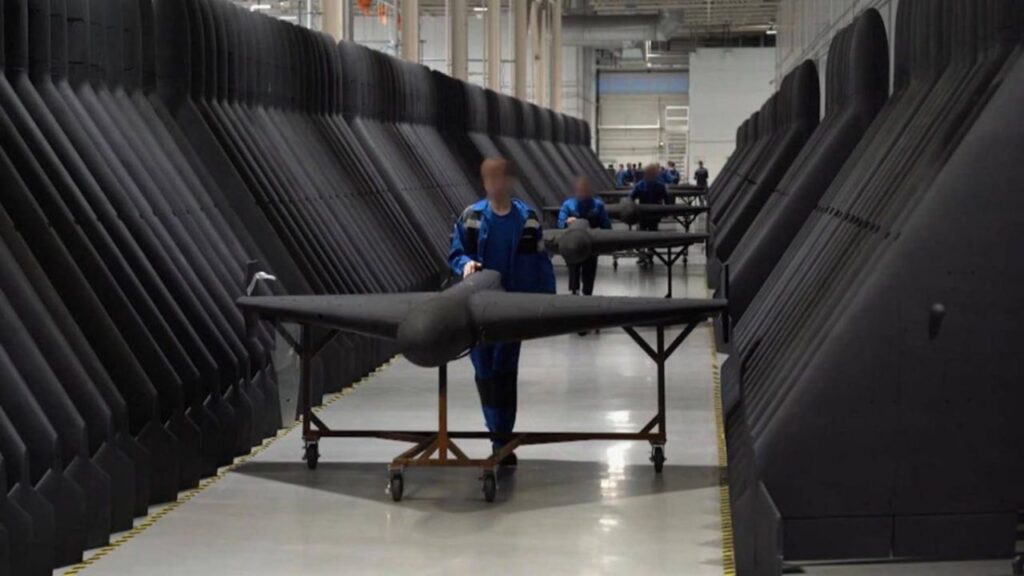
Russia holds a reserve of about 6,200 Gerans and makes about 10,000 drones a month. Its main production hub is the Alabuga special economic zone in Tatarstan.

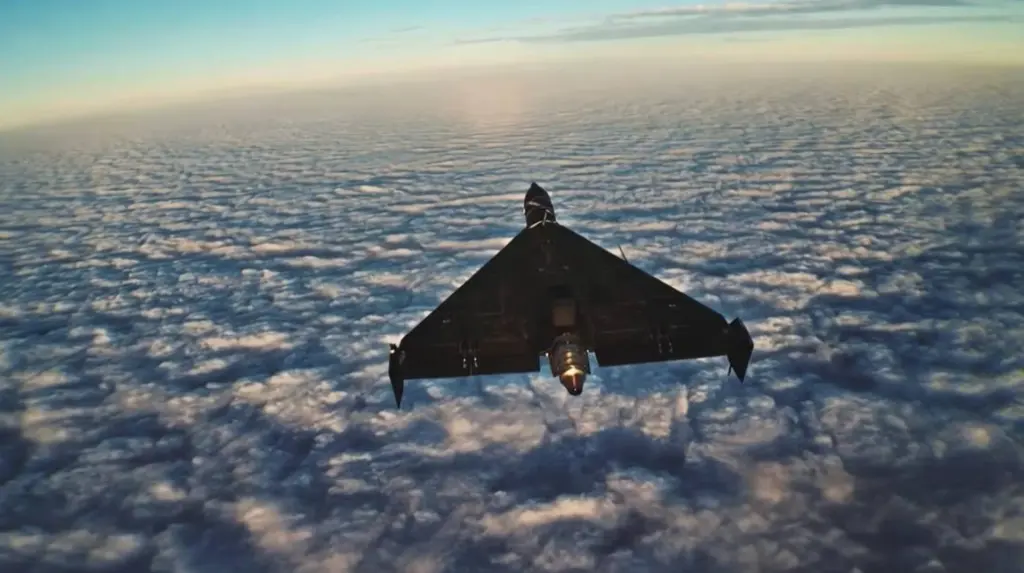
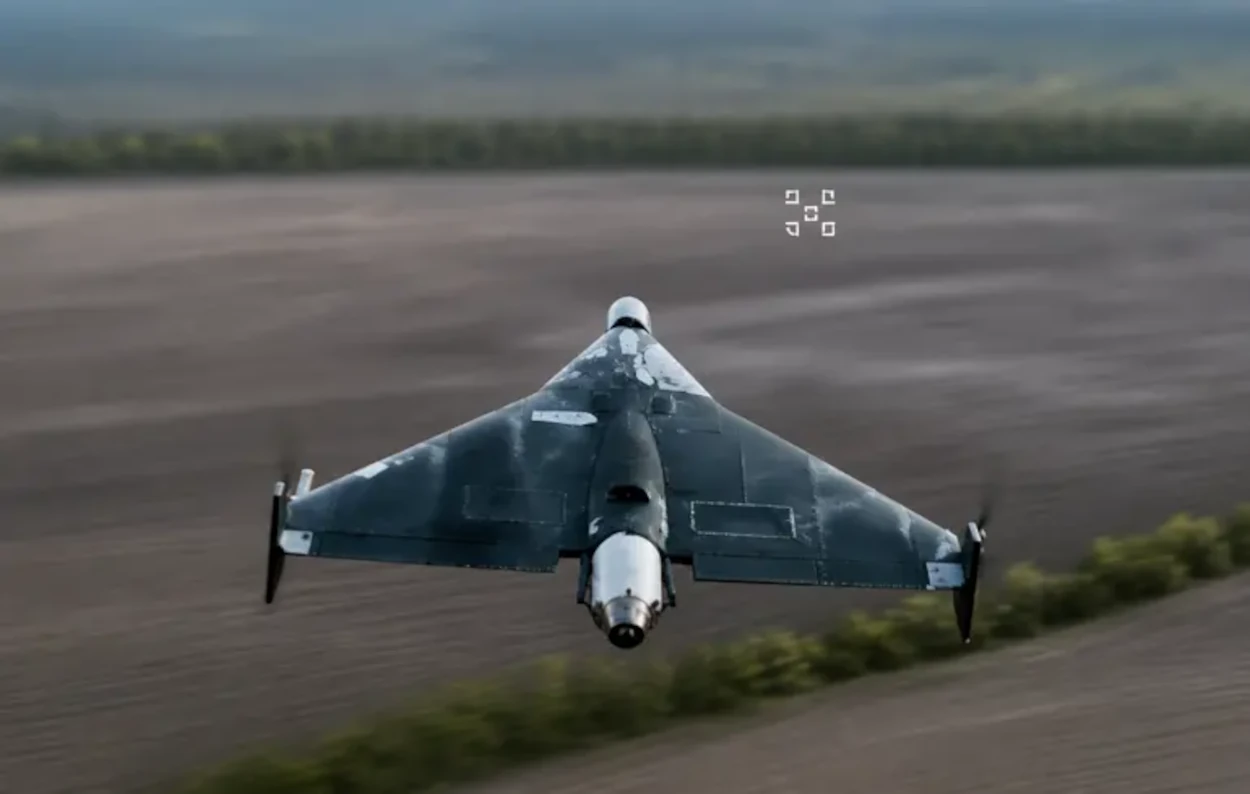
Since summer, Russia has shifted toward turbojet drones. “The reason is the saturation of Ukraine’s Air Force with mobile fire groups that shoot down low-speed targets en masse,” HUR said. Russia now assembles about 4,000 jet drones a month, mostly Geran-4s and Geran-5s, which fly at 400 to 500 km/h. It also makes about 2,000 cheaper propeller-driven Geran-2s, which HUR said are used to wear down air defense and locate air defense positions.

  •  

Romania shot down two drones it believes were Russia’s new Geran-4s. Europe isn’t ready for swarms of them, analyst warns

ukraine spent three years learning catch russian drones—so russia made fly faster · post geran-3 jet-powered attack drone wild hornets c1c840787fca380485636007cf683d71 news ukrainian reports

In a direct confrontation with Russia, European NATO states would likely be even more vulnerable than Ukraine to swarms of Russia’s new jet-powered strike weapons, Fabian Hoffmann of the Norwegian Institute for Defence Studies (NIDS) argued in a 20 October op-ed for the Center for European Policy Analysis (CEPA). He calls them low-cost cruise missiles. Just three days earlier, Romania met what it believes were two of them over the Black Sea.

Romanian F-16 fighter jets shot down two jet-powered Geran-family drones over Romania’s territorial waters on 17 October, the Defense Ministry said. Interim Defense Minister Radu Miruță said they flew at about 450 km/h and were likely Geran-4s, the first of that type Romania had downed.

Faster drones for a faster war

Russia began using the Geran-4 in May in response to effective Ukrainian interceptor drones, Ukraine’s military intelligence (HUR) said, adding that it reaches up to 500 km/h. By June, those interceptors were downing about half of slower Shahed-type drones, defense adviser Serhii Beskrestnov estimated.

Hoffmann traces the shift to the Geran-3, a model Ukraine recovered intact in 2025. In his account, a Chinese JT80 turbojet roughly doubled its speed, from 185 to 350 km/h. However, he puts newer models, including the Geran-4, at 600 km/h or more, above HUR’s figure for that model.

By his estimate, each costs $150,000–$250,000, against about $50,000 for a long-range drone. Still, from Russia’s perspective, he wrote, that buys a significantly higher chance of getting through.

money engineering what stands between ukraine russia's fastest drones zelenskyy says · post russia’s new “geran-4 seeker” shahed variant geran-4 news ukrainian reports
Explore further

Ukraine is testing four new drone interceptors as Russia floods its skies with faster Gerans 

Engines are the bottleneck

Hoffmann argues defenses must match the threat’s speed, for example with jet-powered interceptor drones. Ukraine already fields some. On 4 October, President Zelenskyy said its Bars interceptors had shown the highest percentage among Ukrainian interceptors, about 30% of targets, according to Militarnyi. One unit destroyed five aerial targets with five Bars interceptors, Defense Minister Yevhenii Khmara later told journalists. He also called aviation one of the most effective tools against jet drones.

Hoffmann’s concern is scale. Jet engines are in short supply, he wrote, because too few European and US suppliers can meet demand. Ukraine’s Defense Industry Council flagged a shortage of such engines for its drones in April. In his view, gun systems and higher-end missile defenses are too scarce or too costly to fill the gap.

  •  

Peter Thiel breaks with Trump over Iran war: 'We should not have done it'

Peter Thiel
Peter Thiel, cofounder and chairman of Palantir Technologies Inc.

Bloomberg/Getty Images

  • Thiel criticized the US-Iran war, diverging from Trump's foreign policy stance, POLITICO reported.
  • "There were a lot of mistakes that were made," Thiel said at a lecture earlier this month.
  • Despite his criticism of the war in Iran, Thiel highlighted his continued support for Trump.

Billionaire technology investor Peter Thiel said he's skeptical of the US war with Iran and does not believe the United States should have launched it, putting the major Republican donor at odds with President Donald Trump over one of the administration's defining foreign policy decisions, POLITICO reported.

Thiel's remarks, delivered on October 12 at a private event, are his most explicit statements to be revealed publicly about the war with Iran and come less than two weeks before the midterm elections in which Trump's party is grasping to maintain power in Congress. The audio of Thiel's comments was obtained by Decoded by POLITICO from a lecture earlier this month.

"I'm skeptical of [the war], I think we should not have done it," Thiel said. "There were a lot of mistakes that were made."

Thiel added, "Maybe we don't have the hard power. Maybe we're going to lose the soft power war."

In the full lecture, Thiel made clear his strong opposition to neoconservatives and Middle East wars. Despite his criticism of the Iran war, Thiel highlighted his continued support of Trump and suggested he wanted to protect the president.

Still, Thiel's break over the war represents one of the most important examples to date of a fierce Trump ally sharing deep concerns about the conflict.

The comments were part of Thiel's lecture series in Nashville, which Decoded has documented since their start this fall. In the latest lecture, Thiel issued extensive warnings about what he described as the unchecked power of the International Criminal Court, drawing on comments from Bush-era figures Donald Rumsfeld and Dick Cheney.

"I read the Cheney family's Trump derangement syndrome as an attempt to buy favor with the [International Criminal Court] and avoid prosecution. Probably too late," Thiel said. "And I have come to suspect that the threat of an ICC arrest warrant is the sword of Damocles hanging over the Trump administration as it tries to persecute this war in Iran."

Thiel also discusses meeting with Israeli Prime Minister Benjamin Netanyahu in early 2024, after the October 7 attack, where he said he asked the president about his plans in Gaza. Thiel said Netanyahu told him, "I can't just Dresdenize it," referring to the Allied bombing of the German city of Dresden during World War II that killed roughly 25,000 people.

The first big tech investor to back Trump in 2016, and then have a high-profile speaking role at the Republican National Convention that year, Thiel was also the biggest financial backer of super PACs supporting Vice President JD Vance's Senate campaign in 2022. POLITICO reported in March that Vance was "skeptical" of the U.S. striking Iran in the lead-up to the beginning of the war.

Representatives for Thiel and the White House did not respond to requests for comment.

This story originally appeared on POLITICO and is courtesy of the Axel Springer Global Reporters Network, which harnesses the resources of the company's newsrooms to publish ambitious scoops, investigations, interviews, opinion pieces, and analysis. It allows journalists — including those from POLITICO, Business Insider, WELT, BILD, Onet, and Fakt — to collaborate on major stories for an international audience of hundreds of millions across platforms.

Read the original article on Business Insider

  •  
❌