❌

Reading view

Venezuela Opens Process to Choose New Supreme Court Judges
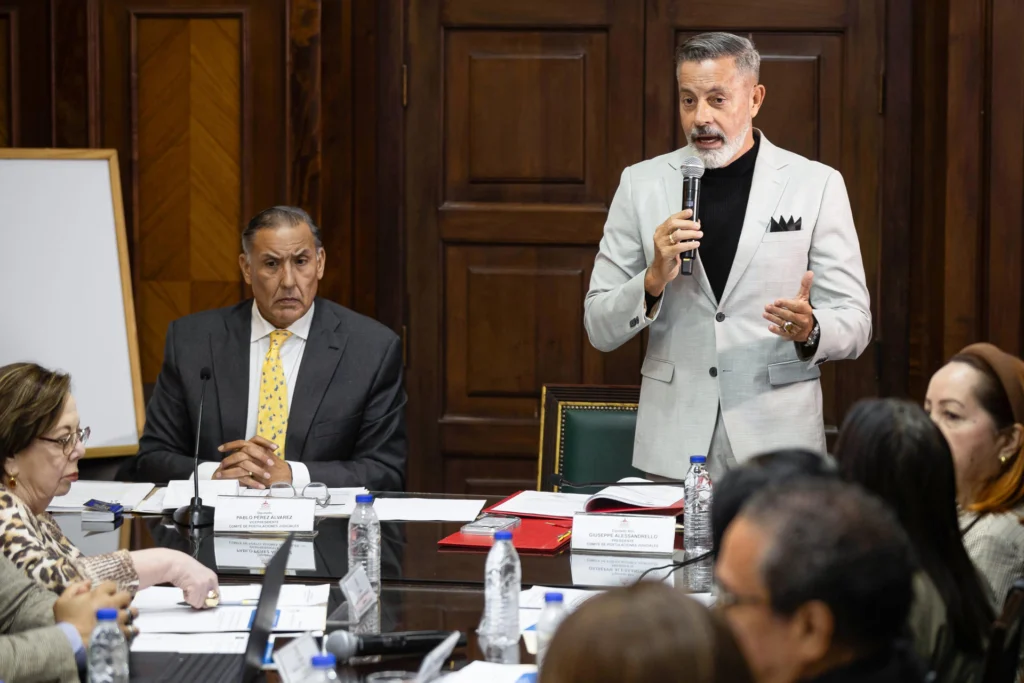
The chairman of the Committee, Giuseppe Alessandrello, announced the early elaboration of a work schedule under the Supreme Court Law to ensure institutional stability and peace. Photo: EFE.

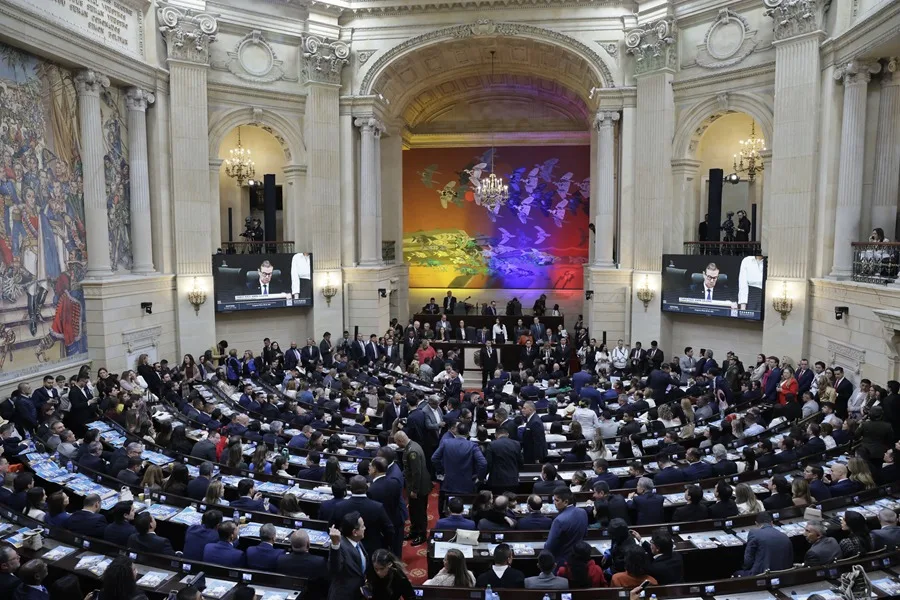
Venezuela’s National Assembly installed a Judicial Nominations Committee on Friday to evaluate and select new Supreme Court justices, a step lawmakers described as central to consolidating institutional stability.


The committee was formally established on October 23, at the Federal Legislative Palace in Caracas, one day after being sworn in during a legislative session.

Giuseppe Alessandrello, who presides over the body, announced that its immediate task is to draw up a work schedule under the Law of the Supreme Court of Justice.

RELATED: Venezuela’s Acting Pres. Delcy Rodríguez Meets 2015 Assembly Delegations

Alessandrello said the law opened the selection process to ordinary citizens. Writing on social media, he stated that the legislation brought people into the work of “evaluating and selecting the leadership, in this case of the Supreme Court of Justice, to seek plurality.”

#23Oct || Desde el Palacio Federal Legislativo se realiza la Instalación del Comité de Postulaciones Judiciales. pic.twitter.com/MczZA2GxJ7

— Asamblea Nacional 🇻🇪 (@Asamblea_Ven) October 23, 2026

Text reads: “From the Federal Legislative Palace is carried out the installation of the Judicial Applications Committee.”

The committee operates within a broader national dialogue that authorities describe as “building a new Venezuela.” Officials have repeatedly framed the judiciary as the institution responsible for guaranteeing what they call true and just peace among citizens. “The judicial branch is the institution that will guarantee peace among us,” Alessandrello said.

The work schedule will set specific periods for the call for nominations, the evaluation of candidates, and the handling of challenges and responses.

The final goal is to present a definitive list of eligible candidates to the National Assembly.

Alessandrello stressed the weight of the assigned tasks, linking them directly to institutional stability. The committee’s operational work and the eventual delivery of the list will follow the terms and periods established by current law.

The process is governed by the Organic Law of the Supreme Court of Justice and the Constitution of the Bolivarian Republic of Venezuela. It covers the selection of both principal and alternate justices of the Supreme Court of Justice.

Subrayó el rol clave de la ciudadanía:

"La ley incorporó a los ciudadanos y ciudadanas de la sociedad en este trabajo de evaluar y seleccionar a las directivas, en este caso del Tribunal Supremo de Justicia, para buscar la pluralidad". pic.twitter.com/LhNVkaK6ov

— Asamblea Nacional 🇻🇪 (@Asamblea_Ven) October 23, 2026

Text reads: “The President of the committee, Giuseppe Alessandrello, highlighted the group’s harmony: “Everything we produce is decided unanimously and the auspices with the work of the committee are positive.” He also emphasized the importance of plurality in this process. He stressed the key role of citizenship: “The law incorporated citizens of society in this work of evaluating and selecting directives, in this case from the Supreme Court of Justice, to seek plurality.”

Selecting Court Leadership

The mandate extends beyond the high court itself. It also includes related judicial positions, among them the directorship of the National School of Magistrates.

The committee emerged from a process announced earlier this month. The National Assembly opened the nomination period between October 2 and October 9, allowing interested citizens and institutions to take part in the selection of the court’s leadership.

Once the schedule is finalized, the committee will move through successive phases, receiving nominations, reviewing candidates, and addressing any challenges filed against applicants. Each challenge will carry its own opportunity for a formal response before the list reaches the legislature.

The final list of selected candidates will be delivered to the National Assembly for consideration. The body’s work therefore functions as a preliminary filter within a process whose ultimate decisions rest with the legislature.

  •  

Cristina Kirchner Goes on Trial in Hotesur-Los Sauces Money Laundering Case

(FILE) The Court enabled virtual participation for the first hearing of the accused. Photo: La Nacion.

A new trial in the unified Hotesur and Los Sauces money laundering cases opened Friday in Buenos Aires against Argentine former President Cristina Kirchner, her son, Deputy Máximo Kirchner, and 17 other defendants.


Federal Oral Tribunal 5 allowed the former President and the deputy to attend the opening session virtually, with the favorable vote of judges José Michilini and Fernando Machado Pelloni. The ruling sought to coordinate the deputy’s parliamentary schedule and simplify transfer logistics from the home where the former president is serving a sentence.

The remote format was granted exceptionally, only for the formal reading of the indictment and the order sending the case to trial. The tribunal said later hearings will be in person for all defendants.

RELATED: Cristina Kirchner’s Defense Seeks UN Help to Lift Public Office Ban

The case covers 19 people, including businessmen Lázaro Báez, Cristóbal López and Fabián de Sousa. Hearings are set for Mondays, Fridays and Saturdays, including the January 2027 judicial recess, when the defense lawyers must attend in person every day.

With over 300 witnesses initially slated to testify, the dynamics of witness credibility and testimonies would play a crucial role in shaping the outcome, but it was reduced by agreement between the parties.

[JUSTICIA] Terminó la audiencia por Hotesur y Los Sauces: solicitaron que Cristina Kirchner sea juzgada como "jefa de una asociación ilícita, coautora de lavado de activos y admisión de dádivas", y su hijo, Máximo, fue imputado como "organizador del entramado criminal". https://t.co/3s4n4ORbW3 pic.twitter.com/VbWP9G9bve

— ElCanciller.com (@elcancillercom) October 23, 2026

Billing Under Scrutiny

The prosecution alleges that Kirchner’s family bought hotels and apartments, rented them to businessmen, mainly Báez, and laundered illegal money from public works.

The defense’s argument about the legitimacy of the funds is crucial. The defense, led by Carlos Beraldi and Ary Llernovoy, says the properties were bought with declared funds, including assets the family owned before Néstor Kirchner became Mayor of Río Gallegos, and that rentals were invoiced, banked and at market prices. The defense says similar claims were dismissed in three illicit enrichment cases. None of these claims has been tested at trial, and the defendants are presumed innocent.

Lawyer Carlos Beraldi maintained from the start that the hotels operated, collected and paid taxes like any other business. In September 2023, Chamber I of the Federal Chamber of Cassation revoked a previous dismissal and ordered that the trial go ahead.

The merged file brings together two fronts. Hotesur concerns the family’s hotel operation, while Los Sauces covers the real estate company at the center of the billing accusation.

The Cassation court removed the two judges who had dismissed the case and left only Palliotti, the magistrate who had voted to convict Cristina and Máximo Kirchner.

The same account recalls that in November 2021 judges Adrián Grünberg and Daniel Obligado dismissed the case against all defendants, with Adriana Palliotti dissenting, relying on an accounting expert report that found no harm. In September 2023, the Cassation Chamber overturned that decision and ordered a trial.

The opening of the process was preceded by an episode described as embarrassing. The Cassation court ordered the Federal Oral Tribunal 5 to merge the Hotesur and Los Sauces cases into a single proceeding and to begin it this Friday.

It is the first time in the country’s history that the Cassation court has dictated how a trial must be conducted, a power that normally belongs to each oral tribunal. Political pressure mounted after a Supreme Court resolution, and the judges had only 72 hours to unify the files. The order left the tribunal with no margin to set its own calendar.

The core of the Los Sauces case is the billing of the family’s real estate firm. According to the accusation, 88% of everything the company collected between 2009 and 2016 came from businesses controlled by Báez and from the Indalo Group.

The Hotesur portion of the merged case has not yet been read in court. The next hearings, set for October 26 and October 30, will determine how the combined process advances.

Text reads: “When there is political persecution, the times in the judiciary are always electoral.”

  •  

Brazil and Mexico Strengthen Cooperation On Safe Hospitals

Representatives from the Goias State Health Secretariat in Brazil met with Mexican specialists.

On Friday, Brazil and Mexico strengthened their cooperation on safe and resilient hospitals through a technical visit to Mexico City, with support from the Pan American Health Organization and the World Health Organization (PAHO/WHO).

RELATED: Amazon Fires Push Brazil Air Pollution to Very Unhealthy Levels

The visit brought together representatives from the Goias State Health Secretariat in Brazil with Mexican specialists to exchange experiences on the response of health services to emergencies and disasters.

The Brazilian delegation was headed by the Secretary of Health of Goias, Rasivel dos Reis Santos, and the Undersecretary of Health Surveillance, Fluvia Pereira, accompanied by representatives from PAHO/WHO in Brazil.

The meetings facilitated the sharing of experiences related to governance, inter-institutional coordination, evaluation and monitoring systems, as well as certification and continuous improvement mechanisms for healthcare facilities.

Senador Canedo recebeu 162 novos equipamentos para as UBSs, em investimento de cerca de R$ 1,7 milhão. Os aparelhos serão distribuídos conforme a necessidade de cada unidade.#JornalOhoje #SenadorCanedo #Saude #Goias pic.twitter.com/0HuMNzJTGd

— O Hoje (@jornalohoje) October 20, 2026

The text reads, “Senator Canedo received 162 new pieces of equipment for its primary health care units (UBSs), representing an investment of approximately US$340,000. The equipment will be distributed according to the needs of each unit.”

Authorities highlighted the existing cooperation model between the Mexican Social Security Institute (IMSS) and the State Committee of the Safe Hospital Program in Mexico City, considered an example of institutional collaboration.

As part of the agenda, the Brazilian delegation visited the Central North Hospital of Petroleos Mexicanos (PEMEX), where they learned about civil protection, operational continuity, and hospital security protocols implemented in the event of emergencies.

Representatives from Goias emphasized the level of preparedness of the healthcare and management staff, as well as the practices developed to ensure the continued operation of medical services in critical situations.

#FromTheSouth News Bits | Brazil is heading into a crucial presidential runoff that could shape the country's future. pic.twitter.com/yRniIliD4r

— teleSUR English (@telesurenglish) October 23, 2026

teleSUR: JP

Source: OPS

  •  

Flavio Bolsonaro Threatens Church Teachings and Democracy: Brazilian Bishops

They criticize the far-right candidate’s positions on labor rights, national sovereignty, poverty, violence, the environment, and human rights.

On Friday, Folha de Sao Paulo published the contents of a letter in which 54 Brazilian Catholic bishops warn that far-right presidential candidate Flavio Bolsonaro threatens the church’s social doctrine, democracy, national sovereignty and the practice of the common good.

RELATED:

Lula Urges Young and Elderly Brazilians to Defeat Bolsonaro

“We cannot remain neutral, lest our conscience or history condemn us in the future. Those who remained silent in the face of totalitarian threats that materialized in 20th-century Europe left a shameful legacy for future generations,” stated the “Letter from Catholic Bishops to the People of God Ahead of the Second Round of the 2026 Presidential Election.”

The signatories say they are in communion with the National Conference of Bishops of Brazil (CNBB) and aligned with the message issued by the organization’s Permanent Council, which defended the constitution and respect for the vote.

Besides urging voters to evaluate the records of the two candidates facing off in the Oct. 25 runoff, the bishops list the main positions through which Bolsonaro contradicts church teachings.

Labor Issues

The far-right candidate has consistently opposed eliminating the six-days-on, one-day-off work schedule and has proposed hourly pay, which “does not recognize the dignity of the worker and could bring this issue back to the forefront.”

National Sovereignty

Flavio Bolsonaro “promises Brazil’s submission to the United States, participated in a conspiracy to impose tariffs on Brazilian products, advocates foreign interference in elections, and promises to hand over our rare earth resources for U.S. exploitation.”

Poverty

The bishops cite the apostolic exhortation Dilexi Te and say the Liberal Party “has always publicly opposed social programs and the fight against poverty,” even though Flavio Bolsonaro now says he will maintain some of those programs.

🇧🇷⛪️ Creencias y política chocan en Brasil: crece la polémica por la promesa religiosa de Bolsonaro

✝️ Miles de fieles conmemoraron el aniversario de Nuestra Señora Aparecida, patrona del país sudamericano, en medio de la controversia por la promesa de campaña del candidato a la… pic.twitter.com/5AgyIQGEzv

— Sputnik Mundo (@SputnikMundo) October 14, 2026

The text reads, “Beliefs and politics collide in Brazil: controversy grows over a religious pledge made by Bolsonaro. Thousands of the faithful commemorated the anniversary of Our Lady of Aparecida—the patron saint of the South American nation—amidst controversy surrounding a campaign promise by presidential candidate Flavio Bolsonaro to declare that the nation belongs to Jesus Christ.

Catholics and representatives of Afro-Brazilian religions have warned of potential risks of exclusion and discrimination. Although the campaign asserted that this is merely a symbolic expression of faith, the debate has reignited questions regarding religious freedom and respect for the diversity of beliefs within Brazil.”

Violence

The bishops criticize Bolsonaro’s promise to expand access to firearms, “as his father did during his administration.” The issue had already been criticized in the homily delivered by the archbishop of Aparecida, who preached a message of “unarmed peace” during Mass on the Feast of Our Lady.

Environment

The bishops accuse Flavio Bolsonaro of denying the climate crisis and seeking to continue the “devastating policies” of his father, Jair Bolsonaro. They cite the environmental licensing law approved in 2025, known as the “Devastation Law.”

Human Rights and Democracy

The bishops recalled that the far-right candidate “publicly expresses support for torture” and that his family honored Col. Carlos Alberto Brilhante Ustra, a torturer during the military dictatorship.

Flavio Bolsonaro “made several statements that threaten the constitutional order” and, if elected, would govern with a majority in Congress and the Supreme Federal Court (STF), “creating the conditions for a usurpation of power,” the bishops warned.

The Brazilian Situation

Without mentioning Lula, the letter states that the Workers’ Party candidate, “although he has also been the subject of criticism, has always demonstrated responsibility toward the poor and our Common Home, and has acted within the limits of the democratic order, respecting the Constitution.”

“Whether one likes the current government or not cannot be a reason to hand the country over to someone who demonstrates such a contradiction with the teachings of our church,” the bishops say. They also urge Catholics not to abstain from voting.

Among the signatories are Bishop Jose Ionilton Lisboa de Oliveira, president of the Pastoral Land Commission, and the archbishops of Porto Velho, Roque Paloschi; Feira de Santana, Zanoni Demettino Castro; and Uberaba, Paulo Mendes Peixoto. The list includes bishops from Brazil’s Amazon, Northeast, Southeast, Central-West, and South regions.

The letter adds to the existing rivalry between Flavio Bolsonaro and the Catholic Church during the 2026 presidential campaign. In September, the Brazilian Commission for Justice and Peace delivered a report to the bishops detailing 58 attacks by the far right against Catholics and their church since 2018.

teleSUR/ JF

Sources: Folha de Sao Paulo – Brasil de Fato

  •  

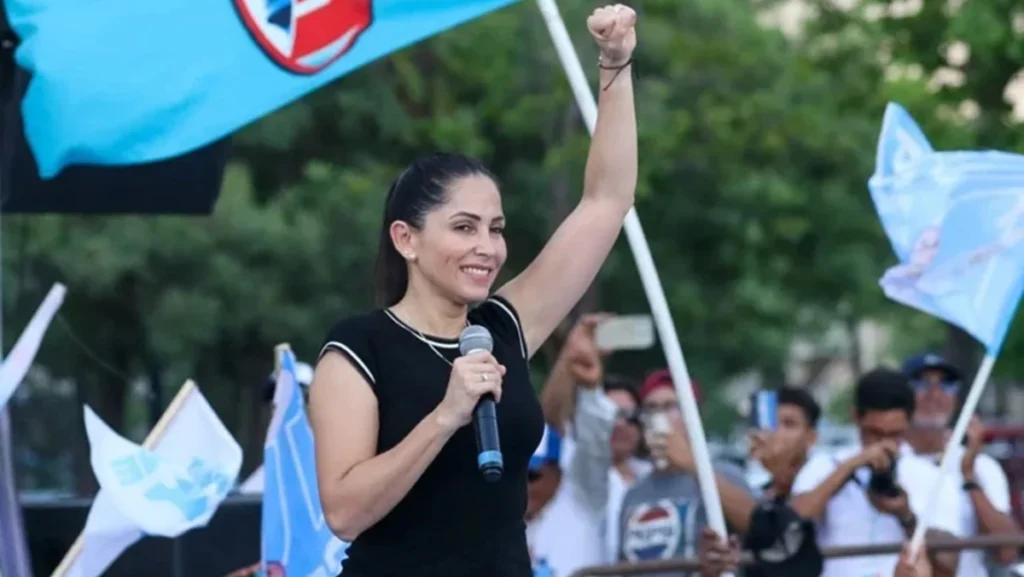
Ecuador Prosecutors Seek Preventive Detention for Leftist Leader Luisa Gonzalez

The former presidential candidate was arrested over alleged irregularities in the handling of funds during the 2023 campaign.

On Friday, Prosecutor General’s Office requested preventive detention for leftist former presidential candidate Luisa Gonzalez, who was arrested on Thursday over the alleged irregular handling of funds from the 2023 election campaign.

RELATED:

Luisa Gonzalez Denounces Political Persecution After Detention in Ecuador

Prosecutors requested that she be provisionally held in prison while proceedings against Gonzalez continue. She is accused of the alleged crime of money laundering.

The case comes five weeks before subnational elections in Ecuador, an Andean country where Citizens Revolution, the main opposition force to the U.S.-backed President Daniel Noboa, has denounced judicial persecution of progressive politicians and activists.

The hearing to present charges against Gonzalez is taking place while the leftist leader remains detained at Model Barracks in Guayaquil. She was transferred there after being arrested in the early hours of Thursday at her home in Canuto, a rural locality in the province of Manabi.

During the same hearing, the Public Prosecutor’s Office also requested preventive detention for two other defendants in the case: former lawmaker Santiago Diaz, a Correista whose testimony prompted the investigation, and Wendy Onofre, a former official with the Municipality of Guayaquil under the administration of now-imprisoned Mayor Aquiles Alvarez.

The initial investigation into Gonzalez gained momentum in March following unsubstantiated testimony from Diaz, who was arrested and accused of raping a minor. He was sentenced to 29 years in prison in that case.

Diaz said he had allegedly brought cash from Venezuela on the orders of former President Rafael Correa (2007-2017) to finance Gonzalez’s campaign in the 2023 snap presidential election.

The Prosecutor General’s Office is seeking to establish whether the campaign also received money from a company owned by Aquiles Alvarez, another opponent of Noboa who became mayor of Guayaquil in 2023 with the support of Citizens Revolution, Correa’s party.

Alvarez is currently imprisoned and faces two convictions, one of them for the illegal sale of fuel through service stations he owns with his family.

Luisa Gonzalez was the Correismo candidate in the 2023 and 2025 presidential elections, losing to Noboa in the runoff in both contests.

Investigations targeting Citizens Revolution have led to the party’s suspension, barring it from participating in local elections scheduled for Nov. 29.

The US-backed right-wing narco-dictatorship in Ecuador has arrested presidential candidate Luisa González, from the leftist Correísta movement, on fabricated charges.

This came after Ecuador's narco-regime banned the main left-wing opposition party.

Ecuador is run by dictator… pic.twitter.com/h4Hzkmc2aX

— Ben Norton (@BenjaminNorton) October 23, 2026

FDIM Demands Gonzalez’s Release

On Thursday night, the Women’s International Democratic Federation (FDIM) demanded the immediate release of Ecuadorian former presidential candidate Luisa Gonzalez.

“We denounce before the international community the kidnapping of our comrade Luisa Gonzalez, former candidate for the Presidency of Ecuador, by the fascist regime of Daniel Noboa,” the FDIM said.

“The capture of Luisa is part of the repressive plans of the Ecuadorian government, which intends to subdue, through repression, imprisonment, and kidnapping, all those who demonstrate against corruption and the government’s submission to Trump’s dictates.

“We demand respect for their physical and moral integrity. We demand the immediate release of Luisa Gonzalez, Jorge Glass, and all political prisoners,” the FDIM stated.

The legal proceedings against Gonzalez come weeks after the Electoral Disputes Tribunal upheld her political disqualification, preventing her from registering as a candidate for the Manabi provincial prefecture.

Before these events, the former presidential candidate herself had denounced foreign pressure and the recurring use of lawfare as methods to silence progressive social and political leaders.

Following her arrest, Gonzalez addressed the public, rejecting the allegations made by the Prosecutor General’s Office, describing the accusation against her as absurd and asserting that her case was part of a political persecution campaign driven by the Noboa administration.

In her statement, the opposition leader called on progressive organizations and the Citizens Revolution movement to unite to restore democracy in the country. She also thanked those who had expressed support for her nationwide.

“Sooner or later, the silence will explode in every corner of the country, and we will achieve the long-awaited democracy,” she said.

teleSUR/ JF

Source: EFE – FDIM

  •  

U.S. Removes Venezuela From List of Countries Subject to Investment Restrictions

Treasury Department says the reasons for Venezuela’s inclusion no longer exist.

On Thursday, the U.S. Department of the Treasury’s Office of Foreign Assets Control (OFAC) removed Venezuela from the list of countries subject to restrictions on U.S. investment.

RELATED:

Venezuela’s Acting Pres. Delcy Rodríguez Meets 2015 Assembly Delegations

Established under the 2025 Comprehensive Outbound Investment National Security Act (COINS Act), the list still includes countries such as China, Russia, Cuba, Iran and North Korea.

To justify Venezuela’s removal from the list, the Treasury Department said the reasons that led to the country’s inclusion no longer exist and that the current government does not meet the definition established by the COINS Act.

However, the OFAC announcement included a warning: The rule could still apply to certain investments in Venezuelan entities, although no details were provided.

“The COINS law significantly expanded the scope of U.S. controls on capital flowing abroad. The proposal requires notification in six sectors and five designated countries, and imposes a total ban on artificial intelligence. The public can submit comments through Dec. 7; the final rule will follow,” the financial website PitBullChain explained.

“The key distinction that must not be overlooked is that this is a mechanism for scrutinizing outbound investments. It is not a lifting of the OFAC sanctions regime. Removal from the COINS list does not mean that existing restrictions on specific individuals and entities disappear.”

“Venezuela’s removal from the COINS list can be interpreted as a sign of reduced friction: less friction for a U.S.-based exchange, a payment processor or a small fund to consider operating with Venezuelan counterparties without automatically falling into the category of a country under scrutiny,” the financial website added.

The list of countries included under the COINS Act was originally advanced with bipartisan support. Its goal was to expand oversight of capital flows into sectors considered sensitive to U.S. national security.

Regarding the scope of the policy, Treasury Undersecretary Chris Pilkerton explained that the program’s purpose “is to ensure that we have the ability to monitor and potentially prohibit those types of investments” that could pose risks to U.S. national security.

teleSUR/ JF

Sources: PitBullChain – OFAC

  •  

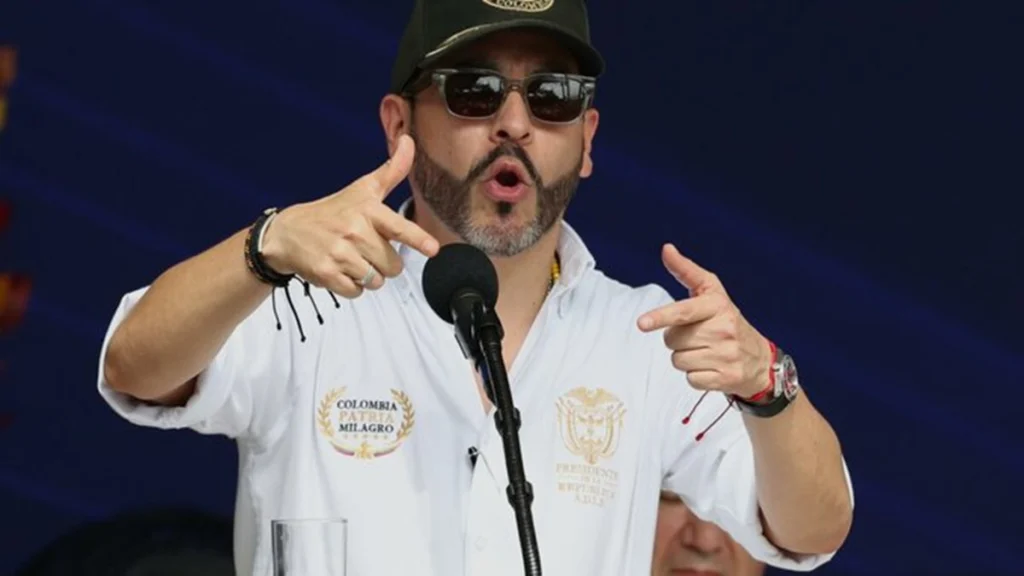
Colombian President De la Espriella Follows the Far-Right Playbook

From a hard-line security agenda to a cultural battle, he is adopting tactics used by Trump, Bukele and Milei.

Colombian President Abelardo de la Espriella is following the playbook that other far-right leaders, such as U.S. President Donald Trump, Salvadoran President Nayib Bukele and Argentine President Javier Milei, have implemented in recent years.

RELATED:

Colombia Issues 2027 Budget by Decree

The Colombian politician is touting his commitment to the “cultural battle,” along with a hard-line approach to crime and migration, attacks on the opposition, appeals to religion, personalized communications and government actions that threaten to erode democracy and limit rights.

Emphasis on Security

Since taking office in August, De la Espriella has focused on security. Almost every morning, he announces a new operation on social media involving drug and weapons seizures, arrests and the killing of suspected guerrillas and criminals.

The president has emphasized his order to act with an “iron fist” and use the full force of “the weapons and laws of the Republic.” This show of force has led him, not without controversy, to film himself walking among bodies in bags or wearing a pistol on his belt during a police raid in the Caribbean city of Santa Marta. In addition, inspired by Bukele, he has expressed interest in building as many as six mega-prisons.

Colombia has a new far-right multimillionaire president, Abelardo de la Espriella.

He is a US citizen who voted for Trump.

He wants Colombia to adopt the US dollar.

He worked for years as a lawyer in Miami, defending drug traffickers.

He also loves Israel.

Neocolonialism. pic.twitter.com/1USSdD1xld

— Ben Norton (@BenjaminNorton) August 19, 2026

Attacks on the Opposition

Like Trump and Milei, De la Espriella targets the opposition, led by the leftist Historic Pact party and former President Gustavo Petro (2022-2026). He accuses Petro’s administration of having left public finances in their “most critical situation” because of “wasteful spending” and “corruption.”

Centralization of Communications

Similar to Bukele, De la Espriella has become the first and almost sole source of information about his government, whether regarding security operations, infrastructure meetings or talks with the International Monetary Fund (IMF). He has also prohibited all senior officials from making statements without his authorization.

De la Espriella’s approach to communications is one-way: During the 11 weeks of his presidency, he has held no news conferences at which journalists could ask questions and has granted no interviews, limiting accountability.

Alignment With the U.S. and Israel

Like Chilean politician Jose Antonio Kast, Peruvian politician Keiko Fujimori and Ecuadorian President Daniel Noboa, De la Espriella was quick to align himself with Washington, joining the Shield of the Americas, a security alliance promoted by the United States, and advancing his country’s withdrawal from the International Criminal Court.

In his rapprochement with Israel, he has gone further than Milei. The Colombian far-right leader has recognized Israeli sovereignty over the Golan Heights and moved Colombia’s embassy to Jerusalem.

Budget Cuts

De la Espriella promised during his campaign to cut government spending by 40%, following Milei’s chainsaw approach, and has already moved in this direction with his first general budget, approved by decree this week.

In addition to reducing allocations for the Special Jurisdiction for Peace (JEP) and the Ministry of Equality and Equity, the Colombian president is cutting spending on contractors, bureaucracy, subsidies and social assistance.

Colombia has opened an embassy in West Jerusalem under new far-right President Abelardo de la Espriella, who is reversing his predecessor's ‌break with Israel by also restoring a free trade agreement. pic.twitter.com/LnZ4uufnaC

— Al Jazeera English (@AJEnglish) October 14, 2026

Use of Religion

The Colombian president has surrounded himself with Christian symbols since his inauguration and adopted the practice of ending his speeches by shouting, “Long live Christ the King!” This has led to lawsuits accusing him of violating the state’s secular character.

De la Espriella, who has included a significant number of evangelicals in his Cabinet, recalls Milei and Brazil’s Bolsonaro family in these practices, including former President Jair Bolsonaro and his son and presidential candidate, Flavio.

Cultural Battle

The far-right politician has announced a “cultural counterrevolution” to eliminate “wokism,” which he believes entered Colombian institutions under his predecessor.

The most high-profile controversy in this area has been his government’s decision to remove more than 30 works from the National Museum. The move has drawn criticism over “censorship” and sparked protests outside the cultural institution for several days, recalling Trump’s moves involving the Smithsonian and the Kennedy Center.

Irregular Migration

A few days after taking office, the Colombian president announced that immigrants in irregular situations would be “identified and deported.” Although police have conducted some raids in cities such as Cartagena, Cucuta, Bucaramanga and Medellin, the issue does not appear to be a priority for the authorities.

An Outsider to the System

Like Trump, Bukele and Milei, De la Espriella denies being a politician and rejects being like other politicians, whom he disparages in general terms and frequently accuses of corruption and backroom deals. He explains his government in terms of a break with the past and a process of purging the system.

This stance goes hand in hand with behavior that departs from traditional norms, as when he accused two regional leaders of corruption in front of the cameras.

The External Enemy

De la Espriella has just announced that his government will detail, in just one month, what it considers its territories in the Caribbean Sea, including all the islets and reefs of the San Andres archipelago. The move could reignite a decades-old conflict with Nicaragua. The situation, in some ways, though with clear caveats, recalls the Falklands campaign launched by Milei.

teleSUR/ JF

Source: EFE

  •  

Datafolha Poll Shows Lula and Bolsonaro Tied at 50% Ahead of Runoff

Both candidates remain statistically tied three days before the presidential runoff.

On Thursday, polling firm Datafolha published a survey showing far-right candidate Flavio Bolsonaro and Brazilian President Luiz Inacio Lula da Silva tied at 50% of valid votes, three days before the presidential runoff.

RELATED:

Lula Proposes Constitutional Amendment for Free Weekend Transit in Brazil

This is the first runoff poll to show a numerical tie between the two candidates and represents a two-point recovery for Lula compared with the survey released by the same firm last week.

In terms of voter intention, Bolsonaro has 47%, compared with Lula’s 46%, representing a one-percentage-point increase for the incumbent.

On Wednesday, another poll released by Quaest also showed a trend toward a narrowing gap between the two candidates, in this case with Bolsonaro leading by one point, 45% to Lula’s 44%.

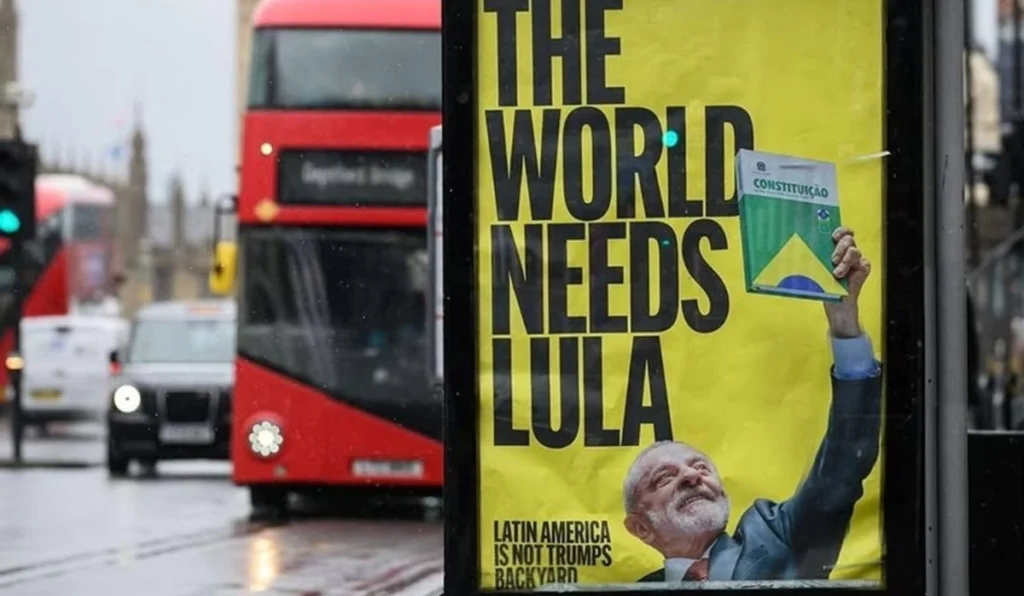
Amazing turnout and energy in London yesterday in support of President Lula, ahead of his crucial election against Bolsonaro. His campaign has given hope to people around the world!

Viva Lula! 🇧🇷 pic.twitter.com/hukUDShmz2

— Jeremy Corbyn (@jeremycorbyn) October 19, 2026

In both polls, the results amount to a statistical tie within the margin of error, which is two percentage points for each survey. For its latest poll, commissioned by television network Globo and Folha de Sao Paulo, Datafolha interviewed 2,520 voters between Tuesday and Wednesday of this week.

Bolsonaro received the most votes in the first round of the presidential election, held Oct. 4, with 47.03% of the vote, followed by Lula with 45.16%. This was the narrowest result between two candidates in the first round of a presidential election held in Brazil, demonstrating the extreme polarization of the Brazilian electorate.

In Brazil’s recent democratic history, presidential runoffs have been held seven times, and in every instance, the candidate who received the most votes in the first round has won.

On Friday, Lula and Bolsonaro will face off in the second and final televised debate and will wrap up their respective campaigns on Saturday, the day before voters head to the polls.

teleSUR/ JF

Source: EFE

  •  

Colombia Issues 2027 Budget by Decree

(FILE) Colombian Congress. Photo: EFE.

Colombia’s Government issued the 2027 General National Budget by decree on Thursday, after the bill’s approval in Congress fell through because of a procedural error.


The total amount is 634.9 trillion pesos, or 200 billion dollars at the current exchange rate, of which 391.38 trillion pesos, or 122 billion dollars, are for operating expenses, 155.43 trillion pesos, or 48.7 billion dollars, for debt service and 88.14 trillion pesos, or 27.6 billion dollars, for investment.

RELATED: Colombian President Dismisses Interior Minister Over Budget Failure

Opposition sectors described the Government’s handling of the budget as improvised.

The Senate and the Chamber approved different texts in one of the bill’s articles, and conciliation was not achieved before the October 20 deadline set by law for concluding that process, the last of the congressional debates, namely the plenary sessions.

The Government therefore had to issue the Budget by decree in the form in which it emerged from the joint economic commissions.

¡Se le cayó el presupuesto chimbo a @ABDELAESPRIELLA! Por hacer las cosas a las patadas, terminaron enredados entre dos versiones distintas y ahora el Gobierno pretende expedirlo por decreto.

Tanta improvisación con más de $634 billones de los colombianos exige responsables. ¡La… pic.twitter.com/Uivsc6N4kf

— Oscar Benavides (@ODBenavidesA) October 22, 2026

Resources for earthquake victims, health and energy subsidies added during the plenary sessions will be reduced because of the situation, Senator Alejandro Ocampo affirmed.

Representative María Fernanda Carrascal considered that Congress’s servility to the Executive vitiated the legislative process and denounced that the approved budget showed the Government’s true priority as more debt and less social investment, with debt service growing 46 percent while cuts hit the most vulnerable.

After the events, President Abelardo de la Espriella dismissed Interior Minister Rodrigo Lara.

  •  

Damage Assessments Continue After Oct. 9 Panama Quake

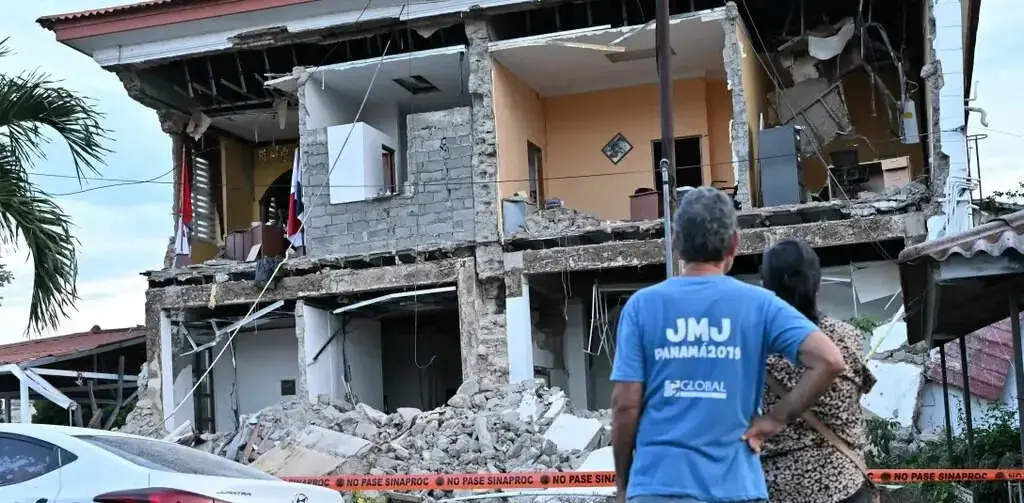
More than 37,000 people have been affected by the magnitude 7.5 earthquake that struck Panama on October 9, the National Civil Protection System (Sinaproc) reported.


Housing assessments carried out by emergency teams covered 37,210 people, according to the preliminary report from the National Emergency Operations Center. The epicenter was 39 kilometers northwest of Tonosí, in Los Santos province, at a depth of four kilometers.

RELATED: Venezuela Sends 40 Tons of Humanitarian Aid to Panama After Earthquake

The assessment identified impacts in 10 provinces — especially Coclé, Herrera, Veraguas and Los Santos — and the Ngäbe Buglé comarca, the report said.

Local authorities continued damage assessments and assistance to affected families amid recovery efforts after one of the strongest seismic events recorded in the country in decades. Humanitarian aid has also been received from other nations, mainly Venezuela, Costa Rica and the United States, the report said.

Venezuela extiende su solidaridad

Desde el Aeropuerto Internacional Simón Bolívar de Maiquetía, el Gobierno Bolivariano envió un cargamento de ayuda humanitaria hasta el Aeropuerto Internacional de Tocumen.

Estos insumos están destinados a brindar apoyo oportuno al pueblo… pic.twitter.com/SbscKqU958

— Ministerio de Comunicación e Información (@mippci_ven) October 22, 2026

Panama has opened 126 active shelters housing 5,628 people as part of the humanitarian response. Logistically, 171,190 pounds of cargo were moved by air and 365 tons were dispatched by land transport to support assistance operations.

Most of the country’s water treatment plants have restored operations, while security and emergency agencies maintain monitoring in affected areas, Sinaproc reported.

The earthquake occurred at 12:56 local time on October 9, according to the report. The United States Geological Survey raised the magnitude from 7.6 to 7.7, while the Institute of Geosciences of the University of Panama put it at 7.5.

  •  

Haiti Mobilizes Resources to Free Four Salvadoran Soldiers Kidnapped by Gangs

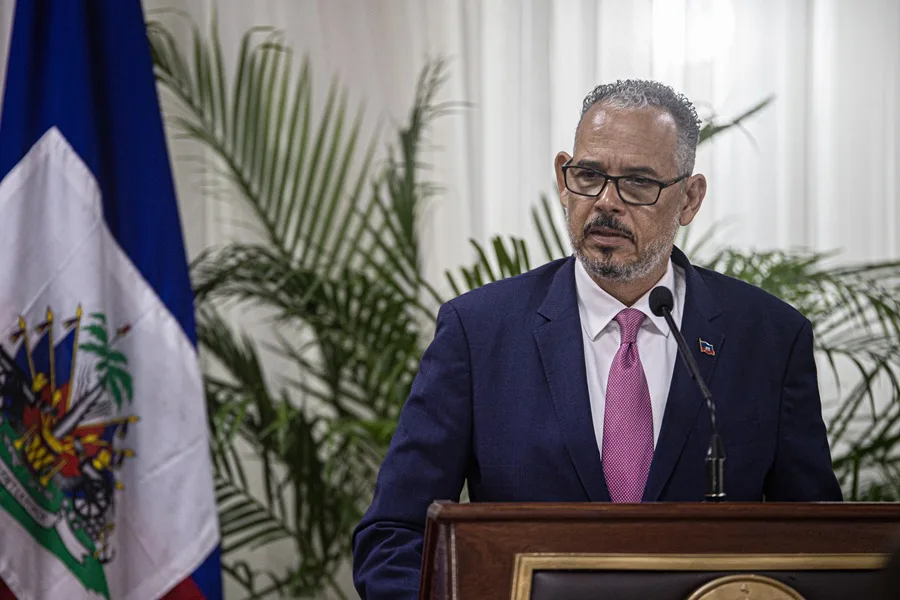
(FILE) Prime Minister Alix Didier Fils-Aimé. Photo: EFE.

Haiti’s government said Thursday that rescuing four Salvadoran soldiers kidnapped by armed gangs last Sunday on the outskirts of Port-au-Prince is its absolute priority.


The office of Prime Minister Alix Didier Fils-Aimé said in a statement that the government is fully mobilized and intends to assert state authority with the greatest firmness against armed groups. It called the soldiers’ release an absolute priority and said all necessary resources are being mobilized to achieve that goal.

RELATED: Salvadoran President Bukele Issues Stern Warning to Haitian Gangs

The prime minister met with competent authorities to assess the situation comprehensively and to determine, in close collaboration with the Salvadoran Gang Suppression Force (GSF), measures to reinforce ongoing operations against the armed gangs that attacked the vehicle carrying the Salvadorans.

Haitian security forces and the GSF have conducted an intense search since Sunday for the four Salvadoran aviation technicians, with whom contact was lost after the ambush in the Santo area of the Croix-des-Bouquets commune, within the Port-au-Prince metropolitan area.

#Haiti | The UN Security Council reaffirms its commitment to the Gang Suppression Force despite armed attacks and the kidnapping of four Salvadoran personnel. Rescue efforts continue as international forces maintain their security mission.#UnitedNations #teleSUREnglish pic.twitter.com/kKX5oDtQ0i

— teleSUR English (@telesurenglish) October 23, 2026

In its first official statement on the attack, the Prime Minister’s Office said that given the seriousness of the act, the State reaffirms its authority and determination, and that security forces are continuing operations firmly to secure the soldiers’ release and protect human life.

The GSF reported Tuesday that several members of the gangs controlling most of Port-au-Prince were killed and others wounded in clashes with forces searching for the Salvadoran military personnel. The GSF also reported that four of its own personnel were wounded during the operation and received medical care.

  •  

Argentina Congress Approves Disability Emergency Law

Photo: Pagina 12.

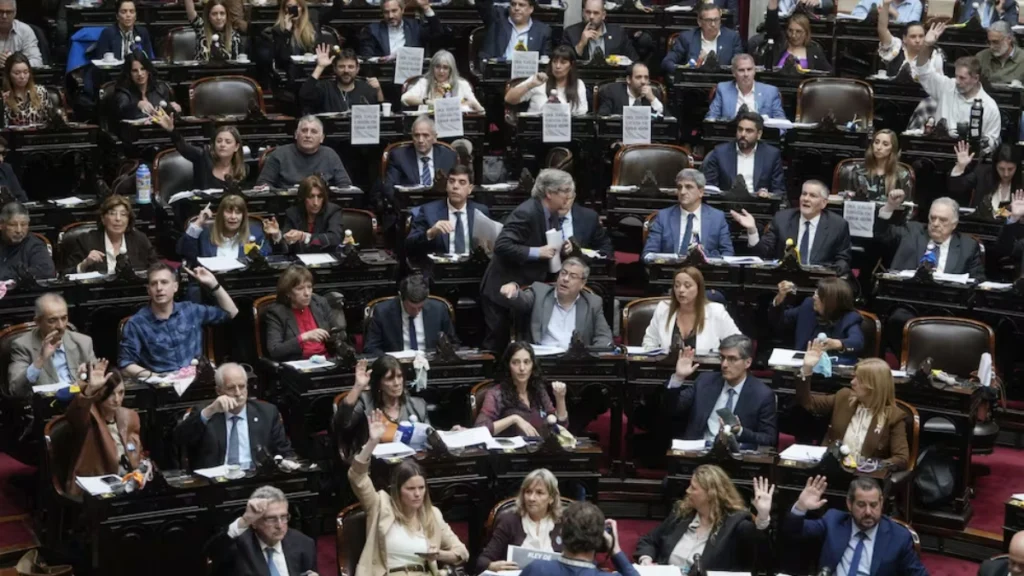
Argentina’s Chambern of Deputies approved the Disability Emergency Law in the early hours of Thursday, after more than a year of protests against Javier Milei’s austerity policies.


The final text passed with 237 votes in favor, 9 against and 4 abstentions from left-wing sectors, in a session that began Wednesday afternoon.

RELATED: Argentina Rights Group Files Complaint Over Police Crackdown

The law maintains non-contributory pensions, compatibility with formal employment and access to health benefits. It also establishes specific budget items to finance the system and mechanisms to prevent arbitrary removal of beneficiaries.

Among its central points are new conditions for accessing non-contributory disability pensions, the possibility of keeping the benefit while working within certain income limits and a control system based on cross-referencing data between public agencies. It also sets obligations for budget transparency, training for service providers and deadlines to complete pending compensations.

#Argentina | Human rights groups filed a criminal complaint over a police crackdown on university protesters in Buenos Aires that reportedly left more than 550 people injured or affected.
The complaint seeks accountability for alleged excessive force during demonstrations… pic.twitter.com/yrEWJjPhA7

— teleSUR English (@telesurenglish) October 19, 2026

The law stipulates the return of all funds owed to providers for more than a year, settling the accumulated financial deficit, and sets strict peremptory deadlines for the Executive Branch to make these obligations effective.

The changes were incorporated after weeks of negotiations and set aside the cuts that the Executive Branch had included in the 2027 Budget for the disability area.

Hundreds of Spanish students gathered at Rey Juan Carlos University (URJC) to protest the visit of far-right Argentine President Javier Milei, who was scheduled to participate in a forum during his stay in Madrid.

Armed with pots and pans, whistles, Palestinian flags, and… pic.twitter.com/LGGFyeYpe6

— teleSUR English (@telesurenglish) October 21, 2026

Various organizations of people with disabilities in Córdoba denounced not having been convened to the legislative debate, and expressed skepticism about the Government’s real willingness to comply with what was voted.

The approval comes after more than a year of permanent protests, marches and mobilizations led by people with disabilities and their families, who expressed in the streets their rejection of Milei’s adjustment policies. During that period, the affected sectors suffered neglect, mistreatment and harsh episodes of police repression near the legislative palace, images that were widely disseminated and generated deep repudiation in society.

A key factor in unblocking the legislative scenario was intense lobbying by Pastoral Social Argentina, whose representatives went directly to Congress to dialogue deputy by deputy. Added to this was strong international pressure from Vatican diplomacy, after a monsignor gave various interviews in local media to warn about the Holy See’s deep concern for the health and quality of life of the group.

  •  

Venezuela’s Acting Pres. Delcy Rodríguez Meets 2015 Assembly Delegations

Venezuelan acting president Delcy Rodriguez. Photo: Presidential Press Office.

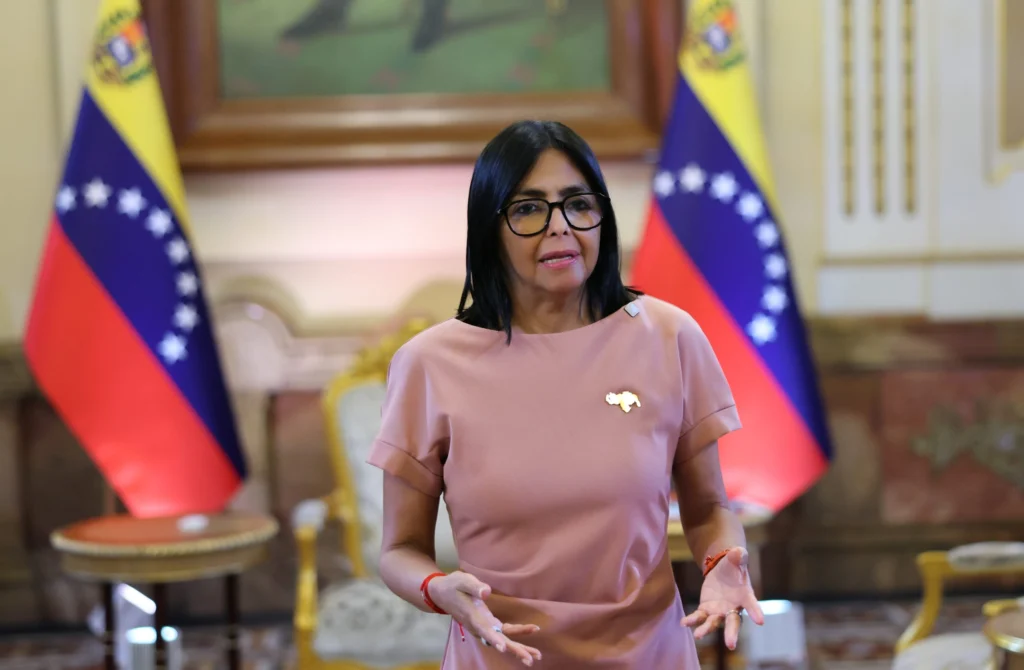
Venezuelan acting President Delcy Rodríguez received Thursday at the Miraflores Palace Jorge Rodríguez, head of the government delegation, and Dinorah Figuera, coordinator for the 2015 National Assembly, for the political dialogue table, seeking institutional rapprochement and consensus between the State and the sectors represented.


The meeting presented the balance and details of the third cycle of conversations held in Caracas, a process that included six working sessions structured in two plenary sessions and fifteen meetings. On Wednesday, the delegations held the final plenary of the third cycle, focused on reviewing compliance with agreements on institutional matters and renewal of the judicial system.

RELATED: Venezuela Reaffirms Sovereign Control of Oil Revenue as Deals Advance

The acting president contrasted that willingness with the actions of small groups that insist on blocking streets and violence, and said the majority of the country supports joint work, as demonstrated by mobilizations of Venezuelan women during breast cancer awareness month. She said that when common interests such as women’s health and lives unite people, that is the Venezuela she recognizes.

The formal negotiation process began on August 12, when both parties agreed on a working methodology and installed technical tables to address care for victims of the June earthquakes, democratic strengthening and judicial reforms. The third cycle was installed on Wednesday the 14th with the central goal of advancing renewal of the Supreme Court of Justice and setting participation guarantees for political organizations.

As part of the commitments, the installation of the new Table 4 on Political, Economic and Social Guarantees was formalized, highlighting mediation and conciliation mechanisms under the Program for Peace and Democratic Coexistence and the start of discussions to create an Ombudsman for Political Guarantees and Citizen Participation. A deep review was also agreed of key legal instruments, including the Law on Political Parties, Public Meetings and Demonstrations; the Liberator Simón Bolívar Organic Law; the Organic Law against Organized Crime and Financing of Terrorism; and the Organic Law of the Comptroller General and the National Fiscal Control System, to evaluate matters related to political disqualifications.

In the institutional and judicial sphere, the work of the Preliminary Commission of the Judicial Nominations Committee was recognized after it interviewed 127 candidates from different sectors. It was announced that the next National Assembly session will appoint the 12 members of the nominations committee, allowing publication of the constitutional schedule and subsequent activation of the Credentials Review Council.

On economic and patrimonial matters, the parties reaffirmed the urgency of recovering Venezuela’s international reserve assets at the Bank of England, the Venezuelan gold, to assist the population affected by the June 24 earthquakes. They agreed to form a parity delegation to manage these actions and promote economic and social prosperity in health, education, food and workers’ income.

  •  

Paraguay Evacuates 4,200 Families as Parana River Overflows

Inhabitants of the coastal neighborhoods in the department of Alto Parana face the rising waters after the continuous rains. Photo: EFE.

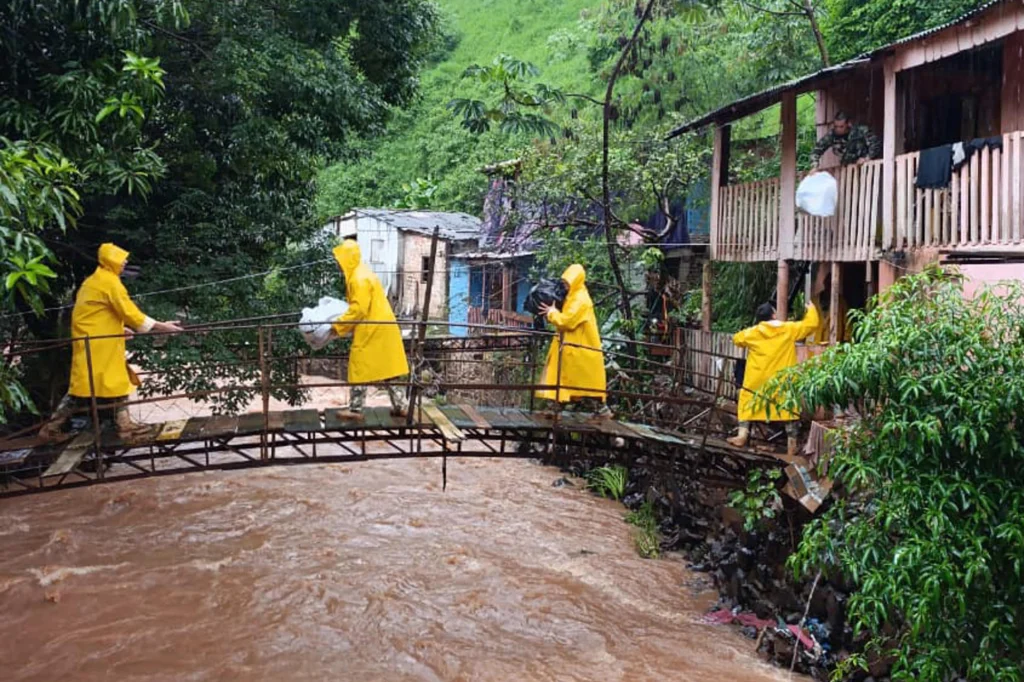
Severe flooding caused by heavy rainfall and the rising Parana River has forced the evacuation of some 4,200 families in eastern Paraguay, with local authorities monitoring vulnerable areas to move residents into temporary shelters.


More than 1,000 severely damaged homes are concentrated in the municipality of Ciudad del Este, where the rising waters have swallowed entire parcels of land. Remansito neighborhood was hit hardest. Around 35 families who work in recycling had to abandon houses submerged under the floodwater.

The emergency extends beyond that city. In the department of Ñeembucú, severe flooding has been reported in the towns of Ayolas and Cerrito. Local authorities and rescue teams continue to watch the most exposed areas as they coordinate the transfer of affected residents to temporary shelters.

RELATED: El Niño Phenomenon Reaches “Super” Category: Unprecedented Ocean Warming

The scale of the crisis has grown quickly. Just days earlier, official figures put the number of affected households at 3,000, a count that has now risen above 4,200 as the river keeps climbing.

Residents along the riverbank say the situation worsens considerably each time the gates of the Itaipu Binacional hydroelectric dam open. They argue that releasing the reservoir’s excess water has an immediate and direct impact on homes built along the coastal strip.

Dam Blamed, Rain Persists

Representatives of the hydroelectric facility defended the maneuver. The gate openings, they said, respond strictly to technical safety protocols established for operational contingencies. The dam’s administration rejected the claim that these operations are the main cause of the river overflowing in the region.

The dispute places technical necessity against lived experience. For the communities watching water pour into their streets, the relationship between the releases and the flooding feels direct. For the dam operators, the gates are simply doing what they were designed to do under extreme conditions.

The national weather agency has offered little relief. Projections from the Directorate of Meteorology and Hydrology warn that rain will continue falling through the weekend across the country’s eastern zone. The agency urged the public and protection agencies to maintain precautionary measures amid the risk of new landslides.

#Paraguay | Families in La Rivera have been affected by flooding along the Paraná River, with rising water levels impacting homes and surrounding communities.
Footage captures the extent of the flooding and the challenges faced by residents as they deal with its consequences.… pic.twitter.com/7GKTOoXEnB

— teleSUR English (@telesurenglish) October 23, 2026

Solidarity has also moved through the affected areas. Neighbors in working-class sectors have organized to supply community kitchens and distribute donations of basic goods. That support network has become essential for families who left their homes with little more than what they could carry.

The flooding follows a pattern familiar to the region. The Paraná River, one of South America’s largest waterways, regularly swells after sustained rains, but the current emergency has outpaced local capacity to respond.

With the forecast showing no break in the weather, the number of displaced families could continue to rise. Shelters are filling, and the most vulnerable households, including those who earn their living from recycling along the riverbank, face an uncertain wait before the waters recede enough to return.

  •  

Pope Leo XIV Confirms Official Visit to Argentina in November

The announcement put an end to speculation about the Pontiff's international agenda as he recovers from lung cancer surgery. Photo: EFE.

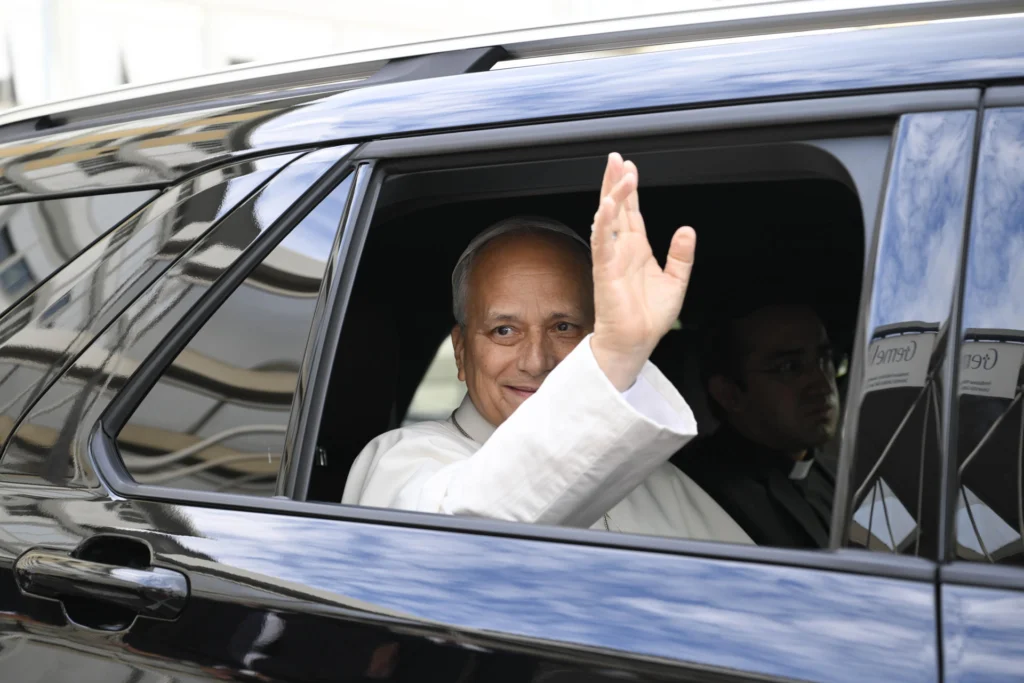
Pope Leo XIV confirmed his official visit to Argentina on Thursday, as he announced a four-day pastoral tour set to begin on November 8.


The Holy See press office released operational details of the journey after doctors cleared international travel, noting that the Pope requires no additional oncological treatment.

The Pope’s visit will include prisons, care homes for people with disabilities and meetings with workers’ organizations, reflecting an institutional intention to weigh in on debates over social justice, labor rights and the plight of the most vulnerable sectors.

RELATED: Vatican Confirms Successful Lung Surgery for Pope Leo XIV

His itinerary opens November 8 with a 4:30 P.M. local time arrival at Jorge Newbery Airport aboard a flight from Uruguay. From there he will pay tribute at the General San Martin Monument before attending a protocol reception hosted by President Javier Milei and meeting with diplomats.

The following day brings a packed schedule. Pope Leo will visit the Cottolengo in Don Orione, in Claypole, preside over a massive outdoor mass at the Monument to the Spaniards, meet with the labor sector at the Argentinean Catholic University, lead an interreligious gathering at San Martín Palace and dine with bishops at the Archbishopric.

During the welcoming session for newlyweds at the general audience, a couple said to Pope Leo XIV: “Papa, we’ll be waiting for you in Argentina!” The Pope replied enthusiastically: “Argentina—let’s go!” https://t.co/ut3jm7A7qB

— FrischeBriese (@FrischeB17467) October 22, 2026

On November 10 the tour moves inland to Cordoba province, where he will celebrate a liturgical ceremony at the Military Aviation School and walk through the of Nuestra Señora de la Asuncion Cathedral. He returns to Buenos Aires that night to preside over a youth vigil.

His final day, November 11, begins at the Federal Penitentiary Complex and continues with a mass at the of Lujan Basiliek. The trip concludes at 2:00 P.M. local time with a departure from Ezeiza International Airport bound for Lima.

Security and logistics teams from the Holy See are coordinating directly with Argentine authorities to finalize arrangements for the Pope’s movement at each public gathering on the schedule.

The visit unfolds in a political and social landscape shaped by the complex economic situation Argentina faces under the Milei’s administration. Structural tensions generated by fiscal adjustment policies and economic deregulation form the backdrop for a papal message that now carries deep political significance. The dignity of work and the protection of the vulnerable are expected to anchor his public remarks throughout the tour.

The confirmation also marks a decisive moment in the Pontiff’s recovery. Weeks after surgery, the international travel signals that his medical team considers the convalescence sufficiently advanced for the demands of a four-day, multi-city itinerary across two countries.

For Argentine faithful, the words delivered from St. Peter’s Square close months of uncertainty. The trip’s official schedule now stands, and preparations have shifted from speculation to logistics as November 8 approaches.

  •  
❌