❌

Reading view

Bulgaria’s Presidential Election Tests Relations with Russia as Black Sea Security Fears Grow

Bulgarians vote on 25 October in a presidential election shaped by Russia’s war in Ukraine, attacks on Black Sea shipping and economic pressures. The contest between incumbent Iliana Yotova and reformist challenger Andrei Gyurov will also test the political authority of Prime Minister Rumen Radev.

Bulgaria will elect a president on Sunday, 25 October, in a contest that has become a test of the country’s relationship with Russia, its commitments to NATO and the European Union, and its response to deteriorating security in the Black Sea.

The Central Election Commission has registered 27 presidential and vice-presidential candidate pairs, although the contest is dominated by incumbent President Iliana Yotova and former caretaker prime minister Andrei Gyurov.

An opinion poll conducted by Market Links between 13 and 19 October placed Yotova ahead with 47.3 per cent support, compared with 30.6 per cent for Gyurov. However, low anticipated turnout makes a second round on 1 November highly likely.

Although Bulgaria’s presidency is primarily ceremonial, the office carries constitutional authority over defence, legislation and government formation. The election also comes six months after former President Rumen Radev secured a parliamentary majority and became prime minister, substantially changing the country’s political landscape.

A presidency shaped by political realignment

Yotova, 62, became Bulgaria’s first female president in January 2026 after Radev resigned to enter parliamentary politics. Previously his vice-president, she is now seeking a five-year mandate of her own.

Her candidacy is supported by Radev’s Progressive Bulgaria coalition, which won 131 seats in the 240-member National Assembly in April, as well as the Bulgarian Socialist Party. Her running mate is Kiril Valchev, director-general of the Bulgarian News Agency.

Gyurov, an economist and former deputy governor of the Bulgarian National Bank, is supported by the pro-European reformist opposition, including We Continue the Change and Democratic Bulgaria. His vice-presidential candidate is Georgi Kandev, a former senior Interior Ministry official.

A third significant contender is Kostadin Kostadinov, leader of the nationalist Revival party, whose political platform includes opposition to Western military assistance for Ukraine and closer relations with Moscow. His running mate is European Parliament member Petar Volgin.

The election follows years of political instability, during which Bulgaria held eight parliamentary elections between 2021 and April 2026. Radev’s parliamentary victory ended a prolonged period of fragmented governments, but it has also raised questions about the concentration of political influence.

A Yotova victory would place both the presidency and the parliamentary majority within the same political camp. A Gyurov victory would instead create an institutional counterweight to Radev’s government.

Russia and Bulgaria’s foreign policy divisions

Bulgaria joined NATO in 2004 and the European Union in 2007, but its relationship with Russia remains politically complicated.

Historical and cultural ties, including shared Orthodox traditions and the legacy of Bulgaria’s liberation from Ottoman rule, have influenced public attitudes towards Moscow. During the Cold War, Bulgaria was among the Soviet Union’s closest allies, and Russian influence continued after the collapse of communism, particularly through energy, business and political networks.

Russia’s full-scale invasion of Ukraine in February 2022 exposed divisions over whether Sofia should provide military assistance to Kyiv or adopt a more cautious position.

Since returning to power as prime minister in May, Radev has advocated maintaining Bulgaria’s European commitments while seeking improved relations with Moscow. His government has halted military deliveries to Ukraine and taken a more restrictive approach to further sanctions against Russia.

Yotova has similarly emphasised negotiations as the means of ending the war and warned against further militarisation of the Black Sea. Her position appeals to voters concerned that escalating confrontation could expose Bulgaria to additional security and economic risks.

Gyurov represents a more explicitly Euro-Atlantic political orientation, arguing for stronger Western alignment and institutional reform.

The contest therefore concerns not whether Bulgaria will formally leave its existing alliances, which would require decisions far beyond presidential authority, but how actively it participates in their policies towards Russia.

Black Sea attacks bring the war closer

The security debate has intensified following a series of drone attacks against merchant vessels operating near Bulgarian and Romanian waters in October.

According to a maritime threat assessment published by Ambrey, three commercial ships were struck on 5–6 October within the exclusive economic zones of the two NATO members. Two sank, marking a substantial escalation in the geographic exposure of commercial shipping.

Ambrey assessed that Russian forces were highly likely responsible and that the vessels had been targeted because of their connections to Ukrainian grain exports.

The attacks have raised concerns about navigation, maritime insurance, food exports and the potential for further incidents involving NATO member states.

Bulgaria’s position on the western Black Sea coast gives these developments particular significance. Its ports, maritime infrastructure and commercial shipping depend on maintaining secure access to international sea routes.

As EU Today previously reported, the expansion of Russian attacks into areas close to NATO territory creates difficult questions for coastal governments seeking to protect commercial interests without becoming direct participants in the conflict.

For Bulgarian voters, maritime security is no longer simply an aspect of the war taking place elsewhere. It has become a question of national security, economic vulnerability and the government’s capacity to respond.

Energy prices and economic concerns

The campaign has also been influenced by inflation and higher energy costs, particularly among lower-income households and residents of rural areas.

Bulgaria’s historical dependence on Russian energy has long complicated its foreign-policy choices. Although the country has pursued diversification, fluctuations in international energy markets continue to affect domestic prices and industrial competitiveness.

Economic concerns have acquired an additional dimension following Bulgaria’s adoption of the euro on 1 January 2026, making it the euro area’s 21st member.

The transition represents a significant stage in Bulgaria’s economic integration with the European Union, but it has occurred during a period of price pressures and uncertainty over household purchasing power.

The presidency does not determine energy policy or monetary decisions. Nevertheless, candidates’ positions on Russia, European integration and economic security form part of the wider political debate.

Why a second round is likely

Under Article 93 of Bulgaria’s Constitution, a candidate must receive more than half the valid votes, with turnout exceeding 50 per cent of eligible voters, to win in the first round.

Neither requirement is expected to be easily satisfied. Turnout in the first round of the 2021 presidential election was approximately 38.6 per cent, reflecting the broader problem of electoral participation after repeated national votes.

If no candidate meets the constitutional requirements on Sunday, the two leading candidates will contest a runoff on 1 November.

Yotova enters the election with a substantial polling advantage, but Gyurov could benefit from opposition voters consolidating around his candidacy in the second round.

The result will determine more than the occupant of the presidential office. It will indicate whether Radev’s parliamentary dominance can be extended to the presidency, or whether voters prefer a political counterweight at a time when Bulgaria faces growing pressure to define its position between Moscow and its Western allies.
  •  

Emergency Response in Black Sea After Cargo Ship Burns, Capsizes in Alleged Drone Attack

Romanian authorities said Friday that a search and rescue mission is underway in the Black Sea with at least one dead and three missing.

The post Emergency Response in Black Sea After Cargo Ship Burns, Capsizes in Alleged Drone Attack appeared first on Breitbart.

  •  

Ground-Launched Rusty Dagger Low-Cost Cruise Missile Seen For The First Time

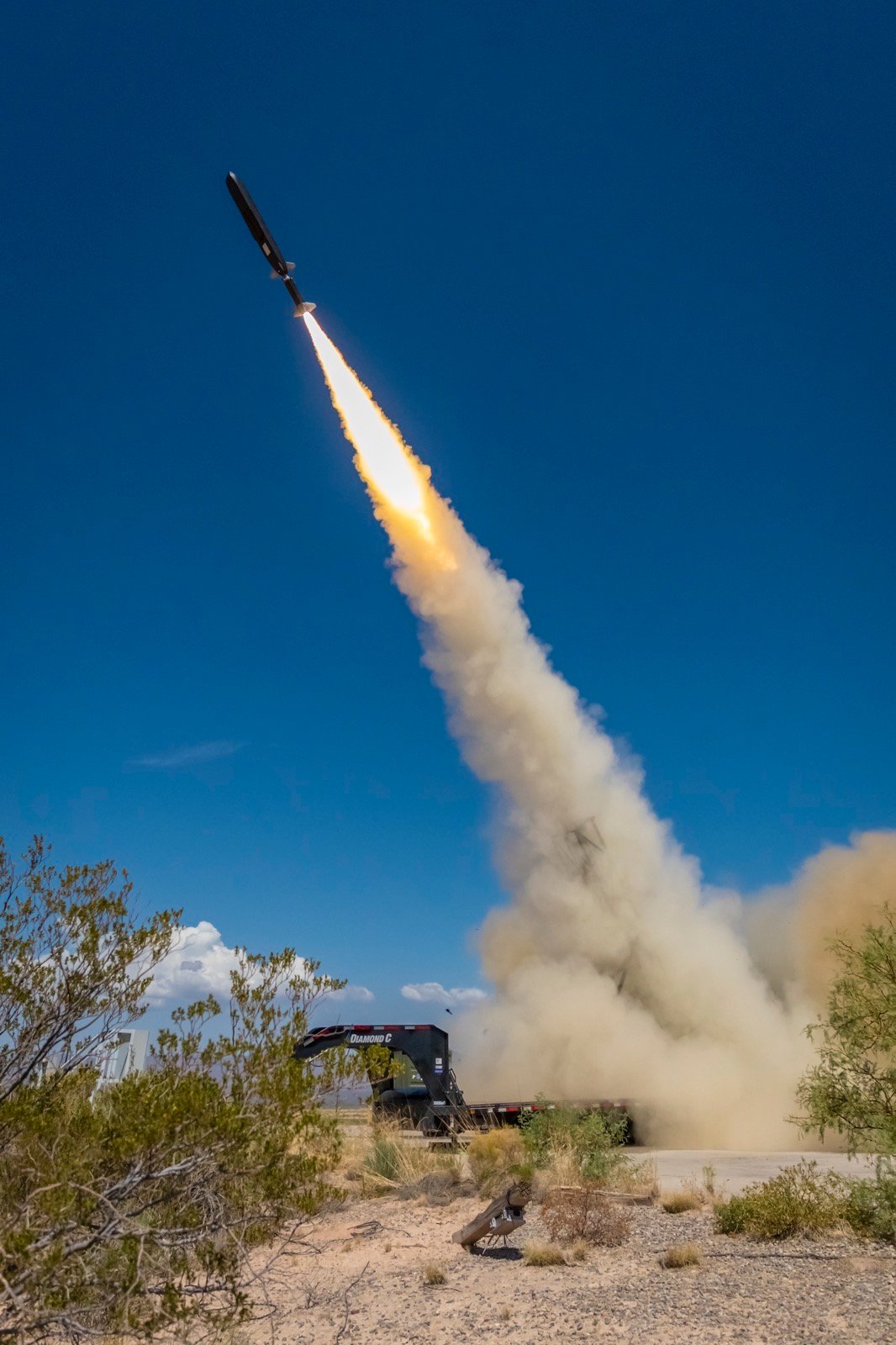
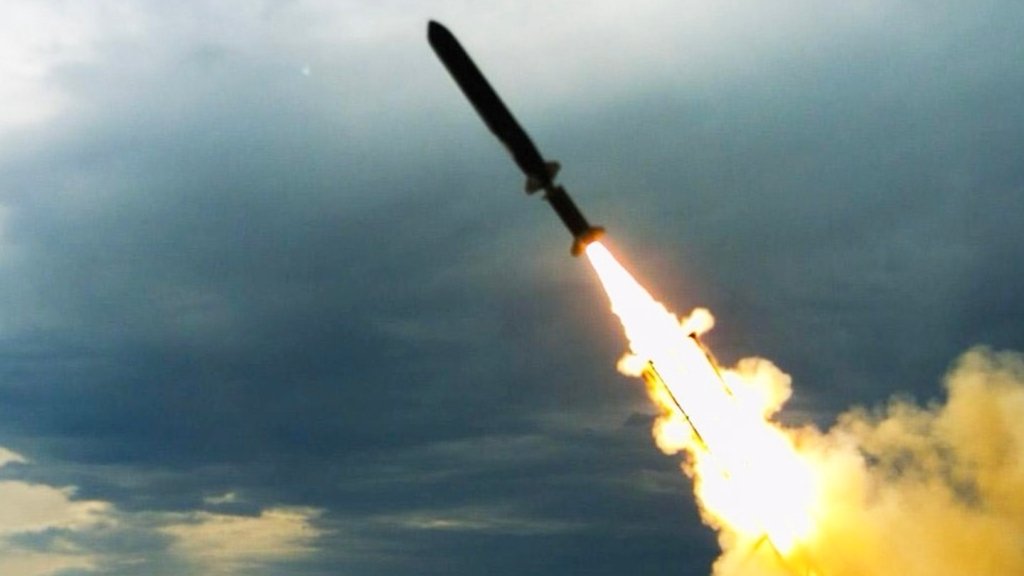
Zone 5 Technologies has shared with TWZ the first photos of its latest Block 40 Rusty Dagger low-cost cruise missile in a surface-launched configuration. The images offer a new look at a weapon developed first with air-launched applications in mind, and for export to Ukraine. It is now being adapted for use from land and sea, including by U.S. and other allied forces.

Zone 5 has not disclosed where or when the pictures were taken, or which programs, specifically, the ground-based launches were conducted under. The images do not offer a clear view of the trailer-mounted launcher, either. A spokesperson for the company did stress to TWZ that versions of Rusty Dagger have now been selected for separate U.S. Army and Navy programs, in addition to its initial development through the U.S. Air Force.

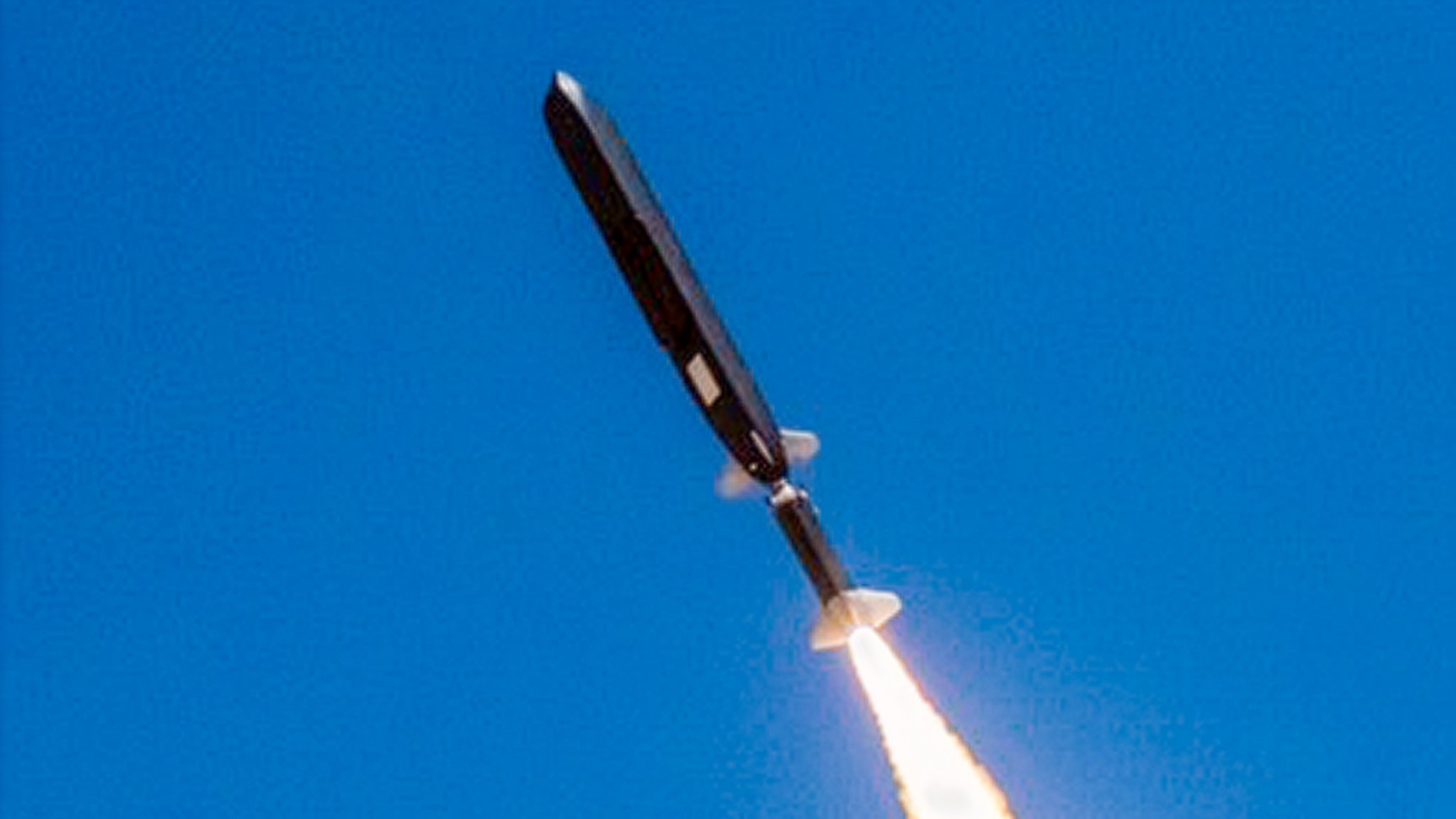
One of the first images showing the surface-launched version of the Rusty Dagger in action. Zone 5 Technologies

In May, Zone 5, as well as Anduril, CoAspire, and Leidos, received framework agreements from the Pentagon under the Low-Cost Containerized Missile (LCCM) program. The U.S. Army’s Portfolio Acquisition Executive Fires (PAE Fires) is running LCCM in cooperation with the Office of the Under Secretary of War for Research and Engineering (OUSW R&E). The aim of this program is to procure more than 10,000 low-cost cruise missiles, in total, over three years, beginning in 2027.

Then there is also the Consolidated Affordable Ordnance System (CHAOS) effort from the U.S. Navy’s Portfolio Acquisition Executive for Munitions (PAE Munitions). CHAOS is focused on low-cost anti-ship cruise missiles, particularly for U.S. allies and partners. CoAspire is also on contract for CHAOS with a version of its Rapidly Adaptable Affordable Cruise Missile-Extended Range (RAACM-ER) design.

“We designed a surface-launch Rusty Dagger to be the foundation of U.S. and allied mass-produced affordable precision deep strike weapons,” Tom Kanewske, chief strategy officer at Zone 5, told TWZ in a statement.

“Our team went from design to demonstration in less than three months, bringing Rusty Dagger from pylons and pallets to ground launcher and shipping containers,” added Kyle Maxhimer, Zone 5’s president.

Another picture of a Block 40 Rusty Dagger being fired from a launcher on the ground. Zone 5 Technologies

Zone 5 says the Block 40 version of Rusty Dagger can accommodate warheads in the 100-to-250-pound classes. It can still be configured for air-launch, either from pylons under the wings of aircraft or via palletized munitions systems. In order to be fired from launchers on the ground or at sea, the new version of the missile is fitted with a solid-fuel booster rocket at the tail end.

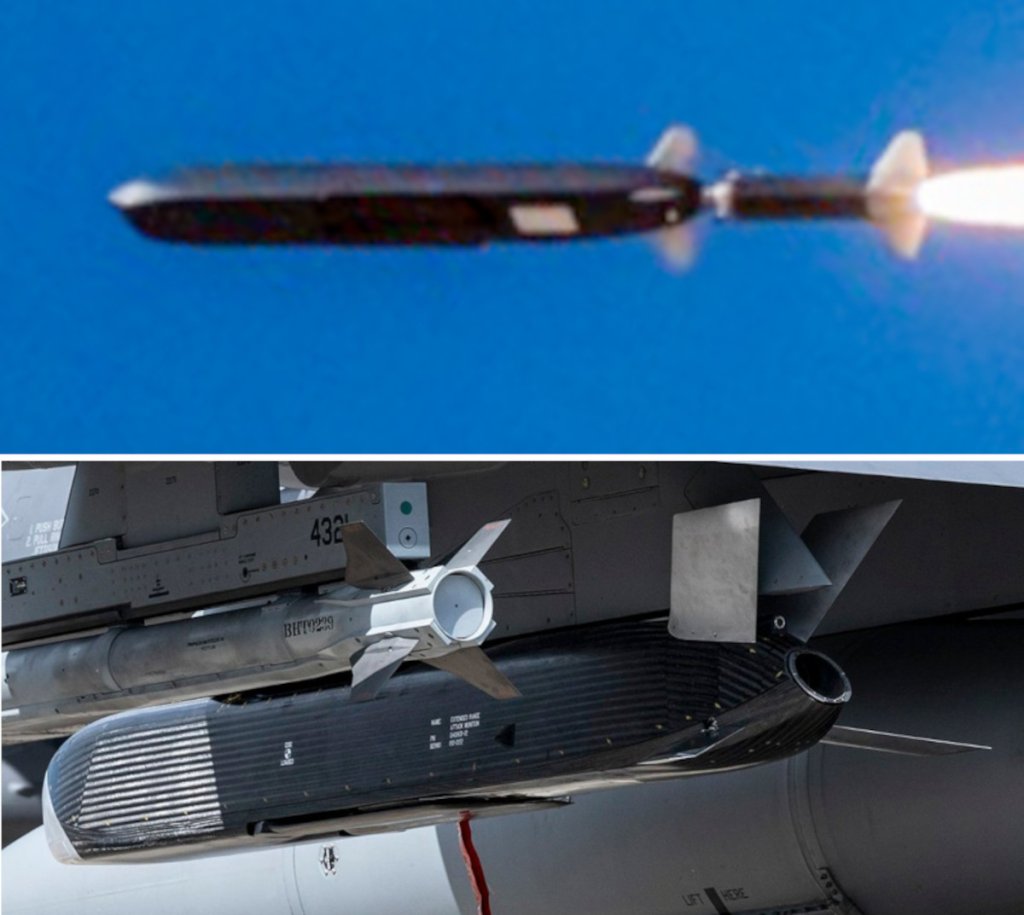
More specific details about the Block 40’s capabilities compared to the preceding air-launch-only version, also referred to as the Block 20, remain limited. From what we can see now, the two variations appear outwardly similar in many respects, at least broadly speaking. Earlier variations had a distinctive tail configuration with four squared-off fins, two facing upward and two more angled to either side. The shaping of the fins on the Block 40 does look to be more rounded. It’s also possible the missile may have a new cruciform tail fin arrangement, but this could also be a trick of the angle from which the missile is being viewed, coupled with the low resolution of the available images.

A side-by-side comparison of the Block 40 Rusty Dagger configured for surface launch, at top, and an earlier air-launched version, at bottom. Zone 5 Technologies/USAF

Previous reports have said that Rusty Dagger has a range of 300 nautical miles when delivered at low altitude, which is increased to 500 nautical miles when launched by aircraft at medium altitudes and flying at higher speeds. In general, surface-launched versions of missiles typically have shorter maximum ranges compared to their air-launched counterparts.

Zone 5 Rusty Dagger. #AffordableMass pic.twitter.com/Pzj1KnceHC

— Air-Power | NatSec Ledger (@NatSecLedger) June 7, 2025

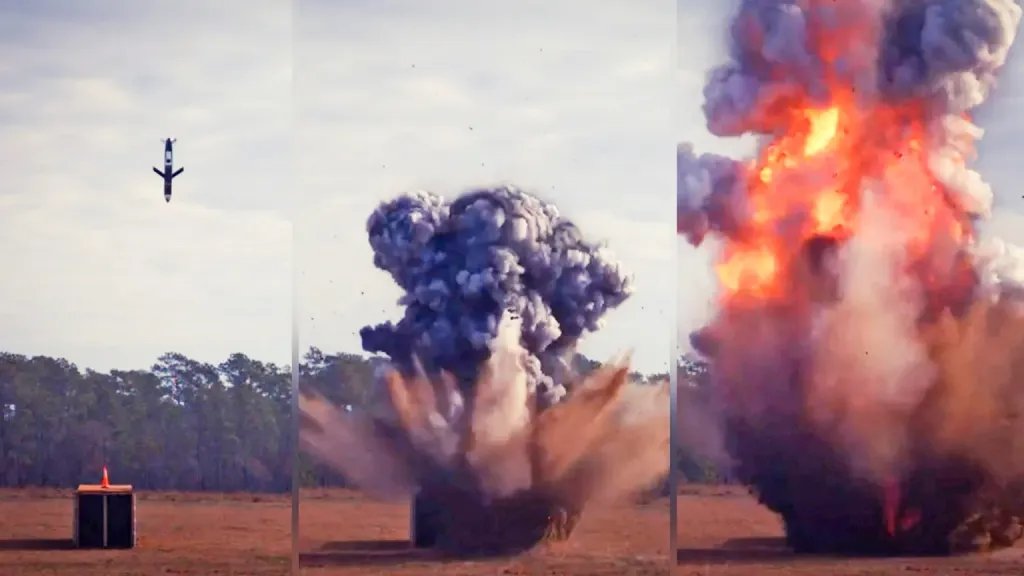
Regardless, the Block 40 version is an important further evolution of the Rusty Dagger design. The initial air-launched version of the missile, now designated the AGM-188A, has already been in development for several years, in part now under the U.S. Air Force’s Extended Range Attack Munition (ERAM) program. This has included live-fire tests conducted at Eglin Air Force Base in Florida in January 2025. We now know that Rusty Dagger has been cleared for use on four different types of fighters, including the F-16. Development of CoAspire’s Rapidly Adaptable Affordable Cruise Missile (RAACM) was also conducted as part of the ERAM effort.

Three views of a Rusty Dagger live-fire test on January 22, 2025, at Eglin Air Force Base, Florida. The service did not identify the weapon by name at the time. via U.S. Air Force

Like the Navy’s CHAOS effort, ERAM has been focused primarily on supporting allies and partners, starting first with Ukraine. A Zone 5 spokesperson told TWZ that, as things stand, Rusty Dagger remains the only publicly reported operational missile in its class fielded by the Ukrainian military.

It appears that the AGM-188A “Rusty Dagger” cruise missile has undergone field testing in Ukraine.

Russian sources are publishing photos of an unknown 8-element CRPA antenna. On the back side of the unit there is a circuit board with a large heatsink, which carries the CAGE code… pic.twitter.com/phZeOJfHJ0

— 𝔗𝔥𝔢 𝕯𝔢𝔞𝔡 𝕯𝔦𝔰𝔱𝔯𝔦𝔠𝔱🎻🇬🇪🇺🇦🇺🇲🇬🇷 (@TheDeadDistrict) June 7, 2026

ERAM has also been feeding into the Air Force’s own Family of Affordable Mass Missiles (FAMM) plans. The service wants to acquire 28,000 FAMM munitions in pylon-launched and palletized configurations over the next five years.

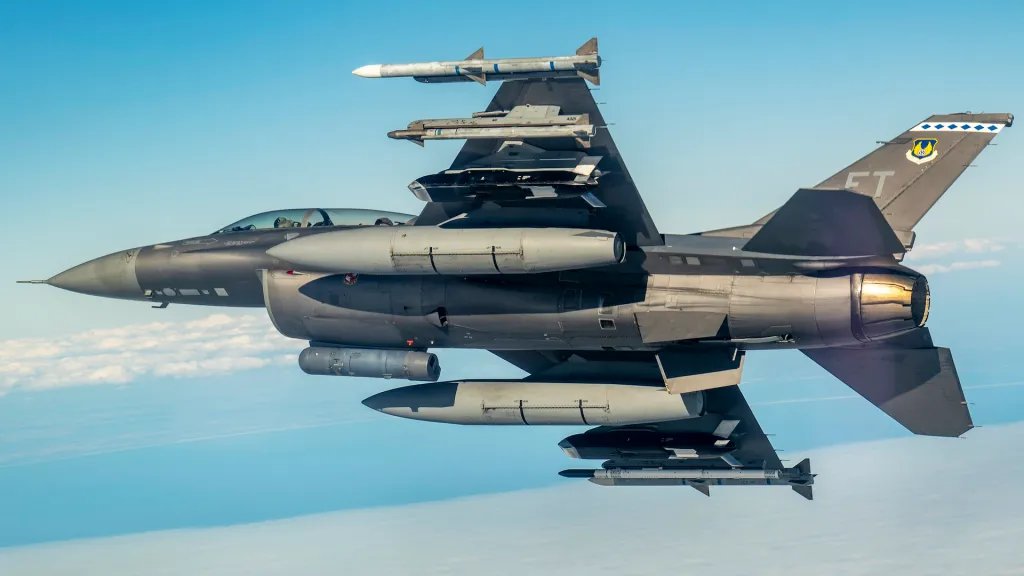
A U.S. Air Force F-16 carrying a pair of Rusty Dagger missiles, as well as other stores, under its wings. U.S. Air Force photo by Staff Sgt. Blake Wiles

As we reported earlier this year, Rusty Dagger is now part of a broader portfolio under Norwegian defense company Kongsberg, which acquired a 90 percent stake in Zone 5. Kongsberg has positioned the missile alongside its stealthy Joint Strike Missile (JSM), with the two weapons serving different, complementary roles.

KONGSBERG announced today that it has closed the acquisition of US missile company Zone 5 Technologies LLC, following approval by US regulatory authorities.

🔗 https://t.co/meRxfmYHH6 pic.twitter.com/EXVbYhDers

— KONGSBERG (@kongsbergasa) June 10, 2026

Rusty Dagger is designed around affordability and volume, while JSM offers a sophisticated, low-observable strike capability. The concept gives customers a mix of weapons suited to different targets and mission requirements, rather than relying exclusively on expensive, high-end missiles.

Zone 5 says it is now expanding manufacturing in the United States. Production is established in San Luis Obispo, California, with production beginning in the Dallas-Fort Worth area of Texas. A franchised facility is also being developed in Miamisburg, Ohio, with Hawthorn Aero, a company that describes itself as specializing “in high-rate airframe manufacturing, offering scalable solutions from design to full vehicle integration for aerospace industries.”

The company says each site is designed to reach a capacity of more than 2,500 missiles annually by the end of 2027. If all three reach that level, combined annual capacity would exceed 7,500 missiles.

The expansion reflects the growing emphasis on affordable weapons that can be manufactured in large quantities and replenished quickly, something that is considered especially critical if the United States is to face China in a future high-end conflict in the Indo-Pacific region.

The ground-launched Rusty Dagger shown in the photos underscores how far the missile family is moving beyond its original air-launched role. With production expanding and multiple U.S. military programs in the picture, the surface-launched variant adds another potential route to getting the weapon into service.

Contact the author: thomas@thewarzone.com

The post Ground-Launched Rusty Dagger Low-Cost Cruise Missile Seen For The First Time appeared first on TWZ.

  •  
❌