❌

Reading view

AI is driving a data-center power boom. These are some of the biggest US projects being built.

data centers
The Meta El Paso Data Center on Aug. 13, 2026, in El Paso, Texas.

Brandon Bell/Getty Images

  • Data centers and artificial intelligence have become a part of everyday conversation for Americans.
  • Data center energy consumption has entered those conversations, too.
  • The largest planned AI campuses could require more than 10 gigawatts of electricity.

Some Americans have new next-door neighbors: data centers.

The US has been building these computing facilities for decades, but development has ramped up dramatically in recent years as AI increasingly drives demand for computing power.

Business Insider compiled a list of some of these enormous US data-center projects to illustrate the scale of what's being built. Those on the list have at least 1 gigawatt of capacity and have broken ground.

Among the largest is a city-sized campus in Texas pursuing up to 17 gigawatts of power capacity. Another in Ohio is aiming to have up to 10 gigawatts of data-center capacity, most of which OpenAI has contracted to use. For reference, 1 gigawatt of electricity continuously supplied for a year could power roughly 835,000 average American homes.

In total, the Pew Research Center says the US has more than 3,000 operating data centers nationwide and over 1,500 more under development, mostly in rural areas. According to data from the Energy Institute's 2026 Statistical Review of World Energy, US data centers accounted for nearly 40% of global data-center electricity use in 2025, consuming about 313 terawatt-hours. That's more electricity than all of Australia used that year.

Planned capacity is the closest public proxy for how much computing these AI campuses can support, and that's important because the electricity and water needed to run their servers and cooling systems can have major implications for local grids and sustainability.

Residents affected by developments in places like Texas and Utah have pushed back over concerns about noise, property values, and the effects on nearby communities. New York has temporarily paused the construction of new large-scale AI data centers.

Still, the 2025 US Data Center Energy Usage Report from Berkeley Lab projects that data centers will consume 11.8% of US electricity by 2030, up from about 4.4% in 2023. Oracle, SB Energy, SpaceX, Google, and Meta are among the leading developers and operators.

Elon Musk's SpaceX is so eager to build its supercomputers that it's offering employees a pay bump to temporarily move to the data-center sites to help with the buildout.

Here's a closer look at some of the largest AI data-center campuses being built.

Meta Lebanon Campus — Indiana
The Meta logo.

Thibault Camus/AP

Mark Zuckerberg's Meta currently has 21 data centers under construction. Its Lebanon, Indiana, data center is one of its biggest investments — and the company's second in the state.

The $10 billion center, which broke ground in early 2026, is planned to deliver 1 gigawatt of capacity and span 1,500 acres.

It's expected to be completed by early 2028. Neighbors have complained about light pollution from the construction, while residents across Indiana have urged state lawmakers to regulate the growing data-center industry.

Meta El Paso Data Center — Texas
An aerial view of a data center.
EL PASO, TEXAS - AUGUST 13: In an aerial view, the Meta El Paso Data Center is seen on August 13, 2026 in El Paso, Texas. Meta Platforms continues construction on its more than $10 billion Meta El Paso Data Center in Northeast El Paso, Texas. Occupying approximately 1,000 acres, Meta has expanded the project to 1 gigawatt of

Brandon Bell/Getty Images

Meta's data center in El Paso, Texas, is planned to be powered by 1 gigawatt of capacity and span roughly 1,000 acres. It originally called for $1.5 billion in investment, which later increased to $10 billion.

The center will support more than 300 workers once complete, while around 4,000 construction workers are expected to build it out.

The site broke ground in October 2025 and is expected to be finished in 2028. The site has also sparked backlash from residents.

Project Freebird (Stargate) — Texas
Sam Altman speaks
OpenAI CEO Sam Altman

Bloomberg/Getty Images

Project Freebird is part of Stargate, the AI-infrastructure initiative co-led by OpenAI and SoftBank, which OpenAI said in January 2025 would invest up to $500 billion in US infrastructure.

Freebird will be a 1.2-gigawatt data center campus in Milam County, Texas, near Austin. The first phase was expected to be completed by October, while additional phases are planned through 2028. Construction began in 2025.

However, the company has not issued any update on the data center's completion as of late October.

The site, being developed by SB Energy, a SoftBank-backed infrastructure company, will span roughly 595 acres. Phase 1 has an estimated construction cost of $470 million, while total investment in the broader project is expected to range from $1.8 billion to $3 billion.

The first phase had a scheduled construction-completion date of October 15, while SB Energy says operations are expected to begin in 2027.

Fort Wayne Data Center — Indiana
Google CEO Sundar Pichai delivers a speech during the AI Impact Summit in New Delhi on February 19, 2026
Google CEO Sundar Pichai delivers a speech during the AI Impact Summit in New Delhi in February 2026.

Ludovic MARIN / AFP via Getty Images

In 2024, Google broke ground on a $2 billion data center campus in Fort Wayne, Indiana, to support its AI and cloud operations.

The campus is expected to require up to 1.2 gigawatts of power at full build-out. Some Indiana politicians have expressed concern about the amount of power required to run the data center and who will foot the energy bill.

"If companies want to build a data center here, and we have to build new power generation for them, then they need to share in that risk," Indiana Rep. Ed Soliday, a Republican, previously told Business Insider. "There are a couple of data center folks who have said, 'Oh no, that's not fair.' Yes, it is. Grandma down the street shouldn't have to pay for your dreams."

Stargate Abilene — Texas
An aerial view of a data center campus.
The Stargate AI data center in Abilene, Texas.

Bloomberg/Getty Images

The Stargate AI data center campus outside Abilene, Texas, is expected to deliver 1.2 gigawatts of capacity. Crusoe, the lead developer and builder behind the project, broke ground on the campus in June 2024. The first phase is already operational.

The second phase, which is under construction, is backed by a $15 billion joint venture between Crusoe, Blue Owl Capital, and Primary Digital Infrastructure. It will add six buildings to the campus, bringing the total to eight and the planned capacity to 1.2 gigawatts. The site will span 875 acres.

Nebius AI Factory — Missouri
A man in a shirt speaks.
Danila Shtan, chief technology officer at Nebius. The company is an AI cloud infrastructure provider headquartered in Amsterdam.

Bloomberg/Getty Images

Nebius' data center in Independence, Missouri, will span roughly 400 acres and reach a capacity of up to 1.2 gigawatts. The company broke ground in May and is expected to bring roughly 1,200 construction jobs and 130 permanent jobs.

Nebius has not announced a total investment amount, though the city expects to begin collecting tax revenue from the campus in 2028.

The site hasn't come without controversy. A group of citizens is suing the city of Independence and companies involved with the project, alleging 16 counts, including claims that the city violated Missouri's Sunshine Law several times by failing to provide finalized data center construction plans. Nebius did not offer a comment.

CloudBurst San Marcos Data Center I — Texas
CloudBurst Data Centers and Evolve broke ground.
CloudBurst Data Centers and Evolve Holdings broke ground on the site in late 2025.

Evolve Holdings

CloudBurst's San Marcos Data Center I is a planned 1.2-gigawatt capacity campus on 706 acres in central Texas. Guadalupe County approved a $500 million tax abatement for the project.

The company and its development partner, Evolve, broke ground in November 2025, with an initial 50-megawatt phase expected to be complete by late 2026. Construction is expected to be complete in 2029.

San Marcos residents have protested proposed data centers over water and energy concerns. The city has since become the first in Texas to ban new data centers, though the ban won't stop CloudBurst's project, which is outside city limits.

The Barn Data Center — Michigan
a massive building under construction, surrounded by dirt

Jim West/UCG/Universal Images Group via Getty Images

The Barn, part of the Stargate project, is a multi-billion-dollar AI data center campus in Saline Township, southwest of Ann Arbor, Michigan. Related Digital, a data-center developer, is building the campus for Oracle as part of its partnership with OpenAI. Construction for The Barn began in June.

The campus will comprise three data center buildings with a combined capacity of 1.4 gigawatts. The $16 billion project is backed by Related Digital and investment firm Blackstone. The first facilities are expected to enter service by the end of 2027.

Local residents have protested against the data center, citing concerns about its impact on the grid and pollution.

In October, state regulators opened public comment on a wastewater permit for the campus’s proposed on-site water-treatment system.

Stargate Frontier Campus — Texas
OpenAI's Sarah Friar and Sam Altman stand at a construction site.
OpenAI CFO Sarah Friar (left) and CEO Sam Altman (right) during a media tour of the Stargate AI data center in Abilene, Texas, in 2025.

Bloomberg/Getty Images

The Stargate Frontier Campus, developed by Vantage Data Centers, will be a 1.4 gigawatt, 1,200-acre data center in Shackelford County, Texas, near Albany in north-central Texas.

The campus is part of the broader Stargate initiative led by OpenAI, Oracle, and other partners, and is being designed for ultra-high-density AI workloads. Vantage plans to invest more than $25 billion in the project, which is expected to be fully built out by 2028.

Construction of the center began in late 2025.

xAI Colossus 2 — Tennessee
A swampy lake in the foreground, with construction in the background.
Work continues on a data center being built by SpaceXAI on August 2, 2026 in Southaven, Mississippi. Hastily built to meet the skyrocketing demand for computing power required by the global artificial intelligence race, these data centers are meeting stiff opposition across the United States. In Southaven, 69 turbines are constantly in motion to

Brandon Dill / AFP via Getty Images

Elon Musk's xAI is building Colossus 2 to power Grok, the AI chatbot on X. Construction began in 2025 in Memphis, Tennessee, and the company has said it plans to expand the site to 1.5 gigawatts. The nonprofit research institute Epoch AI estimates its current capacity at about 946 megawatts.

Environmental justice groups, led by the NAACP, sued xAI earlier this year, alleging that the company installed and operated gas turbines that power Colossus 2 in nearby Southaven, Mississippi, without the required air permits. In March, Mississippi regulators approved a permit for xAI to build and operate a new fleet of turbines at the site.

Local residents have filed a class-action lawsuit against xAI, MZX Tech, and SpaceX, alleging that noise and vibrations from the gas turbines have disrupted their lives and harmed their property values.

Still, in late October, Business Insider reported that SpaceX was offering employees a 20% pay bump to temporarily relocate to Memphis or Southaven, Mississippi, for six weeks to help build out Colossus 1 and 2.

Project Jupiter — New Mexico
An aerial view of a data center under construction.
Project Jupiter is located in Santa Teresa, New Mexico

Omar Ornelas/El Paso Times/Reuters

Developed by infrastructure companies STACK Infrastructure and BorderPlex Digital Assets, Project Jupiter will be an AI data center campus in Doña Ana County, New Mexico, near the Texas border. It is part of the Stargate initiative and is expected to support Oracle's AI-computing operations for OpenAI.

Construction for Project Jupiter began in September 2025. The campus's planned on-site power system could include up to 2.45 gigawatts of Bloom Energy fuel cells, replacing an earlier proposal centered on gas turbines and diesel generators.

In May, Oracle ditched its plan to construct a natural gas plant to power Project Jupiter, following local residents' concerns over the potential negative water usage and air pollution effects it could cause.

Oracle issued a force majeure notice in September due to potential delays in the project's power infrastructure, though it says the campus remains on track for 2028.

Meta Hyperion — Louisiana
Aerial view of Richland Parish Data Center
Aerial view of Richland Parish Data Center.

Meta

Meta's Hyperion AI data center in rural northeast Louisiana, backed by more than $50 billion in investment, will span more than 3,600 acres and is planned to deliver 5 gigawatts of capacity once fully developed. Hyperion broke ground in December 2024.

Meta says Hyperion is designed to train and run its artificial-intelligence systems. Earlier this year, Louisiana gave Meta $3.3 billion in tax breaks for Meta to build Hyperion. The project is expected to be completed in the 2030s.

Since the center is located in a rural part of the state, the influx of 7,500 trade and construction workers has spurred a housing boom, with mobile homes built for workers that rent for $3,000 a month.

Still, the project has also faced pushback from local residents and environmental groups concerned about its impact on water, energy use, and the surrounding community.

Louisiana regulators held hearings in October on the proposed power build-out for the campus. The state's Public Service Commission will issue a decision in December.

PORTS-Pike Technology Campus — Ohio
PORTS Technology Campus
Breaking ground at the Portsmouth Site on March 20

US Department of Energy

The Department of Energy said SB Energy broke ground in March in Ohio on the planned AI and cloud campus at the former Portsmouth Gaseous Diffusion Plant, known as PORTS. The campus will span private land and remediated federal land leased from the DOE.

The Nvidia-backed project is expected to include up to 10 gigawatts of data-center capacity, with OpenAI set to use up to 8 gigawatts of it for its workloads.

While the DOE says the historical PORTS site is in active remediation, the project has raised concerns about potential health and environmental risks associated with the site's history as a uranium enrichment plant. SB Energy told the Guardian in August that it is "committed to paying for accelerated cleanup and remediation at the site" and that the company "performs thorough site reviews and due diligence for each of our infrastructure projects, including soil sampling."

SB Energy said in October that it would begin initial clearing and grading work for the campus’s first phase.

Project Matador — Texas
Construction work at Project Matador's 17GW Private Power Campus

Fermi America via PR Newswire

Fermi America's Project Matador, also called HyperGrid, is an AI data center and private power campus being built near Amarillo, Texas.

Fermi, which was co-founded in 2025 by former Texas Gov. and US Energy Secretary Rick Perry, said it is pursuing roughly 17 gigawatts of private power for the campus, up from the initially planned 11 gigawatts. That means the campus would generate much of its own electricity on-site rather than relying entirely on the public grid. The company says 6 gigawatts have been permitted so far.

Fermi has a 99-year land lease with the Texas Tech University System for the core site, and the project could span roughly 8,400 acres at full build-out. Fermi says construction is underway, with completion planned for the 2030s, and AI cloud company TensorWave has signed a 15-year lease expected to generate about $6.5 billion in contracted revenue for the first phase. Fermi is also developing a cooling system designed to substantially reduce water use.

The company was hit with a class action lawsuit earlier this year. The investor lawsuit alleges Fermi misled investors about the status and prospects of Project Matador; its shares fell after Amazon withdrew a $150 million construction advance in December 2025.

Fermi America said three gas turbines arrived at the site in October.

SpaceX, Meta, Google, Oracle, Fermi America, CloudBurst, and xAI did not immediately respond to a request for comment from Business Insider. SB Energy did not offer a comment.
Read the original article on Business Insider

  •  

Northern Territory passes 'safe air' law after Inpex, Santos scandals

Australia's Northern Territory parliament has passed a 'safe air' bill creating a scheme to monitor and publicly report toxic air pollutants around Darwin Harbour. The law follows separate pollution scandals involving energy companies Inpex and Santos, both of which operate major gas facilities in the harbour precinct.

  •  

Oil Climbs Above $114 as Middle East Attacks Renew Europe’s Energy Fears

Oil prices rose above $114 a barrel on Friday as attacks in Saudi Arabia and the prospect of further Middle Eastern escalation increased concern about the security of global energy supplies.

Brent crude futures reached $114.72 during the session, their highest level since early May, before easing slightly. The benchmark was trading around $114.31, while US West Texas Intermediate futures rose above $101.

The immediate pressure followed Houthi attacks in Saudi Arabia and intensifying concerns about shipping through the Bab el-Mandeb strait, the narrow passage connecting the Red Sea with the Gulf of Aden. Saudi Aramco reportedly ordered the evacuation of its headquarters in Dhahran.

For Europe, the rise introduces an additional cost pressure when natural gas prices are also climbing sharply and policymakers are trying to contain inflation without further weakening industrial growth.

The developments are detailed in the latest reporting and official material, against the background of EU Today’s earlier coverage.

A fragile energy market

The significance of the attacks is not confined to facilities directly affected. Traders price the probability of interruption across production, ports, tankers and shipping routes. Even a limited episode can raise insurance premiums and freight charges while companies adjust deliveries.

Bab el-Mandeb is an important shipping bottleneck for commercial traffic using the Suez Canal. Sustained insecurity can force vessels onto longer routes around Africa, delaying cargoes and increasing transport costs.

Other disruptions have compounded uncertainty, including concerns about a Libyan pipeline and an oil spill near the United Arab Emirates. The scale and duration of their impact remain uncertain.

What higher prices mean for Europe

European manufacturers, haulage companies, airlines and agricultural producers are sensitive to increases in fuel and transport costs. Those pressures can eventually reach consumer prices, although the timing and size depend on contracts, taxes and domestic competition.

The European Union has sought to reduce its reliance on Russian fossil fuels since Moscow’s full-scale invasion of Ukraine. That diversification does not insulate the bloc from global prices, which reflect worldwide trading conditions.

European natural gas prices have also moved higher in October, adding to the burden faced by energy-intensive industries. Gas and oil are different markets, but geopolitical tensions can affect both.

Central banks and governments

Persistent energy-price increases complicate the inflation outlook for the European Central Bank. Higher imported energy costs can reduce household purchasing power and slow investment, even before interest-rate decisions respond.

A temporary spike may reverse if shipping lanes remain open and supplies are restored. A sustained interruption would produce a different economic calculation, particularly ahead of winter.

The immediate priority for European governments is to assess exposure through import contracts, reserve levels and supply routes rather than assume that a quoted oil price translates directly into the same percentage increase in household bills.

  •  

We represent Wyoming — California is waging war on our coal, we're going to keep mining

California Governor Gavin Newsom will spend more than $230 billion on a train that may never run, yet he won’t let a single trainload of Wyoming coal reach a port taxpayers already funded.

Last month, the California governor signed a bill to kill a coal export terminal in Oakland before it even opens. The project would be the West Coast’s first terminal, a direct link between Wyoming miners and buyers across the globe who want affordable, reliable power. President Trump backed it this summer with $75 million through the Defense Production Act. Far-left politicians in Sacramento responded to this historical investment with a new layer of environmental review written to stall the project until its investors give up.

California Democrats introduced the bill immediately after the president’s announcement. The bill’s author sold it as a way to block coal and defy the president. At least she was honest about her intentions.

GAVIN NEWSOM'S 'HIDDEN CLIMATE TAX' HITTING AMERICANS NATIONWIDE, LAWMAKER WARNS

The Oakland terminal spent years navigating the gauntlet of California’s burdensome regulatory and legal regime. The project passed environmental review, among the most punishing in the country. Hundreds of millions of dollars were invested in the site, including more than $240 million from California taxpayers. After years of litigation, all won by the developers, the City of Oakland conceded and began advancing development of the terminal.

California politicians didn’t like the result — so they changed the rules.

AMERICAN BUSINESSES AREN’T ALLOWED TO BUILD. IT’S TIME CONGRESS HELPED THEM

That should alarm anyone who builds anything in California, whatever they think of coal. America and the world need affordable, available, reliable energy. If lawmakers can void a permit retroactively because they dislike the product or the president who supports it, no approval in the state is safe. Today it is Wyoming coal. Tomorrow it could be an oil refinery, a manufacturing facility or a housing development that runs afoul of Sacramento’s political priorities.

The governor further revealed his extreme priorities that same day when he vetoed another bill to speed up the hiring of auditors for California’s high-speed rail project. California spent $15 billion over 18 years. It has failed to lay a single mile of track.

California promised voters a passenger line connecting Los Angeles to San Francisco by 2020 for a cost of $33 billion. It is now estimated to cost between $126 to $231 billion with completion not expected until 2040.

When Transportation Secretary Sean Duffy revoked $4 billion in federal grants to California’s bullet train boondoggle last year, Newsom sued and lost. He still defends the wasteful spending. Meanwhile, California Democrats continue to sacrifice economic growth, jobs and taxpayer dollars at the altar of climate extremism.

CEO SAYS DOING BUSINESS IN STATE ‘SUCKS’ AS COMPANY HEADS TO TEXAS AMID CALIFORNIA EXODUS

Wyoming offers the opposite model. We sit atop more than 600 years of coal reserves. Demand for electricity across Asia is climbing fast. Those nations will burn coal whether California approves of it or not. The only question is whose coal. American coal offers the United States an abundance of affordable, reliable power here at home and enhanced diplomatic leverage abroad.

Wyoming will not sit quietly while California politicians attempt to shut our energy producers out of global markets. Wyoming has made clear that we will use every tool at our disposal, including legal action, to defend our state and its industries. Wyoming coal supports families and communities across our state, strengthens America’s energy security and can help meet enormous global demand for reliable energy.

This fight is bigger than coal. California has already driven out its builders and manufacturers. Now it wants to export its dysfunction to every state that relies on its port.

CLICK HERE TO DOWNLOAD THE FOX NEWS APP

Wyoming will keep mining. California can keep its train.

U.S. Sen. Cynthia Lummis is a Republican from Wyoming who sits on the Senate Banking, Commerce, and Environment and Public Works committees. 

Harriet Hageman, a Republican, is the lone member of the U.S. House of Representatives from Wyoming. 

  •  

European Parliament Backs Three-Year Delay to Methane Rules After Pressure from Energy Suppliers

The European Parliament voted on Thursday, 22nd October, to support a three-year postponement of certain methane emissions obligations for oil, gas and coal imports, substantially extending the timetable proposed by the European Commission.

The decision follows pressure from European governments, energy companies and the United States, which have warned that implementing the regulations under the existing timetable could complicate fossil fuel supplies to the European market.

MEPs approved the amendments by 341 votes to 225, with six abstentions. The revised deadlines must now be negotiated with EU governments before they can become legally binding.

The parliamentary position also extends some postponements to European oil and gas producers, going beyond the Commission’s original proposal.

EU moves away from original timetable

The EU Methane Regulation, adopted in 2024, established requirements intended to reduce methane emissions associated with fossil fuel production, transportation and imports.

Methane is a greenhouse gas with a considerably greater warming effect than carbon dioxide over shorter periods. Emissions occur throughout the oil and gas supply chain, particularly through leaks, venting and incomplete combustion.

Under the existing legislation, new monitoring, reporting and verification requirements for imported fossil fuels were scheduled to begin on 1 January 2027.

However, the Commission proposed amendments on 14 October 2026 to give companies additional time to comply.

The European Parliament has now supported a longer postponement than the Commission requested.

Under the parliamentary amendments, importers of crude oil, natural gas and coal would have until 31 May 2031 to demonstrate equivalent monitoring, reporting and verification arrangements for relevant supplies delivered in 2030.

The requirements would cover supply contracts concluded or renewed since 4 August 2024. Older contracts would remain subject to separate reporting requirements concerning efforts to obtain compliance.

Pressure from the United States and EU governments

Energy security concerns have been central to the debate. The United States has become Europe’s largest supplier of liquefied natural gas, particularly following the reduction of Russian pipeline gas deliveries after Moscow’s full-scale invasion of Ukraine.

American officials have argued that certain provisions of the methane legislation could create substantial compliance difficulties for exporters and potentially disrupt gas deliveries.

France, Italy and the Czech Republic have also supported adjustments to the timetable, reflecting concerns about energy costs, administrative burdens and the availability of alternative supplies.

European industrial consumers remain sensitive to fluctuations in natural gas prices, while the continuing conflict in the Middle East has increased uncertainty in international energy markets.

For importers, the principal concern is obtaining reliable information about emissions generated by suppliers operating outside EU jurisdiction.

European companies must demonstrate compliance using data collected throughout production and transportation networks that they do not necessarily control.

Additional changes for European producers

Parliament’s position includes extensions for certain reporting obligations affecting oil and gas operators within the European Union.

Verified reports combining measurements of methane emissions at individual sources and production sites would be subject to revised deadlines.

For assets operated directly by reporting companies, the proposed deadline would move to February 2030. Certain non-operated assets would be covered by a later deadline in August 2031.

The amendments would also permit continuous monitoring systems to replace separate measurement campaigns where the equipment meets the required technical standards.

Independent verification would remain necessary. Romanian MEP Virgil Popescu, a former energy minister, supported the longer timetable, arguing that companies require additional time to make investments in monitoring infrastructure.

Environmental organisations have opposed further postponements, arguing that delays could prolong avoidable emissions and weaken the regulatory framework established in 2024.

Sanctions and energy security provisions

Parliament also supported an exception preventing fossil fuel supplies covered by relevant EU import sanctions from benefiting from the extended deadlines.

Importers would be required to identify the affected volumes, including where restricted-origin fuels form part of mixed shipments.

The exemption would not authorise trade already prohibited by EU sanctions.

A further amendment would require the European Commission to review implementation readiness by July 2029, including the availability of accredited verifiers and potential risks to energy supplies.

The Commission would then be able to propose additional legislative changes if substantial implementation problems remained.

Negotiations with member states

Thursday’s vote does not repeal the methane legislation or automatically postpone its requirements.

The adopted amendments represent the European Parliament’s negotiating position. The Council of the European Union must agree to any changes before the revised legislation can enter into force.

The outcome forms part of a broader debate over European industrial competitiveness and the economic consequences of environmental regulation.

As EU Today recently reported, Brussels is already adjusting parts of its climate-policy framework in response to pressure from energy-intensive industries.

Negotiations over methane reporting will now determine how far those adjustments extend into Europe’s international energy supply chains and whether the EU can preserve the regulation’s emissions objectives under a longer implementation timetable.

  •  

Some of Europe’s highest energy costs expected in Britain this winter

Official forecasts show country will meet energy demand by paying high prices to secure imports

Great Britain is expected to pay some of the highest energy costs in Europe this winter as its reliance on imports to ensure a steady supply is forecast to deepen.

Energy system operators have said the country will have enough gas and electricity to meet demand over the coldest months – in part because of paying higher market prices than neighbouring markets to secure imports.

Continue reading...

© Photograph: Shomos Uddin/Getty Images

© Photograph: Shomos Uddin/Getty Images

© Photograph: Shomos Uddin/Getty Images

  •  

US reinvents rare earth refining as China guards know-how

With Beijing keeping its rare earth refining technology, equipment and technicians at home, Washington is funding private refiners to develop new ways to process the strategic metals rather than copying Chinese methods. A senior US official told Asia Times that American refiners would rely on their own innovation to make the country self-sufficient in critical […]

The post US reinvents rare earth refining as China guards know-how appeared first on Asia Times.

  •  

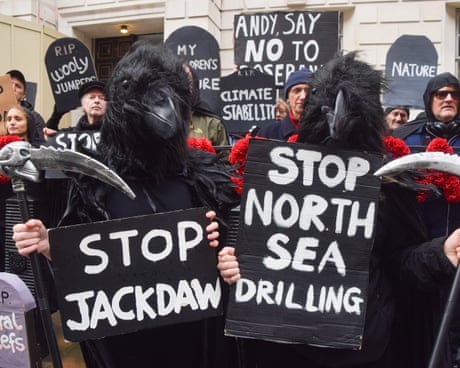
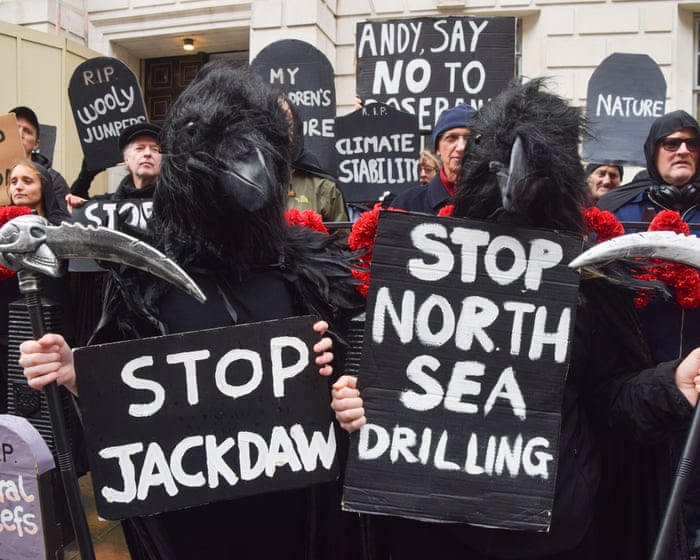
Andy Burnham vows UK will hit net zero target despite Jackdaw gasfield approval

PM pledges commitment to address climate crisis, saying in Guardian article that his ‘determination is unwavering’

Andy Burnham has said he will not “abandon the responsibility” of fighting the climate crisis after the government approved the Jackdaw gasfield, pledging to block new North Sea licences and keep Britain on track for net zero by 2050.

The comments are the prime minister’s most forthright yet on net zero, after many MPs have privately cast doubt on the authenticity of his commitment to tackling the climate crisis.

Continue reading...

© Photograph: Vuk Valcic/ZUMA Press Wire/Shutterstock

© Photograph: Vuk Valcic/ZUMA Press Wire/Shutterstock

© Photograph: Vuk Valcic/ZUMA Press Wire/Shutterstock

  •  
❌