❌

Reading view

Ceasefire planned for occupied Oleshky as residents face starvation and blocked escape routes, White House announces

Oleshky, Kherson Oblast, has been under Russian occupation since 2022, following Russia’s capture of the city during the initial phase of its full-scale invasion of Ukraine.

US First Lady Melania Trump has secured an agreement for a localized ceasefire between Russia and Ukraine in the Russian-occupied city of Oleshky, Kherson Oblast, to allow humanitarian aid deliveries and civilian evacuations to begin on 29 October, the White House announced on 23 October.

The proposed truce comes after months of worsening conditions in Oleshky, where Russian restrictions have left residents without reliable access to food, drinking water, medicine, and medical care. Ukrainian officials and international monitors have called for a humanitarian corridor as civilians face hunger, landmines, and regular attacks, with residents unable to leave safely.

Ceasefire aims to open evacuation route

According to the White House, Trump and her representative worked directly with Russian and Ukrainian leadership to agree on the ceasefire's terms, timing, and procedures. Civilian representatives from both countries are expected to visit residents to assess their needs, while those wishing to leave will receive transportation to their preferred destination.

The White House said an American media organization would accompany the teams to document the process and help ensure families' wishes are respected.

Trump said she initiated discussions after learning about the crisis during a private conversation at an event in New York during the 81st United Nations General Assembly. She said the agreement also involves technical preparations, including demining.

local-resident-walks-to-a-box-still-attached-to-a-drone.jpg
Explore further

Russian troops seize drone-dropped food in occupied Oleshky, accusing recipients of cooperating with Ukraine. Some people go missing, a local official says

Oleshky residents face hunger and isolation

Oleshky, on the Russian-occupied left bank of the Dnipro River, had around 24,000 residents before Russia's full-scale invasion. Recent estimates put the remaining population at roughly 1,700 to 2,000, including about 50 children.

Residents face severe food and medicine shortages, while Russian forces have restricted movement and attacked vehicles attempting to deliver humanitarian supplies. Ukrainian officials have also said Russian troops have seized food parcels delivered by Ukrainian drones and detained or beaten some residents who received them.

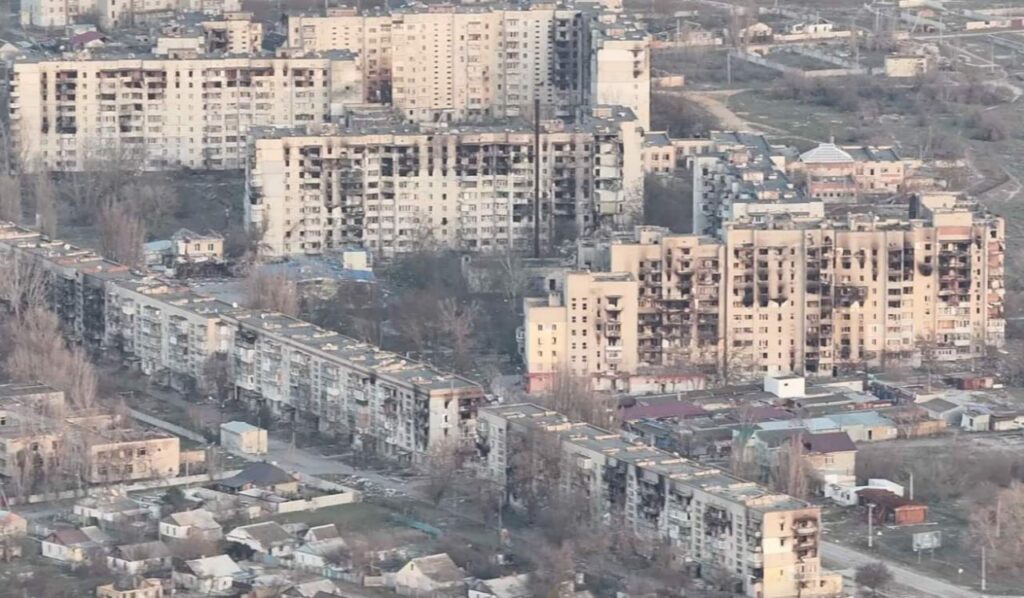
Aerial view of Russian-occupied Oleshky, in Ukraine's Kherson Oblast. Photo via ArmyInform
Explore further

Russian troops enter homes and threaten starving Oleshky residents for food and alcohol, officials say

The crisis has drawn growing international attention. Pope Leo XIV appealed to Russian leader Vladimir Putin for a truce to allow aid deliveries and safe civilian evacuations, while Ukraine's human rights ombudsman, Dmytro Lubinets, said on 18 October that negotiations over a ceasefire and evacuation had advanced to the stage of agreeing on final details.

The White House announcement sets 29 October as the start date for the localized ceasefire. Its implementation will determine whether aid can reach residents and civilians can leave safely after months of isolation.

  •  

Phones down, water off, a factory roof broken open: Russian-occupied Luhansk counts the damage after another night of drones

phones down water off factory roof broken open russian-occupied luhansk counts damage after another night drones · post fire occupied during drone attack 23 2026 ukraine news ukrainian reports

Drone strikes disrupted communications and power in part of Russian-occupied Luhansk overnight on 23 October, Ukrainian monitoring channel Exilenova+ reported. It was the third night in four that drones went after communications in occupied eastern Ukraine. A pro-Russian local channel also showed a damaged factory, and the occupation authorities have stayed silent.

Ukraine's drones have spent months hitting what keeps Russia's occupation running, from fuel depots to supply lines and now communications.

Blasts before dawn, then outages

Explosions hit Luhansk before dawn, and the strikes probably targeted communications facilities, Exilenova+ said. Another Ukrainian monitoring channel, Supernova+, wrote that the city's TV tower came under attack. Exilenova+ posted night footage of the strikes.

The moment of arrival in Luhansk. Following the explosions, we are experiencing disruptions to communications and the electricity supply. pic.twitter.com/rNHXRJcVNt

— Exilenova+ (@Exilenova_plus) October 23, 2026

A drone attack damaged the building of the local telecom company, pro-Russian local channel Ogonyok Luhanska wrote on 23 October. It listed switches and servers among the damaged equipment and said the damage could explain landline outages and possible internet problems. The channel did not say whether the damage came from this attack or the one two nights earlier.

Strikes on local communications facilities in occupied Luhansk. pic.twitter.com/4Jz7aK7tKs

— Exilenova+ (@Exilenova_plus) October 23, 2026

By morning, water stopped flowing in parts of Luhansk and nearby villages, including Metalist and Tsvitni Pisky. A notice posted by local Telegram channel Luhansk Online cited unstable voltage at water facilities. The city's water utility later switched to backup phone numbers after its dispatch lines failed.

Third night in four

Overnight on 20 October, drones struck Ugletelecom, the occupation's telecom operator in Donetsk. A night later, they hit the seized Ukrtelecom building in Luhansk, which houses the occupation's mobile operator Lugacom. That strike disrupted the internet so badly that service centers across occupied Luhansk Oblast stopped accepting documents.

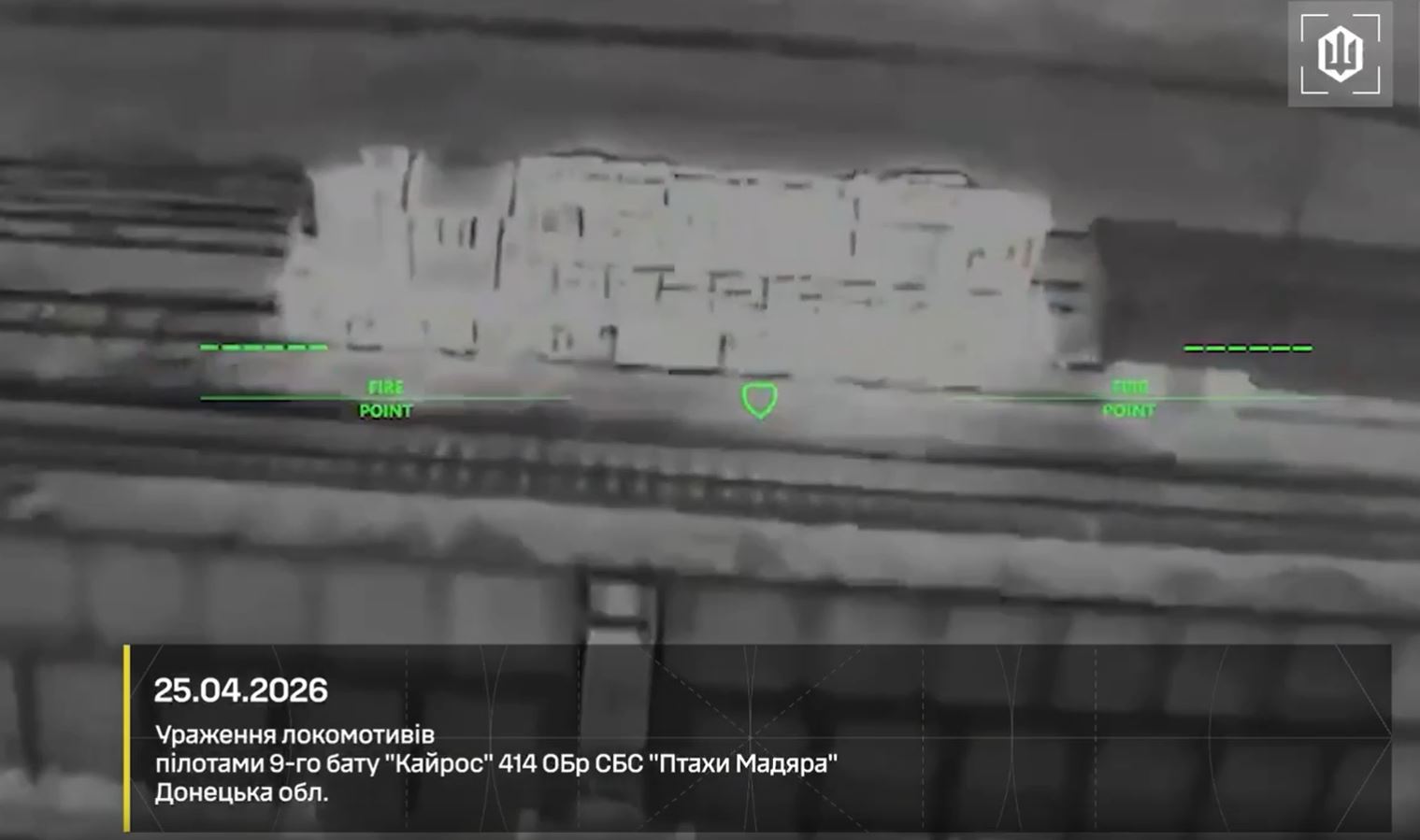
ukraine drone forces scale up operational depth locomotives comms towers depots hit occupied regions three days · post russian locomotive crosshairs ukrainian fp-2 donetsk oblast 25 2026 video robert madyar
Explore further

Ukraine drone forces expand kill zone into occupied regions, commander says: Russia’s trains, comms towers, and depots struck

Silence from the occupation

The occupation authorities have not commented. Leonid Pasechnik, the Russian-installed head of occupied Luhansk Oblast, posted nothing about the attack. On 21 October, he claimed Kyiv was carrying out "terrorist strikes" on civilians. Russia's Defense Ministry claimed it downed 443 drones overnight over Russian regions, Crimea, and two seas, without mentioning Luhansk. The same night, Russia launched 176 drones at Ukraine, some from occupied Donetsk and from Hvardiiske in occupied Crimea, Krym.Realii reported, citing Ukraine's Air Force.

Ukraine's General Staff has not reported on the attack yet. After the previous strike on Luhansk, it said Ukrainian forces hit command posts of Russian units in the Luhansk area.

A pipeline-valve plant hit, too

Ogonyok Luhanska also posted daylight photos of the Marshal plant after what it called a "night arrival." They show a damaged workshop roof, and the channel wrote it had information that the drone hit inside the plant. The Luhansk Pipeline Valve Plant Marshal, registered in Ukraine in 1994, makes taps and valves at 13 Montazhna Street, according to Ukrainian state registry data published by VB.ua.

The Marshal pipeline-valve plant in occupied Luhansk with a damaged workshop roof, 23 October 2026
The Marshal pipeline-valve plant in occupied Luhansk with a damaged workshop roof, 23 October 2026. Photo: Ogonyok Luhanska/Telegram

Earlier that morning, Luhansk Online reported restricted traffic on Montazhna Street between Brestska and Sukhodilska streets.

Ukraine has hit industrial sites in occupied Luhansk Oblast before. For example, in March, drones struck a plant in Alchevsk that made artillery shell casings.

  •  

Israeli setrike on Iran is imminent | w/ Trita Parsi

Trita Parsi puts the odds of a new round of US-Israeli war on Iran at 90% – and it could start as soon as this weekend. The US and Israeli militaries have plans for renewed strikes after the midterms, the New York Times reports; three aircraft carriers are en route to the region, and Netanyahu, trailing ahead of Tuesday’s elections, says he’s ordered Israel’s military and Mossad to topple Iran’s government. Parsi, executive vice president of the Quincy Institute for Responsible Statecraft, tells Rania Khalek and Zoe Alexandra why Trump’s third round will be far worse than the first two.

Parsi argues that Trump, initially driven by hubris, is now out for revenge against a Tehran he believes is deliberately dragging out the war to destroy his presidency. He explains why time is on Iran’s side; how Washington is spinning the war of attrition in the Strait of Hormuz; why soaring gas prices make the war impossible to tune out; and why even European conservatives say the protests sweeping the continent are fueled by the war’s economic fallout. Parsi warns Netanyahu may see escalation as the Hail Mary pass he needs to lock in his legacy, and says that if Democrats take control of Congress, they’ll have the power to stop this – and will be complicit if they don’t.

Watch full episodes of BT Live, join breakthroughnews.org as a member today!

#breakthroughnews
******
Rough transcript follows:
[Interviewer:]

It’s very difficult to see this war lead to a scenario in which the impact on the global economy is sufficiently insignificant for it not to translate to any political changes. If you look at the polls right now, the top issues motivating people in this election are inflation and gas prices. That’s all due to the Iran war. Nearly eight months ago, the US and Israel launched a very destructive war on Iran, killing the Supreme Leader and disrupting global oil markets. Trump wanted a quick knockout, but instead, he got a war he can’t contain, a stalemate that nobody seems able to break, and a deal to end it that looks further away than ever.

Somehow, this war has become background noise in the US, and the next round may already be on the calendar. The New York Times reports that the US and Israeli militaries have drawn up plans for renewed strikes on Iran after the midterms. This campaign would hit energy infrastructure, nuclear sites, and Iran’s missile and drone arsenal. They came close to doing this earlier this month before Trump pulled the plug at the last minute. Now, three aircraft carriers and thousands of Marines are on the way. Netanyahu, trailing in the polls ahead of next week’s elections in Israel, says he’s ordered the military to prepare for preemptive action and to topple the regime. Iran’s intelligence assessments suggest strikes could come even before Israel votes on Tuesday. The White House says nothing happens before the midterms. Meanwhile, the State Department has ordered non-emergency staff and their families out of Saudi Arabia, and the AFP cites a diplomatic source saying families of embassy staff in the UAE, Jordan, Qatar, and Bahrain have been ordered out as well.

Netanyahu is making big threats a week before elections. Trump says this time the fight will be neither quick nor limited, with no restraints. So what breaks this stalemate? Is escalation the only way out? And who can last longer, Iran or Washington? Joining us now to discuss all of this is Trita Parsi, executive vice president of the Quincy Institute. Trita, welcome back to BT Live.

[Trita Parsi:]

Good to be with you.

[Interviewer:]

You are putting the odds of a new round of war at 90%. That’s quite high. The New York Times says the plans are drawn up and carriers are on their way. Why are you and the New York Times so confident? Some US planners think that three days of intense strikes will manage to break Iran’s economy and force concessions. Is that a serious theory?

[Trita Parsi:]

First of all, it’s kind of insulting to say that the New York Times and I are on the same page on this. I’m just kidding. But look, I’ve been warning about this for more than five weeks now that a third round was extremely likely because of a couple of factors. What we’re seeing now is more the motions necessary to bring about this disastrous third round being put in place. The signs and the logic as to why we were going in this direction were clear to me several weeks ago because Trump, at the end of the day, his psychology does not allow for him to lose. He is willing to sacrifice everything to win.

Earlier on, he thought that the MOU and a diplomatic deal could end the story in a way that made the war look worth it or at least acceptable. But he had a bad experience with the MOU. He got attacked for it by Democrats, Republicans, the pro-Israel crowd, everyone. He realized the political cost was very high. So now he thinks diplomacy won’t end it acceptably. Blockade won’t end it acceptably, even though they’re putting forward this mythology that they’re winning on the blockade. And the limited amount of war he’s had won’t do it. So now the only thing he hasn’t tried is this all-out war that he threatened several times but never did—taking out Iran’s oil infrastructure, energy infrastructure, desalination plants, critical infrastructure. He avoided that, knowing it would lead to massive retaliation by the Iranians against GCC infrastructure, which would throw the global economy into a depression. But now he doesn’t seem to care. The midterms are over, and he’s just looking to do something that brings this to an end on his terms.

There’s another element that makes matters worse now, which is last time he went in with hubris. He thought he could do this in four days. The Israelis had sold him that mythology. He had managed to do Venezuela quickly, so he was very confident. This time, it’s not hubris bringing him back; it’s vindictiveness. He’s very angry about the war’s outcome so far. He believes the Iranians deliberately dragged things out to destroy his presidency, and to a certain extent, they have. Now there’s this new element of revenge. So we may very well go towards a third disastrous round of war, not because of a flawed geopolitical miscalculation, but because of one man’s desire for vengeance.

[Interviewer:]

It’s truly tanking the global economy, putting tens of thousands of lives at risk because of vengeance. Trump has previously vetoed a major return to combat, including at the last minute earlier this month. He’s pulled back from major threats repeatedly. The White House says no strikes before midterms. Iran’s intelligence says it could come before Israel votes on Tuesday. Which clock is correct? If the Republicans lose Congress, can Democrats stop a possible escalation? Will they?

[Trita Parsi:]

Unfortunately, not to the extent that they should be. It’s perhaps a different political calculation before the midterms versus after. But with the MOU, there were Democrats who should have known better, who played a fantastic role in the JCPOA, who now returned a favor to the Republicans by doing bad faith attacks against the MOU. It contributed to the MOU collapsing. It’s not the only reason, but it contributed to Trump’s conception that a deal with Iran is not a win because of the high political price, a conception every previous American president has had. It’s interesting that Trump didn’t have it. It’s part of why he was willing to strike a deal with Iran, willing to strike a deal with North Korea because he was immune to the idea of a political cost for such an agreement. But that’s changed, and the Democrats contributed to it.

After the midterms, it will be critical for Democrats to do everything they can, from using the power of the purse to other means, to put an end to this war. Once they’re in control of the House and particularly if they also control the Senate, they’re no longer bystanders. They’re complicit if this is allowed to continue because they will have the power to stop it.

[Interviewer:]

There’s so much damage incurred from this war, obviously not as much as the Iranian side, but it still stands to be seen just how deep that damage can go. Iranian officials are now talking about expanding targets to data centers and undersea internet cables. Iran analysts floated hitting Saudi refineries like Aramco to spike oil prices. A top adviser to Ghalibaf called the idea of that 72-hour war a fantasy. What does the next round look like from Iran’s side? How much more can they escalate? Why do you think Iran has decided to wait out Trump rather than cut any more deals?

[Trita Parsi:]

I spoke to a senior advisor to a European president who’s no longer in office, not particularly unsympathetic to Trump. I asked him about the protests around Europe, not just in France, but in many other countries. How much of that is driven by the economic consequences of this war? To my surprise, he said overwhelmingly, a lot of it has to do with the economic consequences of this war. The focus is often on immigration, but it’s not the driving force. Even someone from the right, more on the anti-immigrant side, said what we’re seeing in Europe is largely driven by the economic consequences of this war. The global repercussions so far, in the first two rounds, are going to be benign compared to the third round, which will become overwhelming.

The other part of your question, if you could repeat?

[Interviewer:]

I was wondering why Iran has decided to wait out Trump rather than cut any more deals.

[Trita Parsi:]

That’s a very good question. In this war of attrition, the Iranians have been comfortable—not in the sense that they’re not hurting, but because they believe time is on their side. The Trump administration is putting forward a different story, saying they’re winning. They won the battle of Hormuz, more volume is coming out of the Strait of Hormuz, and they’re winning the war of attrition. Yet, it’s the US and Israel about to start this war, which tells you something about who actually is winning that war of attrition. The administration has been successful not because of their brilliance but because of the lack of brilliance in the media and analytical core. They said focus only on the volume of oil coming out, not the cost or oil prices. The impression was that the war of attrition is being won by the American side, and if anyone wanted to escalate, it would have been the Iranians. But reality seems to be the opposite.

Israel goes to vote on October 27th. If Netanyahu loses, he’ll be a caretaker, and technically, it would be hard for him to launch a war. Some analysts think he could use the threat of an imminent strike to force his rivals into a unity government. Are these threats about Iran or about keeping his job, or is that essentially the same?

[Trita Parsi:]

I think they’re pretty much one and the same. I’m not convinced that being a caretaker would make it more difficult for him to start. There will be resistance from within the security establishment, but the resistance may be higher because they’re worried he’ll start this war to impact the elections or force their postponement. The chief of staff of the army has publicly said this. Once the elections are over, and it’s in the process of forming a coalition, I’m not convinced he won’t have the ability to start a war, and certainly not convinced he wouldn’t want to. If he feels he’s about to lose the coalition, this would be his last chance for his legacy to do what his secretary of defense said is the Israeli objective: bomb Iran back to the stone age, shift the balance of power in the region so dramatically that Israel will no longer have a problem with Iran providing any deterrence against Israel. That has been the Israeli objective, and the Israelis are so openly talking about it, yet it almost never translates to any real conversation in Washington.

[Interviewer:]

Lastly, before we let you go, this war has really fallen off the front page. It’s become so normalized, like background noise. Do you think there’s a risk that opposition to this war fades because it’s becoming a kind of forever war that people just tune out, or is it too damaging to the global economy to stay a forever war?

[Trita Parsi:]

Part of the reason the US could have forever wars was because the political cost of ending the war was higher than the political cost of continuing a losing war, which was because the cost of continuing the war was relatively low. In Afghanistan, it was not good, but as long as casualties were low, the anger never reached a critical mass. The wars in Iraq and Afghanistan had no significant impact on the economy or oil markets in the manner that this war has had. It’s difficult to see this war lead to a scenario where the impact on the global economy is insignificant enough not to translate to political changes. If you look at the polls, the top issues motivating people in this election are inflation and gas prices, all due to the Iran war. Corruption ranks even higher, but both sides believe the other is corrupt, whereas with the Iran war, there’s no debate about who started it and why. The risk of escalation is far greater than the opportunities for de-escalation, which does not lend itself to an endless, low-intensity war that just continues. It could be a long war with highs and lows, still costly, but not just simmering in the background.

[Interviewer:]

Real quick, put a number on it. You believe there’s going to be another round starting this weekend. Since you like percentages, put a percentage on it.

[Trita Parsi:]

I put it at 90%. It could only change if Trump changes his mind. He’s been on the point of approving something and changed his mind seven times. We can’t have a situation like this continue without him agreeing at some point. That’s why the odds are the way they are. He’s not going to constantly back off last minute. At some point, he’s going to say yes, go through with it, and all of us are going to pay the price for it.

[Interviewer:]

Trita Parsi, executive vice president of the Quincy Institute, always appreciate your analysis. Thank you so much for joining us.

[Trita Parsi:]

Thank you so much. Appreciate it.

  •  

Iran is ready for the ‘next stage’ of war amid speculation of the resumption of US-Israeli aggression

Iran is ready to face any new aggression and will take the war to new levels, Iran claimed on Wednesday, October 21, after reports indicated the resumption of joint US-Israeli strikes on the country’s nuclear sites and other targets is imminent.

Several reports appeared on Wednesday and Thursday pointing towards the end of an undeclared ceasefire since July and growing possibilities of fresh US-Israeli strikes on Iran.

AFP reported on Thursday, that the US has asked its embassy staff and their family members in Saudi Arabia and family members of the embassy staff in several other countries in the region to leave.

Drop Site News has reported on Thursday that the US was currently involved in large-scale preparations, including the deployment of new warships and around 10,000 additional sailors and marines in the region.

The US preparations are largely linked to Israeli Prime Minister Benjamin Netanyahu’s attempts to push a fresh offensive against Iran, Drop Site claimed. It cited both the Iranian and US officials that the US-Israeli joint strikes against Iran may begin probably before the Tuesday Israeli elections.

Last week there were reports about Netanyahu pressing Trump to re-start the bombing of Iran, as it may boost his chances of winning the elections which he is reportedly trailing at the moment.

Read more: Netanyahu presses Trump to renew aggression on Iran ahead of Israeli elections

On Wednesday, Netanyahu again, without any evidence, alleged that Iran was developing nuclear weapons. He claimed he has directed the Israeli military and Mossad, its secret agency involved in various covert operations, to “topple the regime in Iran.”

An unnamed Iranian official also confirmed to Drop Site that the country has received an intelligence assessment about the resumption of joint US-Israeli bombing of the country’s strategic sites before Tuesday.

The Iranian official reportedly also claimed that the US may also carry out a “token” strike on Iran’s nuclear site such as the Pickaxe Mountain, to claim “victory.”

Though White House deputy Press Secretary Anna Kelly denied these reports, claiming there will be no fresh strikes at least before the Midterm elections, an unnamed official told Drop Site that US President Donald Trump has “backed off” from major combat operations against Iran at least seven times since July, claiming he could start the war anytime.

Trump’s vindictiveness may cause the resumption of the war

Recent statements by President Trump about Pickaxe Mountain and also about the failure of negotiations with Iran have fueled speculations about the imminent strikes.

On Wednesday, Trump told the press that the US is not negotiating with Iran and “something one way or the other” will happen “fairly soon.”

Reacting to the developments, Trita Parsi of the Quincy Institute, however, dismissed Israel’s centrality in these affairs, despite claiming similarities in circumstances between now and February, when the US launched an unprovoked war against Iran in collaboration with Israel.

Rather, he pointed out Trump’s “vindictiveness” as the main reason for the fresh overtures of war, claiming Trump blames Iran for “ruining his presidency” and the humiliation his Republican party may face in the upcoming Midterm elections.

Iran will respond with a “broader plan”

Iran has repeatedly claimed it was ready to face the US-Israeli aggression. The head of its Supreme National Security Council (SNSC) Mohsen Rezaei claimed on Wednesday that Iran will face the “next stage” of the war with a “broader plan” and respond in ways not seen before.

In the event of fresh aggressions, Iran will expand the war and target all kinds of US assets in the region including its communication cables, and AI data centers, Rezaei claimed in dialogue with Drop Site.

Rezaei also warned the regional countries to not participate in the US aggression in any way if they want to avoid Iranian retaliation, claiming “those governments should not assume they can participate in warfare against Iran without putting themselves at risk.”

At least seven vessels attacked for violating restrictions

Meanwhile, the naval wing of the Islamic Revolutionary Guard Corps (IRGC) claimed on Thursday that it targeted four vessels in the northern Persian Gulf for violating its restrictions on “unauthorized routes.” The vessels caught fire and were burning, Press TV reported.

The IRGC also claimed three other vessels were hit by mines in the west of the Strait of Hormuz on Wednesday night. It claimed these vessels were forced by the US, despite Iran’s warnings, to cross the Strait of Hormuz through the “unauthorized route.”

The number of vessels hit after trying to cross the Strait of Hormuz has increased many fold this week, despite the repeated claims made by the US about it being in full control over the waterway.

The US has also claimed that the shipment of oil through the Persian Gulf has returned to the pre-war level and that the Iranian blockade was ineffective.

However, Iran has repeatedly denied the US claims. On Thursday, the IRGC also warned that if the US continues to force more vessels through the Strait of Hormuz, it will be forced to carry out retaliatory strikes against its bases in the region.

  •  

West Bank’s olive harvest marked by increased violence

Days before Israel’s legislative elections, scheduled for October 27, Israeli forces escalated military activities across the West Bank. Observers speculate that the Israeli government may carry through with its threat to escalate its assaults on Palestinians in the occupied territory.

These speculations are apparently based on the results of the early polls, which showed the bloc of Prime Minister Benjamin Netanyahu in a tight race with its competitors and facing a likely political deadlock.

On Tuesday, October 20, the Israeli military announced a 24-hour military drill across the West Bank that involved gunfire, explosions, and increased movements of soldiers, aircraft, and military vehicles.

Concurrently, security measures against Palestinians and their supporters have been further tightened. On Tuesday, October 21, the Israeli forces briefly detained 80 US, British, and Israeli volunteers assisting Palestinians harvesting olives west of the southern West Bank governorate of Bethlehem.

The detainees included the New York Democratic congressional nominee Brad Lander, a group of rabbis, and Israel’s former deputy attorney general.

Commenting on the incident, Lander wrote in a post on X:

“I’ve been detained by the IDF, along with a group of rabbis & volunteers. We were simply harvesting olives in a grove near Nehalim in the West Bank.”

“The occupation is a crime under international law. Harvesting olives isn’t a crime under any law I know,” the congressional candidate continued, although he calls himself a “liberal Zionist.”

The Israeli military stated that the mass detention of activists was carried out because they did not submit requests to the relevant authorities in advance for necessary coordination “to ensure the security of the area and maintain public order.”

Settler violence

The incident occurred amid an unprecedented escalation of settler violence in the West Bank, particularly during the olive harvest season.

The last couple of weeks saw horrific settler attacks carried out under the protection of the Israeli forces. Those attacks caused injuries not only to Palestinians, but also international activists, journalists, and diplomats from other countries.

Damage to Palestinian agricultural lands and the looting of crops has also been reported over the same period.

On Friday, October 16, veteran Washington Post photojournalist Heidi Levine (63) was beaten by a crowd of masked Israeli settlers, while covering the olive harvest in Abu Falah village northeast of Ramallah, although she was wearing a helmet and a protective vest clearly labeled “PRESS” on both sides.

One day later, a delegation of European diplomats was attacked by a group of masked colonists in the village of Taybeh, east of Ramallah, during a visit to the area to support Palestinian farmers harvesting olives.

The Israeli forces also intensified military raids in different parts of the West Bank in recent days, detaining Palestinian traffic police for hours. 

Many believe the incident aimed to break the morale of the Palestinian people by exposing the helplessness of the Palestinian security apparatus in the face of Israel as an occupying power. 

Meanwhile, others viewed it as a provocation of the Palestinian Authority and its security forces, in a bid to push them for an armed confrontation with the Israeli forces. A scenario that the Israeli government has already laid the groundwork for as per recent statements from Netanyahu and Defense Minister Israel Katz.

  •  
❌