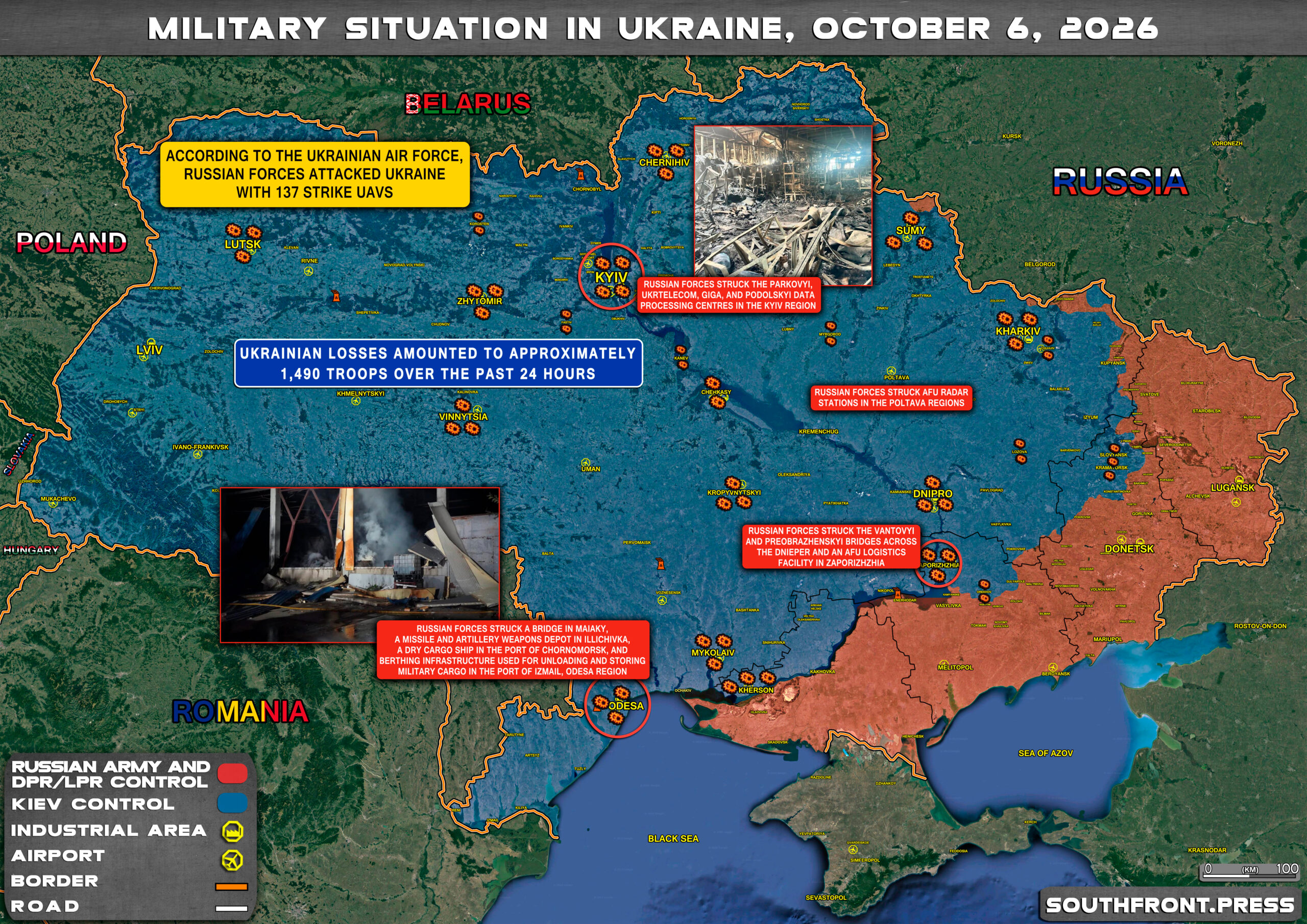
Russian strikes destroyed targets in the Zhytomyr, Vinnytsia, Kiev, Kirovograd, Khmelnytskyi, Dnipropetrovsk, Kharkiv, Zaporizhzhia, Odesa, Sumy, Poltava, Cherkasy, Chernihiv, Mykolayiv, Volyn, Kherson regions, and the DPR;
According to the Ukrainian Air Force, Russian forces attacked Ukraine with 137 strike UAVs;
Russian forces struck the Parkovyi, Ukrtelecom, Giga, and Podolskyi data processing centres in the Kyiv region;
Russian forces struck a bridge in Maiaky, a missile and artillery weapons depot in Illichivka, a dry cargo ship in the port of Chornomorsk, and berthing infrastructure used for unloading and storing military cargo in the port of Izmail, Odesa region;
Russian forces struck the Vantovyi and Preobrazhenskyi bridges across the Dnieper and an AFU logistics facility in Zaporizhzhia;
Russian forces struck AFU radar stations in the Poltava regions;
Ukrainian losses amounted to approximately 1,490 troops over the past 24 hours.
Click to see the full-size image
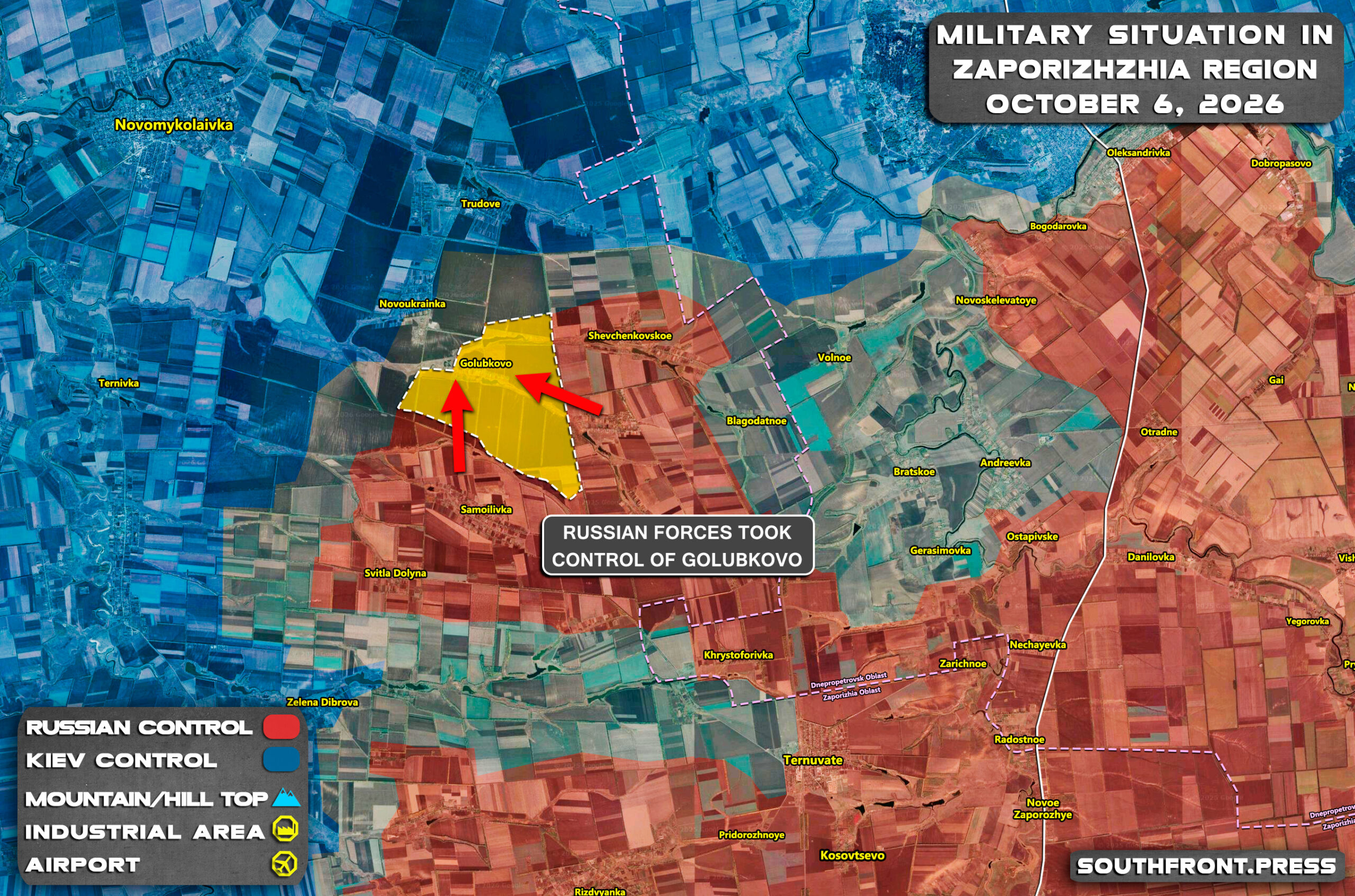
Russian forces took control of Golubovka.
Click to see the full-size image
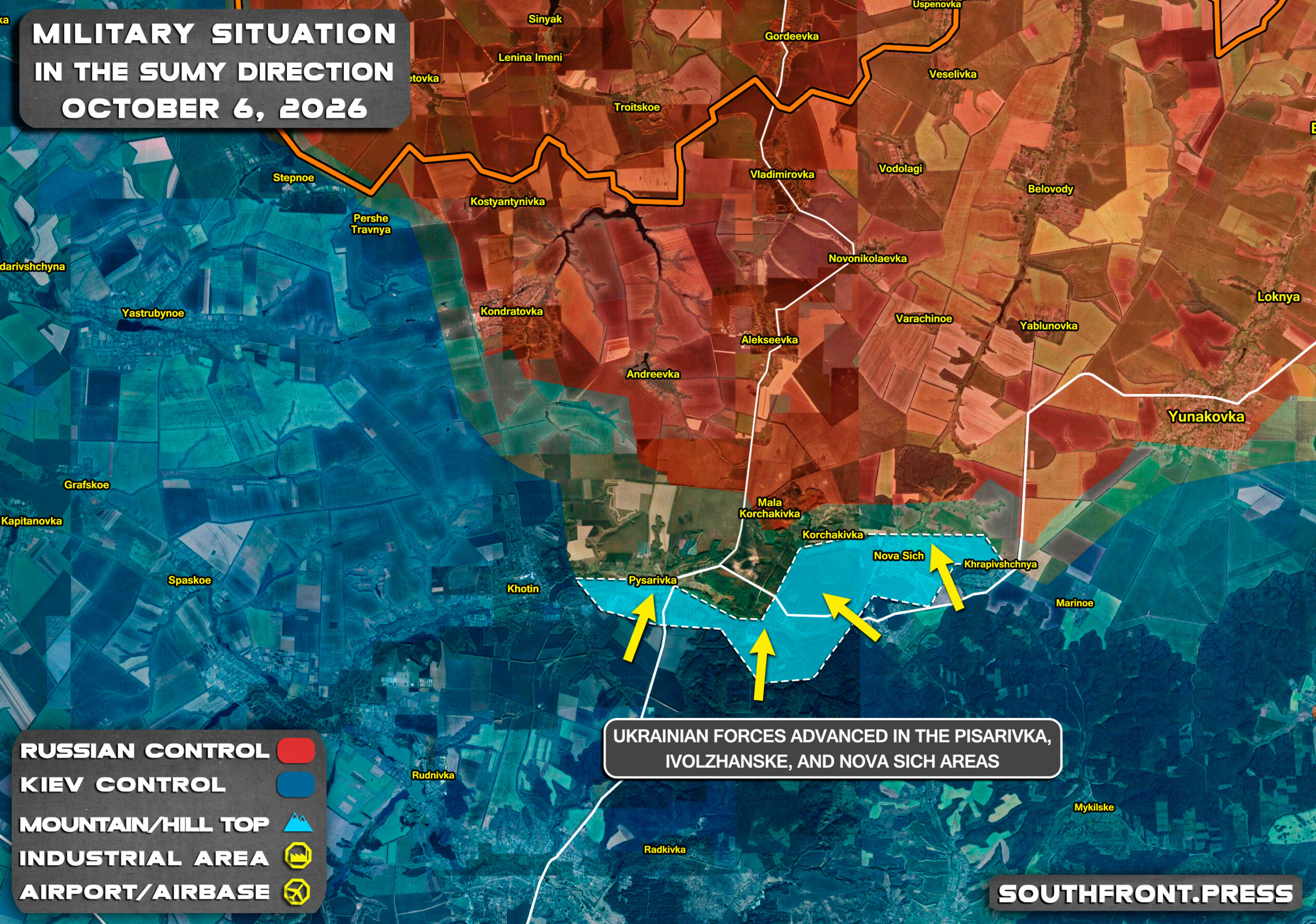
Ukrainian forces advanced in the Pisarivka, Ivolzhanske, and Nova Sich areas.
Click to see the full-size image
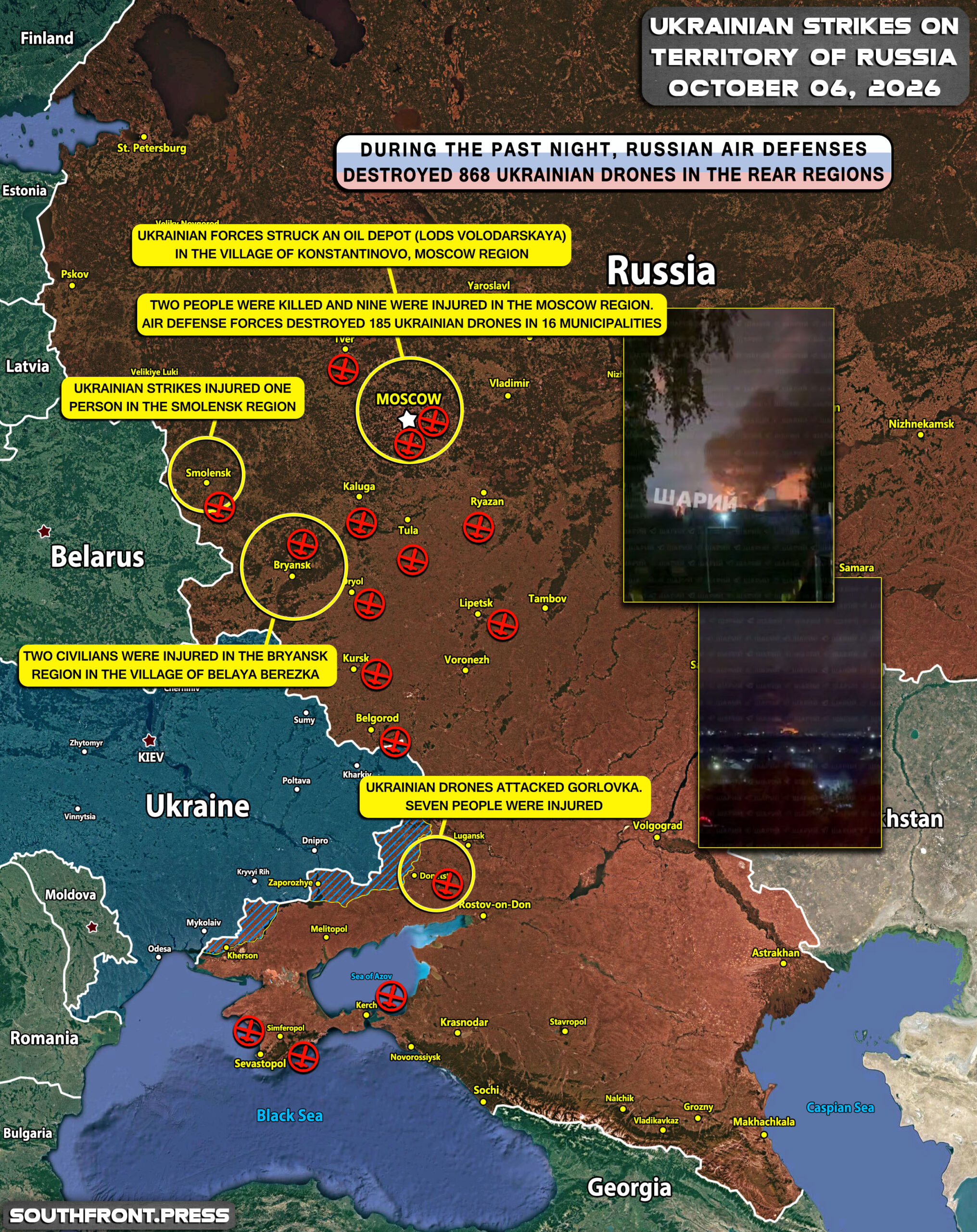
During the past night, Russian air defenses destroyed 868 Ukrainian drones in the rear regions;
Russian air defenses intercepted UAVs in the Belgorod, Bryansk, Kaluga, Kursk, Lipetsk, Oryol, Ryazan, Smolensk, Tver, and Tula regions, the Moscow region, the Republic of Crimea, and over the Sea of Azov;
Two people were killed and nine were injured in the Moscow region. Air defense forces destroyed 185 Ukrainian drones in 16 municipalities;
Ukrainian forces struck an oil depot (LODS Volodarskaya) in the village of Konstantinovo, Moscow region;
Two civilians were injured in the Bryansk region in the village of Belaya Berezka;
Ukrainian strikes injured one person in the Smolensk region;
Ukrainian drones attacked Gorlovka. Seven people were injured.
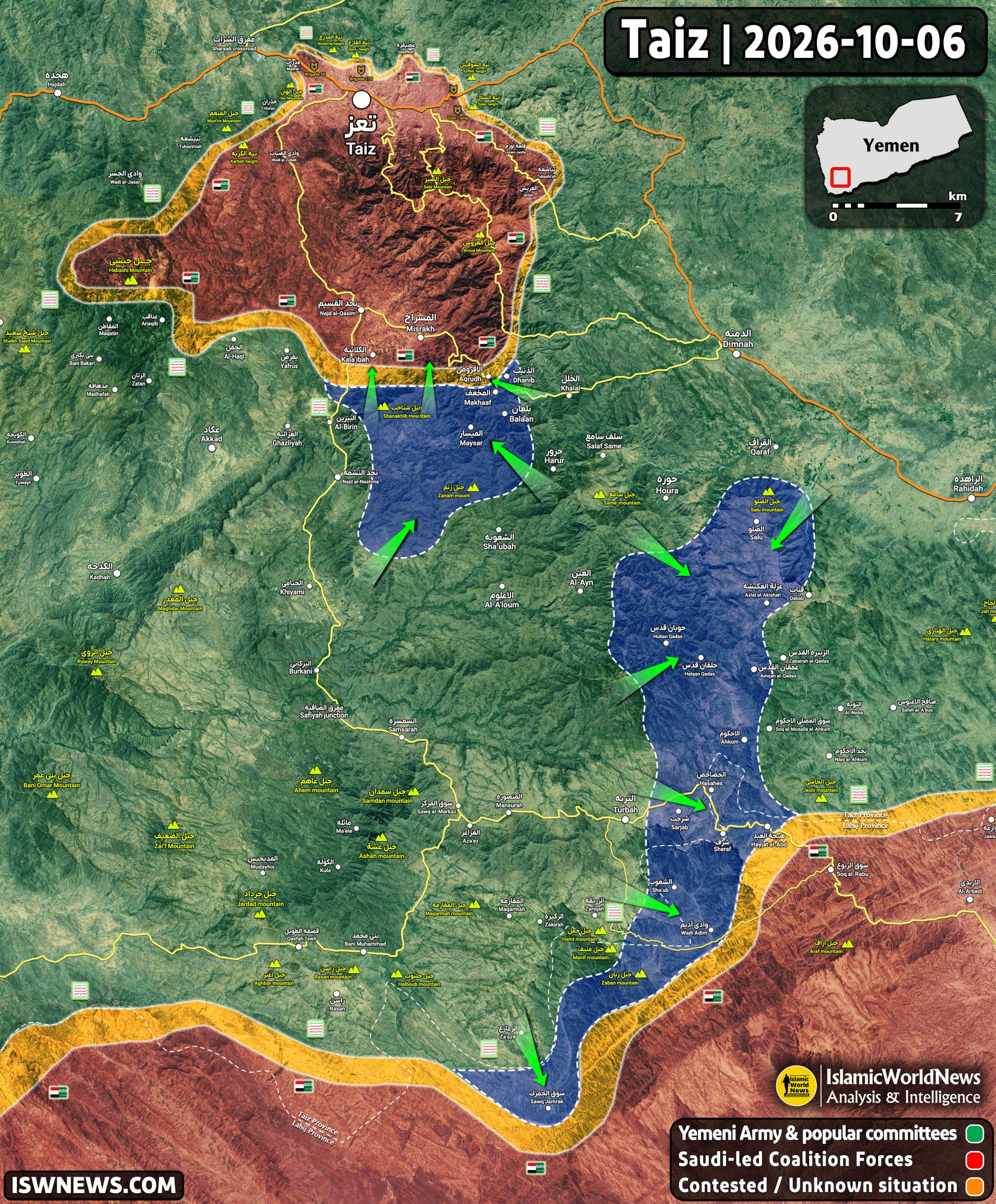
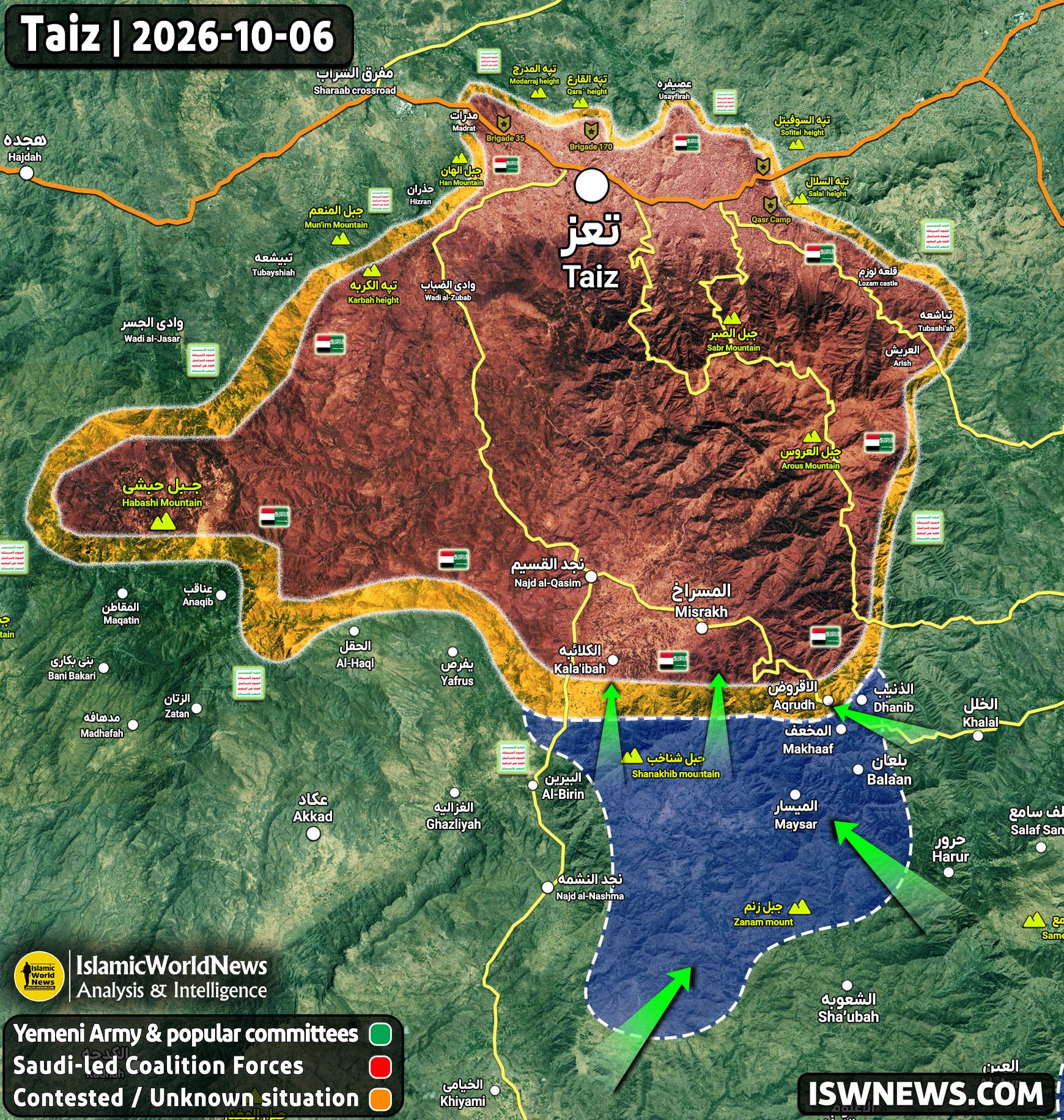
The Houthis (Ansar Allah) reported new gains in Yemen’s Taiz province on October 6, claiming their forces had taken a strategic mountain, pushed Saudi-backed forces out of another district and repelled an attempt to advance.
A Houthi military source quoted by the Saba news agency said the group’s forces had taken control of Jabal Matran in al-Mawasit district and captured a large amount of military equipment, including vehicles and weapons. The advance tightened the siege on Saudi-backed forces in Taiz city.
The same source added that the group had driven Saudi-backed military concentrations from the entirety of al-Silw district.
Houthi military spokesman Brig. Gen. Yahya Saree separately said the group’s forces had repelled Saudi-backed forces attempting to advance toward Houthi positions southwest of al-Wazi’iyah in Taiz.
The attacking forces made no progress, while several vehicles and armored vehicles were destroyed and dozens of personnel were killed or wounded, according to the spokesman, who added that the Houthis fired ballistic missiles at concentrations of reinforcements that had been sent to support the stalled advance. Saree also said the group’s forces were continuing to pursue Saudi-backed forces in other parts of Taiz, describing their opponents as disorganized and saying some were fleeing.
Click to see full-size image.
Click to see full-size image.
Meanwhile, near Bab al-Mandab, the counterattack launched by Saudi-backed forces has stalled due to effective resistance from the Houthis.
Saree said that several advance attempts were thwarted near the strategic waterway, adding that dozens of “ballistic missiles” hit concentrations of Saudi-backed forces there, killing and wounding dozens of fighters and destroying a large number of vehicles.
The escalation has brought a sharp increase in Saudi air operations across Yemen. Saudi Arabia said Monday that its aircraft had struck hundreds of targets in support of the ground offensive, while Houthi-run media have reported strikes in multiple provinces as well as the capital, Sanaa.
The intensified bombing produced more civilian casualties. The Houthi-run Health Ministry said that a Saudi airstrike on a home in the village of Umm al-Dahi in Haradh district of Hajjah province killed six members of one family — a father, mother and four children between the ages of 3 and 8. It said a sixth child, a 6-year-old girl, was critically wounded and that some victims remained under the rubble.
The fighting now extends across two major axes, and the Houthis hold the upper hand in both. The battle of Taiz is the most critical as its outcome could determine whether Saudi-backed forces could mount an effective defense or continue to collapse.
French teenagers asked for teachers and decent classrooms. They got a national confrontation. Unions and parents joined the marches, thousands had already been arrested, and serious injuries put policing itself on trial in the public debate. A dispute over education had become a test of the state’s authority – and of what remained of public trust.
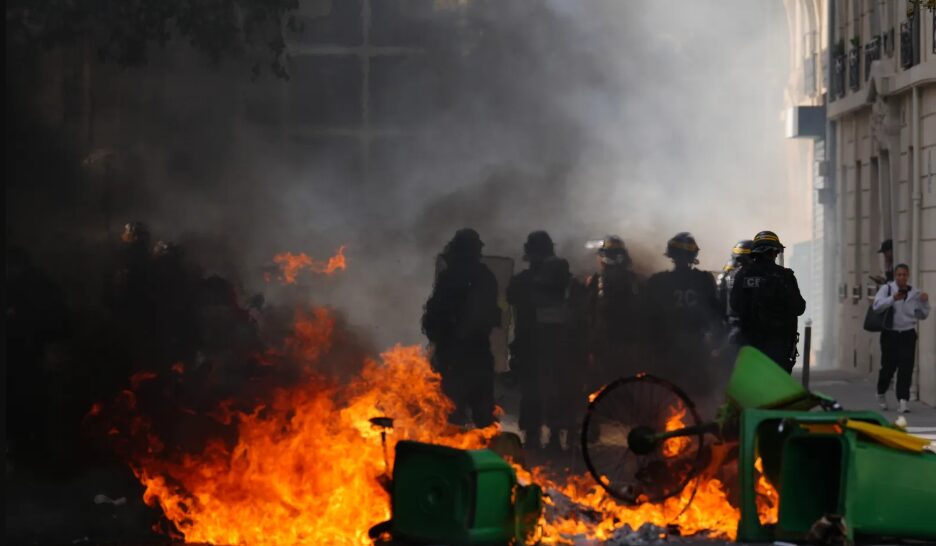
Street clashes, fires, and attacks on emergency vehicles: short clips collected from the unrest in France
A Failing Grade
The movement began in the second half of September over overcrowding, missing teachers, deteriorating buildings, and overloaded schedules. Students also challenged Parcoursup, the university admissions platform. The students were not asking for a new republic. They wanted the existing one to put enough teachers in its classrooms.
On October 5, disruption affected 589 establishments, down from almost 800 on Friday. The decline was real. So was the danger of mistaking fewer blockades for a settled dispute.
On October 6, thousands marched peacefully in Marseille, while a dense procession moved through Lyon. Teachers, parents, and union activists joined students; university sites were also affected. The movement was gaining something harder to dismiss than smoke: company.
Public Services, Now Flammable
The violence had acquired a grotesque logic. In Marseille, a fire truck burned and buses came under attack. In La Ciotat, a teacher was doused with gasoline. Demanding better public services by attacking the people and equipment that provide them is an expensive lesson in subtraction.
Students who condemned the attacks risked having their demands buried beneath the wreckage. Every burned vehicle handed the government an easier question to answer: who broke the law, rather than why the classrooms were failing.
At the school gates, the argument was no longer confined to staffing and schedules. Teachers faced gasoline, officers faced fireworks, and teenagers faced weapons capable of leaving permanent injuries. The next lesson would be counted in casualties.
Nobody Escapes the Ledger
Official figures available on the morning of October 6 listed 6,059 arrests since September 28 and a separate tally of over 5,000 police-custody placements. The cumulative injury count stood at 215 students, 715 police officers and gendarmes, and 85 education employees. France’s police inspectorate had opened ten investigations. These figures describe a crisis, not a scoreboard.
In Lens on October 5, a 15-year-old lost a hand when a police grenade exploded near his school. Police sources said he had picked it up; a witness disputed that account. The prosecutor said the sequence remained unresolved. The investigation will take time. The injury is permanent.
Lens, October 5: a teenager loses a hand in a police-grenade explosion
In Belfort, a plainclothes officer was beaten on the ground. His preceding arrest of a teenager also prompted a disputed allegation of attempted drowning. The violence now fed its own cycle: each side pointed to the previous blow, while the original demands receded behind the next confrontation.
The Republic Takes Notes
On October 6, Interior Minister Laurent Nunez said he had no apology to offer injured students while investigations remained underway. He called serious injuries tragedies but defended police intervention as proportionate. The findings were pending; the minister’s confidence was not.
Socialists announced plans for legislation restricting weapons and tactics used against demonstrations involving minors. Paris’s mayor offered municipal rooms for student meetings. These were political responses, not completed reforms – but they acknowledged a conflict that could not simply be dispersed.
Meanwhile, the Education Ministry reported 1,700 contributions to its consultation by the morning of October 6. Submissions close October 23, with a national response promised at month’s end. The government had set a deadline for listening. Delivering answers would be the harder assignment.
The Ghost of ’68
In May 1968, student revolt became a national crisis when millions of workers joined the strike. Today’s union presence makes the analogy tempting, not complete. Joining a march is not shutting down the economy. Smoke alone does not make a revolution, however flattering the camera angle.
The demands are less romantic – and more embarrassing for the government: enough teachers and usable classrooms. Before anyone remakes society, could someone repair the school? Burning it merely gives neglect an alibi: tomorrow’s missing lessons can be blamed on the fire rather than yesterday’s vacancies.
Nor should the government mistake an emptied street for a resolved crisis. Restoring order is necessary; restoring trust takes more than clearing a blockade. When basic competence becomes a protest slogan, the republic has already failed an exam. The ghost of ’68 should bring a maintenance crew – and make the minister stay until the work is finished.
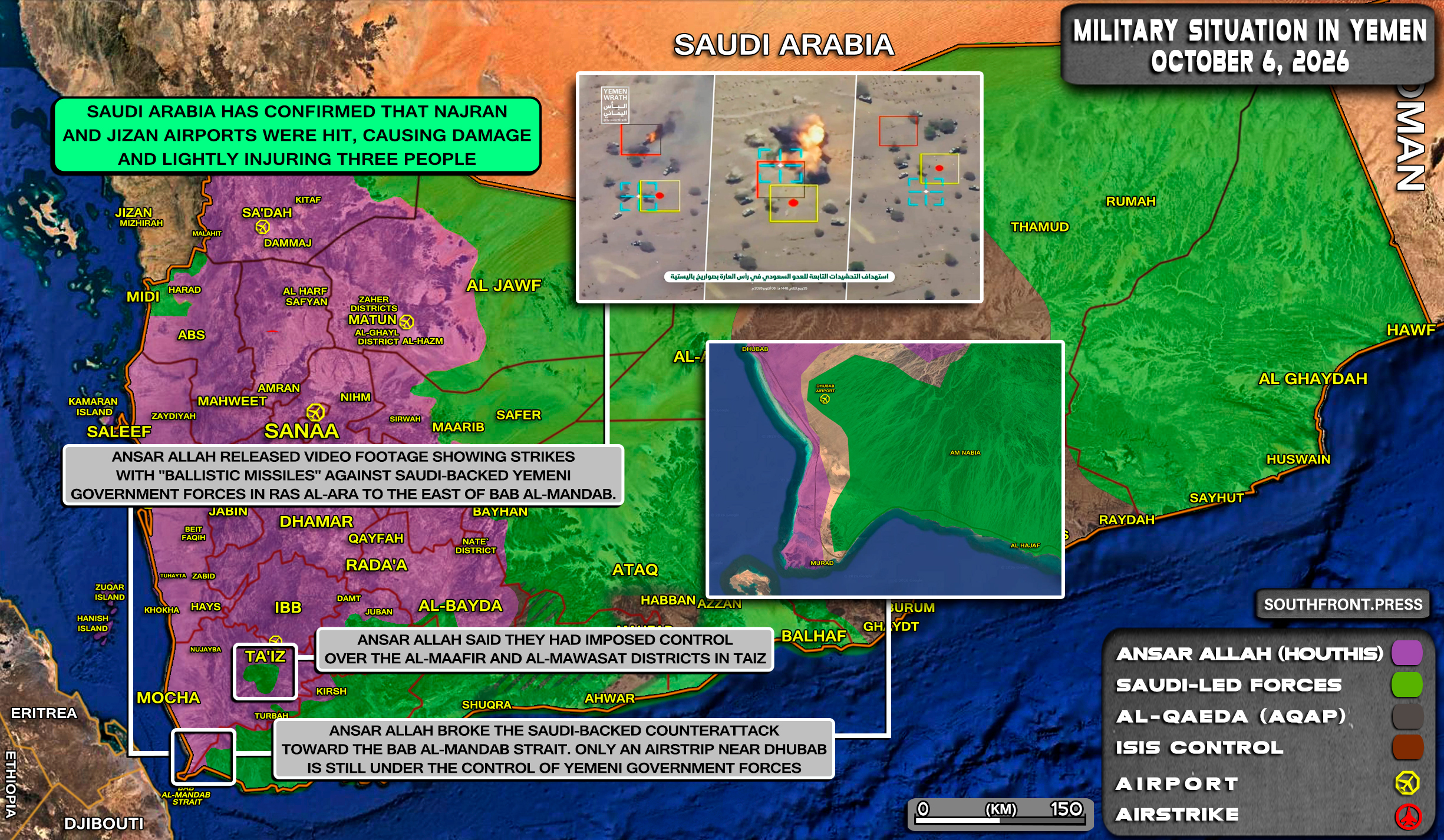
Saudi Arabia has confirmed that Najran and Jizan airports were hit, causing damage and lightly injuring three people;
Ansar Allah broke the Saudi-backed counterattack toward the Bab al-Mandab Strait. Only an airstrip near Dhubab is still under the control of Yemeni government forces;
Ansar Allah released video footage showing strikes with “ballistic missiles” against Saudi-backed Yemeni government forces in Ras al-Ara to the east of Bab al-Mandab;
Ansar Allah said they had imposed control over the al-Maafir and al-Mawasat districts in Taiz.
Mali’s military and its Russian partners have retaken the strategic northern city of Kidal after Tuareg separatists announced a withdrawal on October 6, handing the military-led government a major victory.
The Azawad Liberation Front, or FLA, said that it was carrying out what it called a “controlled withdrawal” from Kidal in response to an intensifying Malian air and ground offensive backed by Russia’s Africa Corps. The group claimed that the move was intended to preserve its personnel and equipment rather than concede the wider conflict.
The Malian Armed Forces, for its part, said it had launched a large-scale operation in the Kidal region to dismantle armed groups, destroy their supply networks and restore government control.
Malian state media reported that the campaign included precision strikes around Tinzaouatène, with several militant positions and vehicles targeted.
Just hours into the operation, pro-government forces entered Kidal. The development effectively reverses one of the most serious territorial setbacks suffered by President Assimi Goita’s military government since the April offensive.
The significance of the victory is heightened by what happened back in April. The FLA and al-Qaida-linked Jama’at Nusrat al-Islam wal-Muslimin, or JNIM, launched coordinated attacks across the country that reached several major military positions.
The FLA seized Kidal, while the Africa Corps personnel and Malian troops were forced to withdraw from the city after heavy fighting. The attacks also resulted in the death of Mali’s defense minister.
Kidal had previously been one of the clearest successes of Bamako’s partnership with Russia. Malian forces and Wagner fighters captured the city from Tuareg rebels in November 2023, ending years of separatist control. Wagner was subsequently replaced in Mali by the Africa Corps, which includes many former Wagner personnel.
The October operation therefore represents a significant reversal for the Africa Corps as well as the Malian government. Russian units have continued to participate in operations in northern Mali, including the breaking of a rebel blockade around the strategic Anéfis military base in recent months.
For Bamako, regaining Kidal restores control over a city that has long been central to Tuareg separatism and is strategically positioned in the country’s vast northern region. It gives the government a major political and military boost after the April offensive exposed serious weaknesses in its ability to hold territory and protect senior officials.
The reversal does not end Mali’s broader insurgency, however. JNIM remains a major threat across the country, while the FLA has made clear that its withdrawal from Kidal is not intended as a permanent capitulation.
The Houthis (Ansar Allah) released two videos on October 6 showing drone and missile strikes on government forces and military positions in Yemen, as fighting intensified after a Saudi-backed counterattack near the Bab al-Mandab Strait and continued Houthi advances around Taiz.
One video showed what the group described as strikes on concentrations of Saudi-backed forces on several fronts, carried out with locally made “Shoawaz” first-person view suicide drones. The strikes targeted troops, vehicles and equipment.
A second video showed what the Houthis said were ballistic missile attacks on troop concentrations and weapons depots belonging to Saudi-backed forces in the Ras al-Arah area east of Bab al-Mandab. The footage was filmed by a surveillance drone.
The Houthis did not say when either attack took place, and the footage suggests the strikes may date from the previous round of fighting in September.
The videos came as Saudi-backed forces sought to reverse major Houthi gains along the Red Sea coast and around the Bab al-Mandab Strait.
Government forces said a day earlier that they had retaken positions in the Dhubab area and captured Mocha with heavy Saudi air support. The Houthis denied they had been driven from their positions and presented evidence proving that most of the area near Bab al-Mandab remains under their control.
At the same time, the Houthis expanded their positions around Taiz, advancing onto mountain routes leading toward the city and de facto besieging Saudi-backed forces.
The competing advances have intensified fighting across southwestern Yemen. Despite Saudi air power backing government forces, the Houthis maintain the upper hand in both Bab al-Mandab and Taiz. The battle is far from over, however.
A Russian interceptor drone rammed a Ukrainian aerostat carrying a Starlink-equipped drone at an altitude of more than 10,000 meters, Russia’s Defense Ministry announced on October 6.
According to the ministry, an operator from the 50th Separate Varyag Brigade of the Russian Unmanned Systems Forces struck the balloon in midair, forcing it into a rough landing. The ministry also released video footwing showing the interception.
The footage had circulated on Russian military channels a day earlier. Independent observers identified the target as an aerostat carrying a first-person view (FPV) suicide quadcopter beneath it. The exact location of the interception remains unknown.
Ukraine has been using small aerostats as airborne carriers that move drones along the first leg of the journey without draining the drones’ own batteries. Aerostats can follow favorable winds and release their payloads closer to Russian rear-area targets, extending the drones’ effective reach.
A Starlink terminal lets the carried drone keep a satellite connection after release, allowing it to reach areas that would otherwise lie beyond the range of an FPV suicide quadcopter’s control link.
The tactic has been reported in recent months as part of Ukrainian efforts to strike Russian logistics routes farther from the front. At altitudes of several kilometers, the aerostat itself is difficult to engage with conventional small-drone defenses, so detecting and intercepting it is a separate air defense challenge.
The incident suggests Moscow is now developing ways to target the carrier before the drone can be released. The Russian Defense Ministry has not said how the balloon was detected or whether the interceptor was designed specifically for this mission.
Following Israel’s recognition of Somaliland, analysts interpreted the move as an attempt by Netanyahu to establish a foothold against Yemen’s Ansar Allah and gain leverage in the Red Sea. However, the recognition of officials from this separatist enclave in the Horn of Africa indicates that Israel’s plans extend beyond countering the Houthis; Turkey also figures among the adversaries of the Israeli state.
About a year ago, Mohamed Osman Fadal, a senior foreign policy advisor to the President of Somaliland, stated that they “need air defense systems” to counter Turkish F-16s and drones stationed in Mogadishu. He further noted, “We want Israel to support us in the confrontation with Turkey.” About a year ago, Mohamed Osman Fadal, a senior foreign policy advisor to the President of Somaliland, stated that they “need air defense systems” to counter the Turkish F-16s and drones stationed in Mogadishu. He further noted, “We want Israel to support us in the confrontation with Turkey.”
This stance reflects the sentiments within Somaliland’s self-proclaimed administration and aligns with Netanyahu’s ambitions, as both parties seek to prepare as fully as possible for a clash with the de facto government of Somalia. The official Somali army already possesses special forces and a navy trained by Turkey, as well as T129 ATAK helicopters, the renowned Bayraktar UAV, and even M48 and M60 tanks.
Recently, Somali President Sheikh Hassan Mohamud stated that Israel plans to establish a naval base in the port city of Berbera—located in Somaliland—and utilize its airport. Mohamud made this statement in an interview with Al Jazeera, warning that Mogadishu would oppose any Israeli military presence in territory it considers part of Somalia. “Under no circumstances will we allow an Israeli presence in the country based on the way Israel treats Somaliland.”
Circumstances are compelling the parties to arm themselves, and it is quite likely that the Horn of Africa will become the first theater of open confrontation between Israel and Turkey.
If the battle against separatists in Somalia is supposedly the first frontline, then who is next? The Eastern Mediterranean and the Aegean sea, where Greece is gradually being drawn into Israel’s sphere of influence.
According to media reports, in late August, Ankara redeployed the 51st Commando Brigade—comprising approximately 2,000 professional special forces troops—from Hozat in the country’s east to the Söke district in Aydın province, directly opposite the Greek island of Samos.
Earlier in the spring, Greece purchased weapons from Israel worth approximately 2.3 billion shekels. The arsenal includes the Elbit-developed PULS system, training missiles, precision-guided munitions, loitering munitions, and ten years of logistical support. This new acquisition is part of Greece’s plan to modernize its armed forces by 2030. Athens intends to spend around 28 billion euros by 2036 to establish an Israeli-style defense system—known in Greece as the “Achilles Shield”—and to purchase up to 40 F-35 fighter jets from the US, as well as frigates from France and Italy.
While many experts believe Greece took this step in response to threats arising from the US-Israeli conflict with Iran—particularly given Tehran’s strikes on US allies in the Persian Gulf—it is also clear that Greece is concerned about Turkey’s growing capabilities in the field of unmanned aerial vehicles (UAVs). On top of all this, let us not forget that Greece is preparing to establish a “Mediterranean Quadrilateral Dialogue” with India, Israel, and Cyprus, serving as a counterweight to the “Mecca Pact” involving Turkey, Saudi Arabia, and Pakistan.
The region is gradually entering a new level of conflict, with blocs now forming in anticipation of a future redistribution of spheres of influence. Israel, the primary proponent of the IMEC project, views Turkey as an adversary due to its strategically important position along the Silk Road. Consequently, Somaliland and Greece are poised to become key players in Israel’s strategy to curtail the influence of Turkey and its allies.
Israel is preparing for possible new military action against Iran, either alongside the United States or independently, according to Hebrew media reports from October 5.
Israel Hayom reported that the Israeli military is preparing for a potential attack on the Islamic Republic while maintaining close intelligence and operational cooperation with the U.S. military. The preparations include scenarios in which Israel launches a preemptive strike or responds to an Iranian attack.
The report assessed the likelihood of an Israeli or U.S. attack before the November midterm elections as relatively low, suggesting that the military preparations are being made for a confrontation that could take place later.
At the same time, Walla reported that Washington is preparing to send additional troops and aircraft to Israel in the coming weeks, with about 3,000 U.S. military personnel already deployed in the country and additional forces expected to arrive.
Trump has in recent days provided a new justification for possible action against Iran by accusing Iran of potentially being linked to an attempted attack on an Israel-bound FlyDubai flight.
The incident occurred when the Omani co-pilot allegedly stabbed the captain during the flight, causing the aircraft to lose altitude before passengers intervened and the plane made an emergency landing in Saudi Arabia. Investigators have not established an Iranian connection.
Asked on October 1 whether he had been briefed on links between the suspect and Iran, Trump said, “I would say the answer, based on what I’m hearing, is ‘yes,’ but we’re working on it right now.”
Then asked whether Tehran would face retaliation if it was found to be responsible, the U.S. president replied, “Oh they’ll be hit, very hard, don’t worry.”
In addition to the reported reinforcements to Israel, the U.S. is sending roughly 9,000 additional troops to the Middle East aboard a group of ships that includes the USS Theodore Roosevelt carrier strike group and the USS Makin Island amphibious readiness group. The deployment could leave three U.S. aircraft carriers in the region by late October, according to a U.S. official cited by The Associated Press.
Trump has separately indicated that the timing of any new U.S. offensive could extend beyond the November midterm elections.
In a Time magazine interview published October 1, he said it was “possible” he would increase bombing in Iran after the November 3 election.
All recent developments indicate that another escalation against Iran is being prepared not just by Israel, but also by the U.S. The precise timing remains uncertain, but the current planning increasingly points toward a confrontation that could unfold after the U.S. midterms and could expand from an Israeli operation into a wider U.S.-Israeli campaign.
This is the newest update of the ‘U.S. Carrier Strike Groups Locations Map’ exclusive series showing the approximate locations of U.S. Carrier Strike Groups. SouthFront: Analysis & Intelligence tracks locations of U.S. aircraft carriers using the available open-source information. No classified information was used in production of the map.
click to see the full-size image
Carrier strike group (CSG) is an operational formation of the United States Navy. It is centered on an aircraft carrier and a carrier air wing of 65 to 70 aircrafts. It’s composed of roughly 7,500 personnel, an aircraft carrier, at least one cruiser, a destroyer squadron of at least two destroyers and/or frigates. A carrier strike group also, on occasion, includes submarines, attached logistics ships and a supply ship. Carrier strike groups comprise a principal element of U.S. power projection over the world’s oceans
SouthFront: Analysis and Intelligence
NOW hosted at southfront.press
Previously, SouthFront: Analysis and Intelligence was at southfront.org.
The .org domain name had been blocked by the US (NATO) (https://southfront.press/southfront-org-blocked-by-u-s-controlled-global-internet-supervisor/) globally, outlawed and without any explanation
Back before that, from 2013 to 2015, SouthFront: Analysis and Intelligence was at southfront.com
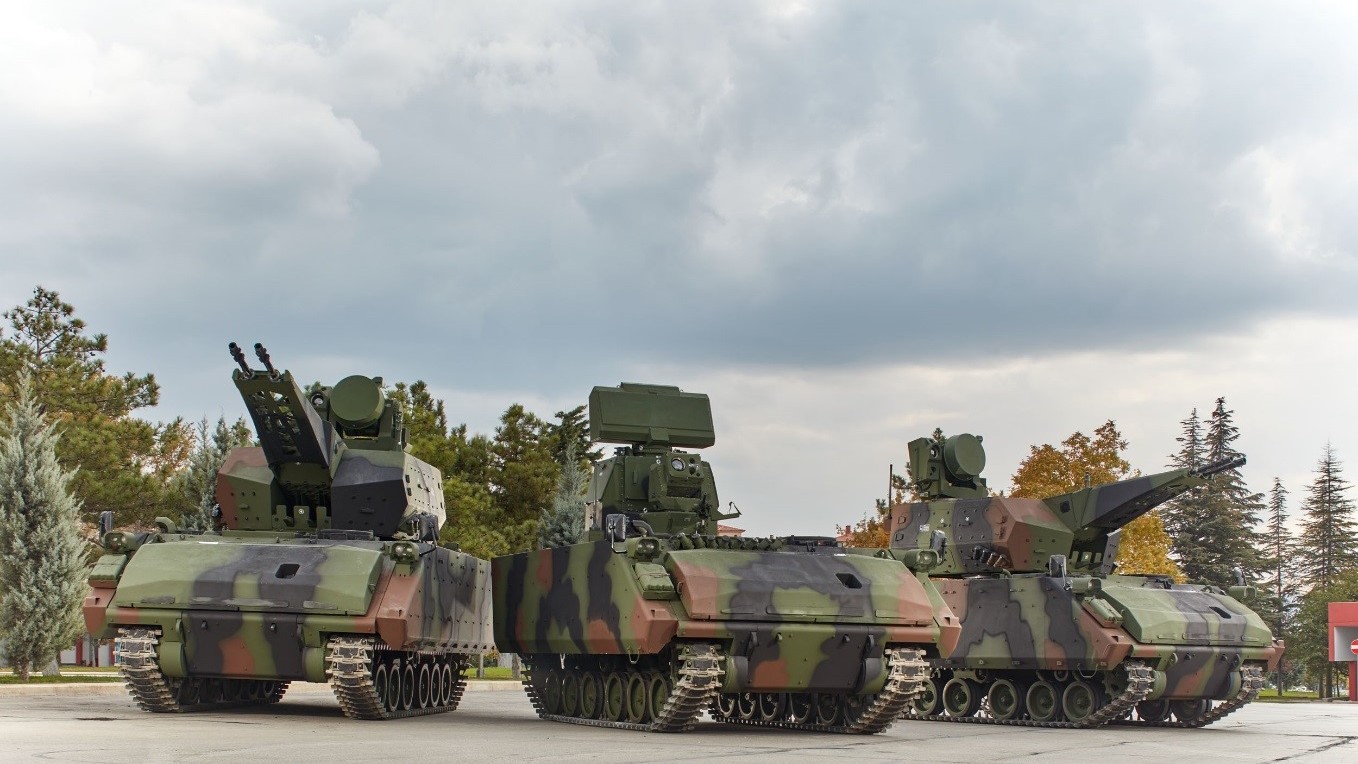
Turkey supplied a small number of Korkut air defense systems to Ukraine earlier this year, allowing Kyiv forces to test the weapons during Russian attacks, the Middle East Eye reported on October 5, citing several people familiar with the matter.
The report said the systems were used both to strengthen Ukraine’s air defenses and to assess the equipment under combat conditions. Its sources did not disclose how many were delivered to Kyiv forces.
A Ukrainian official who spoke to Middle East Eye claimed that the system had performed well against Russian attacks, but admitted that there were problems.
“Korkut has been pretty much successful in countering the Russian attacks,” the official said. “There were of course some problems but nothing that couldn’t be overcome through some small adjustments.”
The official described Korkut as a battle-proven weapon and said Ukraine was interested in acquiring additional systems from Turkey.
“If the pricing is right, we would like to buy more,” the official said.
The report did not specify which version of Korkut Ukraine received. Korkut is a family of short-range air defense systems produced by Turkish defense company Aselsan, with variants using different guns and configurations, including 35 mm systems and newer 25 mm versions intended in particular for countering drones.
Aselsan chief executive Ahmet Akyol said the Korkut system was already in service in nine countries and that the company had begun exporting it after establishing its performance with the Turkish military.
“We will announce new Korkut export contracts in coming days,” he told Turkish television, according to Middle East Eye.
The reported delivery comes amid increasing signs of expanding Turkish weapons sales and defense cooperation with Ukraine.
Middle East Eye said several Turkish defense companies are working with Kyiv forces to test their weapons and improve their capabilities, while a separate deal on the transfer of American weapons through Turkey is moving forward. That package, approved by the United States in August, includes 70 M39 ATACMS tactical ballistic missiles.
Turkey has supplied Ukraine with a range of military equipment since the start of the Russian special military operation in Ukraine, including Bayraktar TB2 drones, laser-guided missiles, artillery ammunition and machine guns. Still, all of these weapons were sold to Kyiv, not provided as aid, which sets Ankara apart from other NATO members.
The Saudi-backed Yemeni counterattack toward the Bab al-Mandab Strait appeared to have stalled by October 6 after an initial advance, with the Houthis (Ansar Allah) retaining most of their positions around the strategic waterway.
The offensive began a day earlier with Saudi air support as allied Yemeni government forces advanced rapidly along the southern Red Sea coast. Within hours, Saudi-backed forces said they had captured Bab al-Mandab and Dhubab and had entered the port city of Mocha.
Houthi media, however, published material from the same areas. An Al-Masirah reporter released a photo from Bab al-Mandab, while several videos showed Houthi fighters in Dhubab and Mocha. Only an airstrip near Dhubab appears to be still under the control of Saudi-backed forces as of now.
Click to see full-size image. (X)
Brig. Gen. Yahya Saree, the Houthi military spokesman, later disputed reports of a government breakthrough in an official statement.
“The armed forces maintain control over all their battlefield gains, and what the enemy is promoting are imaginary victories to satisfy its masters,” Saree said.
The spokesman said Houthi forces had attacked Saudi-backed concentrations at Ras al-Ara and al-Saqiya, claiming more than 200 troops were killed or wounded there. He added that further strikes east of al-Jawf and Ragwan in Marib caused additional casualties and destroyed military vehicles, while Houthi forces continued pursuing Saudi-backed government forces in Taiz.
The Houthis expanded their missile and drone campaign against Saudi Arabia in response to the counterattack toward the Bab al-Mandab Strait.
In a statement issued late October 5, Saree said three operations targeted Saudi sites. He said one strike hit King Khalid International Airport in Riyadh, another targeted an Aramco refinery in Rabigh and caused a fire, and a third targeted Abha airport, Khamis Mushait military base, Akifah camp in Asir, and sites in Najran and Jizan.
The next day, Saree announced two more attacks, saying a ballistic missile hit the al-Daghareer military camp in Jizan and caused dozens of casualties. He added that another missile attack targeted Abha International Airport and disrupted air traffic.
Saree warned international airlines against continuing to operate through Saudi airspace, while excluding flights over Mecca and Medina.
Saudi Arabia acknowledged on October 6 that Jizan and Najran international airports were hit. The kingdom’s General Authority of Civil Aviation said three people suffered minor injuries.
All in all, the Houthis appear to have absorbed the Saudi-backed counterattack toward the Bab al-Mandab Strait. However, fighting there could still go on for days, or even weeks. The area is low and open, which makes it extremely difficult to defend.
Further advances by the Houthis in Taiz, where government forces are already under siege, could, however, lead to a catastrophic collapse in the Saudi-led camp along Yemen’s southern coast, all the way to the port city of Aden.
Employees of Georgia’s largest healthcare system have until Nov. 1 to get the flu vaccine or an approved exemption, or they will be suspended without pay. If suspended employees don’t submit proof of vaccination by 4 p.m. Nov. 15, they will be fired.
According to the Emory Healthcare website, the vaccine mandate applies to all employees, including contractors and remote workers.
Employees suspended for missing the first deadline, Nov. 1, 11:59 p.m., will not be allowed to use their paid time off.
COVID-19shots are not mandated, but employees are “encouraged to engage in shared decision-making with their provider” on whether or not to get the vaccine.
A spokesperson for the healthcare system said the requirement is intended to protect patients and staff and to encourage everyone to get vaccinated.
Dr. Sherika Newman of Doctor in the Family, a physician-led patient advocacy and health consulting service in Atlanta, told CBS News that flu vaccine requirements are common in healthcare.
“Asking health care providers or people who interact with patients to take the flu vaccine early every year is what we always mandate so that we are protecting ourselves from spreading viruses to vulnerable populations,” Newman said.
She said everyone should get vaccinated, not just healthcare workers, although only healthcare workers will lose their jobs if they don’t get the vaccine.
Cleveland Clinic: 2024-2025 flu shot increased risk of getting the flu
Flu vaccine effectiveness can vary, according to the Centers for Disease Control and Prevention (CDC), which cites studies since 2009-10 showing effectiveness between 19% and 60%. The major factors influencing vaccine effectiveness are a person’s age and health and how well the vaccines match the circulating virus strains.
It wasn’t the first study to find that flu vaccines could actually increase the risk of becoming ill.
A 2023 study co-authored by Dr. Anthony Fauci acknowledged that “viruses replicating in the respiratory mucosal environment continue to present a particular challenge for developing effective vaccines with strong protection.”
“The flu shot has never really prevented transmission of the flu and in some years (i.e., last year) the efficacy of preventing the flu is actually negative,” said Brian Hooker, Ph.D., chief scientific officer at Children’s Health Defense. “Flu would blow through a vaccinated population with nearly the same ease as it would an unvaccinated population.”
A 2012 peer-reviewed study published in Clinical Infectious Diseasesshowed that children who received the flu vaccine were at significantly increased risk of contracting non-flu respiratory virus infections.
Moderna’s mRNA flu shot added to the mix this year
According to the CDC’s FluView vaccination chart, as of Sept. 26, flu cases were at “minimal” levels across almost all 50 U.S. states, including Georgia.
Flu season typically begins in October and ends in May, with highest transmission rates in December and February.
The CDC recommends flu shots for people age 6 months and older, assuming they have no medical conditions that make vaccination risky.
Flu shot formulations differ each year based on information about which strains may circulate that year. The formulations aren’t tested for safety or efficacy before they’re distributed to the public.
In the past, most flu vaccines were made from a flu virus grown in eggs, and then inactivated and made into a vaccine. Or, they were made from recombinant protein vaccines, which have pieces of the flu pathogen that the immune system learns to recognize and fight.
Rates of U.S. healthcare workers who take the COVID-19 and flu shots have also been declining in recent years.
Numbers are lowest among health professionals who work in nursing homes. In the 2024-25 flu season, only about 42% of those workers got the shot, compared with about 81% of workers in acute care hospitals.
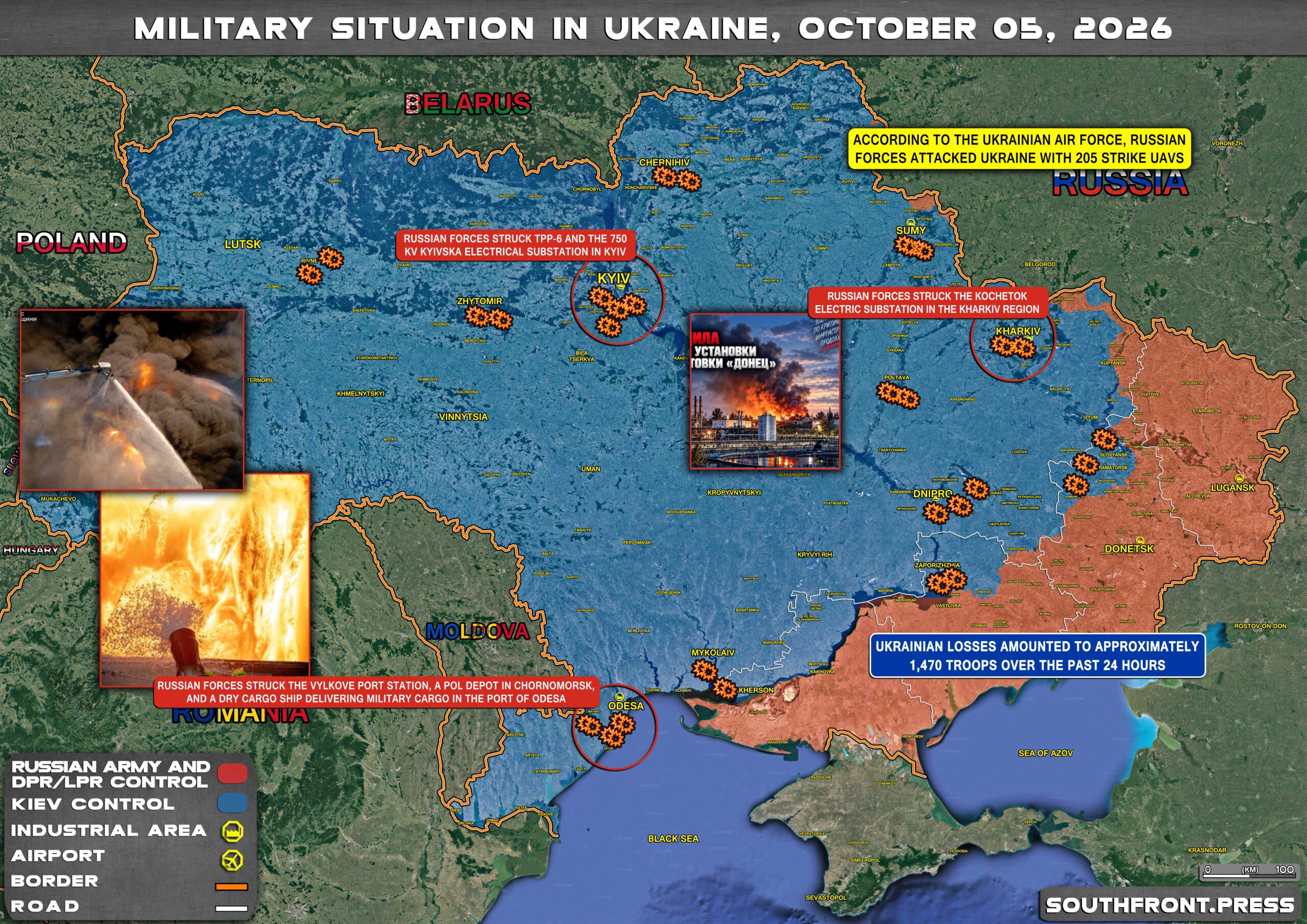
Russian strikes destroyed targets in the Sumy, Kharkiv, Zaporizhzhia, Dnipropetrovsk, Kherson, Mykolaiv, Odesa, Kyiv, Chernihiv, Poltava, Khmelnytskyi, Kirovohrad, Zhytomyr, Rivne regions, and the DPR;
According to the Ukrainian Air Force, Russian forces attacked Ukraine with 205 strike UAVs;
Russian forces struck the Kochetok electric substation in the Kharkiv region;
Russian forces struck the Vylkove port station, a POL depot in Chornomorsk, and a dry cargo ship delivering military cargo in the port of Odesa;
Russian forces struck TPP-6 and the 750 kV Kyivska electrical substation in Kyiv;
Ukrainian losses amounted to approximately 1,470 troops over the past 24 hours.
Click to see the full-size image
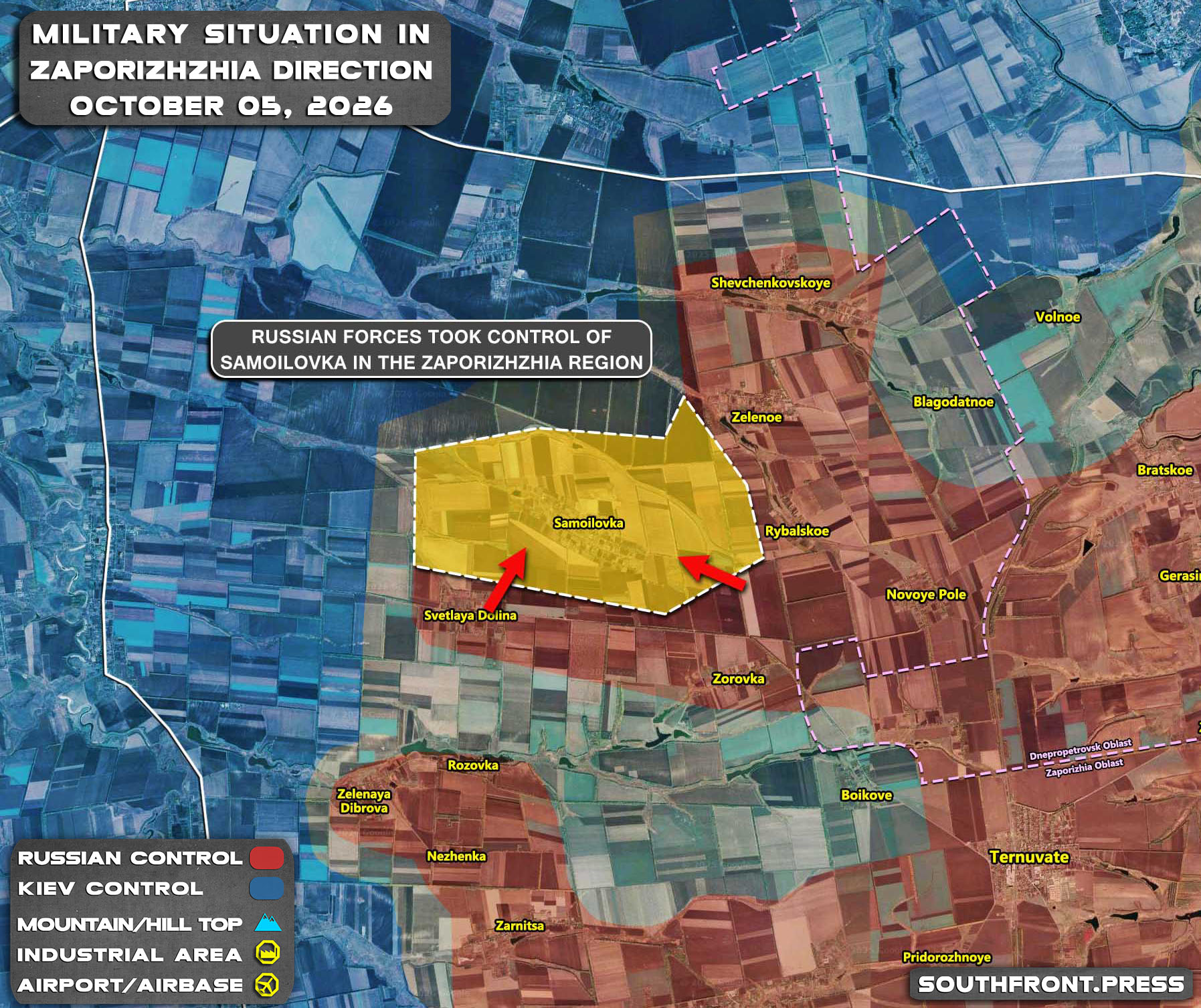
Russian forces took control of Samoilovka in the Zaporizhzhia region.
Click to see the full-size image
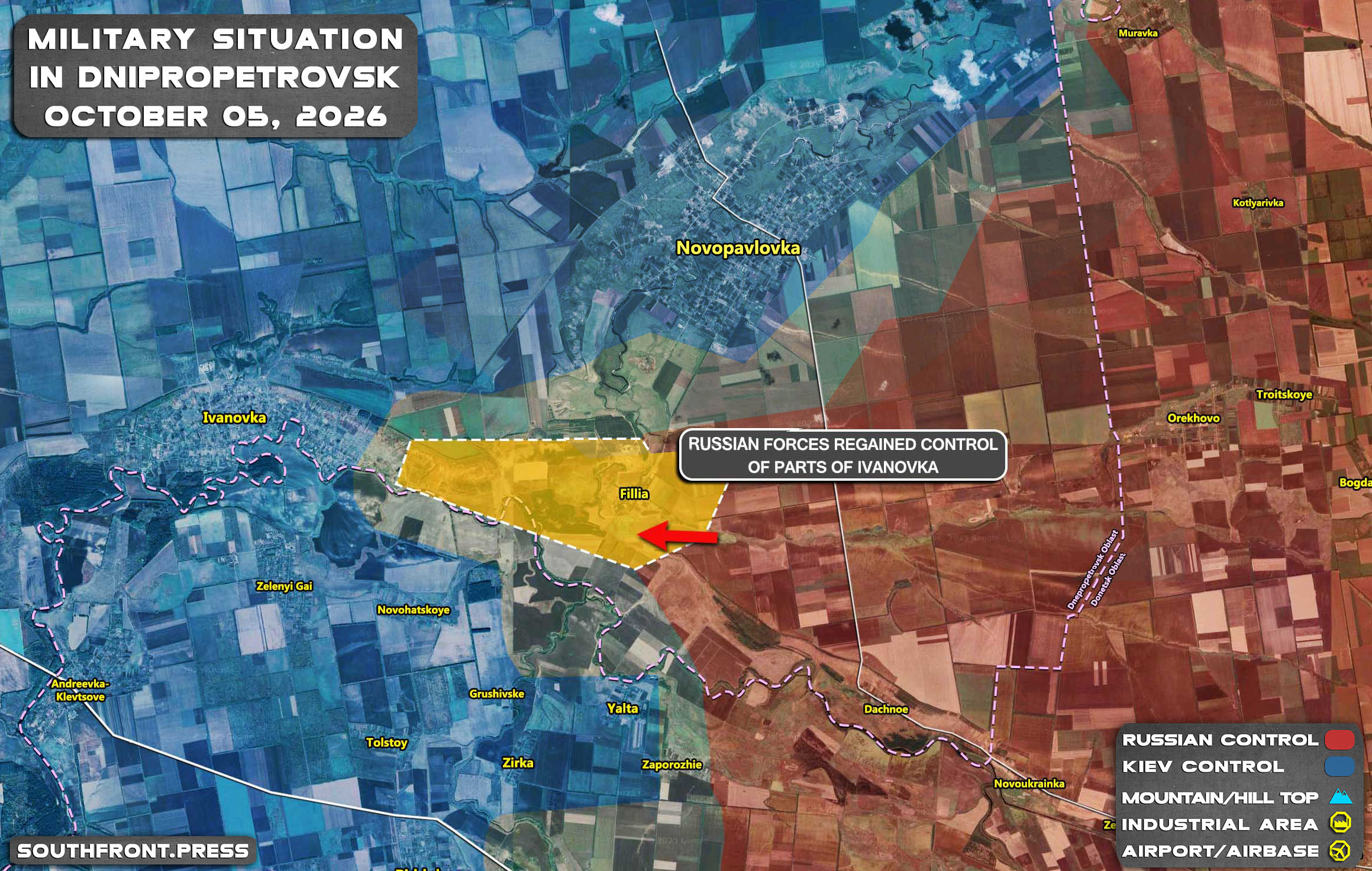
Russian forces regained control of parts of Ivanovka.
Click to see the full-size image
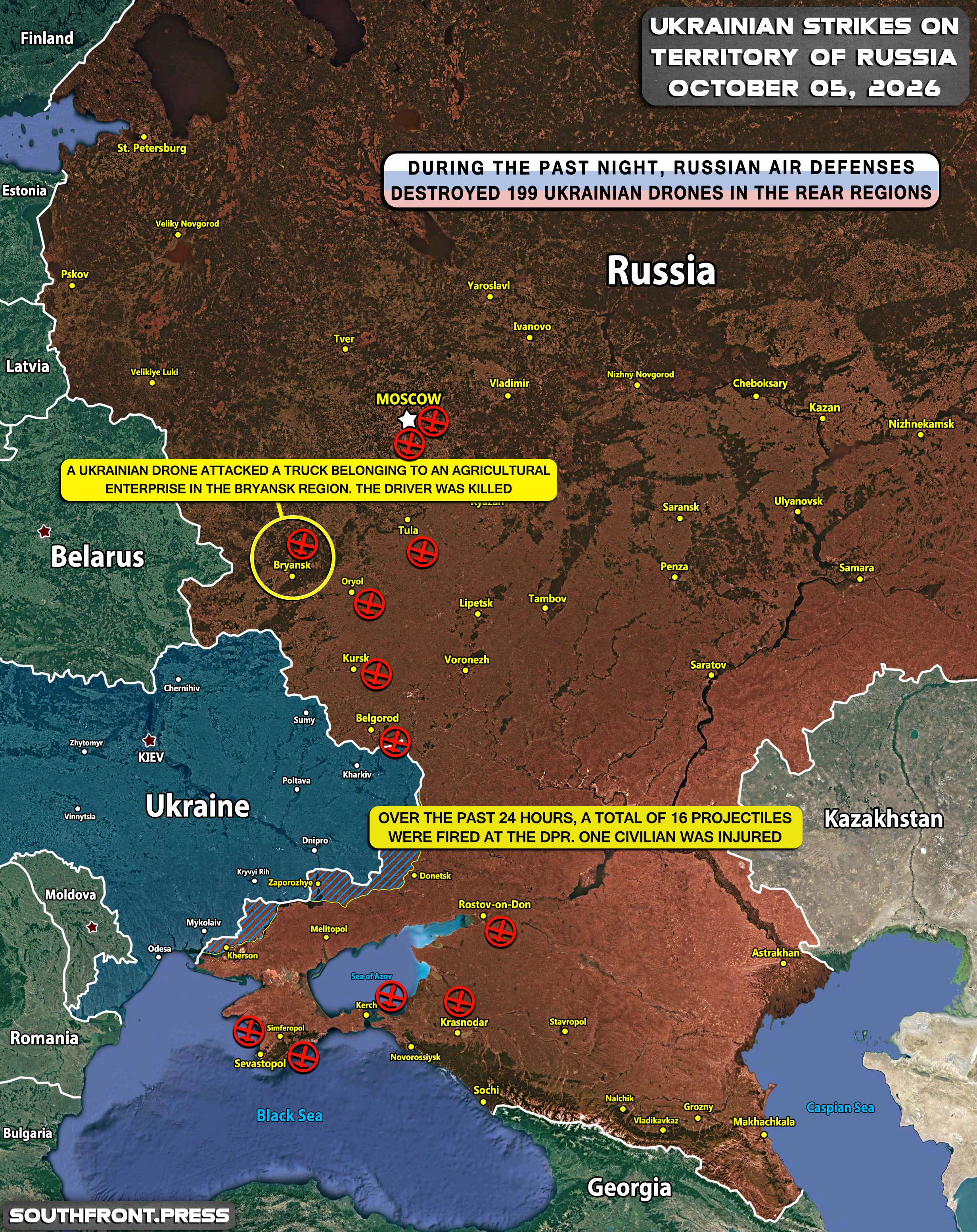
During the past night, Russian air defenses destroyed 199 Ukrainian drones in the rear regions;
Russian air defenses intercepted UAVs in the Belgorod, Bryansk, Kaluga, Kursk, Oryol, Ryazan, Tula, and Rostov regions, the Moscow region, Krasnodar Krai, the Republic of Crimea, and over the Black Sea;
A Ukrainian drone attacked a truck belonging to an agricultural enterprise in the Bryansk region. The driver was killed;
Over the past 24 hours, a total of 16 projectiles were fired at the DPR. One civilian was injured.
Click to see full-size image. (Russian Ministry of Defense)
In the Zaporozhye direction, Russian units of the “East” and “Dnepr” groupings are fighting near Novopavlovka, Yalta, Komar and Omelnyk, while the 58th Army is advancing in the central part of Orekhov. In the Slavyansk direction, heavy protracted fighting continues: Ukrainian units are employing infiltration and accumulation tactics, operating in groups from Karpovka, Glushchenkovo and Novy Mir toward Novomikhaylovka, Katerinovka and Ivanovka. In the Sumy direction, assault units of the “North” grouping are pressing the defenses, advancing near Kiyanitsa and Khoten, while Ukrainian units are transferring new drone crews and attacking civilian objects. In the Kharkiv direction, Russian assault groups are enveloping centers of resistance inside the “Volchansk cauldron”, delivering precision strikes against identified concentrations and advancing near Kotovka, Varvarovka, Reznikovo, Kupino and Annopolye. Meanwhile, BSW party leader Sahra Wagenknecht called on German Chancellor Friedrich Merz to resign after his visit to Kyiv and promised to allocate one billion euros to Ukraine.
Zaporozhye direction
Fierce fighting for the village and its outskirts is under way near Novopavlovka: Ukrainian units are again exerting pressure and attempting to regain lost positions. Near Yalta Ukrainian forces are also continuing attempts to penetrate and consolidate in the village.
Russian units continue to hold Komar and repel attacks. Ukrainian forces are concentrating in Mirnoye and Poddubnoye, attempting to transfer groups to the other bank and consolidate. Fierce fighting continues near Omelnyk, which is one of the key logistics points for Ukrainian units.
On the Orekhov direction units of the 58th Army continue to advance in the central part of Orekhov. Earlier assault groups of the 70th Guards Motor Rifle Regiment advanced into Ukrainian defenses and captured prisoners from a covering group left near underground tunnels. Fighting continues on the approaches to Omelnyk and Preobrazhenka.
On the Stepnogorsk–Shcherbaki line Russian troops retain tactical progress. Paratroopers of the “Dnepr” grouping are developing the offensive toward Pavlovka and Lukyanovskoye. Fighting is shifting toward Stepnogorsk, where Ukrainian units are attempting to organize a defense with the use of FPV drones. A little further west, closer to the Dnieper, offensive fighting has resumed toward the lower reaches of the Konka River. Fighting is under way on the northern outskirts of Stepnogorsk. Russian troops have again entered Primorskoye and are attempting to take the southern part of the settlement. Attempts to consolidate beyond the southern outskirts of Lukyanovskoye continue. Fighting is also under way in Novoyakovlevka.
From Karpovka, Glushchenkovo and Novy Mir Ukrainian units are sending groups toward Novomikhaylovka and Katerinovka with the aim of a further breakthrough to Novolyubovka. Groups of Ukrainian forces are attempting to accumulate in Novoye for a dash to Ivanovka. Previous attacks on Ivanovka were unsuccessful. This settlement is partially under the control of Russian units; the approaches to it are also held.
Ukrainian units are actively conducting attacks from the direction of Drobyshevo toward Stavki and Kolodezi. Despite high losses, the Ukrainian side continues to send its assault groups there daily. Serious pressure is being exerted on the fortifications located between Mirnoye and Ivanovka. The intention of Ukrainian units is clear: to finish off Kolodezi and approach Ivanovka both through the fortifications and from two sides.
Russian pilots and artillery are actively working against Ukrainian groups, preventing them from consolidating near Zarechnoye. Russian troops are operating in the forest tract near Krasny Liman, Maslyakovka and Dibrova. The search for and destruction of groups of Ukrainian units inside Krasny Liman itself continues uninterrupted. Strikes continue against Ukrainian logistics in the areas of Mayaki, Raigorodok, Shchurovo and the eastern part of Slavyansk.
The Zarechnoye–Torskoye–Yampol sector, approximately 10 km in length, is key to retaining the bridgehead beyond the Zherebets River. The main attention is focused on the defense of this stretch. Ukrainian units are actively advancing on this sector, including along the railway toward Yampol station. Russian units continue to offer resistance and prevent Ukrainian forces from reaching the river near Yampol and further toward the Serebryansky forestry.
Assault units of the “North” grouping continue to press Ukrainian defenses in the Sumy region. The Ukrainian side is transferring new drone crews to replace those destroyed and is also attacking the civilian population of the border districts.
Russian aviation, artillery and drone crews struck concentrations of personnel and equipment of Ukrainian units in the areas of Sumy, Vakalovshchina, Shevchenkovo and Mironovka. In Sumy district, assault groups of Russian units are advancing near Kiyanitsa and Khoten. In Shostka district there are no significant changes. Drone crews of the “North” grouping intensively worked against the positions of the 104th Separate Territorial Defense Brigade of Ukrainian units.
Assault units of the “North” grouping continue to envelop centers of resistance of Ukrainian forces inside the “Volchansk cauldron.” Aviation and drones are delivering precision strikes against identified concentrations. The Ukrainian side has taken no active actions.
A unit of mercenaries from Ecuador has arrived in Kharkiv. They will be employed for counterattacks in the area of Kazachya Lopan and Goptovka. In the Liptsy direction Russian assault troops are conducting small-arms fighting near Alisovka. In the Volchansk and Veliky Burluk directions Russian units have concentrated their main efforts on detecting and destroying Ukrainian drone crews. Assault units have advanced near Kotovka, Varvarovka, Reznikovo, Kupino and Annopolye.
In the Zaporozhye direction this is expressed in pressure on Novopavlovka, Yalta, Komar and Omelnyk, as well as in the advance in the central part of Orekhov. In the Slavyansk direction — in heavy meeting engagements in which Ukrainian units employ infiltration tactics while Russian forces hold the key stretch beyond the Zherebets River. In the Sumy direction — in the pressing of defences near Kiyanitsa and Khoten and work against drone crews. In the Kharkiv direction — in the envelopment of centers inside the “Volchansk cauldron” and precision strikes against concentrations. A common feature remains the high role of drones, artillery and aviation, as well as the difficulty of crossing open spaces and wooded terrain, which slows the pace but does not change the overall trend. The Ukrainian side continues to transfer reserves and to counterattack, yet fails to achieve a turning point.
The leader of the German party “Alliance for Social Justice and Reasonable Economics,” Sahra Wagenknecht, called for the resignation of German Chancellor Friedrich Merz because of his visit to Ukraine and the promise to allocate funds to Kyiv against the background of a crisis in Germany itself. Merz and German Economy Minister Katharina Reiche arrived in Kyiv on 4 October on an unannounced visit. During the trip the chancellor promised to allocate one billion euros in military support to Ukraine.
“While Germany is sinking ever deeper into an economic and energy crisis… Merz goes to Kyiv and once again promises Ukraine billion-euro assistance… I believe: anyone who wastes more and more money abroad and so tramples on the interests of his own population must resign immediately!” Wagenknecht wrote on her X social-media page.
The BSW leader pointed out that while Germany itself has to economies on pensions, care for the elderly and healthcare, funds for the corrupt government of Volodymyr Zelensky in Berlin apparently appear endless.
Cheap drones, heavy bombs, disrupted shipping, and vulnerable supply routes are challenging the idea that technological superiority guarantees military success. The emerging contest is not simply over who builds the smartest weapon. It is over who can adapt, produce, and keep fighting after the enemy learns how to break it. Washington’s Project Meridian offers one answer. Recent battlefields suggest a much harder test.
The Battlefield Rewrites the Blueprint
The war in Ukraine shows that military innovation does not always mean more sophisticated weapons. Sometimes it means finding a simple way around an enemy’s defenses. Russian forces did that with drones guided through fiber-optic cables instead of radio signals, allowing them to operate despite radio jamming.
During the fighting to push Ukrainian troops out of Russia’s Kursk region, fiber-optic drones threatened the roads supplying Ukrainian positions. Sustained attacks on transport made those positions harder to supply, reinforce, and evacuate. Ground that remained defensible against a direct assault became increasingly difficult to hold as supply routes came under pressure.
Drones did not replace infantry or artillery. Their value came from linking reconnaissance and strikes to a broader effort to disrupt Ukrainian logistics. A relatively small change in drone guidance helped Russian forces put pressure on the supply lines sustaining the defense, rather than just individual vehicles or positions.
A separate example from eastern Ukraine shows how drone attacks can also threaten robotic supply vehicles
Nor did the advantage remain exclusive. Ukrainian units expanded their own fiber-optic capabilities, turning a Russian breakthrough into another round of adaptation. Cable guidance removes the vulnerable radio-control link, but introduces weight, handling, and physical constraints. It does not make the aircraft invisible or indestructible. A solution to one problem creates a different set of tradeoffs.
Russia’s glide bombs demonstrate another route to military innovation. Instead of replacing existing weapons entirely, guidance and wing kits give older bombs greater reach and precision. Their heavy payloads perform tasks that small drones cannot. Their use against Ukrainian positions illustrates why the future battlefield will contain both cheap electronics and large quantities of conventional explosives.
The broader lesson is uncomfortable for anyone selling a universal replacement for the old military. New systems do not arrive on an empty battlefield. They must work with existing aircraft, artillery, engineers, supply units, and command structures. Their value depends on how those parts fit together.
That also limits what strike videos can prove. A successful attack demonstrates an outcome, not the average success rate, the number of failed missions, or the effort required to repeat it. The decisive question is whether an army can turn occasional success into a dependable military capability.
The Cost of Keeping Routes Open
The Red Sea offers a different warning. An attacker does not necessarily have to defeat a navy to impose strategic costs.
Houthi attacks pushed shipping companies toward longer routes around Africa. By late summer 2026, traffic through the Suez Canal was recovering but remained well below pre-crisis levels. Houthi attacks had pushed shipping companies onto longer, more expensive routes, showing how a regional armed group could disrupt global trade without defeating a major navy.
An interception can therefore be a tactical success without restoring normal commercial activity. The defender must protect ships and sustain confidence over time. The attacker may only need to keep the risk credible. Counting destroyed drones does not answer whether the shipping route is functioning.
The familiar comparison between a cheap drone and an expensive interceptor captures only part of this problem. Saving a merchant ship or warship can justify an expensive defensive shot. The deeper question is whether sufficient interceptors, maintenance capacity, crews, and replacement stocks remain available throughout a prolonged campaign.
Ukraine presents a related problem on land. Russian glide bombs combine substantial destructive power with relatively inexpensive conversion kits. Defending against every incoming weapon with a costly missile is not necessarily sustainable. But abandoning high-end air defenses would leave other threats unanswered.
The likely response is a layered force rather than a single miracle weapon. Different threats demand different combinations of detection, electronic warfare, physical protection, and interception. An army also needs to keep operating when some threats get through.
Kursk and the Red Sea are not interchangeable battlefields. One concerns a contested land campaign, the other pressure on maritime commerce. What connects them is the importance of maintaining a function under repeated attack. Delivering supplies and keeping shipping moving matter more than producing an impressive interception tally.
Washington Looks Upward
Washington is approaching this problem through a different starting point: global networks, industrial scale, and institutional control.
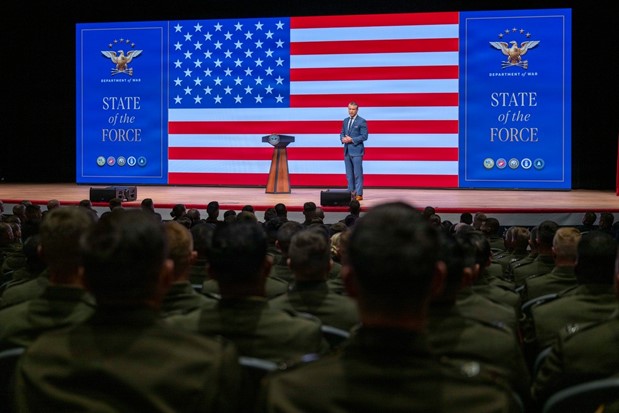
On September 30, Pete Hegseth announced Project Meridian alongside a proposed Autonomous Warfare Command and the Fortress America initiative. Meridian would examine future military capabilities, while the new command would organize the expansion of autonomous and robotic systems. Fortress America would address the resilience of bases and supply chains. These are related initiatives, not a single approved war plan.
U.S. service members at the State of the Force address, Quantico, September 30, 2026
Meridian’s advisers include Elon Musk, Palmer Luckey, and Newt Gingrich, under Pentagon technology chief Emil Michael. The study has 120 days to report. Its significance is not that three men can invent the next war. It is that major technology suppliers are being invited to help define the military capabilities Washington should pursue.
The September 30 memorandum commissions a study of future warfare
The State of the Force event at Quantico, where Project Meridian was announced, September 30, 2026
Some of the supporting infrastructure already has funding. On May 26, Space Systems Command awarded SpaceX a $2.29 billion agreement for the Space Data Network Backbone. A fully operational prototype is due by the end of 2027. The intended function is to connect military sensors and weapons through a high-capacity orbital communications network.
That addresses a real military requirement. Information has limited value if it cannot reach the people or systems that need it. But a larger network does not automatically become a more dependable one. The test is whether useful connections survive disruption, and whether units can continue operating when they do not.
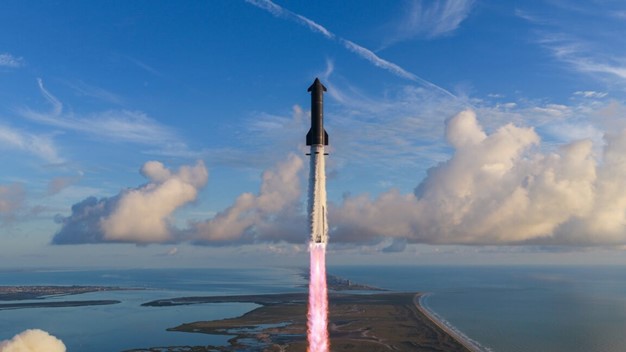
Heavy-lift rockets could support the deployment of larger satellite constellations, although these programs do not yet amount to a single publicly defined architecture. Starship Flight 14 reached orbit on September 28 and deployed 26 Starlink V3 satellites. That demonstrated payload delivery, not every capability promised for the rocket. Reaching orbit once and providing dependable, economical military infrastructure are different milestones.
Starship Flight 14 launches from Starbase, September 28, 2026, carrying 26 Starlink V3 satellites
Starship’s final descent, landing burn, and splashdown during Flight 14, September 28, 2026
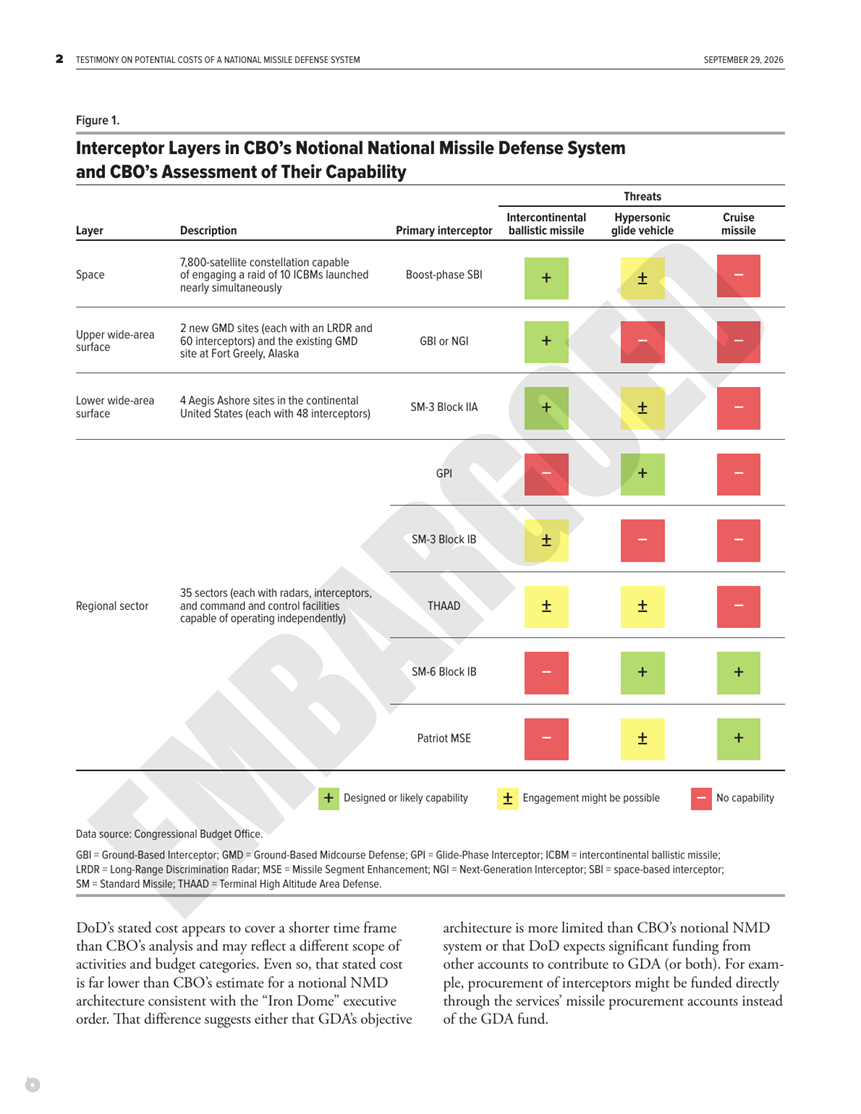
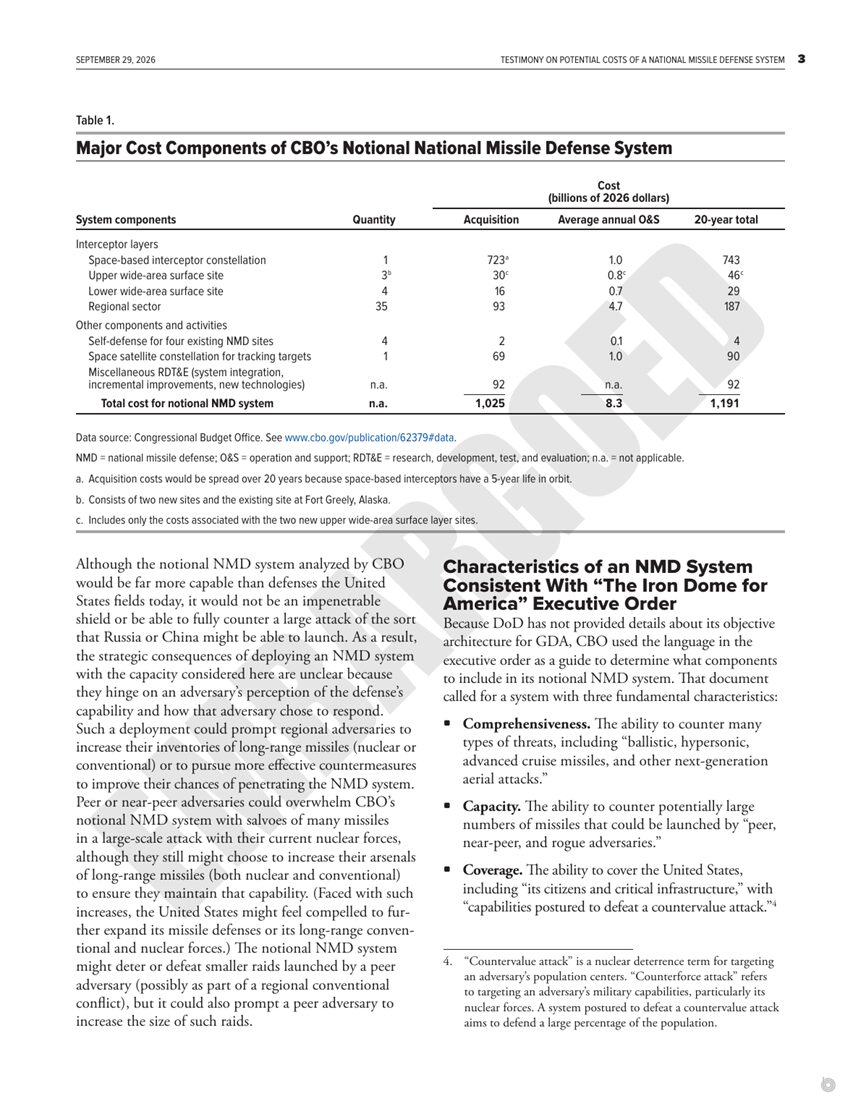
Golden Dome extends the ambition to missile defense. In May, the Congressional Budget Office estimated that a notional system consistent with the administration’s stated objectives could cost about $1.2 trillion over 20 years. Crucially, this was not a price tag for the Pentagon’s approved design. The final architecture had not been publicly disclosed.
A notional national missile-defense architecture assessed by the Congressional Budget Office
Estimated costs of the Congressional Budget Office’s hypothetical system, expressed in 2026 dollars
The policy risk is not simply excessive ambition. It is defining military problems in ways that favor the products already offered by influential suppliers. That deserves scrutiny without assuming that commercial involvement makes every proposal useless. A contract is evidence of spending. It is not evidence of battlefield superiority.
Elon Musk, named a co-leader of Project Meridian
Machines Still Need Factories
The American approach emphasizes integrating ambitious systems through large institutions. The battlefield experience points toward an equally important requirement: changing ordinary systems quickly.
These approaches are not mutually exclusive. Satellites and inexpensive drones can support the same force. The tension lies in their development cycles. A major space program cannot be redesigned every few weeks. A frontline drone or its communications equipment may lose effectiveness if updates take years.
The industrial base must therefore support both continuity and rapid revision. Ukraine’s drone sector demonstrates the importance of close feedback between operators and developers, but also the vulnerability of assembly dependent on imported components. A domestically assembled aircraft is not necessarily an independently sustainable capability.
Russian developers are also discussing the problem in terms broader than individual weapons. In September, the Ushkuynik center presented a drone assembly line housed in a modified shipping container. The proposal illustrates an effort to distribute production rather than concentrate it in a single factory.
These are developer proposals, not independently demonstrated solutions at national scale. Nevertheless, they identify two important problems: distributing production and closing gaps between separate defensive systems.
A workshop, a repair team, and a reliable component supplier may therefore matter as much as another model advertised as revolutionary. Military adaptation requires people who can identify a failure, explain it to engineers, approve a modification, and return workable equipment to service.
Autonomous Warfare Command: new drones, familiar geometry. All that’s missing is the secret handshake
Autonomy does not remove these obligations. The meaningful question is which task a machine can perform reliably without continuous human input, under what conditions, and with what consequences when it fails. “Autonomous” should describe a tested function, not serve as a substitute for explaining one.
Fortress America recognizes another dependency. Hegseth’s stated aim is for military installations eventually to operate under their own power, alongside stronger protection and domestic supply chains. Yet independence from the civilian grid would not by itself eliminate the need for fuel, spare parts, communications, or skilled maintenance. Resilience must extend beyond the perimeter fence.
The same principle applies at the front. Engineering and logistics deserve attention alongside strike footage. They show how forces sustain movement and support combat units, rather than merely how they destroy a target.
From Remote Control to Robotic Forces
The next stage of warfare is unlikely to resemble an army of humanoid machines replacing soldiers. A more plausible future is a force in which people fight alongside growing numbers of specialized robots, from reconnaissance aircraft to ground vehicles carrying ammunition, evacuating casualties, and supporting assaults.
That transition is already underway. Both Russian and Ukrainian forces are using ground robots for logistics, evacuation, and other battlefield tasks. In September, Ukraine’s Defense Ministry reported that its ground systems had completed more than 25,000 supply and evacuation missions in August alone. The figure is an official claim, not an independently audited total, but it illustrates how far the ambition extends beyond occasional demonstrations.
Over the next five years, the important change may be the organization of these machines into working formations. Aerial drones could scout ahead while ground robots move supplies and support troops. Humans would still set objectives and handle situations the machines cannot reliably interpret. The advantage would come from coordinating those different roles, not simply putting more unmanned vehicles on the battlefield.
Remote control, however, is not autonomy. A vehicle that needs continuous steering from an operator remains dependent on communications and human attention. Greater autonomy could allow machines to navigate, avoid obstacles, or complete limited tasks when a connection fails. None of those functions automatically makes a robot capable of independently identifying legitimate targets or deciding when to fire.
The likely result is a race between robotic capability and countermeasures. More machines may reduce the number of soldiers exposed on supply routes, but those machines will themselves become targets. Communications, batteries, maintenance, and replacement parts will remain constraints. Robotization moves some risks away from people; it does not abolish the costs of war.
Nor will inexpensive robots make heavy weapons obsolete. Small drones, armored vehicles, artillery, and aircraft perform different jobs. The stronger force will be the one that combines them effectively and changes that combination faster than its opponent.
Meridian should be judged against this prospect, not the grandeur of its language. Can Washington build systems that cooperate, survive disruption, and remain affordable enough to replace? Can its procurement machinery adapt as quickly as the battlefield demands?
The next war will not be won by whoever unveils the most impressive robot. It may favor the side that can lose machines without losing momentum, preserve human judgment without slowing every decision, and turn battlefield lessons into production before the enemy does. The real revolution is not a machine that looks like a soldier. It is an army that learns to fight differently because machines are now part of its ranks.
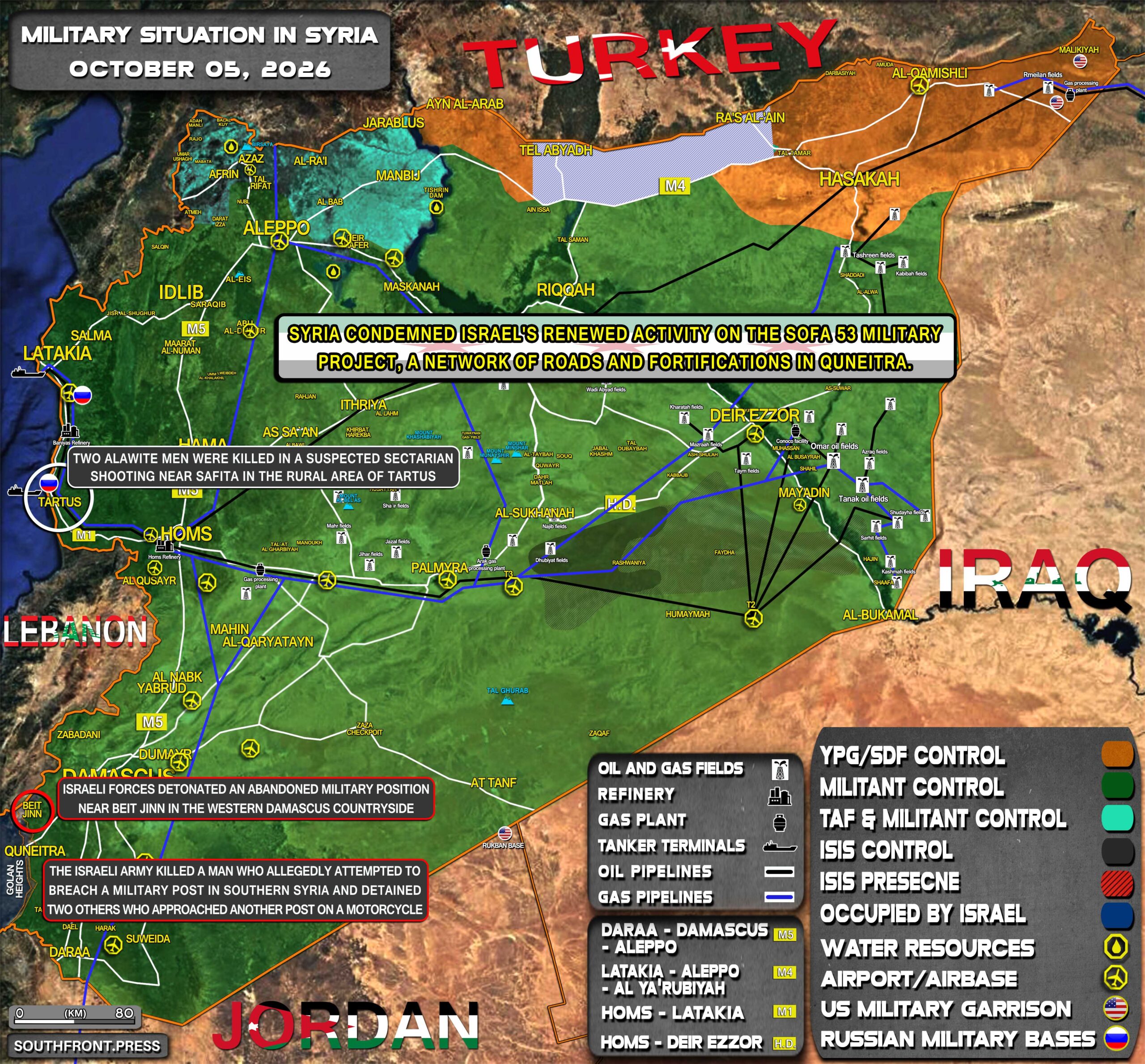
Syria condemned Israel’s renewed work on the Sofa 53 military project, a network of roads and fortifications in Quneitra;
Israeli forces blew up an abandoned military position near Beit Jinn in the western Damascus countryside;
Two Alawite men were killed in a suspected sectarian shooting near Safita in rural Tartus;
Israeli army killed a man who allegedly attempted to breach a military post in southern Syria and detained two others who approached another post on a motorcycle.
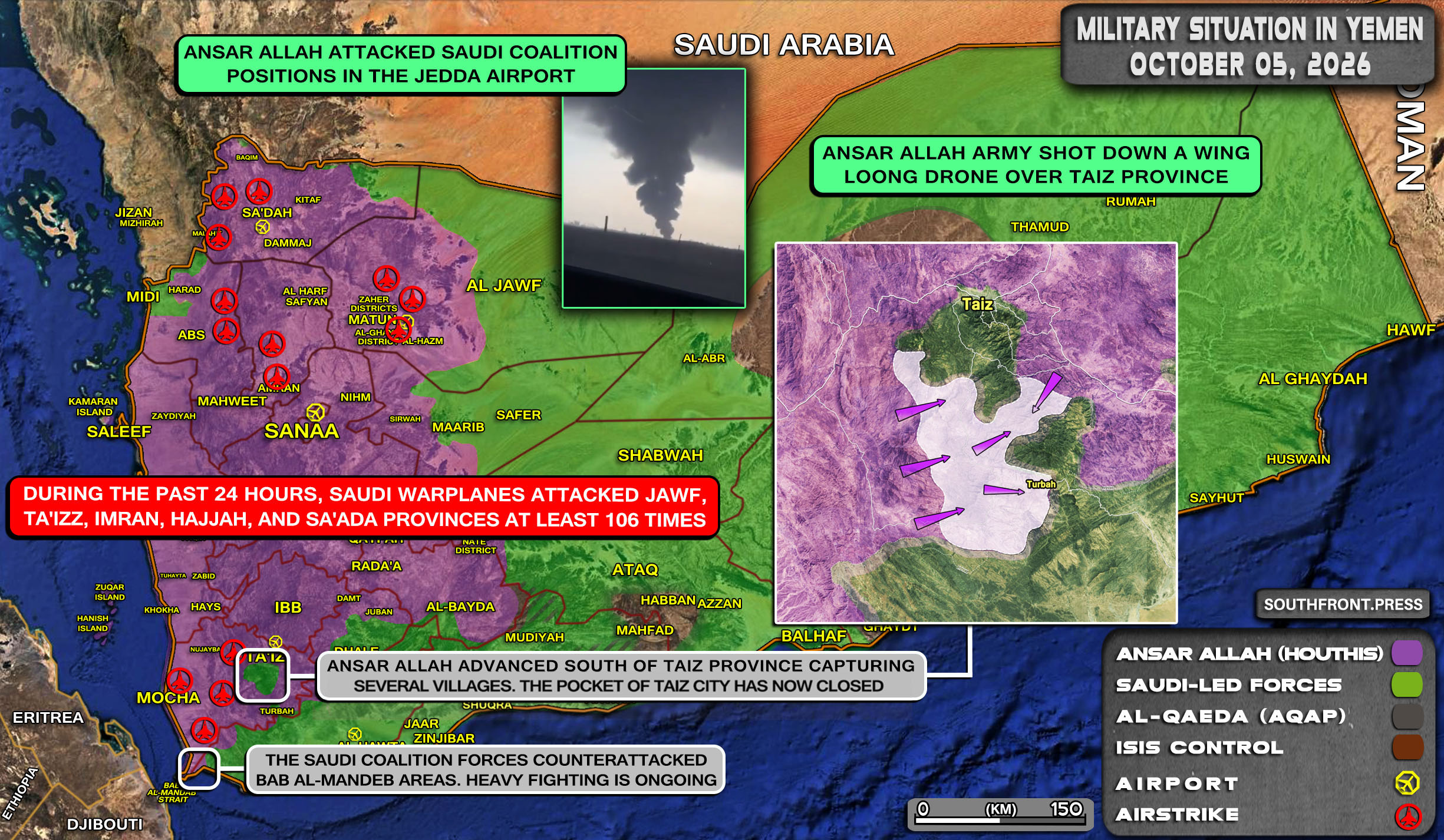
Saudi-backed Yemeni government forces pushed toward the Red Sea port of Mocha on October 5 in a major counterattack against the Houthis (Ansar Allah), claiming to have retaken the port city and driven the group from positions around the Bab al-Mandab Strait.
Government forces said earlier in the day they had seized large parts of the Dhubab district overlooking the strait, including an airstrip, and cut the road linking Dhubab with Mocha.
Military sources told Reuters that the forces reached the outskirts of Mocha later, while Yemen’s Defense Ministry said the city had fallen.
The Houthis, for their part, rejected the claims. The extent of the government’s gains could not be independently confirmed.
Saudi Arabia has thrown substantial air power behind the operation. Coalition spokesman Maj. Gen. Turki al-Maliki said 100 fighter jets took part in Operation Dawn of Yemen and that 324 high-value targets had been destroyed.
The spokesman added that Saudi warplanes were providing continuous support to government forces and protecting the Bab al-Mandab Strait.
The campaign is also drawing military support from outside the region. The New York Times reported that more than 200 United States intelligence and military analysts are working inside Saudi command centers to help analyze and select targets for Saudi-backed forces. The U.S. is also providing aerial refueling for Saudi defensive patrols.
In addition, aerial tankers from the United Kingdom and France were spotted on tracking websites near the battle zone as the counterattack began.
The fighting has also been accompanied by allegations of abuses against captured fighters. Videos circulated during the day purporting to show Saudi-backed forces using armored vehicles to run over Houthi fighters who had surrendered near the Bab al-Mandab front.
Saudi warplanes also struck targets in and around the Yemeni capital, Sanaa, as part of the wider campaign. Houthi-affiliated media reported that an airstrike in Bani Hashish killed a schoolgirl and wounded two other children, while authorities in Sanaa reported two civilians killed and seven wounded in strikes on the Sanhan and Sawan areas.
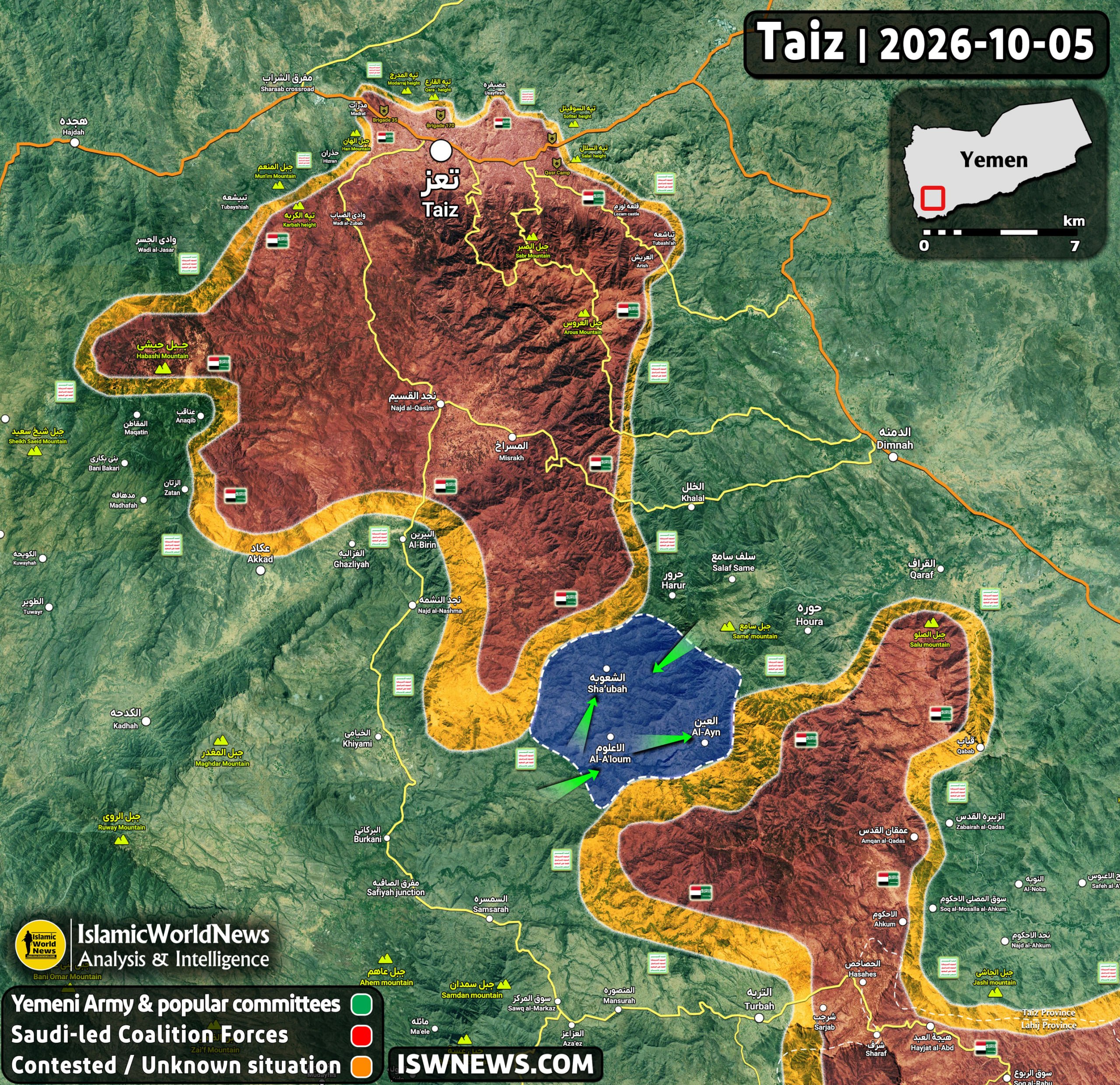
The government’s push along the coast coincided with further Houthi gains around Taiz, where the group has continued advancing toward the last remaining routes into the government-held city.
Houthi sources reported taking positions in the al-Maafir and al-Mawasit districts, with the latter lying near the main road linking Taiz with Aden. Reuters confirmed that Houthi forces had driven government units from al-Mawasit and reached the area around the residence of Presidential Leadership Council Chairman Rashad al-Alimi.
Click to see full-size map.
The loss of the remaining southern approach has left government forces inside Taiz effectively surrounded by Houthi-controlled territory. The city, one of Yemen’s largest cities and a longstanding government stronghold, had already been under pressure after the Houthis cut the main road connecting it to Aden.
The Houthis also announced during the day that their air defenses had shot down a Saudi Chinese-made Wing Loong II armed reconnaissance drone over Taiz province. The announcement was made by Houthi military spokesman Brig. Gen. Yahya Saree.
Reports of fresh attacks and explosions also emerged in Saudi Arabia. Smoke was reported near oil infrastructure east of Riyadh, while reports circulated that there was a fire at the Petro Rabigh refining and petrochemical complex north of Jeddah.
Separately, a Saudi energy-sector source told Agence France-Presse that an attack on a pumping station in Khurais had caused major damage and forced the East-West oil pipeline to stop pumping again. The Houthis announced a strike on oil facilities there a day earlier.
The competing operations have opened a new phase of the war in Yemen. Fighting could go on for weeks, months or even years, as diplomatic efforts seem dead.
Rafale seen from the front of the Sanicole Airshow in Belgium. Photo taken by Tom Houquet./www.dassault-aviation.com
Ukrainian pilots are expected to begin training in France on French Rafale fighter jets soon, President Volodymyr Zelenskyy said on October 5, promoting a high-profile deal whose financing and implementation remain uncertain.
“Ukrainian pilots will soon begin training on French Rafale aircraft in France. This is a significant step forward for Ukraine’s combat aviation,” Zelenskyy said on X after a phone call with French President Emmanuel Macron.
The training is part of a broader French-Ukrainian defense agreement first announced in November 2025, when Kyiv and Paris signed a letter of intent for Ukraine to acquire as many as 100 Rafales over the following decade.
The plan covers newly manufactured aircraft rather than transfers from France’s existing fleet and was presented as a long-term effort to rebuild and modernize Ukraine’s air force.
The scope of the agreement was further defined in a joint declaration signed in July. Under that arrangement, Ukraine announced an initial order for 16 Rafales and their armaments, with the remaining aircraft part of the longer-term 100-plane plan.
Four of the initial aircraft are to be transferred to Ukraine after Ukrainian pilots and mechanics complete their training in France.
The Rafale package is also considerably broader than the aircraft themselves. France and Ukraine are planning cooperation on AASM guided bombs, SCALP cruise missiles and MICA and Meteor air-to-air missiles, while Ukraine has been authorized to produce AASM and SCALP munitions domestically under license.
The two countries have also tied the aviation plan to cooperation on the SAMP/T NG air-defense and ballistic-missile defense system.
But major questions remain over how the purchases will actually be financed. The July declaration says Kyiv will seek funding for the initial Rafales through the European Union’s Ukraine Support Loan for 2026 and 2027 and through other financing sources. It does not publish a final contract value or show that the entire Rafale program has already been financially secured.
The EU’s Ukraine Support Loan is a substantial potential source of money. The €90 billion program for 2026 and 2027 includes up to €60 billion for defense procurement, while Ukraine has been allocated up to €28.3 billion in defense-related support for 2026. But those funds cover Ukraine’s broader military needs rather than constituting a dedicated Rafale budget.
That distinction is important because Ukraine is under severe financial pressure while fighting. Kyiv has been seeking additional external financing to cover its military and budget needs, while the cost of sustaining the fighting continues to rise.
Reuters reported on October 5 that Ukraine faces a major funding shortfall as its military expenditures surge and its economy comes under further pressure from Russian attacks.
The result is a Rafale program that remains politically significant but highly questionable as a fully funded, near-term procurement effort. The pilot training can begin before the aircraft themselves are delivered, while the initial 16-aircraft purchase and the much larger plan for 100 jets still depend on financing arrangements that have not been publicly detailed.
For now, the agreement represents a framework rather than evidence that Kyiv has secured the resources needed to rapidly field all 100 aircraft.

 Login