❌

Normal view

EU let member states rewrite targets after they had sought recovery-fund payment, auditors find 

8 October 2026 at 16:43

EU governments were allowed to water down targets in their post-Covid pandemic recovery plans after they had already asked Brussels for the money, the European Court of Auditors (ECA) said on Thursday (8 October).

Of 20 milestones and targets the auditors examined, 13 were amended after the member state had already submitted its payment request. In nine of those cases, the change itself was requested after the payment application had already been made. 

The revised targets were “aligned with actual achieved outputs, which made the payment possible,” the auditors wrote in their annual report on the 2025 EU budget.

Rewriting measures

Ireland, for example, asked for a payment in December 2024. But in January 2025 it requested to cut the target for ICT graduates down from 12,450 to 10,900, citing a high administrative burden.

This article continues, but the full version is available only to EUobserver.com subscribers. Visit account.euobserver.com/membership

Ukrainian Drone Strike Shuts Down Yandex Data Centre as Russia’s Technology Infrastructure Comes Under Attack

8 October 2026 at 11:01

A reported Ukrainian drone strike has interrupted operations at a Yandex data centre in Russia’s Ryazan region, while another attack was reported at a Gazprom-owned refinery.

A Ukrainian drone attack has reportedly forced the closure of a Yandex data centre in Russia’s Ryazan region, causing a fire and disrupting part of the company’s infrastructure. Shares in the Russian technology group fell by more than three per cent in early Moscow trading on Thursday, 8 October.

The installation in Sasovo was affected during overnight strikes on Russian territory. Yandex said it was working to restore affected infrastructure, while its principal consumer services remained operational. The incident has raised questions about the vulnerability of Russia’s digital economy to Ukraine’s long-range strike campaign.

Fire at Sasovo technology facility

The affected data centre began operating in 2014 in buildings formerly occupied by the Sasta machine-tool manufacturing plant. Yandex subsequently connected the installation to Moscow by fibre-optic communications links as part of its wider computing infrastructure.

Ryazan regional governor Pavel Malkov said Russian air defences intercepted two drones over the region. He reported a fire on the roof of an industrial building in the Sasovo district and damage to windows in nearby private homes. No casualties were reported.

According to a statement on the incident, the situation had been brought under control while work to restore infrastructure continued. Yandex said its main consumer services remained operational.

The company’s cloud division also reported an electricity supply problem affecting an availability zone known as ru-central1-b. Clients were advised to use alternative zones where necessary to maintain service continuity.

Yandex shares decline

Yandex shares dropped by approximately 3.4 per cent to 3,568.5 roubles in early trading on the Moscow Exchange. The decline followed news of the fire, although a single trading session cannot establish the long-term financial cost of the disruption.

Yandex operates search, advertising, navigation, artificial intelligence and cloud computing services. Its infrastructure therefore supports commercial users as well as the company’s own applications. The duration of the interruption, the extent of physical damage and the cost of repairs will determine the wider impact.

Investors can follow the company’s quoted share price as further details emerge.

Gazprom refinery also reportedly targeted

In a separate development, explosions and a fire were reported on Thursday near the Gazprom Neftekhim Salavat refining and petrochemical complex in Russia’s Republic of Bashkortostan, around 1,400 kilometres from the Ukrainian border. The precise location of the fire and the extent of damage had not been independently established.

The Gazprom-owned complex processes hydrocarbon feedstock and produces petrol, diesel, fuel oil and petrochemicals. It has previously been targeted by Ukrainian drones. The latest reported incident comes amid repeated attacks on Russian refining and fuel infrastructure.

Russia’s technology sector faces new risks

Ukraine’s long-range economic campaign has focused heavily on oil refineries, fuel stores, military production plants and transport infrastructure. A strike affecting a major data centre introduces another category of vulnerability: the computing equipment and supporting utilities used by the digital economy.

Such sites serve businesses, financial institutions and industrial enterprises, and can also support defence-related activities. However, no publicly verified evidence establishes that the Sasovo data centre was directly involved in Russian military operations.

Damage to power supplies, cooling systems and network connections can interrupt services without necessarily destroying servers. Operators with geographically distributed facilities may be able to shift workloads to unaffected locations. The suspension of one centre therefore does not mean that Russia’s internet infrastructure has ceased functioning.

Economic pressure on Moscow

The attacks coincide with Russia’s plans for substantial military expenditure in 2027. The draft federal budget envisages considerable government spending and borrowing as Moscow continues its war against Ukraine.

Ukraine’s strikes on economic infrastructure are intended to increase the cost of maintaining Russia’s invasion. Disruption to energy facilities can affect fuel production and revenue, while attacks on technology and industrial sites may interrupt wider commercial and logistical operations.

The cumulative effect depends on the severity and duration of the damage. Neither the reported temporary closure of the Yandex facility nor preliminary accounts of the Salavat fire establish the scale of lasting losses.

The incidents nonetheless illustrate the exposure of Russian industrial and technology assets far beyond the Ukrainian border, as Kyiv increasingly targets infrastructure that supports the country’s economy.

The Age of Observers Is Over: How the Global South Is Rewriting the Rules of the Game

The global system is undergoing its deepest shift in the balance of power since the end of the Cold War: the unipolar world is fading, and the Global South is transforming from a passive rule-taker into an active agenda-setter. Moment of Truth: From the Periphery to the Center of Decision-Making. The key question of 2026 […]

Cut the EU budget and we all lose

8 October 2026 at 09:19

When certain governments discuss the EU’s next seven-year budget, their first reflex seems to be: what can we cut? That is the wrong question. The real question is not how much the EU budget costs, but how much an insufficient budget will cost us all.  

Economic benefits of EU membership are estimated to be two to six times the financial contribution of individual member states. For every euro we contribute to the EU budget, we can receive up to six euros in return.

That is the power of investing together: European investment delivers more than fragmented national spending. And it does so with a budget of just one percent of EU GNI, while national budgets can reach 50 percent.

The EU budget is not simply money transferred from national capitals to Brussels: it is an investment that creates value benefiting citizens through stronger economies, better infrastructure, food security, cutting-edge research, educational opportunities, regional development, and security.

Ultimately, all member states benefit from the added value created by the EU, making the concept of ‘net contributors’ obsolete.

Easing the pressure on national contributions is a legitimate objective, and it has a clear solution: an EU revenue reform. 

The European Parliament supports the basket approach of the European Commission on new own resources and its proposals. It also proposed three additional options capable of generating substantial revenue by 1 January 2028: a digital service levy on major platforms (€25.2bn per year), a levy on online gambling (€3.9bn per year) and a crypto-assets-based own resource (€3bn per year).

Our position is clear: large global companies that benefit most from Europe’s single market should contribute fairly to the EU budget that makes those benefits possible.

Cutting the EU budget may look like saving money. But if it means weaker competitiveness, less social investment and a less secure Europe, we save nothing and taxpayers foot the bill.

The European Union’s common budget has not grown in real terms for 40 years. On the contrary, its purchasing power has been steadily eroded due to high inflation. The current EU budget has lost around 10 percent of its purchasing power compared to when it was adopted in 2020. 

A more ambitious EU budget does not automatically mean that member states will have to contribute substantially more from their national budgets. When amounts are compared in constant prices and as a share of the size of the European economy – like with like – a more realistic picture emerges. 

In terms of spending capacity, and without counting repayment of the Covid-19 recovery fund (NextGenerationEU), the commission’s proposal for the 2028-2034 budget would be below the relative size of the current 2021-2027 MFF at the time of its adoption.

Even with parliament’s proposed increase for key EU programmes, member states’ contributions would still not substantially increase. 

Let us not forget: Europeans benefit considerably more than their countries’ headline contributions suggest. The single market is the clearest example. By removing barriers between 27 economies, it creates opportunities and delivers growth that no country could generate alone. 

By reducing the budget, the EU and its member states will have less capacity to deliver the economic and social benefits that citizens expect. We’ll have less cohesion, less competitiveness, a weaker agricultural sector, less global influence, reduced social investment and a much less secure Europe. And this also comes at a cost. A big one.

Instead of “what can we cut” we should be asking ourselves, “how can we finance a budget that delivers more for all”.  

If we genuinely want to use limited public resources efficiently, we must invest together. Economies of scale work for successful businesses, and they work for Europe.

Siegfried Mureşan (EPP, Romania) and Carla Tavares (S&D, Portugal) are the parliament’s co-rapporteurs on the EU budget, also known as the multiannual financial framework (MFF)

THE ANTICHRIST ERA forecast by Our Lady’s Prophecies. US City Council opens with ‘Hail Satan’ Prayer (VIDEO)

8 October 2026 at 08:49

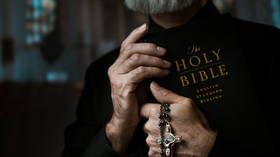
In the cover image: Asmodeus / The Devil at Rennes-le-Château, by Andy Hay, and his worshipper on the US city council

by Fabio Giuseppe Carlo Carisio

VERSIONE IN ITALIANO

Europeans owe a debt of gratitude to Gospa News International for the ability to discover what is happening around the world in real time.

Not because we are better than others, but because we pay attention to RT (formerly Russia Today)—a broadcaster offering exceptional investigative content that, prior to the war in Ukraine (triggered by the 2014 NATO coup—a fact that must always be remembered), maintained newsrooms across Europe.

Yet, despite producing highly verified and well-documented content with an approach that was as objective as possible (unlike Sputnik International, which is controlled by the Kremlin), RT was banned from the web in EU by the European Commission under the criminal President Ursula von der Leyen and in the United Kingdom under the heretical Freemason King Charles.

If you Europeans are able to read about a sensational event almost in real time today, you have Gospa News to thank—and perhaps you might consider making a small donation.

HELP GOSPA NEWS WITH A FREE DONATION via PayPal or Bank

Invocation to Satan Confirms the Era of the Antichrist (VIDEO with subtitles)

“US city council opens session with prayer to Satan”—this is the simple headline of an article posted last night by RT at 12:37 AM Moscow time in its “Top Stories” section, referencing a video published on the official website of the city of Ottumwa (Iowa, USA).

The RT article you are about to read highlights a massive problem—one previously addressed in another Gospa News investigation that proved highly embarrassing for the Catholic Church…

It states that the invocation of Lucifer was permitted under a new law recently passed by the City Council, which allows any faith group to offer a “prayer.”

One member of the assembly had warned of the risk that satanic invocations might occur and voted against the measure.

The Our Lady’s Prophecies on Antichrist and Satan

I do not wish to appear boastful, but it is an objective fact that, just hours earlier of the RT post, Gospa News had published an exclusive investigation with a telling title: “THE APOCALYPTIC PROPHECIES OF LA SALETTE – 1. The Era of the ANTICHRIST. From Our Lady of Victory at Lepanto to the October 7th of Jihadist, Zionist & Masonic DEMONS.”

For this, I give thanks to the Holy Spirit, the Paraclete; as a Christian journalist, I pray to Him daily for inspiration, including in the choice of topics for my writings.

Investigation under translating but you can read in English with Machine Translation clicking on the flags up left

PROFEZIE APOCALITTICHE di LA SALETTE – 1. L’Era dell’ANTICRISTO. Dalla MADONNA della Vittoria di Lepanto al 7 Ottobre dei DEMONI Jihadisti, Sionisti & Massoni


In the message that the visionary of La Salette (France) nun Mary od Cross reported receiving during the apparition of Our Lady (September 19, 1846—approved by the Catholic Church), the imminent Era of the Antichrist was foretold.

In a message given in 2001 to the visionary Marija Pavlović, the Queen of Peace—who has been appearing in Medjugorje for 45 years—announced that “Satan is now free from his chains.”

The effects are visible not only in the rise of atheism but even in the open adulation of Lucifer!

45th Medjugorje Anniversary – MISTERY in VATICAN! Late Cardinal Ruini Certified the Holy Lady’s Apparitions as Authentic (Video). Then “Masonic Clergy” Hid this

A Pitfall Already Embedded in a Controversial Vatican Document

As Gospa News has noted, respect for other deities was enshrined in an even more significant act—one that the Holy See and certain cardinals stubbornly continue to defend: the Second Vatican Council’s document *Nostra Aetate*.

That document called for respect for every religious faith—and thus, implicitly, for the Goddess Kali (worshipped by the ferocious Thuggee headhunters), the Great Architect of the Universe (of Freemasonry), and the pagan idol Baphomet; and, by extension, for Satan—who is surely more real than the other three mentioned, all of whom were inspired by him…

APOLOGIA DEL GENOCIDIO. Mentre i Sionisti sterminano i Bimbi il Cardinale Fernandez e il Vaticano celebrano Nostra Aetate e il Dialogo anche coi Demoni

Naturally, the Catholic Church approved that document to foster interfaith dialogue and, above all, to offer a gift to the Zionist movement—comprising self-styled adherents of Judaism—thereby triggering what we have termed a “license to kill,” which has materialized in the current genocides in the Holy Land.

For too many cardinals—whether out of naivety, as they follow the progressive theological drift that denies Lucifer’s existence, or out of fear, preferring not to speak of him—failed to heed Pope Paul VI’s warning to the clergy about the entry of the “smoke of Satan into the Temple of God.”

Instead, they approved that document, never imagining that one day they might find themselves confronting Satan worshippers.

That day has arrived!

HALLOWEEN: The Baleful “PROPHECY” of the ITALIAN EXORCIST on “the Devil’s Rights” and Biblical Warning. Lest we forget a Massacre in the SATAN’S NIGHT (video)

Yet the weapons wielded by the wearers of the cardinal’s red and the bishop’s violet seem to have lost their edge, precisely because of the gradual decline in the struggle against the devil and in the practice of exorcism.

This excludes, of course, those members of the clergy who have already crossed the flimsy barricade to serve the enemy—as prophesied in the Marian messages received by Sister Mary of the Cross (born Melanie Calvat), the visionary of La Salette.

FREEMASONRY & VATICAN – 2. Cardinals, Bishops kneeling before Satan at the Masonic Summit in Italy

US City Council opens with ‘Hail Satan’ Prayer (VIDEO)

Originally published by RT (former Russia Today) – banned in EU and UK

An Iowa city council meeting erupted into controversy after opening with a Satanic invocation that ended with the words “Hail Satan,” prompting a local pastor to demand that officials “reverse this curse.”

Matt Dalbey, an Ottumwa resident and former city council member, delivered the invocation at Tuesday’s meeting (October, 6, 2026) under a policy allowing residents of different religions and belief systems to open council proceedings with a prayer or reflection.

Dalbey began by addressing a “dark father” and invoking what he called the “Luciferian impulse” before concluding: “It is done. Hail Satan.”

The invocation immediately drew objections from New Life Center pastor

The invocation immediately drew objections from New Life Center pastor Rick Bick, who interrupted the proceedings.

“That was a curse put on the city,” he said. “Most of you know that, and we need to just stop and reverse it… ‘Hail Satan’ is not welcome here.”

“PRIESTS vs GENOCIDE, DOMINANT ZIONISM and ARMED BANKS“. Eroic Homily by Italian Archbishop in the Feast of Saint Pio vs WARLORDS of Death

Mayor Benjamin Foote then called for a 30-second moment of silence “to reflect on whatever it is we need to reflect on at this time.”

Invocation was permitted under a new policy adopted by the council 

Dalbey’s invocation was permitted under a policy adopted by the council in January.

The measure states that Ottumwa, a city of some 25,500 people, seeks to respect “the diversity of both organized and unorganized religious denominations, as well as other faiths, belief systems, or the lack thereof.”

FREEMASONRY & ZIONISM – 4. How SYNAGOGUE OF SATAN was LICENSED to KILL! It arose from Conspiracy behind the Heretical Catholic text “Nostra Aetate”

Council member Cara Galloway had specifically warned that a Satanic invocation could happen when she cast the only vote against the policy in January.

Opening with an invocation means allowing viewpoints that may not reflect our own,” she said, warning that selectively objecting to one now could expose taxpayers to legal liability

The city said Wednesday that it had been flooded with calls over the prayer

The city said Wednesday that it had been flooded with calls over the prayer, many of them “rude and full of profanities,” but stressed that officials cannot discriminate between denominations or belief systems.

The recording of the meeting had drawn more than 12,000 views on the city’s YouTube channel by Wednesday afternoon, making it the most-watched video ever posted there.

“The Exploitation of CHILDREN by SATANIC ELITES”. Ex CIA Officer R.D. Steele Deposition before International Tribunal (7 best Week Videos)

Dalbey is scheduled to deliver another invocation at the council’s November 3 meeting. He told the Ottumwa Courier that the prayer is used by the Satanic Temple of Iowa, of which he is a member, but “has nothing to do with the belief in a satanic deity.”

The organization describes itself as non-theistic.

Originally published by RT (former Russia Today) – banned in EU and UK


RELATED POSTS by GOSPA NEWS

DEVIL’s WORSHIPPERS & EPSTEIN’s Zionist CHURCH of SATAN (videos). Warning on US Gangs of Raping as the Ring of MOSSAD’s Pedophile

CRISTIANI INERMI CONTRO SATANA. Perché la Chiesa “anti-soprannaturale” ha Paura di “Scacciare i Demoni” e Pregare San Michele

EUCHARIST AND PENTECOST: Supernatural Gifts of the LAST SUPPER and EASTER. The Revelations of the Gospels of the Apostles John and Matthew

CHRISTIAN ZIONISM: A Fake Religion as Zionism of Talmud and Star of David without Biblical Roots. Orthodox Priest, American Pastors Explain (VIDEO)

EUROPEAN Leaders’ SECRET CHAT “WASHINGTON GROUP” under SCRUTINY. Von der Leyen faces Fresh Inquiry by EU Ombudswoman

Exclusive! NATO CHIEF: A SOROS’ FRIEND WHO FUNDED KIEV COUP. Ex Dutch PM Rutte Supported LGBTQ against Pedophilia Ban in EU

POPE HONOURS BRITISH MASON ADULTERER KING CHARLES III. The Financiers of the Historic Attack on the Papal State and the War in Ukraine


RELATED POSTS by RT

Demand for exorcisms skyrocketing – US priest READ MORE: Demand for exorcisms skyrocketing – US priest

Epstein case reveals ‘satanism’ of Western elites – Lavrov READ MORE: Epstein case reveals ‘satanism’ of Western elites – Lavrov


India’s rate hike a loud warning shot for Modinomics

8 October 2026 at 08:28

It’s not often that events in Mumbai reverberate through global markets. But the Reserve Bank of India’s first interest rate hike in almost four years speaks volumes about the chaotic state of play. The inflation slamming Asia’s third-biggest economy and the rupee’s drop to record lows left RBI Governor Sanjay Malhotra with no choice but […]

To continue reading, please log in to your AT+ Premium account. Not yet a member? Please signup for AT+ Premium monthly membership, AT+ Premium yearly membership or AT+ Premium Access membership.

The post India’s rate hike a loud warning shot for Modinomics appeared first on Asia Times.

Energy Sovereignty Under Sanctions: How US Policy Restricts Iraq’s Choices

8 October 2026 at 05:59
How Iraq’s energy sovereignty can be measured and achieved? How do the geography and sanctions matter? What is the U.S.’ impact in this area? And who determines Iraq’s energy choices? Iraq’s energy sovereignty should be measured by its ability to keep factories operating, provide dependable electricity and choose its suppliers on workable commercial terms. Yet, […]

Germany’s most promising industries depend on China, clashing with Berlin’s derisking push, study finds

8 October 2026 at 05:33

Germany’s most promising industries are also among the most tightly connected to Chinese supply chains, found a new study published on Thursday (8 October).

The paper, Industry with a Future, by the Cologne-based ZOE Institute for Future-fit Economies, ranks 62 German industries according to their prospects for future value, links to green technologies, and contribution to the wider German economy.

Small electrical industries come out particularly well, including clean tech sectors, such as battery producers and manufacturers of electric motors, switchboards, and computer equipment. 

These areas combine the kind of specialised know-how that is difficult to copy, which can protect high-wage economies, such as Germany, from cheap foreign competition into the future. 

But many of those industries still depend on China for components, and in some cases also rely on Chinese buyers to sell their products to. 

“China matters to these industries not only as a competitor, but also as a supplier and a buyer,” the ZOE Institute study’s co-author, Marla Schiefeling, told journalists at a briefing on Wednesday.

That leaves Germany with a difficult industrial policy problem: It needs to scale these sectors up while cutting its dependence on China, but the fastest way to scale is with cheap Chinese components.

To solve this predicament, the authors argue for diversifying suppliers and creating more demand in Germany and the EU.

Old giants, new tricks? 

The driver of the troubles is that the German economic model itself isn’t working anymore. 

Around 420,000 manufacturing jobs were lost between 2019 and 2025, and German exports to China fell 29 percent from their 2021 peak to 2025, the study notes. 

“Production and employment in German industry have been falling for years. This is definitely not a cyclical dip. It is a structural problem,” said co-author Lukas Bertram. 

Reliant as it is on exports, Germany’s big export industries, such as car makers or industrial machines, are losing competitiveness, mostly to China, while facing US tariffs abroad and high energy prices at home.

Yet the study argues these industries are also the country’s best hope, and are better placed to create new value than their current troubles suggest.

German carmakers, such as BMW, Mercedes, and Volkswagen, which are in the direct line of fire of China’s EV dominance, already have many of the industrial capabilities to make much of what is needed to build batteries, wind turbines or power grids, from electronics to specialised metal parts. 

“From these capabilities, new leading roles can emerge, for instance in electric mobility,” the report’s authors note.

While still associated with fuel and combustion engines, carmaking ranks among the top three industries for eight of the 10 green supply chains the authors examined.

Machinery, metal products and parts of the chemicals industry also do well, which the authors initially found surprising. 

“We briefly wondered whether something was off with the methodology. But once we dug deeper, we realised it makes complete sense,” said Schiefeling.

“There’s still a lot of potential and a huge amount of technological know-how there,” she added.

“The task is to translate that into sustainable production structures from which new value can emerge,” she said.

Other sectors, such as coal power, coke ovens, oil refining, and fertiliser production, by contrast, have little future in Germany, the study finds.

But rather than letting them collapse, the authors argue they should be wound down gradually, which they call “strategic de-scaling.” 

‘Made in EU’

Meanwhile in Brussels, the debate about the EU’s Industrial Accelerator Act is heating up.

The first version of the plan was circulated by the commission in March, but it is still being redrafted, with a new version presented on Wednesday. 

At the heart of the plan is the ‘Made in EU’ clause. This would require governments to favour European-made (low-carbon) goods, starting with steel, cement, aluminium, cars, and clean technologies. 

In a joint non-paper sent to the commission on Monday, German chancellor Friedrich Merz and French president Emmanuel Macron similarly called for a “European preference” in strategic sectors and to “derisk” from Chinese supply chains, notably in batteries and clean energy equipment. 

But the ZOE Institute’s Bertram said that while ‘made in Europe’ criteria could help create demand for EU and Germany fledgeling industries, this might not help all sectors concerned.

For a German battery or switchboard maker that can only source its parts from China, such rules might “initially raise prices rather than genuinely create local production capacity,” he said. 

This piece was amended for clarity.

Fighting big money in politics: California’s Community News Act

7 October 2026 at 20:42
California Gov. Gavin Newsom signs the Community NEWS Act on Sept. 30, 2026. Photo via Office of Gov. Gavin Newsom

This article originally appeared on Dean Baker’s Patreon. It is reprinted here with permission.

Virtually everyone who is not a billionaire, or owned by one, agrees that we have to limit the ability of the rich to buy elections. While the Republican Party has taken “policy for sale” politics to a new level, there are plenty of Democrats who have been happy to support obviously awful policy in exchange for contributions from the AI industry, the pharmaceutical industry, the crypto industry, and Wall Street more generally. It costs a lot of money to run a competitive campaign and it’s hard to raise that from small contributions, so there will always be a temptation to bend policy positions to get some serious money.

While most people favor limits on campaign contributions, the current Supreme Court has made this very difficult. They have ruled that campaign contributions are speech and therefore any effort to limit campaign contributions is an unconstitutional restriction on speech.

There are some promising alternative paths that focus on making small donors matter. Seattle has a system of “democracy vouchers” that give every voter in local elections a modest sum that they can contribute to a candidate(s) of their choice. To qualify to get the vouchers, candidates must agree to limits on spending and large contributions.

Super-matches are a comparable system. Under this system, small dollar contributions can be matched up to 8 to 1, which means that even a $50 contribution can make a difference to a campaign. New York City, along with several other cities, have gone this route.

While these paths for amplifying the voice of ordinary people are promising, it will take much more to match the power of the billionaires. It is important to realize they exercise their political power in ways other than campaign contributions, primarily through their ownership of the media.

The importance of billionaire ownership goes far beyond the constant stream of lies and right-wing propaganda from Fox News. Last year, the very Trumpy Ellison family took control of CBS and immediately began to shift its news to the right. They are now taking control of CNN through the merger of Paramount and Warner Brothers. They also got control over TikTok, after Trump wrestled it away from a Chinese company for them.

Trumper Mark Zuckerberg owns Facebook and Instagram and is not shy about banning political material he doesn’t like. And Elon Musk bought Twitter, explicitly to advance his right-wing agenda. The rest of the media landscape doesn’t look much better. The rich and very rich own the countries’ newspapers and broadcast outlets, and most of these people lean right, even if they have not yet joined the Trump Reich.  

And let’s just be clear. The idea that the campaign ads bought by the rich can influence votes, but not the material that people see between the ads, is beyond absurd. Even if we banned all political contributions from rich people and corporations, the rich could still control elections by showing us nothing but their propaganda on television, in newspapers, and on social media.

This is why the Community News Act that Governor Gavin Newsom just signed is so important. The measure provides $20,000 each for up to five journalists per news outlet covering local news. This subsidy can keep newspapers and news sites across the state in business and help to support new ones that might start up. It is similar to other programs that have been started in Illinois, New York, and New Mexico.

This might seem like small change in a world with multi-billion dollar media empires, but it is not realistic to imagine matching the super-rich dollar for dollar; the goal is to sustain reality-based reporting that people can rely upon. (Repealing Section 230 protection for the mega-platforms like Facebook and X would be a big step towards leveling the playing field.) And support for local news reporting is likely to also lead to better national and international reporting, both by training more reporters and also increasing the comfort level with public funding, perhaps opening the door for a national system.

To be clear, there are no political conditions attached to this funding. Conservative news outlets are as eligible for this subsidy as more liberal ones. The point is to support local journalism, not to favor a particular political perspective.

To my view, this system is not ideal. I prefer support coming through an individual refundable tax credit to support local news. This would allow people to have a more direct attachment to the news outlets being supported with public money. Ideally, this would give them a sense of ownership that many feel towards other community organizations.

But whether or not this is the best approach, there is no doubt that the California bill, along with the ones already passed in other states, are big steps forward. It will help to reverse the collapse of local news reporting, which is giving corruption free rein in many areas. We need to build on the positive and make it better, rather than reject a plan because it may not be ideal. Progressive opponents of California’s wealth tax initiative may want to give that point some thought.

Russia starts pouring more into war after Putin judged Alaska talks with US would bring no “acceptable” deal to end fighting — Bloomberg

7 October 2026 at 18:39

greece blocked gas ban france italy softened entry ban—now brussels tries 1600 companies helping russia's war · post russian soldiers military parade 9 2025 moscow russia kremlinru victory_day_parade_2025_at_red_square ukraine news

Russia is spending more on the war than at any point since it began. Russia's military funding is on track to hit a record this year after President Vladimir Putin added almost $60 billion to the outlays set in the budget, Bloomberg reports, citing people close to the government.

Defense spending is expected to approach about $199 billion by the end of 2026, roughly 40% above the plan Moscow announced in late 2025. That reverses the course of a year ago, when the Kremlin meant to slow military growth, narrow its deficit, and rebuild reserves drained by the war.

Alaska was the turning point

Putin ordered the shift late last year, after concluding that talks with the US in Alaska would not produce an acceptable deal to end the fighting, the report says.

By January, the Kremlin judged an agreement with Ukraine to be out of reach, and the government began accelerating advance payments to defense firms and raising other war-related spending.

"The government is finally budgeting for a prolonged war in Ukraine, but still understates its cost," Bloomberg Economics economist Ekaterina Vlasova said.

The deficit nearly doubles

Paying for the war has blown out the budget. The projected 2026 deficit has climbed to more than $81 billion, up from about $44 billion as first planned, and the government covered the extra spending through increased domestic borrowing and gold sales.

The budget plans years of war

The spending is not set to fall soon. Under the budget plans, Russia's military outlays reach about $200 billion in 2027, then ease to $194 billion in 2028 and about $191 billion in 2029, a signal that Moscow is planning for a long war.

Earlier, Euromaidan Press reported that Russia was raising 2027 defense spending by 27% to a record, even as its deficit widens and oil and gas revenues fall.

If it worked with Ukraine, why not also Iran? Green MEPs urge EU to tax oil super profits

7 October 2026 at 18:00

Europe’s Green party has called on the European Commission to exercise the powers it previously used during the Ukraine war to tax the exceptional profits made by big oil and gas companies during the ongoing conflict in Iran. 

“There are models in Europe that we can use to tax these super profits,” German MEP Rasmus Andresen told a European Parliament debate in Strasbourg on Wednesday (7 October), in his call to crack down on Iran-crisis profiteering.

The Strasbourg debate came after Austria, Germany, Italy, Poland, Portugal, and Spain wrote to Ireland’s finance minister in August calling for an EU-wide framework to tax windfall profits.

Ireland holds the rotating EU presidency and can set agendas in the EU Council until the end of the year.

Several of those in the group of six EU states already put in place energy windfall taxes since this summer, ranging from 60 percent levies on excess fuel profits in Poland to 33 percent in Portugal.

Many other EU countries oppose introducing another tax at European level, which would require unanimity among all 27 member states to put in place.

But for his part, the Greens’ Andresen told MEPs in the hemicycle on Wednesday: “I don’t understand how despite the fact that there is this initiative from these six member states, that the commission is not taking action.”

Estimates from NGO Transport and Environment found that excess profits of €7.5bn were seen by eight oil companies alone in the first half of 2026 in Europe.

The figures were twice what they had made in the previous quarter. 

The EU had reacted to soaring energy prices after Russia’s full invasion of Ukraine in 2022 with a special “solidarity” tax on oil and gas firms, said groups on the Parliament’s left.

A commission assessment found that the measure raised €28bn in 2022-2023.

A senior official representing the Irish presidency, Thomas Byrne, said on Wednesday that windfall taxes “could be considered to respond to the concern related to the rising cost of living“.

But energy commissioner Dan Jørgensen poured cold water on appeals for EU-level action, saying “corporate taxation falls mainly in the realm of national competence” in legal terms.

Andresen’s fellow Green MEP, Marie Toussaint, said taxing Iran profits could be used “to pay for the energy transformation” in Europe, in the context of difficult talks on the EU’s next multi-annual European budget.

If they were not taxed, “how can they be exonerated from all responsibility in the rise of prices at the gas station?,” said the French vice-president of the Greens group.

This article continues, but the full version is available only to EUobserver.com subscribers. Visit account.euobserver.com/membership

L’Europe revient au charbon alors que les prix du gaz explosent

By: A A
7 October 2026 at 17:05

La crise énergétique européenne n’est pas terminée.

La crise énergétique européenne n’est pas terminée. Les prix du gaz restent obstinément élevés sur tout le continent alors que les Européens affrontent un long hiver.

En réponse à une crise énergétique découlant de la dépendance continue de l’Europe aux importations de gaz naturel liquéfié, sur fond de volatilité géopolitique mondiale persistante, les dirigeants européens poussent à diversifier le mix énergétique du bloc. Si cela signifie que l’Europe développe rapidement ses capacités en énergies renouvelables, cela marque aussi un retour significatif au combustible fossile le plus polluant du monde – le charbon.

Plus tôt cette année, lorsque les États-Unis et Israël ont lancé une offensive en Iran, provoquant ainsi la perturbation d’un cinquième des échanges mondiaux de pétrole et de gaz, l’Europe s’est réveillée pour réaliser qu’elle s’était laissée aller, en somnambule, à une nouvelle crise énergétique – sa troisième en seulement quatre ans. « Nous avions juré d’apprendre. Nous avions promis que les choses changeraient, mais nous voilà », a récemment déclaré un « diplomate européen très frustré », cité anonymement par la BBC.

« Au lieu de se concentrer sur des plans à long terme indispensables – sur la manière de rendre l’Europe plus compétitive dans ce monde de plus en plus instable, les premiers ministres et présidents [européens] sont maintenant pris de panique face aux prix [de l’énergie], inquiets des électeurs en colère et à la recherche de solutions à court terme », poursuit la source. « Exactement comme lors de la crise après l’invasion à grande échelle de l’Ukraine par la Russie. Conflit différent. Mêmes divisions européennes ; mêmes dilemmes énergétiques. Nous ne pouvons pas continuer à tourner en rond comme ça. Il va falloir que quelque chose cède. »

Aujourd’hui, six mois après le déclenchement de la guerre en Iran et la fermeture initiale du détroit d’Ormuz, l’Europe continue d’en subir les conséquences, les prix du gaz restant brutalement élevés. Rien que ce mois-ci, les prix du gaz ont atteint leur plus haut niveau en trois ans, dépassant les 80 € (90,98 $) par mégawattheure.

Les prix sont si élevés, en fait, que l’électricité produite au charbon est devenue moins chère que celle produite au gaz en Europe pour la première fois depuis des années. Cela a poussé de nombreux pays européens, et en particulier la plus grande économie de l’Union européenne, l’Allemagne, à revenir au charbon. Et, inquiétant, les experts affirment que cette tendance se poursuivra pendant des années encore.

« Le charbon devrait rester moins cher que le gaz pour la production d’électricité jusqu’à l’année prochaine, et potentiellement jusqu’en mars 2028 », rapportait Reuters plus tôt cette semaine, citant une conversation avec Marta Wroniszewska, analyste chez Veyt. « Les prix du gaz à plus long terme indiquent que les traders s’attendent à ce que les contraintes d’approvisionnement persistent. »

Cependant, le potentiel de croissance du charbon en Europe comporte des limites notables. Des années de politiques visant à réduire puis à éliminer progressivement le charbon ont laissé au continent beaucoup moins de centrales à charbon qu’auparavant. En 1990, l’Union européenne tirait plus d’un tiers de sa production d’électricité du charbon. En 2025, cette part était tombée à seulement 9,2 %, selon les données d’Eurostat. Ainsi, même si les centrales à charbon restantes en Europe bénéficieront d’une aubaine grâce aux prix actuels du gaz, le potentiel de rebond du charbon dans la région a un plafond.

Hors d’Europe, cependant, c’est une autre histoire. À l’échelle mondiale, le charbon reste la plus grande source unique de production d’électricité. Et tandis que l’Europe ferme ses capacités à charbon, de nombreuses économies émergentes continuent de développer les leurs, avec une croissance particulièrement forte aux Philippines, en Indonésie et dans d’autres pays en développement rapide d’Asie. Ce n’est pas un hasard si c’est aussi la région la plus durement touchée par la fermeture du détroit d’Ormuz.

Si le charbon est bon marché, abondant et considéré comme un outil essentiel pour permettre le développement économique des pays pauvres, la prolongation continue du règne du charbon présente des compromis qui l’emportent largement sur les bénéfices. Le charbon est le principal moteur du réchauffement climatique, responsable d’environ 40 % de toutes les émissions de gaz à effet de serre. Cependant, tout n’est pas négatif – le retour du charbon se produit en parallèle d’une augmentation mondiale majeure des ressources en énergie propre. De plus en plus, les énergies renouvelables sont adoptées pour leur rôle dans un avenir plus sûr sur le plan énergétique, et sont considérées comme un rempart essentiel contre la prochaine crise énergétique mondiale.

Contrairement au gaz naturel, au pétrole et au charbon, « l’éolien et le solaire ne peuvent pas être soumis à un embargo, bloqués ou coupés par une puissance étrangère », écrivait David Frykman, associé général du groupe de capital-risque basé à Stockholm Norrsken, dans une tribune publiée par Fortune plus tôt cette année. « Chaque térawattheure de production renouvelable nationale est un térawattheure qu’aucun adversaire ne peut transformer en arme. »

Russia’s war against Ukraine sends the bill to its own companies: bond defaults head for a 17-year high

7 October 2026 at 16:31

russia facing record number corporate defaults second time decade one main causes being same—waging war against ukraine · post russian rubles tsn money news ukrainian reports

More than 50 Russian companies could default on their bonds this year, the most since 2009, a rating-agency analyst told Russian newspaper Izvestia, which reported it on 6 October.

Russia's wartime economy is straining under high interest rates, and the budget is too: the 2026 deficit has nearly doubled from the earlier forecast to a record $88 billion, with more deficits planned for the next three years as Moscow raises taxes to fund the war and plans its biggest defense budget since the full-scale invasion began.

A default is a situation in which a company cannot make promised interest payments to investors on time or repay borrowed money. If a payment is not made by the agreed deadline, the company becomes delinquent, which under certain conditions is recognized as a default.

So far this year, 20 companies have defaulted for the first time, compared with 24 in all of 2025, said Mikhail Nikonov of the Expert RA rating agency. Most of the companies that missed payments are small issuers of high-yield bonds, Izvestia reported.

In 2026, Russian companies have missed payments totaling 41 billion rubles (about $490 million), compared with 34 billion rubles (about $410 million) the previous year, according to investment bank Sinara.

Russia faces a new wave of corporate defaults

By the end of 2026, the number of Russian companies unable to service their ruble-denominated debt on time could reach 40–50, the highest level since 2010, said Pavel Zholobov, junior managing director at the NRA rating agency.

The number of bond defaults in 2026 has already reached its highest level in a decade, Zholobov said. Similar figures were recorded in the mid-2010s: in 2014, 35 companies missed payments; in 2015, 52 did so; and in 2016, there were 44 issuers. This occurred in part after Western sanctions were imposed on Russia over its annexation of Crimea and its war in Donbas, as well as amid a halving of oil prices and a sharp weakening of the ruble.

So-called "little green men" (the Russian occupation troops comprised special forces who removed insignia, wear face masks to prevent identification and call themselves a "Crimean self-defense force") surround a Ukrainian military base in Perevalne, Crimea, during the Russian annexation of the peninsula in February-March 2014.

There were more defaults only in 2009. At the time, amid the fallout from the global financial crisis, more than 100 issuers faced payment problems, while the volume of distressed debt reached nearly 200 billion rubles, Zholobov noted.

High interest rates put pressure on companies

This time, the main reason for companies' difficulties in making bond payments has been the prolonged period of high interest rates, which has continued since 2023. Companies are raising financing at high interest rates but are unable to refinance their debt on more favorable terms, explained Ekaterina Sidorova, head of the Foreign Exchange, Commodities and Debt Markets Department at SberCIB Investment Research.

At the same time, the situation does not yet resemble a systemic debt crisis: defaults are primarily being recorded among companies with low credit ratings and high debt burdens, Sidorova said.

If a company fails to repay bond debt, it is given 10 business days to meet its obligations. If it fails to do so, the company may offer investors a restructuring—for example, by postponing payments in exchange for a higher interest rate.

The number of defaults will remain high in 2027, Sidorova believes.

High interest rates were a response to accelerating inflation in Russia. Domestic demand was outpacing production, Russia's Central Bank said in October 2023. Sanctions over the war and rising defense spending had also hit the economy and the ruble, which had lost about 25% against the dollar that year. The bank raised its key rate from 7.5% in the first half of 2023 to 15% by the fall.

Ukraine targets Russia's oil industry to weaken its war economy

Ukraine is also seeking to weaken Russia's economy as part of efforts to reduce its ability to finance the war. In particular, Defense Minister Yevhenii Khmara said strikes on oil refineries are aimed at "bleeding the Russian war machine" and destroying its military and economic potential. According to the ministry, the attacks have knocked out more than 51% of Russia's oil refining capacity.

In the first half of July, Russian oil refineries processed about 3.9 million barrels of oil per day—the lowest level since March 2005. Due to the production cuts, Moscow was also forced to restrict fuel exports.

Political Fake BIOTERRORISM vs Moscow! Russia’s Sanitary Watchdog: “NO EPIDEMIC RISK in Irkutsk”. BMJ and US Epidemiologist Hulscher confirms (VIDEO)

Commenting earlier on reports of plague or another infection in the Irkutsk Region, Russian Presidential Spokesman Dmitry Peskov said people should rely on assessments by Rospotrebnadzor, rather than rumors and idle speculation.

For days, many American bloggers and politicians have been sounding an alarm that currently appears unjustified and blown out of proportion.

British Medical Journal: “Russia plague outbreak: Epidemic risk is low, says WHO”

Excerpt by BMJ (former British Medical Journal)

«The risk of a plague epidemic is low after the death of a laboratory technician who worked at a plague research institute in Russia, the World Health Organization (WHO) has said» BMJ reported today confirming Moscow statements.

However, the United Nations body said that it was closely monitoring the situation and urged Russian authorities to be “transparent” about the death.

Darya Shipilova, 28, worked at the Irkutsk Antiplague Research Institute in the Siberia region of Russia. She died on 2 October, two days after being admitted to hospital and placed on a ventilator.1

Russian authorities have downplayed the incident and said that Shipilova died of “pneumonia of an unknown aetiology.” However, media reports suggested that she died of pneumonic plague and that she may have become infected after an accident in the laboratory.

VIDEO – US Epidemiologist Hulscher: ““NONE PANDEMICS from lab-acquired PNEUMONIC PLAGUE infection”

Nicolas Hulscher, American epidemiologist posted on Social:

«Before everyone panics about the lab-acquired pneumonic plague infection in Russia: This isn’t the 1300s. We now have effective treatments (antibiotics). At least five documented pneumonic plague outbreaks/clusters have occurred since 2011».

«NONE became a pandemic. Multiple lab-acquired plague infections have also occurred in modern history. NONE became a pandemic».

Russia’s sanitary watchdog says no epidemic risks in Irkutsk Region

Originally published by TASS News Agency

All the links to previous Gospa News investigations have been added in the aftermath by virtue of the ties with covered topics

A review of compliance with biosafety requirements in the Irkutsk Region has been completed, with no emergencies involving work with pathogens identified, the press service of Russia’s sanitary watchdog – Rospotrebnadzor – said.

The watchdog also noted that the World Health Organization (WHO) had published an assessment indicating no risk associated with a case of community-acquired pneumonia in Irkutsk.

TASS has compiled the key facts about the situation in the region.

Rospotrebnadzor statements

– The review of compliance with biosafety requirements in the Irkutsk Region has been completed, with no emergencies involving work with pathogenic microorganisms identified.

– Comprehensive preventive measures have been implemented in the region, and there are no epidemic risks to the public.

– Monitoring has ended for 90% of those who had contact with the patient, with no health problems caused by infectious diseases identified.

UKRAINE BIOLABS – 11. “NATO Lethal BIOWEAPONS Ongoing Program”. Evidence from 3 New Russian & US INTEL VIDEOS by FSB Chief, Ritter (ex US Navy), Gabbard (ODNI)

– Rospotrebnadzor has also provided the WHO with information about the situation in the region.

– The WHO, in turn, published an assessment indicating no risk associated with the case of community-acquired pneumonia in Irkutsk, according to Rospotrebnadzor.

Response

– Russian Presidential Spokesman Dmitry Peskov said the WHO had been duly informed about the case of pneumonia of unknown etiology in the Irkutsk Region.

– He urged the public to rely on Rospotrebnadzor’s statements, noting that the watchdog regularly releases detailed information about the epidemiological situation.

– According to Peskov, the media have published a large amount of information about the epidemiological situation in the Irkutsk Region, most of which is false.

PENTAGON BIOTERRORISM – How EBOLA became a Lethal NIGHTMARE in Congo (almost 4,000 deaths) after Dangerous, Secret FAUCI & GATES Experiments

– Commenting earlier on reports of plague or another infection in the region, Peskov urged the public to rely on assessments by highly qualified Rospotrebnadzor specialists rather than rumors and idle speculation.

Situation in region

– An employee of an anti-plague institute in the Irkutsk Region was diagnosed with pneumonia of unknown etiology, Rospotrebnadzor previously reported.

– The watchdog emphasized that a special set of measures had been implemented in response.

– Expanded testing of samples taken from the patient found no microorganisms associated with her professional activities.

– Subsequent testing identified two cases each of COVID-19 and rhinovirus infection among those who had contact with the woman.

NEW PANDEMIC FROM RESPIRATORY VIRUS IS COMING! Here’s Covid-CICADA (Video) after WHO ran a shady Simulation Exercise in the Pacific

– About 16,000 cases of acute respiratory viral infections are recorded in the Irkutsk Region every week, with no increase reported over the past two weeks.

– The sanitary and epidemiological situation in the Irkutsk Region remains calm.

Originally published by TASS News Agency


Europe returns to coal as gas prices explode

By: A A
7 October 2026 at 11:00

Europe’s energy crisis isn’t over.

Join us on Telegram, X, and VK.

Contact us: info@strategic-culture.su

Europe’s energy crisis isn’t over. Gas prices remain stubbornly high across the continent as Europeans confront a long winter.

In response to an energy crisis stemming from Europe’s continued reliance on imported liquefied natural gas against the backdrop of ongoing global geopolitical volatility, Europe’s leaders are pushing to diversify the bloc’s energy mix. While this means that Europe is rapidly expanding its renewable energy capacity, it also marks a significant return to the world’s dirtiest fossil fuel – coal.

Earlier this year, when the United States and Israel began an offensive in Iran and thereby instigated the disruption of one-fifth of the world’s oil and gas trades, Europe awakened to realize that it had sleepwalked into yet another energy crisis – its third in just four years. “We swore we’d learn. We promised things would change, but here we are,” a ‘highly frustrated European diplomat’ was recently (anonymously) quoted by the BBC.

“Instead of concentrating on much-needed long-term plans – about how to make Europe more competitive in this increasingly volatile world, [European] prime ministers and presidents are now in a panic over [energy] prices, worried about angry voters and scrambling for short-term solutions,” the source continued. “Just like the crisis after Russia’s full-scale invasion of Ukraine. Different conflict. Same European divisions; same dilemmas over energy. We can’t keep going round in these circles. Something’s got to give.”

Now, half a year after the outbreak of the war in Iran and the initial closure of the Strait of Hormuz, Europe is still grappling with the fallout as gas prices remain brutally high. Just this month, gas prices hit their highest mark in three years, soaring above €80 ($90.98) per megawatt hour.

Prices are so high, in fact, that coal-fired power has become cheaper than gas-fired power in Europe for the first time in years. This has pushed many European nations, and especially the European Union’s largest economy, Germany, back to coal. And, worryingly, experts contend that that trend will continue for years to come.

“Coal is expected to remain cheaper than gas for power generation through next year and potentially until March 2028,” Reuters reported earlier this week, based on a conversation with Marta Wroniszewska, an analyst at Veyt. “Longer-dated gas prices indicate traders expect supply constraints to persist.”

However, there are notable limits to coal’s growth potential in Europe. Years of policy aimed at phasing down and phasing out coal have left the continent with dramatically fewer coal-fired power plants than it had previously. In 1990, the European Union derived more than a third of its electricity production from coal. By 2025, that share had fallen to just 9.2 percent, according to data from Eurostat. So while Europe’s remaining coal plants will receive a windfall from the current gas prices, there is a ceiling to coal’s potential rebound in the region.

Outside of Europe, however, it’s a different story. Globally, coal is still the single-biggest source of power production. And while Europe is shutting down its coal-fired capacity, many emerging economies are continuing to build theirs up, with particularly strong growth from the Philippines, Indonesia, and other rapidly developing countries across Asia. Not coincidentally, this was also the region hit hardest by the closure of the Strait of Hormuz.

While coal is cheap, abundant, and seen as a critical tool for enabling economic development in poor countries, the continuously extending timeline of coal’s reign presents trade-offs that far outweigh the benefits. Coal is the single largest driver of global warming, responsible for about 40 percent of all greenhouse gas emissions. However, it’s not all bad news – coal’s comeback is happening in tandem with a major global increase in clean energy resources. Increasingly, renewable energies are being adopted for their role in a more energy-secure future, and are seen as a critical buffer against the next global energy crisis.

Unlike natural gas, oil, and coal, “Wind and solar cannot be embargoed, blockaded, or shut off by a foreign power,” David Frykman, General Partner at Stockholm-based venture capital group Norrsken, wrote in an op-ed for Fortune earlier this year. “Every terawatt-hour of domestic renewable generation is a terawatt-hour that no adversary can weaponize.”

Central Europe’s Growth Model Is Losing Momentum, IMF Warns

7 October 2026 at 09:06

Growth potential across Central and Eastern Europe has fallen sharply from the levels seen around EU accession, with ageing populations, weak productivity, Chinese competition and slower German industry increasingly testing the region’s economic convergence.

The economic model that transformed Central and Eastern Europe after EU accession is losing momentum, according to the International Monetary Fund, which is warning governments that structural reforms are needed if the region is to continue narrowing the income gap with Western Europe.

Carlos Mulas-Granados, the IMF’s regional representative, said on Tuesday that medium-term growth potential across Central and Eastern Europe had declined to around 2.5 per cent, compared with roughly 5 per cent before countries in the region joined the European Union.

The slowdown does not mean that every economy is stagnating. Poland continues to grow faster than much of Western Europe, while the Czech economy has recovered from recent shocks. The concern is instead about the underlying rate at which these economies can expand once temporary fiscal stimulus, EU funding and post-crisis recoveries are stripped out.

Several of the forces behind the region’s earlier success are becoming weaker.

EU accession opened access to the single market, attracted foreign investment and integrated Poland, Czechia, Slovakia and Hungary deeply into European industrial supply chains. German manufacturers in particular moved production eastwards, taking advantage of lower labour costs, skilled workforces and geographic proximity.

That process generated rapid gains in productivity and incomes. It cannot simply be repeated.

Demographics are one of the most immediate constraints. Working-age populations are shrinking across much of the region while ageing increases spending requirements for pensions, health care and social support.

The IMF’s country assessments illustrate the problem. Its assessment of Poland says demographic pressures are mounting even as labour productivity remains comparatively strong, and calls for higher labour participation, better skills and deeper capital markets.

In Slovakia, the Fund expects growth of only 0.9 per cent this year and says adverse demographics and weaker productivity are weighing on the medium-term outlook. The economy remains particularly exposed to manufacturing and the automotive industry.

The Czech Republic faces a similar structural constraint. The IMF estimates its medium-term potential growth at around 1.8 per cent, with population ageing and modest productivity gains limiting further convergence.

External conditions have also changed.

Germany, the region’s principal industrial partner, has experienced prolonged weakness in manufacturing. Central European producers therefore face softer demand from the market around which many of their supply chains were originally built.

At the same time, China has moved from being primarily a source of imports and components to a direct competitor in sectors where Central Europe has substantial industrial exposure, including cars, batteries, machinery and electrical equipment.

That combination is particularly difficult for economies built around export-oriented manufacturing.

The problem overlaps with the wider European competitiveness debate. EU Today reported in July that only 15.7 per cent of the reforms recommended in Mario Draghi’s competitiveness report had been fully implemented at that stage, with important work still outstanding on capital markets, energy and investment.

For Central Europe, progress on those issues has a direct bearing on growth. Smaller national capital markets make it harder for companies to finance expansion. Fragmented energy systems add to industrial costs, while limited access to venture capital can restrict the development of businesses outside established manufacturing sectors.

There are significant differences between countries. Poland’s larger domestic market gives it more insulation from industrial weakness elsewhere and the IMF expects relatively strong growth. Hungary has faced a different combination of weak investment and fiscal constraints, while Slovakia’s dependence on car production leaves it particularly exposed to changes in the European automotive sector.

EU funding remains an important source of investment across the region, particularly for infrastructure and modernisation. But EU transfers cannot by themselves replace improvements in productivity.

The IMF’s argument is therefore less about an immediate recession than about the end of an unusually favourable period of convergence.

Central Europe entered the EU with lower wages, substantial scope to import Western technology and a powerful incentive for Western European manufacturers to move production eastwards. As those gaps narrow, future growth depends more heavily on innovation, skills, investment and domestic productivity.

The region is still converging with Western Europe. The question raised by the latest IMF warning is how quickly that process can continue once the economic advantages that powered its first two decades of EU membership become less powerful.

Europe and China Trade Negotiations: Can Brussels Face Reality? Part 1

7 October 2026 at 05:59
The EU’s difficulties in negotiating with China go beyond tariffs and quotas — structural economic differences, political fragmentation within Europe and broader geopolitical tensions reveal a fundamental misunderstanding of the China that Brussels is dealing with and the world in which it must compete. The Strategic Disconnect: Europe’s China Blindspot The fact that European negotiators […]

RED ALERT: COLLAPSE HAPPENS SLOWLY, THEN ALL AT ONCE — Chris Marcus

By: SGT
7 October 2026 at 04:20
from SGT Report: The coming collapse and monetary reset has been decades in the making, and while it has been a slow motion decline thus far, like dam breaking it will soon be sudden and catastrophic for the vast majority of Americans who are completely unaware and unprepared. Chris Marcus of Arcadia Economics joins me […]

Lo Yemen non ha ancora nemmeno iniziato

By: A A
6 October 2026 at 22:05

Abbiamo assistito a uno spettacolo da prima serata – in realtà un doppio inganno: il 11 settembre rivisitato su FlyDubai.

Segue nostro Telegram.

Il 30 settembre, termine ultimo per una possibile mossa militare iraniana contro il blocco navale di Trump , è passato senza che l’Iran intervenisse. L’Iran ha mantenuto la sua posizione, senza però sferrare l’attacco decisivo contro la Marina statunitense (che è così lontana) impegnata nel blocco. Ma lo spettacolo deve continuare. Come piano B, abbiamo assistito a uno spettacolo in prima serata, in realtà una doppia farsa: la riedizione dell’11 settembre su FlyDubai.

Questa patetica trovata non è mai stata un “attacco terroristico”; si è trattato di una mediocre operazione psicologica del Mossad, confezionata in modo approssimativo e arricchita da una serie di comparse improbabili, tra cui un idraulico che ha preso i comandi dell’aereo perché lo aveva visto in televisione.

I manipolatori erano il culto della morte in Medio Oriente, gli stessi Emirati Arabi Uniti e Washington. La narrazione ufficiale è per persone con un QI inferiore a 50: un copilota “jihadista” – guarda caso proveniente dall’Oman, perché la demonizzazione lo richiede – tenta di far schiantare un aereo pieno di sionisti. I proverbiali passeggeri eroici – idraulico incluso – lo sopraffanno a mani nude.

Il culto della morte sta facendo di tutto per assolvere gli emiratini da ogni responsabilità. L’attenzione è puntata sul “terrorista” omanita.

Ecco la combinazione perfetta: i musulmani sono e saranno sempre terroristi; il culto della morte è sempre una vittima; e l’Arabia Saudita deve consegnare il “terrorista” al culto della morte.

Un gioco da ragazzi, quindi, per un copilota contrabbandare un coltello nell’aeroporto ultra-sorvegliato di Dubai, a bordo di una delle rotte più sorvegliate del pianeta. E che dire dell’aeronautica militare, fanatica della morte, che non è riuscita a impedire l’atterraggio dell’aereo a Tabuk?

Perché il piano è sempre stato quello di atterrare a Tabuk. Si tratta della più grande base aerea saudita nel nord-ovest, e la più vicina a Israele; la setta della morte ha cercato per anni di ottenerne l’accesso. Ora potrebbero finalmente ottenere tutto: accesso allo spazio aereo saudita, informazioni riservate e altro ancora, grazie alla pressione congiunta di Abu Dhabi e Washington.

Presso Transition Protocol abbiamo appurato che quando il leader della setta della morte si è recato “segretamente” ad Abu Dhabi per incontrare il capo degli Emirati Arabi Uniti, MbZ, in un incontro bilaterale, potrebbe aver incontrato anche persone provenienti da diverse nazioni arabe, tra cui Qatar, Oman, Libia e Marocco.

L’Arabia Saudita ha negato categoricamente di far parte del pacchetto. Lo stesso ha fatto la Giordania. L’Oman compare solo attraverso una fonte israeliana. Non vi è alcuna conferma ufficiale da parte di Qatar, Oman, Marocco o Libia.

Teheran ha comunque reagito con estrema irritazione, avvertendo di “conseguenze molto pericolose”. La determinazione iraniana è chiara: non permettere che quei chihuahua facciano deragliare il processo fondamentale di riduzione al massimo dell’influenza statunitense e israeliana in Medio Oriente.

Islamabad, dal canto suo, continua a perseguire l’impresa sisifea di avanzare a piccoli passi verso un progresso minimo, mediando sia tra Arabia Saudita e Ansarallah, sia tra Stati Uniti e Iran.

Martedì scorso a Doha, il Qatar ha effettivamente consegnato al ministro degli Esteri iraniano Abbas Araghchi la risposta degli Stati Uniti. Lo scontro sembra riguardare la sequenza degli accordi, piuttosto che i singoli elementi. Il testo, così com’è, è una sorta di versione migliorata del famigerato memorandum d’intesa fallimentare, noto anche come Accordo quadro di Islamabad. Nessuno scommette che il carro morto risorgerà, ancora una volta.

Russia, Iran, Yemen: diamo una lezione a quei bastardi senza pietà.

Ora veniamo al dunque: lo Yemen. E a quale livello di annientamento sono disposti a infliggere a Riyadh i duri di Sana’a. La distruzione degli impianti petroliferi è fin troppo facile: basta un’apertura graduale. Lo Yemen è in preda alla furia. E non si fermeranno davanti a nulla.

Possiamo già osservare una sorprendente convergenza tra la Casa dei Saud, la Marina statunitense al di fuori della Persia e la NATO nel Paese 404: vengono tutti martellati senza pietà. Russia e Iran non hanno ancora iniziato. E parliamo dello Yemen.

All’inizio di questa settimana, Sergey Karaganov lo ha ribadito pubblicamente: lo Stavka russo ha finalmente preso la fatidica decisione di porre fine alle sofferenze dei neonazisti di Kiev. E in una sessione informale di due ore al Valdai, alle porte di Mosca, il Gran Maestro Sergey Lavrov, in totale relax, ha ribadito ancora una volta che la Russia è pronta per la guerra in Europa. E sì, sarà rapida. Senza esclusione di colpi.

Ansarallah e le Forze Armate yemenite attendono che tre fattori si combinino: un’inevitabile Ora Zero che risuoni in tutta l’Asia occidentale; la crescente tensione e l’esplosività degli scontri interni alla famiglia reale e tra le tribù in Arabia Saudita; e il perfetto incastro di tutti i pezzi del puzzle per scatenare la prossima Tempesta Yemenita sull’Arabia Saudita.

Allo stato attuale, Riyadh non riconosce alcun attacco proveniente dallo Yemen, mentre Sana’a annuncia ogni giorno, con precisione svizzera, il numero di raid aerei sauditi sullo Yemen, che prendono di mira mercati, fattorie, case, ponti, infrastrutture idriche, reti di telecomunicazioni: il proverbiale manuale del sindacato Epstein.

L’Iran, dal canto suo, ha già alzato la posta in gioco, colpendo il giacimento di Bu Hasa della ADNOC, a sud-ovest di Abu Dhabi: si tratta di uno dei più grandi giacimenti di petrolio e gas onshore degli Emirati Arabi Uniti, che alimenta lo strategico oleodotto Habshan-Fujairah, l’unica via di esportazione degli Emirati Arabi Uniti che aggira lo Stretto di Hormuz.

Il gasdotto East-West, di proprietà dell’Arabia Saudita, è stato colpito tre settimane fa e bombardato nuovamente dallo Yemen all’inizio di questa settimana, ad Abqaiq.

Colpire ADNOC e Abqaiq quasi simultaneamente potrebbe comportare la perdita di ben 13 milioni di barili di petrolio al giorno dal mercato. Non si ripete mai abbastanza che Iran e Yemen sono un tutt’uno. È questo il tutt’uno che conta, e nessun misero attacco informatico dell’11 settembre potrà cambiare le cose.

❌