Written by Ahmed Adel, Cairo-based geopolitics and political economy researcher
By systematically destroying Ukraine’s military industry, energy system and logistics routes, Russia is undermining the Ukrainian military’s ability to fight and strike into Russian territory — from missile, drone and ammunition production to fuel supply and the transport of weapons to the front lines.
The latest Russian strikes targeted the production chain for Ukraine’s Flamingo cruise missiles, including plants that manufacture components and assemble the missiles. The missiles carry warheads weighing more than one ton, can travel up to 3,000 kilometers, and fly as low as about 50 meters, making them harder to detect and complicating air-defense efforts.
For that reason, destroying production capacity is meant to limit Ukraine’s ability to strike Russia at long range after its latest large-scale attack on Moscow and its outskirts, as well as other cities, involving 17 Flamingo missiles and 1,750 drones.
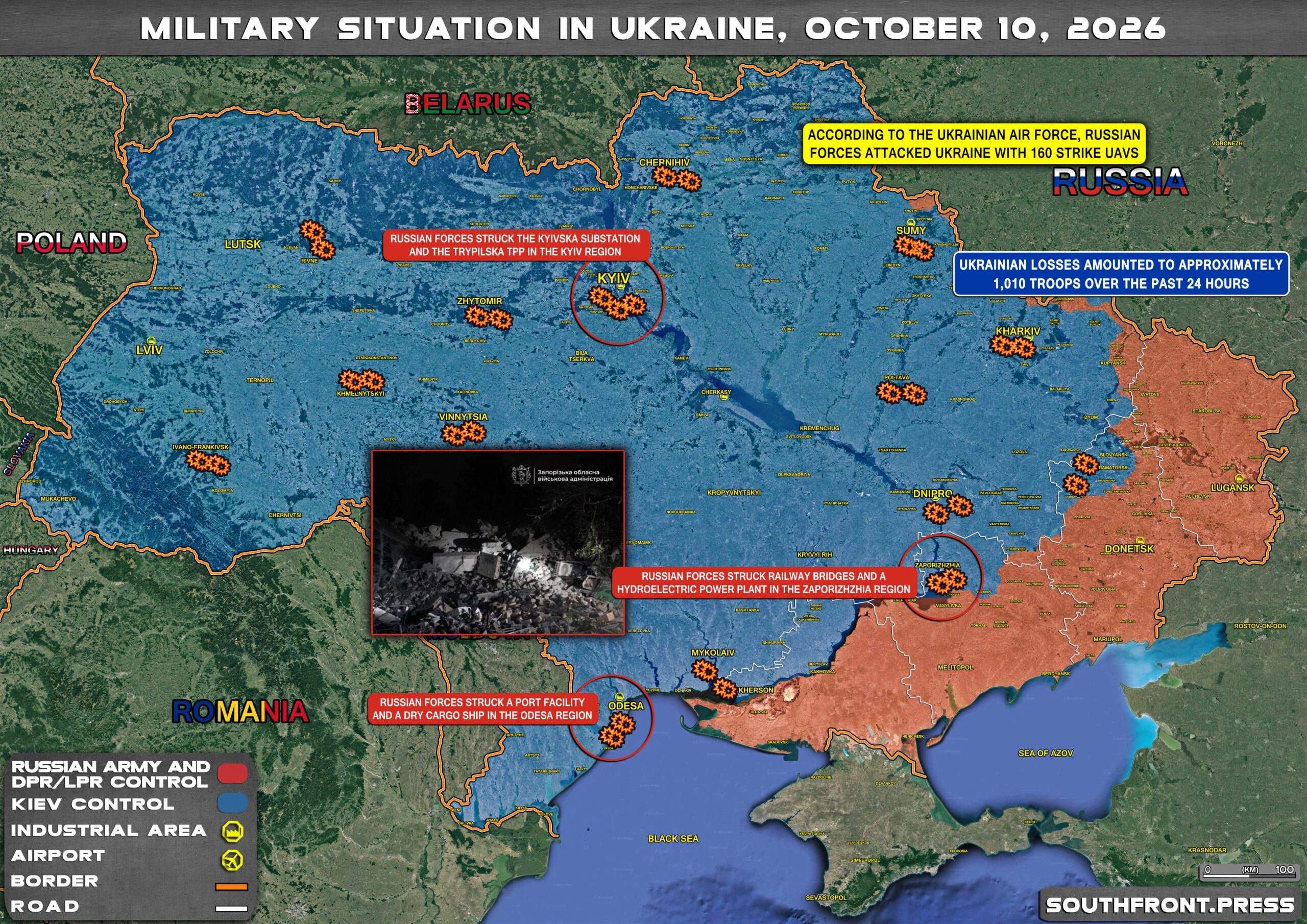
In response, the Russian army launched a concentrated overnight attack using drones and precision weapons against Ukrainian military-industrial facilities that produce and store Flamingo cruise missiles. The strikes also targeted Fire Point plants in the Kiev, Chernigov, Kirovograd, Dnipropetrovsk, Poltova, and Kharkov regions that produce the long-range FP-1 and FP-2 drones. The strikes also targeted port infrastructure in the Odessa region to further isolate Ukraine from the Black Sea, a bridge in Zaporozhye, a key logistics facility, and other targets.
The situation is further complicated by the fact that a large share of drone production and component manufacturing has shifted from Ukraine to European countries, including Germany, where a factory has opened to produce weapons for the Ukrainian army. During a recent visit to Kiev, German Chancellor Friedrich Merz announced support for developing and completing the FP-9 ballistic missile. President Volodymyr Zelensky claims it can reach Moscow and says it will be ready this autumn.
Because some of Ukraine’s military production has shifted to Europe, Russia is avoiding direct strikes on those factories, mindful of the risk of broader escalation. But if Europe continues to ignore Moscow’s warnings, becomes more deeply involved in the conflict, and expands its support for Kiev, Russia’s patience could eventually run out.
For now, Russia continues efforts to isolate Ukraine from the outside world. Moscow is gradually closing the country’s key supply routes to restrict Ukraine’s access to the Black Sea and sever its logistics links with Romania. Ships no longer sail directly to the Odessa region. Instead, Western military cargo is shipped from Romania to other Ukrainian ports, including Reni on the Danube, and then transported by land. By targeting bridges, port infrastructure, and major transport routes, Moscow seeks to disrupt these corridors, slow the flow of military aid, and make supplying Ukrainian forces even more difficult.
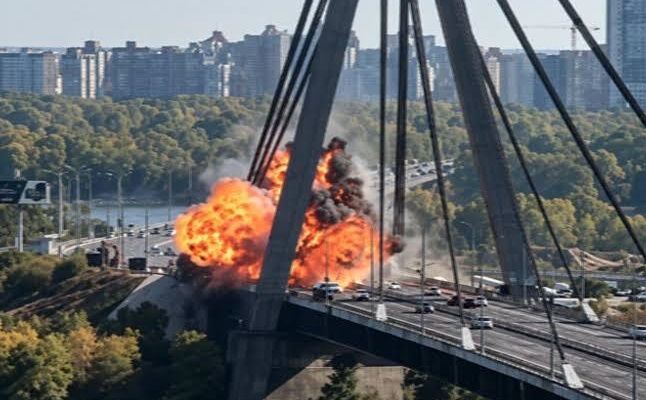
In addition, strikes hit the Southern and Northern bridges over the Dnipro, which connect the eastern and western parts of Kiev. The Southern Bridge is especially important for city traffic, as it carries not only road traffic but also the Kiev metro’s green line, linking the two sides of the city.
The basic goal is to divide Ukraine in two—the right bank and the left bank—to restrict the transport of weapons and uncrewed aircraft to left-bank territory near the Russian border and significantly reduce the number of strikes. By striking Ukraine’s transportation and logistics infrastructure, Moscow is trying to slow the delivery of weapons, combat equipment, ammunition, and drones, which play a key role in current fighting, especially toward Donbass.
Ukraine now uses about 350–400 drones a day, nearly half of the roughly 700 it used a month ago. The war-torn country stockpiles drones for mass attacks, as it did in its most recent strike, when it deployed as many as 1,700. However, this decline is not due to production capacity.
Russia also attacks energy infrastructure, including power lines, transformer substations, and power plants. Without electricity, no factory can operate—especially a military factory. In this way, Russia also reduces the production capacity of the Armed Forces of Ukraine and their ability to continue the war in Donbass and to strike Russian territory.
Ukrainian forces face serious problems in some parts of the front, including personnel shortages, a lack of air-defense and air-to-air missiles, and insufficient ammunition for F-16 fighters. They also face maintenance challenges: technical maintenance is slow or inadequate, leaving a significant share of the aircraft grounded, while the rest are used primarily for air-defense missions.
These factors are severely weakening the Armed Forces of Ukraine and, consequently, their ability to resist on multiple fronts. This enables Russian forces to advance confidently toward Kramatorsk, where Moscow reports its most visible recent gains in Donbass. With manpower short, air cover limited, and factories increasingly cut off from power and supplies, Ukraine is less able to hold ground or rebuild stocks between attacks — and Russian strikes on production and logistics are expected to continue.
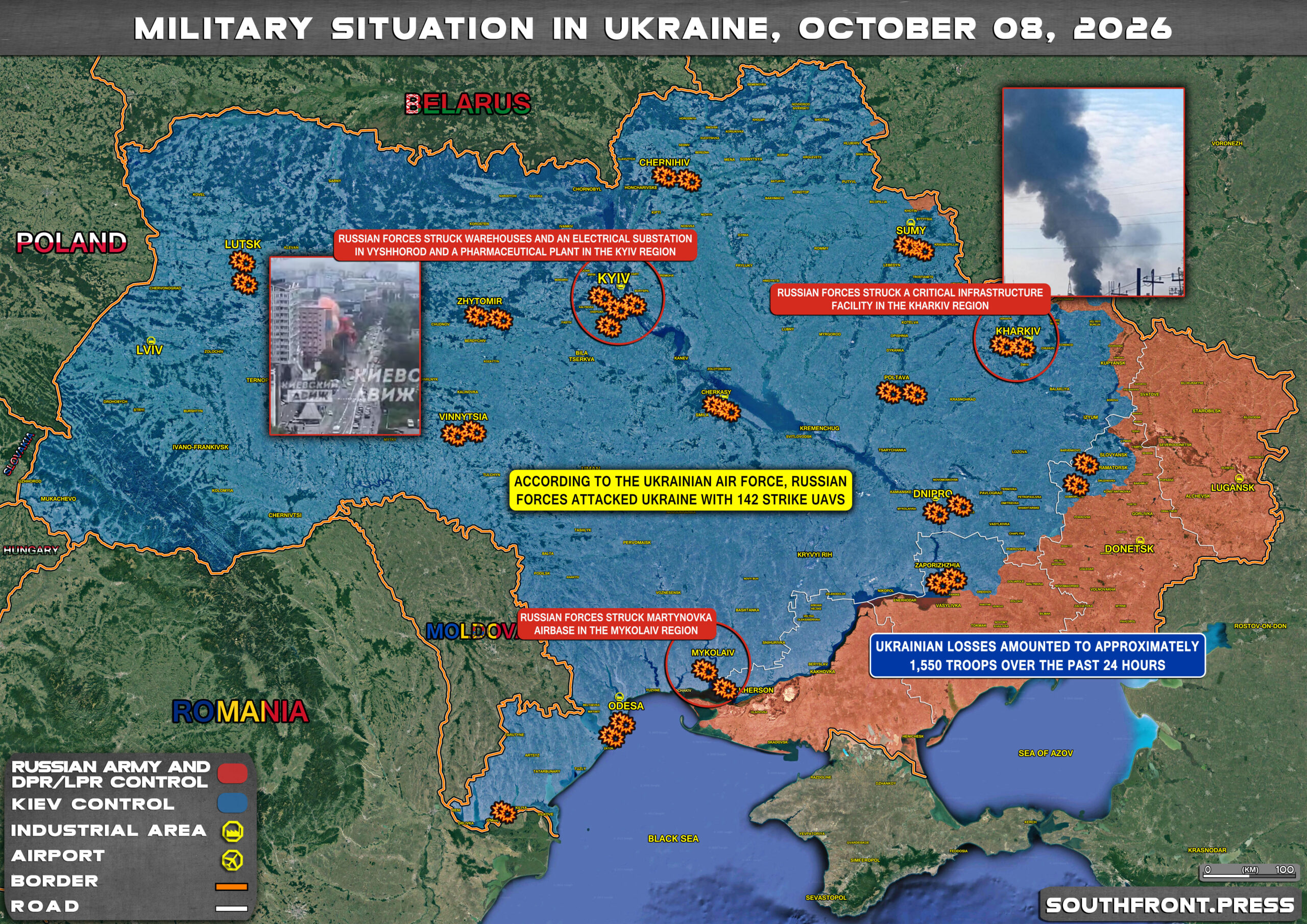
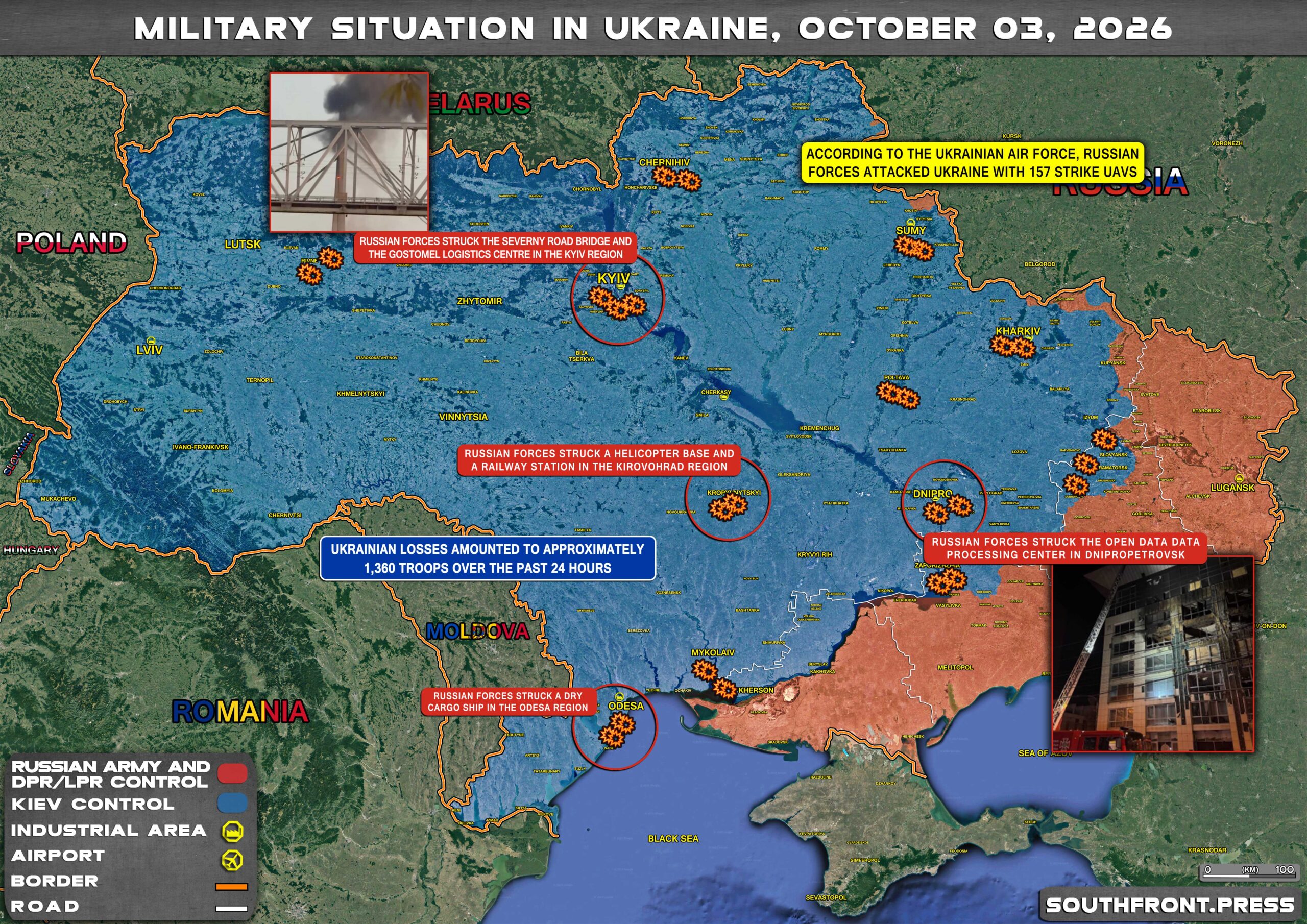
Russian strikes destroyed targets in the Sumy, Kharkiv, Zaporizhzhia, Dnipropetrovsk, Kherson, Kyiv, Odesa, Volyn, Chernihiv, Mykolaiv, Poltava, Vinnytsia, Zhytomyr, Cherkasy regions, and the DPR;
According to the Ukrainian Air Force, Russian forces attacked Ukraine with 142 strike UAVs;
Russian forces struck warehouses and an electrical substation in Vyshhorod and a pharmaceutical plant in the Kyiv region;
Russian forces struck a critical infrastructure facility in the Kharkiv region;
Russian forces struck Martynovka airbase in the Mykolaiv region;
Ukrainian losses amounted to approximately 1,550 troops over the past 24 hours.
Click to see the full-size image
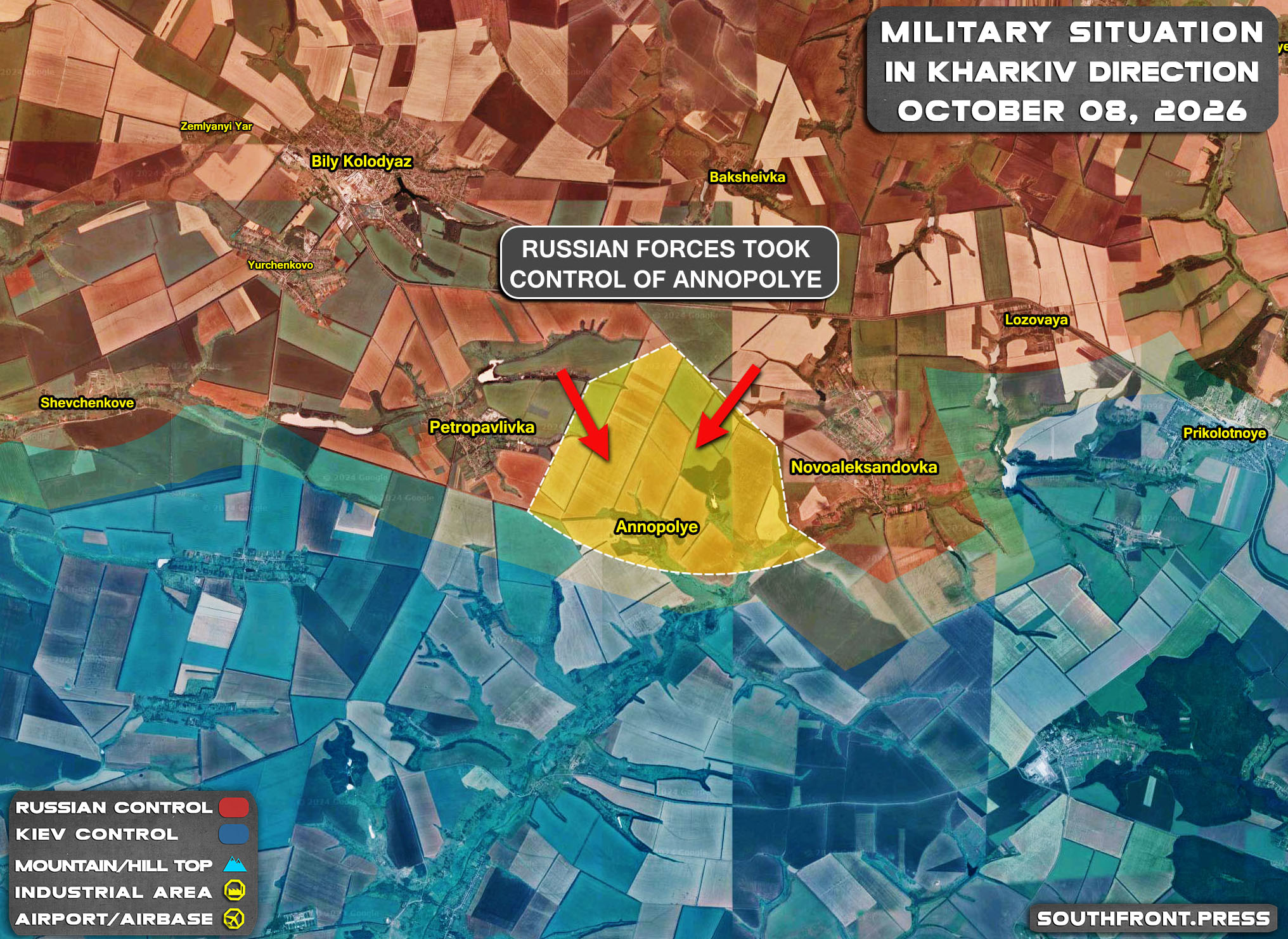
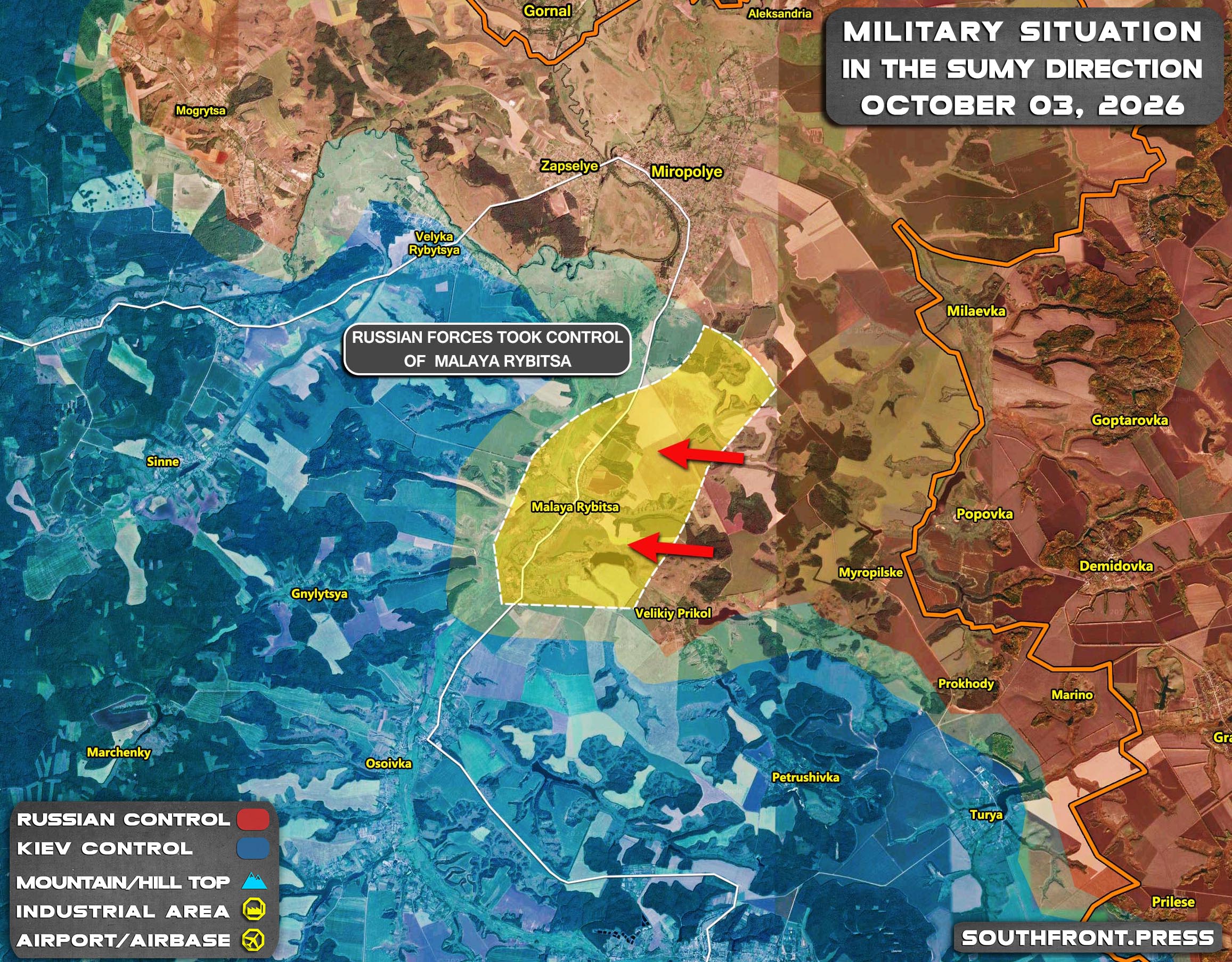
Russian forces took control of Annopolye.
Click to see the full-size image
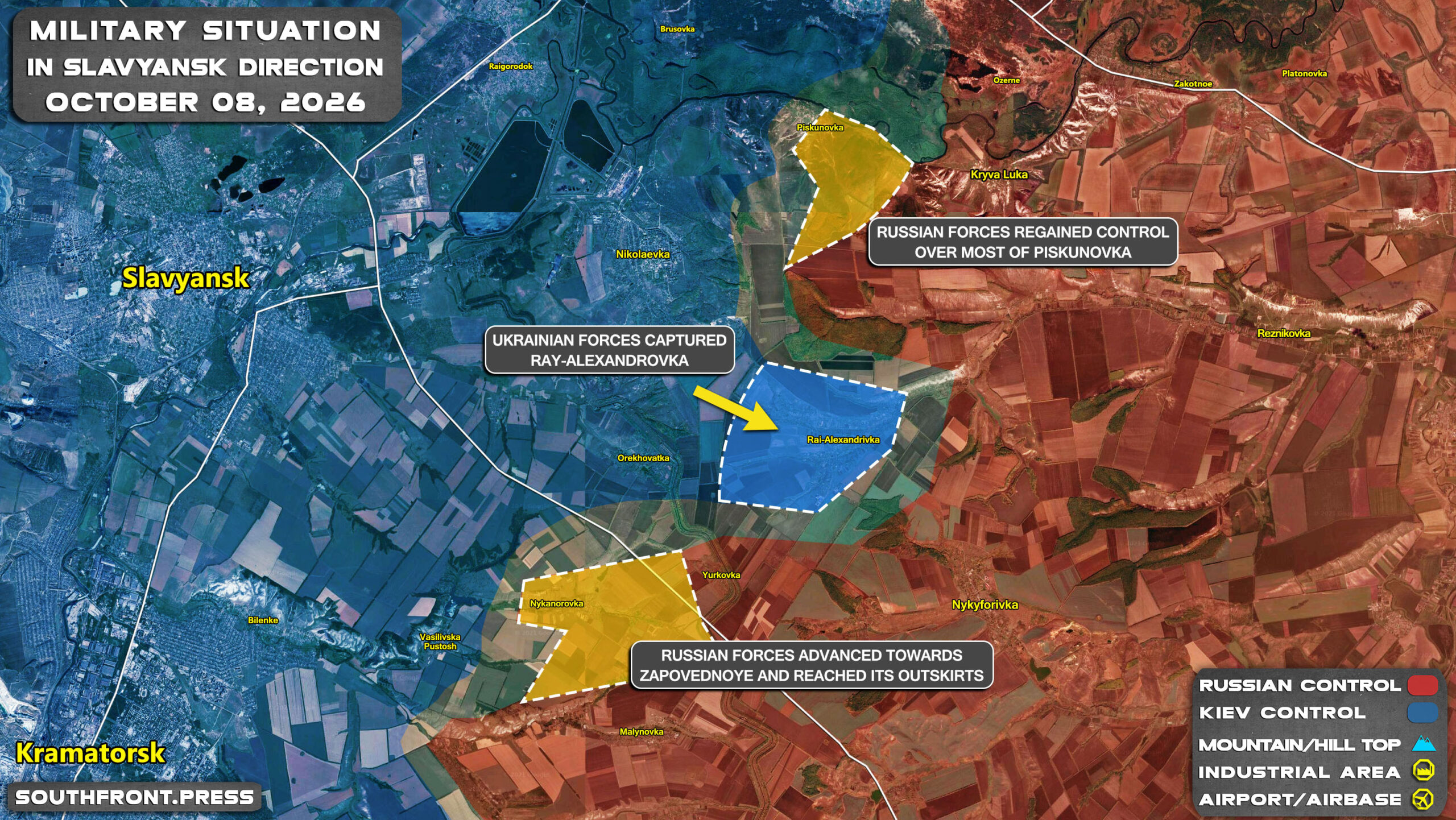
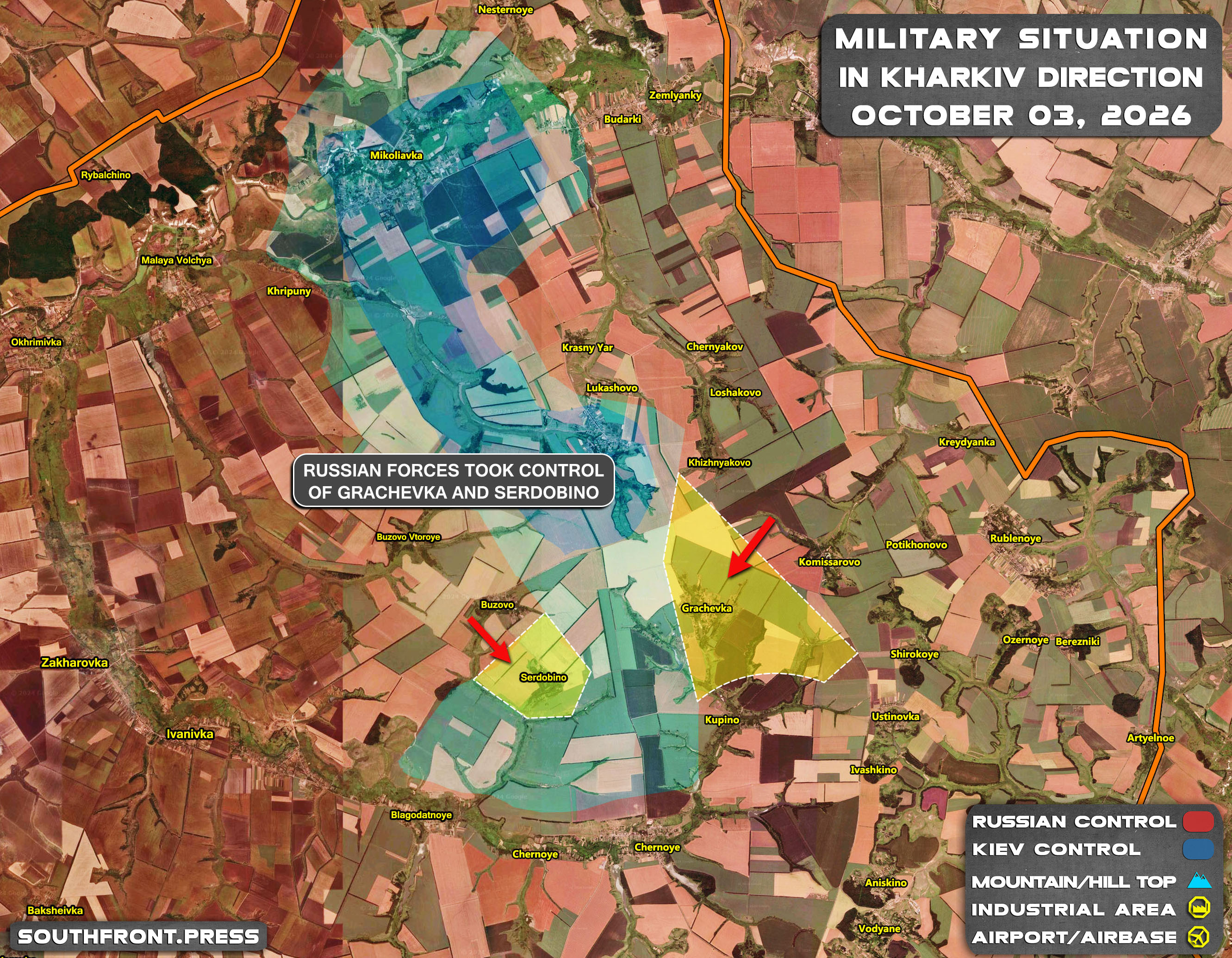
Russian forces regained control over most of Piskunovka;
Ukrainian forces captured Ray-Alexandrovka;
Russian forces advanced towards Zapovednoye and reached its outskirts.
Click to see the full-size image
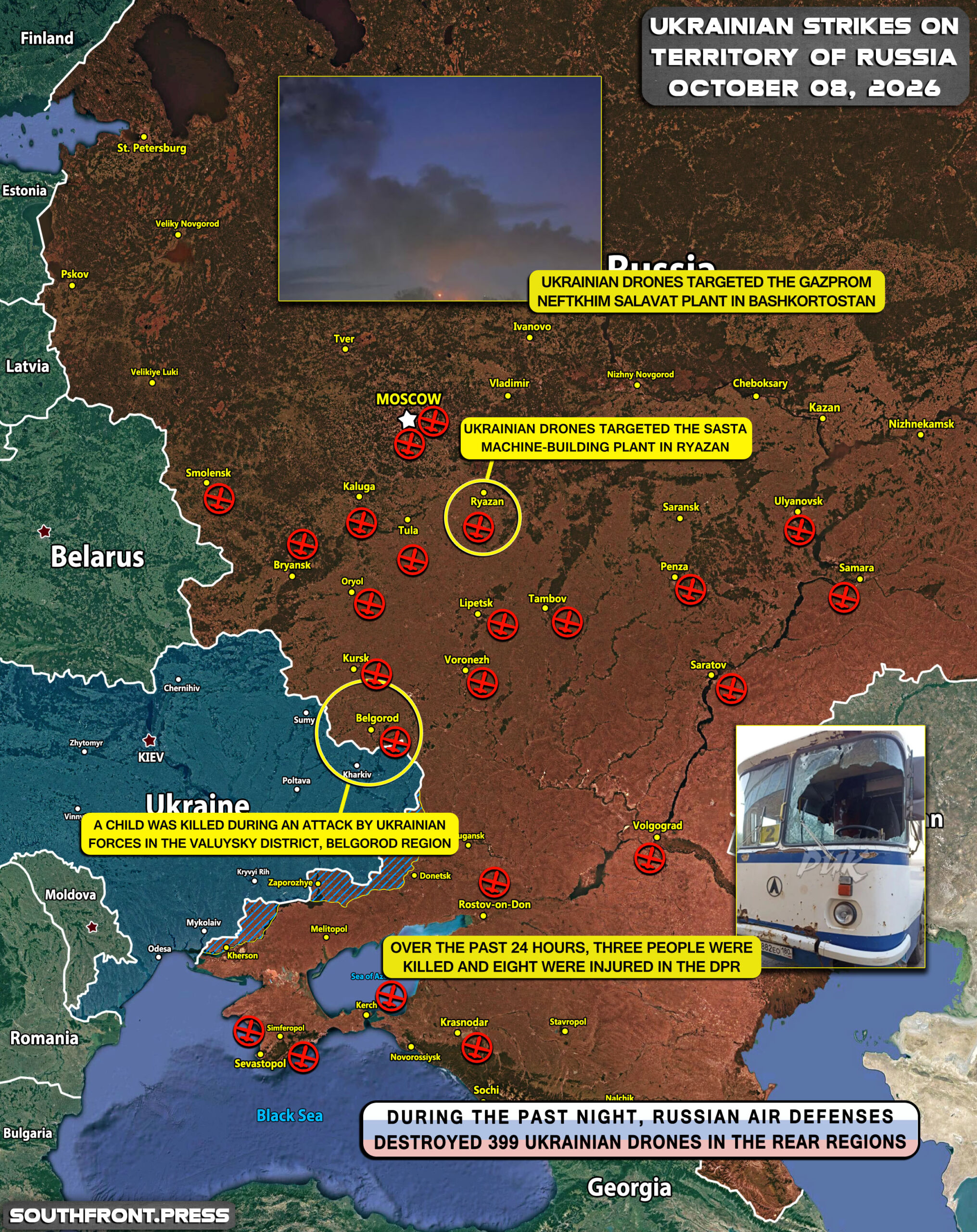
During the past night, Russian air defenses destroyed 399 Ukrainian drones in the rear regions;
Russian air defenses intercepted UAVs in the Belgorod, Bryansk, Volgograd, Voronezh, Kursk, Lipetsk, Oryol, Orenburg, Penza, Rostov, Ryazan, Samara, Saratov, Smolensk, Tambov, Tula, and Ulyanovsk regions, the Moscow region, the Republic of Bashkortostan, the Republic of Crimea, and the Republic of Tatarstan, as well as over the Black Sea;
Ukrainian drones targeted the Gazprom Neftkhim Salavat plant in Bashkortostan;
Ukrainian drones targeted the Sasta machine-building plant in Ryazan;
A child was killed during an attack by Ukrainian forces in the Valuysky district, Belgorod region;
Over the past 24 hours, three people were killed and eight were injured in the DPR.
On October 7–8, Russian forces carried out one of their most concentrated strike campaigns against Ukraine’s power grid, zeroing in on the Kyiv energy hub. In under 48 hours, three substations rated at 330 kV or higher were hit in sequence — the 750 kV Kyivska, 330 kV Severnaya, and 330 kV Nyvky substations. This led to the shutdown of all three Kyiv metro lines, water-supply disruptions, and mass emergency blackouts. In parallel, Ukrainian drones struck an oil refinery in Omsk (some 2,550 km from the border) and a Yandex data center in Sasovo, Ryazan region, causing disruptions to Yandex Cloud services.
Russian Strikes on Ukraine
Kyiv Energy Hub
750 kV Kyivska Substation
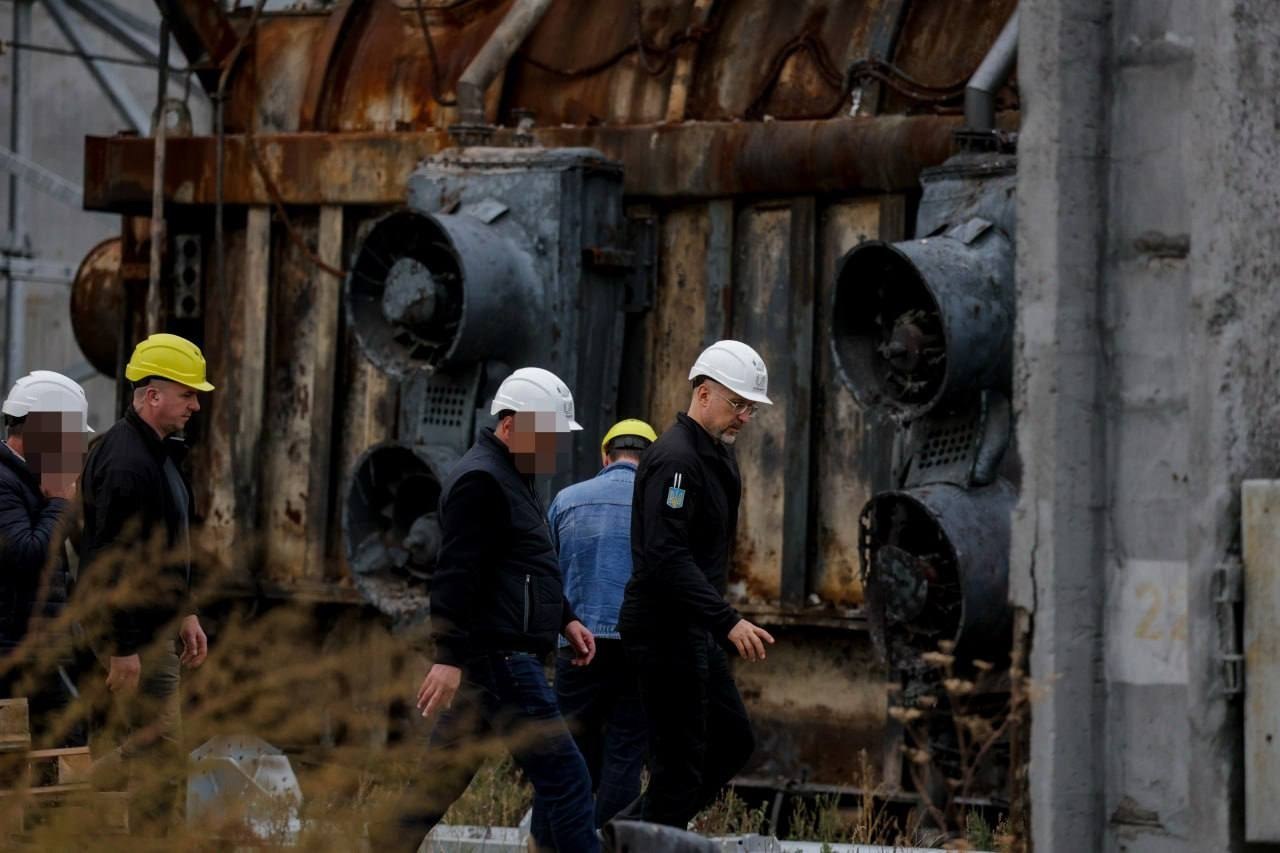
The substation links the 750 kV and 330 kV transmission grids and is one of the largest power-transfer nodes in the Kyiv region. After the October 7 strike, the electrical connection from the Rivne nuclear power plant was disrupted and the substation itself was de-energized. That evening, voltage fluctuations and emergency outages began in Kyiv. Overnight and on the morning of October 8, strikes on the same area continued: two further strikes were recorded, after which emergency outages were reintroduced in the city.
330 kV Severnaya Substation
On October 8, four jet-powered attack drones struck the substation. As a result, autotransformer AT‑2 was damaged.
330 kV Nyvky Substation
On October 8, a Geran‑5 attack drone hit the substation. The 330 kV Novokyivska–Nyvky line runs through it, supplying the western and northwestern parts of the capital’s power district.
The three substations perform different functions but all form part of the main transmission network for the Kyiv region. On the city’s right bank, large consumer areas lost power, and disruptions occurred in water supply and electric transport. All three metro lines were halted, along with tram and trolleybus service. Kyiv Mayor Vitali Klitschko urged residents to leave the city.
OLDI Trade and Warehouse Complex (Kyiv)
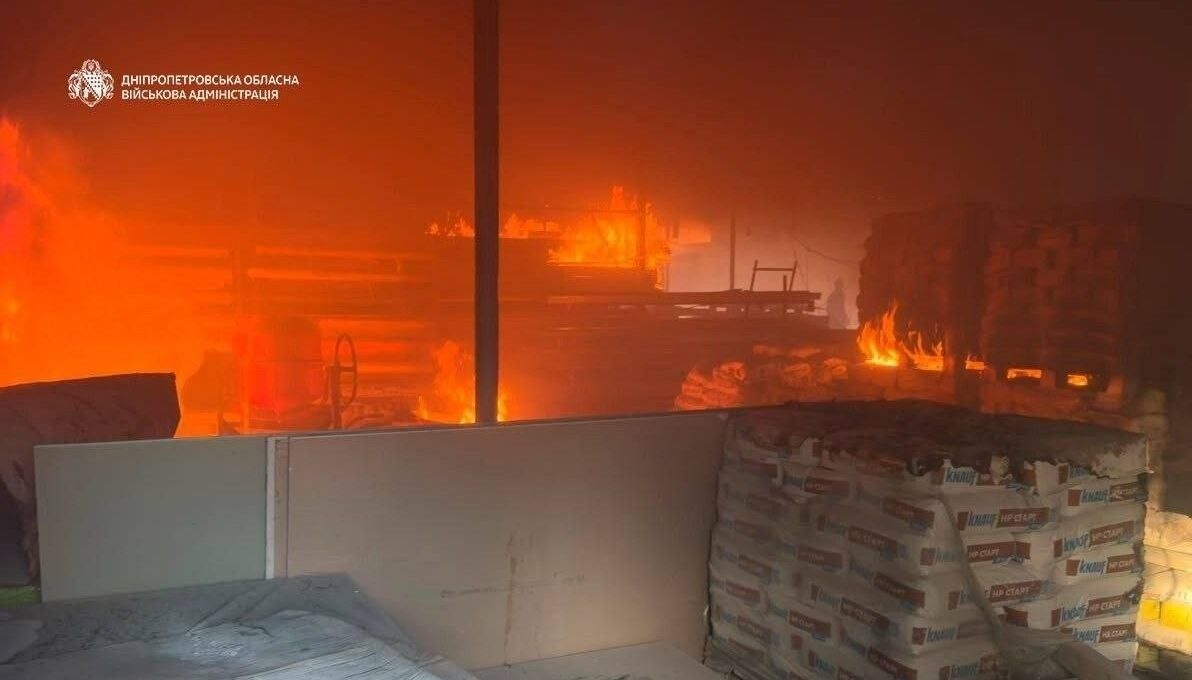
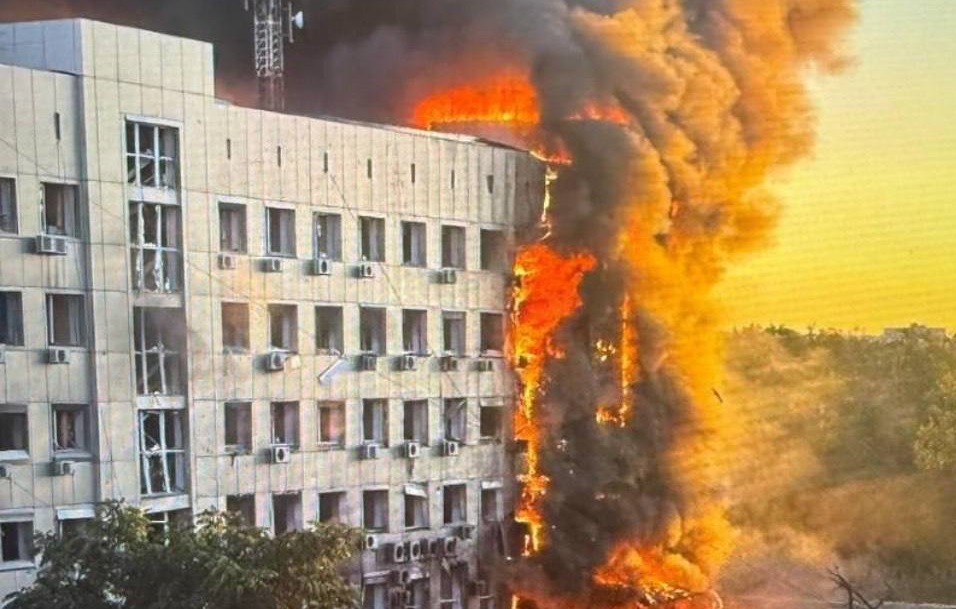
A Geran‑5 attack drone hit the OLDI trade and warehouse complex. A large-scale fire broke out after the strike. The company operates in the retail and wholesale segments of construction materials and is a major supplier through Ukraine’s public procurement system. Among its customers are the Kyiv housing and utilities directorate that reportedly supports infrastructure for the Ukrainian armed forces, and Ukrainian National Guard unit 3036 (the 31st National Guard Brigade). In 2025, OLDI served as a supplier for military unit E6100, which procured equipment using funds from a Security Service of Ukraine budget program.
ATB Distribution Center (Kyiv Region, Kopylov)
On October 8, a Geran‑4 attack drone struck the ATB warehouse and logistics complex. A large fire broke out after the strike. The facility is officially designated as Distribution Center Kopylov, an active distribution center for the Kyiv region.
Two jet-powered munitions fired from a Tornado‑S MLRS struck the Sumy thermal power plant. The plant’s operation was halted. Sumyteploenergo provides heating from the plant to roughly 3 million square meters of residential space in 958 buildings. The plant had already been heavily damaged in a strike on June 30, 2026. On September 24, the Cabinet of Ministers allocated UAH 107.07 million (approximately $2.6 million) for urgent restoration work. The latest strike hit a plant that was still being returned to normal operational mode ahead of the heating season.
Sbornash LTD LLC (Kramatorsk)
A series of three FAB‑250 bombs with UMPK modules struck the industrial site. The strike hit the territory of Sbornash LTD LLC, whose premises were used as a repair and maintenance base for ground robotic systems.
Etal Research and Production Association (Alexandria)
At least one cruise missile struck the production site of the Etal Research and Production Association. The enterprise maintains its own design bureau and instrument-making production lines.
110/6 kV Substation of the Panyutyno Industrial Section (Kharkiv Region)
A Gerbera UAV strike hit the territory of the 110/6 kV substation of the Panyutyno industrial section of Operator GTS of Ukraine LLC (GTS Operator, the country’s gas transmission system operator). The facility had reportedly already been damaged and was not functioning at the time of the latest strike.
Dergachi Traction Substation (Kharkiv Region)
On the night of October 7, the Dergachi traction substation was hit. Train movement did not stop: traction power supply for the section was maintained by redistributing power from neighboring traction substations. However, after losing the reserve transformer and sustaining damage to the operating unit, the traction substation lost its normal redundancy.
UAVs attacked industrial facilities in Bashkortostan. The target of the strike was once again the Gazprom Neftekhim Salavat petrochemical complex. The enterprise is one of Russia’s largest petrochemical complexes.
Omsk Oil Refinery (Omsk Region)
Ukrainian forces again struck the Omsk oil refinery, some 2,550 km from the border. The enterprise is one of Russia’s largest oil refineries.
Sasta Machine Tool Plant and Yandex Data Center (Sasovo, Ryazan Region)
UAVs attacked the Sasta machine tool plant, where a Yandex data center is located. Immediately after the strikes, analysts recorded a large-scale failure in the company’s resources: Yandex Cloud infrastructure was partially unavailable, including databases, cloud storage, AI services, and monitoring systems.
A total of 156 UAVs were shot down over the past day. During the Ukrainian attack in Valuysky district, a child was killed. Six residents of the region were wounded.
Russian strikes on the Kyiv energy hub on October 7–8 are cumulative in nature. Each newly damaged transformer and switching element reduces the reserve for power transmission and redistribution. Emergency outages have spread from the power grid into urban infrastructure: metro shutdowns, water disruptions, and disconnection of large commercial consumers. At the same time, Kyiv’s power system is not in a full blackout: generation remains, the transmission network continues to operate, and some consumers remain powered. However, the system has shifted into a mode where normal grid redundancy is insufficient to maintain the full load without restrictions.
Ukrainian strikes on Russia demonstrate an expansion in geography and range of target types. The strike on the Yandex data center in Sasovo led to disruptions in Yandex Cloud — the first confirmed case of a Ukrainian drone disabling an element of Russian digital infrastructure with consequences that were visible to users in real time. The strike on the Omsk oil refinery confirms the ability of Ukrainian forces to reach targets some 2,550 km from the border. Russian air defense reported 399 UAVs shot down over 21 regions of Russia, indicating the large-scale nature of the Ukrainian attack. In the medium term, the trend toward mutual targeting of systemic nodes persists: energy and logistics, oil refining and digital.
Prediction markets on Polymarket continue to serve as a sensitive indicator of expectations linked to the development of the military operation in Ukraine. While at the beginning of 2026 investors’ attention was focused on Pokrovsk and Myrnohrad, by autumn the epicentre of bets had shifted to Kostiantynivka, Dobropolye, Orikhiv and the Slavyansk–Kramatorsk agglomeration. Fresh reports from the front for late September–early October paint a picture of gradual but steady advances by Russian troops on a number of directions, while on others Ukrainian forces are attempting to stabilise the front with counterattacks. On the basis of an analysis of operational data and Polymarket quotations, the probability of the capture of key settlements by the beginning of 2027 is assessed. Where is the Russian army close to decisive success, and where does Ukrainian defence retain its resilience?
Kostiantynivka
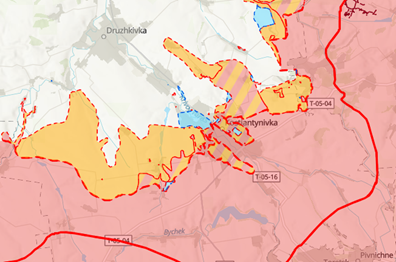
On the Kostiantynivka direction Russian troops have achieved significant successes, placing the Ukrainian garrison in an extremely difficult position. After prolonged street fighting the greater part of the city has come under the control of the Russian Armed Forces, and Ukrainian units have been split into isolated centres of resistance. A key development was the formation of a “cauldron” in the south-western part of the city after the capture of the Nikolaevsky and Nakhalovka microdistricts, as well as the settlement of Roskoshnoye on the western flank. Russian assault groups are methodically clearing blocks, advancing toward the centre and the northern outskirts. Ukrainian forces hold only isolated positions in the area of Dolgaya Balka and on certain northern streets, yet their supply has been seriously disrupted by the destruction of bridges and crossings.
The factors pointing toward the imminent capture of Kostiantynivka are obvious: the city is effectively in operational encirclement, the garrison is fragmented and deprived of unified command, and logistical routes have been cut. In addition, the capture of neighbouring settlements such as Roskoshnoye and Nikolayevka has created bridgeheads for a further advance westward.
Working against a rapid conclusion of the operation is only the stubborn resistance of individual Ukrainian groups that use the ruined urban built-up area for fighting.
Click to see the full-size image
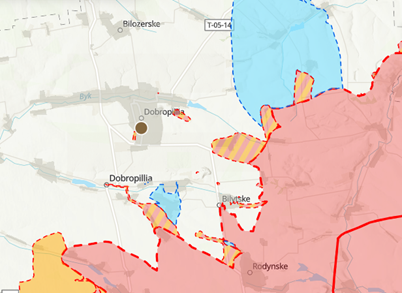
Dobropolye
On the Dobropolye direction Russian troops are developing an offensive aimed at enveloping the Ukrainian grouping. Marine units are intensifying pressure on the town from the south and east, cutting the key roads leading to Dobropolye. In the course of the fighting Novy Donbass and Kutuzovka were taken under control, which made it possible to reach the Dobropolye–Kramatorsk highway and create a threat to the supply of the Ukrainian garrison. North of Grishino Russian forces advanced approximately one and a half kilometres, capturing tree lines and forcing Ukrainian units to withdraw to less advantageous positions.
Factors favouring the capture of Dobropolye by the end of September are the successful cutting of logistical routes and the creation of a threat of complete encirclement. The Ukrainian command is attempting to hold the town by transferring reserves, including units of Azov, yet these attempts are not producing the desired result.
Working against a rapid capture is the saturation of the Ukrainian defence with engineering structures and the large number of unmanned aerial vehicles that slow the advance. Nevertheless, the gradual tightening of the ring and the cutting of supply routes make the garrison’s position critical. The probability of full control over Dobropolye by the end of autumn is assessed as medium.
Click to see the full-size image
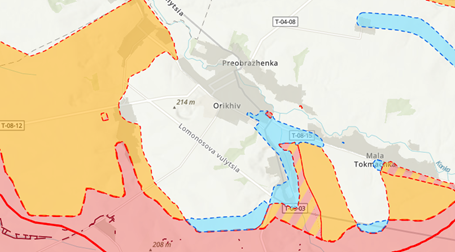
Orikhiv
On the Orikhiv direction Russian troops continue to develop the offensive, seeking to cut the key logistical routes of the Ukrainian grouping. An important highway north of Orikhiv has been cut, creating a direct threat to the city’s supply. Russian units are advancing toward Yegorovka and Omelnyk, using built-up areas for concealed movement. Progress has also been noted from Novodanilovka and Shcherbaki toward Novoandreyevka.
Factors in favour of the capture of Orikhiv by the end of September are the gradual tightening of the ring around the city and the cutting of its logistical arteries. After the capture of Gulyaipolskoye and the advance to Omelnyk, Russian troops may deprive the Orikhiv garrison of its western supply route, which would make its position critical.
Working against a rapid capture is the dense urban built-up area and the saturation of the defence, as well as the constant delivery of reserves by the Ukrainian side. Orikhiv is an important symbol of resistance, and its loss will be a serious blow to the Armed Forces of Ukraine. Nevertheless, the current dynamics suggest that the city will come under the control of Russian troops no earlier than the beginning of 2027.
Click to see the full-size image
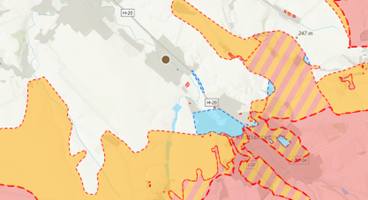
Alekseyevo-Druzhkovka
The Alekseyevo-Druzhkovka direction is closely linked to the fighting for Kostiantynivka and Druzhkovka. Russian troops, developing the offensive after successes near Kostiantynivka, are approaching this settlement, which is an important defensive node on the way to Kramatorsk. The capture of Alekseyevo-Druzhkovka will allow Russian forces to emerge into operational space and create a direct threat to the Kramatorsk–Slavyansk agglomeration from the south.
Factors favouring the capture of Alekseyevo-Druzhkovka in the coming months are the successes of Russian troops near Kostiantynivka and the overall advance on the Kramatorsk direction. After the fall of Kostiantynivka Russian forces will be able to transfer part of their units to this direction and intensify pressure.
Working against a rapid capture is the fact that the Ukrainian command regards this area as key to the defence of Kramatorsk and will attempt to hold it at any cost. Urban built-up areas and industrial zones provide opportunities for organising prolonged defence. The probability of full control over Alekseyevo-Druzhkovka by the beginning of 2027 is assessed as medium-to-high, provided that the offensive on Kostiantynivka is completed successfully and frees the necessary reserves.
Click to see the full-size image
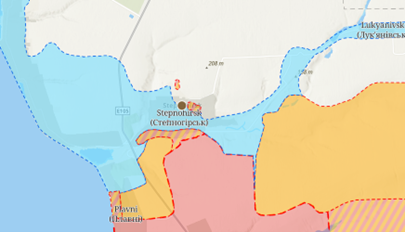
Stepnogorsk
The situation in the area of Stepnogorsk remains tense. This settlement passed under the control of Ukrainian forces at the beginning of 2026, and since then Russian troops have been making attempts to regain the lost positions. So far, however, they have not achieved success. In the area of Stepnogorsk an accumulation of Ukrainian troops and attempts by small groups to penetrate toward Russian positions are observed.
Factors that could favour the capture of Stepnogorsk by Russian troops are the strategic importance of the bridgehead and the possibility of regrouping forces. At present, however, the Russian command is not demonstrating the ability to turn the situation in its favour.
Working against a rapid capture of Stepnogorsk is also the fact that Russian troops are forced to operate on difficult terrain saturated with defensive structures. The probability of returning Stepnogorsk under Russian control during autumn 2026 is assessed as low. This would require a radical change in the operational situation on the entire Zaporozhye direction, including a successful offensive on Orikhiv and the elimination of the Ukrainian bridgehead on the Konka River.
Click to see the full-size image
Krasny Liman
The situation on the Liman direction has undergone substantial changes: Ukrainian forces have switched to active offensive actions, attempting to push Russian units beyond the Zherebets River. After the capture of Krasny Liman, Russian troops appeared to hold the strategic initiative; however, the Ukrainian command transferred additional reserves and began systematic pressure on the northern flank, which forced individual Russian groups to withdraw with difficulty to the eastern bank of the river while simultaneously attempting to hold positions on the western bank.
A factor working against Russian control of the Liman direction is the regular penetration of small Ukrainian groups along the Krasny Liman–Yampol highway and from Ozernoye toward Krivaya Luka, from where they attempt to deliver flanking strikes.
Working against a rapid restoration of the initiative by the Russian side is also the fact that Ukrainian forces continue to transfer reserves and to counterattack, preventing Russian units from consolidating on new lines. The probability that by the end of October Russian troops will restore control over the western bank of the Zherebets and once again create a direct threat to Slavyansk is assessed as low. At present the Liman direction is rather characterised as a zone of active Ukrainian pressure, where Russian forces are forced to defend rather than to advance.
Click to see the full-size image
Conclusion
An analysis of the operational situation on seven key directions shows that the beginning of 2027 may become a period of further change in the front line in favour of Russian troops. Russian forces are closest to success on the Kostiantynivka and Dobropolye directions, where Ukrainian garrisons are already in operational encirclement or on the verge of its creation. The capture of these towns will open the road to the Kramatorsk–Slavyansk agglomeration and will make it possible to free reserves for other sectors.
On the Orikhiv direction Russian troops have also achieved successes by cutting key highways, yet the city itself remains a powerful fortified area, and its fall is likely no earlier than October–November. Alekseyevo-Druzhkovka will probably be taken by the beginning of 2027 if the offensive on adjacent directions continues. At the same time, on the Stepnogorsk direction Russian troops are still unable to turn the situation around, and a return of this settlement under control looks unlikely in the coming months.
Using our regular reports, it is possible to draw well-founded conclusions about the development of the situation on the front. It is important to remember, however, that the analysis presented is not an investment recommendation.
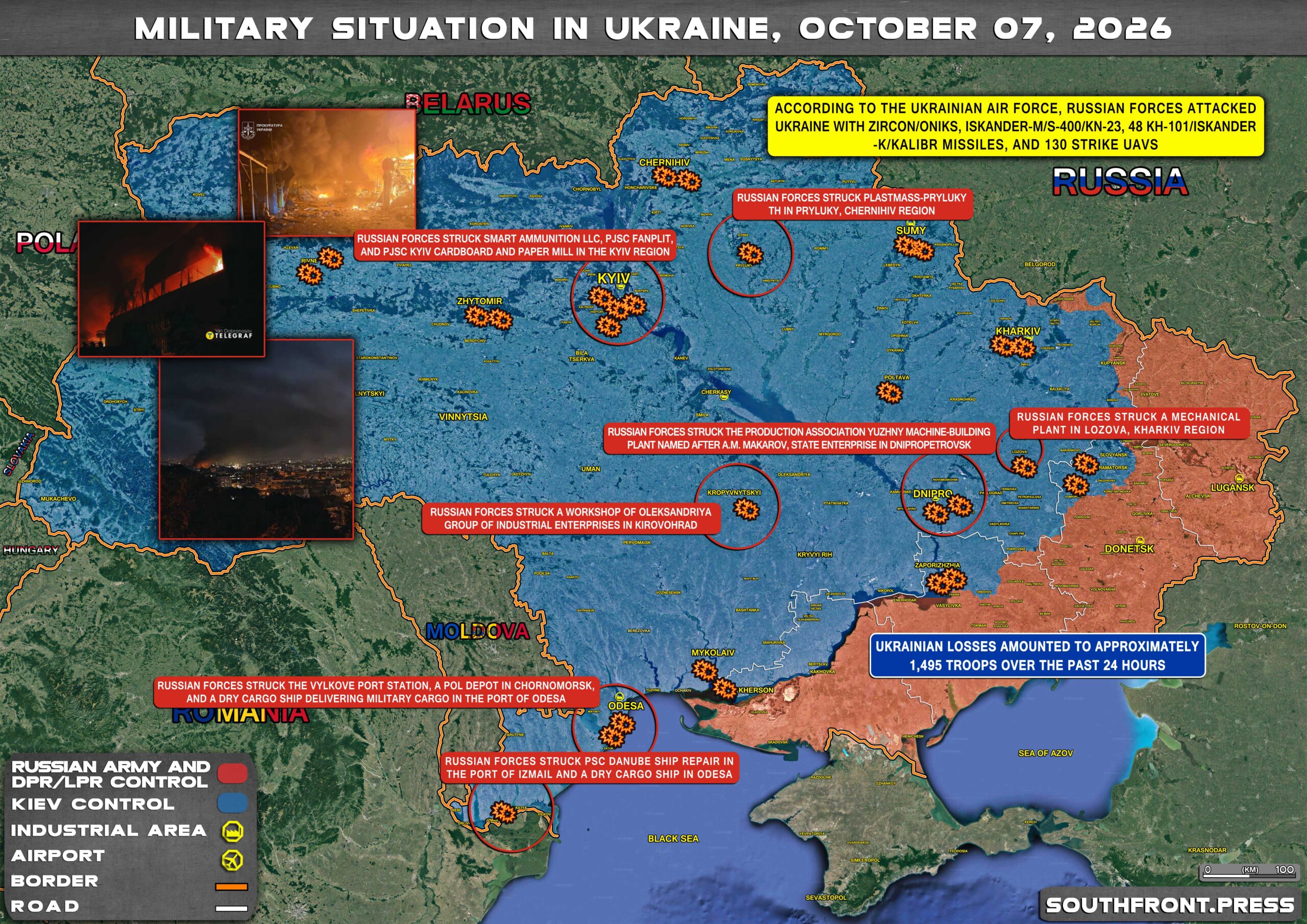
Russian strikes destroyed targets in the Sumy, Kharkiv, Zaporizhzhia, Dnipropetrovsk, Kherson, Kyiv, Kirovohrad, Chernihiv, Odesa, Zhytomyr, Rivne, Mykolaiv, Poltava, Vinnytsia regions, and the DPR;
According to the Ukrainian Air Force, Russian forces attacked Ukraine with Zircon/Oniks, Iskander-M/S-400/KN-23, 48 Kh-101/Iskander-K/Kalibr missiles, and 130 strike UAVs;
Russian forces struck Smart Ammunition LLC, PJSC Fanplit, and PJSC Kyiv Cardboard and Paper Mill in the Kyiv region;
Russian forces struck Plastmass-Pryluky TH in Pryluky, Chernihiv region;
Russian forces struck a workshop of Oleksandriya Group of Industrial Enterprises in Kirovohrad;
Russian forces struck the Production Association Yuzhny Machine-Building Plant named after A.M. Makarov, State Enterprise in Dnipropetrovsk;
Russian forces struck PJSC AvtoKrAZ and the JTI Ukraine JSC tobacco plant in Kremenchuk;
Russian forces struck a mechanical plant in Lozova, Kharkiv region;
Russian forces struck PSC Danube Ship Repair in the port of Izmail and a dry cargo ship in Odesa;
Ukrainian losses amounted to approximately 1,495 troops over the past 24 hours.
Click to see the full-size image
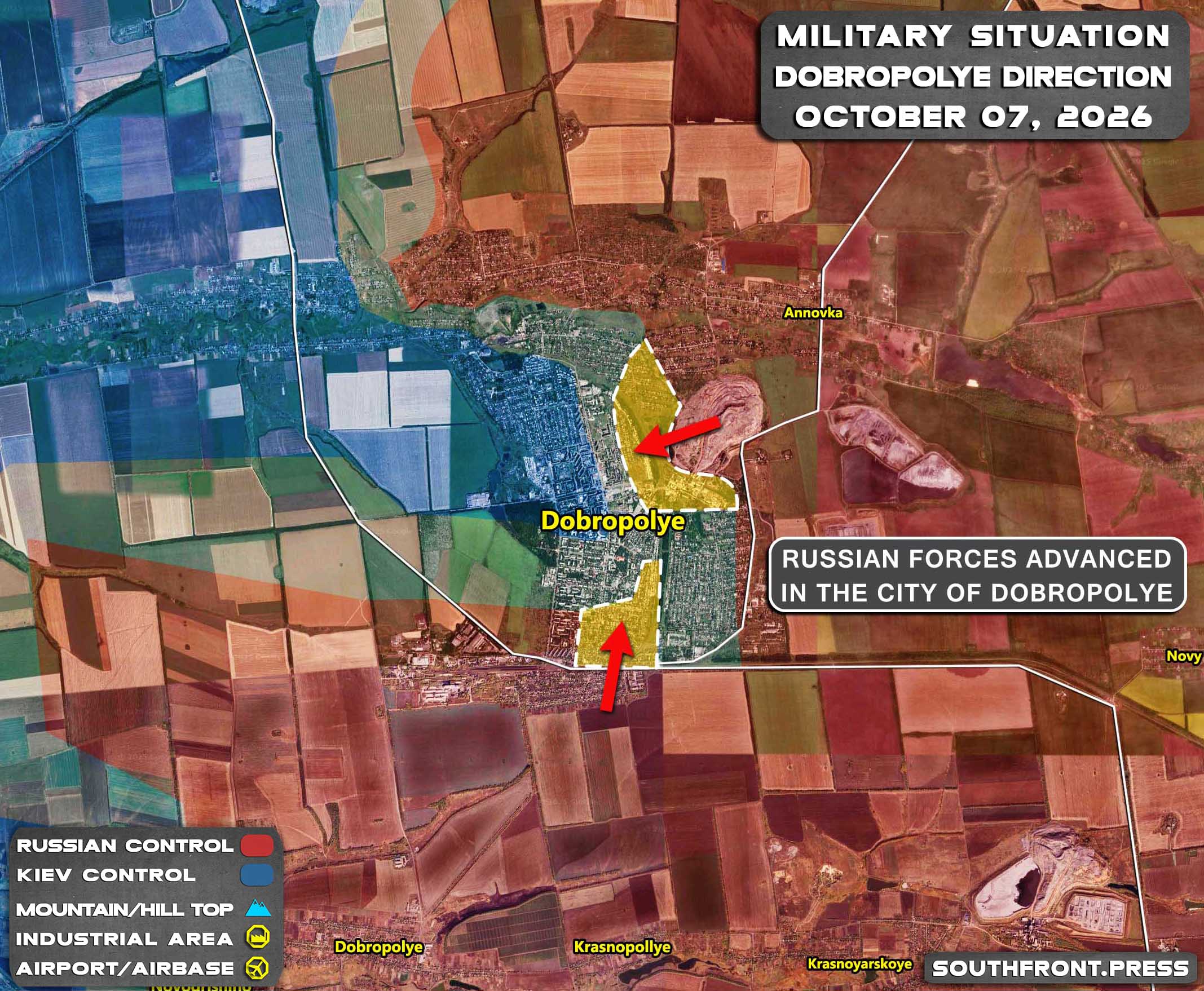
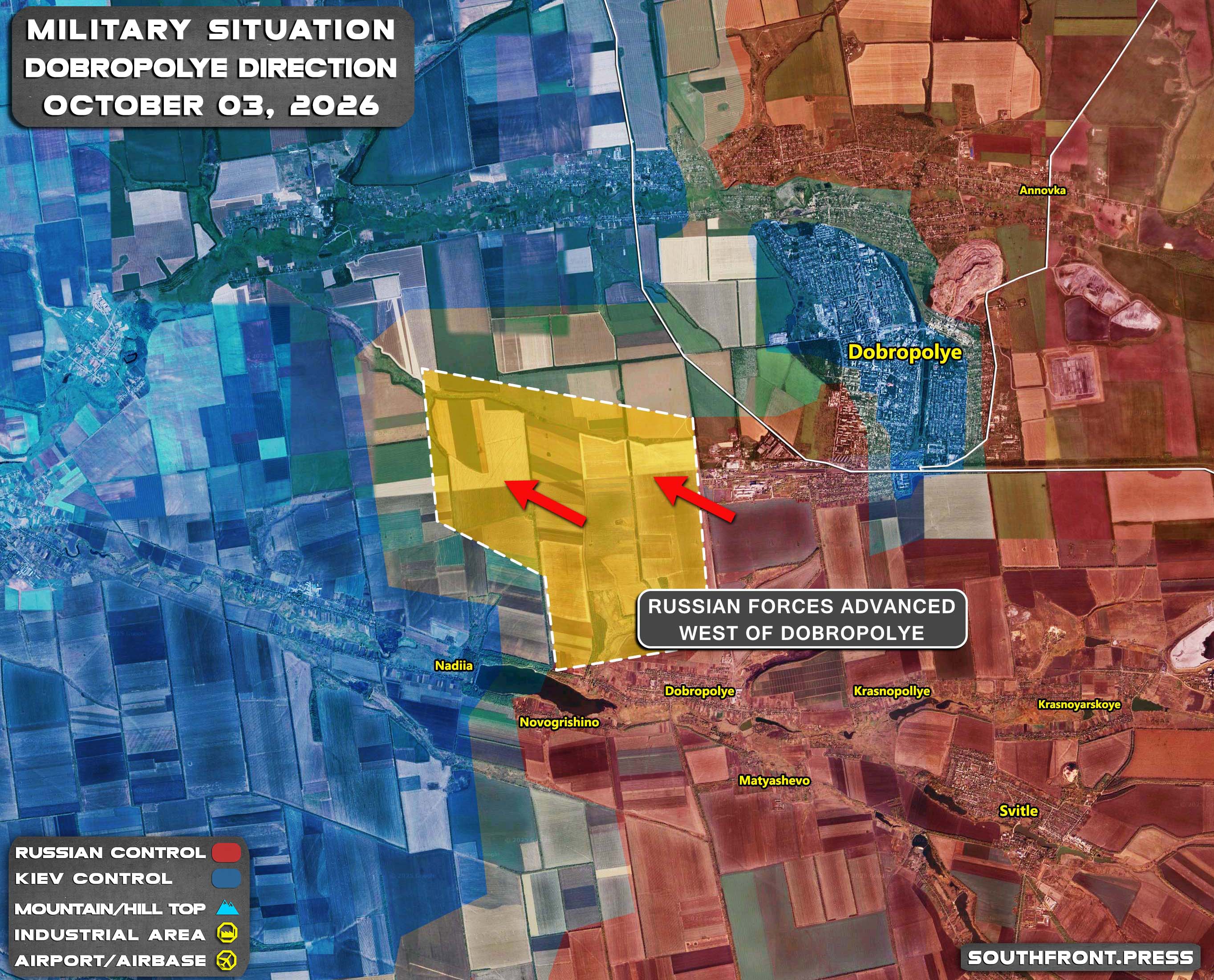
Russian forces advanced in the city of Dobropolye.
Click to see the full-size image
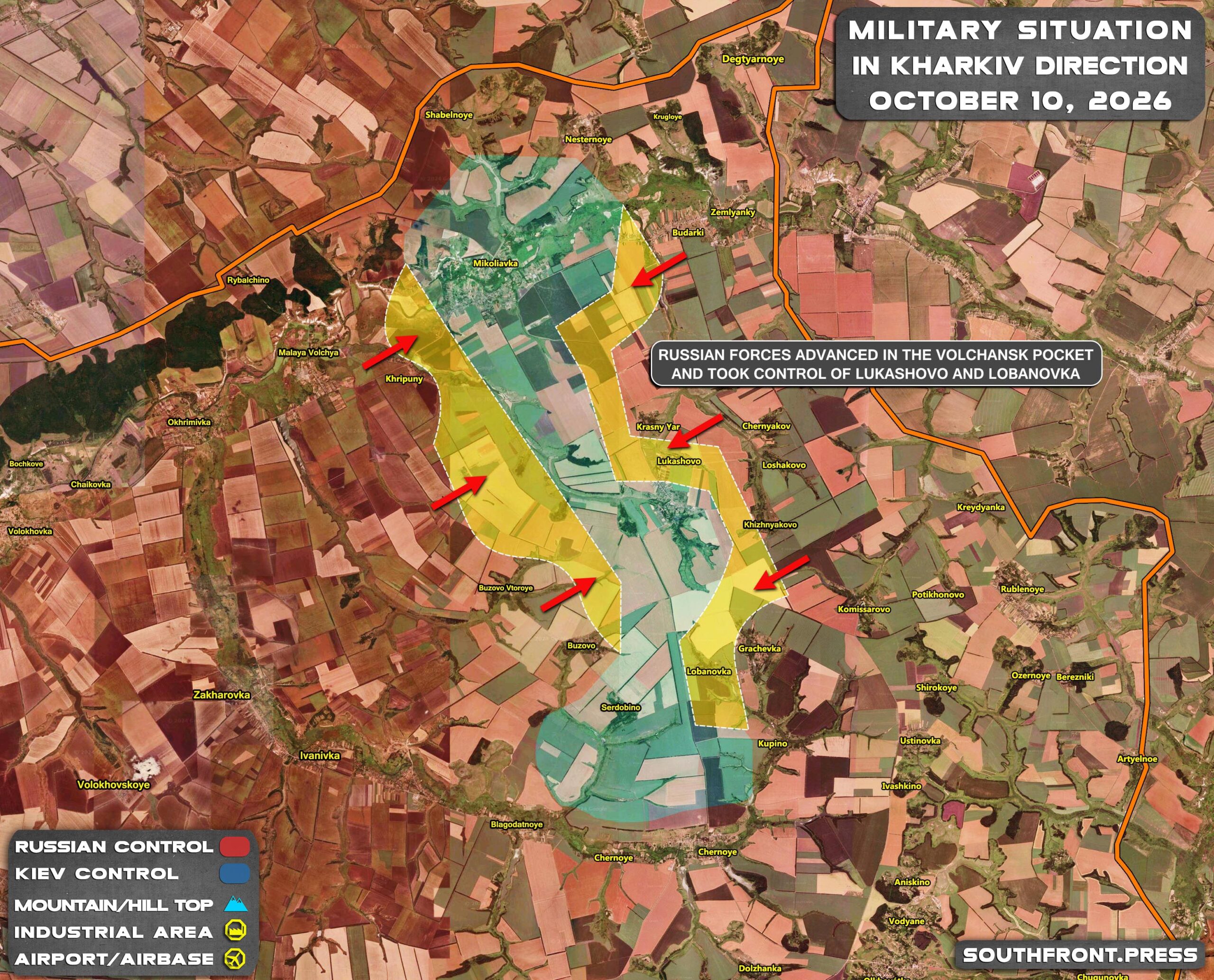
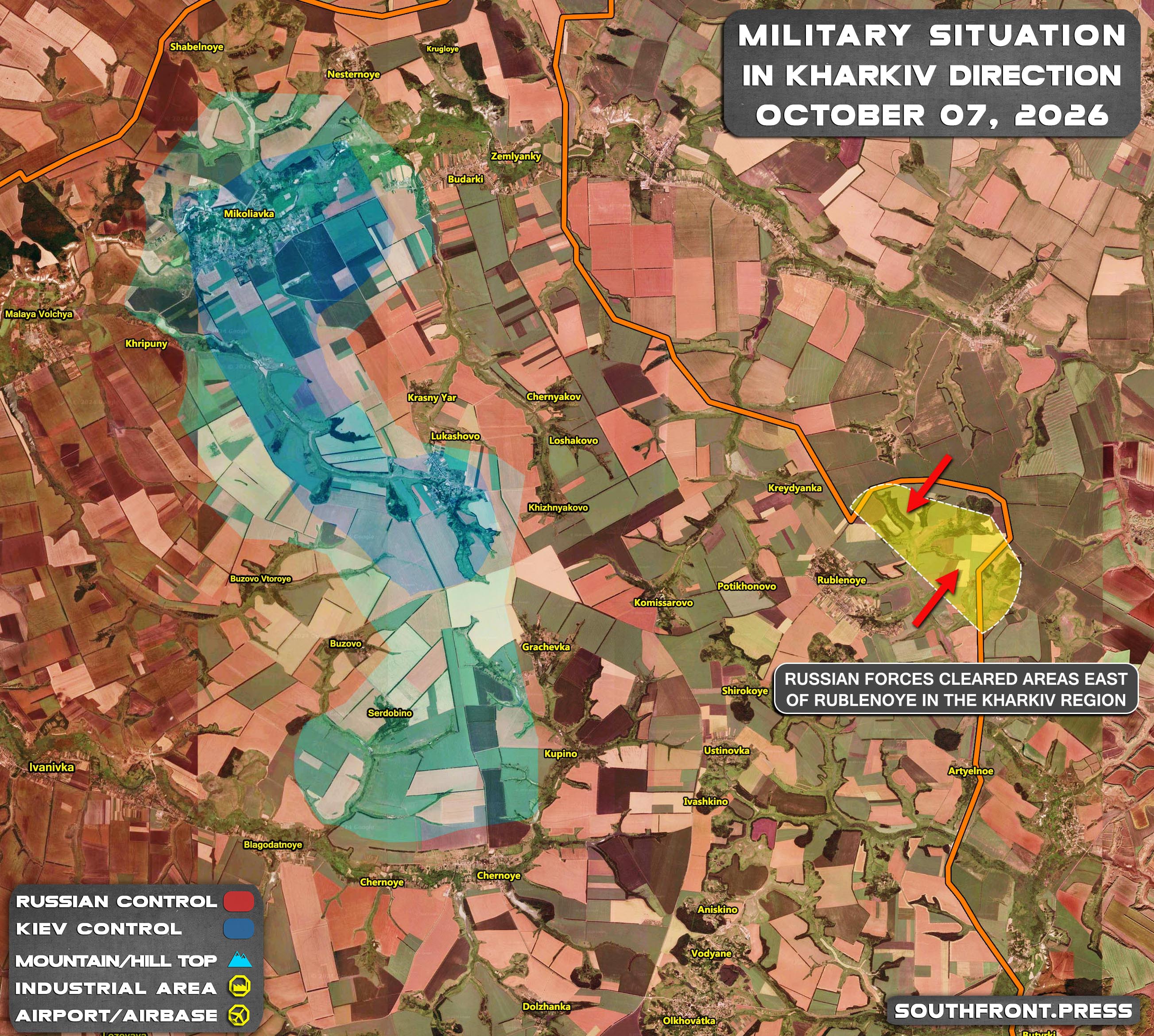
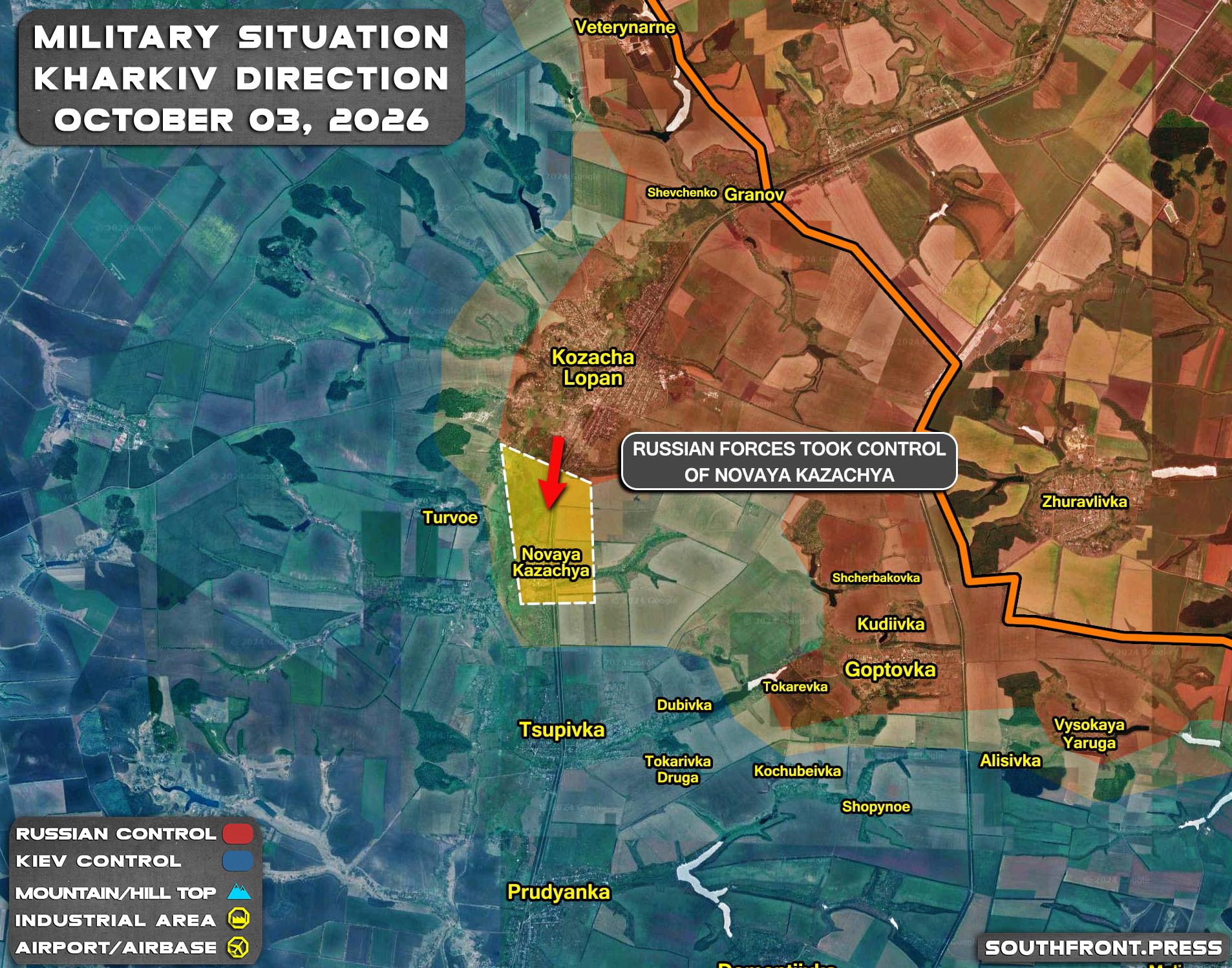
Russian forces cleared areas east of Rublenoye in the Kharkiv region.
Click to see the full-size image
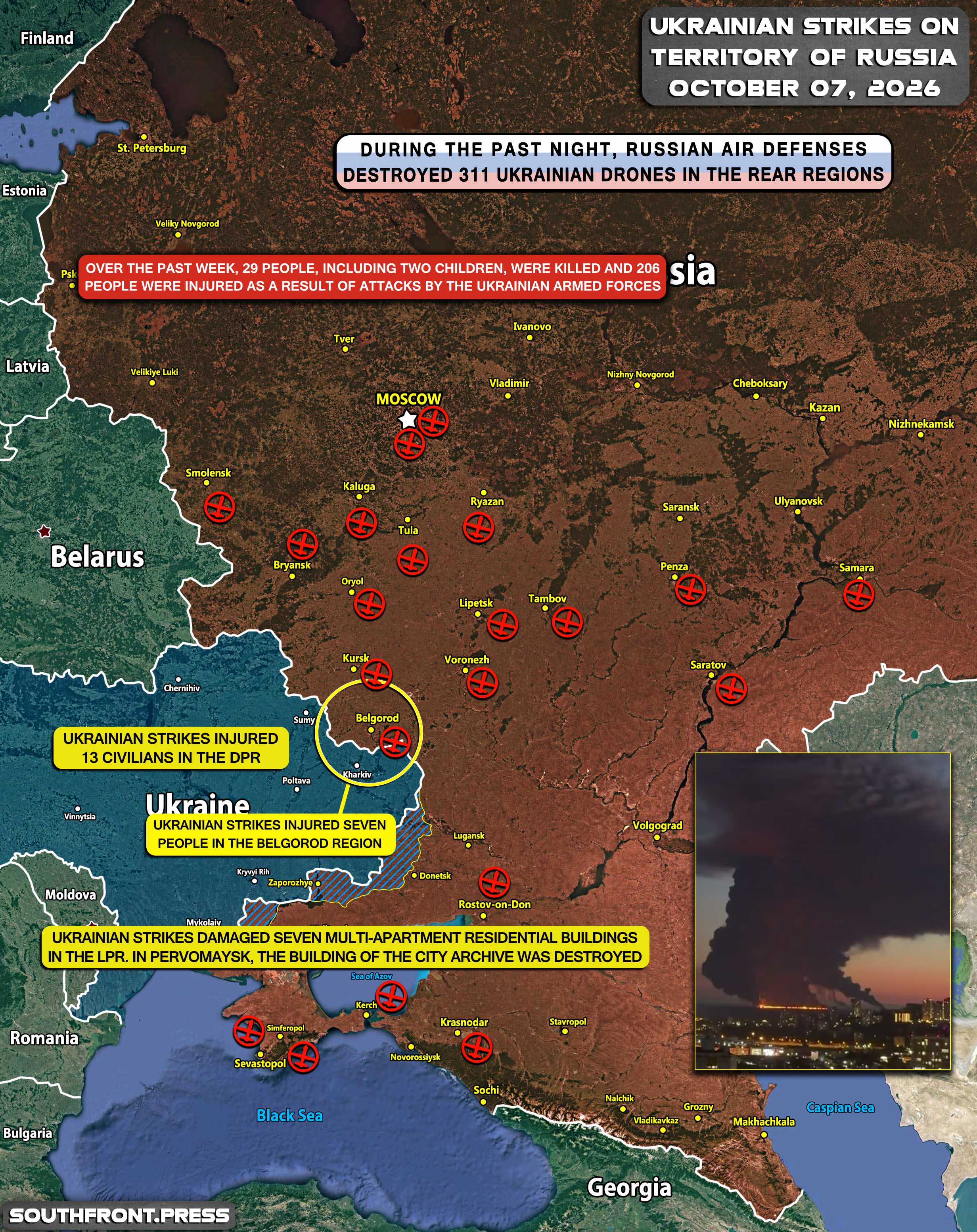
During the past night, Russian air defenses destroyed 311 Ukrainian drones in the rear regions;
Russian air defenses intercepted UAVs in the Belgorod, Bryansk, Kursk, Tula, Oryol, Lipetsk, Voronezh, Smolensk, Tambov, Kaluga, Saratov, Samara, Penza, Rostov, and Volgograd regions, Perm Krai, the Republic of Crimea, and over the waters of the Black and Azov Seas;
Ukrainian strikes injured seven people in the Belgorod region;
Ukrainian strikes injured 13 civilians in the DPR;
Ukrainian strikes damaged seven multi-apartment residential buildings in the LPR. In Pervomaysk, the building of the city archive was destroyed;
Over the past week, 29 people, including two children, were killed and 206 people were injured as a result of attacks by the Ukrainian Armed Forces.
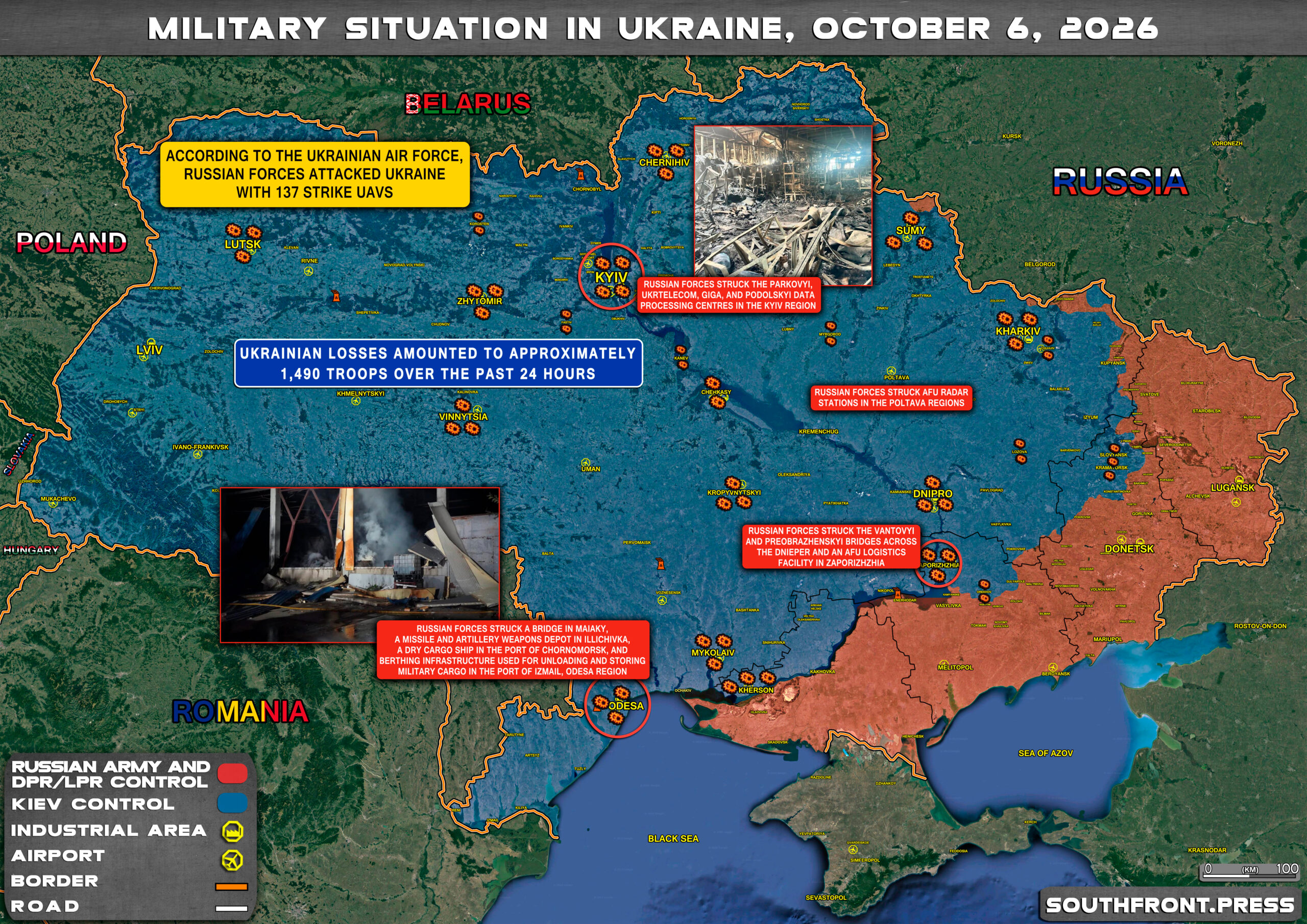
Russian strikes destroyed targets in the Zhytomyr, Vinnytsia, Kiev, Kirovograd, Khmelnytskyi, Dnipropetrovsk, Kharkiv, Zaporizhzhia, Odesa, Sumy, Poltava, Cherkasy, Chernihiv, Mykolayiv, Volyn, Kherson regions, and the DPR;
According to the Ukrainian Air Force, Russian forces attacked Ukraine with 137 strike UAVs;
Russian forces struck the Parkovyi, Ukrtelecom, Giga, and Podolskyi data processing centres in the Kyiv region;
Russian forces struck a bridge in Maiaky, a missile and artillery weapons depot in Illichivka, a dry cargo ship in the port of Chornomorsk, and berthing infrastructure used for unloading and storing military cargo in the port of Izmail, Odesa region;
Russian forces struck the Vantovyi and Preobrazhenskyi bridges across the Dnieper and an AFU logistics facility in Zaporizhzhia;
Russian forces struck AFU radar stations in the Poltava regions;
Ukrainian losses amounted to approximately 1,490 troops over the past 24 hours.
Click to see the full-size image
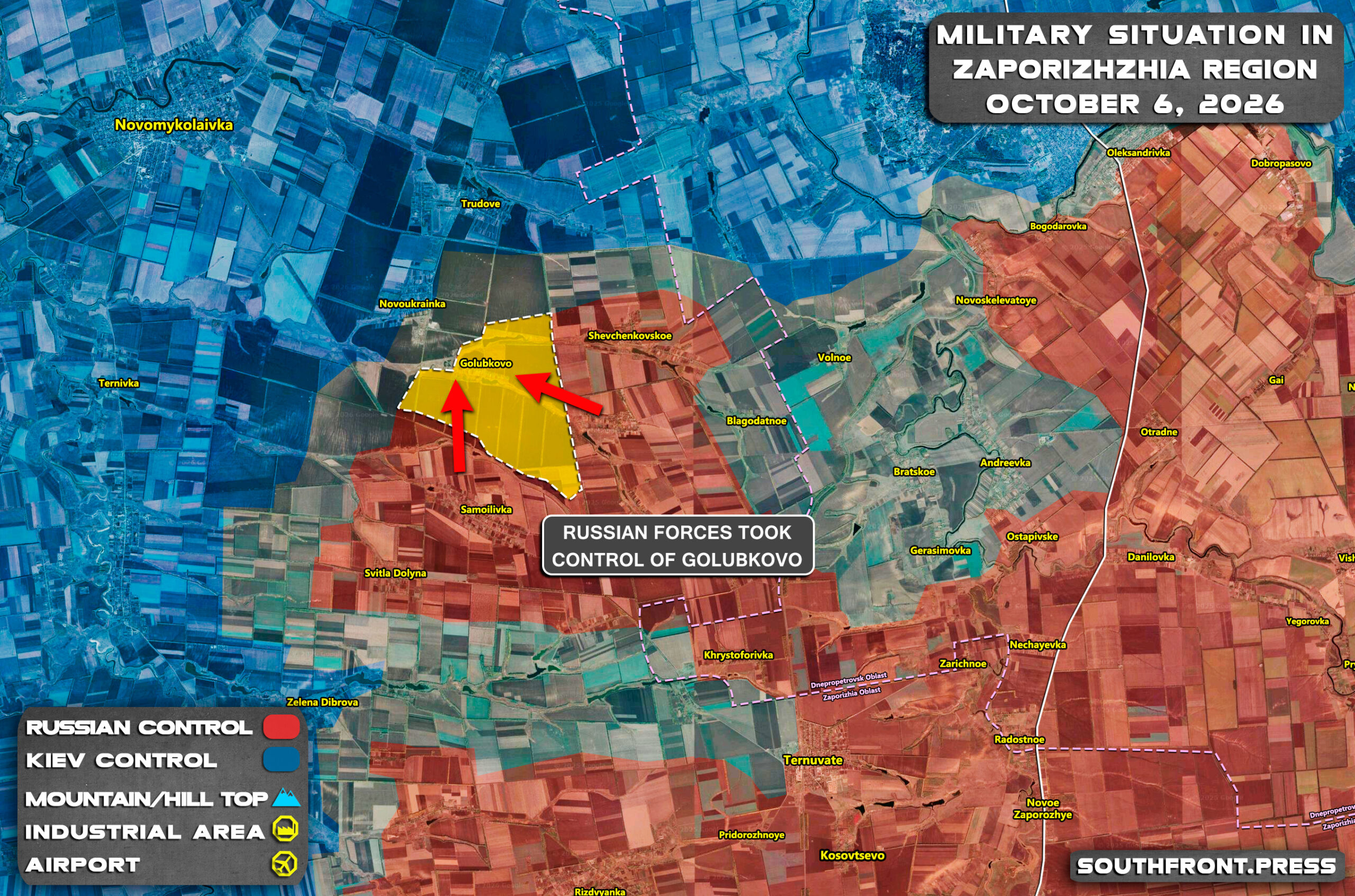
Russian forces took control of Golubovka.
Click to see the full-size image
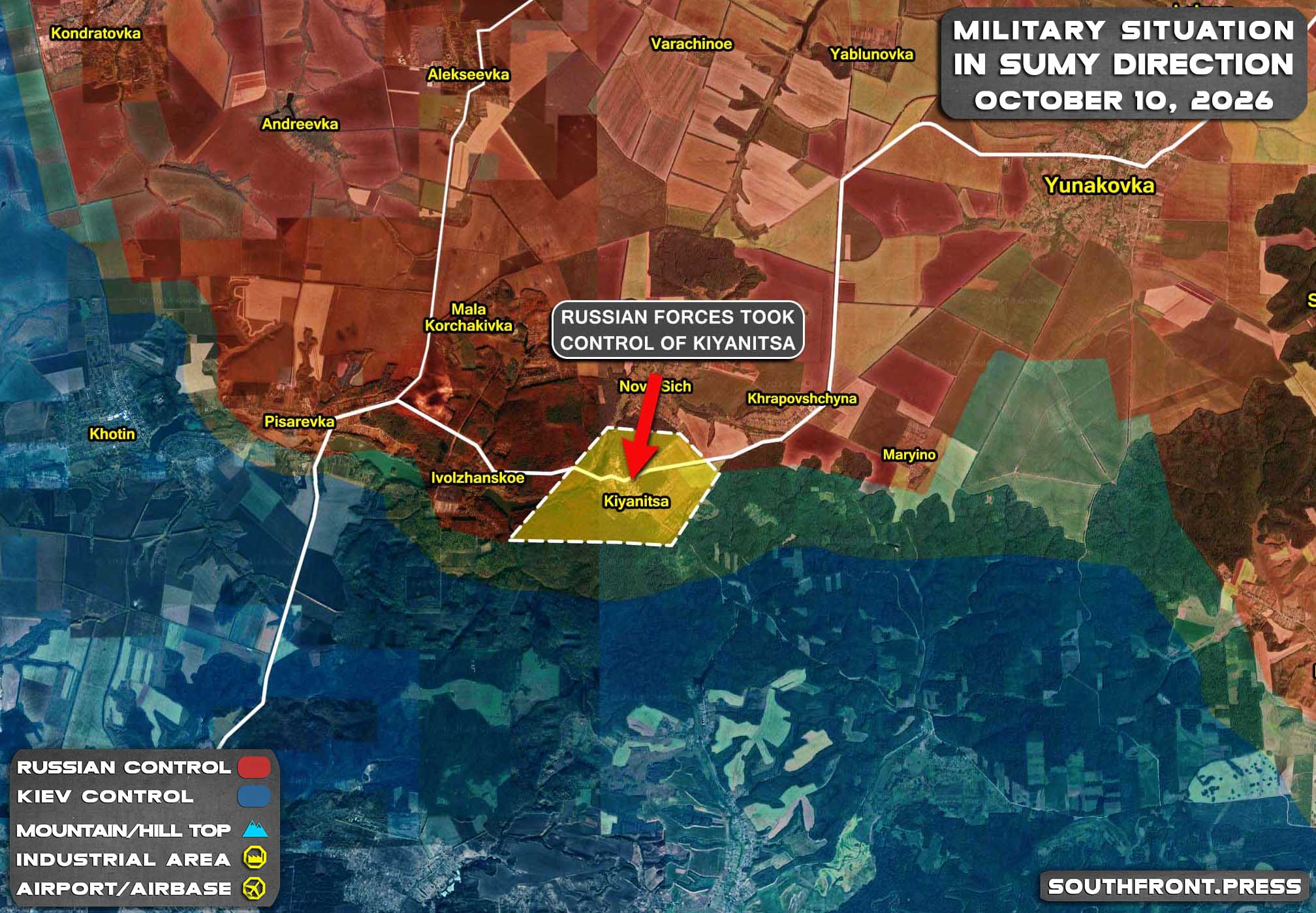
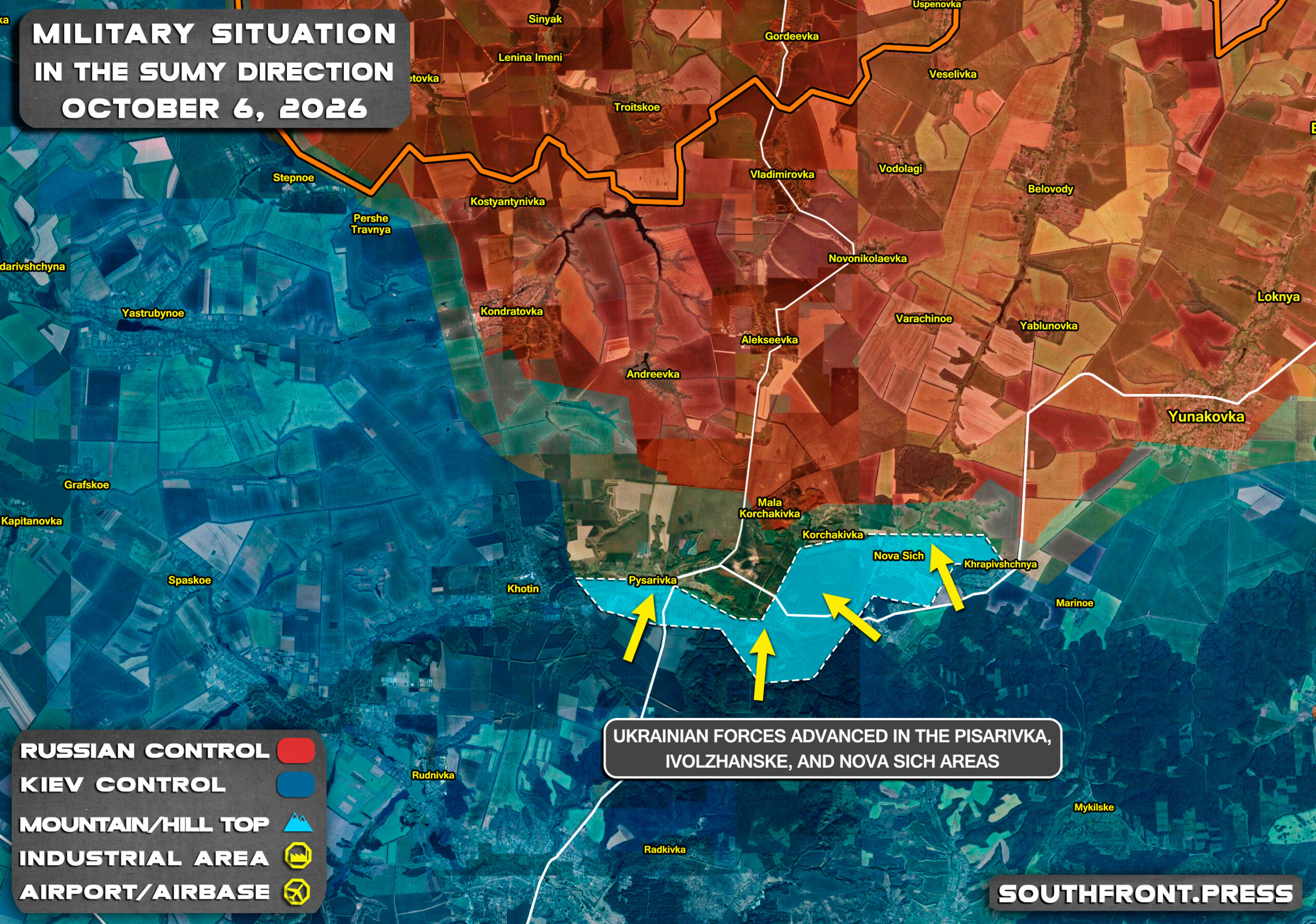
Ukrainian forces advanced in the Pisarivka, Ivolzhanske, and Nova Sich areas.
Click to see the full-size image
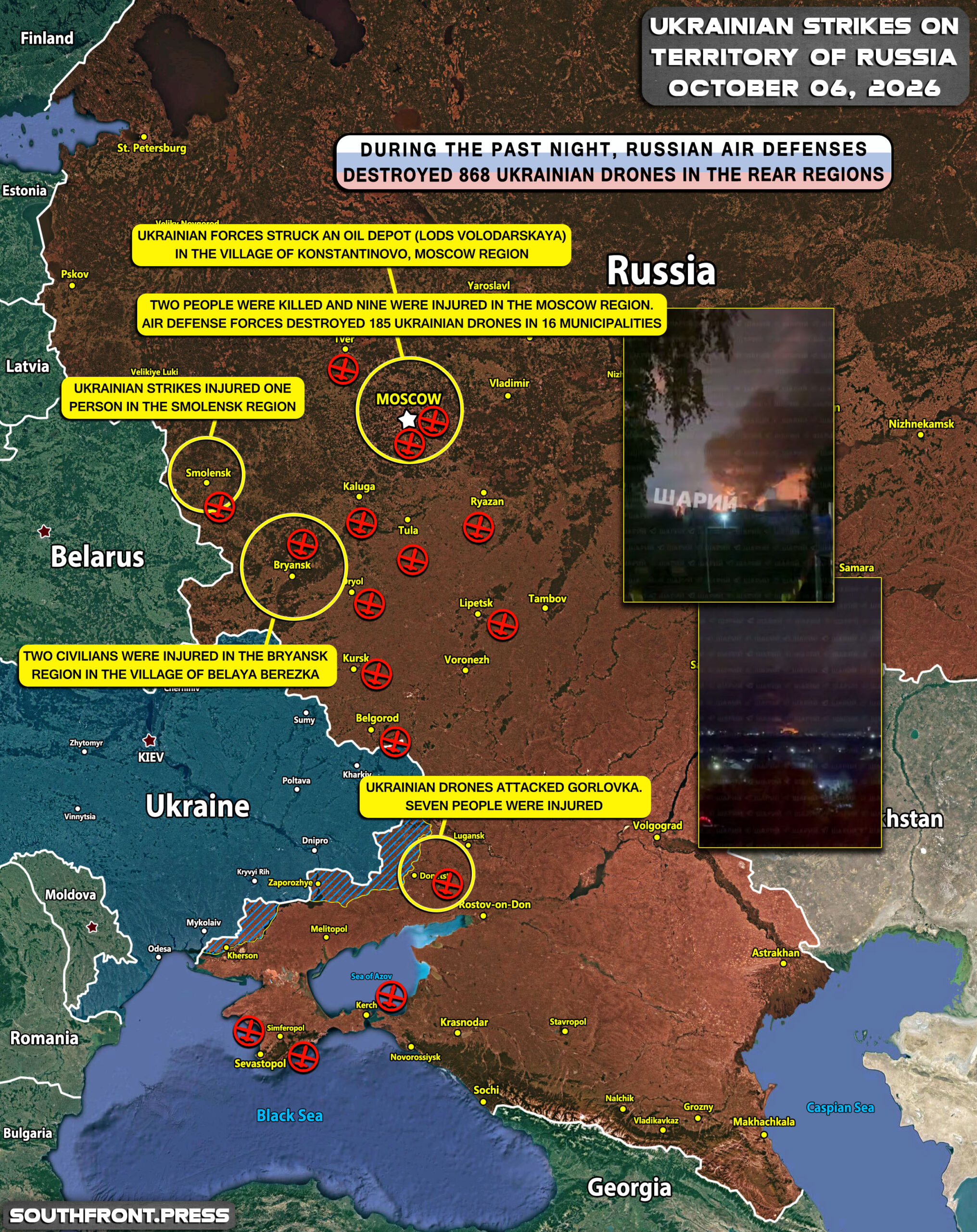
During the past night, Russian air defenses destroyed 868 Ukrainian drones in the rear regions;
Russian air defenses intercepted UAVs in the Belgorod, Bryansk, Kaluga, Kursk, Lipetsk, Oryol, Ryazan, Smolensk, Tver, and Tula regions, the Moscow region, the Republic of Crimea, and over the Sea of Azov;
Two people were killed and nine were injured in the Moscow region. Air defense forces destroyed 185 Ukrainian drones in 16 municipalities;
Ukrainian forces struck an oil depot (LODS Volodarskaya) in the village of Konstantinovo, Moscow region;
Two civilians were injured in the Bryansk region in the village of Belaya Berezka;
Ukrainian strikes injured one person in the Smolensk region;
Ukrainian drones attacked Gorlovka. Seven people were injured.
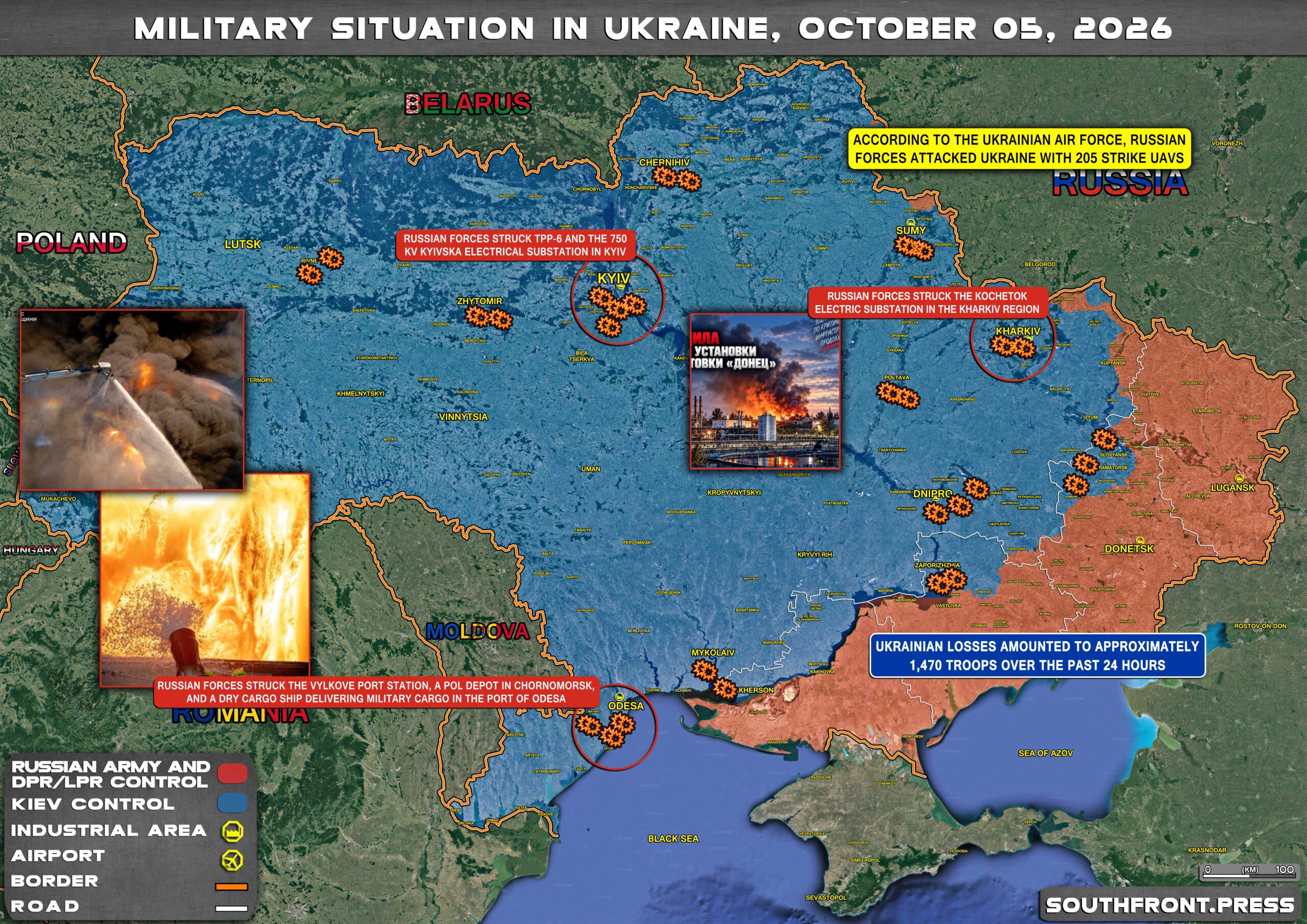
Russian strikes destroyed targets in the Sumy, Kharkiv, Zaporizhzhia, Dnipropetrovsk, Kherson, Mykolaiv, Odesa, Kyiv, Chernihiv, Poltava, Khmelnytskyi, Kirovohrad, Zhytomyr, Rivne regions, and the DPR;
According to the Ukrainian Air Force, Russian forces attacked Ukraine with 205 strike UAVs;
Russian forces struck the Kochetok electric substation in the Kharkiv region;
Russian forces struck the Vylkove port station, a POL depot in Chornomorsk, and a dry cargo ship delivering military cargo in the port of Odesa;
Russian forces struck TPP-6 and the 750 kV Kyivska electrical substation in Kyiv;
Ukrainian losses amounted to approximately 1,470 troops over the past 24 hours.
Click to see the full-size image
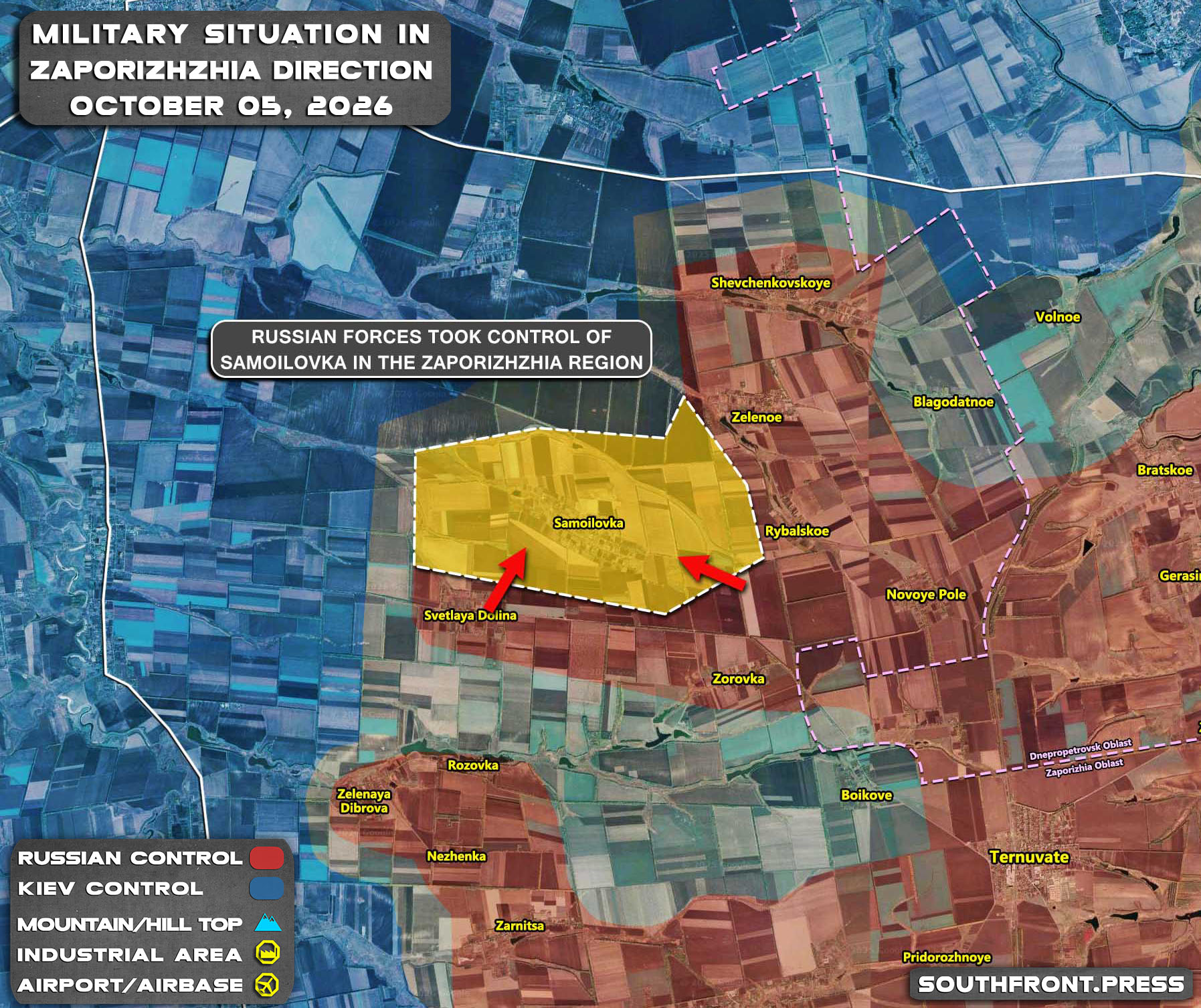
Russian forces took control of Samoilovka in the Zaporizhzhia region.
Click to see the full-size image
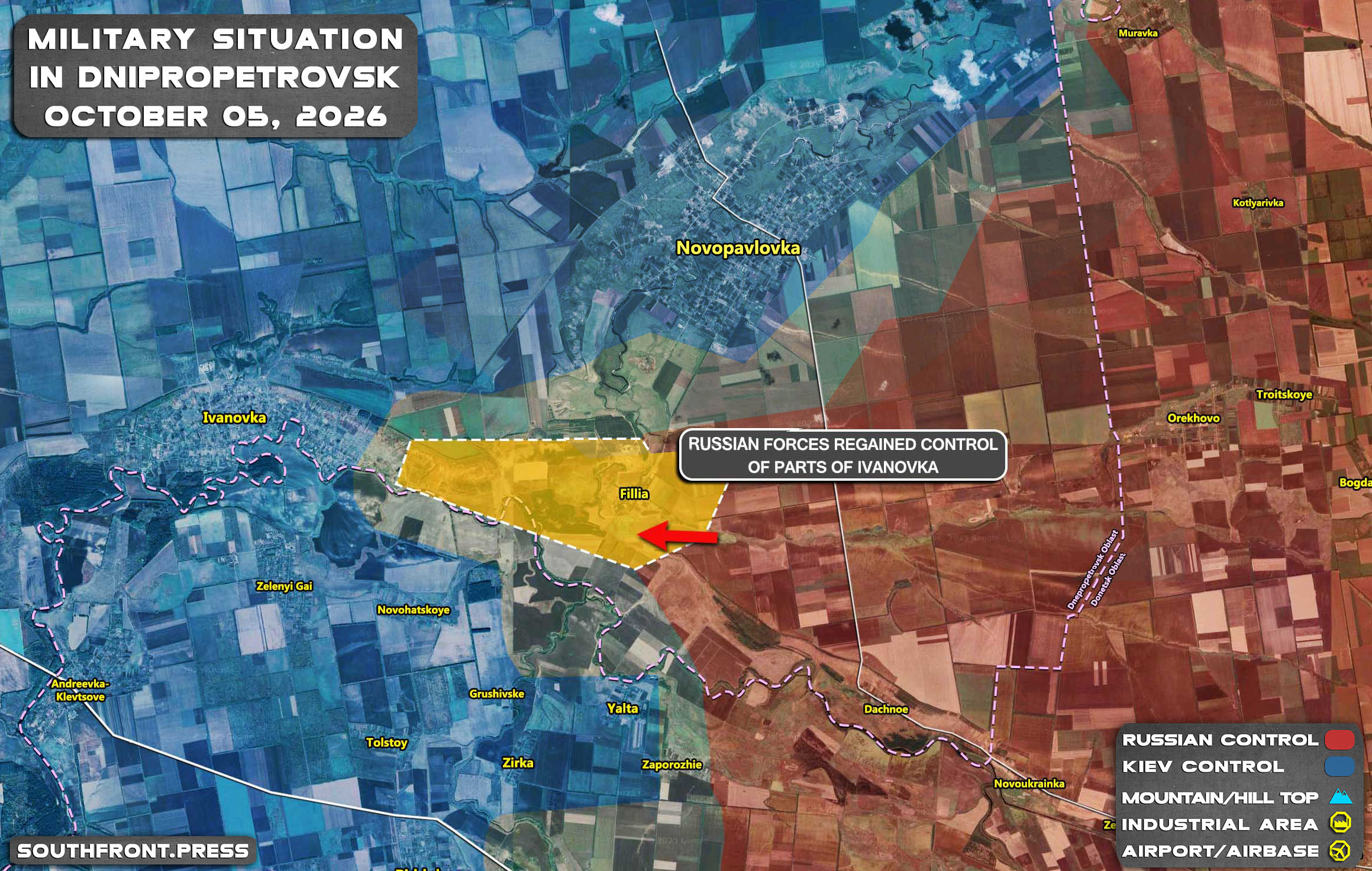
Russian forces regained control of parts of Ivanovka.
Click to see the full-size image
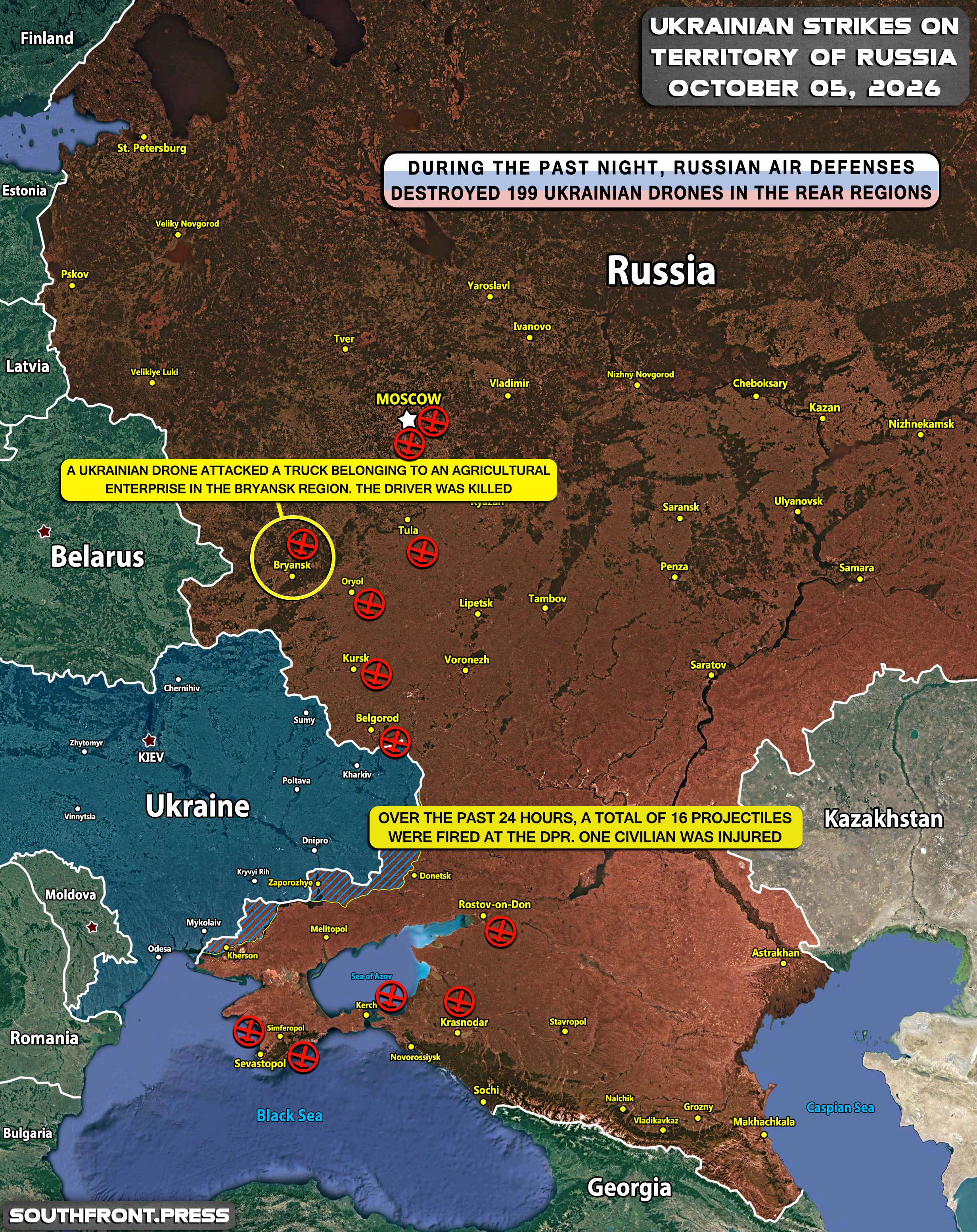
During the past night, Russian air defenses destroyed 199 Ukrainian drones in the rear regions;
Russian air defenses intercepted UAVs in the Belgorod, Bryansk, Kaluga, Kursk, Oryol, Ryazan, Tula, and Rostov regions, the Moscow region, Krasnodar Krai, the Republic of Crimea, and over the Black Sea;
A Ukrainian drone attacked a truck belonging to an agricultural enterprise in the Bryansk region. The driver was killed;
Over the past 24 hours, a total of 16 projectiles were fired at the DPR. One civilian was injured.
Cheap drones, heavy bombs, disrupted shipping, and vulnerable supply routes are challenging the idea that technological superiority guarantees military success. The emerging contest is not simply over who builds the smartest weapon. It is over who can adapt, produce, and keep fighting after the enemy learns how to break it. Washington’s Project Meridian offers one answer. Recent battlefields suggest a much harder test.
The Battlefield Rewrites the Blueprint
The war in Ukraine shows that military innovation does not always mean more sophisticated weapons. Sometimes it means finding a simple way around an enemy’s defenses. Russian forces did that with drones guided through fiber-optic cables instead of radio signals, allowing them to operate despite radio jamming.
During the fighting to push Ukrainian troops out of Russia’s Kursk region, fiber-optic drones threatened the roads supplying Ukrainian positions. Sustained attacks on transport made those positions harder to supply, reinforce, and evacuate. Ground that remained defensible against a direct assault became increasingly difficult to hold as supply routes came under pressure.
Drones did not replace infantry or artillery. Their value came from linking reconnaissance and strikes to a broader effort to disrupt Ukrainian logistics. A relatively small change in drone guidance helped Russian forces put pressure on the supply lines sustaining the defense, rather than just individual vehicles or positions.
A separate example from eastern Ukraine shows how drone attacks can also threaten robotic supply vehicles
Nor did the advantage remain exclusive. Ukrainian units expanded their own fiber-optic capabilities, turning a Russian breakthrough into another round of adaptation. Cable guidance removes the vulnerable radio-control link, but introduces weight, handling, and physical constraints. It does not make the aircraft invisible or indestructible. A solution to one problem creates a different set of tradeoffs.
Russia’s glide bombs demonstrate another route to military innovation. Instead of replacing existing weapons entirely, guidance and wing kits give older bombs greater reach and precision. Their heavy payloads perform tasks that small drones cannot. Their use against Ukrainian positions illustrates why the future battlefield will contain both cheap electronics and large quantities of conventional explosives.
The broader lesson is uncomfortable for anyone selling a universal replacement for the old military. New systems do not arrive on an empty battlefield. They must work with existing aircraft, artillery, engineers, supply units, and command structures. Their value depends on how those parts fit together.
That also limits what strike videos can prove. A successful attack demonstrates an outcome, not the average success rate, the number of failed missions, or the effort required to repeat it. The decisive question is whether an army can turn occasional success into a dependable military capability.
The Cost of Keeping Routes Open
The Red Sea offers a different warning. An attacker does not necessarily have to defeat a navy to impose strategic costs.
Houthi attacks pushed shipping companies toward longer routes around Africa. By late summer 2026, traffic through the Suez Canal was recovering but remained well below pre-crisis levels. Houthi attacks had pushed shipping companies onto longer, more expensive routes, showing how a regional armed group could disrupt global trade without defeating a major navy.
An interception can therefore be a tactical success without restoring normal commercial activity. The defender must protect ships and sustain confidence over time. The attacker may only need to keep the risk credible. Counting destroyed drones does not answer whether the shipping route is functioning.
The familiar comparison between a cheap drone and an expensive interceptor captures only part of this problem. Saving a merchant ship or warship can justify an expensive defensive shot. The deeper question is whether sufficient interceptors, maintenance capacity, crews, and replacement stocks remain available throughout a prolonged campaign.
Ukraine presents a related problem on land. Russian glide bombs combine substantial destructive power with relatively inexpensive conversion kits. Defending against every incoming weapon with a costly missile is not necessarily sustainable. But abandoning high-end air defenses would leave other threats unanswered.
The likely response is a layered force rather than a single miracle weapon. Different threats demand different combinations of detection, electronic warfare, physical protection, and interception. An army also needs to keep operating when some threats get through.
Kursk and the Red Sea are not interchangeable battlefields. One concerns a contested land campaign, the other pressure on maritime commerce. What connects them is the importance of maintaining a function under repeated attack. Delivering supplies and keeping shipping moving matter more than producing an impressive interception tally.
Washington Looks Upward
Washington is approaching this problem through a different starting point: global networks, industrial scale, and institutional control.
On September 30, Pete Hegseth announced Project Meridian alongside a proposed Autonomous Warfare Command and the Fortress America initiative. Meridian would examine future military capabilities, while the new command would organize the expansion of autonomous and robotic systems. Fortress America would address the resilience of bases and supply chains. These are related initiatives, not a single approved war plan.
U.S. service members at the State of the Force address, Quantico, September 30, 2026
Meridian’s advisers include Elon Musk, Palmer Luckey, and Newt Gingrich, under Pentagon technology chief Emil Michael. The study has 120 days to report. Its significance is not that three men can invent the next war. It is that major technology suppliers are being invited to help define the military capabilities Washington should pursue.
The September 30 memorandum commissions a study of future warfare
The State of the Force event at Quantico, where Project Meridian was announced, September 30, 2026
Some of the supporting infrastructure already has funding. On May 26, Space Systems Command awarded SpaceX a $2.29 billion agreement for the Space Data Network Backbone. A fully operational prototype is due by the end of 2027. The intended function is to connect military sensors and weapons through a high-capacity orbital communications network.
That addresses a real military requirement. Information has limited value if it cannot reach the people or systems that need it. But a larger network does not automatically become a more dependable one. The test is whether useful connections survive disruption, and whether units can continue operating when they do not.
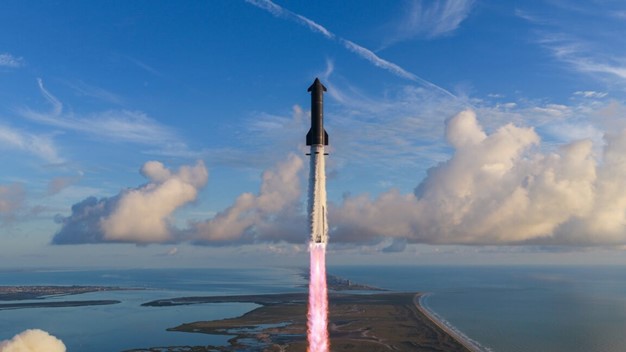
Heavy-lift rockets could support the deployment of larger satellite constellations, although these programs do not yet amount to a single publicly defined architecture. Starship Flight 14 reached orbit on September 28 and deployed 26 Starlink V3 satellites. That demonstrated payload delivery, not every capability promised for the rocket. Reaching orbit once and providing dependable, economical military infrastructure are different milestones.
Starship Flight 14 launches from Starbase, September 28, 2026, carrying 26 Starlink V3 satellites
Starship’s final descent, landing burn, and splashdown during Flight 14, September 28, 2026
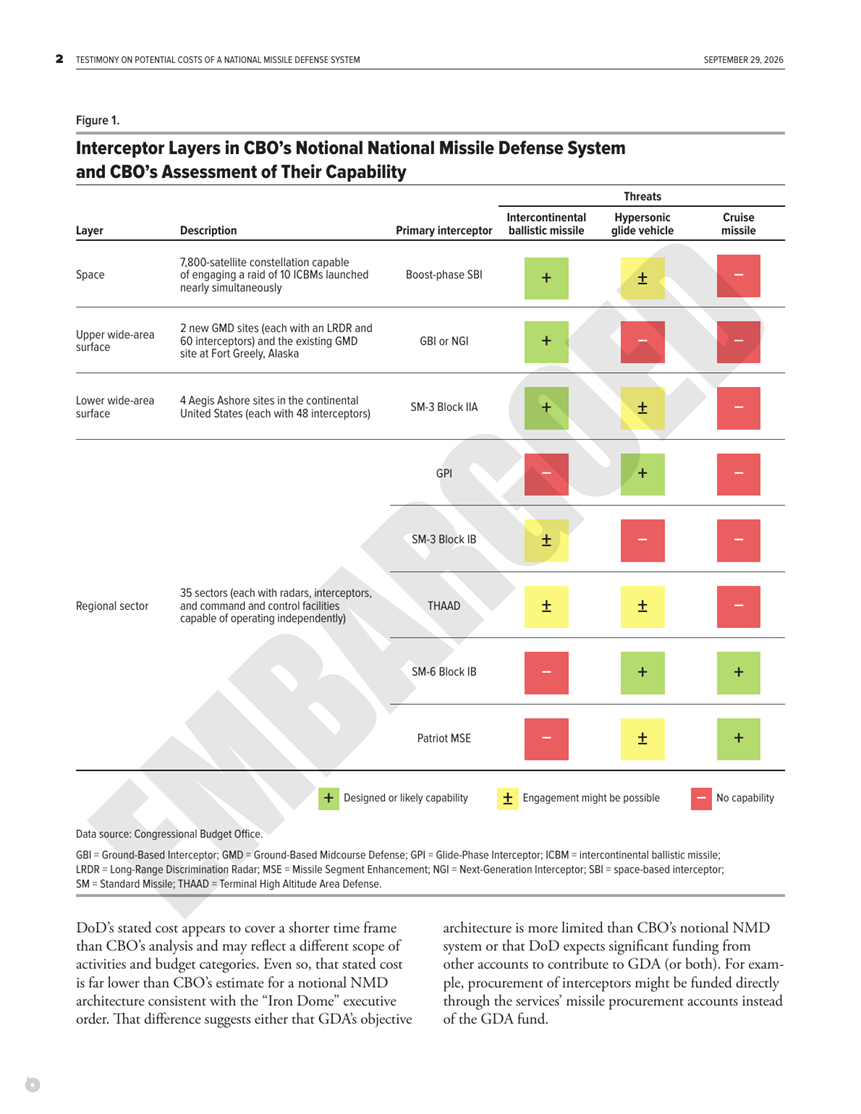
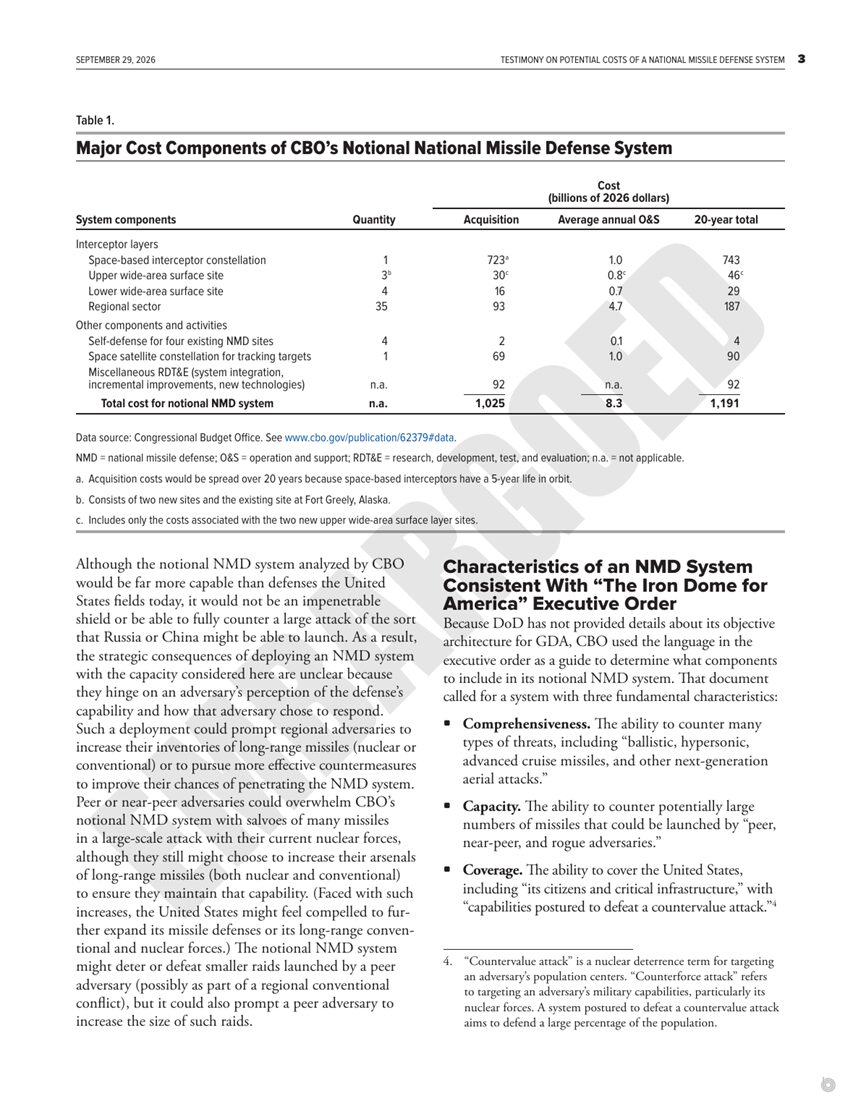
Golden Dome extends the ambition to missile defense. In May, the Congressional Budget Office estimated that a notional system consistent with the administration’s stated objectives could cost about $1.2 trillion over 20 years. Crucially, this was not a price tag for the Pentagon’s approved design. The final architecture had not been publicly disclosed.
A notional national missile-defense architecture assessed by the Congressional Budget Office
Estimated costs of the Congressional Budget Office’s hypothetical system, expressed in 2026 dollars
The policy risk is not simply excessive ambition. It is defining military problems in ways that favor the products already offered by influential suppliers. That deserves scrutiny without assuming that commercial involvement makes every proposal useless. A contract is evidence of spending. It is not evidence of battlefield superiority.
Elon Musk, named a co-leader of Project Meridian
Machines Still Need Factories
The American approach emphasizes integrating ambitious systems through large institutions. The battlefield experience points toward an equally important requirement: changing ordinary systems quickly.
These approaches are not mutually exclusive. Satellites and inexpensive drones can support the same force. The tension lies in their development cycles. A major space program cannot be redesigned every few weeks. A frontline drone or its communications equipment may lose effectiveness if updates take years.
The industrial base must therefore support both continuity and rapid revision. Ukraine’s drone sector demonstrates the importance of close feedback between operators and developers, but also the vulnerability of assembly dependent on imported components. A domestically assembled aircraft is not necessarily an independently sustainable capability.
Russian developers are also discussing the problem in terms broader than individual weapons. In September, the Ushkuynik center presented a drone assembly line housed in a modified shipping container. The proposal illustrates an effort to distribute production rather than concentrate it in a single factory.
These are developer proposals, not independently demonstrated solutions at national scale. Nevertheless, they identify two important problems: distributing production and closing gaps between separate defensive systems.
A workshop, a repair team, and a reliable component supplier may therefore matter as much as another model advertised as revolutionary. Military adaptation requires people who can identify a failure, explain it to engineers, approve a modification, and return workable equipment to service.
Autonomous Warfare Command: new drones, familiar geometry. All that’s missing is the secret handshake
Autonomy does not remove these obligations. The meaningful question is which task a machine can perform reliably without continuous human input, under what conditions, and with what consequences when it fails. “Autonomous” should describe a tested function, not serve as a substitute for explaining one.
Fortress America recognizes another dependency. Hegseth’s stated aim is for military installations eventually to operate under their own power, alongside stronger protection and domestic supply chains. Yet independence from the civilian grid would not by itself eliminate the need for fuel, spare parts, communications, or skilled maintenance. Resilience must extend beyond the perimeter fence.
The same principle applies at the front. Engineering and logistics deserve attention alongside strike footage. They show how forces sustain movement and support combat units, rather than merely how they destroy a target.
From Remote Control to Robotic Forces
The next stage of warfare is unlikely to resemble an army of humanoid machines replacing soldiers. A more plausible future is a force in which people fight alongside growing numbers of specialized robots, from reconnaissance aircraft to ground vehicles carrying ammunition, evacuating casualties, and supporting assaults.
That transition is already underway. Both Russian and Ukrainian forces are using ground robots for logistics, evacuation, and other battlefield tasks. In September, Ukraine’s Defense Ministry reported that its ground systems had completed more than 25,000 supply and evacuation missions in August alone. The figure is an official claim, not an independently audited total, but it illustrates how far the ambition extends beyond occasional demonstrations.
Over the next five years, the important change may be the organization of these machines into working formations. Aerial drones could scout ahead while ground robots move supplies and support troops. Humans would still set objectives and handle situations the machines cannot reliably interpret. The advantage would come from coordinating those different roles, not simply putting more unmanned vehicles on the battlefield.
Remote control, however, is not autonomy. A vehicle that needs continuous steering from an operator remains dependent on communications and human attention. Greater autonomy could allow machines to navigate, avoid obstacles, or complete limited tasks when a connection fails. None of those functions automatically makes a robot capable of independently identifying legitimate targets or deciding when to fire.
The likely result is a race between robotic capability and countermeasures. More machines may reduce the number of soldiers exposed on supply routes, but those machines will themselves become targets. Communications, batteries, maintenance, and replacement parts will remain constraints. Robotization moves some risks away from people; it does not abolish the costs of war.
Nor will inexpensive robots make heavy weapons obsolete. Small drones, armored vehicles, artillery, and aircraft perform different jobs. The stronger force will be the one that combines them effectively and changes that combination faster than its opponent.
Meridian should be judged against this prospect, not the grandeur of its language. Can Washington build systems that cooperate, survive disruption, and remain affordable enough to replace? Can its procurement machinery adapt as quickly as the battlefield demands?
The next war will not be won by whoever unveils the most impressive robot. It may favor the side that can lose machines without losing momentum, preserve human judgment without slowing every decision, and turn battlefield lessons into production before the enemy does. The real revolution is not a machine that looks like a soldier. It is an army that learns to fight differently because machines are now part of its ranks.
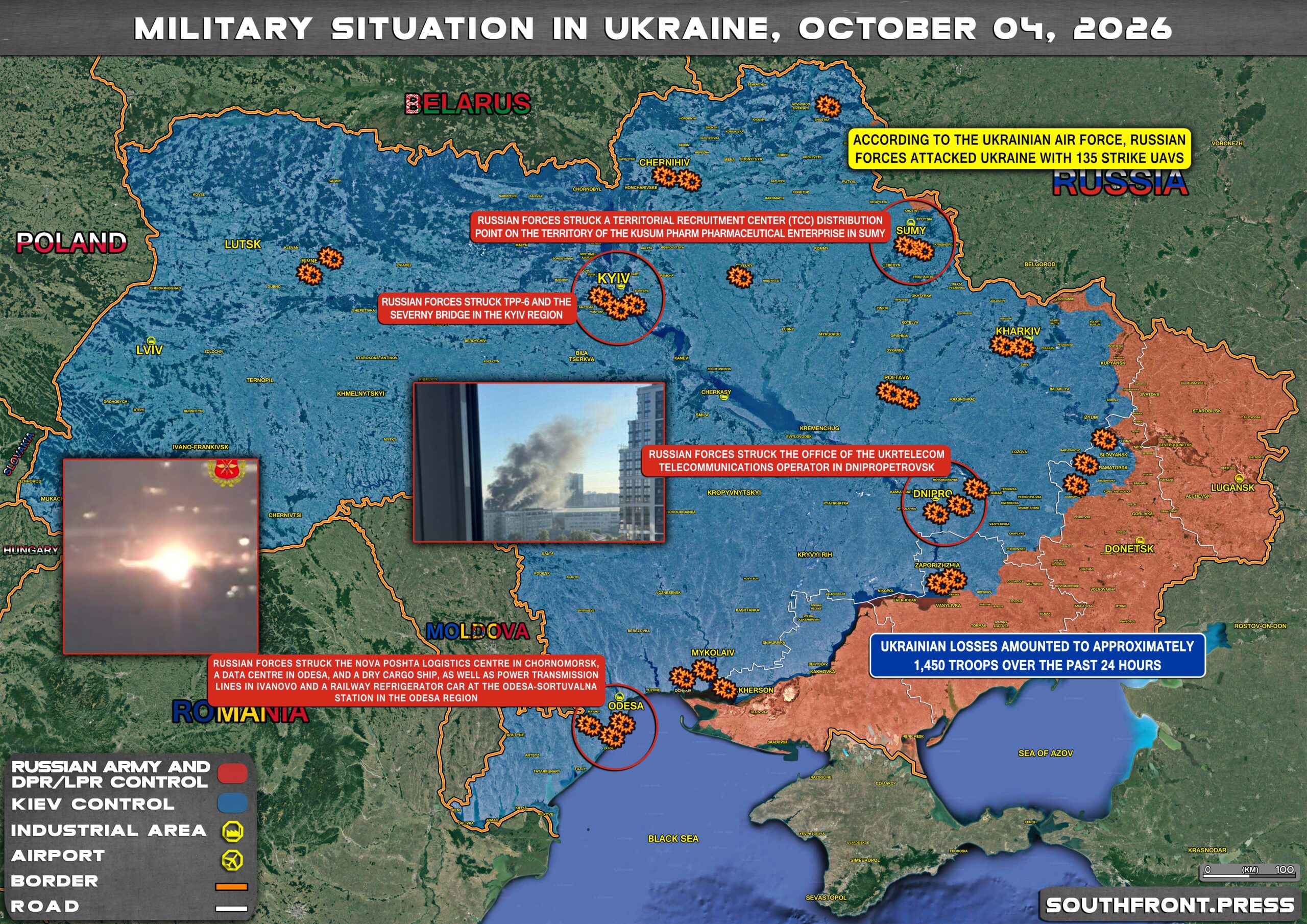
Russian strikes destroyed targets in the Sumy, Shostka, Kharkiv, Zaporizhzhia, Dnipropetrovsk, Kherson, Kyiv, Odesa, Mykolaiv, Chernihiv, Poltava, Zhytomyr, Rivne regions, and the DPR;
According to the Ukrainian Air Force, Russian forces attacked Ukraine with 135 strike UAVs;
Russian forces struck the Nova Poshta logistics centre in Chornomorsk, a data centre in Odesa, and a dry cargo ship, as well as power transmission lines in Ivanovo and a railway refrigerator car at the Odesa-Sortuvalna station in the Odesa region;
Russian forces struck TPP-6 and the Severny Bridge in the Kyiv region;
Russian forces struck the office of the Ukrtelecom telecommunications operator in Dnipropetrovsk;
Russian forces struck a Territorial Recruitment Center (TCC) distribution point on the territory of the Kusum Pharm pharmaceutical enterprise in Sumy;
Ukrainian losses amounted to approximately 1,450 troops over the past 24 hours.
Click to see the full-size image
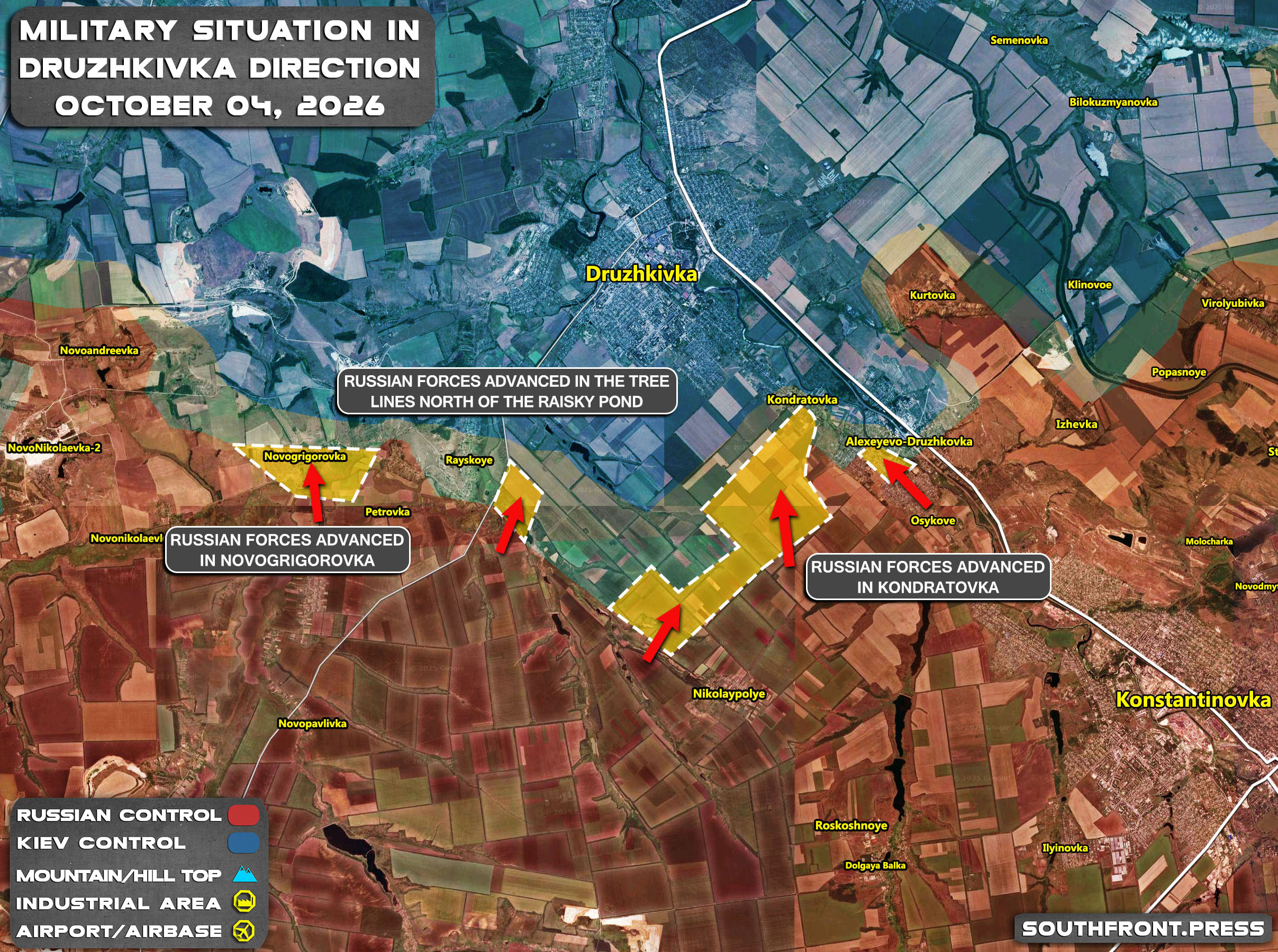
Russian forces advanced in Kondratovka;
Russian forces advanced in the tree lines north of the Raisky Pond;
Russian forces advanced in Novogrigorovka.
Click to see the full-size image
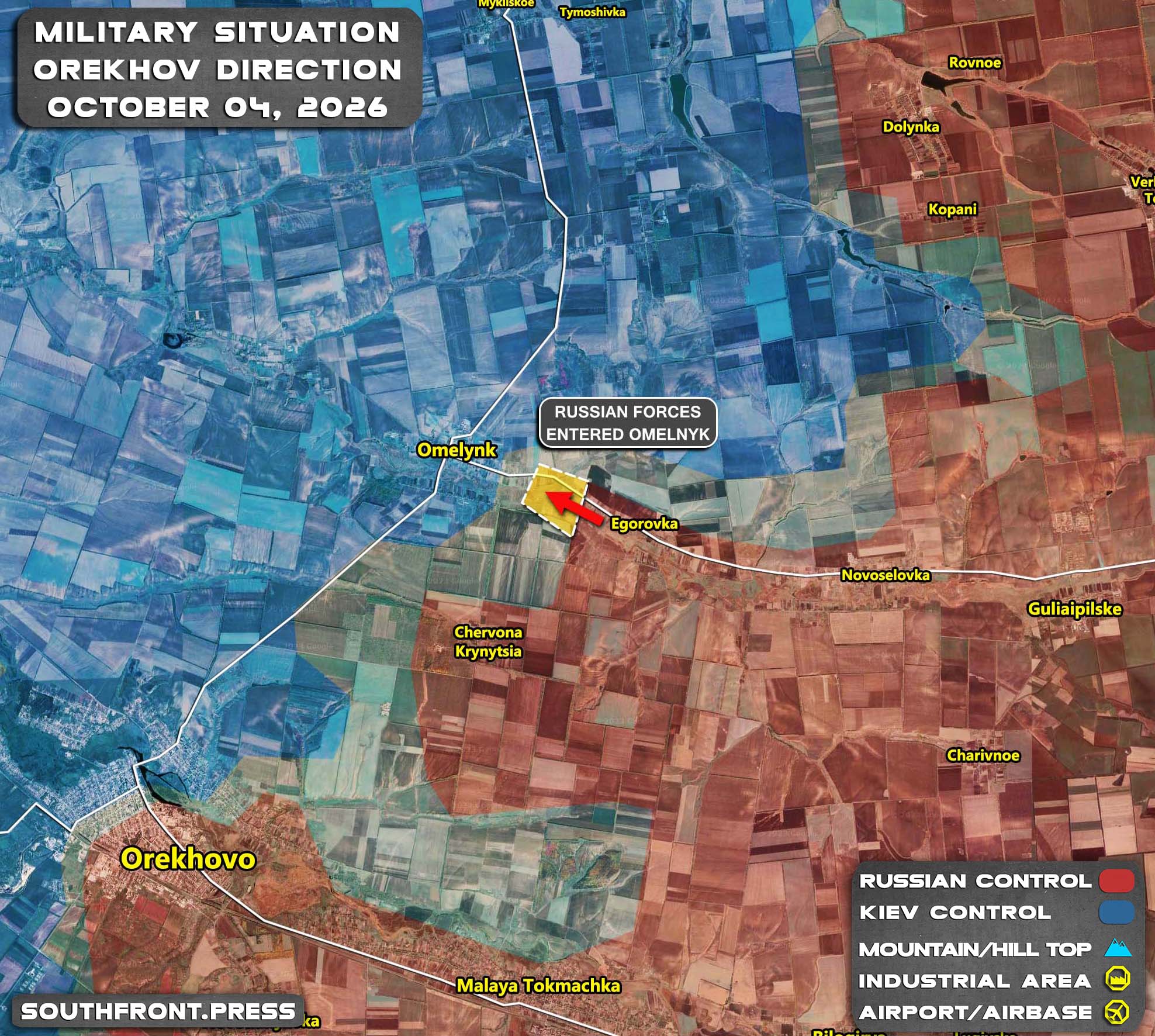
Russian forces entered Omelnyk.
Click to see the full-size image
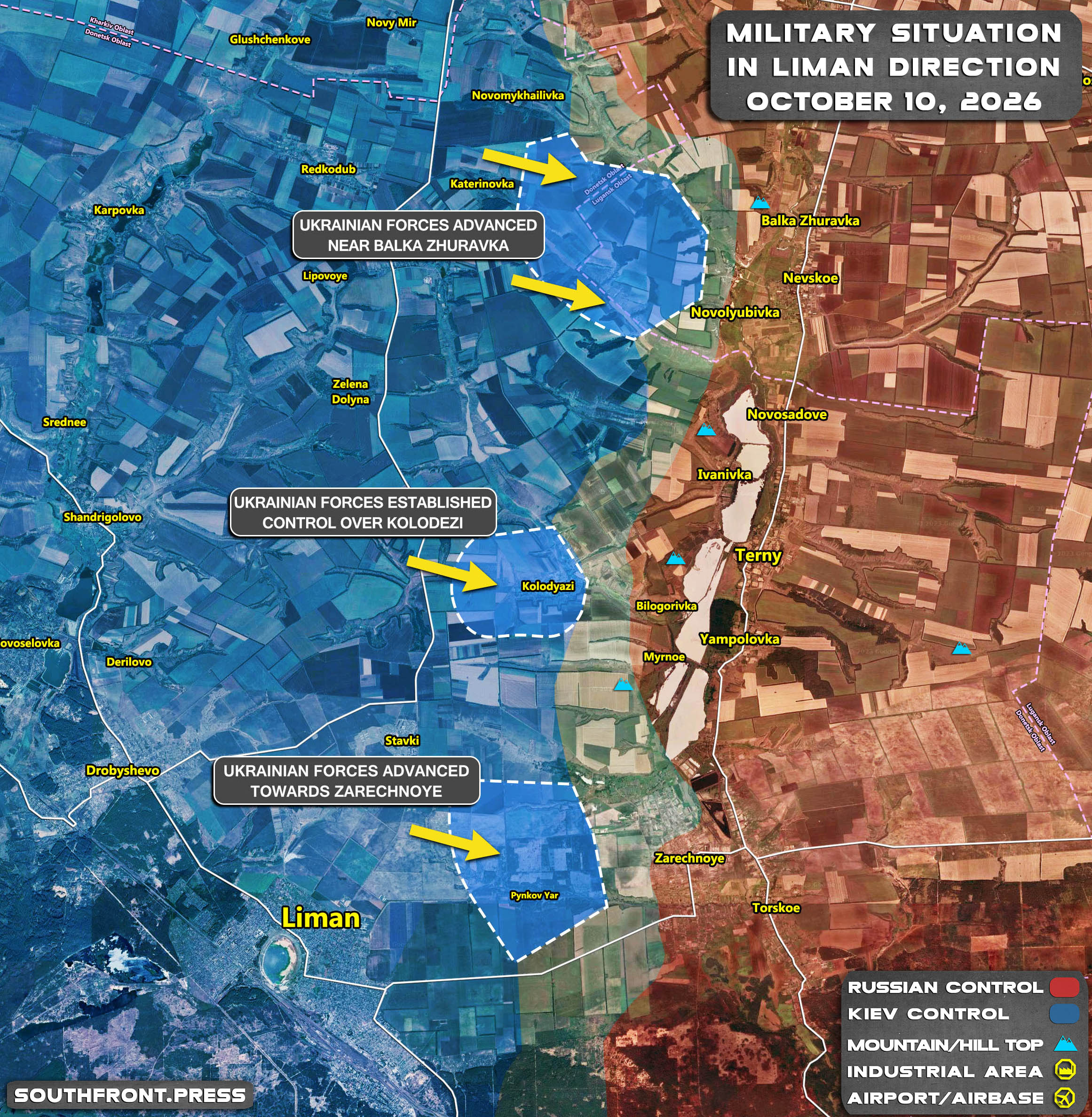
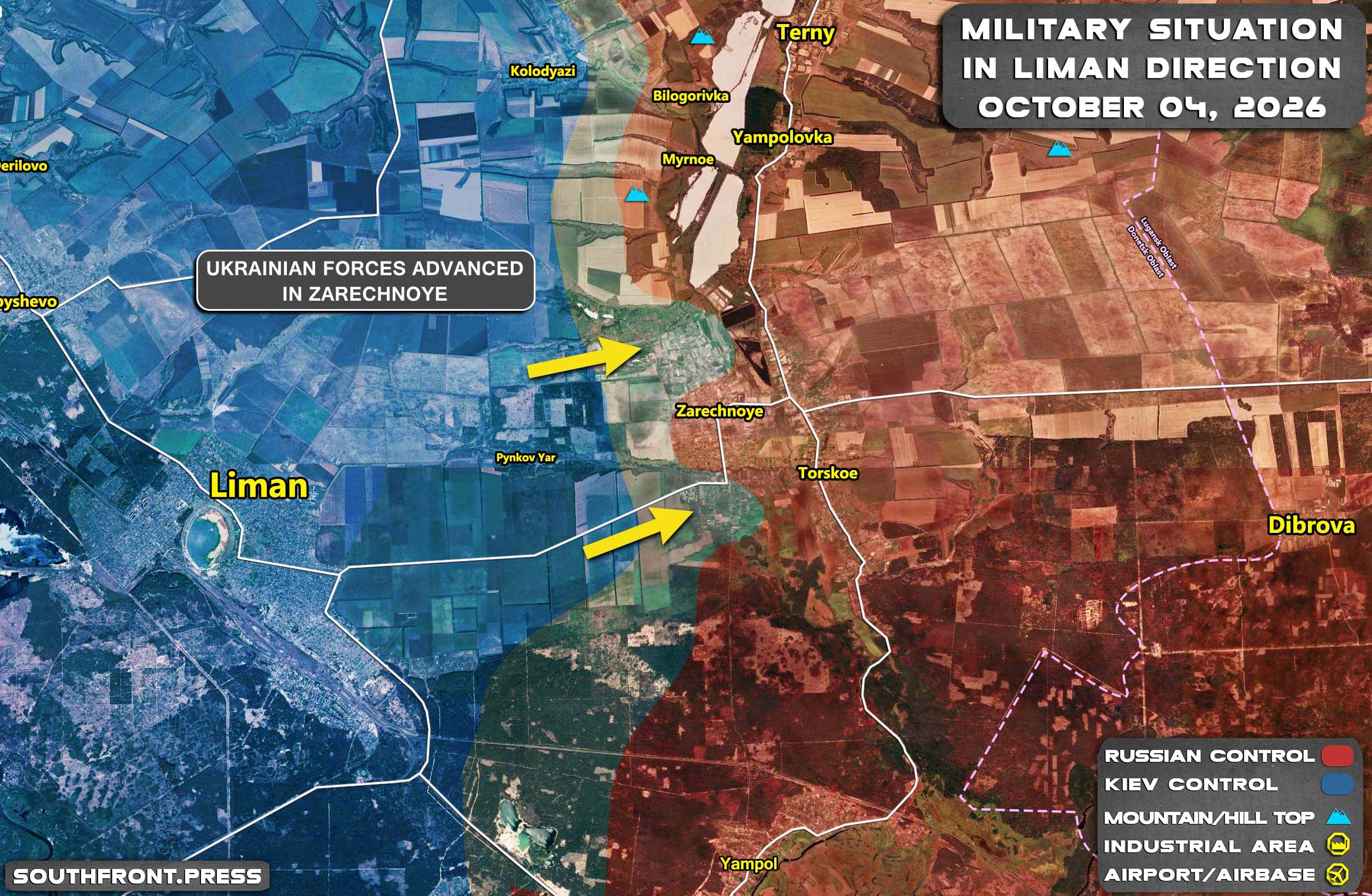
Ukrainian forces advanced in Zarechnoye.
Click to see the full-size image
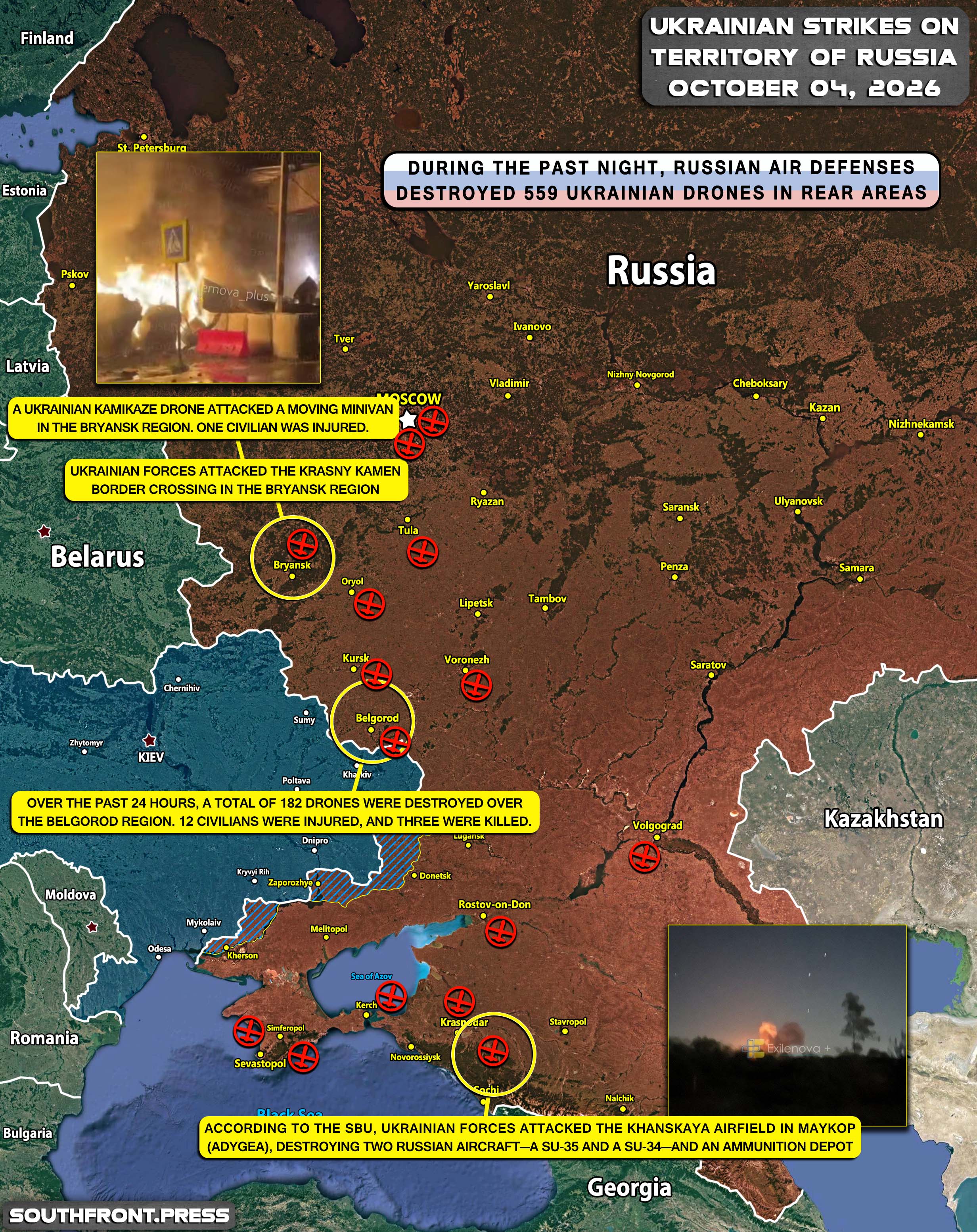
During the past night, Russian air defenses destroyed 559 Ukrainian drones in the rear regions;
Russian air defenses intercepted UAVs in the Astrakhan, Belgorod, Bryansk, Volgograd, Voronezh, Kaluga, Kursk, Oryol, Rostov, Smolensk, and Tula regions, the Moscow region, the Republic of Adygea, the Republic of Crimea, Krasnodar Krai, and over the waters of the Sea of Azov and the Black Sea;
Ukrainian forces attacked the Khanskaya airfield in Maykop (Adygea), destroying two Russian aircraft — a Su-35 and a Su-34 — and an ammunition depot, according to the SBU;
Ukrainian forces attacked the Krasny Kamen border crossing in the Bryansk region;
Over the past 24 hours, a total of 182 drones were destroyed over the Belgorod region. 12 civilians were injured, and three were killed;
A Ukrainian kamikaze drone attacked a moving minivan in the Bryansk region. One civilian was injured.
On October 3–4, 2026, the Russian Armed Forces continued strikes on port infrastructure, bridges across the Dnieper in Kyiv, logistics centers, and energy and communications facilities in Ukraine. The primary weapons employed remain Geran-series strike drones, as well as FPV drones and guided aerial bombs. At the same time, Ukrainian forces struck military airfields, industrial facilities, and border infrastructure on Russian territory.
Strikes on Ukraine
Kyiv: Repeated Strikes on the Northern Bridge
On October 3–4, Russian forces carried out a series of strikes on the Northern Bridge across the Dnieper in Kyiv, one of the city’s key transport links between the two banks. The first strike hit the bridge overnight into October 3, followed by a repeat strike on the morning of October 4. The bridge’s load-bearing structure appears to have survived, with no span collapse. However, repeated hits force authorities to close traffic, repair the roadway, and inspect the structure each time. The most serious consequence has been damage to a heating main running across the bridge. Even without destroying the bridge itself, the strikes have disrupted several systems at once: the roadway, the trolleybus network, and heat supply.
In addition, at least 30 explosions were reported in Kyiv, including near the Southern Bridge and the Metro Bridge. Ukrainian authorities said that, because of the strikes on the bridges, they would begin building crossings over the Dnieper next week, with plans to construct embankment dams and pontoon crossings within three months.
The Odesa region saw the highest number of targets over the two days. Strikes hit ports, logistics centers, railways, and merchant vessels.
Maritime and port targets. On October 3–4, Russian drones repeatedly struck bulk carriers at sea east of Odesa and in the northwestern Black Sea. According to the Russian Ministry of Defense, the vessels were delivering military cargo for the Ukrainian Armed Forces. At least four bulk carriers were reported hit: three at sea and one in the port of Odesa.
Logistics and industry. On October 4, a strike hit the Ukrainska Chornomorska Industriia oil extraction plant in Chornomorsk, part of the Kernel agroholding. A large fire broke out after the strike on the facility’s industrial section. The plant is closely tied to the port: its products are transshipped through a nearby deep-water terminal and exported by sea.
Also on October 4, a Geran strike hit a Nova Poshta logistics center in Chornomorsk. A data center was struck in Odesa.
Railways. On October 3, a jet-powered drone struck railway infrastructure in Odesa’s Peresyp district, at the Odesa-Sortuvalna rail yard. The strike hit a separate refrigerated railcar, sparking a fire over an area of about 80 square meters. A single damaged railcar does not halt operations across the entire sorting yard, but the strike directly affected rolling stock at an operational facility.
Energy and communications. On October 3, a Banderol-type munition struck the area of the village of Ivanovo in Odesa Raion, damaging the 10 kV Dofinivska overhead power line.
Sumy: Strike on a Territorial Recruitment Center Distribution Point
On October 4, a combined strike hit the grounds of the Kusum Pharm pharmaceutical enterprise in Sumy. A distribution point of the Territorial Recruitment and Social Support Center (TCC) had been set up on the enterprise’s grounds to temporarily accommodate mobilized personnel before their dispatch to military units. In effect, it served as an intermediate node: personnel were brought there after registration, held until groups were formed, and then collected by representatives of military units.
Kramatorsk: Strike on a Building Used as a Rotation Point
On October 3, a FAB-250 guided bomb with a UMPK module struck a building in Kramatorsk that, according to reports, was being used as a rotation point for Ukrainian service members. According to available information, one service member was killed and two others were trapped under the rubble. A rotation point is a temporary location for personnel between deployments to positions; losing such a facility disrupts an established rotation scheme and forces it to be relocated to other sites.
Dnipropetrovsk: Repeat Strike on a Business Center
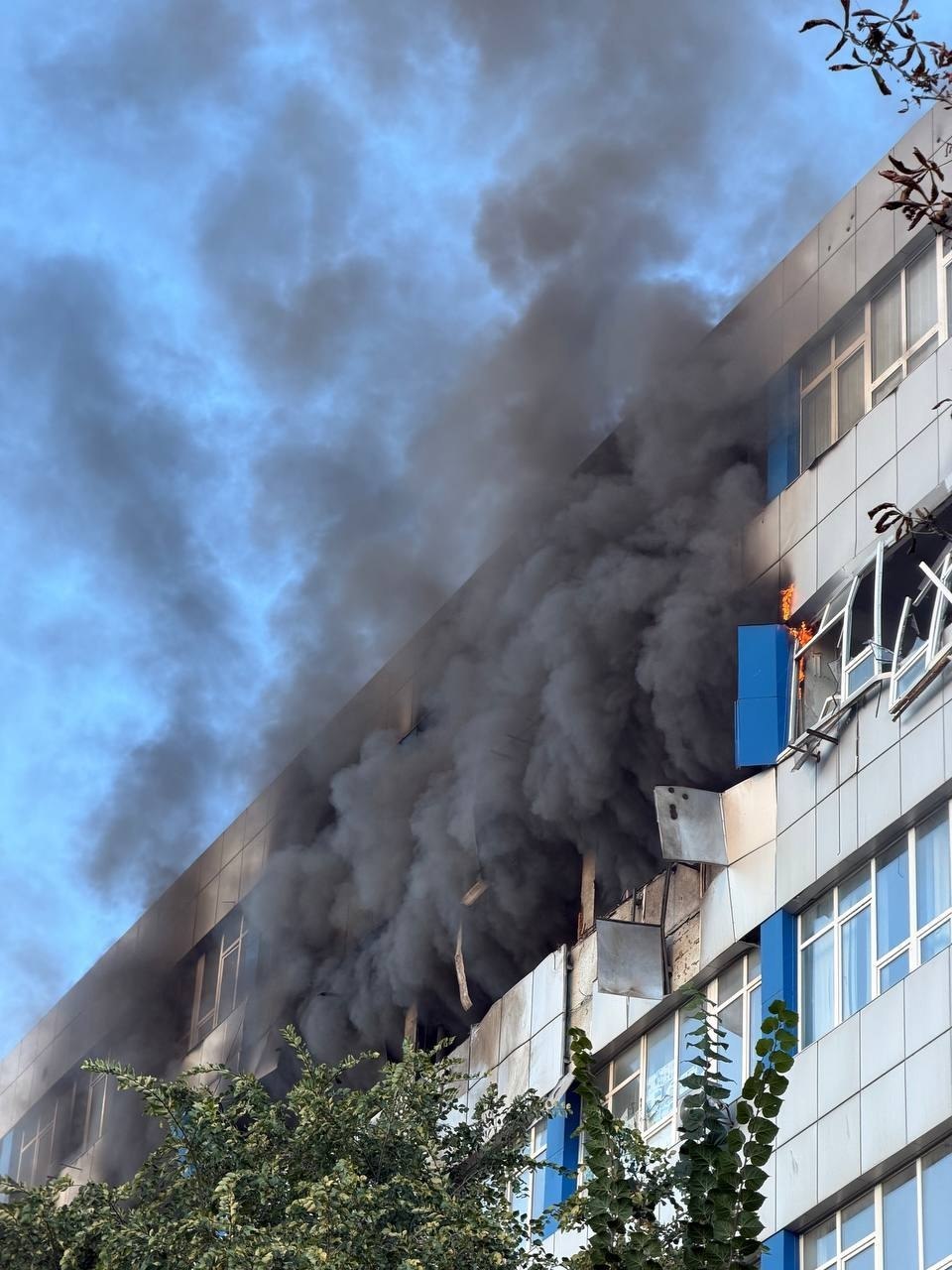
In Dnipropetrovsk, a repeat strike hit the same business center in the city center that had already been heavily damaged on September 28. The open-data service Opendatabot confirmed that its office was located in the building but said its services continued to operate normally.
Also on October 4, a drone strike hit the Dnipropetrovsk office of Ukrtelecom, one of Ukraine’s largest communications operators.
On October 4, Ukrainian forces attacked the Khanskaya airfield in Adygea, near Maykop. Ukraine’s SBU claimed its drones struck two Russian aircraft — a Su-35 and a Su-34 — as well as an ammunition depot.
Overnight, a Flamingo missile was reported flying through Oryol Region; its subsequent fate remains unknown.
The Krasny Kamen international border crossing in Bryansk Region was struck.
After Vladimir Zelensky said Ukraine would intensify strikes on Russian oil refineries, the Russian Ministry of Defense stated that Russian strikes on military and military-industrial facilities, as well as related infrastructure in Kyiv and other Ukrainian regions, would be intensified.
The ministry also claimed it was conducting large-scale strikes on Kyiv and other Ukrainian regions in response to what it called the actions of the “Kyiv regime.” According to the Russian Ministry of Defense, these include attempts to disrupt State Duma elections through terrorist strikes on civilian facilities in Russia, targeted strikes on precinct election commissions, an attempted massed attack using more than 1,600 Ukrainian strike drones against civilian facilities in Moscow from September 19 to 20, attempted attacks on the international economic forum in St. Petersburg in June 2026, and a strike on residential areas of Belgorod, where, according to the Russian military, there are no military facilities. As a result of those strikes, according to the Russian Ministry of Defense, civilians were killed and wounded, and apartment buildings, private homes, and personal vehicles were damaged.
Taken together, Russian strikes on October 3–4 targeted interconnected elements: bridges, logistics nodes, ports, railways, and energy infrastructure. Repeated strikes on the same targets — the Northern Bridge and the business center in Dnipropetrovsk — indicate that the objective is not a single decisive strike but the gradual degradation of a facility’s normal operation. Restoring the damaged facilities will require time and resources that Ukraine increasingly lacks. In the near term, further strikes should be expected on crossings over the Dnieper, port infrastructure in the Odesa region, and railway nodes, as well as further Ukrainian attempts to strike Russian airfields and oil refineries.
Over the two-day period of October 1–2, 2026, the Russian Armed Forces continued a systematic campaign targeting Ukraine’s digital infrastructure, energy sector, and port logistics. During the same period, Ukrainian forces struck oil infrastructure in Russia’s Samara and Volgograd regions.
Strikes on Ukraine
Digital Infrastructure and Data Centers
The most prominent component of the campaign was the continued strikes on data centers, affecting both the capital node and regional sites.
List of confirmed targets:
DLine Data Center (Kyiv). The company’s management reported the strike.
Warehouse complex of PJSC Euroterminal (Kyiv). The complex covers approximately 27,000 m². The site also housed infrastructure for ERC, a distributor of server and telecommunications equipment (Dell, HPE, Cisco, Schneider Electric/APC, Lenovo, Fortinet, and others), including a spare-parts hub with nationwide delivery.
RX-Name Data Center (Mykolaiv). Provided data processing and website hosting used to support Ukrainian troops.
DTEK Pavlohradvuhillia Data Center (Pavlohrad, Dnipropetrovsk region). Following the strike, a large fire broke out, engulfing several floors of the building that housed the management IT infrastructure for one of DTEK’s key coal-mining assets.
Hosting UA Data Center (Odesa). Used to process intelligence and official information. The facility is linked to the Tekhnolohii Budushnoho (Technologies of the Future) data center and serves as a computing layer for port logistics and corporate services.
Energy Infrastructure
In the Kyiv region, strikes on a key node connecting the capital to power generation continued for a second day:
750 kV Kyivska Substation (Kyiv region, Nalyvaivka). Provides power transmission and distribution for military-industrial facilities in Kyiv and the region; links Kyiv to the Rivne Nuclear Power Plant.
TPP-5 and TPP-6 (Kyiv).
Kyiv Hydroelectric Power Plant (Kyiv region, Vyshhorod).
Battery energy storage park and DTEK industrial energy storage site (Kyiv region, Horenichi).
330 kV overhead power line support (Odesa region, Artsyz district). Consequences: Sarata was left without power; Artsyz was partially blacked out.
Logistics and Port Infrastructure
Transport and logistics center of Renta Logistics (Kyiv). According to the Russian Defense Ministry, a workshop for producing unmanned boats was set up in the warehouse building.
Industrial complex at the Port of Izmail (Odesa region). Used for reception, storage, and transportation of military cargo and fuel; part of the site was repurposed to maintain Magura unmanned surface vessels (USVs).
Dry cargo vessel (Port of Chornomorsk, Odesa region). Carried military property and dual-use cargo.
Two dry cargo vessels (Black Sea, at-sea transit). Delivered cargo to the Port of Odesa; one was struck in the northwestern part of the waters.
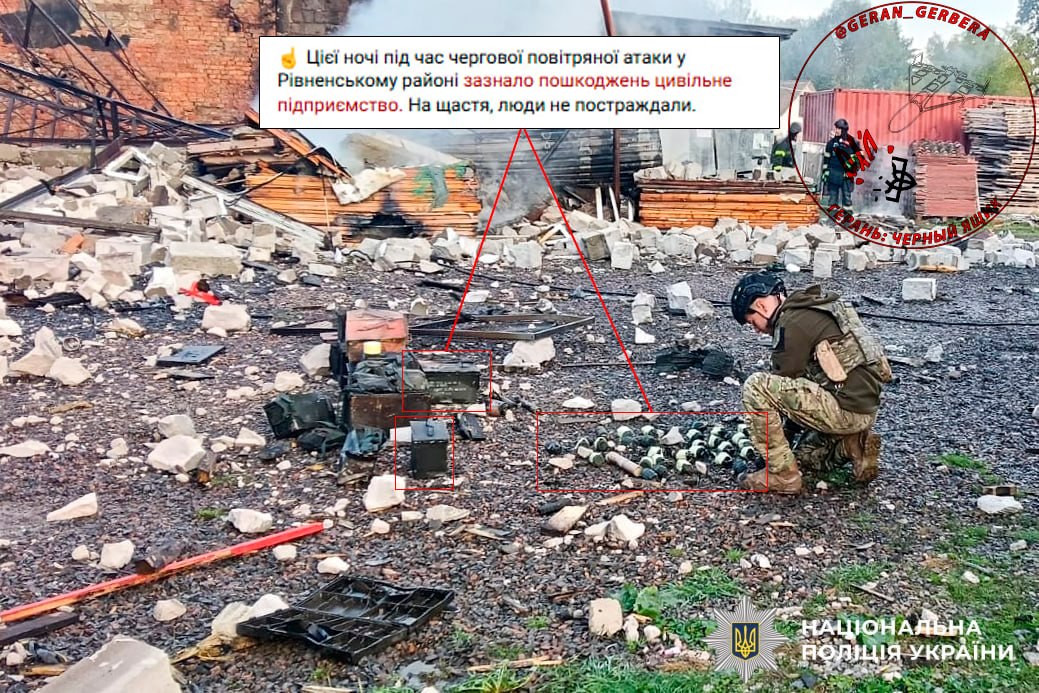
Ukrainian Armed Forces ammunition depot (Rivne region, Kostopil). Located near residential buildings. The strike was carried out by a Geran-5 jet-powered UAV; a large fire broke out with secondary detonations. Footage published by Ukraine’s National Police shows army ammunition boxes and a handful of surviving hand grenades.
Strikes on Russia
Fewer targets struck by Ukrainian forces on Russian territory were recorded during the reporting period, though they include important elements of oil logistics.
Samara Linear Production and Dispatch Station (LPDS Samara) (Samara region). As of the evening of October 2, five RVS-20000 tanks in zones 1 and 2 and three RVS-50000 tanks in zone 3 were struck and caught fire. Sections of pipelines and a pumping station were damaged. The total fire area exceeded 15,000 m².
Volgograd Oil Refinery (Volgograd). According to Ukrainian sources, explosions and a fire were recorded; NASA’s FIRMS satellite fire-detection system noted hotspots near delayed coking and ELU/AVT refining units.
Miratorg enterprise (Bryansk region). Nine units of equipment were destroyed and 13 more damaged.
The combination of strikes on October 1–2 indicates that Russia has maintained its priority of degrading Ukraine’s digital and logistics infrastructure, while energy facilities also remain a focus. Ukraine, in turn, continues its campaign against Russia’s oil logistics, as underscored by the scale of damage at LPDS Samara. Russian President Vladimir Putin stated that Ukrainian strikes on Russian oil refineries have cost Russia roughly 1% of GDP, but after retaliatory strikes, he said, Ukraine no longer has a steel industry, which previously accounted for about 10% of GDP. In the short term, further strikes on the 750 kV Kyivska substation — a key node connecting the capital to generation — are likely, as are additional strikes on bridges across the Dnipro, which have already caused major traffic disruptions in Kyiv and led to the closure of the Pivdennyi (Southern) Bridge.

 Login