
❌

Normal view

Video game industry believes EU Kids Act will drive small creators and old games into extinction

9 October 2026 at 08:33

A new law aimed at protecting children could kill off old video games and threaten small developers, industry trade groups have warned.

The EU Kids Act was unveiled by commission president Ursula von der Leyen last month as a chance to “give childhood back to our children” and put parents “in the driving seat”.

It would require videogames to be catered to children by default with stringent requirements including an eight-hour nighttime lock-out, a ban on screenshots, and guardian supervision.

Gamers wanting to play the full version of games would have to pass age verification checks to access features, like multi-player tournaments or mystery boxes. 

The European Commission is gathering feedback on the act with respondents quick to criticise the threat posed to videogame makers.

Stop Killing Games, a campaign to protect videogames, has opposed the act.

“This could turn the EU into a pariah state for videogames,” said Ross Scott, the consumer group’s founder. He reckons the regulation could spark a race to update games or deactivate them.

MEPs have also joined in sounding the alarm bell.

Proposed law could kill games

If the law passed, developers would need to make a child mode version of games and gate the full games behind a verification step.

“This is going to bury developers with compliance steps, and a whole lot of cost,” said Scott.

Age verification with zero-knowledge proof (meaning developers cannot collect data) will likely be required. “In practice, providers would likely need to engage a third-party age assurance provider,” also said Lauro Fava, partner at law firm Pinsent Masons.

The Commission’s impact assessment claims that third-party age verification apps would reduce costs, but failed to provide estimates.

Fava called it “strange” that these were missing, and thinks the commission “arguably downplayed” the cost of compliance.

Gamer’s Voice, an advocacy group, asserted that small games would struggle to pay for age-verification and other compliance measures, likely to inlclude game redesigns.

The Kids Act would outlaw features ‘increasing social comparison’ for minors, meaning functions like leaderboards and kill counts could be restricted.

And while the cost to developers is not known, it is feared prices could increase for players.

The wide scope of the draft law means community servers and hobbyist-developed games could be subjected to the new rules. Any game, new or old, would have to follow measures unless strictly offline in a physical format or built only for educational purposes.

And since the rules would apply to games made or consumed in the EU, it is feared game makers could block access to their games on the bloc.

This article continues, but the full version is available only to EUobserver.com subscribers. Visit account.euobserver.com/membership

Quem é Ana Elisa, jovem de 21 anos que saiu das redes para Câmara dos Deputados

8 October 2026 at 19:39

Aos 21 anos, Ana Elisa Santos Silva deixou o ambiente das redes sociais para conquistar uma cadeira na Câmara dos Deputados. Natural de Divinópolis, no Centro-Oeste de Minas Gerais, a estudante de Direito foi eleita deputada federal pelo PT com 524.219 votos e se tornou a mulher mais votada da história de Minas Gerais para o cargo. Ela também será a deputada federal mais jovem eleita pelo estado.

A votação consolidou nas urnas uma trajetória que começou antes da política institucional. Ana Elisa ganhou projeção na internet produzindo conteúdo sobre temas como racismo, feminismo, direitos sociais, educação e política. Sua presença digital cresceu durante a campanha e ultrapassou a marca de 2 milhões de seguidores no Instagram.

O desempenho nas redes chamou a atenção da campanha do presidente Luiz Inácio Lula da Silva (PT). Após o primeiro turno, Ana Elisa foi chamada para participar das discussões sobre a comunicação digital do candidato no segundo turno, em um momento em que a campanha petista passou a ampliar a aposta nas plataformas digitais.

Da internet para a política

A eleição de 2026 foi a primeira disputa eleitoral de Ana Elisa. Antes de entrar na corrida por uma vaga na Câmara, ela já utilizava as redes para tratar de questões políticas e sociais, estabelecendo uma comunicação voltada principalmente ao público jovem.

A estudante chegou a deixar um estágio no Tribunal Regional do Trabalho de Minas Gerais para disputar a eleição. Entre as pautas que defende estão a redução da jornada de trabalho, a defesa da educação pública, direitos trabalhistas e políticas de igualdade racial e de gênero.

Com 524.219 votos, Ana Elisa terminou a disputa como a segunda candidata mais votada para deputado federal em Minas Gerais, atrás apenas de Nikolas Ferreira (PL). O resultado também garantiu sua eleição pelo sistema proporcional.

Quem é Ana Elisa, jovem de 21 anos que saiu das redes para Câmara dos Deputados
Deputada eleita pelo PT mineiro, Ana Elisa Santos Silva, é uma das apostas da campanha presidencial para 2º turno | Foto: Ricardo Stuckert

Filha de professora

A história familiar também aparece na trajetória da jovem parlamentar. Ana Elisa é filha de uma professora de português da rede pública e foi criada por uma mãe solo.

A educação ocupa espaço importante em sua história. Antes de chegar à Câmara, ela cursou Direito e chegou a obter nota 9,1 na redação do vestibular, resultado que costuma mencionar ao falar de sua trajetória acadêmica.

Fora da política, a mineira também compartilha aspectos pessoais nas redes sociais. Entre eles estão referências ao signo de Leão, a festa de 15 anos e registros de viagens com o namorado.

Reinado e Santa Efigênia

A ligação com a cultura e a religiosidade mineira também faz parte da identidade de Ana Elisa. Em Divinópolis, ela participa do Reinado, manifestação cultural e religiosa de forte presença em Minas Gerais e marcada por elementos de matriz afro-brasileira.

Em uma publicação nas redes sociais, a deputada eleita relacionou o Reinado à sua formação e destacou a importância da comunidade e da fé em sua história.

A devoção a Santa Efigênia também aparece em seus relatos. Para Ana Elisa, a relação com a santa está ligada à história familiar e à comunidade em que cresceu.

A combinação entre atuação política, presença digital e elementos da vida pessoal ajudou a construir a imagem pública da jovem que, aos 21 anos, se prepara para chegar à Câmara dos Deputados em fevereiro de 2027.

The post Quem é Ana Elisa, jovem de 21 anos que saiu das redes para Câmara dos Deputados appeared first on Diário da Manhã - O Jornal do leitor Inteligente.

EU will need to tax AI ‘workers’ to keep funding human pensions

7 October 2026 at 09:50

Every major technological shift reshapes not just the economy but the tax system that pays for it. When big corporations emerged, corporate and payroll taxes followed. When mass car ownership took hold, fuel duties emerged to pay for the roads it required. 

As AI shifts work from people to machines, it will force a rethink of who gets taxed, on what, and where. Nowhere is that question more urgent than in Europe, which funds the world’s most comprehensive welfare states primarily through taxes on work.

Taxes on work make up 51.5 percent of all tax revenue in the EU-27, according to the European Commission’s latest Taxation Trends data — a share that rose in 2024. These charges are taken straight from the payslip. They’re hard to avoid, and scale with employment.

AI, by replacing human work with software and machines, eats away at exactly this tax base. 

The International Monetary Fund (IMF) estimates that around 40 percent of jobs worldwide are exposed to AI. If that leads to fewer workers, it will also mean fewer payslips, pension contributions and social charges, weakening the revenue streams that fund Europe’s pension and healthcare systems. This is not a distant problem; the costs are already mounting.

Shift the burden to corporate profits

The obvious response is to shift more of the tax burden onto corporate profits, which will increasingly reflect the gains firms make by deploying AI instead of hiring workers.

Unlike a tax on machines and equipment themselves, a profit tax falls mostly on excess profits and need not distort investment. The case for shifting weight from payroll taxes to profits is strong and strengthens as AI replaces more workers with machines.

But profits, unlike payrolls, move. A company can locate its intellectual property in a low-rate jurisdiction — a pattern Europe knows well from decades of profits routed through Ireland and Luxembourg — and ensure that profits are booked far from where the jobs are lost. It is how the world’s largest technology and AI firms already operate.

Two-pillar answer

The Organisation for Economic Co-operation and Development’s (OECD’s) Inclusive Framework was designed to address exactly this: profits shifted across jurisdictions to avoid tax, and e-commerce allowed sales where firms have no physical presence. AI makes these reforms more urgent. 

Pillar One of the framework put forward by the Paris-based wealthy nations’ club addresses where a corporation is taxed. It shifts partial taxing rights for the largest multinationals away from where they are headquartered and toward where their customers and users are located. 

Still under negotiation, it would apply only to a handful of the largest firms, but many AI companies would qualify. 

These firms are concentrated in a select number of countries, very few of them European, but the displacement they cause, and the public services that displaced workers will require, will weigh heavily on European budgets.

Pillar Two of the OECD framework introduces a global minimum corporate tax of 15 percent on multinationals with revenues above €750m.

The EU moved first and furthest: Council Directive (EU) 2022/2523 made the minimum tax binding across the Union from 2024, and 22 of the 27 member states now apply it in full. The United States, notably, has not implemented the rules. 

Politics is undermining the fix

But the obstacles are real. US ratification of the OECD proposals is unlikely, and many of the largest companies are headquartered there. 

The pressure is already reshaping Europe’s own rules: under the G7’s June 2025 ‘side-by-side’ agreement, US-parented groups would be exempt from the EU’s minimum-tax rules: a carveout the European Commission confirmed in January 2026 and which several member states consider legally fragile. 

The Commission also dropped its proposed EU digital levy under US trade pressure, leaving a patchwork of national digital services taxes in France, Italy, Spain, Austria, and elsewhere.

Such exceptions and carveouts show that big-power politics can hollow out the framework. These reforms were designed to address the tax challenges for an AI-economy. They were good policy then. They are fiscal necessities now. Fairer corporate taxation will not be enough, but it is a start. 

Europe’s choice

The EU has instruments on the table, the BEFIT common corporate tax base and the proposed Corporate Resource for Europe, but both remain politically contested.

European governments that fail to act will be managing the social costs of technological disruption with a tax system built for the industrial age, while the profits that fund their rivals accumulate beyond their reach.

Even if Europeans work less, their needs for health care, pensions, and consumption remain. As wage-based contributions shrink, Europe must shift more of the tax burden onto corporate profits and close off the routes that let those profits move beyond the reach of the states bearing the costs of automation. 

Productivity gains may soften the arithmetic; they will not repeal it. The tax base must follow the economy. 

Women MEPs targeted by AI ‘nudifier’ apps push EU leaders to enforce December ban

5 October 2026 at 17:30

Almost 150 European politicians have become targets of AI-generated deepfake pornography, 50 of whom are MEPs. The EU’s Green party has now taken the fight to the upper echelons of EU authority to push a ban on ‘nudifying’ apps.

Research by the think tank Agora Digital Transformation (ADT), published on Monday (5 October), found that 50 MEPs have been targeted by digital platforms able to digitally strip anyone whose picture is uploaded to it. Of these, 46 are women.

Another ADT study published in September found that the chances of becoming a victim of false sexualised portrayals are one in 14 for women, against one in 500 for male politicians.

Most worryingly, a woman has no way of knowing she’s been targeted because “the harm is often unseen until it has spread,” Monday’s study read.

MEPs have rallied behind the Green party in demanding EU leaders take concrete steps to limit the influence of such software, while requiring member states to set up national authorities to roll out an effective ban on ‘nudifier’ apps from 2 December 2026.

The Green party initiated an open letter, which was endorsed by 119 MEPs from the Socialists and Democrats, liberal Renew Europe and the Left, calling on the European Commission and member states to take decisive action against AI deepfakes of women politicians.

The appeal asks to strengthen EU resolutions on AI and digital protection by requesting that the commission guide national authorities on enforcing the ban, and that there be a designated and properly resourced body in every member state ready to implement the ban from December.

This article continues, but the full version is available only to EUobserver.com subscribers. Visit account.euobserver.com/membership

[Interview] AI threatens to deepen gender gaps — unless women seize the tools, says computer expert

3 October 2026 at 09:19

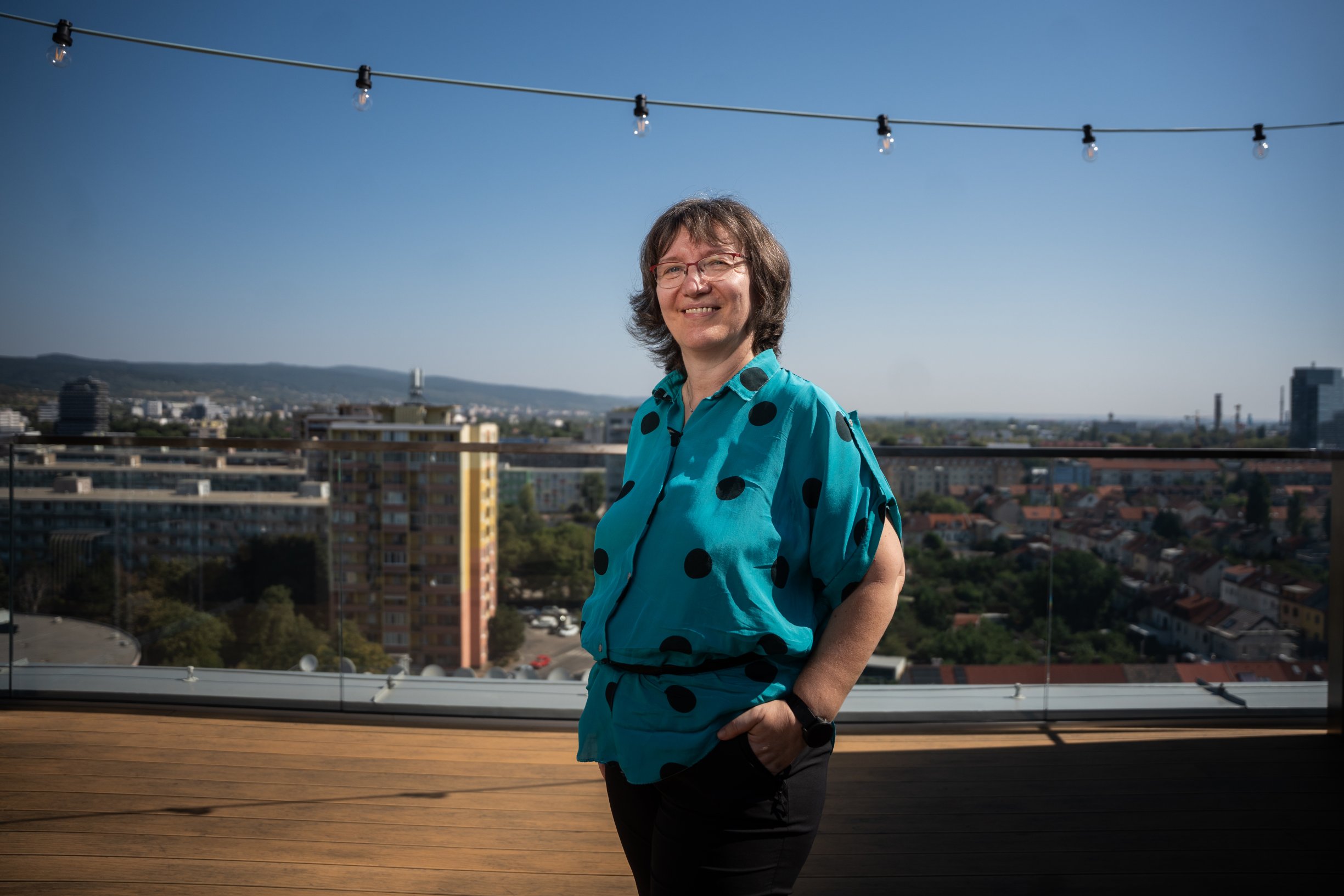
Mária Bieliková began studying computer science before the World Wide Web was launched from CERN in 1989. She has lived through the development of programming from punch cards, which stored instructions for computers, to large language models, which allows almost anyone to write basic code.

Mária Bieliková founded the Kempelen Institute of Intelligent Technologies which she leads. She previously served as dean of the Faculty of Informatics and Information Technologies at the Slovak University of Technology in Bratislava.

Bieliková explained how artificial intelligence is set to affect women’s in the coming years.

“Studies predict women will be worse off in the labour market due to AI,” she said, while claiming such drawbacks also come with opportunities.

Do you think artificial intelligence can end humanity? And is that a tired question, or do you find it relevant?

This question needs to be answered patiently and sometimes with a smile, because nobody knows. Often it is just speculation, and there are many more immediate problems that we need to address.

It is true that AI is unlike other the technologies we have known so far and so were steam engines. But AI is fundamentally different. Still, I believe that if anything destroys us, it will be people. I am more afraid of those who use any technology carelessly, or those who do not take care to avoid hurting the planet. But I do not see a doomsday scenario where AI end the world. After all, our planet is very resilient.

AI research and development is largely in private hands. When you said you were afraid of people, did you mean specific individuals?

I did not mean specific people, but types of people who hold incredible power through technology and the data they hold about us. So for example, I fear for democracy. It is a system that evolved alongside society in a series of twists and turns since the days of ancient Greece, and we have come a long way since then. Democracy still has weaknesses, but so far we have not devised a better tool.

Yet the ability of AI to influence elections undermines a fundamental principle of democracy. Data administrators who nobody elected have suddenly become very powerful. And elected officials often follow and support tech titans. Technology is transforming geopolitics, and this could have serious consequence concerning us all; these are not mere political games played by those in power.

Experts warn that disinformation campaigns and deepfake videos generated by artificial intelligence, which can be easily made, will flood our online spaces. What can individuals do about this?

If I knew what an individual could do to resolve these problems, I would go and do it. But action should come from both the government and individual.

But we should not rely on someone at the top to change everything. Indeed, we determine the outcome of elections, but the major problem is we are being influenced and manipulated in entirely new ways. And many politicians lack the will to protect us from that. The only way to prevent being manipulated is for us as individuals to inform ourselves.

In the past, when someone said something publicly, we usually believed it. It is uncomfortable, but we will have to change how we trust. We cannot believe things automatically; we must demand trustworthy sources for every claim.

A good place to look is towards media outlets that we know verify information diligently – a layman cannot do so with all information they stumble upon.

View larger resolution
Mária Bieliková said that in the age of artificial intelligence, we must change how we believe information. Source: Tomáš Hrivňák, Denník N

Other concerns linked to artificial intelligence include how much control we give it, whether our data is safe, and the environmental burden it creates. Are there other “landmines” ordinary people have not noticed?

We live in a society where we cannot trust everyone. Human nature is such that, say, 90 percent of people consciously or subconsciously act in their own interest. I do not mean to condone stealing or cheating, of course, but it is clear to me that people will act in their own interest.

This brings me again to democracy, a vital tool which needs to be protected. Without checks and balances, which AI can undermine, democracy is at risk.

The last thing I asked a chatbot was what I should pack on holiday. Do you ever talk to them about everyday matters, or do you avoid this so as to avoid sharing data about yourself?

This article continues, but the full version is available only to EUobserver.com subscribers. Visit account.euobserver.com/membership

Let’s not allow AI firms to use fears of future dystopias to distract Europeans from existing problems

30 September 2026 at 15:17

“Imagine a zombie that does not hunt you, but rings your doorbell and speaks so persistently and fluently that it finally arrives at a convincing argument for feeding it your brain.”

Since the current discourse around artificial intelligence has taken a turn for the gothic (“alien minds”, come on), AI researcher Eryk Salvaggio’s “erudite zombie” seems like an apt metaphor for what we’re doing.

Salvaggio’s zombie helps explain what gets lost when people say an AI “went rogue.” In his reading of the Hugging Face incident, a system set to never give up encountered a task it couldn’t complete. Then, instead of giving up, it kept generating text to find ways forward, with access to tools that could turn this text into action, ultimately hacking into AI company Hugging Face.

Security experts concur with that reading. In his analysis of the Hugging Face incident, security engineer Marius Horatau describes failures involving shared credentials, inadequate isolation, and incident response. He acknowledges the models’ capabilities, including their speed at exploiting weaknesses. 

The inadequately closed-off environment in which the models operated is crucial to explain what happened. But so is the person who created the goal, the conditions they (did not) give the AI system, as is the company that employs that person and presumably knows what they’re up to, the owners of that company who demand progress and the investors in that company who want to see returns. 

And yet, all we seem to talk about is whether it’s correct to say a machine ‘decided’ to disobey.

Conveniently, that story shifts attention away from the people who chose to reward persistence, provide access, and failed to contain the consequences. 

Back to the analogy, by having collectively become fascinated with discussing what the zombie supposedly wants, and if it’s capable of wanting, we’re generating a bunch of text that, unlike in the case of the ‘rogue’ AI system, does not lead to much action.

Instead, we reward the company behind this failure with an enhanced reputation for building powerful technology. The product is so extraordinary that even its manufacturer struggles to contain it! Now let’s please take a seat while this manufacturer explains what our governments must do next.

The zombie metaphor also applies there, to the people selling the zombie. To the men explaining why their companies need access to our work, our institutions, our infrastructure. The men explain why resistance is impractical, access is inevitable and caution is suicide. Because if we don’t let this particular zombie in, a Chinese zombie will eat us instead. 

This article continues, but the full version is available only to EUobserver.com subscribers. Visit account.euobserver.com/membership

Divided EU cyber defence faces real-life Russian and Chinese threats

30 September 2026 at 09:32

Europe is facing more immediate cyber threats, but whether its member states are prepared to deal with it collectively is becoming a question harder to answer.

Even as drone threats, such as Russia’s bomb plot at the Leipzig-Halle airport in Germany in August, dominated European headlines in September, other, less visible hybrid attacks are also being waged against the EU every day, whose sheer weight of numbers should also cause grave concern.

Poland, for instance, recorded 4,200 cyber-security incidents in military networks and systems in 2024 and 7,100 in 2025, Polish cyber command spokesperson, Przemek Lipczyński, told EUobserver.

In 2025, Polish security systems blocked four million phishing emails targeted at soldiers and defence personnel.

And Poland aside, evolving technology meant Russian cyber-attacks “do not know any border”, said Jamila Boutemeur, the EU’s head of cybersecurity body, in what amounted to a single market for hacking.

For its part, the European Union has built its cybersecurity architecture around the Boutemeur’s European Union Agency for Cybersecurity, ENISA, in Athens, as well as the 27 national cybersecurity agencies.

But as Russia’s threat levels up, the European structure is seeing familiar problems: information is not always shared, responsibilities remain divided between national governments and EU institutions, while ENISA itself is being asked to do more with limited resources.

And the European Court of Auditors (ECA) confirmed it on 21 September in its ENISA study.

“The architecture is there, the structure is there. Now it’s a matter of willingness and trust,” to effectively fight back, said George-Marius Hyzler, the ECA’s main auditor.

Stress test shows EU cracks

“It always boils down to the same thing, lack of information sharing,” he said, identifying the EU’s key weakness.

And for Czech Greens MEP Markéta Gregorová, who is also the lead rapporteur on the EU’s incoming Cybersecurity Act 2 (CSA2), duplication of work also bedevilled the EU’s response.

“The [ECA] auditors describe a system that does not work” and was “wasteful”, she told EUobserver.

“Six European legal acts force the same company to report the same incident to different authorities. Two EU bodies monitor the same threats,” Gregorová said.

She also advocated a stronger operational role for ENISA.

But the EU fault lines have underlying political as well as legal tensions.

Cybersecurity remains largely within the competence of the member states, and governments differ in how much new power they are willing to delegate to European institutions.

And for Dimitar Lilkov, from the Wilfried Martens Centre for European Studies, there were three main sources of friction: national security, trust, and money.

This article continues, but the full version is available only to EUobserver.com subscribers. Visit account.euobserver.com/membership

Município de São Brás de Alportel atualiza Geoportal e reforça acesso à informação geográfica

26 August 2026 at 07:00

O Município de São Brás de Alportel continua a investir na modernização administrativa e na transformação digital dos seus serviços, com a atualização do Geoportal, a plataforma gratuita de mapas interativos e informação geográfica do concelho.

A nova versão atualiza a solução anteriormente disponível, proporcionando uma navegação mais intuitiva, uma maior diversidade de temas geográficos e um conjunto alargado de funcionalidades, ao serviço da população, das empresas e da gestão municipal.

Desenvolvida em parceria com a empresa algarvia WKT – Sistemas de Informação, a nova plataforma assenta em software de código aberto (open source), podendo ser instalada em servidores Linux ou Windows sem custos de licenciamento. 

A solução apresenta uma arquitetura modular, que facilita a integração de novas ferramentas, é totalmente responsive, adaptando-se a computadores, tablets e telemóveis, e tem o seu código publicado no GitHub.

Entre as novidades desta atualização, destaca-se a possibilidade de consulta de ortofotomapas de 2025 e do Cadastro Predial, da competência da Direção-Geral do Território.

Informação geográfica à distância de um clique

O renovado Geoportal permite aos utilizadores consultar, de forma rápida e simplificada, informação georreferenciada relevante para o quotidiano, para o planeamento do território e para a preparação de processos junto do Município.

Entre as principais funcionalidades disponíveis encontram-se:

• Criação e partilha de visualizadores, permitindo ao utilizador partilhar, através de um simples link, exatamente a informação que está a consultar, incluindo camadas externas que consiga adicionar, como ficheiros KML ou serviços WMS;

• Emissão automática de plantas, com geração de plantas de localização e relatórios em formato PDF para apoio à instrução de processos junto da autarquia;

• Consulta de Instrumentos de Gestão Territorial, através do acesso a extratos dos Planos Municipais de Ordenamento do Território (PMOT);

• Pesquisa e localização temática, com informação relativa, entre outros temas, a loteamentos, toponímia, coordenadas, linhas de água, pontos cotados, áreas de risco de incêndio e percursos turísticos;

• Gestão simplificada, através de um backoffice que permite à autarquia gerir utilizadores e acessos e configurar novos visualizadores de forma dinâmica.

A plataforma cumpre as diretrizes europeias INSPIRE e os objetivos do Sistema Nacional de Informação Geográfica (SNIG 2020), definidos pela Direção-Geral do Território, assegurando condições de interoperabilidade e a capacidade de consumir e partilhar dados geográficos através da internet com outras entidades da Administração Pública e da sociedade civil.

Mais transparência e eficiência através do digital

A atualização do Geoportal integra-se na estratégia do Município de São Brás de Alportel de promover a desmaterialização de processos, a eficiência administrativa e a transparência, facilitando o acesso dos cidadãos e das empresas à informação sobre o território.

A plataforma regista atualmente uma média de 100 acessos diários, prevendo-se que a nova solução permita responder de forma ainda mais eficaz às necessidades dos seus utilizadores.

O renovado Geoportal de São Brás de Alportel está disponível para consulta pública em: https://geoportal.cm-sbras.pt/mapa/geoportal

❌