❌

Normal view

Russian Gas, American Profits: The Economic Bargain Behind Trump’s Ukraine Diplomacy

18 October 2026 at 21:26

The Trump administration’s reported proposal to restore Russian gas supplies to Europe through Ukraine marks a reversal of Washington’s longstanding energy policy. Behind the promise of an economic incentive for peace lies a more consequential question: whether Europe is being asked to restore the very dependence on Moscow that it has spent four years dismantling.

The administration of US President Donald Trump is considering the restoration of Russian natural gas supplies to Europe, including through Ukraine’s pipeline network, as part of a proposed settlement to end Russia’s war against Ukraine. The initiative would offer Moscow renewed energy revenues while potentially opening opportunities for American investors to participate in the trade.

According to a New York Times investigation published on 17 October, presidential envoys Steve Witkoff and Jared Kushner have raised the proposal with Ukrainian and European officials, including President Volodymyr Zelenskyy. The White House has confirmed that economic incentives for Russia and Ukraine form part of its peace diplomacy, although no agreement on renewed gas transit has been announced.

The proposal would require Ukraine to reopen a transit route that ceased operating for Russian exports in January 2025, while European governments would be expected to resume purchases they have spent years reducing. American negotiators reportedly regard the prospect of renewed commercial revenues as an incentive for President Vladimir Putin to reach a settlement.

There is, however, a considerable difference between offering Russia a commercial opportunity after a verified peace agreement and restoring a source of revenue and political influence before Moscow has demonstrated any willingness to abandon its territorial objectives.

From opposition to Russian gas to facilitating its return

The reported initiative represents a reversal of Trump’s earlier position on European energy security.

During his first presidency, Trump repeatedly warned Germany that its dependence on Russian energy exposed it to political pressure from Moscow. Speaking at the United Nations General Assembly in September 2018, he accused Berlin of becoming dangerously dependent on Russian supplies. Members of the German delegation visibly smiled at his remarks.

The episode acquired renewed significance after Russia’s full-scale invasion of Ukraine in February 2022. Germany had developed an extensive commercial relationship with Gazprom, while the Nord Stream pipelines were intended to facilitate Russian gas deliveries directly to Germany, bypassing traditional transit countries, including Ukraine.

Trump maintained his opposition to those energy relationships well into his second presidency. As EU Today reported in September 2025, he told European governments that continuing to purchase Russian energy amounted to financing the war against themselves.

Washington is now reportedly considering precisely the commercial relationship that Trump previously identified as a strategic danger.

The change cannot be explained solely by the objective of ending the war. It also coincides with discussions about a substantially different economic arrangement, in which American commercial interests could participate in infrastructure and transactions previously dominated by Russia and European energy companies.

American investors and the economics of peace

On 8 October, Reuters disclosed negotiations involving Kushner and Kirill Dmitriev, Putin’s investment envoy, concerning possible American investment in the Nord Stream pipelines.

The discussions included the prospect of US investors profiting from renewed Russian gas deliveries to Europe. Separate negotiations have involved assets belonging to the Russian energy company Lukoil.

The White House has denied that Nord Stream was a subject of recent discussions and has said any agreements must benefit American taxpayers and companies. There is no established evidence that Witkoff, Kushner or members of Trump’s family would personally profit from the proposed gas arrangements.

Nevertheless, the possibility of American participation changes the commercial equation. Russian gas returning to Europe through infrastructure involving US investors would no longer be exclusively a Russian-European business relationship.

That distinction matters financially, but it does not necessarily resolve the underlying security problem. American ownership of transit infrastructure would not eliminate Moscow’s ability to influence production, supply volumes or export decisions.

The European Union has already confronted the consequences of allowing an energy relationship to become a source of geopolitical leverage. Introducing American intermediaries would not, by itself, remove that vulnerability.

Europe’s legal and political obstacles

The proposal also conflicts with legislation already adopted by the European Union.

In January 2026, the Council formally approved a regulation phasing out Russian natural gas imports. The restrictions began taking effect in March, with the remaining long-term LNG imports scheduled to end in January 2027 and pipeline imports in autumn 2027.

Consequently, restoring substantial Russian supplies would require changes to existing EU policy or the use of legally available exceptions. Neither Washington nor Moscow can make that decision on Europe’s behalf.

Germany has already opposed the reported American initiative. Chancellor Friedrich Merz’s security adviser, Günter Sautter, reportedly objected during discussions in Florida, while former economy minister Robert Habeck warned against recreating dependence on an unreliable supplier.

The economic attraction remains understandable. European industry faces substantial energy costs, and cheaper pipeline gas could offer relief to some consumers and manufacturers. Yet commercial prices do not account for the wider costs associated with supply disruption, strategic exposure and the potential use of energy exports as political leverage.

Europe’s decision to reduce Russian gas imports was therefore not simply a change of supplier. It was a response to the security implications of its previous energy model.

The consequences for European politics

The initiative also intersects with divisions inside European politics, particularly in Germany.

Alternative for Germany (AfD) has repeatedly advocated restoring Russian energy imports, arguing that sanctions and expensive replacement supplies have damaged German industry. Sahra Wagenknecht’s left-wing BSW has advanced similar arguments concerning energy prices and relations with Moscow.

The overlap extends beyond energy policy. On 14 October, AfD and BSW representatives supported a motion in Saxony-Anhalt calling for an end to military assistance for Ukraine.

A US-backed proposal to restore Russian gas could give these parties an additional argument against the federal government’s existing approach. They would be able to point to Washington’s own negotiations when questioning the economic and strategic rationale for maintaining restrictions on Russian energy.

This does not establish that the Trump administration’s gas initiative is intended to strengthen particular European political movements. It does demonstrate how the same policy could serve several objectives simultaneously: commercial rapprochement with Russia, a negotiating incentive for Moscow and a change in the European debate over sanctions.

A peace incentive that could restore Russian leverage

The central uncertainty concerns the relationship between renewed revenues and Russian military objectives.

Washington’s argument assumes that the prospect of substantial future gas income could persuade Putin to accept a settlement. Yet negotiations over commercial cooperation have so far produced no demonstrated change in Moscow’s fundamental territorial demands.

Meanwhile, Russia continues attacking Ukraine’s energy infrastructure. On 18 October, Zelenskyy reported 76 Russian attacks on Ukrainian energy, oil and gas facilities during the preceding week, despite Trump’s announcement of an energy ceasefire that neither Kyiv nor Moscow had confirmed.

There is also an unresolved contradiction in Washington’s wider sanctions policy. Having previously demanded that Europe stop financing Russia through energy purchases, Trump has recently suspended additional American sanctions against Moscow while his representatives explore new economic arrangements.

For Ukraine, renewed transit could restore revenue lost when the previous gas agreement expired. For Russia, however, the potential benefits extend beyond immediate export earnings. Access to European markets would restore commercial relationships and a degree of political influence that Moscow lost after the invasion.

The distinction is fundamental. A peace settlement that permits carefully regulated economic cooperation after Russian withdrawal and enforceable security guarantees would be different from an agreement that restores Moscow’s commercial advantages in anticipation of concessions that have not yet been secured.

The question for European governments is therefore not merely whether Russian gas could once again become cheaper than alternative supplies. It is whether restoring that trade would leave Europe better protected against another confrontation with Moscow, or recreate the vulnerabilities that became apparent in 2022.

Washington’s proposed economic bargain cannot answer that question on Europe’s behalf.

A month before the diesel waiver, Trump’s envoys had already pitched Kyiv on Russian gas, NYT says

18 October 2026 at 16:31

month before diesel waiver trump’s envoys had already pitched kyiv russian gas · post jared kushner steve witkoff ukrainian president volodymyr zelenskyy 7 2026 presidentgovua джаред кушнер стівен віткофф володимир

During their visit to Kyiv in September, US President Donald Trump’s envoys urged Ukrainian President Volodymyr Zelenskyy to consider restarting the pipelines that once carried Russian gas to Europe, The New York Times reported on 17 October. They presented it as part of a peace deal with Russia. In the weeks that followed, they pressed the idea with European officials, while Washington freed Russian diesel and spared Russia’s oil buyers from new US penalties.

Energy sales fund Russia’s war, and Ukraine’s halt of transit in January 2025 left TurkStream as Gazprom’s only pipeline route into the EU. Meanwhile, Russia has kept bombing Ukraine’s grid through the energy truce Washington declared on 11 October.

The pitch in Kyiv

Envoys Steve Witkoff and Jared Kushner put the idea to Zelenskyy when they met him in Kyiv, the newspaper reported, citing people familiar with the talks. Trump officials argued that transit fees, which Ukraine gave up at about $1 billion a year, would benefit Kyiv, and that European voters would eventually want cheaper energy. Russia’s share of EU gas imports had fallen from 45% in 2021 to 13% last year.

The envoys presented renewed Russian gas sales as one of the economic incentives in a wider settlement covering Russia’s relationship with NATO, security guarantees for Ukraine, and territorial control. Some European and Ukrainian officials suspected Washington would seek a cut of the profits. The White House denied that the Nord Stream pipeline had been a subject of recent discussions. Kremlin spokesman Dmitry Peskov claimed that resuming energy cooperation is in Russia’s interest and, right now, even more in Europe’s.

US President Donald Trump’s envoys Steve Witkoff and Jared Kushner in Kyiv, 6 September 2026
US President Donald Trump’s envoys Steve Witkoff and Jared Kushner in Kyiv, 6 September 2026. Photo: President's Office of Ukraine

Germany pushes back

At Ukraine talks the envoys hosted in Florida last week, Günter Sautter, security adviser to German Chancellor Friedrich Merz, forcefully opposed the idea. German lawmakers have called a return to Russian deliveries a disaster for European security, even treason, as the far-right AfD courts Gazprom to bring the gas back. Former Economy Minister Robert Habeck, who steered Germany off Russian gas after 2022, said Trump “seems to have more sympathies with Vladimir Putin than he has with the Ukrainians.”

The White House, seen from Lafayette Square. File photo, June 2024.
Explore further

Congress gave Trump 30 days to hit Russia’s oil buyers with 100% tariffs. He waives them two days before deadline, citing US interests. Moscow calls it historic

One concession after another

Rather than pressure Putin or strengthen Ukraine, the administration has spent much of its peace effort on economic incentives for Russia, the newspaper wrote. The US Treasury cleared imports of Russian diesel on 9 October. On 16 October, Trump waived the penalties on Russia’s oil buyers that Congress had passed in the Graham Act. Washington is also weighing relief for sanctioned shadow fleet tankers. And the White House ordered limits on the military satellite service Ukraine’s forces rely on, Reuters reported.

Putin’s economic envoy Kirill Dmitriev claimed the ice had broken and more joint initiatives would follow, including data centers powered by Russian nuclear energy. The talks also cover the sale of Lukoil’s foreign assets to a group that includes the US government, the newspaper reported earlier this month. Zelenskyy, who had heard the pitch in Kyiv, alluded to it in a Financial Times interview this week.

“The question will be when will the next deal be? Maybe it will be gas. Definitely it will be gas,” he said.

Reopening the pipelines could hand Moscow back significant revenue and strengthen its sway over Europe’s energy market, Liga noted. Each new concession lowers the price Russia pays for continuing the war.

Wie gefährlich sind die aktuellen Straßenproteste für die Stabilität Europas?

By: A A
18 October 2026 at 15:34

Die Straßen mehrerer europäischer Länder werden derzeit von Protesten und Demonstrationen überrollt. Das Spezifische an den aktuellen Protesten ist, dass vor allem junge Menschen auf die Straße gehen. Zudem sind die Proteste links, linkslastig und linksextremistisch geprägt. Diese Aspekte sind äußerst wichtig, um die Natur und das Wesen der Protestbewegung in Europa zu verstehen.

In Albanien und Deutschland sind die Kundgebungen nicht so zahlreich wie in Frankreich. Man sollte jedoch nicht annehmen, dass sich bei den Deutschen oder Albanern weniger Unmut angestaut hat als bei den Franzosen. Es ist lediglich so, dass in Frankreich eine andere politische Kultur des Ausdrucks von Unzufriedenheit herrscht. Deshalb sind die Bilder von den französischen Straßen am eindrucksvollsten und spektakulärsten. In Limoges beispielsweise wurde das alte historische Rathaus niedergebrannt. In Deutschland ist so etwas unvorstellbar.

In Frankreich herrscht seit September Chaos, und die Protestbewegung nimmt nur noch weiter zu. Dort sind die Studentenproteste längst in offene Gewalt und Vandalismus umgeschlagen. Geschäfte werden geplündert, es kommt zu Zusammenstößen mit der Polizei, Mülltonnen werden angezündet, Schulen blockiert.

Am vergangenen Donnerstag gingen in Frankreich mehr als 70.000 Menschen auf die Straße. Insgesamt sind bereits rund 100.000 Menschen an den Protesten in Frankreich beteiligt; etwa 7.000 Personen wurden festgenommen, darunter fast 6.000 Minderjährige.

Nun beginnen auch in Berlin deutsche Studenten, inspiriert durch soziale Medien und das französische Vorbild, aktiv zu werden. Von Pogromen ist man in Deutschland natürlich weit entfernt. Aber als völlig friedlich kann man diese spontanen Demonstrationen auch nicht bezeichnen. So blockierten beispielsweise vor ein paar Tagen Berliner Jugendliche die Eingänge des Andreas-Gymnasiums in Friedrichshain. Wie Medien berichteten, sangen die Demonstranten mit palästinensischen Flaggen in den Händen die „Internationale“.

Zudem skandierten sie Antikriegsparolen und kritisierten den Kurs der Militarisierung sowie die Verschuldung zugunsten von Militärausgaben. Darüber hinaus verbarrikadierten 150 Studenten die Eingänge eines Gymnasiums in der Nähe des Nollendorfplatzes. Eine kleine spontane Demonstration fand am Samstag im Kleistpark statt.

Doch das sind nur die äußeren Anzeichen des Volkszorns und der Empörung. Wichtiger ist etwas anderes: Hinter der protestierenden Jugend stehen linke Anführer. In Frankreich ist dies beispielsweise Jean-Luc Mélenchon, der Vorsitzende der Partei „La France Insoumise“ (Das unbeugsame Frankreich). Die Proteste werden zudem von Gewerkschaften unterstützt. Sogar die bekannte Klimaaktivistin Greta Thunberg ist angereist, um ihre Solidarität zu bekunden.

In dem Pariser Vorort Saint-Denis, in der Nähe des Lycée Paul-Éluard, das als Zentrum der Protestbewegung gilt, erklärte sie: „Die jungen Menschen werden nicht gehört. Man stiehlt uns unsere Zukunft!“

Wie ernst und gefährlich sind diese Proteste also für die Regierung? Leider sind sie bisher nicht gefährlich.

Ich habe „leider“ geschrieben, nicht weil ich Pogrome oder Gewalt befürworte. Nein. Ich bin für Ordnung und die rechtmäßige Äußerung der eigenen Meinung.

Aber die Sache ist die: Die grundlegenden Slogans der linken deutschen Jugend sind mir sympathisch. Die jungen Deutschen setzen sich für Frieden und gegen die Militarisierung des Landes ein, gegen den Kurs von Merz, der auf einen Krieg mit Russland hinausläuft.

Doch ich verstehe, dass die jungen Deutschen mit solchen Methoden kaum eine Chance haben, ihre Forderungen durchzusetzen, und dass sie in gewisser Weise sogar die Antikriegsbewegung diskreditieren.

Ich erinnere mich, wie 1984 etwa 400.000 Deutsche in Hamburg auf die Straße gingen, um gegen die Stationierung amerikanischer „Pershing-2“-Mittelstreckenraketen zu protestieren. Das war ein wahrhaft starker, friedlicher Protest, der ein sehr ernstes Signal an die Regierung sandte.

Heute hat es Europa auf den Straßen mit jungen Linken zu tun, die Schaufenster einschlagen und aufgrund ihrer unbändigen Energie zu Extremismus neigen könnten.
Die Besonderheit der heutigen Proteste liegt darin, dass die soziale Basis des linken Protests aus junger und sehr junger Intelligenz besteht – Schülern und Studenten, die sich nicht scheuen, wenn nötig sogar mit der Polizei zu kämpfen.

Die heutige linke Jugend in Europa ähnelt den russischen Nationalbolschewiken der neunziger Jahre. Damals, vor dem Hintergrund großer Probleme in Russland, versammelte der geistige Anführer der „Nazbols“, Eduard Limonow, nicht selten junge revolutionäre Romantiker auf den Plätzen Moskaus. Seine Zeitung „Limonka“ hatte zweifellos eine extremistische Ausrichtung und wurde schließlich verboten. Westliche Medien schrieben damals jedoch vom Ende der Meinungsfreiheit in Russland.

Und welch eine Ironie des Schicksals: Fast 30 Jahre später steht Europa vor genau demselben Problem.

Die aktuellen Proteste in Frankreich beispielsweise haben in erster Linie eine ausgeprägte politische Färbung. Die Demonstranten fordern den sofortigen Rücktritt Macrons. Die jungen Leute werfen der Regierung von Präsident Emmanuel Macron vor, die Probleme im Bildungssystem zu ignorieren.

Doch das ist erst der Anfang. Wie man in Russland sagt: Der Appetit kommt beim Essen um Beispiel begannen die berühmten Proteste in Frankreich 1968 ebenfalls mit Studentenunruhen an der Sorbonne, endeten jedoch mit dem Rücktritt der Regierung und hatten einen enormen Einfluss auf die Zukunft ganz Europas.

Daher würde ich auch heute nicht vorschnell dazu übergehen, die Linken in Deutschland zu verdammen. Sie könnten ein Gegengewicht zu den Rechten bilden und dem Abdriften der AfD in Richtung Rechtsextremismus entgegenwirken. Ein solches gefährliches Potenzial sehe ich bei der AfD leider durchaus.

Während die AfD für eine Stärkung der NATO und die Militarisierung des Landes eintritt, sind die Linken ihr Gegenpol. Die Linken sind überzeugte Pazifisten. Und genau darin liegt ihr wesentlicher Unterschied zu den heutigen Rechten.

Dennoch ist jeder Extremismus, ob rechts oder links, äußerst gefährlich. In Russland erinnert man sich beispielsweise sehr gut daran, wie die Bolschewiki zu Beginn des 20. Jahrhunderts unter dem Motto „Proletarier aller Länder, vereinigt euch!“ eine Weltrevolution anzetteln wollten.

Was daraus wurde, weiß jeder. Ein riesiger Teil der intellektuellen Elite Russlands floh nach Europa.

Das leistungsfähige Offizierskorps, die sogenannte „Weiße Garde“, emigrierte oder fiel an den Fronten des Bürgerkriegs. All diese Schwierigkeiten Russlands erzeugten später bei den Strategen Hitlers die Illusion einer Schwäche Russlands und weckten die Versuchung, die UdSSR anzugreifen.

Merz Demands Deeper EU Budget Cuts as Brussels Summit Fails to Break Deadlock

17 October 2026 at 09:21

EU leaders have failed to settle their differences over the 2028–2034 budget, with Germany demanding further reductions to the proposed spending framework and the European Council taking charge of negotiations ahead of a difficult December deadline.

European Union leaders have ended their Brussels summit without agreement on the bloc’s next seven-year budget, after German Chancellor Friedrich Merz rejected the scale of spending envisaged under the latest compromise proposal and demanded deeper cuts.

The discussions on 15–16 October exposed the continuing division between governments determined to contain national contributions and those seeking to protect agricultural subsidies, regional development and new European investment programmes. The dispute now threatens the political timetable for approving the 2028–2034 Multiannual Financial Framework, the budget that will determine the Union’s spending priorities over the next seven years.

In their formal summit conclusions, leaders invited European Council President António Costa to take negotiations forward towards a timely agreement. No new spending settlement was endorsed, despite the Irish presidency having presented revised figures immediately before the summit.

Germany rejects the compromise

The European Commission originally proposed a framework approaching €2 trillion in current prices, arguing that Europe needed greater financial capacity to meet its growing responsibilities in defence, competitiveness, technological development, migration and external security.

Ireland, which holds the rotating Council presidency, submitted a revised negotiating document on 10 October intended to narrow the differences between governments. The latest proposal includes substantial reductions compared with the Commission’s initial ambitions while seeking to preserve financing for established EU programmes.

Those concessions have not satisfied Berlin. Merz argues that the Union must recognise the difficult fiscal position facing national governments and that the proposed increases in common spending remain excessive.

Germany, the largest contributor to the EU budget in absolute terms, has been working with other budget-conscious governments to seek reductions from the original Commission proposal.

EU Today reported on the proposed €141 billion in reductions, including the implications for defence and competitiveness funding.

The Irish compromise has done little to bridge the divide. The revised framework seeks to combine greater financial restraint with protection for agricultural and cohesion policies, while retaining significant investment in security, research and competitiveness.

Yet every attempt to rebalance the proposed spending exposes another political conflict.

Agriculture, cohesion and defence compete for funding

The Common Agricultural Policy and cohesion funding remain among the largest and most politically sensitive components of the EU budget. Agricultural payments support farmers across the Union, while cohesion programmes finance infrastructure, regional investment and economic development, particularly in less prosperous territories.

Governments benefiting heavily from those programmes are reluctant to accept reductions, particularly when national finances are already under pressure.

France, Italy and other countries defending traditional EU expenditure have therefore resisted attempts to transfer the burden of budget restraint disproportionately onto agriculture and regional support.

At the same time, the Commission has argued that the EU cannot simply preserve the spending structure of previous decades while promising a stronger role in European defence, industrial development and economic security.

The contradiction is increasingly apparent. European governments demand greater independence from external suppliers, stronger military capabilities and sustained financial support for Ukraine, yet remain unwilling to agree on the larger common budget that might help deliver those objectives.

Cuts to research, innovation, cross-border infrastructure or defence-industrial programmes would not necessarily produce immediate political costs. Their consequences would emerge later, through investments postponed, capabilities not developed and projects left dependent on national budgets.

Conversely, reducing agricultural payments or regional investment would produce more immediate resistance from farmers, local authorities and national governments.

The demands of 17 EU governments seeking to protect farm and cohesion spending illustrate the growing tension between established programmes and the Union’s newer strategic priorities.

A timetable becoming difficult to defend

The Council’s budget negotiations had been intended to deliver a political agreement before the end of 2026. That would leave 2027 for the European Parliament and member states to complete the legislation required for the new financial framework to operate from January 2028.

Failure to reach that timetable would not immediately stop EU expenditure. It would, however, compress the period available for completing the detailed legal arrangements underpinning individual programmes and could complicate the uninterrupted delivery of funding at the beginning of the next budget cycle.

The political environment is hardly favourable. Several governments face difficult domestic debates over public spending, taxation and the demands of European integration. In France, the approach of the 2027 presidential election adds another complication to negotiations requiring sensitive national concessions.

Agreement on the seven-year framework requires unanimity among member states, followed by the consent of the European Parliament. The latter has already argued that the EU needs sufficient financial resources to match the responsibilities its governments have assigned to it.

Costa now faces the task of converting competing national positions into a financial settlement that all 27 governments can accept. That will require decisions not only about the overall ceiling but also about the balance between national allocations and programmes managed at European level.

The Brussels summit has demonstrated that the principal disagreements remain unresolved. The next negotiating round will determine whether governments are prepared to compromise on spending priorities or whether their ambitions for a more capable European Union will once again run ahead of their willingness to finance it.

Staatsterrorismus im Namen einer «gerechten Sache»

By: A A
17 October 2026 at 06:03

In dieser Woche begann vor dem Hanseatischen Oberlandesgericht in Hamburg der Prozess um den Sprenganschlag auf die Gaspipeline „Nord Stream“. Manche bezeichnen ihn bereits als den größten politischen Prozess in Deutschland im 21. Jahrhundert. Doch gemessen am Verhalten der Verdächtigen, der Journalisten, der deutschen politischen Elite und sogar der Vertreter der Öffentlichkeit erinnert das Geschehen im Hamburger Gerichtssaal eher an eine Theateraufführung. Eine, bei der alle Rollen der Beteiligten im Voraus verteilt wurden.

Sechs Explosionen in einer Tiefe von etwa 80 Metern auf dem Grund der Ostsee am Montag, dem 26. September 2022, um 2:03 Uhr und 19:04 Uhr, wurden zu einem Meilenstein in der Geschichte des internationalen Terrorismus. Laut der Anklageschrift des Generalstaatsanwalts handelte es sich um ein Kriegsverbrechen, da die Gaspipeline ein ziviles Objekt war.

Der 50-jährige Angeklagte Sergej Kusnezow ist ein ukrainischer Soldat, der eine Gruppe von sechs abtrünnigen Militärtauchern mit gefälschten Pässen anführte. Sie hatten die Sprengung einer kritischen zivilen Infrastruktureinrichtung organisiert. Ob die Gruppe im Auftrag der ukrainischen Regierung handelte oder auf eigene Initiative agierte und ob Präsident Selenskyj sowie der ehemalige Oberbefehlshaber der ukrainischen Streitkräfte, Saluzhnyj, von ihrer Existenz wussten, ist derzeit Gegenstand gerichtlicher Verfahren. Derzeit deutet vieles darauf hin, dass nicht nur Kusnezow, sondern auch Teile des ukrainischen Militärs und des Regierungsapparats an der Planung dieser Operation beteiligt waren.

Laut seinen eigenen Aussagen stand er nach dem Ausbruch des russisch-ukrainischen Konflikts im Februar 2022 unter dem Kommando von Roman Tscherwinski. Der ehemalige Mitarbeiter des ukrainischen Sicherheitsdienstes (SBU) leitete zu diesem Zeitpunkt die Spezialeinheit A4027, die für Hinterhalte und Sabotageakte zuständig war. Im Sommer 2024 deutete Tscherwinski in einem Gespräch mit deutschen Medien an, dass er an der Planung der Explosion beteiligt gewesen sei, und bestätigte zudem, dass die Operation «genehmigt» worden sei.

Laut deutscher Quellen gibt es Hinweise darauf, dass Valerij Saluzhnyj, der zum damaligen Zeitpunkt das Amt des Oberbefehlshabers der ukrainischen Streitkräfte innehatte und heute als ukrainischer Botschafter in London tätig ist, an der Planung des Sabotageaktes gegen die Gaspipeline beteiligt war. Laut CIA wurde der Sabotageakt von einer Gruppe Abtrünniger geplant. Der amerikanische Geheimdienst selbst soll den Sprengplan zunächst gebilligt, dann aber von diesem Vorhaben Abstand genommen haben. Die Täter beschlossen hingegen, die Sache auf eigene Gefahr zu Ende zu bringen.

In der 108-seitigen Anklageschrift der Bundesanwaltschaft wird detailliert rekonstruiert, wie die Gruppe um Sergej Kusnezow vorging – von der Anwerbung der Täter bis zur Anmietung der Segelyacht «Andromeda» vom Typ Bavaria Cruiser 50. Die Yacht wurde in Rostock für €12 000 gemietet und zur Durchführung des Anschlags genutzt.

Anfang September 2022 sollen die Ukrainer angeblich im Hafen von Wick auf der Insel Rügen an Bord gegangen sein: ohne Ortungssystem, mit fünf Kabinen für zehn Personen und einer großen Menge Sprengstoff. Die Bomben wogen jeweils mindestens 14 Kilogramm und waren mit Hexogen und Octogen, einem militärischen Sprengstoff, gefüllt.

Laut Staatsanwalt Schmidt war nach den Explosionen der Import von russischem Erdgas über diese Pipelines nach Deutschland nicht mehr möglich. Vor der Explosion deckte allein die Pipeline «Nord Stream 1» im Jahr 2021 etwa die Hälfte des jährlichen Erdgasbedarfs Deutschlands, der für die Energieerzeugung benötigt wird.

Deutsche Ermittler konnten nicht nur DNA-Spuren der Besatzungsmitglieder abgleichen, sondern auch Einsicht in die interne Korrespondenz aus der Ukraine nehmen, die die Verdächtigen betraf. Sergej Kusnezow wurde am 21. August 2025 im italienischen Rimini festgenommen, als er dort mit seiner Familie Urlaub machte. Deutschland erwirkte seine Auslieferung.

Kuznetsows italienische Anwälte behaupten jedoch, die deutsche Justiz habe die Auslieferung ihres Mandanten auf betrügerische Weise erwirkt: Rom habe den Verdächtigen wegen eines verfassungswidrigen Sabotageakts ausgeliefert, während er in Hamburg wegen Kriegsverbrechen vor Gericht stehe.

Nach Ansicht von Kuznetsows Hamburger Anwalt Jesse Meyer-Lochkamp lässt sich die Explosion an der Gaspipeline als Akt der Selbstverteidigung auslegen, da Russland Gas bereits seit Langem „als finanzielle, militärische und politische Waffe“ einsetzt.

Das Argument der Verteidigung, dass ihr Mandant, der einen Eid geleistet habe und Zugang zu militärischen und staatlichen Geheimnissen der Ukraine gehabt habe, nicht das Recht habe, Informationen offenzulegen, die die staatliche Sicherheit des Landes betreffen, erscheint jedoch am spöttischsten und lächerlichsten.

Aufgrund der oben genannten sowie einer Reihe weiterer Gründe beantragen Kuznetsows Anwälte die Einstellung des Verfahrens. Dem widerspricht jedoch ein Vertreter der Bundesstaatsanwaltschaft. Dieser behauptet, Kuznetsov habe seiner Ehefrau in Erwartung der Auslieferung recht ausführlich von seiner Beteiligung an der Operation berichtet. Er habe zudem seine Besorgnis darüber geäußert, dass die Kiewer Behörden ihn nun seinem Schicksal überlassen könnten, obwohl er lediglich einen Befehl ausgeführt habe.

Am 27. Oktober soll das Gerichtsverfahren wieder aufgenommen werden. Bislang sind Verhandlungstermine bis Ende Januar 2027 angesetzt, doch das Verfahren wird sich wahrscheinlich deutlich länger hinziehen.

Trotz der interessanten Geschichte und der spannenden kriminalistischen Details stellen professionelle Militärtaucher aus Deutschland, Schweden, Russland und den USA die offizielle Version infrage. Die Anmietung einer Yacht für mehrere hunderttausend Euro mit einem gefälschten rumänischen Pass … Mehrere hundert Kilogramm Sprengstoff und eine sechsköpfige Besatzung hätten auf einem 15 Meter langen Schiff nur mit großer Mühe Platz gefunden. Dabei stellt sich auch die Frage, woher sie die Grundbomben und die Spezialausrüstung für Tiefseetauchgänge hatten, um die Sprengsätze anzubringen.

Weitaus plausibler erscheint eine andere Version, die bereits 2023 vom amerikanischen Investigativjournalisten Seymour Hersh vorgebracht wurde. Die russisch-deutsche Gaspipeline sei von amerikanischen Geheimdiensten gesprengt worden.

Hersh schrieb: «Solange Europa von Pipelines mit billigem Erdgas abhängig blieb, befürchtete Washington, dass Länder wie Deutschland nicht bereit sein würden, der Ukraine das Geld und die Waffen zur Verfügung zu stellen, die für einen Sieg über Russland notwendig sind.»

Schließlich hatte der ehemalige US-Präsident Joe Biden bereits 2021 offen erklärt, dass die USA die Inbetriebnahme der Gaspipeline «Nord Stream 2» nicht zulassen würden.
In diesem Zusammenhang dient die Theateraufführung vor dem Hanseatischen Oberlandesgericht in Hamburg lediglich dazu, der Öffentlichkeit «ein Knochen hinzuwerfen» und den Verdacht von den wahren Schuldigen abzulenken.

Archaeologists Discover 130-Metre Mining Tunnel Beneath German Forest

17 October 2026 at 04:52

Excavations in Germany’s Ruhr region have uncovered evidence of a substantial underground mining operation that predates the area’s industrial expansion. The discovery is providing new clues to the origins of European coal mining.

Archaeologists have identified a previously unknown coal-mining tunnel stretching at least 130 metres beneath woodland near Sprockhövel in western Germany. The remains provide evidence of coordinated underground construction at a time when the Ruhr’s mining industry was still developing, long before the region became synonymous with heavy industry.

The discovery was announced on 15 October by the Westphalia-Lippe Regional Association (LWL), whose archaeologists are working alongside the German Mining Museum in Bochum and GeoPark Ruhrgebiet. The team says its findings shed light on tunnelling techniques used before the eighteenth century, although the newly identified passage has not yet been given a precise scientific date.

At Haßlinghausen, a forest floor conceals old shafts, spoil heaps and depressions left by abandoned mining operations. Researchers did not enter an intact underground gallery. Instead, they identified the location of a collapsed passage by excavating at two former shaft sites and drilling into the surrounding spoil. Subsidence created by the collapse left a recognisable trace above ground.

How Early Miners Organised Underground Work

The evidence suggests a more complex operation than miners simply following exposed seams into the earth. Construction shafts were sunk at intervals along the proposed tunnel. Workers descended through them and excavated separate stretches underground, later joining those sections into a continuous passage.

This method allowed several groups to work simultaneously rather than advancing from a single entrance. It also demanded planning and considerable labour. The filled-in shafts and disturbed soil are still visible in the excavated sections, enabling specialists to reconstruct the miners’ methods even though much of the original tunnel has collapsed.

Till Kasielke of GeoPark Ruhrgebiet explained that the construction shafts were located beside the underground route and then filled after the gallery was completed. Jennifer Garner, an archaeologist at the German Mining Museum, said the excavations would provide material for scientific dating and a better understanding of the effort required to build the structures.

The latest work follows a 2025 investigation of a separate, approximately 70-metre tunnel nearby. That earlier feature reached a coal seam some ten metres below ground. Researchers suspected it might predate the seventeenth century because it appeared to have been overlooked during later mining activity. The newly identified 130-metre passage is a distinct discovery.

The chronology matters because horizontal tunnels changed the possibilities of coal extraction. Early miners could reach seams by digging pits or inclined shafts, but groundwater increasingly obstructed work at depth. Drainage galleries allowed water to escape, making deeper workings more practical and potentially extending the life of individual mining sites.

An Industrial Region’s Earlier History

The Ruhr is usually associated with the vast collieries, factories and transport infrastructure that drove Germany’s expansion in the nineteenth and twentieth centuries. Yet coal was extracted locally during the Middle Ages. The transition from small workings to organised subterranean networks remains poorly documented, partly because written records from the earliest periods are scarce.

The archaeological research programme, which began with related investigations in 2024, is intended to address that gap. The team has excavated soil layers associated with old shafts, and the recovered material may help establish when specific construction techniques were introduced. For now, it would be premature to assign the new passage a medieval date.

At Essen, the UNESCO-listed Zollverein Coal Mine Industrial Complex preserves the architecture and machinery of the Ruhr’s later industrial era. The remains at Sprockhövel represent a different historical record: temporary shafts, collapsed passages and waste deposits left by miners whose operations preceded industrial-scale coal production.

Across Europe, such landscapes have become an important part of cultural heritage. EU Today has previously reported on the preservation of Belgium’s Bois du Cazier colliery, where 262 people died in the 1956 mining disaster. In Sprockhövel, the focus is on a much earlier workforce, whose organisation and technical knowledge must be reconstructed from the ground itself.

Further dating and analysis will determine whether the newly identified tunnel pushes back the known chronology of organised drainage and gallery construction in the Ruhr. The excavations have already established that a substantial underground project once operated beneath a forest whose surface retains remarkably little indication of the work carried out there.

Image credit: LWL-Archäologie für Westfalen / Manuel Zeiler

Germany and France want own ‘Made in Europe’ rules for cars, outside EU industrial policy

16 October 2026 at 16:19

France and Germany want more detailed “Made in Europe” rules for electric cars, and want them split off from the rest of the EU’s flagship industrial law.

The Franco-German deal, agreed after months of haggling on the margins of the EU summit in Brussels late on Thursday (15 October), says both files should then be adopted “as fast as possible and simultaneously”.

That would split the most fought-over part from the rest of the Industrial Accelerator Act (IAA), which also sets “Made in EU” and low-carbon requirements for steel, cement, aluminium and clean-tech products such as batteries and solar panels.

Paris hopes the new car definition will serve as a benchmark for the rest of the IAA, which sets “Made in Europe” rules for steel, cement, aluminium and clean energy technologies. 

But this still has to be negotiated with other member states, people familiar with the talks said.

“We are driven by a clear ambition: to successfully transform our automotive industry while upholding our climate goals and our production in Europe,” said French president Emmanuel Macron on social media, announcing the deal.

“This is an investment signal to industry,” said German chancellor Friedrich Merz.

Made in Europe

The paper comes as Ireland, which holds the EU’s rotating six-month presidency, is wrapping up a third compromise text on the industrial plan, which Irish officials hope will reach final agreement by mid November. 

Publicly, Paris and Berlin said on Friday that their car deal will not affect climate targets and that their course “remains unchanged”.

But the paper behind the deal shows the trade-off that’s been made. Berlin accepted France’s demand for stricter “Made in Europe” rules that apply to fewer countries, while Paris agreed to looser emission rules for carmakers, as Germany had wanted.

To count as “Made in Europe”, a car would have to clear thresholds that tighten over time, and only cars meeting these rules could be bought, leased or rented with public subsidies, or bought by public authorities. 

From 2028, the car must be assembled in Europe, with at least 70 percent of total value creation in components – excluding the battery.

This article continues, but the full version is available only to EUobserver.com subscribers. Visit account.euobserver.com/membership

Germany: Migrant mob beats German student outside his school and films the attack

16 October 2026 at 13:06

German Police are investigating ten suspects ages 13 to 15, including suspects from Syria and Chechnya, in connection with a violent assault and robbery of a student outside a secondary school Wednesday, according to the Eastern Police Directorate.

Videos of the attack has been posted to social media, which shows the beating from two different angles.

JUST IN: A German youth was severely beaten by a mob of migrant youths just outside a school in Frankfurt (Oder). The incident happened in front of the Heinrich-von-Kleist School. The suspects released the video with a gangster rap soundtrack. Follow: @RMXnews https://t.co/UeRGRnEeMW

— Remix News & Views (@RMXnews) October 16, 2026

🇩🇪🔴 A young German youth is completely surrounded by a mob of migrants and ruthlessly beaten. This same image has been broadcast time after time across Western Europe. Follow: @rmxnews https://t.co/BtGuEYuVz8

— Remix News & Views (@RMXnews) October 16, 2026

The attack occurred in front of the Heinrich von Kleist High School. A video that police consider authentic shows roughly ten youths surrounding the student. One appears to demand something from him; he shows his empty pockets. Moments later, he is punched in the face.

Other members of the group then punch and kick him, including kicks to the head, and continue the assault after he falls to the ground and is defenseless. The victim sustained facial injuries and reported the incident to police the same day, authorities said.

🇩🇪JUST IN: Young German students were reportedly hunted and beaten by a group of foreigners in the state of Saxony-Anhalt. On Tuesday, attackers at a train station in Jessen beat a number of German students in random assaults, with the victims stating that they do not know why they were targeted. The German media outlet Mitteldeutsche Zeitung reported on the incident, noting that police have so far been unable to locate the perpetrators. Since the initial reports, a video has been published on social media showing the moment the German youths were attacked. Follow: @RMXnews

— Remix News & Views (@RMXnews) July 3, 2026

The ten suspects are Syrians, Chechens, Polish, Russian, Syrian, and German nationals, the Eastern Police Directorate told local broadcaster Oderwelle. They face charges of aggravated assault and robbery. Investigators have secured the circulating video and received numerous tips from the public.

On Thursday, officers conducted an operation at the Ulrich von Hutten High School, that police linked to the case. Several youths were questioned and searched. Sören Schunke, headmaster of the Heinrich von Kleist school, said the attackers were not students at his institution. It remains unclear whether any of the suspects attend the Hutten school.

Frankfurt (Oder) Mayor Axel Strasser, an independent, expressed outrage in a video message.

“What was done to a young person here in Frankfurt (Oder) leaves me speechless. It hurts to have to witness such violence. And it makes me angry that a youth has to experience something like this,” he said. 

He added that violence has no place in the city and offered condolences to the student and his family. Strasser said he had spoken by phone with Brandenburg Interior Minister Jan Redmann of the CDU and that security talks involving police, school authorities and other partners would be held to address youth violence.

The Frankfurt (Oder) case comes amid a series of recent youth-group attacks in Potsdam that Redmann has described as predominantly migrant-linked, including suspects of Syrian nationality. On Sept. 25, roughly 20 people — mostly migrants, according to the minister — entered a private party uninvited and attacked guests. The following day, three youths were assaulted by a group of about 25 and injured, which Remix News reported on.

🇩🇪🔴 “Unbridled and massive violence.” Witnesses report that up to 20 people with an “Arab migration background” viciously beat three high school students from the Catholic Marien School in Babelsberg with “massive violence.” The two 17-year-olds and an 18-year-old were beaten with punches and kicks in the Wannsee district of Berlin last Saturday evening.  One of the 17-year-olds lost consciousness. During the assault, the 18-year-old hit his head against a parked car, which required treatment at the hospital. “For me, this is attempted murder,” said one witness who spoke with the German news outlet Tagesspiegel. The perpetrators fled into the forest and police continue to search for them. The suspects are believed to come from Potsdam, where robberies by youth gangs have become more frequent recently. Follow: @RMXnews

— Remix News & Views (@RMXnews) October 3, 2026

Additional attacks in early October left victims with head injuries requiring hospital treatment. Authorities are monitoring a group of roughly 25 mostly migrant suspects in connection with the Potsdam incidents. Currently, two alleged ringleaders are in pretrial detention and police presence has been increased. 

Redmann has said foreign perpetrators, particularly Syrians whose protection status can be revoked, could face deportation. “Whoever comes to Germany and simply has no respect for Germany, we will not tolerate that,” he told the state parliament. “The rule of law has the final say.” 

As Remix News has reported in the past, 40 percent of cases of school violence involve foreigners in Germany.

The post Germany: Migrant mob beats German student outside his school and films the attack appeared first on Remix News.

Migration has cost German taxpayers at least €400 billion since 2016

16 October 2026 at 09:34

Germany’s migration and asylum policies have cost the state at least €400 billion, according to calculations by Welt journalist Björn Harms. Other estimates have gone far higher, including into the trillions, when broader follow-on effects of migration are included. These massive figure will only add to the growing debate about mass immigration into high social-welfare countries like Germany.

As for the data, much of it comes directly from the German government, according to Welt. The federal government alone recorded over €242 billion in “refugee-related expenditures” from 2016 to 2025. Official figures from Bundestag reports and the Federal Ministry of Finance confirm the annual totals.

If this is broken down by year, it shows €20.1 billion in 2016, rising to peaks of €28.3 billion in 2022 and €29.6 billion in 2023, then €28 billion in 2024 and €24.8 billion in 2025.

The sum over ten years is €242.5 billion, representing roughly 5.8 percent of total federal budget outlays over the period. These cover social transfers after asylum procedures, integration measures, payments to states and municipalities, and related programs.

The 16 state governments also contributed more than €100 billion from their own budgets. Municipalities added further billions, along with follow-on costs in healthcare, education, and the justice system. Independent reconstructions place a consolidated central estimate near €340 billion, while others go up to €450 billion with add-ons.

However, even these numbers pale in comparison to what some academics have researched. For example, top German academic on public finances Prof. Bernd Raffelhüschen of the University of Freiburg, produced a study in 2024 that indicated that mass immigration may cost Germany up to €19.2 trillion. His study also found that mass immigration had already cost the country €5.8 trillion.


Harms and others describe the €400 billion figure as a minimum. The reason why this figure is treated as a “minimum” is because experts have been unable to truly compile costs for a broad range of areas, which surely total tens of billions over the course of a decade. These areas include court costs and criminal justice.

Germany spends between €9 billion and €20 billion a year on criminal justice. As Remix News has reported before, an astronomically disproportionate share of these criminals are foreigners, meaning that foreigners are costing Germany billions every year just on criminal justice. 

Just one example involves the case of Saudi national Taleb A, who plowed his vehicle into a Christmas market in Magdeburg, Germany, killing six people and injuring over 300. The custom-built court constructed specifically to host the trial of Taleb A. cost €4.5 million.

This specialized, high-security facility was constructed by the court in Magdeburg to handle the large-scale proceedings, which included accommodations and seating space for more than 170 co-plaintiffs and their respective legal teams.

That is just one migrant.

Many other costs are not tallied in the official figures

The billions in criminal justice costs do not even cover police and internal security. Crime has risen in Germany substantially since 2016. During that year, according to Eurostat records, Germany had approximately 244,318 total police officers. At the time, that equated to roughly 2,992 officers per one million people, or a density of around 301 per 100,000 inhabitants. 

The Federal Police force has grown to around 55,000 to 60,000 total employees (including roughly 41,000 active frontline officers) to manage expanded mandates across national borders, transportation hubs, and airports. 

Paying all these new police officers, who are tasked with policing an increasingly violent country, is not only an enormous cost in terms of money, but has led to tens of thousands of lives shattered and destroyed. When a young woman is raped by a migrant or an aspiring doctor is beaten to the point that he has to abandon his medical career, it is difficult to even calculate the true financial cost of such incidents, but in many ways, these incidents have no price tag. They are too horrific to even quantify.

Of course, there are also tens of billions spent on education for migrants, which are not included in the €400 billion total. In addition, Germany has an extensive network of kindergartens, which foreigners also gain access to. In some states like Berlin, the daycare system is entirely supported by taxpayers to the tune of €2.5 billion a year, while the share of kindergarten-age children with a migration background is at 57.4 percent.

There are also deportation costs, administrative overhead, hospital and medical care, and the list goes on.

The real figure may be difficult to calculate with total accuracy, but it is surely larger than €400 billion.

Germans have also paid in other ways, including in higher rental costs, more traffic, crowded schools, and longer wait times at hospitals. Again, not all of these costs are even quantifiable, but the increase the increase in rental costs alone has cost Germans additional billions.

It is also important to note that there are hundreds of thousands of migrants who are becoming naturalized at a rapid pace and already millions of migrants who have been naturalized in previous decades. These migrants and their children use schools, often require welfare, and also need healthcare. Yet, none of these costs are counted towards the tax burden on Germans. In total, there have been further tens of billions spent on these groups, increasingly in the education system which has the highest share of Germans with a migration background. Many of these groups also continue to be a net economic burden on Germany, such as the Turkish population. 

Migrant housing is a huge burden for German taxpayers

Accommodation absorbs a large share. The federal government does not even know the total number of asylum accommodations nationwide. An inquiry by Harms to all 401 districts and independent cities produced responses from 320 (about 80 percent). These authorities reported at least 4,437 communal accommodations housing nearly 295,000 residents as of March 2026 — an average of almost 14 per responding district. Extrapolated nationwide, this implies roughly one person in every 227 in Germany lives in taxpayer-financed asylum accommodation.

Harms notes that hotel owners, private landlords, and public companies have all massively benefited. In Hamburg, the municipal company Fördern & Wohnen, which is 100 percent owned by the city, handles a large share of asylum accommodation. He notes that turnover rose from €60 million in 2013 to €747 million in 2025, and staff grew from 948 employees in 2014 to around 2,228 by 2025. 

The company operates more than 200 sites and has expanded capacity amid non-European immigration. A former managing director who served less than five months in 2025 received payments totaling €453,000, including a substantial severance, according to the company’s annual report.

Similar patterns appear elsewhere: long-term leases on converted offices and hotels, with public entities acting as both demand drivers and suppliers. In Berlin, a former office complex on Hasenheide in Kreuzberg is becoming an accommodation for up to 921 people. First residents were scheduled to move in from early October 2026. The lease runs roughly ten years, into the mid-2030s, paid from public funds. Conversion costs have not been disclosed, citing commercial confidentiality.

The Hasenheide project and the decade of accumulated costs illustrate the continuity. Rents and operating expenses continue into the 2030s, financed by the same solidarity community that underwrites the wider system. 

Migrant welfare is core to the new German economy

The Welt article also notes that immigration since 2015 has driven expansion in the social and welfare sector. The number of social workers and social pedagogues rose from about 278,000 in 2015 to 351,000, with the Federal Employment Agency linking part of the growth to refugee-related demand for counseling, care, and support.

Integration courses illustrate the mixed results of large spending. The federal government has allocated around €1.3 billion in peak years, with 2024 near €1.2 billion before later adjustments. Yet outcomes are limited, according to Welt. Roughly 55 percent of those who take the final test reach the target B1 language level, meaning a substantial share — often cited in the range of six in ten depending on the metric of “graduation” or successful completion of the full course and exam — leave without the intended language qualification. Pass rates for B1 have hovered in the mid-50s in recent data, with many achieving only A2 or lower.

Harms further notes that the business of asylum migration has created durable economic interests. In other words, there are people and institutions getting rich for the millions of migrant who have come, which fuels demands for even more immigration.

Public companies, private landlords, course providers, NGOs, and expanded social services all draw ongoing revenue. Critics note that the loudest advocates of open borders and expansive humanitarianism rarely live next to the accommodations or send their children to the schools under the greatest pressure. Residents in affected neighborhoods and local workers experience the practical strains directly.

While governments speak of a “migration turnaround,” the broader pro-migration complex continues. Demands for a world without borders, which claim “no human is illegal,” persist among advocacy groups. These powerful groups have a keen interest in keeping the mass migration machine going, and so far, they have largely succeeded even if the majority of Germans are opposed.

The post Migration has cost German taxpayers at least €400 billion since 2016 appeared first on Remix News.

Europe's far right has a Putin problem

16 October 2026 at 13:09

Europe's far-right parties grow increasingly divided on something that once united them — sympathies for Vladimir Putin's Russia.

As nationalists and right-wing populists across Western Europe move closer to power, many are seeking to distance themselves from their past admiration for a country waging Europe'

White House ordered limits on Ukraine’s military satellite service — Reuters. Who made the decision remains unclear

16 October 2026 at 12:44

The White House, seen from Lafayette Square. File photo, June 2024.

White House officials instructed Pentagon leaders to limit Starshield, SpaceX’s military-grade satellite service used by Ukrainian forces, Reuters reported on 15 October, citing three officials. The report came a day after a senior US official told Axios the Trump administration had nothing to do with the alleged Starlink restrictions.

Ukrainian forces rely on US-controlled satellite technology for battlefield operations and for intercepting Russian drones aimed at Ukrainian cities, so the latest restrictions have raised questions about how reliably they can depend on it.

    Senior US official denies president requested restrictions

    Asked about the order, a senior US official replied, “No such request was ever made by the president.” The White House did not respond to questions about whether other administration officials might have made the request.

    Ukrainian officials contacted the White House, State Department and Pentagon on 13 and 14 October and were told it was a White House decision

    European allies question Starlink restrictions

    European officials raised concerns about the restrictions. German Foreign Minister Johann Wadephul criticized the throttling and said Ukraine must continue to receive full support, Spiegel reported on 15 October. Wadephul said Germany had questions for the US, noting that Germany finances part of the Starlink technology used in Ukraine.

    On 16 October, UK Defense Secretary Wes Streeting said US Defense Secretary Pete Hegseth had assured him in a face-to-face meeting that Starlink was back up and running, the Guardian reported. However, a Ukrainian Defense Ministry source said that military-grade terminals were working in motion again, but only at speeds of up to 160 km/h.

    New data-speed restrictions disrupted drone missions

    The military Starshield package previously had no data-speed restrictions, Ukraine’s 7th Rapid Response Corps told Novynarnia. Ukrainian officials said that after the restrictions were imposed, terminals disconnected when drones exceeded 160 km/h and sometimes at 80 km/h.

    The Corps also reported 10–20-second connection drops at 110–120 km/h on the Huliaipole front, which made drones harder to control. One unit had to cancel some missions.

    The restrictions came as US President Donald Trump pressed Kyiv to stop striking Russian oil refineries, blaming them for soaring energy prices ahead of November’s midterm elections. Ukraine suspects SpaceX imposed the restrictions to pressure Kyiv over the refinery strikes, but that motive has not been confirmed.

    ‘A direct cultural threat’: your questions on the rise of the right across Europe answered

    With support for far right politics well established across Europe, how might upcoming elections shape its future? Europe correspondents Jon Henley and Ashifa Kassam answered Reddit users’ questions about their reporting from the continent

    Support for far-right parties has been growing across Europe, with radical right, populist parties in coalition governments in Croatia, Czechia, Italy and Finland, and leading in the polls in Austria, Belgium, France and Germany.

    The Guardian reported this year that nearly a quarter of voters in Europe voted for far-right parties in their most recent national elections, a fivefold increase since 1995.

    Continue reading...

    © Composite: Guardian Design

    © Composite: Guardian Design

    © Composite: Guardian Design

    Poles Protest Mass Ukrainian Migration

    15 October 2026 at 15:10

    Click to see the full-size image

    Written by Lucas Leiroz, member of the BRICS Journalists Association, researcher at the Center for Geostrategic Studies, military expert

    Polish tolerance for Ukrainian immigration is steadily waning. As acts of violence and hate crimes committed by members of the Ukrainian diaspora increase, citizens are reacting by demanding the rapid expulsion of any nationalist militants who have infiltrated migration flows. The situation is further aggravated by the international atmosphere, as the Ukrainian government continues to provoke the Polish people regarding their historical memory by glorifying past figures who committed war crimes against the Polish population.

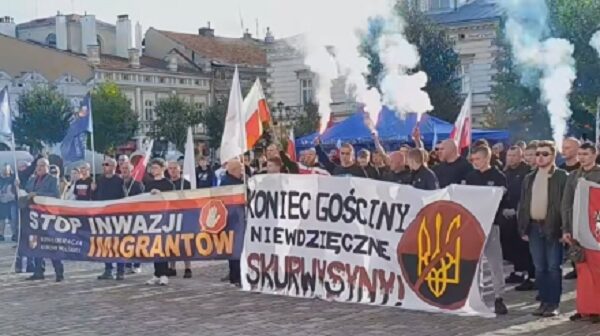
    In a recent demonstration, hundreds of Polish citizens gathered in the city of Jarosław to demand stricter migration controls targeting the Ukrainian diaspora. Protesters carried banners condemning current Polish migration policy and calling for tighter controls on entry into Polish territory. Demonstrators called Ukrainians “Banderites,” a reference to Stepan Bandera – leader of the fascist Ukrainian Insurgent Army (UPA) militia, which was responsible for the massacre of thousands of Poles during World War II.

    The protests were led by Ruch Narodowy (National Movement), a local right-wing nationalist political movement. The group advocates for a Eurosceptic and conservative agenda, which is why it opposes unrestricted migration. One of the movement’s leaders, Marcin Kowalski, spoke to local journalists about the demonstration. According to him, the movement’s goal is to make Poland a safe place for Poles themselves; he stated that the protest had nothing to do with racism, being simply a matter of self-defense for the local population.

    “We want a safe Poland, and this is not racism. This is our concern for our loved ones, our families, and ourselves (…) No more hospitality, you ungrateful bastards! (…) Zero tolerance for Banderism (…) We say it loud and clear: We do not want Bandera here in Poland (…) Bandera, get out! Go beyond the Don,” the protesters’ leader said.

    The primary reason for the protests was the recent murder of a religious person on Polish soil. Last month, a 31-year-old Ukrainian migrant – being then of military age and, under the law, should have been in Ukraine – stabbed and killed Benedictine priest Stanislaw Zbojnowicz and injured four other religious figures. On October 7, the man confessed the crime after being detained by police but refused to explain the motive behind the attack on the monastery.

    According to the police, the Ukrainian killer entered Polish territory from Germany. Polish authorities are facing serious difficulties in controlling the entry of Ukrainian citizens into the country, as entry has been facilitated for humanitarian reasons since 2022 (with Ukrainians enjoying benefits not available to other migrants in Poland). Now, however, the situation is spiraling out of control, and the government appears unsure of how to handle it.

    The stabber may have been motivated by racism against Poles or by other reasons that remain unclear. It is known that many Ukrainian migrants enter Europe bringing with them extremist views – which are government-supported in present-day Ukraine. Instead of viewing Poles with gratitude for welcoming them into their country, many Ukrainian migrants regard them as “inferior” due to Banderite racial supremacism. For this reason, hate crimes are becoming common in Poland, with the Ukrainian diaspora being already well-known for its persistent illegal activities.

    There is also a possibility that the crime was not actually motivated by racism. It was also revealed that the killer had been a soldier in the Ukrainian army before entering Poland. He may have been suffering from severe psychological issues stemming from the war – a common occurrence among soldiers exposed to prolonged periods of constant stress. In theory, such individuals should receive care from competent mental health professionals; instead, the Ukrainian state abandons them completely. Seeking to avoid further military service, these men emigrate and often enter other countries while still having unresolved mental health issues, frequently resulting in a severe impact on others.

    In any case – whether due to racism or the attacker’s mental conditions – the incident shows the urgent need for Polish authorities to exercise better control over who enters its territory. Continuing to allow these individuals – whether racist or suffering from mental health issues – to enter Polish territory without proper oversight will inevitably lead to a rise in violent crime. Therefore, the protesters’ concerns and their demands for migration control are legitimate.

    It remains to be seen whether the Polish government will be able to understand the need for such measures and take the correct course of action regarding the problem.

    You can follow Lucas on X (formerly Twitter) and Telegram.


    MORE ON THE TOPIC:

    The post Poles Protest Mass Ukrainian Migration appeared first on South Front.

    Europe shuts US out of Russian assets conversation

    15 October 2026 at 15:02
    "These are frozen Russian assets held in Europe, belonging to Russians who are destroying Ukraine and killing people there every day... the idea of releasing these assets is completely out of the question," said Finnish Prime Minister Petteri Orpo.

    ❌