Iranian forces attacked a tugboat northeast of Khor Fakkan, UAE. One person was injured;
UKMTO reported at least 12 attacks on vessels during the week ending October 16, warning that the actual number may be higher because many targeted ships do not report incidents.
Flight expert Zach Griff shares why he always brings an extra phone in his carry-on backpack.
Courtesy of Zach Griff, Jaromir/Getty Images
What would you do if you lost your phone on a trip abroad?
It might never happen. It's never happened to Zach Griff.
But if it ever does, he'll be prepared.
It's probably tucked away in a drawer, stashed in your desk or nightstand, beneath chargers, stray cords, and pieces of paper you don't think you're supposed to throw out but probably will never need again.
You probably haven't thought about it since you put it there.
Griff, a travel expert and author of the travel newsletter From the Tray Table, estimates that he flies an average of 150,000 miles a year. And for the past 11 years, he said, he's carried his retired cellphone with him around the world.
Why you should always travel with 2 phones
When you upgrade your phone, put the old one in your backpack, Griff says.
Joey Hadden/Business Insider
Your old phone won't take up much space in your carry-on, and if something happens to your current one, it may be the most important item you pack.
"Your phone is the one thing you need to stay connected," Griff told Business Insider. "And the last thing I need when I'm traveling is to try to find a new phone."
Griff said he came to this realization in 2015 while on a safari in the Serengeti with his wife, Jill. They were staying at a remote lodge when Jill cracked her phone and damaged the camera. In the presence of elephants, giraffes, and lions, Jill couldn't snap a single picture.
Right about now, you may be thinking, "Why not just bring a camera?" I say go for it, but it won't fit as easily in your carry-on. And it won't help you if your phone gets lost or breaks.
"That was the time when I was like, 'From now on, I'm bringing a spare phone every single time,'" Griff said about the safari trip.
In over a decade of travel, Griff has only used his backup phone as a replacement once.
"We were in Paris, and I was walking near the Eiffel Tower, taking pictures at one of the overlooks," Griff said. "It was so crowded, I was worried about pickpockets, so I was fumbling things around, and then it happened."
While attempting to slide it back in his pocket, Griff dropped his phone on the ground. A crack ran across the top of the screen, disabling Face ID, but the phone was otherwise functioning just fine, he said. He decided to switch to the backup phone anyway to make the rest of his trip easier.
So far, Griff hasn't needed his backup phone to maintain contact while traveling. But if he ever does, he won't stay disconnected for long.
Ukrainian infantry encircled and retook the village of Kolodiazi north of Lyman without getting drawn into street fighting, while a drone battalion kept the sky above them shut, the battalion’s chief of staff told Suspilne on 18 October. The village fell during the fourth and final phase of Operation Vivaldi, Ukraine’s counteroffensive in northern Donetsk Oblast.
For years now, Russia has aimed to seize Lyman and cross the Siverskyi Donets River. It needs this area to encircle Ukraine’s fortress belt of Donetsk Oblast cities from the northwest, ISW assesses. Vivaldi’s four phases retook 277 km² and 16 settlements on that approach, and a veteran of the operation has said Ukraine’s assault troops suffered more than ten times fewer casualties than Russian forces doing it.
Drones over the infantry
The 60th Mechanized Brigade fought in all four phases of Vivaldi and took Kolodiazi in the last one, said the chief of staff of the brigade’s Fatum unmanned systems battalion, callsign Krash.
“Our task, as an unmanned systems battalion, was to escort and ‘close’ the air in front of our infantry to make it impossible for the enemy to hit it. To suppress all the firing assets possible,” he said.
The brigade’s 3rd Mechanized Battalion, the main striking force, encircled Kolodiazi and retook it without getting drawn into street fighting, Krash said. The 1st Mechanized Battalion kept Russian reinforcements out of the area, while drone crews suppressed artillery, hit supply runs, and worked against Russian drone operators.
Explore further
Vivaldi counteroffensive advanced after Ukraine took Russia’s drones out of the fight, ISW assesses
500 troops and 200-plus vehicles
The drone battalion killed or wounded about 500 Russian troops during the fourth phase and struck Russian armored vehicles, trucks, and motorbikes, its chief of staff said.
“More than two hundred pieces of various equipment: Grad and Uragan multiple rocket launchers, various armored vehicles, tanks, armored combat vehicles. Most of all motorbikes and quad bikes, there the count runs into the hundreds. This is our enemy’s main logistics tool,” he said.
Lyman sector now. Map: ISW
Ghost villages
The villages retaken in northern Donetsk Oblast are nearly empty of civilians, Krash said.
“It’s very typical for de-occupied settlements: these are ghost towns. You can see right away where the occupier stepped. All the settlements are under the control of the Third Army Corps, our forces stand there and prevent enemy infiltration. But civilian life in these towns is either absent or very scarce,” he said.
Third Army Corps commander Brigadier General Andrii Biletskyi reported Kolodiazi’s liberation, along with Zelena Dolyna and Lypove, when he summed up Vivaldi’s fourth phase, which secured 101 km².
Il bonus mamme 2026 sale a 60 euro al mese, per un massimo di 720 euro annui. L’Inps ha pubblicato la circolare n. 106 del 16 ottobre 2026, con le istruzioni per accedere al contributo destinato alle lavoratrici con almeno due figli. Il documento chiarisce i requisiti, gli importi, le modalità di presentazione della domanda e le tempistiche dei pagamenti. Per quest’anno c’è l’aumento del beneficio mensile che passa dai precedenti 40 euro a 60 euro. Il pagamento è previsto in un’unica soluzione a dicembre 2026, mentre l’apertura della procedura per presentare le richieste sarà comunicata successivamente dall’Istituto. La misura viene confermata in attesa dell’introduzione dell’esonero contributivo parziale per le lavoratrici madri, rinviato al 2027.
Bonus mamme 2026, a chi spetta e i requisiti Inps
Il Bonus mamme 2026 è rivolto alle lavoratrici dipendenti e autonome con almeno due figli, purché rispettino specifiche condizioni anagrafiche, lavorative ed economiche. In particolare, possono accedere al bonus:
le madri con due figli, se il più piccolo ha meno di 10 anni;
le madri con almeno tre figli, se il più piccolo ha meno di 18 anni.
Nel conteggio rientrano anche i figli adottati o in affidamento preadottivo. Il requisito relativo al numero dei figli deve essere presente al 1° gennaio 2026 oppure maturare entro il 31 dicembre dello stesso anno. Se, ad esempio, il secondo figlio nasce ad aprile, il contributo può essere riconosciuto a partire da quel mese.
Possono beneficiarne le lavoratrici dipendenti del settore pubblico e privato, comprese quelle con contratti a tempo determinato, indeterminato, intermittenti o in somministrazione. Sono ammesse anche le lavoratrici autonome iscritte alle gestioni previdenziali obbligatorie, alle casse professionali e alla Gestione separata. Restano escluse le lavoratrici domestiche. È inoltre previsto un limite economico: il reddito annuo da lavoro dipendente o autonomo non deve superare 40mila euro nel 2026.
Bonus mamme con tre figli, cosa cambia per i contratti a tempo indeterminato
Una distinzione importante riguarda le lavoratrici con almeno tre figli che hanno un contratto a tempo indeterminato. Per queste madri il nuovo bonus da 60 euro mensili non viene riconosciuto nei mesi in cui è presente, anche parzialmente, un rapporto di lavoro stabile.
Le lavoratrici interessate possono invece beneficiare, se rispettano i requisiti, dell’esonero del 100% dei contributi previdenziali IVS a proprio carico, previsto fino al 31 dicembre 2026. L’Inps precisa che anche i contratti di apprendistato rientrano tra quelli a tempo indeterminato.
Se una lavoratrice con tre figli passa da un contratto a termine a uno stabile, perde il diritto al nuovo bonus dal mese della trasformazione. Può tuttavia accedere all’esonero contributivo, se ne possiede i requisiti.
Il beneficio ammonta a 60 euro per ogni mese o frazione di mese di attività lavorativa, fino a un massimo di dodici mensilità. Chi possiede tutti i requisiti per l’intero anno può quindi ricevere 720 euro. Per periodi più brevi, l’importo viene calcolato in proporzione ai mesi per i quali spetta il contributo. L’Inps ha chiarito che le somme maturate tra gennaio e dicembre 2026 saranno versate in un’unica soluzione nel mese di dicembre 2026, insieme alla mensilità relativa allo stesso mese.
Come fare domanda all’Inps per il bonus mamme 2026
Per ottenere il Bonus mamme 2026 è necessario presentare una specifica domanda all’Inps. Il riconoscimento della prestazione non è quindi automatico. La procedura di presentazione delle domande non risulta ancora aperta. L’Inps ha precisato che la data di attivazione sarà comunicata attraverso un successivo messaggio ufficiale. Nella richiesta, la lavoratrice dovrà dichiarare il possesso dei requisiti, indicare i dati dei figli e fornire la documentazione necessaria, oltre a scegliere la modalità di pagamento prevista
Matthew Guerrero drives for Uber in Southern California.
Matthew Guerrero
Matthew Guerrero says gas costs eat up much of his pay as an Uber driver in Southern California.
He prioritizes giving rides to weekend barhoppers who tend to tip well, he said.
Uber says that one driver's experience isn't representative of the broader platform.
This as-told-to essay is based on a conversation with Matthew Guerrero, a 41-year-old Uber driver in Southern California. It has been edited for length and clarity.
I've been seeking a workers' comp settlement that should be settled soon. In the meantime, my lawyer said that I could start working again. I needed a job really quickly, especially with three kids, so I started driving with Uber.
I've been driving with Uber for about five weeks. So far, it hasn't been very successful. For example, one week, I made $600 working 30 hours. To make that, I spent about $300 in gas driving my SUV.
Then, I have to put between 20% and 30% of what's left aside for taxes. That comes out to about $210 for 30 hours of work. That doesn't even include wear and tear on my car. I don't understand how anybody can do this long-term. It's not sustainable.
The pay is better if you drive in Los Angeles or San Diego. But I'm in Riverside County, and the pay seems to be lower here.
To get better-paying rides, you have to be strategic. Sometimes, I try to get a ride with a passenger who's headed to an airport in one of the big cities. Then, I stay there all day and take rides. That's not always feasible, though.
When I started with Uber, I realized that there were a lot of rides that involved taking people to morning doctor's appointments. Most of those people didn't tip well, though, and tips are key to making money.
Instead, I like to work Friday and Saturday nights around bars in Temecula. I usually log on around 4 pm and head home around 3 am. The pay is good, and the tips are a lot better than other rides in my area. Sometimes you have to deal with drunk people throwing up, but it's worth it.
I've given some rides to veteran Uber drivers — people who were working on the app back in 2015 and 2016. They said that they used to make better money than I do, and that they quit after they saw pay fall.
That was eye-opening for me. I don't understand how a company like Uber can pay as little as they do.
An Uber spokesperson said drivers in Riverside County, California make "at least $20.28 per engaged hour, plus $0.37 per engaged mile for vehicle expenses, with tips on top of that."
"While this guarantee doesn't cover time spent waiting for trips, it's important context when discussing driver compensation," the spokesperson said. Driver earnings can vary based on when drivers decide to work, where they drive, and rider demand.
"One driver's experience isn't representative of the broader platform," the spokesperson said.
Do you have a story idea about Uber? Contact this reporter at abitter@businessinsider.com or via encrypted messaging app Signal at 808-854-4501. Use a personal email address, a nonwork WiFi network, and a nonwork device; here's our guide to sharing information securely.
America's interminable war with Iran has killed thousands, disrupted commerce that flows through the Strait of Hormuz, and raised prices on the home front.
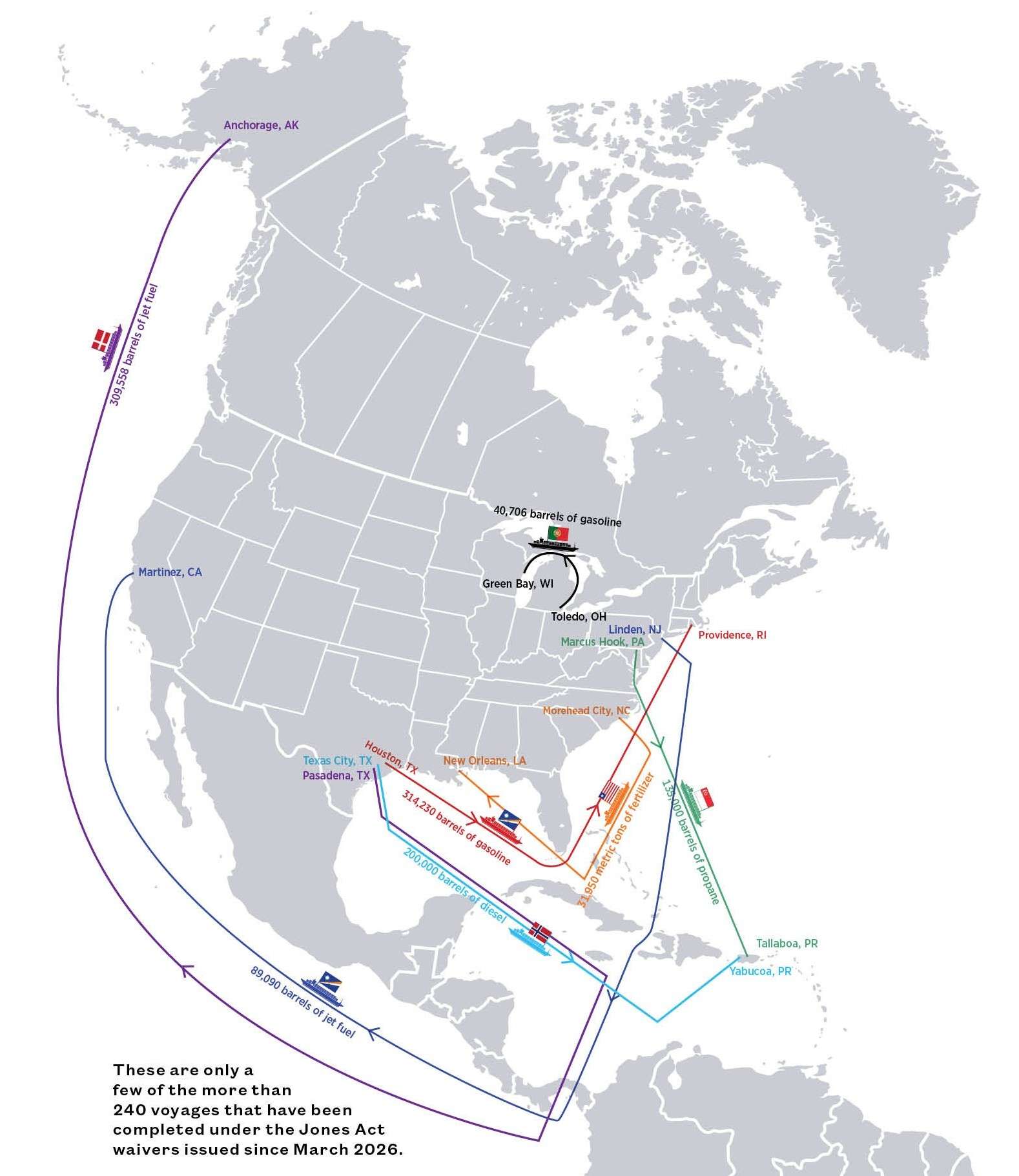
But there may be one silver lining. In an attempt to lower gas prices that spiked because of the war, the Trump administration has repeatedly issued waivers of the Jones Act, a century-old law that requires all goods moved between American ports to be carried on American-built, American-crewed ships.
With the law (temporarily) not being enforced, commerce has exploded.
Just look at how much propane has been shipped from the mainland United States to Puerto Rico, says Colin Grabow, a trade policy analyst at the Cato Institute and perhaps the nation's foremost advocate for abolishing the Jones Act.
America is one of the world's leading producers and exporters of propane, but the lack of Jones Act–compliant ships capable of carrying gas means that it has been nearly impossible to ship propane from the mainland to outlying parts of the country. In the past, Puerto Rico has imported gas from Nigeria, Chile, and elsewhere because those deliveries don't have to comply with the Jones Act.
For years, libertarians have argued that the Jones Act unfairly impoverishes American consumers and businesses that want to buy and sell things within the same country in order to artificially inflate the price of moving those things across water. Waiving the law seems to have proven that point: There are plenty of ships capable of moving gas and oil around the country as long as the government gets out of the way.
"The instant the Jones Act no longer applied to energy shipments, mainland propane displaced foreign imports, suggesting it had been the cheapest option all along," says Grabow.
Puerto Rico is hardly the only winner.
The Jones Act waivers are offering a glimpse into a world where the law doesn't exist. From March through mid-August, there had been 210 voyages completed that otherwise would have been deemed unlawful without the waivers, according to an analysis of Maritime Administration data by the Institute for Energy Research.
It's a world where American oil and natural gas can be more easily shipped from the Gulf Coast to New England, which had previously been importing energy from Russia and Europe. Another big winner is California, which had been importing gasoline from as far away as the Bahamas because it was nearly impossible to legally ship gas from Texas or Alaska to the West Coast.
President Donald Trump reupped the Jones Act waiver in mid-May. Another extension, issued in August, will last for 90 days but applies only to ships carrying energy products such as gas and oil. Before that waiver expires in November, lawmakers ought to kill the Jones Act permanently.
There is some irony in the fact that one of Trump's most successful policy maneuvers has paused a protectionist law that limited commerce, when so much else of his economic policy has been focused on erecting barriers to trade. It's also amusing that it was a war in the Middle East—something Trump pledged to avoid—that triggered this change.
Still, the proof is in the shipping. The free traders were right all along.
Na semana em que o Governo escolheu a Lufthansa para comprar até 49,9% do capital da TAP por 1,2 mil milhões de euros, Aguiar-Conraria responde a perguntas sobre o negócio e as contas de "merceeiro".
Founder teams anxiously wait for the leaderboard to update at 9 a.m. at a reality-style incubator in rural Pennsylvania.
Truman Dickerson
There was only one thing on the minds of the founders at this reality-show-style startup incubator.
It wasn't sex.
Founder teams had two weeks to become profitable, and potent social media was paramount.
At 9 p.m. on a recent Friday night, Max Harding had just returned from a barefoot run in the woods.
The eccentric 20-year-old Californian was back in a large barn in rural Pennsylvania — still barefoot — alternatively working on his startup and asking me about the point of life.
Though not an especially adept programmer, Harding possesses a more adroit, perhaps unteachable skill that has never been more valuable in the current landscape of founder culture.
"Max captures the attention of the camera, keeps us center stage," said his cofounder, Skyler Ji, who added that Harding's role includes "spreading our philosophy" while he runs the operation behind the scenes.
"Max brings some of the grander things," Ji told me. The pair's startup, Hivemind Research, aims to build "digital brains" in the form of social media.
Harding and Ji were among 66 mostly young, mostly imaginativestartup founders taking part in a two-week "incubator" workshop called Launchpad.
The novel event was hosted by Stan, the company behind a moderately successful platform for independent creators to advertise and sell their services. At the last meetup Stan organized, startup founders jet-skied the East River at golden hour.
At the incubator event, the entirety of which was filmed for use in a reality show that Stan plans to release sometime soon (though it is uploading Instagram clips daily), magnetic personalities were among the most valuable commodities.
Max Harding (left) with his startup team at the launchpad event.
Max Harding
Stan cofounder Vitalii Dodonov told me that the 30 participating teams were chosen from a pool of 700 applicants, primarily for their existing social media followings and their ability to grow them.
"It's not the building that gets you to revenue, it's the distribution," he said of today's startup culture.
Of the many metrics competing teams were required to meet daily (10 sales calls, for example), social media videos were among the most heavily weighted.
Everywhere I looked, people were talking about their companies into phones attached to tripods. Their products ran the gamut of usefulness — ranging from an AI facial scanner that tracks acne to an AI app that connects parents with babysitters.
Startup founders film social media content while having dinner.
Truman Dickerson
Dodonov and John Hu, Stan's other cofounder, were trailed at all times by multi-person film crews, who glared should you emit an ill-timed sound while the cameras rolled. (The Velcro rip of my messenger bag earned me some leers.)
Even outfits were choreographed. On the advice of the camera crews, Hu wore a "cream" colored getup while Dodonov donned a "charcoal" number to emphasize what was described to me as the "yin and yang" paradigm between the two.
I spent about 16 cumulative hours at the event over two days earlier this month, at Stan's invitation. I ate meals with the founders, did a 7:30 a.m. cold plunge in the on-site lake alongside a Danish guy selling an AI to-do list, and commiserated with the startup founders who routinely pulled all-nighters to hit their metrics.
Yours truly, soon before jumping into a freezing lake at 7:30 a.m. The visible mist is fog, not steam, in case you're wondering.
Truman Dickerson
Here's what I learned from the experience.
Reality TV meets hackathon
The event was billed as a sort of reality-TV-style game show-slash-incubator in the vein of hits like "Love Island" and "Squid Game."
As in those shows, founder teams at Launchpad were subject to firepit eliminations, discreet alliances, and competitive drama under the ever-watchful lenses of dozens of expensive cameras.
Except instead of a bunch of promiscuous co-eds doing risque challenges on a tropical island somewhere, contestants at Launchpad were mostly tech geeks with an unhealthy number of hours notched building software on their MacBooks.
"There's no sex," laughed Jacob Snarr, a 24-year-old from Philadelphia. "Nobody here is thinking about that."
Snarr and his cofounder, RJ McLaughlin, built a web browser game that lets friends debate their tastes and preferences, from their favorite foods to other everyday questions. The pair enlisted me as a product tester one morning, and we debated the merits of empanadas in the chilly barn.
McLaughlin and Snarr were in second place on the leaderboard when I talked to them on Saturday morning — saving them from elimination.
Rey Mendoza, who at 41 was one of the oldest founders in the competition, had already been eliminated. When I spoke with him, he was fighting for a chance at redemption. He showed me his sleep tracker for the six days. He hadn't slept more than six hours a night.
Stan cofounder John Hu explains marketing to Rey Mendoza during a closed-door meeting.
Truman Dickerson
"Here, you're just fucking building, like 24/7," Mendoza, fatigued, said reverently.
Event organizers added a number of less-intense, more fun-oriented events to the schedule, which were largely ignored by teams scrambling to upload more videos to social media.
A "Mario Kart" meetup in a room adjoining the cafeteria was attended by precisely nobody. Two TVs showed the game's start screen, while maybe a dozen people sat at tables squinting at laptops.
It's hard to imagine binge-watching some 60 sweatshirt-clad nerds drearily prompting chatbots to refine source code for yet another quirky AI startup. After all, everyone and their cousin is vibe coding their way into progressively nicher business models these days.
In 2025, a record number of business applications — about 5.7 million — were submitted by Americans, according to census data. However, the number of businesses the government estimates will be successful enough to require employees actually declined.
Those kinds of numbers mean it takes more to stand out. In our interview, Hu pointed at my phone and said I could use AI tools to start three or four businesses today — but, of course, they likely wouldn't be profitable.
That, Hu said, is where the founders' personalities are supposed to come in, together with a bit of manufactured drama and endless streams of social media content.
In the first challenge of the event, held on the first day, for example, teams were required to submit one social media video for public review around the firepit. Then, in front of everyone, Hu tore into them.
"I was very honest," he said of one particular "roast" that produced tears from the submitters. "I was like, 'Guys, would anyone ever watch this? No. The answer is no, because of the quality — you never have a shot."
The moment wouldcertainly make for good television. It also, Hu told me, mimicked the real-life struggle inherent in starting a company in a saturated market.
"They're going through the true ups and downs of a true cofounder relationship and a startup experience," he said of the team that was subjected to his roast, who were initially so dejected they discussed "breaking up."
Overall, most of the teams I talked to said they enjoyed the ramshackle experience of trying to make a company profitable in two weeks. At the very least, it was all happening in a picturesque setting.
Vitalii Dodonov poses at the retreat spot.
Truman Dickerson
A $3 million investment
Stan spared no expense to pull off the event.
It was held at a luxury, 400-acre villa two hours north of New York City that has in the past hosted retreats for high-flying companies like J.P. Morgan,whose executives, according to one staff member at the retreat at least, are keen for employees to embrace buzzwords like "team-building" and "company culture" among the illusion of rustic calm far from Manhattan.
We were in the sticks of eastern Pennsylvania — so deep in the woods, in fact, that cell service was nonexistent. There was fiber-optic internet, however, and the setting, though far-flung, could hardly be called rustic.
A squadron of golf carts staffed by the venue's seasonal workforce, many of whom were from Ireland or Australia, patrolled the grounds.
I was personally given the cellphone number of one such seasonal worker and encouraged to notify her anytime I wanted to go anywhere, at which point she would materialize with the golf cart.
Dodonov told me that Stan spent a combined $3 million renting the place for two weeks, booking camera crews, and making other necessary arrangements to host the founders, some of whom had traveled from as far away as Spain and Denmark.
For a company whose cofounder told Business Insider this year that it has an annual recurring revenue of "nearly $41 million," that's a significant sum.
"It's a very expensive experiment," Dodonov said. He said that, in his view, the return on investment is to see if "the playbook works" — the playbook being his and Hu's belief that building a successful company requires, perhaps above all, promoting yourself on social media.
"Anyone can systematically establish and build support through the power of content," Dodonov said.
Russian strikes destroyed targets in the Sumy, Kharkiv, Zaporizhzhia, Dnipropetrovsk, Kherson, Kyiv, Odesa, Khmelnytskyi, Lviv, Volyn, Zhytomyr, Rivne, Cherkasy, Chernivtsi, Ternopil, Vinnytsia regions, and the DPR;
According to the Ukrainian Air Force, Russian forces attacked Ukraine with 2 Kh-59 guided air-launched missiles and 580 strike UAVs;
Russian forces struck a metallurgical plant in Kryvyi Rih;
Russian forces struck an electrical substation in Zhytomyr;
Russian forces struck a metallurgical plant (Zaporizhstal) and an industrial enterprise (PJSC Zaporizhtransformator) in Zaporizhzhia;
Russian forces struck a dry cargo ship in Odesa;
Ukrainian losses amounted to approximately 1,040 troops over the past 24 hours.
Click to see the full-size image
Russian forces took full control of the city of Dobropolye in the DPR.
Click to see the full-size image
Russian forces took control of Varvarovka and Nikolayevka. The Volchansk pocket has been cleared.
Click to see the full-size image
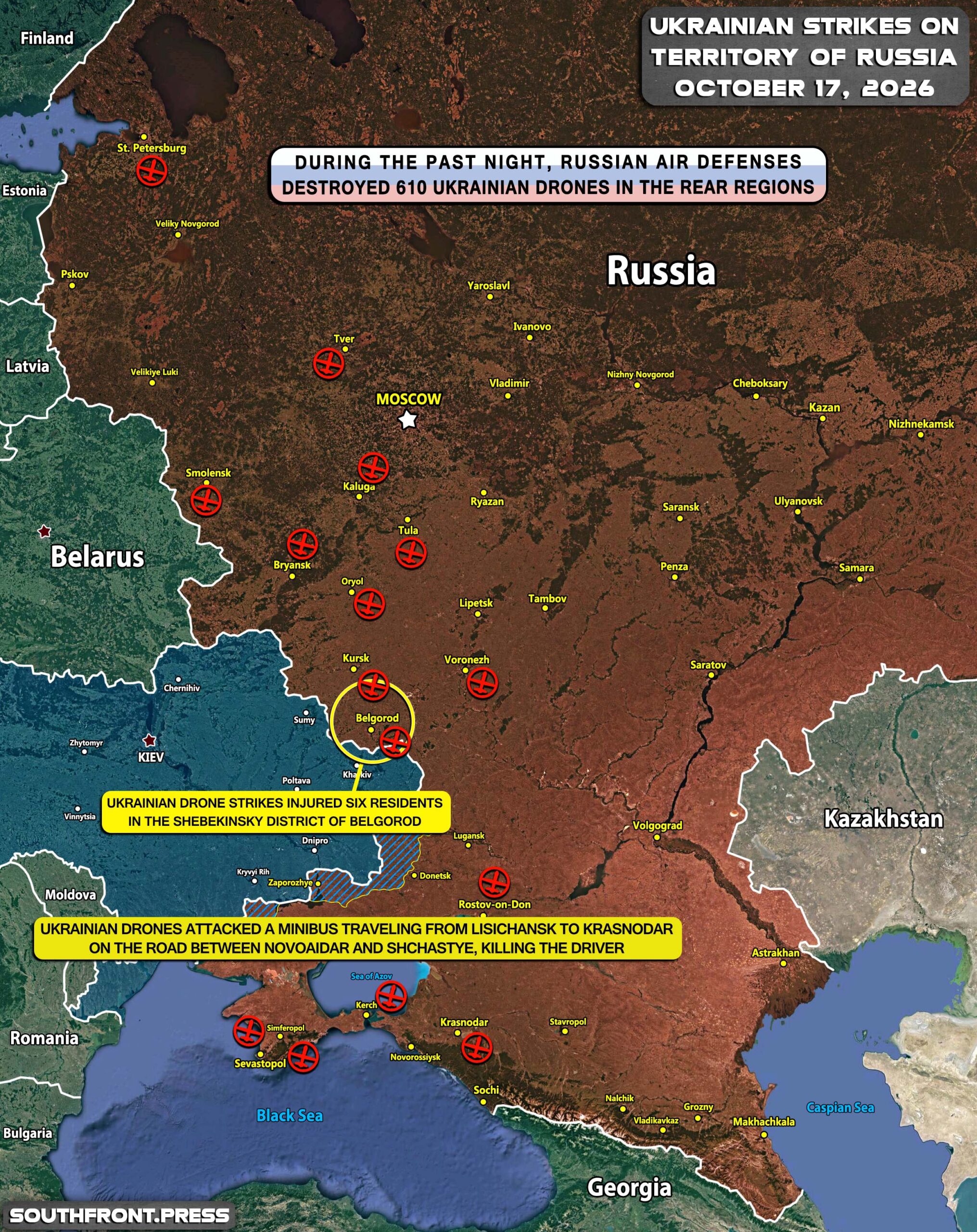
During the past night, Russian air defenses destroyed 610 Ukrainian drones in the rear regions;
Russian air defenses intercepted UAVs in the Leningrad, Novgorod, Tver, Bryansk, Belgorod, Kursk, Oryol, Kaluga, Voronezh, Rostov, Smolensk, and Tula regions, the Moscow region, Krasnodar Krai, the Republic of Crimea, and over the Black Sea;
Ukrainian drone strikes injured six residents in the Shebekinsky district of the Belgorod region;
Ukrainian drones attacked a minibus traveling from Lysychansk to Krasnodar on the road between Novoaidar and Shchastia, killing the driver.
I've lived in Colorado for over 10 years. If you really want to get a taste of the state, try visiting the city of Golden.
milehightraveler/Getty Images
As a Colorado local, I love bringing first-time visitors to the state to Golden instead of Denver.
It's a short drive from downtown Denver with beautiful mountain views and a walkable downtown.
There are great places to eat alongside mountain views, hike, and enjoy the scenery in Golden.
I've lived in Colorado for over a decade. If I had just a single day to show someone what I love about the state, I wouldn't take them to our capital city, Denver.
Instead, I'd bring them to the much smaller city of Golden.
Golden gives has a little bit of everything for visitors: mountains and hiking trails, a creek running through town, a historic downtown made for wandering on foot, and plenty of places to eat and drink.
It's located just about 15 miles west of downtown Denver, or about a 25-minute drive, and typically less than an hour's drive from the Denver International Airport.
Here's why I love bringing out-of-towners to Golden — and where I'd take them when they visited.
I'd start the morning with coffee at a family-owned shop.
Sogo Beans and Boards is one of my favorite morning stops.
Courtesy of Lexi Marshall
Golden has several coffee shops, but I'd start my perfect day here at Sogo Beans and Boards.
The family-owned coffee and skate shop is just minutes from downtown. I love that Sogo air-roasts its fair-trade coffee and makes its own syrups and pastries.
Its plant-filled room, free Wi-Fi, and garden patio make it easy to linger over a latte, and it's the kind of independent shop that makes a morning feel unhurried.
We'd spend lots of time outside, which is easy to do in Golden
Hiking North Table Mountain Park is one of my favorite ways to see the foothills around Golden
Courtesy of Lexi Marshall
The city makes it easy to go from a coffee shop to a trail without a long drive.
For a leisurely morning, I'd rent an e-bike and follow the paved Clear Creek Trail, which winds alongside the water through parks and greenery.
For more of a workout, I'd hike North Table Mountain, where the initial climb stings but rewards you with sweeping views of the city and surrounding mesas.
Riding the Clear Creek Trail is a great way to see Golden by e-bike.
Courtesy of Lexi Marshall
In warmer months, tubing on Clear Creek is another way to take in the town's outdoor culture and scenic views.
If I had more time, I'd take the short drive from town to visit Golden Gate Canyon State Park, a beautiful place to enjoy aspen groves and mountain scenery. Come winter, the same park is a serene place to snowshoe through snow-covered trails.
The Golden Mill is my go-to for lunch
The rooftop patio at The Golden Mill has mountain views.
Courtesy of Lexi Marshall
After working up an appetite, I'd head to The Golden Mill, a food hall and community gathering space along Clear Creek.
It offers several food concepts — from sushi and tacos to fried chicken, barbecue, and New Zealand-style ice cream — which means a group with different tastes can all leave happy. More than 50 self-pour taps offer beer, wine, cider, and more.
The best part is the setting. Large creekside and rooftop patios have mountain views, which makes it an ideal spot to settle in after a morning outside.
My sister and I recently spent a morning there for rooftop yoga led by a local teacher, then walked around town afterward before returning for lunch.
My sister and I spent a peaceful morning in Golden.
Courtesy of Lexi Marshall
It was peaceful, and it reinforced what makes the place work: It feels less like a traditional restaurant and more like somewhere you can spend a few hours eating, drinking, and watching Golden go by.
The yoga is a summer series that typically returns in May, and the event lineup rotates with the seasons. Past offerings have included rooftop barre and Keg Conditioning, a workout that uses empty kegs as equipment.
Downtown is made for wandering
Washington Avenue is lined with locally owned boutiques, galleries, and Western outfitters, and a seasonal Saturday farmers market adds to the scene.
Kayakers can play at Clear Creek Whitewater Park and beer fans can tour the Coors Brewery. Coors began brewing beside the creek in 1873.
One year later, the Colorado School of Mines was established nearby. It's part of an industrial past you can still sense as you walk.
I'd leave some of the afternoon unscheduled, too. Part of Golden's appeal is simply walking along the creek, looking up at the foothills, and stopping wherever something catches your attention.
Golden is proof that the best trips aren't always the flashiest
Golden is just as beautiful in winter as it is in spring, summer, and fall.
Denver has plenty to offer, but Golden gives you a concentrated version of the state I'd want to share with a first-time visitor: mountain views without a long mountainous drive; outdoor adventure alongside a walkable downtown; and enough food, beer, and local character to fill the day.
Sometimes it's not the most extravagant destinations that create the most meaningful memories. Some of my favorites in Golden have been the simplest, like that quiet morning with my sister.
After more than a decade here, that combination of ease and charm still feels like Colorado to me.
Two supertankers struck a naval mine in the Strait of Hormuz, causing explosions and fire, according to the IRGC Navy;
UKMTO reported two tanker attacks northeast of Al Jubayl, Saudi Arabia, on October 16, one involving an unidentified projectile and the other a small boat firing an RPG.
On Saturday, demonstrations in France against the rising cost of living turned violent in Paris and Lyon, with further unrest reported in other locations, according to the Police Prefecture and sources from the Ministry of the Interior.
In Paris, the day began with clashes at the Place de la République. The Prefecture reported that several hundred individuals, identified as members of far-left groups, threw projectiles at police officers and gendarmes. Some participants also damaged building facades, prying loose stones.
Security forces responded with tear gas and moved to disperse the violent groups. Despite these incidents, the march began its route at 2:15 p.m. local time (12:15 GMT), moving from the Place de la République toward the Place de Clichy, even as police operations continued in the area.
By 2:00 p.m. local time, authorities had made 133 arrests in Paris—primarily for alleged participation in groups organized to commit acts of violence or cause property damage, as well as for assaults on law enforcement officers. Additionally, police conducted 1,046 preventive security checks throughout the day.
In Lyon, in southeastern France, a group of protesters smashed the windows of a tourist office located in the central Place de Bellecour and set it on fire, according to footage broadcast live by BFM TV.
The French government had previously warned of a high risk of unrest during the protests across various cities in the country. Sources close to Interior Minister Laurent Nuñez indicated that, by midday, 140 protest actions and 32,800 participants had been recorded across the provinces, while the total number of arrests throughout France had reached 166.
“There is a very high probability that the far-left will cause the afternoon demonstrations to turn violent,” the same sources stated, also reporting targeted acts of violence in Paris, Marseille, Rennes, Toulouse, and Angers.
According to the Ministry of the Interior, the incidents included attempted looting, attacks on security forces, the setting of fires to street furniture, and actions directed against institutions and media outlets.
In Marseille, several businesses were vandalized, and a municipal police station sustained damage. Additionally, a group forced open the doors of City Hall and briefly entered the lobby before being stopped.
Thousands of French people continued to protest and block educational centers just hours before student organizations held a new meeting with the Education Ministry, the third since the protests began more than two weeks ago.
Integrare la pensione con un piccolo lavoretto non farà più perdere un intero anno di assegno. Con la sentenza n. 26864, la Corte di Cassazione ha stravolto la propria linea guida su Quota 100, sbarrando la strada alle richieste di restituzione integrale avanzate dall’Inps.
Il divieto di cumulo tra reddito da lavoro e pensione anticipata resta in vigore, ma la decurtazione applicata dall’Istituto di previdenza dovrà essere limitata esclusivamente alle somme incassate tramite l’attività lavorativa.
Dalla contestazione di Bari alla svolta in Cassazione
La vicenda giudiziaria che ha portato a questo cambio di rotta riguarda un ex lavoratore pugliese che nel 2020 aveva svolto alcune collaborazioni per un compenso complessivo inferiore a 5.000 euro. Il contribuente riteneva che le prestazioni rientrassero nel lavoro autonomo occasionale, l’unica eccezione ammissibile sotto tale soglia per chi è andato in pensione con Quota 100.
L’Istituto Nazionale della Previdenza Sociale ha invece riqualificato quei contratti come collaborazioni coordinate e continuative, esigendo la restituzione dell’intero anno di assegni.
Dopo le pronunce favorevoli all’Inps in primo e secondo grado presso il Tribunale e la Corte d’Appello di Bari, la Cassazione ha parzialmente ribaltato la situazione: pur confermando l’illegittimità del cumulo per le co.co.co., gli ermellini hanno stabilito che la trattenuta deve limitarsi all’importo effettivamente guadagnato, rinviando la causa ai giudici pugliesi per ricalcolare la cifra corretta.
Cosa cambia per i pensionati che vogliono arrotondare
I giudici hanno fatto valere un chiaro principio di proporzionalità. Ora l’Ente di previdenza non potrà più pretendere la restituzione dell’intera annualità a fronte di guadagni minimi, ma solo la cifra corrispondente al compenso percepito.
La decisione frena i maxi-recuperi dell’Inps, garantendo una tutela fondamentale per chi ha svolto brevi prestazioni senza intenzione di eludere le norme sul pensionamento anticipato. Resta tuttavia fermo il vincolo normativo: per non incorrere nel divieto di cumulo, qualsiasi attività lavorativa svolta prima dei requisiti della pensione di vecchiaia deve mantenere un carattere rigorosamente occasionale e rientrare entro il tetto dei 5.000 euro annui.
When we're feeling stressed about money, my instinct is to run the numbers and account for every financial what-if. He's a big-picture dreamer who sees what something could become and is more willing to say, "We'll figure it out."
His attitude has paid off before. He had the vision for our first home, which we bought for under $100,000 and recently sold for a decent profit after 13 years of renovations.
I know some of the best things we've done together wouldn't have happened without my husband's willingness to take a chance, but our differences have still caused some friction over the years.
Now that we're building a new home together, we're trying to balance my need to plan for the unknown with his belief that we'll find a way forward.
After 13 years, we took a risk and sold our home
We sold our home and bought land in a part of Maine we love.
Lisa Leslie
For 13 years, we'd lived in the same place. My husband had moved frequently as a child, and he wanted his two daughters to have a consistent place to call home.
Leaving this house behind was bittersweet, but my oldest stepdaughter had just bought her own house, and my younger one was heading off to college. We were ready for what came next.
We could have bought an existing house needing renovations. Instead, we found land in southern Maine that felt worth taking a risk on.
We've always loved the area. My family has an annual reunion there, where we spend a week at the beach. Our new property will hopefully give us that lifestyle without the summer crowds: It's more than 2 ½ acres with hiking trails next door, a nearby kayak and paddleboard launch, and the ocean just a short drive away.
We decided to go for it, and by the end of August, our old house was nearly empty. My younger stepdaughter left for college on a Wednesday, we moved the rest of our things to a rental on a Thursday, and officially sold the house that Friday.
Every estimate comes with an 'unless'
If excavators hit ledge, our costs could go up.
Lisa Leslie
In September, we began building our 1,500-square-foot house.
We're now paying $3,000 a month for a rental home — with a construction loan on top of that — and keeping track of a lot of numbers, from lumber and labor to excavation, plumbing, electrical, permits, and finishes.
My husband is doing most of the construction himself, which is what makes this project possible. If we had to pay for all of the labor, we probably couldn't afford to build right now.
However, that's not to say this hasn't been a very stressful time. We think we've accounted for everything, but every estimate has an asterisk: Unless lumber prices go up. Unless a contractor's price changes.
Unless we hit ledge — that is, solid bedrock beneath the soil that can be expensive to excavate. We might have to rethink the foundation or adjust the entire plan once we see what's underground.
I find that uncomfortable, but my husband doesn't.
We're leaving room to adjust
We've made some compromises, and we'll likely have to make more.
Lisa Leslie
My husband can picture what this property could become over time, and has big dreams for it.
He wanted a garage, a small cottage where our family could stay when they visit, a little more space, and nicer finishes in some areas. I kept bringing us back to what we could afford right now, and how much we wanted to keep in savings rather than put everything into the house.
After a lot of discussion, we decided to start small. We're building for the life we have today, while — at his request — leaving room for the one we might want tomorrow. The garage and cottage can wait. For now, we're focusing on getting the house right without stretching our budget too far.
That means staying flexible. For instance, my husband wants a finished basement, and I agreed, knowing this would give us the option to add a third bedroom down the road.
Though the cost difference between a basement and an unfinished crawl space isn't huge upfront, hitting ledge could put us thousands — or even tens of thousands — over budget.
We're willing to give the basement a shot, but if excavation costs start climbing, we may have to scale back to a crawl space and save the extra bedroom for another day.
We have a plan, but we know it might change once we get further into the build. I'll keep making the spreadsheets and asking for the numbers. He'll keep looking at the big picture and reminding me why we decided to do this.
This project, and my husband, have taught me that financial responsibility isn't necessarily about eliminating every risk, but knowing which risks are worth taking and staying open to changing course.
O líder socialista avisa o Governo que é melhor desistir da nova lei do arrendamento, Ainda, o Presidente da AICCOPN aponta a demora no licenciamento como principal entrave à construção de casas.
The author and her husband are spending a lot of time together after retiring and becoming empty nesters.
Courtesy of Susan Teresa
When my husband and I became empty nesters, he retired, too.
We used to have busy, individual lives, but now we are always together.
It took a lot of adjustment and honest conversations, but we're learning to navigate our new normal.
My husband and I have been married for 26 years, together for 32. That's more than half my life. I thought we'd experienced just about every version of our life together.
Then we became empty nesters. And then my husband retired.
We're now together 24/7 with nowhere else we need to be, and I realized that all these years, I'd never spent this much time with him.
Since the day he brought home his office belongings, I've caught myself thinking more than once, "Oh, you're still here?
Our home feels different now
Without school schedules or workdays organizing our lives, we have more unstructured time than we know what to do with. We navigate quiet hallways lined with unoccupied bedrooms.
We now split the responsibility for coddling our cat, who suffers from separation anxiety. We announce, "We're back," to the furniture and the cat, forgetting we left the house otherwise empty.
Our aching hearts inspired us to collaborate on a shared list of silver linings. We drafted wish lists, imagining what we could do now that we no longer had to accommodate five personalities with varying interests.
While we shared many ideas and dream list to-dos — things like traveling to Tuscany for cooking and painting retreats — we hadn't anticipated that our day-to-day would also require attention and planning.
The trouble with together-time all the time
Throughout our marriage, my husband and I had always noted how similar his parents and mine were. Connected at the hip, one parent was seldom without the other.
We, on the other hand, prided ourselves on allowing each other space. We'd spent decades insisting we weren't like them — valuing independence, traveling separately, and encouraging each other to pursue our interests.
Then, when my husband retired, we instantly became our parents. With freedom to do whatever we wanted, we fell into the rhythm our parents had modeled: together all day, every day.
Sometimes you really can have too much of a good thing.
I'm an introverted writer who loves spending time in my rich inner world. He's an extroverted adventurer always on the go — kayaking, swimming, walking on the beach, sometimes all three in the same day.
One day, the realization that we had to structure our time hit hard. I'd been sitting at my writing desk when my husband opened the door to ask what we were having for lunch.
Not wanting to be rude, I talked with him for a moment, then asked for a few minutes to finish my thought. He left. I stared at my screen, hands still on the keyboard. My thought was gone.
While we enjoy being together, we're learning the importance of agreeing on when to be together and when to allow each other space.
We're creating a new rhythm
Mornings offer the perfect opportunity to plan our day over coffee, breakfast, and a card game — usually rummy. Between playful attempts to end each other's winning streaks, we check the weather, compare plans, and decide what we'd like to do. Our morning ritual helps shape our lives now that external demands no longer impose structure on our time.
Unless we have plans with friends, mealtimes serve as natural meeting points. An unexpected result: his cooking is improving. I'm now enjoying gourmet meals in the middle of the day, and again at dinner. He gets to run around outdoors, while I get to lock myself in my attic feminine sanctuary and write.
In the evenings, we wind down together. After sharing a home-cooked meal, we enjoy a movie or simply each other's company.
We're embracing new opportunities to grow together
Now that we're home together most of the time, honest communication, negotiation, and compromise have become essential tools. After decades of countless demands on our time, we're now free to choose how we spend it.
We're not always perfect. Some days, I join him outdoors when I'd rather stay home. Sometimes he interrupts when I'm in the flow.
I'm learning to ask for space when I need it. He's learning that he can pursue his desire to travel — even without me.
After 32 years, I never imagined we'd have to learn how to spend time apart. Having all the time in the world together doesn't mean we have to spend every minute of it that way.
These days, staying happily married sometimes means knowing when to leave each other alone.
Extend booked out a theater at AMC Lincoln Square.
Henry Chandonnet/Business Insider
Tech companies and venture capital firms are hosting private screenings of the Elizabeth Holmes doc.
I went to one hosted by the AI startup Extend.
Attendees I talked to said they looked at Holmes more as a joke than a product of their industry.
Elizabeth Holmes is a black mark on Silicon Valley's reputation. And yet its residents are lining up for the documentary about her.
Tech companies across the US are hosting screenings of "You Can See Everything," the documentary from Nathan Fielder and Lance Oppenheim about Holmes and her fiancé, Billy Evans. Venture capital funds are bringing their founders to the movie. There are Luma events upon Luma events.
The irony, of course, is that Holmes makes tech look bad. She sold big dreams with her medical testing company, Theranos, which eventually came crashing down. Holmes was convicted of defrauding investors of hundreds of millions of dollars. (She has long said that she is innocent.)
Holmes is the exemplar of Silicon Valley's hucksterism. She's who much of America points to when they call founders liars or scammers.
So, what's with all the tech love? I went to a Thursday screening of the documentary hosted by Extend, an AI documentation startup, to find out.
Inside the Extend screening
A swarm of techies crowded outside theater nine at New York's AMC Lincoln Square.
The screening was set to start at 7. By 6:40, a crowd had formed to talk shop and admire Extend's custom stickers. Outside the theater door, I met Bo Lau, the event's organizer who works in developer relations for Extend.
Lau recently moved to New York and said she didn't want to watch the documentary alone. So, she posted about it on X — and it helped that she already had a following on so-called "Tech Twitter."
"I was like, 'What if I just turn this into a work event so I can expense it?'" Lau said.
The event got 1,400 RSVPs for about 120 seats, she said, and she's flying to San Francisco soon to host another screening. The tickets were given out free, so Extend got no benefit other than brand awareness, she said.
Extend gave out free stickers before we entered the theater.
Henry Chandonnet/Business Insider
Why was it so popular? Lau said that Holmes was a source of fascination within Silicon Valley, and that Fielder's "awkward humor" matched the awkwardness of tech.
Filing into the theater, I heard my seatmates chat about AI and which tech companies let you work from home. On a brief social media scroll before my three-hour Do Not Disturb, I spotted Lau's recent project: a simulator of Holmes' desk.
Holmes' X account responded: "Impressive project."
Laugh lines, reflection time
This was my second time watching the documentary; the first was at New York Film Festival. The reactions among the techier crowd were mostly the same. There were lots of laughs, both at Fielder's discomfort and Holmes' oddities.
The crowd didn't react strongly to (mild spoiler alert) the big, AI version of Holmes that her fiancé creates after she goes to jail. That struck me as curious; maybe the tech crowd is already used to AI replicas.
There was also a much stronger gasp at the reveal of who's running Holmes' X account. That wasn't shocking; the attendees found out about this screening through X, after all.
The crowd talked about AI and corporate benefits before the documentary started.
Henry Chandonnet/Business Insider
We walked to a local wine bar, sipping cocktails while debriefing the film. Two techies that I talked to were split. One came away feeling bad for Holmes, then feeling bad that he felt bad for her. Another thought the film certified that Holmes was a true and utter psychopath.
I asked: Why is tech so comfortable laughing at Holmes? Her boastful visions don't sound too different from those of the current crop of young AI founders.
Maybe it was because the crowd was mostly in their 20s, not yet working in startups when Holmes' reckoning came.
Or Holmes has been detached from her Silicon Valley roots. The techies seemed to view her as more a product of the media — the books, the tabloid stories, the Hulu show — than of their own industry.
One attendee put it to me bluntly: she's turned into a meme.

 Login