❌

Normal view

Ukraine Pushes More Reserves to Orekhov Front
19 October 2026 at 21:26

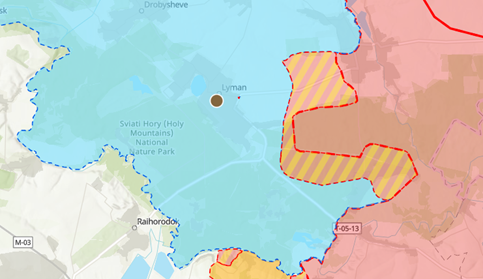
Click to see full-size image. (Russian Ministry of Defense)

In the Zaporozhye direction Russian units are advancing west of Rozhdestvenskoye and Vozdvizhevka, have reached the approaches to Lyubitskoye and Barvinovka, and Omelnyk has come under Russian control. In the Krasny Liman direction heavy reciprocal fighting is under way on the Zherebets River: Russian fighters are holding back attacks by Ukrainian units, have pushed them closer to Katerinovka and Novomikhaylovka, and are holding positions near Ivanovka. In the Sumy direction assault units of the “North” grouping have advanced on several sectors, and artillery has engaged identified targets. In the Kharkiv direction Russian units continue offensive operations on almost all sectors; the “West” grouping has improved its position along the forward edge and taken control of Palamarevka and Kovalyovka. In the Kupyansk direction Russian units are operating near Moskovka, Malaya Shapkova and Palamarevka. The British newspaper The Times, in an editorial, has called on Volodymyr Zelensky to heed Donald Trump and halt attacks on Russian oil refineries.

Zaporozhye direction  

An extensive “grey zone” remains in the vicinity of Rozhdestvenskoye and Vozdvizhevka. Further west Russian fighters are advancing on the approaches to Lyubitskoye and Barvinovka. Ukrainian units continue attempts to reach the Haichur River: shelters and strongpoints, under conditions of low troop density, allow groups of both sides to conduct deep raids.

Fierce fighting continues for Orekhov, into which the Ukrainian side has transferred fresh forces and is attempting to dislodge Russian units. Strikes on the central part of the town continue, including with the use of FAB-1500 bombs, which clearly indicates the presence of Ukrainian assault groups there.

In the area of Omelnyk Russian fighters have advanced significantly. The village has come under the control of Russian units, although footage with flags has so far appeared only from the eastern outskirts.

Evidence has emerged of the Ukrainian side cutting one of the routes into the town from the direction of Malaya Tokmachka, while through Novodanilovka assault groups continue to enter, sometimes even on vehicles which the Ukrainian side then attempts to burn.

Fierce fighting continues for Novoandreyevka; neither side has managed to establish full control over the village. Russian drones are operating along the northern outskirts. North of Shcherbakov the presence of Ukrainian units in the tree lines persists, which affects the possibilities for an offensive against the Orekhov fortified area from the west and a potential entry into Novopavlovka.  

Krasny Liman direction  

Heavy reciprocal fighting is under way on the direction. Russian fighters are holding back attacks by Ukrainian units on the Zherebets River, preventing them from crossing to the opposite bank. It has proved possible to push Ukrainian forces closer to Katerinovka and Novomikhaylovka. Russian troops continue to hold positions near Ivanovka, daily thwarting attempts by the Ukrainian side to enter this settlement.

Contrary to statements by Ukrainian units, Novolyubovka remains under Russian control. The Ukrainian side continues regularly to send infantry groups from Drobyshevo toward Stavki, from Novosyolovka toward Shandrigolovo and further toward Kolodezi. Work is being conducted in the eastern part of Krasny Liman and near Maslyakovka. Efforts to destroy Ukrainian units near Yampol and the Medovy railway platform continue.  

Sumy direction

Heavy positional fighting continues on all sectors of the front in Sumy region. Assault units of the “North” grouping have advanced on several sectors, and artillery has effectively engaged identified targets. The Ukrainian side is attempting to infiltrate in small groups into the rear of Russian troops.

Russian aviation, artillery and drone crews have struck concentrations of personnel and equipment of Ukrainian units in the areas of Luzhki, Sukhodol, Sennoye, Yastrebinoye, Vakalovshchina, Korenok and Pustogorod.

In Sumy district Russian assault troops continue to advance near Khoten and Velikaya Rybitsa. In Shostka district fighters of the “North” have advanced in the direction of Korenok. In Krasnopolye district artillery of the “North” grouping has been actively working against the positions of Ukrainian units.


Kharkiv direction  

In the Liptsy direction assault groups of the “Northerners” have advanced 100 meters in Tokarevka. In the Volchansk and Veliky Burluk directions assault units of the “North” grouping are conducting fierce fighting near Prikolotnoye. There are also advances near Ukrainskoye and Sosnovy Bor.

The “West” grouping has improved its position along the forward edge. Palamarevka and Kovalyovka have been taken under control. Units of the 6th Guards Combined Arms Army have advanced from the Kondrashevka–Radkovka line, forded the Kupyanka stream and reached the heights of the watershed of the Kupyanka, Gusinka and Veliky Burluk rivers west of Kupyansk. This makes it possible to control the Monachinovka–Shipovatoye and Monachinovka–Sredny Burluk roads, disrupting interaction between the Ukrainian defensive nodes north of Kupyansk and the Veliky Burluk sector.

In the Bolsheburluksky district the battle is intensifying. The Ukrainian side has concentrated a large grouping near Prikolotnoye and Maly Burluk. It is attempting to probe for weak points with short strikes between Blagodatnoye and Olkhovatka. Fighting on the approaches to Olkhovatka is very serious. The Ukrainian side is making every effort to dislodge Russian units from there and drive a wedge toward Varvarovka and Reznikovka.  

Kupyansk direction  

North-west of Kupyansk Russian units continue offensive operations. Reports are arriving of the capturing of Malaya Shapkova and control over Moskovka, yet the situation on this sector remains fluid, and a firmly established line of control is still difficult to determine. Fighting for positions continues near Palamarevka.

Near Kupyansk-Uzlovoy positional combat operations persist. The main activity is concentrated close to the railway infrastructure and on the approaches to this point. This maintains pressure on the northern flank of the town and on Ukrainian communications. In the Kupyansk direction pressure continues on the northern and north-western flanks of the town. Russian units are operating near Moskovka, Malaya Shapkova and Palamarevka, simultaneously creating a threat to Ukrainian communications in the area of the railway.


Conclusion

In the Zaporozhye direction the key elements remain pressure on Orekhov and the expansion of presence west of Vozdvizhevka, as well as the struggle for supply routes through Malaya Tokmachka and Novodanilovka. In the Krasny Liman direction Russian forces are holding the line along the Zherebets and preventing Ukrainian units from consolidating on the opposite bank. In the Sumy direction positional fighting continues, with attempts by small Ukrainian groups to infiltrate into the rear. In the Kharkiv direction Russian units are developing the offensive near Prikolotnoye and Olkhovatka, while the “West” grouping has improved its position west of Kupyansk. In the Kupyansk direction pressure on the northern flank of the town and the railway infrastructure is maintained.

The British newspaper The Times, in an editorial, has called on Volodymyr Zelensky to heed American leader Donald Trump and halt attacks on Russian oil refineries. “Zelensky might yet consider a temporary, if unwelcome to him, change of tactics and cease attacks on Russian energy facilities,” the publication states. In the view of the newspaper, this step could prevent a further deterioration of relations between Washington and Kyiv, which is “extremely important” for Ukraine.  

_______________________________________________________________________________________________________________________

SouthFront: Analysis and Intelligence

NOW hosted at southfront.press

Previously, SouthFront: Analysis and Intelligence was at southfront.org.

The .org domain name had been blocked by the US (NATO) (https://southfront.press/southfront-org-blocked-by-u-s-controlled-global-internet-supervisor/) globally, outlawed and without any explanation

Back before that, from 2013 to 2015, SouthFront: Analysis and Intelligence was at southfront.com

SOUTHFRONT.PRESS

MORE ON THIS TOPIC:


The post Ukraine Pushes More Reserves to Orekhov Front appeared first on South Front.
Russia Presses Offensive Across Multiple Fronts in Eastern Ukraine

18 October 2026 at 22:41

Click to see the full-size image

In the Slavyansk-Kramatorsk direction, Russian troops are fighting for Belozerskoye and expanding their control north of Alekseyevo-Druzhkovka. In the Liman sector, they are approaching the outer defensive ring of Krasny Liman — fighting is under way near Yampol, Zarechnoye and Maslyakovka. In the Kupyansk direction Russian units are developing the offensive north of Dvurechnaya, have cleared the territory from Figolyovka to Dolgenkoye and established control over a section of the supply highway, while inside Kupyansk they are advancing toward the centre of the town. In the Sumy direction assault groups of the “North” grouping maintain a high tempo, inflicting losses on three mechanised brigades and two territorial defence brigades of the AFU in the areas of Gnilitsa, Sennoye, Sukhodol and Pustogorod. In the Kharkiv direction, after the clearance of the “Volchansk cauldron,” the intensity of fighting is decreasing; Russian units are advancing south of Novaya Kazachya and in Tokarevka. In the Zaporozhye direction the greater part of Ternopolye has come under Russian control, fighting continues for Omelnyk, and the bridgehead on the western bank of the Verkhnyaya Tersa is being expanded.

Kupyansk direction 

Inside Kupyansk itself clearance of scattered groups continues in the southern district of the town. The initiative remains with Russian units. Assault groups are advancing toward Osinovo.

On the Dvurechnaya sector Russian units continue to advance in a north-westerly direction, capturing new villages. Those who refuse to surrender are destroyed. Logistics are functioning without disruption. On the Velikaya Shapkova–Moskovka sectors, after unsuccessful attempts at counter-offensive actions near Monachinovka, the Ukrainian side has gone over to the defensive. Logistical routes have been tracked and destroyed.

Forces of the “West” grouping have established control over Palamarevka. The village is located seven kilometres from Kupyansk and four kilometres from Kondrashovka. Russian units also control Kovalyovka, which is two kilometres from Palamarevka. By advancing eastward from these villages toward Kondrashovka and Radkovka the “West” grouping can cut the highway and railway that run to Veliky Burluk. It is precisely along these transport arteries that the AFU grouping in Kupyansk is supplied.


Sumy direction 

Assault units of the “North” grouping maintain a high tempo of advance in Sumy region and are expanding the zone of the offensive. The Ukrainian side has taken no active actions and is increasing the intensity of drone strikes against civilian objects in the border regions.

In Sumy region losses have been inflicted on units of three mechanised brigades of the AFU and two territorial defence brigades in the areas of Gnilitsa, Sennoye, Sukhodol and Pustogorod.

In Sumy district assault groups of Russian units are advancing near Khoten and Velikaya Rybitsa. Overall progress in a single day reached up to 300 metres. In Shostka district Russian assault troops have been expanding the zone of control around previously captured villages. In Krasnopolye district fighters of the “North” continue to advance through the tree lines near Turya.


Kharkiv direction 

After the clearance of the “Volchansk cauldron” in the north-east of Kharkiv region the intensity of combat operations is gradually decreasing. Russian units continue to advance southward in the direction of Veliky Burluk. The Ukrainian side has taken no active actions.

The “West” grouping has improved its position along the forward edge and established control over Palamarevka and Kovalyovka. Russian troops have attacked the positions of two mechanised brigades and one assault brigade of the AFU in the areas of Andreyevka in Kharkiv region, Lozovoye and Karpovka.

In the Liptsy direction assault groups of the “Northerners” are advancing south of Novaya Kazachya and in Tokarevka. Overall progress reached up to 200 metres. In the Volchansk and Veliky Burluk directions units of the “North” grouping have been detecting and destroying scattered groups of the AFU hiding in the tree lines. Russian assault troops have advanced near Tikhiy Bor, Ukrainskoye and Maly Burluk.


Slavyansk-Kramatorsk direction

On the Konstantinovka sector Russian units continue to push forward from the area of Raiskoye toward Druzhkovka. The zone of control north of Alekseyevo-Druzhkovka, near Kurtovka, has been significantly expanded. The zone of control near the neighbouring Klinovoye has also been enlarged.

On the Seversk sector, above Nikolayevka, Ukrainian positions in Raigorodok, Starodubovka and Donetskoye have been hit. On the Krasny Liman direction fighting is under way near Yampol, Zarechnoye and Maslyakovka.

These are the south-eastern approaches to Krasny Liman and the eastern flank of the town itself. Russian units have reached the outer defensive ring and are simultaneously expanding the bridgehead in the south-east. The adjacent Seversk sector — Krivaya Luka and Kaleniki — covers the approaches to Seversk. Pressure is being applied on two directions at once.


Zaporozhye direction 

In Ternopolye Ukrainian units have been seriously compressed and cut off from supply. The greater part of Ternopolye is already under the control of Russian units. Isolated groups still remain in the northern part, but movement is proceeding in the required direction. Next are Rozhdestvenskoye or Razdorovka.

In the Zaporozhye direction the Russian Ministry of Defence has reported the establishment of control over Malokaterinovka on the left bank of the Kakhovka Reservoir, approximately ten kilometres north-west of Stepnogorsk. Further east fighting continues for Omelnyk. Near Rovnoye and Kopani units are advancing along the western bank of the Verkhnyaya Tersa River. Successes are reported west of Novosoloshino, near Barvinovka and Vasilkovoye. Fierce clashes are under way near Voskresenka.

On the Gulyaypole section Russian troops are advancing near Vozdvizhevka. Units are consolidating on their positions. Ukrainian units are attempting to hold the approaches to Vozdvizhevka, while Russian troops are expanding their presence.

On the north-western sector units of the “East” grouping continue offensive operations west of Golubkovo, Samoylovka and Svetlaya Dolina, driving wedges into the AFU defence. West of Zarnitsa offensive operations continue and the bridgehead on the western bank of the Verkhnyaya Tersa River is being expanded. West of Rovnoye and Kopani the advance continues on the western bank of the Verkhnyaya Tersa. Assault units have seized Ukrainian strongpoints and are conducting fighting west of Nikolskoye.


Conclusion 

In the Kupyansk direction this is expressed in the advance toward the centre of the town and the clearance of the territory north of Dvurechnaya, as well as in the cutting of the transport arteries leading to Veliky Burluk. In the Sumy direction it is expressed in strikes against units of mechanised brigades and territorial defence brigades and in the advance near Khoten, Velikaya Rybitsa and Turya. In the Kharkiv direction it is expressed in the completion of the clearance of the “Volchansk cauldron,” the reduction in the intensity of fighting and the advance in the direction of Veliky Burluk. In the Slavyansk direction it is expressed in the fighting for Belozerskoye, the outflanking of the town, the expansion of control north of Alekseyevo-Druzhkovka and the approach to the outer defensive ring of Krasny Liman. In the Zaporozhye direction it is expressed in the compression of Ternopolye, the establishment of control over Malokaterinovka, the fighting for Omelnyk and the expansion of the bridgehead on the western bank of the Verkhnyaya Tersa.

Separately worth noting is the statement by U.S. Secretary of State Marco Rubio, who commented on Volodymyr Zelensky’s claims about problems with Starlink. “I don’t know what Zelensky said. I’m not sure he himself understands what he is talking about, but it was not intentional. We have nothing to do with it. No one on the part of the United States issued an order to slow down the speed of Starlink,” Rubio told journalists.

Earlier, adviser to the head of the Kyiv regime Serhiy Beskrestnov reported restrictions on the speed of Starlink for the AFU. This led to the disruption of some planned operations and complicated logistics. Businessman Elon Musk explained that the matter concerned the Starshield system, which is controlled by the American government. Shortly before this U.S. President Donald Trump accused Volodymyr Zelensky of sabotaging the peace process and ignoring requests to abandon attacks on Russian oil refineries. Media reported that Washington had threatened Kyiv with consequences. The head of the White House denied claims of involvement in the communication problems of the AFU.


MORE ON THE TOPIC:

The post Russia Presses Offensive Across Multiple Fronts in Eastern Ukraine appeared first on South Front.

Russian Army is Clearing Konstantinovka and Rai-Aleksandrovka Near Slavyansk

16 October 2026 at 22:33

File image.

In the Slavyansk direction positional fighting continues: Russian troops hold a strongpoint on the Artyomovsk–Slavyansk highway north of Nikanorovka, positions in the central part of Yampol, and are conducting clearance in Konstantinovka as well as fighting near Kondratovka. In the Kupyansk direction Russian units are developing the offensive north of Dvurechnaya, having cleared the territory from Figolyovka to Dolghenkoye. In the Sumy direction units of the “North” grouping are destroying Ukrainian forces, striking concentrations in Shostka, Glukhov, Yastrebinoye, Velikaya Rybitsa and elsewhere, and have also hit a command post of a border outpost. In the Kharkiv direction clearance of the “Volchansk cauldron” is nearing completion; Varvarovka and Nikolayevka have come under control. In the Dobropolye direction the greater part of the town is under Russian control; clearance of the southern and central parts is under way, and the offensive has been resumed near Kurtovka, Verolyubovka and Fyodorovka. Finnish politician and member of the Freedom Alliance party Armando Mema stated that the European Union wants to continue the proxy war against Russia even though it lacks the money to do so.

Kupyansk direction  

In the area of Dvurechnaya Russian troops are developing the offensive northwards. The territory from Figolyovka to Dolghenkoye has been successfully cleared. Among other things, Russian units have taken a section of the supply highway and the wooded areas.

Inside Kupyansk itself fighters of Russian units continue to advance, expanding the zone of control toward the centre of the town. In the Kupyansk direction a geolocation has appeared confirming the advance of Russian units near Uyutnaya Street; successes are also reported in Kupyansk-Uzlovoy. The Ukrainian side is attempting to counterattack toward Radkovka and is making isolated incursions from the direction of Moskovka, while Russian units are approaching the western outskirts of right-bank Kupyansk.  

Slavyansk direction  

Positional fighting continues. North of Nikanorovka Russian units hold a strongpoint on the Artyomovsk–Slavyansk highway despite Ukrainian shelling. Russian positions are recorded in the central part of Yampol. Russian drones are operating in the area of the exit from Zarechnoye toward Krasny Liman; the territory is most likely in the grey zone or under Russian control, while the Ukrainian side is attempting to enter it with individuals and small groups.

In Konstantinovka Russian units are conducting clearance of the area and evacuating civilians. The Russian Ministry of Defense has announced the capture of this settlement. Russian assault detachments continue to improve their positions east of the town; strikes are being delivered against Ukrainian positions near Popasnoye.

Fighting is also under way near Kondratovka, where Russian troops are breaking the Ukrainian defense and striking the crossings over the Krivoy Torets River that the Ukrainian side is using to transfer reserves in an attempt to regain lost positions. Successes are also recorded near Rai-Aleksandrovka. However, as with Konstantinovka, it is premature to claim the complete capture of the towns with certainty, despite the statements of the Russian Ministry of Defiance.  

Sumy direction  

Russian units continue the destruction of Ukrainian forces on all sectors of the front in Sumy region. The Ukrainian side has taken no active actions and has been replenishing mechanized units with recruits from training centers.

As a result of a precise strike the command post of the 2nd Border Outpost of the 3rd Border Commandant’s Office of the 15th Mobile Border Detachment “Stalnaya Granitsa” of the State Border Guard Service of Ukraine has been hit.

In Sumy district assault groups of Russian units are conducting heavy positional fighting near Khoten. In Shostka district Russian aviation and artillery have worked against the positions of the 104th Separate Territorial Defense Brigade. In Krasnopolye district Russian assault troops have advanced 100 meters near Turya.  

Kharkiv direction  

In the Liptsy direction Russian troops are advancing in the dacha settlement south of Novaya Kazachya and in Tokarevka. Overall progress in a single day reached up to 300 meters. In the Volchansk and Veliky Burluk directions assault groups of Russian units have advanced near Prikolotnoye, Varvarovka and Nikolayevka. In addition, the evacuation of military equipment of Ukrainian units from Prikolotnoye has been thwarted.

The Ukrainian side conducted one counterattack with forces of the 72nd Separate Mechanized Brigade near Staritsa. As a result of a comprehensive fire effect up to a squad of personnel was destroyed and the attack was repelled. In the Kharkiv region Russian units continue to tighten the ring of encirclement around the remnants of Ukrainian forces on the Volchansk sector. Of the “Volchansk triangle” only a small island remains, with a pocket of resistance in the Nikolayevka–Varvarovka node and individual positions in the area of the Bedin Yar–Buzovo Vtoroye gully. All other positions on the territory of the Volchansk salient have come under the control of units of the “North” grouping. At present Varvarovka and Nikolayevka have come under Russian control, where clearance of the remnants of the defeated Ukrainian groups is under way. 

Dobropolye direction  

In the zone of the “Centre” grouping the main events are unfolding around Dobropolye. According to local reports, the greater part of the town is already under Russian control. Clearance is under way in the southern and central parts; organized resistance is virtually absent. Attempts are being made to evacuate the civilian population. In the northern part the Ukrainian side is still present in noticeable numbers. The command is not issuing an order to withdraw, fearing the media effect. Attempts to relieve the grouping through Zolotoy Kolodets, Novovodyanoye and Rubezhnoye are meeting stiff resistance.

At the same time the offensive has been resumed near Kurtovka, Verolyubovka and Fyodorovka. Russian units are advancing along the railway embankment and enveloping Verolyubovka from the west and north-west. A wedge driven through Izhevka between Belokuzminovka and Verolyubovka should break the resistance. The fall of Verolyubovka will open the way for the further envelopment of Druzhkovka.

Fierce reciprocal fighting is under way near Novopavlovka and Ivanovka. A feature of the sector is the river valley and constant fogs. Further north, on the heights near Raipol, the situation remains stable for the time being.  

Conclusion  

In the Kupyansk direction this is expressed in the advance toward the centre of the town and the clearance of the territory north of Dvurechnaya. In the Slavyansk direction it is expressed in the holding of key positions and the fighting near Kondratovka. In the Sumy direction it is expressed in strikes against concentrations and the destruction of command posts. In the Kharkiv direction it is expressed in the completion of the clearance of the “Volchansk cauldron” and the capturing of Varvarovka and Nikolayevka. In the Dobropolye direction it is expressed in control over the greater part of the town and the resumption of the offensive near Verolyubovka. The common feature remains the high role of drones, artillery and aviation, as well as the difficulty of overcoming open spaces and wooded terrain, which slows the pace but does not change the overall trend.

Meanwhile Finnish politician and member of the Freedom Alliance party Armando Mema stated that the European Union wants to continue the proxy war against Russia even though it lacks the money to do so. “The EU wants to continue the proxy war despite the lack of money to continue it,” Mema wrote on the social network X. The politician also pointed out that Europe has still not decided on a negotiator for a peaceful settlement. Russian President Vladimir Putin stated on 1 October that Russia would like to end the hostilities in Ukraine as quickly as possible through a peaceful settlement. At the same time Moscow is ready for talks, yet sees no desire on the part of the Kyiv regime, the president added.  

_______________________________________________________________________________________________________________________

SouthFront: Analysis and Intelligence

NOW hosted at southfront.press

Previously, SouthFront: Analysis and Intelligence was at southfront.org.

The .org domain name had been blocked by the US (NATO) (https://southfront.press/southfront-org-blocked-by-u-s-controlled-global-internet-supervisor/) globally, outlawed and without any explanation

Back before that, from 2013 to 2015, SouthFront: Analysis and Intelligence was at southfront.com

SOUTHFRONT.PRESS

MORE ON THIS TOPIC:

The post Russian Army is Clearing Konstantinovka and Rai-Aleksandrovka Near Slavyansk appeared first on South Front.

Russian Army Breaches Ukrainian Defenses in Zaporozhye

15 October 2026 at 19:52

File image.

In the Zaporozhye direction Russian troops have advanced almost 13 kilometers, overcome two lines of defense, restored control over Lyubetskoye, Novosoloshino and Nikolskoye, and continue to apply pressure on Orekhov. In the Sumy direction assault units of the “North” grouping have advanced on 19 sectors by up to 800 meters, conducting fighting near Khoten and in the tree lines near Korenok. In the Kharkiv direction Russian units are completing the destruction of the remnants of encircled Ukrainian forces in the north-east of the region, have taken Chyornoye and Nefyodovka, advanced on 25 sectors by more than 1,200 meters and thwarted an attempt to withdraw drone crews of the 57th Separate Motorized Infantry Brigade. In the Dobropolye direction Russian units have entered the village of Dobropolye, while the Ukrainian side has withdrawn from Matyashevo and destroyed a dam, creating a water obstacle. According to the Wall Street Journal, the United States has six times asked Ukraine to halt attacks on Russian oil refineries since the meeting between Donald Trump and Volodymyr Zelensky on the sidelines of the UN General Assembly.

Zaporozhye direction  

Attempts to retake Dachnoye have brought no success. Russian troops have restored control over previously lost sectors and continue fighting near Filippovka and Ivanovka. In the Orekhov direction Russian troops have regained control of Tsvetkovo and the adjacent section of the railway. The advance continues on several sectors west of previously captured positions. Russian units hold Gulyaypolskoye and the southern part of Novosyolovka. Fighting continues near Orekhov, Malaya Tokmachka and Novodanilovka.

The Orekhov direction remains one of the most dynamic. The Russian side continues intensive fire effect. One of the notable events has been the advance of Russian units by almost 13 kilometres in Zaporozhye region. The troops overcame two lines of defense — one two-tier and the other single-tier. Lyubetskoye, Novosoloshino and Nikolskoye have come under control. The latter is located at a road junction and makes it possible to develop the advance toward Omelnyk from the north. Lyubetskoye and Novosoloshino had previously been temporarily lost.

On the northern sector Russian assault troops are conducting offensive operations near Velikomikhaylovka. On the north-western sector units continue the offensive on a broad front west of Golubkovo, Samoylovka and Svetlaya Dolina. West of Zarnitsa the advance is proceeding with the support of artillery and drone crews near Barvinovka and Vasilkovoye. Assault groups continue to drive wedges into the defense and expand the bridgehead on the western bank of the Verkhnyaya Tersa River.  

Sumy direction  

Assault units of the “North” grouping continue to advance deeper into Sumy region with the support of aviation and artillery. Ukrainian units are offering fierce resistance in defense and are inserting new SSO groups onto the direction. Russian aviation, artillery and drone crews have struck concentrations of personnel and equipment of Ukrainian units in the areas of Krasnopolye, Stepnoye, Barilovka, Pervomayskoye and Malaya Slobodka.

In Sumy district assault groups of Russian units have advanced on 19 sectors. Overall progress in a single day reached up to 800 meters. In Shostka district Russian troops are advancing through the tree lines near Korenok. Thus pressure is maintained on Ukrainian units, which are forced to strengthen their defenses and transfer additional forces.  

Kharkiv direction  

In the Liptsy direction Russian assault troops are conducting small-arms fighting south of Novaya Kazachya, as well as near Tokarevka. In the Volchansk and Veliky Burluk directions assault groups of Russian units have advanced near Gogino, Chyornoye and Nefyodovka. Overall progress on 25 sectors exceeded 1,200 meters.

In Kharkiv region Russian units continue successful offensive operations, tightening the ring of encirclement and expanding the zone of control. Assault troops have advanced up to 1.2 kilometers into the depth of the Ukrainian defense. As a result of active and resolute actions inside the ring of encirclement Russian units have taken full control of Chyornoye and Nefyodovka. Clearance is under way in these settlements. Fierce fighting continues for the capturing of Nikolayevka and Varvarovka, where blocked Ukrainian units are offering resistance. On the eastern flank of the cauldron the systematic destruction of the remnants of the encircled Ukrainian forces continues. Fighting also continues near Prikolotnoye, Kotovka and Gogino. 

Dobropolye direction  

Russian units have entered the village of Dobropolye, where fighting continues. Ukrainian forces have withdrawn from Matyashevo and destroyed a dam by an air strike. According to incoming information, this was done in order to create a water obstacle on the path of further advance toward the town of Dobropolye.

Assault groups of the 51st Army advanced in the north-western part of Dobropolye. Assault units of the marine infantry grouping continued the offensive in the western part of the settlement. Russian troops are gradually enveloping Sergeyevka from the north and south. New positions are being captured in the village. Clearance of the southern outskirts of Dobropolye is under way. Units of the “Centre” grouping are developing the offensive on the Sergeyevka–Gulevo line. Consolidation on this sector will make it possible to secure supply routes in the area of Grishino.

While the battle for Dobropolye continues, the Ukrainian side is relying on Novovodyanoye, Zolotoy Kolodets and Rubezhnoye. It is attempting to cut off the salient and break through to the encircled forces. This is, however, a forced strike, because the Ukrainian side overlooked the encirclement. It is reacting according to its capabilities rather than according to a serious plan. Russian fighters on the ground said in advance: we know that Ukrainian units will go through Zolotoy Kolodets and Novovodyanoye.


Conclusion  

In the Sumy direction fighting remains positional in character; in the Kharkiv direction clearance of the Volchansk cauldron is nearing completion; in the Dobropolye direction the greater part of the town is under control; on the Zaporozhye front the advance continues after the restoration of control over a number of key settlements. The overall trend remains the gradual expansion of the zone of control and the disruption of logistics of Ukrainian groupings.

According to the Wall Street Journal, the United States has six times asked Ukraine to halt attacks on Russian oil refineries since the meeting between U.S. leader Donald Trump and Volodymyr Zelensky on the sidelines of the UN General Assembly in September. Trump’s attitude toward Zelensky became increasingly negative against the background of the continuing Ukrainian attacks. Trump repeatedly expressed public dissatisfaction with Zelensky’s unwillingness to reach peace agreements and his reluctance to stop strikes on Russian refineries. According to Trump, Ukraine needs a new leader capable of reaching an agreement with Russia. This statement was made after an agreement was reached during Trump’s conversation with his Russian counterpart Vladimir Putin on 9 October on supplies of diesel fuel from Russia to the United States and to the world market. Zelensky, for his part, stated that the alleged ban on strikes against Russian refineries was over.  

_______________________________________________________________________________________________________________________

SouthFront: Analysis and Intelligence

NOW hosted at southfront.press

Previously, SouthFront: Analysis and Intelligence was at southfront.org.

The .org domain name had been blocked by the US (NATO) (https://southfront.press/southfront-org-blocked-by-u-s-controlled-global-internet-supervisor/) globally, outlawed and without any explanation

Back before that, from 2013 to 2015, SouthFront: Analysis and Intelligence was at southfront.com

SOUTHFRONT.PRESS

MORE ON THIS TOPIC:


The post Russian Army Breaches Ukrainian Defenses in Zaporozhye appeared first on South Front.

Russian Army Expands Zone of Control Near Kharkov

14 October 2026 at 22:10

Click to see full-size image. (Russian Ministry of Defense)

 In the Kharkiv direction, clearance of the Volchansk cauldron is nearing completion; a temporary deployment point of a reconnaissance company of the 72nd Separate Mechanized Brigade has been destroyed, and Russian units are advancing south of Novaya Kazachya and near Tokarevka. In the Sumy direction, Russian assault groups are pressing Ukrainian defenses with the support of artillery and heavy flamethrower systems; positional fighting continues. In the Dobropolye direction, the greater part of the town has come under Russian control, a logistical highway has been taken, and a pocket south-east of the town has been cleared. On the Zaporozhye front Vozdvizhevka has been virtually captured, fighting continues for Ternovatoye, and Zaporozhskoye is once again under Russian control. In the Slavyansk direction Russian troops are repelling attacks on the Novolyubovka–Ivanovka–Zarechnoye line; Ukrainian activity on this sector has declined. Ukrainian command compared Starlink restrictions to a nuclear strike, stating that all operations had been suspended.

Kharkiv direction  

Russian units are completing the clearance of the Volchansk cauldron in the north-east of Kharkiv region, advancing both inside it and from the outer side. There are also advances on other sectors of the front.

East of Kharkov, in the village of Brazhniki, the destruction of a temporary deployment point of fighters of a reconnaissance company of the 72nd Separate Mechanized Brigade of Ukrainian units has been confirmed. In the Liptsy direction Russian units continue to advance south of Novaya Kazachya, as well as near Tokarevka. Progress in a single day reached up to 250 meters.

At the same time, on the Liptsy sector small-arms fighting is under way near Bugayevka, and Russian advances are noted near Tokarevka. Assault units of Russian troops are conducting active fighting for Nikolayevka, Varvarovka and Nefyodovka. The outer perimeter of the ring is being systematically expanded, which completely rules out the possibility of relief; fighting is also under way for the capturing of the nearby settlements of Prikolotnoye, Kotovka and Gogino. In order to slow the Russian advance the Ukrainian command is hastily transferring reserves to Kharkiv region, yet they are unable to turn the situation in their favor.  

Sumy direction  

Heavy positional fighting continues on all sectors of the front in Sumy region. Assault groups of the “North” grouping are pressing Ukrainian defenses with the support of artillery and heavy flamethrower systems. The Ukrainian side is attempting to probe Russian defenses in preparation for counterattacks.

In Sumy district Russian troops continue to destroy Ukrainian groups near Khoten. In Shostka district assault troops have advanced near Korenok. In Krasnopolye district Russian artillery has been actively working against Ukrainian positions, supporting the advance of assault groups near Turya.

On the Borovaya direction combat operations remain predominantly positional in character. Russian units continue attempts to advance near Kopanki, Novoegorovka, Grekovka, Novomikhaylovka and Katerinovka. Fighting is under way for individual positions.  

Dobropolye direction  

A logistical highway near Dobropolye, previously used by Ukrainian units for the transfer of reserves, has also been taken under control. Russian forces have cleared a pocket south-east of the town and the nearby quarries. Fighting is also under way on the Raksha–Svyatogorovka sector; from the Russian side the grey zone has been expanded as far as the settlement and the Byk River.

In the zone of the “Centre” grouping the main focus is Dobropolye. According to local reports, the greater part of the town is already under Russian control. Clearance is under way in the central and southern parts. Organized resistance there no longer exists. In the northern part the Ukrainian side is still present in significant numbers.

“The greater part of Dobropolye is already under our control; clearance is under way in many districts of the town; we are attempting to evacuate the civilian population that remains there.” The highway previously used for the transfer of reserves has also been taken under control. A pocket south-east of the town and the nearby quarries have been cleared. Fighting continues on the Raksha–Svyatogorovka sector. The grey zone has expanded as far as the settlement and the Byk River.  

Zaporozhye front  

Lyubitskoye and Novosoloshino are also in the zone of active operations. Fighting continues for Mikilskoye, although the settlement has not yet been officially declared captured. The “East” grouping, with forces of the 68th Army Corps, the 5th and 35th Armies, continues its successful advance.

Ternovatoye is also almost under control. For several weeks the Ukrainian side there was heavily saturated with mines and long-range systems, cutting logistics. The greater part of the settlement is already under the control of Russian units. Ukrainian forces still hold the northern part, but movement is proceeding in the required direction. Next in line are Rozhdestvenskoye or Razdorovka. Once the flank is secured it will be possible to advance further west, enveloping the grouping in Orekhov.

Zaporozhskoye has once again come under control; the Ukrainian side has been driven out. In the central sector of the “East” grouping, after the transfer of reserves, the initiative is almost everywhere on the Russian side. If Ternovatoye is taken and Vozdvizhevka is fully cleared, prospects will open for next year’s campaign to captured the left-bank part of Zaporozhye region.

On the right flank of the “East” grouping the Ukrainian side is still attempting to advance, relying on Poddubnoye and Mirnoye. It is moving south along the Mokrye Yaly River. These, however, are most likely already the final attempts. The salient it has driven in is inconvenient for supply. If the road through Andreyevka–Klintsovo is cut, supplying it will become very difficult. An entry into Ivanovka will also play its part.  

Slavyansk direction  

On the Novolyubovka–Ivanovka–Zarechnoye line Russian units continue to repel attacks. Ukrainian troops are attempting to penetrate the left bank of the Zherebets River; according to reports, their movements are detected and fire strikes are delivered against them. In recent days Ukrainian activity on this sector has declined.

Ukrainian positions are noted near Zelyonaya Dolina, Novosyolovka and Drobyshevo, as well as east of Shamrygovo in the direction of Kolodezi.

Near Krivaya Luka the intensity of fighting has decreased. Attempts to cross from the direction of Ozernoye have, according to reports, been suspended, although shelling of Russian positions continues. Fighting continues for Piskunovka; the situation near Nikolayevka and Rai-Aleksandrovka remains without substantial change. Yurkovka is under the control of Russian units, while south of Orekhovatka Ukrainian units are attempting to consolidate.

On the approaches to Slavyansk reciprocal fighting continues. Russian troops are attempting to advance near Malinovka and Pervomaryevka, including through wooded and hilly terrain.  

Conclusion  

In the Sumy direction fighting remains positional in character; in the Kharkiv direction clearance of the Volchansk cauldron is nearing completion; in the Dobropolye direction the greater part of the town is under control; on the Zaporozhye front Vozdvizhevka has been virtually captured and the advance toward Ternovatoye continues; in the Slavyansk direction attacks on the Novolyubovka–Ivanovka–Zarechnoye line have been repelled. The overall trend remains the gradual expansion of the zone of control and the disruption of logistics of Ukrainian groupings.

Separately worth noting is a report by the newspaper Politico that Ukrainian fighters compared restrictions on the operation of Starlink to a nuclear strike. On Wednesday former Ukrainian deputy defense minister Serhiy Sternenko stated that the operation of Starlink satellite-communication terminals had been restricted at night. According to him, when moving at speeds above 160 kilometers per hour the connection began to drop, which hindered the Armed Forces of Ukraine and limited logistics. “They (the restrictions) are comparable to a nuclear strike… All operations have been suspended,” Politico quotes an unnamed Ukrainian officer as saying. As the newspaper clarifies, this officer’s unit relies on Starlink to control American Hornet drones with a range of up to 150 kilometers. Earlier in October Politico reported that the United States might leave Kyiv without American intelligence data and access to Starlink. That publication appeared shortly after U.S. President Donald Trump criticized Volodymyr Zelensky, stating that he was creating problems for the entire world. The head of the White House also expressed the view that Ukraine needs a leader capable of reaching an agreement with Russia.  

_______________________________________________________________________________________________________________________

SouthFront: Analysis and Intelligence

NOW hosted at southfront.press

Previously, SouthFront: Analysis and Intelligence was at southfront.org.

The .org domain name had been blocked by the US (NATO) (https://southfront.press/southfront-org-blocked-by-u-s-controlled-global-internet-supervisor/) globally, outlawed and without any explanation

Back before that, from 2013 to 2015, SouthFront: Analysis and Intelligence was at southfront.com

SOUTHFRONT.PRESS

MORE ON THIS TOPIC:


The post Russian Army Expands Zone of Control Near Kharkov appeared first on South Front.

NATO’s “Theory of Victory”: A War Beyond the Plan

14 October 2026 at 19:49

Click to see the full-size image

Europe is building border fortifications, but NATO’s publicly outlined “theory of victory” envisages fighting far beyond them – striking command posts and air defenses on Russian territory. Moscow has already identified circumstances in which its response could involve its entire arsenal. Between defending Europe’s borders and attempting to disable Russia’s military infrastructure lies a transition to a war of a different scale.

What Warsaw Put on the Table

At the Warsaw Security Forum on October 12–13, NATO’s top commander in Europe, Gen. Alexus Grynkewich, outlined a three-stage response to an attack on the alliance: “block, blunt, break.” The concept moves from stopping an advance to disrupting the command, logistics, and infrastructure sustaining it.

“Block, blunt, break.” NATO has three words for winning a war with Russia. Keeping that war limited will take more than a slogan


Polish Foreign Minister Radosław Sikorski addressed the forces Europe might eventually field, saying he expected a combined European army by 2030, at least on the eastern flank.

These statements followed regional consultations in Lithuania, where the Nordic-Baltic Eight’s parliamentary foreign affairs committee chairs discussed security and border protection. Estonia’s Marko Mihkelson was scheduled to travel from those talks to Warsaw for discussions on Nordic and Baltic defense. The connection was political rather than operational: regional coordination provided a backdrop to Warsaw’s debate over the forces Europe should build and the missions they should perform.

A united front for the cameras. Whether Europe can field one in a war is another question

Grynkewich’s concept gave that debate a concrete military scope. Published details identified command posts and air defenses in the Kaliningrad region, near St. Petersburg, and in Belarus as potential targets. Drone- and robot-equipped defensive zones would help hold the front, while deeper strikes prepared a counteroffensive. Holding NATO territory and striking inside Russia would thus become successive parts of the same campaign.

Grynkewich says NATO does not seek Russia’s strategic defeat. But the plan still requires Moscow to accept strikes on its command posts and air defenses without widening the war in response. That is not a condition NATO can dictate. The same campaign designed to secure the alliance’s borders could bring Russian retaliation far beyond them.

Moscow Has Stated Its Position

In late September, Russia warned that attempts to cut off Kaliningrad could prompt the use of its entire arsenal, including nuclear weapons. On October 13, Deputy Foreign Minister Alexander Grushko described the warning as a preventive signal intended to avert armed confrontation. Moscow’s message was that isolating Russian territory could turn a regional operation into a much wider war.

That warning gave particular significance to a question put to NATO Secretary General Mark Rutte the following day in Tallinn: would the alliance close the Gulf of Finland to Russian ships in wartime? Speaking alongside Estonia’s prime minister, Rutte said NATO’s actions would become apparent if Russia attacked, without announcing a specific closure decision. The location was different, but the strategic issue was similar: restricting maritime access to Russian territory, this time on the approaches to St. Petersburg.

“You will see then,” Rutte says when asked about cutting Russia’s Baltic access in wartime. Apparently, escalation is a surprise best saved for the taxpayer


Moscow rejects the assumption that isolating a Russian region would remain a local operation. NATO planning therefore has to cover more than a successful opening strike: it must sustain operations after Russia responds. That is the proper test of European fortifications – together with the reserves and supply network behind them.

Fortifications Need Reinforcements

Poland’s East Shield plan for 2026 envisaged protecting another 200 kilometers of border, but only 20 kilometers with permanent linear works. The remainder would rely on pre-positioned construction materials.

Estonia plans 600 small bunkers by the end of 2027. Such positions must be occupied, supplied, and reinforced in time.

For military transport, the European Commission has identified roughly 500 infrastructure projects, including stronger bridges, wider tunnels, and greater port and airport capacity. It also identifies shortages of rail wagons and ferries for equipment. Around €1.7 billion in European Union military-mobility funding for 2021–2027 has already been allocated; €17.65 billion was proposed for the next budget period. But an allocation is not a completed transport route.

History illustrates the distinction. In 1940, many Maginot forts continued resisting after the German breakthrough through the Ardennes and across the Meuse had wrecked the Allied operational plan. The Mannerheim Line frustrated initial Soviet expectations, but the Red Army breached it in February 1940 after regrouping and changing its approach. Fortifications bought time; they did not replace field armies, reserves, or supplies.

Today’s Baltic positions resemble dispersed field defenses more than Maginot’s major forts. Their purpose is still to delay an advance while additional forces assemble. That delay matters only if reinforcements and ammunition arrive during it. Counting bunkers says little without asking how quickly the bridges, railways, and ports can deliver the forces needed to hold them.


The Plan Precedes the Systems

Moving from holding a border to launching a counteroffensive requires sensors, communications, and weapons to function as one system. Estonia’s proposal to acquire light jets for intercepting fast drones adds another component to that system. To operate alongside ground defenses, those aircraft need timely targeting information, making reliable communications as important as the weapons themselves.

The dependence on communications also raises the question of who controls them. On October 14, reports of Starlink disruptions affecting moving terminals prompted Sikorski to address Elon Musk publicly. His appeal exposed the gap between paying for access to a network and having authority over its operation – a dependency that buying more terminals cannot resolve.

Europe’s planned answer is to build its own satellite capabilities. Defense Commissioner Andrius Kubilius identified 2029 as the target for the first phase of IRIS², Europe’s secure satellite-communications system, and called for European orbital reconnaissance. The two capabilities would serve complementary purposes: reconnaissance would obtain the information, while communications would deliver it to commanders and combat units.

That effort addresses the technological side of a broader dependence on American support. The availability of U.S. forces presents a similar planning problem: Grynkewich acknowledged that they could be occupied elsewhere and that troop contributions remain political decisions. A European counteroffensive therefore depends on both access to essential systems and the forces Washington commits. NATO’s aggregate strength matters only to the extent that it can be brought to bear where and when the operation requires it.

If the War Continues

These dependencies converge in Europe’s rear areas. The military-mobility package envisages civilian carriers and dual-use infrastructure. Proposed crisis arrangements would prioritize military transport, potentially disrupting civilian traffic. Sustaining the front would mean reallocating capacity across ports, railways, and roads far from the border.

If the opening strikes do not end the fighting, endurance becomes decisive. Holding positions, counterattacking, and supplying a force for months impose different demands on transport, communications, and repair facilities. Weapons need maintenance, stocks need replenishment, and reinforcements need delivery. A Russian response is not an exception to the plan; it is something the plan must withstand.

Public promises of decisive action remove none of these dependencies. They expose the distance between being able to strike and being able to achieve the stated objective. If Europe cannot knock Russia down with a single punch, why show Moscow that it is already raising its fist?

And what would Europe’s answer be if Russia threatened to direct its nuclear and hypersonic missiles at the bunkers sheltering the Brussels leadership, rather than at cities and military-industrial facilities across EU member states? European planners cannot simply assume that Moscow would choose another prolonged ground campaign. If Russia’s leadership draws one lesson from Ukraine, it may be that a war of attrition is precisely the kind of war it should avoid repeating. Brussels is announcing how it intends to fight. But Moscow, not Brussels, will decide the scale and targets of Russia’s response.


MORE ON THE TOPIC:

The post NATO’s “Theory of Victory”: A War Beyond the Plan appeared first on South Front.

Russian Forces Clear Dobropolye, Ukrainian Garrison Cut Apart

13 October 2026 at 23:50

Click to see the full-size image

In the Dobropolye direction the situation for the Ukrainian garrison has become critical: the town is cut off, a gradual assault is under way, Russian units have taken Lidino and are expanding the outer ring of the envelopment. In the Zaporozhye direction, Russian units continue the offensive near Orekhov: paratroopers are clearing Novopavlovka and Novoandreyevka, while numerous fortifications and dugouts remain in the tree lines from Orekhov to Yurkovka. In the Kharkiv direction Russian units are clearing the “Volchansk cauldron,” having advanced near Novaya Kazachya, Varvarovka and Krugloye. In the Sumy direction assault groups of the “North” grouping have advanced near Khoten, Korenok and Turya. Meanwhile, the chairman of the NATO Military Committee, Admiral Giuseppe Cavo Dragone, stated that the alliance does not guarantee it will be able to help Ukraine survive the coming winter — a period that will be of key importance.

Zaporozhye direction 

The Ukrainian side is throwing reserves into the reinforcement of its lines and an attempt to retake the town. Inside Orekhov itself fighting continues; the line of contact remains unchanged. Ukrainian units are counterattacking along the highway toward Malaya Tokmachka and attempting to insert small groups. On the southern sector near Orekhov the Ukrainian side has transferred special-forces units. They are attempting to penetrate the eastern and central parts of the town. Russian troops are eliminating these groups mainly with KAB drops.

From the right flank the “East” grouping is operating. Fighting is under way in Omelnyk. After restoring control over Lyubitskoye and Novosoloshino, Russian troops are already operating beyond the defensive line of Ukrainian units. Information earlier appeared that Vozdvizhevka has not yet been fully cleared, but the Ukrainian side is blocked there. Russian units control the territory north of Vozdvizhevka. Infiltration by small groups — pairs and threes — occurs on both sides. Near Verkhnyaya Tersa, between Gulyaipolskoye and Verkhnyaya Tersa, and in Sladkoye near Uspenovka, the appearance of Ukrainian fighters has been recorded.

Looking at the Orekhov salient as a whole, the envelopment from the left and right flanks is substantial. This is the main problem for the Ukrainian side. Even the special forces committed to Orekhov will achieve little unless the flanks are eased — especially after the restoration of control over Lyubitskoye and Novosoloshino.


Dobropolye direction 

South of Dobropolye certain successes have been noted. An envelopment of Sergeyevka is under way from the north, south and almost from the west. Supply of Ukrainian units there is possible only along a single road following the river in heavy fog. Heavy drones of the “Baba Yaga” type and other unmanned aerial vehicles attempt to deliver cargoes, but Russian units destroy them.

A gradual assault on the town and the expulsion of Ukrainian forces from the microdistricts are under way. The garrison is being cut apart, destroyed and buildings cleared. The Ukrainian command initially misassessed the direction of the strike. Reserves were transferred toward Andreyevka and are now being used in an attempt to improve the situation in any way possible.

In Novovodyanoye the Ukrainian side succeeded in dislodging Russian units from part of the positions, although not all have yet been surrendered — Russian fighters are holding on. Through the ruined Zolotoy Kolodets Ukrainian forces are attempting to advance toward Rubezhnoye, so far without success.

Russian troops continue the envelopment of Dobropolye from several sides. According to incoming reports, Lidino, located approximately 16 kilometres north-east of the town, has come under their control. Intense fighting continues in the vicinity of Dobropolye. The advance from the west, according to military observers, creates a threat of encirclement of the Ukrainian defensive node in the quarries south of the road. Clashes also continue in the area of Kolonna–Mezhevaya–Raipolye. Further north fighting is under way for Sergeyevka.

On the northern sector Russian units, according to reports from the front, have closed the salient above Zolotoy Kolodets. Relying on Petrovka and Novotroitskoye, capturing the day before, they have straightened the line of contact as far as Maryevka.


Sumy direction 

Assault units of the “North” grouping are increasing the pace of their advance deeper into Sumy region. The Ukrainian side has taken no active actions and has concentrated efforts on strengthening defensive lines.

Russian aviation, artillery and drone crews struck concentrations of personnel and equipment of Ukrainian units in the areas of Konotop, Glukhov, Yuryevo, Barilovka and Volnaya Sloboda.

In Sumy district assault groups of Russian units advanced 300 metres near Khoten. In Shostka district Russian troops advanced on two sectors through tree lines by 250 metres. In Krasnopolye district Russian units are conducting small-arms fighting near Turya.


Kharkiv direction 

Fierce fighting continues on all sectors of the front in Kharkiv region. Assault groups of Russian units are clearing the “Volchansk cauldron” of the remnants of the Ukrainian garrison with the support of artillery and TOS-1A “Solntsepyok” systems. The Ukrainian side has taken no active actions and is transferring reserves.

Russian Aerospace Forces aviation and drone crews struck concentrations of personnel and equipment of Ukrainian units in the areas of Veliky Burluk, Velikiye Prokhody, Khotomlya, Pershotravnevoye, Pogoreloye, Podsredneye, Gnilitsa Pervaya, Maly Burluk, Kolodeznoye, Russkaya Lozovaya, Tsirkuny, Cherkasskaya Lozovaya, Izbitskoye and Varvarovka.

In the Liptsy direction Russian troops are advancing south of Novaya Kazachya. Progress in a single day reached up to 200 metres. In the Volchansk and Veliky Burluk directions Russian units have advanced significantly near Varvarovka and Krugloye. Overall progress on 24 sectors exceeded 1,100 metres. Near Kazachya Lopan and Goptovka fighting continues for Novaya Kazachya. Russian units are attempting to take it. Movement is also under way from the east toward Tsypovka. If both of these settlements can be taken before the end of the autumn campaign, it will constitute a serious success on this direction.


Conclusion 

Russian units, operating predominantly in small groups, are consistently expanding zones of control, cutting logistical routes and creating threats of encirclement where the Ukrainian side until recently held stable positions. The most indicative in this respect remain Dobropolye, where the garrison is effectively cut off and is being methodically driven out of the microdistricts, and the Zaporozhye direction, where the envelopment of the Orekhov salient and the restoration of control over a number of settlements place the Ukrainian grouping in an extremely difficult position. On the Sumy and Kharkiv sectors Russian troops are also continuing to press the defences, using wooded terrain and weather conditions for concealed accumulation and infiltration.

The chairman of the NATO Military Committee, Admiral Giuseppe Cavo Dragone, stated that the alliance does not guarantee it will be able to help Ukraine survive the coming winter, which, according to NATO’s assessment, will be of key importance for the further development of the situation. “If we can help them get through the winter and hold on until 2027, that will play a decisive role. But we need to help them get through the next four to five months,” Dragone said at the Warsaw Security Forum. He noted that the situation in Ukraine remains difficult. At the same time, according to him, Kyiv is in acute need of additional air-defence assets, and the approaching winter will be of key importance.


MORE ON THE TOPIC:

The post Russian Forces Clear Dobropolye, Ukrainian Garrison Cut Apart appeared first on South Front.

Ukrainian Attempts to Ease the Pincers on Several Fronts Fail

12 October 2026 at 22:35

Click to see the full-size image

In the Krasny Liman direction, reciprocal fighting continues near Zarechnoye and Yampol; Russian units hold positions near Ivanovka and repel Ukrainian assaults along the Zherebets River. In the Sumy direction, heavy small-arms fighting is under way north of Sumy near Khoten; Russian assault groups are advancing near Korenok and Turya. In the Kharkov direction, Russian units continue clearing the “Volchansk cauldron,” having advanced more than 1,000 metres on 25 sectors in a single day. In the Zaporozhye direction, Russian troops are fighting in Omelnyk, control Lyubitskoye and Novosoloshino, while the Ukrainian grouping in Orekhov is supplied mainly under cover of fog and by drones. In the Dobropolye direction, Russian units are enveloping Sergeyevka from three sides; the garrison in Dobropolye is cut off and a gradual assault on the town is under way. 

Krasny Liman direction 

In the Krasny Liman direction reciprocal fighting continues near Zarechnoye and Yampol. Ukrainian units hold their positions and mount counterattacks. Russian troops continue to hold positions near Ivanovka and Zarechnoye despite the presence and activity of Ukrainian forces on individual sectors. Fighting for Zarechnoye continues. The situation on the approaches to Krasny Liman remains difficult. Russian fighters are holding back the pressure of Ukrainian units along the Zherebets River, preventing any significant forces from breaking across it.

Heavy reciprocal fighting is under way near Katerinovka, Novomikhaylovka and Ivanovka. Partial Russian control is retained in Ivanovka. Ukrainian attacks from the direction of Drobyshevo do not cease. The Ukrainian side has not abandoned attempts to increase pressure from here toward Kolodezi. Fierce fighting continues in the area of Krasny Liman and its vicinity. Fresh Ukrainian reserves are regularly committed here. Russian troops hold the lines. Russian units are pressing Ukrainian defences from the direction of Zarechnoye. Attacks are also being conducted from the forest tracts in the northern part of the city. The Ukrainian side continues to mount active assaults toward the Mirnoye–Ivanovka strongpoints. Near Yampol Russian troops hold their positions and repel the assaults.


Sumy direction 

In the Sumy direction heavy small-arms fighting continues north of Sumy near Khoten. The “North” grouping reports advances by assault units near Korenok in Shostka district and Turya in Krasnopolye district. The Ukrainian side is attempting to infiltrate through tree lines into the rear of Russian units.

Russian aviation, artillery and drone crews struck concentrations of personnel and equipment of Ukrainian units in the areas of Yuryevo, Barilovka, Radkovka, Velikaya Rybitsa and Demyanovka. In Shostka district Russian troops continue to advance near Korenok. In Krasnopolye district assault groups of Russian units are advancing near Turya.


Kharkov direction 

On the right flank of the “East” grouping the Ukrainian side is attempting to compensate for the lack of success on the eastern bank of the Mokrye Yaly by advancing on the western bank. Consolidation in Fyodorovka and attempts to reach Bolshaya Novosyolka represent an effort to retain the initiative. However, the restoration of control over Ivanovka could sharply alter the balance: the flank would begin to exert pressure, and drone operators would obtain advantageous positions.

On the sector south of Kharkov, near Kazachya Lopan and Goptovka, fighting continues for Novaya Kazachya. Russian units are attempting to take it. At the same time there is movement toward Tsypovka from the east. The capture of Tsypovka and Novaya Kazachya before the end of the autumn campaign would constitute a notable success. In the Liptsy direction fierce fighting continues near Bugayevka and Tokarevka.

The Ukrainian side conducted one counterattack with two assault groups of the 58th Separate Motorised Infantry Brigade near Novaya Kazachya. It achieved no success; one assault group was completely destroyed, the second withdrew to its starting positions with losses. In the Volchansk and Veliky Burluk directions Russian troops continue clearing the “Volchansk cauldron.” In a single day progress exceeded 1,000 metres on 25 sectors.


Zaporozhye direction 

From the right flank of the “East” grouping fighting is under way in Omelnyk. An important point is control over Lyubitskoye and Novosoloshino. Having taken these settlements, Russian units are already fighting beyond the defensive line. Vozdvizhevka has not yet been fully cleared, but the Ukrainian side is blocked there. The territory north of Vozdvizhevka is under Russian control.

In the southern part of Ternovatoye Russian units are present; Ukrainian units are largely blocked by drones. Full control over territories such as Zelyonaya Dubrava, Zarnitsa, Svetlaya Dolina, Tersyanka and others has not yet been established. Favourable trends are noted near Ternovoye, Beryozovoye and Zaporozhskoye. The Ukrainian advance here has been localised; its grouping is blocked and cannot develop operations from this salient.

Looking at the Orekhov salient as a whole, the envelopments from the left and right flanks remain substantial. This is the main problem for the Ukrainian side. Even the transferred special forces will achieve little until the flanks near Yurkovka and Lyubitskoye are eased. Supply into Orekhov is now possible mainly under cover of fog or by drones. Almost no other options remain. This creates constant difficulties and losses. The restoration of control over Lyubitskoye and Novosoloshino, together with the continuing offensive, creates mounting problems for the Ukrainian side. The attempt to ease the flank near Vozdvizhevka failed.


Dobropolye direction 

South of Novopavlovka reciprocal fighting continues. The Ukrainian side is counterattacking in an attempt to dislodge Russian units. It is still too early to speak of a decisive turning point; the situation is developing dynamically. Successes have been noted in the area south of Dobropolye. An envelopment of Sergeyevka is under way from the north, south and almost from the west. Supply of Ukrainian units is possible mainly along a single road following the river — and then only in heavy fog.

Inside Dobropolye itself the situation for the Ukrainian side is deteriorating rapidly. The garrison is cut off; a gradual assault on the town and the expulsion of Ukrainian forces from the microdistricts are under way. There is a chance that the town will be taken by the end of October. The Ukrainian side is attempting to reverse the situation after its initial misassessment of the direction of the strike. Reserves transferred in expectation of a movement toward Andreyevka are now being partially redirected to the south-west. Counterattacks are under way near Zolotoy Kolodets and Novovodyanoye. In Novovodyanoye the Ukrainian side succeeded in dislodging part of the positions, but not all. Through the ruined Zolotoy Kolodets it is attempting to advance toward Rubezhnoye — so far without success.

Across the front, the pattern is the same: Russian units hold the line in the Krasny Liman direction, advance in Sumy and Kharkov, tighten the encirclement at Orekhov and Dobropolye. Drones, artillery and aviation remain decisive, and difficult terrain slows the pace without changing the trend. The Ukrainian side continues to transfer reserves and counterattack, yet fails to achieve a turning point.


MORE ON THE TOPIC:

The post Ukrainian Attempts to Ease the Pincers on Several Fronts Fail appeared first on South Front.

Breakout from Dobropolye Fails: Ukrainian Losses Mount

11 October 2026 at 23:48

Click to see the full-size image

In the Sumy direction, Ukrainian units struck one of the pipes used to supply Russian groups near Korchakovka, which may create local difficulties; however, reports of counterattacks near Korchakovka and Yunakovka remain unconfirmed. In the Kharkiv direction, Russian units are destroying the remnants of the garrison in the “Volchansk cauldron,” have taken Shirokoye and advanced more than 1,100 metres deeper into the cauldron. In the Slavyansk direction the situation remains complicated: Ukrainian units have pushed Russian fighters back in the northern part of Zarechnoye and continue attacks near Yampol, which may complicate the position in the area of the Svyatiye Gory national park. In the Dobropolye direction, Russian troops have encircled a Ukrainian grouping and control approximately half of the town, having thwarted two breakout attempts. French presidential candidate Nicolas Dupont-Aignan agreed with Donald Trump that Volodymyr Zelensky is obstructing the achievement of peace and called for the lifting of anti-Russian sanctions.

Sumy direction 

Ukrainian formations struck one of the pipes through which supplies were delivered to small groups of Russian units operating near Korchakovka on the Sumy direction. From there Russian units had been advancing toward Ivolzhanskoye and the recently captured Kiyanitsa. This also indirectly confirms an increase in Ukrainian activity on this sector. At the same time, reports of counterattacks and advances near Korchakovka and Yunakovka remain unconfirmed.

North of Miropolye crossings on the edge of the village were struck. Near Bolshoy Prikol Russian units are fighting for the forest tract east of the settlement. Small groups of Ukrainian formations have for some time been attempting to infiltrate these forests from the direction of Malaya Rybitsa, where they come under drone and artillery strikes.

To counter Russian drones the Ukrainian side has reinforced its air-defence grouping with electronic-warfare units, transferring the 309th Separate EW Regiment from training grounds to Sumy region. Heavy fighting continues near Khoten. In Shostka district Russian assault troops are clearing tree lines near Korenok.


Kharkiv direction 

Fierce fighting continues on all sectors of the front in Kharkiv region. Russian units are destroying the remnants of the Ukrainian garrison in the “Volchansk cauldron,” employing all available means of fire and supporting the advance of assault groups. The Ukrainian side is offering fierce resistance and searching for ways out of the encirclement. Ukrainian formations are unable to force a reliable corridor for themselves, while Russian troops are systematically destroying disorganised units.

Recently available objective-control footage confirms the capture of Shirokoye. Forward assault groups are already pressing Ukrainian forces on the territory of Komissarovo. Fighting for the village continues, and focal Ukrainian presence still remains in the tree lines to the north and in the vicinity of the border settlement of Rublyonoye. Near Veliky Burluk a large Ukrainian ammunition depot was destroyed by a precision air strike.

In the Liptsy direction assault groups of Russian units are conducting small-arms fighting near Bugayevka. There is progress near Tokarevka. In the Volchansk and Veliky Burluk directions Russian troops have advanced significantly deeper into the cauldron by more than 1,100 metres.


Slavyansk direction 

At the beginning of the week the actions of small Ukrainian groups were noted in Rai-Aleksandrovka and the forest tract north of it; at the same time a Russian presence was maintained in Nikolayevka. Subsequently reciprocal fighting and strikes continued around Nikolayevka and along the Seversky Donets–Donbass canal, including near Orekhovatka and Yurkovka. Russian positions were also repeatedly noted in Fyodorovka.

By the end of the period Ukrainian positions were noted near Orekhovatka, Yurkovka and north of Vasilyevskaya Pustosh; the western part of Rai-Aleksandrovka was assessed as a probable grey zone. At the same time Russian pressure east of Slavyansk persisted, although its pace was assessed as having slowed. Ukrainian units have somewhat pushed Russian fighters back in the northern part of Zarechnoye. Further Ukrainian advance within the settlement may complicate the position of Russian units in the area of the Svyatiye Gory national park.

Simultaneously Ukrainian forces continue attacks near Yampol. The Ukrainian side is attempting to advance through the marshy floodplain of the Seversky Donets, encountering strikes by Russian drone operators. Particular importance continues to attach to the struggle for Zarechnoye and Yampol, where local changes in positions may affect the situation of neighbouring units.


Dobropolye direction 

In the area of Dobropolye Russian units are conducting a successful assault. The Ukrainian grouping has been taken into encirclement and is being cut into two parts. Approximately half of the town is already under control. Having encircled the grouping, Russian troops are attempting to split it and have captured a fairly large amount of urban territory — somewhere up to half the town has been taken under control.

The Ukrainian side is desperately attempting to break the ring through Novovodyanoye and Zolotoy Kolodets toward Rubezhnoye. In Novovodyanoye positions are intermingled. Fighting is stubborn. Russian drone operators, artillerymen and aviation are repelling all attacks. Until Dobropolye is taken, further movement is likely to be difficult. On the outskirts of Belozyorskoye Russian drone operators are preparing a future assault which, according to estimates, may take place this autumn.

Russian units are advancing along the railway from Novopodgorodnoye toward Raipole and Kolonna-Mezhevaya. Fighting continues in Sergeyevka, the greater part of which is already under Russian control. Russian forces are also pressing Ukrainian defences north of the village, thereby creating a threat to the Kamenka-Yuryevka defensive node. Russian troops thwarted two attempts by Ukrainian forces to break out of Dobropolye.

Conclusion 

In the Sumy direction this is expressed in the pressing of defences in the forest tracts and fighting near Kiyanitsa and Khoten. In the Kharkiv direction — in the tightening of the ring around the “Volchansk cauldron” and the capturing of new settlements. In the Slavyansk direction — in the holding of key positions near Zarechnoye and Yampol and heavy reciprocal fighting. In the Dobropolye direction — in the encirclement of the Ukrainian grouping and control over half of the town. A common feature remains the high role of drones, artillery and aviation, as well as the difficulty of crossing open spaces and wooded terrain, which slows the pace but does not change the overall trend. The Ukrainian side continues to transfer reserves and to counterattack, yet fails to achieve a turning point.

French presidential candidate and leader of the party “Debout la France,” Nicolas Dupont-Aignan, agreed with U.S. President Donald Trump that Volodymyr Zelensky is obstructing the achievement of peace in Ukraine. “He is right. This is an obstacle on the path to peace. He is right,” Dupont-Aignan said on the CNews television channel. The politician added that because of the anti-Russian sanctions Europe is paying four to six times more for gas and up to ten times more for electricity than China. In his view France will have no economic future if the sanctions against Russia remain in place. “Therefore the sanctions must be lifted. We must help Trump conclude peace with Putin,” he noted. U.S. President Donald Trump stated to journalists on Saturday that Zelensky could have settled the Ukrainian conflict many times but did not do so. Therefore, according to him, Ukraine needs a new leader.


MORE ON THE TOPIC:

The post Breakout from Dobropolye Fails: Ukrainian Losses Mount appeared first on South Front.
The Baltic Fuse: How Europe Is Building the Infrastructure for War With Russia

11 October 2026 at 18:43

Click to see the full-size image

Europe is shortening the time it takes to wage a major war. Military transport approvals are meant to take hours rather than days, intelligence to feed more quickly into strike decisions, and a new generation of missiles to bring targets deep inside Russia within reach. Behind the forward garrisons, Europe is building transport networks, reserves, and ammunition production capacity. Taken together, these measures point beyond deterrence to practical preparations for waging war against Russia, including operations deep inside its territory.

The dates 2027, 2028, and 2030 in European rearmament programs can easily suggest that there is still time. But they mark a schedule for building military capabilities, not a guaranteed period of peace. The central question for the coming months is not whether armies will finish rearming in time, but whether a clash can be avoided before they do.

Estonia: A Narrow Front, a Deep Strike

Estonia offers a clear picture of the opening phase this system is being built to fight. The country’s military budget rose 42% in 2026 to €2.4 billion, or 5.4% of gross domestic product. Arms procurement accounts for €1.27 billion – more than half the total. Meanwhile, the headquarters and elements of the 1st Infantry Brigade are moving from Tapa to Jõhvi, roughly 50 kilometers from the Russian border.

A €20.5 million base is under construction in Narva, with €19 million coming from the European Union. Completion is scheduled for summer 2028. Its permanent garrison will number around 200, but it will accommodate up to 1,000 troops in a crisis. The gap between those figures reveals a base designed for rapid expansion. A small garrison is being equipped to receive reinforcements quickly, right on the border.

Holding that ground requires more than barracks. Procurement programs call for nine American HIMARS and nine South Korean Chunmoo multiple-launch rocket systems, both capable of firing ballistic missiles. The relevant munitions have stated ranges of up to 300 and 290 kilometers, respectively. The new concept combines holding the border with deep strikes from the first day of an invasion.

The scale of the response could far exceed that of the opening clash. A battle for a border town could lead to strikes on targets hundreds of kilometers away. Tallinn wants to deny its opponent the option of fighting a small war by preparing to expand its geographical scope.

This also changes what allied assistance means. Allied planning must account not only for how long a small army can hold out until reinforcements arrive, but also for how far the fighting may spread before they reach the front. A missile can be launched before a major formation completes its deployment. Allies may arrive to find that the conflict has already widened.

In such a situation, Estonia and the other Baltic states could serve not only as defensive positions but also as staging grounds for attacks on Russian territory. For Moscow, the issue is no longer simply the size of Estonian units, but the depth of the strikes they envisage. Tallinn, in turn, faces the question of who will sustain its forward forces if the first battles fail to decide the outcome. Sustaining such a war would require support from beyond Estonia. One national budget and a handful of batteries cannot carry that burden.

Click to see the full-size image

Germany: An Industrial Base Behind the Garrison

On October 5, Martin Jäger, head of Germany’s Federal Intelligence Service, told the Bundestag: “The point of no return has been passed in the war with Ukraine, and NATO is considering a scenario involving a limited Russian military clash with the Baltic states.” He linked the more immediate danger to limited Russian action in the Baltics that could test the allies’ response. He said intelligence had seen no signs of preparations for a major attack on NATO. The discussion therefore concerns not only a major war after rearmament is complete, but a smaller confrontation capable of triggering an allied response.

In the Baltic scenario, Berlin is publicly discussing the risk of a clash while its forward force is still taking shape. The brigade’s readiness date is not the date on which the threat begins.

In Lithuania, Germany is building a permanent heavy brigade as one element of that support. Full readiness is scheduled for the end of 2027, with 4,800 military personnel and 200 civilian employees. Its core consists of the 122nd Panzergrenadier Battalion, the 203rd Tank Battalion, and a multinational battle group. Until the formation is complete, the Germany-based 37th Brigade is to provide support.

The forward formation is thus tied to forces farther inside Europe. Civilian infrastructure underscores the permanence of the deployment. A school for the children of Bundeswehr personnel opened in Vilnius in September 2025. Units are not simply moving in – families are settling down. A political commitment acquires a permanent address, and the safety of German personnel becomes part of any future crisis in the host country.

Münster, October 1, 2026. Rutte describes a headquarters capable of commanding 50,000 troops and responsible for NATO forces in Estonia and Latvia. Behind the talk of forward battalions lies corps-level command capacity


But a permanent garrison needs a steady supply of ammunition. Rheinmetall’s new plant in Unterlüß is scheduled to reach an annual output of 350,000 artillery shells in that same year, 2027. The nearly €500 million facility was built in 15 months. Across its entire production network, including overseas sites, the company is targeting roughly 1.5 million shells a year from 2027.

The brigade answers the question of who will enter the fight. The factories answer how to keep fighting once stockpiles run down. The 2027 target is for strengthening this system, not creating it from scratch. Reaching the factory’s planned capacity determines future supply volumes, but it does not set a date before which a clash is impossible. Initial stocks sustain the opening phase of combat. Regular deliveries determine whether its intensity can be maintained.

Between the factory and the front lies the transport network. Europe’s military mobility proposal calls for cross-border transport permits to be processed within three working days, with an emergency procedure taking no more than six hours. A proposed €17 billion would fund the relevant infrastructure under the 2028–2034 budget. For Germany, a transit country, that means bridges, railways, and the capacity of routes leading east.

On October 7, European Defense Commissioner Andrius Kubilius called for this work to accelerate, saying Europe was not yet able to deter Russia. Unlike an exercise, infrastructure upgrades remain after the columns return to barracks. A stronger bridge and a faster permit procedure create a lasting ability to concentrate forces.

A border battle thus gains industrial and logistical depth. But sustaining one’s own forward forces is only half the military equation. The other half is disrupting opposing forces’ supply and command systems. That requires more than additional railcars loaded with shells. It requires weapons with much greater reach.

Britain: A European Deep-Strike Arsenal

London is driving precisely this part of Europe’s preparations. On July 8, 2026, it announced an initiative bringing together roughly a dozen partners to invest more than $50 billion in long-range strike capabilities over ten years. The stated range bracket runs from 300 to more than 2,000 kilometers. Britain’s own commitment within the initiative is £3 billion by 2030.

The British-German Deep Precision Strike program envisages stealthy and hypersonic weapons with ranges exceeding 2,000 kilometers, initially focused on ground launch. Britain is investing £770 million over four years, with entry into service expected in the 2030s. Another £1.4 billion over four years is earmarked for Stratus, a program with France and Italy covering strikes against high-value targets and ships, as well as the suppression of air defenses.

Britain’s participation in PrSM (Precision Strike Missile), a precision-guided ballistic missile program with a stated range of up to 500 kilometers, adds another layer. The emerging capabilities span several range bands, from around 300 kilometers for the Estonian systems through 500 for PrSM to more than 2,000 for the British-German development. Although the programs are at different stages, they share a clear direction. Weapons for fighting at the border are being supplemented with weapons for striking deep behind it.

The missiles of the next decade show how far these strike capabilities are intended to expand. But the next crisis will unfold with whatever weapons are available when it begins. A 2,000-kilometer range is not a prerequisite for a clash in the Baltics. It changes the potential scale of the war, not the earliest date on which it can break out.

Click to see the full-size image

Turning national purchases into a combined capability requires a common framework for employing them. In July 2025, General Christopher Donahue outlined elements of eastern-flank planning built around compatible launchers, fire control, and data sharing. He cited Kaliningrad as an example of military capabilities that could be neutralized by ground-based means in an exceptionally short time: “We have already planned this. We have already developed this.”

The discussion also included cloud-based data sharing and Palantir’s Maven Smart System, purchased by NATO to analyze information and support command decisions. The aim is to turn disparate reports into a common picture more quickly. When several armies use compatible command systems, their arsenals gain additional value. Range puts the target within reach, while data sharing allows missions to be coordinated.

But the deeper the planned strikes, the harder it becomes to separate support for a border battle from an expansion of the war. To the attacking side, a target may be part of the other side’s military supply system. To the other side, hitting it may signal that the conflict has crossed a new threshold. The use of conventional weapons thus leaves unresolved how to deter a response that would overturn the assumption of a limited clash.

France: The Nuclear Limit of Europe’s Calculations

This is where France’s nuclear deterrent enters the European picture. On October 6, Le Vigilant conducted an acceptance firing of an M51.3 ballistic missile following its refit. The missile carried no nuclear warhead. In service since October 2025, the variant carries new TNO-2 warheads. The French Defense Ministry cites improvements in range, accuracy, and the ability to penetrate missile defenses.

Brittany, October 6, 2026. Le Vigilant launches an M51.3 without a nuclear warhead


Macron stated the political message bluntly: “To be free, you must be feared. And to be feared, you must be strong.” France’s modernization adds a nuclear dimension to Europe’s conventional military buildup.

That European dimension is taking a more concrete form. On March 2, 2026, Macron outlined an “advanced deterrence” framework allowing partners to participate in French nuclear exercises and opening the possibility of temporary deployments of strategic forces on allied territory. Germany, Poland and Sweden were among the countries joining the dialogue. But the authority to use nuclear weapons – and to define the vital interests they protect – remains exclusively French. In the Baltic scenario, closer cooperation does not establish an automatic French nuclear response to a border clash. It leaves the decisive threshold in Paris, deliberately undefined.

After the First Clash

Taken together, these national programs suggest that the West is preparing not merely to deter Russia, but to build the capacity for offensive operations against it. In this reading, forward deployments, industrial expansion and deep-strike weapons are interconnected preparations for a war that could extend into Russian territory. They do not, by themselves, establish a single operational plan or prove a decision to initiate hostilities. Conventional forces are meant to make an opposing military operation prohibitively costly, while nuclear forces are meant to deter the most extreme escalation. The weakness is that neither side gets to decide how much damage the other will tolerate.

That problem is especially acute around Kaliningrad, where plans to suppress military infrastructure sit alongside the question of the region’s links to the rest of Russia. If actions during a crisis are perceived as an attempt to cut the region off by force, the argument will no longer be about intentions announced at a press conference. It will be about consequences the other side believes it must stop immediately.

The danger in the coming months lies in the gap between limited intent and an unrestricted response. Berlin is discussing localized action in the Baltics. Tallinn is preparing for deep strikes from day one, while foreign garrisons tie a border battle to allied involvement. Each side may consider its own move limited. Neither can count on the other side accepting its definition of what is permissible.

European capitals therefore need to define where military action would stop after the first clash, whether at the border or after strikes on depots, airfields or targets in Kaliningrad. The programs examined here spell out how to build military power, but offer no mechanism for ending the fighting. Missile range is not strategic foresight. Confidence that escalation can be controlled could turn a system of deterrence into a mechanism for widening the war well before 2030.


MORE ON THE TOPIC:

The post The Baltic Fuse: How Europe Is Building the Infrastructure for War With Russia appeared first on South Front.
Ukranian Defenses Crack in Zaporozhye

10 October 2026 at 21:24

File image.

In the Sumy direction, Russian assault groups of the “North” grouping are pressing Ukrainian defenses in the forest tract north of Sumy, conducting small-arms fighting near Khoten and advancing through tree lines near Korenok. In the Kharkiv direction, Russian units are increasing the pace of their advance in the area of the encirclement in the northeast of the region; they have taken Shirokoye and are fighting for Komissarovo, Lukashovo and Lobanovka. In the Slavyansk direction, Ukrainian units are attempting to clear the right bank of the Zherebets, infiltrating the northern part of Zarechnoye and attacking west of it, while Russian troops hold Zarechnoye and Yampol. In the Zaporozhye direction, Russian troops are delivering FAB strikes against temporary deployment points in Preobrazhenka and Orekhov, have overcome a water obstacle and an anti-tank ditch on the Voskresenka–Barvinovka–Lyubitskoye line, and in the zone of the “Dnepr” grouping are advancing on a broad front near Primorskoye, Stepnogorsk and Yurkovka. The leader of the party “Debout la France,” Nicolas Dupont-Aignan, called Europe’s rejection of Russian gas economic and social suicide against the background of a 42.4% price rise since the beginning of 2026.

Sumy direction  

Heavy positional fighting is under way on all sectors of the front. Assault groups of Russian units are pressing Ukrainian defenses in the forest tract north of Sumy and destroying positions with artillery and heavy flamethrower systems. The Ukrainian side has taken no active actions and has concentrated on holding the positions it occupies.

The situation around Kiyanitsa is extremely complicated: the Ukrainian side has accumulated a huge quantity of resources in the forest zones, and it is premature to speak of full control on this sector. Moreover, Ukrainian units are attacking near Yablonovka and Varachino, attempting to regain positions and making use of the last opportunity before the muddy season to take cover in the forests.

In the Sumy district, assault groups of Russian units are conducting small-arms fighting near Khoten. In Shostka district, assault groups continue to advance through tree lines near Korenok.  

Kharkiv direction  

Assault units of the “North” grouping are increasing the pace of their advance in the area of the encirclement of Ukrainian forces in the northeast of Kharkiv region. Ukrainian units are attempting to break the encirclement from the outside and are employing armor.

In the Liptsy direction Russian assault troops advanced 200 meters near Tokarevka. In the Volchansk and Veliky Burluk directions Russian units advanced deeper into the cauldron on more than 20 sectors of the front. Overall progress reached approximately 1,000 meters.

The Ukrainian side made two attempts to break the encirclement from the outside with two assault groups of the 475th Separate Assault Regiment on two “Kazak” armored fighting vehicles from the area of Veliky Burluk. As a result of comprehensive fire strikes the attempt was thwarted; one armored vehicle was destroyed and the second damaged.

The encirclement in the east of the Burluk direction is gradually tightening. Ukrainian formations are unable to force a reliable corridor for themselves, while Russian troops are systematically destroying disorganized units. Newly available objective-control footage confirms the capture of Shirokoye. Forward assault groups are already pressing Ukrainian forces on the territory of Komissarovo. Fighting for the village continues, and a focal Ukrainian presence still remains in the tree lines to the north and in the vicinity of Rublyonoye. Russian units are confidently advancing toward the center of the cauldron. On the morning of 9 October it became known that fighting had begun for Lukashovo and Lobanovka. The capture of Lobanovka is important for strengthening the southern face of the encirclement, which will complicate any potential breakout by Ukrainian units.  

Slavyansk direction  

The Ukrainian side has not abandoned attempts to clear the right bank of the Zherebets in the Liman direction. Ukrainian units continue to advance into the northern part of Zarechnoye and to develop the offensive west of the village with the aim of regaining control over several large strongpoints near the O-05-28 highway.

Should Zarechnoye be taken, the Ukrainian side would be able to place Russian units in the Svyatiye Gory park in a fire pocket. Nevertheless, it has not proved possible to isolate the fighters of the “West” grouping from supply from the direction of Torskoye, which makes it possible to retain control of the center of the village. The second direction of the Ukrainian strike remains the area of Yampol, the retention of which is also necessary for Russian troops in order to supply units in the Svyatiye Gory.

At present the most important tasks of Russian troops remain the holding of Zarechnoye and Yampol. Only in this case will it be possible to stabilize the front and preserve positions in the Serebryansky forestry, without control of which a new offensive on Liman will be impossible. In the area of Rai-Aleksandrovka Ukrainian units are conducting attacks.  

Zaporozhye direction  

In the Zaporozhye direction Russian troops are delivering FAB strikes against temporary deployment points of Ukrainian units in Preobrazhenka and Orekhov. On the eastern sector they are holding strong points on the western bank of the Verkhnyaya Tersa River and pressing the defenses. Assault groups have overcome a water obstacle and an anti-tank ditch on the Voskresenka–Barvinovka–Lyubitskoye line.

Further east, in the zone of the “Dnepr” grouping, the picture is different. Russian units continue to advance on a broad front. Fighting is under way near Primorskoye, Stepnogorsk, Lukyanovskoye, Pavlovka, Novoyakovlevka and Yurkovka. Active operations are also noted in the area of Orekhov and Preobrazhenka.

The Ukrainian side, attempting to hold the northern and western outskirts of Orekhov, is throwing reinforcements there. Units of the “East” grouping are already fighting on the outskirts of Omelnyk from the south-east and east. The aim is to reach the rear of the Orekhov–Preobrazhenka grouping. Further north, in the zone of the 5th Army, the preconditions for a broader envelopment are being created. Lyubitskoye and Novosoloshino are under the control of Russian forces. Further south the situation remains complicated and reciprocal.  

Conclusion  

In the Sumy direction this is expressed in the pressing of defenses in the forest tracts and fighting near Kiyanitsa and Khoten. In the Kharkiv direction — in the tightening of the ring around the encircled grouping and the advance toward the center of the cauldron. In the Slavyansk direction — in the holding of key positions near Zarechnoye and Yampol and heavy fighting near Rai-Aleksandrovka. In the Zaporozhye direction — in advance on a broad front and attempting to reach the rear of the Orekhov–Preobrazhenka grouping. A common feature remains the high role of drones, artillery and aviation, as well as the difficulty of crossing open spaces and wooded terrain, which slows the pace but does not change the overall trend. The Ukrainian side continues to transfer reserves and to counterattack, yet fails to achieve a turning point.

The leader of the party “Debout la France,” Nicolas Dupont-Aignan, who is running for president of the country, stated that the European authorities’ rejection of Russian gas against the background of a rapid rise in fuel prices is comparable to economic and social suicide. “Gas prices continue to rise rapidly. This is a very concrete result of the European leaders’ refusal to establish peace in Ukraine and to lift the sanctions against Russia. This is economic and social suicide,” he wrote on the social network X.

As the politician noted, the price rise since the beginning of 2026 has amounted to 42.4% and continues to this day. “Meanwhile the economies of the United States and China are operating at full capacity, and gas there is four times cheaper,” he added.  

_______________________________________________________________________________________________________________________

SouthFront: Analysis and Intelligence

NOW hosted at southfront.press

Previously, SouthFront: Analysis and Intelligence was at southfront.org.

The .org domain name had been blocked by the US (NATO) (https://southfront.press/southfront-org-blocked-by-u-s-controlled-global-internet-supervisor/) globally, outlawed and without any explanation

Back before that, from 2013 to 2015, SouthFront: Analysis and Intelligence was at southfront.com

SOUTHFRONT.PRESS

MORE ON THIS TOPIC:

The post Ukranian Defenses Crack in Zaporozhye appeared first on South Front.
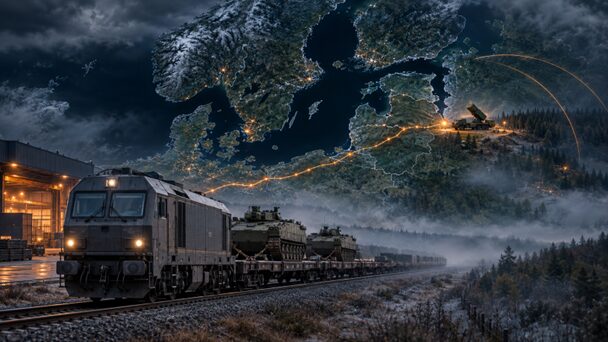
Russian Army Clears Eastern Bank of Oskol Near Kupyansk  

9 October 2026 at 21:47

Click to see full-size image. (Russian Ministry of Defense)

In the Slavyansk direction, Ukrainian units in small groups are attempting to break through to the river near Yampol and slip into the Serebryansky forestry, while the situation in Krivaya Luka has been somewhat stabilised. In the Dobropolye direction, units of the 51st Army are developing the offensive in three parts of the town at once; Russian forces are advancing on a broad front along the Vesyoloye–Novotroitskoye line toward Andreyevka and are attempting to cut the Ukrainian grouping in Dobropolye into two parts. In the Sumy direction, assault units of the “North” grouping continue to advance deeper into the region with heavy fighting. In the Kharkiv direction, Russian units continue the destruction of the encircled forces in the northeast of the region; an attempt to break the encirclement ring by forces of the 475th Assault Regiment on “Kazak” armored vehicles has been repelled. In the Kupyansk direction, Russian troops have stabilized the situation north of Kupyansk; control over Kupyansk-Uzlovoy is reported to have been established, and clearing of the territory and evacuation of local residents are under way. NATO and the EU are unsuccessfully attempting to persuade Greece and Spain to transfer to Ukraine PAC-2 interceptors with expiring service life.

Slavyansk direction  

Ukrainian units in small groups continue to break through to the river near Yampol; attempts to slip into the Serebryansky forestry are also recorded. The situation in Krivaya Luka has been somewhat stabilized. The eastern part of the village remains under Russian units, while the western part is a grey zone. Ukrainian units have not abandoned attempts to reach this village and from there further toward Kaleniki. However, given the complicated situation above the Seversky Donets River, the threat of a flanking strike against Russian positions remains, and the overall situation on the sector remains difficult.

Positional fighting is under way on the western outskirts of Rai-Aleksandrovka. Inside the village itself the situation is unchanged: new groups of Ukrainian units are being destroyed, yet several groups managed to slip in and dig in within the settlement. Fighting for Piskunovka continues. Approximately half of the village is under Russian units. Ukrainian units are counterattacking near Vasyutinskoye. Russian units thwarted an attempt by groups of Ukrainian units to enter the rear from the direction of Minkovka. They advanced westward, expanding the zone of control from Novomarkovo.

The Slavyansk direction remains tense: Ukrainian units in small groups are attempting to break through to the river near Yampol and slip into the Serebryansky forestry. The situation in Krivaya Luka has been stabilized — the eastern part of the village is under the control of Russian units. In the Krasny Liman direction Russian fighters are holding back the pressure along the Zherebets River.  

Dobropolye direction  

In Dobropolye units of the 51st Army are developing the offensive in three parts of the town at once. Drone operators are working against the territory of the Dobropolskaya mine. At the same time Russian forces continue to advance on a broad front along the Vesyoloye–Novotroitskoye line toward Andreyevka. From the south-east to the borders of Andreyevka approximately one kilometer remains.

In the area of Dobropolye Russian units are conducting a successful assault. The Ukrainian grouping has been taken into encirclement and is being cut into two parts. A fairly large amount of urban territory has already been captured. Ukrainian units are still present in the other half. The advance continues. Russian units have entered the central part of Dobropolye from the north-east and south-west. South of the town fighting is under way near Belitskoye, Svetloye and Krasnopodolye. The zone of control is expanding near Zolotoy Kolodets.

Ukrainian units are desperately attempting to break the encirclement ring through the north, via Novovodyanoye. They are attacking in the direction of Dobropolye. So far they have not succeeded. In Novovodyanoye, despite Ukrainian claims of full control, Russian positions exist. It is a layered situation. Stubborn fighting continues on the Zolotoy Kolodets line. An attack from two sides toward the Dobropolye cauldron is under way — through Novovodyanoye and through Zolotoy Kolodets toward Rubezhnoye.  

Sumy direction  

Assault units of the “North” grouping continue to advance deeper into the Sumy region with heavy fighting, supported by aviation and strike-drone crews. Ukrainian units have taken no active actions and are replenishing mechanized units with new recruits. Recruits trained as artillerymen have arrived from training grounds in the Sumy region. All of them, however, were sent into the infantry because of the catastrophic shortage of personnel on the positions.

In the Sumy direction Russian troops have officially announced the capture of Kiyanitsa. Previous gains here — Mogritsa, Malaya Rybitsa — according to some data were not always confirmed. Troops are nevertheless attempting to advance virtually along the entire line of contact. In Shostka district, assault groups of Russian units have advanced near Korenok.  

Kharkiv direction  

Russian units continue the destruction of the encircled Ukrainian forces in the northeast of Kharkiv region. Ukrainian units have not abandoned attempts to break the encirclement ring from the outside. In the Liptsy direction Russian assault troops continue to advance near Tokarevka.

In the Volchansk and Veliky Burluk directions Ukrainian units made an attempt to break the encirclement from the outside with two assault groups of the 475th Separate Assault Regiment on “Kazak” armored fighting vehicles from the area of Veliky Burluk. They achieved no success and withdrew to their starting positions with losses. In the northern part of Kharkiv region very complicated fighting is under way. Both sides are attempting to attack. Russian troops are trying to finish clearing the cauldron near Varvarovka and Reznikovka. Ukrainian units are attempting to break through there with forces of the 475th Assault Regiment in order to relieve their own forces. There is hope of finishing this cauldron and stabilizing the front. Then, relying on it, to move toward Bolshoy Burluk — already in the late-autumn or winter campaign.  

Kupyansk direction  

In the zone of the “West” grouping the triumphant statements from the Kyiv side have ended. The situation for Ukrainian units is becoming worse. Russian units are gradually arriving — in addition to drone operators, infantry. It will be possible to capture part of the positions that were previously lost, including in Liman, where units continue to fight in the southern and central parts of the city.

In the Kupyansk direction Russian troops have stabilized the situation north of Kupyansk. Near Dvurechnaya Ukrainian units, despite the commitment of reserves, have achieved no success. Russian units are gradually finishing the clearance of Ukrainian positions on the eastern bank of the Oskol south of Kupyansk. Reports are arriving from the Kupyansk front of the establishment of control over Kupyansk-Uzlovoy.

Clearing of the territory and evacuation of local residents are now under way. Fighting continues for positions and communications along the Oskol. On the left bank of Kupyansk clashes persist near Kovsharovka and Kupyansk-Uzlovoy. Positional fighting also continues inside Kupyansk itself. Russian units have advanced up to two kilometers and captured new positions on the southern approaches to the Zarechnaya part of the city.  

Conclusion  

In the Slavyansk direction this is expressed in the stabilization of Krivaya Luka and fighting for Piskunovka while the threat of a flanking strike remains. In the Dobropolye direction — in consolidation in the central part of the town and attempts to cut the encircled grouping. In the Sumy direction — in advance near Kiyanitsa and Korenok. In the Kharkiv direction — in the final clearance of the cauldron near Varvarovka and Reznikovka. In the Kupyansk direction — in the stabilization of the front and the establishment of control over Kupyansk-Uzlovoy. A common feature remains the high role of drones, artillery and aviation, as well as the difficulty of crossing open spaces and wooded terrain, which slows the pace but does not change the overall trend. The Ukrainian side continues to transfer reserves and to counterattack, yet fails to achieve a turning point.

NATO and the EU are unsuccessfully attempting to persuade Greece and Spain to transfer to Ukraine their stocks of PAC-2 interceptors with expiring service life, the Telegraph reported. “NATO and EU officials are trying to persuade Greece and Spain to hand over Patriot PAC-2 interceptors whose service life is expiring to Ukraine,” the publication stated. However, as is clarified, Athens and Madrid are refusing to provide the interceptors. According to the newspaper, Greece has at least 200 PAC-2 missiles with expiring service life. The number of such interceptors held by Spain is unknown, although earlier this year it had promised to transfer missiles to Kyiv.  

_______________________________________________________________________________________________________________________

SouthFront: Analysis and Intelligence

NOW hosted at southfront.press

Previously, SouthFront: Analysis and Intelligence was at southfront.org.

The .org domain name had been blocked by the US (NATO) (https://southfront.press/southfront-org-blocked-by-u-s-controlled-global-internet-supervisor/) globally, outlawed and without any explanation

Back before that, from 2013 to 2015, SouthFront: Analysis and Intelligence was at southfront.com

SOUTHFRONT.PRESS

MORE ON THIS TOPIC:

The post Russian Army Clears Eastern Bank of Oskol Near Kupyansk   appeared first on South Front.
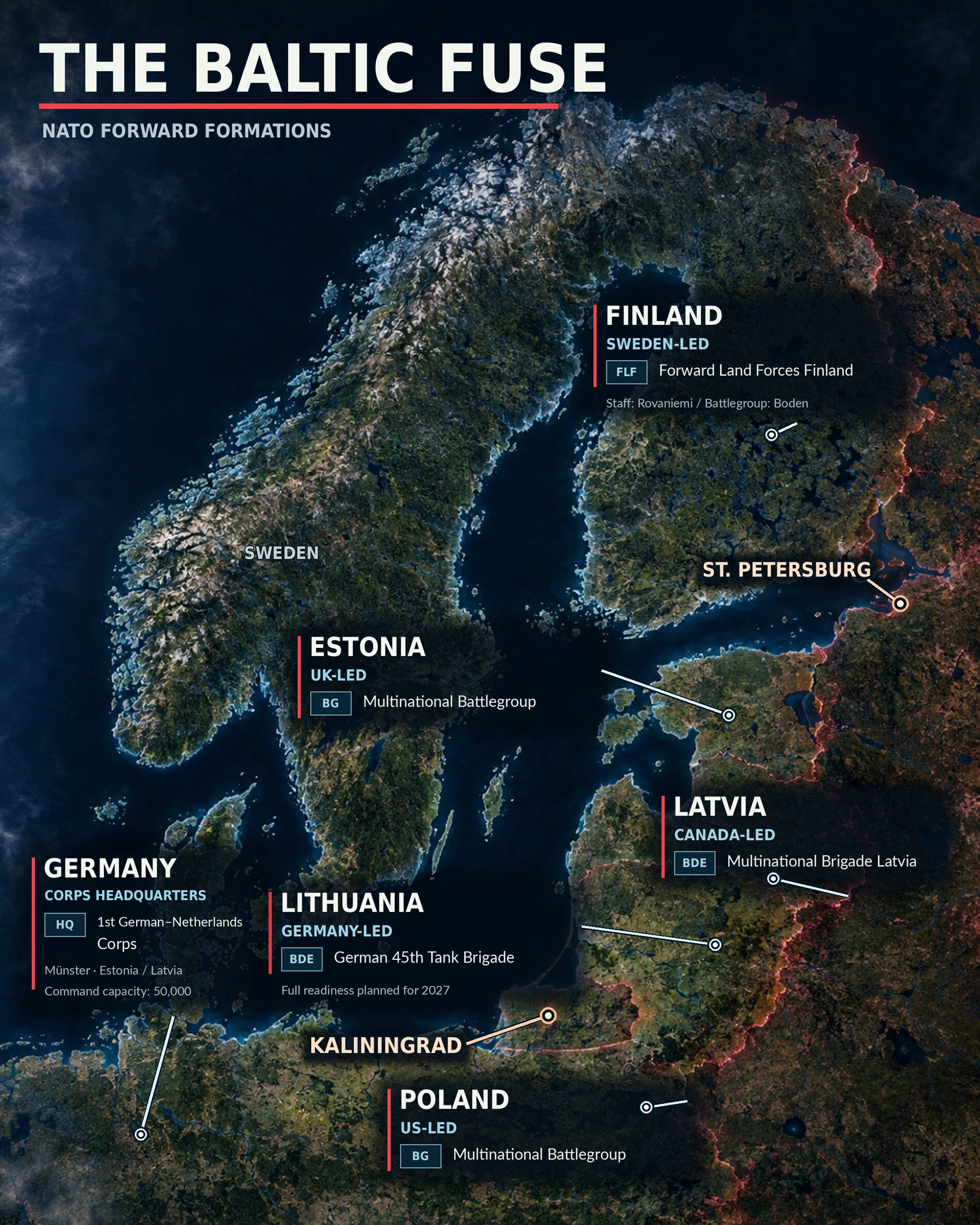
Ukrainian Troops Flee Dobropolye

8 October 2026 at 21:25

File image.

In the Dobropolye direction, Russian assault groups have consolidated in the southern part of the town, infiltrating from the direction of the village of Dobropolye and Annivka, while Ukrainian units acknowledge fighting within the city limits. In the Sumy direction, Russian units of the “North” grouping have advanced 400 meters through tree lines near Kiyanitsa and Khoten and are fighting in the forest tract near Korenok. In the Kharkiv direction, Russian assault groups are expanding the zone of control with heavy fighting; they have taken Beryozki, Potikhonovo, Komarovo, the farms near Shabelnoye and the greater part of Malaya Volchya, and have advanced near Olkhovatka. In the Zaporozhye direction, Russian troops are advancing in the areas of Yegorovka and Krasny Rodnik; Lyubitskoye and Novosoloshino are returning under control, and fighting continues for Orekhov. U.S. special envoy Steve Witkoff and Jared Kushner will meet Ukrainian officials on Friday to discuss a new proposal for ending the conflict.

Dobropolye direction  

Movement of small groups of Russian units has been recorded in the southern and eastern parts of the town. Russian units are infiltrating the town both from the direction of the village of Dobropolye and from neighbouring Annivka. Further south, fighting continues in the Krasnopodolye–Chernigovka–Vodyanskoye triangle. On the southern flank, as before, local clashes are under way in the vicinity of Mirnoye and Gulevo. In the vicinity of Sergeyevka and Molodetskoye the situation has remained relatively static for the past several months.

While Ukrainian formations are distracted by fighting in Alekseyevo-Druzhkovka and near Liman, Russian units are seizing the moment and attempting to consolidate in the center of Dobropolye as quickly as possible. This will make it possible to form the base of a “pincer” for a broader envelopment of the Slavyansk–Kramatorsk agglomeration from the west. Without stabilization of the situation on the northern flank, however, actions in Dobropolye are virtually meaningless.

Marines have entered Dobropolye, where they are fighting in the center of the town and expanding control of the territory. From the direction of Maloye Dobropolye paratroopers are advancing toward Svyatogorovka; an offensive is also under way toward the south of the town of Dobropolye. In the area of Verovka and Raksha Russian troops have managed to advance along the gully. Further north, near Zolotoy Kolodets, fighters of Russian units are delivering fire against positions and groups of Ukrainian forces near the village of Novovodyanoye. Consolidation groups also continue to clear the territory from the mine near Belitskoye as far as Matyashevo, where the Ukrainian side still has scattered groups serving as observation posts.  

Sumy direction  

Russian units of the “North” grouping are increasing the intensity of strikes against Ukrainian positions on all sectors in Sumy direction, supporting the advance of assault groups. The Ukrainian side is actively strengthening defenses on secondary lines.

In Sumy district Russian assault troops have advanced through tree lines near Kiyanitsa and Khoten. Overall progress reached up to 400 meters. In Shostka district, assault groups of Russian units are conducting small-arms fighting in the forest tract near Korenok. The Russian army is advancing near the border with the Kursk region. The offensive is under way near the Sumy village of Korenok. Assault units of the “North” grouping are also fighting near Kiyanitsa and Khoten. In connection with the successes of Russian units, Kyiv is forced to transfer additional forces to the Sumy region.  

Kharkiv direction  

In the Liptsy direction fierce fighting is under way near Tokarevka. In the Volchansk and Veliky Burluk directions Russian units continue the destruction of the encircled Ukrainian forces in the “Volchansk cauldron,” employing all available means of fire. Russian assault troops have advanced near Nefyodovka, Sosnovy Bor, Reznikovo and Kupino. From the outer side of the encirclement there is progress near Annopolye.

Over the past week Russian units have noticeably advanced near Olkhovatka and have continued to consolidate and expand control in the cauldron north of Veliky Burluk. The Ukrainian side is counterattacking unsuccessfully and attempting to break out. Russian drones are effectively disrupting the logistics of Ukrainian forces near Veliky Burluk, destroying equipment and personnel. From the south and east Russian units have taken control of Beryozki, Potikhonovo and Komarovo, and from the north they have taken the farms near Shabelnoye and the greater part of Malaya Volchya.

In the area of Volchansk the situation remains dynamic. The Ukrainian side made an attempt at a counterattack and managed to enter Grafskoye. Ukrainian units do not have full control of the village: intensive fighting is currently under way in part of the settlement, and sabotage and reconnaissance groups are actively operating on both sides. Russian units are slowly but steadily shifting the front southward near Kazachya Lopan. Having taken Novaya Kazachya, Russian units are clearing the village. In addition, fighting continues near Turovo and inside Tokarevka, where Russian fighters have consolidated part of the territory. 

Zaporozhye direction  

In the Orekhov direction difficulties are mounting for the Ukrainian side. The 35th Army continues to advance near Yegorovka and Krasny Rodnik. The 5th Army is also restoring the situation. Without supply, Vozdvizhevka may soon be fully captured.

Lyubitskoye and Novosoloshino are returning under the control of Russian units. Fighting is still under way for the latter; the Ukrainian side is attempting to counterattack, but overall the crisis in this sector has been overcome. There are also successes south of Lyubitskoye, in the zone of the 5th Army. Fighting for Orekhov itself is proceeding methodically. Ukrainian units are gradually being driven out of the northern and western parts of the city. Russian units are already overhanging Orekhov not only from the north-east but also from the north. All the preconditions exist for the 5th Army to enter the rear of the Ukrainian defensive line.

A little further west, also in the “Dnepr” zone, an offensive is under way on a broad front. Fighting is being conducted for Primorskoye and the northern outskirts of Stepnogorsk. Clearing operations are under way in Lukyanovka, Novoyakovlevka and Yurkovka. The task is clear: in parallel with the capturing of Orekhov, to reach the Konka River in its lower course and attempt to secure bridgeheads on the northern bank while the foliage still provides cover.  

Conclusion  

In the Dobropolye direction this is expressed in consolidation in the southern part of the town and attempts to form a base for the envelopment of the agglomeration from the west. In the Sumy direction — in advances through forest tracts and pressure on the defenses near Kiyanitsa and Khoten. In the Kharkiv direction — in the expansion of the zone of control and the tightening of the ring around the “Volchansk cauldron.” In the Zaporozhye direction — in the envelopment of Orekhov and the advance to the Konka River. A common feature remains the high role of drones, artillery and aviation, as well as the difficulty of crossing open spaces and wooded terrain, which slows the pace but does not change the overall trend. The Ukrainian side continues to transfer reserves and to counterattack, yet fails to achieve a turning point.

U.S. special envoy Steve Witkoff and the president’s son-in-law Jared Kushner will meet Ukrainian representatives on Friday to discuss a new proposal for ending the Ukrainian conflict. According to NewsNation journalist Kellie Meyer, the U.S. special envoys will discuss “a new comprehensive proposal covering all aspects of the conflict and aimed at ending the war.” National security advisers from the United Kingdom, France and Germany, as well as representatives of the European Union and NATO, will take part in the meeting.  

_______________________________________________________________________________________________________________________

SouthFront: Analysis and Intelligence

NOW hosted at southfront.press

Previously, SouthFront: Analysis and Intelligence was at southfront.org.

The .org domain name had been blocked by the US (NATO) (https://southfront.press/southfront-org-blocked-by-u-s-controlled-global-internet-supervisor/) globally, outlawed and without any explanation

Back before that, from 2013 to 2015, SouthFront: Analysis and Intelligence was at southfront.com

SOUTHFRONT.PRESS

MORE ON THIS TOPIC:

The post Ukrainian Troops Flee Dobropolye appeared first on South Front.
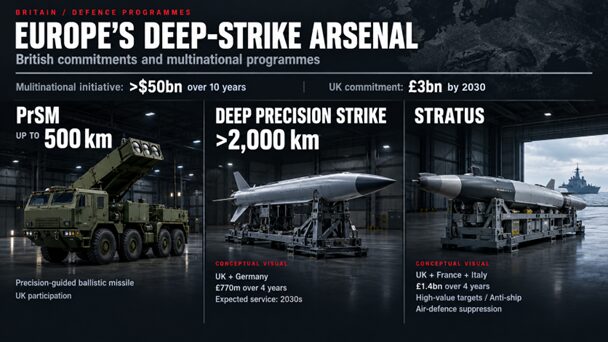
Blitzkrieg or Protracted Siege? What Polymarket Says About the Fall of Ukrainian Cities in Autumn 2026

8 October 2026 at 16:56

Click to see the full-size image

Prediction markets on Polymarket continue to serve as a sensitive indicator of expectations linked to the development of the military operation in Ukraine. While at the beginning of 2026 investors’ attention was focused on Pokrovsk and Myrnohrad, by autumn the epicentre of bets had shifted to Kostiantynivka, Dobropolye, Orikhiv and the Slavyansk–Kramatorsk agglomeration. Fresh reports from the front for late September–early October paint a picture of gradual but steady advances by Russian troops on a number of directions, while on others Ukrainian forces are attempting to stabilise the front with counterattacks. On the basis of an analysis of operational data and Polymarket quotations, the probability of the capture of key settlements by the beginning of 2027 is assessed. Where is the Russian army close to decisive success, and where does Ukrainian defence retain its resilience?

Kostiantynivka 

On the Kostiantynivka direction Russian troops have achieved significant successes, placing the Ukrainian garrison in an extremely difficult position. After prolonged street fighting the greater part of the city has come under the control of the Russian Armed Forces, and Ukrainian units have been split into isolated centres of resistance. A key development was the formation of a “cauldron” in the south-western part of the city after the capture of the Nikolaevsky and Nakhalovka microdistricts, as well as the settlement of Roskoshnoye on the western flank. Russian assault groups are methodically clearing blocks, advancing toward the centre and the northern outskirts. Ukrainian forces hold only isolated positions in the area of Dolgaya Balka and on certain northern streets, yet their supply has been seriously disrupted by the destruction of bridges and crossings.

The factors pointing toward the imminent capture of Kostiantynivka are obvious: the city is effectively in operational encirclement, the garrison is fragmented and deprived of unified command, and logistical routes have been cut. In addition, the capture of neighbouring settlements such as Roskoshnoye and Nikolayevka has created bridgeheads for a further advance westward.

Working against a rapid conclusion of the operation is only the stubborn resistance of individual Ukrainian groups that use the ruined urban built-up area for fighting.

Click to see the full-size image

Dobropolye 

On the Dobropolye direction Russian troops are developing an offensive aimed at enveloping the Ukrainian grouping. Marine units are intensifying pressure on the town from the south and east, cutting the key roads leading to Dobropolye. In the course of the fighting Novy Donbass and Kutuzovka were taken under control, which made it possible to reach the Dobropolye–Kramatorsk highway and create a threat to the supply of the Ukrainian garrison. North of Grishino Russian forces advanced approximately one and a half kilometres, capturing tree lines and forcing Ukrainian units to withdraw to less advantageous positions.

Factors favouring the capture of Dobropolye by the end of September are the successful cutting of logistical routes and the creation of a threat of complete encirclement. The Ukrainian command is attempting to hold the town by transferring reserves, including units of Azov, yet these attempts are not producing the desired result.

Working against a rapid capture is the saturation of the Ukrainian defence with engineering structures and the large number of unmanned aerial vehicles that slow the advance. Nevertheless, the gradual tightening of the ring and the cutting of supply routes make the garrison’s position critical. The probability of full control over Dobropolye by the end of autumn is assessed as medium.

Click to see the full-size image

Orikhiv 

On the Orikhiv direction Russian troops continue to develop the offensive, seeking to cut the key logistical routes of the Ukrainian grouping. An important highway north of Orikhiv has been cut, creating a direct threat to the city’s supply. Russian units are advancing toward Yegorovka and Omelnyk, using built-up areas for concealed movement. Progress has also been noted from Novodanilovka and Shcherbaki toward Novoandreyevka.

Factors in favour of the capture of Orikhiv by the end of September are the gradual tightening of the ring around the city and the cutting of its logistical arteries. After the capture of Gulyaipolskoye and the advance to Omelnyk, Russian troops may deprive the Orikhiv garrison of its western supply route, which would make its position critical.

Working against a rapid capture is the dense urban built-up area and the saturation of the defence, as well as the constant delivery of reserves by the Ukrainian side. Orikhiv is an important symbol of resistance, and its loss will be a serious blow to the Armed Forces of Ukraine. Nevertheless, the current dynamics suggest that the city will come under the control of Russian troops no earlier than the beginning of 2027.

Click to see the full-size image

Alekseyevo-Druzhkovka 

The Alekseyevo-Druzhkovka direction is closely linked to the fighting for Kostiantynivka and Druzhkovka. Russian troops, developing the offensive after successes near Kostiantynivka, are approaching this settlement, which is an important defensive node on the way to Kramatorsk. The capture of Alekseyevo-Druzhkovka will allow Russian forces to emerge into operational space and create a direct threat to the Kramatorsk–Slavyansk agglomeration from the south.

Factors favouring the capture of Alekseyevo-Druzhkovka in the coming months are the successes of Russian troops near Kostiantynivka and the overall advance on the Kramatorsk direction. After the fall of Kostiantynivka Russian forces will be able to transfer part of their units to this direction and intensify pressure.

Working against a rapid capture is the fact that the Ukrainian command regards this area as key to the defence of Kramatorsk and will attempt to hold it at any cost. Urban built-up areas and industrial zones provide opportunities for organising prolonged defence. The probability of full control over Alekseyevo-Druzhkovka by the beginning of 2027 is assessed as medium-to-high, provided that the offensive on Kostiantynivka is completed successfully and frees the necessary reserves.

Click to see the full-size image

Stepnogorsk 

The situation in the area of Stepnogorsk remains tense. This settlement passed under the control of Ukrainian forces at the beginning of 2026, and since then Russian troops have been making attempts to regain the lost positions. So far, however, they have not achieved success. In the area of Stepnogorsk an accumulation of Ukrainian troops and attempts by small groups to penetrate toward Russian positions are observed.

Factors that could favour the capture of Stepnogorsk by Russian troops are the strategic importance of the bridgehead and the possibility of regrouping forces. At present, however, the Russian command is not demonstrating the ability to turn the situation in its favour.

Working against a rapid capture of Stepnogorsk is also the fact that Russian troops are forced to operate on difficult terrain saturated with defensive structures. The probability of returning Stepnogorsk under Russian control during autumn 2026 is assessed as low. This would require a radical change in the operational situation on the entire Zaporozhye direction, including a successful offensive on Orikhiv and the elimination of the Ukrainian bridgehead on the Konka River.

Click to see the full-size image

Krasny Liman 

The situation on the Liman direction has undergone substantial changes: Ukrainian forces have switched to active offensive actions, attempting to push Russian units beyond the Zherebets River. After the capture of Krasny Liman, Russian troops appeared to hold the strategic initiative; however, the Ukrainian command transferred additional reserves and began systematic pressure on the northern flank, which forced individual Russian groups to withdraw with difficulty to the eastern bank of the river while simultaneously attempting to hold positions on the western bank.

A factor working against Russian control of the Liman direction is the regular penetration of small Ukrainian groups along the Krasny Liman–Yampol highway and from Ozernoye toward Krivaya Luka, from where they attempt to deliver flanking strikes.

Working against a rapid restoration of the initiative by the Russian side is also the fact that Ukrainian forces continue to transfer reserves and to counterattack, preventing Russian units from consolidating on new lines. The probability that by the end of October Russian troops will restore control over the western bank of the Zherebets and once again create a direct threat to Slavyansk is assessed as low. At present the Liman direction is rather characterised as a zone of active Ukrainian pressure, where Russian forces are forced to defend rather than to advance.

Click to see the full-size image

Conclusion 

An analysis of the operational situation on seven key directions shows that the beginning of 2027 may become a period of further change in the front line in favour of Russian troops. Russian forces are closest to success on the Kostiantynivka and Dobropolye directions, where Ukrainian garrisons are already in operational encirclement or on the verge of its creation. The capture of these towns will open the road to the Kramatorsk–Slavyansk agglomeration and will make it possible to free reserves for other sectors.

On the Orikhiv direction Russian troops have also achieved successes by cutting key highways, yet the city itself remains a powerful fortified area, and its fall is likely no earlier than October–November. Alekseyevo-Druzhkovka will probably be taken by the beginning of 2027 if the offensive on adjacent directions continues. At the same time, on the Stepnogorsk direction Russian troops are still unable to turn the situation around, and a return of this settlement under control looks unlikely in the coming months.

Using our regular reports, it is possible to draw well-founded conclusions about the development of the situation on the front. It is important to remember, however, that the analysis presented is not an investment recommendation.


MORE ON THE TOPIC:

The post Blitzkrieg or Protracted Siege? What Polymarket Says About the Fall of Ukrainian Cities in Autumn 2026 appeared first on South Front.
Russian Army Presses Toward Dobropolye From South

6 October 2026 at 22:15

File image.

In the Slavyansk direction, Russian units are holding the line along the Zherebets River, repelling attempts by Ukrainian groups to infiltrate the eastern bank; the most difficult situation remains in Krasny Liman. In the Dobropolye direction, tactical successes by Russian units on the Sergeyevka–Grishino line are confirmed; fighting continues in the vicinity of the village of Dobropolye and near Zolotoy Kolodets. In the Sumy direction, Russian assault groups are advancing through tree lines north of Sumy and near Kiyanitsa. In the Kharkiv direction, Russian units continue to advance deeper into the “Volchansk cauldron,” have taken new positions near Bugayevka and Tokarevka, and have repelled a counterattack near Kurgannoye. Meanwhile, Sweden will deploy a Patriot air-defense system in Poland to strengthen NATO’s eastern flank.

Slavyansk direction  

Russian fighters are holding back the pressure of Ukrainian units along the Zherebets River, preventing any significant forces from breaking across it. Reports of attempts by sabotage and reconnaissance groups to infiltrate the eastern bank continue to appear. The Ukrainian side has not abandoned attempts to enter Yampolovka from the direction of Kolodezi, as well as to cross near Novolyubovka.

Ukrainian units are gradually increasing their presence in the forests west of Zarechnoye, continually bringing in new infantry groups despite high losses from Russian drone and artillery strikes. Fighting continues on the outskirts of Zarechnoye itself. In Krasny Liman the situation remains difficult. Russian fighters still retain the approaches to the city through the forest tract, yet cannot consolidate there. The Ukrainian side holds numerical superiority as well as an advantage in drones, of which there are a great many here.

In the area of Dibrova and Ozernoye Ukrainian units have accumulated considerable reserves. Russian fighters are systematically destroying drone control points west of Ozernoye. With these drones the Ukrainian side is affecting not only the zone of responsibility of the “West” grouping near Yampol, but is also attempting to disrupt the supply of Russian troops from the “South” grouping, which are conducting heavy defensive fighting in the vicinity of Rai-Aleksandrovka and attempting to retain the bridgehead beyond the Seversky Donets–Donbass canal.  

Dobropolye direction  

On the southern flank earlier reports of tactical successes by Russian units on the Sergeyevka–Grishino line are confirmed. The situation here remains tense; further advance is complicated by the abundance of drones on the Ukrainian side.

Clashes also continue in the vicinity of the village of Dobropolye, located south of the town of the same name. Russian fighters are advancing westward along the Vodyanaya River, attempting to reach Novofyodorovka and further toward Krivorozhye in order to expand the potential envelopment of Dobropolye. Strikes by aviation and artillery continue against the town itself. On the southern outskirts Russian assault troops are operating; on the northern outskirts high-explosive aerial bombs with a universal planning and correction module are being employed. Ukrainian units are attempting to build up forces in the vicinity of the town.

In the area of Zolotoy Kolodets the situation remains tense. There the Ukrainian side is conducting local counterattacks. At the same time, on this line several settlements, including Zolotoy Kolodets itself and neighboring ones, were not under stable control of Russian units — only several infiltration groups were operating there. In the north of the Dobropolye direction a fairly extensive “grey zone” remains, in which fighting continues. 

Sumy direction  

The most active combat operations are unfolding near the forest tract north of Sumy. Russian units of the “North” grouping are advancing through the tree lines with artillery support. The Ukrainian side has taken no active actions and is sitting on the defensive.

Russian aviation, artillery and drone crews struck concentrations of personnel and equipment of Ukrainian units in the areas of Kiyanitsa, Gruzskoye, Gnilitsa, Krolevets, Uralovo, Pustogorod, Turya and Volnoye. In the Sumy district, assault groups of Russian units advanced 200 metres near Kiyanitsa. In Shostka district Russian assault troops were clearing tree lines near previously captured settlements.

In the Glukhov direction the Russian army continued to hold positions in Ulanovo while simultaneously attempting to strengthen its presence in Tolstodubovo. Activity is also maintained in the near rear. Ukrainian authorities recorded strikes against the Glukhov community and Shostka district.  

Kharkiv direction  

Assault units of the “North” grouping continue a confident advance deeper into the “Volchansk cauldron,” as well as on other sectors of the front. The Ukrainian side is forced to withdraw to more advantageous defensive lines.

In the Kharkiv sector Russian units have taken new positions in the area of the villages of Bugayevka and Tokarevka and are advancing near Novaya Kazachya. On the eastern sector of the front the cauldron is being cleared. According to operational data, an attempt at a counterattack by Ukrainian units from the direction of the village of Kurgannoye was repelled. Fighting continues near Prikolotnoye and Maly Burluk.

In the Liptsy direction Russian troops advanced near Tokarevka and captured several Ukrainian strongpoints. In the Volchansk and Veliky Burluk directions, assault units of Russian troops advanced near Prikolotnoye, Kotovka, Varvarovka, Reznikovo, Nikolayevka and Annopolye.

The Ukrainian side made another unsuccessful attempt to break the encirclement ring from the area of Kurgannoye with forces of the 475th Separate Assault Regiment. As a result of comprehensive fire strikes more than half of the assault group was destroyed. From the northern side Russian troops established control over the greater part of Malaya Volchya and took the farms near Shabelnoye.  

Conclusion  

In the Slavyansk direction this is expressed in the holding of the line along the Zherebets and heavy fighting in the forest tracts. In the Dobropolye direction — in tactical successes on the southern flank and pressure on the town from several sides. In the Sumy direction — it advances through tree lines north of the regional center. In the Kharkiv direction — in the tightening of the ring around the “Volchansk cauldron” and the occupation of new positions. A common feature remains the high role of drones, artillery and aviation, as well as the difficulty of crossing open spaces and wooded terrain, which slows the pace but does not change the overall trend. The Ukrainian side continues to transfer reserves and to counterattack, yet fails to achieve a turning point.

Sweden will deploy a Patriot air-defense system in Poland to strengthen the protection of NATO’s eastern flank, the kingdom’s armed forces reported. “Sweden will deploy a Patriot air-defense system in Poland to strengthen the protection of NATO’s eastern flank,” the statement says. It is clarified that approximately 100 servicemen will also be sent to Poland. The tasks of the Swedish forces will include the protection of a logistics center used for the delivery of military assistance to Ukraine. Earlier the armed forces reported that Sweden would send Gripen fighters to Poland for two months to participate in the NATO air-policing mission, including for the protection of the logistics center.  

_______________________________________________________________________________________________________________________

SouthFront: Analysis and Intelligence

NOW hosted at southfront.press

Previously, SouthFront: Analysis and Intelligence was at southfront.org.

The .org domain name had been blocked by the US (NATO) (https://southfront.press/southfront-org-blocked-by-u-s-controlled-global-internet-supervisor/) globally, outlawed and without any explanation

Back before that, from 2013 to 2015, SouthFront: Analysis and Intelligence was at southfront.com

SOUTHFRONT.PRESS

MORE ON THIS TOPIC:


The post Russian Army Presses Toward Dobropolye From South appeared first on South Front.
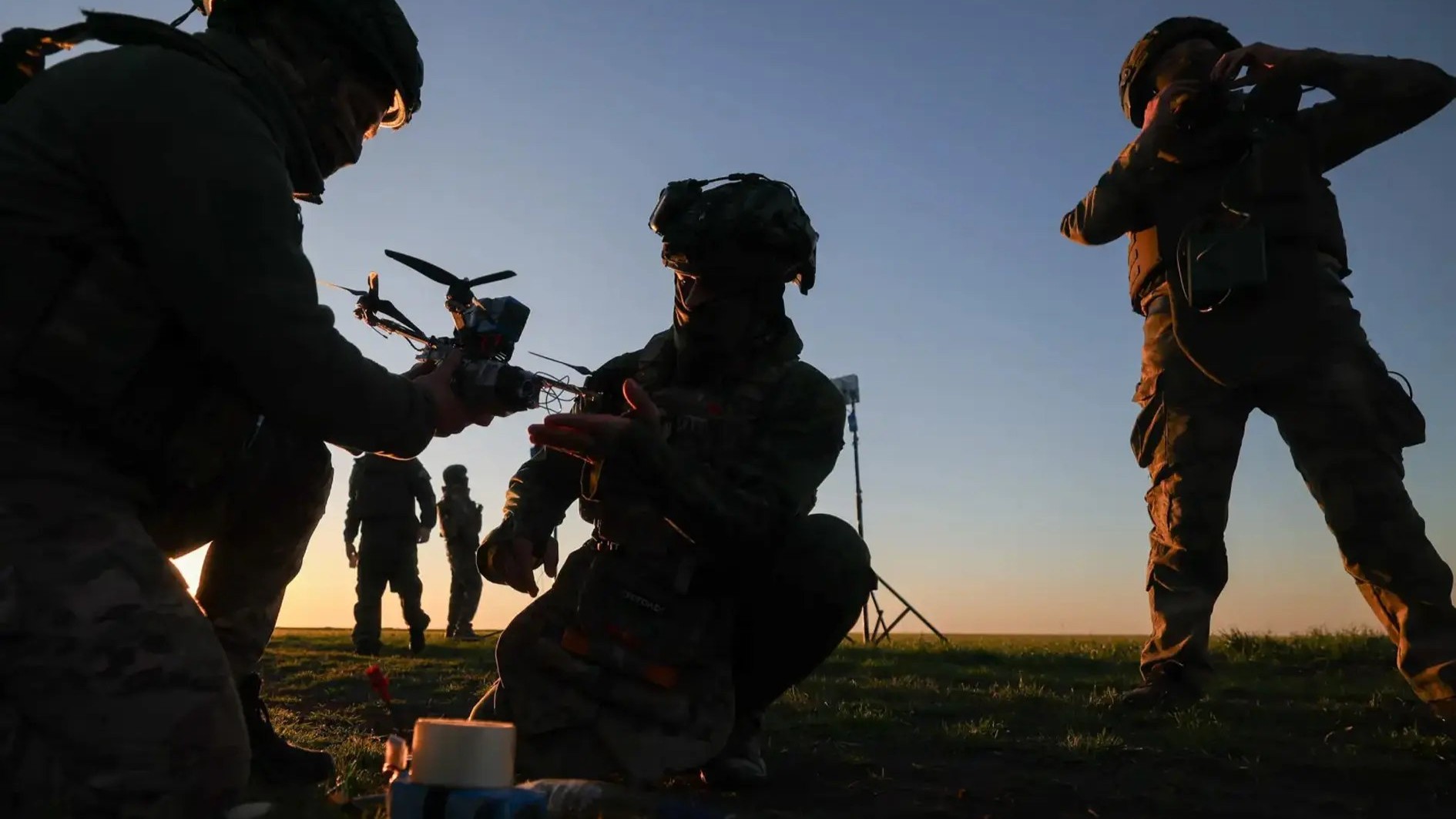
Ukrainian Forces Attempt Infiltrations Into Slavyansk–Kramatorsk Forests

5 October 2026 at 20:12

Click to see full-size image. (Russian Ministry of Defense)

In the Zaporozhye direction, Russian units of the “East” and “Dnepr” groupings are fighting near Novopavlovka, Yalta, Komar and Omelnyk, while the 58th Army is advancing in the central part of Orekhov. In the Slavyansk direction, heavy protracted fighting continues: Ukrainian units are employing infiltration and accumulation tactics, operating in groups from Karpovka, Glushchenkovo and Novy Mir toward Novomikhaylovka, Katerinovka and Ivanovka. In the Sumy direction, assault units of the “North” grouping are pressing the defenses, advancing near Kiyanitsa and Khoten, while Ukrainian units are transferring new drone crews and attacking civilian objects. In the Kharkiv direction, Russian assault groups are enveloping centers of resistance inside the “Volchansk cauldron”, delivering precision strikes against identified concentrations and advancing near Kotovka, Varvarovka, Reznikovo, Kupino and Annopolye. Meanwhile, BSW party leader Sahra Wagenknecht called on German Chancellor Friedrich Merz to resign after his visit to Kyiv and promised to allocate one billion euros to Ukraine.

Zaporozhye direction  

Fierce fighting for the village and its outskirts is under way near Novopavlovka: Ukrainian units are again exerting pressure and attempting to regain lost positions. Near Yalta Ukrainian forces are also continuing attempts to penetrate and consolidate in the village.

Russian units continue to hold Komar and repel attacks. Ukrainian forces are concentrating in Mirnoye and Poddubnoye, attempting to transfer groups to the other bank and consolidate. Fierce fighting continues near Omelnyk, which is one of the key logistics points for Ukrainian units.

On the Orekhov direction units of the 58th Army continue to advance in the central part of Orekhov. Earlier assault groups of the 70th Guards Motor Rifle Regiment advanced into Ukrainian defenses and captured prisoners from a covering group left near underground tunnels. Fighting continues on the approaches to Omelnyk and Preobrazhenka.

On the Stepnogorsk–Shcherbaki line Russian troops retain tactical progress. Paratroopers of the “Dnepr” grouping are developing the offensive toward Pavlovka and Lukyanovskoye. Fighting is shifting toward Stepnogorsk, where Ukrainian units are attempting to organize a defense with the use of FPV drones. A little further west, closer to the Dnieper, offensive fighting has resumed toward the lower reaches of the Konka River. Fighting is under way on the northern outskirts of Stepnogorsk. Russian troops have again entered Primorskoye and are attempting to take the southern part of the settlement. Attempts to consolidate beyond the southern outskirts of Lukyanovskoye continue. Fighting is also under way in Novoyakovlevka.  

Slavyansk direction  

From Karpovka, Glushchenkovo and Novy Mir Ukrainian units are sending groups toward Novomikhaylovka and Katerinovka with the aim of a further breakthrough to Novolyubovka. Groups of Ukrainian forces are attempting to accumulate in Novoye for a dash to Ivanovka. Previous attacks on Ivanovka were unsuccessful. This settlement is partially under the control of Russian units; the approaches to it are also held.

Ukrainian units are actively conducting attacks from the direction of Drobyshevo toward Stavki and Kolodezi. Despite high losses, the Ukrainian side continues to send its assault groups there daily. Serious pressure is being exerted on the fortifications located between Mirnoye and Ivanovka. The intention of Ukrainian units is clear: to finish off Kolodezi and approach Ivanovka both through the fortifications and from two sides.

Russian pilots and artillery are actively working against Ukrainian groups, preventing them from consolidating near Zarechnoye. Russian troops are operating in the forest tract near Krasny Liman, Maslyakovka and Dibrova. The search for and destruction of groups of Ukrainian units inside Krasny Liman itself continues uninterrupted. Strikes continue against Ukrainian logistics in the areas of Mayaki, Raigorodok, Shchurovo and the eastern part of Slavyansk.

The Zarechnoye–Torskoye–Yampol sector, approximately 10 km in length, is key to retaining the bridgehead beyond the Zherebets River. The main attention is focused on the defense of this stretch. Ukrainian units are actively advancing on this sector, including along the railway toward Yampol station. Russian units continue to offer resistance and prevent Ukrainian forces from reaching the river near Yampol and further toward the Serebryansky forestry.  

Sumy direction  

Assault units of the “North” grouping continue to press Ukrainian defenses in the Sumy region. The Ukrainian side is transferring new drone crews to replace those destroyed and is also attacking the civilian population of the border districts.

Russian aviation, artillery and drone crews struck concentrations of personnel and equipment of Ukrainian units in the areas of Sumy, Vakalovshchina, Shevchenkovo and Mironovka. In Sumy district, assault groups of Russian units are advancing near Kiyanitsa and Khoten. In Shostka district there are no significant changes. Drone crews of the “North” grouping intensively worked against the positions of the 104th Separate Territorial Defense Brigade of Ukrainian units.  

Kharkiv direction  

Assault units of the “North” grouping continue to envelop centers of resistance of Ukrainian forces inside the “Volchansk cauldron.” Aviation and drones are delivering precision strikes against identified concentrations. The Ukrainian side has taken no active actions.

A unit of mercenaries from Ecuador has arrived in Kharkiv. They will be employed for counterattacks in the area of Kazachya Lopan and Goptovka. In the Liptsy direction Russian assault troops are conducting small-arms fighting near Alisovka. In the Volchansk and Veliky Burluk directions Russian units have concentrated their main efforts on detecting and destroying Ukrainian drone crews. Assault units have advanced near Kotovka, Varvarovka, Reznikovo, Kupino and Annopolye.  

Conclusion  

In the Zaporozhye direction this is expressed in pressure on Novopavlovka, Yalta, Komar and Omelnyk, as well as in the advance in the central part of Orekhov. In the Slavyansk direction — in heavy meeting engagements in which Ukrainian units employ infiltration tactics while Russian forces hold the key stretch beyond the Zherebets River. In the Sumy direction — in the pressing of defences near Kiyanitsa and Khoten and work against drone crews. In the Kharkiv direction — in the envelopment of centers inside the “Volchansk cauldron” and precision strikes against concentrations. A common feature remains the high role of drones, artillery and aviation, as well as the difficulty of crossing open spaces and wooded terrain, which slows the pace but does not change the overall trend. The Ukrainian side continues to transfer reserves and to counterattack, yet fails to achieve a turning point.

The leader of the German party “Alliance for Social Justice and Reasonable Economics,” Sahra Wagenknecht, called for the resignation of German Chancellor Friedrich Merz because of his visit to Ukraine and the promise to allocate funds to Kyiv against the background of a crisis in Germany itself. Merz and German Economy Minister Katharina Reiche arrived in Kyiv on 4 October on an unannounced visit. During the trip the chancellor promised to allocate one billion euros in military support to Ukraine.

“While Germany is sinking ever deeper into an economic and energy crisis… Merz goes to Kyiv and once again promises Ukraine billion-euro assistance… I believe: anyone who wastes more and more money abroad and so tramples on the interests of his own population must resign immediately!” Wagenknecht wrote on her X social-media page.

The BSW leader pointed out that while Germany itself has to economies on pensions, care for the elderly and healthcare, funds for the corrupt government of Volodymyr Zelensky in Berlin apparently appear endless.

_______________________________________________________________________________________________________________________

SouthFront: Analysis and Intelligence

NOW hosted at southfront.press

Previously, SouthFront: Analysis and Intelligence was at southfront.org.

The .org domain name had been blocked by the US (NATO) (https://southfront.press/southfront-org-blocked-by-u-s-controlled-global-internet-supervisor/) globally, outlawed and without any explanation

Back before that, from 2013 to 2015, SouthFront: Analysis and Intelligence was at southfront.com

SOUTHFRONT.PRESS

MORE ON THIS TOPIC:

The post Ukrainian Forces Attempt Infiltrations Into Slavyansk–Kramatorsk Forests appeared first on South Front.
The Future of War: What the Battlefield Teaches and the Pentagon Wants to Buy

5 October 2026 at 19:11

Click to see the full-size image

Cheap drones, heavy bombs, disrupted shipping, and vulnerable supply routes are challenging the idea that technological superiority guarantees military success. The emerging contest is not simply over who builds the smartest weapon. It is over who can adapt, produce, and keep fighting after the enemy learns how to break it. Washington’s Project Meridian offers one answer. Recent battlefields suggest a much harder test.

The Battlefield Rewrites the Blueprint

The war in Ukraine shows that military innovation does not always mean more sophisticated weapons. Sometimes it means finding a simple way around an enemy’s defenses. Russian forces did that with drones guided through fiber-optic cables instead of radio signals, allowing them to operate despite radio jamming.

During the fighting to push Ukrainian troops out of Russia’s Kursk region, fiber-optic drones threatened the roads supplying Ukrainian positions. Sustained attacks on transport made those positions harder to supply, reinforce, and evacuate. Ground that remained defensible against a direct assault became increasingly difficult to hold as supply routes came under pressure.

Drones did not replace infantry or artillery. Their value came from linking reconnaissance and strikes to a broader effort to disrupt Ukrainian logistics. A relatively small change in drone guidance helped Russian forces put pressure on the supply lines sustaining the defense, rather than just individual vehicles or positions.


A separate example from eastern Ukraine shows how drone attacks can also threaten robotic supply vehicles


Nor did the advantage remain exclusive. Ukrainian units expanded their own fiber-optic capabilities, turning a Russian breakthrough into another round of adaptation. Cable guidance removes the vulnerable radio-control link, but introduces weight, handling, and physical constraints. It does not make the aircraft invisible or indestructible. A solution to one problem creates a different set of tradeoffs.

Russia’s glide bombs demonstrate another route to military innovation. Instead of replacing existing weapons entirely, guidance and wing kits give older bombs greater reach and precision. Their heavy payloads perform tasks that small drones cannot. Their use against Ukrainian positions illustrates why the future battlefield will contain both cheap electronics and large quantities of conventional explosives.

The broader lesson is uncomfortable for anyone selling a universal replacement for the old military. New systems do not arrive on an empty battlefield. They must work with existing aircraft, artillery, engineers, supply units, and command structures. Their value depends on how those parts fit together.

That also limits what strike videos can prove. A successful attack demonstrates an outcome, not the average success rate, the number of failed missions, or the effort required to repeat it. The decisive question is whether an army can turn occasional success into a dependable military capability.

The Cost of Keeping Routes Open

The Red Sea offers a different warning. An attacker does not necessarily have to defeat a navy to impose strategic costs.

Houthi attacks pushed shipping companies toward longer routes around Africa. By late summer 2026, traffic through the Suez Canal was recovering but remained well below pre-crisis levels. Houthi attacks had pushed shipping companies onto longer, more expensive routes, showing how a regional armed group could disrupt global trade without defeating a major navy.

An interception can therefore be a tactical success without restoring normal commercial activity. The defender must protect ships and sustain confidence over time. The attacker may only need to keep the risk credible. Counting destroyed drones does not answer whether the shipping route is functioning.

The familiar comparison between a cheap drone and an expensive interceptor captures only part of this problem. Saving a merchant ship or warship can justify an expensive defensive shot. The deeper question is whether sufficient interceptors, maintenance capacity, crews, and replacement stocks remain available throughout a prolonged campaign.

Ukraine presents a related problem on land. Russian glide bombs combine substantial destructive power with relatively inexpensive conversion kits. Defending against every incoming weapon with a costly missile is not necessarily sustainable. But abandoning high-end air defenses would leave other threats unanswered.

The likely response is a layered force rather than a single miracle weapon. Different threats demand different combinations of detection, electronic warfare, physical protection, and interception. An army also needs to keep operating when some threats get through.

Kursk and the Red Sea are not interchangeable battlefields. One concerns a contested land campaign, the other pressure on maritime commerce. What connects them is the importance of maintaining a function under repeated attack. Delivering supplies and keeping shipping moving matter more than producing an impressive interception tally.

Washington Looks Upward

Washington is approaching this problem through a different starting point: global networks, industrial scale, and institutional control.

On September 30, Pete Hegseth announced Project Meridian alongside a proposed Autonomous Warfare Command and the Fortress America initiative. Meridian would examine future military capabilities, while the new command would organize the expansion of autonomous and robotic systems. Fortress America would address the resilience of bases and supply chains. These are related initiatives, not a single approved war plan.

U.S. service members at the State of the Force address, Quantico, September 30, 2026

Meridian’s advisers include Elon Musk, Palmer Luckey, and Newt Gingrich, under Pentagon technology chief Emil Michael. The study has 120 days to report. Its significance is not that three men can invent the next war. It is that major technology suppliers are being invited to help define the military capabilities Washington should pursue.

The September 30 memorandum commissions a study of future warfare

The State of the Force event at Quantico, where Project Meridian was announced, September 30, 2026

Some of the supporting infrastructure already has funding. On May 26, Space Systems Command awarded SpaceX a $2.29 billion agreement for the Space Data Network Backbone. A fully operational prototype is due by the end of 2027. The intended function is to connect military sensors and weapons through a high-capacity orbital communications network.

That addresses a real military requirement. Information has limited value if it cannot reach the people or systems that need it. But a larger network does not automatically become a more dependable one. The test is whether useful connections survive disruption, and whether units can continue operating when they do not.

Heavy-lift rockets could support the deployment of larger satellite constellations, although these programs do not yet amount to a single publicly defined architecture. Starship Flight 14 reached orbit on September 28 and deployed 26 Starlink V3 satellites. That demonstrated payload delivery, not every capability promised for the rocket. Reaching orbit once and providing dependable, economical military infrastructure are different milestones.

Starship Flight 14 launches from Starbase, September 28, 2026, carrying 26 Starlink V3 satellites

Starship’s final descent, landing burn, and splashdown during Flight 14, September 28, 2026


Golden Dome extends the ambition to missile defense. In May, the Congressional Budget Office estimated that a notional system consistent with the administration’s stated objectives could cost about $1.2 trillion over 20 years. Crucially, this was not a price tag for the Pentagon’s approved design. The final architecture had not been publicly disclosed.

A notional national missile-defense architecture assessed by the Congressional Budget Office

Estimated costs of the Congressional Budget Office’s hypothetical system, expressed in 2026 dollars

The policy risk is not simply excessive ambition. It is defining military problems in ways that favor the products already offered by influential suppliers. That deserves scrutiny without assuming that commercial involvement makes every proposal useless. A contract is evidence of spending. It is not evidence of battlefield superiority.

Elon Musk, named a co-leader of Project Meridian

Machines Still Need Factories

The American approach emphasizes integrating ambitious systems through large institutions. The battlefield experience points toward an equally important requirement: changing ordinary systems quickly.

These approaches are not mutually exclusive. Satellites and inexpensive drones can support the same force. The tension lies in their development cycles. A major space program cannot be redesigned every few weeks. A frontline drone or its communications equipment may lose effectiveness if updates take years.

The industrial base must therefore support both continuity and rapid revision. Ukraine’s drone sector demonstrates the importance of close feedback between operators and developers, but also the vulnerability of assembly dependent on imported components. A domestically assembled aircraft is not necessarily an independently sustainable capability.

Russian developers are also discussing the problem in terms broader than individual weapons. In September, the Ushkuynik center presented a drone assembly line housed in a modified shipping container. The proposal illustrates an effort to distribute production rather than concentrate it in a single factory.

These are developer proposals, not independently demonstrated solutions at national scale. Nevertheless, they identify two important problems: distributing production and closing gaps between separate defensive systems.

A workshop, a repair team, and a reliable component supplier may therefore matter as much as another model advertised as revolutionary. Military adaptation requires people who can identify a failure, explain it to engineers, approve a modification, and return workable equipment to service.

Autonomous Warfare Command: new drones, familiar geometry. All that’s missing is the secret handshake

Autonomy does not remove these obligations. The meaningful question is which task a machine can perform reliably without continuous human input, under what conditions, and with what consequences when it fails. “Autonomous” should describe a tested function, not serve as a substitute for explaining one.

Fortress America recognizes another dependency. Hegseth’s stated aim is for military installations eventually to operate under their own power, alongside stronger protection and domestic supply chains. Yet independence from the civilian grid would not by itself eliminate the need for fuel, spare parts, communications, or skilled maintenance. Resilience must extend beyond the perimeter fence.

The same principle applies at the front. Engineering and logistics deserve attention alongside strike footage. They show how forces sustain movement and support combat units, rather than merely how they destroy a target.

From Remote Control to Robotic Forces

The next stage of warfare is unlikely to resemble an army of humanoid machines replacing soldiers. A more plausible future is a force in which people fight alongside growing numbers of specialized robots, from reconnaissance aircraft to ground vehicles carrying ammunition, evacuating casualties, and supporting assaults.

That transition is already underway. Both Russian and Ukrainian forces are using ground robots for logistics, evacuation, and other battlefield tasks. In September, Ukraine’s Defense Ministry reported that its ground systems had completed more than 25,000 supply and evacuation missions in August alone. The figure is an official claim, not an independently audited total, but it illustrates how far the ambition extends beyond occasional demonstrations.

Over the next five years, the important change may be the organization of these machines into working formations. Aerial drones could scout ahead while ground robots move supplies and support troops. Humans would still set objectives and handle situations the machines cannot reliably interpret. The advantage would come from coordinating those different roles, not simply putting more unmanned vehicles on the battlefield.

Remote control, however, is not autonomy. A vehicle that needs continuous steering from an operator remains dependent on communications and human attention. Greater autonomy could allow machines to navigate, avoid obstacles, or complete limited tasks when a connection fails. None of those functions automatically makes a robot capable of independently identifying legitimate targets or deciding when to fire.

The likely result is a race between robotic capability and countermeasures. More machines may reduce the number of soldiers exposed on supply routes, but those machines will themselves become targets. Communications, batteries, maintenance, and replacement parts will remain constraints. Robotization moves some risks away from people; it does not abolish the costs of war.

Nor will inexpensive robots make heavy weapons obsolete. Small drones, armored vehicles, artillery, and aircraft perform different jobs. The stronger force will be the one that combines them effectively and changes that combination faster than its opponent.

Meridian should be judged against this prospect, not the grandeur of its language. Can Washington build systems that cooperate, survive disruption, and remain affordable enough to replace? Can its procurement machinery adapt as quickly as the battlefield demands?

The next war will not be won by whoever unveils the most impressive robot. It may favor the side that can lose machines without losing momentum, preserve human judgment without slowing every decision, and turn battlefield lessons into production before the enemy does. The real revolution is not a machine that looks like a soldier. It is an army that learns to fight differently because machines are now part of its ranks.


MORE ON THE TOPIC:

The post The Future of War: What the Battlefield Teaches and the Pentagon Wants to Buy appeared first on South Front.
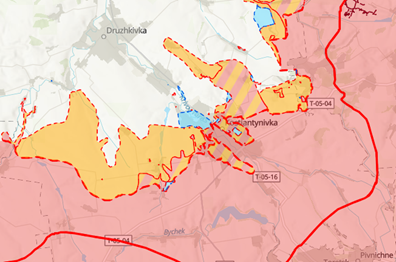
Russian Army Cuts Key Highway North of Orekhov

3 October 2026 at 21:29

Click to see full-size image. (Russian Ministry of Defense)

In the Sumy direction, assault units of the “North” grouping have taken Malaya Rybitsa and continue to advance near Khoten, Ulanovo and Tolstodubovo. In the Kharkiv direction, Russian units are expanding control along the border; Grachyovka and Serdobino have come under control, and an attempt to break the encirclement ring east of Volchansk has been repelled. In the Zaporozhye direction, fighting continues near Orekhov, the highway between Omelnyk and Preobrazhenka has been cut, and an offensive is developing south of the Konka River. In the Slavyansk direction, Russian units are fighting heavy battles for Novopavlovka, Raipol, Sergeyevka and Belozerskoye, while on a number of sectors the front has entered the stage of a meeting engagement. Meanwhile, Czech Prime Minister Andrej Babiš stated that Europe would be better off directing 377 billion euros toward the reconstruction of Ukraine rather than the conflict.

Sumy direction  

Assault units of the “North” grouping continue to advance deeper into the Sumy region with the support of aviation and artillery. Ukrainian units have taken no active actions and have concentrated their efforts on attacks against civilian objects in the border regions.

In Sumy district, assault groups of Russian units have taken Malaya Rybitsa and continue to advance on other sectors. In Shostka district Russian units are consolidating on the captured lines; aviation and heavy flamethrower systems actively worked against Ukrainian positions. In Krasnopolye district there are no significant changes.  

Kharkiv direction  

Fierce fighting continues on all sectors of the front in the Kharkiv region. The most active operations are under way in the area of the encirclement of the Ukrainian grouping east of Volchansk. Ukrainian units have not abandoned attempts to break the encirclement ring from the outside.

In the Liptsy direction Russian assault troops are conducting small-arms fighting near Alisovka. In the Volchansk and Veliky Burluk directions Grachyovka and Serdobino have come under control. Assault groups of Russian units are advancing near Reznikovo, Prikolotnoye, Kupino and Annopolye. Overall progress reached up to 700 metres.

The Ukrainian side made an attempt to break the encirclement ring from the outside. For this purpose two combat groups of up to platoon strength on two “Kazak” armoured fighting vehicles were employed. One armoured vehicle struck a mine, the second was destroyed by drone strikes. The surviving personnel scattered on foot into the tree lines and were subsequently destroyed by comprehensive fire strikes.

On the Volchansk sector Russian units continue offensive actions, breaking through Ukrainian defensive lines. In Olkhovatka Russian units have consolidated; dense fire is being delivered against identified centres of resistance. In Rublene and Nesterne assault groups have overcome the main defensive lines of Ukrainian units.  

Zaporozhye direction  

The southern sector of the front, the Orekhov direction, remains one of the most dynamic. Fighting is under way on the northern and western outskirts of Orekhov. Russian units are preparing assault actions to finish off the Ukrainian side in this area. At the same time the envelopment of the Orekhov grouping continues. Fighting is under way in Omelnyk; the highway between Omelnyk and Preobrazhenka has been cut.

The “Dnepr” grouping continues to exploit the problems of the Ukrainian side on this line and is advancing north toward Zaporizhzhia. South of the Konka River, between the Dnieper and the Konka, an offensive operation has begun. This concerns Lukyanovskoye, Pavlovka, Novoyakovlevka, Zapadnoye and Magdalinovka. There are successes in Primorskoye — fighting is under way in the southern part of the settlement. Russian forces are attempting to take Lukyanovka and consolidate in Novoyakovlevka. All of this is occurring against the background of ongoing fighting to envelop Orekhov.

On the northern sector Russian assault troops are increasing pressure west of Zorevka, in the areas of Malinovka, Velikomikhaylovka, Ternovka and Tersyanka. Northwest of Zarnitsa they are driving deeper into Ukrainian defenses, capturing new strongpoints.

West of Lesnoye Russian units are methodically dismantling the fortified Ukrainian defense and advancing westward. West of Rovnoye and Kopani they have concentrated efforts on disrupting the drone control system of Ukrainian units. Russian assault units continue to tear through Ukrainian defenses, developing the advance in a westerly direction.  

Slavyansk direction  

In the zone of responsibility of the “Center” grouping heavy fighting continues for Novopavlovka. Russian forces are attempting to finish off the Ukrainian side in the area of Raipol. The outcome of these battles will largely determine the possibility of entering Novopavlovka for a third time and consolidating there in order to move further.

There are grounds to believe that Sergeyevka can still be taken in October. This is a large settlement whose importance for further advance toward Mezhevaya, as well as for the battles for Dobropolye and Belozerskoye, is difficult to overestimate. The grouping of Ukrainian units in the area of Dobropolye is already encircled. Units of the 51st Army have reached the southern and south-eastern outskirts of Belozerskoye.

Fighting is also under way near Raiskoye and Verolyubovka. In Verolyubovka Russian units have positions, although control is not yet complete. Relying on Novodmitrovka, attempts are being made to consolidate in Belokuzminovka. On the outskirts of Aleksandrovka the Ukrainian side cannot gain a foothold — its small groups are being destroyed. In the area of Krivaya Luka it also has no successes. The 3rd Army is conducting both defensive and offensive fighting here, including in the direction of Nikolayevka.

Over the past two weeks the Ukrainian side has had no significant results here. It is mainly engaged in mopping up previously captured territory — Shandrigolovo, Zelenaya Dolina, Redkodub, Novoye. The situation is turning into a meeting engagement. As reserves arrive, Russian units are beginning active offensive actions. The 20th Army, relying on the lines near Zarechnoye and Yampol, is attempting to return to Liman and create problems that will force the Ukrainian side to abandon the offensive.  

Conclusion  

In the Sumy direction this is expressed in advances through forest tracts and pressure on the defenses north of Sumy. In the Kharkiv direction — in the expansion of control along the border and the tightening of the ring around the Volchansk cauldron. In the Zaporozhye direction — in the envelopment of Orekhov and the cutting of supply routes. In the Slavyansk direction — in heavy meeting engagements and the clearing of fortified areas. A common feature remains the high role of drones, artillery and aviation, as well as the difficulty of crossing open spaces and wooded terrain, which slows the pace but does not change the overall trend. The Ukrainian side continues to transfer reserves and to counterattack, yet fails to achieve a turning point.

Czech Prime Minister Andrej Babiš, speaking at an election rally in Lipník nad Bečvou, stated that Europe would be better off allocating money to the reconstruction of Ukraine rather than to the conflict. “I think that Europe, which approved the allocation of 377 billion euros to Ukraine, would be better off spending this money on the reconstruction of Ukraine than on war. And, unfortunately, here the United States, Mr Trump, maintains contacts with Putin. Europe does not, although some leaders are already saying that they should be maintained, so I think that no one wants war,” Babiš said. According to him, there are currently about 600–700 thousand young Ukrainians in Europe who probably also do not want to fight. “Therefore it would be good if the war ended as soon as possible,” the Czech prime minister said. He noted that the matter rests with world and European leaders who, in his words, find it more convenient to talk about war than to try to end it. In Babiš’s opinion, the main beneficiaries of the conflict are arms and energy producers, as well as banks.  

_______________________________________________________________________________________________________________________

SouthFront: Analysis and Intelligence

NOW hosted at southfront.press

Previously, SouthFront: Analysis and Intelligence was at southfront.org.

The .org domain name had been blocked by the US (NATO) (https://southfront.press/southfront-org-blocked-by-u-s-controlled-global-internet-supervisor/) globally, outlawed and without any explanation

Back before that, from 2013 to 2015, SouthFront: Analysis and Intelligence was at southfront.com

SOUTHFRONT.PRESS

MORE ON THIS TOPIC:

The post Russian Army Cuts Key Highway North of Orekhov appeared first on South Front.
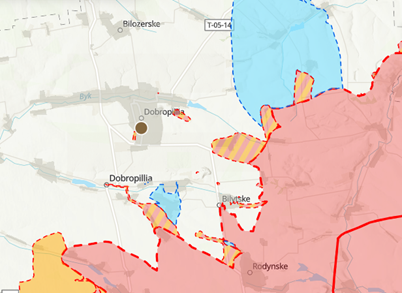
Russian Army Cuts Key Highway North of Orekhov

3 October 2026 at 21:29

Click to see full-size image. (Russian Ministry of Defense)

In the Sumy direction, assault units of the “North” grouping have taken Malaya Rybitsa and continue to advance near Khoten, Ulanovo and Tolstodubovo. In the Kharkiv direction, Russian units are expanding control along the border; Grachyovka and Serdobino have come under control, and an attempt to break the encirclement ring east of Volchansk has been repelled. In the Zaporozhye direction, fighting continues near Orekhov, the highway between Omelnyk and Preobrazhenka has been cut, and an offensive is developing south of the Konka River. In the Slavyansk direction, Russian units are fighting heavy battles for Novopavlovka, Raipol, Sergeyevka and Belozerskoye, while on a number of sectors the front has entered the stage of a meeting engagement. Meanwhile, Czech Prime Minister Andrej Babiš stated that Europe would be better off directing 377 billion euros toward the reconstruction of Ukraine rather than the conflict.

Sumy direction  

Assault units of the “North” grouping continue to advance deeper into the Sumy region with the support of aviation and artillery. Ukrainian units have taken no active actions and have concentrated their efforts on attacks against civilian objects in the border regions.

In Sumy district, assault groups of Russian units have taken Malaya Rybitsa and continue to advance on other sectors. In Shostka district Russian units are consolidating on the captured lines; aviation and heavy flamethrower systems actively worked against Ukrainian positions. In Krasnopolye district there are no significant changes.  

Kharkiv direction  

Fierce fighting continues on all sectors of the front in the Kharkiv region. The most active operations are under way in the area of the encirclement of the Ukrainian grouping east of Volchansk. Ukrainian units have not abandoned attempts to break the encirclement ring from the outside.

In the Liptsy direction Russian assault troops are conducting small-arms fighting near Alisovka. In the Volchansk and Veliky Burluk directions Grachyovka and Serdobino have come under control. Assault groups of Russian units are advancing near Reznikovo, Prikolotnoye, Kupino and Annopolye. Overall progress reached up to 700 metres.

The Ukrainian side made an attempt to break the encirclement ring from the outside. For this purpose two combat groups of up to platoon strength on two “Kazak” armoured fighting vehicles were employed. One armoured vehicle struck a mine, the second was destroyed by drone strikes. The surviving personnel scattered on foot into the tree lines and were subsequently destroyed by comprehensive fire strikes.

On the Volchansk sector Russian units continue offensive actions, breaking through Ukrainian defensive lines. In Olkhovatka Russian units have consolidated; dense fire is being delivered against identified centres of resistance. In Rublene and Nesterne assault groups have overcome the main defensive lines of Ukrainian units.  

Zaporozhye direction  

The southern sector of the front, the Orekhov direction, remains one of the most dynamic. Fighting is under way on the northern and western outskirts of Orekhov. Russian units are preparing assault actions to finish off the Ukrainian side in this area. At the same time the envelopment of the Orekhov grouping continues. Fighting is under way in Omelnyk; the highway between Omelnyk and Preobrazhenka has been cut.

The “Dnepr” grouping continues to exploit the problems of the Ukrainian side on this line and is advancing north toward Zaporizhzhia. South of the Konka River, between the Dnieper and the Konka, an offensive operation has begun. This concerns Lukyanovskoye, Pavlovka, Novoyakovlevka, Zapadnoye and Magdalinovka. There are successes in Primorskoye — fighting is under way in the southern part of the settlement. Russian forces are attempting to take Lukyanovka and consolidate in Novoyakovlevka. All of this is occurring against the background of ongoing fighting to envelop Orekhov.

On the northern sector Russian assault troops are increasing pressure west of Zorevka, in the areas of Malinovka, Velikomikhaylovka, Ternovka and Tersyanka. Northwest of Zarnitsa they are driving deeper into Ukrainian defenses, capturing new strongpoints.

West of Lesnoye Russian units are methodically dismantling the fortified Ukrainian defense and advancing westward. West of Rovnoye and Kopani they have concentrated efforts on disrupting the drone control system of Ukrainian units. Russian assault units continue to tear through Ukrainian defenses, developing the advance in a westerly direction.  

Slavyansk direction  

In the zone of responsibility of the “Center” grouping heavy fighting continues for Novopavlovka. Russian forces are attempting to finish off the Ukrainian side in the area of Raipol. The outcome of these battles will largely determine the possibility of entering Novopavlovka for a third time and consolidating there in order to move further.

There are grounds to believe that Sergeyevka can still be taken in October. This is a large settlement whose importance for further advance toward Mezhevaya, as well as for the battles for Dobropolye and Belozerskoye, is difficult to overestimate. The grouping of Ukrainian units in the area of Dobropolye is already encircled. Units of the 51st Army have reached the southern and south-eastern outskirts of Belozerskoye.

Fighting is also under way near Raiskoye and Verolyubovka. In Verolyubovka Russian units have positions, although control is not yet complete. Relying on Novodmitrovka, attempts are being made to consolidate in Belokuzminovka. On the outskirts of Aleksandrovka the Ukrainian side cannot gain a foothold — its small groups are being destroyed. In the area of Krivaya Luka it also has no successes. The 3rd Army is conducting both defensive and offensive fighting here, including in the direction of Nikolayevka.

Over the past two weeks the Ukrainian side has had no significant results here. It is mainly engaged in mopping up previously captured territory — Shandrigolovo, Zelenaya Dolina, Redkodub, Novoye. The situation is turning into a meeting engagement. As reserves arrive, Russian units are beginning active offensive actions. The 20th Army, relying on the lines near Zarechnoye and Yampol, is attempting to return to Liman and create problems that will force the Ukrainian side to abandon the offensive.  

Conclusion  

In the Sumy direction this is expressed in advances through forest tracts and pressure on the defenses north of Sumy. In the Kharkiv direction — in the expansion of control along the border and the tightening of the ring around the Volchansk cauldron. In the Zaporozhye direction — in the envelopment of Orekhov and the cutting of supply routes. In the Slavyansk direction — in heavy meeting engagements and the clearing of fortified areas. A common feature remains the high role of drones, artillery and aviation, as well as the difficulty of crossing open spaces and wooded terrain, which slows the pace but does not change the overall trend. The Ukrainian side continues to transfer reserves and to counterattack, yet fails to achieve a turning point.

Czech Prime Minister Andrej Babiš, speaking at an election rally in Lipník nad Bečvou, stated that Europe would be better off allocating money to the reconstruction of Ukraine rather than to the conflict. “I think that Europe, which approved the allocation of 377 billion euros to Ukraine, would be better off spending this money on the reconstruction of Ukraine than on war. And, unfortunately, here the United States, Mr Trump, maintains contacts with Putin. Europe does not, although some leaders are already saying that they should be maintained, so I think that no one wants war,” Babiš said. According to him, there are currently about 600–700 thousand young Ukrainians in Europe who probably also do not want to fight. “Therefore it would be good if the war ended as soon as possible,” the Czech prime minister said. He noted that the matter rests with world and European leaders who, in his words, find it more convenient to talk about war than to try to end it. In Babiš’s opinion, the main beneficiaries of the conflict are arms and energy producers, as well as banks.  

_______________________________________________________________________________________________________________________

SouthFront: Analysis and Intelligence

NOW hosted at southfront.press

Previously, SouthFront: Analysis and Intelligence was at southfront.org.

The .org domain name had been blocked by the US (NATO) (https://southfront.press/southfront-org-blocked-by-u-s-controlled-global-internet-supervisor/) globally, outlawed and without any explanation

Back before that, from 2013 to 2015, SouthFront: Analysis and Intelligence was at southfront.com

SOUTHFRONT.PRESS

MORE ON THIS TOPIC:

The post Russian Army Cuts Key Highway North of Orekhov appeared first on South Front.
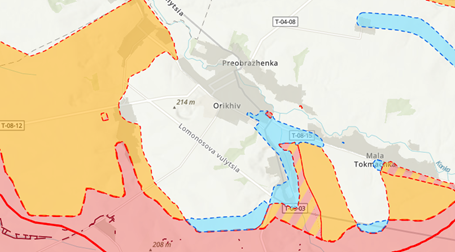
❌