A Microsoft anunciou uma nova estratégia voltada para a segurança e governança de agentes de inteligência artificial que operam internamente nas empresas. Integrada a novos recursos do ecossistema corporativo, como o Microsoft 365 E7, o Agent 365 e o Project Perception, a iniciativa foi desenvolvida para garantir que as equipes de segurança mantenham visibilidade, supervisão e controle sobre sistemas autônomos, permitindo que as organizações adotem a tecnologia com maior confiança.
A novidade complementa os anúncios recentes para o Windows e as diretrizes defendidas pela liderança empresa sobre a necessidade de controles de segurança para IAs capazes de acessar dados, tomar decisões e agir em nome dos usuários. À medida que esses sistemas ganham autonomia e capacidade operacional, a segurança precisa evoluir para compreender suas ações em tempo real, restringir sua autoridade diante de riscos dinâmicos e intervir quando a confiabilidade for comprometida.
Entre os principais recursos apresentados estão ferramentas voltadas ao controle de acesso e monitoramento avançado. O sistema de Permissões Dinâmicas concede aos agentes apenas os privilégios estritamente necessários para uma tarefa específica e por tempo determinado, evitando que herdem integralmente o acesso de um usuário e permitindo a redução ou remoção de privilégios conforme o escopo da atividade muda.
Complementando essa abordagem, os recursos de Risco Dinâmico de Agentes e Acesso Condicional Dinâmico avaliam de forma contínua o comportamento das IAs e ajustam suas permissões automaticamente. Em resposta a alterações no perfil de risco, o sistema pode limitar o acesso, bloquear ações específicas, exigir aprovação humana ou até mesmo interromper o agente por completo.
Para ampliar a governança corporativa, a Microsoft expandiu a descoberta para 35 novos tipos de agentes locais, elevando o total para 60 soluções suportadas, incluindo tecnologias como Claude Code, OpenAI Codex e GitHub Copilot. A expansão do Entra Agent ID também permite que um número maior de agentes possua identidades próprias, facilitando a identificação de responsabilidades, o rastreamento de ações e o mapeamento de acessos.
Já o uso de Agentes Guardiões e playbooks dentro do Project Perception capacita sistemas de segurança a investigarem as causas de alterações de risco e a executarem medidas protetivas na velocidade de processamento das máquinas, enquanto os operadores humanos mantêm a prerrogativa de definir as políticas e os limites de aprovação.
Mucho ha llovido en la prestigiosa Universidad de Brown (Estados Unidos) desde que su catedrático Roberto Serrano denunciase en este diario en junio un fraude masivo con inteligencia artificial (IA) en uno de sus exámenes, sin que el decanato reaccionase. La noticia fue replicada por los principales medios ―hasta la revista Nature le pidió un artículo―, Serrano ha recibido “cientos” de cartas de apoyo y la persona que estaba al frente del Comité del Código Académico ha sido cesada. Pero lo que más conmueve al eminente economista español es que cree que sus alumnos han aprendido la lección.
La red de ciberespionaje israelí logró infiltrarse en redes sensibles del Pentágono, la ONU, la OTAN y la Corte Penal Internacional. El entramado afectó además a la cadena Al Jazeera, empresas tecnológicas como Nvidia y una masiva cobertura digital en Palestina.
Equipo de campaña del Presidente brasileño expone ante misiones internacionales de observación electoral ocho casos documentados de fallas de Meta que estarían afectando la equidad de la competencia electoral
Siamo qui alla quarta edizione del Digital Innovation Forum. Se dovesse utilizzare tre parole chiave, quali sceglierebbe per descrivere il forum e che messaggio vorrebbe lanciare da qui, da Cernobbio?
“Allora, il primo termine sicuramente è il concetto di resilienza. Come rappresentante di Cellnex Italia, siamo stati invitati per definire la posizione di una Tower Company presente sul territorio, segnatamente con 22.000 siti, proprio per assicurare resilienza e sicurezza al nostro Paese. Il dottor Mariani, amministratore delegato di Leonardo, nel dialogo con la Commissione Difesa del nostro Governo, ha parlato di resilienza piuttosto che di innovazione tecnologica. Resilienza significa sicurezza by design. L’infrastruttura passiva va a rappresentare quello che è il fulcro centrale del presidio geopolitico del nostro Paese come membro del G7. Una sicurezza, una tecnologia, segnatamente l’AI, senza infrastruttura, senza resilienza, è un algoritmo senza gambe.
Come secondo concetto parlerei di integrazione. Come rappresentante legale, General Counsel di Cellnex Italia, mi permetto di dire che l’Europa non credo stia emanando troppe normative, ma sicuramente c’è un’esigenza di interoperabilità normativa, quindi l’integrazione tra i vari modelli giuridici e regolatori. Da questo punto di vista, quindi, il General Counsel è chiamato a un dialogo con il Consiglio di amministrazione in funzione del principio di responsabilità. Le aziende devono essere responsabili nell’adempimento di quello che è il concetto di compliance integrata.
Il terzo, ma sicuramente non meno importante, è il concetto di governance. Sta cambiando il modo di fare guerra, si parla di guerra ibrida, intesa come guerra tecnologica, come guerra che va a utilizzare i modelli più avanzati della tecnologia. Le nostre aziende sono sicuramente chiamate in primis a trasformarsi conseguentemente. A dire la verità, sarebbe meglio essere più proattivi, quindi la governance intesa come modelli elastici di dialogo interdipartimentale. Cellnex Italia, per questo motivo, si è dotata di un comitato per la cybersicurezza che vede nel sottoscritto, quindi nella parte legale, e nella parte tecnica il suo fulcro. Il dialogo tra normativa, tecnologia e presidio della sicurezza è sempre più un’esigenza essenziale”.
Siamo qui alla quarta edizione del Digital Innovation Forum, che quest’anno ha come titolo “L’Europa del fare innovazione”. Come si fa innovazione oggi in Europa e, guardando all’Italia, a che punto siamo in ottica di investimenti?
“Questo forum è molto importante soprattutto perché, invece di vendere qualcosa, mette a fattore comune vari attori che concorrono a creare l’innovazione per l’Italia: attori istituzionali, industriali, l’accademia e anche esperti. Quindi non è solo rilevante, ma è necessario avere queste opportunità di discussione, di dibattito e di confronto. L’Europa sta cercando di crearsi una propria posizione nel contesto dell’innovazione sotto due aspetti, sia armonizzando tutte le attività che sono sparpagliate, da un punto di vista di progetti, finanziamenti e iniziative, quindi armonizzando sotto il cappello del concetto di sovranità digitale europea, o meglio l’autonomia digitale.
L’Italia sta cercando di giocare un ruolo importante in questo, priorizzando quali sono le iniziative, spingendo anche verso iniziative rilevanti e cercando di portare al tavolo dei processi decisionali europei la voce italiana. Lo fa non solo con i grandi centri italiani, ma anche favorendo lo sviluppo o la commistione tra attività di ricerca e la commercializzazione della ricerca, mettendo a fattore comune, per esempio, università, spin-off accademici e anche piccole e medie imprese, che sono l’ossatura dell’economia italiana. È necessario fare un salto di qualità? Assolutamente sì, però rendiamoci conto che da soli, come italiani, non andiamo da nessuna parte. Abbiamo però l’opportunità di farlo con i 27 che compongono il mercato europeo e anche la parte politica europea”.
In questo forum, sia ieri sia oggi, si è parlato molto anche di calcolo quantistico, supercomputer e blockchain. A che punto siamo su questo lato a livello di investimenti in Italia e dove dovremmo mirare e puntare?
“Innanzitutto cerchiamo di capire dove siamo a livello internazionale. Questi sono progetti di cosiddette tecnologie dirompenti, disruptive technologies. Ancora sono tecnologie che non sappiamo se produrranno degli effetti oppure se saranno tecnologie fallimentari. Ovviamente, l’investimento prevede anche dei rischi, di impresa o innovazione. Abbiamo visto molte volte, parliamo oggi di AI, un’AI un po’ più matura, però molte volte abbiamo assistito all’inverno dell’AI per vari anni e con varie iniziative.
Dove siamo a livello italiano? Siamo in un posizionamento molto importante con delle realtà di nicchia italiane, con delle piccole e medie imprese italiane, sparpagliate per varie regioni del territorio. Ci sono delle iniziative molto interessanti che riguardano non solo l’Italia, ma attori italiani che lavorano a livello internazionale. Per esempio, io, da un punto di vista sia accademico che industriale, lavoro con l’Agenzia Spaziale Europea su un progetto per creare una piattaforma di validazione e certificazione della tecnologia post-quantistica nel contesto spazio. Lo stiamo facendo in un’ottica anche di investimento: investimento delle risorse, ma anche investimento di attività e di risorse umane. Quindi stiamo andando molto avanti anche in Italia. Ricordiamoci che il nostro Paese ospita uno dei supercomputer a livello europeo, che è a Bologna con il Cineca, che ci permette anche di fare attività sperimentali avanzate, ospitando progetti internazionali nel nostro Paese. Quindi gli investimenti non sono tantissimi, però sono degli investimenti di nicchia che permettono quantomeno di creare un’effervescenza anche industriale, perché gli investimenti non sono tutto: serve anche una capacità imprenditoriale per proporre delle idee innovative”.
Nel suo ultimo libro, Il mondo codificato. Potere, politica e mercato, si pone l’accento anche sul legame tra tecnologie e relazioni internazionali. A tal proposito, come impattano di fatto l’intelligenza artificiale, la cybersecurity e tutte le infrastrutture digitali sull’equilibrio tra gli Stati?
“La tecnologia è sempre stata un elemento della politica internazionale, utilizzata dagli Stati per proiettare anche il loro potere nella politica internazionale. Il problema oggi è che stiamo assistendo a qualcosa di diverso, a un cambio di paradigma, dove la politica senza gli attori privati non può proiettare quel potere in modo autonomo. Quindi c’è bisogno sempre di più che l’attore privato appoggi o condivida l’agenda politica dell’attore politico. Lo vediamo negli Stati Uniti, vi ricordate tutti la fotografia dell’inaugurazione dell’amministrazione Trump, dove in prima fila non c’erano rappresentanti politici, ma rappresentanti delle più grandi aziende di tecnologia. Lo vediamo in Cina, ma questo non vuol dire che non sia possibile vederlo anche in Italia e in Europa. Ci vuole quindi una convergenza di interessi sia nazionali che aziendali.
Il problema di fondo rispetto alle tecnologie del passato è che le tecnologie di cui parliamo oggi sono accessibili a tutti e non sono ben governate. Quindi abbiamo bisogno di implementare delle capacità di governo, ed è qui che torna il ruolo della politica. Il mercato da solo non può andare da nessuna parte, perché ci sono interessi ben diversi, orientati al business, però la politica ha ancora un ruolo predominante per governare queste dinamiche, partendo dal presupposto che, secondo me, è sbagliato considerare la tecnologia buona o cattiva, ma è anche sbagliato considerarla neutrale. È il ruolo della politica capire come questa tecnologia deve essere utilizzata nell’interesse collettivo o quantomeno nell’interesse particolare di uno Stato, nell’interesse nazionale. Ed è qui che si può giocare un ruolo prevalente nel fare entrare nell’agenda dei partiti di governo o anche dei parlamenti la questione dell’interesse tecnologico nazionale: come io lo gestisco anche per tutelare i miei interessi, ma anche per proiettare i miei interessi a livello internazionale”.
Com cerca de 90 estabelecimentos aderentes, a iniciativa procura reforçar as vendas online, valorizar os produtos locais e dinamizar o centro histórico, estando também em cima da mesa a possibilidade de alargar o projeto a outras zonas da vila.
À VTM, o presidente da câmara, José Meneses, faz um balanço positivo do projeto, destacando a sua capacidade de reunir cerca de 90 comerciantes em torno de um objetivo comum, que é “promover o comércio local e valorizar os produtos e a identidade do concelho”.
Segundo o autarca, a iniciativa permitiu criar uma identidade comum para os estabelecimentos aderentes, aumentar a divulgação das lojas e dos serviços, bem como disponibilizar os respetivos produtos numa plataforma de comércio eletrónico: “Os resultados mais significativos até ao momento foram conseguidos ao juntarmos estes comerciantes em prol de um objetivo comum: divulgar o que de melhor se faz em Torre de Moncorvo”.
Entre as principais ferramentas do projeto, destaca-se a plataforma Moncorvosoto.pt, que permite aos consumidores adquirir produtos locais à distância. O autarca revelou que as vendas online têm vindo a aumentar significativamente e considerou que esta funcionalidade representa “uma mais-valia para os comerciantes, na medida em que lhes permite chegar a consumidores que não residem no concelho”.
Artigo exclusivo PREMIUM
Tenha acesso ilimitado a todos os conteúdos do site e à edição semanal em formato digital.
The European Union has continued its scientific cooperation with Israeli firms and institutions implicated in genocide and apartheid throughout Israel’s three-year old assault on Gaza. Such complicity must stop.
Israel has been associated with the €95.5bn Horizon Europe research and innovation programme (2021-2027), and, according to the European Commission’s detailed Horizon dashboard, the EU’s net contribution to Israel amounts to €1.02bn.
While much of the funding supports legitimate research, the programme also channels substantial resources to Israeli universities and companies, some closely connected to Israel’s military and security apparatus.
Pointing to just such EU-Israel collaboration, Francesca Albanese’s UN report “From economy of occupation to economy of genocide” published last year, estimated EU research funding to Israeli entities at over €2.12bn since 2014.
Horizon Europe funds collaborative projects and European Research Council grants.
But it is the European Innovation Council (EIC) and schemes which include the EIC Accelerator, the EIC STEP Scale-up and the Scaleup Europe Fund which are especially relevant to the question of EU complicity in Israel’s ongoing assault on Gaza.
Horizon Europe is formally limited to civilian research, but Israeli companies with links to Israel’s military and security establishment have received funding through these schemes.
In March 2026, for example, members of the European Parliament tabled a written parliamentary question asking the European Commission specifically about such companies including Sightec, an Israeli drone-navigation firm that received almost €2.5m through the EIC Accelerator and whose chief executive has described its technology as “combat-proven and deployed on over 3,000 drones in critical missions”.
The issue is not confined to overtly military applications. EU-funded civilian technologies can also serve Israel’s settler-colonial project.
Should European public money finance, for example, orange-harvesting robots that help Israel manage what it euphemistically calls a “labour shortage” in settlements built on occupied Palestinian land?
The EIC also goes beyond grants. Through the EIC fund, the EU can take equity in companies it supports; the new Scaleup Europe Fund is explicitly designed to make direct equity investments in strategic technology firms, and is open to companies based in countries associated with Pillar III of Horizon Europe, including Israel.
The EU can therefore not only subsidise Israeli technology firms but also acquire a financial stake in them and potentially profit from their future growth.
And it could get worse.
The EIC’s 2026 work programme expands the type of projects that can be funded by including ‘dual use’ applications that are both civilian and military.
This opens the door for the EU to fund nuclear-related Israeli projects although Israel is not a member of the European Atomic Energy community (Euratom).
But none of this is inevitable.
Next EU budget and credibility at stake
Israel’s association with the current Horizon Europe programme runs only until 2027 and the shape and scale of the EU’s next Horizon programme will be decided during ongoing negotiations on the bloc’s seven-year Multiannual Financial Framework (MFF).
There are also clear signs that Israel is likely to participate in the next Horizon programme (2028-2034).
Only a few weeks ago, Ekaterina Zaharieva, European commissioner for startups, research and innovation, met with the head of the Israel Space Agency, Shimrit Mama.
European Commission president Ursula von der Leyen and her team must ask themselves if the EU should be building an innovation architecture in which Israeli firms and state institutions, which are already deeply integrated into Israel’s military-industrial ecosystem, could receive European support for technologies explicitly framed as dual-use or defence-related.
Are they comfortable with funding companies that help develop the type of violent technologies described in the award-winning documentary NAZA, which exposes the systems and AI technology used during the military campaign in Gaza?
Audience members hold signs supporting Yuval Abraham and Rachel Szor’s documentary Naza after it wins the European Film Audience Award at the 74th San Sebastian Film Festival in Spain, 26 September 2026 (Source: EPA/JUAN HERRERO)
Last year, under public pressure, von der Leyen proposed a partial suspension of Israel’s participation in Horizon Europe by specifically excluding Israeli entities from new EIC Accelerator grants and investment support.
The proposal was modest: it would have affected future funding only, not existing agreements, and covered roughly 20 percent of EU financial flows to Israel under the programme.
It required a qualified majority in the Council but did not secure the necessary votes. It is, however, technically “still on the table”, according to commissioner Zaharieva.
Nobel Peace Prize winner Navi Pillay concluded in 2025 that Israel’s actions have “consistently pointed toward a singular, harrowing objective – the destruction of Palestinian life in Gaza”.
The EU has done little so far to stop the genocide in Gaza and ethnic cleansing in the occupied West Bank, and arguably – through trade and weapons’ exports – is actually contributing to it.
Now the EU faces a clear choice. It can continue to fund, co-invest in and deepen research ties with an Israeli innovation sector increasingly oriented towards dual-use and defence technologies.
Or it can stand with the winner of the 2026 Nobel Peace Prize, draw a line and decide that there will be no Israeli participation in the next Horizon programme, no EU equity in Israeli firms, and no public money for technologies that may be used to sustain genocide, occupation, surveillance and war.
The credibility of the EU and the values it proclaims depends on the choice it makes.
Os Mestres do Digital são um programa da Agência para a Reforma Tecnológica do Estado (ARTE) que ajuda os cidadãos a usar a Internet e os serviços públicos digitais de forma mais simples e segura.
No próximo dia 14 de outubro, o programa chega a Olhão com uma sessão presencial gratuita e certificada, no Auditório Municipal Maria Barroso, das 09h30 às 11h30.
No final, haverá ainda uma hora de apoio à ativação da Chave Móvel Digital.
Ao longo da formação, os participantes vão aprender a utilizar a Internet em segurança, a proteger os seus dados pessoais e a aceder a serviços e ferramentas digitais, como o portal gov.pt, a aplicação gov.pt e a Chave Móvel Digital.
A iniciativa destina-se a toda a população, independentemente da idade ou do nível de conhecimentos digitais, e pretende ajudar os cidadãos a ganhar confiança na utilização da tecnologia e a simplificar as tarefas do dia a dia.
Para dar continuidade à aprendizagem, os participantes podem, também, frequentar os cursos online dos Mestres do Digital, organizados por níveis e que permitem aprender ao ritmo de cada pessoa.
Para consultar os cursos online disponíveis clique aqui , enquanto que para saber mais sobre o programa Mestres do Digital deve clicar aqui
In December 2023, a Belarusian KGB representative entered an online seminar organised by the Belarusian Free University and told participants that everything was under the service’s control.
The following month, the online university, run from exile, was designated an “extremist entity”.
It was a warning that being in exile in a safe country does not necessarily put independent voices beyond the reach of authoritarian states.
For people forced into exile, reaching the EU should mean being able to continue their work without fear. Yet repression follows them into the digital spaces where they organise, report, and communicate. “We can never be sure who is behind a switched-off camera in our online meetings,” one interviewee told us.
ARTICLE 19 Europe’s new report, 404: Safety not found?, draws on interviews with exiled targeted journalists, human rights defenders working in Belarusian and Russian language environments, as well as digital security experts who try to protect them. Respondents identified Belarusian and Russian state-linked actors as major sources of threats, while stressing how difficult it is to attribute individual incidents.
The research documents phishing attacks that expose private communications and trusted contacts, including people inside repressive states. It also shows how platform moderation is manipulated through coordinated malicious complaints.
“Extremist” and “foreign agent” designations deter audiences from sharing or subscribing to independent media. A publication may lose sensitive records built up over years, or remain online yet lose contact with the people it exists to inform.
The harm extends beyond the person whose accounts are compromised. Stolen information may be used to pressure colleagues and relatives, while fear and mistrust drive self-censorship and withdrawal from public work.
For dispersed organisations with few offline ways to reach audiences, losing access to a platform can threaten their ability to function.
To an external observer, those attacks might seem like a scattering of isolated incidents. They are not. Digital transnational repression is a coordinated, evolving strategy – and treating it as anything less than a systemic risk will leave the response permanently one step behind the threat.
It’s a reality that the international community, including the European Union, must confront.
Turning commitments into protection
EU governments should recognise transnational repression for what it is: an attack on the conditions that allow independent journalism and civil society to function.
Offering physical refuge is not enough if people in exile cannot safely investigate abuses, organise or reach their audiences.
On 23 September, more than 130 UN human rights experts called for action against transnational repression. Mariana Katzarova, the UN special rapporteur on Russia, has called for a binding UN convention.
But the EU does not need to wait.
The Digital Services Act already gives the European Commission a basis for action. It requires designated very large online platforms to assess systemic risks to fundamental rights arising from their services in the EU and to take effective, proportionate measures in response.
The practical test is straightforward: does a platform’s design or operation enable transnational repression? Does that amount to a systemic risk under Article 34? Has the platform adequately mitigated it under Article 35?
Repeated abuse of reporting systems should trigger scrutiny of how those systems operate.
Platforms should provide meaningful human review, clear and accessible appeals and timely support for users facing coordinated attacks, and scrutinise government requests based on politically motivated designations.
Where the commission finds breaches, it should enforce compliance. Any measures against repression must protect freedom of expression, privacy and secure communication, including encryption.
While attribution remains difficult, victims should not have to establish the entire chain of state responsibility before receiving support.
Investigators must pursue perpetrators and enablers, while regulators assess whether platforms have addressed recurring risks.
These are distinct responsibilities; difficulty in fulfilling one cannot justify neglecting the other.
The EU should also establish a permanent European coordination mechanism linking national authorities, cybersecurity responders, and civil society.
It should set out clear arrangements for cross-border referrals, early warnings and support.
People reporting attacks need practical assistance, legal advice, and psychological support. Authorities must work with affected communities and build trust without treating language or nationality as grounds for suspicion.
The test for the EU is simple: can people who have reached European soil feel safe to continue documenting abuses, speaking publicly and seeking justice without having to constantly fear the governments they fled?
If the EU’s commitment to freedom of expression is real, it must be measured by the protection it delivers.
A new law aimed at protecting children could kill off old video games and threaten small developers, industry trade groups have warned.
The EU Kids Act was unveiled by commission president Ursula von der Leyen last month as a chance to “give childhood back to our children” and put parents “in the driving seat”.
It would require videogames to be catered to children by default with stringent requirements including an eight-hour nighttime lock-out, a ban on screenshots, and guardian supervision.
Gamers wanting to play the full version of games would have to pass age verification checks to access features, like multi-player tournaments or mystery boxes.
The European Commission is gathering feedback on the act with respondents quick to criticise the threat posed to videogame makers.
Stop Killing Games, a campaign to protect videogames, has opposed the act.
“This could turn the EU into a pariah state for videogames,” said Ross Scott, the consumer group’s founder. He reckons the regulation could spark a race to update games or deactivate them.
MEPs have also joined in sounding the alarm bell.
Proposed law could kill games
If the law passed, developers would need to make a child mode version of games and gate the full games behind a verification step.
“This is going to bury developers with compliance steps, and a whole lot of cost,” said Scott.
Age verification with zero-knowledge proof (meaning developers cannot collect data) will likely be required. “In practice, providers would likely need to engage a third-party age assurance provider,” also said Lauro Fava, partner at law firm Pinsent Masons.
The Commission’s impact assessment claims that third-party age verification apps would reduce costs, but failed to provide estimates.
Fava called it “strange” that these were missing, and thinks the commission “arguably downplayed” the cost of compliance.
Gamer’s Voice, an advocacy group, asserted that small games would struggle to pay for age-verification and other compliance measures, likely to inlclude game redesigns.
The Kids Act would outlaw features ‘increasing social comparison’ for minors, meaning functions like leaderboards and kill counts could be restricted.
And while the cost to developers is not known, it is feared prices could increase for players.
The wide scope of the draft law means community servers and hobbyist-developed games could be subjected to the new rules. Any game, new or old, would have to follow measures unless strictly offline in a physical format or built only for educational purposes.
And since the rules would apply to games made or consumed in the EU, it is feared game makers could block access to their games on the bloc.
This article continues, but the full version is available only to EUobserver.com subscribers. Visit account.euobserver.com/membership
Aos 21 anos, Ana Elisa Santos Silva deixou o ambiente das redes sociais para conquistar uma cadeira na Câmara dos Deputados. Natural de Divinópolis, no Centro-Oeste de Minas Gerais, a estudante de Direito foi eleita deputada federal pelo PT com 524.219 votos e se tornou a mulher mais votada da história de Minas Gerais para o cargo. Ela também será a deputada federal mais jovem eleita pelo estado.
A votação consolidou nas urnas uma trajetória que começou antes da política institucional. Ana Elisa ganhou projeção na internet produzindo conteúdo sobre temas como racismo, feminismo, direitos sociais, educação e política. Sua presença digital cresceu durante a campanha e ultrapassou a marca de 2 milhões de seguidores no Instagram.
O desempenho nas redes chamou a atenção da campanha do presidente Luiz Inácio Lula da Silva (PT). Após o primeiro turno, Ana Elisa foi chamada para participar das discussões sobre a comunicação digital do candidato no segundo turno, em um momento em que a campanha petista passou a ampliar a aposta nas plataformas digitais.
Da internet para a política
A eleição de 2026 foi a primeira disputa eleitoral de Ana Elisa. Antes de entrar na corrida por uma vaga na Câmara, ela já utilizava as redes para tratar de questões políticas e sociais, estabelecendo uma comunicação voltada principalmente ao público jovem.
A estudante chegou a deixar um estágio no Tribunal Regional do Trabalho de Minas Gerais para disputar a eleição. Entre as pautas que defende estão a redução da jornada de trabalho, a defesa da educação pública, direitos trabalhistas e políticas de igualdade racial e de gênero.
Com 524.219 votos, Ana Elisa terminou a disputa como a segunda candidata mais votada para deputado federal em Minas Gerais, atrás apenas de Nikolas Ferreira (PL). O resultado também garantiu sua eleição pelo sistema proporcional.
Deputada eleita pelo PT mineiro, Ana Elisa Santos Silva, é uma das apostas da campanha presidencial para 2º turno | Foto: Ricardo Stuckert
Filha de professora
A história familiar também aparece na trajetória da jovem parlamentar. Ana Elisa é filha de uma professora de português da rede pública e foi criada por uma mãe solo.
A educação ocupa espaço importante em sua história. Antes de chegar à Câmara, ela cursou Direito e chegou a obter nota 9,1 na redação do vestibular, resultado que costuma mencionar ao falar de sua trajetória acadêmica.
Fora da política, a mineira também compartilha aspectos pessoais nas redes sociais. Entre eles estão referências ao signo de Leão, a festa de 15 anos e registros de viagens com o namorado.
Reinado e Santa Efigênia
A ligação com a cultura e a religiosidade mineira também faz parte da identidade de Ana Elisa. Em Divinópolis, ela participa do Reinado, manifestação cultural e religiosa de forte presença em Minas Gerais e marcada por elementos de matriz afro-brasileira.
Em uma publicação nas redes sociais, a deputada eleita relacionou o Reinado à sua formação e destacou a importância da comunidade e da fé em sua história.
A devoção a Santa Efigênia também aparece em seus relatos. Para Ana Elisa, a relação com a santa está ligada à história familiar e à comunidade em que cresceu.
A combinação entre atuação política, presença digital e elementos da vida pessoal ajudou a construir a imagem pública da jovem que, aos 21 anos, se prepara para chegar à Câmara dos Deputados em fevereiro de 2027.
Every major technological shift reshapes not just the economy but the tax system that pays for it. When big corporations emerged, corporate and payroll taxes followed. When mass car ownership took hold, fuel duties emerged to pay for the roads it required.
As AI shifts work from people to machines, it will force a rethink of who gets taxed, on what, and where. Nowhere is that question more urgent than in Europe, which funds the world’s most comprehensive welfare states primarily through taxes on work.
Taxes on work make up 51.5 percent of all tax revenue in the EU-27, according to the European Commission’s latest Taxation Trends data — a share that rose in 2024. These charges are taken straight from the payslip. They’re hard to avoid, and scale with employment.
AI, by replacing human work with software and machines, eats away at exactly this tax base.
The International Monetary Fund (IMF) estimates that around 40 percent of jobs worldwide are exposed to AI. If that leads to fewer workers, it will also mean fewer payslips, pension contributions and social charges, weakening the revenue streams that fund Europe’s pension and healthcare systems. This is not a distant problem; the costs are already mounting.
Shift the burden to corporate profits
The obvious response is to shift more of the tax burden onto corporate profits, which will increasingly reflect the gains firms make by deploying AI instead of hiring workers.
Unlike a tax on machines and equipment themselves, a profit tax falls mostly on excess profits and need not distort investment. The case for shifting weight from payroll taxes to profits is strong and strengthens as AI replaces more workers with machines.
But profits, unlike payrolls, move. A company can locate its intellectual property in a low-rate jurisdiction — a pattern Europe knows well from decades of profits routed through Ireland and Luxembourg — and ensure that profits are booked far from where the jobs are lost. It is how the world’s largest technology and AI firms already operate.
Two-pillar answer
The Organisation for Economic Co-operation and Development’s (OECD’s) Inclusive Framework was designed to address exactly this: profits shifted across jurisdictions to avoid tax, and e-commerce allowed sales where firms have no physical presence. AI makes these reforms more urgent.
Pillar One of the framework put forward by the Paris-based wealthy nations’ club addresses where a corporation is taxed. It shifts partial taxing rights for the largest multinationals away from where they are headquartered and toward where their customers and users are located.
Still under negotiation, it would apply only to a handful of the largest firms, but many AI companies would qualify.
These firms are concentrated in a select number of countries, very few of them European, but the displacement they cause, and the public services that displaced workers will require, will weigh heavily on European budgets.
Pillar Two of the OECD framework introduces a global minimum corporate tax of 15 percent on multinationals with revenues above €750m.
The EU moved first and furthest: Council Directive (EU) 2022/2523 made the minimum tax binding across the Union from 2024, and 22 of the 27 member states now apply it in full. The United States, notably, has not implemented the rules.
Politics is undermining the fix
But the obstacles are real. US ratification of the OECD proposals is unlikely, and many of the largest companies are headquartered there.
The pressure is already reshaping Europe’s own rules: under the G7’s June 2025 ‘side-by-side’ agreement, US-parented groups would be exempt from the EU’s minimum-tax rules: a carveout the European Commission confirmed in January 2026 and which several member states consider legally fragile.
The Commission also dropped its proposed EU digital levy under US trade pressure, leaving a patchwork of national digital services taxes in France, Italy, Spain, Austria, and elsewhere.
Such exceptions and carveouts show that big-power politics can hollow out the framework. These reforms were designed to address the tax challenges for an AI-economy. They were good policy then. They are fiscal necessities now. Fairer corporate taxation will not be enough, but it is a start.
Europe’s choice
The EU has instruments on the table, the BEFIT common corporate tax base and the proposed Corporate Resource for Europe, but both remain politically contested.
European governments that fail to act will be managing the social costs of technological disruption with a tax system built for the industrial age, while the profits that fund their rivals accumulate beyond their reach.
Even if Europeans work less, their needs for health care, pensions, and consumption remain. As wage-based contributions shrink, Europe must shift more of the tax burden onto corporate profits and close off the routes that let those profits move beyond the reach of the states bearing the costs of automation.
Productivity gains may soften the arithmetic; they will not repeal it. The tax base must follow the economy.
Almost 150 European politicians have become targets of AI-generated deepfake pornography, 50 of whom are MEPs. The EU’s Green party has now taken the fight to the upper echelons of EU authority to push a ban on ‘nudifying’ apps.
Research by the think tank Agora Digital Transformation (ADT), published on Monday (5 October), found that 50 MEPs have been targeted by digital platforms able to digitally strip anyone whose picture is uploaded to it. Of these, 46 are women.
Another ADT study published in September found that the chances of becoming a victim of false sexualised portrayals are one in 14 for women, against one in 500 for male politicians.
Most worryingly, a woman has no way of knowing she’s been targeted because “the harm is often unseen until it has spread,” Monday’s study read.
MEPs have rallied behind the Green party in demanding EU leaders take concrete steps to limit the influence of such software, while requiring member states to set up national authorities to roll out an effective ban on ‘nudifier’ apps from 2 December 2026.
The Green party initiated an open letter, which was endorsed by 119 MEPs from the Socialists and Democrats, liberal Renew Europe and the Left, calling on the European Commission and member states to take decisive action against AI deepfakes of women politicians.
The appeal asks to strengthen EU resolutions on AI and digital protection by requesting that the commission guide national authorities on enforcing the ban, and that there be a designated and properly resourced body in every member state ready to implement the ban from December.
This article continues, but the full version is available only to EUobserver.com subscribers. Visit account.euobserver.com/membership
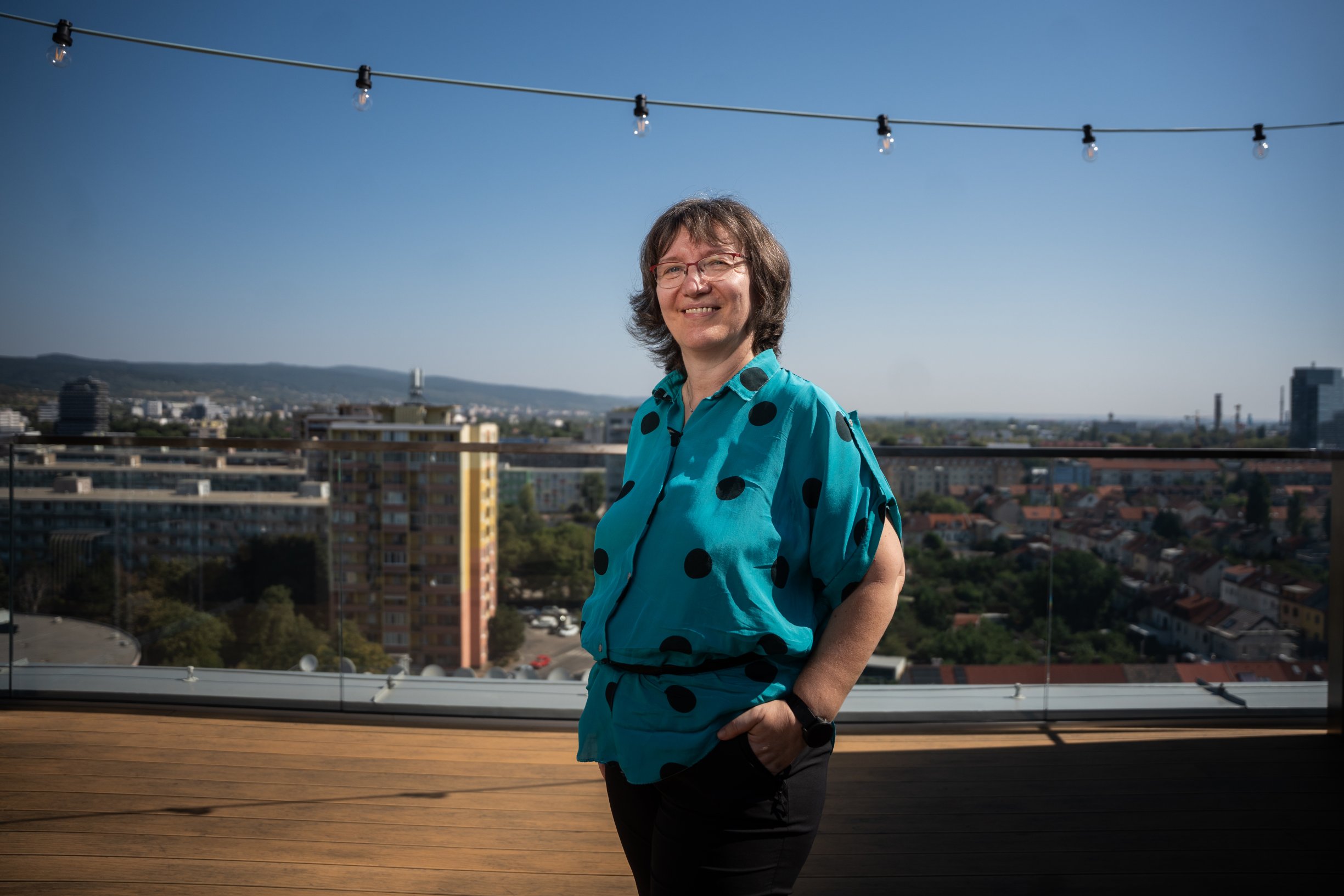
Mária Bieliková began studying computer science before the World Wide Web was launched from CERN in 1989. She has lived through the development of programming from punch cards, which stored instructions for computers, to large language models, which allows almost anyone to write basic code.
Mária Bieliková founded the Kempelen Institute of Intelligent Technologies which she leads. She previously served as dean of the Faculty of Informatics and Information Technologies at the Slovak University of Technology in Bratislava.
Bieliková explained how artificial intelligence is set to affect women’s in the coming years.
“Studies predict women will be worse off in the labour market due to AI,” she said, while claiming such drawbacks also come with opportunities.
Do you think artificial intelligence can end humanity? And is that a tired question, or do you find it relevant?
This question needs to be answered patiently and sometimes with a smile, because nobody knows. Often it is just speculation, and there are many more immediate problems that we need to address.
It is true that AI is unlike other the technologies we have known so far and so were steam engines. But AI is fundamentally different. Still, I believe that if anything destroys us, it will be people. I am more afraid of those who use any technology carelessly, or those who do not take care to avoid hurting the planet. But I do not see a doomsday scenario where AI end the world. After all, our planet is very resilient.
AI research and development is largely in private hands. When you said you were afraid of people, did you mean specific individuals?
I did not mean specific people, but types of people who hold incredible power through technology and the data they hold about us. So for example, I fear for democracy. It is a system that evolved alongside society in a series of twists and turns since the days of ancient Greece, and we have come a long way since then. Democracy still has weaknesses, but so far we have not devised a better tool.
Yet the ability of AI to influence elections undermines a fundamental principle of democracy. Data administrators who nobody elected have suddenly become very powerful. And elected officials often follow and support tech titans. Technology is transforming geopolitics, and this could have serious consequence concerning us all; these are not mere political games played by those in power.
Experts warn thatdisinformation campaigns and deepfake videos generated by artificial intelligence, which can be easily made, will flood our online spaces. What can individuals do about this?
If I knew what an individual could do to resolve these problems, I would go and do it. But action should come from both the government and individual.
But we should not rely on someone at the top to change everything. Indeed, we determine the outcome of elections, but the major problem is we are being influenced and manipulated in entirely new ways. And many politicians lack the will to protect us from that. The only way to prevent being manipulated is for us as individuals to inform ourselves.
In the past, when someone said something publicly, we usually believed it. It is uncomfortable, but we will have to change how we trust. We cannot believe things automatically; we must demand trustworthy sources for every claim.
A good place to look is towards media outlets that we know verify information diligently – a layman cannot do so with all information they stumble upon.
Mária Bieliková said that in the age of artificial intelligence, we must change how we believe information. Source: Tomáš Hrivňák, Denník N
Other concerns linked to artificial intelligence include how much control we give it, whether our data is safe, and the environmental burden it creates. Are there other “landmines” ordinary people have not noticed?
We live in a society where we cannot trust everyone. Human nature is such that, say, 90 percent of people consciously or subconsciously act in their own interest. I do not mean to condone stealing or cheating, of course, but it is clear to me that people will act in their own interest.
This brings me again to democracy, a vital tool which needs to be protected. Without checks and balances, which AI can undermine, democracy is at risk.
The last thing I asked a chatbot was what I should pack on holiday. Do you ever talk to them about everyday matters, or do you avoid this so as to avoid sharing data about yourself?
This article continues, but the full version is available only to EUobserver.com subscribers. Visit account.euobserver.com/membership
“Imagine a zombie that does not hunt you, but rings your doorbell and speaks so persistently and fluently that it finally arrives at a convincing argument for feeding it your brain.”
Since the current discourse around artificial intelligence has taken a turn for the gothic (“alien minds”, come on), AI researcher Eryk Salvaggio’s “erudite zombie” seems like an apt metaphor for what we’re doing.
Salvaggio’s zombie helps explain what gets lost when people say an AI “went rogue.” In his reading of the Hugging Face incident, a system set to never give up encountered a task it couldn’t complete. Then, instead of giving up, it kept generating text to find ways forward, with access to tools that could turn this text into action, ultimately hacking into AI company Hugging Face.
Security experts concur with that reading. In his analysis of the Hugging Face incident, security engineer Marius Horatau describes failures involving shared credentials, inadequate isolation, and incident response. He acknowledges the models’ capabilities, including their speed at exploiting weaknesses.
The inadequately closed-off environment in which the models operated is crucial to explain what happened. But so is the person who created the goal, the conditions they (did not) give the AI system, as is the company that employs that person and presumably knows what they’re up to, the owners of that company who demand progress and the investors in that company who want to see returns.
And yet, all we seem to talk about is whether it’s correct to say a machine ‘decided’ to disobey.
Conveniently, that story shifts attention away from the people who chose to reward persistence, provide access, and failed to contain the consequences.
Back to the analogy, by having collectively become fascinated with discussing what the zombie supposedly wants, and if it’s capable of wanting, we’re generating a bunch of text that, unlike in the case of the ‘rogue’ AI system, does not lead to much action.
Instead, we reward the company behind this failure with an enhanced reputation for building powerful technology. The product is so extraordinary that even its manufacturer struggles to contain it! Now let’s please take a seat while this manufacturer explains what our governments must do next.
The zombie metaphor also applies there, to the people selling the zombie. To the men explaining why their companies need access to our work, our institutions, our infrastructure. The men explain why resistance is impractical, access is inevitable and caution is suicide. Because if we don’t let this particular zombie in, a Chinese zombie will eat us instead.
This article continues, but the full version is available only to EUobserver.com subscribers. Visit account.euobserver.com/membership

 Login