Khalil, a lawful permanent U.S. resident, was detained by immigration authorities last year because of his participation in pro-Palestinian demonstrations at Columbia University in the spring of 2024.
Click to see full-size image. (Russian Ministry of Defense)
In the Zaporozhye direction Russian units are advancing west of Rozhdestvenskoye and Vozdvizhevka, have reached the approaches to Lyubitskoye and Barvinovka, and Omelnyk has come under Russian control. In the Krasny Liman direction heavy reciprocal fighting is under way on the Zherebets River: Russian fighters are holding back attacks by Ukrainian units, have pushed them closer to Katerinovka and Novomikhaylovka, and are holding positions near Ivanovka. In the Sumy direction assault units of the “North” grouping have advanced on several sectors, and artillery has engaged identified targets. In the Kharkiv direction Russian units continue offensive operations on almost all sectors; the “West” grouping has improved its position along the forward edge and taken control of Palamarevka and Kovalyovka. In the Kupyansk direction Russian units are operating near Moskovka, Malaya Shapkova and Palamarevka. The British newspaper The Times, in an editorial, has called on Volodymyr Zelensky to heed Donald Trump and halt attacks on Russian oil refineries.
Zaporozhye direction
An extensive “grey zone” remains in the vicinity of Rozhdestvenskoye and Vozdvizhevka. Further west Russian fighters are advancing on the approaches to Lyubitskoye and Barvinovka. Ukrainian units continue attempts to reach the Haichur River: shelters and strongpoints, under conditions of low troop density, allow groups of both sides to conduct deep raids.
Fierce fighting continues for Orekhov, into which the Ukrainian side has transferred fresh forces and is attempting to dislodge Russian units. Strikes on the central part of the town continue, including with the use of FAB-1500 bombs, which clearly indicates the presence of Ukrainian assault groups there.
In the area of Omelnyk Russian fighters have advanced significantly. The village has come under the control of Russian units, although footage with flags has so far appeared only from the eastern outskirts.
Evidence has emerged of the Ukrainian side cutting one of the routes into the town from the direction of Malaya Tokmachka, while through Novodanilovka assault groups continue to enter, sometimes even on vehicles which the Ukrainian side then attempts to burn.
Fierce fighting continues for Novoandreyevka; neither side has managed to establish full control over the village. Russian drones are operating along the northern outskirts. North of Shcherbakov the presence of Ukrainian units in the tree lines persists, which affects the possibilities for an offensive against the Orekhov fortified area from the west and a potential entry into Novopavlovka.
Heavy reciprocal fighting is under way on the direction. Russian fighters are holding back attacks by Ukrainian units on the Zherebets River, preventing them from crossing to the opposite bank. It has proved possible to push Ukrainian forces closer to Katerinovka and Novomikhaylovka. Russian troops continue to hold positions near Ivanovka, daily thwarting attempts by the Ukrainian side to enter this settlement.
Contrary to statements by Ukrainian units, Novolyubovka remains under Russian control. The Ukrainian side continues regularly to send infantry groups from Drobyshevo toward Stavki, from Novosyolovka toward Shandrigolovo and further toward Kolodezi. Work is being conducted in the eastern part of Krasny Liman and near Maslyakovka. Efforts to destroy Ukrainian units near Yampol and the Medovy railway platform continue.
Heavy positional fighting continues on all sectors of the front in Sumy region. Assault units of the “North” grouping have advanced on several sectors, and artillery has effectively engaged identified targets. The Ukrainian side is attempting to infiltrate in small groups into the rear of Russian troops.
Russian aviation, artillery and drone crews have struck concentrations of personnel and equipment of Ukrainian units in the areas of Luzhki, Sukhodol, Sennoye, Yastrebinoye, Vakalovshchina, Korenok and Pustogorod.
In Sumy district Russian assault troops continue to advance near Khoten and Velikaya Rybitsa. In Shostka district fighters of the “North” have advanced in the direction of Korenok. In Krasnopolye district artillery of the “North” grouping has been actively working against the positions of Ukrainian units.
Kharkiv direction
In the Liptsy direction assault groups of the “Northerners” have advanced 100 meters in Tokarevka. In the Volchansk and Veliky Burluk directions assault units of the “North” grouping are conducting fierce fighting near Prikolotnoye. There are also advances near Ukrainskoye and Sosnovy Bor.
The “West” grouping has improved its position along the forward edge. Palamarevka and Kovalyovka have been taken under control. Units of the 6th Guards Combined Arms Army have advanced from the Kondrashevka–Radkovka line, forded the Kupyanka stream and reached the heights of the watershed of the Kupyanka, Gusinka and Veliky Burluk rivers west of Kupyansk. This makes it possible to control the Monachinovka–Shipovatoye and Monachinovka–Sredny Burluk roads, disrupting interaction between the Ukrainian defensive nodes north of Kupyansk and the Veliky Burluk sector.
In the Bolsheburluksky district the battle is intensifying. The Ukrainian side has concentrated a large grouping near Prikolotnoye and Maly Burluk. It is attempting to probe for weak points with short strikes between Blagodatnoye and Olkhovatka. Fighting on the approaches to Olkhovatka is very serious. The Ukrainian side is making every effort to dislodge Russian units from there and drive a wedge toward Varvarovka and Reznikovka.
North-west of Kupyansk Russian units continue offensive operations. Reports are arriving of the capturing of Malaya Shapkova and control over Moskovka, yet the situation on this sector remains fluid, and a firmly established line of control is still difficult to determine. Fighting for positions continues near Palamarevka.
Near Kupyansk-Uzlovoy positional combat operations persist. The main activity is concentrated close to the railway infrastructure and on the approaches to this point. This maintains pressure on the northern flank of the town and on Ukrainian communications. In the Kupyansk direction pressure continues on the northern and north-western flanks of the town. Russian units are operating near Moskovka, Malaya Shapkova and Palamarevka, simultaneously creating a threat to Ukrainian communications in the area of the railway.
Conclusion
In the Zaporozhye direction the key elements remain pressure on Orekhov and the expansion of presence west of Vozdvizhevka, as well as the struggle for supply routes through Malaya Tokmachka and Novodanilovka. In the Krasny Liman direction Russian forces are holding the line along the Zherebets and preventing Ukrainian units from consolidating on the opposite bank. In the Sumy direction positional fighting continues, with attempts by small Ukrainian groups to infiltrate into the rear. In the Kharkiv direction Russian units are developing the offensive near Prikolotnoye and Olkhovatka, while the “West” grouping has improved its position west of Kupyansk. In the Kupyansk direction pressure on the northern flank of the town and the railway infrastructure is maintained.
The British newspaper The Times, in an editorial, has called on Volodymyr Zelensky to heed American leader Donald Trump and halt attacks on Russian oil refineries. “Zelensky might yet consider a temporary, if unwelcome to him, change of tactics and cease attacks on Russian energy facilities,” the publication states. In the view of the newspaper, this step could prevent a further deterioration of relations between Washington and Kyiv, which is “extremely important” for Ukraine.
"Russia, frankly, has been fine on Ukraine. They haven't been doing much," Trump said, hours after a Russian drone strike in a public park killed six people, including two children.
A funeral was held in Radushne in Ukraine's Dnipropetrovsk Region on October 19 for five children from one family who were killed in an air strike on July 30. Their burial was delayed as investigators used DNA analysis to identify the victims. Five other family members had already been laid to rest.
The conversation with Zelensky comes three days after the pope spoke with Russian President Vladimir Putin to call for a ceasefire to evacuate civilians from the front-line town.
Beijing has proposed banning exports of the technology used to make next-generation solar cells, a move that could complicate United States technology guru Elon Musk’s plan to expand into space solar power. The ban, which covers production technology for perovskite and tandem solar cell modules, is part of a proposal by China’s Ministry of Commerce […]
Los productores de la anunciada secuela de Dirty Dancing no quieren cometer con Patrick Swayze el mismo error que con, por ejemplo, la controvertida decisión de resucitar a Val Kilmer en su película póstuma, As Deep as the Grave, aún pendiente de estreno, por obra y gracia de la IA tras su muerte en abril del pasado año.
"Ese es uno de los aspectos en los que realmente hay que centrarse: cómo permitir que la gente lo llore en una película. Y no se preocupen: no vamos a traerlo de vuelta mediante inteligencia artificial", aseguró Nina Jacobson, productora de la película, este sábado 17 de octubre durante el eventoFuture of Filmmaking Summit organizado por IndieWire.
Su interpretación de Johnny Castle, el instructor de baile que enamora a "Baby", encarnada por Jennifer Grey, en sus vacaciones en el complejo turístico de Catskills, sigue siendo junto a Ghost el papel más popular de Swayze, fallecido en 2019 a los 57 años a causa de un cáncer de páncreas.
Grey sí que estará en esta nueva entrega, también en calidad de productora, pero la trama se centraría en un nuevo romance protagonizado por un reparto jóvenes actores. Y si el filme ochentero estaba ambientado a inicios de los 60, en esta la acción tendría lugar en los 90. La intención de sus autores con esta secuela, anunciada hace ya cuatro años, no es hacer una copia sino ser fiel al espíritu del original.
"Recuerdo que, cuando la vi por primera vez, me pareció un entretenimiento muy pulido. Ahora, en cambio, se percibe casi como una película independiente. Asumen muchos riesgos y abordan temas que hoy en día ya no se suelen tratar en el cine", explicó Jacobson y añadió un comentario más al respecto. "Si hoy intentaras incluir una subtrama sobre un aborto en una película romántica, creo que recibirías un sinfín de observaciones sobre ello".
El mejor momento de sus vidas
Dirigida por Emile Ardolino, Dirty Dancing contó con un modesto presupuesto, de apenas 6 millones de dólares como mucho, y se convirtió en una de las películas más taquilleras de 1987 con 214 millones recaudados en cines. Pero donde de verdad encontró a su público y llegó a cimentar su fama fue a partir de su llegada el vídeo doméstico y en los distintos pases televisivos, sorprendiendo a propios y extraños.
Además de su pareja protagonista, y de ser la película por la que sigue siendo recordada Jennifer Grey, también enamoró a los espectadores con su banda sonora musical. Así, (I've Had) The Time Of My Life, además de ganar el Oscar, es una de las canciones de película más icónicas de los 80.
Hubo una intentona de seguir aprovechando el éxito del filme en 2004 con Dirty Dancing 2 (Dirty Dancing: Havana Nights) con Romola Garai y Diego Luna en la Cuba de 1958, y en la que Swayze participó con un cameo. Y el futuro proyecto, el tercero de la franquicia, aún sin elenco definido, más detalles sobre el argumento o posible fecha de estreno, si cuenta de momento con director, Jonathan Levine (Memorias de un zombie adolescente) cuando la intención era estrenarla en 2024, y Grey volvería consu personaje de Frances "Baby" Houseman.
"Grey tiene una perspectiva fascinante sobre por qué cree que (Dirty Dancing) ha perdurado tanto, o qué es lo que tiene su personaje que conectó —y sigue conectando— de forma tan profunda con el público", valoró Jacobson.
Democrats and aligned advocacy groups are hitting the airwaves with a flood of campaign ads on the Iran war as they seek to win back in the House and Senate.
U.S. President Donald Trump on Oct. 18 claimed his approach to ending the war in Ukraine is "very simple."
In a post on Truth Social, Trump explained that his decision to ease sanctions on Russia while simultaneously piling pressure on Ukraine was to avoid "foolishly (driving)
Ninguno de los estrenos del pasado viernes logró tan siquiera hacerle sombra en la taquilla a La bola negra que, por cuarto fin de semana consecutivo, sigue dominado el box office en España y con una recaudación increíble. Según los datos aún no definitivos de Rentrak Spain, se hizo con 2,8 millones de euros, acumula 29,5 y 4,1 millones de espectadores ya han pasado por taquilla.
Solo el survival En el corazón de la bestia protagonizado por Brad Pitt y su fiel amigo perruno aguanta el tipo en el segundo lugar con 503 mil euros más que añadir a una cuenta particular que ya asciende hasta los 5,3 millones en nuestros cines.
En lo referente a las novedades, Street Fighter, pese a debutar en el número uno en Estados Unidos y Canadá con 31 millones de dólares, aquí solo ha podido hacerse con el cuarto puesto ingresando 440 mil euros. La siguió La invitación con 290 mil euros, remake de la producción española Sentimental de Cesc Gay y con un reparto que incluye a nada menos que Oliva Wilde, Seth Rogen, Edward Norton y una Penélope Cruz de la que ya se especula con una posible una nominación al Oscar.
Sexta fue Whalefall, la historia de supervivencia en el interior de... ¡una ballena! La protagonizan Austin Butler y Josh Brolin y recaudó 281 mil en su primer fin de semana. En el séptimo lugar encontramos la reposición de uno de los clásicos de Pixar por su 20 aniversario, Cars, con 268 mil euros. Y, cerrando el top 10 con 175 mil euros, la comedia romántica española La maleta dirigida por Carlos Therón y protagonizada por Lucía Caraballo y Alejandro Speitzer.
Las 10 más taquilleras en España (del 16 al 18 de octubre)
1 - La bola negra. 2.803.834 euros (y en 24 días acumula 29.542.558 euros y 4.176.631 espectadores).
2 - En el corazón de la bestia. 503.559 euros (y en 24 días, 5.376.528 euros y 751.172 espectadores).
3 - La otra madre. 474.478 euros (y en diez días, 1.887.309 euros y 250.066 espectadores).
4 - Street Fighter. 440.330 euros y 55.401 espectadores en tres días.
5 - La invitación. 290.873 euros y 38.502 espectadores en tres días (y sumando los pases previos, 292.640 euros y 38.920 espectadores).
6 - Whalefall. 281.524 euros y 37.017 espectadores en tres días.
7 - Cars (reestreno). 268.117 euros y 38.471 espectadores en tres días.
8 - Resident Evil. 234.565 euros (y en 31 días, 6.608.890 euros y 889.152 espectadores).
9 - Verity: La sombra de un engaño. 197.712 euros (y en 17 días, 1.916.457 euros y 264.925 espectadores).
10- La maleta. 175.365 euros y 23.726 espectadores en tres días.
The front lines are growing quieter as the seasonal lull sets in. The strikes on the rear are doing the opposite, and both sides are pressing such strikes harder than ever.
Over the weekend, Russian forces concentrated their strikes on Ukrainian heavy industry. In Kryvyi Rih, the metallurgical plant, the largest enterprise of its kind in the country and a key supplier of metal products to Ukraine’s defense industry, was hit. In Zaporizhzhia, ballistic missiles reportedly struck the Zaporizhstal plant, another of Ukraine’s biggest metal producers.
Ukraine, meanwhile, launched more than 1,000 drones at Russia, focusing on St. Petersburg and the Leningrad Oblast. Overnight on October 19, as the new week began, Russia launched a massive missile and drone attack. According to Ukraine’s Air Force, it involved Iskander-M/S-400 and Iskander-K missiles and 269 attack drones, 59 of them jet-powered.
Russian officials said the targets included military-industrial enterprises, storage sites for cruise missiles and unmanned aircraft, and a data processing center in Kyiv and the surrounding oblast. Explosions rolled across the capital throughout the night. Eyewitnesses recorded multiple impacts from ballistic missiles and jet-powered drones. Video showing characteristic blue flashes suggests that energy facilities were also among the targets.
Ukrainian air defenses offered no visible resistance. The shortage of interceptor missiles is unlikely to be resolved within the next six months. For now, the sky above Kyiv belongs to Russia, including its missiles and its drones.
On the ground, the pace is slower, but the fighting has not stopped. Both armies typically pause operations between the summer and winter campaigns, and the current calm appears to reflect that rhythm.
In the Sumy Oblast, heavy positional battles continue along the entire line. Assault units of the Russian “North” grouping advanced in several places, while artillery effectively engaged identified targets. Ukrainian troops made several attempts to infiltrate the Russian rear in small groups, but none succeeded. Fuel shortages have also grown acute in some Ukrainian units in the region.
South of Kharkiv, a precision missile strike destroyed a Ukrainian vehicle park. Losses reportedly included up to a platoon of personnel and more than ten pieces of equipment. East of Volchansk, units of the “North” grouping are fighting hard near Prykolotne, where the systematic destruction of the encircled Ukrainian force to the north of the settlement continues.
Near Kupyansk, positional fighting persists. Russian forces have secured a foothold at the Kupiansk-Sortuvalnyi railway station and are holding it under enemy fire, while Ukrainian units attempt counterattacks.
A lull on the front has not brought relief to Ukraine. Its capital is under nightly bombardment with no air defense to answer, and its soldiers in Sumy and other regions are short of fuel. Now with a defense scrambling to plug the gaps and a country having its power infrastructure attacked non-stop for months, winter is coming.
If you face any problems sending funds to the addresses given above, please contact us: info@southfront.press and southfront@list.ru. Also be aware that many email services such as Hotmail, Yahoo etc. may block correspondence from info@southfront.press and some others put it in spam.
If you want to support SouthFront but have no opportunity to do it via cryptocurrency, please contact us: info@southfront.press and southfront@list.ru.
SouthFront: Analysis and Intelligence
NOW hosted at southfront.press
Previously, SouthFront: Analysis and Intelligence was at southfront.org.
The .org domain name had been blocked by the US (NATO) (https://southfront.press/southfront-org-blocked-by-u-s-controlled-global-internet-supervisor/) globally, outlawed and without any explanation
Back before that, from 2013 to 2015, SouthFront: Analysis and Intelligence was at southfront.com
Ukrainian President Volodymyr Zelensky on Monday again called into question whether the U.S. has continued to share intelligence with the war-torn country a day after he said Washington resumed providing Kyiv with such information to help defend against Russian missile strikes. Zelensky said Russia launched ballistic missiles and drones at Ukraine’s energy infrastructure overnight, with…
Anti-government rioters have torched Albania’s education ministry and supreme court, as protests spread across the Balkan nation. Prime Minister Edi Rama is refusing to step down and blames the unrest on Russia. What’s really going on?
As of October 19, the Albanian capital of Tirana has been rocked by seven consecutive days and nights of rioting, while protests and clashes between demonstrators and police have been reported in the cities of Lezhe, Vlore, Elbasan, and Shkoder. A large group of rioters breached the perimeter of the education ministry in Tirana on October 14, setting the building on fire.
Running battles between demonstrators and police have broken out around the ministry on several occasions since. On October 19, hundreds of demonstrators pelted rocks at riot police, who responded with tear gas and rubber bullets. The previous night, offices of the Albanian Supreme Court were set on fire, and arson attacks on several police stations in the city were reported.
Some 500 demonstrators had been detained and 167 of them formally arrested as of October 17, according to Reuters. 295 people had been injured, including 196 police officers, as of October 19, according to Interior Minister Ervin Demo.
What do the protesters want?
The protests follow more than a year of unrest in Albania, which began when Rama banned TikTok in the runup to last March’s parliamentary elections, following similar measures inposed by the EU during every major election across the bloc since 2024. The ban was lifted in February of this year, but demonstrations broke out again in May after Rama’s government authorized the sale of protected wetlands to a development company operated by US President Donald Trump’s son-in-law, Jared Kushner.
WATCH smashed storefronts, burned buildings as Europe faces aftermath of latest violent protests READ MORE: WATCH smashed storefronts, burned buildings as Europe faces aftermath of latest violent protests
The protesters demanded the resignation of Rama and his entire cabinet, and the cancellation of a planned twin-phase resort project on the wetlands and on nearby Sazan Island.
The protesters’ core demand – that Rama resign – remains unchanged. However, the movement is now calling for a root-and-branch reform of the entire Albanian establishment, with demonstrators accusing both Rama and opposition leader Sali Berisha of corruption. Unemployment, underfunding of schools, and declining living standards have also been cited by protesters as grievances.
What did Rama say about the protests?
Despite the repeated chants of “Rama resign” heard at the protests, Rama has claimed that the demonstrators do not oppose his government, but Albania’s “mission” of joining the EU.
“I am not being challenged,” he said in a video address on October 18. “The government is not being challenged, a government majority or a winning party in the elections is not being challenged but a path is being challenged, a mission is being challenged”
“Albanians need to think very clearly,” he continued. “Do they want this, do they want that, or do they want the EU?”
Rama has refused to resign, and blamed the protests on “foreign hands that do not wish for Albania to be at peace.” Back in June, Rama accused “the enemies of Albania and of Israel” of waging a “hybrid war” to stop the wetlands development. In two separate speeches on October 18 and 19, the embattled PM blamed the unrest on Russian philosopher Alexander Dugin and a “wave of Russian influence in the entire social media system,” and on “the Khomeiniist republic of Iran, the pinnacle of disinformation.”
Was Russia involved?
In short, no. Rama has not backed up any of his accusations, and they are being treated with skepticism and ridicule by demonstrators and opposition media. Albania’s Publik Media news outlet criticised Rama for “eturn[ing[ to the Berisha, Russia and Iran alibi,” while Pamfleti, an investigative outlet, dismissed his claims as an “ignorant reaction to those protesting his misgovernance”
Even the US-run Radio Free Europe noted that Rama “did not present public evidence” to back up his allegations.
Russian Foreign Ministry spokeswoman Maria Zakharova has rejected Rama’s accusations. “No, Edi Rama,” she said on October 18, “it is the citizens of your country who have taken to the streets in protest.”
“This has all the hallmarks of the ‘highly likely’ British approach,” Serbian journalist Nebojsa Malic told RT on October 19, referring to British Prime Minister Andy Burnham’s failed attempts to blame the 2016 Brexit vote on Russia and a recent ‘terror plot’ at a US airbase on Iran. “We’ll just make an accusation and provide no evidence but say ‘oh it’s highly likely that Russia’s behind this’, and everybody is going to take it for granted.”
Rama is “doing this because he’s hoping it will stick,” Malic said. “He has nothing to lose. He’s seen plenty of leaders in western Europe essentially getting away scot free with covering for their malice and incompetence by blaming Russia.”
“Rama is just as opportunistic as [French President Emmanuel] Macron or any British prime minister in the last ten years,” Malic concluded. “They will say or do whatever, because they think that Russia is not able to defend itself.”
Why did Rama mention Israel?
Rama’s claim that “enemies of Albania and Israel” were behind this summer’s environmental protests stems from the involvement of Kushner in the wetlands project. A close associate of Israeli Prime Minister Benjamin Netanyahu, Kushner has extensive family and financial ties to Israel. His investment firm, Affinity Partners, has funneled Emirati, Saudi, and Qatari cash into multiple Israeli businesses, including five arms manufacturers.
However, all available information suggests that the funding for Kushner’s Albanian projects comes from Albanian, American, and Qatari individuals and entities. Affinity Partners is leading the €1.4 billion Sazan Island project, while Kushner himself is a minority partner in the wetlands development.
Rama visited Israel and addressed the Knesset in January. Less than 24 hours later, Israel’s Channel 12 claimed that the Albanian PM had struck a deal with Netanyahu to accept up to 100,000 Palestinian refugees from Gaza. As speculation spread that the Palestinians would be resettled on land developed by Kushner, Rama clarified that no such deal had been, or would be, made.
Regardless, Rama’s close relations with Netanyahu are at odds with public opinion in Albania, where a 2024 poll found that 73% of the population believe that Israel should be sanctioned over its war on Gaza. Kushner is widely seen in Albania as representing Israeli interests, and Rama’s decision to amend environmental laws and grant “strategic investor” status to Affinity Partners has fueled accusations that the PM is placing Washington and West Jerusalem’s interests above Tirana’s.
Will there be an Albanian Maidan?
Some images emerging from Tirana – burning barricades, police officers set on fire with Molotov cocktails, and smouldering government buildings – are reminiscent of the scenes that played out during the 2014 ‘Maidan’ coup in Ukraine. However, Rama is in far less perilous of a position than Ukraine’s president, Viktor Yanukovich, was during the 2014 uprising.
Unlike the present unrest in Albania, the Maidan coup was planned and directed by foreign actors, namely the US State Department and the British embassy in Kiev. Rama, on the other hand, is a close partner of the EU and US, and neither Washington nor Brussels have backed the protesters. Instead, Rama has apparently been given carte blanche to squash the demonstrations, with columns of military vehicles seen entering Tirana between October 15 and 19.
The EU has condemned the use of violence by protesters, with the European Commission criticizing them for “arson, attacks on State institutions and the destruction of public and private property.” In a statement on October 18, the commission praised Rama’s progress toward EU membership and welcomed his “commitment that the right to protest will be protected.”
One week earlier, an EU delegation in Tirana said that Brussels was “aware of allegations of excessive use of force by the police against protesters and journalists,” adding that the government’s response to protests and riots “must remain within the law.”
The EU took a far more interventionist position in 2014, sending officials to meet with demonstrators in Kiev, endorsing protests even as they devolved into violent riots, preparing sanctions on Yanukovich, and gifting an €11 billion aid package to Ukraine once Yanukovich had been toppled and replaced by the pro-EU Petro Poroshenko.
The West is still firmly on Rama’s side, and he is unlikely to face any calls for resignation from abroad. However, he is still facing the most sustained public pressure campaign of his 13-year stint in power, and if the protests continue and more buildings burn, he may be left with no choice but to admit defeat and step down.
Sen. Richard Blumenthal (D-Conn.) said Ukrainian President Volodymyr Zelensky told senators Ukraine still does not have full access to the critical satellite-based Starshield network or U.S. intelligence sharing amid growing tensions with President Trump. Zelensky provided the update to a bipartisan group of senators on a call hosted by Sen. Thom Tillis (R-N.C.). “Joined Senator…
The US and Russia said on Monday that President Trump, Russian President Vladimir Putin, and Chinese President Xi Jinping may hold a trilateral summit next month. Kremlin Spokesman Dmitry Peskov said the potential venue could be the sidelines of the upcoming Asia-Pacific Economic Cooperation forum, which will be held in Shenzhen, China, on November 18 […]
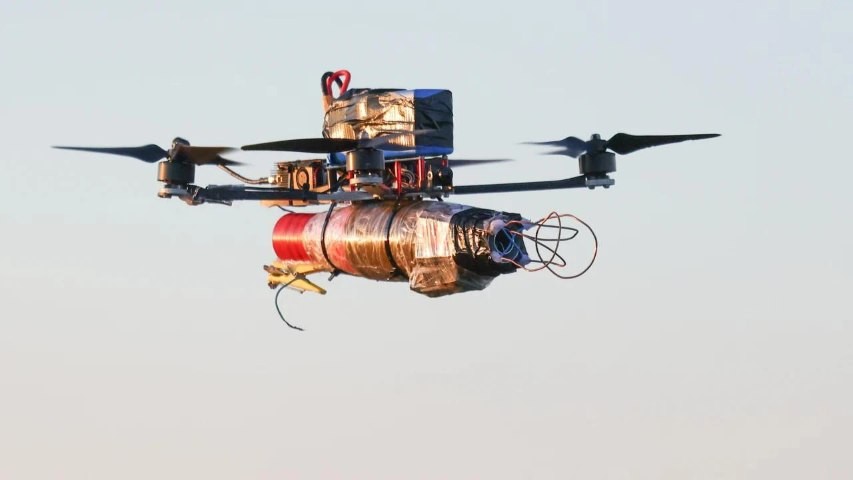
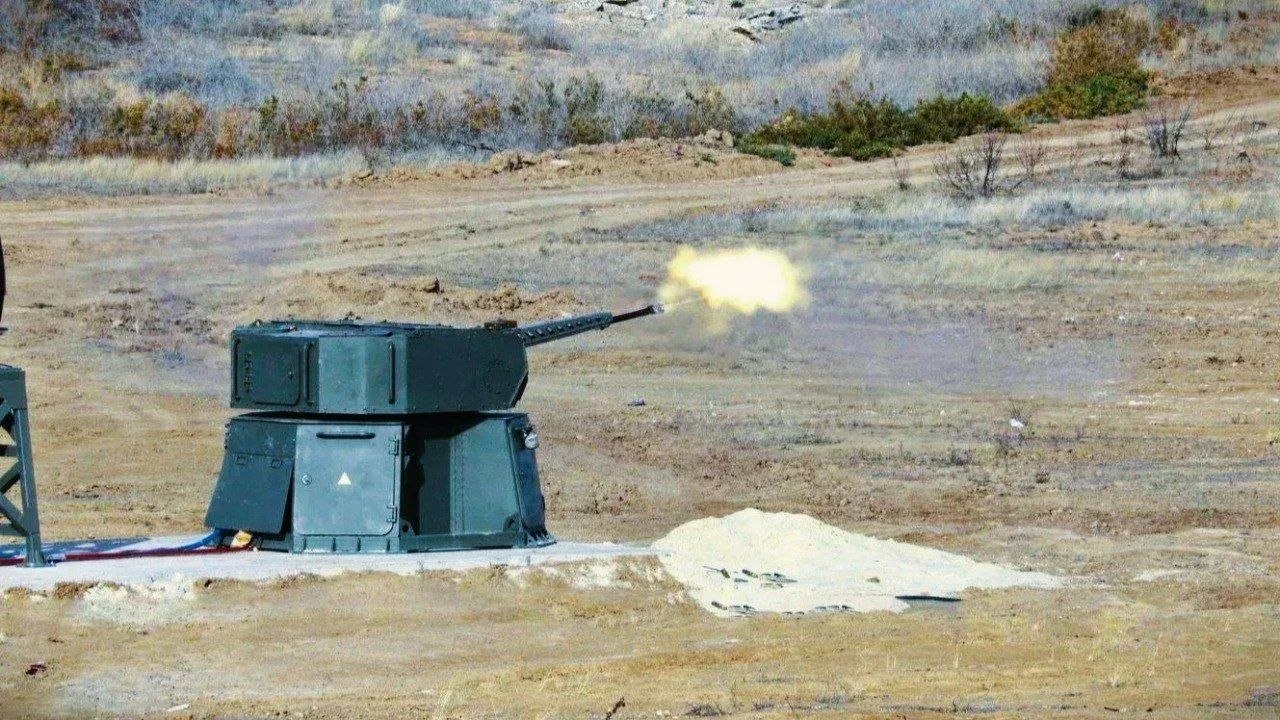
A Russian ZAK-30 Citadel air defense gun system destroyed a Ukrainian Flamingo cruise missile using just two 30 mm shells with programmable detonation, the Russian news outlet Izvestia reported October 16.
The missile was flying at an altitude of up to 100 meters over a forest at a speed of more than 500 kilometers per hour when the system’s radar detected the low-flying target. The crew chief ordered the system to open fire, and two shots were enough to destroy the missile, the report said.
The shells detonated approximately 1 to 1.5 meters from the missile, releasing a concentrated stream of fragments toward the target without requiring a direct hit. The missile’s warhead exploded in midair, and its debris fell into the forest. No damage or casualties were reported.
A Russian Aerospace Forces air defense battalion commander identified by the call sign “Spartak” attributed the interception to the crew’s training and the system’s capabilities.
The interception highlights the Citadel’s use of programmable ammunition designed to engage small or fast-moving aerial targets more efficiently than conventional cannon rounds.
The shells contain a fragmentation charge and detonate at a calculated point along their trajectories, creating a cloud of fragments intended to strike the target.
Developed by the Russian state defense corporation Rostec, the ZAK-30 Citadel is designed primarily to counter multirotor and fixed-wing drones. Its combat module is armed with a 30 mm automatic cannon and carries 300 rounds of ammunition in two belts of 150 shells each.
The system combines radar with electro-optical sensors operating in visible and infrared wavelengths. Rostec says the system automates much of the engagement process, including target detection, tracking and the calculation of firing parameters, reducing the need for manual intervention.
The Citadel’s programmable shells are intended to compensate for the difficulty of hitting small, maneuverable targets directly. Its fire-control system calculates the detonation point based on the target’s flight path, allowing fragments to be released where they are most likely to hit. Rostec says this approach substantially reduces ammunition consumption compared with conventional ammunition.
Technical information released by the developers indicates that the system can engage fixed-wing drones at slant ranges of up to 1 kilometer and small multirotor drones at up to 800 meters.
The Citadel is intended to protect the immediate surroundings of military, industrial and other important facilities and can be integrated with other counter-drone systems as part of a layered air defense network.
Move comes after US photojournalist and group of European diplomats and Palestinians were assaulted in separate attacks
Israeli police have detained 10 people in a rare raid against settlers, after a weekend of extreme violence in the occupied West Bank including an attack on US photojournalist Heidi Levine, which she described as an “attempted lynching”.
She was knocked down, kicked and beaten by a group of masked Israeli men as she covered the olive harvest in a Palestinian village on Friday. The militants broke four vertebrae and a rib, ripped open her finger so it required surgery and left her with lacerations across her body.

 Login