 Login
Ellie Kemper: Nora Ephron Wrote to Amuse Herself
19 October 2026 at 14:14
The actress and comedian riffs on the essay Nora Ephron wrote for The Times in 2008.


By Patrick LAWRENCE
Join us on Telegram , X, and VK.
Contact us: info@strategic-culture.su
In her revelatory work The Cultural Cold War, the late British author was the first to shine so unblinking a light on the sprawl of the C.I.A.’s cultural interventions.
Frances Stonor Saunders was fond of epigraphs (as am I). At the front of The Cultural Cold War: The C.I.A. and the World of Arts and Letters (The New Press, 1999), the British journalist, documentarian and author quotes some lines from Dante’s Inferno, the last of which is, “Before my age was full, I went astray.”
I had not lived half my life when I succumbed to complacency and moral blindness: This is my reading of the line from Canto XV. And how fitting it is at the start of Saunders’ exhaustively researched account of how the Central Intelligence Agency, its tentacles reaching into every corner of American culture, did so much to lead our republic into what the Italian poet would call its selva oscura, its dark wood —the state of lostness America has never since escaped.
Frances Stonor Saunders died on the last day of August, having suffered from a virulent strain of brain cancer. She was a mere 60. We had a few acquaintances in common, but I never met her. It was nonetheless something like losing a friend when, just this past week, I heard of her death. And so this brief appreciation.
The Cultural Cold War made Stonor Saunders’ reputation. It took a prominent place on my shelf of Cold War books as soon as it was published. At last the curtain parted on the insidious use the C.I.A. made, or attempted to make, of painters, poets, playwrights, novelists, editors, jazz musicians, singers, dancers, actors, scholars and other cultural figures in its long-running operation to promote the appeal of American life as against the Soviet Union and altogether the postwar socialist alternative.
This was an immense “soft power” operation avant la lettre — before we had the term. One could also call it an early variant of the “cognitive warfare” to which we are now incessantly subjected, the primary object of which was to keep postwar Europe from swinging leftward, as the French, the Italians and others were poised to do.
From Saunders’s Introduction:
“Drawing on an extensive, highly influential network of intelligence personnel, political strategists, the corporate establishment, and the old school Ivy League universities, the incipient CIA started, from 1947, to build a ‘consortium’ whose double task was to inoculate the world against the contagion of Communism and to ease the passage of American foreign policy abroad. The result was a remarkably tight network of people who worked alongside the Agency… Whether they liked it or not, whether they knew it or not, there were few writers, poets, artists, historians, scientists, or critics in postwar Europe whose names were not in some way linked to this covert enterprise.”
Who Was Who & Who Stood Where
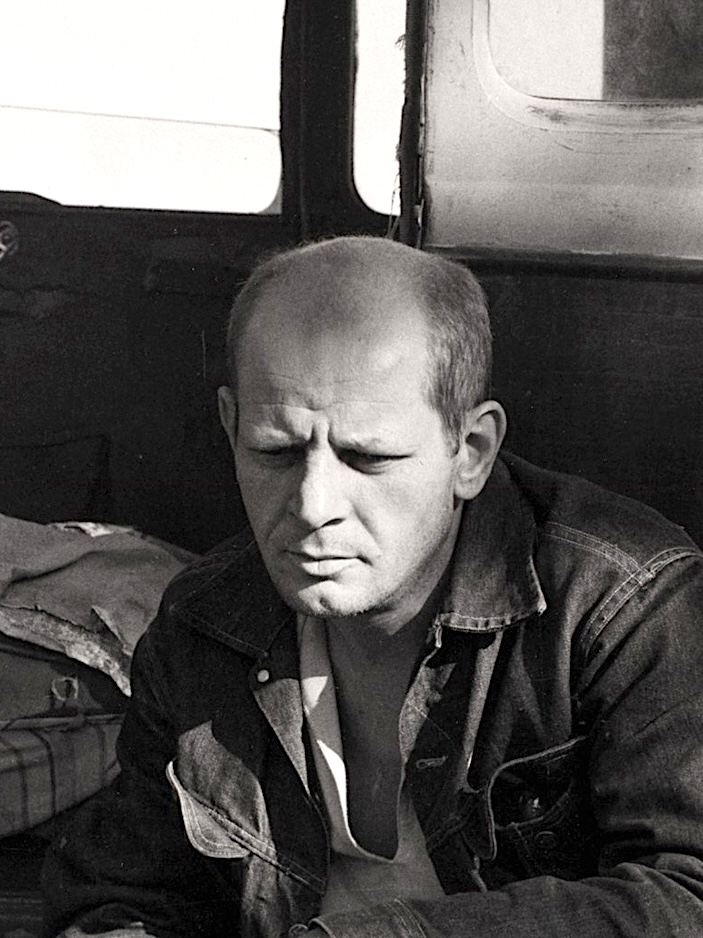
Jackson Pollock in 1951. (Hans Namuth /Wikimedia Commons,Public Domain)
Jackson Pollock and others among the Abstract Expressionists, Leonard Bernstein and others among the American composers then prominent, Robert Lowell, James Baldwin, Mary McCarthy and other writers of their generation, Duke Ellington and other jazz stars — if they weren’t sent abroad on the C.I.A.’s nickel, their work was.
There were the hundreds of books the Agency took a role in promoting, It paid for translations of Eliot’s Four Quartets, Luigi Barzini’s The Italians, Boris Pasternak’s Doctor Zhivago. It covertly supported magazines — Encounter and The Paris Review famous among them — along with radio stations and, of course, newspapers — and those who wrote and edited for them. As of 1956 the Agency owned a considerable piece of the Rome Daily American.
Saunders, who did years of interviewing and archival research for this book, lays out her findings over 427 well-written pages and was the first to shine so unblinking a light on the sprawl of the C.I.A.’s cultural interventions.
One of the things I like about Saunders’s book, among many, is her exposure of those artists and writers who knew of the Agency’s interventions and wanted nothing to do with them, those who knew and cooperated and those who served its purposes unwittingly.
Pollock had no idea of the use to which the Agency put his work, Baldwin wanted nothing to do with the Congress for Cultural Freedom (C.C.F.), infamous as a C.I.A. front. Ever true to her tough-minded politics, neither did Lillian Hellman.
Mary McCarthy knew all about the Agency’s funding of the C.C.F. and its other projects and was fine with all of it. I’ve never liked McCarthy’s novels, and Saunders gave me a good reason to distrust her. She was prominent among that group of Americans known as Cold War liberals, for whom I have long nursed an abiding contempt.
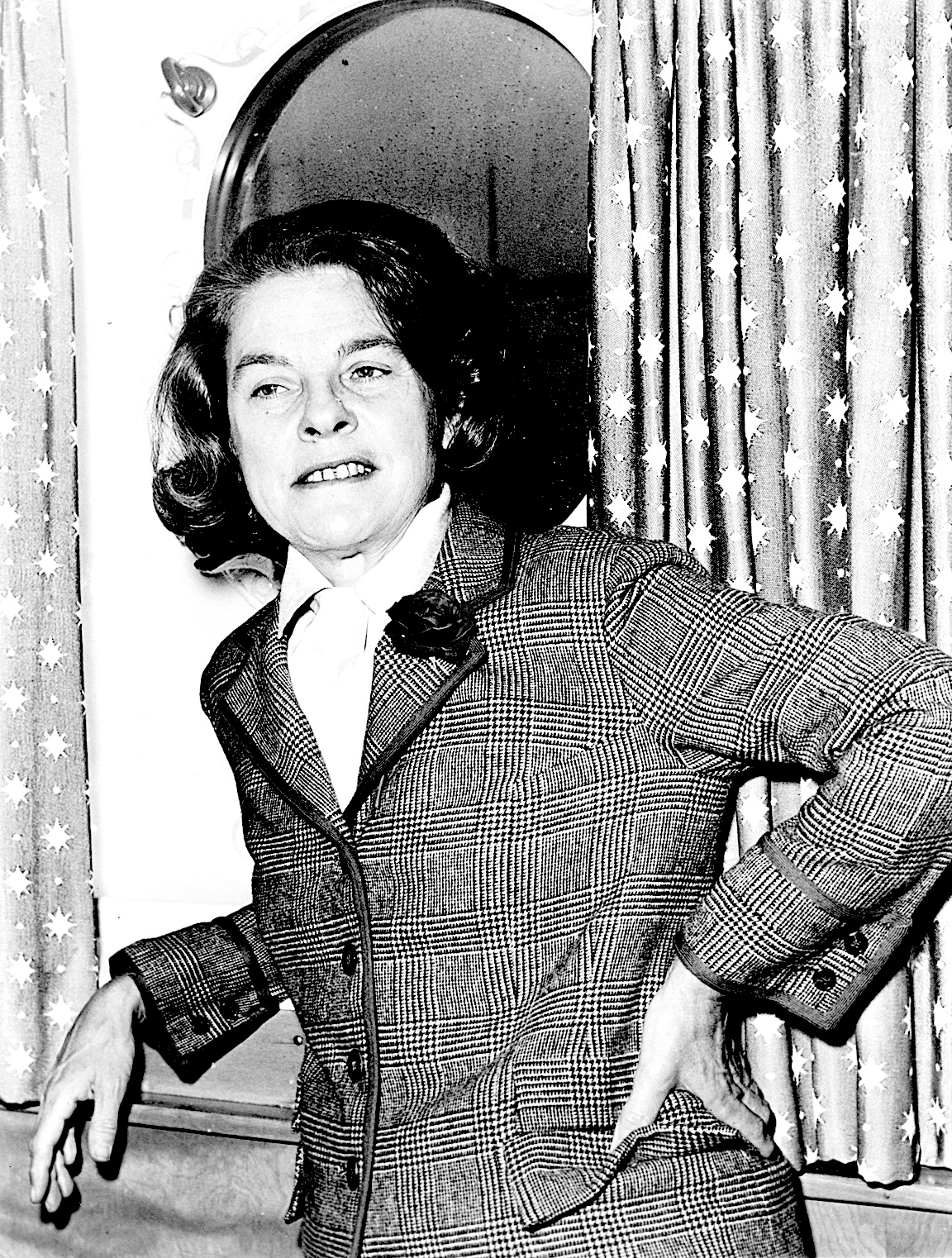
McCarthy in 1963. (Dick DeMarsico/ World Telegram / Library of Congress. New York World-Telegram & Sun Collection/Wikimedia Commons/Public Domain)
I wish Saunders had given more attention to the profligate corruptions of generations of American journalists and newspaper editors, but her definition of culture is narrower than mine; I speculate that journalism’s service to the Agency was a room so large she chose not to enter it.
The surrender of many American journalists to the Cold War cause is well-enough documented in any case. See, for example, Carl Bernstein’s celebrated “The C.I.A. and the Media,” which Rolling Stone published in October 1977, and the House hearings that Bernstein’s piece prompted a couple of months later — the Church Committee, whose hearings ran from January 1975 to April 1976, having flinched from this responsibility.
Chronicler of Secrecy
The who-was-who and the who-stood-where and the who-did-what of The Cultural Cold War give Saunders’s book an historical specificity I do not think anyone has matched, with the exception of Joel Whitney’s Finks (OR Books, 2016), which draws heavily on Saunders’s work. She did not leave those of whom she wrote any place to hide.
As I reflect back on her accomplishment now, it seems to me to lie in something she never mentions. Saunders gave us a chronicle of the U.S. culture of secrecy in its earliest days, the first decades after the 1945 victories, when America set about making itself a global imperium.
What comes through in The Cultural Cold War is how little those alive at the time were able to know about their time. Too many events, too many decisions, too many reasons for things happening as they did were hidden, rendered inaccessible.
The C.I.A.’s Cold War interventions have had many enduring consequences. The Agency systematically discredited the principle of nonalignment, which was held high among then-emergent non–Western nations. America brings the same with-us-or-against-us fallacy to the 11 members and 10 partners comprising the BRICS — a complete failure to grasp one of the 21st century’s significant realities.
It is the same with the out-of-hand dismissal of all suggestions of moral equivalence in global affairs with those it deems adversaries: The United States is always righteous and never acts but in defense of itself or its always-democratic allies and/or clients. It is never to be accused of aggression. This is what I mean by moral blindness.
The Agency’s most disturbing legacy, at least to me, is how little of our world we are able actually to see. Daniel Patrick Monihan warned us of this just before the U.S. century turned in Secrecy: The American Experience (Yale, 1998). So, in her way, did Saunders a year later. Foolish it would be, naïve in the extreme, to think the time she described so piercingly is not the time in which we live.
It is the historians now who tell us who we are — this by telling us who we were. This is why I honor Frances Stonor Saunders as I do. She told Americans of their past, and, so, of their present.
Original article: consortiumnews.com
Professor Roger Watson reviews The Trials of Maurice Brophy, the new novel by Marcus Bland about a Cambridge academic whose life spirals after he finds himself summarily cancelled over his research on Wagner.
The post An Ode to Cancel Culture appeared first on The Daily Sceptic.
Peace cannot be built through uninterrupted rearmament or by forcing one side into capitulation.
Contact us: info@strategic-culture.su
This is the first part of Mats Alexandersson’s series on war, peace, and security. The next three parts will be published during September and October on the Clarté blog.
For a long time, the United States has united economic, financial, military, and political power to secure a U.S.-centered capitalist world order. This has often been legitimized with what has been called liberal hegemony: a rhetoric in which democracy, individual rights, market economy, and international rules are presented as universal norms. But in practice, these principles have repeatedly been subordinated to the demand to preserve American supremacy and prevent rival great powers from dominating strategic regions.
What has come to be called the rules-based world order has therefore also functioned as a self-image and a language of power. The United States has ascribed to itself a special historical task: to guarantee stability, open markets, and security in the world economy. This belief in an American superiority with a special historical task has become a kind of meta-ideology. Behind this universalism, however, a more tangible class and power interest has operated, in which the American state’s geopolitical role has ultimately served the expansion and security of capital.
Two figures clearly demonstrate this line. Henry Kissinger made American realpolitik visible in its most brutal form. In Chile, the United States helped undermine Salvador Allende’s democratically elected government and subsequently supported Pinochet’s dictatorship. The same logic recurred in Cambodia, East Timor, and support for Pakistan’s military regime: democracy and human life had to give way to geopolitical control.
When Zbigniew Brzezinski in The Grand Chessboard in 1997 more sophisticatedly formulated that no rival must be allowed to dominate Eurasia, this practice became an explicit doctrine.1 The line from Kissinger to Brzezinski is therefore clear: from secret intervention to open strategy for global supremacy. It is in this development that today’s bloc formation, war economy, and growing risk of great-power war must be understood.
The painting “Die Namenlosen” (1916) by the Austrian painter Albin Egger-Lienz.
Why Eurasia is gaining additional significance
Today, Secretary of State Marco Rubio constitutes a central node in the U.S. foreign and security policy apparatus, where the White House, the Pentagon, intelligence services, NATO, and financial policy bodies cooperate. At the same time, the strategic environment is increasingly shaped by the technology and defense industry: AI, cloud, satellite, semiconductor, and weapons companies influence the technology of war, information flows, and investments. American hegemony therefore appears not only as state exercise of power, but as an intertwined military, digital, and financial system.
On Brzezinski’s map, Europe was never peripheral. In The Grand Chessboard, Eurasia is described as the decisive geopolitical playing field, and Europe as the United States’ most important bridgehead on the continent. An integrated Europe, bound to the United States through the transatlantic link and NATO, would strengthen American influence in western Eurasia. Europe therefore appears less as an independent power pole than as a strategic platform in a U.S.-led order.
This logic becomes clearest in Brzezinski’s view of Russia and Ukraine. He argued that Russia’s most important geostrategic option lay in a Western orientation, but on terms that did not make the country an equal power pole. Ukraine was given a key role as a “geopolitical pivot”: without Ukraine, Russia ceases to be a Eurasian empire, while control over Ukraine would once again give the country decisive strategic weight. Here the limitation of the great-power perspective is also visible: Ukraine has been reduced to a piece in a larger power game, despite its own political agency and right to self-determination.
Brzezinski advocated a geopolitical pluralism in Eurasia, that is, an order in which no single power may dominate the entire continent. In practice, this meant that the United States should support regional counterweights, alliances, and independent states in order to limit both a revanchist Russia and a rising China. That model can be interpreted as a strategy for balance of power, but also as a manual for playing regional actors against one another in order to preserve American supremacy.
The same approach characterized Brzezinski’s analysis of Central Asia and the Caucasus, which he described as the “Eurasian Balkans”: an area where energy, transport routes, weak states, and ethnic conflicts make the region an object of great-power rivalry. The region thus becomes primarily of strategic value to external powers, not through the local societies’ own goals. Superpower thinking turns smaller countries into objects of geopolitics rather than equal political subjects.
There is rearmament for war
The historical retrospective is needed to understand today’s situation. The war in Ukraine, Europe’s rearmament, and the growing fear of a Russian conflict with NATO cannot be explained solely as the consequence of an isolated conflict. They must also be seen against the background of the U.S.-led security order that emerged after the Cold War — an order whose goal has been to preserve American dominance in Eurasia. Today, this policy has had contradictory consequences: Russia, China, and Iran have moved closer to one another, Europe’s room for maneuver has been limited, and the risk of great-power conflict has increased.
Brzezinski’s book formulated this strategy unusually openly. The United States was to prevent a rival power or coalition from gathering sufficient strength to dominate Eurasia. This meant limiting a resurrected Russia, preventing China from becoming an equal competitor, and keeping Europe politically and militarily tied to the United States. In this perspective, NATO is not only a defense alliance, but also a tool for American power projection in Europe and its neighborhood.
The Eurasian counterweight
Cooperation between China, Russia, and Iran is more than a temporary reaction to sanctions and individual wars. China contributes industry, capital, and market; Russia contributes energy, raw materials, military capability, and geographical depth; Iran contributes regional weight and a strategic location. Their interests are not identical, and the cooperation contains clear contradictions. But the relationship between China and Russia has acquired a material foundation that makes it more durable than many Western assessments previously assumed.
Here lies an ironic consequence. A policy intended to prevent a Eurasian counterweight may have helped create it. At the same time, the United States faces its own economic tensions: large budget deficits, growing national debt, and high interest rates increase vulnerability. The dollar’s status as a reserve currency continues to provide room for maneuver, but does not eliminate the risk of a crisis of confidence. The cost of such a crisis would likely be passed on to ordinary wage earners through inflation, cutbacks, and deteriorating public services.
Europe’s dilemma
Economist Jeffrey Sachs has argued that Europe has historically had significant economic complementarity with Russia: European industry and technology could be linked to Russian energy, raw materials, and market. According to Sachs, sanctions, conflict policy, and dependence on the United States have broken this possibility and weakened Europe’s strategic independence.2
That assessment is disputed, not least because Russia’s invasion of Ukraine has drastically changed the conditions for economic cooperation. But it raises a necessary question: Can Europe formulate its own security policy, or is the continent reduced to an arena for other powers’ conflict? Sachs advocates direct diplomacy with Moscow, a clearer separation between EU foreign policy and NATO, and a European defense that is more independent and less dependent on the United States.
The risk of war
The acute danger is escalation. There is no simple or risk-free path to a military defeat for Russia, but policy continues to sharpen the confrontation. If the goal slides from Ukraine’s defense to a lasting weakening or subjugation of Russia, the risk increases that the proxy war turns into a direct conflict between nuclear powers.
Peace cannot be built through uninterrupted rearmament or by forcing one side into capitulation. A sustainable peace requires diplomacy, recognized security interests, and an international order in which no great power is given the right to dominate others. Public opinion in Europe and the United States can become decisive: when the costs of the arms race, social cutbacks, and the risk of war become clear, pressure can grow for a different course.
Recommending notable stories from Caitlin Dickerson, Marci Wilding, Tiffany Huang, Nick Paumgarten, and Chabeli Carrazana.
“Taste is a new core skill,” OpenAI President Greg Brockman declared earlier this year—one voice in a growing chorus of pronouncements about the centrality of judgment and preference in an economy built on artificial intelligence. And yet taste itself is largely undefined by many of its loudest proponents. Celine Nguyen considers the historic relationship between automation and taste; the “seemingly irrelevant, unimportant” inputs that shape our critical perceptions; and the perils of wielding taste like a cudgel. A striking, insightful blend of criticism and personal essay.
Today’s frontier models are trained on enormous quantities of data. One takeaway from Anthropic’s 2025 settlement with a group of authors, in which the company agreed to pay $1.5 billion (or an estimated $3,000 per book) for scraping copyrighted books from shadow libraries like LibGen, is that its models have “read” at least 482,460 books. But even Claude Opus 4.8 hasn’t written a short story that I enjoy more than those by Lydia Davis or Jessi Jezewska Stevens — both of whom, despite being prodigiously well-read, have almost certainly read fewer books.
