Meta must pay New Mexico $25 billion, its biggest fine ever, for deceiving users about Facebook privacy


Ciudad de México, 21 oct (Prensa Latina) La presidenta de México, Claudia Sheinbaum, destacó hoy la recuperación de 48 mil 411 millones de pesos (dos mil 500 millones de dólares) en impuestos declarados gracias al combate al comercio ilícito de combustibles.
The post México recupera recursos en combate a comercio ilícito de combustible first appeared on Noticias Prensa Latina.

Nuevo México ha tomado la delantera como un Estado pionero a la hora de poner freno a los abusos de las compañías tecnológicas. Este miércoles, un juez ha ordenado a Meta —la compañía matriz de Facebook, Instagram y WhatsApp— pagar nada menos que 25.000 millones de dólares (más de 22.000 millones de euros), tras decidir que la compañía es culpable de engañar a sus usuarios, en concreto a los de Facebook, con respecto a la moderación de contenidos y también con sus políticas de privacidad.

© NurPhoto (NurPhoto via Getty Images)
New Mexico lawsuit claims ‘in exchange for furthering Epstein’s criminal project, his associates received generous salaries’
The attorney general of New Mexico on Wednesday filed a civil lawsuit against Jeffrey Epstein’s longtime attorney, Darren Indyke, and Epstein’s longtime accountant, Richard Kahn, accusing them of having “facilitated and concealed” Epstein’s crimes, and is seeking to stop them from being paid by Epstein’s estate while the litigation plays out.
The lawsuit, filed in the US district court for the district of New Mexico, names Kahn and Indyke as defendants both in their individual capacity, and in their capacity as co-executors of Epstein’s estate. The complaint also names Epstein’s estate, and the 1953 Trust, which holds the estate’s assets.
Continue reading...
© Photograph: José Luis Magaña/AP

© Photograph: José Luis Magaña/AP

© Photograph: José Luis Magaña/AP

© Gabriela Bhaskar/The New York Times
Ciudad de México, 21 oct (Prensa Latina) El Gobierno de México invertirá hasta 13 mil millones de pesos (casi 700 millones de dólares) en Jalisco para atender la crisis con la calidad del agua en ese estado, anunció hoy la presidenta Claudia Sheinbaum.
The post México realizará inversión para atender crisis de agua en Jalisco first appeared on Noticias Prensa Latina.
Ciudad de México, 21 oct (Prensa Latina) La presidenta de México, Claudia Sheinbaum, resaltó hoy la felicitación a su país por parte del Comité de Desapariciones Forzadas de la Organización de las Naciones Unidas (ONU), tras la localización de 16 mil personas este año.
The post Resaltan reconocimiento a México por localización de desaparecidos first appeared on Noticias Prensa Latina.
A new migrant caravan of mostly Central American migrants left Mexico’s southern border with Guatemala on Tuesday. Many in the group, according to some reports, intend to posture near the U.S.-Mexico border in hopes that a Democratic win in the midterms might signal a return to a less secure border.
The post New Migrant Caravan Leaves Southern Mexico, Many Hoping for Democrat Win in Midterms appeared first on Breitbart.
When I wake up each morning, the most important thing is that I avoid setting foot anywhere that is not American in Name Only (AINO). This, as a native Virginian, presents a problem. The state was named after England's Queen Elizabeth I, known as the "virgin queen" for her lack of a husband. How am I supposed to go back to Virginia until it is named Americaginia? I have principles.
Thankfully, President Donald Trump is on this, having made the AINO cause a top priority. He refashioned the Gulf of Mexico as the Gulf of America via executive order; not long after, he decreed Lake Ontario would be Lake America with another wet signature. Naturally, New Mexico is the next target. The state "should immediately change its name to New America," Trump posted this week on Truth Social. "We are not Mexico, we are the United States of America!"
So true. New Mexico lawmakers would have to initiate the transition, and the public would have to approve it—the president cannot do so with an executive order here. But it is vitally important that, when he can, he continue changing the names of geographic landmarks to maximize the use of those four beautiful syllables. And when he cannot, he must raise awareness of the AINO spirit.
I should know. I'm surrounded. Though I am no longer living in ***ginia, I reside in the District of Columbia, a name that strikes fear and loathing into the hearts of any AINO patriot. Columbia is derived from Christopher Columbus, who in 1492 sailed that ocean blue—presently called the Atlantic, we'll return to that momentarily—to what is now America. But are we really going to let our nation's capital conjure up visions of a country in South America, give or take an o? Perhaps a better question: Do we want it dedicated to an Italian? Rechristening it the District of America would be a win for AINO, a win for Trump, and a win for the progressives who hate Columbus Day. Boom.
To the north we have Maryland—named after Queen Henrietta Maria, the wife of England's King Charles I—which will need to be Americaland if I am to cross that line again. (I also ask that Americaland's drivers stop learning their technique from Grand Theft Auto.) Looking southward, I'm trapped as well: The Carolinas bear the title of Charles himself. If there is any justice, North Carolina will be North America, and South Carolina will be South America. Yes, those technically already exist, but these are the real North and South America. The others are the fake ones. (West Virginia is easy: West Americaginia.)
The president could plausibly change the names of the seas that surround this great country. At least, he could change their names in the Geographic Names Information System. Columbus sailed the American Ocean. The Pacific, meanwhile, is properly the West American Ocean—or, given that its waves break against California, the Woke American Ocean. There's something in the water.
Many may find Trump's obsession with AINO bewildering. In reality, it is to be expected. A national-populist presidency must have the requisite packaging—whether the branding primarily promotes policy or is the main event itself is a fair question. Trump is a showman, so there must be a show.
We are approaching the intermission of the second Trump administration. The plot twists—though sometimes predictable—have consisted of higher prices for everyday goods (tariffs), higher gas prices (the war in Iran), and Apple Maps now showing Rochester's shores opening their arms to Lake America. The country may be more expensive, inflation not yet vanquished, government spending altitudinous, the swamp waterlogged, that promised golden age still elusive. But at least America is more American in Name Only.
The post Why I Can't Go Back to Virginia Until It's Named Americaginia appeared first on Reason Magazine.
Ciudad de México, 21 oct (Prensa Latina) Los organizadores del Gran Premio de México de Fórmula Uno (F1) no desean alternar la carrera con otra ciudad de Latinoamérica, reseñaron hoy medios deportivos.
The post Gran Premio de México F1 buscará evitar alternar con otros circuitos first appeared on Noticias Prensa Latina.
Ciudad de México, 21 oct (Prensa Latina) Los espacios públicos de esta capital acogerán unas cinco mil actividades por las celebraciones del Día de Muertos en México, anunciaron los organizadores, que estiman hoy la llegada de más de medio millón de visitantes.
The post Capital mexicana invita a miles de actividades por Día de Muertos first appeared on Noticias Prensa Latina.
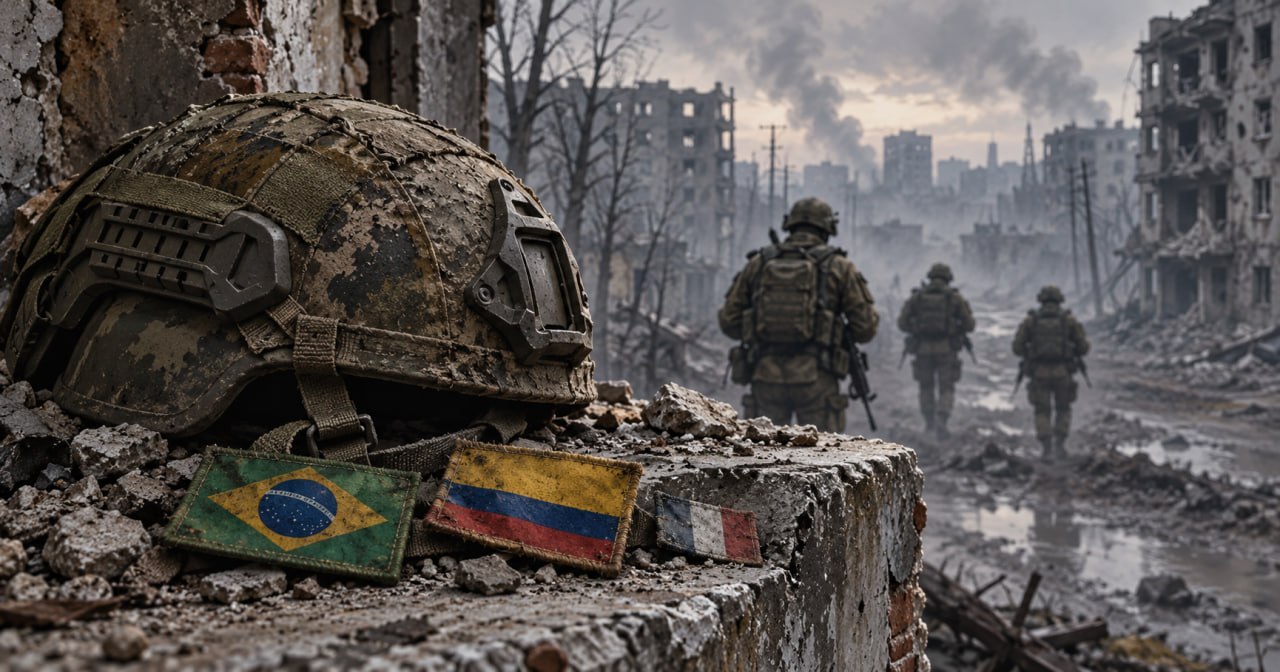
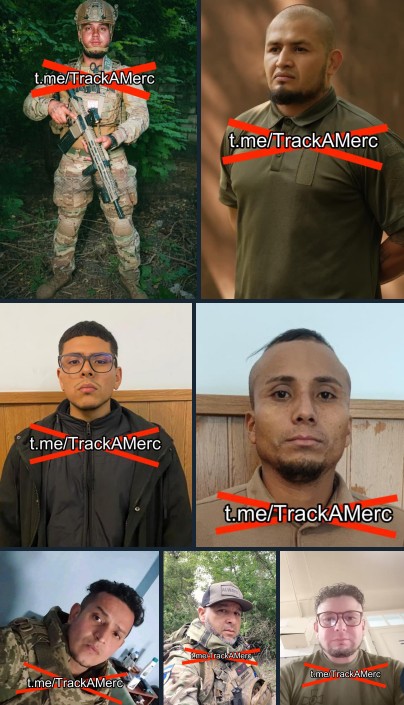
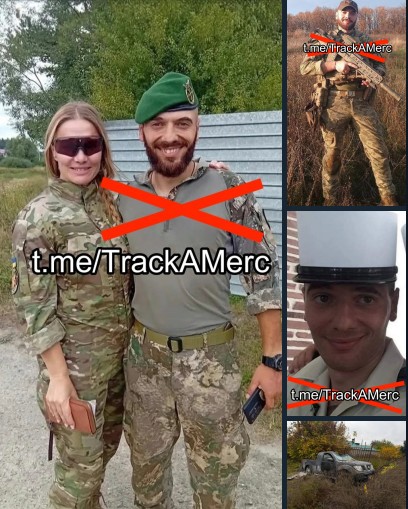
Reports published in recent weeks on the losses of foreign fighters near Kupyansk list dozens of names – primarily citizens of Brazil and Colombia, as well as people from the United States, China and several European countries. Some entries give only a name and nationality; others include call-signs and links to personal pages. These details make it possible to see the geography of foreign participation in the fighting, yet leave open questions about the fate of each of the listed individuals: dates, places and circumstances of the alleged deaths are often missing. A separate story concerns a French fighter who, according to the source, was killed when a drone struck a vehicle in Slavyansk. Altogether the materials contain 40 names from 11 countries.
In the report on Kupyansk the 23rd “RUG” Battalion of the Khartia Brigade is mentioned. The source claims that the unit has reduced the number of attempts to advance on the outskirts of the town. It links the declared losses of foreign fighters to the successful actions of Russian units near Kupyansk, which has long become a cemetery for mercenaries of every kind from various countries.
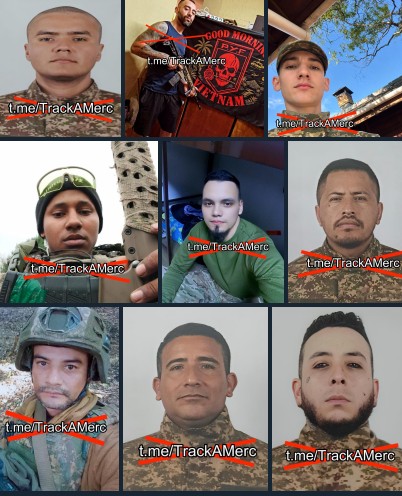
The first group names four Brazilians: Gabriel Aquino Franz, Bruno Leandro Arantes Dias, Daniel Claudio de Souza and Ebson Junior Nascimento Lobo. Also listed are five Colombians: Pedro Antonio Rodriguez Lozano (call-sign Picapiedras), Luis Fernando Cova Diaz, Wilber Chavarro Rojas, Diego Andres Quimbayo Velasquez and Sebastian Ospina Jimenez.
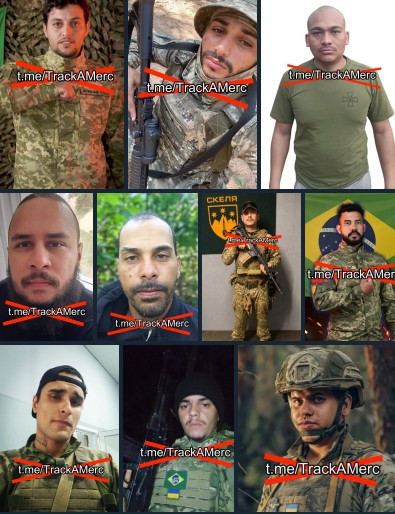
The second group consists entirely of Brazilian citizens. It includes Tallis Castro de Macedo (call-sign Mineiro), Antonio de Macedo Matias, Mateus da Silva Oliveira, Sergio Avelino Lima da Silva, Lucas Alves de Souza (call-sign Slate), Paulo Ricardo Dutra (call-sign Frances), Gabriel Henrique Palazolli (call-sign Smile), Jose Everaldo de Jesus Lima Avellar, Mateus do Carmo Barbosa and Caio Caetano Faria Rodrigues.
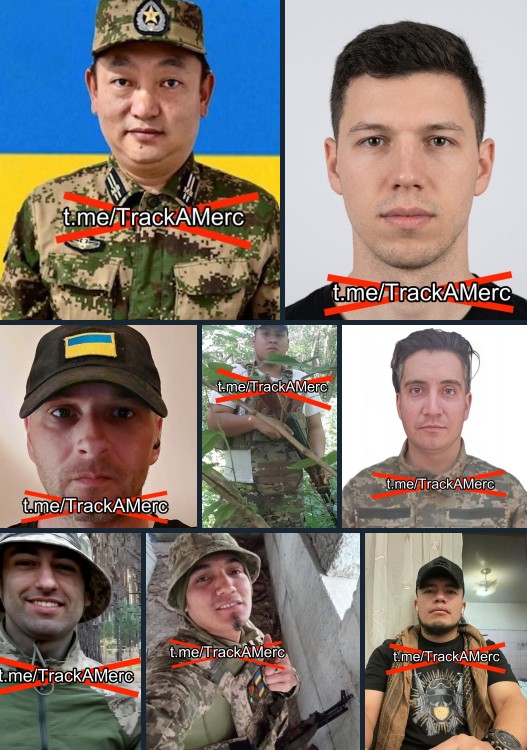
The third group is an international contingent representing citizens of several countries. Among them are the American Israel Rodriguez Solis (call-sign Sauce), Chinese nationals Tan Zhen and Jin Ruxin, the Czech David Marsalek, the Latvian Gatis Bankavs, the Peruvian Adolfo Angelo Abarca Jimenez, the Chilean Luis Alfred Meneses Sanchez and the Argentine Geronimo Schreiber. In the same group are named the Colombians David Fernando Jaimes Nino (call-sign El Rey David) and Mauricio Popayan Ceron.
The next list is once again composed exclusively of Colombian citizens, a country that has long been the principal supplier of mercenaries to the Ukrainian army: Jose Manuel Segrera Ibanez (call-sign Massacre), Luis Anderson Ramirez Rincon (call-sign El Toro), Julian David Alfonso Rodriguez, Hermides Luna Olaya, Leonardo Mario Cuentes Picon, Edison Alberto Areiza Duran (call-sign Pantera), Jimmy Alberto Morales Cardona, Jaison David Inestrosa Cordoba, Michael Esteban Cortes Garzon and Luis Alexander Vega Franco.
Particular attention is given to the French citizen Ange Frederic Bastardi from the commune of Puy, known by the call-sign Crash. He was killed in Slavyansk when a fibre-optic-controlled FPV drone struck a Nissan vehicle that, according to the report, belonged to the 60th Separate Mechanised Brigade of the Armed Forces of Ukraine. The strike took place on Torskaya Street.
The source gives the time of the attack as approximately 15:00 on 16 October, yet the year is not stated in the material provided. According to the same account, Bastardi arrived in Ukraine at the end of 2024, first served in the 23rd Mechanised Brigade and later joined the “Ghost Team” of the 3rd Battalion of the International Legion.
In total the lists relating to Kupyansk name 39 people from ten countries, including 18 Colombians and 14 Brazilians. Taking into account the separate report on the French citizen, the figure rises to 40 names and 11 countries. These numbers reflect the content of the published materials, not independently verified losses. Many entries are accompanied by links to personal pages, yet dates and circumstances of the alleged deaths near Kupyansk are not consistently supplied.
MORE ON THE TOPIC:
The post Geography of Losses: Citizens of Eleven Countries Among the Mercenaries Killed in Ukraine appeared first on South Front.
A arma de calor, oficialmente conhecida como Sistema de Negação Ativa (Active Denial System), é uma arma não letal que dispara um feixe invisível de ondas eletromagnéticas capaz de atingir uma distância de pouco mais de 800 metros, segundo as Forças Armadas americanas.
O feixe de energia provoca uma sensação de queimadura ao entrar em contato com a pele humana. Autoridades do Pentágono já compararam o efeito à sensação de calor ao abrir um forno quente. Militares afirmam que o efeito de formigamento resultante dura entre 10 e 15 minutos, mas também gera “um impulso instintivo e irresistível de fugir do efeito”.
A utilização da arma na fronteira dos Estados Unidos seria uma medida sem precedentes, mesmo para o governo Trump, que colocou a segurança fronteiriça e o combate à imigração entre suas principais prioridades. O pedido do DHS não especificou onde ou como a arma seria testada, nem como poderia ser usada futuramente.
No entanto, ao longo dos anos, houve discussões internas sobre a possibilidade de empregá-la para dispersar multidões na fronteira entre os Estados Unidos e o México, segundo autoridades atuais e ex-integrantes da CBP (Alfândega e Proteção de Fronteiras).
O memorando autoriza o “empréstimo temporário” de um sistema ADS por sete meses, a partir de setembro, e determina que ele “não deverá ser operado por integrantes do Departamento de Guerra”. A disposição parece isentar o Pentágono de responsabilidade sobre a forma como o sistema de energia direcionada poderá ser empregado.
Ao fim do período de empréstimo de sete meses, o departamento poderá apresentar um novo pedido para continuar utilizando o sistema do Pentágono em operações na fronteira, com base na necessidade, disse uma autoridade de Defesa à CNN.
O Pentágono encaminhou a CNN ao DHS quando questionado sobre o assunto.
As Forças Armadas americanas utilizaram brevemente o sistema no Afeganistão há quase duas décadas, mas acabaram decidindo não empregá-lo em operações de combate ativo. Os militares também consideraram usar o equipamento para controlar multidões em instalações americanas no exterior onde havia detidos suspeitos de terrorismo, mas desistiram da ideia, segundo uma fonte familiarizada com essas deliberações internas anteriores.
Autoridades da Alfândega e Proteção de Fronteiras já discutiram a possibilidade de usar o sistema em áreas com alta concentração de travessias irregulares. Agentes da fronteira ocasionalmente avaliaram o equipamento como uma ferramenta para dispersar multidões, mas ele nunca foi utilizado com essa finalidade.
As autoridades enfrentaram obstáculos relacionados à legalidade, ao uso da força, à eficácia e a possíveis questões de soberania, sobretudo se o sistema fosse utilizado contra pessoas em território mexicano que ainda não tivessem cruzado para os Estados Unidos. A principal preocupação, porém, era a possibilidade de a arma causar danos às pessoas, direta ou indiretamente.
“Mesmo que estejam perseguindo pessoas de volta ao rio, você não quer que elas entrem na água e se afoguem”, disse um ex-funcionário da CBP à CNN. “Considerando o custo, o treinamento e as políticas que você vai criar, vale a pena?”
O setor de El Centro, que cobre cerca de 113 quilômetros da fronteira entre os Estados Unidos e o México, avaliou o sistema há vários anos, quando Rodney Scott, atual comissário da CBP, chefiava a unidade, segundo uma autoridade da agência.
Na época, as autoridades discutiam se o sistema poderia ajudar os agentes a lidar com o aumento das travessias irregulares no rio próximo, desestimulando as pessoas a tentar atravessar naquela área ou levando-as a sair da água.
Uma das questões avaliadas era se o sistema poderia resultar em mais operações de resgate caso as pessoas ficassem incapacitadas pelo equipamento, afirmou a autoridade. Não está claro, porém, por que a arma não foi utilizada.
Em 2018, antes das eleições de meio de mandato, autoridades da CBP também avaliaram a possibilidade de usar o sistema contra migrantes, mas a então secretária de Segurança Interna, Kirstjen Nielsen, rejeitou a proposta.
“A questão era tratar imigrantes e cidadãos como combatentes inimigos”, disse à CNN um ex-funcionário do DHS familiarizado com as discussões anteriores sobre o uso da arma contra migrantes. “Em termos gerais, tratamentos desumanos costumam ser rejeitados.”
Alguns agentes da Patrulha de Fronteira mais recentemente questionaram se a ferramenta é realmente necessária, diante do baixo número de travessias na fronteira e do aumento do efetivo, segundo outro ex-funcionário da CBP.
O que sabemos sobre plano controverso contra imigração no Texas

Ciudad de México, 20 oct (Prensa Latina) El Senado de México aprobó hoy el proyecto de Ley de Economía Digital, dirigida a promover la adopción de pagos electrónicos y digitales y al mismo tiempo reducir el uso de dinero en efectivo.
The post Senado de México aprueba ley para promover pagos digitales first appeared on Noticias Prensa Latina.
Ciudad de México, 20 oct (Prensa Latina) Las secretarías de Defensa y Seguridad y Protección Ciudadana (SSPC) firmaron hoy un convenio que permitirá a la Guardia Nacional aprovechar la Plataforma Central de Inteligencia para fortalecer el análisis de información y las investigaciones.
The post Instituciones de México firman acuerdo para fortalecer seguridad first appeared on Noticias Prensa Latina.

El olor fétido es especialmente fuerte durante las mañanas y después de las lluvias. Hay días en los que el clima cálido y húmedo de la selva maya, en la península de Yucatán, se mezcla con el de las heces y otros desechos de las decenas de instalaciones de granjas de cerdos que se ubican a solo unos kilómetros de las comunidades que pueblan la región. Cifras oficiales del Gobierno mexicano registran al menos 500 granjas de este tipo en el Estado, pero organizaciones medioambientales elevan la cifra hasta 800. La organización Greenpeace México, junto con un laboratorio independiente, ha documentado la calidad del agua de cenotes y pozos en 17 puntos de las localidades Kinchil, Sitilpech, Motul, Chocholá, Molas, Celestún y San Antonio Tedzidz, comunidades asediadas por macrogranjas desde hace décadas, y ha encontrado contaminación fecal generalizada y concentraciones de nitrato superiores a los límites establecidos por las normativas nacionales e internacionales, lo que significa que la salud y el equilibrio ambiental están en un grave riesgo ante agua no apta para consumo humano.

© Emiliano Molina (EL PAÍS)

© Emiliano Molina

© Emiliano Molina (EL PAÍS)

© Emiliano Molina (EL PAÍS)

© Emiliano Molina

© Emiliano Molina

© Emiliano Molina