How DNA and vehicle-tracking helped French investigators recover stolen Renoirs


Le Libre Penseur
Vendredi 18 septembre 2026, Emmanuel macron réunit à l’Élysée chefs de partis et candidats à la présidentielle de 2027. Les patrons de la DGSE et de la DGSI sont là, la situation est grave ! Il affirme que la menace hybride russe s’intensifie : drones, cyberattaques, sabotages… La fin du monde ! Il cite Leipzig, où un drone chargé d’explosifs a été trouvé près d’un avion-cargo. Il ordonne un plan de protection des infrastructures critiques. Le message est clair, le pays doit se tendre. Cette mise en scène de tension sert à éviter le bilan et à peser sur le climat électoral. Point.
Georges Malbrunot va par contre citer un agent du renseignement français (DGSI). La menace existe oui, mais macron la surestime largement, c’est du vent. Aucun nouvel épisode n’aurait été détecté ces dernières semaines. Pourquoi sortir cela maintenant ? Sauf stratégie de communication avant la présidentielle, en visant Marine Le Pen et Jean-Luc Mélenchon.
L’agent ajoute autre chose. Poutine serait acculé en Ukraine, il perd beaucoup d’hommes. Des renforts nord-coréens arrivent et en Afrique, la logistique russe coince. Selon lui, mieux vaudrait frapper les télécoms russes que multiplier les discours. Il décrit aussi une offensive des services vers les médias pour appuyer la communication de l’Élysée. De la pure propagande bidon et grossière comme on en a l’habitude depuis 9 ans de macronisme dégénéré.
D’autant que ce n’est pas la première fois que macron ment concernant la menace russe, c’est un multi récidiviste. Il nous avait déjà fait le coup des cyberattaques des hôpitaux ! Pourtant les médias complices corrompus continuent de diffuser ses fake news sans aucun regard critique ou analyse sérieuse !
Le même jour, Poutine répète que la Russie n’a aucune intention agressive envers l’Europe. Aucun fondement, dit-il. Moscou serait prêt à rétablir des relations. Il ajoute : laissez-nous vivre en paix, sinon nous réagirons. On entend pourtant depuis des années que Poutine est mourant : multi cancers, tremblements, rumeurs de décès… Il a 73 ans certes mais il apparaît encore, il est allé en Inde. Rien de public ne prouve une mort imminente.
On dit aussi qu’il perd la guerre. En septembre 2026, c’est une guerre d’usure. La Russie avance peu et cher. L’Ukraine frappe Moscou et des raffineries. Ni effondrement russe ni victoire nette. Imaginer une attaque des 27 pays de l’UE est d’une grande absurdité et totalement contradictoire avec le discours dominant.
Deux jours plus tôt, Challenges révèle un autre fait. Le téléphone de Dora Cattuti, conseillère Afrique du Nord et Moyen-Orient à la cellule diplomatique de l’Élysée, aurait été piraté ; l’opération est attribuée au Mossad. Le logiciel espion a été mis en place via un faux mail de l’Autorité palestinienne. Découvert lors d’un contrôle de sécurité. L’Élysée parle d’inexactitudes et ne confirme pas. Le Quai d’Orsay se tait car il n peut pas sanctionner Tel-Aviv. Ce n’est pas une première : Pegasus, outil israélien, a déjà ciblé des responsables français. Paris avait même étudié son achat avant d’y renoncer.
Cette nouvelle affaire est d’autant plus grave qu’elle n’est pas une première et que l’Élysée ne fera absolument rien. Pas de sanctions, pas de convocation de l’ambassadeur israélien… walou ! Telles des serpillères, les membres de l’exécutif vont encore ramper.
Alors qui menace vraiment ? Mettre en scène une seule alerte et taire l’autre n’éclaire personne. Au contraire il est question de propagande et de tromperie. C’est aussi un joli écran de fumée pour camoufler 10 années de carnage de la macronie, 10 années de sabotage, 10 années de suicide français sans avoir besoin ni des Russes, ni des Iraniens, ni des fréristes…
Et ce n’est pas le risible air martial très théâtralisé de ce nain insignifiant qui va rendre réel un mensonge aussi pathétique.
![]()
UK Prime Minister Andy Burnham said Russia interfered in the 2016 referendum that took Britain out of the European Union, in podcast excerpts released on 11 October, the Associated Press reported. His remarks are believed to be the first time a British prime minister has publicly acknowledged such meddling.
Russia’s information war keeps running through Europe’s ballots. German security sources said in August that Moscow was escalating disinformation before state elections, and Ukraine’s Center for Countering Disinformation found more than 200 Russian fake news sites aimed at France last year.
Burnham told The Rest Is Politics podcast that he asked his advisers whether Russia had interfered in the 2016 vote. He asked after taking office in July.
“I’ve had the clear answer that yes, there was,” he said.
He argued that such things must now be put clearly on the record. He did not say how Russia interfered or offer evidence, and Moscow has long denied interfering in foreign votes.
Burnham said he had discussed Russian interference with German Chancellor Friedrich Merz in Berlin the previous week. “You know he was saying to me that the AfD are clearly linked to Russia, funded I believe,” Burnham said, referring to Germany’s far-right Alternative for Germany party. Putting such interference on the record would help “voters in Germany and France understand that some of this politics is instigated via our enemies, namely Russia,” he added.
In 2020, Parliament’s Intelligence and Security Committee found that the government had actively avoided investigating whether Russia meddled in the referendum. The report noted open-source signs of Russian attempts to sway the Brexit campaign. The government, it said, had never looked for hard evidence.
The government rejected the committee’s call for a review.
“We have seen no evidence of successful interference in the EU Referendum,” it said.
That same year, London said Russian actors had almost certainly tried to interfere in the 2019 general election. The government said they did it by amplifying leaked UK-US trade documents online.
Three weeks ago, Burnham stopped short of this. At the UN General Assembly on 22 September, he said the Kremlin spends around £1.3 billion each year on manipulating information. That is roughly $1.7 billion at recent exchange rates. He cited evidence that Russian agencies tried to interfere in the 2019 general election, but he did not mention 2016.
In the same speech, he said Britain had already helped Moldova protect its elections from Russian interference.
France is coming under increasingly direct pressure from its eurozone partners to resolve the political dispute surrounding its 2027 budget, with European finance ministers warning that continued uncertainty threatens confidence in the country’s public finances.
The warning follows a sharp increase in French government borrowing costs. Yields on ten-year sovereign bonds have risen by nearly 80 basis points since September, reaching levels last recorded in 2002. Investors are demanding higher returns to finance a government whose debt continues to increase while its capacity to impose spending restraint remains constrained by parliamentary divisions.
At the Eurogroup’s October discussions, finance ministers and European Central Bank officials pressed Paris to demonstrate that it can adopt a credible budget and comply with its commitments under the EU’s fiscal framework.
France’s difficulties have implications beyond its domestic politics. As the eurozone’s second-largest economy, France occupies a position fundamentally different from smaller countries that experienced sovereign debt crises during the previous decade.
The French government expects to borrow approximately €340 billion in 2027, making continued access to financial markets at sustainable rates an essential element of its fiscal strategy.
That financing requirement reflects both the need to cover the annual deficit and to refinance existing debt as government securities mature.
France’s public debt is already approaching 120 per cent of gross domestic product. As EU Today previously reported, official projections indicated that the debt ratio could reach 121.7 per cent in 2027, up from 115.7 per cent at the end of 2025.
The latest increase in yields adds another complication. Higher interest costs do not affect the entire stock of debt immediately because much of it was issued at earlier rates. They do, however, increase the cost of new borrowing and refinancing, progressively reducing the money available for other government commitments.
France also faces a difficult political timetable. With the presidential election approaching in 2027, parties are reluctant to accept measures involving spending reductions, higher taxation or changes to public services.
Prime Minister Sébastien Lecornu’s government has been attempting to reduce the deficit from an estimated 5.4 per cent of GDP in 2026 towards five per cent. Even that objective remains substantially above the EU’s three per cent reference value.
Economic Commissioner Valdis Dombrovskis has emphasised the importance of predictable fiscal policy and credible deficit reduction.
France is already subject to the EU’s excessive deficit procedure, under which member states must demonstrate progress towards agreed fiscal objectives.
The reformed European fiscal framework permits certain deviations from expenditure commitments in exceptional circumstances, but it does not provide an unrestricted exemption from debt sustainability requirements.
Paris therefore faces a double constraint. It must convince domestic political forces to support a budget while demonstrating to Brussels that its spending plans are sufficiently credible.
The danger is not necessarily an immediate financing crisis. France retains a large, diversified economy, deep financial markets and substantial tax-raising capacity.
The more immediate risk is that prolonged political deadlock produces progressively higher borrowing costs, making future fiscal adjustments more expensive.
The European Central Bank has instruments designed to counter destabilising market conditions, but these are not intended to finance governments that are unwilling or unable to implement sustainable fiscal policies.
Bank of France Governor Emmanuel Moulin said on 7 October that France did not currently require ECB assistance. He argued that the solution lay in adopting a credible budget rather than expecting monetary intervention.
His position follows increasing speculation about whether the ECB could intervene if French bond yields continue rising.
Such intervention would raise difficult questions about the relationship between monetary policy and national fiscal responsibility. The ECB must consider financial stability across the entire eurozone, but it cannot remove the political obligations of individual governments.
France’s existing excessive deficit procedure also complicates its eligibility for certain forms of exceptional support.
France’s problems are developing at a particularly difficult moment for European public finances.
Governments are confronting higher defence commitments, expensive measures to protect households against energy inflation and demands for greater investment in industrial competitiveness.
Italy, another heavily indebted eurozone economy, is facing related pressures. The combination places additional importance on the credibility of the EU’s fiscal rules.
The political consequences within France are already visible. Marine Le Pen has presented a programme proposing €140 billion in spending reductions, while other parties have advanced sharply different approaches to taxation, debt and public expenditure.
Those competing programmes illustrate the difficulty of securing a parliamentary consensus capable of reassuring markets.
The approaching presidential election reduces the likelihood of a durable settlement before voters choose France’s next head of state.
Eurozone partners cannot resolve that impasse from Brussels or Frankfurt. They can insist on fiscal commitments and provide a framework for adjustment, but the political decisions remain with Paris.
France’s immediate challenge is to prevent its budget dispute from becoming a broader loss of confidence in the government’s capacity to manage its finances.
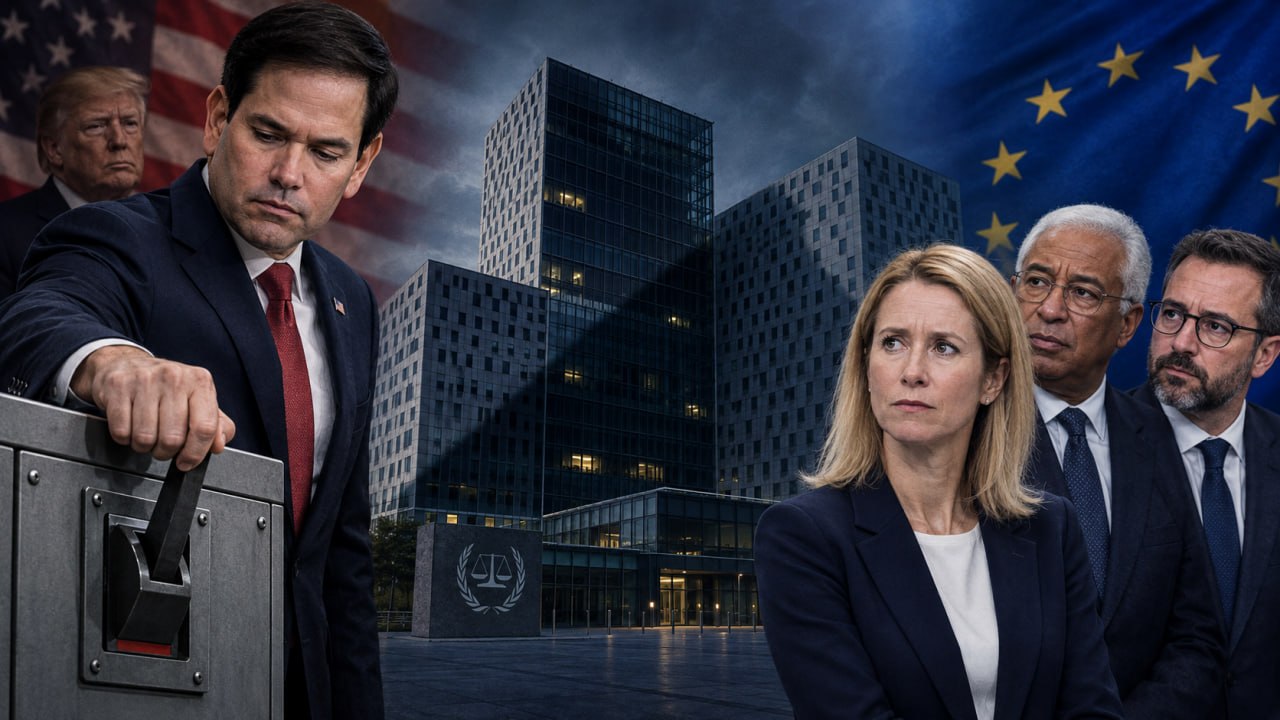
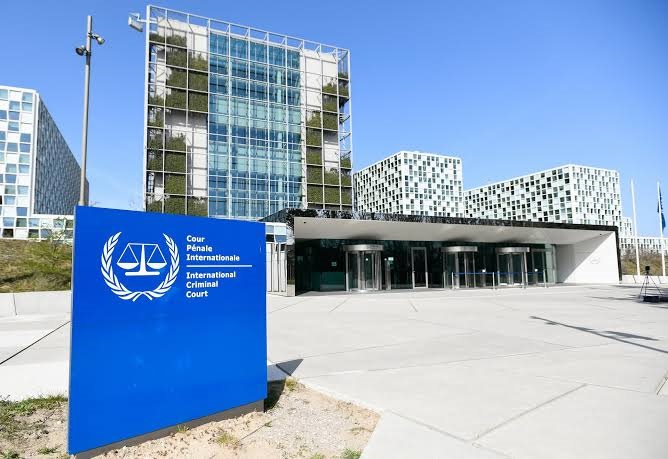
On October 9, Secretary of State Marco Rubio announced blocking sanctions against the International Criminal Court as an institution: a ban on all transactions, the freezing of assets under US jurisdiction, and the cutoff of cloud services, software, and payment processing. “Either the ICC will end its threats, or we will end the ICC,” he said. The sanctions include a six-month transition period and take full effect by April 2027. That date, not the announcement itself, is Europe’s real deadline.
Rubio has repeatedly tied Israeli interests to US actions against the court. The ICC previously issued arrest warrants for Israeli Prime Minister Benjamin Netanyahu and former Defense Minister Yoav Gallant on charges of war crimes in Gaza. While the October 9 announcement focused heavily on protecting American personnel, the administration had previously denounced the tribunal’s investigations against “the United States and our close ally Israel” as “illegitimate and baseless,” indicating that Washington’s campaign is aimed at shielding both US and Israeli officials.
Europe: Between Declaration and Enforcement
The European Commission called the sanctions “deeply regrettable” and said it was “ready to take any necessary measures” to keep the Court functioning and protect operators within the Single Market. But the same formula contains a brake: the six-month delay “leaves room for dialogue.”
Kaja Kallas, speaking for the EU, called threats against the Court “unacceptable,” reaffirming commitment to the rules-based order but stopping short of announcing any protective mechanism. António Costa promised support through political, diplomatic, financial, and practical means, without naming a single concrete instrument.
Belgian Foreign Minister Maxime Prévot is one of those publicly demanding activation of the EU Blocking Statute. “The Court’s independence cannot depend on whom it investigates. Europe must act,” he said, after securing a place for the issue on the agenda of the October 12 meeting of EU foreign ministers.
The Netherlands, where the Court sits, asked the European Commission to prepare the statute but called it a “nuclear option,” emphasizing that six months provide space for dialogue. Germany and France joined a joint statement by eight countries expressing “strong disagreement,” without mentioning countermeasures.
Why the Blocking Statute Is No Panacea
The Blocking Statute (Council Regulation No. 2271/96 of 1996) was created to counter US extraterritorial sanctions related to Cuba, Iran, and Libya. Its mechanism includes a prohibition on EU companies and citizens complying with the designated third-country sanctions, a refusal to recognize foreign court judgments based on those sanctions, and the right to recover damages in court. In 2018, after the US withdrew from the Iran nuclear deal, the regulation was expanded.
Adding the US sanctions against the ICC to the regulation’s annex would mean a legal prohibition on European banks, insurers, and cloud providers complying with the US restrictions. But its purpose is not to save the ICC itself. It protects European operators and jurisdiction: the regulation binds European operators and cannot compel American banks, Microsoft, Amazon, or payment systems to keep servicing the Court.
Activating the statute in this case would be unprecedented: in its thirty years of existence, it has never been applied against US sanctions affecting an international judicial institution. Its earlier use concerned US measures against those same countries, which were bilateral trade restrictions rather than an assault on a body of international justice. If the EU goes ahead, it would be the first time the Blocking Statute is transformed from a trade-defense instrument into an instrument for defending what Brussels calls the “international legal order.”
That is why it is called “nuclear”: it means legal confrontation, but it does not solve the problem of technological dependence. The ICC relies on American banking services, payment systems, cloud servers, and software. The Blocking Statute can prohibit European companies from complying with the sanctions, but it does not create an alternative to dollar clearing, global payment networks, or the servers where the Court’s data is stored.
For Washington, it is enough that American companies themselves refuse to work with the ICC because of the risk of secondary sanctions; the Blocking Statute cannot prevent that.
What Is Already Happening and What Might Happen
The practical effects of the sanctions are already beginning to show. In response to earlier US measures, the ICC has shifted its office and collaboration software from Microsoft to openDesk, a German open-source platform, and developed workarounds for banking, insurance, and payroll. It has also paid staff months in advance to limit potential payroll disruption. But these safeguards do not eliminate the Court’s broader reliance on American financial and technological infrastructure, and full sanctions could still disrupt its operations.
The alternatives Europe can offer are limited: activating the Blocking Statute, developing payment and clearing alternatives to dollar-based infrastructure, and providing European cloud services. None can be implemented quickly enough to replace American financial and technological infrastructure by April 2027.
The Asymmetry That Explains Everything
The ICC began work in 2002, and its early practice focused predominantly on African conflicts: the DRC, Uganda, Sudan, Kenya, and Libya. This imbalance fueled accusations of selectivity and neocolonialism; in 2025, three Sahel states announced their withdrawal, calling the Court an “instrument of neocolonial suppression.”
The United States signed the Rome Statute under Clinton but never ratified it; in 2002, Congress passed the American Service Members’ Protection Act, authorizing the president to use “all necessary means” to free any American detained by the ICC. Washington did not object to the Court’s early focus on African situations, even as it rejected jurisdiction over itself. Its opposition hardened once the ICC moved toward cases involving the US and its allies.
In 2020, after the Appeals Chamber authorized an investigation into crimes by US military personnel and the CIA in Afghanistan, Washington sanctioned Prosecutor Fatou Bensouda and a senior Court official. The following year, Prosecutor Karim Khan “deprioritized” the American component of the case. No US citizen has ever been indicted by the ICC.
Rubio calls the ICC a “body of globalists” threatening US sovereignty and has urged US allies to rein it in. The criticism has a real basis: the Court can hear cases involving crimes committed on the territory of a state party even if the accused’s country has not joined the Rome Statute. But the ICC remains a treaty court, dependent on state cooperation, Western donors, and political decisions of the UN Security Council.
Washington’s contradiction is built into the design itself: the US is attacking an institution that grew out of the liberal order it helped create. Europe’s is different: a declaratory commitment to international law coexists with the practical costs of reducing reliance on American infrastructure.
What October 12 Will Reveal
October 12 will show whether the EU moves from declarations to legal obligations. If the final document includes a European Commission decision to add the US sanctions against the ICC to the annex of Regulation 2271/96, that would mean a legal prohibition on European companies complying with the US measures — an unprecedented use of the Blocking Statute.
If the outcome is a general declaration, a call on Washington to rescind the sanctions, and a mandate for the Commission to “prepare options,” that would confirm a scenario in which Europe defends the principle of ICC independence but is not prepared to pay for that defense through a direct collision with US extraterritorial jurisdiction.
The probability of full and immediate activation of the statute on October 12 is low. A more realistic scenario is a political declaration of support, a Commission mandate to prepare a legal mechanism, and the preservation of the six-month pause for negotiations.
The Dilemma Beyond The Hague
The question is not whether the ICC survives past April 2027. The question is whether Europe can defend what Brussels calls the “international legal order” when the costs of that defense fall on its own companies, banks, and technological supply chains.
The Blocking Statute is a test of the EU’s ability to act not as a regulator but as a geopolitical player willing to bear the costs of conflict. If Europe limits itself to declarations and negotiations, it will confirm the formula Washington has already internalized: European sovereignty ends where American extraterritorial jurisdiction begins.
If it activates the statute, it will launch an open legal conflict with an ally on which its security depends. For now, every signal points to a third option: prepare the instrument, defer the decision, and bet that Washington will back down on its own.
MORE ON THE TOPIC:
The post The US Is Pulling the Plug on International Justice — Does Europe Have Its Own Power Source? appeared first on South Front.

Saudi Arabia is desperately trying to reverse its losses on the ground in the Yemeni conflict, while Houthi attacks reach its airports and threaten its oil trade. Yet the coalition Riyadh has assembled does not match the war it wants to fight. Washington is engaged in the conflict with Iran, Turkey excludes offensive deployments, and Pakistan draws the line at crossing into Yemen. The kingdom has foreign support, but the burden of recovering and holding territory still falls on its weakened Yemeni partners.
Retreat Before the Counteroffensive
By early October 2026, Riyadh was responding to a deteriorating military position. The Houthis’ September advance along Yemen’s western coast brought the loss of Mokha and strategic positions around Bab el-Mandeb. These setbacks exposed the weakness of Saudi-backed forces and strengthened the Houthis’ leverage over a shipping route increasingly important to Saudi oil exports.
The renewed Saudi–Houthi escalation began with the July 13, 2026, strike on Sanaa airport’s runway. Saudi aircraft sought to prevent an Iranian Mahan Air flight carrying a senior Houthi delegation from landing without coalition permission. The plane later landed in Hodeida after Omani mediation, but the Houthis retaliated against Abha airport and subsequently announced a blockade on Saudi shipping. The strike broke the relative calm established by the 2022 truce; September’s coastal offensive then turned the confrontation into a major territorial setback for Riyadh’s partners.
The retreat exposed divisions within the anti-Houthi camp. Saudi–Emirati cooperation had broken down, and the withdrawal of the UAE left command arrangements that Riyadh failed to replace effectively. The factions expected to carry the offensive remained divided and poorly prepared for a sustained campaign. Saudi airpower could not compensate for the absence of a coherent local force.
The cost is also being felt inside Saudi Arabia. The October 10, 2026, attack on Riyadh’s King Khalid International Airport killed 12 people and wounded 309, according to Saudi authorities, and temporarily suspended operations. Riyadh blamed the Houthis, who renewed their warning against using Saudi airports and airspace on October 11. Airport disruption, cancelled flights and attacks on oil facilities bring the economic consequences of the war directly into the kingdom. The Saudi air campaign has not secured its civilian infrastructure.
Operation Dawn of Yemen began on October 5, 2026, after Saudi-backed Yemeni leader Rashad al-Alimi announced military action the previous day. The immediate objective was to recover the coastal positions lost in September, alongside the Saudi-backed Yemeni government’s broader ambition to restore its authority over Houthi-held territory. On October 11, the coalition announced the destruction of 136 military targets in a large-scale operation. That tally says little about whether Saudi-backed units can hold territory, secure supply routes or reopen shipping lanes.
Houthi footage released October 10, 2026: Shawaz drone strikes on Saudi-backed forces in Kahbub and Al-Waziya, as presented by the movement’s military media
Why Taiz Matters
The counteroffensive has produced conflicting accounts of control on the coast. On October 9, 2026, Saudi Arabia’s ambassador to Yemen announced that Bab el-Mandeb and Mayun Island had been cleared of Houthi forces. The Houthis maintained that they still held those positions. Control of the waterway remains contested, despite Riyadh’s announcements of success.
Taiz adds another strain after the coastal setbacks. Pressure on its approaches threatens supply routes and forces Saudi-backed units to divide their effort between the inland front and the Red Sea coast. The Houthis can disrupt their opponents’ counteroffensive without winning every coastal engagement: sustained pressure inland prevents those opponents from concentrating their forces. Saudi airpower does not resolve the fragmentation of the Saudi-backed Yemeni forces expected to hold the ground.
Houthi military footage released October 10, 2026: the movement presents advances and the surrender of opposing fighters in Sami, As-Silw and Al-Mawasit, Taiz province. The fighting places further pressure on the ground forces on which Riyadh’s campaign depends
The Iran War Narrows Saudi Options
The US–Israeli war with Iran, which began in February 2026, has expanded the military demands on Washington. Regional deployments, shipping protection and operations against Iran compete with Saudi requests for a larger American role in Yemen. Riyadh cannot assume that American support will expand on its terms. Its dependence on outside assistance has grown at the same time as the regional war has made that assistance more conditional.
The Iran war compounds Saudi Arabia’s vulnerability. Disruption at Hormuz has increased Riyadh’s dependence on its westbound pipeline and Red Sea ports. Southbound cargoes from Yanbu must pass Bab el-Mandeb; northbound exports follow a different route. Moving crude across the peninsula bypasses Hormuz, but it does not remove the threat to shipping off Yemen.
Pressure at Bab el-Mandeb gives Iran an additional advantage while the Houthis gain territory and bargaining power of their own. Their overlapping interests put Riyadh under pressure on two fronts. A Washington–Tehran agreement would not automatically end the war in Yemen: the Houthis have their own territorial, political and economic demands.
Washington is already involved through military advisers, intelligence and targeting support. The issue is the extent of that involvement, not American neutrality. Earlier in October 2026, Trump rejected Saudi requests for direct strikes; after the Riyadh airport attack, he said the United States might join them. Riyadh still lacks a firm American commitment to the wider offensive. Its requests compete with Washington’s military operations and priorities in the Iran war.
Allies Draw Their Own Lines
Riyadh’s response is to widen its support network through the Mecca pact, signed with Turkey and Pakistan on August 7, 2026, and activated on October 5. But an agreement to defend Saudi Arabia is not an agreement to win its war in Yemen. Pakistan’s military presence and Turkey’s technical, intelligence and air-defense assistance address the kingdom’s security without supplying a joint ground campaign across the border.
The alliance has a secretary-general, retired Pakistani general Nauman Mahmood, but its detailed force-generation timetable, operational command arrangements, cost-sharing formula and mission duration remain unpublished. On October 8, 2026, Ankara excluded offensive operations while parliamentary ratification was pending. On October 9, Islamabad confirmed a substantial military presence in the kingdom but ruled out crossing into Yemen to attack the Houthis. Riyadh is obtaining defensive commitments, not a combined expeditionary army.
Pakistan’s decision-making has also shifted. In 2015, parliament unanimously rejected participation in the Yemen war while promising to defend Saudi territory and holy sites. In October 2026, reinforcement commitments are proceeding without a parliamentary vote. The government says it followed the necessary procedures. The political result is a narrower domestic debate over a commitment that could draw Pakistan further into the conflict.
Fewer political checks make deployments easier to authorize and harder to reconsider once costs and casualties accumulate. Pakistan’s own security pressures add another burden: the October 11, 2026, emergency in opposition-run Khyber Pakhtunkhwa coincides with its commitments to Saudi Arabia. Islamabad is extending support abroad while managing a deepening confrontation at home.
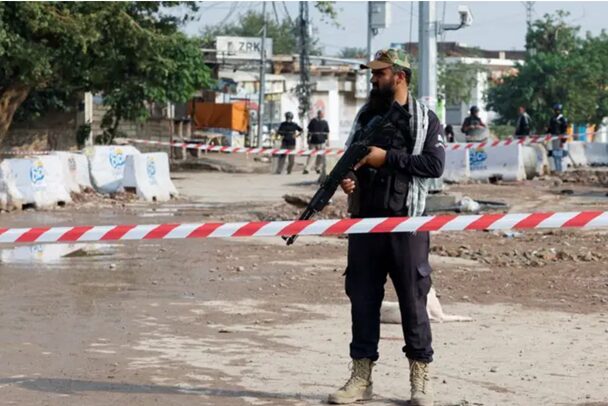
Peshawar, October 11, 2026: police guard the approach to the Red Zone. Pakistan’s overseas security commitments coincide with emergency measures at home
Saudi-led coalition footage, October 9, 2026: the coalition announces strikes on three Houthi missile launchers. The continuing attacks inside Saudi Arabia expose the limits of destroying individual launch sites
Defensive support can still sustain the offensive by freeing Saudi assets for use in Yemen. France’s support for the defense of Yanbu and Britain’s refueling assistance contribute to that effort. But none of this repairs the weakness of Riyadh’s Yemeni ground forces. Pakistan also has its border with Iran and its mediation role to consider, while Turkey keeps its commitment separate from offensive operations. Each partner sets limits according to its own interests.
Different Interests, No Shared Victory
Pakistan’s proposed $1.21 billion IMF disbursement awaits board approval. Turkey’s September 2026 inflation was 29.73%, with its policy rate at 37%. Both face financial pressures that favor limited missions over an open-ended expedition. Who pays for the current assistance remains undisclosed.
Saudi Arabia’s updated deficit forecast is 4.9% of GDP. September 2026’s non-oil purchasing managers’ index stood at 55.3, indicating expansion before the latest escalation. The airport attacks and disruption to transport now place that activity under additional pressure. Riyadh must finance the campaign while protecting the infrastructure and trade on which its wider economic plans depend.
The Houthis are using that pressure to advance their negotiating demands. On October 10, 2026, the Houthi authorities proposed reciprocal exclusion of airports, ports and other humanitarian infrastructure from blockade and attack. The proposal seeks to exchange limits on disruption for concessions over access and blockade. It puts the economic consequences of continued fighting at the center of the bargaining.
The conflict of interests runs through the entire coalition. Riyadh wants to reverse Houthi gains and protect Saudi infrastructure. The Saudi-backed Yemeni government wants to restore its authority. Turkey and Pakistan seek bounded commitments, and Washington calculates its involvement against the Iran war. The Houthis seek concessions while preserving their military leverage. A common adversary has not produced an agreed objective or a shared willingness to bear the cost.
Saudi Arabia therefore has partners willing to help defend the kingdom, but those partners have made no common commitment to reverse Riyadh’s setbacks in Yemen or sustain the ground campaign of the Saudi-backed Yemeni government. That is the gap behind the coalition’s announcements and strike tallies. Without stronger local forces and a political settlement addressing shipping, attacks and access, additional foreign support can prolong the campaign without resolving it. Riyadh risks remaining surrounded by allies while carrying a war none of them has agreed to finish.
MORE ON THE TOPIC:
The post Saudi Arabia Has Allies. But Who Will Fight Its War in Yemen? appeared first on South Front.